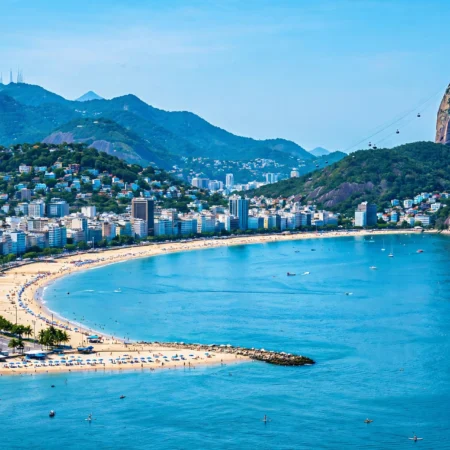
Rio de Janeiro is the city that most people picture when they think of Brazil: a crescent of white sand at Copacabana, the statue of Christ the Redeemer standing over the bay with arms spread wide, Sugarloaf Mountain rising sheer from the water, and a soundtrack of samba drifting out of bars in Lapa. It is also a city that rewards travellers who do their homework. Rio is beautiful and welcoming, and it is also a big South American city with real safety rules, a visa requirement for US citizens, neighbourhoods that suit very different kinds of trips, and prices that swing sharply between Carnival week and the quiet winter months. This Rio de Janeiro travel guide covers all of it honestly: which neighbourhood to stay in, how the eVisa works, when to go, what Copacabana, Ipanema and Leblon are actually like, how to visit Christ the Redeemer and Sugarloaf without wasting a day in queues, where to eat, what a trip costs in 2026, and the safety chapter that other guides soften — including the areas the US State Department says not to enter at all.
Quick answer: Rio is a wonderful trip for travellers who base themselves in the South Zone (Zona Sul) — Ipanema, Leblon or Copacabana — use Uber and the metro, keep their phone out of sight, and stay out of favelas and off the beaches after dark. US, Canadian and Australian citizens need a Brazil eVisa before travelling: it costs $80.90, takes up to 10 business days, and is valid for 10 years with stays of up to 90 days a year. Plan on four to five days for a first trip, budget roughly $100–160 a day at a mid-range pace, and come in April to June or September to November for the best balance of weather, prices and crowds. Carnival runs 5–13 February 2027 — book months ahead if that is your plan.
Is Rio de Janeiro Safe to Visit in 2026?
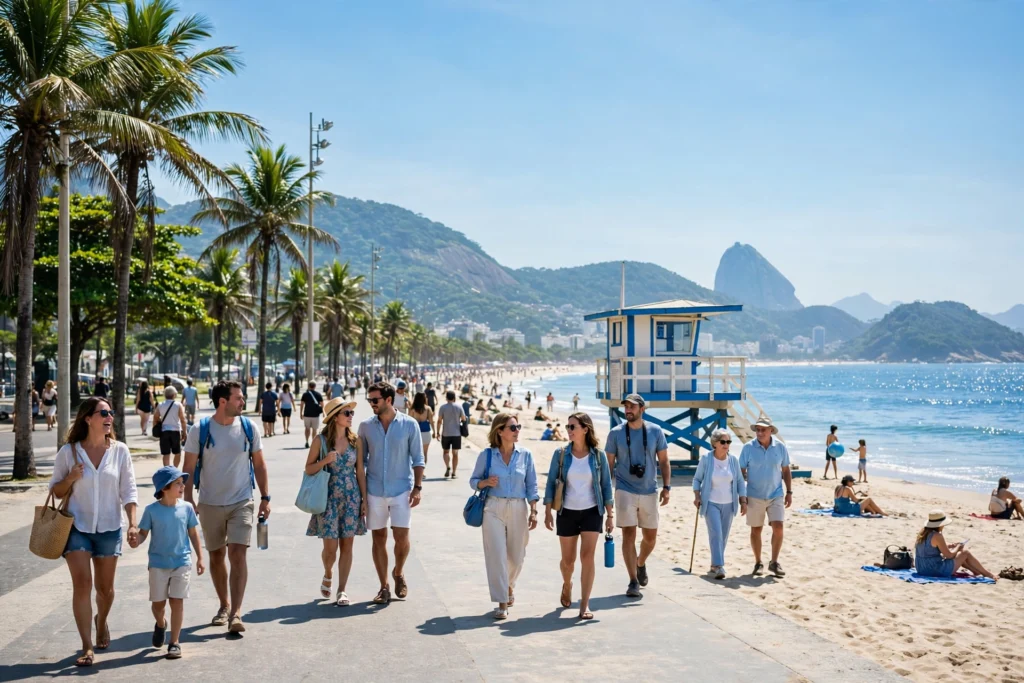
The honest answer is that Rio is safe enough to visit and enjoy, and unsafe enough that you must take it seriously. Millions of tourists visit every year and have a great trip; at the same time, Rio has a level of street crime that is far above what most visitors from the United States or Europe are used to. The difference between those two experiences is almost entirely about where you stay, what you carry, and what you avoid. Get those three things right and Rio is a pleasure. Get them wrong and you can lose a phone, a wallet, or worse, in a single careless afternoon.
Start with the official picture. The United States Department of State rates Brazil at Level 2: Exercise Increased Caution, issued on 31 August 2026, because of crime and kidnapping. The advisory says violent crime occurs in urban areas, day and night, including murder, armed robbery and carjacking, and that gang activity and organised crime are widespread, often tied to the illegal drug trade. It warns specifically that assaults are common, including assaults with sedatives or drugs placed in drinks, especially in Rio de Janeiro, and that criminals target foreigners through dating apps or at bars before drugging and robbing them. Kidnapping for ransom involving US citizens is rare but does happen, and the advisory describes “express kidnapping” — being forced at gunpoint to withdraw cash from several ATMs or transfer money through banking apps, commonly Pix — as an ongoing threat. Before you travel, read the full US State Department travel advisory for Brazil and check it again close to departure, because advisory levels and wording can change. US citizens should also enrol in the Smart Traveler Enrollment Program (STEP) so the US Consulate General in Rio de Janeiro can reach them in an emergency.
The part of the advisory that matters most for planning is the list of places rated Level 4: Do Not Travel. Informal housing developments — favelas — are Level 4, including guided tours, and the international land borders are also Do Not Travel. This is the point on which this guide is deliberately blunt: do not enter a favela, do not book a favela tour, and do not follow a stranger who offers to show you one. Rocinha, Complexo do Alemão and Cidade de Deus are the names you will hear most often, and all of them are off limits. Favela tours are marketed as authentic and community-run, and some operators are genuine, but the advisory is explicit, the areas are controlled by armed groups, and a tourist has no way to tell a safe street from a dangerous one. There is nothing in a favela that justifies the risk, and Rio has more than enough to see without it. The same applies to the land borders: do not plan an overland crossing into a neighbouring country as a casual side trip.
Within the tourist areas, the single biggest risk is phone snatching. It is the crime that affects visitors most often, and it happens in daylight, on busy streets, on the beach and on public transport. The pattern is simple: a thief on a bicycle or motorbike, or on foot in a crowd, grabs a phone from a hand or a back pocket and is gone in seconds. The countermeasures are equally simple and they work. Keep your phone in a front pocket or a zipped bag when you are walking, do not hold it up to take photographs at the edge of a pavement, do not use it while standing near the road, and if you need to check directions, step inside a shop or a café. Carry a cheap backup phone or an old handset for maps and photos if you can, and leave your main phone in the hotel safe. Do not wear expensive jewellery or a flashy watch, and do not carry a handbag on the side facing the road. A small crossbody bag worn in front, with a zip, is the right choice in Rio.
Beaches deserve their own rule. The beaches are the heart of a Rio trip, but do not walk on the beach after dark, and do not leave valuables unattended on the sand while you swim. Take only what you need to the beach — a towel, sunscreen, a little cash and a copy of your passport — and leave the rest in the hotel safe. Beach vendors will offer you drinks, snacks and chairs; that is normal and fine, but keep your bag where you can see it and do not accept a drink you did not see being opened. The same drink rule applies in bars and clubs: watch your drink being poured, never leave it unattended, and be wary of strangers who are unusually keen to buy you a drink or invite you back to their place, especially anyone you met on a dating app. The advisory’s warning about sedatives in drinks is not a formality — it is one of the specific risks it names for Rio.
Money and transport rules follow from the same logic. Use ATMs inside shopping malls or major hotels, never a standalone ATM on a quiet street at night, and carry only one bank card and a small amount of cash when you go out. If you are robbed, hand over what you have without arguing — your phone and wallet are not worth a confrontation. Take Uber rather than hailing a car on the street at night, and check the number plate, the driver’s name and the car model before you get in. The metro is safe and well used during the day and early evening; avoid municipal buses at night, which the advisory specifically warns against because of robbery and assault. Keep to well-lit, busy streets after dark, vary your routes and times if you are staying for a while, and park in guarded, well-lit garages if you hire a car. Save the emergency numbers in your phone before you arrive: 190 for police, 192 for medical emergencies and 193 for the fire service.
None of this should put you off Rio. The South Zone neighbourhoods where visitors stay — Ipanema, Leblon, Copacabana, Botafogo and Urca — are busy, well policed and full of other tourists, and the daytime beach and sightseeing routine is safe for the overwhelming majority of visitors. The city’s problems are real, but they are concentrated in places you have no reason to go and in habits that are easy to change. Treat the safety rules above as part of the trip, not as a warning against it, and Rio will give you one of the best city breaks in the world.
Do US Citizens Need a Visa for Brazil? The eVisa Explained

Yes — if you hold a US passport, you need a visa to visit Brazil, and the same applies to Canadian and Australian citizens. Brazil reinstated the visa requirement for those three nationalities on 10 April 2025, and the visa is an eVisa applied for online. It is not available on arrival and it is not something you can sort out at the airport, so this is the first piece of paperwork to deal with once you have decided to go.
The eVisa costs $80.90, is valid for 10 years, and allows stays of up to 90 days in a year, with multiple entries. You apply through the official VFS Global portal at brazil.vfsevisa.com, which is the only official channel — do not use a third-party site that charges extra or asks for more information than the official form. The application is straightforward: fill in the online form, upload the required documents (a passport valid for at least six months beyond your travel dates, a passport-style photograph and, for US applicants, the documents the portal asks for, which can include proof of funds and a return ticket), pay the fee securely online, and wait for the approved eVisa to arrive by email as a PDF. Print it and carry it with you: the portal advises you to print two copies and keep one with you during the trip, and to save a screenshot on your phone as a backup.
Processing takes up to 10 business days once the application has been completed, verified and submitted to the consular post, and the VFS portal strongly advises applying two months before your planned travel, to leave room to correct any mistake in the application. The portal also warns, in plain terms, not to buy airline tickets or make non-refundable travel arrangements before the visa has been issued. That is good advice: apply first, wait for the approval email, and only then book anything you cannot cancel. If your travel date is approaching and you have not heard back, the portal lets you check your application status online, and its support team can be contacted through the site. If you give the wrong email address, you will not receive the login link or the eVisa itself, so check the address carefully before you submit.
A few practical points. Your passport must be valid for at least six months beyond your travel dates, with a blank page for stamps — the same rule that applies to most international trips, and the reason to check your passport the day you start planning rather than the week you travel, as our guide to passport validity rules for places to travel without a passport explains. The eVisa is for tourism and business visits; if you plan to work, study or stay longer than 90 days, you need a different visa and should contact the Brazilian consulate. The eVisa is not stamped in your passport, and it has the same validity and multiple-entry rights as a physical consular visa. Children travelling with one parent should carry a notarised letter of consent from the other parent, because Brazilian border officials can ask for it. Finally, keep the printed eVisa with your passport throughout the trip — you need it both to board your flight and to enter Brazil, and having the paper copy avoids any argument at the airport if your phone battery dies.
Best Time to Visit Rio de Janeiro

Rio is a year-round destination — it never gets cold in the way a northern city does — but the experience changes a lot with the season, and picking the right months is the easiest way to get a better trip for less money. The two seasons that matter are summer, from December to March, and winter, from June to August, with the shoulder months in between.
The best overall months are April to June and September to November. In those windows the heat eases off, the rain is lighter, the skies are clear, the beaches are busy but not packed, and hotel prices drop from their summer peak. May to September is the drier, cooler and cheaper stretch, which is why experienced travellers often aim for it: daytime temperatures sit in the mid-20s Celsius, the humidity is lower, and the famous viewpoints — Corcovado, Sugarloaf — are more likely to be clear of cloud. The local secret is the winter itself, June to August, when the city is at its most relaxed, the light is golden, and you can walk the beachfront without the summer crowds.
Summer, December to March, is the hottest, wettest and most expensive time. Daytime temperatures regularly reach 30°C and above, with high humidity and short, heavy afternoon downpours, and the beaches are at their fullest. It is also the season of the two biggest events in the Brazilian calendar: New Year’s Eve on Copacabana beach, when millions of people in white gather for the fireworks, and Carnival, which in 2027 runs from 5 to 13 February. If you want Carnival, summer is the only choice — but book flights and hotels months ahead, expect prices to double or triple, and accept that the city will be crowded, loud and exhausting in the best possible way. If you do not want Carnival, avoid the city in the week before it, when prices rise and the streets fill up anyway.
| Month | Weather | Crowds & prices | Best for |
|---|---|---|---|
| January | Hot and humid, 26–32°C, afternoon rain | High, summer prices | New Year energy, beach days, long days |
| February | Hot and humid, 26–32°C, rain likely | Highest — Carnival 5–13 Feb 2027 | Carnival, blocos, Sambadrome parades |
| March | Hot, rain easing, 25–31°C | High, easing after Carnival | Late-summer beach trips, fewer crowds |
| April | Warm, drier, 24–29°C | Moderate | Sightseeing, viewpoints, good all-round month |
| May | Mild and dry, 22–27°C | Low–moderate | Best value, clear skies, hiking |
| June | Coolest month, 21–26°C, dry | Low | Winter sun, quiet beaches, lower prices |
| July | Cool and dry, 21–26°C | Low–moderate | School-holiday visitors, clear viewpoints |
| August | Dry, warming, 22–27°C | Low | The local secret — quiet, golden light |
| September | Warming, dry, 23–28°C | Low–moderate | Beach days returning, good prices |
| October | Warm, some rain, 24–29°C | Moderate | Spring weather, festivals, hiking |
| November | Hot, rain returning, 25–30°C | Moderate | Warm beach days before the summer rush |
| December | Hot and humid, 26–31°C, rain | High — New Year’s Eve | Copacabana New Year’s Eve fireworks |
One more timing note: Rio’s weather is changeable even in the best months, and the view from Corcovado can disappear into cloud in an hour. If the summit is your priority, check the forecast the evening before, go early in the morning when the air is clearest, and keep a flexible day in your plan so you can swap the mountain for the beach if the cloud rolls in. For travellers weighing a January trip against other months, the same seasonal thinking applies to the destinations in our best places to travel in January guide — the cheapest month is rarely the best month, and the best month is the one that matches what you actually want to do.
Getting to Rio: Galeão Airport, Metro and Getting Around

Most visitors arrive at Rio de Janeiro–Galeão International Airport (GIG), about 20 kilometres north of the city centre on the far side of Guanabara Bay. There are direct flights from several US cities — New York, Miami, Atlanta, Houston and Dallas among them — usually overnight, landing in the morning, which suits a first day that starts with a beach walk and an early night. The smaller Santos Dumont Airport (SDU), right on the bay in the city centre, handles domestic flights, mainly from São Paulo and other Brazilian cities, and is far more convenient if you are connecting from elsewhere in Brazil.
Getting from Galeão into the city takes 30 to 45 minutes by road in normal traffic, and considerably longer at rush hour. The simplest option is Uber: a ride from the airport to Copacabana typically costs around $12–18, while a regular taxi costs around $20–25 — both are planning ranges, so confirm the fare in the app before you travel. There are official taxi desks inside the terminal; agree the fare or make sure the meter is running before you leave. The airport also has a BRT bus link to the metro, and an express bus service to the South Zone, but after an overnight flight most travellers will find Uber or a taxi the sensible choice. Do not accept a lift from anyone who approaches you inside the terminal offering a car — use the app or the official desk.
Once you are in the city, the metro is the backbone of getting around. Lines 1, 2 and 4 cover the route most visitors use: from the city centre (Cinelândia, Carioca, Uruguaiana) through Botafogo and Copacabana (Cardeal Arcoverde, Siqueira Campos) to Ipanema (Cantagalo, General Osório) and Leblon (Jardim de Alah, Antero de Quental), and on to São Conrado and Jardim Oceânico in Barra da Tijuca. A single ride costs R$7.90, and you can pay with a contactless bank card at the gates. The metro is clean, safe and well used during the day and early evening; it closes around midnight, so plan a taxi or Uber for late nights. The VLT light rail serves the centre and the port area, and is useful for the museums around Praça Mauá and the Lapa arches, while the BRT bus system runs along the main avenues and to the airport. Municipal buses are cheap and frequent, but they are crowded, slow in traffic, and — as the travel advisory notes — best avoided at night. Keep an offline map downloaded on your phone before you arrive, and the same set of apps that makes any big city easier — offline maps, a ride-hailing app and a translation app — is worth setting up in advance, as our travel apps guide explains.
Uber is the practical default for anything the metro does not reach, and it is cheap by US standards. Check the number plate, the driver’s name and the car model before you get in, and sit in the back seat. Taxis are fine too, but always insist on the meter or agree the price in advance, and avoid unmarked cars. If you hire a car, be aware that Rio traffic is heavy, parking in the South Zone is difficult, and driving at night outside the main neighbourhoods is not advisable for visitors — for most trips, the metro plus Uber is faster, cheaper and less stressful than a rental. Walking is the best way to explore the South Zone itself: Copacabana, Ipanema and Leblon run into each other along the beachfront, and the promenade is made for strolling. Just keep the phone rules from the safety section in mind, and do not cut through quiet side streets or parks after dark — stick to the busy, lit avenues.
A final transport tip: Rio is a city of hills, and the distance between two points on a map can hide a steep climb. The walk from Copacabana up to Santa Teresa, or from the metro to the top of the Selarón Steps, is further and steeper than it looks. Allow extra time, carry water, wear comfortable shoes, and use a car for the uphill legs. The funicular-style train to Corcovado and the cable car to Sugarloaf are covered in their own sections below — both are best booked in advance, and both are far more pleasant early in the morning.
Where to Stay in Rio: Neighbourhood-by-Neighbourhood Guide

Where you stay in Rio decides what your trip feels like, more than in almost any other city. The right neighbourhood puts the beach, the metro and good restaurants within a short walk; the wrong one puts you in a long taxi ride or, worse, somewhere you do not want to be after dark. For a first trip, the answer is simple: stay in the South Zone, the Zona Sul, and choose between Ipanema, Leblon and Copacabana.
Ipanema is the best first choice for most travellers, and the one this guide recommends. It is the safest-feeling of the big beach neighbourhoods, with a beautiful beach, the famous Posto 9 stretch, the Lagoa (Rodrigo de Freitas Lagoon) on its inland side, and the best concentration of restaurants, bars and shops in the city. The streets are leafy and residential, the beach is cleaner and calmer than Copacabana, and the sunset view towards the Two Brothers peaks is one of the great free sights in Rio. Accommodation ranges from boutique hotels and well-run hostels to apartments on Airbnb-style platforms, and prices sit in the middle to upper range. Families, couples and first-timers will be happiest here.
Leblon, immediately west of Ipanema, is the quietest and most expensive of the three. It feels like a village: low-rise buildings, smart restaurants, a farmers’ market on Sundays, and a beach that is noticeably calmer and less crowded. It is the best choice if you want peace, space and a slightly older, wealthier crowd, and if your budget stretches to it. The trade-off is that there is less nightlife, and you will walk or take a short ride to Ipanema for the liveliest bars.
Copacabana is the most famous name in Rio and the most affordable of the three beach neighbourhoods. Its 4-kilometre crescent of sand is the postcard image of the city, the promenade is the best place in Rio for a long walk, and the hotel choice is the widest — from grand old hotels on Avenida Atlântica to budget hostels a few streets back. It is also the busiest and the least polished: the beach is more crowded, the street vendors are more persistent, and the area around the metro stations needs more attention after dark than Ipanema does. Copacabana suits travellers who want the classic Rio experience at a lower price and do not mind the bustle. Stay on or near Avenida Atlântica, or on the streets closest to the beach, and avoid the quieter blocks further inland at night.
Santa Teresa is the bohemian hilltop neighbourhood above Lapa, full of colonial houses, art studios, small hotels and the yellow tram that rattles up the hill. It is beautiful and atmospheric, and it suits travellers who have been to Rio before or who want character over beach access. It is not a beach base — the walk down to the centre is steep, and you will need a car or a taxi for most outings — and the streets are quieter at night, so it is better for confident travellers than for first-timers.
Botafogo is the practical, lively middle ground: a young, creative neighbourhood between the centre and Copacabana, with the best bar scene in the city, good restaurants, a metro station and lower prices than the beachfront. It suits travellers who care more about food and nightlife than about stepping onto the sand, and it is a good base for anyone who plans to spend their days sightseeing rather than sunbathing. Urca, the small, quiet peninsula at the foot of Sugarloaf, is a hidden gem for a night or two — safe, residential, with a lovely waterfront wall where locals gather at sunset — but it has little accommodation and no metro, so it works better as an evening visit than a base.
Barra da Tijuca, west of the city, has the longest beach in Rio — 18 kilometres of clean sand — and big resort-style hotels and shopping malls. It is popular with Brazilian families and with travellers who want space, but it is far from the sights, feels suburban, and you will need a car for almost everything. Centro, the historic downtown, has the museums, the opera house and the colonial churches, but it empties out at night and at weekends, and it is not a good place to stay — visit it in the daytime and sleep in the South Zone.
| Neighbourhood | Feel | Safety for visitors | Price (mid-range hotel/night) | Best for |
|---|---|---|---|---|
| Ipanema | Stylish, leafy, best restaurants | Best in the South Zone | $90–180 | First-timers, couples, families |
| Leblon | Quiet, smart, village-like | Very good | $130–250 | Peace, space, higher budgets |
| Copacabana | Iconic, busy, most choice | Good on the beachfront; more care after dark | $60–130 | Classic Rio on a budget |
| Santa Teresa | Bohemian, hilly, artistic | Good in the day; quiet streets at night | $70–150 | Character, art, returning visitors |
| Botafogo | Young, lively, best bars | Good, busy streets | $60–120 | Food, nightlife, sightseeing base |
| Urca | Quiet, residential, safe | Very good | Limited choice | A peaceful night or two |
| Barra da Tijuca | Suburban, resort-style | Good, but car-dependent | $80–160 | Families wanting space and a long beach |
| Centro | Historic, business district | Daytime only — avoid at night | $50–100 | Not recommended as a base |
Book accommodation with a clear cancellation policy, and check the location on a map before you pay — a hotel that says “Copacabana” can be ten minutes’ walk from the beach, and a hotel that says “Rio” can be in a suburb you have never heard of. Read recent reviews for mentions of noise, safety and the walk to the metro, and prefer a place with a 24-hour reception and a safe in the room. If you are comparing costs across destinations, the budgeting framework in our guide to how to prepare a travel budget works just as well for Rio as it does anywhere else.
Copacabana Beach: Rio’s Most Famous Shoreline

Copacabana is the beach the whole world knows, and it is worth a morning even if you are staying in Ipanema. The crescent of sand runs for about 4 kilometres from the Forte de Copacabana at one end to the Forte do Leme at the other, backed by a wall of white apartment blocks and the famous wave-patterned promenade designed by the landscape architect Burle Marx — black and white Portuguese stone laid in a rolling wave that has become one of the most recognisable pavements on earth. The beach itself is wide, busy and full of life: football and volleyball games, vendors selling coconuts, caipirinhas, cheese on sticks and sunglasses, families with umbrellas, and a constant flow of people walking, running and cycling along the promenade. On a Sunday the road closes to cars and the whole waterfront becomes a playground.
The practical side of Copacabana is straightforward. The sand is clean and the water is warm enough to swim in for most of the year, though the waves can be strong — swim near the lifeguard posts and do not go far out. Beach chairs and umbrellas can be rented from the kiosks (quiosques) along the sand, and the kiosks also serve drinks and snacks, so you can spend a whole day with nothing more than a towel and a small amount of cash. That is the right way to do it: leave your valuables in the hotel, take a little cash and a copy of your passport, and keep your bag where you can see it. The beach is safe in the daytime when it is crowded, but do not walk on it after dark, when it empties and the risk of robbery rises sharply — the same rule the travel advisory gives, and the one rule visitors most often ignore.
Two stops make Copacabana more than a beach. At the southern end, the Forte de Copacabana, built in 1914, is a military fort with a small museum, old cannons and a café with one of the best views over the bay — a good place for a slow coffee and a look back along the whole beach. At the northern end, the walk up to the Forte do Leme and the trail to the top of Morro do Leme gives a panoramic view over Copacabana, Sugarloaf and the bay. The beach is also the stage for the biggest party in Rio: on New Year’s Eve, millions of people dressed in white gather on the sand for the fireworks, one of the largest celebrations of its kind in the world. If you are in Rio for the turn of the year, Copacabana is where you want to be — and you should book your hotel months ahead.
Copacabana’s reputation is a little larger than the beach itself. It is not the prettiest beach in Rio — Ipanema and the beaches further west are cleaner and calmer — and it is not the quietest. What it is, is the heart of the city: the place where Rio’s beach culture is at its loudest and most visible, where the promenade never really empties, and where a visitor can sit with a coconut and watch the city go by for hours. Give it a morning, walk the full length of the promenade, have lunch at a kiosk, and then go and see the quieter beaches. The same beach-day rhythm — arrive early, swim before the crowds, leave before dark — works on every great beach, including the ones in our Kauai travel guide, and it is the simplest way to enjoy Copacabana safely.
Ipanema and Leblon: Rio’s Most Stylish Beaches

If Copacabana is the famous beach, Ipanema is the beautiful one — and Leblon, just around the headland, is the quiet one. Together they are the best stretch of sand in Rio, and they are where most experienced visitors spend their beach time.
Ipanema is a long, curving beach divided by lifeguard posts (postos), and each post has its own character: Posto 9, near Rua Vinícius de Moraes, is the fashionable heart of the beach, where the young, the beautiful and the famous gather; Posto 10, towards Leblon, is quieter and more family-friendly; Posto 8, at the eastern end, is the surfers’ stretch. The sand is cleaner and the water is clearer than at Copacabana, the waves are good for surfing and body-surfing, and the backdrop — the Two Brothers peaks (Dois Irmãos) rising at the western end — is one of the great views in Brazil. The song “The Girl from Ipanema”, written by Tom Jobim and Vinícius de Moraes in 1962, was inspired by a girl walking to this beach, and the street where the composers drank is still there, a short walk from the sand. The beach is at its best in the late afternoon, when the sun drops behind the Two Brothers and the whole beach turns gold. Arrive by mid-afternoon, swim, watch the sunset, and then walk to the bars and restaurants of Rua Garcia D’Ávila or the Lagoa for dinner.
Leblon, west of Ipanema past the canal, is smaller, calmer and more expensive, and it feels like a different world from Copacabana. The beach is wide and uncrowded, the waves are gentler, and the promenade is lined with smart apartments and good restaurants rather than hotels and vendors. It is the best beach in Rio for a quiet day: bring a book, rent a chair, swim in calmer water, and eat well afterwards. On Sundays the Leblon farmers’ market (Feira de Leblon) fills the streets with fruit, flowers, cheese and crafts, and it is worth timing a visit for it. Leblon is also the starting point for the walk up to the viewpoint at the base of the Two Brothers — a steep but rewarding climb that is best done with a local guide and in the morning, when it is cooler.
The two beaches run into each other, and the walk from the Arpoador rock at the eastern end of Ipanema — the best sunset spot in Rio — all the way to the far end of Leblon takes about an hour along the sand. It is the best walk in the city, and the one to do on your first full day. The same rules apply as at Copacabana: daytime only, valuables left at the hotel, bag in sight, and off the sand before dark. The beach towns of Cabo share the same rhythm — the best hours are the morning and the late afternoon, and the best plan is a long, slow day with a good meal at the end of it.
Christ the Redeemer and Corcovado

Christ the Redeemer is the reason many people come to Rio, and it is worth every bit of the effort to get there. The statue stands on top of Corcovado Mountain, 710 metres above the city, with its arms spread 28 metres wide over Guanabara Bay. It is 30 metres tall, 38 metres including its pedestal, it was opened in 1931, and it is one of the New7Wonders of the World. The statue and the mountain are part of the Tijuca Forest National Park, and the whole Carioca landscape — Corcovado, Sugarloaf, the beaches and the bay — is inscribed on UNESCO’s World Heritage List as “Rio de Janeiro: Carioca Landscapes between the Mountain and the Sea”. You can read the official listing on the UNESCO page for Rio de Janeiro, which describes the forested mountains, the Botanical Gardens founded in 1808, and the designed landscapes of Copacabana and Flamengo that give the city its outdoor culture.
There are two ways up: the cog train from Cosme Velho, which climbs through the Atlantic forest for about 20 minutes, and the official vans from Largo do Machado, Copacabana and Barra da Tijuca. The train is the more memorable journey — the forest closes in around the track, and the city appears and disappears through the trees — but the vans are more flexible and run more often. Book your ticket online in advance, for the earliest slot you can manage: the summit is at its best in the morning, before the cloud builds and before the crowds arrive, and the first train of the day is the quietest. A ticket costs well over R$100 and varies with the season and the departure point, so check the current price when you book and treat any figure in a guide as a planning range.
At the top, the viewing platform gives a 360-degree panorama: the bay and the city centre to the north, Copacabana and Ipanema curving away to the south, the lagoon and the Two Brothers to the west, and the statue itself rising above you. It is crowded, and the platform is smaller than the photographs suggest, so be patient, take your photographs, and then find a quieter spot on the steps to sit and look. The chapel inside the pedestal is small and worth a look. Allow two to three hours for the whole visit, including the journey up and down, and do not try to combine it with Sugarloaf in the same morning — both deserve a half-day each.
The honest warnings are about weather and queues. Corcovado is often in cloud, and on a cloudy day the statue can be invisible from the city and the view from the top can be nothing at all. If the summit is in cloud when you wake up, swap your plans and go to the beach instead — the mountain will still be there tomorrow, and a clear morning is worth waiting for. The queues are the other issue: in high season, the wait for the train can be an hour or more, and the platform can feel packed. An early ticket, a weekday, and a visit outside the December-to-February peak all help. The same early-start rule applies to every great viewpoint, from the mountain lookouts in our Colombia travel guide to the passes of the Andes — the mountain rewards the people who arrive first.
Sugarloaf Mountain (Pão de Açúcar)

Sugarloaf is the other great viewpoint in Rio, and many visitors prefer it to Corcovado. The granite peak rises 396 metres straight out of Guanabara Bay at the entrance to the harbour, and the cable car — the bondinho — climbs it in two stages: first to Morro da Urca at 220 metres, then on to the summit. The cable car has been running since 1912, making it one of the oldest in the world, and the ride itself is part of the experience: the glass cabin swings out over the bay, the city drops away below, and the peak grows larger with every metre.
The summit is a broad, open rock with paths, viewpoints, a café and a small amphitheatre, and the panorama is different from Corcovado’s — closer, lower and more intimate. From here you look across the bay to Niterói, down to the red sands of Praia Vermelha, along the whole curve of Copacabana, and back up at the statue of Christ the Redeemer on its mountain. The best time to go is late afternoon, when the light turns golden and the city lights begin to come on, and the sunset from Sugarloaf is one of the great free shows in Rio. A ticket costs well over R$100 and varies with the season, so check the current price when you book. Book online in advance and arrive early in your time slot: the queues for the cable car can be long, especially at sunset, and the first cabin of the morning is the quietest.
Morro da Urca, the first stop, is worth a proper look rather than a quick change of cabin. It has its own viewpoints, a restaurant, and a short walking trail, and the views of the bay from here are almost as good as from the summit. If you are short on time, you can buy a ticket to Urca only, but the summit is the point of the trip, and the extra stage is worth it. The walk down from Urca to the waterfront at Praia Vermelha is also possible — a steep, well-marked trail through the forest that takes about 30 to 40 minutes and ends at a quiet beach with a view of the cable car overhead. It is a good option in the morning, when it is cooler, and it is free.
Sugarloaf and Corcovado are often compared, and the honest answer is to do both if you have the time, because they show you two different Rios: Corcovado gives you the scale of the city and the bay, Sugarloaf gives you the detail — the boats, the beaches, the streets. If you only have time for one, choose Corcovado for the statue and Sugarloaf for the view. Either way, go early or go late, never in the middle of a hot, cloudy day. The same rule — the best views come to the early and the patient — applies to the city viewpoints in our Seattle travel guide, where the light matters just as much.
Santa Teresa, Botafogo and Lapa: Rio’s Creative Neighbourhoods
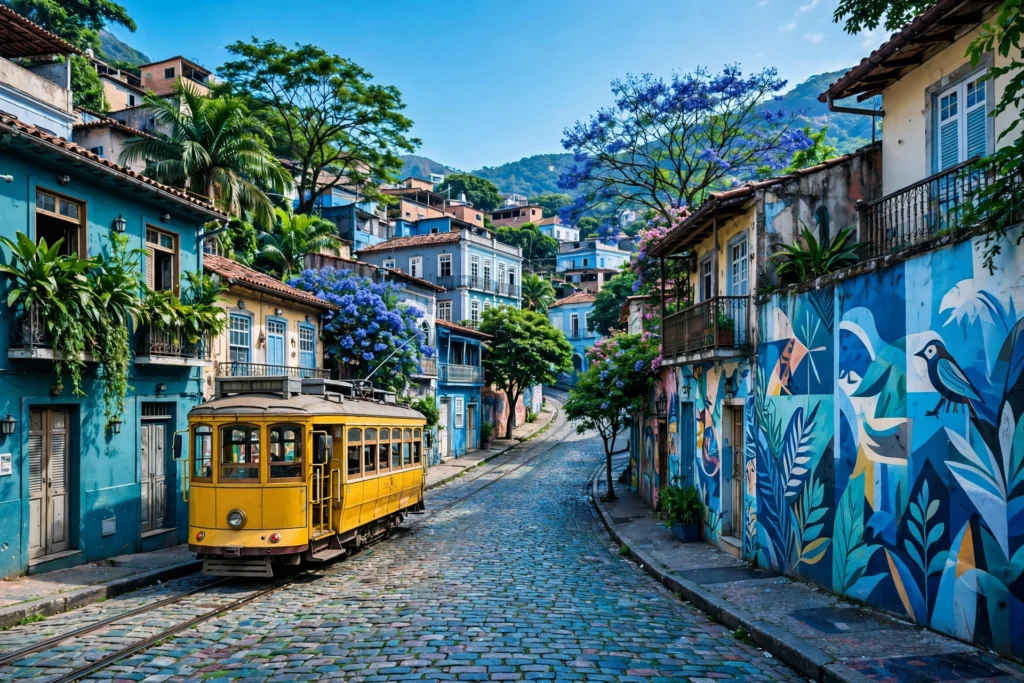
Beyond the beaches, Rio’s most interesting neighbourhoods are the old, hilly, creative ones in the centre — Santa Teresa, Botafogo and Lapa — and a day spent wandering them is the best way to see the city that the postcards leave out.
Santa Teresa sits on a hill above the centre, a maze of steep cobbled streets, colonial houses, art studios and small hotels, reached by the yellow tram — the Bondinho de Santa Teresa — that rattles up from the centre, and by winding roads that climb past the ruins of old mansions. The neighbourhood feels like a village that happens to be in the middle of a big city: bougainvillea over the walls, cats on the steps, artists’ studios open to the street, and views over the bay from almost every corner. The tram is the classic way to arrive, and it is worth riding for the journey alone. Spend a morning here: walk the streets, visit the Parque das Ruínas — a ruined mansion turned into a cultural centre with a rooftop view — and have lunch in one of the small restaurants on Largo do Curvelo. Santa Teresa is best in the daytime; the streets are quiet at night, so plan to be back down the hill by evening, and take a car rather than walking the steep roads after dark.
Botafogo, at the foot of the hill between the centre and Copacabana, is the neighbourhood where Rio’s young, creative crowd actually lives. It has the best bar scene in the city — the streets around Rua Voluntários da Pátria are lined with bars, breweries and restaurants — and it is the best place in Rio for an evening that starts with a craft beer and ends with live music. The waterfront at Botafogo Cove gives a fine view of Sugarloaf across the bay, and the neighbourhood is a useful base in its own right, with a metro station and lower prices than the beachfront. The Museum of the Indian (Museu do Índio) and the small Casa Rui Barbosa museum are worth a look on a quiet afternoon.
Lapa is Rio’s nightlife district, and it is at its best on a Friday or Saturday night, when the streets fill with music, dancing and crowds. The centrepiece is the Arcos da Lapa, the great white aqueduct built in the 1740s, which carries the Santa Teresa tram over the neighbourhood and is floodlit at night. Below the arches, the streets are lined with samba clubs, live-music bars and street stalls, and the Escadaria Selarón — the Selarón Steps — climbs the hillside nearby: 215 steps covered in colourful tiles from more than 60 countries, created by the Chilean artist Jorge Selarón over twenty years. The steps are one of the most photographed places in Rio, and they are best visited in the morning, before the crowds arrive. Lapa at night is fun and busy, but it is also the part of Rio where the safety rules matter most: go with other people, stay on the busy streets, keep your phone out of sight, take an Uber home, and do not wander into the quiet side streets. The colonial old towns of Ecuador have the same mix of beauty and bustle, and the same rule applies — enjoy the centre, and be careful at its edges.
Between the three neighbourhoods, you get the full picture of Rio beyond the beach: the art and the hills of Santa Teresa, the bars and the young energy of Botafogo, and the music and the history of Lapa. Give them a full day, start in Santa Teresa in the morning, walk down through Lapa in the afternoon, and end the evening in Botafogo. It is the day that turns a beach holiday into a trip to a real city.
Maracanã, the Sambadrome and Carnival

Rio has two great spectacles, and both are worth planning a trip around: football at the Maracanã, and Carnival at the Sambadrome. Together they explain more about Brazil than any museum.
The Maracanã is the most famous football stadium in the world. Opened in 1950 for the World Cup, it held nearly 200,000 people in its original form and hosted the World Cup finals of 1950 and 2014, as well as the opening and closing ceremonies of the 2016 Olympic Games. Today it holds around 78,000, and it is home to Flamengo and Fluminense, two of Brazil’s biggest clubs. A match here is an experience, not just a game: the singing starts an hour before kick-off, the whole stadium moves together, and the noise is extraordinary. Tickets are cheap by European or American standards and can be bought online or at the stadium, but buy them in advance for the big games — the Fla-Flu derby, between Flamengo and Fluminense, sells out. Take the metro to Maracanã station, arrive early, and expect a slow, happy crowd afterwards. The stadium tour, which runs on non-match days, takes you through the dressing rooms, the tunnel and the pitch, and is worth an hour if you are a football fan.
The Sambadrome — the Sambódromo Marquês de Sapucaí — is the long, purpose-built parade avenue where the great samba schools compete during Carnival. Designed by the architect Oscar Niemeyer and opened in 1984, it is a 700-metre runway flanked by concrete stands, and during Carnival it becomes the stage for the most spectacular show in Brazil: each samba school parades with thousands of dancers, drummers and floats, in costumes that take a year to make, judged on music, choreography and spectacle. The parades run through the night, and the atmosphere in the stands is electric.
Carnival itself is much bigger than the Sambadrome. The official parades run from 5 to 13 February 2027, but the real party is in the streets, in the blocos — the free street parties that take over whole neighbourhoods. There are hundreds of them, from small local gatherings to enormous processions with tens of thousands of people following a band through the streets. The blocos are free, joyful and chaotic, and they are the best part of Carnival for most visitors. The rules for enjoying them are the same as for any big crowd: go with other people, wear a money belt or a zipped crossbody bag, carry only a little cash and a copy of your passport, leave your phone in the hotel or keep it deep in a zipped pocket, and do not drink anything you did not see being opened. The biggest blocos get very crowded, and pickpockets work them — so enjoy the music, keep your hands on your belongings, and leave before the crowd peaks if you are not comfortable.
If you are planning a trip specifically for Carnival, book everything months ahead: flights, hotels and Sambadrome tickets all sell out, and prices rise sharply. A Sambadrome ticket in the stands is the affordable option; the grandstand boxes and the front rows cost far more. Dress for a long, hot night — light clothes, comfortable shoes, sunscreen for the daytime blocos and a rain jacket just in case. And remember that Carnival is a marathon, not a sprint: the parades run until dawn, and the blocos start again the next morning. Pace yourself, drink water, and save your energy for the nights that matter. The big public festivals of Singapore run on the same logic — arrive early, know your exit, and enjoy the crowd rather than fighting it.
What to Eat and Drink in Rio: Per-Kilo Restaurants, Caipirinhas and Açaí

Rio is a wonderful city to eat in, and the food is one of the best reasons to visit. Brazilian cooking is generous, fresh and inexpensive by US standards, and the city’s restaurants range from grand churrascarias to tiny juice bars. The trick is knowing how the system works, because Rio’s restaurants do not all work the way restaurants at home do.
The most useful thing to learn is the per-kilo restaurant — the restaurante por quilo. These are buffet restaurants where you fill your plate from a long counter of hot dishes, salads, rice, beans and grilled meats, and then pay by weight at the till. A per-kilo lunch costs roughly R$20–80 depending on the restaurant and how much you take, which makes it the best-value meal in the city, and the food is usually excellent: grilled chicken and fish, feijoada (the black-bean and pork stew that is Brazil’s national dish), rice, farofa (toasted manioc flour), salads and tropical fruit. The routine is simple: take a plate, help yourself, weigh it, pay, and sit down. Most per-kilo places are busiest at lunchtime on weekdays, when office workers fill them, and many close early in the evening — so make lunch your main meal and eat lighter at night.
Beyond the per-kilo buffet, there are a few dishes and drinks to seek out. Feijoada is the classic Saturday lunch, a slow-cooked stew of black beans and pork served with rice, farofa, orange slices and greens — rich, filling and best eaten at midday, not before a long walk. Churrascarias are the all-you-can-eat barbecue restaurants where waiters circulate with skewers of grilled meat; they are a treat, and the price is fixed, so arrive hungry. Pão de queijo, the small cheese bread made with manioc flour, is sold everywhere and makes a perfect snack. Pastel — deep-fried pastry filled with cheese, meat or shrimp — is the classic street food, best eaten at a market. And tapioca, the flatbread made from manioc starch, is sold at beach kiosks and markets with sweet or savoury fillings.
For drinks, the caipirinha is the national cocktail: cachaça (sugar-cane spirit), lime, sugar and ice, muddled together in the glass. It costs roughly R$15–50 depending on where you drink it — cheapest at a beach kiosk, most expensive in a smart bar in Leblon — and it is stronger than it tastes, so one is enough to start with. Açaí is the other essential taste: the deep-purple berry from the Amazon, served as a thick smoothie bowl topped with banana, granola and honey, and eaten as a snack or a light breakfast. It is sold everywhere, it is cheap, and it is the perfect food after a morning on the beach. Fresh juice bars (sucos) are on every corner, selling juices of mango, passion fruit, açaí and dozens of fruits you have never heard of — try the cupuaçu and the graviola if they are on the menu. A coconut (água de coco) from a beach vendor costs roughly R$8–15, and a cold beer on the beach costs about the same. The food culture of Rio — generous, informal, eaten standing up at a counter or sitting on the sand — has more in common with the street-food cultures of Mexico than with a formal restaurant scene, and the best meals are often the simplest ones.
Practical notes: tap water is not recommended for drinking — buy bottled water, which is cheap and sold everywhere. Restaurants add a 10% service charge to the bill, which is normal and expected. Tipping beyond the service charge is not expected, though a little extra for very good service is appreciated. Credit and debit cards are accepted almost everywhere, and many places accept Pix, the instant-payment system. Vegetarians will find plenty to eat at per-kilo buffets and juice bars, though the grilled-meat culture means the best vegetarian options are in the South Zone and Santa Teresa rather than at a churrascaria. And if you have a food allergy, learn the Portuguese words for it before you travel — English is not widely spoken in smaller restaurants, and a written card with your allergy in Portuguese is worth carrying.
Day Trips from Rio: Paraty, Petrópolis and Ilha Grande
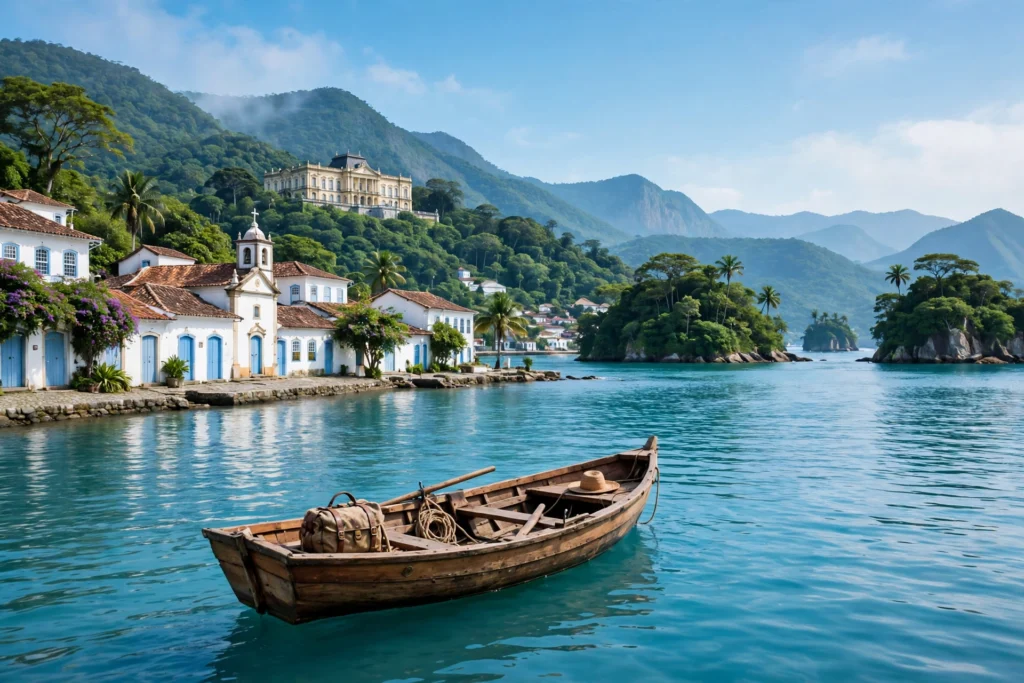
Rio deserves four or five days on its own, but if you have a sixth or seventh day, the towns and islands around it are some of the best day trips in Brazil — and each of them shows a different side of the state of Rio de Janeiro.
Paraty is the pick of the three, and the one to choose if you only have one extra day. About four hours’ drive south of Rio along the coast, Paraty is a colonial port town with cobbled streets, whitewashed houses with colourful doors, and a historic centre that is closed to cars. It was a gold port in the 18th century, and the town has kept its colonial character beautifully: the streets are designed to flood with the tide, washing them clean, and the churches and mansions are among the best preserved in Brazil. The bay around Paraty is dotted with islands and beaches, and the classic day trip is a boat tour from the harbour, stopping to swim at quiet beaches and snorkel in clear water. Paraty is also famous for cachaça, and the small distilleries (alambiques) around the town offer tastings. A day trip is possible but long — leave Rio by 7am and expect to be back after 9pm — so many travellers stay overnight. If you have the time, two days in Paraty is better than one.
Petrópolis is the opposite kind of trip: a cool mountain town about an hour and a half north of Rio, at 800 metres above sea level, where the Brazilian emperors had their summer palace. The Imperial Museum, in the former summer palace of Dom Pedro II, is the main attraction — a pink palace full of imperial furniture, the crown jewels and the history of the Brazilian empire — and the town around it is pleasant, leafy and refreshingly cool after the heat of Rio. The Crystal Palace, the cathedral where the imperial family are buried, and the house of the aviation pioneer Santos Dumont are all within walking distance. Petrópolis is an easy day trip by bus or car, and it is the best choice if you want a break from the beach and a taste of Brazil’s imperial history.
Ilha Grande is a car-free island about two hours from Rio, reached by ferry from Angra dos Reis or Mangaratiba, and it is the best escape from the city altogether. The island is almost entirely Atlantic forest, with no cars, no banks and very little development — just trails, beaches and small villages. The most famous beach, Lopes Mendes, is a long curve of white sand reached by a boat and a short trail, and it is regularly named one of the best beaches in Brazil. The island also has good snorkelling, kayaking and hiking, including the trail to the peak of Pico do Papagaio for the view over the bay. Ilha Grande works as a day trip, but it is much better as an overnight stay: the last ferry back to the mainland leaves in the late afternoon, and the island is at its best in the evening, when the day-trippers have gone and the villages are quiet.
Two shorter options are worth knowing. Niterói, across the bay from Rio and reached by ferry in 20 minutes or by bridge in about 40 minutes, has the extraordinary Museum of Contemporary Art, designed by Oscar Niemeyer as a red disc on a cliff above the bay, and the views back across to Rio from Niterói are some of the best in the city. Búzios, about three hours east along the coast, is a smart resort town with small beaches, good restaurants and a lively main street — the place to go if you want a weekend of beach clubs and good food. The island and coastal day-trip logic — a boat in the morning, a beach in the afternoon, and a slow evening in a small town — is the same one that shapes the trips in our Panama travel guide, our Malta travel guide and our Yellowstone travel guide, where the best days are also the ones that start early and end slowly.
How Much Does Rio de Janeiro Travel Cost?

Rio is one of the best-value big cities in the world for visitors from the United States, and it is also a city where costs can swing sharply with the season. A mid-range trip — a good hotel in Ipanema, meals out, the two big sights and a day trip — costs roughly $100–160 a day per person, excluding flights. A budget trip can be done for $50–70 a day, and a comfortable trip with a smart hotel and a private guide will run to $200 or more. The figures below are planning ranges for 2026 — confirm all prices before you book, because exchange rates and seasonal prices change, and Carnival week can double or triple hotel rates.
| Item | Typical range | Notes |
|---|---|---|
| Return flight US–Rio | $600–1,200 | Cheaper from Miami and the East Coast; dearest at Carnival and New Year |
| Mid-range hotel (Ipanema/Copacabana) | $90–180 per night | Leblon $130–250; hostel dorm $15–30 |
| Budget hotel / guesthouse | $50–90 per night | Best value in Botafogo and Copacabana |
| Per-kilo lunch | R$20–80 ($4–15) | The best-value meal in the city |
| Dinner in a good restaurant | R$80–200 ($15–40) | More in Leblon; less in Botafogo |
| Caipirinha | R$15–50 ($3–10) | Cheapest at beach kiosks |
| Christ the Redeemer ticket | Well over R$100 | Varies by season and departure point; book online |
| Sugarloaf cable car | Well over R$100 | Varies by season; sunset slots sell out |
| Metro single ride | R$7.90 | Contactless card accepted at the gates |
| Uber airport–Copacabana | $12–18 | Taxi around $20–25 |
| Uber within the South Zone | $3–8 | Cheap and the default for short trips |
| Day trip to Paraty (tour) | $60–120 | Includes transport and boat; overnight is better |
| Daily total — budget | $50–70 | Hostel, per-kilo meals, metro, free beaches |
| Daily total — mid-range | $100–160 | Good hotel, restaurants, sights, Uber |
| Daily total — comfortable | $200+ | Smart hotel, private guide, churrascaria dinners |
The biggest saving is the season. A hotel that costs $180 a night in February can cost $90 in May, and the flights follow the same pattern. The second saving is food: eat your main meal at a per-kilo buffet at lunch, snack on fruit and açaí, and save the restaurant dinners for two or three nights rather than every night. The third saving is the sights: Christ the Redeemer and Sugarloaf are the two expensive tickets, and everything else — the beaches, the promenade, the Selarón Steps, the Lapa arches, the sunset at Arpoador — is free. A day in Rio can cost almost nothing if you want it to, and that is part of the city’s charm. For the full budgeting method — splitting a trip into flights, stays, food, sights and a contingency fund — the framework in our guide to how to prepare a travel budget is the one to use, and it works for Rio exactly as it does for any other destination.
Sample Rio Itineraries: 4 Days and 5 Days
Four days is the minimum for a first trip, and five days is the comfortable version. Both itineraries below assume you are staying in Ipanema or Copacabana, and both build in a spare morning for cloud at Corcovado.
| Day | 4-day itinerary | 5-day itinerary |
|---|---|---|
| Day 1 | Arrive at Galeão, Uber to hotel, afternoon walk on Copacabana promenade, sunset at Arpoador, dinner in Ipanema | Arrive, settle in, Copacabana promenade walk, sunset at Arpoador, dinner in Ipanema |
| Day 2 | Christ the Redeemer by early train, afternoon in Santa Teresa and Lapa, evening in Botafogo | Christ the Redeemer by early train, afternoon at Ipanema beach (Posto 9), evening in Leblon |
| Day 3 | Sugarloaf at sunset, morning at Ipanema beach, Maracanã tour or match in the evening | Sugarloaf at sunset, morning in Santa Teresa and Lapa, evening in Botafogo |
| Day 4 | Morning at Leblon beach and market, last lunch at a per-kilo restaurant, depart | Day trip to Petrópolis (Imperial Museum, cool mountain air), evening in Copacabana |
| Day 5 | — | Day trip to Ilha Grande or Paraty (early start, boat and beach), farewell dinner in Ipanema |
4 days — the essentials. Day 1 is arrival and the beachfront: walk Copacabana, watch the sunset from Arpoador, eat in Ipanema. Day 2 is Corcovado in the morning and the creative neighbourhoods in the afternoon. Day 3 is the beach in the morning and Sugarloaf at sunset, with a Maracanã tour or a match if the fixture list allows. Day 4 is a slow morning in Leblon, a last per-kilo lunch, and the flight home. This is a full trip, and it works — but it has no slack, so keep Day 2 flexible in case Corcovado is in cloud.
5 days — the comfortable version. The extra day goes to a day trip, and the trip is better for it. Days 1 to 3 follow the 4-day shape but more slowly, with a proper beach afternoon on Day 2. Day 4 is Petrópolis, the cool mountain town with the Imperial Museum, and Day 5 is Ilha Grande or Paraty — a boat, a beach and a slow evening. If you are deciding how many days a destination deserves, the framework in our guide to how to find travel inspiration is a useful way to match the length of a trip to what you actually want from it, and a travel itinerary template will help you sketch the days before you book.
Frequently Asked Questions About Rio de Janeiro Travel
1. Is Rio de Janeiro safe for tourists?
Rio is safe for tourists who take sensible precautions, and it is not safe for tourists who ignore them. Stay in the South Zone (Ipanema, Leblon, Copacabana, Botafogo), use Uber and the metro, keep your phone out of sight, do not walk on the beaches after dark, and do not enter favelas — which the US State Department rates Level 4 Do Not Travel, including guided tours. The most common crime against visitors is phone snatching, and the most important safety habit is keeping your phone in a zipped bag or front pocket. Read the full safety section at the top of this guide before you travel.
2. Do US citizens need a visa to visit Brazil?
Yes. US, Canadian and Australian citizens need a Brazil eVisa, reinstated on 10 April 2025. It costs $80.90, is valid for 10 years with stays of up to 90 days a year, and is applied for online through the official VFS portal at brazil.vfsevisa.com. Processing takes up to 10 business days, and the portal advises applying two months before travel and not buying non-refundable tickets until the eVisa is approved.
3. How many days do I need in Rio de Janeiro?
Four days is the minimum for a first trip: a day for the beaches, a day for Corcovado and the neighbourhoods, a day for Sugarloaf and the Maracanã, and a morning to spare. Five days is better, because the extra day goes to a day trip — Petrópolis, Ilha Grande or Paraty. A week lets you add Carnival-season events, a second day trip and a proper rest day on the beach.
4. What is the best time to visit Rio de Janeiro?
April to June and September to November are the best months, with warm, drier weather, clear viewpoints and lower prices. May to September is the cheapest and driest stretch. December to March is hot, humid and expensive, and it is the season for Carnival — which runs 5–13 February 2027 — and for the New Year’s Eve fireworks on Copacabana.
5. How much does a trip to Rio de Janeiro cost?
Excluding flights, budget roughly $50–70 a day at a budget pace, $100–160 a day at a mid-range pace, and $200 or more a day for a comfortable trip. Return flights from the US typically cost $600–1,200. Christ the Redeemer and Sugarloaf each cost well over R$100, a metro ride is R$7.90, and a per-kilo lunch costs roughly R$20–80. All figures are planning ranges — confirm prices before you book.
6. Should I visit Rio during Carnival?
Yes, if you want the biggest party in the world — and only if you book months ahead. Carnival runs 5–13 February 2027, the Sambadrome parades are the headline event, and the free street parties (blocos) are the best part for most visitors. Expect hotel prices to double or triple, book flights and Sambadrome tickets early, carry only a little cash and a copy of your passport in the crowds, and keep your phone deep in a zipped pocket.
Conclusion
Rio de Janeiro is a city that asks a little more of its visitors than most beach destinations — a visa, a safety routine, a neighbourhood choice — and gives back far more than most of them. The beaches are as good as their reputation, the two great viewpoints are genuinely unmissable, the food is generous and cheap, and the music, the football and the Carnival are unlike anything else in the world. The travellers who love Rio are the ones who base themselves in the South Zone, who go early to the mountains and late to the beaches, who eat at per-kilo buffets and drink caipirinhas at sunset, and who treat the safety rules as part of the trip rather than a reason to avoid it. Get the eVisa sorted two months before you travel, check the US State Department travel advisory for Brazil again before you go, and give the city four or five days. Rio will do the rest.
People also read: London Travel Guide, Morocco Travel Guide, Iceland Travel Itinerary, Best Places to Travel in January, Travel Itinerary Template, How to Prepare a Travel Budget

M. Adil is the founder and editor of SoloTravelPro. He writes practical, research-based travel guides that help travellers plan with confidence — from first-time city breaks to national parks and island escapes. Every guide is built on official sources, current prices and honest, usable advice, so readers can plan smarter and travel better.

Other Articles