
Quick Answer
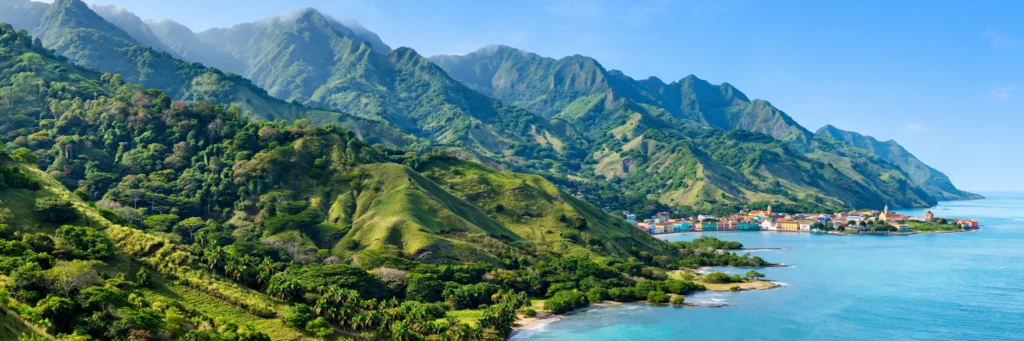
Colombia is not one trip — it is several trips stacked on top of each other, and that is exactly why it rewards planning. In a single well-planned visit you can walk the steep, mural-covered streets of Bogotá at 2,640 metres above sea level, ride the cable cars of Medellín through green hills that stay spring-like all year, swim off the walled old town of Cartagena, and wake up in the Coffee Region to mist rolling over wax palms taller than a ten-storey building. This colombia travel guide puts those four places together into one realistic route, because they connect well by short domestic flights and they show you the country’s range without asking you to cross it end to end.
If you have ten days, this is the shape that works best for most first-time visitors: two nights in Bogotá, three in Medellín (with a day trip or an overnight in the Coffee Region if you can stretch it), two in Salento and the Cocora Valley, and three in Cartagena, with a possible extension to Santa Marta and Tayrona National Park if you have two more days. Fly between the big regions rather than taking the long mountain buses for every leg — you will save whole days — and keep one slow leg, such as the bus from Pereira or Armenia into Salento, so you actually see the countryside instead of only airports.
The short version of the practical advice is this. The best time depends on where you are going, not on a single national season, so plan by region. Budget roughly $60 to $90 a day travelling modestly, or $120 to $200 a day travelling comfortably, excluding your international flight. US citizens can enter visa-free for up to 90 days and must complete the Check-Mig form before arrival. Read the US travel advisory properly before you go: the country overall is Level 3, “Reconsider Travel,” with specific Level 4, “Do Not Travel,” zones that the standard Bogotá–Medellín–Coffee Region–Cartagena circuit does not enter. City crime is real and mostly opportunistic, so the habits in the safety section below matter more than any single neighbourhood choice. And give Bogotá’s altitude a full day of respect — plan your first day gently, drink water, and do not schedule your hardest walk for the morning after you land.
Colombia rewards travellers who slow down a little. The coffee tastes better when you have time to ask where it was grown. The street art in Bogotá means more when a guide explains whose wall it is. The Caribbean coast is at its best when you are not rushing from a flight to a boat to a bus in a single day. Use this guide to build that kind of trip: a route that makes sense, costs you can actually plan around, and honest advice about the parts other guides gloss over.
Best Time to Visit Colombia
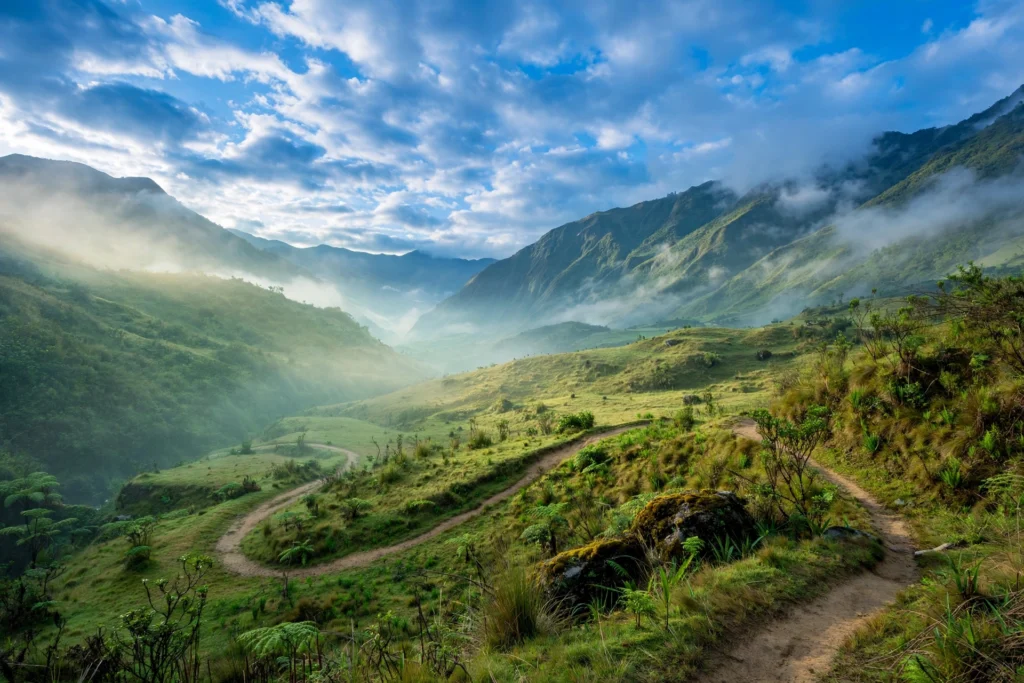
Most guides give Colombia one “best time” and move on. That is misleading, because Colombia sits on the equator and its weather is driven far more by altitude and by which coast you are on than by a summer-and-winter calendar. The official Colombia Travel portal is a useful starting point for regional conditions before you fix your dates. The honest answer is that there is no single best month — there is a best month for the place you most want to enjoy.
The Andes: Bogotá, Medellín and the Coffee Region
Bogotá, Medellín and the Coffee Region sit in the Andes, and their seasons are really dry periods and wet periods rather than hot and cold ones. The driest, sunniest windows are generally December to March and July to August. Those are the best months for walking Bogotá’s old town, hiking in the Cocora Valley, and sitting outside in Medellín in the evening without a sudden downpour sending everyone indoors.
The wetter months, roughly April to June and September to November, do not make travel impossible — far from it. Rain in the Andes usually arrives as a heavy afternoon shower and then clears, and the countryside is at its greenest. If you travel in a wet month, plan outdoor activities for the morning, carry a light rain jacket, and book accommodation with a comfortable place to wait out a storm. Prices and crowds are also lower, which is a genuine trade-off worth considering. Medellín, famously called the City of Eternal Spring, stays around 22°C (about 72°F) for most of the year, so its “best time” is really about rain rather than temperature. Bogotá is cooler, often 14–20°C (57–68°F) during the day and chilly at night, and it feels colder than the thermometer suggests when the wind picks up at altitude.
The Caribbean Coast: Cartagena, Santa Marta and Tayrona
The Caribbean coast runs on a different rhythm. Cartagena is hot and humid year-round, typically 28–32°C (82–90°F), and the sea is warm enough to swim in every month. The driest months are December to April, which is also the busiest period, when the old town is full and hotel prices peak. May to November brings more rain, usually in short, intense bursts, and September and October are the wettest months. Many travellers still prefer this greener, quieter season, especially if they are happy to plan beach time for the morning.
One practical exception matters if Tayrona National Park is on your list: the park normally closes for a few weeks each year for ecological recovery and for the Indigenous communities who care for the land to carry out traditional work. The closure dates vary and are announced in advance, so check before you build an itinerary around Tayrona, and have a backup plan — the beaches around Santa Marta and the Rosario Islands off Cartagena are good alternatives.
The Pacific Coast
The Pacific coast is wet for most of the year, and that is part of its character rather than a flaw. Towns such as Nuquí and Bahía Solano are reached mainly by small plane, and the draw is whales, jungle, surf and Afro-Colombian culture rather than guaranteed sunshine. If you add the Pacific to a trip, treat rain as the default, pack accordingly, and choose your dates around whale season (roughly July to October) if seeing humpback whales is the reason you are going. This is the one region where the weather genuinely shapes whether the trip works, so do not bolt it onto a first visit as an afterthought.
Caño Cristales: A Window, Not a Season
Caño Cristales, the river in the Meta department famous for its red, yellow and green aquatic plants, is the clearest example of why “best time” needs a place attached to it. The river’s colours appear only when water levels and sunlight line up, roughly June to November. Outside that window, the river is still beautiful, but it is not the river of the photographs. If Caño Cristales is the reason for your trip, plan around June to November and book through a licensed local operator, since access is regulated and visitor numbers are limited. If you are travelling in December to March, enjoy the Andes and the Caribbean instead and save Caño Cristales for another trip.
When to Go: A Simple Rule
If you want one simple rule, it is this: for a first trip covering Bogotá, Medellín, the Coffee Region and Cartagena, December to March and July to August give you the best odds of dry days in the mountains and on the coast at the same time. If you can only travel in a wetter month, you will still have a good trip — just front-load outdoor plans into mornings, accept one rainy afternoon, and enjoy the lower prices. The worst choice is not a wet month; it is trying to see the whole country in a week and spending the trip in transit.
How Many Days Do You Need in Colombia
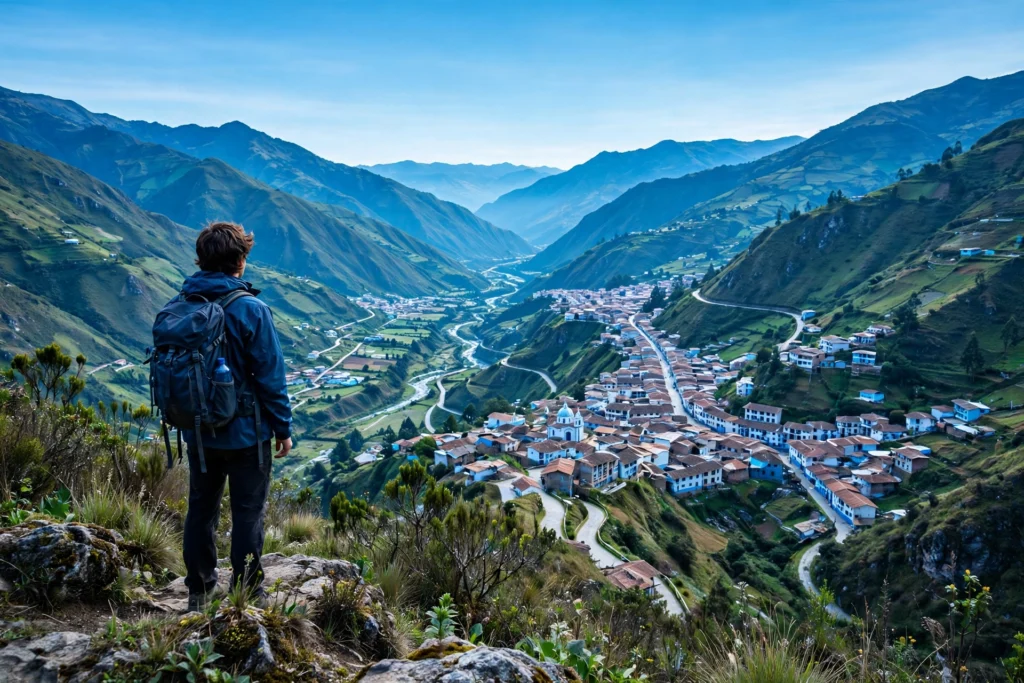
Colombia is a large country, and its mountain roads are slow. The number of days you need depends less on how many places you want to tick off and more on how much time you are willing to spend moving between them. A realistic minimum for the classic circuit is ten days. Seven days can work if you limit yourself to two regions — for example, Medellín and Cartagena, or Bogotá and the Coffee Region — but trying to cover all four in a week means you will spend a third of the trip in airports and buses and arrive everywhere tired.
Ten days gives you the shape described in the Quick Answer: enough time to acclimatise in Bogotá, to see Medellín properly rather than just its famous cable cars, to walk the Cocora Valley without rushing, and to have at least one unhurried day in Cartagena. Twelve to fourteen days is the sweet spot if you want to add Tayrona and Santa Marta, or to spend a third night in the Coffee Region and visit a working coffee farm properly. Three weeks opens up the Pacific coast, the Amazon gateway of Leticia, or Caño Cristales in season, but those are additions, not requirements for a first trip.
A useful planning principle is to count nights, not days, and to protect your last night. A flight home that leaves Bogotá in the morning means your final night should be in Bogotá, not in Cartagena with a dawn domestic flight and a tight connection. Similarly, your first night should be wherever your international flight lands, even if your heart is already in Medellín — arriving at altitude, tired and jet-lagged, and then immediately taking another flight is how trips start badly. If you are building your first multi-stop itinerary, the structure in our Travel Itinerary Template — one base per region, one travel day between bases, one unscheduled half-day per stop — works well for Colombia precisely because the distances look short on a map and feel much longer on a mountain road.
A Realistic 10-Day Route
- Days 1–2: Bogotá. Arrive, acclimatise, explore La Candelaria and the Gold Museum, ride the cable car to Monserrate.
- Days 3–5: Medellín. Fly from Bogotá, explore El Poblado and Laureles, ride the Metrocable, take a day trip to Guatapé if you wish.
- Days 6–7: Coffee Region. Fly or bus to Pereira or Armenia, base in Salento, hike the Cocora Valley, visit a coffee farm.
- Days 8–10: Cartagena. Fly from Pereira or Armenia, explore the walled city and Getsemaní, take a boat to the Rosario Islands, fly home via Bogotá if needed.
This route deliberately flies between regions and keeps bus journeys short. The alternative — Bogotá to Medellín by bus is roughly nine hours, Medellín to the Coffee Region another five or six — is possible and some travellers enjoy it, but it consumes days that most ten-day trips cannot spare. The section on getting around below gives realistic times for each choice.
Bogotá: The High-Altitude Capital
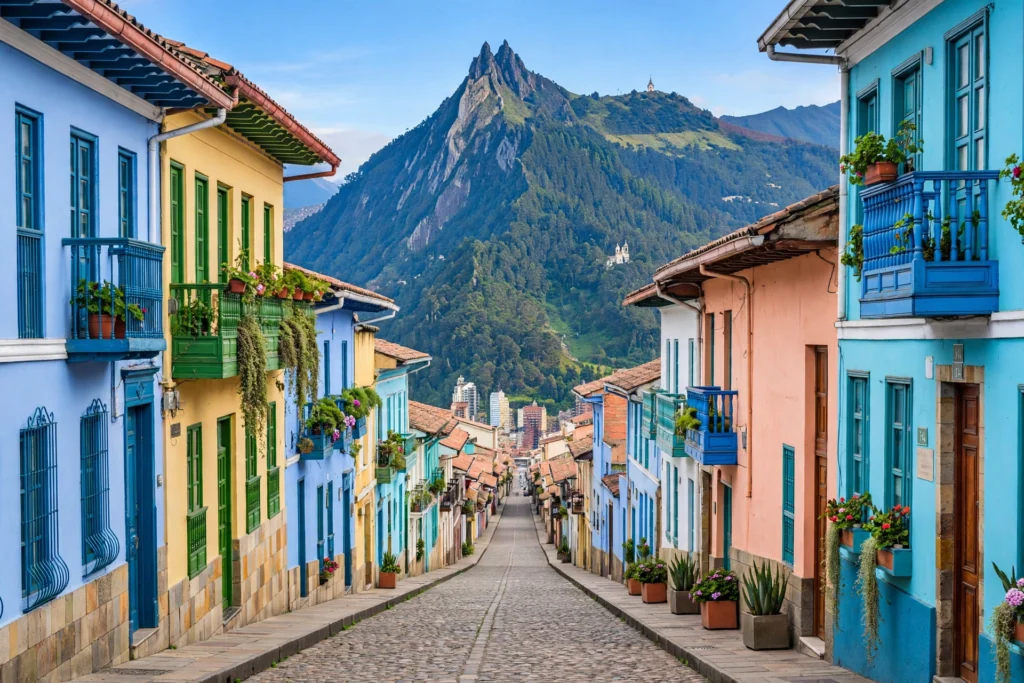
Bogotá is the city most first-time visitors underestimate. It does not have Cartagena’s postcard colours or Medellín’s perfect weather, and on a grey afternoon at altitude it can feel austere. Give it two days and it reveals itself: one of the great museum cities of South America, a street-art capital, a place where colonial churches stand beside glass towers, and where the food scene — from market stalls to fine dining in the Zona G — is serious about Colombian ingredients.
Altitude First, Sightseeing Second
Bogotá sits at about 2,640 metres (8,660 feet). For comparison, that is higher than Denver and high enough that many visitors feel it: a mild headache, shortness of breath on stairs, poor sleep on the first night, and a surprising tiredness after a normal walk. Most people adjust within 24 to 48 hours. The practical response is unglamorous and effective: plan your first day gently, drink more water than usual, avoid heavy alcohol on arrival night, eat lightly, and do not schedule Monserrate or a long uphill walk for your first morning. If you have heart or lung conditions, talk to your doctor before the trip. Altitude sickness medicine exists, but for most healthy visitors, rest and water are enough, and symptoms that worsen rather than improve deserve medical attention.
Monserrate, the mountain that rises above the city, is worth the trip once you have adjusted. The cable car and funicular both reach the summit, where the views across the savanna on a clear day are extraordinary. Go in the morning for the best light and the clearest air, and take a layer — it is noticeably colder and windier at the top than in the city below.
What to See
Start in La Candelaria, the historic centre, where the streets are steep, the houses are painted in strong colours, and the walls carry some of the best street art in Latin America. The Gold Museum (Museo del Oro) is the single essential museum: its collection of pre-Hispanic goldwork is world-class, and the top-floor room, where the lights dim and hundreds of gold pieces glow at once, is genuinely moving. The Botero Museum, free to enter, holds a large collection of Fernando Botero’s famously plump figures alongside works by Picasso, Monet and others. Bolívar Square, the cathedral and the surrounding government buildings give you the civic heart of the city, and the Paloquemao market is the place to see — and taste — Colombia’s fruit in full: lulo, granadilla, mangosteen and dozens of varieties you will not find at home.
Beyond La Candelaria, Chapinero and the Zona G offer the city’s best restaurants and a more local, residential feel. Usaquén, to the north, has a Sunday flea market around its colonial square that is worth timing a visit for. If you have a third day, the Salt Cathedral of Zipaquirá, about an hour north, is an underground cathedral carved into a salt mine — an unusual and memorable half-day trip.
Bogotá in Practice
Bogotá’s traffic is notorious, so distances in kilometres mean little; distances in minutes mean everything. Stay centrally for your sightseeing days (see the Where to Stay section for the La Candelaria versus Chapinero choice) and use ride-hailing apps or registered taxis rather than hailing cars on the street at night. The TransMilenio bus system is efficient and cheap but crowded and confusing for a first visit; it is worth trying once in daylight, but it is not the way to enjoy your first day at altitude. Evenings can be cool enough for a jacket year-round, and rain is possible in any month, so a light waterproof layer belongs in your day bag.
Medellín: The City of Eternal Spring
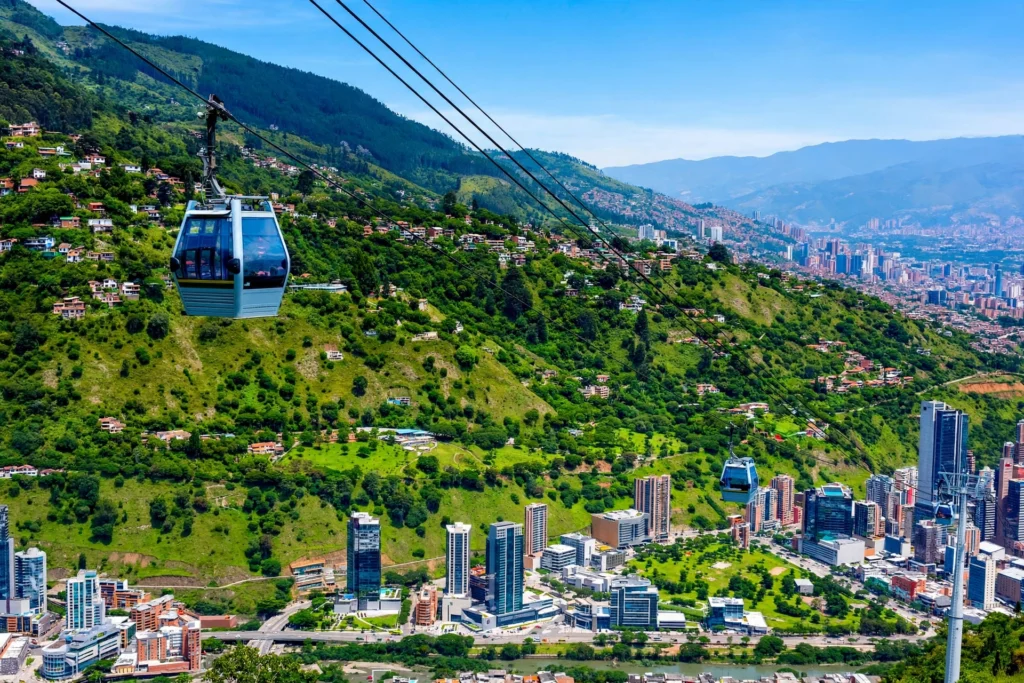
Medellín’s transformation is the story every visitor hears, and it is worth hearing properly. In the 1980s and early 1990s the city was one of the most violent in the world. Today it is a city of cable cars, libraries in hillside neighbourhoods, public escalators in Comuna 13, and a climate that makes outdoor life possible all year. The change is real, but it is also incomplete, and the honest version of the story is more interesting than the slogan. Medellín is safe to visit with normal urban precautions, and it is also a city where inequality and organised crime have not disappeared — they have moved, changed shape, and become less visible to visitors. Enjoy the city, use the precautions in the safety section, and do not mistake a pleasant week in El Poblado for the whole story.
What to See
The Metrocable is both transport and sightseeing: the cable cars that climb from the valley floor into the hillside neighbourhoods give you views of the whole Aburrá Valley and a sense of the city’s geography that no viewpoint on the ground can match. Comuna 13, once one of the most dangerous neighbourhoods in the city, is now famous for its outdoor escalators, street art and guided tours. Go with a local guide from the neighbourhood if you can — the art and the stories make far more sense with someone who lives there, and your money supports the community directly. The guides are also frank about what has changed and what has not, which is exactly the honesty a visitor should want.
El Poblado’s Parque Lleras area is the lively, tourist-friendly centre of bars and restaurants, while Laureles, a short ride away, is quieter, more residential, and where many longer-stay visitors prefer to base themselves. The Plaza Botero in the city centre holds 23 of Botero’s sculptures in the open air and is worth a morning visit, ideally with a guide or in a group, since the surrounding downtown area rewards alertness. For a day trip, Guatapé — a colourful lakeside town about two hours away, famous for its painted house fronts (zócalos) and the giant rock of El Peñol with its 740 steps — is the classic choice, and the climb is worth it for the view over the flooded valley.
Medellín in Practice
Medellín’s metro is clean, efficient and easy to use, and it connects with the Metrocable lines. The weather really is spring-like: pack a light layer for the evening, but leave the heavy jacket at home. The city is spread along a valley, so choose your base by what you want to do in the evenings — lively and walkable in El Poblado, calmer and more local in Laureles — rather than by a single “best neighbourhood” claim. If you are working remotely or staying longer, Laureles and Envigado are popular for a reason: they feel like neighbourhoods first and tourist areas second.
Cartagena and the Caribbean Coast
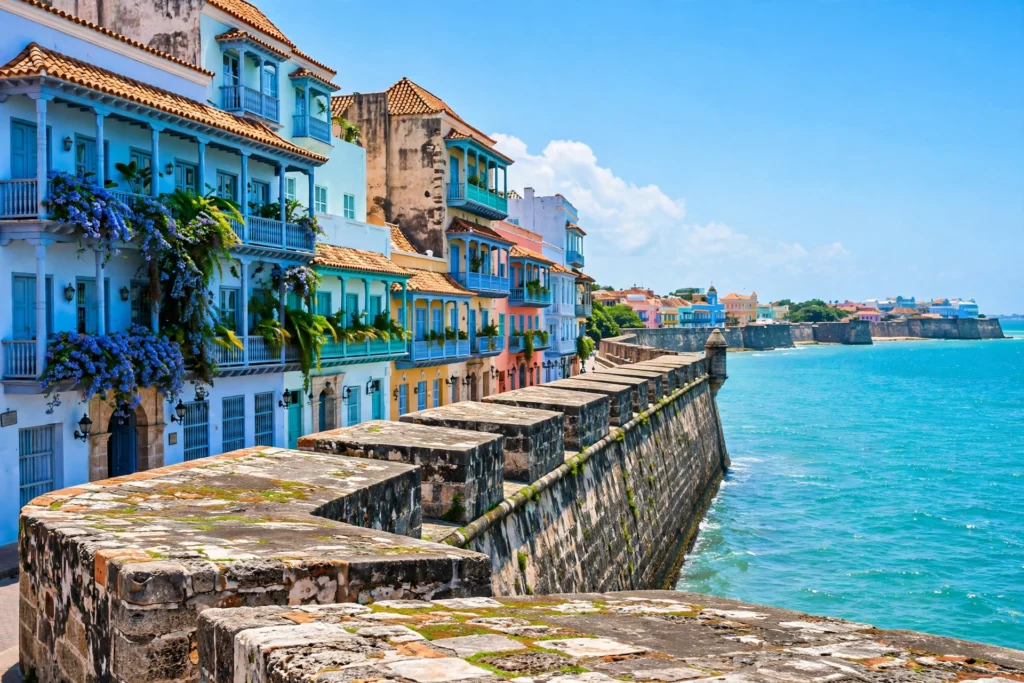
Cartagena is the Colombia of the postcards: a walled old city of bougainvillea-draped balconies, horse-drawn carriages, plazas where street vendors sell fruit and coffee, and fortifications built to keep pirates and empires out. It is also hot, crowded in high season, and more expensive than the rest of the country. Both things are true, and a good Cartagena visit balances them: early mornings in the old town before the heat and the tour groups, afternoons by the sea or in a shaded courtyard, and evenings in Getsemaní, the formerly working-class neighbourhood outside the walls that is now the city’s most atmospheric place to eat, drink and listen to live music.
What to See
Walk the walls at sunset, when the light turns the stone gold and the heat finally breaks. The Castillo San Felipe de Barajas, the great fortress above the city, is best visited early in the morning with water and a hat — there is little shade and the climb is steep. The old town’s plazas, churches and museums repay slow wandering rather than a checklist: the Palace of the Inquisition, the Gold Museum’s Cartagena branch, and the Naval Museum are all worth an hour each, but the real pleasure is the streets themselves. Getsemaní, just outside the Clock Tower gate, is where the street art is boldest and the food is most inventive, and its Plaza de la Trinidad in the evening is one of the great free shows in Colombia: children playing, vendors grilling arepas, musicians gathering, and the whole neighbourhood out together.
Beyond the city, the Rosario Islands offer the classic Caribbean day trip: white sand, clear water and snorkelling, reached by boat in about 45 minutes. Book with a reputable operator, confirm what is included before you pay, and expect a busy beach rather than a deserted one — the islands are popular for a reason. Playa Blanca on Barú island is closer and cheaper, but it is also more crowded and more aggressively commercial. If you want a quieter beach day, the islands are worth the extra cost.
Cartagena in Practice
Heat is the main planning constraint. Schedule sightseeing for before 11 a.m. and after 4 p.m., carry water, and wear a hat — the combination of heat, humidity and strong sun catches visitors who are used to a temperate climate. Prices in the old town, especially for food and drinks in the main plazas, are the highest in Colombia; walking two streets away from the main squares usually halves the bill. Street vendors are persistent but generally good-natured; a polite “no, gracias” works, and agreeing a price before accepting anything — a photo, a hat, a fruit tasting — avoids the awkwardness that follows an assumed sale. The city is walkable within the walls and Getsemaní, but use registered taxis or ride-hailing at night and after rain, when the cobbles are slippery.
The Coffee Region: Salento and the Cocora Valley
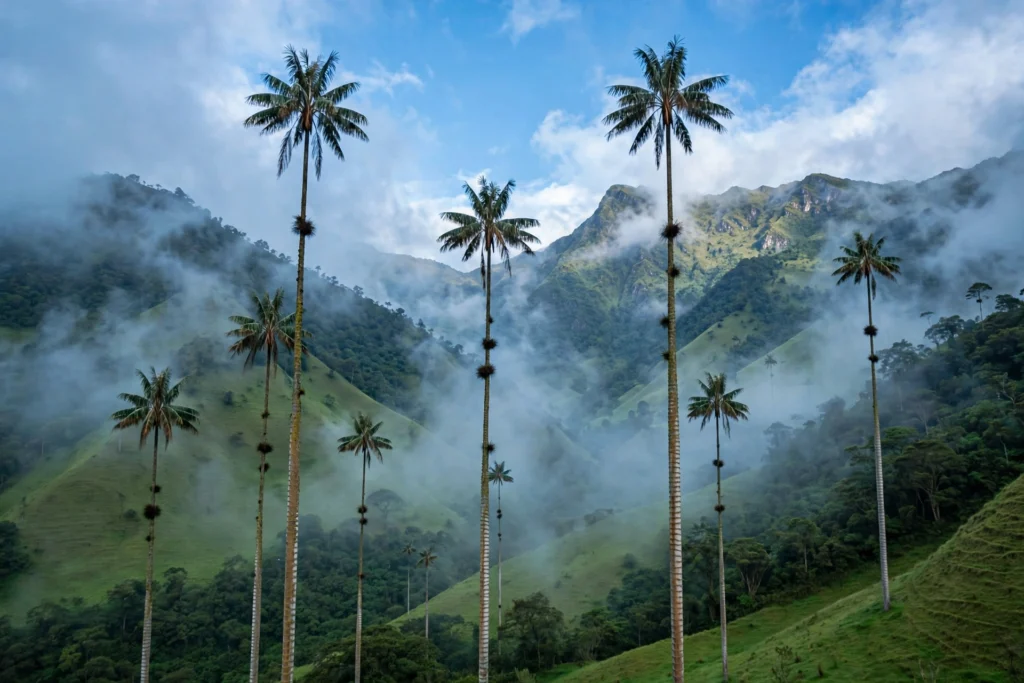
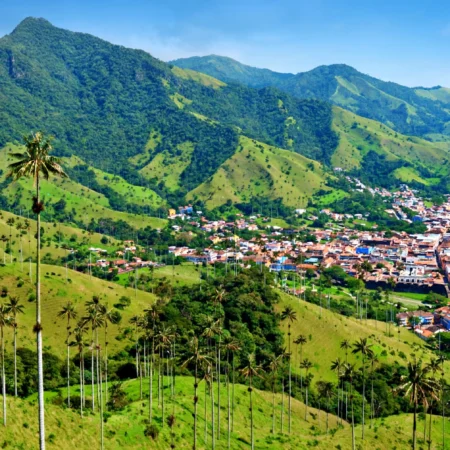
The Coffee Region — the departments of Quindío, Risaralda and Caldas, collectively known as the Eje Cafetero — is the green, gentle heart of a Colombia trip, and Salento is its best base. This small town of colourful houses, a single main square and a main street (Calle Real) full of craft shops and trout restaurants sits in the mountains above the Cocora Valley, home to the wax palm, Colombia’s national tree, which grows to 60 metres and looks like something from another planet when the mist rolls between the trunks.
The Cocora Valley
The Cocora Valley walk is the single best half-day hike on the classic circuit, and it is accessible to most reasonably fit walkers. From Salento, shared jeeps (Willys) leave the main square for the valley entrance. The classic loop takes about four to five hours: up through the wax palm forest, across hanging bridges over the river, and back through farmland with views across the valley. Go early — the jeeps fill up, the mist is at its best in the morning, and afternoon rain is common. Wear proper walking shoes, not sandals: the trail is muddy even in the dry season, and the river crossings are not optional. If you have limited mobility or limited time, the shorter walk to the main palm viewpoint still gives you the essential sight without the full loop.
Coffee Farms
A coffee farm tour is the other essential Coffee Region experience, and it is worth choosing carefully. The best tours are on working farms, small enough that you walk the plants, see the picking and processing, and taste coffee grown on the farm you are standing on — not a show farm built for buses. Ask your accommodation in Salento for a recommendation, and prefer farms that explain the whole chain: growing, picking (by hand, cherry by cherry), pulping, fermenting, drying and roasting. You will taste coffee differently afterwards, and you will understand why Colombian coffee commands the prices it does. Many farms also offer stays, and waking up on a coffee farm, with the mist in the valley below, is one of the trip’s quiet highlights.
Salento in Practice
Salento is small and walkable, and that is the point. Stay in the town itself rather than in a larger city and commuting in — the evenings, when the day-trippers leave and the town belongs to its residents again, are the best time to be there. The town’s signature dish is trout (trucha), served grilled, in garlic sauce or with local mushrooms, and the restaurants along Calle Real are the place to try it. From Salento you can also visit Filandia, a quieter, less-visited coffee town a short bus ride away, which many travellers prefer to Salento itself once they have seen the valley. If you are short on time, one night in Salento covers the valley walk and a farm tour; two nights lets you do both properly and still have an unhurried evening in town.
Tayrona, Santa Marta and the Caribbean North
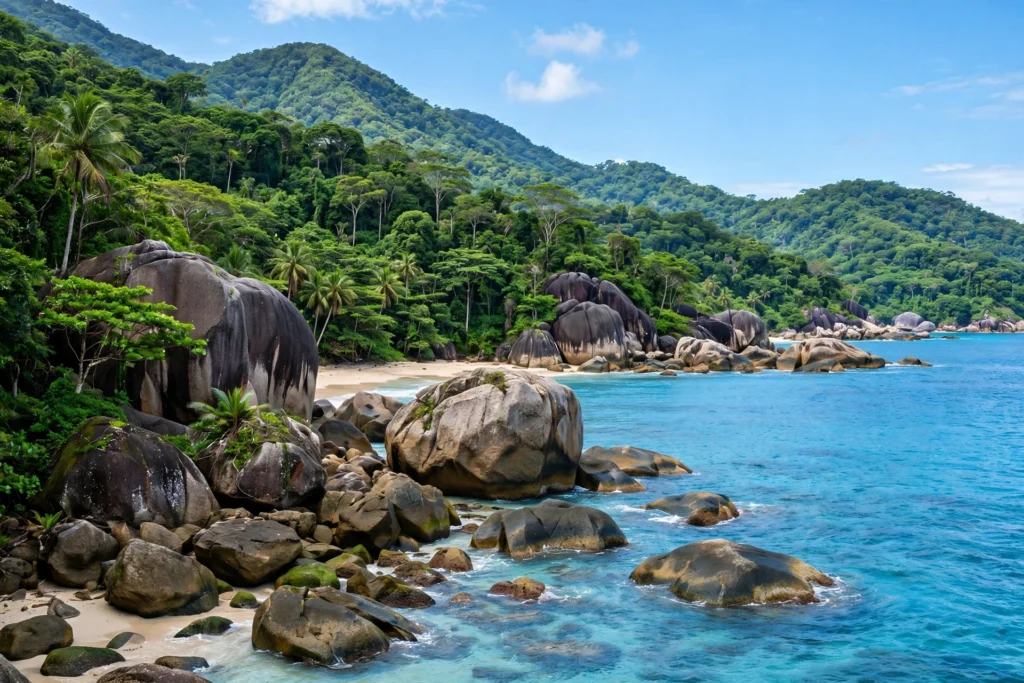
If you have two extra days after Cartagena, the Caribbean north is the natural extension. Santa Marta, Colombia’s oldest city, is a working port town rather than a polished resort, and it is the gateway to two very different experiences: the beaches and jungle trails of Tayrona National Park, and the mountain town of Minca in the Sierra Nevada foothills.
Tayrona is a park of jungle-backed beaches, boulders and clear water, reached by hiking trails from the park entrances. The most famous beach, Cabo San Juan, is a full day’s walk or a combination of a short bus ride and a hike, and it rewards the effort: a double bay of sand and forest, with basic accommodation and a campsite for those who want to stay the night. Swimming is not safe at every Tayrona beach — strong currents make some stretches dangerous, and the park marks which beaches are safe to swim at. Respect those signs; the currents here are not a minor hazard. Entry fees, opening hours and the annual closure periods change, so check current information before you go and carry cash for the entrance and for food inside the park, where card payments are unreliable.
Minca, about 45 minutes uphill from Santa Marta, is the quieter alternative: a small mountain town of waterfalls, coffee and cacao farms, birdwatching and cooler air. It is an excellent choice if Tayrona’s hiking and basic facilities do not appeal, or if you want a day in the mountains after days on the coast. Santa Marta itself is worth a few hours — its cathedral, its waterfront promenade and its market — but most visitors treat it as a base rather than a destination in its own right.
Getting Around Colombia
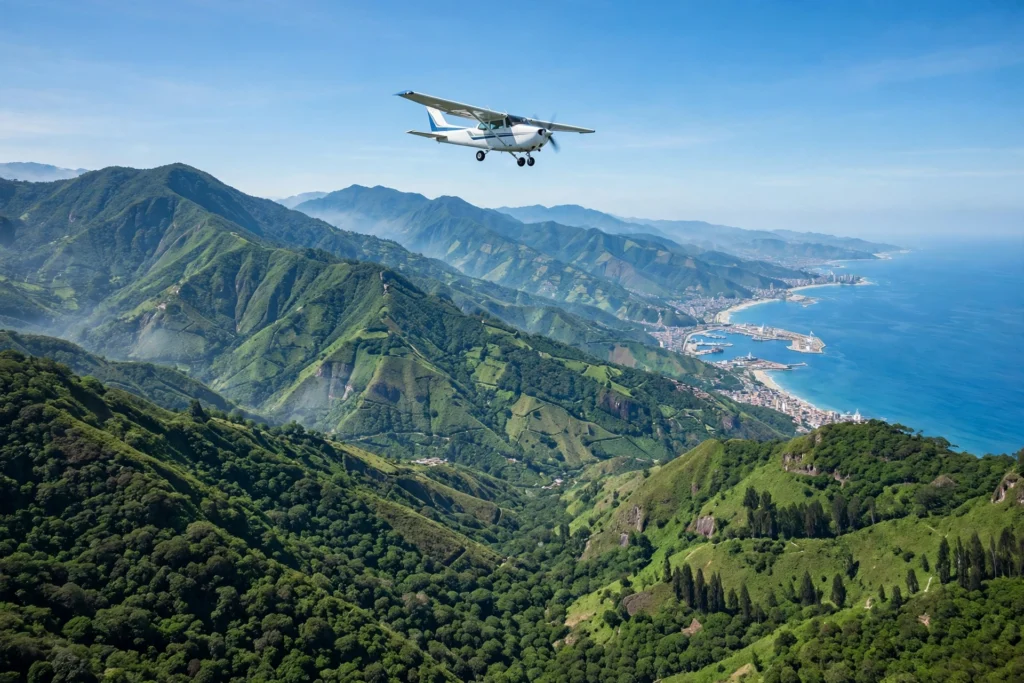
Getting around Colombia is the part of the trip where good planning saves the most time. The country is large, the Andes are steep, and a distance that looks modest on a map can take a very long time on the road. The rule that saves most trips is simple: fly between regions, and use buses for short hops within a region.
Flying Between Regions
Domestic flights are frequent, cheap by US standards, and fast. Bogotá to Medellín is about one hour in the air; Bogotá to Cartagena about one hour and 20 minutes; Medellín to Cartagena about one hour and 15 minutes; Pereira or Armenia (the Coffee Region airports) to Cartagena about one hour and 30 minutes. Airlines including Avianca, LATAM Colombia and the low-cost carrier JetSmart operate these routes. Book early for the best prices, check baggage allowances carefully — low-cost fares often exclude checked bags and charge steeply at the airport — and allow generous connection times if you are connecting to an international flight in Bogotá, since domestic delays are common and the airport is large.
One practical note: Medellín has two airports. José María Córdova (MDE) is the international airport, about 45 minutes from the city; Olaya Herrera (EOH) is the small city airport used for some short domestic routes. Check which airport your flight uses before you book a transfer, and allow extra time for the road from MDE into the city, which can be slow in traffic.
Buses and Mountain Roads
Buses are comfortable, cheap and extensive, but slow in the mountains. As a guide: Bogotá to Medellín by bus is roughly nine hours; Medellín to Pereira or Armenia is five to six hours; Bogotá to Salento is around eight hours via Armenia; Cartagena to Santa Marta is about four hours. Night buses exist on the main routes and save a hotel night, but they also cost you sleep and a morning. For a first trip, the best use of buses is short: Pereira or Armenia to Salento (about one hour), Cartagena to Santa Marta (four hours), Santa Marta to Minca (45 minutes), and the shared jeeps from Salento to the Cocora Valley (about 30 minutes). These are the journeys where you actually see the countryside, stop in small towns, and understand the place between the cities.
Within cities, ride-hailing apps and registered taxis are the practical choice for visitors, especially at night. Agree the fare or confirm the meter before you set off in a street taxi, and use app-based rides where available so the price and route are recorded. In Bogotá and Medellín, the metro and bus systems are usable in daylight and worth trying once, but they are not the relaxing way to see a city for the first time.
Where to Stay in Colombia
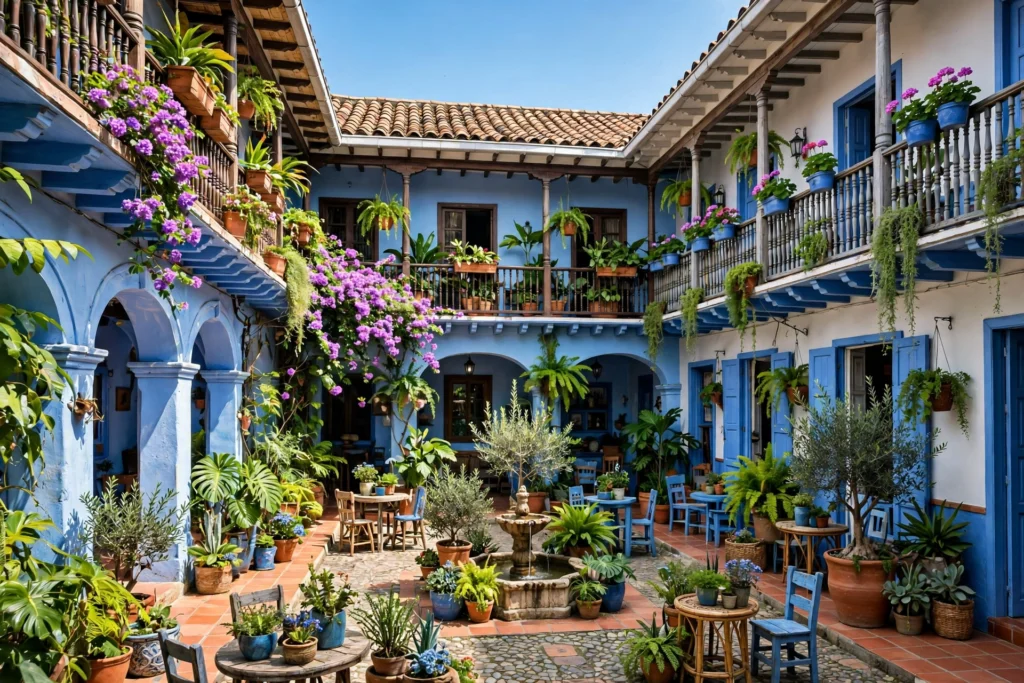
Where you stay in Colombia matters more than usual, because each city has two or three genuinely different neighbourhoods and choosing the wrong one changes your evenings. The advice below is neighbourhood-level, because a city name alone does not tell you what your trip will feel like.
Bogotá: La Candelaria or Chapinero
La Candelaria puts you in the historic centre, steps from the Gold Museum, the Botero Museum and the street art, in colourful colonial houses converted into hostels and boutique hotels. It is the best choice if your Bogotá stay is short and sightseeing is the priority, and it is atmospheric in the evening when the day crowds thin out. The trade-off is that it is quieter at night, some streets feel empty after dark, and you should take a taxi rather than walking far at night. Chapinero, and the neighbouring Zona G, is more residential, livelier in the evening, and better for restaurants and nightlife. It is a short taxi or bus ride from La Candelaria’s sights, and it suits travellers who want a neighbourhood to come home to rather than a historic district to sleep in. If you are staying three nights or more, Chapinero is usually the better base; for one or two sightseeing nights, La Candelaria wins.
Medellín: El Poblado or Laureles
El Poblado is the tourist centre: Parque Lleras and Provenza are full of restaurants, bars and hotels, everything is walkable, and you will meet other travellers easily. It is also the most expensive part of the city, the loudest at night, and the least local in feel. Laureles, west of the centre, is quieter, greener and more residential, with excellent restaurants on its own main streets (Calle 70 and the area around Parque Laureles) and a stronger sense of everyday Medellín life. It is a short taxi or metro ride from El Poblado’s nightlife, so you do not lose access to it. For a first visit of two or three nights, El Poblado is the easy choice; for a longer stay, or if you prefer quiet evenings, Laureles is better. Envigado, south of El Poblado, is a third option that locals often recommend: a small-town feel with a real main square, popular with longer-stay visitors.
Cartagena: Getsemaní or Bocagrande
Getsemaní is the place to stay if you want Cartagena’s atmosphere: colourful streets, street art, live music in Plaza de la Trinidad, and restaurants that locals actually eat in. It is inside walking distance of the walled city but feels like a neighbourhood rather than a museum. The trade-off is noise in the evenings and narrower, busier streets. Bocagrande, the modern beachfront district of high-rise hotels and apartment blocks, is the choice if you want a beach, a pool and a familiar hotel experience, and you do not mind taking a taxi into the old town for dinner. It is comfortable and convenient, but it could be any beach city in the world, and it misses the reason most people come to Cartagena. For a first visit, Getsemaní — or a hotel inside the walls if your budget allows — gives you the city itself; Bocagrande gives you the beach.
The Coffee Region: Salento
In the Coffee Region, stay in Salento itself, or on a coffee farm nearby, rather than in Pereira or Armenia. The larger cities are useful transport hubs, but they are not where the region’s charm lives. Salento’s small hotels and hostels are clustered around the main square and Calle Real, and staying in town means you can catch the early jeeps to the Cocora Valley and enjoy the town after the day-trippers leave. A night on a working coffee farm is the alternative worth considering: quieter, more remote, and a memorable way to wake up in the mountains.
What to Eat in Colombia
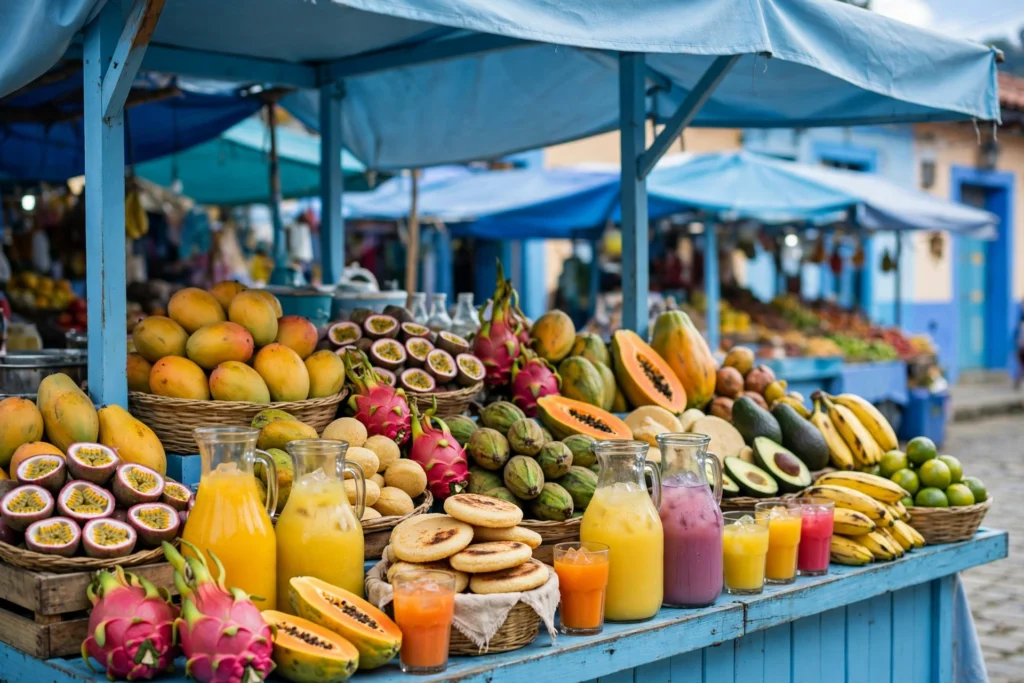
Colombian food is hearty, regional and underrated, and it changes dramatically as you move between the Andes and the coast. The best approach is to eat what the region is known for, in the places where locals eat it, rather than ordering the same dish everywhere.
In the Andes, the bandeja paisa is the famous plate: rice, beans, ground beef, chicharrón (crispy pork), a fried egg, plantain, avocado and arepa, all on one enormous plate. It comes from Antioquia, the region around Medellín, and it is a lunch, not a snack — order one to share if you are not very hungry. Ajiaco, Bogotá’s signature soup, is chicken, three kinds of potato, corn and capers, served with cream and avocado, and it is the perfect cold-weather, high-altitude meal. Arepas — grilled corn cakes — appear everywhere, in dozens of regional forms: thin and crisp in Bogotá, thick and stuffed in Medellín, sweet and cheesy on the coast. Empanadas, soups (sancocho, a hearty meat and root-vegetable stew) and fresh fruit juices are the everyday staples, and the fruit alone is worth the trip: try lulo juice, maracuyá (passion fruit), guanábana (soursop) and a granadilla eaten with a spoon.
On the Caribbean coast, the food shifts to the sea and to Afro-Caribbean flavours: fried fish with coconut rice and patacones (fried plantain), ceviche, and arroz con coco. In Cartagena, eat fish in Getsemaní or in the small restaurants away from the main plazas, where the fish is fresher and the prices are fairer. In the Coffee Region, trout (trucha) is the local speciality, and the region’s coffee — served black, slowly, and with an explanation of where it was grown if you ask — is the drink that defines the place. Colombian coffee culture is not about elaborate drinks; it is about good beans, brewed simply, and drunk often. A tinto, the small black coffee sold everywhere for a few hundred pesos, is the everyday ritual.
Practical food advice: drink bottled water, or water from a reliable filter, rather than tap water in most places, and be cautious with ice and raw salads from street stalls if you have a sensitive stomach. Eat at busy places with high turnover — the food is fresher and the kitchen is proven. Markets are the best lunch in any Colombian city: cheap, fresh, and full of people who eat there every day.
What a Colombia Trip Costs

Colombia is good value by US standards, but it is not uniformly cheap, and Cartagena in high season can surprise visitors who budgeted for Andean prices. The table below gives realistic daily costs per person, excluding international flights, based on mid-range travel in 2025–2026 prices. Treat these as planning ranges, not promises: exchange rates, seasons and your own habits move them in both directions, and prices in Cartagena’s old town run higher than anywhere else in this guide.
| Category | Budget (per day) | Mid-range (per day) |
|---|---|---|
| Accommodation | $20–$35 (hostel dorm or basic private room) | $60–$110 (boutique hotel or good mid-range hotel) |
| Food | $15–$25 (markets, set lunches, street food) | $35–$60 (restaurants, some nicer dinners) |
| Local transport | $5–$10 (buses, metro, occasional taxi) | $10–$20 (ride-hailing, taxis, short tours) |
| Activities and entry | $5–$15 (museums, viewpoints) | $15–$30 (guided tours, boat trips, farm visits) |
| Total per day | $45–$85 | $120–$220 |
For a concrete sense of the total, a sample 10-day trip for one person, excluding international flights but including domestic flights between regions, looks roughly like this: accommodation $600–$1,100 mid-range ($200–$350 budget), food $350–$600 mid-range ($150–$250 budget), domestic flights $120–$250, local transport $100–$200, activities $150–$300. That gives a mid-range total of roughly $1,320–$2,450 and a budget total of roughly $620–$1,250 for ten days, before shopping and before any splurge. A couple sharing a room will spend less per person on accommodation, and a traveller who eats mainly set lunches (almuerzo del día, often $3–$5) and stays in hostels can come in well under the budget range.
Money practicalities: the currency is the Colombian peso (COP). Cash is still important, especially in Salento, in markets and for small buses and jeeps — carry pesos, and use ATMs inside banks or shopping centres rather than standalone street machines. Cards are widely accepted in cities and in mid-range hotels and restaurants, but always have cash for the places that do not take them. Tell your bank you are travelling, and check whether your card charges foreign transaction fees, since a 3% fee on every payment adds up over ten days. If you want a structured way to plan this kind of budget before you go, our guide on How to Prepare a Travel Budget walks through the same daily-cost method with a worked example.
Safety in Colombia: Reading the Advisory Honestly
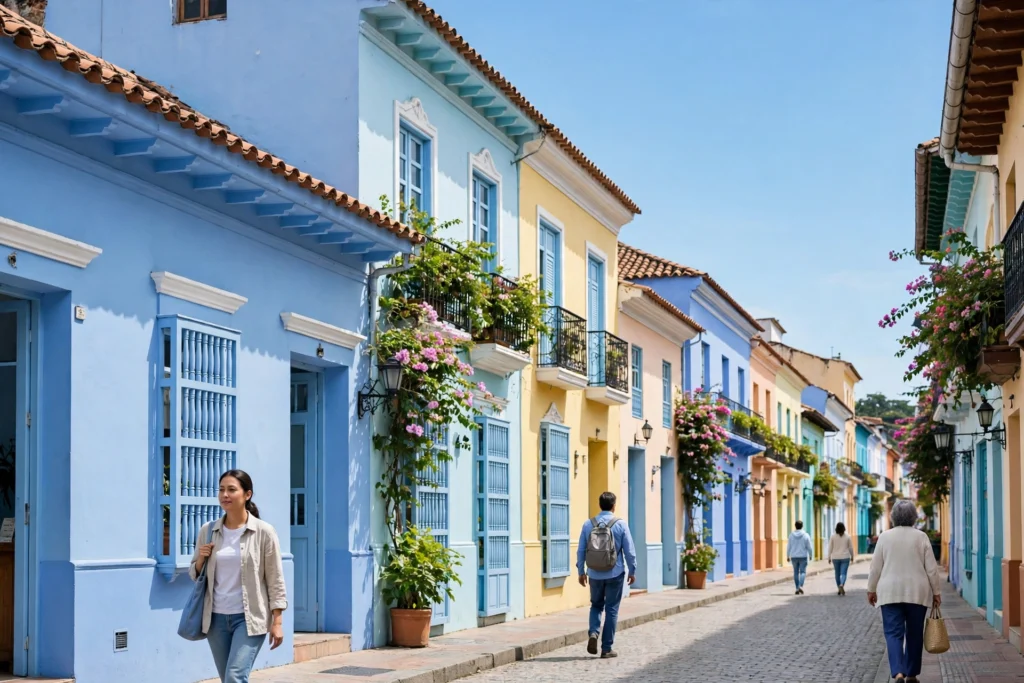
Safety is the subject most guides handle worst: either they dismiss it with “it’s fine now” or they frighten readers with a single crime statistic and no context. The honest version is in between, and it starts with reading the official advice properly.
What the Advisory Actually Says
The US State Department’s Colombia travel advisory, updated 31 March 2026, rates the country overall as Level 3: Reconsider Travel, citing crime and terrorism. Within that overall rating, specific areas are rated Level 4: Do Not Travel. Those areas are: Arauca department; Cauca department except the city of Popayán; Valle del Cauca department except the city of Cali; Norte de Santander department; and the area within 10 kilometres of the Venezuela border. The advisory also notes risks from violent crime, including armed robbery and homicide, and from terrorist activity by armed groups, which is concentrated in the Level 4 areas and in rural and border regions, not in the cities on the standard tourist circuit.
That distinction matters, because the standard route in this guide — Bogotá, Medellín, the Coffee Region (Quindío, Risaralda, Caldas) and Cartagena, with an extension to Santa Marta and Tayrona — does not enter any Level 4 zone. It does not mean those cities are free of crime. It means the risks in those cities are the risks of large Latin American cities — street robbery, phone theft, scams and drink-spiking — rather than the armed-group risks that drive the Level 4 ratings. Both parts of that sentence are important, and a guide that only tells you one of them is misleading you. Check the current US State Department advisory for Colombia before you travel and again before you book anything outside the standard circuit, because ratings and specific warnings change.
City Crime: The Realistic Picture
The most common crimes against visitors are opportunistic: a phone snatched from a hand on a busy street, a bag taken from a restaurant table, a taxi overcharge, a distraction theft in a market. Violent robbery happens, and it happens more often at night, in poorly lit areas, and when a visitor is visibly distracted or visibly wealthy. The precautions that actually reduce risk are unglamorous: do not walk with your phone in your hand on a busy street; carry a cheap day bag rather than an expensive one; leave your passport and most of your cash in your hotel safe and carry a copy; take a registered taxi or ride-hailing car at night rather than walking, even for a short distance; and do not wear expensive jewellery or watches in public. These are the habits that experienced travellers in Bogotá and Medellín use every day, and they work.
Scopolamine, Drink-Spiking and “No Dar Papaya”
Two specific risks deserve honest treatment. The first is scopolamine, sometimes called “Devil’s Breath” in sensational reporting. Scopolamine is a drug that can incapacitate a victim and cause memory loss, and it has been used in Colombia in drink-spiking and, less commonly, in other forms of drugging, often targeting visitors in bars, nightclubs and dating situations. The sensational version — that it can be blown in your face on the street and instantly control your mind — is greatly exaggerated. The realistic version is serious enough: never accept a drink from a stranger, never leave a drink unattended, be cautious about drinks offered in nightlife settings and through dating apps, and do not go home with someone you have just met. If you feel suddenly unwell, confused or unusually drowsy after a drink, seek help immediately and do not try to walk home alone. This advice applies in every country with a nightlife scene; in Colombia it deserves emphasis because the drug is genuinely present.
The second is a Colombian concept that is worth learning: “no dar papaya.” Literally “don’t give papaya,” it means don’t make yourself an easy target — don’t flash valuables, don’t walk alone late at night in an unfamiliar area, don’t leave your belongings unattended. Colombians use the phrase about themselves as much as about visitors, and it captures the local attitude better than any list of rules: be aware, be modest about what you show, and don’t invite trouble. It is not victim-blaming; it is the practical wisdom of people who live with these risks every day.
What to Do in Practice
Register your trip with your embassy’s traveller programme if one is available, keep a copy of your passport and insurance details separate from the originals, and know the number of your hotel and a reliable taxi service before you need them. Avoid the Level 4 areas entirely unless you have a specific, well-informed reason to go and professional local advice — and that does not include curiosity. If you are travelling beyond the standard circuit, to rural areas, to border regions or to the Pacific coast, take specific local advice for that area rather than relying on a general guide. And if something does go wrong — a theft, a scam, a medical issue — report it to the police and to your embassy, and contact your travel insurance promptly; the paperwork is tedious but it matters for claims and for the record.
Packing and Practical Tips for Colombia

Colombia’s packing challenge is that one bag must work for cool Bogotá, warm Medellín, hot Cartagena and muddy Cocora Valley trails. The solution is layers, not bulk: a light waterproof jacket, a warm layer for Bogotá evenings and for the top of Monserrate, breathable clothes for the coast, and proper walking shoes for the valley. A single heavy coat is a waste of space; a fleece or light jacket that packs small is the right choice. Sun protection matters more than most visitors expect — the equatorial sun is strong even on a cloudy day in Bogotá, and at altitude it is stronger still. Bring sunscreen, a hat and sunglasses, and reapply on the coast.
Practical essentials: a day bag that closes securely and sits in front of you in crowds; a money belt or hidden pouch for your passport and spare cash on travel days; a reusable water bottle; a small first-aid kit including any altitude or stomach remedies you normally use; and a phone charger that works with Colombia’s US-style plugs (110V, types A and B), which are the same as in the United States, so most US travellers need no adapter. Spanish helps enormously outside the main tourist areas — even basic phrases for directions, food and prices change how people treat you — but you can travel the standard circuit in English, especially in hotels and established tour companies. Download offline maps for each city before you arrive, since mobile data can be patchy in the mountains and in Tayrona.
Entry, Visas and Health
US citizens do not need a visa for tourist visits to Colombia of up to 90 days, and your passport should be valid for the duration of your stay. All travellers must complete the Check-Mig form online before arrival and before departure — it is free, it is done through the official Migración Colombia system, and any website charging you a fee for it is not the official one. Requirements change, so confirm the current entry rules, including any health or customs declarations, shortly before you travel rather than relying on a guide written months earlier.
On health, the standard advice is to be up to date on routine vaccinations and to discuss travel vaccinations with your doctor or a travel clinic well before departure. Yellow fever vaccination is recommended for travel to certain lowland and Amazon areas and for some national parks, and some countries require proof of yellow fever vaccination on arrival from Colombia — but it is not a universal requirement for every visitor to Bogotá, Medellín or Cartagena, and you should not present it, or be sold it, as if it were. If your trip includes the Amazon, lowland jungle parks or rural areas below 2,300 metres, ask specifically about yellow fever and malaria prevention for those places. For the standard circuit in this guide, the more relevant health preparations are altitude awareness in Bogotá, sun protection everywhere, and the usual care with food and water.
Money, Phones and Connectivity
Buy a local SIM card or an eSIM on arrival if your phone supports it — data is cheap, and having maps and ride-hailing working from the first hour makes the whole trip easier. Wi-Fi is good in hotels and cafés in the cities, patchy in Salento and very limited in Tayrona, so download what you need in advance. Keep small notes for taxis, markets and jeeps, and break large notes whenever you can, since small vendors often cannot change a 50,000-peso note. Tipping is customary in restaurants (often a 10% service charge is already added — check the bill) and appreciated for guides and drivers, but it is not the rigid system it is in the United States; a modest tip for good service is the norm.
When to Book What
Book domestic flights early for the best prices, book Tayrona accommodation and Caño Cristales tours well in advance in high season, and book a coffee farm tour a few days ahead rather than on the morning. Hotels in Bogotá and Medellín rarely need months of advance booking outside major holidays, but Cartagena in December to January and over Easter does — the old town fills up and prices rise sharply. If your dates are flexible, the weeks just after a peak period (late January, early May) often give you good weather, lower prices and quieter streets, which is the best combination a traveller can ask for.
Frequently Asked Questions
Is Colombia safe for tourists?
Colombia is safe to visit with sensible precautions on the standard tourist circuit, and unsafe in specific areas you should avoid. The US advisory rates the country Level 3 overall, with Level 4 Do Not Travel zones in Arauca, Cauca except Popayán, Valle del Cauca except Cali, Norte de Santander, and within 10 km of the Venezuela border. Bogotá, Medellín, the Coffee Region and Cartagena are not in those zones. The main risks there are opportunistic city crime, phone theft and drink-spiking, which the precautions in the safety section address. Avoid the Level 4 areas, check the current advisory before you go, and do not let either reassurance or fear replace that check.
How many days do you need in Colombia?
Ten days is a realistic minimum for Bogotá, Medellín, the Coffee Region and Cartagena together, flying between regions. Seven days works for two regions, and twelve to fourteen days lets you add Tayrona and Santa Marta or spend longer in the Coffee Region. Fewer than ten days for all four regions means too much time in transit and too little time in each place.
What is the best month to visit Colombia?
It depends on the region. For the Andes (Bogotá, Medellín, Coffee Region), December to March and July to August are driest. For the Caribbean coast, December to April is driest and busiest. Caño Cristales only shows its colours from June to November. For a combined first trip, December to March or July to August gives the best odds across regions.
Do US citizens need a visa for Colombia?
No, US citizens can visit Colombia for tourism for up to 90 days without a visa, with a passport valid for the duration of the stay. All travellers must complete the free Check-Mig form before arrival and departure through the official Migración Colombia system. Confirm current requirements before you travel, as rules change.
Is Bogotá’s altitude a problem?
For most healthy visitors, Bogotá’s 2,640 metres causes mild, short-lived symptoms — headache, breathlessness on stairs, tiredness — that pass within 24 to 48 hours. Plan your first day gently, drink plenty of water, avoid heavy alcohol on arrival night, and do not schedule strenuous activity for your first morning. If symptoms worsen, seek medical advice.
How much does a 10-day trip to Colombia cost?
Excluding international flights, a mid-range 10-day trip costs roughly $1,320–$2,450 per person, and a budget trip roughly $620–$1,250, depending on accommodation, food and activities. Cartagena is the most expensive stop; the Coffee Region and Medellín are the best value. See the cost table above for daily ranges.
Conclusion
Colombia is not a country to rush, and it is not a country to fear from a distance either. The trip that works is the one this guide has described: four regions, connected by short flights, each given enough time to show you something different — the museums and altitude of Bogotá, the spring climate and hillside energy of Medellín, the slow green mornings of the Coffee Region, and the heat and colour of Cartagena. Add Tayrona if you have the days, and Caño Cristales if you have the season, but do not try to add everything at once.
Plan by region, not by a single national season. Read the advisory precisely, avoid the Level 4 zones, and take city crime seriously without letting it dominate the trip. Fly between regions, walk the Cocora Valley early, eat the set lunch, drink the coffee where it was grown, and give Bogotá’s altitude a day of respect. Do those things, and Colombia will give you back far more than the postcards promise: a country that is complicated, welcoming, beautiful and — once you have travelled it properly — very hard to leave behind for long.
People also read:
- Best Places to Travel in Mexico — another warm-weather, multi-region trip with the same fly-between-regions logic.
- Ecuador Travel Guide — Andes, coast and high-altitude cities on a neighbouring route.
- Best Places to Travel in January — if your Colombia dates fall in the dry season, these January destinations pair well with it.