
Quick Answer
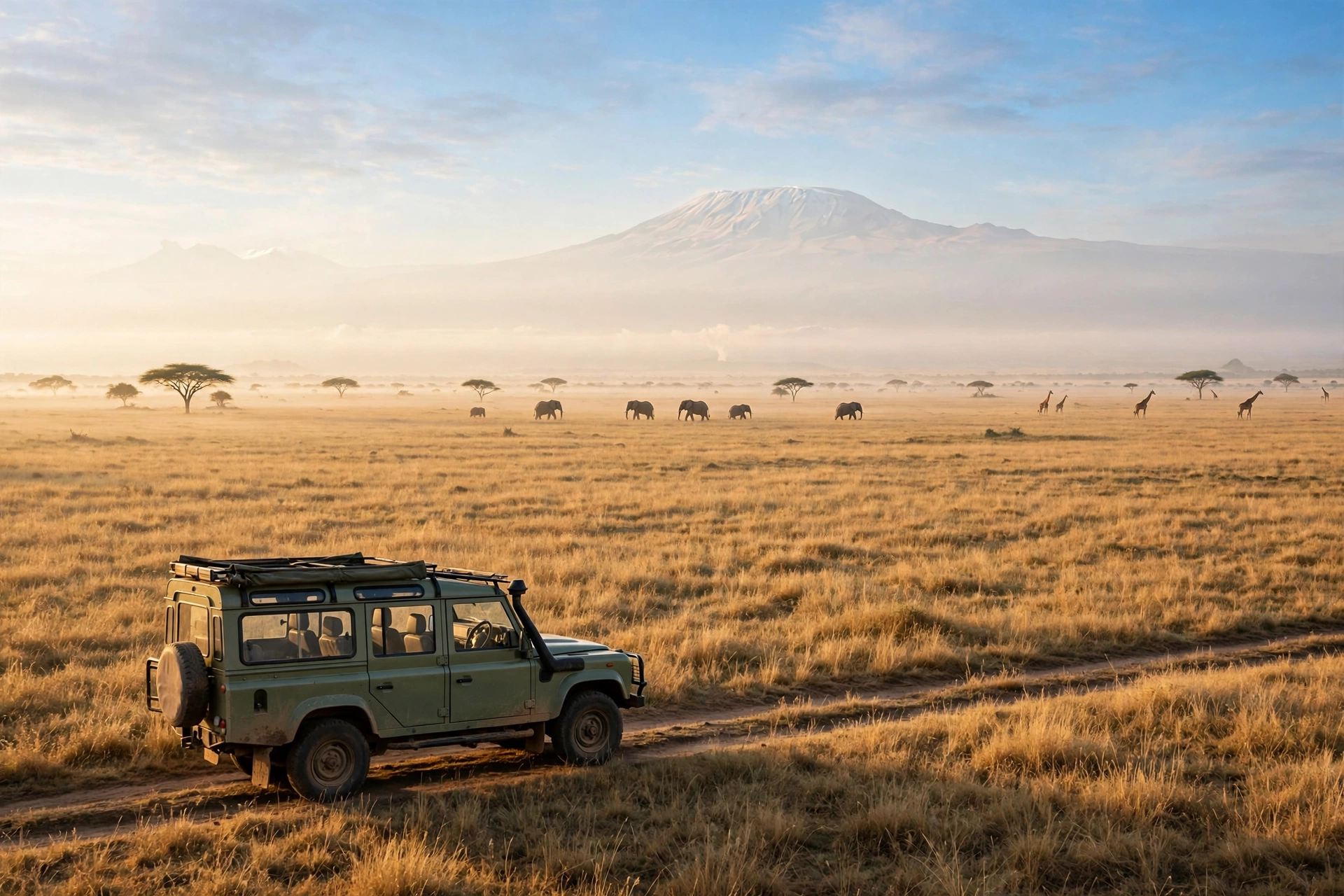
Tanzania is one of the few countries where a single trip can hold three completely different holidays: a wildlife safari on the Serengeti, a trek up Mount Kilimanjaro, and a slow beach stay on Zanzibar. Most first-time visitors should plan 7 to 10 days for a northern-circuit safari, add 3 to 4 days if they want Zanzibar, and allow 6 to 9 days on its own for Kilimanjaro. The easiest months for a first trip are June to October, when the weather is dry and animals gather around water, while January and February are excellent for the wildebeest calving season in the southern Serengeti.
Fly into Kilimanjaro International Airport (JRO) near Arusha for safaris and Kilimanjaro, and use Zanzibar’s airport (ZNZ) for the islands. Most visitors need a visa, and US citizens pay $100 for a multiple-entry visa. Tanzania also requires visitors to hold mandatory inbound travel insurance, currently $44 per adult, so buy that before you travel rather than discovering it at the airport. The currency is the Tanzanian shilling, but US dollars are widely accepted for tours, park fees and hotels — bring clean notes printed after 2009, because older or damaged bills are often refused.
Budget honestly before you fall in love with an itinerary. A mid-range safari typically costs $350 to $600 per person per day, all-in, while a budget camping safari runs $200 to $350 and a luxury lodge trip starts around $600 to $1,500 per person per day. Park fees are a big part of that price: the Serengeti charges $82.60 per adult per day, and Ngorongoro adds a $295 crater fee per vehicle on top of its own entry fee. This guide walks through every piece in order — when to go, how long to stay, where to go, what it costs, and the mistakes that catch first-timers out — so you can build a trip that fits your time and your budget instead of copying someone else’s.
Best Time to Visit Tanzania
There is no single best month for Tanzania, because the country is large and the right month depends on what you most want to see. The long dry season from June to October is the safest default for a first trip. Roads are passable, grass is short so animals are easier to spot, and mosquitoes are fewer. It is also peak season, so lodges cost more and the most popular parks feel busy, especially around the Serengeti’s Mara River crossings in July and August.
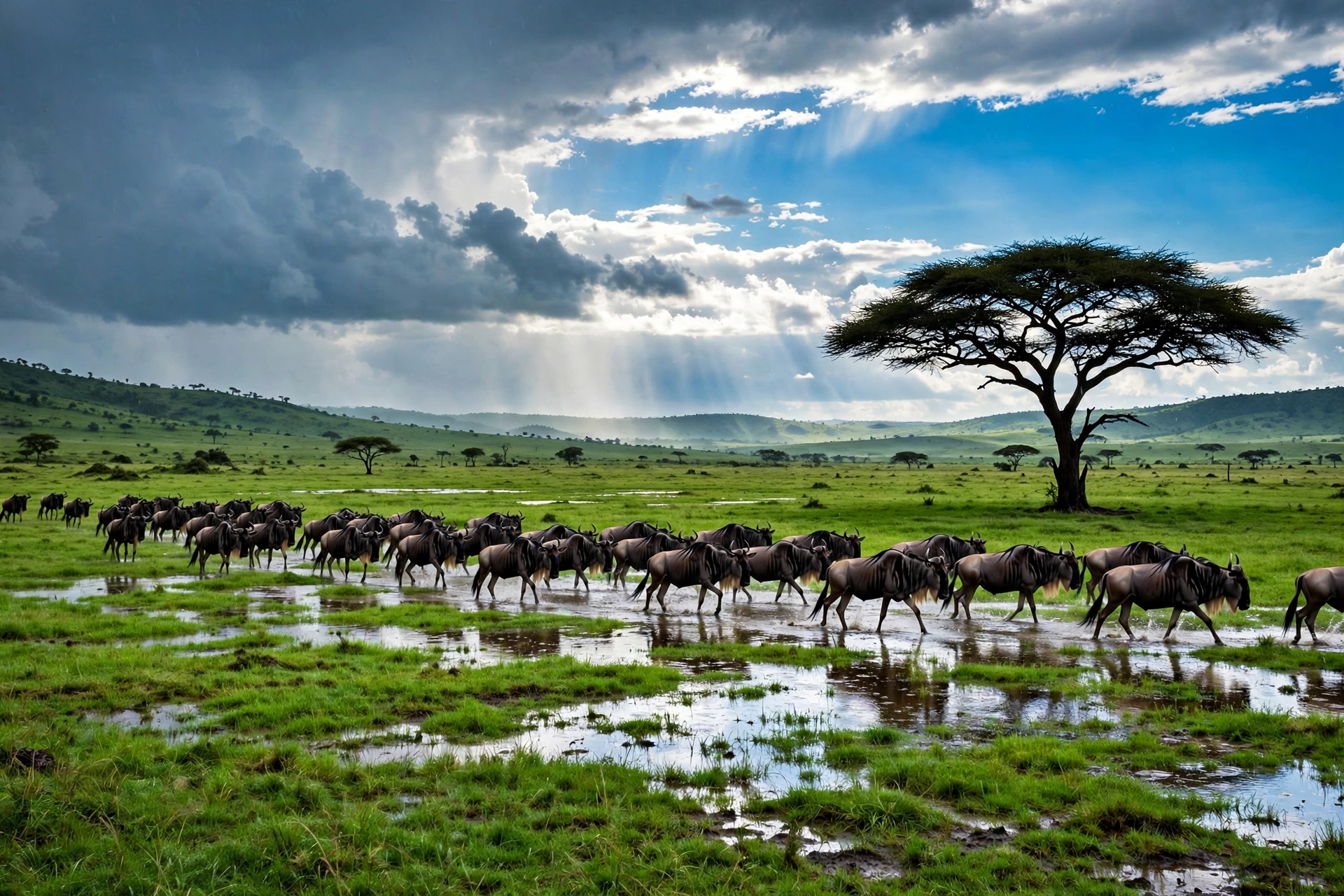
January and February form a second dry window and are the secret favourite of many returning safari travellers. The southern Serengeti and the Ndutu area fill with wildebeest calves, which draws lions, cheetahs and hyenas in large numbers. It is hotter than June to October, but the wildlife drama is extraordinary and the parks are quieter than in the summer peak. If you are planning around the new year more broadly, our guide to the best places to travel in January is a useful comparison for how Tanzania’s calving season stacks up against other warm-weather escapes.
The long rains fall from March to May. Some camps close, dirt roads turn to mud, and afternoon downpours are a daily event. That said, the green season has real rewards: lush landscapes, excellent birdwatching, newborn animals, and the lowest prices of the year. November and early December bring the short rains — usually brief showers rather than day-long rain — and can be a genuine value window, with wildlife returning to the parks and lodges softening their rates. April and May are the months to avoid unless you specifically want the green season and accept the disruption.
For Kilimanjaro, the same dry windows apply: June to October and January to February give the most reliable summit weather. For Zanzibar, the driest and sunniest beach months are also June to October and December to February; the long rains in April and May are the wettest time on the coast. A month-by-month snapshot helps:
- January to February: Calving season in the southern Serengeti, hot, good for predators and photography.
- March to May: Long rains, lush and cheap, some camps closed, muddy roads.
- June to October: Dry season, best general game viewing, Mara River crossings, peak prices.
- November to December: Short rains, green and quiet, good value, wildlife still strong.
How Many Days Do You Need
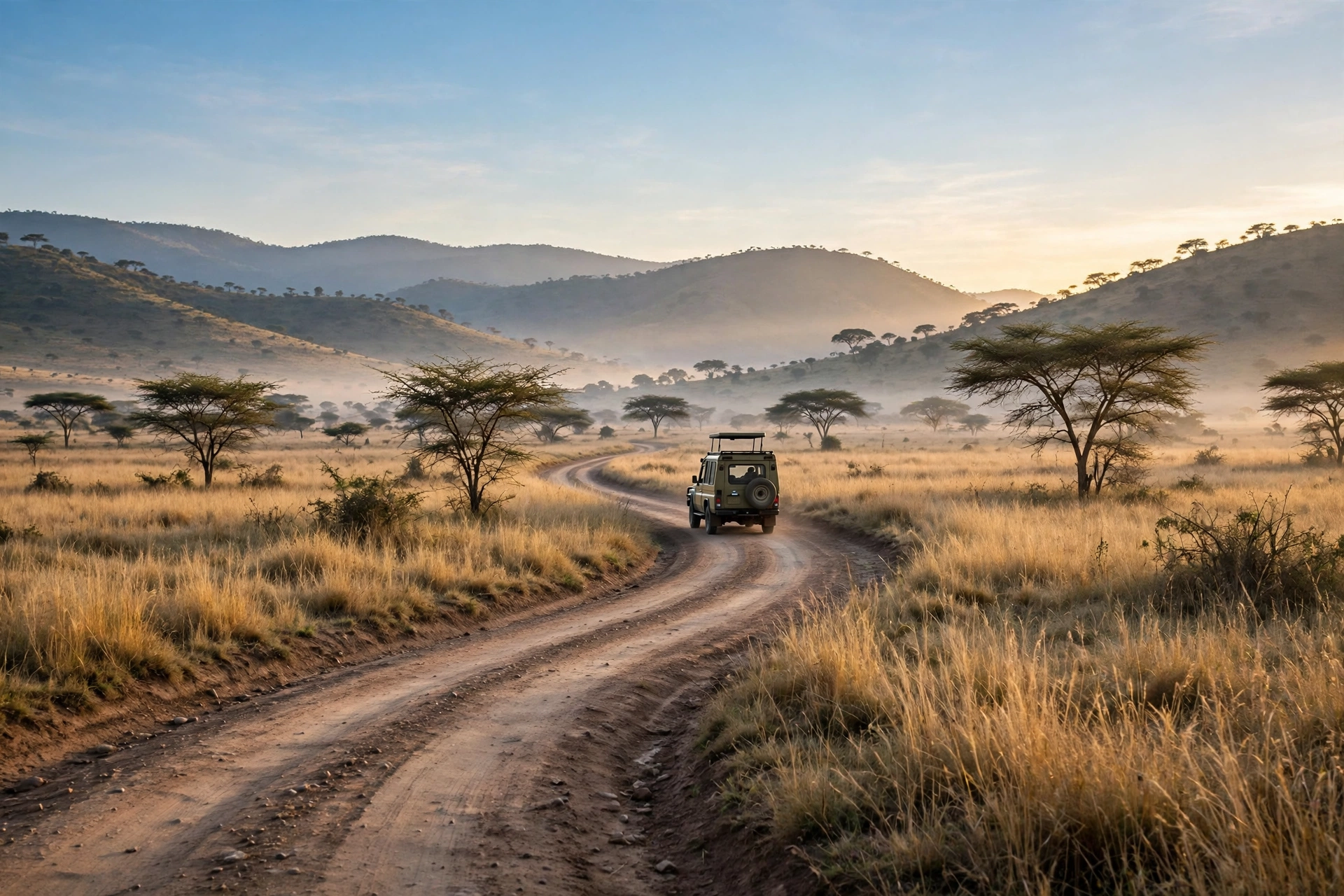
Tanzania rewards travellers who move slowly. A safari is not a checklist of parks; it is long, dusty, wonderful days in a vehicle, and packing in too many parks in too few days is the most common way to spoil one. As a rule, plan at least two nights in the Serengeti itself — one night barely lets you arrive before you leave — and one full day in Ngorongoro Crater.
A practical set of trip lengths looks like this:
- 3 to 4 days: A short northern safari covering Tarangire and Ngorongoro, or a fly-in taste of the Serengeti. Good if time is tight, but rushed.
- 5 to 6 days: The classic first safari — Tarangire, Lake Manyara, Ngorongoro and two nights in the central Serengeti.
- 7 to 8 days: The sweet spot. The full northern circuit at a comfortable pace, with time to follow the herds.
- 9 to 12 days: A full safari plus Zanzibar, or a safari with extra Serengeti nights to target the migration.
- 14 days or more: Safari plus Zanzibar plus a Kilimanjaro climb, or a northern circuit combined with the southern parks.
Kilimanjaro needs its own block of time: 6 to 9 days depending on the route, plus a day or two in Moshi or Arusha to recover before or after. Do not try to bolt a climb onto the end of a safari without rest days; altitude and exhaustion are a bad combination. If you are sketching the day-by-day shape of your trip, a simple travel itinerary template helps you lay out driving days, rest days and flight connections before you commit to anything.
Serengeti and the Northern Circuit
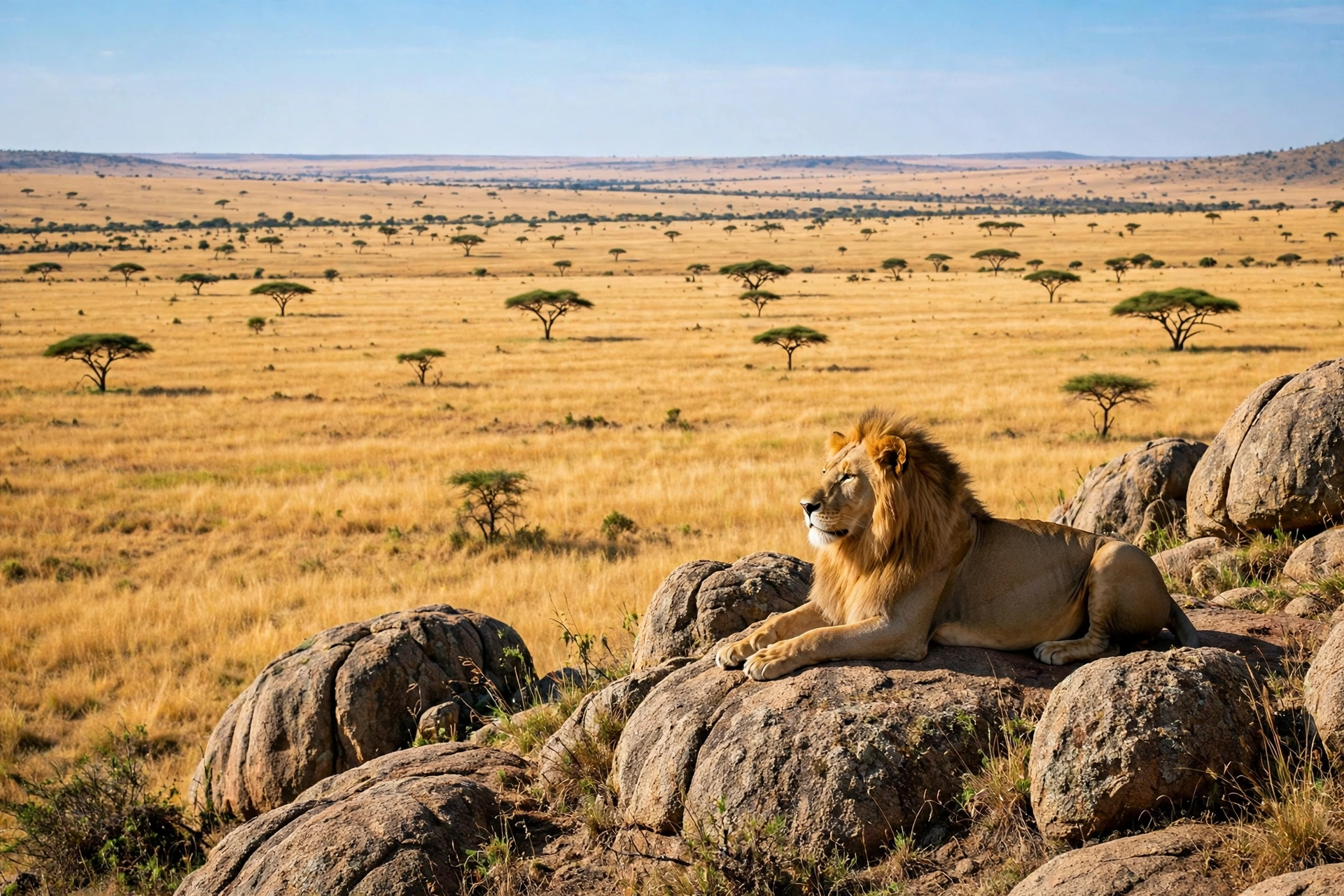
The Serengeti is the park most people picture when they think of Africa: endless golden plains, huge herds, and more lions than anywhere else on the continent. Its name comes from a Maasai word often translated as “endless plains,” and on your first morning drive, when the horizon refuses to arrive, you will understand why. The park is enormous — roughly 14,750 square kilometres — so where you stay inside it matters as much as how long you stay.
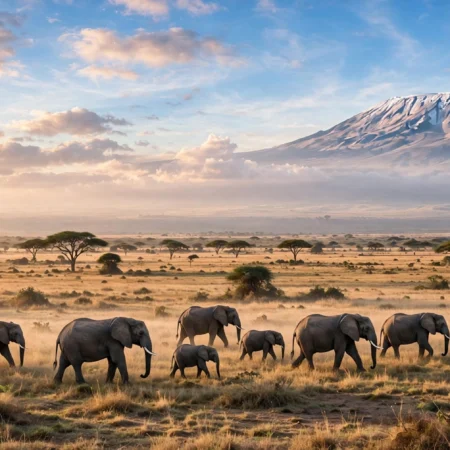
The Great Migration is the Serengeti’s defining event. Around two million wildebeest, zebra and gazelle move in a rough annual circle following the rains. From January to March the herds are in the south, around Ndutu, for calving. By April and May they drift west and north through the central Serengeti. The famous Mara River crossings happen roughly from July to October in the far north, though the exact timing depends on rainfall and cannot be guaranteed on any particular day. A good guide and a flexible attitude matter more than a rigid plan built around a single crossing.
The northern circuit around the Serengeti is the classic first-timer route, and it works because each park adds something different:
Tarangire National Park
Tarangire is the elephant park. In the dry season, huge herds gather along the Tarangire River, and the park’s ancient baobab trees make it one of the most photogenic places in Tanzania. It is only a couple of hours from Arusha, so it makes an excellent first or last safari stop.
Lake Manyara National Park
Lake Manyara is small and varied: groundwater forest, a soda lake pink with flamingos in season, and the tree-climbing lions it is famous for (though sightings are never guaranteed). It is a good half-day or full-day park, especially for birdwatchers.
Central Serengeti and the Western Corridor
The central Serengeti around Seronera is productive all year, with resident lions, leopards and cheetahs that do not migrate. The western corridor, along the Grumeti River, is where the herds pass in May and June. If you can only afford one Serengeti region, choose central Serengeti for reliability, or the north in July to October if crossings are your priority.
Practical note: the Serengeti’s entry fee for non-resident adults is $82.60 per person per day including tax, plus a $70.80 per person per night concession fee if you sleep inside the park. These fees are set by the authorities and are passed through in safari quotes, so if one quote looks dramatically cheaper than another, check whether the fees are actually included. You can confirm the current park system through the official Tanzania National Parks (TANAPA) website.
Ngorongoro Crater
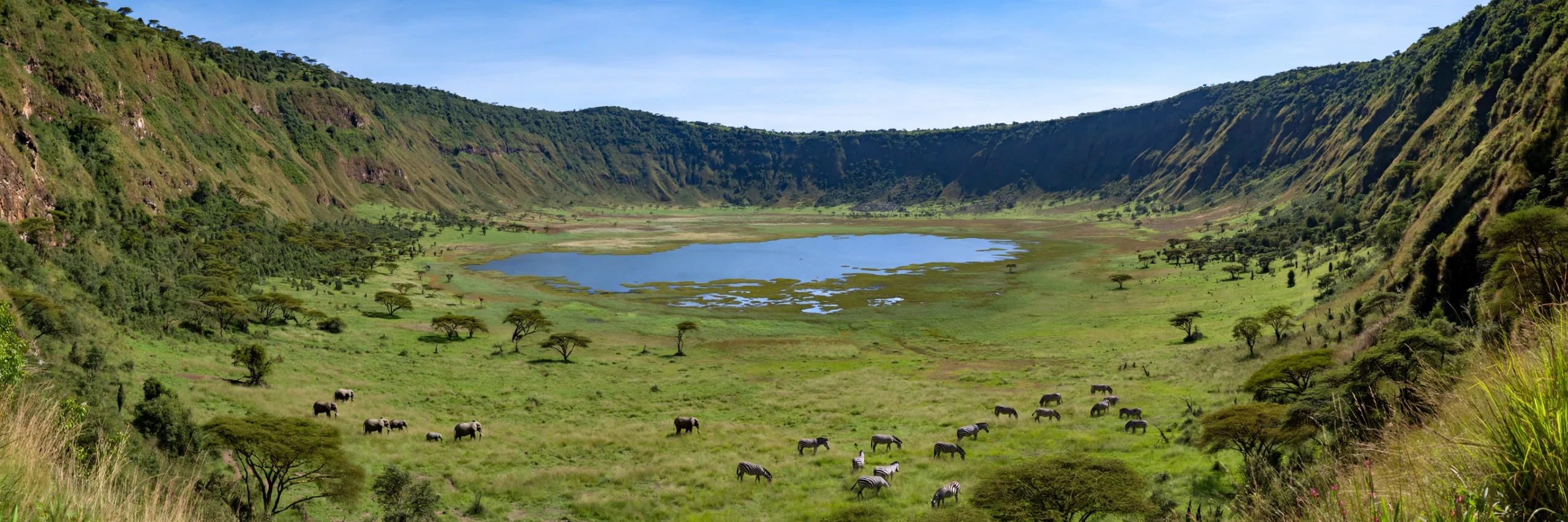
Ngorongoro Crater is the world’s largest intact volcanic caldera, and a day inside it feels like entering a natural amphitheatre. The crater floor is about 260 square kilometres, ringed by walls up to 600 metres high, and it holds an astonishing density of wildlife: lions, elephants, buffalo, zebras, wildebeest, hippos and flamingos around Lake Magadi. It is also one of the best places in East Africa to see the endangered black rhino, which is why many travellers treat a crater day as non-negotiable.
A few things first-timers should know. Ngorongoro is managed separately from the national parks, by the Ngorongoro Conservation Area Authority, so its fees are separate: $70.80 per person per day plus a $295 crater service fee per vehicle. Vehicles must descend and ascend by set routes, and you are generally limited to a half-day or full-day visit rather than overnighting on the crater floor itself. Most visitors sleep on the crater rim or in nearby Karatu, which is cheaper and less exposed to the rim’s cold, windy nights.
The crater is at its best early in the morning, before the day-trippers arrive and while the light is soft. Go with a guide who knows the rhino areas, keep your expectations realistic — rhinos are often distant dots through binoculars — and remember that the crater is a conservation area where Maasai pastoralists also live and graze cattle. That shared-use model is part of what makes Ngorongoro unusual, and it is worth respecting: stay in the vehicle, do not approach livestock, and follow your guide’s instructions.
Mount Kilimanjaro
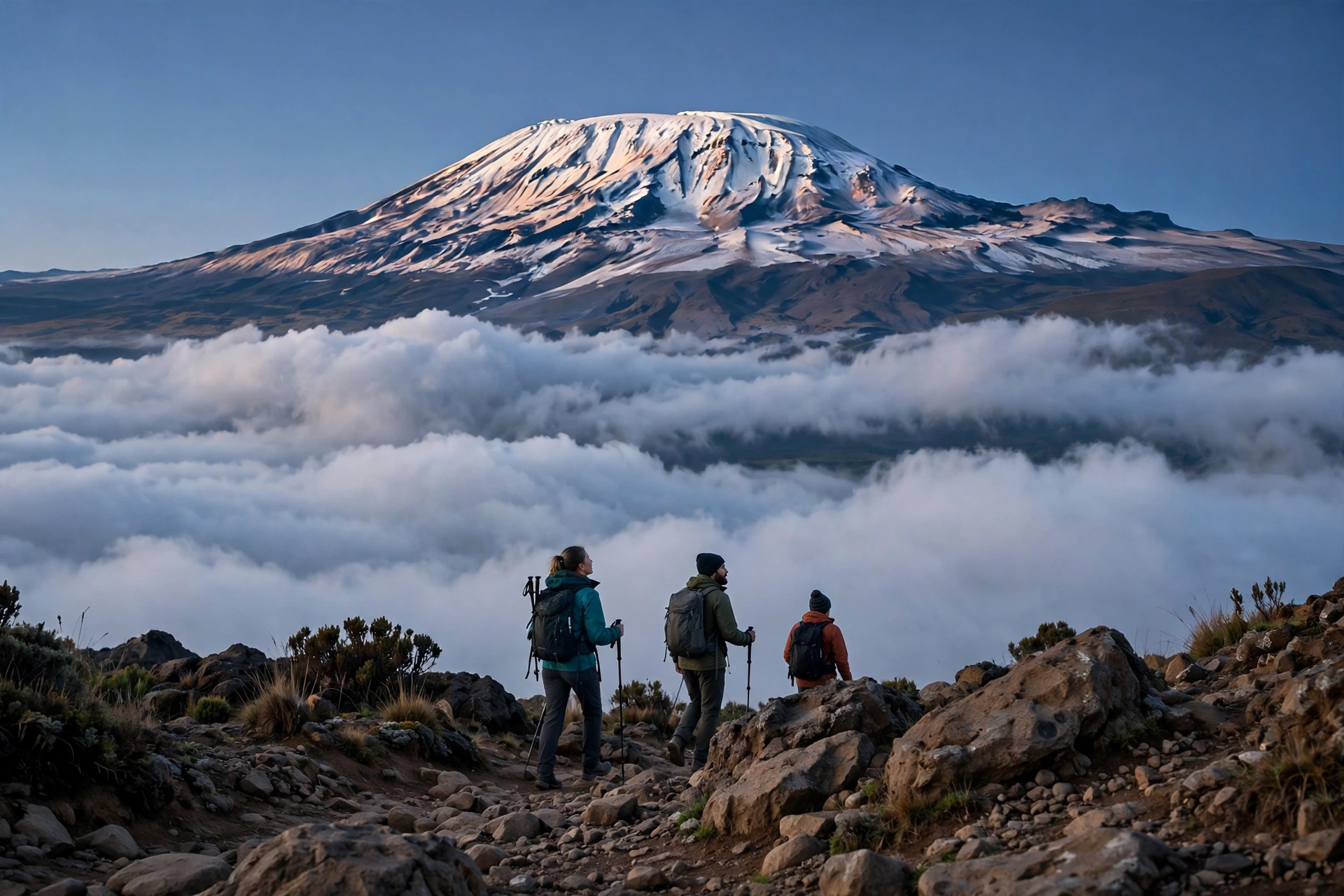
Kilimanjaro is Africa’s highest mountain at 5,895 metres, and it is also one of the few great peaks a fit walker can climb without technical mountaineering skills. That combination makes it enormously popular — and enormously underestimated. The biggest reason people fail to reach Uhuru Peak is not fitness but altitude: going up too fast. Longer routes have dramatically higher success rates because they give your body time to acclimatise, so choosing a route is the most important decision of the whole climb.
Choosing a Route
- Machame (7 days): The most popular route, scenic and varied, with good acclimatisation. A strong default for first-time climbers.
- Lemosho (7 to 8 days): Longer, quieter and very scenic, with the best acclimatisation profile. The best choice if your budget allows the extra days.
- Rongai (6 to 7 days): Approaches from the north, drier and quieter, good in the rainy seasons.
- Marangu (5 to 6 days): The only route with hut accommodation instead of tents, but also the lowest success rate because it is short and crowded. Avoid it if you can afford a longer route.
- Northern Circuit (8 to 9 days): The longest and quietest route, with the highest success rates.
What the Climb Actually Feels Like
Expect five climate zones in a week: farmland, rainforest, moorland, alpine desert and an arctic summit. Summit night starts around midnight, in freezing temperatures, with a slow shuffle to the top for sunrise. It is hard, and the descent the same day is long. Good operators include a summit-day contingency, a proper guide-to-climber ratio, and honest briefings about altitude sickness. Diamox (acetazolamide) is sometimes prescribed to help acclimatisation — discuss it with your doctor, never start it on the mountain without advice.
Costs for a Kilimanjaro climb typically run $2,000 to $4,500 per person depending on the route and operator, including park fees, guides, porters, food and camping equipment. Be wary of very cheap climbs: park fees alone are substantial, and a low price usually means underpaid porters, poor food or skipped safety measures. Ask how porters are treated and paid before you book; reputable operators are happy to answer.
Zanzibar
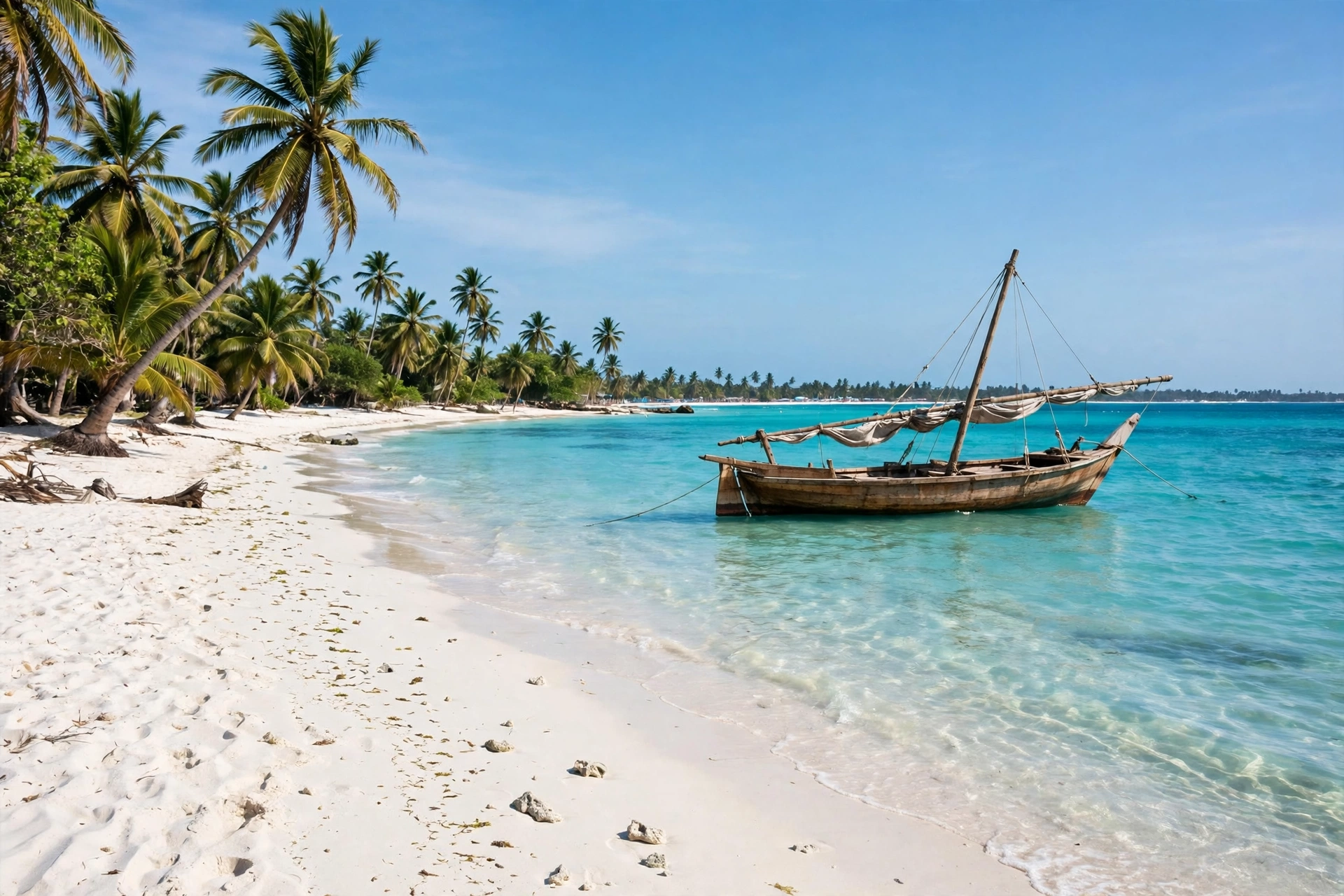
After the dust of a safari or the altitude of Kilimanjaro, Zanzibar feels like a different country. The archipelago’s main island, Unguja, offers white-sand beaches, warm Indian Ocean water, and Stone Town — a UNESCO-listed maze of carved wooden doors, spice markets and Swahili, Arab, Indian and European history. The smaller island of Pemba is greener, quieter and better for diving, while Mafia Island to the south is a low-key diving and whale-shark destination.
Where to Stay on Zanzibar
The north coast around Nungwi and Kendwa has the calmest swimming at all tides and the most developed beach scene. The east coast (Pongwe, Jambiani, Paje) has beautiful wide beaches but large tidal ranges — at low tide the sea can retreat a long way, leaving seaweed flats rather than swimmable water. If swimming matters more than scenery, the north is the safer bet. Stone Town deserves at least one night on its own: the old town is best explored on foot in the early morning or evening, when the heat eases.
What to Do Beyond the Beach
A spice farm tour is the classic Zanzibar day trip and genuinely worthwhile: you will taste, smell and pick the cloves, cinnamon, vanilla and nutmeg that built the island’s trading history. A sunset dhow cruise from Stone Town is the other essential experience. Snorkelling and diving are excellent, especially around Mnemba Atoll, but check the season and the operator’s safety record before booking. The island’s trading past also echoes in other destinations: if you enjoy old medinas and spice markets, our Morocco travel guide covers a similar world of souks and desert-edge cities on the other side of the continent.
Zanzibar Practicalities
Zanzibar is predominantly Muslim, so dress modestly in Stone Town and villages — cover shoulders and knees away from the beach, and save swimwear for the beach and pool. The ferry from Dar es Salaam takes about two hours and is a scenic, cheap option, but flying from Arusha or the Serengeti is faster and often simpler after a safari. Note that Zanzibar has its own entry and insurance requirements on top of mainland rules, so confirm the current requirements with your airline or operator before departure.
The Southern Circuit and Hidden Parks
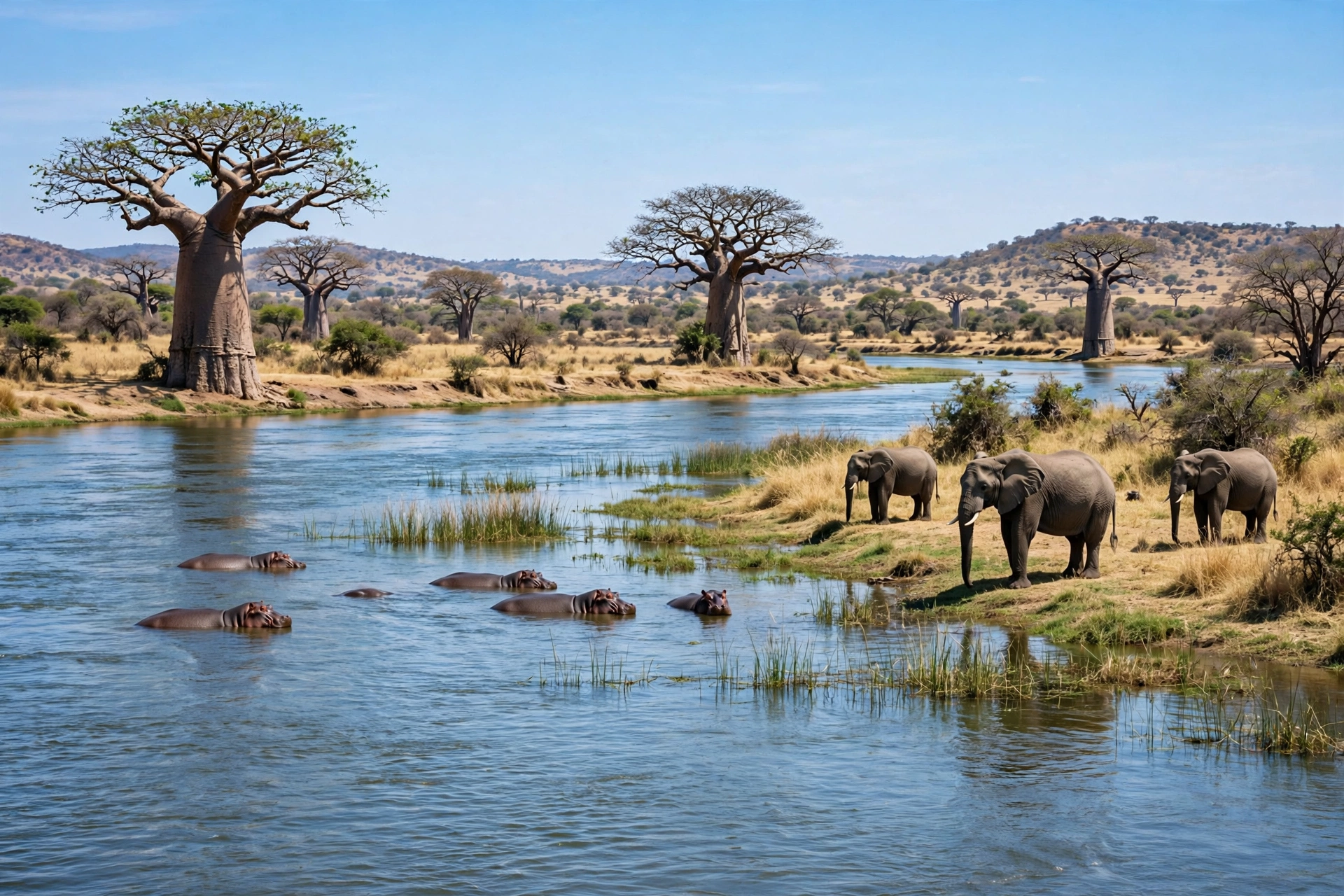
Almost every first trip goes north, which is exactly why the south is worth knowing about. The southern circuit is wilder, quieter and cheaper per day than the north, and it suits travellers who have already done a northern safari or who actively dislike crowds.
Nyerere National Park (formerly part of the Selous Game Reserve) is the star of the south: a vast wilderness of rivers, lakes and miombo woodland, famous for boat safaris along the Rufiji River, wild dogs, and huge elephant and buffalo herds. A boat safari at sunset, watching elephants drink while fish eagles call overhead, is one of the great African experiences — and one you cannot have in the Serengeti.
Ruaha National Park, further west, is Tanzania’s largest park and one of its least visited. It has big lion prides, large elephant herds and a rugged baobab landscape that feels genuinely remote. Mikumi, the most accessible southern park, is a good weekend-length option from Dar es Salaam. For something completely different, Mahale Mountains and Gombe Stream on the shores of Lake Tanganyika offer chimpanzee trekking in forested mountains — a difficult journey, but one of the most extraordinary wildlife experiences in Africa.
The trade-off is logistics. Southern parks are reached from Dar es Salaam, distances are long, flights are fewer, and infrastructure is thinner. If this is your first trip and you have under ten days, stick to the north. If you have two weeks or you are returning, the south is where Tanzania still feels undiscovered.
Getting Around Tanzania
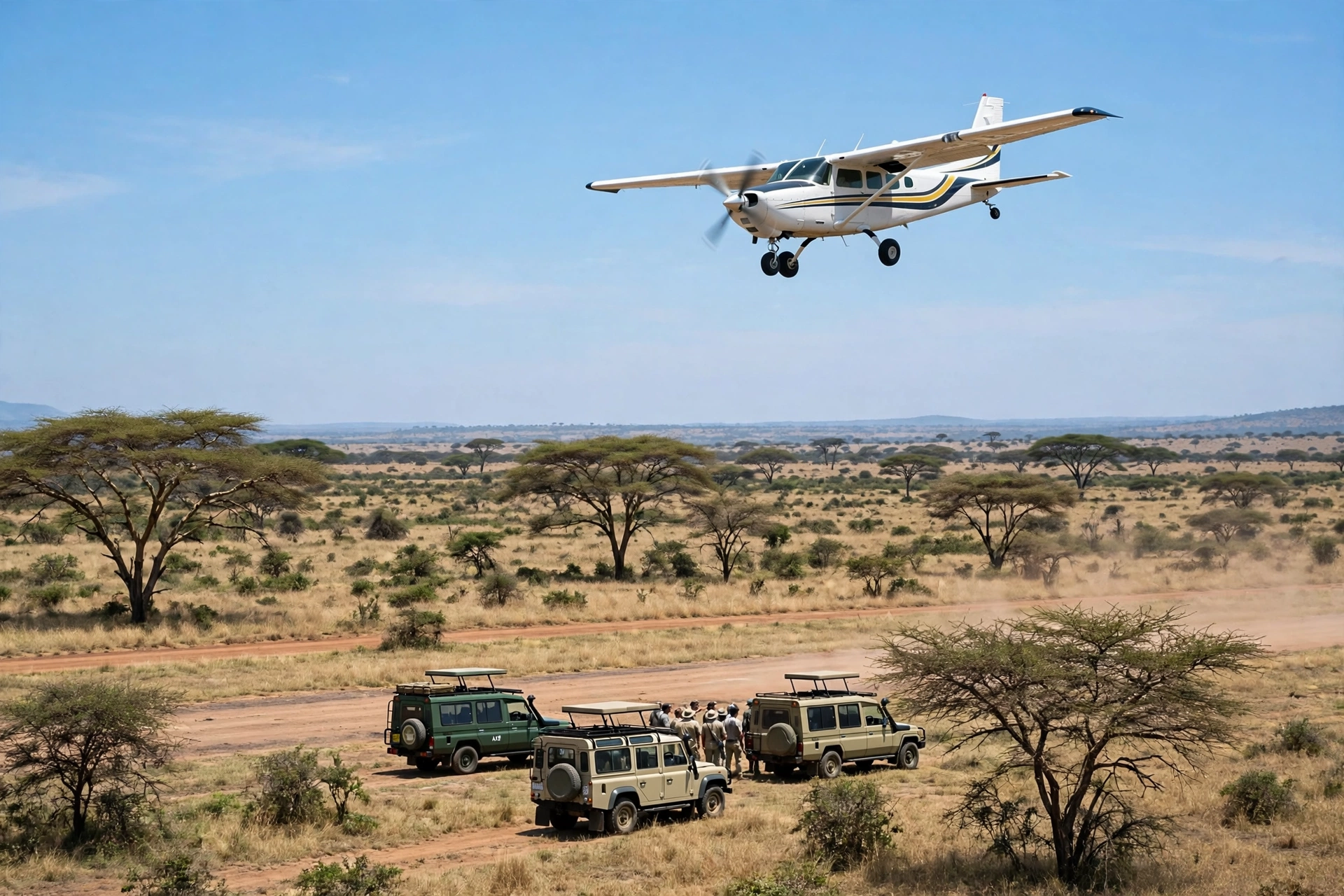
Tanzania is a big country with slow roads, so transport choices shape your trip more than in most destinations. International flights arrive at Kilimanjaro (JRO) for the north, Dar es Salaam (DAR) for the south and coast, and Zanzibar (ZNZ) for the islands. From the US, there are no nonstop flights to Tanzania; most travellers connect through Amsterdam, Doha, Istanbul, Addis Ababa or Nairobi. Book the connection that lands you at the right airport for your itinerary, not just the cheapest fare — a cheap flight into Dar es Salaam followed by a domestic flight to Arusha can cost more in time than it saves in money.
Inside the country, you have three main options. On safari, your operator’s 4×4 with a driver-guide is the transport, the accommodation transfer and the wildlife expert in one, and it is included in the safari price. Between parks and regions, light aircraft (bush planes) save enormous amounts of time: the flight from Arusha to the Serengeti takes under an hour, while the drive takes most of a day. Bush planes have strict luggage limits — usually 15 kilograms per person in a soft bag — so pack accordingly. For independent travel, buses connect major towns cheaply but slowly, and the ferry links Dar es Salaam with Zanzibar in about two hours.
Self-driving is possible but not recommended for a first trip. Roads outside the main highways are rough, signage is limited, park navigation is difficult, and a breakdown far from help is a real risk. If you do self-drive, hire a proper 4×4, never drive at night, and carry a local SIM card so you can call for help. The same principle of letting local transport do the hard work applies in other wild destinations too — our Iceland travel itinerary shows how fly-and-drive legs can save whole days on a long route, and the logic transfers directly to Tanzania’s bush flights.
Where to Stay
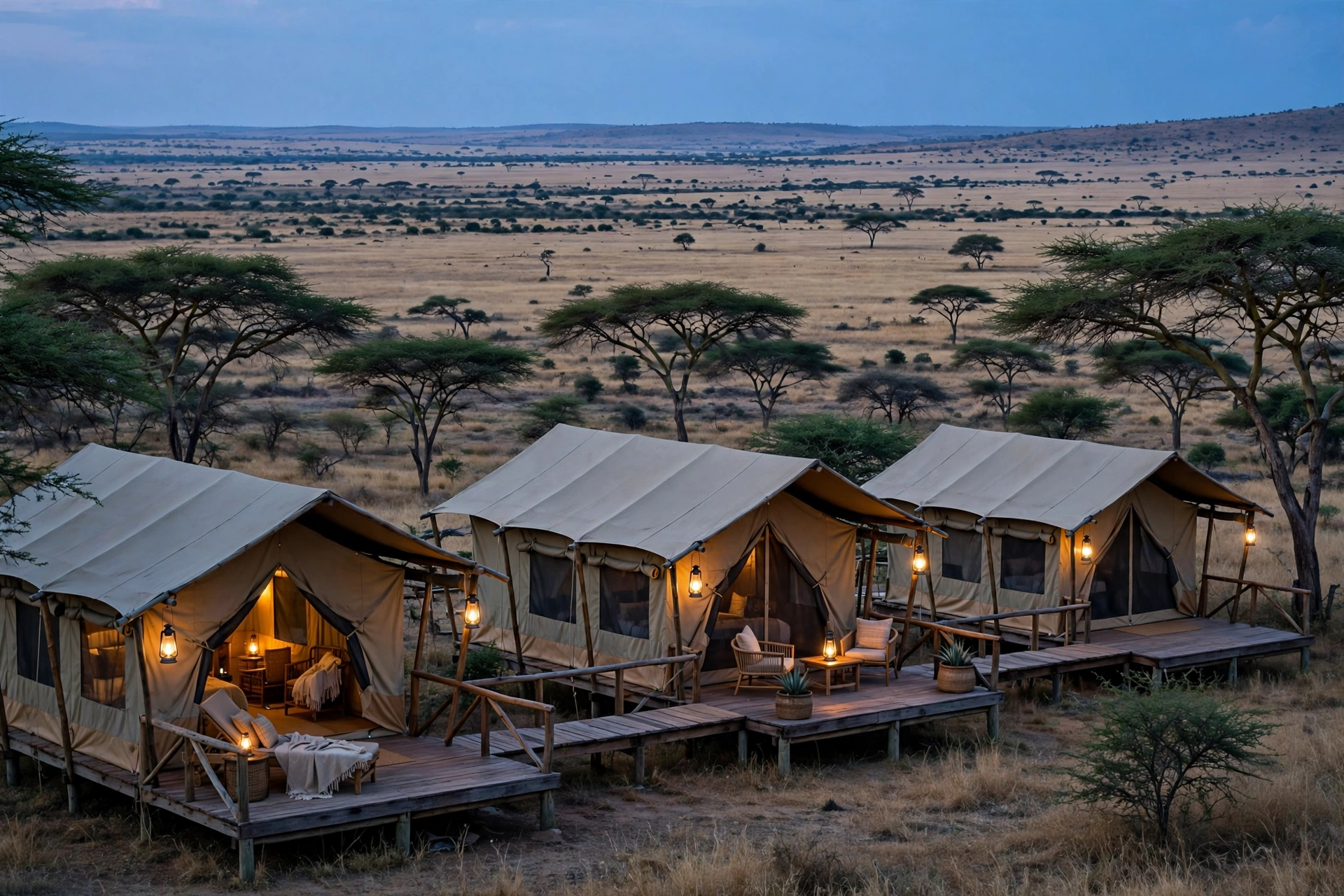
Where you sleep in Tanzania is part of the experience, not just a bed. On safari, accommodation falls into three broad tiers, and the tier you choose is the single biggest driver of your daily cost.
Budget camping safaris use public or semi-permanent campsites with shared facilities, dome tents and a cook. They are social, adventurous and genuinely cheap, but you will be woken by hyenas and you will sleep on a camp bed. Mid-range lodges and tented camps offer en-suite rooms or large safari tents with real beds, hot showers and a restaurant — the best balance of comfort and price for most travellers. Luxury lodges and mobile camps offer private decks, plunge pools, gourmet food and guides assigned to your vehicle alone; they are superb and they are priced accordingly.
A few booking rules apply at every tier. Stay inside the park when you can afford it: it buys you dawn and dusk game drives without a long commute from outside the gate, and those are the hours when animals are most active. In Ngorongoro, crater-rim lodges give you the earliest descent; in the Serengeti, choose a camp in the region where the herds actually are in your month, not the region with the prettiest brochure. In Arusha and Moshi, simple guesthouses are fine for arrival and departure nights — save the lodge budget for the bush. In Zanzibar, small boutique hotels in Stone Town and beach bungalows on the north coast both beat large resorts for character, though resorts win on facilities for families.
What to Eat
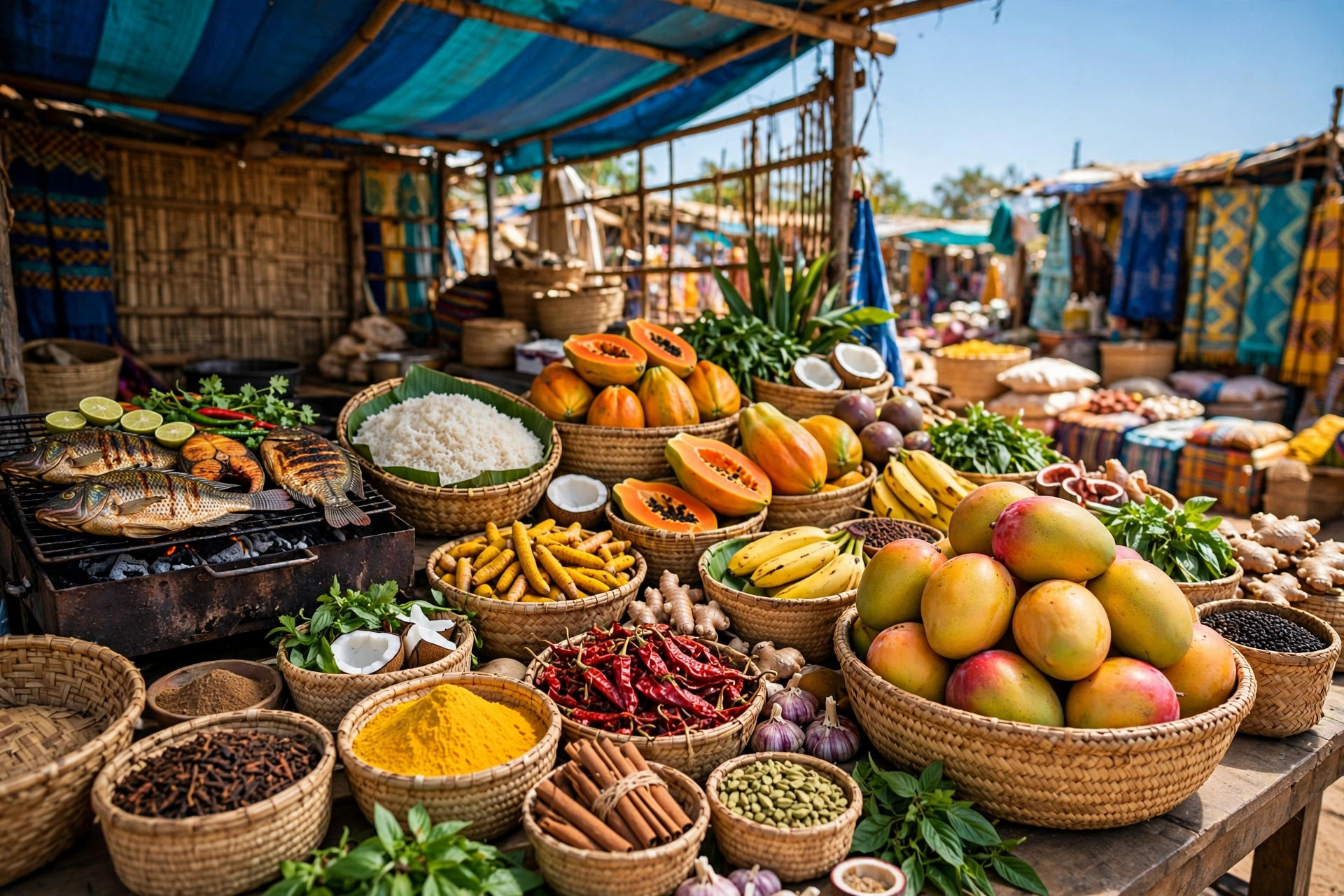
Tanzanian food is hearty, fresh and heavily influenced by the coast’s Swahili and Indian trading history. The national dish is ugali, a stiff maize porridge served with meat, fish or vegetables — filling, unpretentious and worth trying at least once. Nyama choma (grilled meat) is the celebratory meal, served with kachumbari (tomato and onion salad) and rice or chips. On the coast and in Zanzibar, the food changes: grilled fish, octopus curry, pilau rice, biryani and chapati reflect centuries of Indian Ocean trade.
On safari, your lodge or camp cook will feed you well — breakfast before the morning drive, a packed lunch in the bush, and a hot dinner back at camp. Dietary requirements are usually handled gracefully if you flag them when booking. In towns, eat where locals eat: busy restaurants with high turnover are the safest bet, and street food is generally fine if it is freshly cooked and served hot. Drink bottled or treated water everywhere, avoid ice in places you do not trust, and peel fruit yourself.
A note on drink: Tanzania produces good local beer (Kilimanjaro, Serengeti and Safari lagers are the main brands) and, on the coast, fresh sugarcane juice and coconut water. Coffee from the slopes of Kilimanjaro and Mount Meru is excellent — try it in Arusha or Moshi, where small roasters serve it properly. If you have a sensitive stomach, carry basic medication and eat conservatively for the first couple of days; a safari vehicle is no place for a stomach bug.
How Much a Tanzania Trip Costs
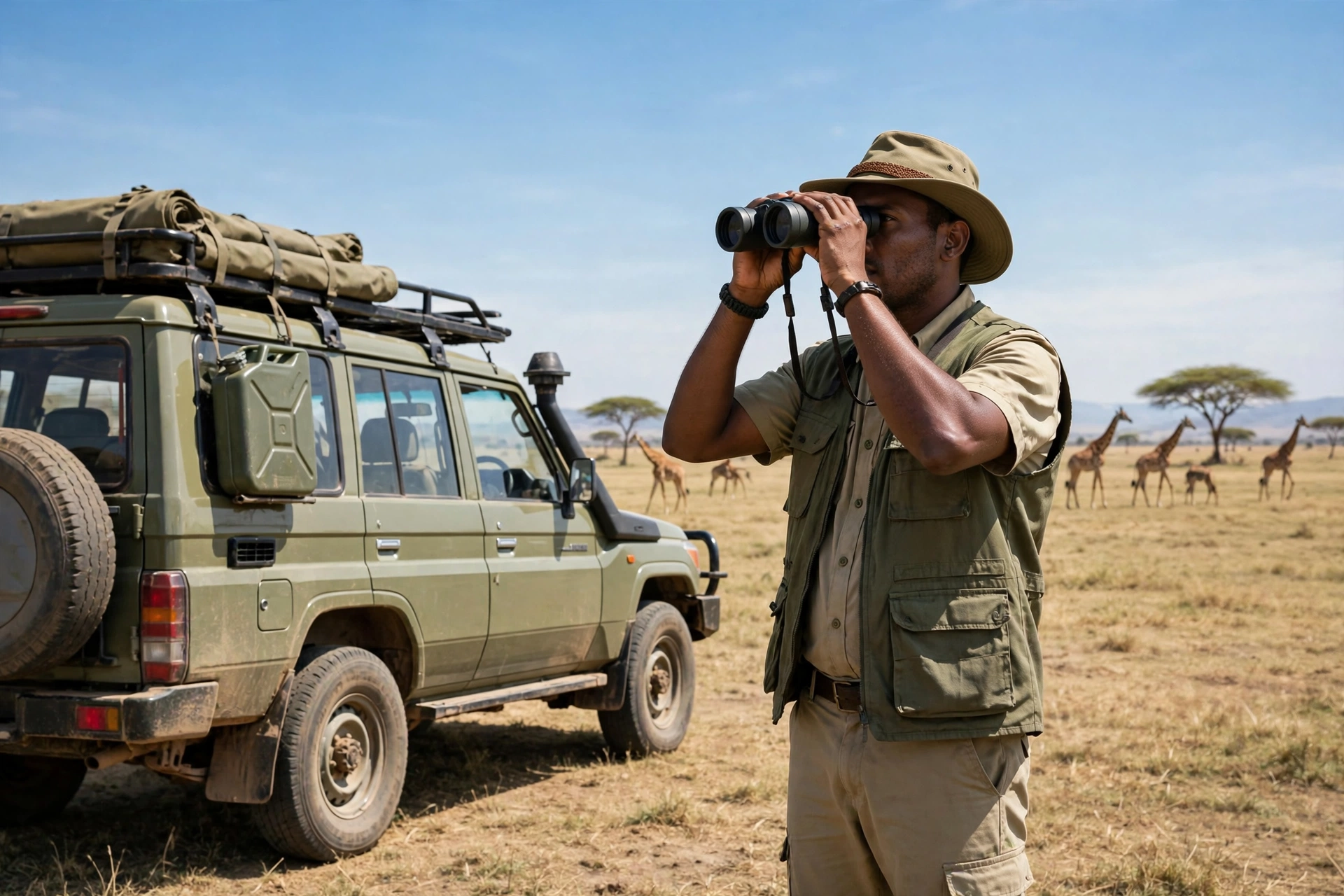
Tanzania is not a cheap destination, and the honest reason is that park fees, guides, vehicles and fuel are expensive before you add a bed. The good news is that safari prices are usually all-inclusive — accommodation, meals, park fees, vehicle and guide — so the headline daily rate is close to what you will actually spend. The bad news is that international flights, visas, insurance, tips and personal spending sit on top.
Cost Table: Typical Per-Person Costs (USD)
| Item | Budget | Mid-range | Luxury |
|---|---|---|---|
| Safari per day (all-in) | $200–$350 | $350–$600 | $600–$1,500+ |
| 7-day northern safari total | $1,400–$2,450 | $2,450–$4,200 | $4,200–$10,500+ |
| Kilimanjaro climb (6–8 days) | $1,800–$2,500 | $2,500–$3,500 | $3,500–$4,500+ |
| Zanzibar per night (room) | $40–$80 | $80–$200 | $200–$600+ |
| International flights from the US (return) | $900–$1,500 | $900–$1,500 | $900–$1,800 |
| Visa (US citizens, multiple entry) | $100 | $100 | $100 |
| Mandatory inbound insurance (per adult) | $44 | $44 | $44 |
| Bush flight (e.g. Arusha to Serengeti, one way) | $150–$250 | $150–$250 | $150–$250 |
| Tips per day (guide + lodge staff) | $15–$25 | $20–$30 | $25–$40 |
Park fees deserve their own line, because they explain so much of the price. Current VAT-inclusive non-resident rates include $82.60 per adult per day for the Serengeti, $70.80 per person per day for Ngorongoro plus $295 per vehicle for the crater descent, and $70.80 per person per night in concession fees for sleeping inside the Serengeti. Children aged 5 to 15 pay reduced rates and under-5s are free in most parks. Fees change, so treat these as planning figures and confirm the current tariff when you book.
To keep the total under control, travel in the green or shoulder season, share a vehicle with other travellers on a group safari, choose fewer parks with longer stays rather than racing between them, and fly into the airport closest to your itinerary. If you are building the budget from scratch, our guide on how to prepare a travel budget walks through the same daily-budget method applied to a trip like this one, including a contingency line for the unexpected costs every long trip produces.
Safety, Health and Common Mistakes
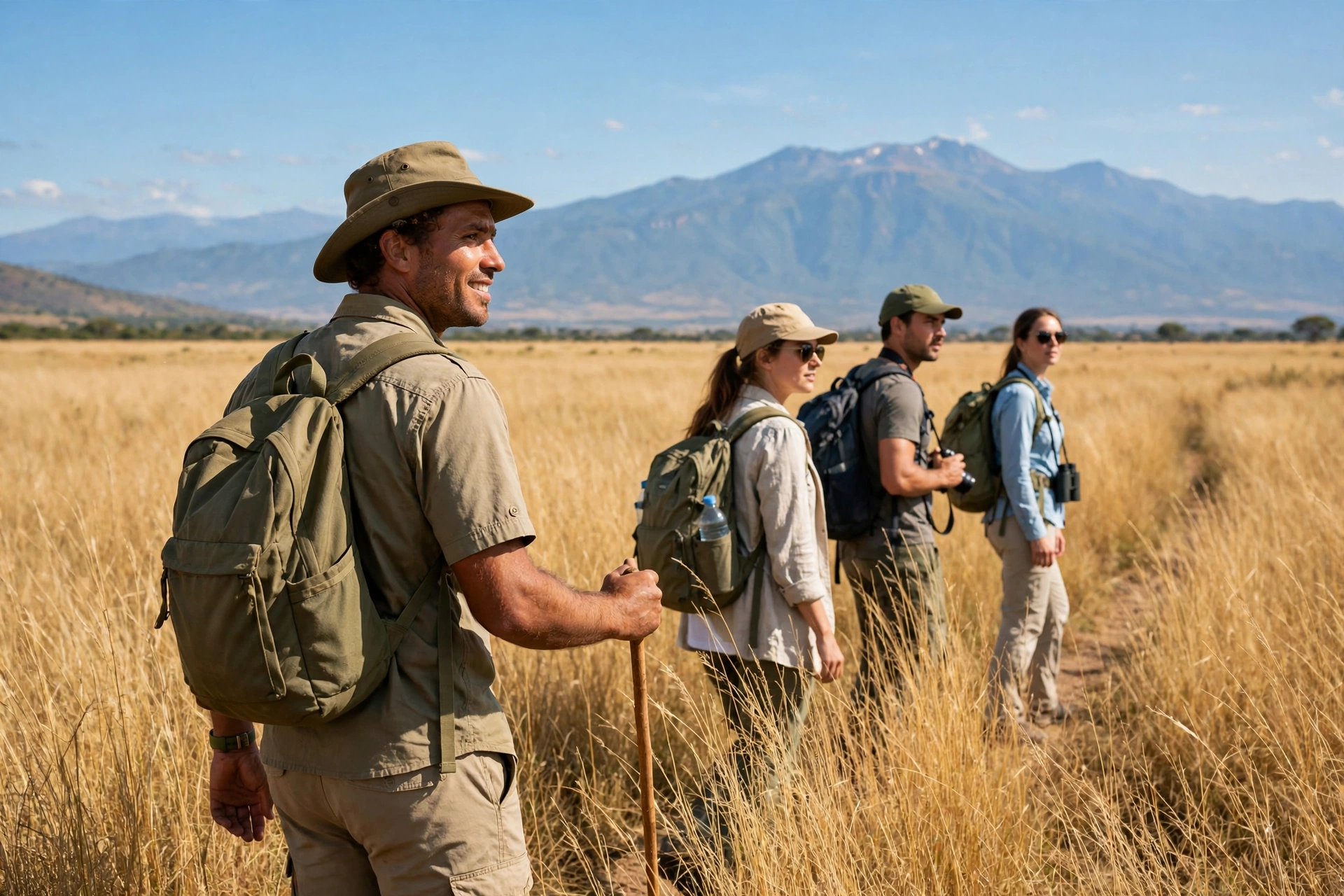
Tanzania is a popular and generally welcoming destination, but it is not a place to be careless. The honest picture is this: most visitors have trouble-free trips, the main risks are petty crime in cities, road accidents, and health issues that are preventable with preparation. Check the current official advice before you travel: the US State Department’s Tanzania travel advisory was lowered to Level 2 (“Exercise Increased Caution”) on 16 October 2026, with a higher Level 3 warning retained for the Mtwara region near the Mozambique border. Advisory levels change, so re-read it close to departure rather than relying on this article alone.
Health
Malaria is present throughout Tanzania, including the safari parks and Zanzibar, and there is no vaccine for travellers. Take prescription antimalarial medication as directed by your doctor, starting before departure and continuing after you return, and protect yourself from bites with repellent, long sleeves and a treated bed net where needed. See a travel clinic 4 to 6 weeks before departure to discuss hepatitis A, typhoid, tetanus and polio boosters, and yellow fever. Yellow fever vaccination is not required if you fly directly from the US, but a certificate is required if you arrive from, or transit 12 hours or more through, a country with yellow fever risk — including Kenya, a common connection point. The CDC’s Tanzania traveller health page is the authoritative place to confirm the current recommendations.
Medical care outside Dar es Salaam and Arusha is limited, so buy travel insurance that explicitly covers medical evacuation — a helicopter evacuation from a remote park is ruinously expensive without it. Carry your regular medication in hand luggage with prescriptions, and bring more than you need in case of delays.
Safety Basics
Use the same precautions you would in any unfamiliar city: avoid walking alone at night in Dar es Salaam and Arusha, keep valuables out of sight, use registered taxis or your hotel’s transport, and avoid demonstrations and large crowds. On safari, your guide’s word is law: stay in the vehicle, keep limbs inside, do not approach animals, and never get out for a photo. Animals that look relaxed are still wild. Same-sex relationships are illegal in Tanzania and carry severe penalties, so LGBTQ+ travellers should be aware of the law and exercise discretion.
Common Mistakes to Avoid
- Rushing the itinerary. Fewer parks, longer stays, better trip.
- Choosing Kilimanjaro’s shortest route. Extra acclimatisation days are the cheapest insurance for a summit.
- Skipping insurance. The mandatory inbound policy is not a substitute for full travel and evacuation cover.
- Carrying old dollar bills. Notes printed before 2009, torn notes and small denominations are routinely refused.
- Booking on price alone. A suspiciously cheap safari or climb usually cuts corners on fees, food, vehicles or staff pay.
- Ignoring the tides in Zanzibar. Check the east coast tides before booking a beach hotel if swimming matters to you.
- Forgetting the bush-plane baggage limit. Soft bags, 15 kilograms, no hard suitcases.
Packing and Practical Tips
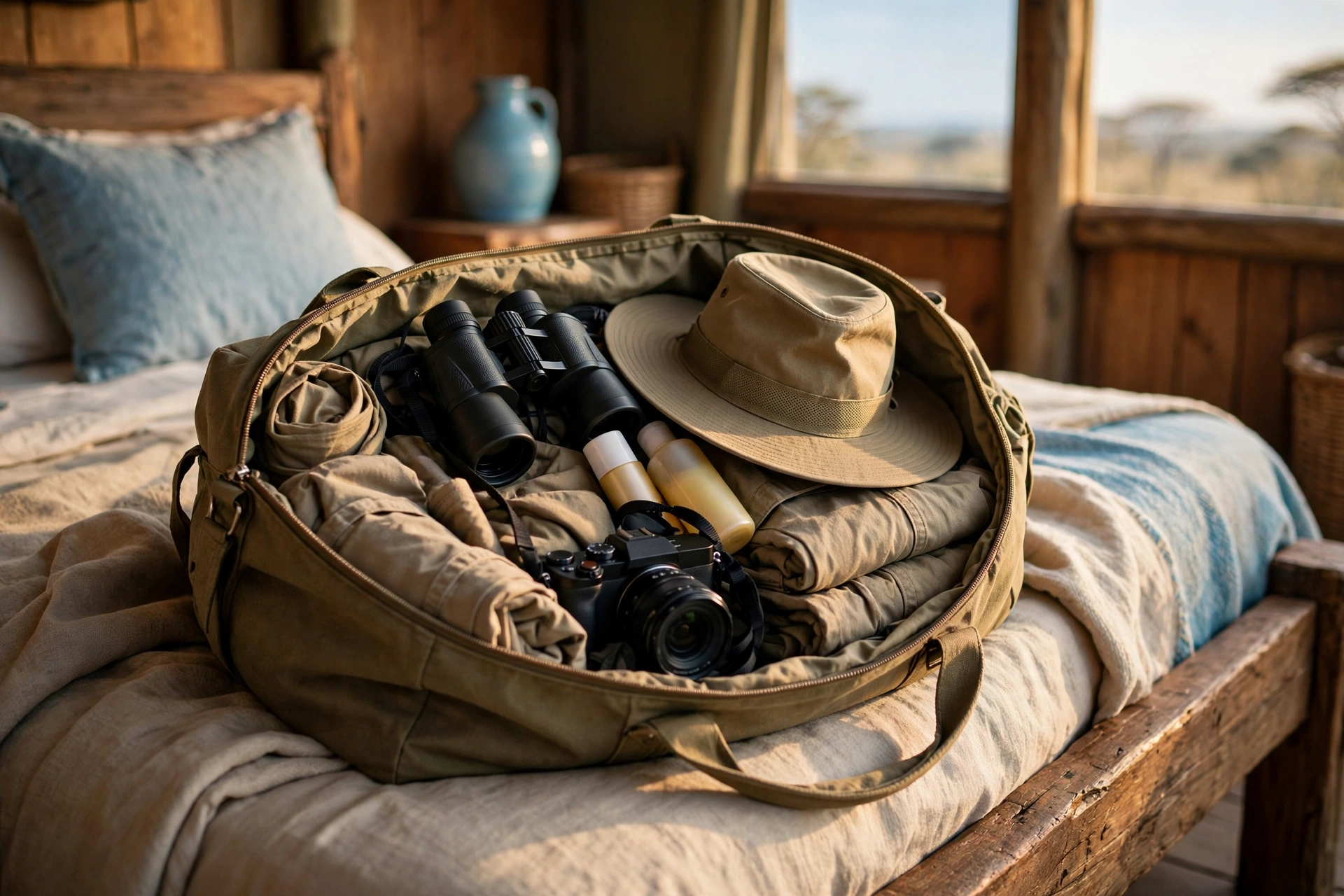
Packing for Tanzania is an exercise in layers and weight limits. Safari mornings are cold — a fleece and a windproof jacket are essential before sunrise — while midday is hot, and Kilimanjaro spans every climate on earth. Neutral colours (khaki, olive, beige) are practical for game drives and respectful in villages; bright colours and white are discouraged on walking safaris because they can disturb animals and show dust instantly.
Packing List
- Clothing: Lightweight long-sleeved shirts and trousers, a fleece, a rain jacket, a wide-brim hat, broken-in walking shoes, and sandals for camp.
- For Kilimanjaro (add): Thermal base layers, a down jacket, waterproof trousers, gloves, a headlamp with spare batteries, and a sleeping bag rated below freezing (often rentable).
- Health: Antimalarial medication, DEET or picaridin repellent, sunscreen (SPF 30+), lip balm, a basic first-aid kit, and any prescription medication in hand luggage.
- Gear: Binoculars (one pair per person if possible — sharing ruins sightings), a camera with a zoom lens, spare memory cards and batteries, a power bank, and a soft-sided bag for bush flights.
- Documents and money: Passport valid for at least six months, visa, insurance documents, yellow fever certificate if applicable, a Visa or Mastercard (park gates do not accept cash), and clean US dollar notes for tips and markets.
Other practicalities: Tanzania uses UK-style Type G plugs at 230 volts, so US travellers need an adapter. English is widely spoken in tourism, and Swahili is the national language — learning “jambo” (hello), “asante” (thank you) and “pole pole” (slowly, slowly — the unofficial motto of Kilimanjaro) goes a long way. Local SIM cards and eSIMs are cheap and easy to buy on arrival; download offline maps before leaving Arusha, because coverage in the parks is patchy. Tipping is customary: budget $15 to $25 per person per day for your driver-guide and $5 to $10 per person per day for lodge staff, pooled or individual according to the lodge’s system.
Frequently Asked Questions
Is Tanzania safe for tourists?
Tanzania is generally safe for visitors who take normal precautions, and millions of tourists visit each year without incident. The US State Department currently rates the country Level 2, “Exercise Increased Caution,” with a higher warning for the Mtwara border region. Stick to tourist areas, avoid walking alone at night in cities, follow your guide on safari, and re-check the official advisory before departure.
Do US citizens need a visa for Tanzania?
Yes. Most visitors, including US citizens, need a visa. US citizens pay $100 for a multiple-entry visa, while most other nationalities pay $50. Apply online in advance through the official e-visa system or obtain one on arrival; applying in advance is smoother. Your passport must be valid for at least six months beyond arrival.
How much does a Tanzania safari cost?
A mid-range safari costs roughly $350 to $600 per person per day, all-inclusive of accommodation, meals, park fees, vehicle and guide. Budget camping safaris run $200 to $350 per day and luxury lodges start around $600 to $1,500 per day. A 7-day mid-range northern safari therefore costs about $2,450 to $4,200 per person before international flights.
What is the best month to visit Tanzania?
June to October is the best all-round choice: dry weather, easy wildlife viewing and reliable Kilimanjaro conditions. January and February are best for the wildebeest calving season in the southern Serengeti. Avoid April and May if you dislike rain and mud, though prices are at their lowest then.
Can you combine a safari, Kilimanjaro and Zanzibar in one trip?
Yes, and it is the classic “summit, safari and sea” combination. Allow at least 14 days: 6 to 9 days for the climb, 5 to 7 days for safari, and 3 to 4 days on Zanzibar, plus travel days. Doing the climb first, then the safari, then the beach works well because you recover from altitude while still travelling, and finish relaxing.
Is Zanzibar part of Tanzania?
Yes. Zanzibar is a semi-autonomous archipelago within the United Republic of Tanzania. You do not need a separate visa to travel between the mainland and Zanzibar, but Zanzibar has its own entry and insurance formalities, so confirm the current requirements before you fly there.
Conclusion
Tanzania is not a destination to rush, and it is not a destination to plan on price alone. The travellers who love it most are the ones who pick one great experience and give it enough days — a full northern circuit at a sane pace, a Kilimanjaro route long enough to acclimatise, or a safari finished properly on a Zanzibar beach. Choose your season around what you most want to see, book the airport that matches your itinerary, sort your visa, insurance and health preparation early, and leave room in the plan for the unexpected: a river crossing that happens at dawn, a leopard in a tree you were about to drive past, a sunset that stops the whole camp. That is the Tanzania worth travelling for.
People also read:


Ecuador Travel Guide: Andes, Amazon, Galápagos and Coast in One Trip