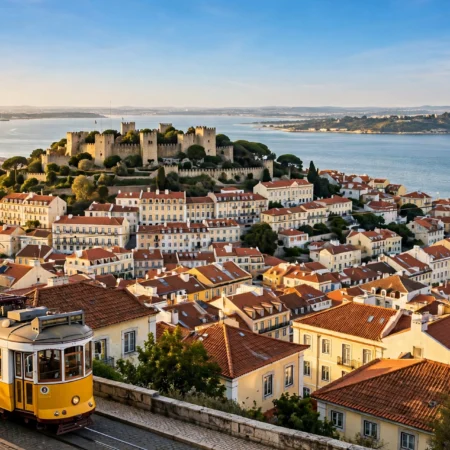

Quick Answer: Lisbon in One Paragraph
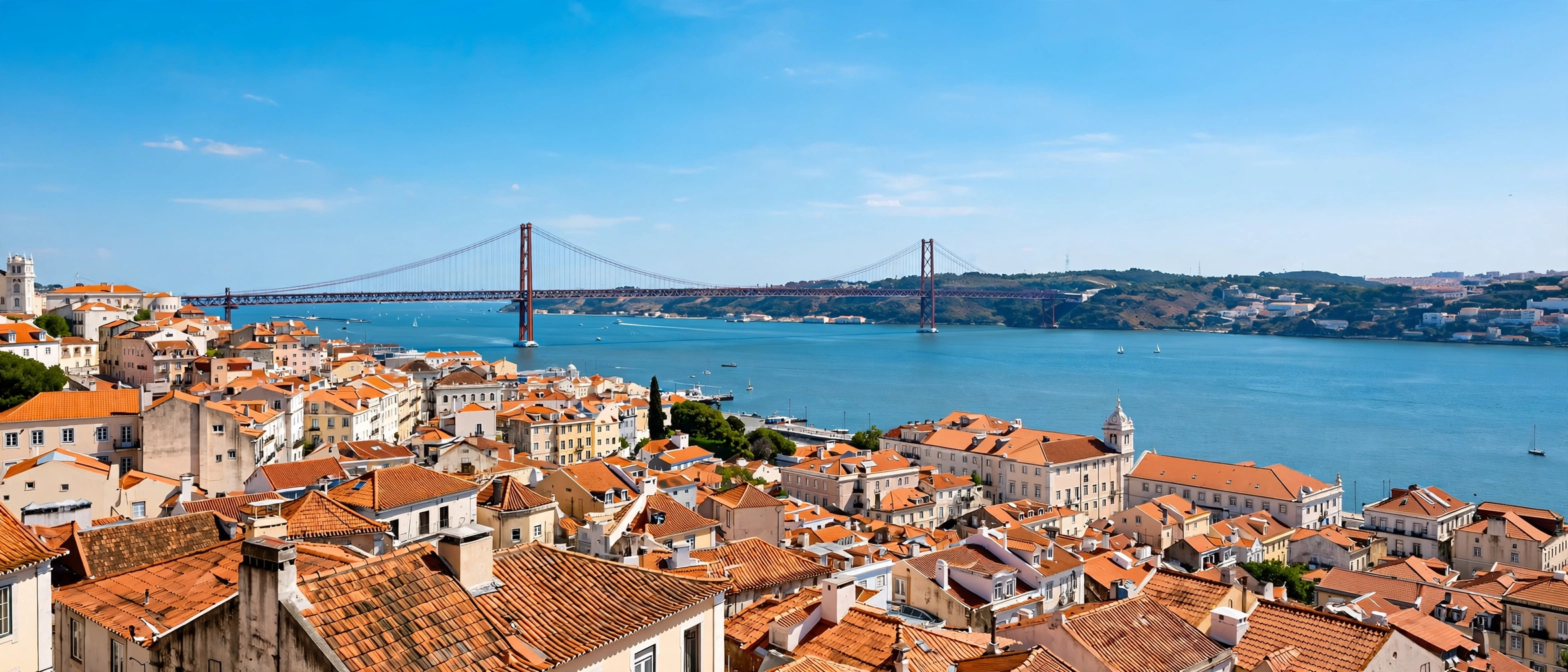
Lisbon is one of Europe’s easiest first-time city breaks: compact, sunny, affordable by Western European standards, and full of neighbourhoods that each feel like a different small town. Three full days is the sweet spot for a first visit. Spend one day in the historic centre around Alfama, Baixa and Chiado, one day along the river in Belém, and one day wandering Graça and Príncipe Real or taking a day trip to Sintra or Cascais. Walk as much as you can, ride Tram 28 early before the crowds build, eat the daily lunch special in a small tasca rather than on a main tourist street, and book timed tickets in advance for Belém Tower and São Jorge Castle. If you only remember one thing, let it be this: Lisbon rewards a slower pace. The city is built on seven hills, its best moments are often unplanned — a viewpoint at sunset, a tiny bakery, a street full of tiles — and trying to see everything in two rushed days is the fastest way to miss what makes it special.
When Is the Best Time to Visit Lisbon?
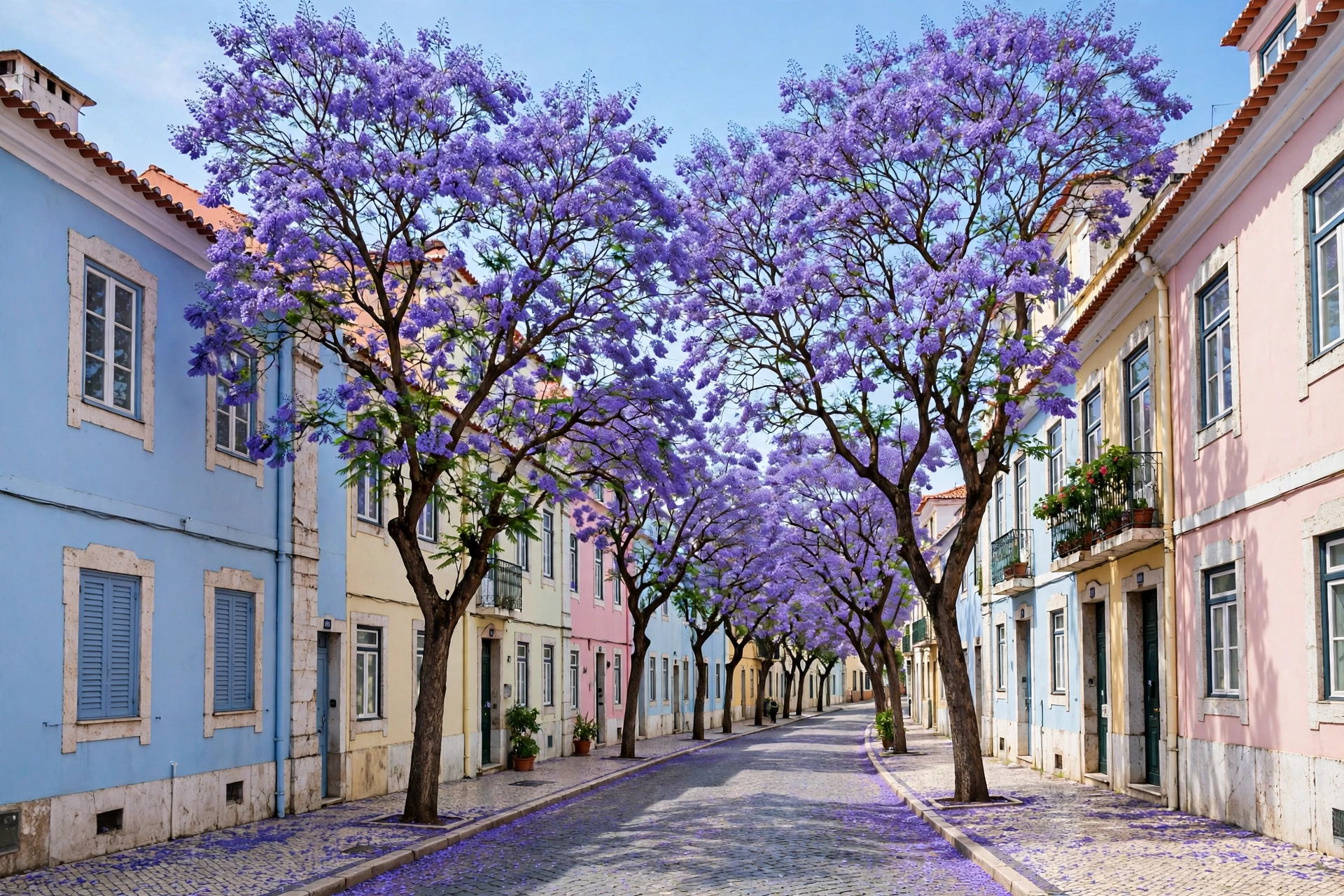
Lisbon enjoys a Mediterranean climate with mild winters and long, sunny summers, which means there is genuinely no bad month — only trade-offs. For most first-time visitors, the best windows are April through June and September through October. Spring brings comfortable temperatures in the high 60s to low 70s Fahrenheit, blooming jacaranda trees that turn whole streets purple in late May and June, and manageable crowds. Early autumn is similarly warm, the summer crowds have thinned, and the light over the Tagus River is at its golden best.
Summer, from July to August, is hot — regularly above 35°C (95°F) — and the hills feel twice as steep in that heat. Prices for hotels also peak, and the most popular viewpoints and trams are at their busiest. If summer is your only option, plan sightseeing for the morning, take a long lunch break indoors, and resume in the cooler evening hours when Lisbon truly comes alive.
Winter, from November to February, is Lisbon’s quiet season and its best-kept secret for budget travellers. Temperatures usually sit in the 50s Fahrenheit, rain comes in short bursts rather than all-day downpours, and hotel rates drop noticeably. Some smaller attractions keep shorter hours, and outdoor dining loses its charm on wet days, but you will have viewpoints, museums and restaurants largely to yourself. December adds Christmas lights in Chiado and Baixa, which are worth seeing in their own right.
Two seasonal details are worth building into your plan. First, Easter week and the Santos Populares festivals in June bring street parties, grilled sardines and crowds, especially around Alfama — festive if you like a party, exhausting if you do not. Second, many smaller family-run restaurants and shops close or shorten hours on Sundays and public holidays, so check ahead if you have your heart set on a particular tasca. The official Lisbon tourism board is a reliable place to confirm what is happening during your dates.
How Many Days Do You Need in Lisbon?
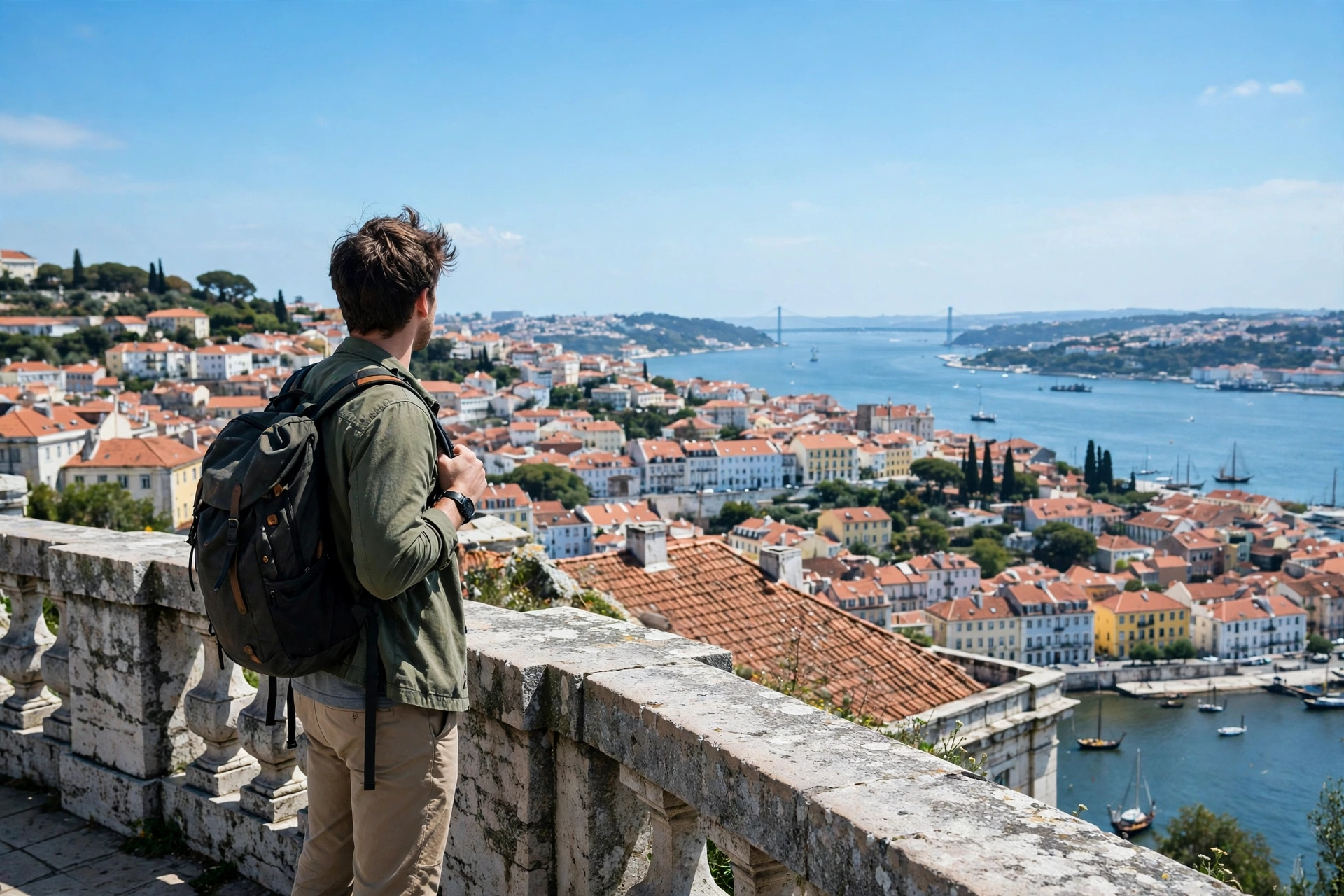
Three full days is the honest minimum for a first trip that still feels enjoyable rather than rushed. That gives you one day for the historic centre, one day for Belém and the riverfront, and one day for Graça, Príncipe Real, shopping and viewpoints — or, if you prefer, a day trip. Four or five days is better if you want to add both Sintra and Cascais without sacrificing time in the city itself, and it also gives you a buffer for a rainy day or a slower morning.
Two days is possible, but you will have to make real choices. With two days, skip the day trip entirely, focus on Alfama, Baixa, Chiado and Belém, and accept that Graça and Príncipe Real become a brief evening visit rather than a full exploration. One day in Lisbon only works as a taster: pick either the old town or Belém, not both, and plan to return.
A practical way to decide is to count nights, not days. A three-night stay usually means two full days plus arrival and departure fragments, which is tighter than it sounds. If your flight lands late or leaves early, add a night. Lisbon is also a good city to pair with a longer Portugal trip — Porto, the Douro Valley and the Algarve all connect easily by train — but for a first visit, giving Lisbon itself three unhurried days is the decision most travellers are happiest with afterwards. If you like planning trips around a template rather than improvising, our travel itinerary template shows how to structure days like these without overpacking them.
Lisbon’s Neighbourhoods at a Glance
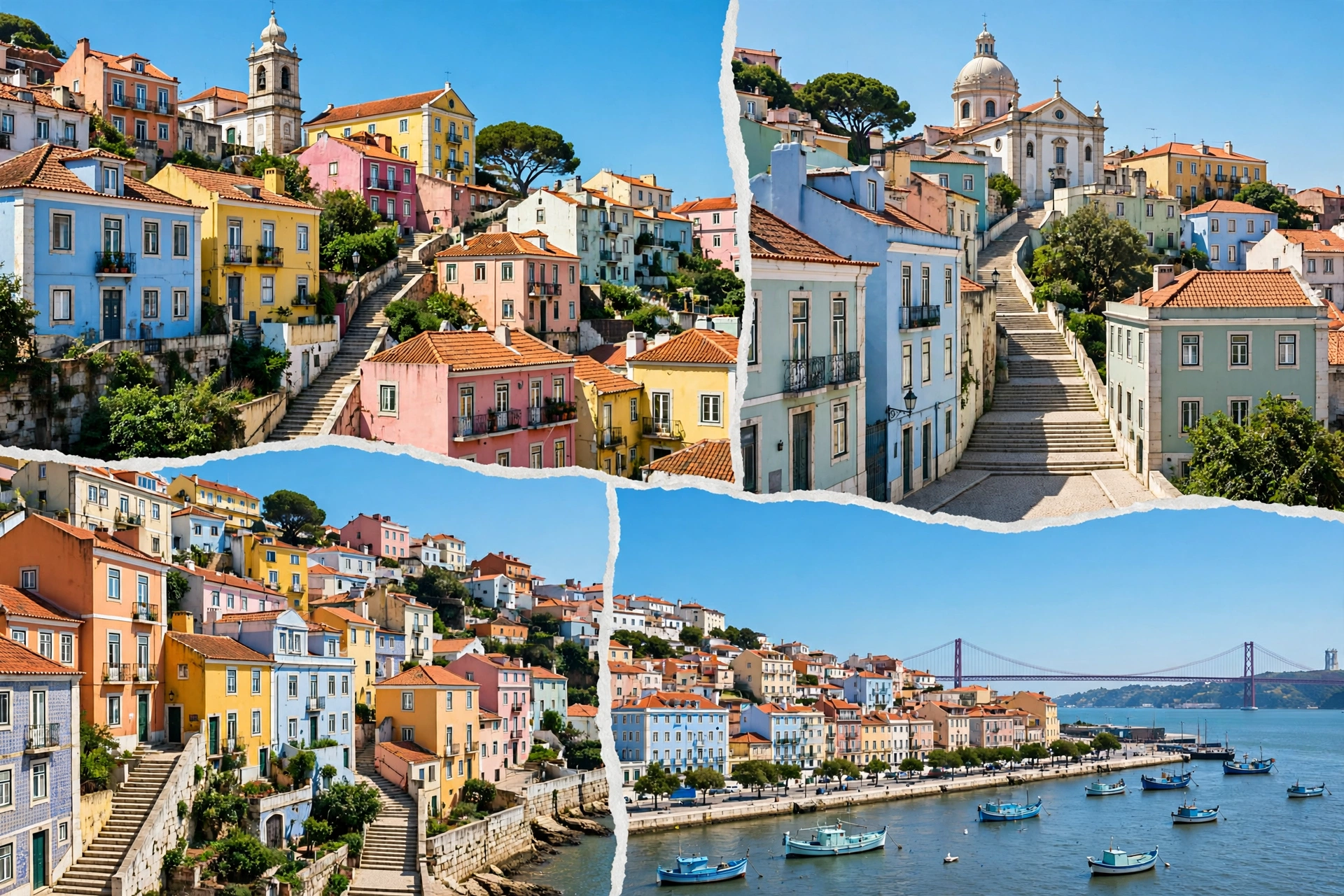
Lisbon is not one city but a collection of hillside villages stitched together, and where you base yourself shapes your trip more than almost any other choice. Alfama is the oldest quarter, a maze of narrow lanes below the castle. Baixa is the flat, grid-planned downtown rebuilt after the 1755 earthquake, and it is the easiest area to walk. Chiado is the elegant shopping district next to Baixa. Bairro Alto, uphill from Chiado, is quiet by day and loud at night. Belém sits west along the river, home to the great monuments. Graça, east of Alfama, is village-like and full of viewpoints. Príncipe Real, west of Bairro Alto, is leafy, calm and slightly upscale.
Where you stay matters because of hills and noise, not just location. Alfama’s charm comes with steep approaches and many stairs, and some streets are hard to reach with luggage. Bairro Alto’s nightlife means noise until late, especially on weekends. Baixa is flatter and more convenient, but busier and less atmospheric in the evening. Before booking, check the exact street on a map, ask whether the building has a lift, and consider whether a taxi can stop near the door. A beautiful apartment at the top of a long staircase is a different holiday from the same apartment on a flat street, and this is the detail most first-time visitors wish someone had told them before they booked.
Alfama: Lisbon’s Oldest Quarter
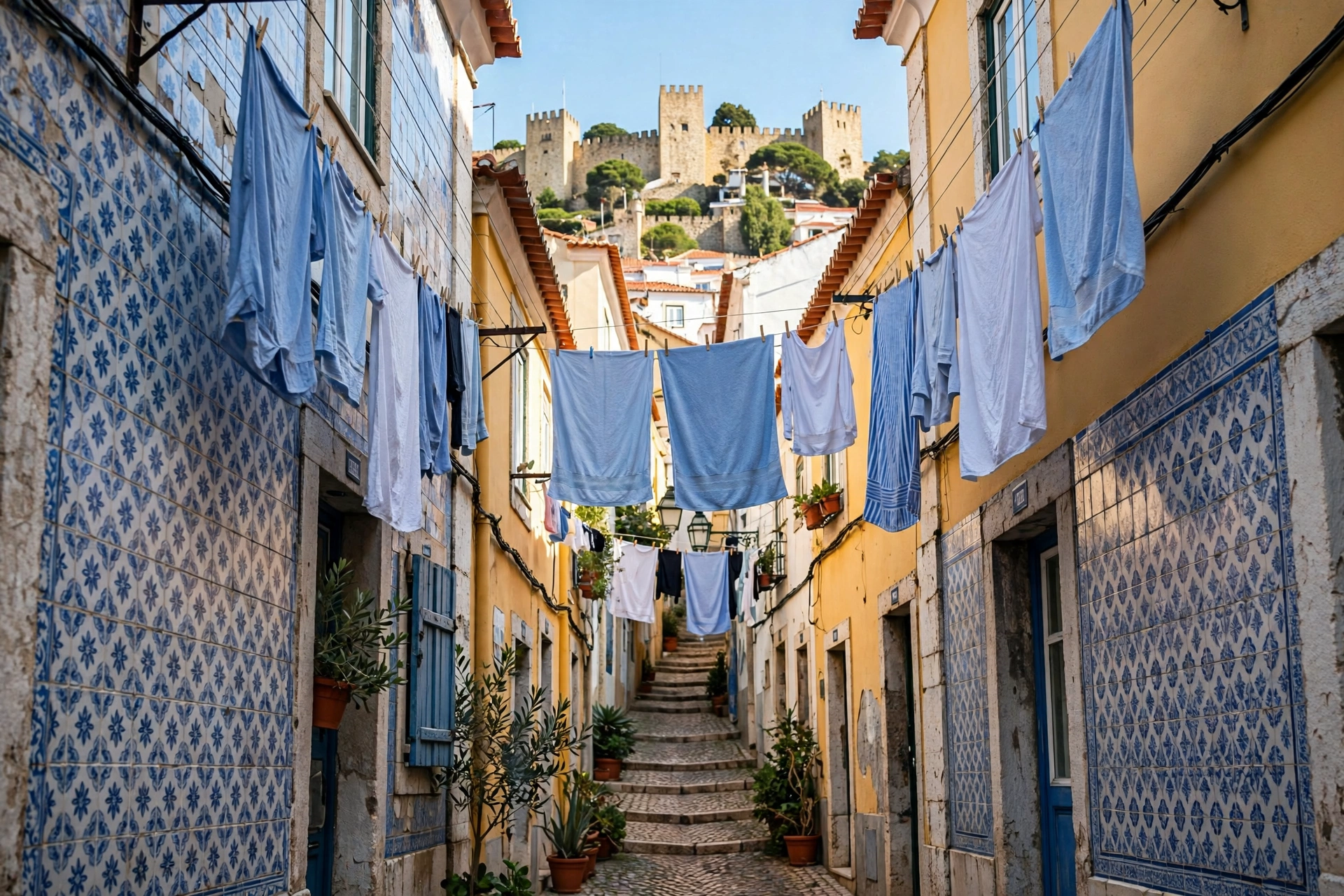
Alfama is the neighbourhood most visitors picture when they think of Lisbon: laundry strung between ochre buildings, tiny taverns, tiled walls, and lanes so narrow that two people can barely pass. It survived the 1755 earthquake largely intact, which is why its street plan still follows its Moorish-era layout, twisting and turning in ways that defeat any map. That is part of the pleasure. Wander without a strict route, and you will stumble onto viewpoints, small churches and corner cafés that no itinerary lists.
Start at the Sé Cathedral, Lisbon’s fortress-like Romanesque cathedral from the 12th century, and climb — or ride part of the way — toward Castelo de São Jorge, the hilltop castle whose ramparts give the best panoramic view in the city. Go early, ideally right at opening, because by midday the castle fills with tour groups. From there, walk downhill through Alfama’s backstreets rather than uphill: your knees will thank you, and the light is better for photographs in the morning.
Alfama is also the spiritual home of fado, Portugal’s soulful, melancholic music. If you want to hear it, choose one evening for a small fado house here or in nearby Mouraria, and book ahead for the smaller rooms. Keep expectations honest: the best fado evenings are intimate and quiet, not dinner-show spectacles. Alfama is at its best early in the morning, when it belongs to residents hanging laundry and opening shutters, and again at dusk, when the viewpoints fill with people watching the sun drop over the Tagus.
Chiado and Bairro Alto: Shopping by Day, Music by Night
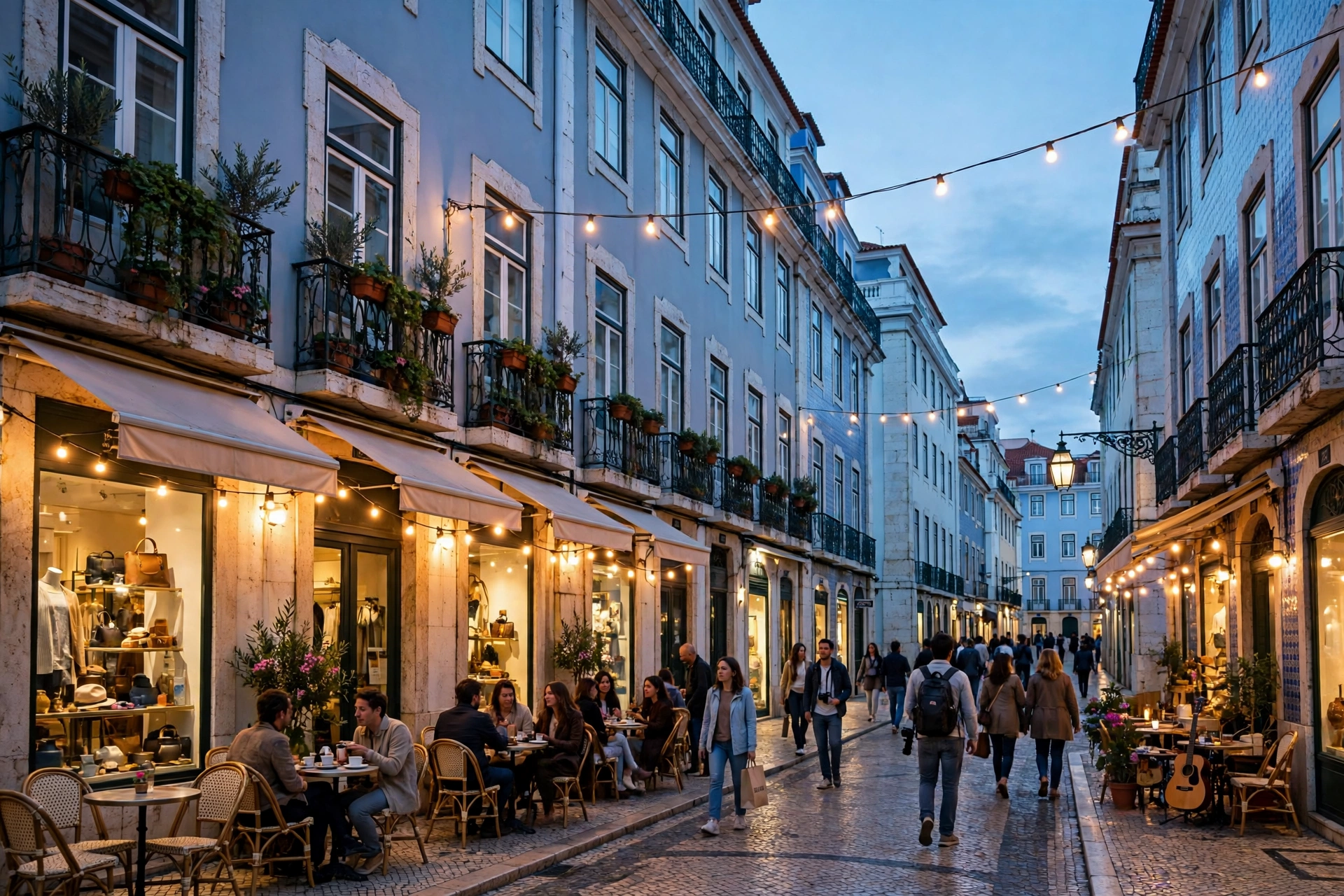
Chiado and Bairro Alto sit side by side uphill from Baixa, and together they form Lisbon’s most versatile pair of neighbourhoods. Chiado is polished and walkable, full of bookshops, historic cafés, theatres and the ruins of the Carmo Convent, whose roofless Gothic arches are one of the city’s most atmospheric sights. This is where to come for a leisurely morning: coffee in a historic café, a browse through independent shops, and the short walk to the Santa Teresa viewpoint area.
Bairro Alto changes character completely between day and night. By day it is sleepy, with shuttered bars, street art and small restaurants. After dark, its narrow streets fill with people moving between tiny bars, and the whole quarter becomes an open-air party, especially on Friday and Saturday nights. That energy is fun if you are staying out, and a genuine nuisance if you are trying to sleep above a bar, so choose your accommodation here with open eyes.
The practical move is to treat Chiado as a daytime base and Bairro Alto as an evening destination. Have dinner in Bairro Alto or nearby Príncipe Real, then drift between bars or catch a fado performance. If you want a quieter evening, the terrace cafés around Príncipe Real’s garden offer the same golden-hour views without the crowds. Either way, wear shoes with grip: the cobblestones here, polished by centuries of footsteps, are slippery even when dry.
Belém: Monasteries, Towers and Custard Tarts
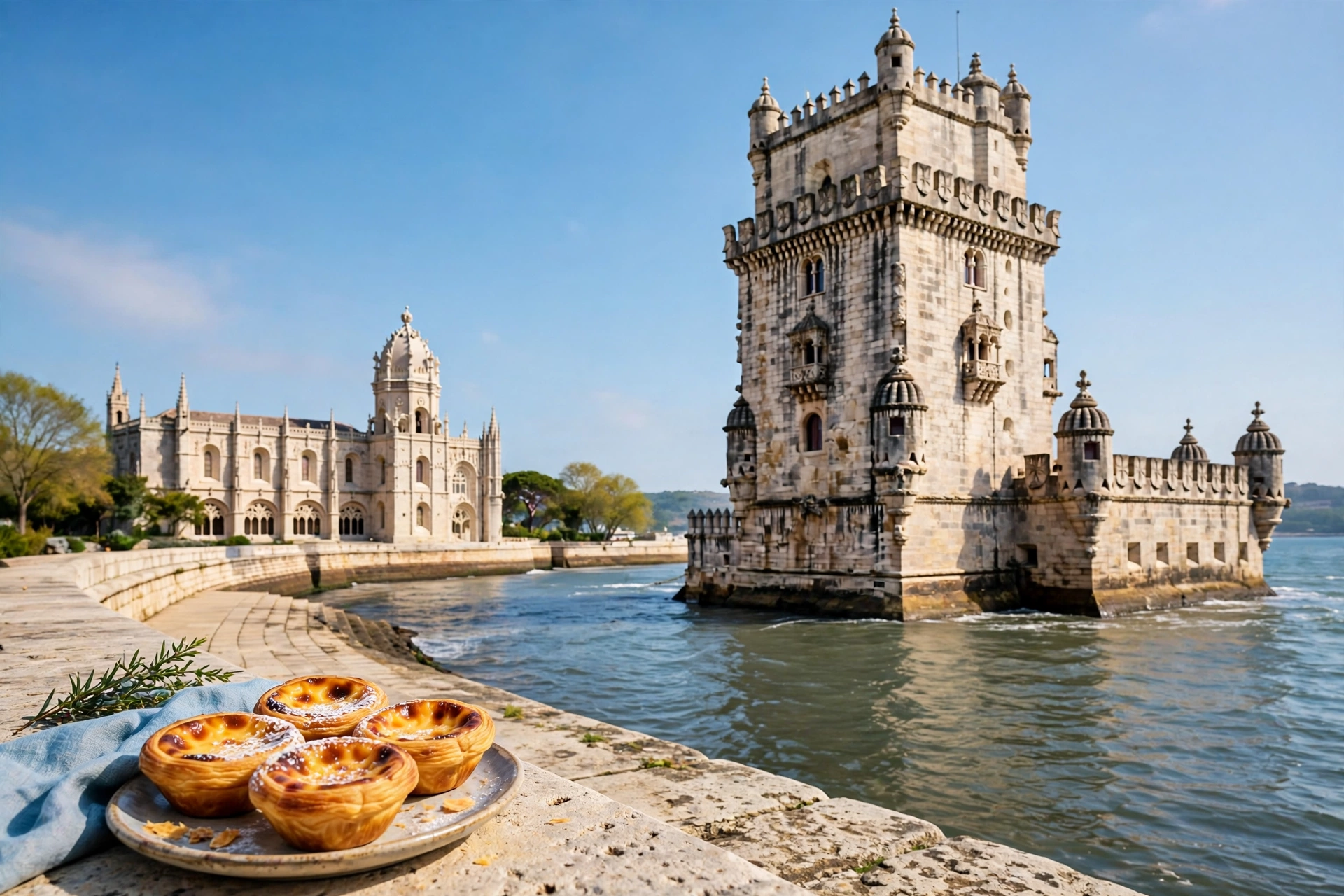
Belém sits apart from central Lisbon, about 20 minutes west by tram or train, and it deserves a full morning at minimum — ideally a half day. This is where Portugal’s Age of Discoveries is written in stone. The Jerónimos Monastery, a UNESCO World Heritage Site, is a masterpiece of Manueline architecture, all carved limestone ropes, sea monsters and cloisters that reward slow looking. Nearby, Belém Tower stands in the Tagus as the city’s most photographed monument, and the Monument to the Discoveries celebrates the navigators who sailed from this very riverbank.
Two planning notes will save you real frustration. First, Belém Tower now runs on timed entry with a daily visitor cap after reopening in 2026 following conservation work, so book a slot in advance rather than assuming you can walk in. Second, the monastery and the tower are separate sites with separate tickets, so decide in advance which interiors matter to you rather than queuing twice by default. Arrive in Belém in the morning, when the light is best and the tour buses have not yet peaked.
No visit to Belém is complete without a pastel de nata from the original bakery near the monastery, where the tarts have been made to a secret recipe since 1837. Expect a queue; it moves fast, and eating a warm tart standing outside is part of the ritual. If the line puts you off, any good Lisbon bakery sells excellent natas — the difference between the original and a great local one is smaller than the queue suggests. Finish your Belém morning with a walk along the riverfront promenade toward the MAAT museum, whose riverside steps are a fine place to sit and watch the Tagus.
Graça and Príncipe Real: Views and Village Calm
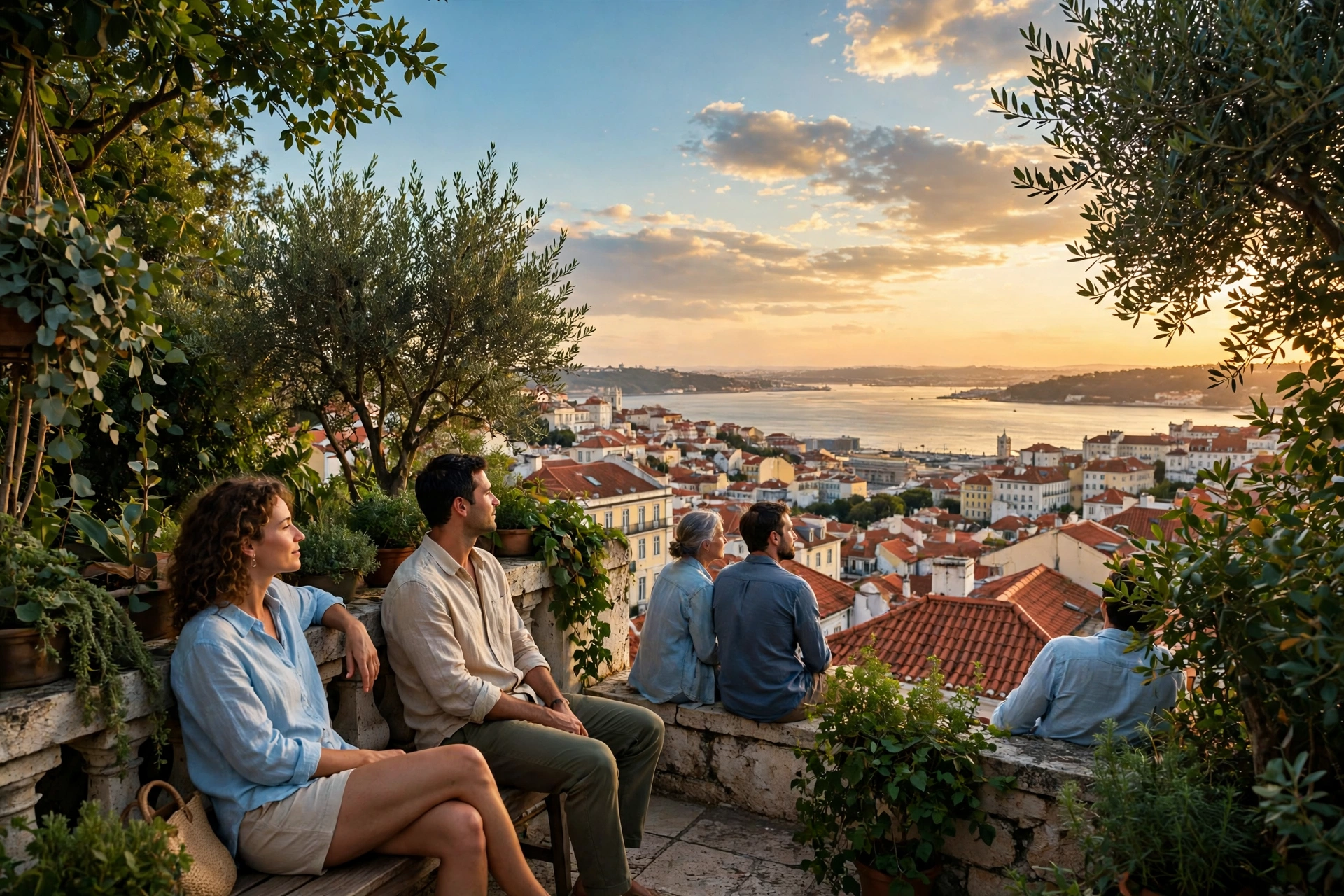
Graça and Príncipe Real are the two neighbourhoods most first-time visitors underrate, and they are where Lisbon feels most like a place people actually live. Graça, east of Alfama, is built around two of the city’s finest viewpoints: Miradouro da Graça, officially Jardim da Cerca da Graça, and the nearby Miradouro da Senhora do Monte, which offers the widest panorama in Lisbon, taking in the castle, the river and the 25 de Abril Bridge in a single sweep. Come at sunset, bring a drink from a kiosk, and join the mix of locals and travellers who gather here every clear evening.
Graça also hosts the Feira da Ladra flea market, held on Tuesdays and Saturdays near the National Pantheon, where you can browse tiles, records, vintage clothes and genuine junk in equal measure. It is worth timing a morning here if your trip overlaps with market days. The walk from Graça downhill into Alfama or toward the river is one of the city’s most pleasant, and it passes small tascas where lunch costs half what it does in Baixa.
Príncipe Real, on the western side of the centre, is calmer and greener, centred on a garden shaded by a remarkable old cedar tree. Its streets hold antique shops, concept stores and some of Lisbon’s best brunch spots, and on Saturday mornings the garden hosts an organic market. Príncipe Real is also one of the best bases for travellers who want a quiet night’s sleep without giving up a central location. Together, these two neighbourhoods are the answer to the question every returning visitor asks: where do the locals go? The answer, increasingly, is here.
A 3-Day Lisbon Itinerary That Actually Works
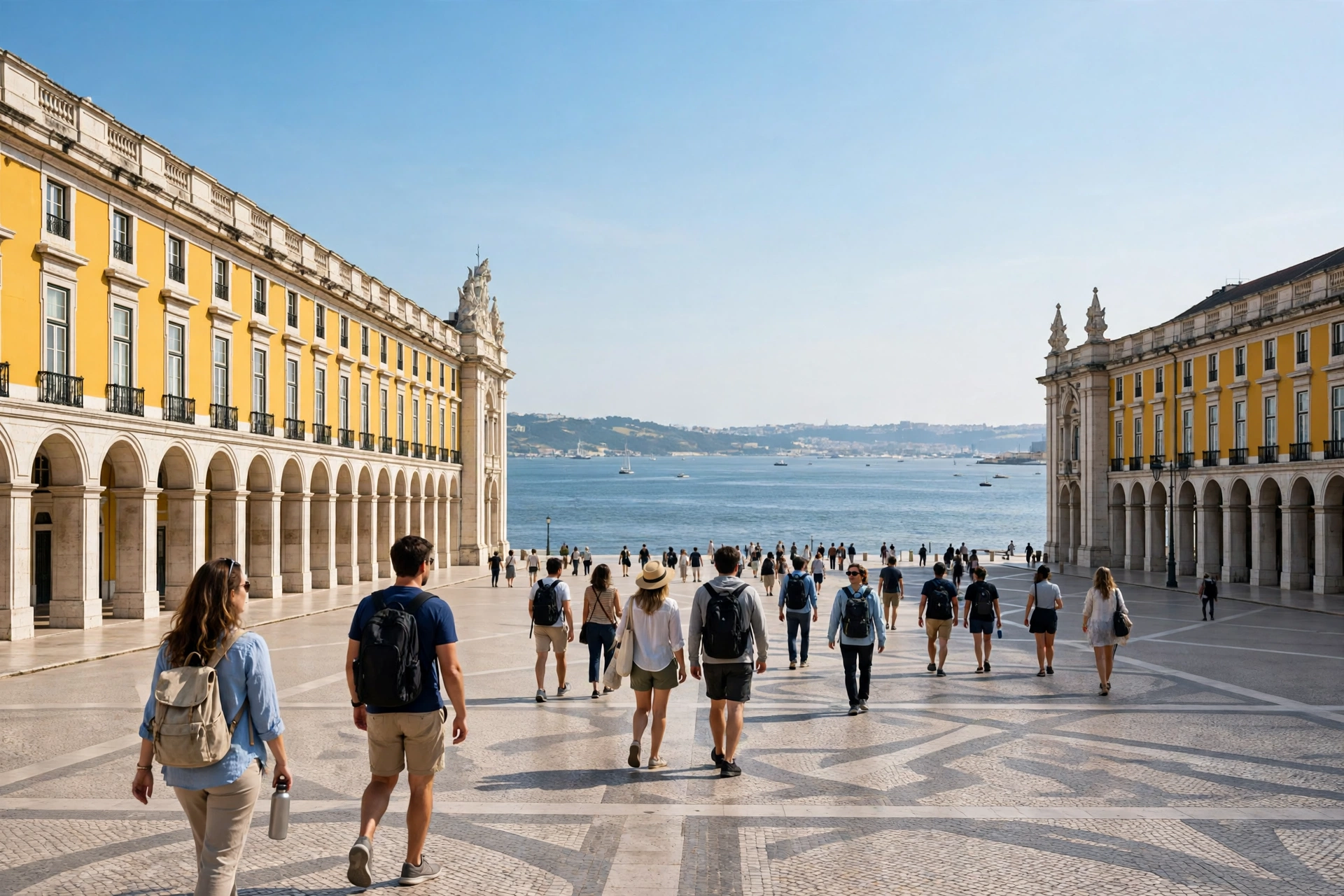
This plan assumes three full days and a central base in Baixa or Chiado. It deliberately leaves afternoons flexible, because Lisbon’s hills punish anyone who schedules every hour.
Day 1: The historic centre. Start at Praça do Comércio, Lisbon’s grand riverfront square, and walk up through Baixa’s grid streets to Rossio Square. Continue into Chiado for coffee and the Carmo Convent ruins, then climb toward the castle — or take the bus partway up and save your legs. Spend the late morning at Castelo de São Jorge, then walk downhill into Alfama for lunch in a small tasca away from the tram route. Spend the afternoon wandering Alfama’s lanes, stopping at the Portas do Sol and Santa Luzia viewpoints. In the evening, have dinner in Bairro Alto or catch fado in Alfama.
Day 2: Belém and the river. Take tram 15E or the train west in the morning. Visit the Jerónimos Monastery first, then Belém Tower if you have a timed ticket, and finish with pastéis de nata. Walk the riverfront promenade in the afternoon, perhaps visiting MAAT or the Coach Museum, and return to central Lisbon for a sunset viewpoint — Senhora do Monte if you have not been yet. Dinner in Príncipe Real is a calm end to a monument-heavy day.
Day 3: Graça, Príncipe Real and your choice. Spend the morning in Graça: the Senhora do Monte viewpoint, the flea market if it is Tuesday or Saturday, and a long lunch. In the afternoon, explore Príncipe Real’s shops and garden, or swap this day for a day trip to Sintra or Cascais if you have the energy. End your trip where Lisbon ends its days: at a miradouro with a drink in hand, watching the light change over the terracotta rooftops. If you have a fourth day, use it for the day trip you skipped, and let the city itself breathe.
Getting Around Lisbon: Metro, Tram 28 and Walking the Hills
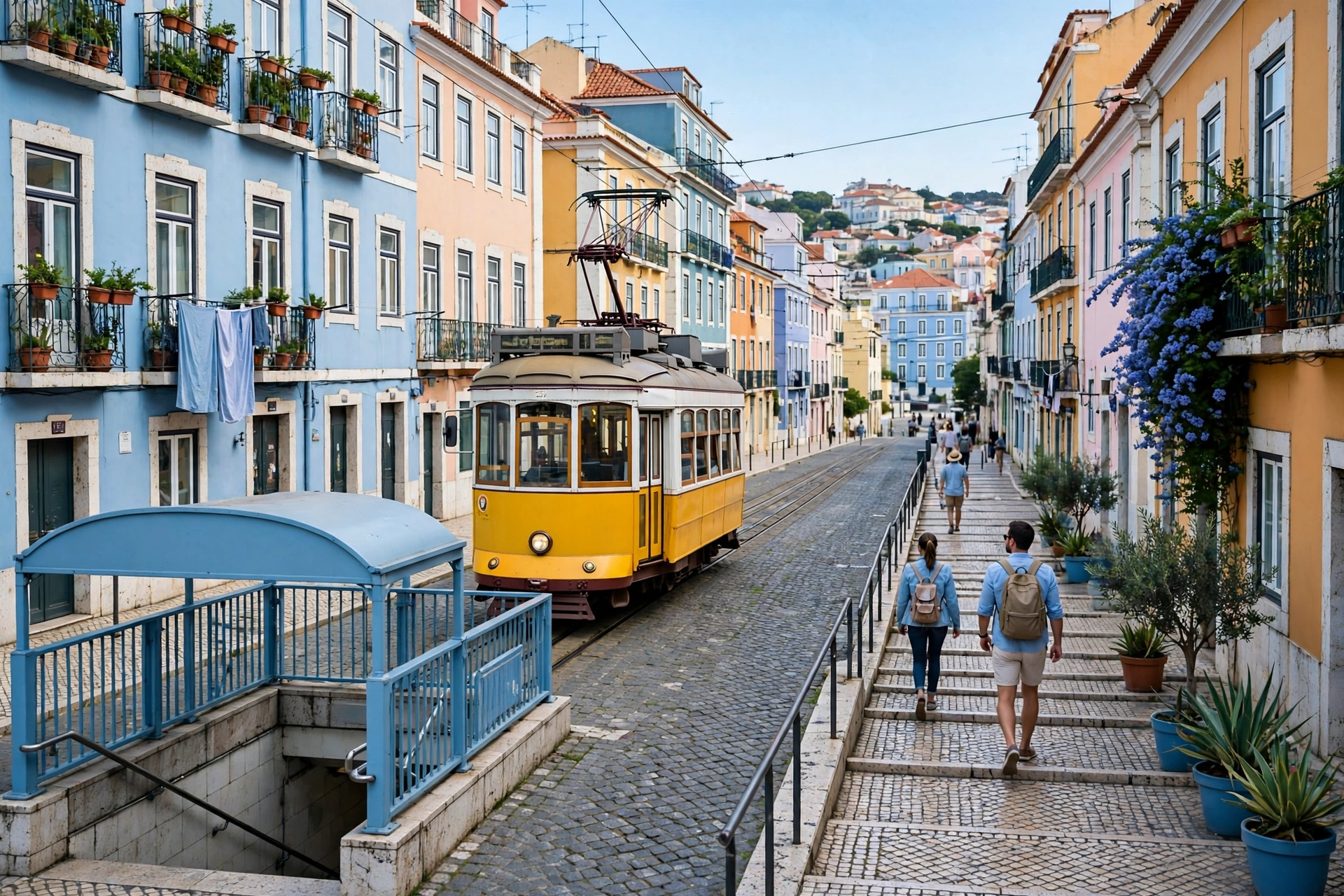
Lisbon’s transport is genuinely good, but each mode has a job it does best, and using the wrong one is the most common first-timer frustration. The metro, with four lines, is the fastest way to cross the city and to reach the airport; it does not serve Belém or the far west, but it covers the centre, the north and the east well. As of 2026, a single Carris/Metro ticket costs €1.90, a pay-as-you-go zapping journey costs €1.72, and a 24-hour Carris/Metro pass costs €7.25. You can also tap a contactless bank card directly at the metro gates for €1.92 per trip — one card or device per passenger, and you must tap in and out with the same card, as the official Metropolitano de Lisboa guidance explains. For most visitors, the 24-hour pass pays for itself on any day you ride three or more times.
Tram 28 is Lisbon’s most famous ride and its most misunderstood. It is regular public transport, not a sightseeing tour: it gets crowded, it can be slow, and pickpockets work it precisely because tourists treat it as an attraction. Ride it early in the morning, ideally from one end of the route, and treat it as a pleasant way to cross Alfama and Graça rather than a must-do checklist item. If the queue at your stop is long, walking the same streets is often faster and far more enjoyable. Tram 15E to Belém is the more useful tram for sightseeing, and buses fill the gaps the metro and trams miss.
Walking is how you actually experience Lisbon, but the hills demand respect. Wear shoes with real grip, not smooth-soled fashion sneakers, because the polished cobblestones — calçada portuguesa — are slippery even when dry. Plan routes downhill where possible: castle first, then Alfama below it, rather than the reverse. Taxis and ride-hailing are affordable by Western European standards, typically €8–10 across the centre, and they are the sensible choice when luggage, tired legs or late nights are involved. A cheap and lovely extra is the Cacilhas ferry from Cais do Sodré, which crosses the Tagus for a little over a euro and gives you one of the best views of the city skyline.
What to Eat in Lisbon: A First-Timer’s Food Guide
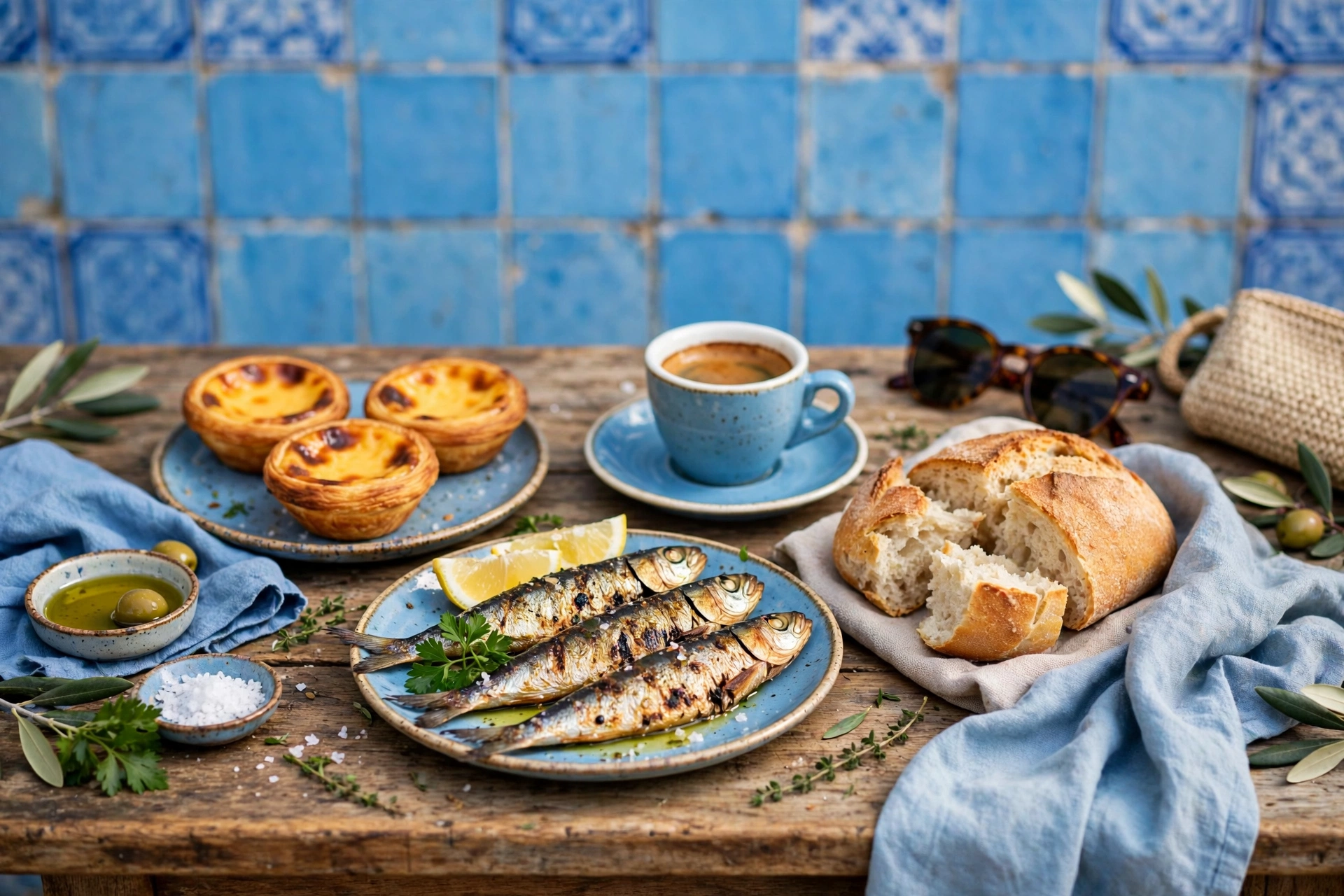
Lisbon is one of Europe’s great food cities, and eating well here does not require a big budget — it requires knowing a few local rules. The most important is the prato do dia, the daily lunch special served in tascas, small family-run restaurants, for around €8–12 including a drink. It is usually the freshest, best-value meal you will eat all trip, and it is how locals eat. Dinner is a later affair, with most Lisboetas sitting down around 8:30 or 9 pm; restaurants that fill at 6 pm are, almost by definition, not where locals eat.
Start with the classics. Bacalhau, salt cod, appears in dozens of preparations — bacalhau à brás, shredded with egg and potato, is the friendliest introduction. Grilled sardines are a summer essential, best eaten in June during the Santos festivals but available year-round. A prego, a steak sandwich in a crusty roll, is the perfect late-night snack in Bairro Alto. And the pastel de nata, warm from the oven with cinnamon, is non-negotiable at least once a day. For a one-stop introduction, the Time Out Market in Cais do Sodré gathers stalls from well-known chefs under one roof; it is busy, but it is a good way to sample widely in a single visit.
Two money details catch first-timers out. First, the bread, olives and cheese placed on your table before you order — the couvert — is not free; it is a small per-person charge, and you can politely decline it if you do not want it. Second, tipping is not like in the United States: service is included, and leaving 5–10% when you are happy is customary and appreciated, not expected. Finally, carry some cash. Cards are widely accepted, but small tascas, market stalls and traditional cafés sometimes prefer cash, and a few euros in your pocket avoids awkward moments.
Best Day Trips from Lisbon: Sintra and Cascais

If you have four or more days, a day trip is the best addition to a Lisbon itinerary. Sintra and Cascais are the two classic choices, and they suit different moods — so choose one per trip rather than rushing both into a single day.
Sintra, about 40 minutes by train from Rossio station, is a misty hill town of palaces, forests and romantic excess. Pena Palace, its candy-coloured hilltop showpiece, is the headline, but the Moorish Castle and the mysterious gardens of Quinta da Regaleira, with its initiation well, are equally memorable. Book Pena Palace tickets online in advance and arrive early, because the palace and its access roads clog by midday. Sintra’s weather is famously changeable — it can be foggy and cool in the hills while Lisbon basks in sun — so bring a layer and check the forecast before you go.
Cascais, about 40 minutes by train from Cais do Sodré, is the opposite mood: a relaxed coastal town of beaches, a marina, a walkable old town and the dramatic cliffs at Boca do Inferno. It is the easier, breezier day trip, and it pairs well with a stop in Estoril on the way back. In summer, you can swim; in winter, the seafront walk and seafood lunch are the point. If your Lisbon trip is short, Cascais is the lower-effort choice; if you love palaces and gardens, Sintra wins. Either way, treat the day trip as a full day out, not an add-on squeezed after a morning of sightseeing in Lisbon.
How Much Does a Lisbon Trip Cost?
Lisbon remains one of Western Europe’s more affordable capitals, but costs have risen, and a realistic budget beats an optimistic one. The table below gives daily per-person ranges for a mid-range trip, excluding flights.
| Expense | Budget | Mid-range | Comfortable |
|---|---|---|---|
| Accommodation (per night) | €50–80 | €90–150 | €160+ |
| Food and drink | €25–35 | €40–65 | €70+ |
| Transport (metro, trams) | €3–7 | €7–12 | €15+ |
| Attractions and tickets | €0–10 | €15–30 | €35+ |
| Day trip (Sintra or Cascais) | €10–20 | €25–45 | €50+ |
| Daily total | €90–150 | €160–300 | €300+ |
Several costs are easy to forget. Lisbon charges a municipal tourist tax, currently €4 per guest aged 13 and over per night, capped at seven nights per stay, which is usually collected by your accommodation. Attraction tickets add up fast if you pay at the door for everything: São Jorge Castle is around €15 and the Jerónimos Monastery around €18, so a Lisboa Card can be worth calculating if you plan several major sights in 24 to 72 hours — do the maths against your actual list rather than assuming it saves money. Free pleasures balance the budget: viewpoints, Alfama’s lanes, the riverfront promenade, churches and the flea market all cost nothing. Eating the prato do dia at lunch and cooking nothing at all is still cheaper than a single tourist-trap dinner on Rua Augusta. For a broader look at planning travel money before you go, our guide to preparing a travel budget walks through the same approach in detail.
Staying Safe in Lisbon and Mistakes to Avoid

Lisbon is a safe city by European standards, and most visits pass without incident. The main risk is opportunistic theft, not violence. Pickpockets work crowded trams — especially Tram 28 — busy squares, and the areas around major stations. Keep your bag in front of you, your phone out of your back pocket, and your valuables in a zipped inner pocket on public transport. At restaurants, do not hang your bag on the back of a chair. These are small habits, and they remove almost all of the risk.
A few other safety notes are worth knowing. Lisbon’s hills and cobblestones cause more injuries than crime does: wear grippy shoes, take your time on wet stone, and use handrails on steep stairways. At night, the centre and Bairro Alto are lively and well populated; as in any city, quiet side streets late at night deserve the usual awareness. Tap water is safe to drink, pharmacies are plentiful and well signed, and the European emergency number 112 works throughout Portugal.
Now the mistakes that most often spoil a first trip. First, treating Tram 28 as a tour rather than transport, then spending an hour in a queue for a crowded ride. Second, trusting old advice about Lisbon’s historic lifts: the Santa Justa Lift has been suspended since September 2025 following the Glória funicular accident, and older guides that present it as a working attraction are out of date — check the operator’s live notices before planning around any lift or funicular. Third, trying to see everything in two days and remembering none of it. Fourth, eating every meal on a main tourist street, where prices are highest and quality lowest. Fifth, booking accommodation without checking the hill, the stairs and the noise. Avoid those five, and Lisbon is very hard to get wrong.
Frequently Asked Questions
Is Lisbon worth visiting for first-time travellers?
Yes. Lisbon is compact, walkable in sections, sunny, affordable compared with Paris or London, and full of distinct neighbourhoods, so a first-time visitor can see a great deal in three days without feeling overwhelmed.
How many days do you need in Lisbon?
Three full days is the sweet spot for a first visit: one day in the historic centre, one in Belém, and one for Graça, Príncipe Real or a day trip. Four to five days lets you add Sintra and Cascais comfortably.
What is the best time of year to visit Lisbon?
April to June and September to October offer the best balance of warm weather, manageable crowds and reasonable prices. Summer is hot and busy; winter is mild, quiet and cheaper.
Is Lisbon a walkable city?
Central Lisbon is walkable, but it is famously hilly. Wear shoes with grip, plan routes downhill where possible, and use the metro, trams and buses for longer hops rather than walking everywhere.
Is Lisbon expensive?
By Western European standards, no. A mid-range traveller can expect €160–300 per day including accommodation, food, transport and attractions, and eating lunch specials in local tascas keeps food costs well down.
Is Tram 28 worth riding?
Yes, if you ride it early in the morning before the crowds build. It is regular public transport, not a tour, so at busy times it is crowded and slow — walking the same neighbourhoods is often the better experience.
Conclusion
Lisbon does not demand a complicated plan. Give it three days, base yourself somewhere flat enough to sleep well, walk the old quarters in the morning, eat where locals eat at lunch, and finish each day at a viewpoint as the light turns gold over the Tagus. Book the big tickets in advance, ride Tram 28 early or not at all, and leave room in your days for the unplanned moments — they are the ones you will remember. Whether this is your first European city break or your fiftieth, Lisbon has a way of making visitors start planning their return before they have even left. Start with the plan above, adjust it to your pace, and let the city do the rest.
People also read: If you liked planning this trip, our travel itinerary template will help you structure any future trip the same way, and if you are considering a winter escape after Lisbon, our guide to the best places to travel in January is a good next stop. For something completely different, our Morocco travel guide covers another sun-soaked destination that pairs surprisingly well with a Portugal trip.