
Quick Answer

A good travel bucket list is not a random collection of famous places. It is a short, personal list of experiences you genuinely want — a sunrise somewhere new, a trail you have always meant to walk, a city whose food you want to taste at the source — organized so you can actually do them, one or two at a time, over the coming years. This guide gives you 50 ideas across nature, cities, ancient sites, wildlife, journeys, food, adventure, and quiet wonders, and then shows you how to rank them by time, cost, and season, avoid the common mistakes that leave lists untouched, and turn the first item into a booked trip. Use the ideas as a starting point, keep the ones that excite you, and delete the rest without guilt. A list that reflects you will always beat a list copied from someone else.
Most bucket lists fail for the same reason: they are too long, too vague, and disconnected from real life. “See the world” is not a plan. “Watch the sunrise over Angkor Wat in the dry season, as part of a ten-day Cambodia trip in the next two years” is a plan, because it has a place, a season, a duration, and a timeframe. The difference between dreaming and traveling is rarely money alone. It is usually specificity. The travelers who actually work through their lists tend to have fewer items, clearer reasons for each one, and a habit of booking the next trip before the glow of the last one fades.
This article is organized to help you do both parts: dream widely, then plan narrowly. The first sections cover the ideas, grouped by the kind of experience rather than by continent, because most people choose trips by feeling — awe, adventure, food, quiet — more than by geography. The later sections cover the practical system: ranking, budgeting, timing, and the mistakes to avoid. If you only have ten minutes, read the Quick Answer and the planning section. If you have a quiet evening, read the whole list with a notebook beside you and circle the items that make you want to look up flights.
What Makes a Good Travel Bucket List?

A good travel bucket list passes three tests. First, it excites you specifically, not just in general. If an item bores you when you imagine actually doing it — the early start, the crowds, the long flight — it does not belong on your list, no matter how famous it is. Second, it mixes scales. A list of only expensive, once-in-a-lifetime expeditions will sit untouched for years, while a list that mixes one big dream with several achievable weekends keeps you moving. Third, it has room to change. The list you write at twenty-five should not be a contract at forty. Cross things off, add new ones, and let the list grow with you. A bucket list is a compass, not a report card.
It also helps to write down why each item matters to you, in one sentence. “See the northern lights” becomes stronger as “Stand under the aurora in northern Norway, because I have wanted to see the night sky do something impossible since I was a child.” That sentence is what carries you through the planning — the saving, the waiting for the right season, the long journey north. When friends ask why you chose a destination, that sentence is also your answer. And when you finally stand there, it is the difference between ticking a box and having an experience you remember.
Finally, be honest about what kind of traveler you are. Some people love the energy of a crowded festival. Others want a quiet trail and an early night. Some want to be challenged, and some want to be comforted. There is no prize for the most extreme list, and a list built around someone else’s idea of adventure will feel like homework. The best travel bucket list is the one that makes you slightly impatient to start — not anxious, not guilty, just ready.
Natural Wonders Worth Planning Around
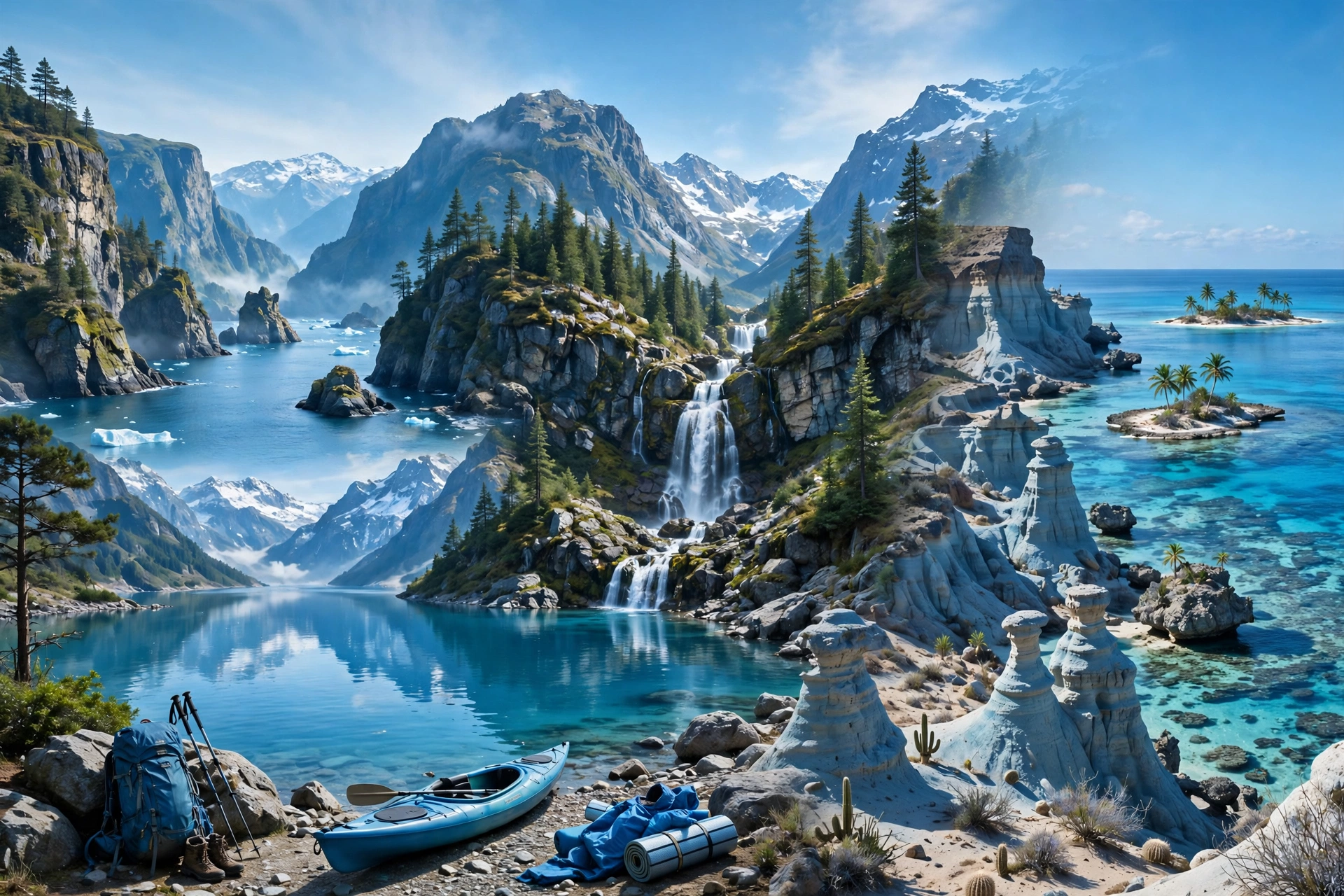
Some places earn their place on a travel bucket list by scale alone: landscapes so large or so strange that photographs cannot prepare you for standing in them. The Grand Canyon in the United States is the classic example. You can read about its size, but the first view from the rim still stops people mid-sentence. Plan for at least a full day, walk partway down a trail rather than only viewing from above, and consider a sunrise visit, when the light moves across the rock layers and the crowds are thinner. If heights and long hikes are not for you, the rim trails and viewpoints still deliver the essential experience without demanding more than you want to give.
Iguazu Falls, on the border of Argentina and Brazil, is a different kind of scale — not a single drop but a system of hundreds of falls spread across a wide, green gorge, with walkways that take you close enough to feel the spray. Visiting both sides, if you can, shows you two versions of the same wonder: the panoramic sweep from one side and the close-up power from the other. Ha Long Bay in Vietnam offers a quieter awe: limestone islands rising from calm, green water, best seen slowly from a boat over a day or two rather than rushed through in an afternoon. And in Iceland, the combination of waterfalls, black sand beaches, and geothermal landscapes in a compact, driveable country makes it an ideal first big nature trip for travelers who want drama without extreme logistics.
For something truly otherworldly, add the salt flats of Bolivia, where a shallow layer of water turns the ground into a mirror for the sky, and the deserts of Namibia, where some of the world’s oldest dunes rise in deep red above a dry, silent plain. Both reward travelers who plan around season: the mirror effect in Bolivia depends on the wet season, while Namibia’s dunes are best in cooler months. Checking the season before you book is a small habit that transforms these trips from disappointing to unforgettable. If your list leans toward nature, balance one famous wonder with one quieter one — a well-known canyon plus a lesser-known valley — so your memories include both awe and solitude.
Iconic Cities and Cultural Capitals

Cities belong on a travel bucket list not because they are famous, but because they compress centuries of food, architecture, music, and daily life into walkable streets. Kyoto in Japan rewards slow travel: temples at dawn before the crowds, gardens that change with the seasons, and neighborhoods where a single street can hold a tea house, a craft shop, and a tiny restaurant that has served the same dish for generations. Visit in cherry blossom season if you can, but do not let that be the only reason — Kyoto in autumn, with maple leaves turning red, is just as beautiful and often calmer.
Paris rewards a similar patience. The famous sights matter, but the bucket-list version of Paris is less about queuing for one museum and more about building a day around a neighborhood: a morning market, a long lunch, a walk along the river, and an evening in a place where locals actually eat. Rome works the same way. The Colosseum and the Forum are extraordinary, but the memory that lasts is often an unplanned hour in a small square, eating well and watching the city go about its day. Give big cities at least three or four days, and resist the urge to see everything. A city seen at walking pace gives you more than a city seen through a checklist.
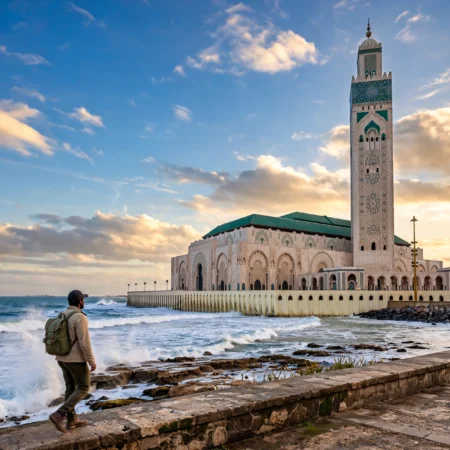
For contrast, add a city that surprises you. Mexico City combines ancient history, world-class food, and neighborhoods of remarkable energy, and it surprises travelers who expect only beaches from Mexico. Istanbul sits between continents and cultures, with markets, mosques, and waterfront neighborhoods that make a few days feel like several trips at once. Marrakech offers color, scent, and sound in a concentrated old city that rewards a guide on the first day and wandering on the days after. Each of these cities is also a good base: from Marrakech, the Atlas Mountains and the desert are within reach, and from Mexico City, ancient Teotihuacan is a day trip. Planning a city plus one excursion often makes a better trip than a city alone, and if Morocco appeals to you, our Morocco travel guide covers routes, seasons, and practical details for building that kind of trip.
Ancient Sites and World Heritage Wonders

Some bucket list items have survived for thousands of years, and standing in them connects you to people who lived, built, and worshipped in ways that still shape the world. Machu Picchu in Peru is the most famous example, and it deserves its reputation — but the experience depends heavily on how you approach it. The classic Inca Trail trek, booked months ahead, is a multi-day journey that makes arrival feel earned. The train from Ollantaytambo is a fine alternative for travelers who cannot trek, and it still delivers the moment of seeing the citadel appear above the clouds. Either way, arrive early, go with a guide who explains what you are seeing, and give yourself time to sit and look rather than rushing for photographs.
Petra in Jordan is another site that rewards patience. The walk through the narrow canyon, the Siq, builds anticipation, and the first view of the Treasury through the gap in the rock is one of travel’s great reveals. Stay for a second day if you can, to explore the tombs, the monastery trail, and the site after the day-trippers leave. The Great Wall of China, meanwhile, is best experienced away from the busiest restored sections: quieter stretches, visited with a guide and proper footwear, show you the wall as it winds over ridges into the distance, rather than as a crowded walkway. Angkor Wat in Cambodia completes this set. Arrive for sunrise, but stay for the full temple complex, including quieter temples where tree roots and stone have grown together over centuries.
If you want to choose your own ancient wonders with confidence, the UNESCO World Heritage List is the official place to explore what is protected and why. It is also a useful antidote to hype: a site on the list has been judged to have outstanding universal value, and the list’s descriptions explain the history in a way that helps you decide whether a place genuinely excites you or merely photographs well. Use it as a research tool, not as a checklist to complete. The goal is not to visit every site. It is to find the handful whose stories you want to stand inside.
Wildlife Encounters to See Responsibly
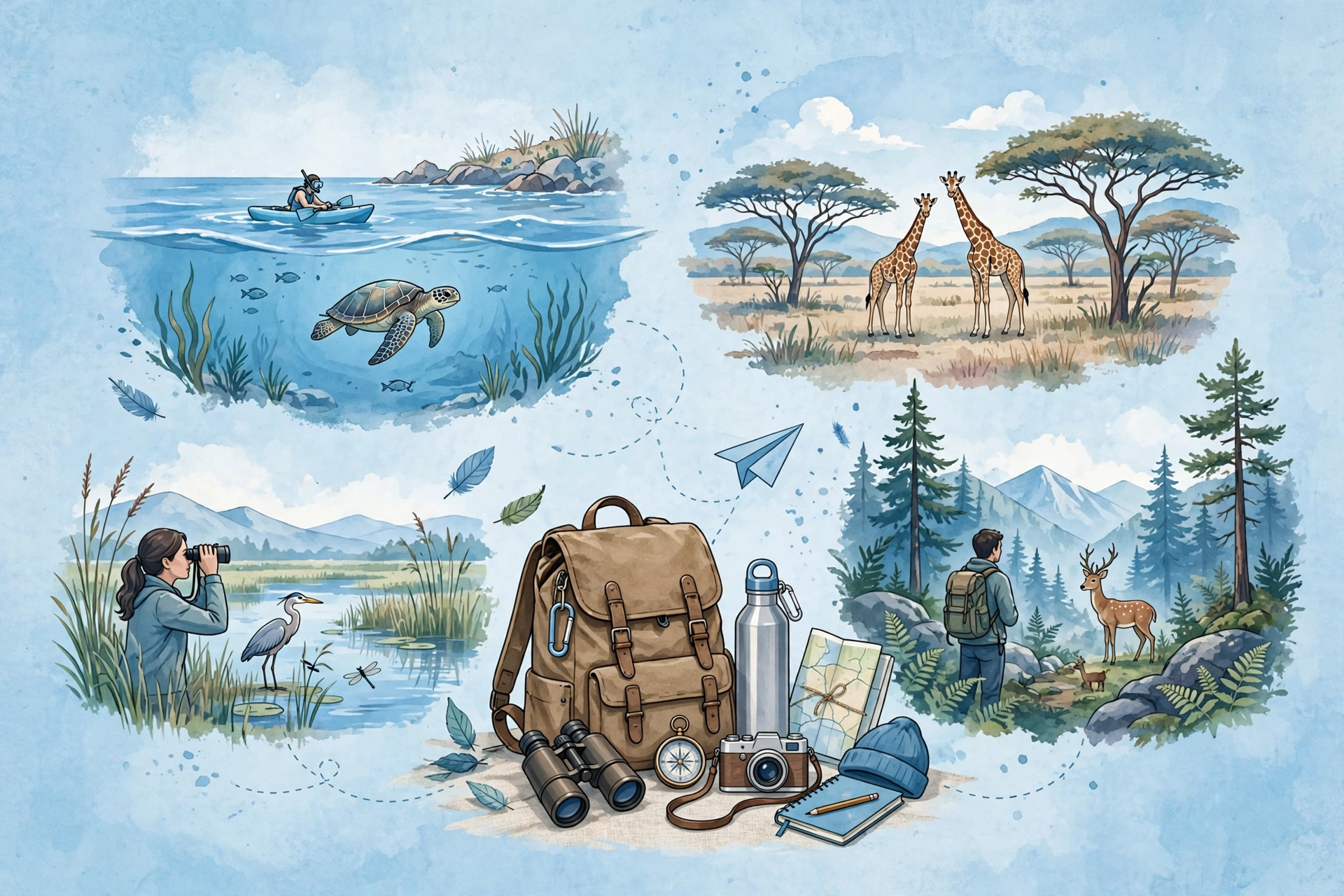
Wildlife belongs on a travel bucket list when it is seen in the wild, on the animals’ terms, with operators and parks that protect rather than exploit them. A safari in Kenya or Tanzania during the Great Migration is the defining example: millions of wildebeest and zebra moving across the Mara and Serengeti, followed by predators, in a landscape that makes you feel very small and very alive. Choose a reputable operator, travel in the right season for the herds’ location, and accept that wildlife does not perform on schedule. The days when you see little are part of the same experience as the days when you see everything.
The Galapagos Islands offer a different kind of wildlife encounter, where animals have no fear of humans and you can walk among giant tortoises, marine iguanas, and sea lions that go about their lives inches away. Because the islands are fragile, travel here comes with rules — stay on paths, keep distance even when animals approach you, and choose a licensed boat or land-based itinerary that respects park limits. Seeing wildlife responsibly costs more and takes more planning, and that is the point: the protection is what keeps the encounter possible. In Borneo, orangutans in rehabilitation centers and, more rarely, in the wild, offer a similar lesson about conservation, and the experience is more meaningful when you understand the habitat loss that makes protection necessary.
Closer to home for many American travelers, whale watching in Alaska or off the New England coast, and bear viewing in national parks with trained guides, offer extraordinary encounters without a long-haul flight. Whatever you choose, apply one test before booking: does this experience exist for the animals’ benefit, or are the animals made to perform for visitors? Avoid any encounter that lets you ride, hold, or pose with wild animals, and favor parks, reserves, and operators with clear conservation credentials. A wildlife memory you are proud of afterward is worth more than a photograph you later regret.
Epic Journeys: Trains, Road Trips, and Treks
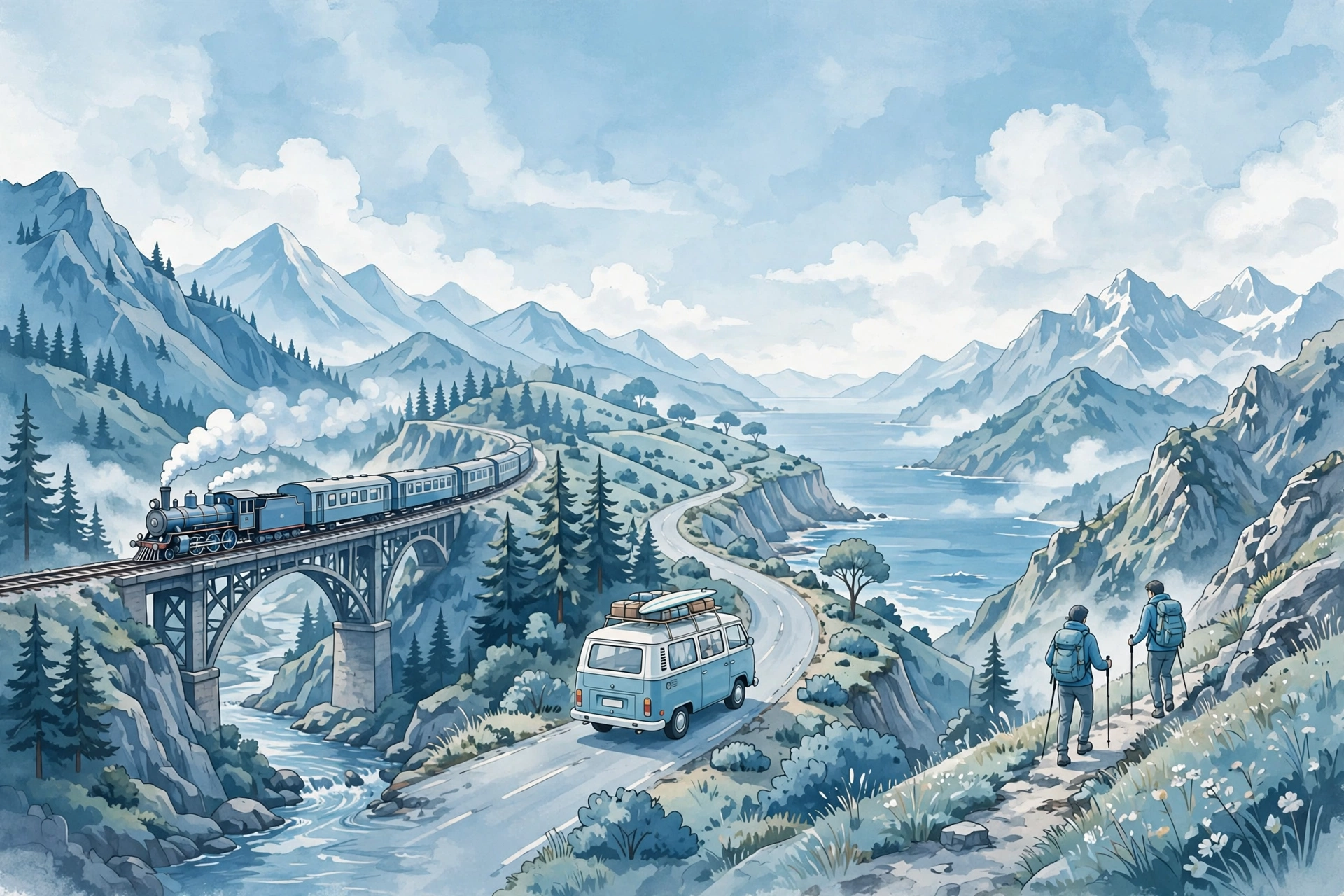
Some bucket list items are not places but journeys, where the way you travel is the experience. The Rocky Mountaineer across Canada, from Vancouver through the mountains toward Banff and Jasper, turns a train window into a moving panorama of lakes, forests, and peaks, with the luxury of not driving. Japan’s rail network offers a different version of the same pleasure: fast, punctual trains that let you combine Kyoto, the countryside, and coastal towns in a single, smooth trip. For a slower, more romantic rail journey, the great train routes of Europe and the sleeper trains of Southeast Asia reward travelers who enjoy watching a landscape change over hours rather than minutes.
Road trips belong here too. Driving the Pacific Coast Highway in California, from San Francisco to Los Angeles, is a classic for a reason: cliffs, ocean, small towns, and the freedom to stop wherever the light looks good. The Garden Route in South Africa, the Great Ocean Road in Australia, and the ring road in Iceland each offer a similar formula — a defined route, varied scenery, and places to stay along the way — with very different landscapes. The key to a good road trip is restraint: fewer miles per day than you think you can handle, one overnight stop you are genuinely looking forward to, and a route planned around daylight rather than distance. A road trip that ends every day exhausted is a route that was too ambitious, not a traveler who was too slow.
For walkers, the bucket list treks are pilgrimages in the best sense. The Inca Trail to Machu Picchu, the Tour du Mont Blanc through France, Italy, and Switzerland, and the long-distance trails of New Zealand’s South Island each demand fitness, preparation, and respect for weather and altitude. Train for them honestly, book permits and guides early where required, and choose a trek that matches your experience rather than your ambition. A trek that is slightly within your ability, finished with energy to spare, is a better memory than a trek that broke you. And if a multi-day trek feels like too much, a single spectacular day hike — a canyon rim trail, a coastal path, a mountain valley — can deliver the same feeling of earned beauty in a form that fits a normal holiday.
Food, Festivals, and Once-a-Year Moments

Some of the best bucket list items happen only at a certain time, and that scarcity is part of their magic. Japan’s cherry blossom season transforms parks, riversides, and temple grounds for a few weeks each spring, and planning around the forecast — with flexibility built in, since blossoms do not follow a calendar exactly — is part of the adventure. The northern lights, visible from northern Norway, Finland, Iceland, and parts of Canada and Alaska on dark, clear winter nights, are another seasonal prize. They cannot be guaranteed on any single night, so the smart plan is a multi-night stay in a good location, with daytime activities you enjoy regardless, so the trip succeeds even if the sky stays quiet.
Festivals offer a different kind of once-a-year moment. Carnival in Rio de Janeiro, with its parades, music, and street parties, is an explosion of energy that rewards travelers who book accommodation early and embrace crowds. Diwali in India, with lights, food, and family celebrations, offers warmth and color across the country, and is best experienced with local guidance about where to go and what to respect. Oktoberfest in Munich, cherry blossom festivals, and harvest festivals in wine regions each combine food, tradition, and place in a way that a normal visit cannot replicate. If crowds overwhelm you, choose a smaller, local version of a festival rather than the most famous one — a village harvest festival can be more memorable than a mega-event.
Food itself deserves its own bucket list section. Eating your way through a place — noodles in Vietnam, pasta in Bologna, street food in Bangkok, seafood on a Mediterranean coast — is a legitimate reason to travel, and it often leads to the most vivid memories. Take a cooking class in the place whose food you love, visit a market with a local guide, and eat where locals queue rather than where tour buses stop. A food-focused trip also travels well on a modest budget: a market lunch and a cooking class can cost less than a single fine-dining meal and teach you more. If you love this kind of travel, build a list item around a dish and its home — not just “eat well in Italy” but “learn to make fresh pasta in Bologna, then eat it in the city where it was invented.”
Adventure Experiences for Different Comfort Levels
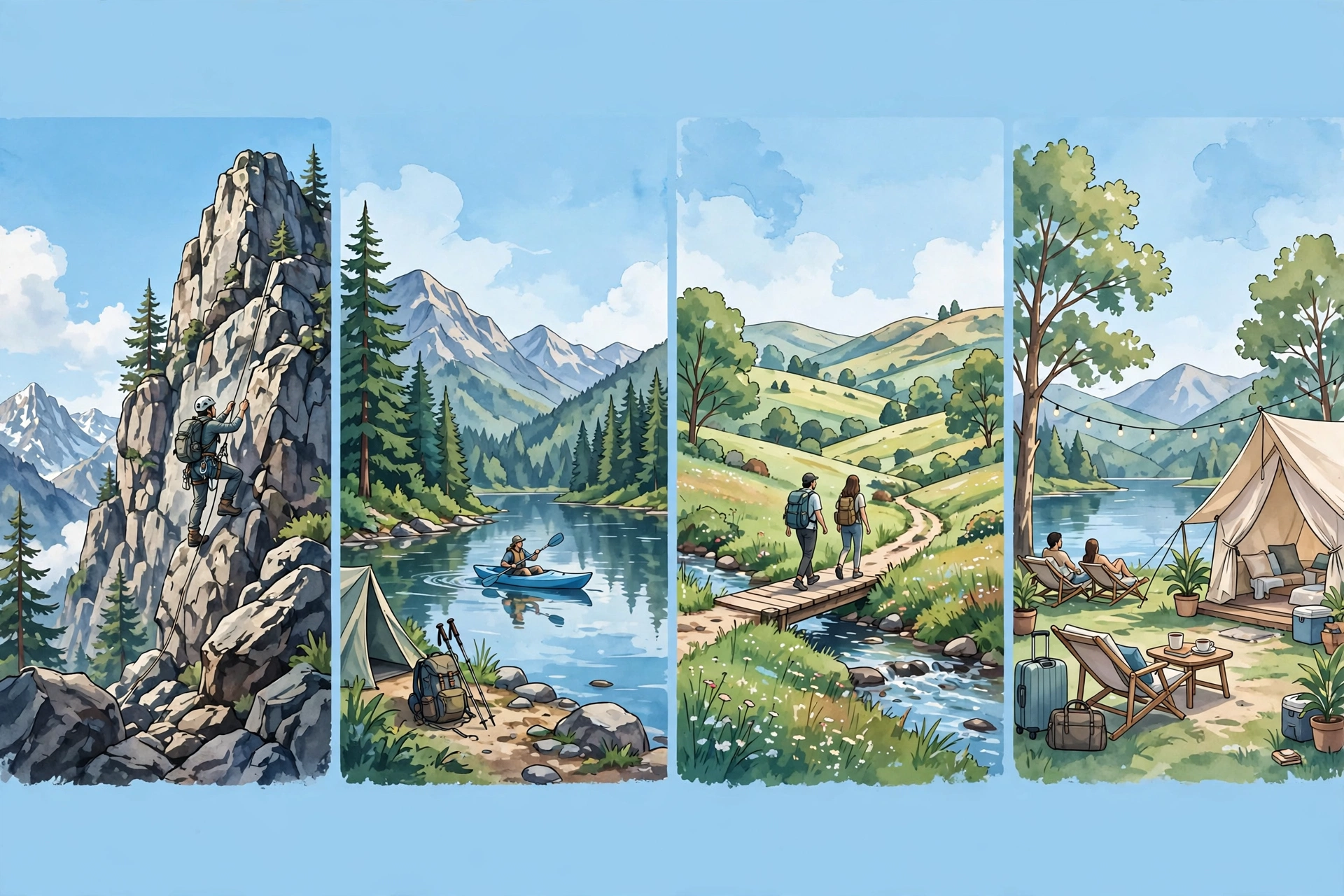
Adventure does not have to mean danger. A good bucket list includes adventures matched to your comfort level, so the thrill is excitement rather than fear. For gentle adventure, hot air ballooning over Cappadocia in Turkey at sunrise, kayaking in a calm bay, or snorkeling over a coral reef offer wonder without extreme risk. Cappadocia’s balloons, floating over valleys of strange rock formations as the sun rises, are a classic example: peaceful, beautiful, and accessible to most travelers who are comfortable with heights.
For moderate adventure, consider a guided glacier walk in Iceland or New Zealand, a white-water rafting trip on a river graded for beginners, or a multi-day cycling route through a wine region or along a coast. These experiences have guides, safety briefings, and equipment provided, and they let you feel challenged without feeling exposed. For high adventure, skydiving, bungee jumping, or a serious mountaineering objective belong only if you genuinely want them, have researched the operator’s safety record, and have the fitness and insurance to match. There is no shame in skipping the extreme item on your list. A bucket list is not a test of courage. It is a collection of things you want to remember fondly.
Water adventures deserve special mention because they suit so many travelers. Diving or snorkeling the Great Barrier Reef, swimming in a cenote in Mexico, kayaking among fjords in Norway, or sailing between Greek islands each combine physical activity with extraordinary scenery, and each can be scaled from gentle to demanding. Check conditions, go with licensed operators, and be honest about your swimming ability and comfort in open water. The best adventure memories come from experiences where you felt safe enough to actually enjoy what you were seeing, rather than counting the minutes until it ended.
Quiet Wonders: Islands, Deserts, and Night Skies
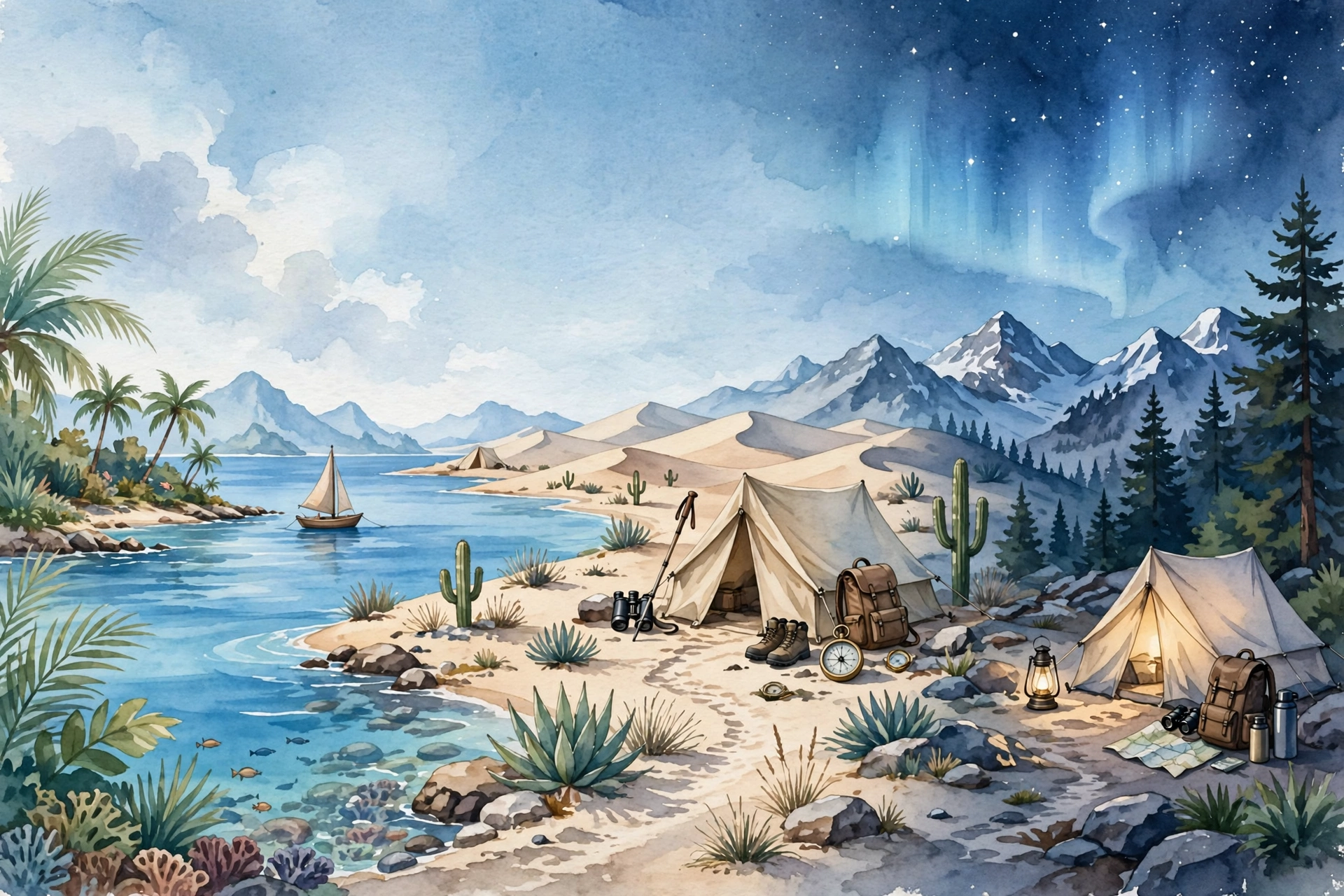
Not every bucket list item needs to be dramatic. Some of the most lasting travel memories come from quiet places: an island where the loudest sound is the sea, a desert where the night sky is undimmed by city light, a mountain valley where you can hear your own footsteps. The Greek islands beyond the busiest two or three, the Scottish Highlands in soft light, the deserts of Utah with their red rock and silence — these places reward travelers who slow down rather than speed up. If your life is loud and fast, a quiet wonder may be the most restorative item on your list.
Night skies deserve a place of their own. The Atacama Desert in Chile, the deserts of Namibia, and the high plateaus of the American West offer some of the darkest skies on Earth, where the Milky Way is not a photograph but a visible river of stars. A night in a dark-sky reserve, with a guide who can name constellations and explain what you are seeing, is an inexpensive bucket list item that feels anything but ordinary. Combine it with a daytime landscape you love — desert dunes, canyon country, a remote island — and you have a trip that works on two levels, day and night.
Islands, too, reward a slower approach. Island-hopping in Greece, Croatia, or Thailand is often done too fast, with one night per island and more time on ferries than on beaches. Choose fewer islands, stay longer, and let one island become familiar: the bakery you return to, the beach you walk each morning, the taverna owner who remembers your order. That familiarity is what turns a beautiful place into a place you miss when you leave. If a quiet, slow trip appeals to you, our best places to travel in January includes warm, calm destinations that suit exactly this kind of unhurried travel, and our travel goal guide can help you turn a vague wish for a quieter trip into a dated, funded plan.
How to Turn a Long List Into a Real Plan

Dreaming is the easy part. The system below is what turns a list into trips. Start by writing your list down in one place — a notebook, a document, a note on your phone — with one sentence for why each item matters. Then cut it. A list of fifty items is a wish list. A list of fifteen items, ranked, is a plan. Keep the cut items in a second list, the “maybe someday” list, so cutting does not feel like losing. You can always promote an item later, and the act of choosing forces you to notice which items you actually care about.
Rank Your List by Time, Cost, and Season
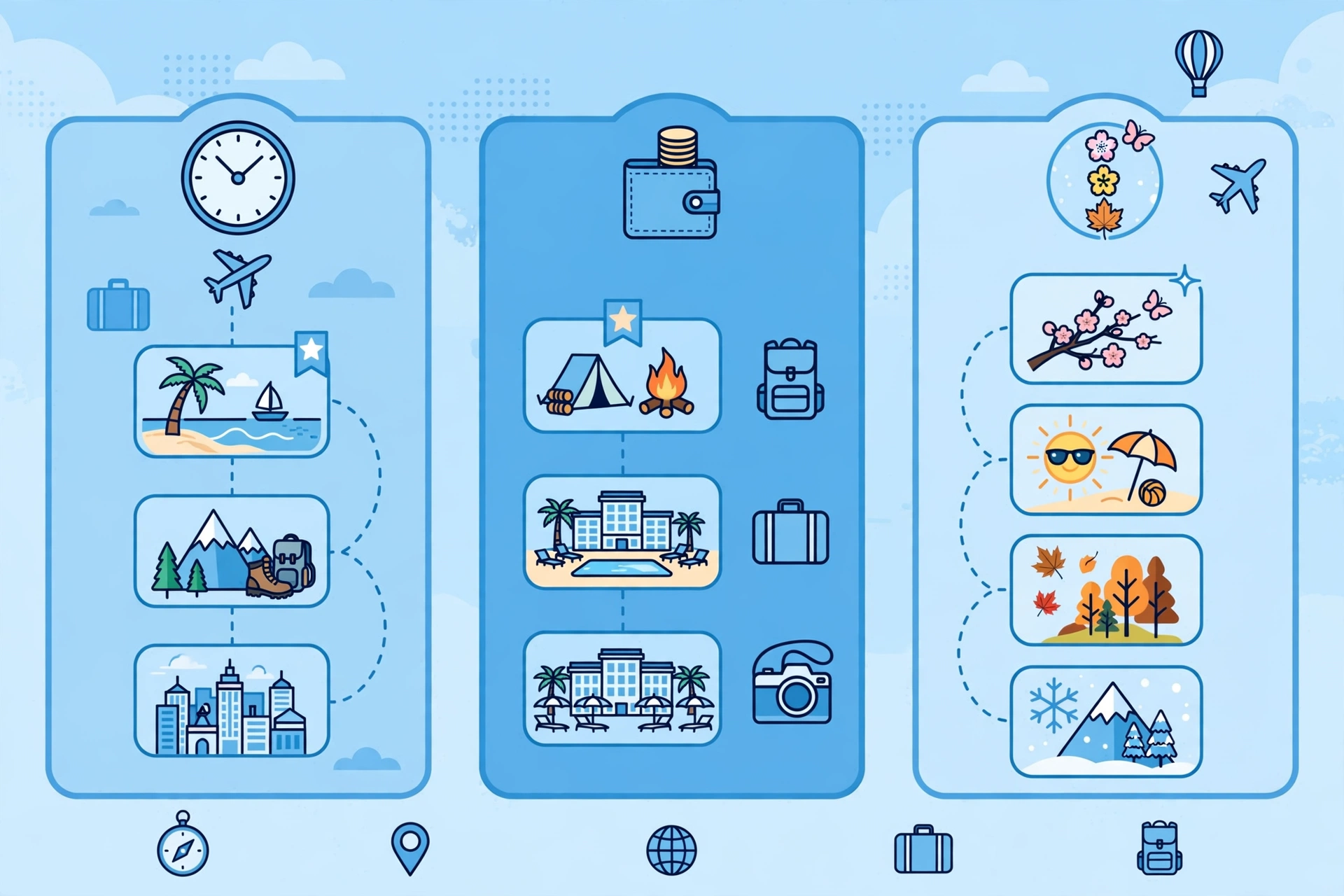
Give each remaining item three quick scores: how much time it needs, how much it will roughly cost, and when it is best done. A weekend city trip, a week-long nature trip, and a once-in-a-lifetime expedition belong in different categories, and mixing them up is how lists stall. Sort your list into three groups: “this year” (one or two items that fit your time and budget now), “next two years” (items that need saving or seasonal timing), and “someday big” (the expeditions that need serious planning). Then choose one item from “this year” and start planning it this week, even if the trip itself is months away. Researching flights, checking seasons, and reading a guide are all forms of progress, and progress keeps a list alive.
Season is the factor most travelers underestimate. A destination visited in the wrong season — a monsoon, a closed road, a festival crowd you did not expect, an aurora trip during midnight sun — can disappoint through no fault of the place. For each item, write down its best window in the same line as the item itself. “Northern lights, northern Norway, January to March” is a plan. “Northern lights, someday” is a wish. The same applies to costs: write a rough budget range next to each item, even if it is a guess, so you can see which items are within reach now and which need a savings plan. A simple travel budget worksheet turns that guess into a real number, and a real number turns a dream into a savings target.
A Simple Five-Year Bucket List Plan

A five-year plan sounds grand, but it is simply five years of one or two good trips each. Year one: one item from your “this year” group, plus one small, local item that costs little and reminds you that travel does not require a flight. Year two: one item that needed saving, booked once the savings target is met. Years three to five: one bigger item every year or two, with smaller trips in between. The rhythm matters more than the speed. Travelers who do one meaningful trip a year for five years end up with five deep memories. Travelers who try to do everything in one year end up exhausted, over budget, and with a blur of photographs they cannot place.
Build the plan around your real life, not an idealized version of it. If you have limited vacation days, favor closer destinations and longer weekends. If you travel with children, favor places with infrastructure that makes family travel enjoyable rather than heroic. If you travel with a partner or friends, choose items you both want, or alternate choices year by year. And revisit the plan once a year, ideally after a trip, when your sense of what you enjoyed is fresh. Cross off what you did, note what surprised you, and promote one item from the “maybe someday” list. A bucket list that is reviewed annually stays alive. A bucket list written once and forgotten is just a piece of paper.
Bucket List Mistakes to Avoid

The first mistake is copying someone else’s list wholesale. A list built from social media trends will send you to places that photograph well but may not suit you, at the busiest times, with the highest prices. Use other people’s lists as inspiration, then filter ruthlessly through your own interests, budget, and comfort level. The second mistake is overpacking a trip. Trying to see five bucket list items in one week guarantees that you experience none of them properly. One major item per trip, plus one or two smaller pleasures nearby, is a better formula. You can always return. Most beloved places reward a second visit more than a rushed first one.
The third mistake is ignoring the practical details until too late: permits booked out months ahead, a seasonal closure, a visa requirement, a health precaution, or a park reservation system that opens on a specific date. For national parks and popular sites, check reservation and permit rules early — the Yellowstone National Park plan-your-visit pages from the U.S. National Park Service are a good example of the official, practical information that turns a vague wish into a workable trip, including seasons, fees, and current conditions. The fourth mistake is spending so much on one trip that you cannot travel again for years. A bucket list is a lifetime project. Protecting your ability to keep traveling matters more than any single luxury upgrade.
The final mistake is treating the list as a race. There is no deadline, no prize for finishing first, and no penalty for changing your mind. Some items will become less appealing as you change, and some places will disappoint. That is normal, and it is not failure. The travelers with the best stories are rarely the ones who completed the most items. They are the ones who chose well, traveled slowly enough to notice, and kept a list that still excites them after years of use. Keep your list kind to your future self: ambitious enough to inspire, realistic enough to use, and flexible enough to grow.
Frequently Asked Questions
How many items should be on a travel bucket list?
There is no right number, but a working list of ten to twenty ranked items is more useful than a list of a hundred wishes. Keep a longer “maybe someday” list separately, and promote items to your main list as time, budget, and interest allow.
How do I choose between so many famous destinations?
Start with the kind of experience you want — nature, food, history, adventure, or quiet — rather than the most famous name. Then filter by season, budget, and how much time you have. An item that fits your life now will happen. An item that does not will wait, and waiting is fine.
Should a travel bucket list include expensive once-in-a-lifetime trips?
Yes, but balanced with achievable items. One or two big dreams give the list its excitement, while several smaller, affordable trips keep you traveling in the meantime. A list of only expensive items tends to sit untouched for years.
How do I afford a long travel bucket list?
Rank items by cost, save for one big trip at a time, and mix in low-cost trips — nearby nature, a city weekend, a seasonal event close to home. A rough budget next to each item turns a vague dream into a savings target you can actually meet.
What if a bucket list destination disappoints me?
That happens, and it does not mean the list failed. Note what did not suit you, adjust future choices accordingly, and keep the memory in proportion — a disappointing day rarely ruins a whole trip, and sometimes the unplanned moments nearby become the real highlight.
Can I build a travel bucket list around one theme?
Absolutely. A themed list — World Heritage sites, national parks, food cities, islands, mountain trails — can be more satisfying than a scattered one, because each trip deepens the same interest. The official heritage and park sources linked in this article are good starting points for a themed list.
Conclusion
A travel bucket list works when it is personal, ranked, and realistic — a handful of experiences you genuinely want, sorted by time, cost, and season, with one item always in active planning. Start with the ideas in this guide, keep the ones that excite you, and delete the rest. Then choose one item, write down its best season and rough budget, and take the first small step this week: research, save, or book. You do not need to complete the whole list to benefit from it. You only need to start, one trip at a time, and let each journey teach you what to put on the list next.
People also read: