


Quick Answer
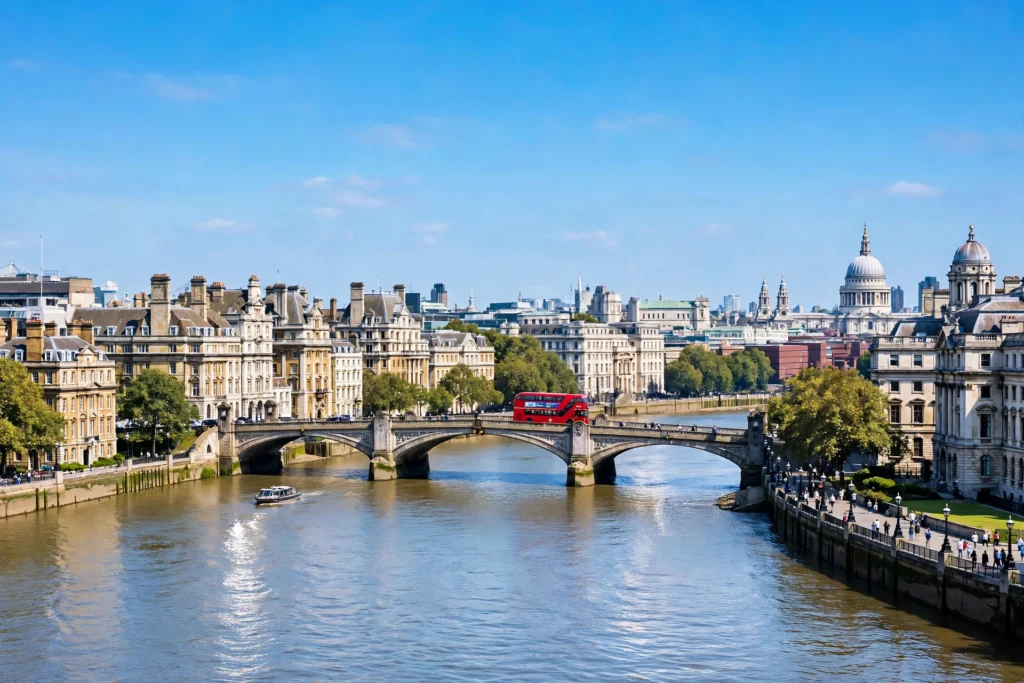
London rewards first-time visitors who plan by neighbourhood rather than by ticking off a scattered list of famous names.
London is big, layered, and gloriously varied. It is not one city centre but a collection of distinct neighbourhoods stitched together by the Thames, and that is the key to enjoying it. Westminster feels ceremonial, Soho feels restless and fun, South Kensington feels grand and museum-filled, Shoreditch feels creative and a little scruffy in the best way, and Greenwich feels almost like a separate small town. Once you understand that geography, the rest of the planning falls into place: where to stay, how to move, what to eat, and how much to budget. This guide walks through all of it in practical terms, with realistic prices, a day-by-day sketch, and the small local habits that make a first visit smoother.
Best Time to Visit London
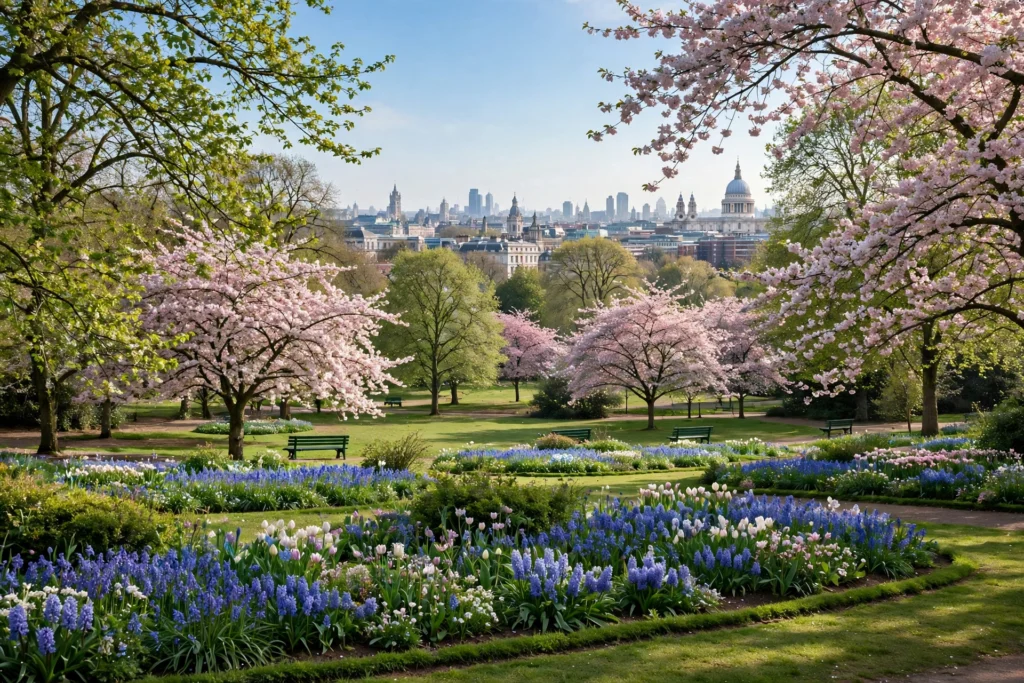
There is no bad month for a first trip to London, but there are trade-offs in every season, and choosing the right one depends on what matters most to you: weather, crowds, prices, or atmosphere.
Late spring and early autumn are the easiest all-round choices. May, June, and September usually bring mild temperatures, longer daylight, and parks in full leaf or early autumn colour, without the peak summer crush. Average daytime highs climb from around 18°C (65°F) in May to the low twenties in June and July, then ease back in September. These shoulder months are also a good time for walking, which matters more in London than in many capitals, because so much of the pleasure comes from wandering between sights rather than driving between them.
Summer, from July to August, is the warmest and liveliest season, with outdoor festivals, open-air theatre, and long evenings. It is also the busiest and most expensive. Queues at major attractions lengthen, popular restaurants book out, and hotel rates rise. If summer is your only option, it is still a wonderful time to visit, but book accommodation and timed-entry tickets early, start sightseeing at opening time, and save museums and indoor attractions for the middle of the day when the sun is strongest.
Winter has a different charm. December brings Christmas lights on Oxford Street and Regent Street, festive markets, and ice rinks, and the city feels theatrical after dark. January and February are quieter and often cheaper, which makes them attractive if you do not mind short days, grey skies, and temperatures around 8–10°C (46–50°F). If you are weighing a winter escape more generally, our guide to the best places to travel in January puts London’s winter mood in context alongside warmer alternatives. Whatever the season, pack layers and a compact umbrella or waterproof jacket. London does not rain all the time, despite its reputation, but showers can arrive without much warning, and a light waterproof layer saves more days than a heavy coat does.
One timing tip that applies all year: avoid, if you can, the busiest school holiday weeks, when family attractions and popular museums are at their fullest. Midweek visits to the biggest sights are usually calmer than weekends, and an early start is the single simplest way to beat a queue.
Getting to London and Into the City

Most visitors from the United States arrive by air, and London is served by several airports, so your choice affects both cost and convenience. Heathrow is the main long-haul gateway and the best-connected airport for most international travellers. The Elizabeth line and the Tube’s Piccadilly line both run from Heathrow into central London, taking roughly 45 to 60 minutes depending on your destination, while the Heathrow Express reaches Paddington in about 15 minutes at a higher price. Gatwick, the second-busiest airport, connects to central London by train in about 30 to 35 minutes. Stansted and Luton mainly serve European and budget airlines and sit farther out, so allow extra time and check the total door-to-door cost, not just the airfare, before choosing a cheaper flight into one of them. London City Airport is the closest to the centre and is handy for short European hops, but it handles far fewer long-haul flights.
Before you book anything, check the entry rules that apply to your nationality. Many visa-free visitors, including travellers from the United States, now need an approved UK Electronic Travel Authorisation (ETA) before travelling. It is a digital permission linked to your passport, not a visa, and it does not by itself guarantee entry, but you should not leave it to the last minute. Apply only through the official channel and allow a few working days for a decision, even though many applications are decided much faster. The official UK ETA guidance explains who needs one, what it costs, and how to apply. Keep your passport valid for the whole trip, carry a copy of your accommodation details for arrival, and make sure your phone plan or eSIM will work on arrival, because you will want maps and transport apps from the moment you land.
On arrival, resist the urge to take a taxi all the way into town unless you have heavy luggage or a very early arrival. Trains are faster in traffic, cheaper, and easy to follow with signs in English. If you arrive at Heathrow, the Elizabeth line is a comfortable middle ground between the slower Piccadilly line and the pricier Express. At Gatwick, follow signs for trains to Victoria or London Bridge rather than the first taxi rank. Buy nothing at the airport that you can buy in town for less, and do not queue for a paper travelcard before you have read the next section, because most visitors no longer need one.
Getting Around London: Tube, Buses and Contactless Payments
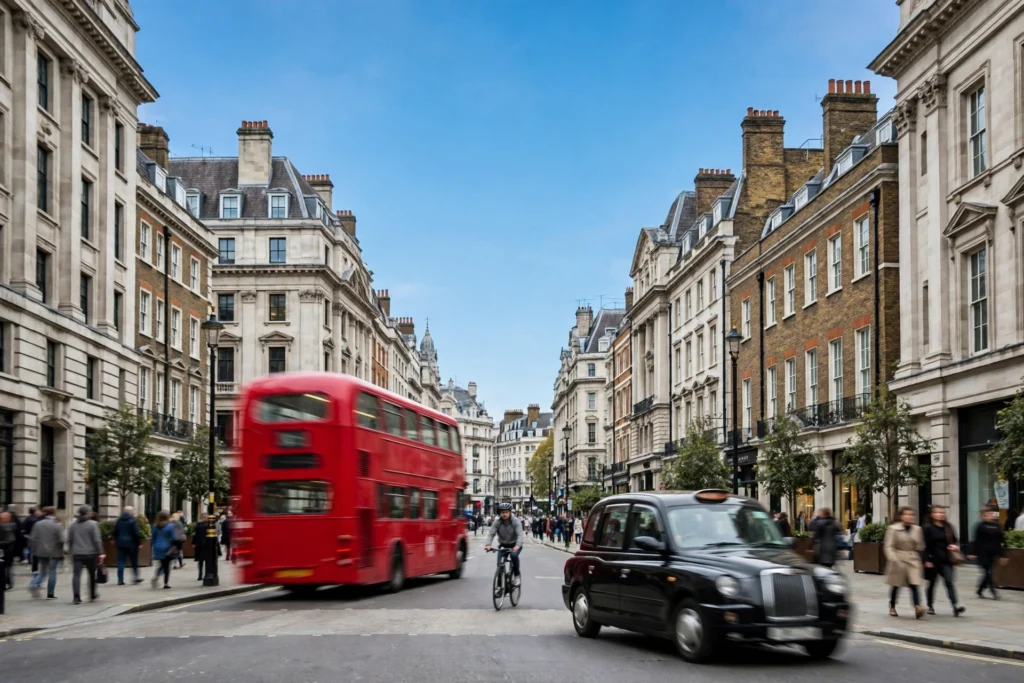
London’s transport system looks complicated on a map and feels simple once you learn two rules: tap the same card or device every time, and stay on the right on escalators. The Tube, London’s Underground railway, is the fastest way across the centre. It is also the world’s oldest metro, and its deep lines and long escalators are part of the experience. Buses are slower but far more scenic, and a ride on a red double-decker across Westminster Bridge or along the Strand is a sightseeing trip in itself. Add the Elizabeth line, the Docklands Light Railway (DLR) to Greenwich and the Docklands, London Overground trains, and Thames river boats, and you have more options than you will ever need on a first visit.
For most first-time visitors, the simplest payment method is a contactless bank card, phone, or watch. You tap in at the start of a Tube or train journey and tap out at the end, and you tap in only when boarding a bus or tram. Fares are capped automatically, which means that no matter how many eligible journeys you make in a day, you will not pay more than the daily cap for the zones you travelled in. For Zones 1 and 2, which cover almost all first-visit sightseeing, the adult daily cap is £8.90, with a Monday-to-Sunday cap of £44.70. Single bus fares are £1.75, with unlimited bus and tram transfers within an hour. The official Transport for London fare capping page is the place to confirm current caps before you travel, because fares change from time to time. An Oyster card gives you the same fares and caps, but it now carries a non-refundable card fee, so it mainly makes sense if your bank charges a fee on every foreign transaction, if you want a separate travel card, or if you plan to load a seven-day Travelcard that starts midweek rather than on a Monday.
The one mistake to avoid is mixing payment methods. If you tap in with your phone and tap out with the physical card, even if both are linked to the same bank account, the system treats them as two different travellers and the cap will not apply. Pick one card or device for the whole trip and stick with it. The same rule applies to everyone in your group: each person needs their own card or device, because you cannot tap one card twice through the same gate for two people.
A few practical habits will make the Tube far more pleasant. Avoid the morning rush between about 7:30 and 9:30 and the evening rush between 5:00 and 7:00 on weekdays if you can, not because the system is unbearable, but because a first-time visitor with a map and a camera is much happier on a quieter train. Walk between close stations in the centre instead of changing lines for one stop; Covent Garden to Leicester Square, for example, is a short walk above ground and a longer-feeling journey below it. Download a journey planner before you arrive, such as the TfL Go app or Citymapper, and keep an offline map handy for the moments when mobile signal drops underground. Our roundup of useful travel apps covers the planners, maps, and money tools that are most helpful on a city trip like this one. Finally, remember that buses no longer accept cash, black cabs and licensed minicabs accept cards, and river boats and the Heathrow Express are paid separately and do not count toward the daily cap.
| Transport option | Best for | Typical cost | Notes |
|---|---|---|---|
| Tube / Elizabeth line | Fast cross-city trips | Single journeys around £3, capped at £8.90 a day in Zones 1–2 | Tap in and out with the same card or device |
| Bus | Scenic, cheap, step-free | £1.75 per ride, free transfers within an hour | Tap in only; no cash accepted |
| River boat | Thames views, Greenwich day out | Roughly £8–£10 for a central stretch | Not included in the daily cap |
| Black cab / taxi app | Luggage, late nights, groups | Metered, higher than the Tube | Convenient but slow in heavy traffic |
| Walking | Central neighbourhoods | Free | Often faster than one Tube stop in the West End |
London Neighbourhoods at a Glance
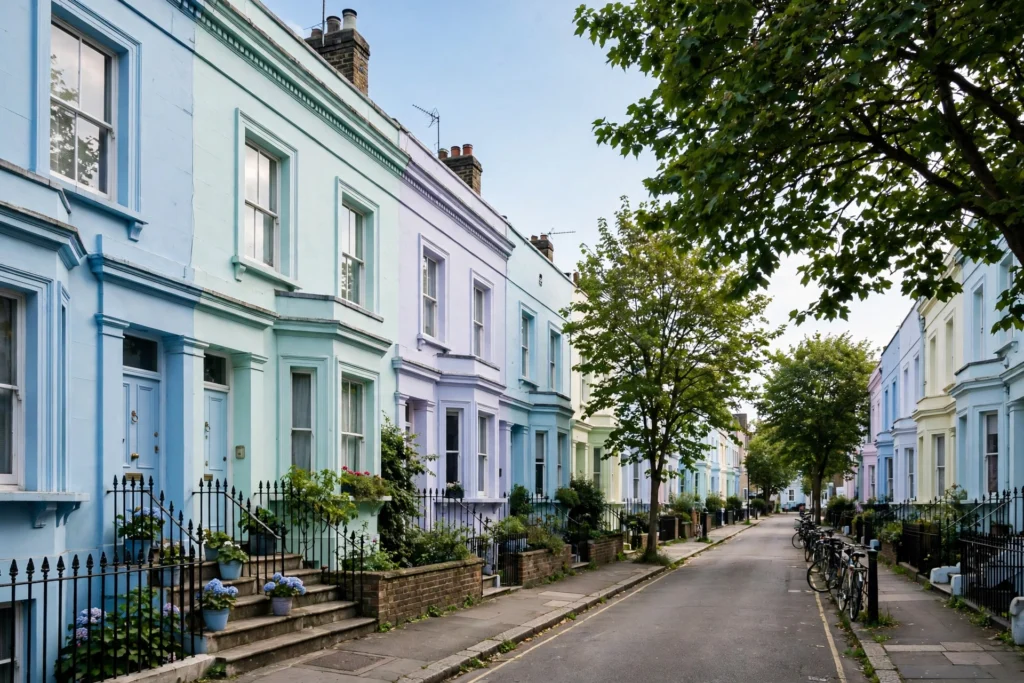
Thinking of London as a set of villages helps you plan days that feel coherent instead of frantic. Group your sightseeing by area, and you will spend less time underground and more time actually seeing the city.
Westminster is the postcard London: Big Ben and the Houses of Parliament, Westminster Abbey, Trafalgar Square, and the Mall leading to Buckingham Palace. It is ceremonial, busy, and best visited early in the morning before tour groups build up. The South Bank, across the river, is its livelier counterpart, with the London Eye, the Tate Modern, Borough Market, and a riverside walk that strings together street performers, book stalls, and views of St Paul’s Cathedral. Covent Garden and Soho, just north of the river, are the West End’s beating heart: theatres, restaurants, pubs, and shopping, all within easy walking distance, and a natural base for an evening out.
South Kensington is the museum quarter. The Natural History Museum, the Victoria and Albert Museum, and the Science Museum sit within a few minutes of each other, surrounded by grand white stucco streets and garden squares. It is an excellent choice for families and for rainy days, because you can move from one free or low-cost museum to another without ever going far. Bloomsbury, to the east, is quieter and more literary, home to the British Museum and to Russell Square’s calm gardens, and it suits travellers who prefer a calmer base with easy Tube connections.
East London rewards curiosity. Shoreditch and Spitalfields offer street art, vintage shops, food markets, and Brick Lane’s famous curry houses, while the City of London, the historic financial district, empties at weekends and reveals quiet lanes, old churches, and the Sky Garden’s free views. Farther east, Greenwich feels like a day out in itself, with the Royal Observatory, the Cutty Sark, a covered market, and a riverside village atmosphere. Notting Hill, in the west, is best known for its pastel houses, Portobello Road Market on Saturdays, and a relaxed, residential feel that makes a pleasant contrast to the West End bustle. You do not need to visit every neighbourhood on a first trip. Choose three or four, explore each properly, and leave the rest as a reason to return.
Where to Stay in London by Area
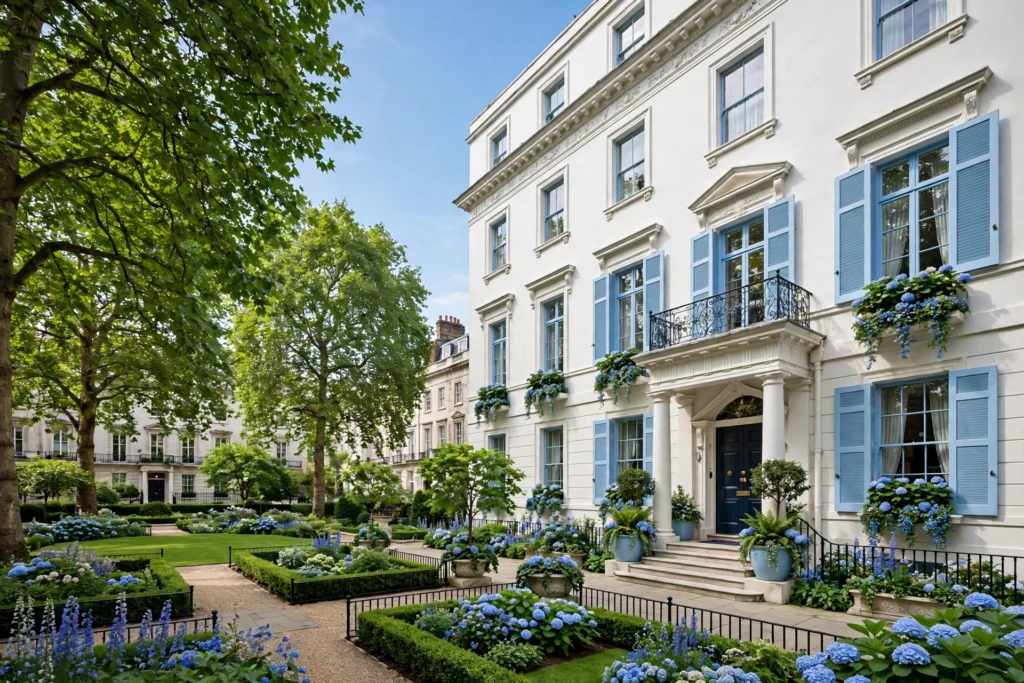
For a first visit, location matters more than luxury. A central base in Zone 1 or 2 will save you time every single day, and that saved time is worth more than a larger room farther out. Covent Garden and Soho put you in the middle of theatres, restaurants, and nightlife, but rooms here are smaller and pricier, and nights can be noisy. South Kensington and Bloomsbury are calmer, well connected, and close to museums, which makes them strong choices for families and for travellers who want a quieter night’s sleep. Westminster and Waterloo offer iconic views and easy access to the South Bank, while Earl’s Court, Bayswater, and Paddington, just west of the centre, often give better value without adding much travel time.
Budget honestly. A hostel bed in central London typically costs £35–£60 per night, a mid-range hotel room £150–£250, and a well-located four-star room £250–£400 or more in peak season. Apartments can be good value for stays of four nights or more, especially for groups, but check cleaning fees and location carefully, because a cheap flat in Zone 3 can cost you an hour a day in travel. Book early for weekends, school holidays, and December, and read the cancellation terms before you commit, because London hotel prices move sharply with demand. If you are travelling with children, look for family rooms and hotels near a park, such as Hyde Park or Regent’s Park, where children can run off energy between museums. If you are travelling as a couple, a smaller boutique hotel in Soho or Marylebone may suit you better than a large chain near a station.
| Area | Best for | Vibe | Watch out for |
|---|---|---|---|
| Covent Garden / Soho | First-timers, theatre lovers | Lively, central, walkable | Smaller rooms, higher prices, noise at night |
| South Kensington | Families, museum fans | Grand, calm, green squares | Pricier hotels, quieter evenings |
| Bloomsbury | Culture lovers, quieter stays | Leafy, literary, well connected | Fewer late-night restaurants |
| Westminster / Waterloo | Iconic views, South Bank | Ceremonial, riverside | Tourist crowds, premium prices |
| Earl’s Court / Paddington | Value seekers | Residential, well connected | A longer walk to the West End |
| Shoreditch | Creative travellers, food lovers | Edgy, artistic, nightlife | Noisy streets, fewer classic hotels |
Must-See Attractions and Free Things to Do in London
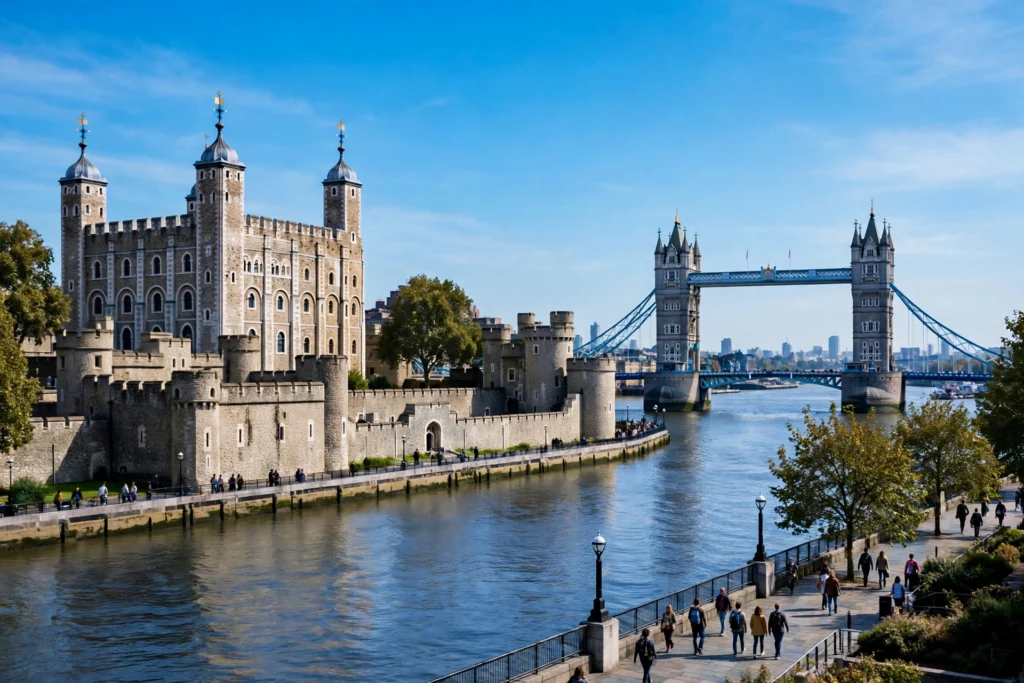
A first visit should mix the icons with the free pleasures, because London is unusually generous with the latter. Start with the landmarks that define the skyline: the Tower of London, where the Crown Jewels are displayed inside a fortress that is nearly a thousand years old; Westminster Abbey, the coronation church with centuries of royal and literary history; St Paul’s Cathedral, whose dome dominates the City skyline; and Buckingham Palace, best admired from outside unless you visit during the summer opening. Cross Westminster Bridge for the classic view of Big Ben, officially the Elizabeth Tower, and the Houses of Parliament, then walk along the South Bank to Tower Bridge, which you can cross for free and admire from the riverside without paying for the exhibition inside.
Then balance the paid icons with London’s remarkable free museums. The British Museum, whose permanent collection is free to enter, holds the Rosetta Stone, Egyptian mummies, and galleries spanning human history, and you can check opening times and free entry details on the official British Museum visit page. The National Gallery on Trafalgar Square, the Tate Modern on the South Bank, the Natural History Museum, and the Victoria and Albert Museum are also free for their permanent collections, though special exhibitions charge. That means a rainy day in London can still be a rich day, and a careful traveller can fill two full days with world-class culture without spending a penny on admission. Book free timed tickets online where offered, arrive early, and pick two or three galleries per museum rather than trying to see everything.
Free does not stop at museums. Walk through Hyde Park and Kensington Gardens, watch the Changing of the Guard at Buckingham Palace, browse Borough Market or Columbia Road Flower Market on a Sunday, climb Primrose Hill for a free skyline view, or book a free ticket to the Sky Garden for a high-level panorama. The official Visit London landmarks guide is a useful cross-check when you are shortlisting sights, because it covers the major landmarks in one place with practical visitor information. For paid attractions, the honest rule is to pay for the experiences you will genuinely remember: the Tower of London, a West End show, and one high viewpoint, such as the London Eye or the View from The Shard, are the three most first-timers mention afterwards. A sightseeing pass can save money, but only if you add up the admission prices of the included sights you will actually visit on the pass days and compare that total with the pass price. If the maths does not clearly favour the pass, skip it and book individual tickets in advance instead.
A Simple 4-Day London Itinerary for First-Time Visitors
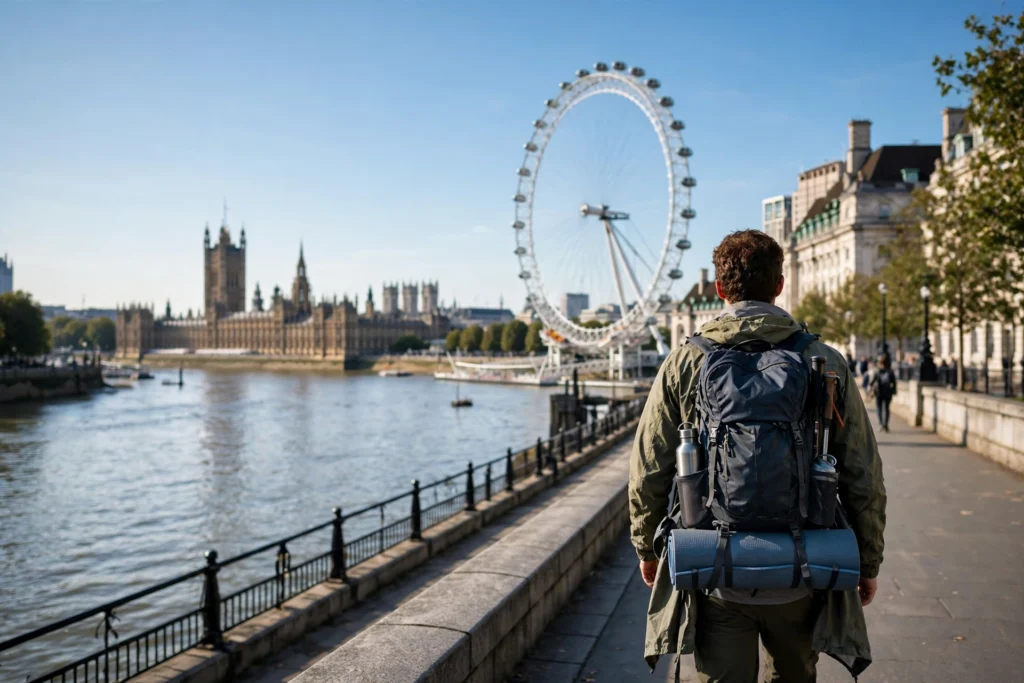
This itinerary assumes a central base and a comfortable pace of two or three major sights per day, with time for meals, markets, and wandering. Treat it as a template, not a timetable: swap days around to suit the weather, move a museum indoors on a rainy day, and drop anything that does not excite you. A flexible plan is easier to keep than a rigid one, and our travel itinerary template can help you reshape these days around your own dates, pace, and interests.
Day 1 — Westminster and the South Bank. Start early at Westminster Abbey, then walk past Big Ben and the Houses of Parliament, cross Westminster Bridge for photographs, and continue along the South Bank to the London Eye or the Tate Modern. Have lunch at Borough Market if it is open, and end the day with a riverside walk back toward Waterloo as the lights come on. This is the most iconic day of the trip, so take it slowly and resist adding a museum on top of it.
Day 2 — The Tower, the City, and the East End. Spend the morning at the Tower of London, arriving at opening time for the Crown Jewels before queues build. Cross Tower Bridge, explore the City’s quiet lanes and St Paul’s Cathedral, then head east to Spitalfields and Brick Lane for street art, vintage shops, and dinner. If you still have energy, finish in Shoreditch, where the evening atmosphere is completely different from Westminster’s formality.
Day 3 — Museums and Markets. Dedicate the morning to the British Museum in Bloomsbury, choosing a few galleries rather than racing through all of them. After lunch, move to South Kensington for the Natural History Museum or the Victoria and Albert Museum, depending on your interests, and spend the late afternoon in Hyde Park or Kensington Gardens. In the evening, see a West End show in Soho or Covent Garden, booking tickets in advance for the best seats and prices.
Day 4 — Royal London, Notting Hill, and Greenwich, or a Slower Day. Begin at Buckingham Palace and St James’s Park, then take the Tube west to Notting Hill for Portobello Road Market if it is a Saturday, or for pastel streets and cafés on any other day. Alternatively, take a river boat east to Greenwich, visit the Royal Observatory and stand on the Prime Meridian line, browse Greenwich Market, and return by boat at sunset for one last Thames view. If you have a fifth day, use it for a day trip, or simply revisit the neighbourhood you liked best. Returning to a favourite place, unhurried, is often the most satisfying day of all.
What to Eat in London and Where to Find It
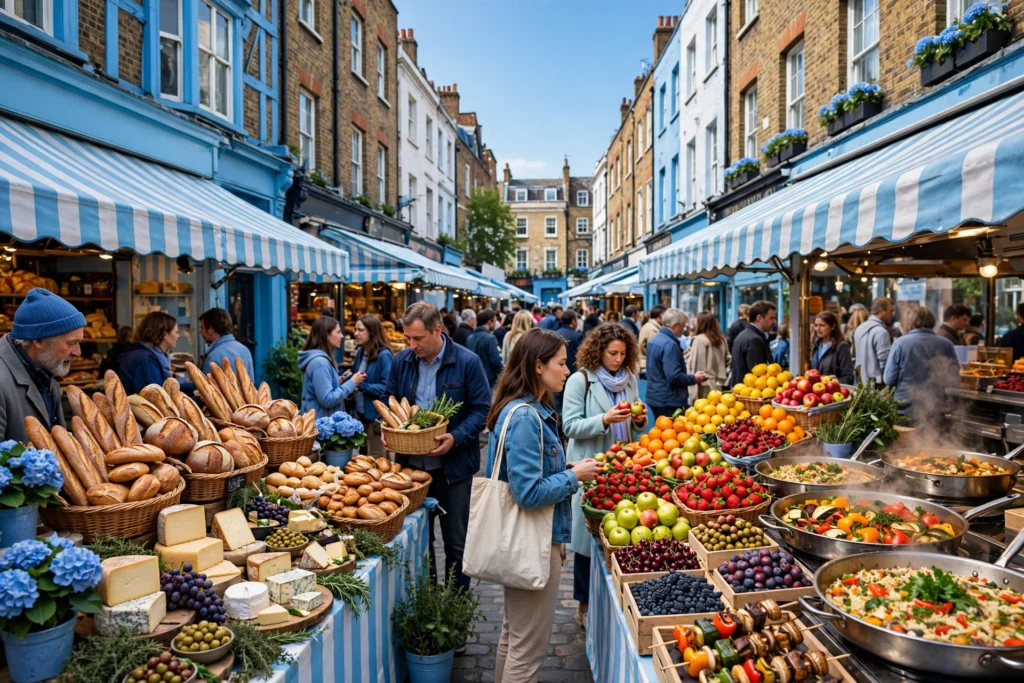
London is one of the best food cities in the world, not because of a single national cuisine, but because almost every cuisine is cooked here well. Start with the classics: fish and chips from a proper chip shop, eaten with salt and vinegar, preferably near the sea air of the Thames rather than from a tourist trap on a main square; a full English breakfast of eggs, bacon, sausage, beans, tomatoes, and toast, best enjoyed slowly on a weekend morning; a Sunday roast with Yorkshire pudding, roast potatoes, and gravy, served in pubs across the city; and afternoon tea, a ritual of finger sandwiches, scones with jam and cream, and cakes that is worth booking at least once, even if you choose a simpler cream tea rather than a grand hotel version.
Beyond the classics, eat by neighbourhood. Soho and Chinatown offer everything from cheap noodles to inventive small plates, often without a booking at lunchtime. Borough Market and Maltby Street Market are ideal for grazing: artisan bread, cheese, oysters, curries, and coffee, all within a short walk of London Bridge. Brick Lane remains famous for curry houses and bagel shops, while Brixton Market and Camden Market offer global street food in lively, casual settings. Pubs deserve a place in your food plan too, not just for drinks but for hearty, fairly priced meals, and a good gastropub in Marylebone or the South Bank can be one of the most enjoyable dinners of the trip.
Budgeting for food is easier if you mix price points. A market lunch might cost £10–£15, a casual restaurant dinner £20–£35 per person without drinks, and a special dinner or afternoon tea £50–£90 per person. Cook one or two simple meals if your accommodation has a kitchen, buy breakfast supplies from a supermarket, and carry a refillable water bottle, because London tap water is safe to drink and many cafés and museums offer free refills. Tipping is simpler than in the United States: check the bill first, because many restaurants add a discretionary service charge of 12.5% to 15%, in which case no extra tip is expected. If no service charge is included, 10% to 15% is generous. You do not need to tip in pubs when ordering drinks at the bar, and rounding up a taxi fare to the nearest pound is plenty.
How Much Does a London Trip Cost?
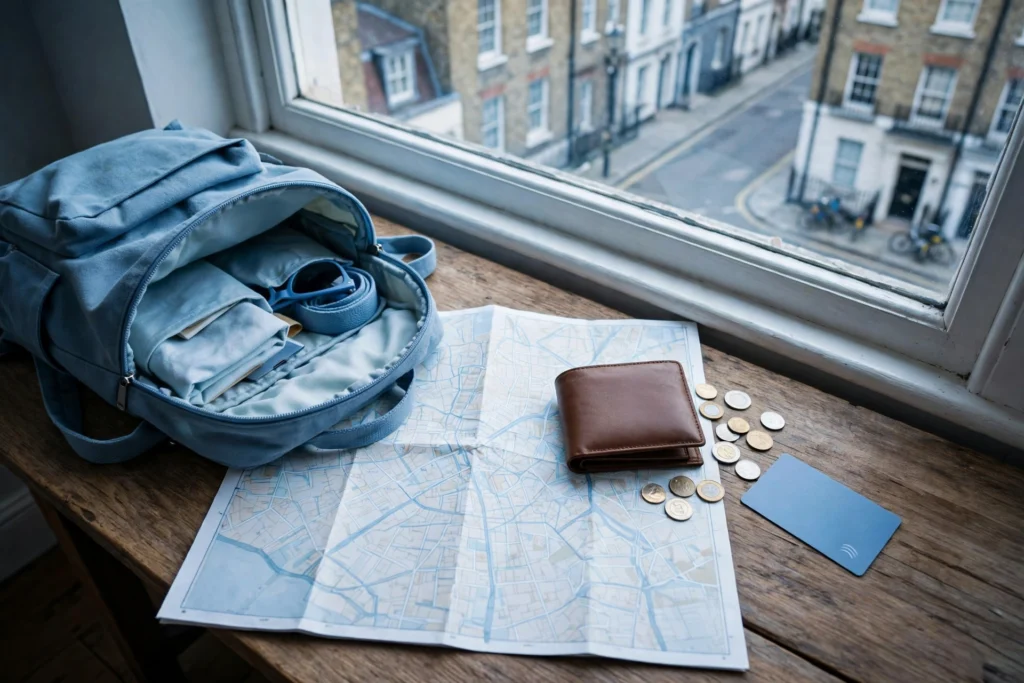
London has a reputation for being expensive, and it can be, but it is also a city where careful choices make a large difference. Accommodation is usually the biggest cost, followed by food and paid attractions, while transport within the city is relatively cheap thanks to fare caps. A mid-range traveller staying centrally should budget roughly £150–£220 per person per day, excluding flights, once accommodation, food, transport, and one paid attraction are added together. A careful budget traveller using hostels, free museums, market meals, and buses can manage on £80–£120 per person per day, while a comfortable trip with a central hotel, restaurant dinners, theatre tickets, and several paid sights can easily reach £250–£350 per person per day. Use these ranges as planning guides, not promises, and adjust them to your travel style with a proper spending plan before you go; our guide on how to prepare a travel budget walks through the same method of setting a daily limit, adding a contingency, and tracking spending as you travel.
| Daily budget level | Accommodation | Food | Transport + sights | Total per person per day |
|---|---|---|---|---|
| Budget | Hostel bed, £35–£60 | Markets, supermarkets, £25–£40 | Buses, free museums, £10–£20 | £80–£120 |
| Mid-range | Hotel room share, £75–£125 | Mix of casual and restaurant meals, £40–£60 | Capped Tube fares, one paid sight, £25–£40 | £150–£220 |
| Comfortable | Central hotel, £125–£200 | Restaurants and afternoon tea, £60–£90 | Taxis, shows, several sights, £50–£70 | £250–£350 |
The biggest savings come from free museums, walking between close sights, and booking paid attractions online in advance, where prices are often lower than at the door. Watch out for the smaller costs that add up: bottled water, coffee on every corner, and airport transfers booked without comparing train options. Set a daily spending limit in pounds, not dollars, so exchange-rate swings do not surprise you, and keep a 10% to 15% contingency for the show, meal, or day trip you decide on spontaneously. That contingency is not waste; it is what turns a good trip into a memorable one.
Day Trips from London and Practical Tips for First-Time Visitors

If you have five or more days, a day trip is one of the best uses of an extra day, because England’s most rewarding small cities and historic sites sit within easy train reach. Windsor is the simplest choice: Windsor Castle, the oldest and largest inhabited castle in the world, is under an hour by train, and the town itself is compact, riverside, and easy to explore on foot. Oxford, about an hour away, offers dreaming spires, college courtyards, and a university atmosphere that feels worlds away from London’s scale, while Cambridge, a similar distance in the other direction, is best explored by punting on the River Cam or cycling between colleges. Bath, roughly 90 minutes by train, rewards visitors with Roman baths, Georgian crescents, and a walkable centre that is beautiful in any weather.
For history on a grander scale, Stonehenge and Salisbury can be combined in a long day, though you will need to plan transport from Salisbury station to the stones. The Cotswolds, by contrast, are best with a car or a guided tour, because their honey-coloured villages are spread across the countryside and public transport between them is slow. Whatever you choose, check train times and return options before you leave, book castle and attraction tickets in advance on busy weekends, and treat the day trip as a change of pace rather than a second sightseeing marathon. One town, explored properly, beats three towns glimpsed from a coach window.
Safety, etiquette and packing tips.
London is one of the world’s safest major cities for visitors, but it still rewards the same common sense you would use anywhere. Keep your phone and wallet out of easy reach on crowded Tube trains and in busy markets, be aware of your surroundings when texting near a road, and use only licensed black cabs or reputable ride apps late at night. The emergency number is 999, and 101 is the non-emergency police number. Most central areas are well lit and busy into the evening, and asking staff for directions is perfectly normal; Londoners are often more helpful than their reserved reputation suggests, especially if you ask a specific question rather than a general one.
A few local customs will help you blend in. Stand on the right on Tube escalators and walk on the left. Queue patiently; jumping a queue is noticed and not appreciated. Look right before crossing the road, because traffic drives on the left, and check the painted “Look Right” or “Look Left” instructions on the road surface at crossings. Keep conversations quiet on public transport, where many people read or listen to music, and remember that pubs often close earlier than bars in other countries, with last orders varying by venue. Pack a Type G plug adapter for UK sockets, a portable charger for long sightseeing days, comfortable walking shoes above all else, and a light waterproof layer in every season. Finally, build rest into your days. London is a marathon, not a sprint, and a coffee break in a square, a slow lunch in a market, or an hour in a park is not wasted time. It is how the city becomes memorable.
Frequently Asked Questions
How many days do you need in London for a first visit?
Four full days is ideal for a first visit, covering Westminster, the Tower, two or three museums, a market, and a West End evening. Three days can cover the highlights if you plan tightly, while five days allows a day trip or a slower pace. Less than three days will feel rushed, because travel between neighbourhoods takes time.
Is London expensive for first-time visitors?
London can be expensive, mainly for accommodation and dining, but free museums, capped transport fares, market meals, and walking between close sights keep daily costs manageable. A mid-range budget of £150–£220 per person per day, excluding flights, is a realistic planning figure for a central stay.
Do I need an Oyster card in London?
Most visitors no longer need one. A contactless bank card, phone, or watch gives you the same fares and the same daily cap, with no card fee. An Oyster card still makes sense if your bank charges per-transaction fees abroad, if you want a separate travel card, or if you plan to load a seven-day Travelcard starting midweek.
What is the best area to stay in London for first-timers?
Covent Garden and Soho are the most central and lively choices, South Kensington and Bloomsbury are calmer and close to museums, and Earl’s Court and Paddington offer better value a short Tube ride away. For a first visit, prioritise a Zone 1 or 2 location over a larger room farther out.
Is London safe for tourists?
Yes, London is generally safe for tourists, with the usual big-city precautions. Watch for pickpockets in crowded places, keep phones secure near roads and on public transport, use licensed taxis at night, and call 999 in an emergency. Central tourist areas are well lit and busy into the evening.
When is the cheapest time to visit London?
January and February are usually the cheapest months for hotels and flights, with fewer crowds, though days are short and weather is grey. Late autumn and early spring shoulder periods also offer better value than peak summer or the Christmas weeks, with more daylight than midwinter.
Conclusion
London does not need to be conquered in a single trip, and trying to do so is the fastest way to miss what makes it special. Choose a central base, group your days by neighbourhood, use contactless payments and free museums to keep costs under control, and leave room for the unplanned: a market you stumble into, a park bench with a view, a pub you return to a second night. Four days planned this way will give you the icons, the neighbourhoods, and a genuine feel for the city, and, just as importantly, a clear list of places to return to. Start with Westminster and the Thames, add the Tower and a museum or two, eat well without overspending, and let one day breathe. That is the London first trip that most visitors remember fondly, and the one most likely to bring you back.
People also read:
- Travel Itinerary Template: Plan Any Trip Without the Stress
- How to Prepare a Travel Budget That Actually Works (Without Guessing)
- Best Places to Travel in January
- Travel Apps


Other Articles


2 Comments
Comments are closed.



[…] London Travel Guide: First-Time Visitor’s Plan for Neighbourhoods, Costs and 4 Perfect Days […]
[…] London Travel Guide: First-Time Visitor’s Plan for Neighbourhoods, Costs and 4 Perfect Days […]