
Panama is the rare country where the headline attraction is a canal, yet the real story is how much fits into one narrow strip of land between two oceans. In a single trip you can watch a container ship rise through the Miraflores Locks in the morning, walk the colonial streets of Casco Viejo in the afternoon, and be sleeping in a thatched hut on a Caribbean island by nightfall — then climb into cool coffee country the next day. This Panama travel guide covers everything a first-time visitor needs: the best time to go, the safety picture as it stands in 2026, how much it costs, how to get around, where to stay, what to eat, and the places that make the trip worth it, so you can plan a trip that is realistic rather than romanticised.
Quick answer: the best time for Panama travel is the dry season, mid-December to April, when the Pacific side is sunny, the canal viewing is at its best and island boats run reliably. Allow at least 7 days for Panama City, the canal and one island coast, and 10 to 14 days if you want to add Boquete’s coffee highlands and a second coast. Budget travellers can manage on roughly $45–70 a day, while a comfortable mid-range trip runs about $90–160 a day. Prices below are planning ranges only — confirm figures before you book, as fares, entry rules and conditions can change at short notice.
Is Panama Safe to Visit in 2026?
This is the first question most travellers ask about Panama, and it deserves a straight answer. The United States Department of State currently rates Panama at Level 2: Exercise Increased Caution, because of crime. The advisory was issued on 19 August 2026. That is the official position, and it should be the starting point for any decision — not travel blogs, and not this article.
The picture is more layered than a single level suggests. Most crime against foreigners is opportunistic — pickpocketing, purse snatching and residential break-ins — and it is concentrated in a few neighbourhoods rather than spread across the country. The advisory is clear about the two places that are genuinely off limits: it says Do Not Travel to the Mosquito Gulf, an extremely remote stretch of Caribbean coast where you should not go within 10 miles of the coastline between Alligator Creek and Cocle del Norte, and Do Not Travel to parts of the Darién Region, including all areas south of the communities of Jaque, Manene, Yaviza and Lajas Blancas to the Colombian border, and the communities of Lajas Blancas and El Salto. Criminal activity and human trafficking networks operate in those areas, police presence and emergency response are extremely limited, and the US government has limited ability to offer emergency services to its citizens there. US government employees need special authorisation to travel to either area. None of this affects the normal tourist route — Panama City, the canal, Boquete, Bocas del Toro, San Blas, Portobelo and the Azuero Peninsula are all outside those zones — but it is worth knowing exactly where the line is drawn, because the Darién Gap is the roadless jungle that breaks the Pan-American Highway, and some travellers are tempted by its remoteness. Do not treat it as a casual day trip.
In Panama City, the practical advice is the same as in any big Latin American city: Casco Viejo is safe to walk during the day, but avoid walking alone at night into neighbouring areas such as El Chorrillo and San Miguelito; do not flash valuables; keep your phone out of sight near taxi windows; and use registered transport after dark. Demonstrations related to the local political situation can occur with little notice and disrupt transport, so avoid protests and check local media. One more thing worth knowing before you travel: in October 2026, earthquakes struck southern Panama and prompted tsunami warnings and coastal evacuations on the Pacific side. Check current conditions and any local advisories before travelling to the Pacific coast, and follow local guidance if you are there during a warning. Before you travel, read the full US State Department travel advisory for Panama and check it again close to departure, because advisory levels can change. Enrol in the Smart Traveler Enrollment Program (STEP) if you are an American citizen.
Entry requirements for US travellers
US citizens can visit Panama for tourism without a visa for stays of less than 180 days. You will need a passport valid for at least three months beyond your arrival date, and a return or onward ticket — the advisory notes this is strictly enforced, so do not arrive without one. You may also be asked to show proof of at least $500 in funds or equivalent. Confirm you receive an entry stamp when you arrive. Yellow fever vaccination is required if you are arriving from a country where yellow fever is endemic. A few rules catch travellers out: it is illegal to bring marijuana, cannabis and CBD products into or out of Panama, and you can be arrested and detained for long periods; the same applies to guns, ammunition and even spent shell casings brought in without permission. Always carry a copy of your passport and entry stamp, as police can detain and fine you for not having identification. The emergency number is 911, the police number is 104, and the Tourist Police can be reached on 511-9260. Entry rules for other nationalities differ — most Western passports get 90 to 180 days visa-free — so check the rules for your passport specifically. The official Visit Panama tourism site is a useful starting point for planning.
Best Time to Visit Panama
Panama sits between 7° and 10° north of the equator, so it is hot and tropical all year — the question is not temperature but rain. The Pacific side has a clear dry season from mid-December to April and a wet season from May to November, when afternoon downpours are common. The Caribbean side, including Bocas del Toro and San Blas, is wetter all year and does not follow the same neat pattern, so island trips need more flexibility whenever you go.
| Month | Pacific side | Caribbean side | Notes |
|---|---|---|---|
| January – March | Dry, sunny, 24–33°C | Drier than usual, good sailing | Peak season; best weather, highest prices, book early |
| April | Dry, hottest month | Warm, still decent | End of dry season; Panama Jazz Festival in January, Carnaval Feb–Mar |
| May – June | Rains begin, afternoons wet | Wet, humid | Green season starts; lower prices, fewer crowds |
| July – August | Wet, green, afternoon storms | Wet, rough seas possible | Whale-watching season on the Pacific; school-holiday crowds |
| September – October | Wettest months, heaviest rain | Wet, stormy | Cheapest prices; most cancellations; check conditions |
| November | Rains easing, transitional | Improving late in the month | Good value; independence holidays (3 and 28 November) |
| December | Dry season returns mid-month | Drier, good sailing | Festive season; prices climb toward Christmas |
The dry season, mid-December to April, is the best time for most first trips. Roads are dry, the canal viewing is reliable, island boats run on schedule, and the highlands are at their clearest for hiking Volcán Barú. January to March is the safest bet for warm, dry weather on the Pacific side, but it is also the busiest and most expensive period, especially around the Panama Jazz Festival in early January and Carnaval in February or March. February to mid-April is often the sweet spot: warm, sunny days, good visibility for diving and snorkelling, and fewer crowds than January.
The wet season has its own appeal. From May to November the countryside turns vivid green, waterfalls run full, hotel prices drop noticeably, and you will share viewpoints with far fewer people. The trade-off is real: afternoon downpours are common, some rural roads become muddy, and boat trips to San Blas and Coiba are more likely to be cancelled. If you travel in the wet season, plan outdoor activities for the morning, keep your itinerary flexible, and remember that October and November are the wettest months on the Pacific side. For Bocas del Toro, the driest window is roughly February to April, but even then a shower is never far away. For whale watching on the Pacific coast, the season runs roughly July to October. For surfing, the Pacific swell is most consistent in the wet season, while Bocas del Toro’s Caribbean breaks work best from roughly December to March.
The Panama Canal: Miraflores Locks, Rainforest and El Valle
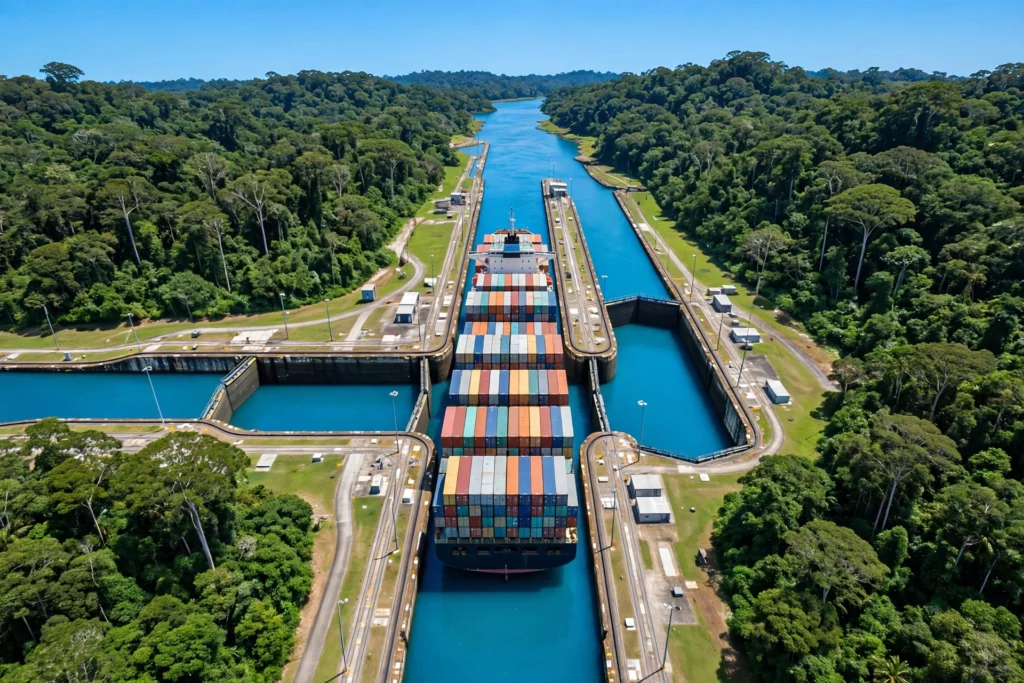
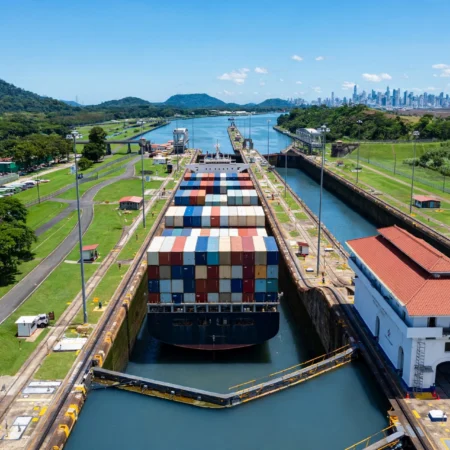
The Panama Canal is the reason most people come, and it lives up to the build-up. The canal is about 82 km long, cutting across the isthmus from the Pacific to the Caribbean, and it has been moving ships between the two oceans since 1914. The expanded locks opened in 2016 for the larger Neopanamax ships, and the canal still handles more than 13,000 transits a year, according to the Panama Canal Authority. Watching a container ship the length of several football fields rise or fall 16 metres in a lock chamber, with only centimetres to spare on either side, is as close to a cinematic engineering moment as travel gets.
Miraflores Locks Visitor Center
The best place to see the canal working is the Miraflores Visitor Center, on the Pacific side about 15 km from central Panama City. It is a four-storey building with an interactive museum, a 3D IMAX theatre showing a 45-minute film about the canal, and open-air viewing terraces where you can watch ships transit the two-chamber Miraflores Locks. Entry for non-resident adults costs $17.22, children aged 6 to 12 pay $7.22, and children under 6 enter free; Panamanian nationals and residents pay $3. The centre is open daily from 8:00 am to 6:00 pm, with the ticket office closing at 5:00 pm, and the ticket includes the museum and the IMAX film. Buy tickets in advance through the canal’s official visitor site, visitcanaldepanama.com, to skip the counter queues.
Timing matters more than anything else. Ships do not transit all day: the busiest viewing windows are the morning, roughly 9:00 to 11:00 am, and the afternoon, roughly 2:00 to 5:00 pm, with a long quiet stretch around midday when the locks are often empty. Check the canal authority’s daily transit schedule the night before your visit — the official site publishes it — and arrive for the morning window, when the largest ocean-going ships usually come through. Allow two to two and a half hours for the museum, the film and the viewing terraces. If you want to see the expanded locks, the Agua Clara Visitor Center on the Caribbean side, near Colón, is the alternative.
| Visitor centre | Where | Non-resident adult | Hours | Best for |
|---|---|---|---|---|
| Miraflores | Pacific side, near Panama City | $17.22 | Daily 8:00 am – 6:00 pm (tickets to 5:00 pm) | Classic canal viewing, museum, IMAX film |
| Agua Clara | Caribbean side, near Colón | $10 | Daily 8:00 am – 5:00 pm (tickets to 3:30 pm) | Expanded Neopanamax locks, quieter visit |
Beyond the locks: Gamboa, Soberanía and a full canal transit
The canal is more than its locks. Halfway along it, the town of Gamboa sits where the Chagres River meets Gatun Lake, and it is the gateway to Soberanía National Park, a stretch of canal-zone rainforest famous among birdwatchers. Pipeline Road, an old track through the park, is one of the best birding sites in the Americas — more than 1,000 bird species have been recorded in Panama, and a morning here can produce toucans, motmots and sloths without much effort. Boat tours on Gatun Lake visit the forested islands that were hilltops before the lake was created, and you may see monkeys, iguanas and crocodiles. The Metropolitan Natural Park, on the edge of Panama City, is a smaller, easier taste of the same forest, with trails where sloths and iguanas are commonly seen.
If you want to experience the canal from the water, partial and full transit boat tours run from the Pacific side and take about four to five hours, passing through the locks in a smaller vessel. Book at least a week ahead in the dry season, and treat prices as planning ranges — confirm them before you book, as they change. And if you have a spare day, El Valle de Antón is worth it: a small town sitting inside the crater of an extinct volcano, about two hours from the city, with waterfalls, a Sunday market, hot springs and hiking trails. It is the coolest, greenest easy escape from the capital, and it pairs naturally with a canal-zone day. If rainforest and wildlife are your main reason to travel, the Ecuador travel guide covers another country where jungle, birds and volcanoes sit side by side.
Panama City: Casco Viejo, the Skyline and Panamá Viejo
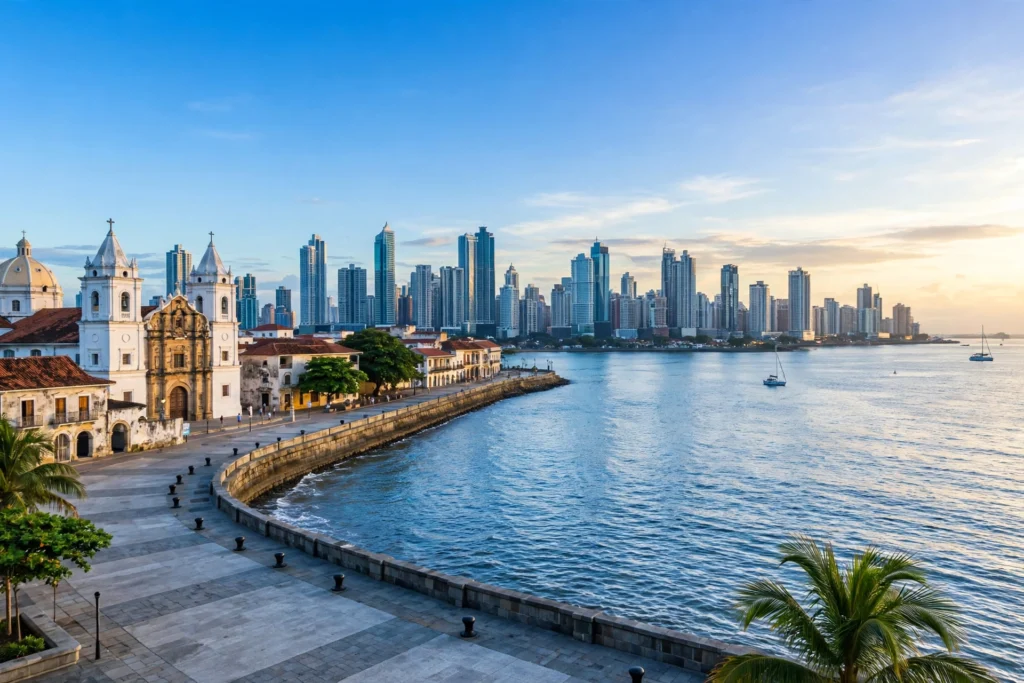
Panama City is the country at full speed: glass towers rise a few minutes from the stone streets of Casco Viejo, and the ruins of the original city sit a short ride away. It is the only capital in the world named a UNESCO Creative City of Gastronomy, and it is also the practical base for almost every trip in the country — the canal, the rainforest and both coasts are all within a day’s reach. Give it at least two full days, and three if you like cities.
Start in Casco Viejo, the old quarter on a small peninsula at the entrance to the canal. Founded in 1673 after the original city was destroyed, it is a compact grid of restored colonial buildings, churches and plazas, with rooftop bars and restaurants that come alive in the evening. The Metropolitan Cathedral, the Church of San José with its golden altar, and the Plaza de la Independencia are the landmarks, and the best way to see them is on foot over three to four unhurried hours. One honest note: Casco Viejo is often described as a UNESCO World Heritage site, but the old town’s listing has changed over the years — it currently sits on Panama’s UNESCO tentative list as the Archaeological Site and Historic Centre of Panamá City, while Panama’s five inscribed World Heritage properties are the Portobelo-San Lorenzo fortifications, the Colonial Transisthmian Route (inscribed in 2025), Coiba National Park, Darién National Park and the La Amistad reserves, as listed on the official UNESCO page for Panama.
From Casco Viejo, walk the Cinta Costera, the waterfront promenade that curves along the bay toward the modern skyline, and climb Ancón Hill for the classic view over the canal entrance and the city towers — a round trip of about an hour and a half, best done early in the morning. The BioMuseo, Frank Gehry’s colourful building on the Amador Causeway, tells the story of how the isthmus rose from the sea and changed the planet’s biodiversity; the causeway itself, a strip of land built from canal excavation rock, is good for cycling and sunset views across the bay. Panamá Viejo, the ruins of the first Spanish city on the Pacific coast of the Americas, founded in 1519, sits a short ride east of the centre — climb the cathedral tower for the view over the ruins and the modern skyline behind them. For food, start at the Mercado de Mariscos, the seafood market near the Cinta Costera, where ceviche stalls sell the freshest catch in the city in the morning. If you like walkable historic cities, the London travel guide shows a similar approach to exploring a capital on foot, even though the destination could hardly be more different.
The San Blas Islands (Guna Yala): 365 Islands, One Culture
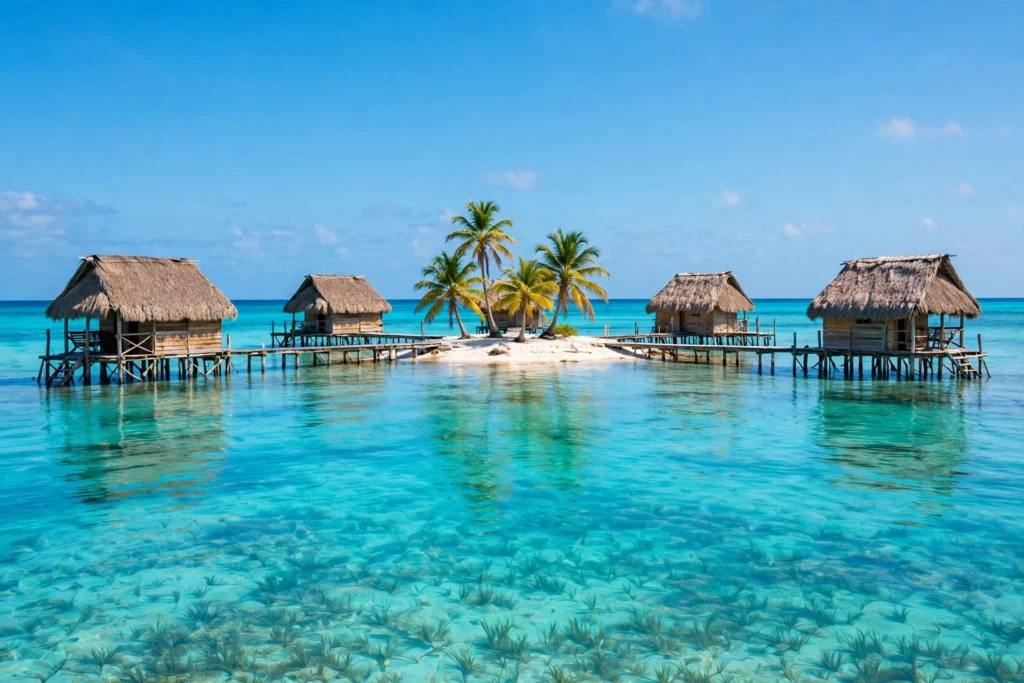
The San Blas Islands — properly called Guna Yala — are the Panama of the postcards: around 365 small palm-covered islands scattered along the Caribbean coast, with white sand, impossibly clear water and no internet. They are also something more interesting: a self-governing Indigenous territory run by the Guna people, where visitors stay as guests in Guna communities and the rules are the Guna’s, not the tourism industry’s. That combination is what makes San Blas special, and it is also what makes it different from every other beach destination in the country.
Getting there is part of the experience. Most trips start with a 4×4 transfer from Panama City to the coast at Cartí, about two to three hours on rough roads, followed by a boat to your island. Small planes also fly from Panama City to the islands in about 40 minutes. Accommodation is simple by design: wooden cabins or hammock camps on the sand, usually with meals included, and prices are typically around $80–150 per person per night including food — confirm figures before you book, as they change. Stay at least two nights. A single day trip gives you a taste of the water but not the rhythm of the place, and the light in the late afternoon, when the day boats have left, is the best part.
What you do in San Blas is simple: swim, snorkel over coral gardens, island-hop by boat, and spend time in the community that hosts you. The Guna are known for their molas — intricate hand-stitched textile panels that are one of the great folk arts of the Americas — and buying one directly from its maker is the best souvenir in Panama. A few practical points matter. Cash is essential, as there are no ATMs on the islands. There is little or no electricity, phone signal or Wi-Fi, so download maps and contacts before you leave the city. Respect local customs: ask before photographing people, dress modestly in villages, and follow your host’s guidance. Book island stays well ahead in the dry season, and expect cancellations in rough weather — operators will delay a boat if the swell is wrong, and they are right to do so. If island-hopping is your idea of a perfect trip, the coastal planning in the best places to travel in Mexico guide follows a similar rhythm of boats, beaches and slow days.
Bocas del Toro: Caribbean Islands, Surf and Slow Days
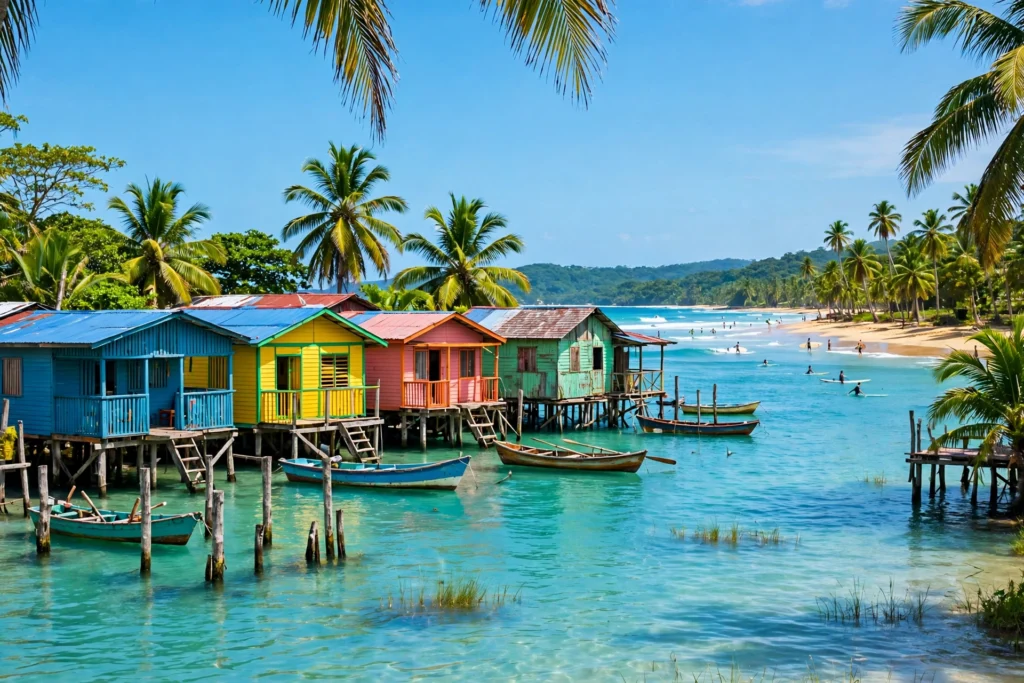
Bocas del Toro is the Caribbean archipelago on Panama’s north-west coast — nine main islands and dozens of small cays, with stilt houses over the water, Afro-Caribbean cooking, mangroves, surf and a pace of life that runs on boats and weather windows rather than timetables. It is the most relaxed destination in Panama, and the one where travellers most often extend their stay.
The base is Bocas Town on Isla Colón, a laid-back island town of wooden buildings, dive shops, restaurants and bars. From there, water taxis and boat tours reach the rest of the archipelago. Starfish Beach (Playa Estrella), on the far side of Isla Colón, is the famous one — a calm, shallow bay where starfish rest on the sand in clear water. Please do not pick them up or take them out of the water; they die quickly out of their habitat, and the beach is better for it when visitors leave them alone. Bastimentos Island is the wilder neighbour, home to Bastimentos Island National Marine Park, with nesting turtles, red poison dart frogs, mangrove channels and the surf break at Wizard Beach. Bluff Beach, on Isla Colón’s ocean side, is a long stretch of golden sand with strong currents — good for walking and surfing, not for casual swimming.
Bocas is a surf and dive destination as much as a beach one. The Caribbean breaks work best from roughly December to March, and surf schools in Bocas Town rent boards and give lessons for complete beginners. The diving and snorkelling are good year-round, with coral gardens, reef fish and the chance of dolphins in the channels between the islands. On land, the food is a highlight: Afro-Antillean cooking, coconut rice, fried fish and patty shops, plus fresh seafood everywhere. Getting there takes a domestic flight from Panama City to Bocas Town, about an hour, or a longer overland and boat route via the Costa Rican border. Book island stays early in the dry season, carry small bills — many places are cash-only — and do not expect strict timetables once you leave the main docks. If you are building a longer Central America trip, Bocas pairs naturally with the slow, nature-first travel covered in the Nicaragua travel guide, which also mixes volcanoes, lakes and Caribbean islands.
Boquete and the Chiriquí Highlands: Coffee, Cloud Forest and Volcán Barú
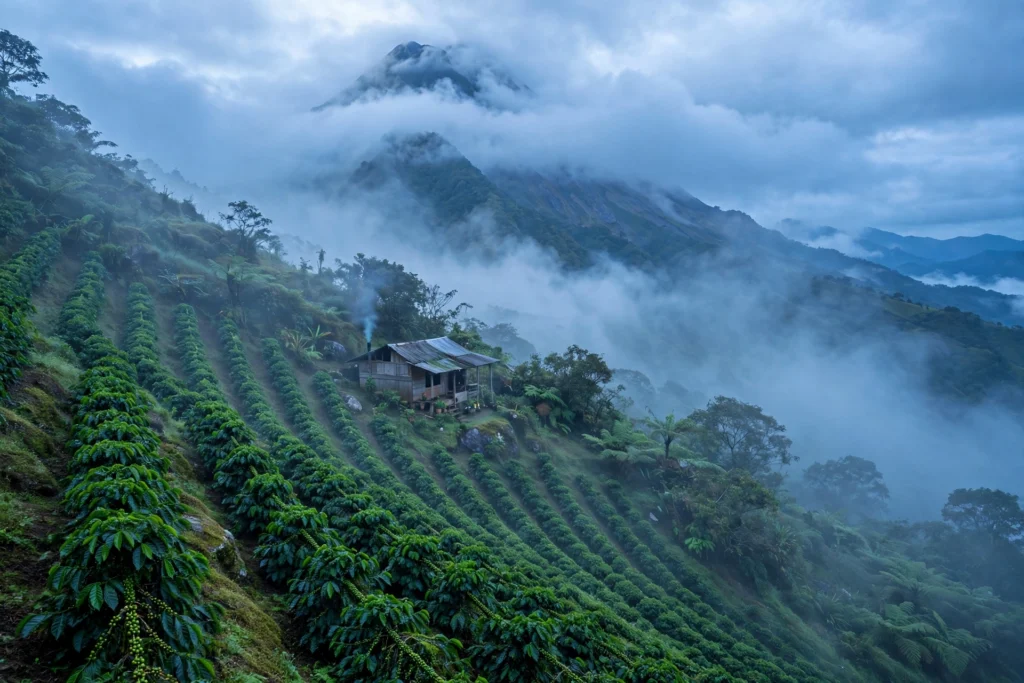
Boquete is the Panama that surprises people most. A small highland town in Chiriquí province, sitting in a valley below Volcán Barú at around 1,200 metres, it trades the lowland heat for cool mornings, misty hillsides and some of the best coffee on earth. Chiriquí province was highlighted in Lonely Planet’s Best in Travel 2025 as one of the world’s best regions, and Boquete is the reason most travellers go there.
Coffee is the heart of it. The volcanic soil and cool nights produce the Geisha variety, one of the most renowned — and most expensive — coffees in the world, and the farms around Boquete run tours where you can walk the plantations, see the harvest and processing, and taste the difference a high-altitude bean makes. Tours typically cost around $10–35 per person depending on the farm and length — confirm figures before you book. Even if you are not a coffee drinker, the setting is worth the trip: cloud forest, rivers, waterfalls and flower farms, with temperatures that can drop to around 15°C at night, so pack a light jacket.
The headline hike is Volcán Barú, Panama’s highest point at 3,474 metres. The classic trip is an overnight climb from Boquete, starting in the dark so you reach the summit for sunrise — and on a clear morning, it is said to be the only place in Panama where you can see both the Pacific and the Caribbean at once. It is a hard, steep, stony trail of six to eight hours up, so go with a guide, start early, and carry warm layers and plenty of water. For something gentler, the Quetzal Trail (Sendero Los Quetzales) runs through cloud forest between Boquete and Cerro Punta and is one of the best places in Central America to spot the resplendent quetzal, especially in the dry season when the birds are nesting. Hot springs, zip-lines and white-water rafting on the Chiriquí Viejo river round out the area. Boquete works as a base for two to three days, and it is also the most comfortable place in Panama to slow down — good restaurants, good coffee, and mornings cool enough for a sweater. If highland coffee country appeals to you, the Colombia travel guide covers another country where coffee farms and mountain towns shape the trip.
Portobelo, Colón and the Caribbean Forts
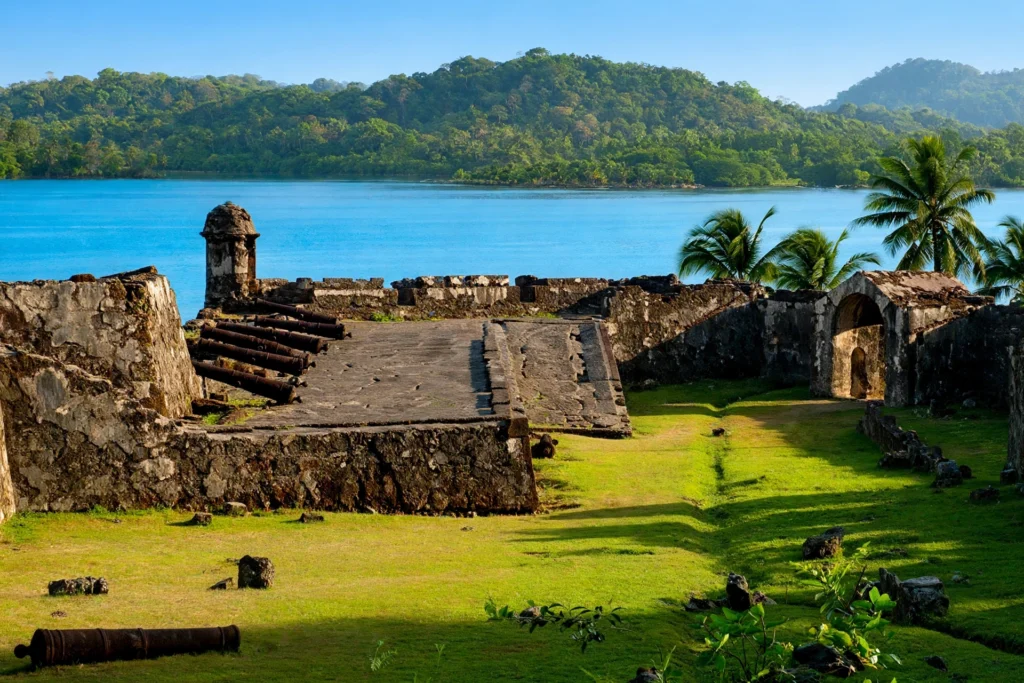
The Caribbean coast east of the canal is where Panama’s history is most visible. In the 16th and 17th centuries, Spanish treasure fleets loaded silver at Portobelo and sailed it to Spain, and the forts built to protect that trade are still standing — battered by humidity, war and neglect, but still imposing. The fortifications of Portobelo and San Lorenzo were inscribed on UNESCO’s World Heritage List in 1980, and in 2025 UNESCO added the Colonial Transisthmian Route, the old overland trail that carried silver and goods across the isthmus between the two oceans.
Portobelo is a small harbour town about 49 km east of Colón, and it is the easiest of the forts to visit. The ruins of Fort San Felipe and Fort Santiago sit around the bay, the Church of San Felipe holds the famous Black Christ statue, and every 21 October the town fills for the Festival of the Black Christ, one of Panama’s most important religious celebrations. Portobelo also has one of the country’s strongest Afro-Panamanian cultural currents, visible in its music, food and the Congo traditions of the region. Fort San Lorenzo, at the mouth of the Chagres River west of Colón, is the wilder of the two — a ruined fortress in the jungle at the end of a rough road, best visited with a guide or as part of a tour, and worth it for the setting alone. Colón itself, the canal’s Atlantic gateway, is a working port city rather than a tourist town, and it is best visited as a base for the forts and the Agua Clara locks rather than as a destination in itself. A day trip from Panama City covers Portobelo and the forts comfortably, and the drive along the Caribbean coast is part of the experience. If colonial forts and pirate history are your thing, the Tanzania travel guide shows how another coastline keeps its history in stone, even though the ocean is very different.
Coiba, Santa Catalina and the Azuero Peninsula: Panama’s Wild Pacific
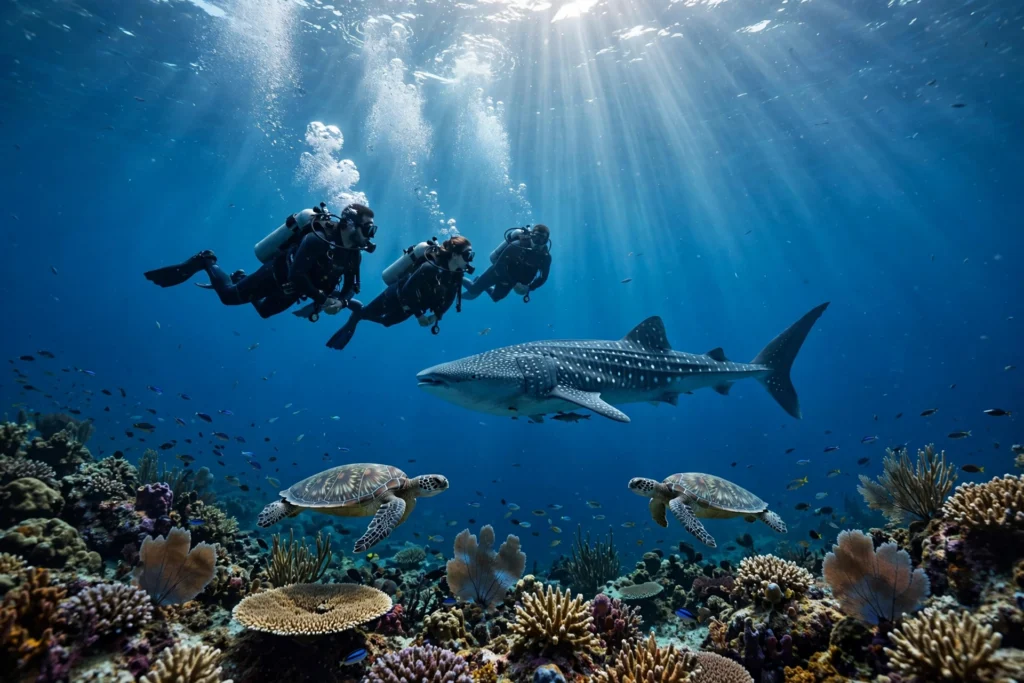
The Pacific side of Panama, west of the canal, is the country’s wild half — and it is where the best diving, the best surfing and the most traditional culture all live within a few hours of each other.
Coiba National Park is the jewel of it. A large island that was a maximum-security prison for most of the 20th century, it is now a UNESCO World Heritage site (inscribed in 2005) and one of the best diving destinations in the eastern Pacific. The marine park around it holds coral reefs, reef sharks, rays, turtles and, in season, whale sharks — the clear water and the sheer size of the animals are what divers remember. Day trips and multi-day diving trips run from Santa Catalina, a laid-back surf town on the Pacific coast and the jumping-off point for Coiba. Boats leave early in the morning, so plan to sleep in Santa Catalina the night before. Santa Catalina itself is worth a day or two: a quiet surf town with good breaks, simple guesthouses and a slow rhythm that feels a long way from Panama City.
East of Santa Catalina, the Azuero Peninsula is Panama’s heartland — cattle country, festival towns and some of the best stretches of Pacific coast road in the country. Pedasí is the peninsula’s beach town, with sea air, access to Isla Iguana wildlife refuge for snorkelling, and whale watching in season, roughly July to October. Las Tablas is the festival town, home to Panama’s biggest Carnaval celebrations, and Chitré is the commercial centre, with museums and handicraft markets. The Azuero is also the driest part of the Pacific coast, which makes it a good bet in the shoulder months when other regions are wet. A rental car is the best way to explore it, as buses are slow and the distances between towns are best covered on your own schedule. If you like the idea of a slow coastal road trip, the Singapore travel guide and the Budapest travel guide both cover how to choose a base in a new place, which applies just as well on the Azuero.
Getting to Panama and Getting Around
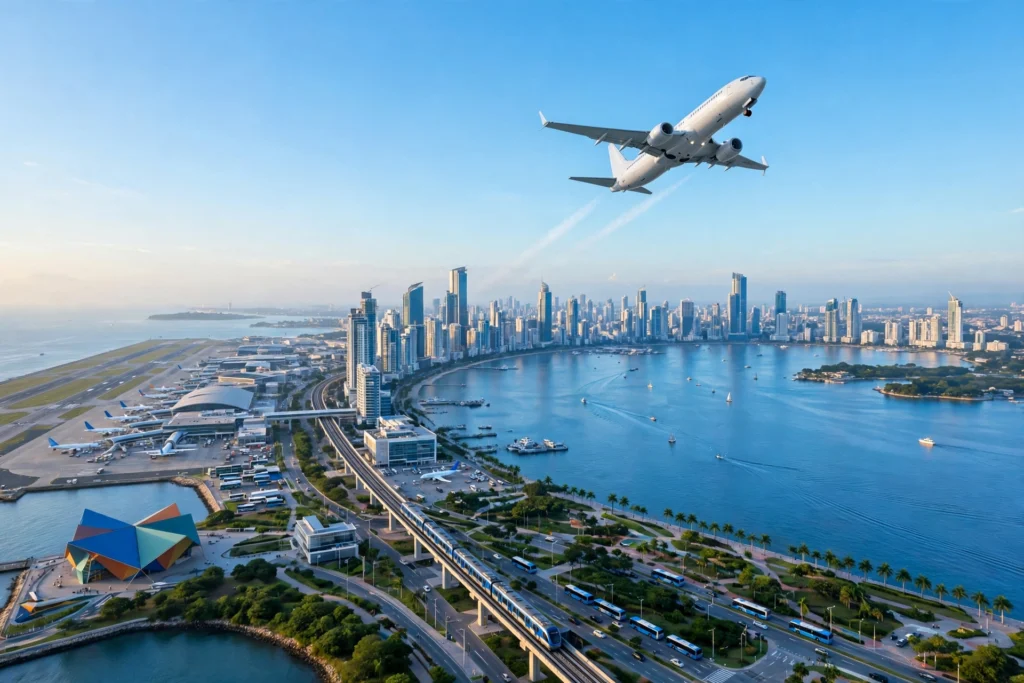
Getting there
Most international visitors fly into Tocumen International Airport (PTY) in Panama City, the biggest hub in Central America, with Copa Airlines connecting almost everywhere in the Americas. From the United States, flights take about three hours from Miami and about five hours from New York; from Europe, most travellers connect through the US or Madrid. There are no direct flights from every city, but the connections are straightforward, and Panama’s position makes it an easy add-on to a wider Central America trip — the land borders with Costa Rica and Colombia are both crossed by overland travellers, though the Colombian border is the Darién Gap, which has no road at all. For western Panama, David has domestic flights and some regional service, and Albrook airport in Panama City handles domestic flights to Bocas del Toro, David and other regional destinations.
Getting around
Panama is a small country, and distances are short — but travel times are longer than the map suggests, because roads are slow and public transport is basic.
- Domestic flights are the fastest way to cover distance: Panama City to Bocas del Toro or David takes about an hour, and flights to the San Blas Islands take about 40 minutes. Book early in the dry season, as seats are limited.
- Buses are the cheapest way to travel between towns, and Albrook is the country’s main long-distance bus hub. Buses run between Panama City, David, Chitré and the Caribbean side, and intercity fares are typically around $10–25. They are frequent on main routes but slow and crowded, so buy snacks, know your platform and leave extra time on weekends and before national holidays.
- Metro and city transport: Panama City has a metro (Lines 1 and 2) covering the main urban areas, with one-way fares of around $0.35–0.50 — more reliable than taxis at peak hours. Uber and other ride apps work well in the city, with short trips costing around $3–6. Casco Viejo itself is best explored on foot.
- Taxis are cheap within towns, but agree the price before you get in, and use registered or app-based cars at night rather than hailing one on the street.
- Rental cars give you the most freedom, especially on the Azuero Peninsula, around Santa Catalina and in parts of Chiriquí, where buses are slow and the best places are spread out. Driving in Panama City is congested and stressful, so pick the car up when you leave the capital. Driving after dark on rural roads is not recommended.
- Boats are essential transport in Bocas del Toro and San Blas, and for Coiba. Fast boats do not run on wishful thinking: if operators delay a departure because of swell or wind, believe them and move the day around.
For most first-time visitors, a mix of one domestic flight, buses and taxis is the sweet spot: cheap enough, comfortable enough, and no driving stress. If you are planning the logistics in detail, a written plan helps — the travel itinerary template is a useful way to lay out routes, transport and timings before you go.
Where to Stay in Panama
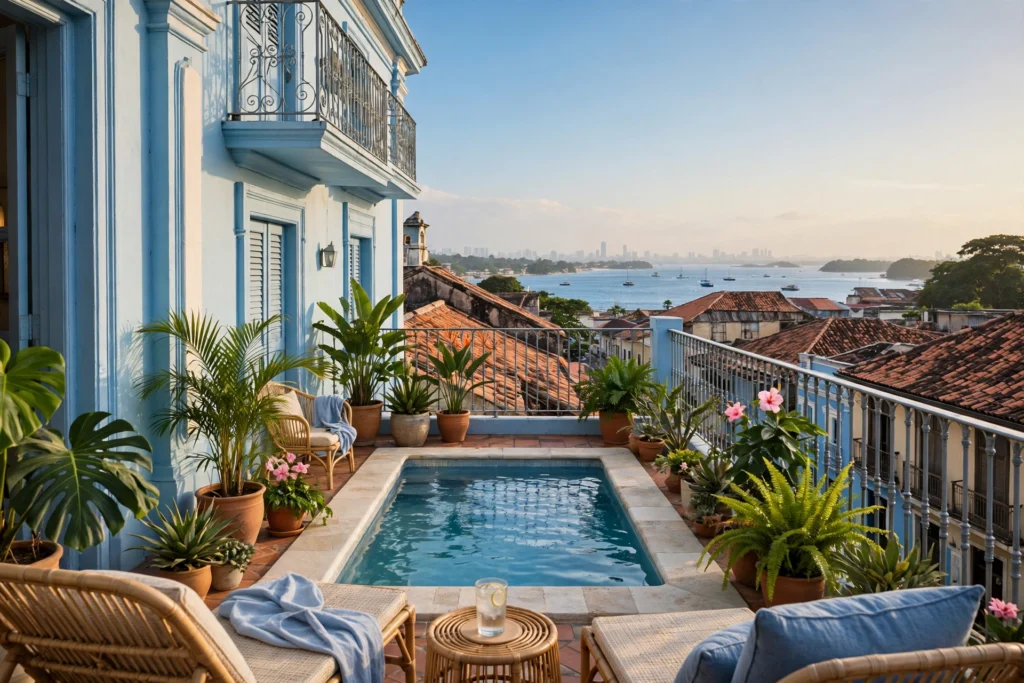
Panama has good accommodation for every budget, from $10 dorm beds to luxury hotels, and the standard is generally high for the price — though Panama City is noticeably more expensive than the rest of the country, and island stays cost more than mainland ones because everything arrives by boat.
| Area | Best for | What to expect |
|---|---|---|
| Casco Viejo, Panama City | First stop, old-town charm | Boutique hotels in restored colonial buildings, rooftop bars; $100–250 a night |
| Bella Vista / financial district | Comfort and transport | International hotel chains and high-rise hotels; $80–180 a night |
| Tocumen Airport area | Layovers and late arrivals | Mid-range chain hotels; $50–100 a night |
| Boquete | Coffee country and hiking | Mountain lodges, coffee-farm stays, boutique hotels; book ahead in dry season |
| Bocas del Toro | Islands, surf and diving | Wooden guesthouses, stilt houses over the water, beach lodges |
| San Blas (Guna Yala) | Island escape | Simple wooden cabins and hammock camps, meals included; $80–150 per person |
| Santa Catalina | Coiba diving and surf | Simple surf lodges and guesthouses; quiet, book ahead for Coiba trips |
| Pedasí / Azuero | Beaches and festivals | Small hotels and guesthouses; good value outside Carnaval |
Book ahead in the dry season, especially around Christmas, Carnaval and Easter, when the best places fill up. In the wet season you can often walk in and find a room. In Panama City, staying in Casco Viejo means you can walk to restaurants and sights, but the financial district is quieter and better connected by metro. On the islands, location matters more, because transport is by boat — a beachfront stay in Bocas or a cabin on your San Blas island saves you daily boat rides. If you are comparing city stays more generally, the Morocco travel guide covers how to choose a base in a new city, which applies just as well here.
How Much Does Panama Travel Cost?
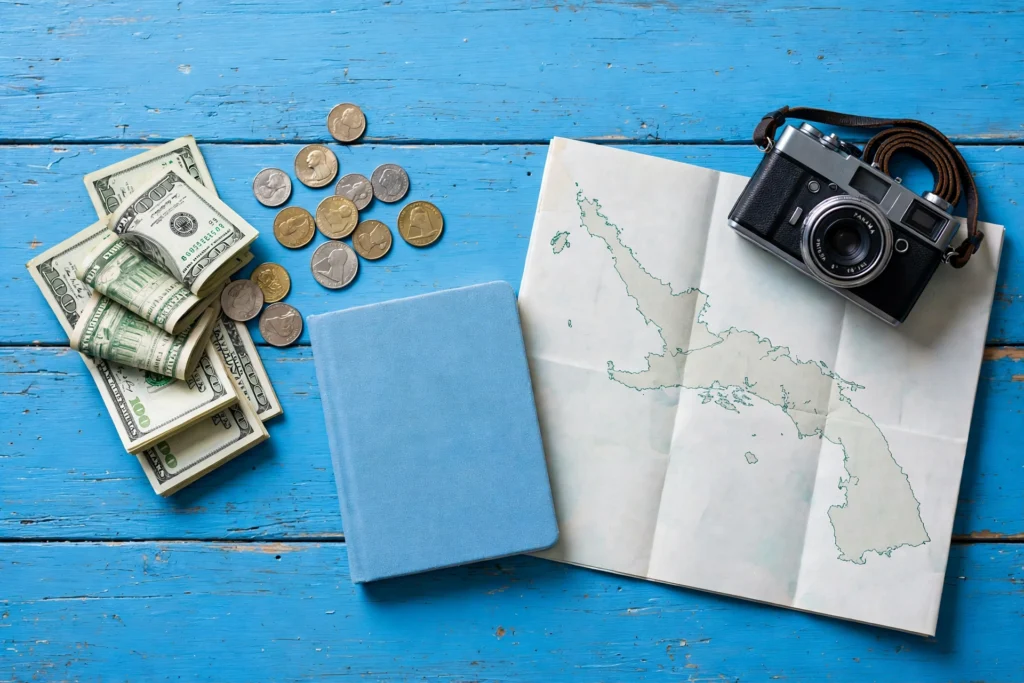
Panama is mid-range for Central America: noticeably more expensive than Nicaragua, cheaper than Costa Rica at the top end, and with a wide range between a backpacker budget and a comfortable trip. The official currency is the Panamanian balboa (PAB), pegged 1:1 to the US dollar, and US dollar banknotes circulate alongside balboa coins — so in practice you simply use US dollars, and you do not need to exchange money in advance. Small bills are the most useful: a taxi driver in Chitré or a café in Portobelo may not want to break a $50 note, so keep a stack of $1, $5 and $10 bills for buses, snacks and boat departures. Credit cards are widely accepted at hotels, chain supermarkets and formal restaurants in Panama City, Boquete and Bocas del Toro, but street stalls, minibuses and small guesthouses are cash-only. ATMs are common in cities but can be out of order or charge high fees, and there are no ATMs on the San Blas islands at all.
| Daily budget (per person) | Accommodation | Food | Transport & activities | Total per day |
|---|---|---|---|---|
| Budget | $10–25 | $10–20 | $10–20 | $45–70 |
| Mid-range | $50–100 | $20–40 | $25–50 | $90–160 |
| Comfortable | $120–250+ | $40–70 | $40–80 | $200–400+ |
These are planning ranges only — confirm figures before you travel, as prices rise in the dry season and around holidays. A few typical costs: a bowl of sancocho at a local eatery $3–6, ceviche at the seafood market around $5, a set lunch at a fonda $6–9, a dinner for two in Casco Viejo around $50, Miraflores Visitor Center $17.22, a San Blas day tour around $130, a canal transit boat tour $120–180, and a coffee farm tour in Boquete $10–35. A two-week mid-range trip, excluding international flights, can be done for roughly $1,500–2,500 per person, and a budget trip for considerably less. If you want to plan your spending in more detail, the how to prepare a travel budget guide walks through the same kind of daily-budget method for any destination.
What to Eat, Drink and Pack in Panama
Food and drink
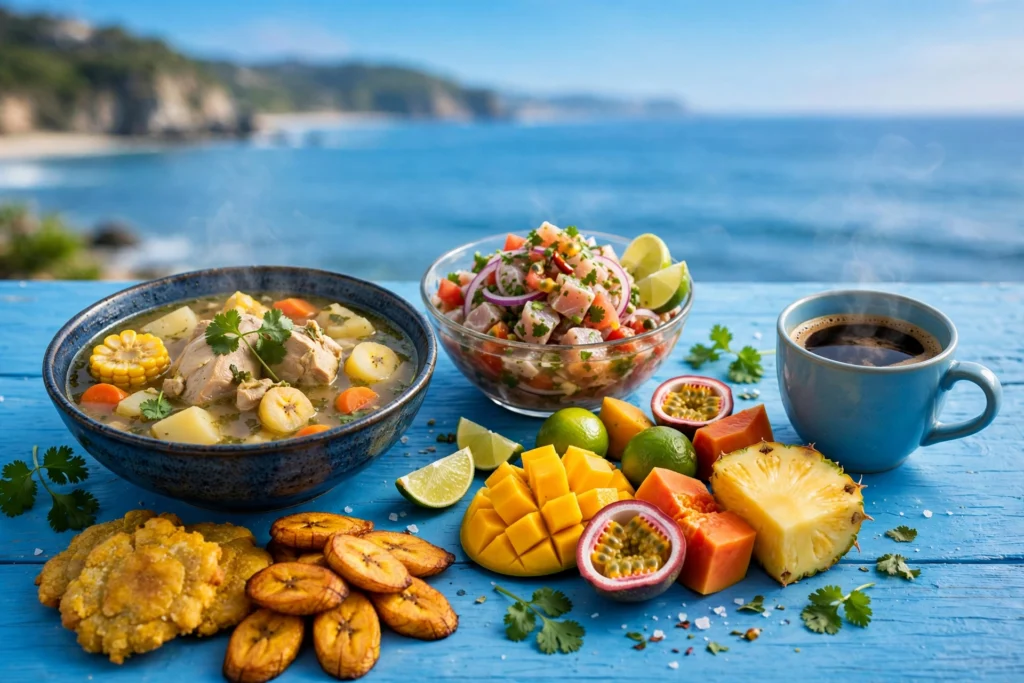
Panamanian food is a mix of Spanish, Afro-Caribbean and Indigenous influences, built around rice, beans, corn, plantains and fresh seafood. The national dish is sancocho, a hearty chicken soup stewed with cassava, corn and herbs, served with white rice — a bowl at a local eatery costs about $3–6 and makes a complete meal. Ceviche is freshest at the Mercado de Mariscos in Panama City, where a small portion costs around $5; locals go in the morning, and popular stalls sell out if you arrive late. Patacones — fried green plantains, crispy outside and soft inside — are the most common side dish along the Caribbean coast, often served with fried fish or beef stew. On the Caribbean side the food changes: coconut rice, fried fish and lobster are the local staples, and Bocas del Toro’s patty shops are a highlight. Arroz con pollo (chicken with rice) and ropa vieja (shredded beef) are the everyday plates you will see in fondas, the small family restaurants where locals eat.
For drinks, try the local coffee — the highlands produce Geisha, one of the most renowned coffees in the world — and the national beer, Balboa and Atlas, which are cheap and widely available. Fresh fruit juices and batidos (fruit smoothies) are sold everywhere. Restaurant bills usually already include a 10% service charge, so there is no need to add a large extra tip; 10% for good service is standard. Drink bottled water outside Panama City, and be cautious with ice and raw salads outside reputable restaurants. Mosquito-borne illnesses including dengue occur in Panama, so insect repellent, long sleeves at dusk and accommodation with screens or air conditioning are sensible precautions.
Packing list
Panama is hot, humid and casual, and you do not need much — but you do need the right things.
- Light, breathable clothing and a light rain jacket, even in the dry season — afternoon showers happen
- A warm layer or light jacket for Boquete and Volcán Barú, where nights can drop to around 15°C
- Sturdy walking shoes or hiking boots for cloud-forest trails, plus sandals for the beach
- High-SPF sunscreen, a hat and sunglasses — the sun is strong year-round, and there is little shade on island boats
- Insect repellent and long sleeves for the evenings, especially in the rainforest and on the islands
- A reusable water bottle and a dry bag for boat trips to San Blas, Bocas and Coiba
- A small first-aid kit, any prescription medicine, and copies of your travel insurance
- A power bank — and remember Panama uses US-style two-pin plugs at 110 volts, so travellers from Europe and the UK will need an adapter
- Cash in small US dollar bills for buses, boats, markets and island stays, where cards do not work
- A local SIM or eSIM for maps and ride apps — buy one early, as signal thins out on island transfers and in the Darién direction
Pack light. You can buy almost everything you forget in Panama City, David or Boquete, and a small bag makes buses, boats and domestic flights much easier. If you are building a packing list for a longer trip, the practical approach in the travel bucket list guide — planning around experiences rather than things — is a good way to think about what actually earns space in your bag.
Sample Panama Travel Itineraries: 7, 10 and 14 Days
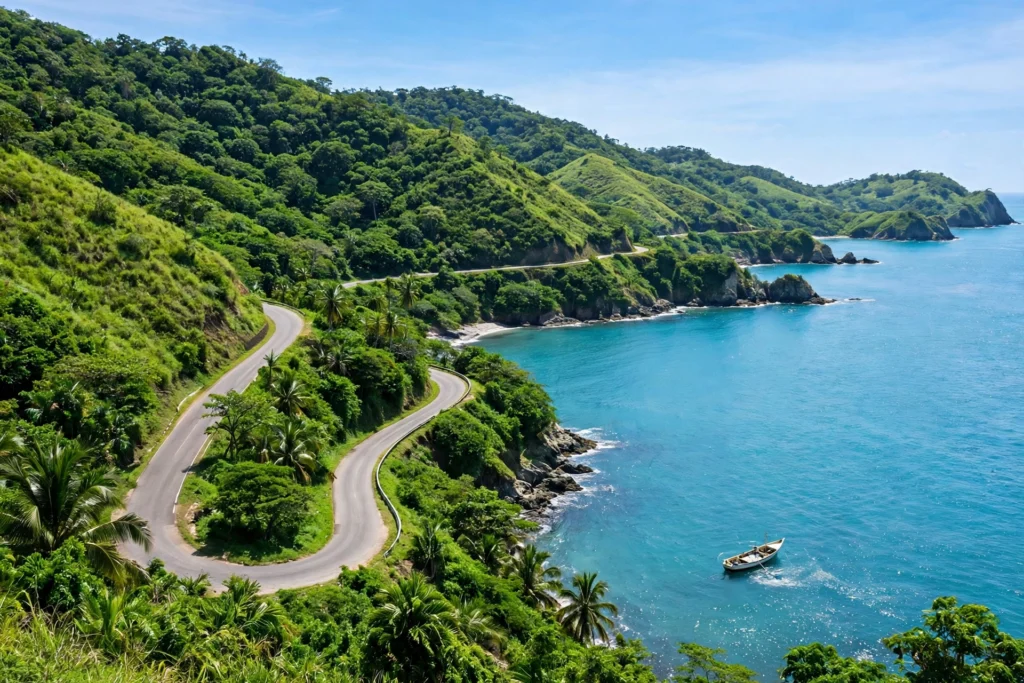
7 days: the canal, the city and one island coast
- Days 1–3: Panama City. Miraflores Locks in the morning, Casco Viejo and the Cinta Costera, Ancón Hill, the BioMuseo and Panamá Viejo; a day trip to Gamboa and Soberanía National Park.
- Days 4–5: San Blas Islands. 4×4 and boat to Guna Yala, two nights in a Guna island camp, snorkelling and island-hopping.
- Days 6–7: El Valle de Antón. A crater town for waterfalls, markets and a cooler night, then back to Panama City for departure.
10 days: the canal, the highlands and the Caribbean
Add a flight to David and two days in Boquete (coffee farm tour, a cloud-forest hike, and the Volcán Barú sunrise if you are fit), then cross to Bocas del Toro for two days of beaches, snorkelling and surf. Ten days is the point at which the trip stops feeling like a highlights tour and starts feeling like a proper journey — you get the canal, the city, the highlands and the Caribbean, with rest days built in.
14 days: the full picture
Add three days on the Azuero Peninsula and Santa Catalina (Pedasí beaches, Isla Iguana, Carnaval towns, and a Coiba diving day trip), or add Portobelo and the Caribbean forts as a day trip from the city plus an extra day in Boquete. Fourteen days also lets you slow down properly: an unhurried morning in Casco Viejo, a second day in San Blas, and a beach day that does not feel squeezed. If you are planning a longer trip and want to keep it organised, the Colombia travel guide and the Nicaragua travel guide both show how a two-week itinerary can be structured around a mix of cities, nature and coast.
Frequently Asked Questions About Panama Travel
Is Panama safe for tourists?
The US State Department rates Panama at Level 2: Exercise Increased Caution, because of crime. Most crime against foreigners is opportunistic theft, concentrated in a few neighbourhoods. The advisory says Do Not Travel to the Mosquito Gulf and parts of the Darién Region — neither is on the normal tourist route. Read the full official advisory before booking and check it again before you travel.
Do US citizens need a visa for Panama?
No, for tourism stays of less than 180 days. You need a passport valid for at least three months beyond arrival, a return or onward ticket (strictly enforced), and you may be asked to show at least $500 in funds. Yellow fever vaccination is required if you arrive from a country where yellow fever is endemic.
What is the best time to visit Panama?
Mid-December to April, the dry season, is best for most travellers: sunny days on the Pacific side, reliable canal viewing and island boats running on schedule. February to mid-April is often the sweet spot. The Caribbean side is wetter all year, and the wet season (May to November) is greener, cheaper and quieter but rainier.
How many days do you need in Panama?
Seven days covers Panama City, the canal and one island coast. Ten days lets you add Boquete and Bocas del Toro properly, and fourteen days lets you add the Azuero Peninsula, Coiba and the Caribbean forts. Less than a week is possible but rushed, because the islands and highlands each deserve at least two days.
How much does a trip to Panama cost?
Budget travellers can manage on roughly $45–70 a day, a comfortable mid-range trip runs about $90–160 a day, and a more comfortable trip $200–400 a day. A two-week mid-range trip, excluding international flights, is roughly $1,500–2,500 per person. These are planning ranges — confirm figures before you book.
What is the currency in Panama?
The Panamanian balboa, pegged 1:1 to the US dollar, with US dollar banknotes circulating alongside balboa coins. In practice you simply use US dollars, and you do not need to exchange money in advance. Carry small bills — many buses, boats, markets and island stays are cash-only.
Conclusion
Panama rewards travellers who plan carefully and then leave room for the unplanned. It is a country where you can watch a ship cross between two oceans before breakfast, eat ceviche at a market stall for lunch, and fall asleep in a hammock on an island with no electricity by nightfall — and then wake up in cool coffee country the next morning. The safety picture is straightforward once you know where the lines are: the tourist route is well travelled and well served, the two no-go areas are remote and clearly defined, and the official advice is worth reading before you book. Go in the dry season if you can, give yourself at least a week, and book the islands and the canal early. The canal is the reason most people come to Panama. The islands, the highlands and the food are the reasons they come back.
People also read: Nicaragua Travel Guide · Colombia Travel Guide · Ecuador Travel Guide · Best Places to Travel in January · Travel Itinerary Template · How to Prepare a Travel Budget