
Quick Answer
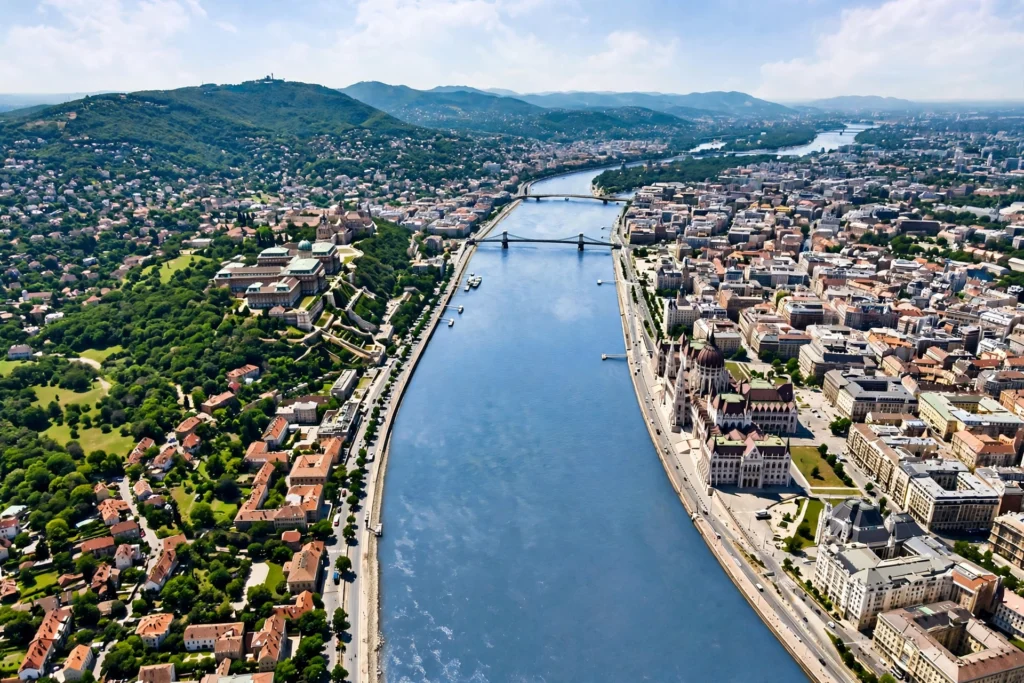
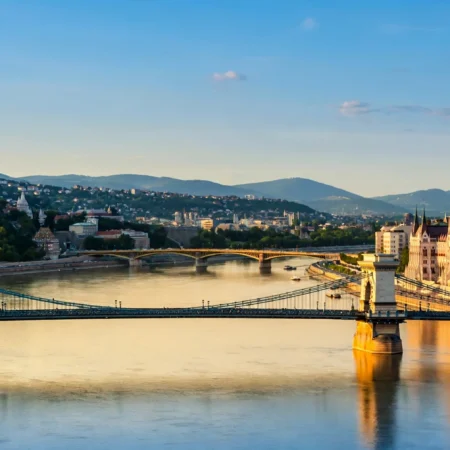
Budapest is one of Europe’s great first trips: two cities in one, split by the Danube. Buda is the hilly, castle side, all views and quiet streets. Pest is the flat, busy side, where the Parliament, the ruin bars, the markets and most of the hotels are. The thermal baths are the city’s signature experience — outdoor pools in grand, yellow palaces — and the Danube is the thread that ties everything together, best seen from a bridge at dusk or from a river cruise.
For a first trip, give Budapest three full days. Arrive by the 100E airport bus, stay in District V or the Jewish Quarter, do a thermal bath on your first afternoon, and build your days around the river: Buda one morning, Pest the next, the baths and the ruin bars in between. Budapest is a proper city, not a theme park, and it rewards a slow pace. You will walk a lot — the city is made for it — and you will eat and drink very well for far less than you would in Paris or Vienna.
This budapest travel guide is written for travellers coming from the United States, so prices are given in US dollars and forints (HUF). Hungary uses the forint, not the euro, and that single fact shapes almost every money decision you will make — see Money in Budapest for the details. Prices are planning ranges, not live quotes: bath entry, hotel rates and restaurant prices shift with the season, and the article tells you to confirm the current figure before you book.
The single most useful thing to understand before you land is that Budapest has two centres, not one. The river is not a border you cross once and forget about; you will cross it several times a day, by bridge, by tram or on foot, and each crossing is a different view. Plan your days in halves — Buda in the morning, Pest in the afternoon — and the city makes sense. Plan them by neighbourhood, and you will spend your trip on trams.
Best Time to Visit Budapest
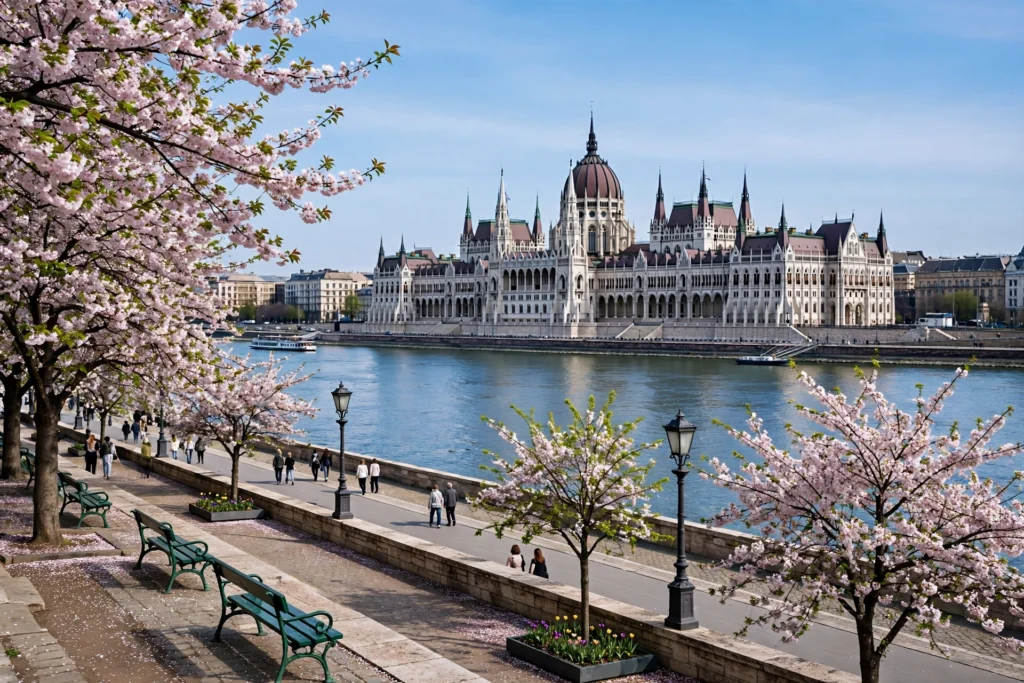
Budapest is a four-season city, and each season changes the trip in a real way. The river, the baths and the walking are the constants; the weather, the crowds and the prices are the variables. Spring and autumn are the sweet spot for most first-timers. Summer is warm, lively and busy, with long evenings and the best river-cruise weather. Winter is cold, dark and cheap, with the baths at their most atmospheric — and the Christmas markets, if you time it right.
The seasons in one paragraph
Spring (April–May) is the classic recommendation: mild days, blossom on the promenades, the baths outdoors without the summer crowds, and hotel prices still reasonable. Summer (June–August) is the busiest and warmest, with temperatures in the high 20s and low 30s, long daylight, festivals and packed ruin bars — and the highest hotel rates. Autumn (September–October) is the quiet favourite: golden light on the river, warm days and cool evenings, fewer tourists, and the baths steaming in the morning air. Winter (November–March) is cold, with short days and temperatures often below freezing, but the city is at its cheapest, the baths are at their best, and the Christmas markets in late November and December are genuinely good.
The best time by trip type
- First-timers who want the classic sights: late April to early June, or September, for the best odds of mild weather and manageable crowds.
- Budget travellers: January to March (outside the Christmas–New Year peak) or November, when hotel rates drop sharply.
- Thermal-bath lovers: any month. The baths are open year-round, and a cold morning in an outdoor thermal pool is one of the city’s great experiences — winter is arguably the best time.
- Festival hunters: the Sziget Festival in August, the Christmas markets in December, and the spring wine festivals.
- Families: late spring or early autumn, when the weather is kind and the city is walkable.
What about the crowds and prices?
Budapest is not as crowded as Paris or Rome, and it never really closes — but the popular sights do get busy in summer, and the Parliament tour and the Széchenyi Bath sell out on weekends. Book the Parliament tour ahead, buy bath tickets online where you can, and expect higher hotel rates from June to August and around Christmas. The city is still good value compared with western Europe: a comfortable day in Budapest costs roughly half what the same day would cost in Vienna or Paris.
How Many Days Do You Need in Budapest
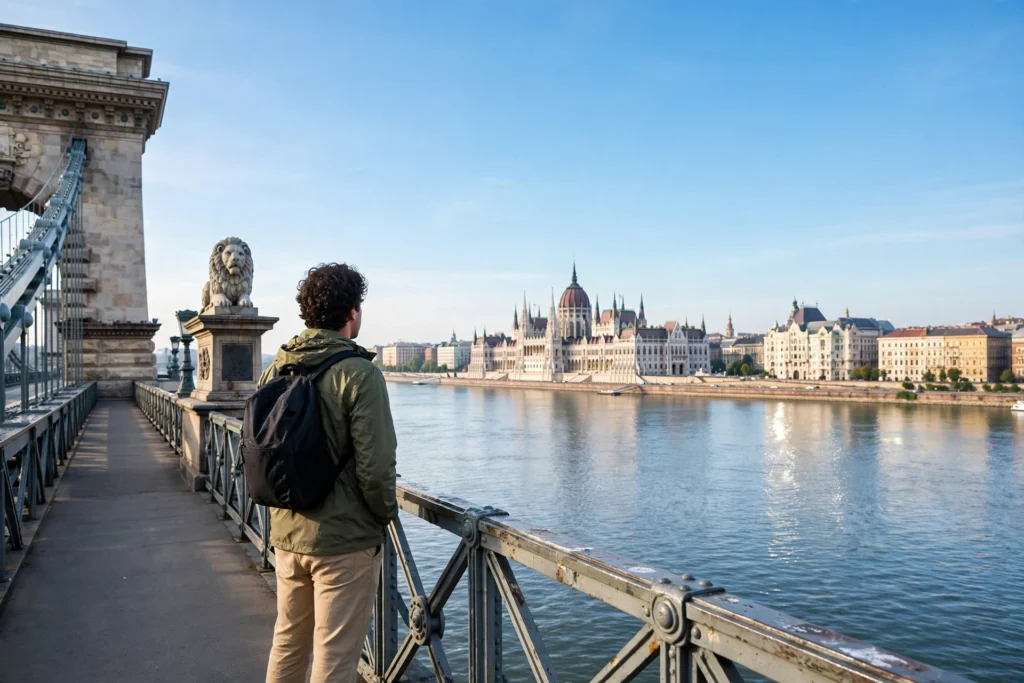
Three days is the sweet spot for a first visit: one day for Buda, one for Pest, one for the baths and the river. Two days is doable if you are disciplined — you will see the highlights, but you will miss the slow parts, and the slow parts are the point. Four or five days lets you add a day trip (Szentendre, or the Danube Bend) and a second bath, and it lets you eat your way through the city properly.
- 2 days: the highlights only. Buda Castle and Fisherman’s Bastion, the Parliament, a thermal bath, a ruin bar, and a river cruise at dusk.
- 3 days: the classic first trip. Everything above, plus the Jewish Quarter, the Great Market Hall, and a proper Hungarian dinner.
- 4 days: the recommended trip, and the one this guide is built around. You get the baths, the neighbourhoods, a day trip, and time to wander.
- 5+ days: the slow version. Add the Danube Bend, a second bath, and a day of just walking — the city rewards it.
If you are combining Budapest with somewhere else — Vienna is three hours by train, Prague is seven — three days in Budapest is the right amount before you move on.
A note on arrival day
Most flights from the US reach Budapest in the afternoon or evening. Do not plan anything ambitious for arrival day: take the 100E bus into the centre, check in, walk to the Danube for your first look at the river, and eat somewhere simple. Save the baths and the big sights for the morning, when you are fresh.
Buda Side: Castle Hill and Fisherman’s Bastion
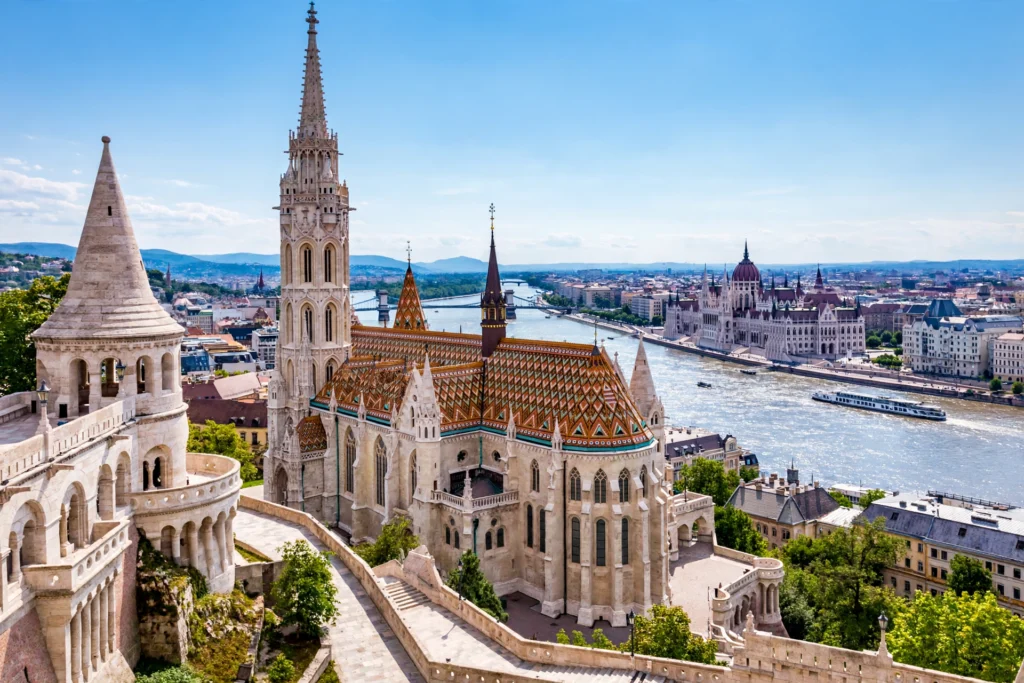
Buda is the hilly side, and it is where Budapest feels oldest. Castle Hill is a long, flat-topped ridge above the river, holding the Royal Palace, the Matthias Church, and Fisherman’s Bastion — the white, fairytale terrace that gives you the best view in the city. The streets up here are quiet, cobbled and residential, and the whole hill feels like a village that happens to have a palace in it.
Castle Hill: what to see
Start at the Royal Palace (the Buda Castle), which now holds the Hungarian National Gallery and the Budapest History Museum. You do not need to go inside both — pick one, or just walk the courtyards and the ramparts, which are free and give you the views. The Matthias Church is the red-roofed, tile-covered church at the top of the hill; go inside if you can, and climb the tower for the panorama. Fisherman’s Bastion is the terrace in front of the church — seven white towers, built in 1902, and the single best viewpoint in Budapest. Go at sunrise or at dusk, when the light is on the Parliament across the river.
Getting up the hill
You have three options, and they are all fine. The Castle Hill Funicular (Budavári Sikló) is the charming one — a short, steep ride from Clark Ádám Square, right by the Chain Bridge. The bus (16, 16A or 116) runs up from Deák Ferenc Square and drops you at the top. Or walk: the steps from the Chain Bridge side take about ten minutes and are the best way to arrive, because the view opens up as you climb. Going down, walk — the streets on the south side of the hill lead you past the gardens and back to the river.
Pest Side: Parliament, Basilica and Andrássy Avenue
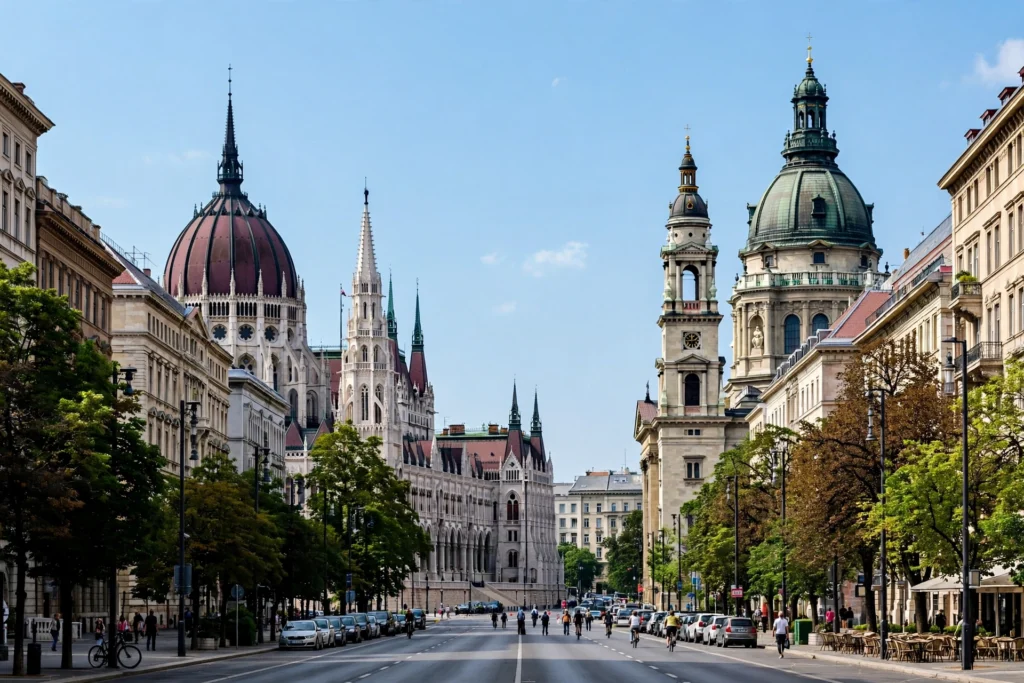
Pest is the flat side, and it is where most of Budapest’s life happens. The Parliament building dominates the riverfront — a vast, neo-Gothic palace that is the city’s single most photographed building — and behind it, the grand boulevards, the squares, the cafes and the markets stretch away in a grid. Pest is where you will spend most of your time, and where you will stay.
The Parliament: book ahead
The Hungarian Parliament Building is the city’s icon, and the tour inside is worth doing — the grand staircase, the Holy Crown, the debating chamber — but it sells out, especially in summer. Book online in advance, and bring your passport or ID: you will need it to enter. If the tour is sold out, do not despair: the building is just as impressive from the outside, and the best views are from the Buda side, from Fisherman’s Bastion, or from a river cruise at dusk, when it is lit up.
St Stephen’s Basilica and Andrássy Avenue
St Stephen’s Basilica is the city’s great church, a domed neoclassical cathedral in the middle of Pest, and you can climb to the top of the dome for a 360-degree view over the rooftops. From the Basilica, walk up Andrássy Avenue — Budapest’s grand boulevard, lined with mansions, embassies and cafes — to Heroes’ Square and the City Park, where the Széchenyi Bath sits. The avenue is a UNESCO World Heritage Site, and the walk takes about half an hour, or you can ride the M1 metro underneath it — the oldest metro line on continental Europe, and a sight in itself.
Thermal Baths: Széchenyi, Gellért and Rudas Compared
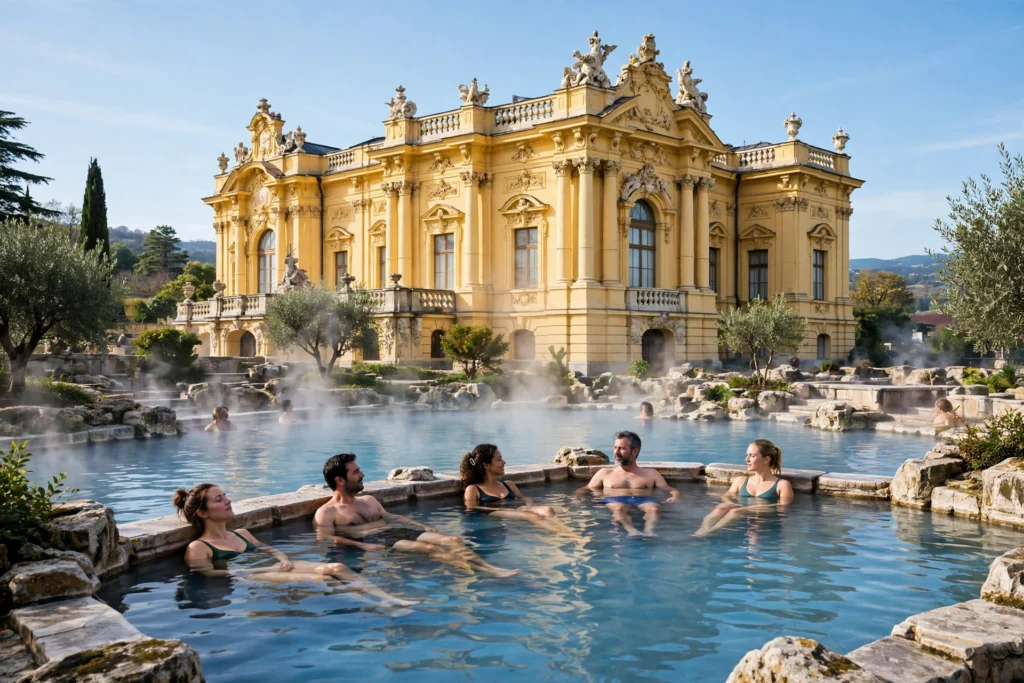
The thermal baths are Budapest’s signature experience, and they are not a spa in the way you might be imagining. They are grand, public, slightly eccentric institutions — vast halls of marble and tile, outdoor pools steaming in the cold air, old men playing chess on floating boards, and a dress code that is, essentially, a swimsuit and a towel. Go at least once. Go twice if you can.
| Bath | Price (approx.) | Vibe | Architecture | Best for | Outdoor pools |
|---|---|---|---|---|---|
| Széchenyi | €18–25 | Lively, social, the big one | Neo-baroque yellow palace | First-timers, the classic experience | Yes — the big outdoor pools |
| Gellért | €20–28 | Elegant, quieter, more refined | Art Nouveau, mosaics and columns | Couples, architecture lovers | Yes — a wave pool and a thermal pool |
| Rudas | €12–18 | Local, relaxed, less touristy | Ottoman-era, 16th-century core | A quiet soak, the rooftop pool at dusk | Yes — the rooftop hot tub with a view |
The etiquette that matters
There are a few rules, and they are worth knowing before you go. Bring a swimsuit, a towel and flip-flops — you can rent or buy them, but it is cheaper to bring your own. A swim cap is required in the lap pools (not the thermal pools), so bring one or buy one there. Choose a cabin over a locker if you can: it is a small private changing room, and it is worth the few extra forints. Shower before you get in, and do not wear street shoes past the changing rooms. The baths are not a place for loud behaviour — the thermal pools are for soaking, not swimming, and the regulars take it seriously.
Which one should you choose?
If you only do one bath, do Széchenyi: it is the biggest, the most famous, and the outdoor pools are the experience. Go early in the morning, when it is quiet and the steam is rising off the water, or in the evening, when it is lit up. If you want something quieter and more beautiful, do Gellért — the Art Nouveau interior is extraordinary, and the wave pool is fun. If you want the local experience and the best view, do Rudas: the rooftop hot tub looks out over the Danube and the city, and at dusk it is one of the great views in Budapest.
The official site for Széchenyi is Széchenyi Bath, where you can check opening hours and buy tickets online.
The Jewish Quarter and Ruin Bars
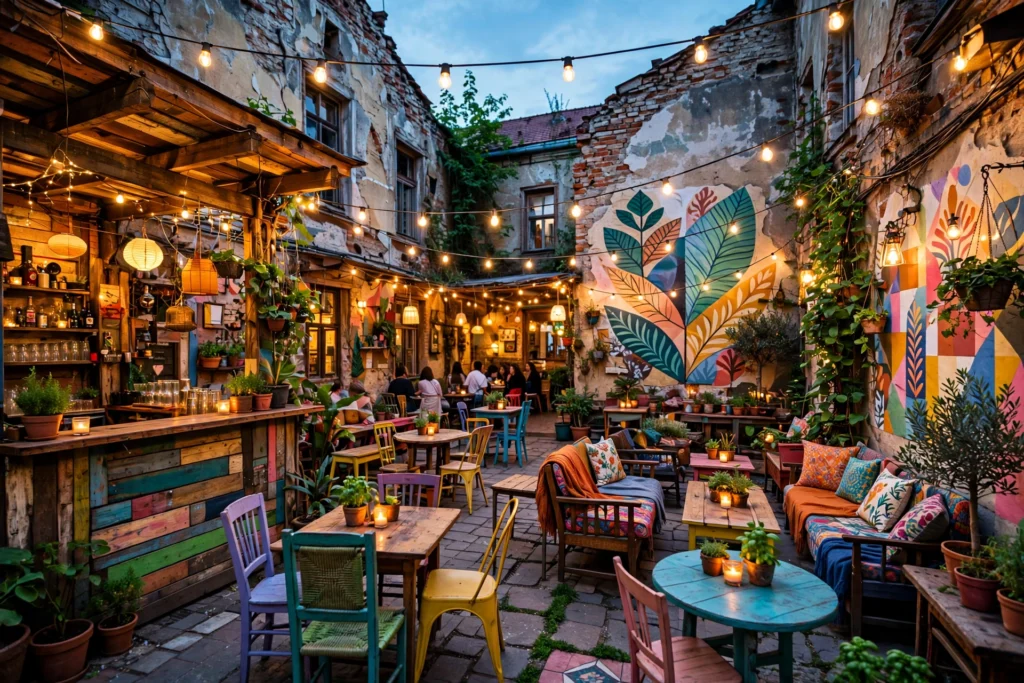
The Jewish Quarter (District VII) is Budapest’s most atmospheric neighbourhood, and it is where the city comes alive at night. By day, it is a dense grid of old apartment buildings, synagogues and cafes; by night, it is the ruin bars — bars built in abandoned buildings and courtyards, filled with mismatched furniture, murals, string lights and a crowd that is half local, half visitor. The quarter is also the site of the Great Synagogue, the largest in Europe, and the Holocaust memorials — and that history is part of the neighbourhood, not separate from it.
The ruin bars, explained honestly
A ruin bar is a bar in a ruined building. That is the whole idea: someone took a derelict courtyard or warehouse, put in a bar, some second-hand sofas, a few murals, and opened the doors. Szimpla Kert is the original and the most famous — a sprawling, multi-room courtyard that is part bar, part art installation, part market on Sundays. Instant-Fogas is the big, loud, party one, with multiple dance floors. Mazel Tov is the quiet one: a garden restaurant and bar, good for a drink and a meal, and the best choice if you want to actually talk.
The etiquette is simple: go early if you want a seat, expect a crowd after 9 p.m., and do not treat the neighbourhood as a theme park — people live here, and the bars are in residential streets. Drink the local beer (Dreher is the classic) or a fröccs (wine and soda water, the Hungarian summer drink). If you want a quiet drink, go to Mazel Tov or to one of the smaller bars on Kazinczy Street; if you want a party, go to Szimpla or Instant-Fogas after 10 p.m.
What to see in the quarter by day
Start at the Great Synagogue on Dohány Street, the largest synagogue in Europe, with its Moorish-revival architecture and its garden memorial. Walk the streets around it — Kazinczy, Király, Wesselényi — and look up: the buildings are faded and grand, and the courtyards are full of cafes and small shops. Stop for coffee at one of the speciality cafes, and eat at one of the Jewish restaurants (Mazel Tov is the obvious one, but there are smaller, cheaper ones on the side streets). The quarter rewards wandering: it is the densest, most layered part of the city.
The Danube: Cruises, Bridges and Riverside Walks
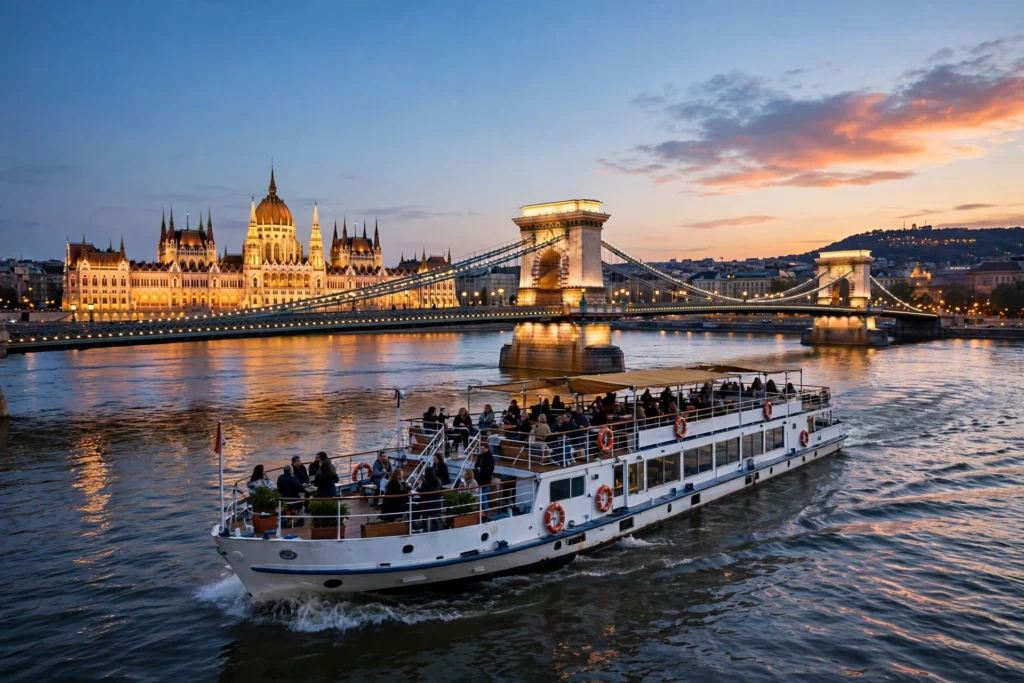
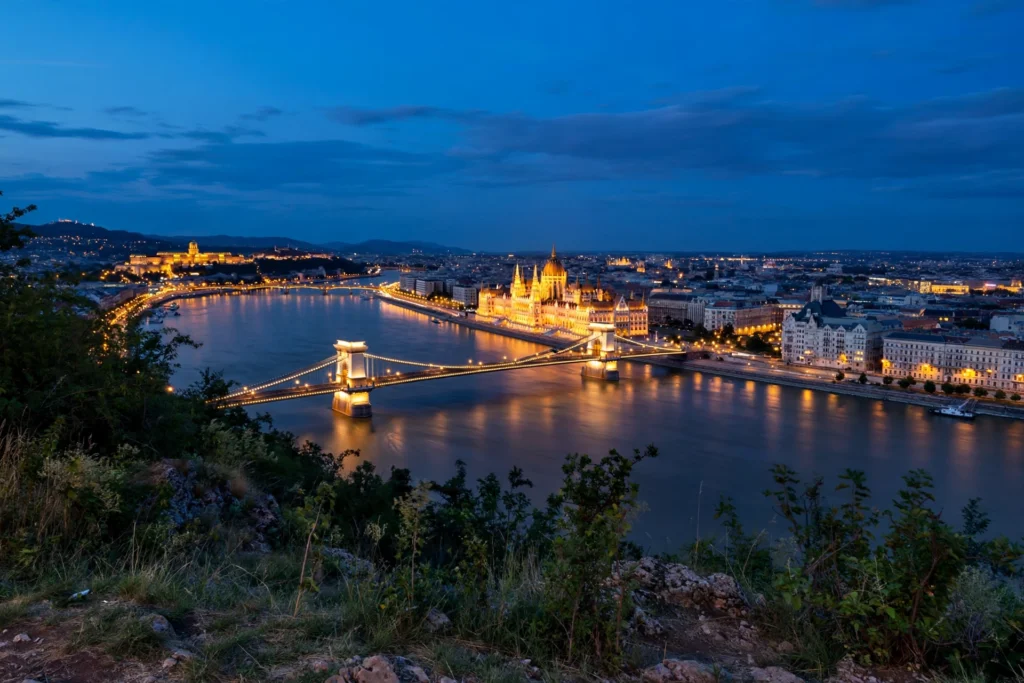
The Danube is the reason Budapest exists, and it is the best thing in the city. Everything important in Budapest faces the river: the Parliament, the Castle, the bridges, the promenades. The river is wide, fast and brown-green, and it changes with the light — silver in the morning, gold at dusk, black at night with the buildings lit up along both banks. You will cross it a dozen times, and you should walk along it at least once a day.
The bridges: which ones matter
There are eight bridges in the city centre, and three of them matter for a first trip. The Chain Bridge (Széchenyi Lánchíd) is the famous one — the suspension bridge from 1849, the first permanent crossing, and the symbol of the city. Walk across it at dusk, when the lights come on. The Liberty Bridge (Szabadság Híd) is the green, iron one at the southern end, and it is the prettiest — walk across it to the Gellért Hill side, or just stand on it and look back at the city. The Margaret Bridge (Margit Híd) is the northern one, and it leads to Margaret Island, the long, green island in the middle of the river, which is a park, a rose garden, a running track and a swimming pool, all in one.
Cruises: worth it, but choose carefully
A river cruise is the best way to see the city in an hour, and it is worth doing — but choose carefully. The daytime sightseeing cruises are fine, and the evening ones, when the buildings are lit up, are the best. The dinner cruises are expensive and the food is mediocre; take a drinks cruise instead, or just take the public ferry (the D11 and D12 lines run along the river and cost the same as a bus ticket, if you have a pass). Avoid the loud party boats. The best time is dusk: the light on the Parliament, the bridges lit up, and the city turning gold.
The riverside walks
The best walk in Budapest is along the Pest promenade, from the Parliament down to the Liberty Bridge, at dusk. The whole riverfront is a promenade, and it is flat, wide and car-free in parts. On the Buda side, walk from the Chain Bridge south along the river to the Gellért Hill, and look back across at Pest. Both walks take about an hour, and both are free, and both are the best thing you will do in Budapest that does not cost anything.
Getting Around Budapest
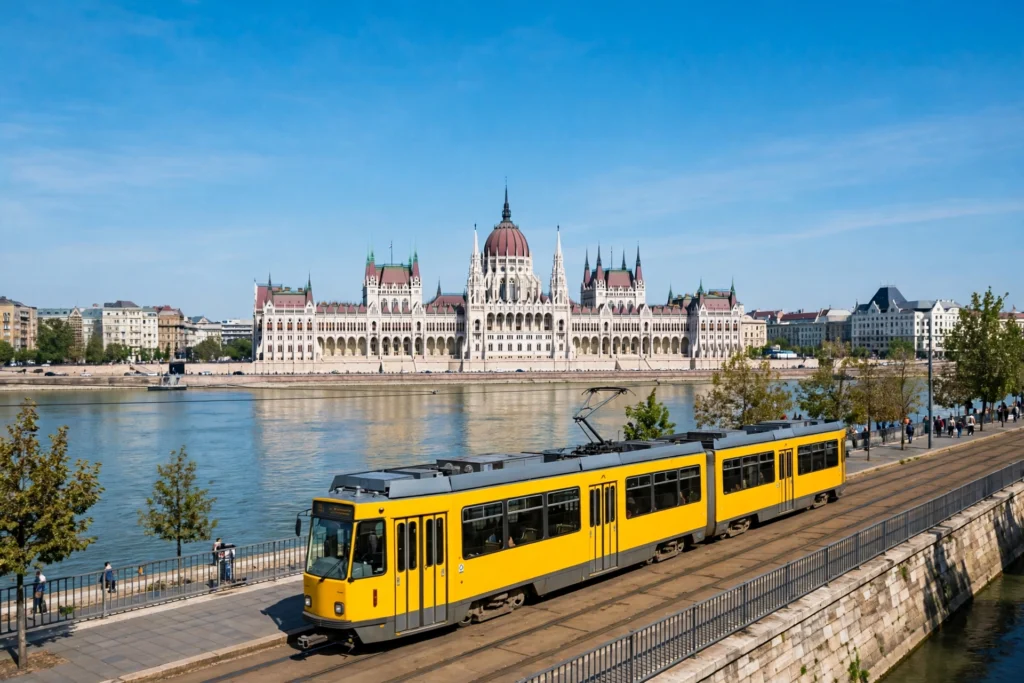
Budapest is easy to get around, and you will mostly walk. The city centre is compact, the river is flat, and the trams and the metro fill in the gaps. The public transport system is run by BKK, and it is reliable, frequent and cheap by western European standards. A single ticket is about 500 HUF (roughly €2), and the 24-hour and 72-hour passes are good value if you are using transport a lot.
- The metro: four lines, clean and fast. The M1 is the oldest line on continental Europe and a sight in itself; the M2 and M3 take you across the river; the M4 is the newest.
- The trams: the best way to see the city. Tram 2 runs along the Danube on the Pest side, past the Parliament, and it is often called the most beautiful tram ride in Europe. Tram 4 and 6 run the Grand Boulevard and are the busiest lines.
- The buses: the 100E is the airport bus, direct from the airport to Deák Ferenc Square in the centre. It costs about 2,500 HUF, and you can pay by card on the bus. Other buses fill in the gaps the metro and trams do not reach.
- Walking: the best way to see the centre. The Pest side is flat, and the main sights are within a 30-minute walk of each other. Buda is hilly — take the bus or the funicular up, and walk down.
- Taxis: use the app (Bolt is the main one) or a reputable company, and avoid the unmarked cars at the airport and at the stations. Always ask for a receipt.
For timetables, tickets and the airport bus, the official site is BKK.
Tickets and passes: what to buy
Buy a single ticket for a one-off ride, or a 24-hour or 72-hour pass if you are using transport several times a day. The passes cover the metro, the trams, the buses and the HÉV suburban railway, and they are good value. You can buy tickets from the machines at the stations, from the BKK app, or from the ticket offices. Validate your ticket when you board — inspectors do check, and the fine is steep.
Where to Stay in Budapest
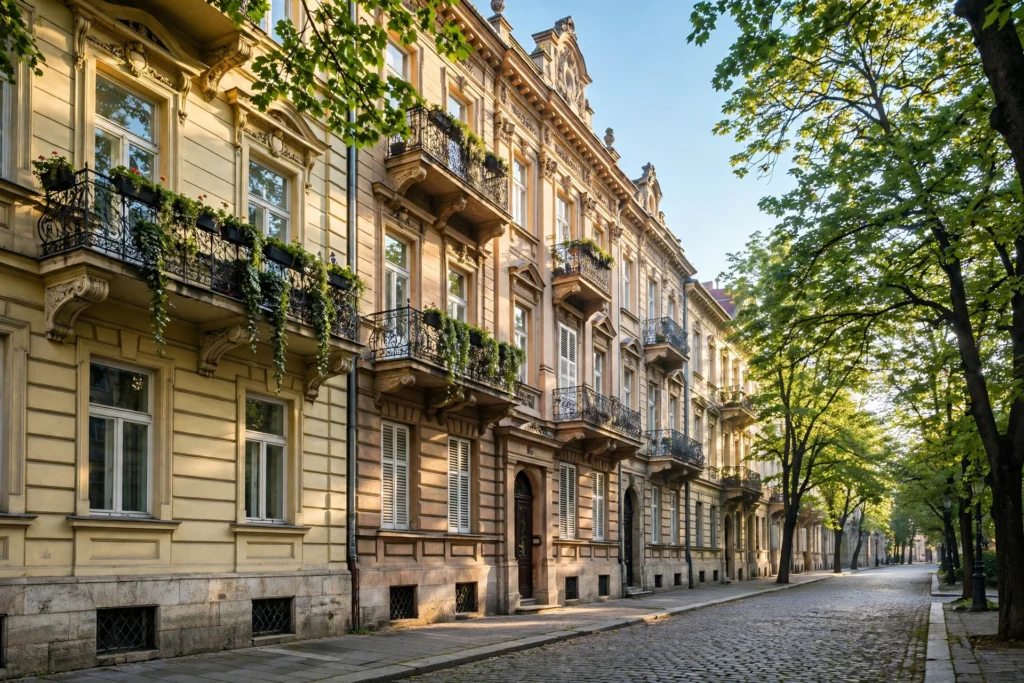
Budapest has a hotel for every budget, and the location matters more than the star rating. Stay in District V (the Belváros) or the Jewish Quarter (District VII) for your first trip, and you will be within walking distance of almost everything. Stay in Buda (the Castle District) for quiet and views, or in District XIII for value and a local feel.
District V (Belváros): the centre, and the most convenient
The Belváros is the historic centre of Pest, around the Parliament, St Stephen’s Basilica and the riverfront. It is the most convenient place to stay — everything is within walking distance — and it has the widest range of hotels, from budget hostels to five-star. It is also the most expensive, and the most touristy. Best for first-timers who want to be in the middle of everything.
District VII (Jewish Quarter): the liveliest, and the best for nightlife
The Jewish Quarter is where the ruin bars are, and it is the liveliest part of the city at night. It is full of hostels, boutique hotels and apartments, and it is where most younger travellers stay. It is noisy at night, especially on Kazinczy Street and around Szimpla, so ask for a room away from the street if you are a light sleeper. Best for younger travellers and anyone who wants to be near the bars.
The Castle District (Buda): quiet, and the best views
The Castle District, on the Buda hill, is the quietest and most beautiful place to stay, with views over the river and the city. It is a short bus or funicular ride from the centre, and the hotels here are mostly boutique and mid-range. Best for couples and anyone who wants quiet and views over nightlife.
District XIII (Újlipótváros): local, and the best value
District XIII, just north of the centre, is a residential neighbourhood of cafes, markets and grand apartment buildings, and it is where a lot of locals live. It is a 10-minute walk or a short tram ride from the centre, and the hotels and apartments here are noticeably cheaper. Best for longer stays and anyone who wants a local feel and good value.
Wherever you stay, check whether the hotel includes breakfast and whether there is a tourist tax (it is usually a few hundred forints per person per night, and it is often payable in cash). For more on planning a trip budget, see How to Prepare a Travel Budget.
What a Budapest Trip Costs
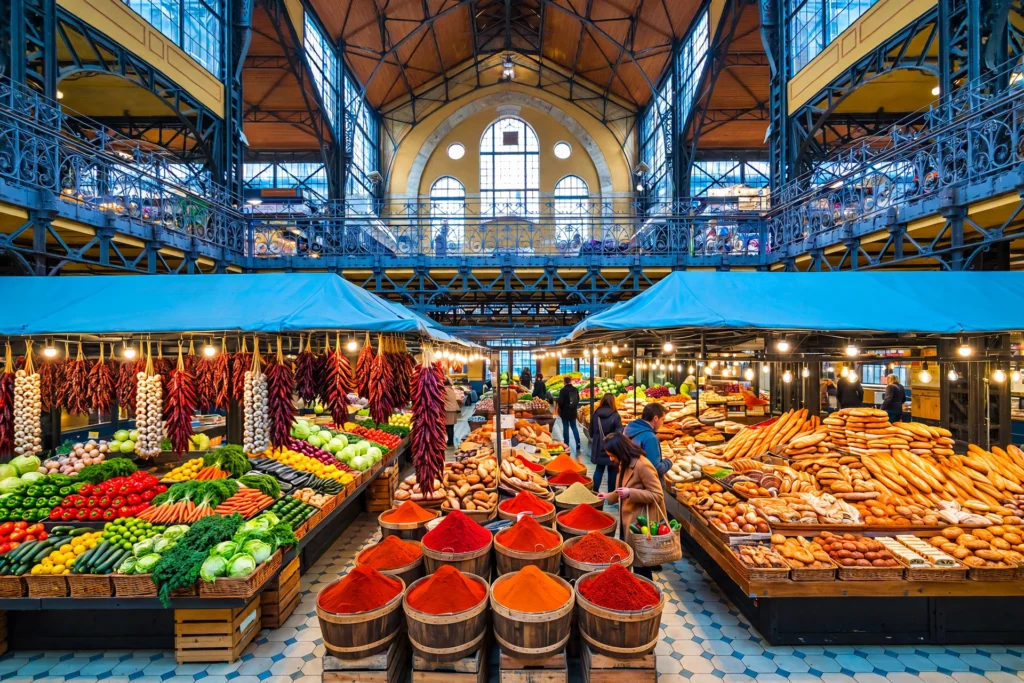
Budapest is one of the cheapest capital cities in Europe, and the difference is real: a comfortable day here costs roughly half what it would in Vienna or Paris. The forint makes the maths easy to get wrong, so think in dollars and check the current rate — roughly 400 HUF to the dollar, but it moves.
| Daily cost | Budget | Mid-range |
|---|---|---|
| Accommodation | $25–45 | $70–120 |
| Food and drink | $15–25 | $30–50 |
| Transport | $3–5 | $10–15 |
| Sights and activities | $5–10 | $15–25 |
| Total per day | $48–85 | $125–210 |
| 3-day total | $145–225 | $315–505 |
What the numbers assume
Budget means a hostel or a cheap apartment, street food and market meals, public transport, and free sights plus one paid attraction a day. Mid-range means a three-star hotel, a restaurant meal a day, a transport pass, and a bath and a tour. Neither includes flights, and both are planning ranges — confirm current prices before you book, especially for the baths, which change their prices with the season.
Money in Budapest: Forints, Cards and Scams to Avoid
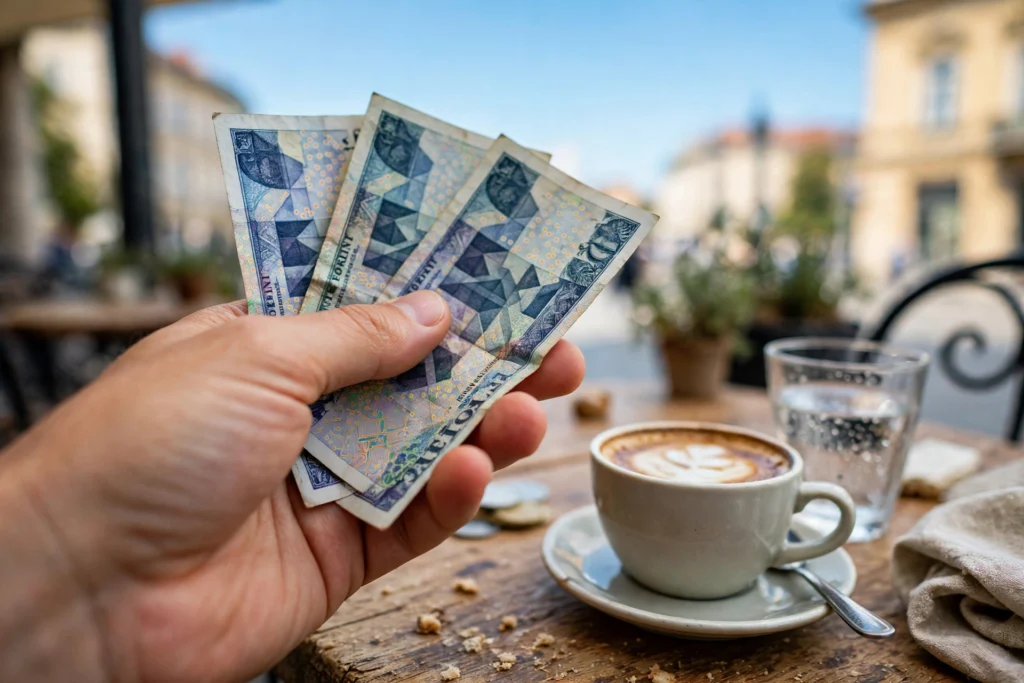
Hungary uses the forint (HUF), not the euro, and that single fact is the most useful thing to know about money in Budapest. The exchange rate moves, but roughly 400 HUF is one US dollar — so a coffee that costs 1,500 HUF is about $4, and a dinner that costs 8,000 HUF is about $20. Prices are quoted in forints everywhere, and you should always pay in forints: if a card machine or an ATM offers to charge you in your home currency, say no — the rate will be worse.
Forints, cards and cash: the practical rules
- Pay by card almost everywhere. Budapest is a card-friendly city: restaurants, cafes, shops, the metro and the trams all take cards, and contactless is standard.
- Carry some cash for the small things: market stalls, the odd bakery, a tip, a ticket machine that does not take cards. A few thousand forints is enough.
- Get forints from an ATM, not from an exchange bureau at the airport or in the centre — the ATMs give a fair rate, and the bureaus do not.
- Decline the currency conversion at ATMs and card machines (“pay in local currency”). This is the single most common way travellers lose money in Budapest, and it is entirely avoidable.
- Tell your bank you are travelling, and check whether your card charges a foreign-transaction fee. If it does, consider a card that does not.
Scams to avoid
Budapest is safe, and the scams are the usual ones, not the dramatic ones. The ones to watch for: a taxi that does not use the meter (use Bolt or a reputable company instead), a restaurant that adds a service charge without telling you (check the bill), a “helpful” stranger at the station offering to change money (do not), and the currency-conversion trick above. The city is not full of pickpockets, but the crowded trams and the ruin bars are the places to keep your bag in front of you.
Day Trips from Budapest
Budapest is a good base, and the day trips are worth it — but only after you have seen the city. Do not sacrifice a day in Budapest for a day trip on your first visit. If you have four or five days, add one of these.
Szentendre: the artist’s town, 40 minutes by train
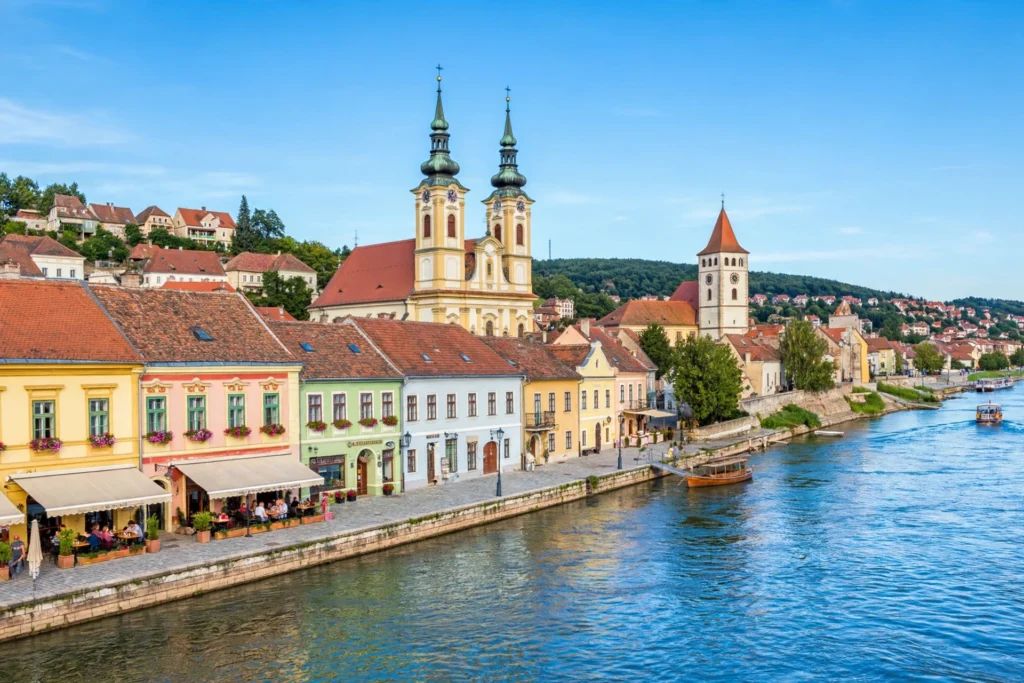
Szentendre is a small, colourful town on the Danube, 40 minutes north of Budapest by train, and it is the easiest day trip. It is a maze of cobbled streets, galleries, cafes and a riverside promenade, and it is the place to go for a slow afternoon. Go by train, walk the old town, eat by the river, and come back by boat in the summer, when the river is at its best.
The Danube Bend: Visegrád and Esztergom
The Danube Bend is where the river turns south, and it is the most beautiful stretch of the Danube in Hungary. Visegrád is a hilltop castle with a view over the river; Esztergom is the great basilica, the largest church in Hungary, on a hill above the town. You can do both in a day by train and bus, or by a river cruise in the summer. It is a long day, and it is worth it — but only if you have the time.
Eger: wine country, two hours by train
Eger is a baroque town in the wine country, two hours east of Budapest by train, and it is the best day trip if you like wine. The town has a castle, a beautiful old centre, and the Valley of the Beautiful Women — a row of wine cellars where you can taste the local reds. Go for the day, or stay overnight if you want to do it properly.
A Realistic 3-Day Budapest Itinerary
Three days is the sweet spot, and this is how to use them. The plan is built around the river: Buda one morning, Pest the next, the baths and the ruin bars in between. It is not a checklist — it is a rhythm, and you should break it whenever something catches your eye.
Day 1: Buda and the river
- Morning: cross the Chain Bridge and walk up Castle Hill. The Royal Palace, the Matthias Church, Fisherman’s Bastion, and the view over the Parliament.
- Afternoon: walk down to the river and along the Buda promenade, then cross back to Pest. Stop at the Great Market Hall for lunch and for the food stalls.
- Evening: a thermal bath — Széchenyi if it is your first, Rudas if you want the view. Then a quiet dinner in the Jewish Quarter.
Day 2: Pest, the Parliament and the baths
- Morning: the Parliament tour (book ahead), then St Stephen’s Basilica and the dome for the view. Walk up Andrássy Avenue to Heroes’ Square and the City Park.
- Afternoon: a second bath — Gellért for the architecture, or Széchenyi again if you loved it. Then the Jewish Quarter by day: the Great Synagogue, the cafes, the streets.
- Evening: a ruin bar — Szimpla Kert if you want the classic, Mazel Tov if you want a quiet drink and a meal. Then a walk along the river at dusk.
Day 3: the Danube, the markets and the slow morning
- Morning: a slow start. Coffee in a cafe, a walk along the Pest promenade, and the Margaret Bridge to Margaret Island for a walk in the park.
- Afternoon: a river cruise at dusk, or a walk across the Liberty Bridge and up Gellért Hill for the view. Then the Great Market Hall for souvenirs and for the food.
- Evening: a last dinner — a proper Hungarian meal, with goulash, paprika chicken or a fish soup, and a glass of Tokaji. Then a final walk along the river, and a last look at the Parliament lit up.
The practical version, if you only have two days
Do Day 1 and Day 2, and skip the day trip. You will see the highlights, and you will miss the slow parts — but you will have seen Budapest. If you have four days, add a day trip to Szentendre or the Danube Bend, and a second bath. If you have five, add Eger and a day of just walking.
FAQ
Is Budapest expensive for tourists?
No. Budapest is one of the cheapest capital cities in Europe, and a comfortable day here costs roughly half what the same day would cost in Vienna or Paris. A mid-range day runs about $125–210, and a budget day about $48–85. The baths are the one thing that can surprise you — check the price before you go.
Do I need euros in Budapest?
No. Hungary uses the forint, not the euro, and you should pay in forints. Euros are accepted in some tourist places, but at a bad rate — always pay in forints, and decline the currency conversion at ATMs and card machines.
How many days are enough for Budapest?
Three days is the sweet spot for a first trip: one day for Buda, one for Pest, one for the baths and the river. Two days is enough for the highlights. Four or five days lets you add a day trip and a second bath.
Which thermal bath should I choose?
Széchenyi if you only do one — it is the biggest, the most famous, and the outdoor pools are the experience. Gellért if you want something quieter and more beautiful. Rudas if you want the local experience and the best view, from the rooftop hot tub at dusk.
Are the ruin bars safe?
Yes. The ruin bars are safe, and the Jewish Quarter is safe at night. The usual rules apply: watch your bag in a crowd, do not leave a drink unattended, and use a reputable taxi or the app to get home. The bars are in residential streets, so be considerate of the people who live there.
Is Budapest safe for tourists overall?
Yes. Budapest is one of the safest capital cities in Europe, and the usual precautions are enough. The city is well lit, the public transport is safe at night, and the scams are the mild, avoidable kind — a taxi without a meter, a currency-conversion trick, a restaurant adding a service charge without telling you.
Conclusion
Budapest is two cities in one, and the Danube is the thread that ties them together. Buda is the hill, the castle, the view; Pest is the boulevard, the Parliament, the ruin bars. The baths are the signature experience, the river is the best thing in the city, and the food is better and cheaper than you expect. Three days is the sweet spot, and the plan is simple: Buda one morning, Pest the next, the baths and the river in between. Go in spring or autumn if you can, go in winter if you want the baths at their best, and go in summer if you want the long evenings. Whenever you go, bring a swimsuit, pay in forints, and walk along the river at dusk. Budapest rewards the slow traveller, and it is one of the great first trips in Europe.
People also read: