
Quick Answer
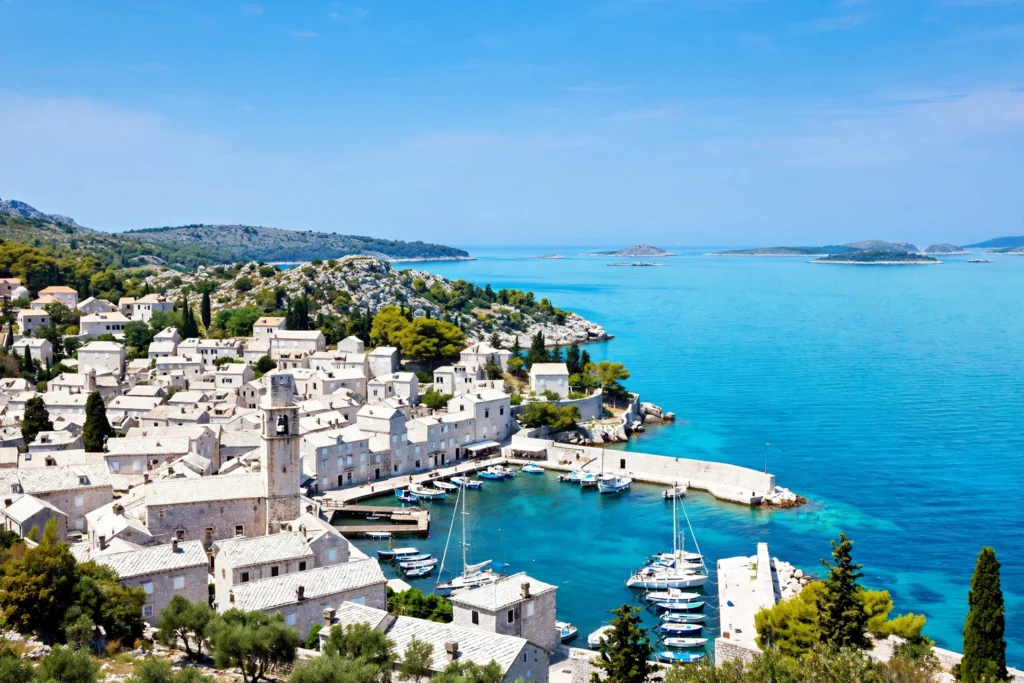
Croatia is one of those rare European destinations that genuinely lives up to the photographs — and then quietly exceeds them once you step off the main street. The Adriatic really is that blue, the stone towns really are that old, and the islands really are that close together. The trick is not whether Croatia is worth visiting. It is how you visit it without spending your holiday in a queue behind everyone else who had the same idea.
If you only have time for the short version, here it is: fly into Zagreb or Split, spend at least ten days if you can, and build your trip around two or three bases rather than trying to tick off the whole coast in a week. Go in May, June or September if you want warm seas and breathing room; go in July or August only if you accept the crowds, book ferries and national park tickets well ahead, and plan your sightseeing for early morning. Pair one famous place — Dubrovnik or Split — with one quieter one, such as Istria, Zadar or the island of Vis. Take the ferries, walk the old towns before breakfast, swim late in the afternoon when the day-trippers have gone, and leave the car behind on the islands unless you have a clear reason to bring it.
This guide is written for travellers coming from the United States, so distances are in a European context, prices are in euros, and the practical sections cover entry rules, money, driving and safety in the terms that actually matter at the border, the ferry terminal and the car rental desk. It is not a solo-travel guide in disguise and it is not a list of Instagram spots. It is a working plan: when to go, how long to stay, which island suits you, how the ferries work, what the national parks cost in time as well as money, and how to see Dubrovnik’s walls without feeling like part of a procession.
The single best piece of advice in the whole article is also the simplest. Croatia rewards slowness. A ten-day trip with three bases will feel richer, cheaper per day and far less rushed than a seven-day sprint down the entire coast. The country is compact enough that you can see a lot, but the places that stay with you — a konoba dinner in Istria, a swim off a Vis cove at golden hour, an empty stretch of the Dubrovnik walls at 8 a.m. — are the ones you give time to.
Best Time to Visit Croatia
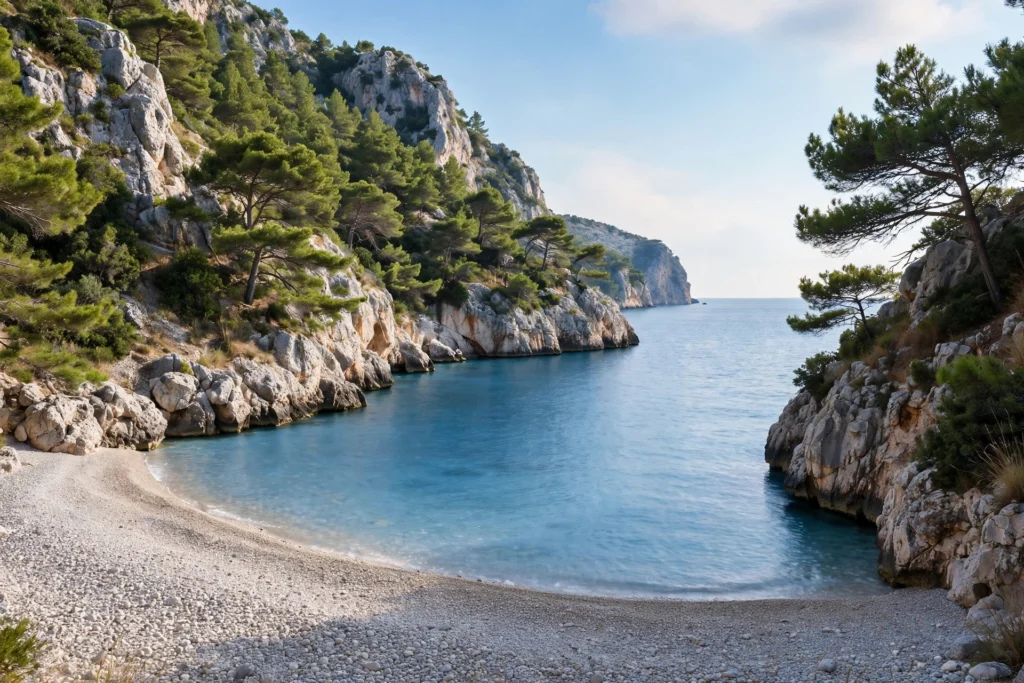
There is no single best month for Croatia, because the country asks different questions in different seasons. A beach holiday, an island-hopping trip, a city break and a national park visit all peak at different times. The table below is the honest version: it tells you what each kind of trip actually feels like, month by month, rather than pretending that one month wins for everyone.
| Month | Weather and sea | Best for | Watch out for |
|---|---|---|---|
| January–February | Cool, 5–12°C inland, milder on the coast; sea too cold to swim | Zagreb city break, carnival season, lowest prices | Short days, some island services closed, bora wind |
| March | Warming up, 12–18°C on the coast | City walking, early hiking, quiet old towns | Sea still cold, ferries on winter timetables |
| April | Pleasant, 16–22°C; sea around 16–18°C | Cities, Plitvice waterfalls at full flow, Easter festivals | Occasional rain, not yet beach weather |
| May | Warm, 20–26°C; sea 19–21°C | The sweet spot for cities, islands and parks together | Early May sea still brisk for some swimmers |
| June | Hot and sunny, 25–30°C; sea 22–24°C | Almost everything, before the peak crowds arrive | Prices rising, book popular ferries ahead |
| July | Hot, 28–33°C; sea 24–26°C | Beaches, island hopping, festivals | Peak crowds, peak prices, hottest inland walking |
| August | Hot, 28–33°C; sea 25–27°C | Beaches and swimming at their warmest | The busiest month, especially Dubrovnik and Hvar town |
| September | Warm, 24–29°C; sea still 23–25°C | The other sweet spot — warm sea, thinning crowds | Some seasonal restaurants start closing late in the month |
| October | Mild, 18–23°C; sea 19–21°C early in the month | Hiking, wine harvest in Istria, city breaks | Ferry frequencies drop, rain more likely |
| November–December | Cool, 10–16°C on the coast | Zagreb Advent markets, quiet coast walks | Many island and seasonal businesses closed |
Why September beats July for most travellers
Here is the detail most summer-only guides skip. The Adriatic warms up slowly and cools down slowly. By September, the sea has had all summer to warm, so it is often warmer in early September than it was in June, even though the air is a few degrees cooler and the crowds have thinned dramatically. You get the best swimming of the year with a fraction of the August queues. School holidays have ended across much of Europe, cruise-ship pressure eases, and restaurant owners have time to talk again.
July and August are not bad months — the weather is reliably superb and every ferry, restaurant and beach bar is open. They are simply the months when Croatia has to work hardest to absorb its visitors. If July or August is when you can travel, you can still have a wonderful trip, but you need to plan like a peak-season traveller: book accommodation and car ferries early, buy Plitvice tickets for a timed slot, and do Dubrovnik’s walls at opening time rather than midday.
Shoulder-season ferry reductions: what they actually mean
This is the practical catch with travelling outside peak season, and it is worth understanding before you book. In winter and early spring, and again from mid-October, ferry companies run fewer sailings. Some smaller island routes drop to one or two crossings a day, and some fast catamaran routes do not run at all in the depths of winter. That does not make shoulder-season travel impossible — May, June, September and early October still have generous timetables — but it does mean you should check the actual sailing times for your dates rather than assuming a summer frequency. Build one buffer into island days outside June to September, and avoid planning a tight same-day connection from a small island to a flight home.
The same logic applies in reverse in summer. More sailings run, but the popular ones fill up. A foot passenger on a catamaran can usually still get on, but a car on a car ferry in August is a different story, which is why the ferry section later in this guide matters so much.
The best time by trip type
- Beaches and swimming: late June to late September, with September as the crowd-beating pick.
- Island hopping: May to September; June and September give you full timetables without August pressure.
- Cities (Dubrovnik, Split, Zagreb, Zadar): April to June and September to October for comfortable walking weather.
- National parks: April to June for the fullest waterfalls at Plitvice, September for warm weather with fewer visitors. Avoid assuming Plitvice is a quiet nature walk in August — it is a major attraction with timed entry for a reason.
- Food and wine in Istria: September and October, for the harvest, truffles and still-warm days.
How Many Days Do You Need in Croatia
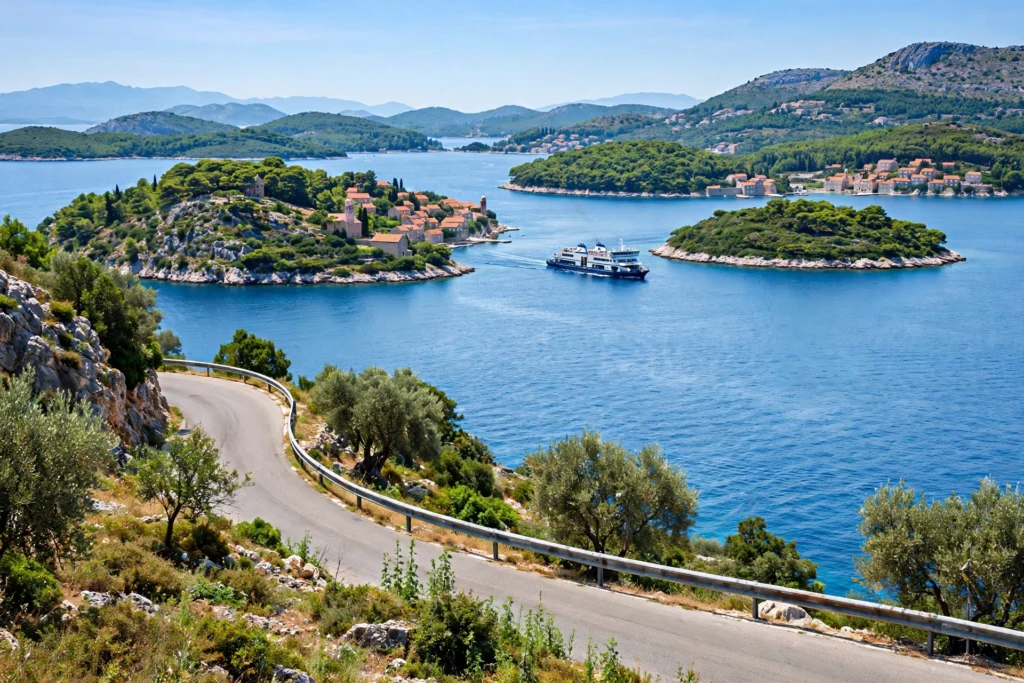
Croatia looks small on a map, and that is deceptive. The coast is long and winding, the islands require ferry time, and the drive from Zagreb to Dubrovnik is the best part of a full day even on the motorway. Trying to see everything in a week turns the trip into a driving tour with postcard stops. Giving yourself time turns it into a holiday.
As a rule of thumb, plan on the following:
- 3–4 days: one city properly. Dubrovnik plus a day trip, or Split plus one island, or Zagreb plus Istria’s edge — but not all three.
- 7 days: one coast base plus one island, or Zagreb and Istria, or Split, one island and a national park day. This is the minimum for a trip that does not feel rushed.
- 10 days: the sweet spot. Two or three bases, for example Zagreb and Istria, then Split and an island, then Dubrovnik — or Split, two islands and Dubrovnik with a Plitvice day built in.
- 14 days: the whole arc at a human pace: Zagreb, Istria, Zadar, Split and the islands, and Dubrovnik, with rest days and bad-weather slack built in.
If you are building your first trip, a ten-day shape works well: two nights in Zagreb, two in Istria or Zadar, three around Split and an island, and three in Dubrovnik, with travel days counted honestly. That is a real itinerary, not a checklist, and it leaves room for the unplanned swim, the long lunch and the town you decide to stay in for an extra night. For a general framework on shaping a trip day by day, see our Travel Itinerary Template, which walks through how to pace bases, travel days and rest days without overfilling the plan.
A common mistake is to add a new town every night. Croatia’s old towns reward evenings — the light, the cooler air, the locals reclaiming the squares after the day-trippers leave. Two nights in one place is almost always better than one night in two places, even if the second place looks tempting on the map. Stay put, walk further, eat better, and let the place reveal itself beyond its main street.
Dubrovnik: The Walled City
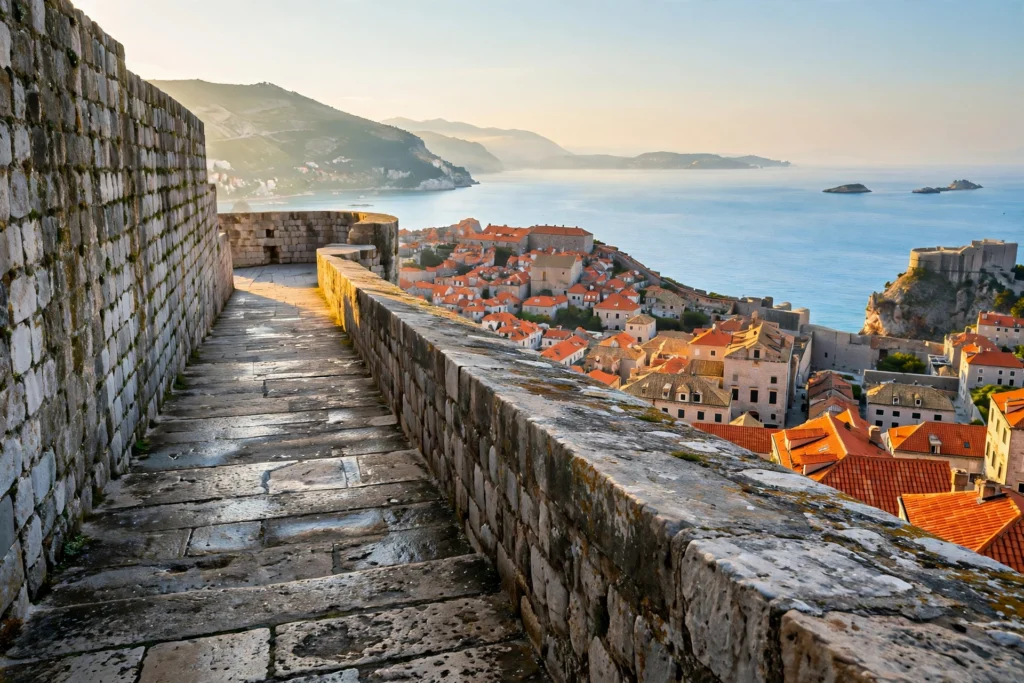
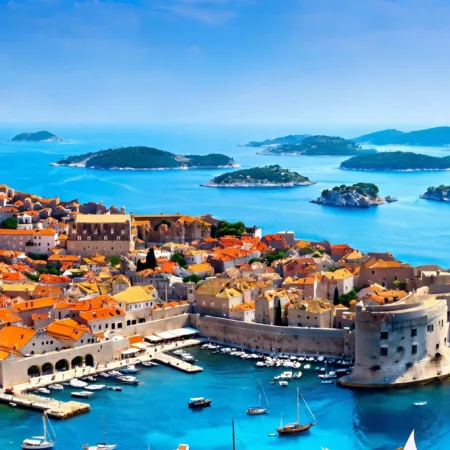
Dubrovnik is the city everyone has seen in photographs, and the photographs do not lie. The old town is a compact, walled, orange-roofed peninsula of limestone streets, and walking the full circuit of the walls gives you the single best view in Croatia. It is also the city where crowd management matters most, so this section is about seeing it well rather than just seeing it.
Start with the walls, and start early. The walls open in the morning, and the first hour is a different experience from midday. The light is softer, the stone is cooler underfoot, and you can actually stop to look without a queue forming behind you. Allow about two hours for the full circuit at a leisurely pace, with water in summer — there is little shade up there. Wear shoes with grip; the limestone is polished smooth by centuries of feet and can be slippery, especially after rain.
Cruise-ship days change the old town’s character more than any other single factor. On a day when several large ships are in port, the main street, Stradun, and the wall walk can feel packed by late morning. You cannot control the cruise calendar, but you can plan around it: do the walls at opening, save the side streets and the quieter harbour-side lanes for the middle of the day, and return to Stradun in the evening when the day visitors have gone and the town belongs to its residents and overnight guests again. If your dates are flexible, a night or two in Dubrovnik rather than a day trip from elsewhere transforms the experience completely.
Beyond the walls, do not miss the quieter corners. The old port, the Dominican and Franciscan monasteries, the small lanes climbing away from Stradun, and the walk out to Fort Lovrijenac all repay a slower pace. Take the cable car to Mount Srđ for the classic panorama, ideally at sunset, and consider a half-day trip to Lokrum island, a short ferry ride from the old port, for swimming and pine shade away from the town crowds. Cavtat, a pretty harbour town to the south, makes an easy, calmer alternative base if Dubrovnik’s old-town prices feel steep.
Dubrovnik old-town behaviour fines, in plain terms
Dubrovnik, like several Croatian towns, enforces rules about behaviour in the old town, and visitors are occasionally fined for things that feel harmless at home. In plain terms: do not walk around shirtless or in swimwear in the old town, do not eat or drink while walking along Stradun in a way that blocks the street, do not climb on monuments or sit on walls and fountains for photographs, and do not drag wheeled suitcases noisily through the old town at night if you can carry them. These are not traps designed to catch tourists; they are the town’s way of keeping a small, residential, UNESCO-listed centre liveable. Dress for a town, not a beach, when you are inside the walls, keep noise down late at night, and you will have no trouble.
Practically, Dubrovnik is best explored on foot, and you do not need a car inside the old town at all — in fact, you cannot drive into most of it. Stay inside or just outside the walls if your budget allows, or stay in Lapad or Gruž and take the bus in. Either way, plan your old-town sightseeing for the morning and your swimming and sunset for the afternoon, and Dubrovnik will feel like the city in the photographs rather than the queue in front of them.
Split and Diocletian’s Palace
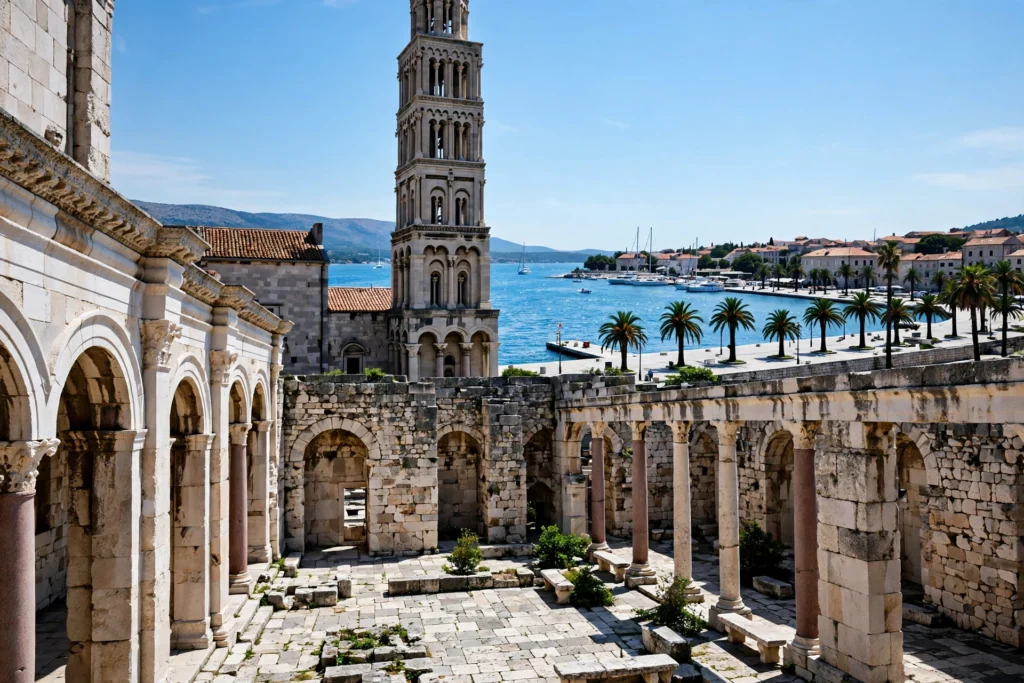
Split is Croatia’s second city and, for many travellers, its most enjoyable one. Where Dubrovnik is a beautifully preserved museum-town, Split is a living city built inside and around a Roman emperor’s retirement palace. Diocletian’s Palace is not a ruin you visit behind a rope; it is the old town itself, with shops, apartments, cafés and restaurants occupying Roman walls, cellars and courtyards. You walk through it to buy bread. That everyday aliveness is what makes Split special.
Start in the palace cellars and the Peristyle, the open courtyard at the palace’s heart, then climb the bell tower of St. Domnius Cathedral for the view over the red roofs and the harbour. The cathedral itself began life as Diocletian’s mausoleum, which is a neat summary of Split’s layered history. From there, wander the palace streets without a strict route — the joy of Split is in getting slightly lost among the stone lanes, stumbling on a tiny square, and finding a konoba for lunch away from the waterfront.
The Riva, Split’s palm-lined waterfront promenade, is the city’s living room. It is at its best in the early morning, when locals walk dogs and drink coffee, and again in the evening, when the whole city seems to come out for a stroll. Midday in high summer it is hot and crowded, so do what locals do: sightsee in the morning, swim or rest in the afternoon, and return to the Riva for the evening.
Split also makes the best base for the islands, which is covered in the next section, and it is a natural pairing with the national parks. Trogir, a small UNESCO-listed town a short bus ride away, is an easy half-day trip and a calmer alternative to Split’s busiest streets. If you have a spare afternoon, the climb up Marjan hill, the wooded peninsula at the city’s edge, gives you pine shade, sea views and swimming spots that most day visitors never find.
Stay in or near the old town if you can, but know that Split’s old town is compact and lively at night, so light sleepers may prefer a quieter street a few minutes’ walk away. Either way, Split rewards at least two nights: one day for the palace and the city, and one day for an island or a slower second look.
The Islands: Hvar, Brač, Vis and Korčula
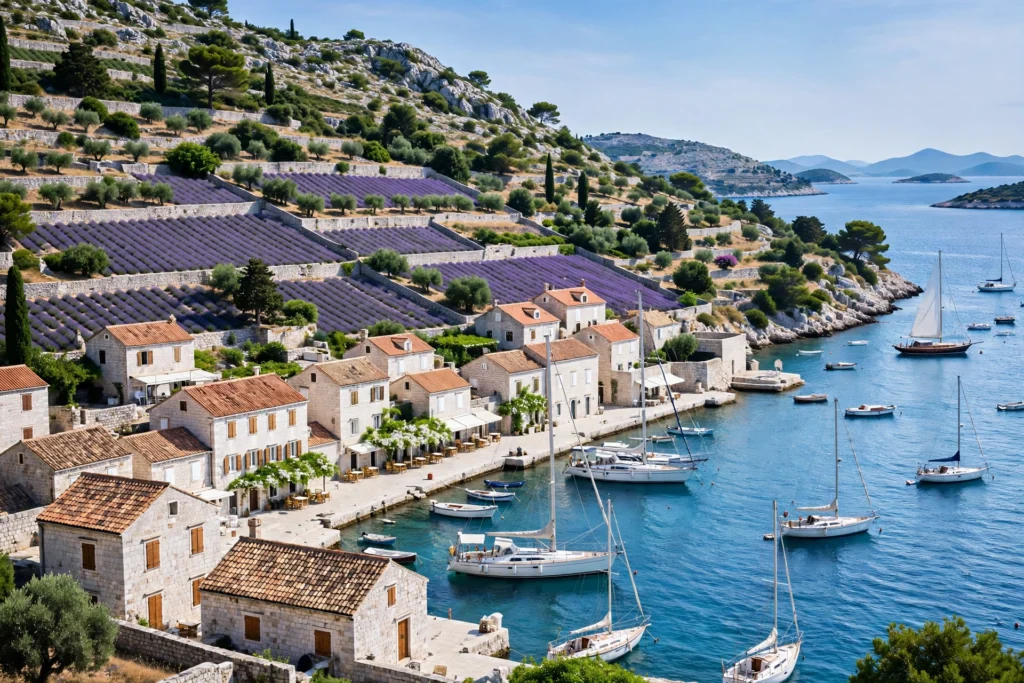
Croatia has more than a thousand islands, but most first-time visitors should focus on a handful of well-connected ones, and the four below are the ones you will choose between from Split. They are not interchangeable. Each suits a different kind of traveller, and picking the right one matters more than trying to visit all four in a rush.
| Island | Best for | Character | Ferry from Split (approx.) |
|---|---|---|---|
| Hvar | Nightlife, yacht scene, lavender fields, Stari Grad’s quiet side | The most famous, the busiest in Hvar town; quieter away from town | Catamaran to Hvar town, about 1 hour; car ferry to Stari Grad, about 2 hours |
| Brač | Beaches, especially Zlatni Rat near Bol; easy day trip or short stay | Accessible, family-friendly, good walking and cycling | Catamaran to Bol, about 1 hour; car ferry to Supetar, about 50 minutes |
| Vis | Quiet coves, slow days, military history, excellent food | The furthest, the calmest, the most “undiscovered” feeling | Catamaran, about 1 hour 20 minutes to 1 hour 40 minutes; car ferry about 2 hours 20 minutes |
| Korčula | Old town charm, wine, a Dubrovnik-like feel without Dubrovnik crowds | Elegant, walkable old town; good for a longer stay | Catamaran, about 2 hours 30 minutes to 3 hours, depending on route and stops |
Ferry times above are approximate and vary by operator, route and season — always check the timetable for your exact date before booking onward travel. The point of the table is the shape of the choice, not a minute-by-minute schedule.
How to choose
Choose Hvar if you want buzz, beautiful people, good restaurants and a town that stays up late — but stay in Stari Grad or Jelsa rather than Hvar town itself if you want sleep and lower prices, and visit Hvar town by day or for an evening out. Choose Brač if you want an easy, beach-focused trip, especially with children, or if you only have a day or two to spare from Split. Choose Vis if you want to slow down, swim in quiet coves, eat superbly and feel like you have escaped the main tourist route; Vis rewards at least two nights, because the journey itself is part of the pleasure. Choose Korčula if you love old towns and wine, want a Dubrovnik-like atmosphere at a gentler pace, or are travelling between Split and Dubrovnik and want a natural stopping point.
A practical note that applies to all four: you do not need to island-hop every day. Pick one island, stay two or three nights, and let the ferry timetable shape your days rather than fighting it. Day-tripping to an island from Split is possible, especially Brač, but it gives you the busiest hours and the least of the island’s evening magic.
Ferry logic: catamarans, car ferries and whether you need a car
This is where many Croatia trips go wrong, so it is worth getting clear. There are two main kinds of ferry. Fast catamarans carry foot passengers only — no cars — and are quicker, but they are more exposed to wind cancellations and they do not carry vehicles. Car ferries are slower, steadier in rough weather and carry cars, but they take longer and their car spaces, in particular, sell out in summer.
The main operator is Jadrolinija, Croatia’s state ferry company, which runs most of the major routes, alongside other operators such as Krilo and TP Line on some catamaran routes. In practice, you will book through the operator’s site or at the port, and you should check timetables for your exact date, because frequencies change with the season.
Three rules will save you trouble. First, book car-ferry places well ahead in July and August, especially for popular crossings such as Split to Stari Grad or Split to Supetar. Foot-passenger catamaran tickets are more flexible, but even those are worth booking ahead on summer weekends. Second, a car on an island is often unnecessary. Island towns are walkable, local buses, taxis, scooters and bike rentals cover most needs, and parking in small island towns in August is a headache you do not need. Bring a car to an island only if you are staying somewhere remote, travelling with a lot of luggage or small children, or planning to explore the island’s far corners daily. Third, allow buffer time. Ferries can be delayed by weather, especially the bora wind, and a missed connection to a flight is a miserable way to end a holiday. Never plan a same-day island-to-airport transfer with less than generous slack.
Plitvice Lakes and Krka National Parks
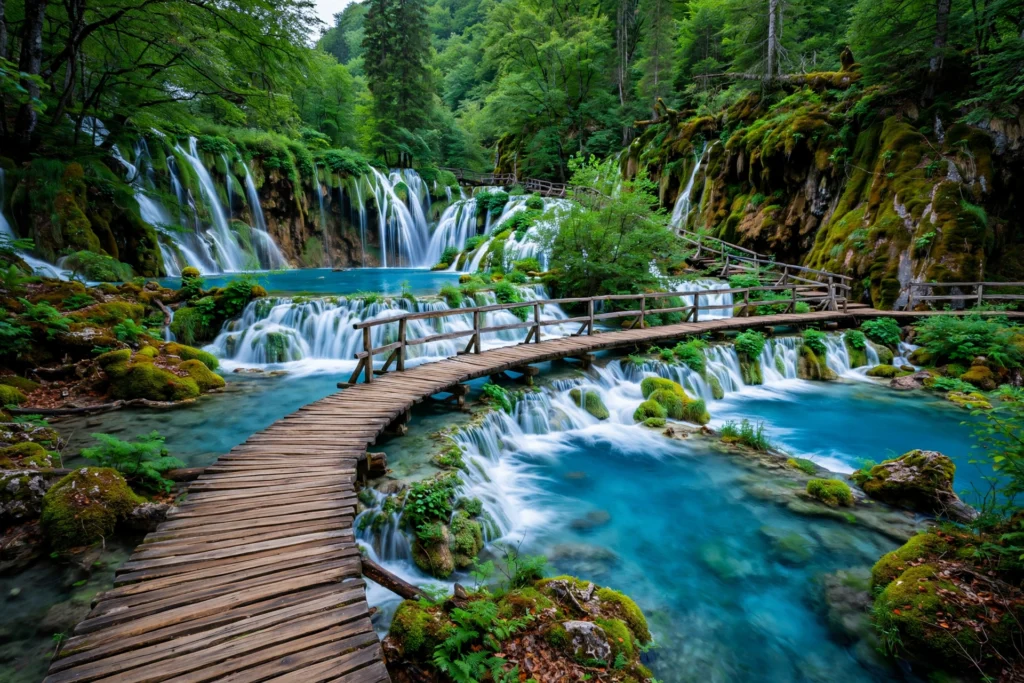
Croatia’s two most famous national parks are often mentioned in the same breath, but they are different experiences, and choosing well — or visiting both in the right way — is one of the best upgrades you can make to a Croatia trip.
Plitvice Lakes is the showstopper: sixteen terraced lakes connected by waterfalls, linked by wooden boardwalks, in a forested valley that looks almost unreal in photographs and, remarkably, lives up to them in person. It is also Croatia’s most visited natural attraction, and it is managed with timed-entry tickets for exactly that reason. You choose an entrance (Entrance 1 or Entrance 2) and a time slot, and you follow a suggested route. This is not a place to turn up at midday in August without a ticket and hope for the best.
Book your Plitvice tickets online in advance, especially from June to September, and choose the earliest slot you can manage. Early morning gives you quieter boardwalks, softer light and cooler walking, and you will be well into the park before the main coach groups arrive. Allow a full day if you are travelling from Zagreb, Split or Zadar, and at least four to five hours inside the park itself. Route choice matters: the longer routes (often labelled H and K in park materials) cover both the upper and lower lakes and take most of the day at a comfortable pace, while the shorter routes focus on the lower lakes and the big waterfall. If you have limited time or limited mobility, the shorter lower-lakes route still gives you the classic Plitvice experience without the full-day commitment. Wear proper walking shoes, bring water, and know that swimming is not allowed in the lakes — the boardwalks are for walking and looking, and the park protects its fragile travertine formations by keeping swimmers out.
Krka, near Šibenik, is the friendlier, more relaxed alternative. Its star is Skradinski Buk, a wide, multi-level waterfall with boardwalks and swimming areas nearby, and the park also includes the quieter Roški slap and the island monastery of Visovac, reached by boat. Krka is closer to Split than Plitvice, easier to combine with a coast day, and generally less overwhelming in scale. That makes it the better pick in several specific situations: if you are short on time, if you are travelling with children who want to swim, if you want a park day without a very early start and a long inland drive, or if Plitvice’s timed slots for your date are already sold out.
The comparison, in short, is this. Plitvice is the once-in-a-lifetime landscape, and if you have only one park day and can book ahead, it should be Plitvice. Krka is the easier, warmer, more swimmable day out, and if crowds, heat or a tight schedule make Plitvice feel like a chore, Krka will give you a better day. Both parks are at their best outside the midday peak, both require sturdy shoes and water, and both are far more enjoyable when you arrive early and leave before the afternoon crowds peak.
One more practical point: do not try to do Plitvice as a rushed stop between Zagreb and Split in a single day unless you have no alternative. It deserves a night nearby or a dedicated day trip with an early start. The drive, the park and the return in one day is doable, but it is a long day, and Plitvice at a run is not Plitvice at all.
Istria, Rovinj and Zadar
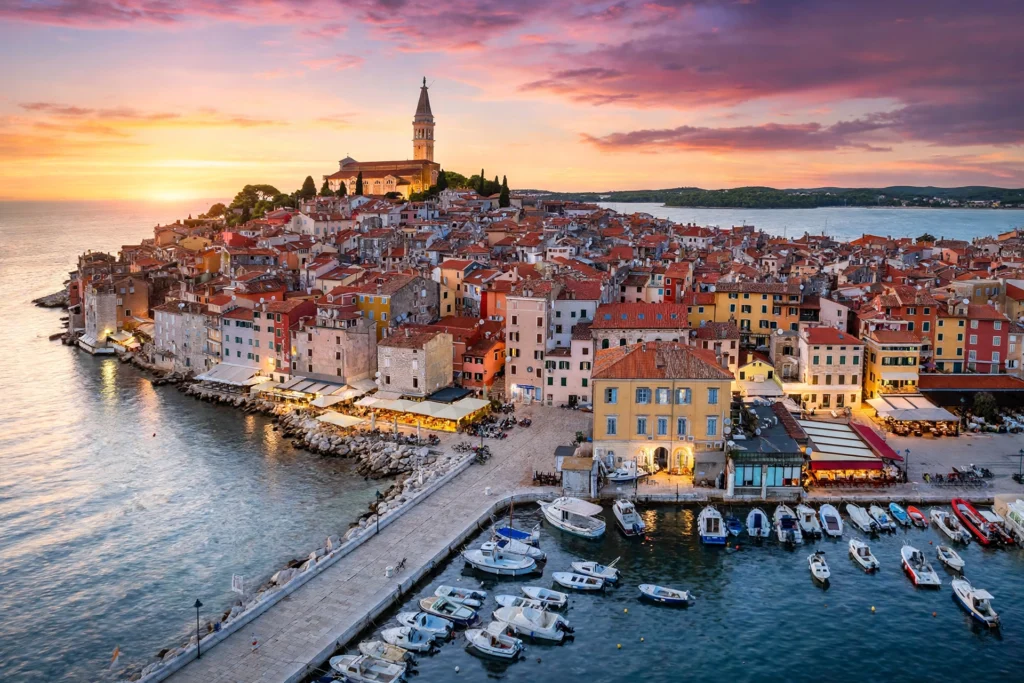
If Dubrovnik and Split are Croatia’s famous faces, Istria and Zadar are its crowd relief — the places that give you the same stone towns, sea and food, with more room to breathe. For travellers who find the Dalmatian peak season overwhelming, building Istria or Zadar into the trip is often the single best crowd-beating decision available.
Istria is the heart-shaped peninsula in Croatia’s north-west, closer to Venice than to Dubrovnik in spirit as well as geography. Its hilltop towns — Motovun, Grožnjan, Hum, said to be the smallest town in the world — sit among vineyards, olive groves and truffle forests, and its coast is lined with Venetian-influenced towns such as Rovinj and Poreč. Rovinj is the jewel: a pastel old town on a small peninsula, with a church tower visible from miles away, narrow lanes, and a harbour that is at its best in the early morning and at sunset. Stay in Rovinj or nearby, rent a bike for the coastal paths, and spend a day inland for wine tasting and truffle dishes. Istria is also Croatia’s best food region for many visitors, with olive oil, Malvazija white wine, Teran red wine and, in season, truffles taking centre stage.
Zadar, further south on the Dalmatian coast, is a different kind of relief. It is a proper working city with Roman ruins, medieval churches, a lively waterfront and two famous modern installations: the Sea Organ, stone steps that play music as the waves move through them, and the Greeting to the Sun, a solar-powered light installation on the quayside. Zadar’s sunset, famously praised by Alfred Hitchcock, is best watched from the waterfront with an ice cream in hand. Zadar is less polished than Dubrovnik and less famous than Split, and that is precisely its charm. It makes a superb base for day trips to Krka, to the Kornati islands by boat, or to Plitvice, and it is a natural stop on the drive between Istria and Split.
Together, Istria and Zadar solve a problem that a Dalmatia-only trip cannot. They give you old towns, islands, food and swimming without the peak-season pressure of the far south, and they are particularly good in May, June, September and October, when the weather is warm, the harvest is on in Istria, and the coast is quiet enough to enjoy at walking pace. If your trip is in July or August and you want one quieter stretch, make it here.
Zagreb: Don’t Skip the Capital
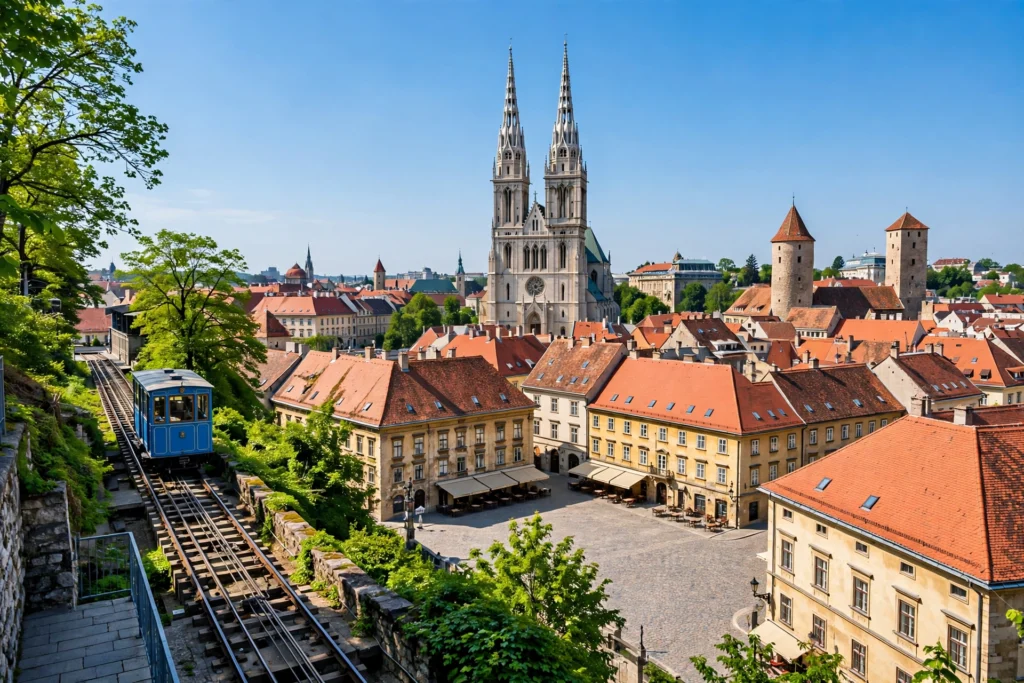
Zagreb is the place most Croatia itineraries skip, and that is a mistake. It is not a consolation prize for travellers who cannot get a coastal flight; it is a real European capital with a distinctive character, and it makes the best possible start to a Croatia trip. Fly into Zagreb, spend two nights, and you will understand the country in a way that a coast-only trip never quite delivers.
The city divides neatly into the Upper Town (Gornji Grad) and the Lower Town (Donji Grad). The Upper Town is the historic heart: St. Mark’s Square with its tiled roof, the Stone Gate, the Lotrščak Tower, and the funicular that connects the two levels. The Lower Town is the elegant, Habsburg-influenced grid of squares, parks and cafés, best explored on foot with frequent coffee stops — Zagreb takes its coffee culture seriously, and sitting in a café watching the city go by is a legitimate sightseeing activity here.
Zagreb is also the practical capital of the trip. It has the best flight connections for many US travellers, the best train and bus links, and it is the natural base for a Plitvice day trip. Its museums are excellent and often overlooked: the Museum of Broken Relationships is small, moving and unlike anything else in Europe, and the city has strong art, history and archaeology collections for those who want them. In December, Zagreb’s Advent markets are among the best in Europe, and a winter city break here — combined with a quiet coast walk — is a genuinely good trip, not a fallback.
Do not skip Zagreb because it is not on the sea. The sea will still be there in a few days, and you will arrive at it with a fuller sense of Croatia — its inland landscapes, its café culture, its history beyond the coast — than travellers who fly straight to Split and never look back. Two nights is enough for a first visit; three gives you time for a day trip or a slower pace.
Getting Around Croatia
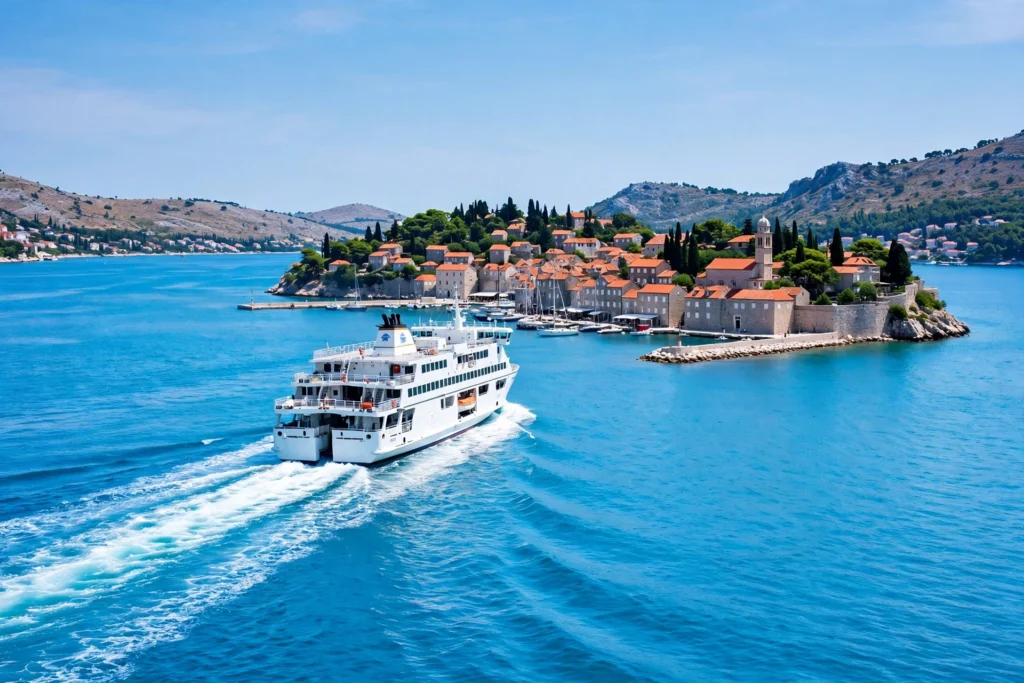
Croatia is easy to travel in, provided you match the transport to the leg of the journey. The country has good motorways, a reliable bus network, domestic flights for the longest hops, and the ferries covered above. The mistake is to use one mode for everything.
Driving is the most flexible option for the mainland, especially for Istria, the Plitvice area and the coast between Zadar and Split. The motorways are modern and well-maintained, and the drive from Zagreb to Split, or Split to Dubrovnik, is scenic and straightforward. You will pay tolls on the motorways — the Zagreb to Split route, for example, carries a meaningful toll, so budget for it and keep cash or a card ready at toll booths. Driving in old towns is a different matter: most old towns are pedestrianised or heavily restricted, parking is scarce and expensive, and the best approach is to park outside the old town and walk in. Book accommodation with parking if you are driving, and check in advance whether your hotel’s parking is actually inside the old town or a walk away.
The bora wind deserves its own warning. The bora is a strong, gusty north-easterly wind that can hit the coast, the islands and the bridges — most famously the bridge to Krk and the coastal road near Senj — with little warning. It can close bridges to high vehicles, delay ferries and make driving unpleasant, especially for campervans and high-sided vehicles. Check forecasts before a coastal drive in winter and early spring, when the bora is strongest, heed road closures, and do not try to push through a closed bridge. In summer the bora is less frequent, but it can still appear, and ferry cancellations in windy weather are a normal part of island travel, not a sign of a problem with your plan.
Buses are the budget traveller’s best friend in Croatia. The intercity bus network is extensive, comfortable and cheap by US standards, and it serves towns and islands that trains do not reach. Trains are limited — the main useful route is Zagreb to Split, an attractive but slow journey — and for most coastal travel, buses and ferries are faster and more frequent. Domestic flights connect Zagreb with Split and Dubrovnik and can save a long drive if you are short on time, but they add airport time and cost, so they are best for the longest hops only.
For a coast-and-islands trip, the winning combination is usually this: fly into Zagreb or Split, use buses and ferries for the coastal and island legs, and rent a car only for the days you actually need it — for Istria’s hill towns, for Plitvice, or for a rural stretch. Renting a car for the whole trip and then paying to park it while you island-hop is a waste of money. Rent it, use it, return it, and take the ferry as a foot passenger.
Where to Stay in Croatia
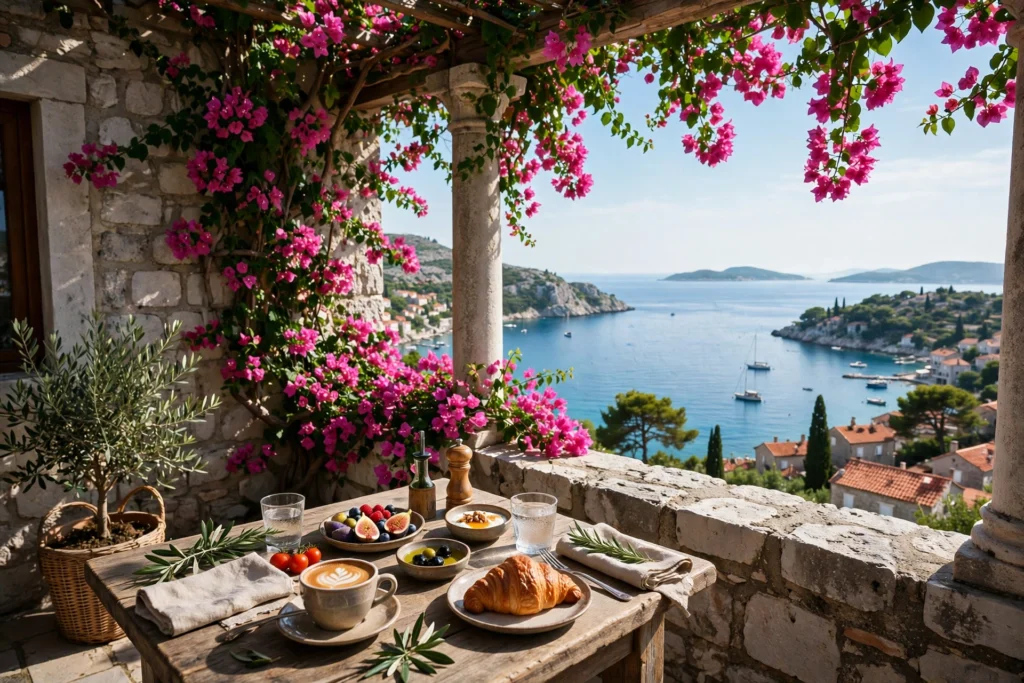
Where you stay matters more in Croatia than in many destinations, because the difference between staying inside an old town and staying a bus ride away is the difference between experiencing a place in the evening and only seeing it at midday. If your budget allows, staying inside or just outside the old town in Dubrovnik, Split, Rovinj or Korčula is worth it for at least part of the trip.
In Dubrovnik, old-town stays put you inside the walls for the quiet mornings and evenings, but they come with steps, noise and higher prices. Lapad and Gruž, a short bus ride away, offer calmer, more residential stays with good swimming, and they suit families and longer stays. In Split, the old town is lively and central, but light sleepers should ask for a quiet room or choose a street a few minutes away. In Istria, consider a rural agritourism stay or a small hotel in a hill town for a night or two — the inland experience is a different Croatia from the coast, and it is worth sleeping there to feel it.
Apartments are a major part of Croatian accommodation, and they are often excellent value, especially for families and longer stays. Book through reputable platforms, read recent reviews, and check the practical details: is there air conditioning for summer, is parking included, how many steps to the apartment, and is the check-in process clear? In peak season, book well ahead for Dubrovnik, Hvar town and Split old town, and expect prices to rise sharply in July and August.
A few practical habits help everywhere. Confirm check-in times, especially for island apartments where the host may meet you at the ferry. Ask about luggage storage if you arrive before check-in. And if you are staying in an old town, pack a bag you can carry up steps — wheeled suitcases and steep stone lanes are not friends, and Dubrovnik’s rules about noisy suitcases at night are a reminder that old towns are residential neighbourhoods first and tourist attractions second.
What to Eat in Croatia
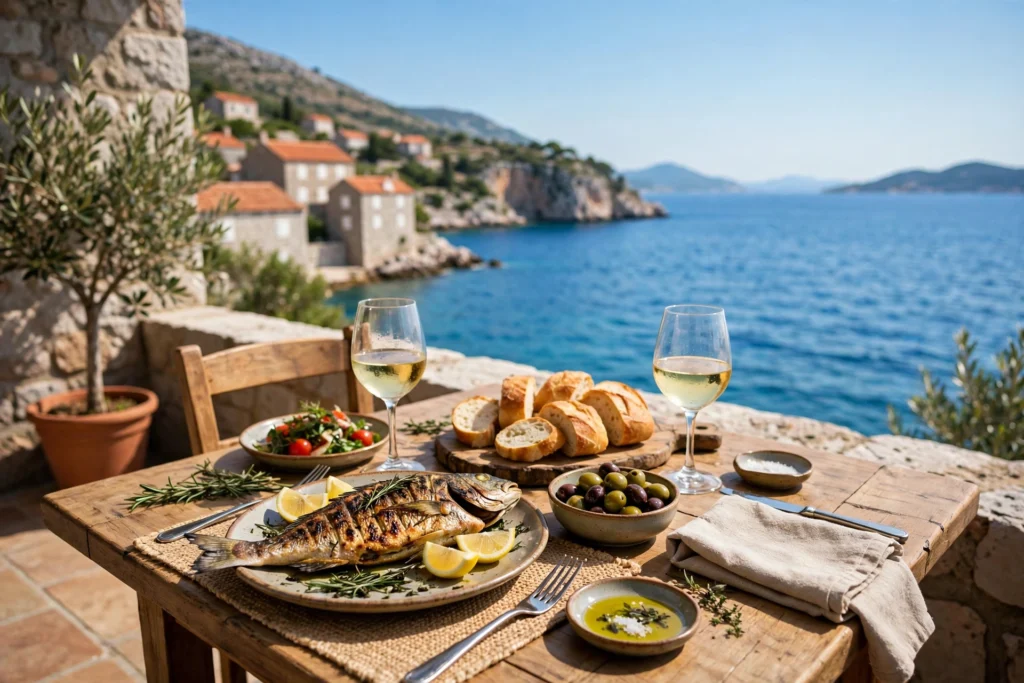
Croatian food is Mediterranean, seasonal and regional, and it is one of the trip’s great pleasures. The coast leans on seafood, olive oil, grilled fish and shellfish, while the inland regions lean on grilled meats, stews and hearty, Central European-influenced dishes. Istria adds truffles, olive oil and wine to the mix. You do not need a food tour to eat well; you need to know a few basics and to eat where locals eat.
Start with the konoba, the traditional tavern, which is Croatia’s equivalent of a bistro. A good konoba serves simple, well-cooked food: grilled fish, peka (meat or octopus slow-cooked under a bell-shaped lid), black risotto made with cuttlefish ink, and seasonal salads. Order the catch of the day if it is offered, ask what is local and in season, and do not be put off by a menu that is short — a short menu in a konoba usually means the kitchen cooks what it bought that morning.
On the coast, try buzara (shellfish in a wine, garlic and parsley sauce), grilled squid, and the Dalmatian speciality of pašticada, a slow-cooked beef dish. In Istria, try fuži or pljukanci pasta with truffles, and Malvazija wine. In Zagreb, try štrukli, a baked cheese pastry, and the city’s excellent coffee culture. For dessert, look for rožata, a Dalmatian custard pudding, and fritule, small doughnuts sold at markets and festivals.
Practical eating tips: lunch is often the best-value meal, with many restaurants offering a daily menu; dinner is later than in the US, especially in summer, when locals eat at 8 p.m. or later; tap water is generally safe to drink; and tipping is appreciated but not as structured as in the US — rounding up or leaving around 10 percent for good service is a reasonable guide. If you have dietary requirements, learn a few Croatian phrases for them, and tell the restaurant when you order — most kitchens are happy to help, but they need to know.
What a Croatia Trip Costs
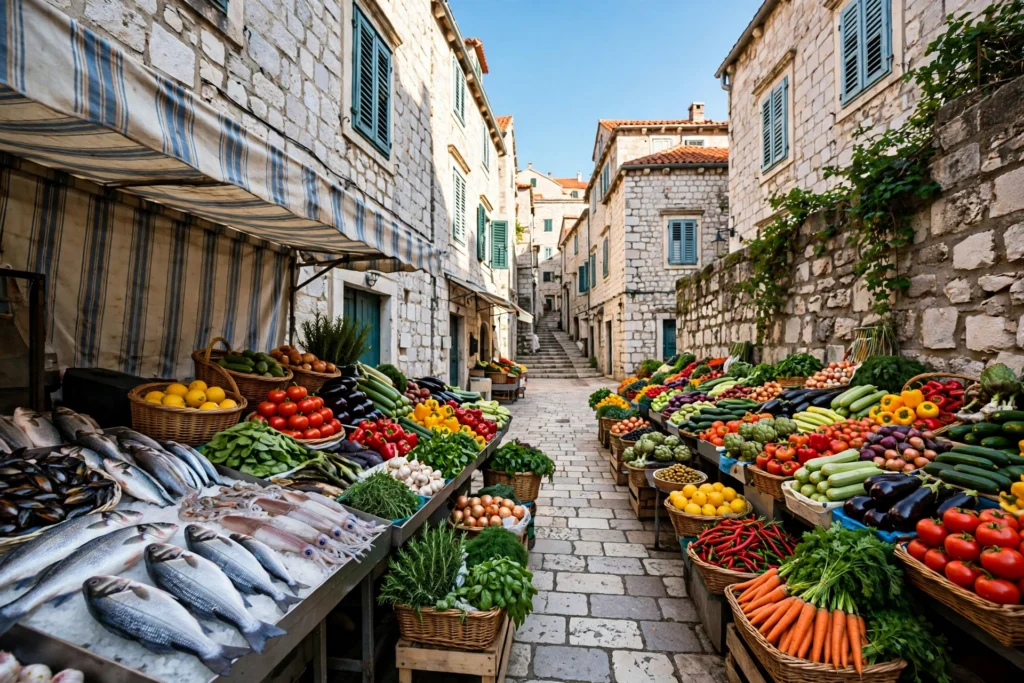
Croatia is no longer the bargain it was a decade ago, especially in Dubrovnik and Hvar town in peak season, but it is still good value compared with Western Europe, and shoulder-season travel brings prices down noticeably. The table below gives realistic daily ranges in euros for a couple travelling together, excluding international flights. These are planning ranges, not guarantees — prices vary by town, season and style — and they are intended to help you budget, not to promise a specific hotel or restaurant price.
| Daily cost per person (approx.) | Budget | Mid-range |
|---|---|---|
| Accommodation (shoulder season) | €40–€70 | €90–€150 |
| Accommodation (peak season, July–August) | €60–€100 | €130–€220 |
| Food and drink | €25–€45 | €50–€90 |
| Local transport, ferries and activities | €15–€30 | €30–€60 |
| Total per day (shoulder) | €80–€145 | €170–€300 |
| Total per day (peak) | €100–€175 | €210–€370 |
A sample ten-day mid-range trip for two people, excluding international flights, might look like this: accommodation around €1,400–€2,200 for ten nights in shoulder season (more in peak), food around €1,000–€1,800 for two people, ferries, buses, park tickets and activities around €600–€1,200, and a rental car for part of the trip around €300–€600 including fuel and tolls. That puts a ten-day shoulder-season trip at roughly €3,300–€5,800 for two people, excluding flights, with peak-season costs running higher, especially for Dubrovnik and island accommodation. Budget travellers staying in hostels and apartments, cooking some meals and travelling by bus and ferry can come in well below that; luxury travellers in Dubrovnik old town in August can exceed it comfortably.
For a structured way to build and track a trip budget before you go, our guide on How to Prepare a Travel Budget walks through the same categories — accommodation, food, transport and activities — with a contingency approach that works well for a multi-base Croatia trip. The key habit is the same here as there: budget by base, not by day alone, because a Dubrovnik day and an Istrian village day do not cost the same, and a single daily average hides that difference.
Money itself is straightforward. Croatia adopted the euro in January 2023, so you will pay in euros throughout the country. Cards are widely accepted in hotels, restaurants and larger shops, but carry some cash for small konobas, market stalls, bus tickets and island cafés. ATMs are plentiful in towns, but avoid standalone ATMs with high fees in tourist areas and use bank ATMs where possible. Tipping, as noted above, is modest and appreciated rather than obligatory.
Safety and Practical Tips for Croatia
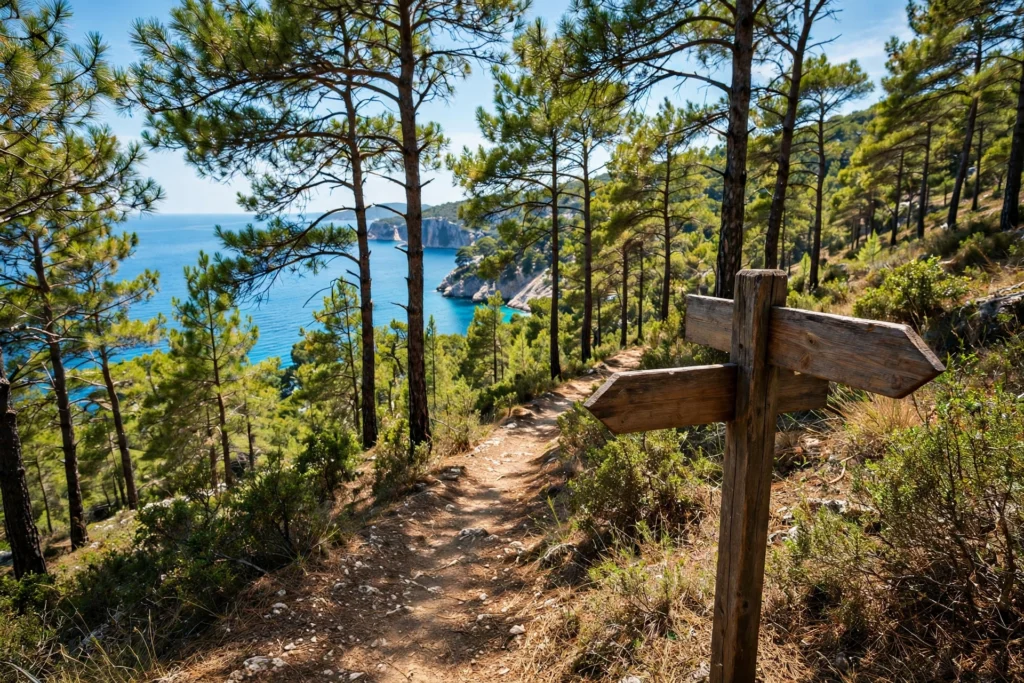
Croatia is a safe destination for most travellers, and the official picture reflects that. The US State Department’s Croatia advisory is currently Level 1: Exercise Normal Precautions, which is the lowest advisory level. That does not mean you can switch off common sense — pickpocketing happens in crowded old towns and on busy buses in peak season, as it does in any popular European destination — but it does mean Croatia is not a destination where you need to worry about violent crime or civil unrest as a routine concern. Check the current US State Department Croatia advisory before you travel, as advisories can change.
There is one specific safety issue that deserves clear, calm attention, because it is unusual and because the advice is simple. Parts of Croatia still contain landmines left from the 1990s war, and demining of areas along former confrontation lines continues. The rule for travellers is straightforward: stay on marked paths, roads and maintained trails, do not wander into unmarked fields, forests or abandoned buildings in former conflict areas, and heed the skull-and-crossbones warning signs where they appear. Tourist towns, beaches, national parks and marked hiking routes are cleared and safe. Demining work has been ongoing for years, but the practical advice does not change: if you are hiking or exploring in a former conflict area, stick to the marked route and to paved roads. For most visitors, who stay on the coast, in towns and in national parks, this will never be an issue, but it is worth knowing rather than discovering by accident.
Entry, money and health basics for US citizens
Croatia is a member of the European Union and the Schengen Area, and it uses the euro. US citizens can visit visa-free for up to 90 days in any 180-day period within Schengen, which covers a normal holiday comfortably. Two newer border systems are worth knowing about. The Entry/Exit System (EES), which records fingerprints and a photograph on first entry, has been reported as live since April 2026, so expect a slightly longer first border crossing and have your passport ready. The European Travel Information and Authorisation System (ETIAS), a pre-travel authorisation for visa-exempt visitors, has been due to come into force in late 2026. At the time of writing, you should check whether ETIAS is in force for your travel dates before you go, rather than assuming it is already mandatory or that it will never apply to you. Official sources, including the official Croatia tourism site, and the State Department advisory linked above are the places to confirm the current position, because border systems and start dates do change.
Health-wise, Croatia has good medical facilities in major towns, and travel insurance that covers medical evacuation is strongly recommended, as it is for any trip outside the US. Pharmacies (ljekarna) are well-stocked and pharmacists can help with minor issues. In summer, the practical health risks are sun, heat and dehydration — carry water, wear a hat, and do not underestimate the strength of the Adriatic sun on a boat or a wall walk. Tap water is safe to drink in most places, and the emergency number across the EU is 112.
A final practical tip: learn a few Croatian words. “Dobar dan” (good day), “hvala” (thank you) and “molim” (please) go a long way, especially outside the main tourist towns. Croatians are warm hosts, English is widely spoken in tourist areas, and a little effort with the language is noticed and appreciated. It is also the fastest way to get a better table, a better recommendation and a better story to take home.
Frequently Asked Questions
Is Croatia expensive for US travellers?
Croatia is mid-priced by European standards. It is cheaper than France or Italy for a comparable trip, but Dubrovnik and Hvar town in July and August are expensive by Croatian standards. Shoulder-season travel, apartments, konobas and bus-and-ferry transport keep costs down significantly, as the cost table above shows.
How many days do you need in Croatia?
Seven days is the minimum for a trip that does not feel rushed, ten days is the sweet spot for a first visit covering two or three bases, and fourteen days allows the full Zagreb to Dubrovnik arc at a comfortable pace. For more on pacing a multi-base trip, see our Travel Itinerary Template.
Is Croatia safe for tourists?
Yes, for most visitors. The US advisory is Level 1 overall, “Exercise Normal Precautions”. Landmines from the 1990s war remain in some former conflict areas, so stay on marked paths and heed warning signs there. Normal precautions against pickpocketing in crowded areas apply, as in any popular destination.
Do US citizens need a visa for Croatia?
No, for tourist visits up to 90 days in any 180-day period within Schengen. Check whether ETIAS authorisation is in force for your dates before travel, and expect EES fingerprint and photo recording on first entry.
What is the best month to visit Croatia?
September is the best all-round month for most travellers: warm sea, thinning crowds and full ferry timetables. June is the other sweet spot. July and August are best for guaranteed beach weather, but they bring peak crowds and prices.
Should I rent a car in Croatia?
Rent a car for mainland and rural legs such as Istria and Plitvice, but not necessarily for the whole trip. Old towns are pedestrianised, island parking is difficult in summer, and buses and ferries cover the coast and islands well. A car on an island is often unnecessary.
Conclusion
Croatia does not need to be conquered. It needs to be given time, and it repays that time generously. A trip that pairs a famous place with a quieter one, that travels in September or June rather than fighting August, that walks the walls at opening time and swims in the late afternoon, and that leaves the car behind on the islands will feel less like a tour and more like a holiday — which is, after all, the point.
Start in Zagreb if you can, give Istria and Zadar their due, choose your island with intention rather than by fame alone, book Plitvice early, and let Dubrovnik surprise you in the morning rather than overwhelm you at midday. Do that, and you will understand why so many travellers return to Croatia, and why so many of them, on their second trip, go straight back to the quieter places they found the first time.
If you are still shaping the overall shape of your trip, our Iceland Travel Itinerary shows how a different kind of island-and-coast journey can be paced, and our Ecuador Travel Guide offers a contrasting long-haul planning example — both useful if you are weighing Croatia against another big trip this year. For winter-trip ideas, see Best Places to Travel in January.
People also read: