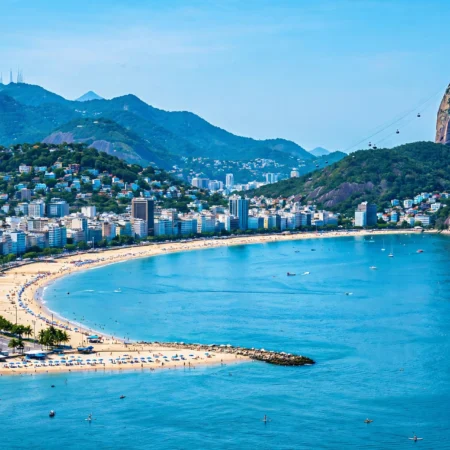
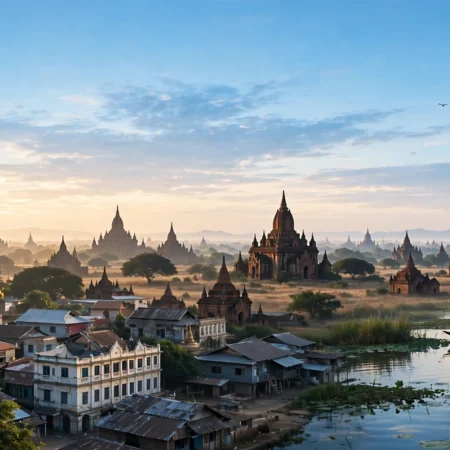
Myanmar — still called Burma in official travel advisories — is one of the most beautiful and most complicated destinations in Asia. It holds the golden dome of the Shwedagon Pagoda in Yangon, more than 3,500 ancient temples across the plain of Bagan, the wooden U Bein Bridge glowing at sunset in Mandalay, and the floating gardens and leg rowers of Inle Lake. It also holds, in 2026, a civil conflict running since a military coup in February 2021, a Level 4 “Do Not Travel” advisory from the United States government, and a March 2025 earthquake that damaged cities in the centre of the country. This Myanmar travel guide does not pretend those two realities can be separated. It starts with the advisory in plain language, explains which parts of the country are off-limits and which small circuit travellers still visit, and walks through the eVisa, the earthquake recovery, the best months, the transport, the four stops on the circuit and the costs — honestly, about what is not safe, what is not known, and what to check again before spending money. Myanmar in 2026 is not a normal holiday destination, and this is not a normal holiday guide.
Quick answer: Myanmar is technically open to tourists — the eVisa system is running and flights land in Yangon and Mandalay — but the US State Department rates the whole country Level 4 Do Not Travel (issued 8 May 2026), the UK advises against all travel to large parts of it, and Canada advises avoiding all travel. The only places most travellers consider are the calmer Yangon–Bagan–Mandalay–Inle Lake circuit, reached by domestic flight, and even there conditions can change at short notice. You need a tourist eVisa before you travel (28 days, single entry), a passport valid for at least six months, a printed approval letter, insurance that explicitly covers Myanmar, and cash in clean US dollars, because the economy is almost entirely cash-based. Do not travel to restricted states or regions, do not photograph military or checkpoints, do not use a drone, and do not criticise the regime on social media. Read the advisory chapter below first, then decide.
Read This First: The Myanmar Travel Advisory in Plain Language
Every Myanmar travel guide written in 2026 has to begin in the same place: the official travel advice. Not because the country has nothing beautiful in it — it has some of the most beautiful places in Asia — but because the advice changes what a trip to Myanmar actually is. This is not a destination where the advisory is a footnote about pickpockets. It is a country in armed conflict, and the governments that issue travel advice say so in the strongest terms they have.
The United States Department of State rates Burma (Myanmar) at Level 4: Do Not Travel, the highest level in its system, issued on 8 May 2026. The reasons given are civil unrest, armed conflict, arbitrary enforcement of local laws, landmines, poor healthcare and wrongful detention. Read the full US State Department travel advisory for Burma before you go any further with planning, and check it again close to any departure date, because the situation can change at any time. Here is what the advisory actually says, in plain language.
First, the conflict. The Burmese military regime deposed the elected leaders in a coup in February 2021, and armed conflict has continued since then across much of the country. The advisory states that armed conflicts occur throughout Burma, that civil unrest is common, and that the amount of fighting varies and can change at any time. Opposition militia groups operate throughout the country and often attack facilities linked to the regime’s security forces, including in Rangoon (Yangon). The regime may limit access to highways and airports, which can leave travellers isolated.
Second, explosives. Improvised explosive devices (IEDs) are used in the ongoing conflicts, including inside the municipal area of Rangoon itself — the US Embassy in Rangoon calculated an average of 6 explosions per month from January to December 2025. Outside Rangoon, IED attacks have hit checkpoints and military, administrative and police facilities. Landmines and unexploded ordnance exist throughout Burma, and their locations are often not marked and not easy to recognise. The practical rule: never walk off marked paths, never explore ruins, fields or riverbanks on your own, and never pick up unfamiliar objects.
Third, the law. The advisory says the military regime will often arbitrarily enforce local laws, including detaining people without fair treatment or a transparent legal process, and that this affects Burmese citizens and foreigners alike, including Americans. Americans travelling or living in Burma may be detained, and regime authorities may deny a prisoner access to US consular services or information about the alleged crime. Prisoners do not have regular access to legal counsel. Local law enforcement may also detain or deport Americans for speaking out or demonstrating against the military regime, including on personal social media accounts and for sending private electronic messages critical of the regime — regardless of whether they were physically in Burma when they posted. That last point matters more than most travellers realise: what you post online about Myanmar can have consequences inside Myanmar, even if you posted it from home.
Fourth, conscription. As of April 2024, the military regime has implemented a military conscription law, applying to males up to age 45 and females up to age 35, and the regime might prevent people it views as eligible from leaving the country — including Burmese-born Americans. If you are a dual national, or were born in Burma, take specialist advice before travelling.
Fifth, health and crime. Burma has limited or inadequate healthcare and emergency medical resources, and the advisory tells travellers to make sure they have medical or travel insurance that includes medical evacuation. Violent crime against foreigners is rare, but there have been incidents of muggings and attacks by taxi drivers, so be careful taking taxis late at night. Foreign nationals, including Americans, have been trafficked into Burma and forced to work in internet scam centres, often in active conflict zones along the eastern borders, after responding to job adverts promising work in Thailand. Do not accept any job offer that involves crossing into Myanmar from Thailand.
The United Kingdom’s advice points in the same direction, with more geographic detail. The Foreign, Commonwealth and Development Office (FCDO) updated its Myanmar travel advice on 4 August 2026: against all travel to Chin, Kachin, Kayah, Kayin, Mon and Rakhine states, Sagaing and Magway regions, Tanintharyi Region (excluding Myeik township and the archipelago and townships south of Tanintharyi township), Shan State North, North Mandalay Region (the townships north of Mandalay City and Pyin Oo Lwin), and the area east of the Yangon–Mandalay Expressway in Bago region; against all but essential travel to Shan State South and East, Mandalay Region, Tanintharyi south of Tanintharyi township, the rest of Bago region, and the townships of Kyangin, Myanaung, Ingapu, Lemyethna, Yegyi, Thabaung and Pathein in Ayeyarwady region. The FCDO also warns that the conflict is increasingly volatile, the situation may deteriorate at short notice, and your travel insurance could be invalidated if you travel against FCDO advice. Canada’s advice, updated 15 October 2026, is simpler still: avoid all travel to Myanmar.
Is Myanmar Open to Tourists in 2026?
Yes, in the narrow sense that matters for planning: Myanmar is open to tourists in 2026. The tourist eVisa system is operating, international flights land at Yangon International Airport and Mandalay International Airport, domestic flights connect the main tourist towns, and registered hotels in Yangon, Bagan, Mandalay and the Inle Lake area are accepting foreign guests. Nobody is turned away at the border simply for being a tourist, and the temples, pagodas and lakes that draw visitors are open. That is the sense in which the country is “open”, and it is the sense the top travel guides use when they describe Myanmar in 2026.
But “open” is doing a lot of work in that sentence, and it needs to be qualified three ways. The first qualification is the advisory itself. A country can be open to tourists and still carry a Level 4 Do Not Travel rating, because the rating describes the risk, not the border. The United States, the United Kingdom and Canada all advise against travelling there, and that advice has real consequences: many travel insurance policies exclude Level 4 destinations entirely, and if you need consular help, the US Embassy in Rangoon has limited ability to travel within the country and reach you. “Open” does not mean “safe”, and it does not mean “recommended”.
The second qualification is geography. Myanmar is open in some places and effectively closed in others, and the line between them is not marked on the ground. The tourist circuit — Yangon, Bagan, Mandalay and Inle Lake — sits in the central dry zone and the Shan hills, where the fighting is less intense than in the border states. But the fighting moves: checkpoints appear and disappear, roads close, and a town that was calm last month can become a place you should not be in this month. Plan a flexible itinerary with spare days and an exit plan, not a fixed schedule with non-refundable bookings stacked end to end.
The third qualification is infrastructure. Visitor numbers are far below what they were before the coup, and the tourist industry has shrunk with them: some hotels, restaurants and tour operators have closed, and services that ran daily now run a few times a week. Confirm every booking directly, close to the date, and treat the prices and schedules in this guide as planning ranges to be checked locally, because conditions on the ground change faster than any guide can be updated.
Where You Can and Cannot Go: Off-Limits Regions vs the Tourist Kite
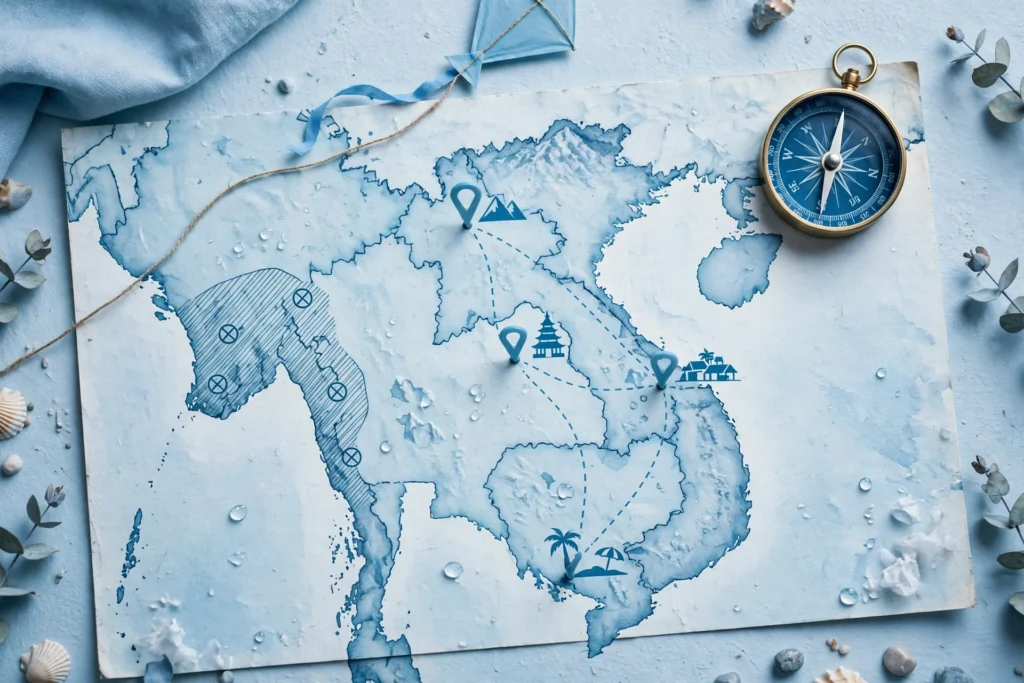
The most useful map for Myanmar in 2026 is not a map of temples. It is a map of where you should not go. Travellers and guides call the remaining route the “tourist kite”: four points — Yangon in the south, Bagan in the central dry zone, Mandalay further north, and Inle Lake to the east in the Shan hills — joined by short domestic flights, like the four corners of a kite. Everything inside that shape, travelled by air and on the main roads between those towns, is where visitors go. Everything outside it is, for practical purposes, out of bounds.
The table below is built from the UK FCDO advice updated 4 August 2026, which is the most geographically detailed of the three advisories, and it is the table to check before you plan anything. “Against all travel” means exactly what it says: do not go there, and your insurance will almost certainly be invalid if you do. “Against all but essential travel” means the FCDO considers the risk high enough that a holiday does not justify it — and again, insurance is likely to be affected. The tourist kite itself sits inside the “all but essential” areas in places (Mandalay Region is on that list), which is itself a warning: even the calmest part of Myanmar is not treated as safe for ordinary travel.
| Area | FCDO advice (4 Aug 2026) | What it means for a traveller |
|---|---|---|
| Chin, Kachin, Kayah, Kayin, Mon, Rakhine states | Against all travel | Do not go. No holiday, no detour, no day trip. |
| Sagaing and Magway regions | Against all travel | Do not go. Sagaing was also at the centre of the March 2025 earthquake damage. |
| Tanintharyi Region (except Myeik township and the archipelago/townships south of Tanintharyi township) | Against all travel | Do not go. The far south coast, including the Myeik Archipelago, is effectively off-limits. |
| Shan State North | Against all travel | Do not go. The northern Shan hills and the road to China are not for tourists. |
| North Mandalay Region (townships north of Mandalay City and Pyin Oo Lwin) | Against all travel | Do not go north of Mandalay City or Pyin Oo Lwin. |
| East of the Yangon–Mandalay Expressway in Bago region | Against all travel | Do not cross east of the expressway in Bago. |
| Shan State South and East (incl. Inle Lake area) | Against all but essential travel | Inle Lake sits here. Travellers still go, but the advice is that a holiday is not essential travel. |
| Mandalay Region | Against all but essential travel | Mandalay City and Bagan’s region sit here. Same warning. |
| Rest of Bago region; Tanintharyi south of Tanintharyi township | Against all but essential travel | Do not plan a route through these areas. |
| Kyangin, Myanaung, Ingapu, Lemyethna, Yegyi, Thabaung, Pathein townships (Ayeyarwady) | Against all but essential travel | The delta coast beaches (Chaung Tha, Ngwe Saung) sit in this region — see the coast section. |
| Yangon Region; Bagan (Mandalay Region) | Not on either FCDO list | The calmest ground — but still inside a Level 4 country. Stay alert. |
A few things about this map are worth spelling out. First, the famous places missing from the tourist kite are missing for a reason. Ngapali Beach is in Rakhine State, which is against all travel — the honest answer, covered in the coast section below, is to skip it in 2026. The far south, the Myeik Archipelago, the northern Shan hills, the Kachin jade country, the Chin hills, the Golden Rock at Kyaiktiyo in Mon State — all are in against-all-travel areas, and none belongs in a 2026 itinerary. If a blog or an old guidebook tells you to go to any of them, that advice is out of date, and following it would put you in an active conflict zone without valid insurance.
Second, the kite itself is not a guarantee of safety — only a description of where the fighting is least intense and tourist infrastructure still functions. The US advisory is explicit that armed conflicts occur throughout Burma, and it records IED attacks inside Rangoon itself. Fly between the four points rather than driving long distances overland: the roads pass through checkpoints and can be closed with no notice. If a road is closed, do not try to find another way around it — wait, reroute by air, or cut that stop.
Third, the rules for moving around are not the same as in other Southeast Asian countries. Foreigners must stay in registered hotels only, and you should carry your passport (or a copy of the photo page and visa) at all times. Expect checkpoints on roads and at town entrances — be polite, be patient, and do not argue. Do not photograph checkpoints, soldiers, police, military vehicles or government buildings, and do not use a drone at all. Do not photograph local people without asking. The same caution applies online: the advisory warns that people have been detained or deported for social media posts critical of the regime, including posts made while outside the country.
Myanmar Visa and Entry: The eVisa in 6 Steps
Myanmar’s entry system is, by the standards of the rest of this guide, straightforward. There is no visa on arrival for most nationalities, and you cannot sort out entry at the airport. You apply online before you travel, through the official eVisa portal, and you arrive with a printed approval letter. The steps below are the whole process. Do them in order, do them well ahead of your flight, and do not book non-refundable travel until the eVisa is approved.
The official portal is the Myanmar eVisa website at evisa.moip.gov.mm. Use only that address. There are third-party sites that charge extra to “process” the same application, and there are scam sites that take your money and your passport details. The official portal is the only one you need, and the fee is shown on the portal when you apply — confirm the current fee there rather than relying on a figure in any guide, because fees change.
| Step | What to do | Detail |
|---|---|---|
| 1. Check your passport | Validity of at least 6 months beyond your arrival date, with blank pages | If your passport is close to expiry, renew it first — the eVisa will be refused otherwise |
| 2. Choose the visa type | Tourist eVisa | Single entry, valid for a stay of up to 28 days; the eVisa itself is valid for 90 days from the date of issue, so do not apply too early |
| 3. Apply on the official portal | Complete the form at evisa.moip.gov.mm, upload a passport-style photo and your passport details | Use the exact name spelling from your passport; mistakes here cause refusals and delays |
| 4. Pay the fee online | Card payment on the portal | Keep the payment receipt and the application reference number |
| 5. Wait for approval | Typically a few working days | Do not book non-refundable flights or hotels until the approval arrives |
| 6. Print the approval letter | Print it and carry it with your passport | You must show the printed letter on arrival; a phone screenshot is not a substitute |
A few points that trip people up. First, the 28 days are a maximum stay, not a target: most tourist-kite itineraries take 7 to 10 days. Second, the eVisa is single entry — if you leave Myanmar, you cannot come back on the same visa, so do not plan a side trip to Thailand and a return. Third, you enter by air, at Yangon or Mandalay airport only; the land borders are not open to eVisa holders for tourist entry. Fourth, business visas are a different category with different requirements, and this guide does not cover them — if you are travelling for work, check the portal’s business category and take professional advice.
On arrival, expect a straightforward but thorough immigration process. Have your passport, your printed eVisa approval letter, your return or onward ticket, and the address of your first hotel ready, and answer questions plainly and consistently with your form. Your hotel will register your stay with the authorities — that is normal, and it is why you must stay in registered hotels rather than private homes or unregistered guesthouses. Keep your passport with you between towns, and a photocopy of the photo page and visa in a separate bag in case the original is lost.
There are also a few entry rules that are easy to miss. Do not bring a drone into the country without explicit permission — drones are restricted, and bringing one in can cause serious trouble at customs. Do not bring large amounts of political material, and be aware that your phone and laptop can be inspected at the border. Back up anything sensitive before you travel, and do not carry material that could be read as criticism of the regime. Finally, check the entry rules again a week before you fly — the eVisa system has changed before, and the requirements that apply on the day you travel are the ones on the official portal, not the ones in this guide. The same discipline applies to the money you will need once inside the country, covered in the cost section: Myanmar is a cash economy, and you cannot rely on cards or ATMs, so your entry planning and your cash planning belong together. Travellers who have worked out how to prepare a travel budget before a trip will recognise the logic — the difference in Myanmar is that the budget has to be carried in your pocket, in clean banknotes, because there is no reliable fallback.
The March 2025 Earthquake: What Has Recovered and What Has Not
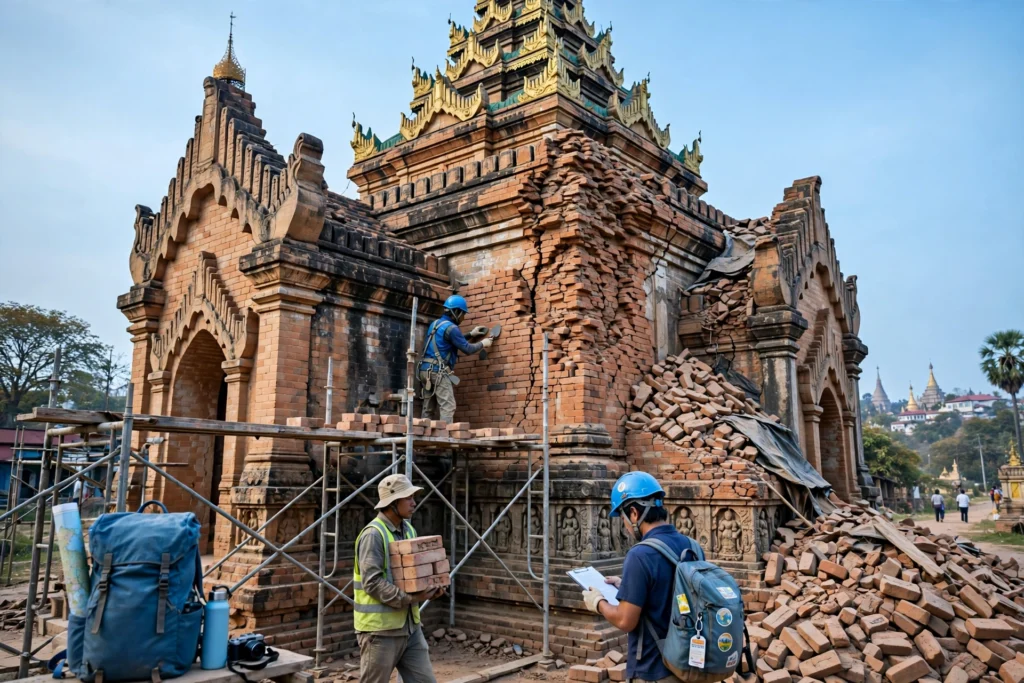
On 28 March 2025, a magnitude 7.7–7.8 earthquake struck central Myanmar, with its epicentre near Sagaing, close to Mandalay. It was one of the strongest earthquakes the country has experienced in decades, and it killed thousands of people, damaged buildings across Mandalay, Sagaing and Nay Pyi Taw, and cracked temples and pagodas in the central dry zone. Any guide to Myanmar written after that date has to answer the question every traveller asks first: what is still standing, and what is safe to visit now?
The honest answer is that the damage was very uneven, and the recovery is uneven too. The three places that matter for the tourist kite were affected in very different ways.
Bagan, the place travellers worry about most, came through better than many people feared. UNESCO’s World Heritage Centre received a state-of-conservation report on Bagan in January 2026 stating that no direct damage was reported to the Bagan property following the 7.7 magnitude earthquake of March 2025. The temples were built to survive — they have stood through earthquakes before, including a major one in 2016 — and the 2019 UNESCO inscription at whc.unesco.org/en/list/1588/ covers 3,595 recorded monuments, most of which were unaffected. Individual temples may have cracks, some structures may be fenced off for inspection, and restoration work continues — expect scaffolding on some monuments and closed signs on a few, and the rest open.
Mandalay, the city closest to the epicentre, was hit hard. Buildings collapsed, hotels and monasteries were damaged, and water, power and roads took time to recover. By late 2026 the city is functioning again: hotels are open, the airport is operating, and the main sights — the U Bein Bridge, Mandalay Hill, the Mahamuni Buddha, the palace walls — are visitable. But the recovery is visible everywhere, and some buildings are still being repaired or have been demolished. Expect a city that is working but scarred, and check with your hotel before travelling whether any sight you want to see is closed for repairs. The earthquake killed people in Mandalay and Sagaing in large numbers, and many families are still rebuilding their homes — visit with respect, and do not treat damaged neighbourhoods as sightseeing.
Sagaing, across the river from Mandalay and the closest town to the epicentre, was the worst affected of the three, and it is also in Sagaing Region, which the FCDO lists as against all travel. That combination — severe earthquake damage plus an active conflict zone — means Sagaing should not be on any 2026 itinerary. The same applies to Nay Pyi Taw, the capital, which was damaged and is not a tourist destination in any case.
Three practical consequences follow. First, check the status of individual sights close to your travel date, not months ahead — restoration schedules change, and your hotel is the best source; ask them by email before you book. Second, be careful where you walk: do not climb on damaged structures, do not enter fenced-off buildings, and do not walk on rubble. Some older temples have weakened masonry that is not obvious from the outside, and aftershocks are still possible. Third, allow extra time — restoration work can close a road or a temple with little notice. The itineraries at the end of this guide build in spare time for exactly this reason.
The earthquake also sharpened the insurance question. Your insurance must explicitly cover Myanmar, and you should check in writing whether it covers earthquake-related disruption, medical evacuation, and travel in a Level 4 destination — many standard policies exclude all three. If your insurer will not cover Myanmar, do not travel without insurance: healthcare is limited and a medical evacuation from central Myanmar is extremely expensive. Choose refundable flights and hotels where you can, because an aftershock, a road closure or a security change can cancel a plan with no notice.
Best Time to Visit Myanmar
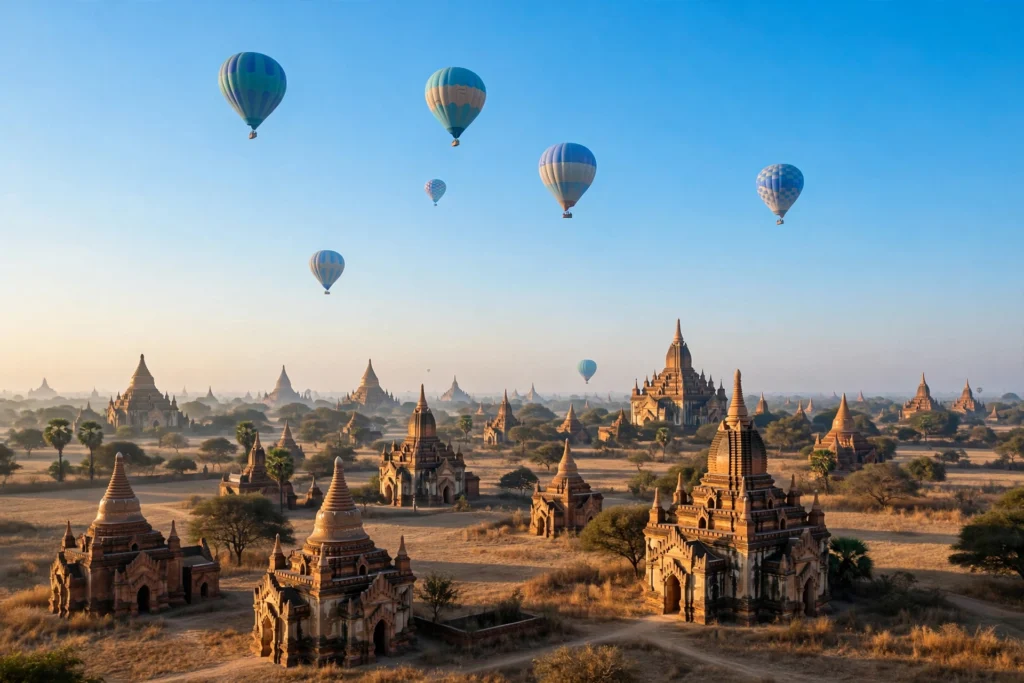
Myanmar has three seasons, and the difference between them is the difference between a comfortable trip and a miserable one. The cool, dry season runs from November to February. The hot season runs from March to May. The monsoon runs from June to October. The top guides agree on the best window — January to April and October to December are the months most often recommended, with November to February the most comfortable — and the month-by-month table below explains why.
November to February is the best time to visit. The air is cooler and drier, the skies are clear, and the light over Bagan at sunrise is at its best. Travellers planning a winter escape often start with our best places to travel in January when weighing the cool-season months. Daytime temperatures in Yangon and Bagan sit in the high 20s to low 30s Celsius, nights are cooler, and rain is rare. This is also the busiest season, such as it is: hotels fill up first, domestic flights are most in demand, and the hot-air balloons fly over Bagan in the early morning. Book flights and hotels early, and book the balloon flight as soon as your dates are fixed, because it sells out. The balloon season typically runs from October to March and is weather-dependent — if the wind is wrong, the flight is cancelled and you are refunded or rescheduled.
March to May is the hot season, and it is genuinely hot. The same festival-timing logic — book early, expect crowds and higher prices — applies to the big celebrations covered in our Morocco travel guide, where timing a trip around a festival also means booking early. Temperatures in the central dry zone — Bagan and Mandalay — regularly pass 40°C. Sightseeing in the middle of the day becomes hard work, so start at dawn, rest through the early afternoon, and go out again late in the day. The one event that draws people in this season is Thingyan, the Burmese New Year water festival in mid-April — joyful, chaotic and soaking wet, but it closes offices and banks and fills the roads, so plan around it rather than through it.
June to October is the monsoon. Rain falls most afternoons, the countryside turns green, and the tourist sites are at their quietest. A monsoon trip is perfectly possible — the temples are still there and prices are lower — but it is not the best first visit: roads can flood and domestic flights can be delayed. Bring proper rain gear, waterproof your bag, and allow extra time between flights.
| Month | Weather | Crowds | Best for |
|---|---|---|---|
| January | Cool and dry, clear skies | Moderate | Bagan balloons, temple sunrises, comfortable walking |
| February | Cool and dry, warming slightly | Moderate | Best all-round month; clear light, easy travel |
| March | Hot and dry, temperatures rising | Low–moderate | Early hot-season travel, fewer visitors, dawn starts |
| April | Very hot, Thingyan mid-month | Low, then festival crowds | Thingyan festival; avoid midday sightseeing |
| May | Hot, first rains at the end of the month | Low | Quiet temples, low prices, hard midday heat |
| June | Monsoon begins, afternoon rain | Very low | Green landscapes, lowest prices, flexible travellers |
| July–August | Monsoon, warm and wet | Very low | Inle Lake at its greenest; expect rain and delays |
| September | Monsoon easing, still wet | Very low | Late-monsoon travel, green countryside |
| October | Rain easing, skies clearing | Low–moderate | Balloon season restarts; good light returns |
| November | Cool and dry, clear skies | Moderate | One of the best months; comfortable everywhere |
| December | Cool and dry, clearest light | Moderate–high | Peak season; book flights and hotels early |
Getting There and Getting Around: Flights, Trains and Roads
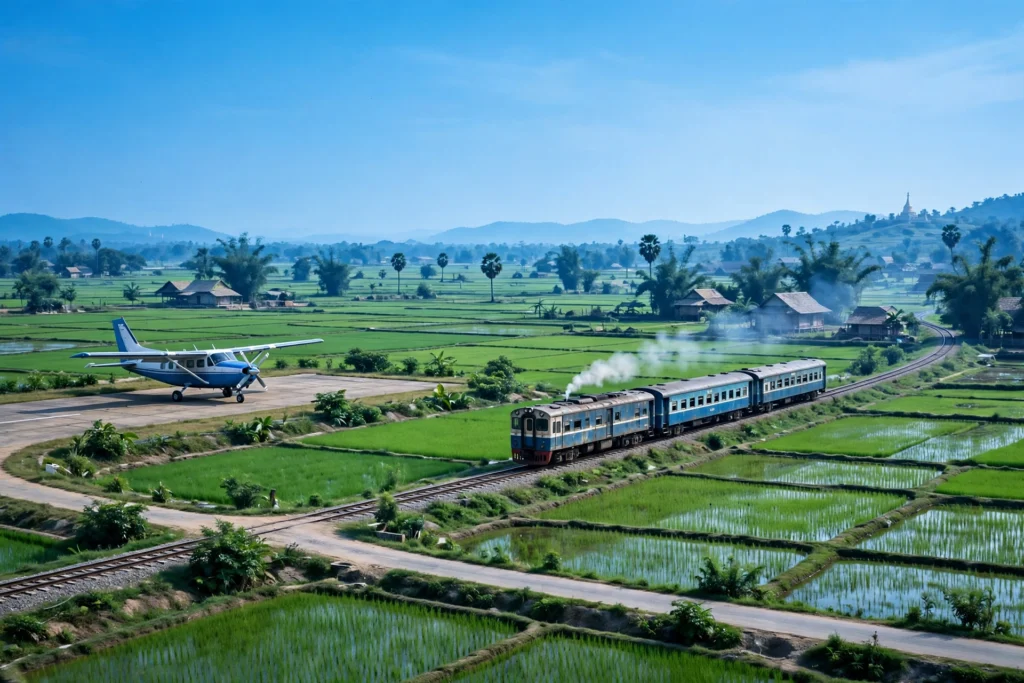
There is one sensible way into Myanmar and one sensible way around it: by air. International flights land at Yangon International Airport (RGN) and Mandalay International Airport (MDL), and domestic flights connect the four points of the tourist kite. The overland routes — by train, by bus, by car — exist, and they have their charms, but in 2026 they also have checkpoints, closures and risks that make them a poor choice for most travellers. This section explains the options honestly, and tells you which ones to use.
International flights to Yangon come from the region’s hubs: Bangkok, Singapore, Kuala Lumpur, Hong Kong, and a handful of other Asian cities. There are no direct flights from the United States or Europe, so every journey from the US involves at least one connection, usually through Bangkok or Singapore. Bangkok is the most practical gateway — a short flight from Yangon, the most departures, and the city you would fly back through if you needed to leave quickly. Book with a changeable or refundable fare if you can: the situation can change, and a flexible ticket is worth more than a cheap one. Travellers routing through Singapore will find the practical airport and transit advice in our Singapore travel guide useful for the connection.
Once you are in Myanmar, the domestic flight network is the backbone of the tourist kite. The main carriers are Myanmar National Airlines and Air KBZ. The flights that matter are Yangon to Nyaung U (Bagan), about 1 hour 10 minutes; Yangon to Mandalay, about 1 hour; Mandalay to Heho (for Inle Lake), about 40 minutes; and Heho back to Yangon. Book early — there are not many departures a day, and the morning flights are the ones you want, because the afternoon flights are most likely to be delayed. Confirm each flight the day before, and keep your hotel’s phone number saved in case a cancellation means you need a room for the night.
The train is the romantic option, and the honest advice is to treat it as an experience, not as transport. The overnight train from Yangon to Mandalay takes around 15 hours, and the Gokteik Viaduct — a steel trestle bridge built in 1900, high above a gorge — is one of the great railway sights in Asia. But the trains are slow, the carriages are old, the schedules are unreliable, and the Gokteik line runs through Shan State North, which is against all travel. Do not take a train through an against-all-travel area for a view. If you want a train experience, ask locally whether the Yangon–Mandalay line is running normally and safely — and if the answer is anything less than a clear yes, fly instead.
Roads are the third option, and the one that needs the most care. The Yangon–Mandalay Expressway is the main highway, in reasonable condition, but it has checkpoints, and the area east of it in Bago region is against all travel. Long-distance buses are slow, stop at checkpoints, and are not a good use of a short trip. If you need a car, hire one with a driver through your hotel — do not drive yourself. Driving in Myanmar means driving on the right in a country where many cars are right-hand drive, on roads with checkpoints, military traffic and unpredictable surfaces, and without reliable roadside help. A driver who knows the roads, the checkpoints and the current situation is worth every kyat. For short distances inside each town, taxis and hotel cars are fine, but agree the price before you get in, and avoid taking a taxi late at night.
Inside the towns, the transport is part of the pleasure. In Bagan, cycle the temples by bicycle or electric bike from your hotel — the plain is flat, the distances are short, and cycling between temples at dawn is one of the great experiences of the trip. Wear a helmet if one is available, carry water, and do not cycle off the marked tracks. At Inle Lake you travel by long wooden boat, hired through your hotel. In Yangon the downtown is walkable in the cooler hours, though the pavements are uneven. In Mandalay, hire a car and driver for the day: the sights are spread out and the heat is intense.
Yangon: Shwedagon Pagoda and the Old Colonial Downtown
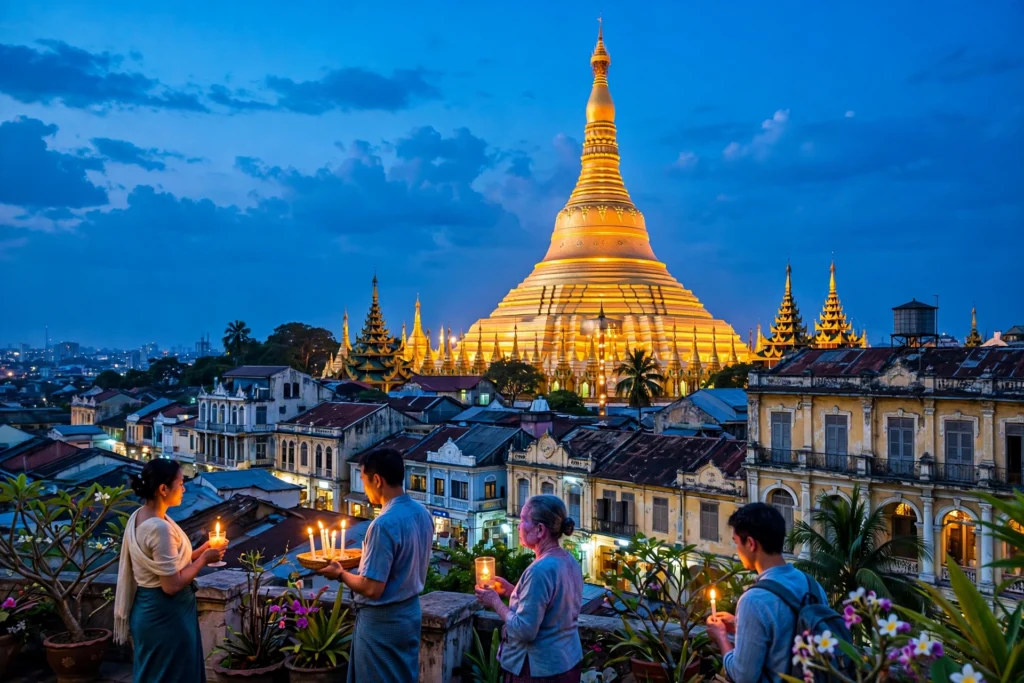
Yangon — Rangoon in the advisory’s language, and in the name of the US Embassy — is where every Myanmar trip begins, and it is worth two full days. It is a city of faded colonial grandeur and living Buddhist devotion, where the most sacred site in the country rises above a downtown of crumbling British-era buildings, tea shops, markets and golden spires. It is also, by the standards of Myanmar in 2026, the calmest big city, and the place where the tourist infrastructure is most complete. Start here, take your time, and let the city set the pace for the rest of the trip.
The Shwedagon Pagoda is the reason Yangon matters, and one of the great religious sites in Asia. The great golden stupa stands about 99 metres tall on Singuttara Hill, covered in gold leaf and crowned with a diamond-tipped spire, and it is said to hold relics of the Buddha. Go at dusk, when the gold catches the last light and the platform fills with pilgrims lighting candles and offering flowers. Walk clockwise around the stupa, as the pilgrims do. Remove your shoes before entering the platform — a strict rule for the whole complex, so wear shoes that slip off easily. Dress modestly, covering shoulders and knees. Do not point your feet at Buddha images, do not climb on the shrines, and ask before photographing people at prayer. The entrance fee for foreigners is charged at the gate — confirm the current amount locally. Allow at least two hours: the pagoda is a place to linger, not to rush.
The old colonial downtown is the second half of Yangon, best explored on foot in the early morning. The grid of streets around Sule Pagoda — a smaller golden stupa in the middle of a traffic circle — holds some of the finest colonial architecture in Asia: the old Secretariat, the High Court, the Strand Hotel, and block after block of faded, peeling buildings from the British era. Walk along Strand Road by the river, and stop for tea at one of the Indian tea shops on the side streets. The tea shops are the social heart of Yangon: sweet milky tea, fried snacks, and old men arguing about football. Sit down, order a tea, and watch the city go past — it costs almost nothing and is the most honest introduction to the place.
Food in Yangon is a pleasure, and it is cheap. Mohinga — fish noodle soup, eaten for breakfast — is the national dish, and the best versions are sold from street stalls in the morning. Tea leaf salad (laphet thoke), with its mix of fermented tea leaves, peanuts, sesame, garlic and tomato, is the dish to try if you try only one thing. Shan noodles, coconut noodle soup (ohn no khao swè), and the curries of the Indian quarter are all worth seeking out. Eat where the locals eat, eat food cooked in front of you, and drink bottled water. The restaurant scene is smaller than before the coup, so ask your hotel for current recommendations. For planning meals and daily spending, the structure in our travel budget guide works well — the difference is that in Yangon the numbers are smaller than almost anywhere else in Asia, and the cash in your pocket is the whole system.
Bagan: 3,595 Temples on the Ayeyarwady Plain
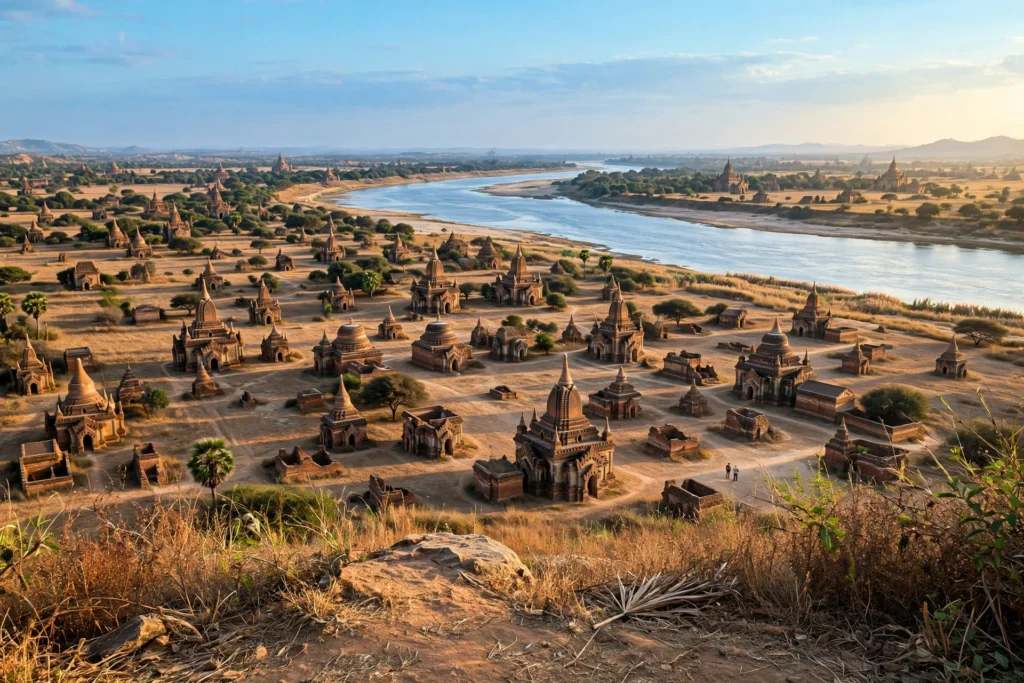
Bagan is the reason most travellers come to Myanmar, and it is one of the great archaeological landscapes in the world. On a bend of the Ayeyarwady River, in the dry zone of central Myanmar, stand the remains of a kingdom that ruled much of the region between the 11th and 13th centuries. The kings of Bagan and their subjects built temples and stupas in an extraordinary burst of merit-making — building a temple was understood as an act that earned spiritual merit — and what survives is a plain scattered with thousands of brick monuments, from small stupas you could walk around in a minute to great temples the size of cathedrals. UNESCO inscribed Bagan on the World Heritage List in 2019, and the official UNESCO page for Bagan describes a serial property of eight components containing 3,595 recorded monuments, including stupas, temples, inscriptions, murals and sculptures, set in a living landscape of farming villages and contemporary towns. That number — 3,595 — is the one to hold in mind: you cannot see them all, and you should not try. The pleasure of Bagan is in choosing a few, and in the space between them.
The practicalities first. You fly into Nyaung U airport, about 15 minutes from the temple plain, and stay in Nyaung U town or New Bagan. Old Bagan, inside the archaeological zone, has a few hotels but is mostly temples and open ground. A zone fee applies for foreign visitors — confirm the current amount locally, as it changes, and keep the ticket, because it may be checked. The best way to see the plain is by bicycle or electric bike from your hotel, and the best hours are dawn and late afternoon. The middle of the day in the dry zone is hot and dusty, and the temples are at their most beautiful when the light is low. Carry water, wear a hat, and wear shoes you can slip off easily, because you remove your shoes at every temple.
The great temples — Ananda, Dhammayangyi, Thatbyinnyu, Sulamani, Htilominlo — are the cathedrals of Bagan: large, brick, with corridors and Buddha images, and in Ananda’s case four standing Buddhas facing the four directions. Ananda is the most beautiful and most visited, best seen early before the crowds arrive. Dhammayangyi is the largest and most sombre, a massive brick pyramid with a dark interior. Thatbyinnyu is the tallest temple on the plain, Sulamani has some of the finest murals, and Htilominlo is known for its plaster carvings. Two or three great temples a day, with time between them to cycle through the fields and stop at the small stupas, is the right pace.
The smaller temples are where Bagan becomes personal. There are hundreds of them, many with no name on any map, standing in the fields with a single Buddha image inside. You can walk into most of them, sit in the cool dark for a while, and be alone with a thousand-year-old building — the experience that stays with people more than any single great temple. A few rules: do not climb on temples (climbing is now banned on most structures and the ban is enforced), do not remove or carve anything, and do not enter a temple that is fenced off or marked as closed. Some are closed for restoration or earthquake inspection; the January 2026 UNESCO report found no direct damage to the Bagan property as a whole, but individual structures may still be under repair, and your hotel can tell you which are closed on the day you visit.
Sunrise and sunset are the rituals of Bagan. The classic sunrise view is from a viewpoint over the plain, watching the mist lift off the temples — ask your hotel which viewpoint is open on the day, and go early, because the good ones fill up. The hot-air balloon flight, which runs from October to March, is the most expensive thing you can do in Bagan and, by most accounts, the most memorable: an hour drifting over the temples at dawn. Book it as soon as your dates are fixed, because it sells out, and accept that it can be cancelled for wind, in which case you are refunded or rescheduled. If the balloon is beyond your budget, the sunrise from a viewpoint is almost as good, and it costs nothing.
Allow two full days for Bagan, and three if you can. Two days lets you see the great temples, cycle the small ones, watch a sunrise and a sunset, and take a boat trip on the Ayeyarwady in the late afternoon — a slow wooden boat downstream past the temples and villages, worth the small cost, giving you the plain from the angle the kings of Bagan would have seen it from. For travellers who enjoy building a trip around a river and a temple plain, the same slow rhythm runs through the long days described in our Ecuador travel guide, though nothing in the Americas matches the scale of Bagan’s 3,595 monuments.
Mandalay: U Bein Bridge, Hilltop Sunsets and the Old Royal City
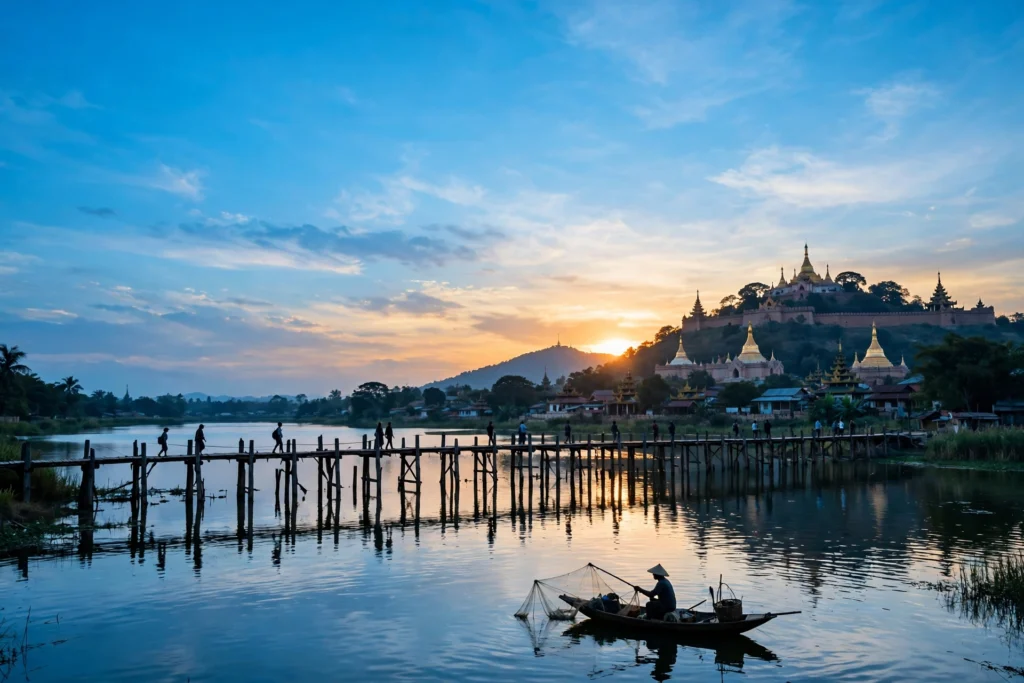
Mandalay is the second city of Myanmar and the last royal capital: the flat grid of streets inside the old palace walls, and the hills and river around it. Founded in 1857 by King Mindon, it was the capital of the last Burmese kingdom before the British annexed the country in 1885, and it still feels like a royal city — broad, hot, dusty, and full of monasteries, workshops and gold leaf. It is also the city most affected by the March 2025 earthquake, and it shows: the recovery is visible, some buildings are still being repaired, and the city is working but scarred. Visit Mandalay with that in mind, and give it the time it deserves.
The sight that defines Mandalay is a short drive south, at Amarapura: the U Bein Bridge. Built in the 1850s from teak, it is about 1.2 kilometres long — the longest teak bridge in the world — crossing Taungthaman Lake in a long, low curve that has become one of the most photographed scenes in Asia. Go at sunset, when the bridge is silhouetted against the sky and the fishermen are casting their nets below. It is crowded at sunset, for a reason: go early, find a place on the bank or hire a small boat, and stay until the light is gone. The planks are uneven, so walk carefully and do not push through the crowd. In the morning the bridge is quiet and the light softer — if you are an early riser, the dawn crossing is the better experience.
Mandalay Hill is the second essential sight. The hill rises about 240 metres above the city, and a covered stairway of 1,729 steps climbs to the top, passing shrines, vendors and viewpoints on the way. The climb takes 30 to 45 minutes in the heat, and it is best done late in the afternoon, arriving at the top for sunset. From the summit, the whole city is spread out below you: the palace walls, the river, the hills to the east, and the sun going down over the Ayeyarwady. There is also a road to the top, and a lift, if the steps are too much in the heat — ask your driver. At the top, remove your shoes, as at any pagoda, and be respectful of the people at prayer. The hill is a sacred place as well as a viewpoint, and the sunset crowd includes pilgrims as well as tourists.
The city itself holds the Mahamuni Buddha, one of the most revered Buddha images in Myanmar, in a temple in the south-west of the city. The image is covered in gold leaf applied by generations of devotees — so thick that the body’s shape has become soft and rounded. Men may go up to the image and apply gold leaf; women watch from a separate area, a long-established rule that should be respected. The temple is busiest early in the morning, when the monks wash the face of the Buddha in a daily ritual. Go early if you can, and watch in silence.
Practical notes: Mandalay is hot and the sights are spread out, so hire a car and driver for the day through your hotel. Stay two nights: one full day for the city and the hill, and a second morning for the U Bein Bridge before your flight to Heho. Check with your hotel on arrival about which sights are closed for earthquake repairs. And remember where you are: the townships north of Mandalay City and Pyin Oo Lwin are against all travel, so do not plan a trip north of the city. Mandalay City itself, the hill, Amarapura and the bridge are the Mandalay of this guide, and they are enough.
Inle Lake: Floating Gardens, Leg Rowers and Lakeside Villages
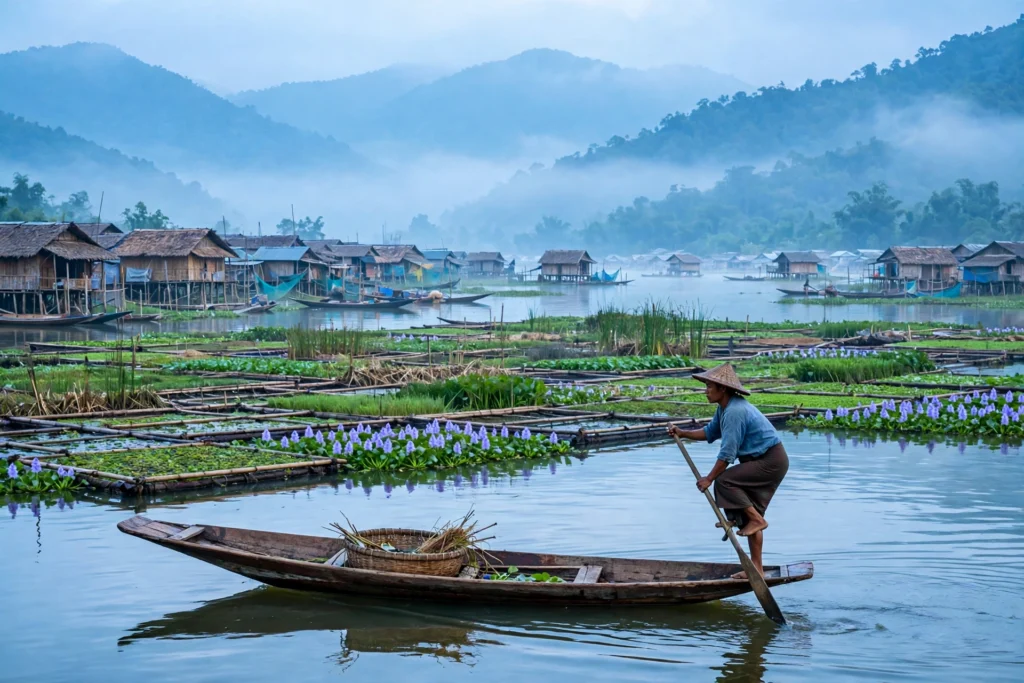
Inle Lake is the quietest and most beautiful stop on the tourist kite, and the one that feels furthest from the conflict. The lake sits in the Shan hills of eastern Myanmar, about 880 metres above sea level: a long, shallow lake, about 22 kilometres long, ringed by mountains, with villages built on stilts over the water, floating gardens that move with the wind, and fishermen who row with one leg wrapped around an oar, standing upright in their boats, in a technique found nowhere else in the world. It is the place where the pace slows right down, and a day on the water feels like the whole point of the trip.
You get to Inle Lake by flying into Heho airport, about an hour’s drive from the lake, and staying in Nyaungshwe, the small town at the northern end, or in a lakeside resort. Nyaungshwe is the practical base: the most hotels, restaurants and boat hire, and where the boats leave from in the morning. Hire a boat through your hotel — a long wooden boat with a driver and a canopy — and agree the route and the price before you set off. The standard day takes in the floating gardens, the leg rowers, the stilt villages, the Phaung Daw Oo Pagoda, the Nga Phe Kyaung monastery (known as the jumping cat monastery), the lotus-weaving workshops, and the cigar makers. It is a full day, from about 8 a.m. to 4 p.m., and it is worth every hour.
The leg rowers are the image of Inle Lake. The Intha people developed a style of rowing in which the fisherman stands at the back of the boat, wraps one leg around the oar, and rows upright, leaving both hands free for the fishing net. It looks impossible the first time you see it, and it is a practical solution: standing up gives a better view of the water and lets the fisherman steer through the reeds. The fishermen are used to being photographed and will often pose — a small tip is appropriate, and your boat driver will advise you. The floating gardens are the other marvel: beds of water hyacinth and earth, anchored with bamboo poles, on which the Intha grow tomatoes, beans and flowers, drifting with the water level like green islands.
The lakeside villages are working villages, not tourist displays. The houses stand on stilts over the water, the streets are canals, and people go about their day — weaving, fishing, making cigars, repairing boats — with visitors passing through. Buy something if you can: the lotus weaving, in which fibres from the lotus stem are woven into cloth, is unique to Inle Lake and very expensive, because it is slow, skilled work; a small lotus scarf is beautiful and the money goes directly to the weavers. Do not photograph people inside their homes without asking, and do not treat the villages as a zoo.
Practical notes: Inle Lake is in Shan State South, which the FCDO lists as against all but essential travel, so the same warning applies here as in Mandalay. The lake itself is calm, the town is quiet, and the boats are safe, but the situation can change — check the advice again before you travel. The lake is at altitude, so the mornings are cool: bring a layer for the early boat, and a hat and sunscreen for the middle of the day. Wear a life jacket if one is provided, and do not stand up in the boat. Stay two nights: one full day on the lake, and a morning to cycle around Nyaungshwe, visit the market, and see the vineyards on the hills above the town. Two nights is enough; three is better, if you want a second day on the water, which is the slowest and most rewarding way to see the lake. The same unhurried water-based rhythm shapes the island and lake days in our Tanzania travel guide, where the boat is also the best seat in the house.
Ngapali Beach and the Rest of the Coast: Worth It in 2026?
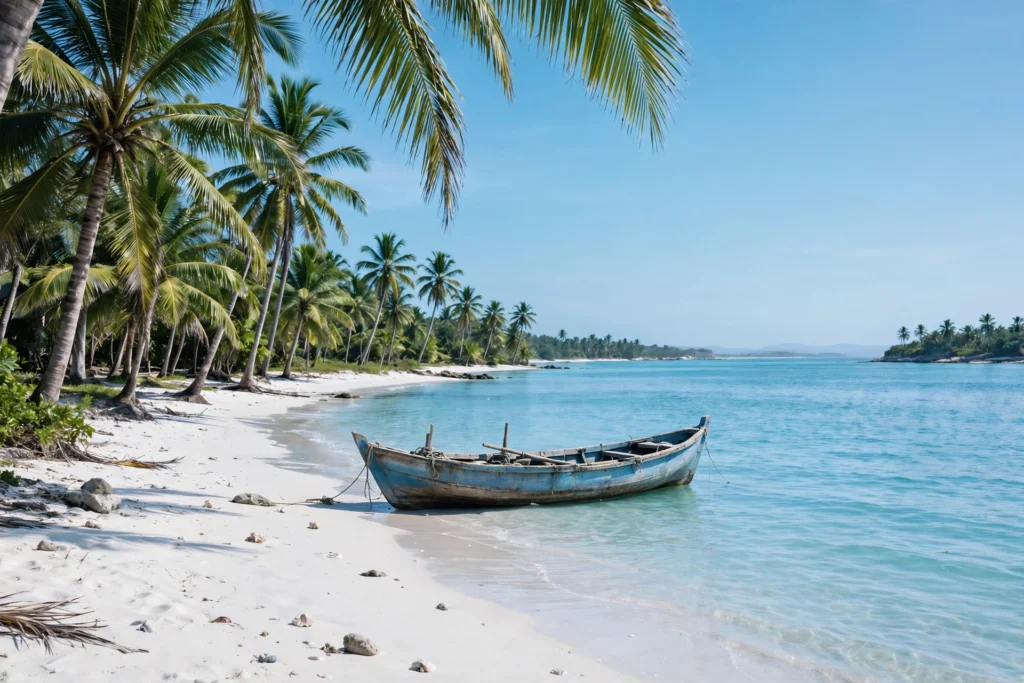
The short answer is no — not in 2026 — and this section exists to say that plainly, because the coast is where the gap between the photographs and the advice is widest. Ngapali Beach, on the Bay of Bengal, is one of the most beautiful beaches in Asia: white sand, palm trees, clear water, fishing boats, and small resorts that, before the coup, drew travellers from all over the world. The photographs are still beautiful. The advice is not. Ngapali is in Rakhine State, and the FCDO advises against all travel to Rakhine State; the US rates the whole country Level 4. Rakhine has seen some of the worst fighting of the conflict, and the beach, the resorts and the road to them are not places a tourist should be in 2026. Do not book a flight to Thandwe or a resort at Ngapali, and do not believe any guide or agent that tells you it is fine. The beach will still be there when the situation changes. Your safety is not worth a photograph.
The same reasoning applies, with less force, to the rest of the coast. Chaung Tha and Ngwe Saung, the beaches west of Yangon in Ayeyarwady Region, sit in townships the FCDO lists as against all but essential travel (Pathein township is on that list), and the delta coast has poor infrastructure, limited medical facilities, and roads that can be closed. The far south — the Myeik Archipelago, once talked about as the next great diving destination — is in Tanintharyi Region, which is against all travel except for Myeik township and the townships south of Tanintharyi township, and the archipelago itself is effectively off-limits. The islands are beautiful, the diving is said to be excellent, and none of that matters in 2026, because you should not go.
So what do you do if you want a beach on this trip? Get your beach somewhere else. The tourist kite — Yangon, Bagan, Mandalay, Inle Lake — has no coast, and that is a real gap in the itinerary. If a beach matters to you, add beach days in Thailand or elsewhere in the region before or after Myanmar, rather than forcing a Myanmar beach into a 2026 trip. Fly into Bangkok, spend a few days on a Thai beach, fly to Yangon for the kite, and fly home through Bangkok. That is a better trip than a Myanmar beach in 2026, and a safer one. Travellers who want the beach to be the main event will find the coastal planning in our Cabo travel guide a useful model — choose the beach that is safe to visit, not the one that looks best in a photograph.
Where to Stay, What to Eat and What to Pack in Myanmar
Where to stay is governed by one rule: foreigners must stay in registered hotels only. Your hotel registers your stay with the authorities. Do not stay in a private home or an unregistered guesthouse, and do not accept a room from someone you meet on the street. Book in advance, confirm by email close to your travel date, and carry the hotel’s address for the immigration form. In Yangon, stay downtown or around Kandawgyi Lake; in Bagan, in Nyaung U or New Bagan; in Mandalay, in the city centre; at Inle Lake, in Nyaungshwe or a lakeside resort. Prices are lower than before the coup, and a comfortable mid-range hotel with air conditioning, hot water and wifi runs a planning range of roughly $30–$80 a night — confirm the price when you book, because prices in this guide are planning ranges, not guarantees.
The practical standard is simple: air conditioning that works, hot water, a generator or reliable power, and a hotel that answers its email. Power cuts happen, and a hotel with a generator is worth more than a hotel with a swimming pool. Wifi exists in most hotels, but it is slow and can be cut off, so do not rely on it for anything important. Download your maps, bookings and insurance documents before you travel, and keep paper copies. The hotels still operating in 2026 have survived the hardest years in the country’s tourism history, and the staff are often glad to see visitors — treat them well, tip fairly, and ask them for advice, because they know the current situation better than any guide.
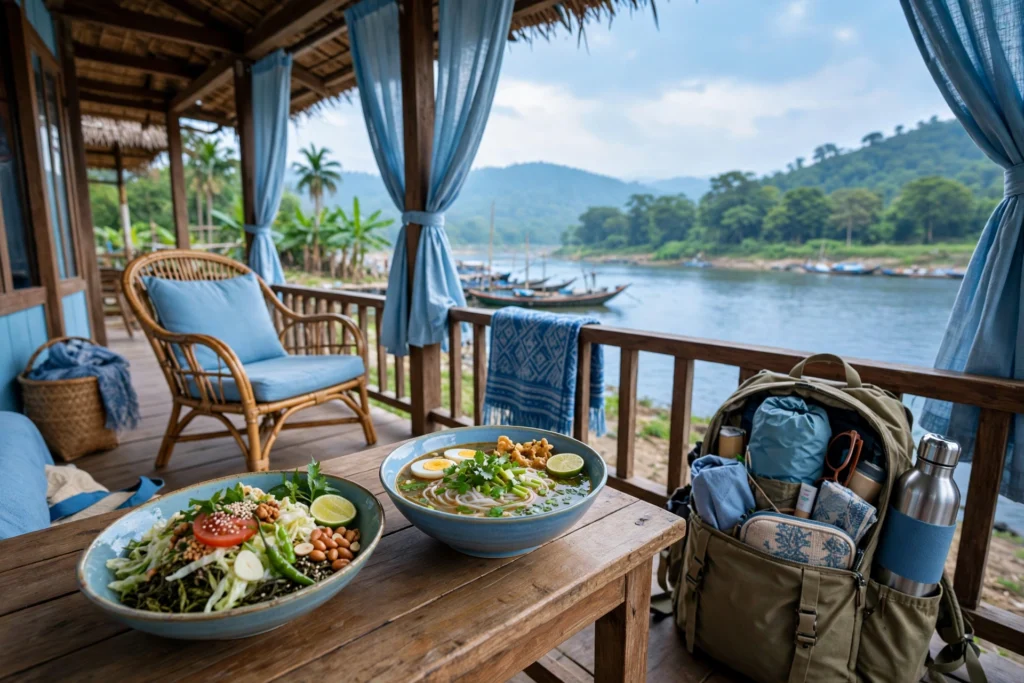
What to eat is one of the great pleasures of Myanmar, and one of the cheapest. The food is distinct from Thai or Indian food, though it borrows from both: oily curries, sour soups, salads made with tea leaves, beans and herbs, and noodles in a dozen forms. The dishes to try are mohinga, the fish noodle soup eaten for breakfast; laphet thoke, the tea leaf salad; Shan noodles; ohn no khao swè, the coconut noodle soup; and the curries of the Indian quarter in Yangon. Eat where the locals eat, eat food cooked in front of you, and drink bottled water — never tap water, and be careful with ice in small stalls. The best food is often in the humblest places: a tea shop with plastic stools, a market stall with a single dish, a lakeside restaurant with a family cooking in the back.
What to pack is straightforward. Myanmar is hot and the sun is strong, so pack light, breathable clothes that cover your shoulders and knees — you need that coverage for temples in any case. A longyi, bought in Yangon on your first day, is the most practical garment you can own in Myanmar: cool, modest, and correct for temple visits. Bring shoes that slip off easily, sun protection, a hat, a water bottle, and a small daypack. Bring a torch, because power cuts happen and temple interiors are dark. Bring a basic first-aid kit, any medication you need, and a copy of your prescriptions. Bring cash in clean, new US dollar notes — the single most important packing item, covered in full in the cost section below. And bring a paper copy of everything important: your passport photocopy, your eVisa approval letter, your insurance documents, your hotel confirmations and your flight bookings. The phone in your pocket is useful; the paper in your bag is reliable. The travel apps guide is worth a read before you go for the offline maps and translation tools that work without a connection.
How Much Does Myanmar Travel Cost?

Myanmar is one of the cheapest countries in Asia for a traveller, and that is still true in 2026 — but the cheapness comes with a condition that changes everything about money. Myanmar is a cash-based economy. Credit cards are accepted in almost no places outside a few large hotels in Yangon, ATMs are limited, unreliable and often out of cash, and foreign cards frequently do not work. You cannot rely on a card or an ATM, and you cannot rely on exchanging money easily outside Yangon. You bring your money with you, in cash, in clean US dollars, and you budget for the whole trip before you leave.
Bring US dollars in clean, new, unfolded notes. Banks and money changers in Myanmar are famously fussy about the condition of dollar notes: a torn corner, a fold, a mark, a stamp or a note from an old series can be refused, or exchanged at a worse rate. Bring $100 and $50 notes in the best condition you can get, and bring more than you think you need, because you cannot get more once you are there. The local currency is the kyat (MMK), and you will change dollars into kyat at banks, licensed money changers and your hotel. The exchange rate moves sharply, so do not rely on any rate quoted in a guide — check the current rate when you arrive, change a small amount at first, and change more as you need it. Keep your kyat in small denominations for taxis, markets and temples, and keep your dollars safe. A money belt or a hotel safe is not a luxury in Myanmar; it is a necessity.
The table below gives planning ranges in US dollars per person per day for the tourist kite in 2026 — ranges, not prices, meant for planning. Confirm every figure locally. The ranges assume registered hotels, flights between the kite’s corners, local food, and travel in the cool season.
| Item | Budget (per person per day) | Mid-range (per person per day) |
|---|---|---|
| Registered hotel (twin/double share) | $20–$35 | $40–$80 |
| Food (local restaurants, tea shops, markets) | $8–$15 | $15–$30 |
| Domestic flight (per leg, averaged over the trip) | $15–$25 | $20–$35 |
| Local transport (taxis, e-bikes, boat hire share) | $5–$10 | $10–$20 |
| Temple fees, sights and activities | $5–$10 | $10–$20 |
| Total per day (excluding international flights) | $53–$95 | $95–$185 |
Sample 7-day and 10-day tourist-kite itineraries
7 days — the classic kite. Day 1: arrive Yangon, Shwedagon Pagoda at dusk. Day 2: Yangon downtown, markets and tea shops. Day 3: morning flight to Nyaung U, Bagan temples in the afternoon, sunset viewpoint. Day 4: Bagan sunrise, great temples by e-bike, Ayeyarwady boat trip. Day 5: morning flight to Mandalay, Mandalay Hill and Mahamuni Buddha, U Bein Bridge at sunset. Day 6: morning flight to Heho, drive to Nyaungshwe, afternoon on Inle Lake. Day 7: full day on Inle Lake, fly back to Yangon in the evening or the next morning. This is the itinerary most travellers take, and the right one for a first visit: it covers all four points, flies between them, and has a spare half-day built in if a flight is delayed.
10 days — the slow kite. Days 1–2: Yangon, as above, with a second morning for the circular train and Kandawgyi Lake. Days 3–5: Bagan, with a third day for the small temples, a second sunrise, and the balloon flight if you take it. Days 6–7: Mandalay, with a full day for the city and a second morning for the workshops and markets. Days 8–10: Inle Lake, with two full days on the water and a morning to cycle around Nyaungshwe and visit the vineyards. The extra three days are not filler: they are the difference between seeing Bagan and understanding it, and between a rushed lake day and a slow one. If you have the time, take the 10 days. A travel itinerary template will help you lay the days out before you book.
Frequently Asked Questions About Myanmar Travel
Is Myanmar open to tourists in 2026?
Yes, in the narrow sense: the eVisa system is running, flights land in Yangon and Mandalay, and registered hotels in Yangon, Bagan, Mandalay and the Inle Lake area accept foreign guests. But the US rates the country Level 4 Do Not Travel, the UK advises against all travel to large parts of it, and Canada advises avoiding all travel. Open does not mean safe, and it does not mean recommended. Read the advisory chapter at the top of this guide before deciding.
Is Myanmar safe to visit in 2026?
No destination in a country at Level 4 can be called safe, and this guide does not call Myanmar safe. The conflict is real, IEDs have been used in Yangon, landmines are unmarked, and the situation can change at short notice. The tourist kite — Yangon, Bagan, Mandalay and Inle Lake, travelled by air — is where the risk is lowest, and many travellers visit it without incident. But “lowest risk in a Level 4 country” is still a high risk, and your insurance may be invalid if you travel against official advice.
Do I need a visa for Myanmar?
Yes. Most nationalities need a tourist eVisa, applied for online before travel through the official portal at evisa.moip.gov.mm. It is a single-entry visa for a stay of up to 28 days, valid for 90 days from the date of issue, and you need a passport valid for at least six months and a printed approval letter to show on arrival. There is no visa on arrival for most nationalities, and you enter by air at Yangon or Mandalay airport.
Can I travel independently in Myanmar?
Yes, in the sense that there is no permit system or compulsory guide, unlike the situation in some neighbouring countries — you can book your own hotels and flights and move between the four points of the tourist kite on your own. But “independent” does not mean “unrestricted”: you must stay in registered hotels, you must carry your passport, you will pass through checkpoints, and you must not travel to restricted states or regions. Hiring a driver and using your hotel’s advice is the practical way to travel independently and safely, and it is what most visitors do.
What is the best time to visit Myanmar?
November to February, the cool, dry season, with January and February often the most comfortable months. The skies are clear, the Bagan balloons fly, and the temperatures are manageable. March to May is very hot, with temperatures above 40°C in Bagan and Mandalay, and June to October is the monsoon, with afternoon rain and possible flight delays. The full month-by-month table is in the best-time section above.
Can I use credit cards or ATMs in Myanmar?
Almost never, and you should plan as if the answer is no. Myanmar is a cash-based economy: cards are accepted in very few places, ATMs are limited and unreliable, and foreign cards often do not work. Bring your whole budget in clean, new US dollar notes, change them into kyat as you need it, and carry a reserve beyond your budget. Do not travel to Myanmar expecting to withdraw cash on arrival.
Is Bagan safe to visit after the March 2025 earthquake?
Bagan itself was largely unaffected: UNESCO’s January 2026 state-of-conservation report states that no direct damage was reported to the Bagan property following the 7.7 magnitude earthquake. Individual temples may be fenced off for inspection or repair, and restoration work continues, but the plain as a whole is open and visitable. Mandalay, closer to the epicentre, was damaged more seriously and is still recovering — check with your hotel before travelling about which sights are open. Do not climb on damaged structures or enter fenced-off buildings anywhere.
Conclusion
Myanmar in 2026 is a country of extraordinary beauty and extraordinary risk, and this guide has tried to hold both of those truths at once. The beauty is real: the gold of the Shwedagon at dusk, the temple plain of Bagan at sunrise, the U Bein Bridge at sunset, the leg rowers of Inle Lake in the morning mist. The risk is real too, and it is not a footnote: a Level 4 advisory, an armed conflict, landmines, arbitrary detention, a damaged city and a healthcare system that cannot be relied on. Most travellers, reading this guide in full, will decide not to go, and that is a reasonable decision. The ones who do go should go with their eyes open, with the advisory read, the eVisa printed, the insurance confirmed in writing, the cash in clean notes, and the itinerary kept to the small, calm circuit this guide describes — and with a plan to leave that does not depend on anyone else.
If you go, go slowly, spend your money with local people, be respectful and discreet, and do not take risks for a photograph. If you are still weighing where to go next, our guide on how to find travel inspiration is a good place to start. And whatever you decide, check the advice again before you travel: the US State Department advisory for Burma and the FCDO Myanmar advice are the two pages that matter most, and they change. The temples of Bagan have stood for a thousand years. They will still be there when the country is safer.
People also read: Tibet Travel Guide, Colombia Travel Guide, Nicaragua Travel Guide, Singapore Travel Guide, Travel Itinerary Template, How to Prepare a Travel Budget

M. Adil is the founder and editor of SoloTravelPro. He writes practical, research-based travel guides that help travellers plan with confidence — from first-time city breaks to national parks and island escapes. Every guide is built on official sources, current prices and honest, usable advice, so readers can plan smarter and travel better.

Other Articles