


Venice is the only major city in the world with no cars, no buses and no traffic lights in its historic centre — just canals, stone bridges and boats. Built across 118 small islands in a lagoon on Italy’s north-east coast, and listed by UNESCO as Venice and its Lagoon, it is beautiful, crowded, expensive in the wrong places and completely unlike anywhere else you will ever visit. This Venice travel guide is written for a first-time visitor who wants to see the famous sights without spending the whole trip in queues, and who wants to know what things actually cost before arriving.
Quick Answer
Plan two to three full days in Venice. Arrive by train at Venezia Santa Lucia or fly into Marco Polo Airport (VCE) and take the €10 ACTV Aerobus bus to Piazzale Roma or the €18 Alilaguna water bus into the city. Walk everywhere you can, buy a vaporetto pass if you will ride the water bus three or more times a day, and book St Mark’s Basilica and the Doge’s Palace in advance. Stay overnight if you possibly can — the city changes completely once the day-trippers leave, and the early morning and evening are when Venice feels like itself. The best months for a first visit are April to early June and September to October. All prices in this guide are planning ranges in euros; confirm the current figure on the official site or at the ticket office before you travel, because fares and rules change.
Best Time to Visit Venice
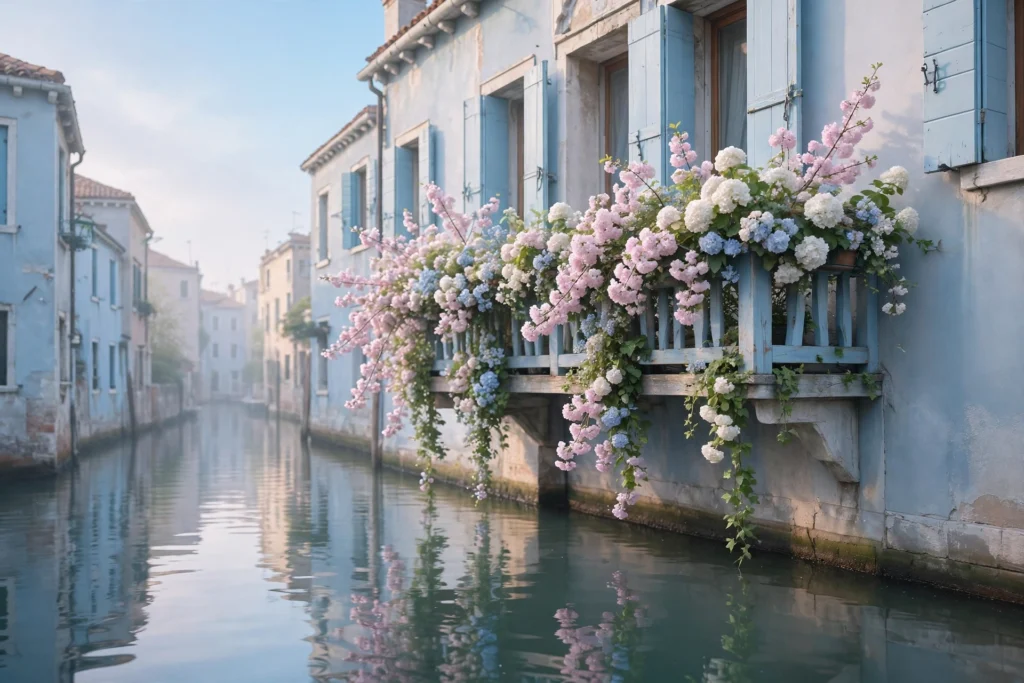
There is no single best month for Venice, only trade-offs. The city is at its most comfortable in the shoulder seasons, at its most atmospheric in winter, and at its most overwhelming in high summer. Choose the season that matches what you care about most — weather, crowds, prices or festivals — and plan around it rather than hoping for all four at once.
April to early June is the sweet spot for most first-time visitors. Days are warm enough to sit outside, the light on the canals is at its best, and the crowds, while real, have not yet reached their July peak. Late September through October is the other sweet spot: the summer heat fades, the light turns golden, and the pace of the city slows. March is cooler and quieter, with a real chance of crisp, bright days, and it is a good month if you prefer walking to sitting outside.
July and August are the hardest months. Venice becomes hot, sticky and humid, the narrow streets fill with slow-moving crowds, and hotel prices reach their highest. If summer is your only option, plan your sightseeing for the early morning and late afternoon, take a midday break, and drink plenty of water. The Lido, the long sandy island across the lagoon, is the local escape from the heat — a vaporetto ride away, with a free public beach at its northern end and beach clubs where you can hire a sun lounger.
November to February is the quiet season, and it has a devoted following. Crowds thin out, hotel prices fall, and the city feels local again — mist on the canals, empty campi, and restaurants full of Venetians rather than visitors. The trade-offs are real: days are short and cold, some smaller businesses close, and acqua alta, the seasonal high-water flooding, is most common from October to January. February brings the Venice Carnival, one of the most atmospheric events in Italy, when masks and costumes fill the squares — book far ahead if you come for it, because prices spike.
Venice by month at a glance
| Month | Weather | Crowds | What to know |
|---|---|---|---|
| March–April | Cool to mild, changeable | Moderate | Good walking weather; Carnival is over, spring light arrives |
| May–June | Warm, long days | High | Best balance of weather and crowds; book ahead |
| July–August | Hot, humid | Very high | Early mornings, Lido beach breaks, highest hotel prices |
| September–October | Warm then mild | Moderate to high | Arguably the best months; golden light, slower pace |
| November–January | Cold, misty, short days | Low | Cheapest and quietest; acqua alta most likely |
| February | Cold | High during Carnival | Carnival atmosphere; book months ahead |
Acqua alta: high water, explained simply
Acqua alta is the seasonal high tide that puts water into Piazza San Marco and the lowest streets, usually between October and January and often around a new or full moon. Since the MOSE mobile flood barriers came into operation, regular serious flooding has become much less common, but the lowest parts of the city — St Mark’s Square and the area around the Rialto market — can still get wet during higher-than-normal tides. It is rarely a disaster for visitors: the water usually lasts under an hour, the city puts out raised wooden walkways across the square, and many travellers find it strangely beautiful. Pack waterproof shoes or cheap disposable overshoes if you visit in the high-water season, and check the tide forecast on the morning you plan to visit St Mark’s. In January and February the opposite can happen — very low tides that leave some smaller canals muddy and boats sitting low. It looks odd in photographs and changes nothing about getting around on foot.
How Many Days Do You Need in Venice
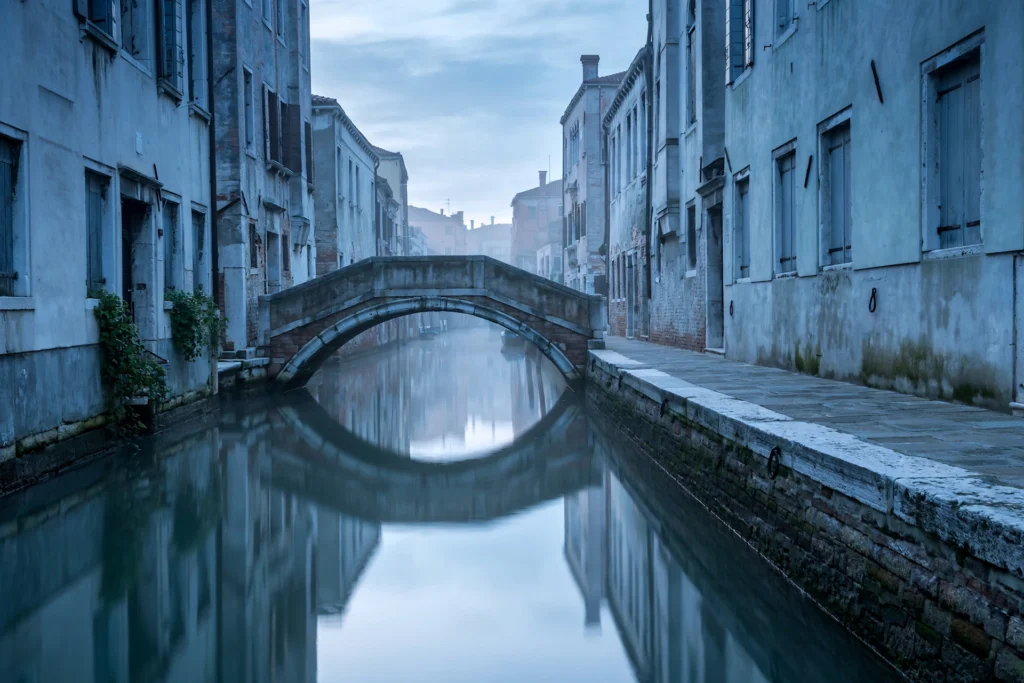
Two full days is the minimum for a first visit, three days is the comfortable answer, and four or five days is what turns Venice from a checklist into a place you actually remember. A single day is possible — many people do it — but it leaves you with the crowded route between the station, the Rialto and St Mark’s, and almost nothing else. If you are building a wider Italy trip, the same logic that shapes a good travel itinerary template applies here: leave room for the unplanned morning, the wrong turn that turns out to be the best part of the day.
With two days, you can see St Mark’s Square and the Basilica, the Doge’s Palace, the Rialto and the Grand Canal, eat properly in Cannaregio or Dorsoduro, and take one lagoon trip to Murano and Burano. With three days, add a slow morning getting lost in Castello, an evening gondola or traghetto ride, and a proper look at the art of Dorsoduro — the Peggy Guggenheim Collection and the Accademia. With four or five days, add the Lido, Torcello, a day trip further afield such as Verona or Padua by train, and the luxury of revisiting a favourite campo just to sit there.
The strongest argument for staying longer is not the sights. It is the rhythm. Venice in the middle of the day belongs to the crowds. Venice before nine in the morning and after seven in the evening belongs to the people who live there and the visitors who stayed the night. If you can only manage one night, take it — it is worth more than an extra half-day of sightseeing. Travellers who have spent time in other European capitals will recognise the pattern from our London travel guide: the famous centre is only part of the city, and the best hours are the ones most visitors miss.
Getting to Venice: Marco Polo Airport and Trains
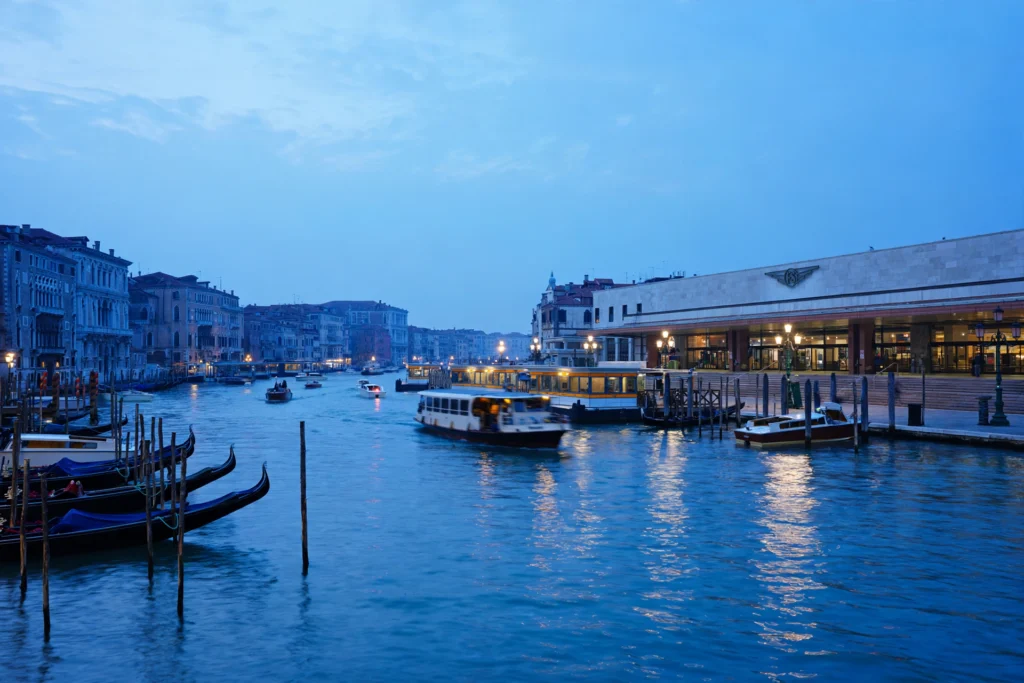
Most visitors from the United States fly into Venice Marco Polo Airport (VCE), on the mainland about 12 kilometres from the historic centre. Direct seasonal flights run from New York, Boston and other major US cities; otherwise connect through a European hub and continue to Venice, or fly into Milan or Rome and take the train. Treviso Airport (TSF), about 30 kilometres away, is served mainly by budget airlines and is cheaper but less convenient — allow extra time and check the bus connection before booking.
From Marco Polo Airport into the city
| Option | Time | Cost (2026, planning range) | Best for |
|---|---|---|---|
| ACTV Aerobus line 5 to Piazzale Roma | About 20–25 minutes | €10 one way | Cheapest and fastest; then walk or take a vaporetto |
| ATVO express coach to Piazzale Roma | About 20 minutes | About €12 one way | Direct coach with luggage space |
| Alilaguna water bus | About 60–90 minutes to San Marco | €18 one way, €32 return | Scenic arrival; stops near many hotels |
| Private water taxi | About 25–40 minutes | Around €120–€140+ per boat | Luggage, late arrival, hotel on the water |
| Land taxi to Piazzale Roma | About 20 minutes | Around €40 fixed fare | Small groups with heavy bags |
The bus is the sensible default. The ACTV Aerobus (line 5) runs from the airport to Piazzale Roma, the road terminus at the western edge of the historic centre, where every road vehicle stops because no car, coach or taxi can enter the old city. From Piazzale Roma you walk or take a vaporetto. A combined ticket that adds 90 minutes on the rest of the ACTV network costs about €18 — useful if your hotel is a boat ride away. The Alilaguna water bus is slower but it is an arrival in itself: it crosses the lagoon and drops you at a stop near your hotel, which matters when you are carrying luggage over bridges. A private water taxi is the fastest way to a waterside hotel and the most expensive; agree the total price before boarding. Confirm all fares at the airport ticket office or on the operator’s site before you travel.
Arriving by train
Venezia Santa Lucia station sits right on the Grand Canal, and stepping out of it is one of the great arrivals in Europe — water and palaces where you expected a taxi rank. High-speed trains connect Florence to Venice in about two hours, Rome in about four hours and Milan in about two and a half hours; these are planning times, and the exact journey depends on the service you book. Book through Trenitalia, Italy’s national rail operator, and buy early for the cheapest fares — walk-up prices on the fast trains are much higher. If you are combining Venice with other Italian cities, the train is almost always better than flying between them. If your train arrives at Venezia Mestre, on the mainland, it is a short hop to Santa Lucia — do not get off at Mestre by mistake and assume you are in Venice.
If you drive, do not drive into Venice — there is nowhere to drive to. Park at Tronchetto, the large car park before Piazzale Roma, or better still leave the car at Mestre and take the ten-minute train in. Piazzale Roma’s car park fills up and the one-way system around it can eat an hour at peak times. Wherever you park, leave nothing visible in the car.
Getting Around Venice: Vaporetto, Walking and Gondolas
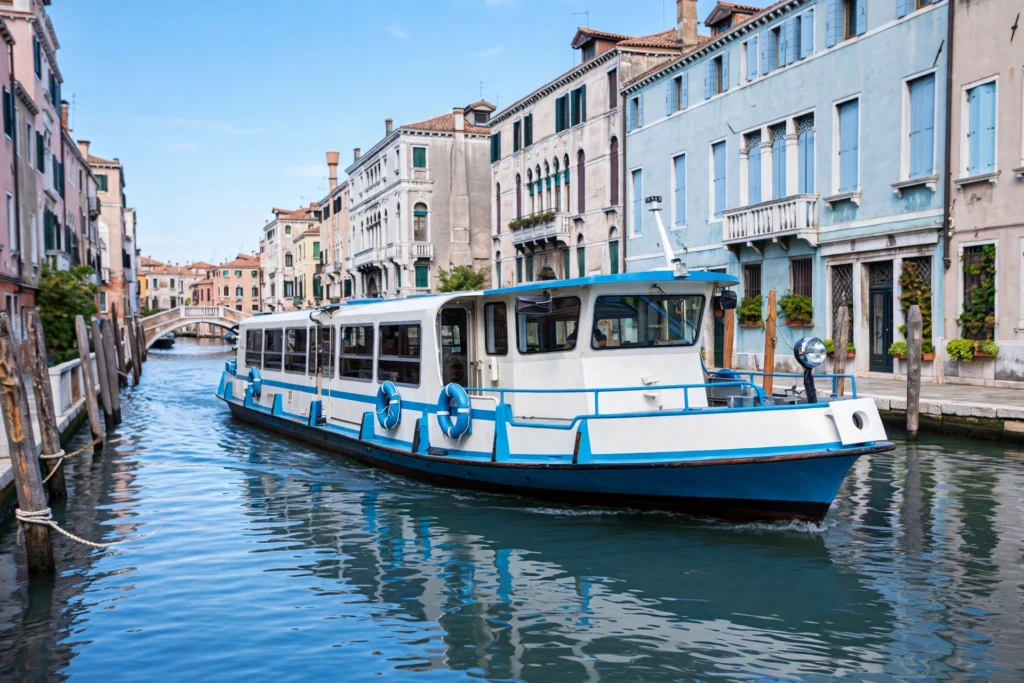
Venice has no cars, no bikes and no metro in the historic centre. You walk, or you travel by boat. Once you accept that, navigation becomes simple — and far more enjoyable. The historic centre is compact: you can cross it on foot in under an hour, and most of the famous sights are within a thirty-minute walk of each other. The mistake first-time visitors make is seeing Venice through the vaporetto map and calculating the nearest boat stop for every journey. Often it is quicker and cheaper to walk.
Walking: the real transport system
Venice’s streets are called calli, its squares campi, and its canals are crossed by more than 400 bridges, most of them with steps. Wear comfortable shoes with grip — the paving stones are hard on the feet and slippery when wet, and flip-flops are a bad idea in a city of steps and stone. Follow the yellow signs pointing to San Marco or Rialto when you need your bearings, and accept that getting lost is part of the experience. The city is an island; you cannot get truly lost for long, and the wrong turn is often the best part of the day. Walk on the right, overtake on the left, and do not stop dead in the middle of a narrow street to take a photograph — think of the calli as real roads, because for Venetians they are.
The vaporetto: the water bus
The vaporetto, run by the public transport operator ACTV, is the water bus network that runs along the Grand Canal, around the city and out to the islands. Line 1 runs the full length of the Grand Canal, stopping at nearly every dock, and it is the best cheap sightseeing ride in Venice — sit at the front or back for an unobstructed view. Line 2 is faster, with fewer stops. Other lines serve the lagoon islands, the Lido and the Giudecca Canal. Buy tickets before boarding at a Venezia Unica office, a self-service machine, an authorised retailer or in the AVM Venezia app, and validate at the gate at the start of every journey and at every change of boat. A passenger found without a valid ticket can be fined heavily on the spot, so do not treat validation as optional. Tickets are sold through Venezia Unica, the city’s official portal, which also sells museum and event passes.
ACTV vaporetto fares, 2026
| Ticket | Price (2026) | Valid for | Breaks even after |
|---|---|---|---|
| Single ticket | €9.50 | 75 minutes, one direction, changes included | — |
| 24-hour pass | €25 | 24 hours from first validation | 3 rides |
| 48-hour pass | €35 | 48 hours | 4 rides |
| 72-hour pass | €45 | 72 hours | 5 rides |
| 7-day pass | €65 | 7 days | 7 rides |
| Rolling Venice 72-hour pass (ages 6–29) | €27 + €6 card | 72 hours | — |
A single ticket is expensive enough that three rides in a day make the 24-hour pass cheaper, and anyone staying three days who rides the boats regularly should buy the 72-hour pass. Passes run on a rolling clock from first validation, not a calendar day, so a 24-hour pass validated at 3pm on Tuesday covers you until 3pm on Wednesday. The single ticket does not cover Alilaguna airport boats, lines 16 and 19, or the casino route. If you are aged 6 to 29, the Rolling Venice card (about €6) unlocks a 72-hour pass for about €27 — a genuine saving worth asking about. Confirm current fares on the ACTV or Venezia Unica sites before you travel, because prices change.
Gondolas and the €2 traghetto
A gondola is a tourist experience, not practical transport, and its price is fixed by the city — there is no negotiating, and anyone quoting a very different price is adding unofficial extras. The official Comune di Venezia tariff is €90 per gondola for about 30 minutes between 09:00 and 19:00, and €110 for about 35 minutes after 19:00. The fare is per boat, not per person, and a gondola carries up to five passengers, so a full boat works out at €18 each by day and €22 each in the evening. Extra time is charged in blocks, so agree the total before you step aboard, and board at an official gondola station (stazio), where the tariff must be displayed. The best rides are on the quiet side canals at sunset, not the crowded stretch of the Grand Canal at midday.
If a gondola feels too expensive, take a traghetto instead. A traghetto is an oversized gondola used as a public ferry to cross the Grand Canal at a handful of points, and it costs about €2. You stand for the short crossing, often alongside Venetians doing their shopping, and it is the cheapest gondola experience in the city. It is also genuinely useful: it saves a long walk to the nearest bridge.
Accessibility: an honest note
Venice is intrinsically not an accessible city, and anyone with mobility issues will struggle — most bridges have steps, and many streets are narrow and uneven. That said, do not assume it is impossible. The bridges along the Riva degli Schiavoni waterfront and the Zattere have ramps, and you can reach many of the main sights by vaporetto: wheelchair users pay the same reduced fare as locals, about €1.50, with a companion travelling free. The city publishes suggested step-free itineraries, and several vaporetto stops are accessible. Plan your hotel location carefully — a hotel near a vaporetto stop with step-free access matters far more than a hotel near a famous square — and contact hotels and sights directly about step-free entrances before booking. If you travel with a wheelchair or a pushchair, allow much more time than the walking times in this guide suggest.
St Mark’s Square and St Mark’s Basilica
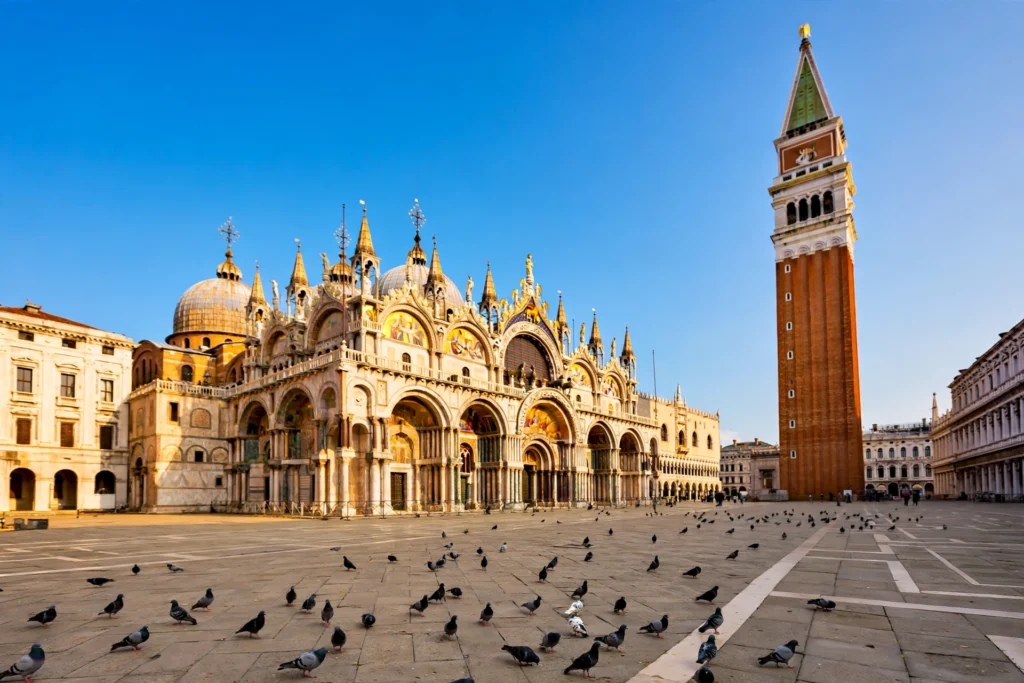
Piazza San Marco — St Mark’s Square — is the heart of Venice, and Napoleon supposedly called it the drawing room of Europe. It is the only square in the city grand enough to be called a piazza rather than a campo, and it holds the Basilica, the Doge’s Palace, the Campanile bell tower and the long arcades of the Procuratie, all in one sweeping space. Come here twice: once in the middle of the day to see it in full, and once early in the morning or late in the evening, when the crowds thin and the mosaics catch the low light.
St Mark’s Basilica dominates one end of the square with its golden mosaics, Byzantine domes and carved facade. Entry to the basilica itself is free, but you must book a timed entry slot in advance during busy periods, and the queue without a booking can be very long. Inside, the gold mosaics cover the domes and walls, and the Pala d’Oro, the golden altarpiece, is worth the small extra charge. Dress rules apply: cover your shoulders and knees to enter, so keep a wrap or shirt in your bag. The Campanile, the tall brick bell tower, gives the best panoramic view in Venice — the rooftops, the lagoon and the islands spread out below you — and it is worth the lift ride on a clear day.
The square floods during acqua alta, and the city puts out raised wooden platforms when water levels rise, so do not be surprised to see people walking on boards across the piazza in autumn and winter. Do not feed the pigeons — it is fined — and do not sit on the pavement or eat a picnic in the square; Venice fines behaviour that would be harmless elsewhere, because a fragile city that receives tens of thousands of visitors a day cannot absorb it from everyone. A coffee at one of the historic cafes under the arcades, with live music, is a classic Venice experience and a famously expensive one: check the menu price for table service before you sit down, because the same coffee costs far less standing at the bar. That is true across Italy, not just in Venice, and it is the single most useful money rule in this guide.
Doge’s Palace and the Bridge of Sighs
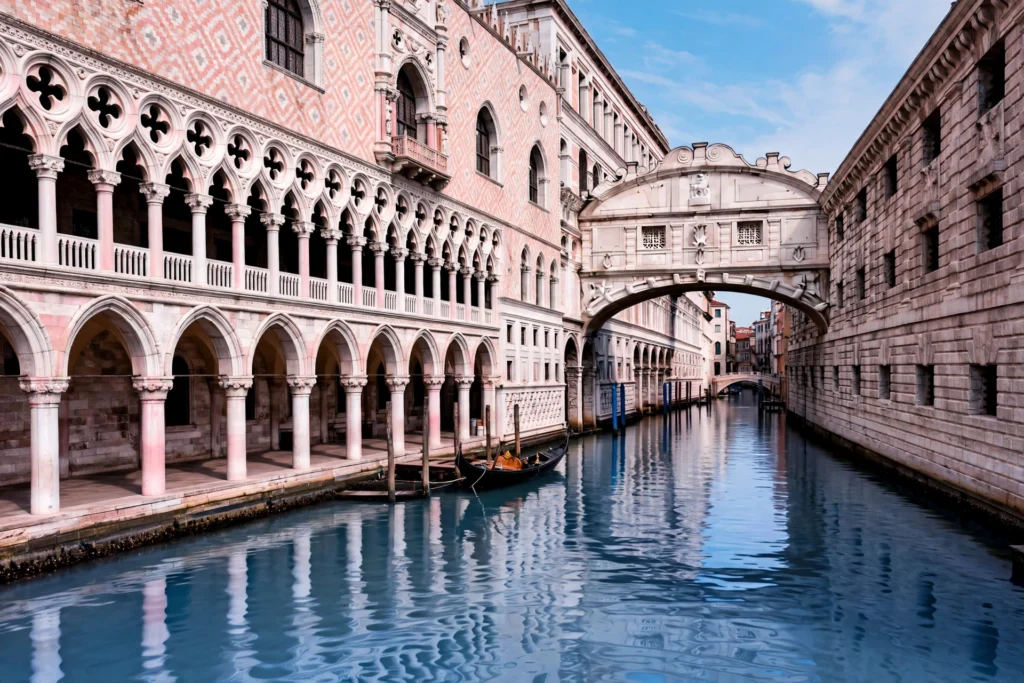
The Doge’s Palace, the Palazzo Ducale, stands next to the Basilica on the waterfront. For centuries it was the seat of Venetian government and the home of the Doge, Venice’s elected ruler, and its pink-and-white diamond-patterned facade is one of the most recognisable buildings in Italy. Inside are vast ceremonial rooms decorated with paintings by Tintoretto and Veronese, the Scala d’Oro, the golden staircase, and the armoury. Book tickets in advance — this is one of the two sights, with the Basilica, where a walk-up visit in high season can mean a long wait.
The palace’s most famous feature is the Bridge of Sighs, the enclosed limestone bridge that connects the palace to the prison across the canal. Prisoners crossed it from the courtrooms to the cells, and the name comes from the sigh they were said to give at their last view of the lagoon. You cross it as part of the palace visit, through the route that includes the cells. The best view of the bridge itself is from the Ponte della Paglia, the small bridge beside the palace on the waterfront — go early, because it is one of the most photographed spots in the city and the crowd there is constant by mid-morning.
Allow at least two hours for the palace, and consider the Secret Itineraries tour, which takes you into the rooms behind the public chambers — the Doge’s offices, the archives and the prison cells — if you want more than the standard route. Combined tickets with other civic museums can be good value if you plan to visit several, and they are sold through the official Venezia Unica portal. If you are travelling with children, the palace works better than you might expect: the Bridge of Sighs, the armoury and the sheer scale of the Great Council Hall give them something to look at in every room, and the visit is mostly indoors, which helps on a hot or rainy day.
The Grand Canal and the Rialto Bridge
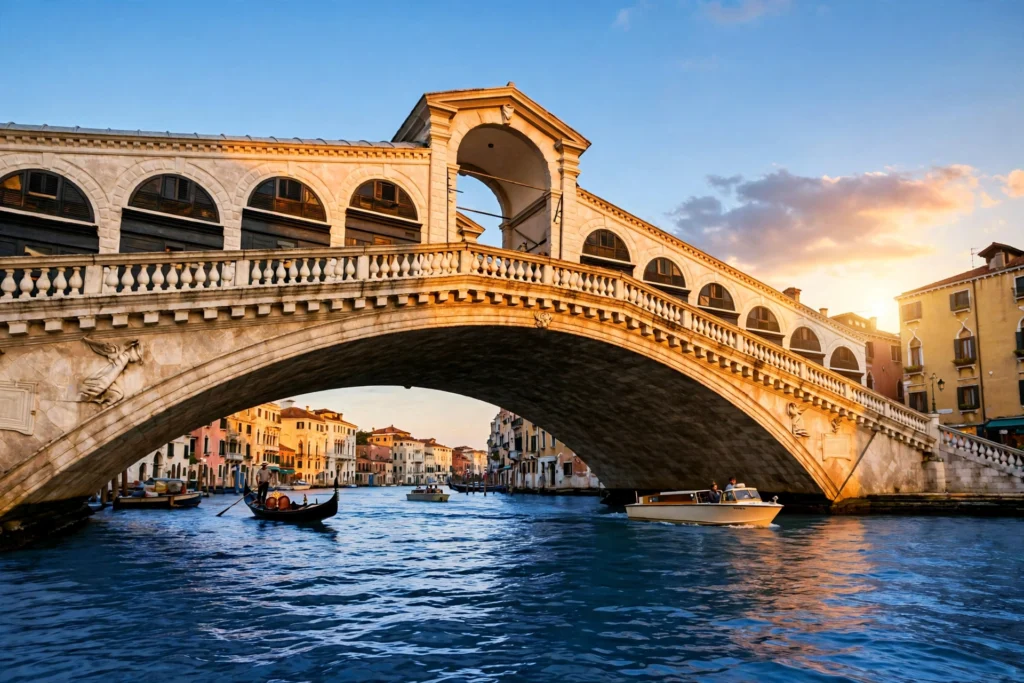
The Grand Canal cuts through Venice in a broad reverse-S shape, about 3.8 kilometres long, lined on both sides with palaces and churches built over centuries. It is the city’s main street, and the best way to see it is from the water. Take vaporetto Line 1 from Piazzale Roma or the train station all the way to St Mark’s, and watch the palaces pass: Ca’ d’Oro, with its delicate Gothic tracery; Ca’ Rezzonico, now a museum of eighteenth-century Venice; the Fondaco dei Turchi; and Santa Maria della Salute, the great domed church that anchors the entrance to the canal. Go in the late afternoon, when the light turns the water gold and the commuter rush has eased.
The Rialto Bridge is Venice’s most famous bridge, spanning the Grand Canal near its midpoint. Completed in 1591, it is a single stone arch lined with shops, and the view from the top — down the canal in both directions — is one of the great views in the city. Cross it early in the morning, before the crowds arrive, and come back at sunset. Just north of the bridge, the Rialto Market has operated in some form for centuries. The fruit and vegetable stalls open early, the fish market is at its best before 10am, and the surrounding streets hold some of the best bacari in the city. It is also where you see Venice working: restaurant owners buying the morning’s catch, delivery boats unloading, and Venetians shopping for dinner.
The other three bridges over the Grand Canal — the Accademia Bridge, the Scalzi Bridge by the station, and the modern Constitution Bridge at Piazzale Roma — are worth knowing because they shape how you walk the city. The Accademia Bridge, a wooden bridge in Dorsoduro, gives one of the finest views of the canal and the Salute, especially at sunset, and it is the crossing to use when you want to escape the Rialto crowds for the quieter southern side of the city.
Dorsoduro and Cannaregio: Venice Beyond the Crowds
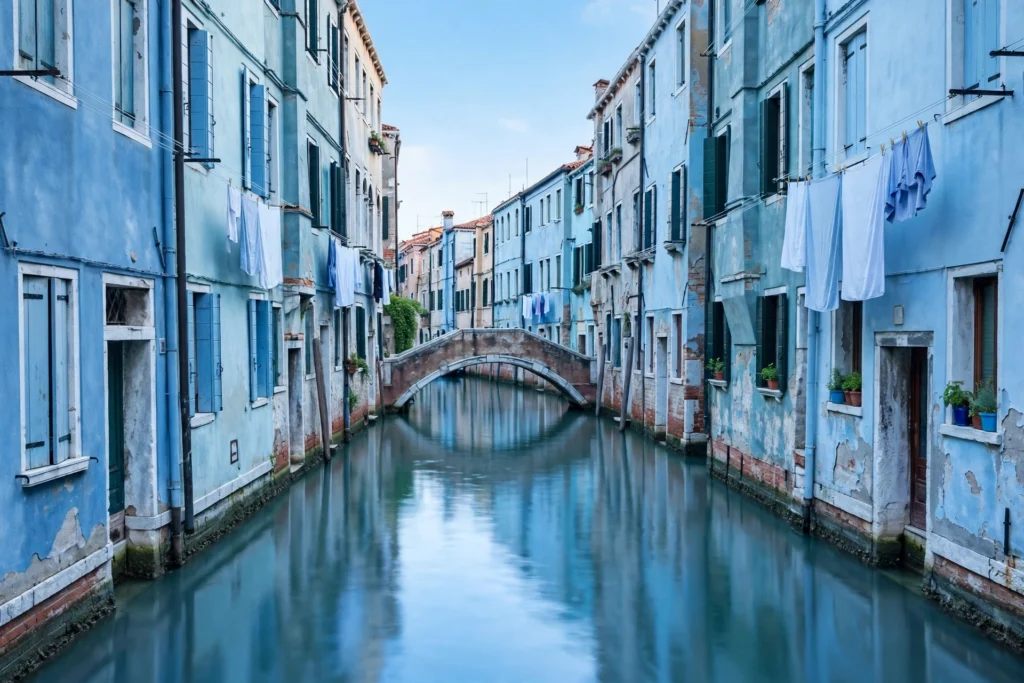
Ninety percent of visitors follow the same route between the station, the Rialto and St Mark’s. The other Venice is three minutes off that path, and it is where the city actually lives. If you only see the famous centre, you will leave thinking Venice is a theme park. Spend half a day in Dorsoduro and Cannaregio and you will leave thinking it is a city.
Dorsoduro, the university district across the Accademia Bridge, is the most rewarding neighbourhood for art and for evening atmosphere. The Peggy Guggenheim Collection, in the American collector’s former home on the Grand Canal, holds one of the finest collections of modern art in Europe, with a sculpture garden that is a calm break from the streets. The Gallerie dell’Accademia holds the great Venetian paintings — Bellini, Giorgione, Titian, Tintoretto and Veronese — and the church of Santa Maria della Salute, at the tip of the district, is the city’s great plague church, built in thanks for deliverance from the plague of 1630. Campo Santa Margherita, the district’s big square, is where students and locals gather in the evening, and its bars are among the best places in the city for a spritz at local prices. The Zattere, the long sunny waterfront along the Giudecca Canal, is the place for a slow walk with views across to the island of Giudecca.
Cannaregio, the largest of the six districts, stretches from the station to the northern lagoon, and it feels the most residential. The Jewish Ghetto, the oldest in the world, is here — a quiet, dignified quarter with synagogues, a museum and kosher restaurants, and a history that deserves an unhurried visit. The Fondamenta della Misericordia and the Fondamenta dei Ormesini are the canalside streets where Venetians eat and drink, with bacari and small restaurants that do not need a view to fill their tables. Further east, towards the lagoon, the streets empty out entirely, and you can walk for twenty minutes and meet almost no one. Castello, the largest district, rewards the same approach: the Arsenale, the great shipyard that built Venice’s fleet, the church of San Zanipolo, and the quiet residential streets around the Giardini, where the Biennale gardens sit. Travellers who enjoyed the neighbourhood-first approach in our Budapest travel guide will recognise the method: pick one district, walk it slowly, and let the famous sights wait until tomorrow.
Murano, Burano and Torcello: Lagoon Island Day Trips
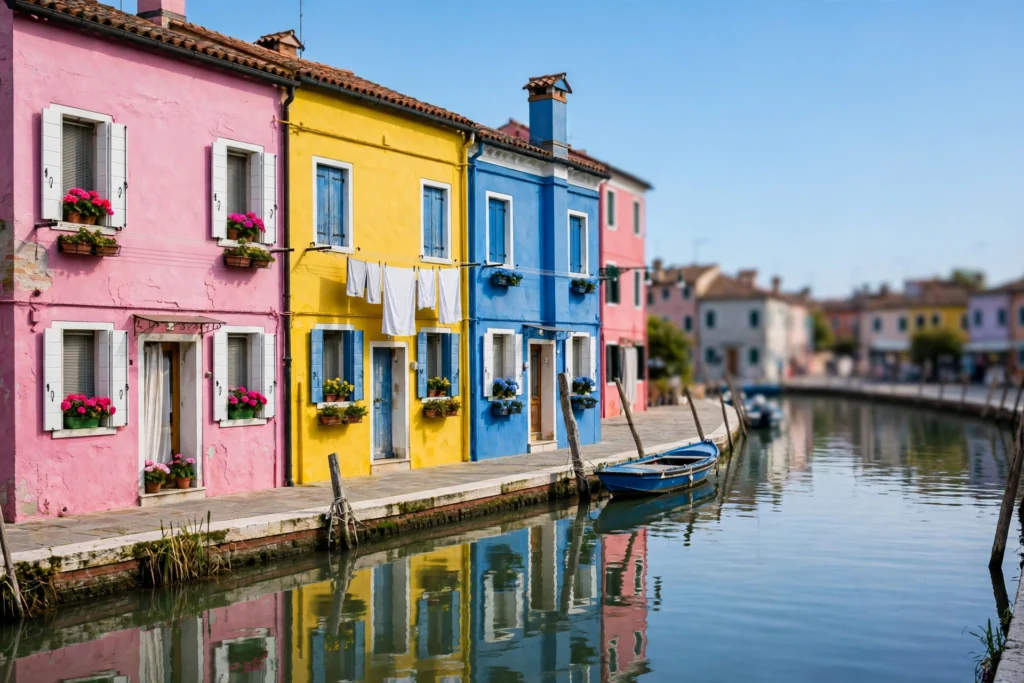
The lagoon islands are the easiest day trips in Venice and the best antidote to a crowded centre. All three are reached by vaporetto from Fondamente Nove, on the northern edge of Cannaregio, and a 72-hour pass covers the journey. Go on a weekday if you can, start early, and visit the islands in the order that suits the light: Murano in the morning, Torcello at midday, Burano in the afternoon, when its colours are at their brightest.
Murano is the island of glass. Venetian glassmakers have worked here since 1291, when the city moved them from the main island to reduce the fire risk from their furnaces. You can watch artisans blow glass in workshops along the main canal — some demonstrations are free, others charge a small entry fee — and the Glass Museum tells the story of the craft. Buy carefully: a lot of cheap “Murano glass” sold in Venice is made elsewhere. Look for the Vetro Artistico Murano trademark if authenticity matters to you, and buy from a workshop you have seen working rather than from a souvenir stall. The same rule applies to any artisan purchase in Venice: real artisans specialise in one thing, their shops usually double as workshops, and they are usually delighted to show you where the work happens.
Burano is the most photogenic island in the lagoon. Its houses are painted in vivid reds, blues, yellows and greens — a tradition that helped fishermen identify their homes through the lagoon fog — and every street is a photograph. The island is also known for its lacemaking, though genuine handmade Burano lace is rare and expensive, and most of what is sold cheaply is machine-made elsewhere. The 40-minute vaporetto ride from Venice is part of the pleasure, and the island’s restaurants serve some of the best seafood in the lagoon. Go for lunch, walk the back streets after the tour groups leave, and take the vaporetto home in the late afternoon light.
Torcello is the quiet one, and the most rewarding if you like history. It was the first island in the lagoon to be settled, and its cathedral, Santa Maria Assunta, founded in 639, holds extraordinary Byzantine mosaics — including a vast Last Judgement that rivals anything in St Mark’s. The island has a handful of residents, a couple of restaurants, a small museum and a bell tower with views across the lagoon. It is the place to go when Venice itself feels like too much. Together the three islands make a full day, and they are the reason a three-day trip works better than two: the lagoon is half of Venice, and the historic centre is only the other half. Island-hopping by boat is a pleasure that travellers planning a Morocco travel itinerary or a Croatia travel guide trip will recognise — the journey is part of the destination, and the slow boat is the point.
Where to Stay in Venice by District
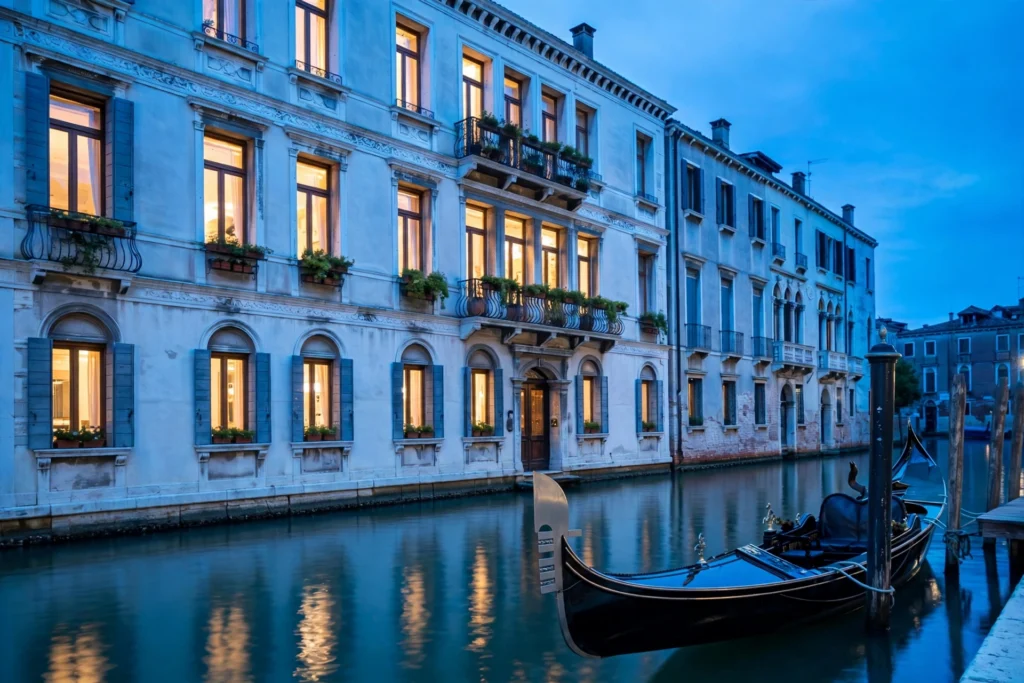
Where you stay in Venice shapes the entire trip, because the city has six districts — sestieri — and each has a different atmosphere, price and noise level. There is no single best district, only the best one for your trip. Book well in advance for summer and Carnival; good rooms sell out months ahead, and last-minute prices in the centre are punishing.
San Marco is the picture-book Venice: the Basilica, the Campanile and the Doge’s Palace are a short walk away, and the streets are lined with grand hotels and luxury shops. It is central, convenient and the most expensive, and it is also the busiest and noisiest, especially at night around the square. Choose it if you want to step out of your hotel into the famous view, and you do not mind paying for it.
Cannaregio is the best all-rounder for a first visit. It is the largest sestiere, it has a local feel, good restaurants and quieter streets, and it is still close to the train station — which matters when you arrive with luggage. The streets around the Ghetto and the Fondamenta della Misericordia are lively in the evening without being overwhelming, and prices are generally lower than in San Marco.
Dorsoduro suits travellers who want art, students and evening atmosphere. It is home to the Peggy Guggenheim Collection and the Accademia, the Zattere promenade is one of the best walks in the city, and Campo Santa Margherita is the liveliest square after dark. It is a good balance of access and atmosphere, and a good choice if you plan to spend your evenings out.
Castello is the largest sestiere and the least touristy. Its eastern half is residential and quiet, with good-value accommodation compared to San Marco, and it is a short walk from the square without being in the middle of the crowds. Choose it if you want to wake up in a neighbourhood rather than a postcard.
San Polo and Santa Croce, the two smallest districts, sit between the station and the Rialto. San Polo holds the Rialto Market and some of the best bacari in the city; Santa Croce holds Piazzale Roma and the port, which makes it practical for arrivals and departures but less atmospheric. Both are good choices if you want to be central without paying San Marco prices.
Staying on the mainland in Mestre is the budget option: hotels are much cheaper, and the train to Santa Lucia takes about ten minutes. It is practical, but you will miss the experience of waking up in the city itself — the early morning and the evening, which are the best hours. If your budget is tight, consider one night in the historic centre and the rest in Mestre, rather than all your nights on the mainland. Wherever you stay, check the location on a map before booking: a hotel that looks central may be a twenty-minute walk over six bridges from the nearest vaporetto stop, and that matters with luggage. Also confirm the tourist tax (tassa di soggiorno), which your accommodation collects on top of the room rate — it varies by hotel category and season, and it is separate from the day-tripper access fee discussed below.
How Much Does Venice Cost: Budget and Planning Ranges
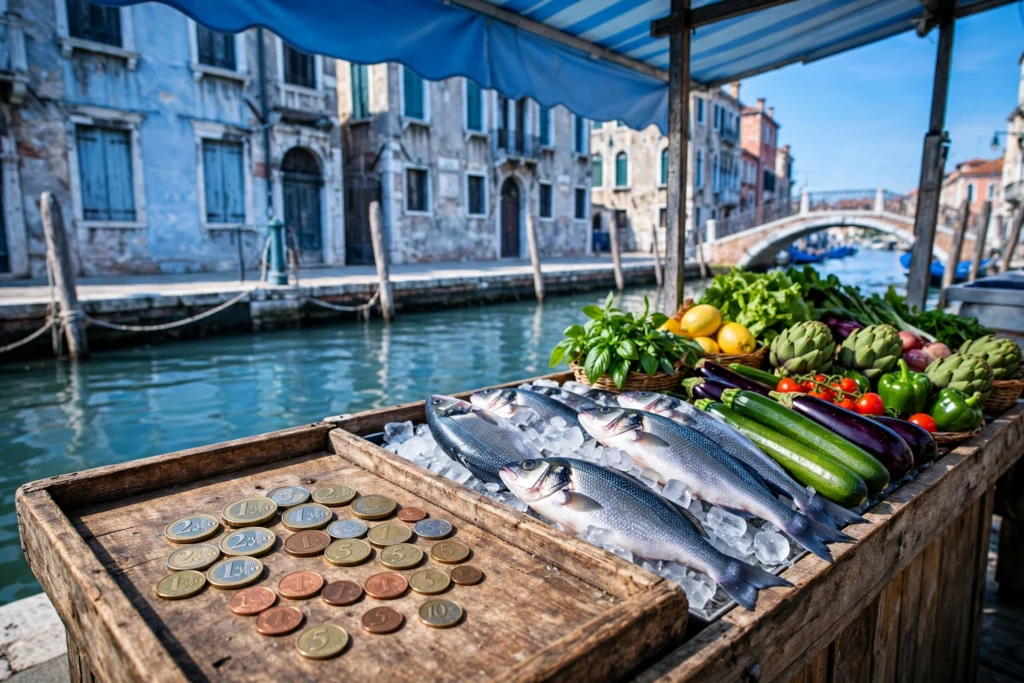
Venice has a reputation for being expensive, and it can be — but it is also a city where a coffee standing at the bar costs a couple of euros and a plate of cicchetti can be dinner. The difference between an expensive trip and a reasonable one is mostly about where you eat, where you sleep and how you move. The table below is a planning range for one person per day, in euros, based on 2026 prices checked against official sources. Confirm figures before you travel; prices change, and your own choices matter more than any table. For a full method of building a trip budget, our guide on how to prepare a travel budget walks through the same categories step by step.
| Daily cost | Budget | Mid-range | Comfortable |
|---|---|---|---|
| Accommodation (per person, shared room) | €40–€70 | €80–€150 | €180–€350+ |
| Food and drink | €25–€40 | €50–€80 | €90–€150+ |
| Transport (vaporetto pass averaged) | €15–€25 | €15–€25 | €25–€45 |
| Sights and museums | €0–€15 | €15–€30 | €30–€50 |
| Total per day | €80–€150 | €160–€285 | €325–€595+ |
A three-day mid-range trip for one person, excluding international flights, therefore lands roughly in the €500–€850 range as a planning figure — before a gondola ride, which at €90 per boat is best shared between up to five people. A budget traveller who stays in a hostel, eats cicchetti and pizza, walks everywhere and uses a 72-hour vaporetto pass can manage on far less; a traveller who eats every meal on St Mark’s Square and takes water taxis will spend far more. The same spread applies in other expensive European cities — our Singapore travel guide and Iceland travel itinerary show the same pattern, where the hotel and the restaurant choices decide the total.
Where the money goes, and how to keep it down
Food is the biggest variable. A spritz and a plate of cicchetti standing at a bacaro costs a few euros; a three-course dinner with a view of the Grand Canal can cost ten times as much. Eat your main meal at lunch, when many restaurants offer better value, and eat dinner in Cannaregio or Dorsoduro rather than on the square. Drink the house wine, which is usually good and cheap, and drink coffee standing at the bar, where it costs a fraction of the table price. Carry a reusable water bottle: Venice has public drinking fountains, fontanelle, across the city, and the tap water is safe to drink.
Transport is the second variable. A 72-hour vaporetto pass at €45 beats single tickets the moment you ride five times in three days, and walking is free. Do not buy a pass and then walk everywhere, and do not pay €9.50 a ride when a pass would have been cheaper — decide on the first morning based on your itinerary, not on the first boat you see. Sights are the third variable: the Basilica is free to enter, many churches are free or ask a small donation, and a combined museum pass beats paying separately if you visit several civic museums. Book the two big sights in advance and leave the rest flexible.
What to Eat in Venice: Cicchetti, Seafood and Coffee Rules
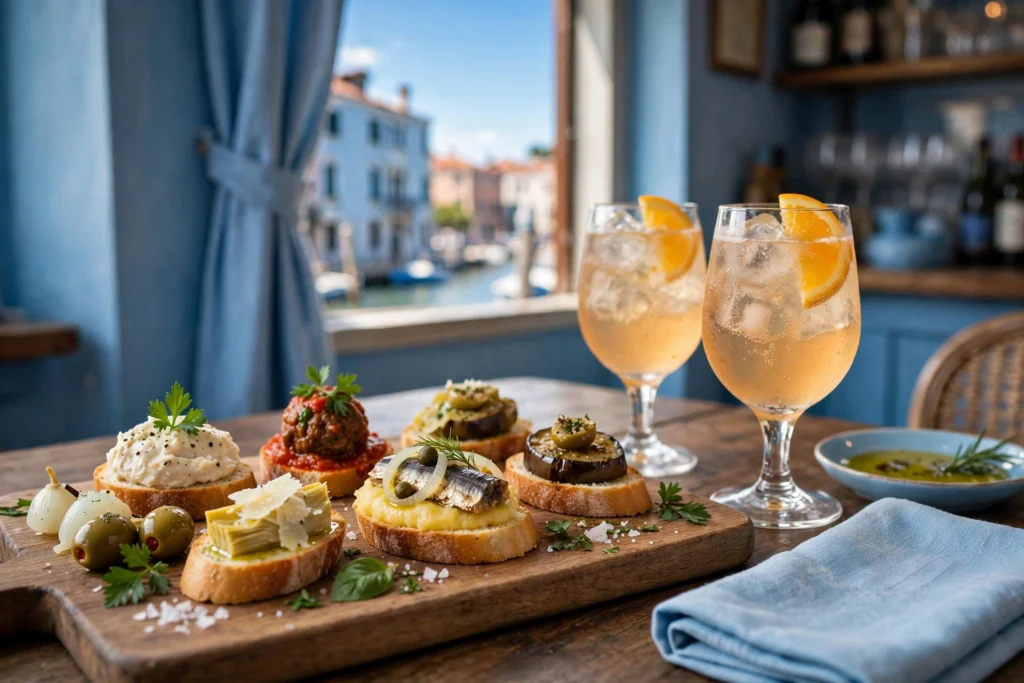
Venetian food reflects the city’s position between the lagoon and the trading routes of the east. Seafood dominates, the flavours are different from the rest of Italy, and the best meals are often the cheapest — eaten standing up, in a crowded little bar, with a glass of wine in your hand. If you only eat one thing in Venice, make it cicchetti.
Cicchetti are Venice’s answer to tapas: small snacks served on bread or on sticks in bars called bacari. A plate of them — salt cod whipped into a cream, sardines in saor, meatballs, soft cheeses, grilled vegetables — with a small glass of local white wine called an ombra, is an affordable and social way to eat, and it is how Venetians eat. Head to the Rialto area, the streets around Campo Santa Margherita in Dorsoduro, or the Fondamenta della Misericordia in Cannaregio for the best selection. Stand at the bar, order what looks good, and move on to the next bacaro. A cicchetti crawl is dinner, entertainment and a walking tour in one, and it costs a fraction of a restaurant meal.
Sarde in saor is the signature dish to try: sweet and sour sardines marinated with onions, raisins and pine nuts, a recipe that dates back to the city’s trading days and uses ingredients that once arrived by ship from the eastern Mediterranean. It tastes better than it sounds. Other dishes to look for are bigoli in salsa (thick spaghetti with anchovy and onion sauce), risotto al nero di seppia (black squid ink risotto), fritto misto (mixed fried seafood), and baccalà mantecato (whipped salt cod). Seafood is priced by weight in some restaurants — look for all’etto on the menu — and a price that looks low per 100 grams can become an expensive plate, so always ask the total before ordering.
The spritz is the drink of the city. The Aperol Spritz originated in the Veneto region, and in Venice you will also see the Campari Spritz and the Select Spritz — Select is the local bitter liqueur, and purists prefer it. An early evening spritz at a canalside bar as the light fades is one of the simple pleasures Venice does better than anywhere. Coffee follows Italian rules: a cappuccino is a morning drink, an espresso after a meal is normal, and the price depends on where you drink it. Standing at the bar is cheap; sitting at a table on St Mark’s Square is not. Always check the menu before ordering, ask the price of daily specials, and watch out for a cover charge (coperto) added to the bill — it is normal in Italy, but it should be printed on the menu.
Avoid restaurants with a photo menu facing the canal, a tout outside inviting you in, or a menu translated into six languages with pictures of every dish. Walk five minutes in any direction from the main sights and the food gets better and cheaper at the same time. This is the same rule that works in every tourist city, from Lisbon to Budapest: the restaurant that needs to advertise to you is rarely the one the locals eat in.
Venice Access Fee, Crowds and Tourist Traps: What to Know Before You Go
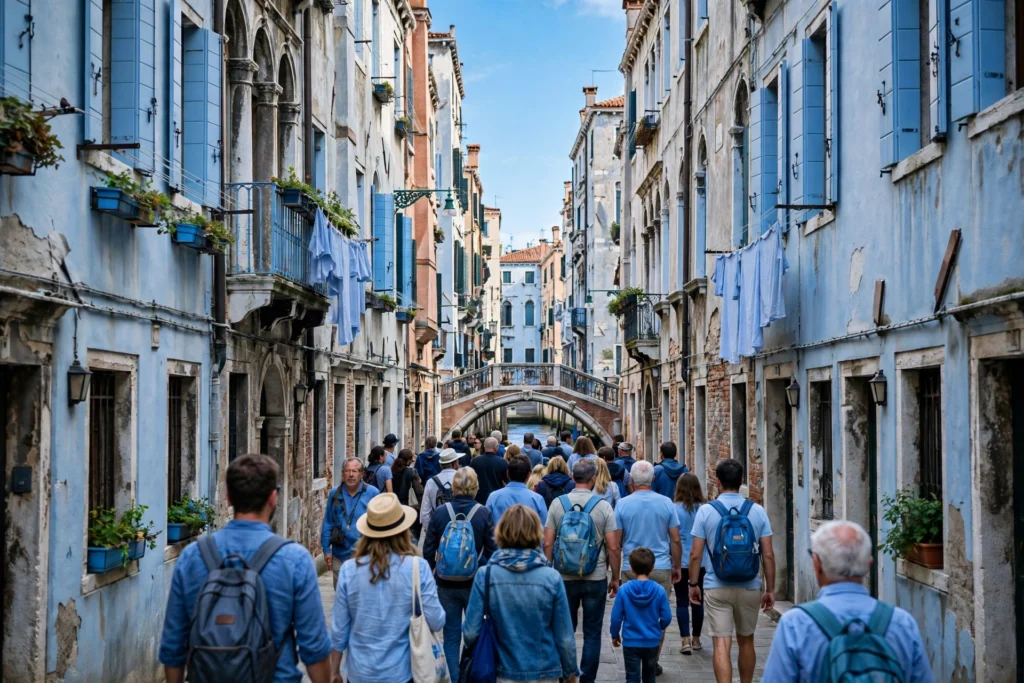
Venice’s day-tripper access fee is the most misunderstood rule in the city, and it is worth getting right before you travel, because the rules change every year and a lot of what you read online is out of date.
The access fee: the current position
The Venice Access Fee (Contributo di Accesso) is a fee charged by the City of Venice to day visitors entering the historic centre on selected busy days. In 2026 it applied on 60 days between 3 April and 26 July, between 08:30 and 16:00, and it cost €5 per person if booked at least four days ahead and €10 if booked later. Children under 14 were exempt, and overnight guests were exempt from the fee itself — they already pay the city’s lodging tax — although during the trial they still had to register for an exemption code. The fee did not apply to Murano, Burano, Torcello or the Lido, only to the historic centre.
Here is the part that matters for your trip: the 2026 trial period has ended. The official access fee portal states that as of 27 July 2026 the access fee does not apply, and it is possible to visit Venice without making any payment or requesting an exemption. The fee will be payable again from 2027, with the arrangements to be announced by 31 December 2026, and the 2027 dates published on the official portal. If you are travelling in 2027, check the official portal at cda.ve.it a few weeks before you travel and only ever pay through that official site — there are copycat sites, and the city warns against them. Do not pay anyone on the street for an access fee, and do not trust a third-party site that claims to sell it. If you are travelling in the rest of 2026, there is no fee to pay and no code to obtain.
Avoiding the crowds
The crowds are real, and they are concentrated. The route from the station to the Rialto to St Mark’s carries almost everyone, and at midday in summer it can feel like a slow-moving queue. The fixes are simple and they work: start early, stay overnight, and leave the main route. Visit St Mark’s Square before nine in the morning or after six in the evening. See the Rialto at sunrise. Eat lunch at noon when the tour groups are eating, and sightsee while they are at lunch. Spend your afternoons in Dorsoduro, Cannaregio and Castello, where the streets are quiet. Book the Basilica and the Doge’s Palace in advance for the first slot of the day. And remember that a day trip is the worst way to see Venice — the city is at its most crowded in the middle of the day, which is exactly when a day-tripper is there, and at its best in the hours a day-tripper never sees.
Tourist traps and fines
Venice fines behaviour that seems harmless elsewhere, and the fines are real. Do not swim in the canals, do not sit on the pavement or on the steps of a bridge to eat, do not walk around in swimwear, do not feed the pigeons, and do not ride or even push a bicycle in the historic centre. Picnics on the pavement are fined. These rules exist because a fragile city that receives tens of thousands of visitors a day cannot absorb behaviour that would be harmless if one person did it. The full list of forbidden behaviour is published on the city council’s website, and it is worth a quick read before you arrive.
On safety, Venice is very safe compared to other tourist cities, but pickpockets work the crowded places — the main sights, the route between the station, the Rialto and St Mark’s, the vaporetto pontoons and the boats themselves. Keep your bag in front of you in a crowd, do not leave anything visible in a parked car, and ignore anyone inviting you to play a betting game on a bridge or offering you something for free. If something is wrong with a bill, query it with the staff and ask them to call the police if they will not help; the emergency number in Italy is 112. The US State Department rates Italy Level 2, Exercise Increased Caution, in its advisory issued 10 September 2026, because of terrorism risk, and notes that petty crime is common in tourist areas and on public transport. Check the current Italy travel advisory before you travel, because levels can change. The same caution about crowds and pickpockets applies in any busy European capital — our Ecuador travel guide and Tanzania travel guide make the same point for their busiest places.
Shopping: what is real and what is not
Venice is full of shops selling masks, glass and lace, and much of it is imported and mass-produced. The first clue is the price: if it is much cheaper than everything else you have seen, it is likely made in a factory. The second is the shop itself: real artisans specialise in one thing, and their shops usually double as workshops — a mask-maker sells masks, a glassblower sells glass, and they are usually happy to show you where the work happens. Ask questions, look for the Vetro Artistico Murano trademark on glass, and buy the thing you saw being made rather than the thing in the window of a shop that sells everything. A mask from a real mask-maker costs more and is worth more, because it is the thing itself rather than a picture of it.
A Sample 2-Day and 3-Day Venice Itinerary
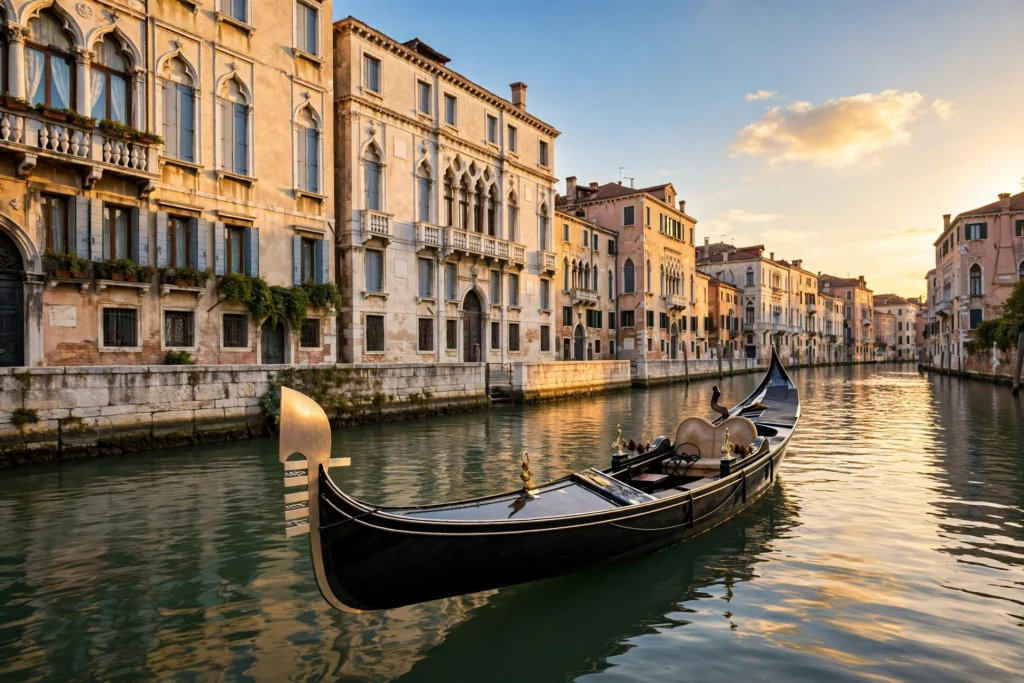
This itinerary is a starting point, not a schedule to obey. Venice rewards the traveller who leaves gaps in the day, and the best moments in the city are usually the unplanned ones. Use the structure, keep the bookings, and let the rest happen. If you are building a wider trip, the same approach works anywhere — start with the must-see sights, add one neighbourhood a day, and leave an afternoon free, as our travel itinerary template recommends.
Day 1: The classic Venice
Start early at St Mark’s Square, before the crowds arrive. Enter the Basilica in your pre-booked morning slot, climb the Campanile for the view, and walk the square while it is still quiet. Cross to the Doge’s Palace for the late morning, including the Bridge of Sighs and the prison cells, and have lunch in the streets behind the square rather than on it — the bacari around Calle Specchieri and the side streets off the Riva are a short walk and a different price. In the afternoon, take vaporetto Line 1 down the Grand Canal to the Rialto, cross the bridge, and spend an hour in the market streets. As the light fades, cross the Accademia Bridge into Dorsoduro, walk the Zattere, and eat in Campo Santa Margherita. If you have the energy, take a traghetto across the Grand Canal on the way back — €2, and a better memory than most of the day’s photographs.
Day 2: The islands and the quiet city
Take the vaporetto from Fondamente Nove to Murano in the morning and watch the glassblowers at work. Continue to Burano for lunch — the coloured houses, the seafood restaurants, the lace shops — and, if you have the time and the inclination, stop at Torcello on the way back for the mosaics in the cathedral and the quietest hour of your trip. Return to Venice in the late afternoon and spend the evening in Cannaregio: the Ghetto, the Fondamenta della Misericordia, and a cicchetti crawl that becomes dinner. This is the day that turns Venice from a sightseeing trip into a holiday, and it is the day most one-day visitors never get.
Day 3: Art, the Lido and a slow morning
If you have a third day, use it slowly. Spend the morning at the Peggy Guggenheim Collection and the Accademia in Dorsoduro, or at the Frari church in San Polo, which holds Titian’s Assumption and a calm that the Basilica cannot offer at midday. In the afternoon, take the vaporetto to the Lido for the beach — the free public beach at the northern end, or a beach club with a lounger — and swim in the Adriatic if the season allows. Come back for a final evening in Castello, the quietest district, and a last spritz in a campo where the only other customers are Venetians. A third day also gives you room for a day trip by train: Verona is about an hour away, Padua about half an hour, and both are easy returns before dinner.
What to pack for Venice
Pack light, because you will carry your bag over bridges. Comfortable walking shoes with grip are the single most important item — the paving stones are hard, the steps are many, and the streets are slippery when wet. Bring a light waterproof jacket, a wrap or shirt to cover shoulders and knees for churches, and a reusable water bottle for the city’s drinking fountains. In summer add sunscreen, insect repellent and a swimsuit for the Lido, but do not wear swimwear in the city — it is fined. In autumn and winter add waterproof shoes or disposable overshoes for acqua alta, and a warm layer for the evenings, when the lagoon wind is cold. A small day bag that closes securely helps against pickpockets on crowded boats. If you are travelling with a cat at home, our guide on how to travel with a cat covers the pet-care planning to sort before you leave; for the trip itself, pack as if you will walk ten miles a day, because you probably will. Travellers heading onward to other destinations after Venice — the best places to travel in Mexico, the best places to travel in January, or places that do not need a passport from the US, in our places to travel without a passport guide — will find the same packing logic applies: light, practical, and built around walking.
Frequently Asked Questions
How many days do you need in Venice?
Two full days is the minimum, three days is comfortable, and four or five days lets you see the lagoon islands and the quieter districts properly. One day is possible but leaves you with only the crowded route between the station, the Rialto and St Mark’s.
What is the best time to visit Venice?
April to early June and September to October are the best months for a first visit — warm enough to sit outside, with manageable crowds and good light. July and August are hot, humid and very crowded. November to February is the quietest and cheapest, with a higher chance of acqua alta flooding.
Do you have to pay the Venice entry fee?
Not for the rest of 2026. The 2026 trial of the Access Fee ended on 27 July 2026, and the official portal states that no payment or exemption is needed from that date. The fee returns in 2027, with arrangements to be announced by 31 December 2026 — check the official portal at cda.ve.it before a 2027 trip and only pay through that site.
How much is a vaporetto ticket in Venice?
A single ACTV ticket costs €9.50 and is valid for 75 minutes in one direction. Passes cost €25 for 24 hours, €35 for 48 hours, €45 for 72 hours and €65 for seven days. The 24-hour pass pays for itself from the third ride in a day. Confirm current fares on the ACTV or Venezia Unica sites before you travel.
How much is a gondola ride in Venice?
The official city tariff is €90 per gondola for about 30 minutes between 09:00 and 19:00, and €110 for about 35 minutes after 19:00. The price is per boat, not per person, and a gondola carries up to five passengers. A traghetto, the gondola ferry across the Grand Canal, costs about €2.
Is Venice worth visiting despite the crowds?
Yes — if you stay overnight and leave the main route. The crowds are concentrated on the station–Rialto–St Mark’s path in the middle of the day. Stay the night, start early, and spend your afternoons in Dorsoduro, Cannaregio and Castello, and Venice feels like a different city.
Conclusion: Venice Rewards the Slow Traveller
Venice is not a city to be ticked off. It is a city to be walked, slowly, in the early morning and the late evening, with time to get lost and time to sit in a campo with a coffee and watch the light change on the water. The sights are real — the Basilica, the Doge’s Palace, the Grand Canal — and they deserve their reputation. But the reason people return to Venice is not the sights. It is the feeling of a city with no cars, where the sound of the water replaces the sound of traffic, where every wrong turn opens onto a canal you did not expect, and where the best meal of the trip costs a few euros standing at a bar.
Plan the practical things in advance: book the Basilica and the Doge’s Palace, buy the right vaporetto pass, check the access fee rules for your dates, and choose a district to stay in rather than a hotel near a famous square. Then leave the rest open. Two or three days, a pair of good shoes, and a willingness to walk away from the crowds is all Venice really asks of you. It gives back far more than that. If Venice has put Italy on your list for a longer trip, our Colombia travel guide and Tanzania travel guide follow the same approach for very different destinations — and if you are still deciding where to go next, our travel bucket list and how to find travel inspiration guides are a good place to start. For now, though, start with Venice: book the train, pack light, and go early.
People also read:
- London Travel Guide: First-Timer’s Plan for the Capital — another walkable European capital where the neighbourhoods matter as much as the sights.
- Morocco Travel: A First-Timer’s Guide to Marrakech, Fes and the Desert — markets, medinas and slow mornings in a very different old city.
- Best Places to Travel in January — if you liked Venice in the quiet season, these are the destinations that shine in winter.
- Travel Itinerary Template: Plan Any Trip Without the Stress — the planning method behind the 2-day and 3-day itineraries above.
- How to Prepare a Travel Budget That Actually Works — build a realistic budget for Venice and every trip after it.



One Comment
Comments are closed.

[…] Venice Travel Guide: First-Timer’s Plan for Canals, Islands and Slow Mornings […]