How to Make a Travel Journal: The Complete Guide to Capturing Your Trips
Quick Answer: How Do You Make a Travel Journal?
A travel journal is a notebook — paper or digital — where you record a trip as it happens, in words, sketches, maps and the small paper scraps a trip leaves behind: ticket stubs, café receipts, boarding passes, a pressed flower, a bus ticket in a language you cannot read. You make one by choosing a format before you leave, setting up a few front pages (itinerary, contacts, budget, packing list), and then spending about 15 minutes each evening writing down the day while it is still fresh. That is the whole method. Everything else — the page types, the prompts, the maps, the food notes — is a way of filling those 15 minutes well.
This guide builds the complete version. It starts with the format decision, because paper, digital and hybrid journals behave very differently on the road, and the wrong format is the reason most journals are abandoned by day three. Then it covers the kit — what to pack so journaling stays easy instead of becoming a chore — the front pages to set up before departure, and a 15-minute evening routine that works even on tired days. After that come ten page types, each with a worked example you can copy, a bank of 30 journal prompts grouped for before, during and after the trip, advice on photos, and finally what to do with a finished journal: how to digitise it, print it, gift it or simply keep it safe.
You do not need to be artistic. That point matters enough to say twice: no artistic skill is required to keep a good travel journal. The journals that people treasure years later are rarely the prettiest ones. They are the ones with the specific details — the name of the café, the price of the ferry, the exact words a stranger said, the smell of the market at 7 a.m. — written down on the day, when the details were still there to be caught. A plain notebook and an honest 15 minutes a day will beat a beautiful blank book that never gets opened.

What a Travel Journal Actually Is (and What It Is Not)

A travel journal is a record of a trip made during the trip, for the traveller’s own use. That definition sounds obvious, but it clears up most of the confusion about what belongs in one. It is not a blog post, not a photo album, not a scrapbook made after the fact, and not a diary in the private-confessional sense — although it can hold private thoughts if you want it to. Its job is to catch the trip while it is happening, in enough detail that the person who reads it later — usually you, in a year or ten — can get back inside the days, not just remember that they happened.
The difference between a travel journal and a holiday photo album is the difference between evidence and memory. Photos show what a place looked like. A journal records what it felt like to be there: the price of the coffee, the wrong turn that led to the best meal of the trip, the argument about the map, the sound of the call to prayer at dawn, the fact that the hotel shower only ran cold. Photos forget those things within weeks. A journal written on the day does not.
It is also worth saying what a travel journal is not, because the craft-blog version of this hobby puts a lot of people off. It is not a scrapbook. Scrapbooking is a craft in its own right, and it is fine if you enjoy it, but a travel journal does not require decorative paper, layered borders or hand-lettered titles. It is not a bullet journal either, although the two share tools — a dot-grid notebook and a fine-liner pen work for both, and some travellers do run their trip planning as a bullet journal. And it is not a travel diary in the old-fashioned sense of a day-by-day account of everything that happened, written in full sentences from morning to night. That format exhausts people, and exhausted people stop writing.
The most useful way to think of it is as a field notebook. Naturalists, archaeologists and journalists have kept field notebooks for centuries: a small book, carried everywhere, filled in short bursts, with a mix of words, sketches, numbers and stuck-in scraps. The travel journals that survive in archives work the same way. Benjamin Henry Latrobe, the architect of the United States Capitol, kept a journal of his travels in America from 1796 to 1820 that mixes observations, sketches and facts — the Library of Congress holds a digitised copy of Latrobe’s journal — and he wrote in it that his father had recommended the habit to him early in life, “merely for the sake of writing down my ideas with ease and correctness.” That is still the best reason to keep one: not to produce something beautiful, but to write your ideas down with ease and correctness while they are fresh.
The three things every good travel journal does
Whatever format you choose and whatever page types you favour, a travel journal that works does three things.
First, it records specifics. “Beautiful sunset in Santorini” is not a journal entry; it is a caption. “Sunset from the steps below the castle in Oia, 7:40 p.m., wind from the north, a cat asleep on the wall, the restaurant below charging €14 for a glass of wine” is a journal entry. The difference is the detail, and detail is a habit, not a talent. The prompts and page types later in this guide are all designed to push you toward specifics.
Second, it is written on the day, or as close to the day as possible. Memory edits itself fast. By the third day of a trip, the first day has already blurred; by the end of a two-week trip, the first week is mostly gone. The 15-minute evening routine in this guide exists for exactly this reason: it is the minimum daily habit that keeps the journal honest.
Third, it is selective. A journal that tries to record everything records nothing well. The travellers who keep journals for years are the ones who learned to pick three things a day — a highlight, a surprise and one small detail — and let the rest go. The “three notes per spread” rule, which comes from experienced journal keepers, is the simplest version of this: for each day, write down the highlight, one surprise, and one detail you would otherwise forget. Everything else is optional.
Who this guide is for
This guide is written for a traveller, not a scrapbooker. If you have never kept a journal, it starts from zero and assumes no supplies beyond a notebook and a pen. If you already keep one, the page types and the prompts bank give you new material, and the format comparison and the evening routine are worth a read even for experienced journal keepers, because the routine is where most journals fail. If you are travelling with children, there is a short section on keeping a family journal and on giving children their own pages — a travel journal is one of the few travel hobbies that children genuinely enjoy, because it gives them a job on the trip. And if you are planning a trip right now, the front-pages section doubles as a planning tool: the same pages that organise your journal also organise your trip.
One more framing point before the practical part begins. A travel journal is private by default. You are not writing for an audience, you are not writing for likes, and nobody will grade it. That is a freedom, and it is the reason a journal can hold the honest version of a trip — the boring afternoon, the disappointing restaurant, the day you stayed in bed — alongside the highlights. The honest version is the one you will want to read in ten years.
Paper, Digital or Hybrid: Choose Your Format First

The single most important decision in how to make a travel journal is the format, and it should be made before you buy anything or pack anything. Paper, digital and hybrid journals each suit a different kind of traveller, and the format that matches your habits is the one you will actually keep. The format that fights your habits is the one that ends up blank after day three, however beautiful the notebook was.
Paper is the classic choice and still the most popular, for reasons that have nothing to do with nostalgia. A paper notebook works with no battery, no signal and no password. It accepts ticket stubs, pressed leaves and café napkins, which no app can. It is private in a way a phone is not — nobody glances at your screen on a train and reads your journal. And writing by hand slows you down in a useful way: you cannot transcribe everything, so you are forced to choose the details that matter, which is exactly the selectivity a good journal needs. The downsides are real too. Paper is heavy, it can be lost or soaked, handwriting is hard to search later, and a paper journal holds no photos unless you print them. If your handwriting is slow or your trip involves a lot of moving between places, paper can feel like a burden by the second week.
Digital means a notes app, a dedicated journaling app, or a document on a phone or tablet. Its strengths are the opposite of paper’s: it is weightless, searchable, backed up, and it holds photos, audio and maps alongside the words. You can write on a bus in the dark, dictate a note while walking, and find every mention of a restaurant name months later with a search. The weaknesses are equally real. A phone is a distraction machine, and opening a journal app on the same device that holds your messages and your social feeds is an invitation to do something else instead. Battery and charging matter, especially on long travel days. And a digital journal cannot hold a physical ticket stub or a leaf, which for many people is half the point.
Hybrid is the format most experienced journal keepers end up with, and it is the one this guide recommends for most readers. In a hybrid journal, paper carries the day-to-day record — the quick notes, the sketches, the stuck-in scraps — and a phone or tablet carries the photos, the voice memos and the backup. At the end of the trip, or at the end of each week, the paper pages are photographed or scanned into a digital folder, so the journal exists in two forms: a physical book to keep and a searchable digital copy that cannot be lost. Hybrid takes a little more organisation than either pure format, but it avoids the worst weakness of each: paper’s fragility and digital’s lack of texture.
| Format | Best for | Weight and bulk | Photos and scraps | Searchable later | Biggest risk |
|---|---|---|---|---|---|
| Paper notebook | Travellers who like writing by hand, collectors of ticket stubs and ephemera, trips with unreliable power or signal | One notebook, roughly 200–400 g, plus a pen and a glue stick | Holds physical scraps directly; photos need printing | No — you find things by the index page or by flicking through | Lost, soaked or left behind; no backup unless you photograph the pages |
| Digital app | Light packers, fast writers, travellers who want photos and words in one place | None beyond the phone or tablet you already carry | Photos, audio and maps built in; no physical scraps | Yes — full-text search and tags | Distraction, dead battery, app changes or a lost phone with no backup |
| Hybrid (paper + phone) | Most travellers; anyone who wants the texture of paper and the safety of a backup | A small notebook plus the phone you already carry | Scraps in the book, photos on the phone, pages photographed weekly | Partly — the photographed pages are searchable by date and folder | Needs a weekly 10-minute habit to photograph the pages; without it, it is just paper |
How to decide in two minutes
Answer three questions honestly. First: do you write faster by hand or by typing? If typing is much faster, digital or hybrid will feel easier on tired evenings. Second: do you care about keeping physical things — ticket stubs, maps, receipts? If yes, you need paper in the mix, so paper or hybrid. Third: will you have reliable power and a safe place to charge every night? If not, paper is the safer choice, because a notebook never runs out of battery. If your answers point in different directions — fast typer who loves ticket stubs, for instance — that is exactly what hybrid is for: write the quick notes on the phone during the day, stick the scraps and write the evening entry in the notebook at night.
One practical note on size, whichever format you choose. The most common mistake is buying a notebook that is too big. A large hardback looks wonderful on a desk and stays in the hotel room on the road. The working size for a travel journal is A5 or smaller — roughly 15 × 21 cm or less — because it fits in a day bag, a jacket pocket or a small cross-body bag, and a book that is with you gets written in. A5 with a dot-grid or plain layout is the usual recommendation from experienced keepers: lines are useful if you write a lot of text, dots are better if you mix words, sketches and maps, and plain pages suit people who sketch more than they write. Ruled notebooks work fine too; the layout matters far less than the size and the habit.
If you go digital, pick the tool before you leave
A digital journal fails when the tool is chosen on the road, in a moment of enthusiasm, and then abandoned because it does not fit. Pick one tool before departure and test it for a week at home: write three short entries, add a photo, try the search, and check how the backup works. The tool itself matters less than the test. A plain notes app that syncs to a cloud account is enough for most people; a dedicated journaling app adds prompts, tags and a calendar view, which some people love and others ignore. What matters is that the app works offline, backs up automatically, and exports your entries in a format you can read without the app — because an app that locks your words inside itself is a risk, not a tool. If you want to compare apps against your other travel tools, the travel apps guide covers the categories that matter on the road, including offline maps and notes.
A final point on format, and it is a warning. Do not buy a beautiful, expensive notebook for your first travel journal. A beautiful blank book creates pressure: every page feels like it has to be worthy of the book, and the first imperfect page feels like a failure. A cheap notebook creates freedom: a bad page costs nothing, and you can tear it out. The best first travel journal is a notebook you would not mind dropping in a puddle. Once the habit exists, buy the beautiful book for the second trip.
The Kit: What to Pack for Journaling on the Road

Keep the kit small. This is the single most repeated piece of advice from people who have kept travel journals for years, and it is the one beginners ignore most often. A journal kit that fills a packing cube is a kit that stays in the hotel room. A journal kit that fits in a zip pocket is a kit that comes out on trains, in cafés and on park benches. The whole point of the kit is that journaling should be possible in the gaps of a travel day, not only at a desk in the evening.
The core kit is five things: a notebook, one pen you trust, a glue stick, a small pair of scissors, and a pencil. That is the complete list for most trips. The notebook is the A5 dot-grid or plain book from the previous section. The pen should be one you have already tested — a fine-liner or a gel pen that does not bleed through the paper, does not smudge when your hand passes over it, and writes on the first stroke after a day in a bag. Test it on the actual notebook before you leave, on both sides of a page, because ink that bleeds through ruins the page behind it. The glue stick is for ticket stubs and scraps; use a glue stick, not liquid glue, because liquid glue wrinkles thin paper, takes minutes to dry and leaks in a bag. Washi tape — the thin coloured paper tape sold in stationery shops — is a useful extra: it holds a map or a ticket in place, marks a page, and peels off without tearing the paper, which ordinary sticky tape does not. The scissors are for trimming a ticket or a map to fit the page. Small scissors with blades under four inches are allowed in carry-on luggage under the US Transportation Security Administration’s rules, which is worth knowing before you pack them in a hand-luggage-only bag — the TSA’s own what can I bring page for scissors lists scissors with blades less than four inches from the pivot point as permitted in carry-on. The pencil is for sketches, for notes you might want to erase, and for writing on days when the pen has run out.
Everything beyond those five things is optional, and most of it is a trap. Coloured pens are the classic example: a set of twelve colours looks inspiring in a shop and produces exactly two outcomes on the road — either you spend your 15 minutes choosing colours instead of writing, or eleven of the pens never leave the bag. One pen, used every day, produces a more consistent and more readable journal than a rainbow used twice. The same applies to stickers, stamps, stencils and decorative paper. They add weight, they add decisions, and they push the journal toward craft and away from record. If you genuinely enjoy them, bring a small selection — a single roll of washi tape and a few stickers in an envelope, not a craft box. If you are not sure, leave them at home; you can buy a roll of tape in almost any city in the world if you miss it.
Water is the enemy of a paper journal, and a little preparation prevents the most common disaster. A zip-lock bag or a small waterproof pouch holds the notebook and pen on rainy days, on boats and at the beach, and costs almost nothing in weight. A rubber band around the notebook keeps loose scraps — the tickets and receipts you collect during the day — from falling out of the pages. And a simple habit protects the journal better than any bag: keep the notebook in the same pocket of the same bag every day, so you always know where it is and you never leave it on a restaurant table. Journals are lost the same way phones are lost: not stolen, just set down and forgotten.
| Trip type | Notebook | Pen and extras | Scraps kit | Why this version |
|---|---|---|---|---|
| City break, 3–5 days | One small A5 notebook | One fine-liner, one pencil | Glue stick, small scissors, one roll of washi tape | Short trip, many tickets and maps; the full small kit earns its place |
| Beach or island trip | A5 notebook in a zip-lock bag | One waterproof-ink pen, one pencil | Glue stick only | Sand and water are the risks; keep the kit minimal and protected |
| Long trip, 2–4 weeks | One A5 notebook plus a spare thin notebook | Two pens (one spare), pencil, glue stick | Glue stick, scissors, washi tape, a few envelopes | A spare notebook matters: a full book mid-trip with no replacement ends the journal |
| Hiking or adventure trip | Small pocket notebook, roughly A6 | One pencil, one pen | None — glue nothing on the trail | Weight and weather rule; collect scraps in a pocket and stick them in the evening |
| Family trip with children | One notebook per child plus your own | Crayons or coloured pencils for the children, one pen for you | Glue stick, washi tape, a zip bag per child for their scraps | Children journal best with their own book and their own scraps; keep their kit separate from yours |
| Digital or hybrid | Phone or tablet, charging cable | A stylus if you sketch on screen | A small paper notebook as backup | The phone is the journal; the paper book is insurance against a dead battery or a lost device |
The envelope system: collect by day, assemble by night
The most practical habit in this whole guide is the envelope system, and it takes thirty seconds to set up. Take a few ordinary envelopes — one per day is too many, so take one per two or three days, or one per city — and label each with the date range or the place. During the day, every scrap you want to keep goes into the current envelope: the train ticket, the museum stub, the café receipt with the name of the dish, the business card of the guesthouse, the leaf you picked up, the sugar packet with the funny picture. You do not stop to stick anything in during the day, and you do not decide anything during the day. You just collect.
In the evening, you open the envelope, spread the scraps on the bed or the table, and choose two or three for the day’s pages. The rest stay in the envelope, which goes into your luggage as a backup archive. This does two things. First, it removes the decision-making from the middle of the day, when you should be looking at the place, not at your notebook. Second, it makes the evening session fast, because the raw material is already in front of you and the choice is between a handful of items, not a whole day’s worth of memories. The envelope system is also what makes a junk journal possible without the journal turning into a stuffed wallet: the journal holds the best scraps, the envelope holds the rest.
A note on what to collect, because beginners collect too much. Keep the scraps that carry information or feeling: a ticket with a date and a place name, a receipt with a dish you want to remember, a map you actually used, a postcard you bought because the picture is the view from your window. Do not keep every receipt, every leaflet and every sugar packet. A journal that is stuffed with paper is hard to close, hard to carry and hard to read later. Two or three scraps a day is the right scale; on a quiet day, one is enough.
Setting Up Your Journal Before You Leave: The Front Pages

A travel journal that starts on the plane, with a blank first page and no plan, is a journal that starts late. The front pages are the set-up you do at home, before departure, and they do three jobs at once: they organise the trip, they organise the journal, and they give you something to write on the first page so the blank-page fear never arrives. Set them up the night before you leave, or on the weekend before a long trip. The whole set-up takes about half an hour, and it pays for itself on the first day.
Start with the inside front cover. Write your name, an email address, and a phone number on the inside front cover or the first page, in case the journal is lost. This is the single most useful page in the whole book, and it takes one minute. Travellers lose notebooks the way they lose guidebooks — left on a train seat, on a café table, in a hotel room — and a journal with a name and an email address inside it has a real chance of coming back. A journal with no name in it has none.
Then the front pages themselves. There are six, and they fit on the first six to eight pages of the book. None of them needs to be neat. They are working pages, and they will get messy as the trip goes on, which is the point.
| Front page | What goes on it | Why it earns its place |
|---|---|---|
| Trip overview | Destination, dates, who is travelling, the one-sentence purpose of the trip | One page that tells future-you what this trip was, without opening the whole book |
| Itinerary | Dates, places, transport and accommodation, one line per day | The skeleton of the trip; the daily pages hang off it, and it stops you forgetting which day you were where |
| Contacts | Guesthouse and hotel names and numbers, your travel companion’s number, the number of someone at home | Useful in a crisis and useful later, when you want to recommend a place and cannot remember its name |
| Packing list | What you packed, ticked off as it goes in the bag | Stops the last-minute panic, and on the way home it tells you what you never used |
| Budget | Daily budget, the exchange rate, the big pre-paid costs | Turns vague money anxiety into numbers; the daily pages can note what you actually spent |
| Index | Page numbers and a one-line description, added as you go | The only way to find anything in a paper journal later; start it now and add to it each evening |
The itinerary page deserves a little more attention, because it is the page the whole journal hangs from. Write one line per day: the date, the place, the main plan, and where you sleep that night. “Tue 14 July — Train to Kyoto, 09:12, stay at the guesthouse near the station, evening: walk the old streets.” That is enough. The daily pages then fill in what actually happened, which is often different from the plan, and the difference between the plan and the reality is frequently the most interesting part of the journal. If you are building the itinerary itself from scratch, the travel itinerary template guide walks through the planning step by step, and the itinerary page in your journal is simply the short version of that plan, copied in by hand.
The budget page is the one people resist, and it is the one that saves the most arguments. Write the daily budget you planned, the exchange rate on the day you leave, and the big costs you have already paid — flights, the first hotel, any tickets bought in advance. Then, each evening, add one line for what you spent that day. You do not need a spreadsheet and you do not need receipts; a rough daily total is enough. Over a two-week trip, those daily lines become the most honest record of what the trip actually cost, and they are the raw material for the next trip’s budget. If you want a fuller treatment of trip budgeting, the how to prepare a travel budget guide covers the planning in detail; the journal page is the on-the-road version of it.
The index is the page that separates a journal you can use from a journal you can only browse. In a paper notebook, there is no search function, so the index is the search function. Leave two pages blank near the front, and each evening add one line: the date, the page number, and a few words about the day. “14 July, pp. 12–13 — Kyoto, rain, the ramen shop, missed the last bus.” After a two-week trip you will have fourteen lines, and in five years you will find the ramen shop in ten seconds instead of flicking through a hundred pages. Digital journals do not need an index — they have search — but they benefit from tags, which are the same idea: a tag for each place and one for each day’s highlight.
One more front page is worth adding if you have the space: a “before the trip” page. Write down what you expect, what you are looking forward to, and what you are slightly worried about. Three or four lines is enough. This page is the one you will enjoy most when you read the journal later, because the gap between what you expected and what happened is where the story of the trip lives. The prompts bank later in this guide has a full set of before-the-trip prompts if you want to go further, and the travel bucket list guide is a good place to find the bigger dreams that a trip like this one fits into.
The 15-Minute Evening Routine That Keeps a Journal Alive

Every travel journal that gets finished has a routine behind it, and every travel journal that gets abandoned does not. The routine is not about discipline or willpower; it is about making the habit so small and so fixed that it survives tiredness, bad weather and late dinners. Fifteen minutes, every evening, in the same place, with the same steps. That is the whole routine, and this section is the how.
Pick the time first. The best time is the hour after dinner, or the last half hour before sleep — whichever is more reliable for you. The worst time is “later,” because later never comes on a travel day. Tie the routine to something that already happens every evening: after dinner, when you get back to the room, while your travel companion is in the shower. A routine that is anchored to an existing habit survives; a routine that depends on remembering does not.
The routine has five steps, and they take fifteen minutes together. First, two minutes: open the envelope, spread today’s scraps, and choose two or three for the page. Stick them in first, before you write anything. This is the trick that makes the routine work: sticking is easy, it makes the page look started, and a started page is much easier to write on than a blank one. It also means that on the worst days — the day you are exhausted, the day the bus broke down, the day you just want to sleep — you can stick two tickets in, write one line, and still call the day done. A journal kept badly every day is worth far more than a journal kept beautifully on three days and abandoned.
Second, three minutes: write the three notes. The highlight of the day, one surprise, and one detail you would otherwise forget. One or two sentences each. “Highlight: the sunset from the castle steps. Surprise: the museum was free on Tuesdays and nobody told us. Detail to forget: the bakery on the corner sells the almond croissant for €1.80 and opens at 6:30 a.m.” Those three notes are the minimum viable journal entry, and on many days they are also the best entry, because they are the three things you will actually want to remember.
Third, five minutes: write the day itself, in whatever form comes naturally. Some days that is a paragraph of sentences. Some days it is a list. Some days it is a sketch of the view from the window with three lines of caption. There is no required form, and the form can change every day. The only rule is that it is written today, while the day is still in your head, because tomorrow the details will have thinned. If you are stuck, use one of the during-the-trip prompts from the prompts bank later in this guide; that is what the bank is for.
Fourth, three minutes: add the practical lines. What you spent today, where you slept, the name of the place you ate, the time of tomorrow’s train or bus. These lines look boring and they are the most useful lines in the journal a year later, because they are the lines that let you reconstruct the trip and recommend it to someone else. “Dinner: the small place on the square, €24 for two, the fish stew, cash only.” That line is worth more than a paragraph of adjectives.
Fifth, two minutes: the index line and tomorrow’s line. Add the day to the index page — date, page numbers, three words about the day — and write one line about tomorrow: the plan, the departure time, the thing you are looking forward to. Then close the book. Fifteen minutes, five steps, done.
What to do on the days it does not happen
It will not happen every day. There will be a day with a delayed flight, a day you fall asleep on the bus, a day you simply forget. The routine accounts for that, and the rule is simple: never miss two days in a row. A missed day is a gap; two missed days is the start of an abandoned journal. If you miss a day, catch up the next morning over breakfast with five minutes and the three notes — highlight, surprise, detail — and move on. Do not try to reconstruct a missed day in full; the reconstruction will be vague, it will take too long, and it will make you resent the journal. Three honest lines about yesterday are better than a page of guessed detail.
There is also a shorter version of the routine for the truly exhausted day: the one-minute version. Open the book, write the date and the place, write one sentence about the day, stick in one scrap if you have one, close the book. One minute, and the chain stays unbroken. The chain — the unbroken run of days with something written — is the thing that keeps a journal alive across a long trip. Protect the chain, even with one sentence, and the journal will survive the trip.
One last point about the routine, and it matters more than it sounds: do the routine in the room, not in bed with the lights off and the phone in your hand. A journal kept on a phone in bed becomes a phone session. A journal kept at a table, with the book open and the envelope beside it, is a different activity, and it ends when the book closes. That boundary — book open, book closed — is what makes fifteen minutes feel like fifteen minutes instead of an hour lost to a screen.
The Daily Log: One Spread a Day

The daily log is the backbone of a travel journal: one spread — two facing pages — per day, written in the evening routine. Everything else in this guide is a variation on it, a page type you swap in when a day calls for something different. If you keep nothing else from this guide, keep the daily log, because a journal that is only daily logs is still a complete and useful travel journal. The other page types make it richer; they are not required.
A spread gives you room to breathe. The left page holds the day in words: the three notes, the paragraph about the day, and the practical lines. The right page holds the visual evidence: the ticket stub, the sketch, the small map, the receipt with the dish name on it. That division — words on the left, evidence on the right — is a layout you can use every day without thinking about it, and a layout you never have to think about is a layout you will actually use. If a day is quiet, the spread will be half empty, and that is fine; a half-empty spread is honest. If a day is enormous — a wedding, a border crossing, a mountain — it can spill onto a second spread, and that is fine too.
Before the page types begin, here is the map of them, so you can see the whole system at a glance and choose which ones suit your trip. You do not need to use all ten. Most travellers use three or four regularly — the daily log, one or two of the themed pages, and the best-of spread at the end — and that is a full journal.
| Page type | When to use it | Time needed | What you need |
|---|---|---|---|
| Daily log | Every day — the backbone | 15 minutes in the evening | Notebook, pen, the day’s scraps |
| Food journal | Any day with a memorable meal, a market or a cooking lesson | 5–10 minutes, plus notes during the day | Pen, space for a small sketch or a stuck-in menu |
| Maps and routes | Travel days, walking days, any day the route mattered | 10 minutes, sketching from memory or a printed map | Pencil first, then pen; a printed map to cut up |
| Junk journal (ephemera) | Days with tickets, stubs, labels and paper scraps | 5 minutes to stick, 5 to write | Glue stick, scissors, the day’s envelope |
| People and conversations | Days you met someone, heard something or were helped by a stranger | 5–10 minutes | Pen only — this page is all words |
| Lists, rankings and best-of | The last evening, or any evening you feel like ranking things | 15–20 minutes | Pen; the earlier pages to look back through |
| Photo pages | After a photo-heavy day, or weekly | 10 minutes to choose, plus printing time | Printed photos, glue stick or washi tape |
| Prompts pages | Any day you are stuck, or a slow afternoon | 10–15 minutes | Pen, the prompts bank |
| Before-the-trip pages | The week before departure | 30 minutes at home | Pen, your itinerary and budget |
| After-the-trip pages | The week after you get home | 30–60 minutes, once | Pen, the finished journal, your photos |
A worked example: one spread, written out
Here is what a daily log spread actually looks like, written as a real entry rather than described in the abstract. The trip is a fictional three-day city break, but the entry is written the way a real one would be, with the specific details that make a journal worth keeping.
Left page — Tuesday 14 July, Kyoto, rain.
Highlight: the ramen shop down the side street from the station — six seats, no menu in English, the chef pointed at the pot and I nodded, the best bowl of the trip so far, ¥950.
Surprise: the temple we had planned to visit was closed for a ceremony, and the closed gate led us to the small shrine two streets over, which was empty, quiet, and better.
Detail to forget: the bakery on the corner opens at 6:30 a.m. and the almond croissant is ¥220. The umbrella from the hotel is broken on one side — ask for a new one tomorrow.
The day itself: rain from 9 a.m., so we gave up the bike plan and walked instead. The covered shopping street was the right call — dry, busy, full of shops selling things we did not need and one shop selling handmade paper that we did need. Lunch was the ramen shop. Afternoon: the shrine, then the bookshop with the English section on the second floor, then coffee in the place with the blue door, where the owner showed us the map of the old city and marked the walk for tomorrow. Dinner: the small place on the square, the fish stew, cash only, ¥3,800 for two. The rain stopped at 8 p.m. and the streets smelled of wet stone.
Practical lines: spent ¥6,200 today. Slept at the guesthouse near the station, room 4, quiet side. Tomorrow: train 09:12 to the coast, tickets already bought, platform 3.
Right page: the ramen shop receipt, stuck in with washi tape; a quick pencil sketch of the shrine gate, about ten lines; the coffee shop’s business card; the train ticket for tomorrow, tucked under the tape so it can be taken out.
That spread took fifteen minutes, and it holds the whole day: what happened, what it cost, where to go back to, and what to do tomorrow. In five years, the name of the ramen shop will be gone from memory, the price will be gone, the shrine will be gone — but the spread will still have them. That is what a daily log is for.
How much to write
Beginners worry about this more than anything else, and the answer is simpler than they expect: write until the day is caught, then stop. For most people that is somewhere between half a page and a full spread. Less than half a page usually means the specifics are missing — no names, no prices, no times. More than a spread usually means you are writing a report, not a journal, and reports are exhausting to keep up. The three notes are the test: if your entry has a highlight, a surprise and a detail, it has done its job, however short it is. If it has none of the three, it is probably a list of places visited, and a list of places is what the itinerary page is for.
One more practical point: date every page. It sounds trivial, and it is the thing most often forgotten. A journal without dates is a puzzle; a journal with dates is a timeline. Write the date and the place at the top of every spread, in the same format every day, before you write anything else. Future-you will be grateful, and the index will be possible.
The Food Journal: Eating Your Way Through a Trip on Paper

Food is the part of a trip people remember most vividly and describe most vaguely. Ask someone about a holiday meal a year later and they will say “the food was amazing” and be unable to name a single dish. A food journal fixes that, and it is the easiest page type in this guide, because the raw material is already in your hand three times a day: the menu, the receipt, the dish in front of you.
A food journal page is not a restaurant review. It does not need scores, and it does not need a verdict. It needs the specifics that let you find the dish again or cook something like it at home: the name of the dish, in the local language if you can get it; what was in it; where you ate it; what it cost; and one line about whether you would order it again. That is the whole format, and it fits in five lines.
The worked example is a single meal. “Lunch, Tuesday: the ramen shop, six seats, no English menu. Dish: shoyu ramen, ¥950. Noodles firm, broth clear and salty, the egg soft in the middle, spring onions on top. The chef pointed at the pot and I nodded. Would order again — yes, and I would ask for the spicy version next time, if I can work out how to say it.” Five lines, and in a year you will know exactly what to order if you ever go back, which is more than a photo of the bowl would tell you.
Markets deserve their own food pages, because a market is not one meal but a dozen small ones. The format for a market day is a list: each thing you tasted, one line each, with a price. “Market, Saturday morning: olives stuffed with orange, €3 a bag; the cheese stall, the hard one with the crystals, €4 for a wedge; bread still warm, €2; the honey with the chilli in it, €6, bought a jar; coffee standing at the bar, €1.20.” That list is a shopping list for the next visit, a record of prices, and a memory of the morning, all at once. If you keep a travel diary in the older sense — a day-by-day record — the market list is the page that reads best years later, because it is pure specifics.
There are two habits that make a food journal work. The first is to write the dish name down at the table, not in the evening. Dish names leave the head fast — by the evening you will remember that it was delicious and not what it was called. A one-line note on the phone, or on the back of the receipt, is enough: the name, the price, one word about it. The evening entry then just copies that line into the journal. The second habit is to keep the receipt. A receipt with a dish name on it is a better record than a paragraph written from memory, and it costs nothing to keep. Stick the best ones in; keep the rest in the envelope.
A note on honesty, because food journals have a specific failure mode: they become a record of the best meals only, and the trip starts to look like a food tour even when it was not. Write the bad meals down too, briefly and without cruelty. “Dinner: the place by the station, the pasta was cold and the bill was €38. Would not go back.” That line is useful — it stops you going back, and it stops you recommending the place to a friend — and it keeps the journal honest. A journal that only records the good meals is a brochure, not a record.
If the trip has a cooking lesson, a food tour or a vineyard visit, give it a full spread rather than a page, and write the recipe or the method down while the teacher is still talking. Recipes heard once and written down a week later are recipes with a missing step. A cooking lesson is also the one place where a sketch genuinely helps: a quick drawing of how the dish was plated, or of the market stall, is worth more than a paragraph of description. You do not need to be able to draw; a rough sketch with labels — “this is the fish, this is the sauce, this is the herb” — is a working drawing, and working drawings are what field notebooks are for.
Maps and Routes: Drawing the Trip as You Go

A map page is the single most useful page in a travel journal for anyone who wants to go back to a place, or send a friend there. Words can describe a route; a map shows it. And a map you drew yourself, however rough, is more useful than a printed one, because it shows the route as you experienced it: the wrong turn, the shortcut, the café that became the landmark, the hill you did not expect.
The method is simple and it does not require drawing skill. Start with the shape of the day: a line for the route, from where you started to where you ended, with the places you stopped marked as dots along it. Add the names — the station, the square, the restaurant, the viewpoint — and one note per stop, a word or two each. “Station — train 09:12. Square — market until 1 p.m. Hill — steep, 20 minutes, worth it. Viewpoint — sunset, 7:40 p.m.” That is a complete route map, and it takes about ten minutes to draw from memory in the evening. If your memory of the route is vague, draw it from the map on your phone, or from the free paper map the hotel gave you — but draw it, rather than just sticking the printed map in, because the act of drawing is what fixes the route in your head.
Printed maps have a place in the journal too, and they are best used as raw material rather than as finished pages. The free maps from hotels, tourist offices and museums are usually printed on thin paper that tears easily and they are often too big for the page, so cut out the section you actually used — the old town, the walking route, the island — and stick that in, then draw your route on top of it in pen. The Library of Congress holds a large collection of historic maps that are free to view and download, and its maps collection is a good place to look if you want an older map of a place as a keepsake page; the collection is public and the maps are free to use. For a modern walking route, the map on your phone is the practical source — screenshot it, and either print it at the hotel or sketch from it in the evening.
The route map, the city map and the journey map
There are three kinds of map page, and they suit different days. The route map is the day’s walk or drive, drawn as a line with stops — the one described above. Use it on walking days, hiking days and any day the route itself was the point. The city map is a single city drawn once, early in the stay, with the places that matter marked on it: the hotel, the station, the market, the restaurant you liked, the viewpoint. It is a working map, and it gets better as the stay goes on, because you add to it each evening. Use it on any stay of three days or more in one place; by the last day it is a complete picture of your version of the city, which is never the same as the tourist map. The journey map is the whole trip on one spread: a rough map of the country or region, with a line joining the places you stayed and the dates beside each one. Draw it at the end of the trip, on the last evening, looking back through the index. It is the summary page of the whole journal, and it is the page people photograph and send to friends when they ask “where did you go?”
A worked example of a route map, in words, so you can picture it. A day’s walk in a small coastal town: a line starting at the guesthouse, going down to the harbour, along the front to the lighthouse, back up the hill to the viewpoint, and down the other side to the restaurant. Dots along the line: “Guesthouse — left 8:30. Harbour — boats in, fish market, coffee €1.50. Lighthouse — closed Mondays, photographed from outside. Viewpoint — 20-minute climb, steep, bench at the top, sunset 7:40. Restaurant — the fish stew, cash only, book tomorrow.” Five dots, five notes, and the day’s geography is recorded in a way no paragraph could match.
One warning about maps, and it is a practical one: do not try to draw an accurate map. Accuracy is what printed maps are for, and your hand-drawn version will never match them. Your map’s job is to record the trip as you lived it — the distances as they felt, the landmarks as you used them, the wrong turn that became the best part of the day. A map that is geographically wrong and experientially right is a good journal page. A map that is geographically perfect and empty of notes is a photocopy.
The Junk Journal: Ephemera, Ticket Stubs and Scraps
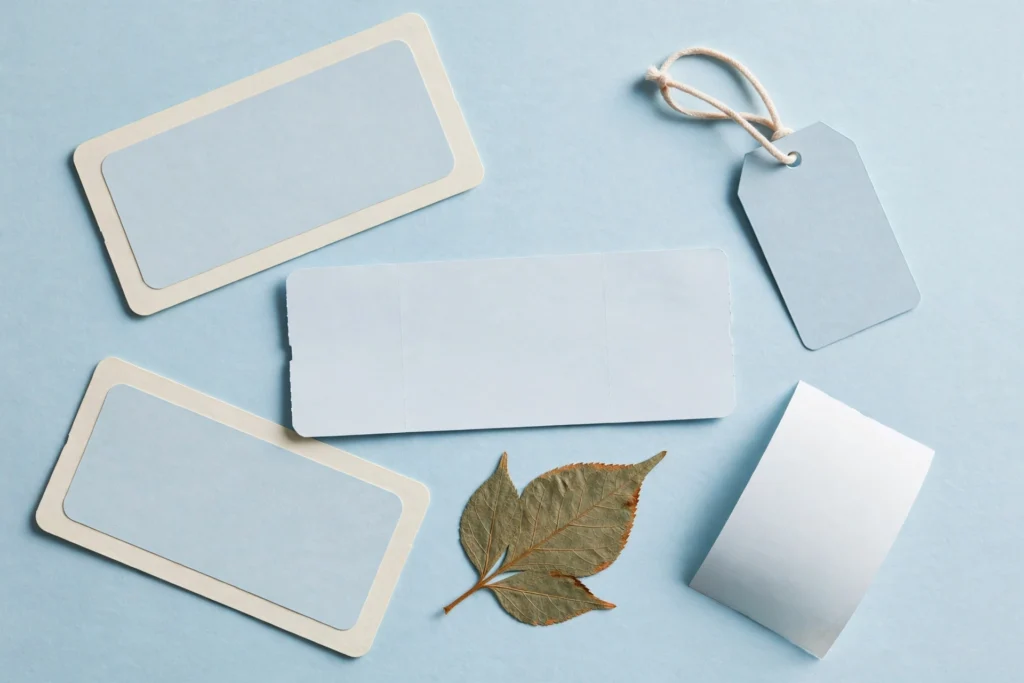
A junk journal is a travel journal built around ephemera — the paper a trip throws off: ticket stubs, boarding passes, luggage tags, café sleeves, sugar packets, museum tickets, bus tickets, receipts, postcards, the paper band from a hotel key, a leaf pressed flat, a coaster from a bar. The name sounds dismissive and the practice is anything but: ephemera is the most honest record of a trip there is, because it is the paper the trip itself produced, not something you wrote about it afterwards. A train ticket has the date, the time, the price and the destination printed on it. No entry you write from memory will be as accurate.
The method is the envelope system from the kit section, applied with intent. During the day, everything goes into the envelope without decisions. In the evening, you choose two or three pieces, stick them in with the glue stick, and write a line or two beside each one: what it is, and why it is in the book. “Train ticket, Kyoto to the coast, 09:12, ¥2,400 — the train was twenty minutes late and nobody minded.” “Museum ticket, Tuesday — the exhibition was smaller than expected and the courtyard was the best part.” “Café sleeve — the coffee place with the blue door, the owner marked the walk for tomorrow on our map.” The writing beside the scrap is what turns a stuck-in ticket into a journal page; without it, the page is a collection, not a record.
There are a few practical rules that keep a junk journal from turning into a stuffed, unreadable book. First, stick first, then write — the rule from experienced keepers — because a page with things stuck on it invites writing, and a blank page with a pile of scraps beside it invites procrastination. Second, use a glue stick, not liquid glue and not ordinary sticky tape. Liquid glue wrinkles the page and takes too long to dry; ordinary sticky tape yellows with age and goes brittle, and in a few years it will lift off the page and take the print with it. Washi tape is the better choice for anything you might want to remove later, because it peels off cleanly. Third, trim bulky items. A boarding pass is too big for an A5 page; cut off the part with the flight details and keep that, or fold it once and stick one half down so the other half opens like a flap. A luggage tag can be cut down to the printed section. The journal is a book, not a filing cabinet, and it has to close.
What counts as ephemera worth keeping is a matter of judgement, and the test is simple: does this piece of paper carry information or feeling that the words alone would lose? A ticket stub carries a date, a time and a price. A café sleeve carries the name of a place you would otherwise forget. A pressed flower carries the colour of a hillside. A sugar packet with a picture of the town on it carries a small, specific piece of the place. A generic receipt for bottled water carries nothing, and it can go. The test is also a limit: two or three pieces a day, as before, and the rest stay in the envelope. A journal that is an inch thick with paper by day five is a journal that will not survive the flight home.
The three things that damage a junk journal
Paper ages, and a junk journal ages faster than a plain one because it holds many kinds of paper, some of them acidic, some of them printed with inks that fade. Three things do most of the damage, and all three are avoidable. Heat and damp are the first: do not leave the journal in a hot car or a damp bathroom, and the zip-lock bag from the kit section is worth using on rainy days and at the beach. Ordinary sticky tape is the second, for the yellowing reason above — use washi tape or a glue stick instead. And the third is over-stuffing: a book that cannot close puts pressure on the spine, the pages warp, and the glue fails. If the book will not close flat, you have stuck in too much, and the envelope is where the excess belongs.
There is also a question people ask about junk journals that deserves a straight answer: is it still a journal if most of the pages are things rather than words? Yes, if the things are chosen and captioned. A page with three ticket stubs and three lines of writing about them is a journal page. A page with ten tickets and no writing is a collection, and collections belong in a box, not a book. The writing is what makes it a journal, however short it is. One line per scrap is enough.
A junk journal also works well as a shared or family journal. On a family trip, each person can have a pocket or an envelope for their own scraps, and the evening session becomes a shared activity: everyone chooses their two pieces for the day, and everyone writes one line about theirs. Children are particularly good at junk journals, because the collecting is a game with a clear rule — anything flat and paper that fits in the envelope — and the evening sticking is a craft activity that does not feel like homework. The best places to travel with a baby guide covers the practical side of travelling with small children; the journal is the part of the trip that gives a slightly older child a job and a souvenir at the same time.
People, Conversations and Overheard Lines

The pages people re-read most, years later, are rarely the pages about places. They are the pages about people: the guesthouse owner who drew the map, the stranger on the train who told you about the town you were about to miss, the waiter who explained the menu, the child who practised English on you for ten minutes. Places stay in photographs. People only stay in words, and only if the words are written down on the day, because the exact words of a conversation are gone within hours.
A people page is the simplest page type in this guide, and the one that needs the least equipment: a pen, and the habit of writing down a name and a sentence when it happens. The format is a short entry per person: who they were, where you met them, what they said or did, and — if it feels right — one line about what it meant to you. “The owner of the coffee shop with the blue door, Marta. She has run the shop for eleven years, she marked the old-city walk on our map in pencil, and she told us to go to the bakery at 6:30 because the almond croissants sell out by eight. She was right.” That entry is five lines, and it holds a person, a place, a tip and a small kindness.
Overheard lines deserve their own treatment, because they are the most perishable material in a journal. A sentence heard on a bus, in a market or in a restaurant queue is gone in minutes, and it is often the most vivid line of the whole trip. The habit is to write it down the moment you hear it, on the phone or on the back of a receipt, and copy it into the journal in the evening. “Overheard on the bus: an old man telling his grandson that the mountain used to have snow on it all year, and the boy not believing him.” One line, no context needed, and in ten years it will tell you more about the place than a paragraph of description.
There are two honest cautions here. The first is privacy — yours and theirs. A travel journal is private by default, and that is the right default for pages about real people. Write their first name only if you are unsure, and do not write anything about a stranger that you would not be comfortable with them reading. The journal is for you, not for publication, and the pages about people should be written with that in mind. The second caution is about accuracy. Write down what was actually said, in quotation marks, or write down that you are paraphrasing. Do not tidy a conversation into something smarter than it was. The untidy version is the true one, and the true one is the one worth keeping.
The kindness log
One specific habit is worth a paragraph of its own: the kindness log. At the end of each day, write down one kindness you received — someone who helped with a bag, gave directions, waited while you found the right change, explained something patiently in a language that was not theirs. It takes one line, and it changes the way the journal reads later. Trips are remembered as a series of problems and pleasures; a kindness log makes sure the pleasures include the people, not just the views. It also changes the way you travel while you are travelling, because once you start looking for one kindness a day, you start noticing them, and noticing them makes you more likely to offer one back. That is a small claim, but it is a true one, and it costs one line a day.
If you travel with a companion, the people pages are also where the shared jokes of the trip live — the mispronounced word that became the trip’s running joke, the wrong turn that became a story, the phrase one of you kept saying. Write those down too, with the date. Shared jokes are the most perishable material of all, and a journal is the only place they survive the trip.
Lists, Rankings and the Best-Of Spread

Every traveller makes lists on a trip — the best meals, the worst hotels, the places to return to, the things that surprised them — and most of those lists are made in conversation and forgotten by the next morning. A best-of spread catches them, and it is the page that gets read aloud at home more than any other in the journal.
The best time to make a best-of spread is the last evening of the trip, looking back through the journal with the index beside you. The format is a set of short ranked lists, five items each, written on one spread. Best meals. Best views. Best walks. Best unexpected moments. Best value for money. Worst decisions — and there should be a worst list, because the mistakes are the most useful part for the next trip. Five items per list, one line each, with the place and one reason. “Best meals: 1. The ramen shop, Kyoto — six seats, ¥950, the best bowl of the trip. 2. The fish stew, the small place on the square — €24 for two, cash only. 3. The market lunch, Saturday — olives, cheese, warm bread, €9 total. 4. The bakery, 6:30 a.m. — almond croissant, ¥220. 5. The guesthouse breakfast — rice, fish, miso, eaten looking at the garden.”
The discipline of the list is the ranking itself. Ranking forces a choice, and the choice forces you to remember the trip properly: was the ramen really better than the fish stew, or was it just more recent? Looking back through the journal to decide is the point — the ranking is a second reading of the trip, and the second reading catches things the first reading missed. The lists also become the most practical page in the journal for the next traveller: when a friend asks “where should I eat in Kyoto?”, the best-meals list is the answer, with names and prices.
Lists work during the trip too, not just at the end. A running list page near the back of the journal — one page, added to across the trip — holds the lists that accumulate: books to read, films to watch, words learned in the local language, dishes to try at home, places to return to. The rule for a running list is one line per item, no elaboration, and no pressure to finish it. The language list is a good example: each new word you learn goes on the list with its meaning, one line each, and by the end of a two-week trip you have twenty or thirty words, which is a real souvenir and a real achievement. If you want to go further with language on a trip, the Italian phrases for travel guide shows how a short list of useful phrases changes a trip, and a journal is the natural place to keep the list you build yourself.
The “would I go back?” page
The last list on the best-of spread deserves its own heading, because it is the question every trip ends with: would I go back, and to what? Write the answer in three lines. “Would go back to: the coast town, for a week, in spring. Would skip next time: the big city in August, too hot and too crowded. Would do differently: book the train earlier, stay two nights in the mountain village instead of one.” Three lines, and the next trip plans itself. This page is also the one that connects a journal to the future: the dream travel destinations guide is about the trips you want to take, and the “would I go back?” page is where those dreams get their evidence — not a list of places from the internet, but a list of places you have actually been and want to return to.
The Prompts Bank: 30 Journal Prompts for Before, During and After the Trip

A journal prompt is a question that starts the writing when you do not know what to write. Every journal keeper has blank evenings, and the difference between a keeper who writes through them and one who stops is usually a prompt. This bank has 30 prompts, grouped for before the trip, during the trip and after the trip. You do not need to use them in order, and you do not need to use all of them. Pick one when you are stuck, answer it in a few lines, and stop. A prompt answered briefly is better than a prompt ignored.
Before the trip — 10 prompts
Use these on the front pages, in the week before departure, or on the plane. They set up the trip in your head, and they are the prompts you will enjoy answering most when you read the journal later, because they show what you expected before you knew what would happen.
- What is the one thing you most want from this trip, in one sentence?
- What are you most looking forward to, and why that thing in particular?
- What are you slightly worried about, and what would make the worry go away?
- What does a perfect day on this trip look like, hour by hour?
- What is the one place, meal or experience you would be disappointed to miss?
- What do you want to learn, taste, see or understand by the end of this trip?
- What are you leaving behind at home, and what are you glad to leave?
- What is the first thing you will do when you arrive, and why that first?
- What is on your travel bucket list that this trip moves you closer to?
- Write a letter to yourself at the end of this trip: what do you hope you will be able to say?
During the trip — 12 prompts
Use these in the evening routine, one per day, or whenever the day’s entry will not start. They are designed to pull out specifics rather than general feelings, because specifics are what a journal is for.
- What was the highlight of today, and what made it the highlight rather than just a nice moment?
- What surprised you today — something you did not expect, good or bad?
- What is one detail from today that you will forget by next week if you do not write it down now?
- Describe the best thing you ate today: where, what it was called, what it cost, and whether you would order it again.
- Who did you meet or talk to today, and what did they say that you want to remember?
- What was the most beautiful thing you saw today, and where exactly were you standing when you saw it?
- What went wrong today, and what did you do about it?
- What did you spend today, and was it worth it?
- What does this place smell, sound and feel like at this time of day?
- What is different here from home, in a way you did not expect?
- What would you tell a friend to do here, and what would you tell them to skip?
- If you had one more day here, how would you spend it?
After the trip — 8 prompts
Use these in the week after you get home, on the after-the-trip pages. They turn a finished journal into a finished story, and they are the prompts that make the journal useful for the next trip.
- What was the best day of the trip, and why that day?
- What was the biggest surprise of the whole trip?
- What did you expect that did not happen, and what happened instead?
- What would you do differently if you went again?
- What is the one meal, place or moment you will still be talking about in a year?
- What did this trip teach you about how you like to travel?
- Who should you thank for this trip, and what would you say to them?
- Where do you want to go next, and what did this trip teach you about choosing it?
How to use the bank without it taking over
A prompts bank is a tool, not a homework assignment. Two rules keep it useful. First, never answer more than one prompt per evening unless you genuinely want to — the evening routine is fifteen minutes, and a prompt is a way into the writing, not a second task on top of it. Second, answer in your own words and in your own length: a prompt answered in two lines is a complete answer. The prompts that work best are usually the specific ones — the meal, the person, the detail — because they produce entries with names, prices and times in them. The general ones — the feelings, the lessons — work best after the trip, when you have the whole journey to look back on. If a prompt does not work for you on a given day, skip it and pick another; the bank has thirty, and the right one is the one that makes you pick up the pen.
Photos in a Travel Journal: Curation, Not Dumping

A travel journal is not a photo album, but photos belong in it — in small numbers, chosen well, and with words beside them. The mistake is treating the journal as a place to put every good photo. A phone holds thousands of photos from a two-week trip; a journal holds perhaps twenty, and the twenty that make it in are the ones that need words beside them to be understood. Curation is the skill, and it is a simple one: a photo goes in the journal when the words alone cannot carry the moment, and it stays out when the words already do the job.
The practical method is a weekly photo session, not a nightly one. Each evening, mark the day’s best one or two photos on the phone — a favourite, or a star, or a note in the journal with the photo’s time — and move on. Once a week, or at the end of the trip, go through the marked photos and choose the ones for the journal: no more than two or three per day, and fewer on quiet days. Print them small — the size of a playing card is about right for an A5 page — at a hotel, a pharmacy or a print shop, or at home after the trip if you are keeping a hybrid journal and the printing can wait. Stick them in with washi tape or a glue stick, and write a caption beside each one that says something the photo does not: the name of the place, the time, what happened just before or just after the picture was taken. “The viewpoint, 7:40 p.m., twenty minutes after the climb, the bench at the top, the rain just stopped.” A caption that repeats what the photo shows — “sunset” — is wasted ink.
There is a useful discipline in choosing photos for a journal, and it is the opposite of choosing photos for social media. For social media, you choose the most beautiful frame. For a journal, you choose the most meaningful one, and the meaningful one is often not the prettiest: the photo of the broken umbrella, the photo of the menu you could not read, the photo of the street where you got lost and found the ramen shop. Those photos need the journal, because without the words beside them they mean nothing to anyone, including you in five years. The beautiful sunset needs no journal at all — it is already on your phone, and it will still be beautiful there.
A word on printing. Small photo printers that connect to a phone are popular with journal keepers, and they are genuinely useful on long trips, because they let you print in the evening and stick the photo in while the day is fresh. They are also an extra device, an extra charger and an extra cost, and for a trip of a week or less they are rarely worth it. The hotel printer, the pharmacy print kiosk, or simply waiting until you get home and printing then, all work fine. If you do print on the road, print small and print few: a journal page with one photo and five lines of writing is a better page than a journal page covered in photos with no room for words.
What about a digital journal’s photos?
In a digital journal, the temptation is reversed: because photos cost nothing to add, you add all of them, and the journal becomes a photo dump with sentences between the pictures. The rule is the same as for paper, and it matters more: no more than two or three photos per day in the journal itself. The rest stay in the phone’s camera roll, where they belong. If the digital journal supports it, tag the journal photos with the place and the day, so they can be found later without scrolling through the whole trip. And back the photos up — the journal’s photos are the ones that matter, and a phone lost with no backup loses the journal as well as the pictures.
One more consideration, and it is about other people. A journal photo of a stranger, a market trader, a child, is a different thing from a photo of a landscape, and the rule is simple: if you would not want the photo taken of you in that moment, do not put it in the journal, and do not take it in the first place. Ask before photographing people closely, especially children, and respect a no. The journal is private, but the people in it are real, and the respect you show them on the road is part of what the journal records about the trip.
What to Do With a Finished Journal: Digitise, Print, Gift and Keep

A finished travel journal is a small problem and a real pleasure. The problem is that a paper book is a single, fragile object, and the pleasure is that it is a complete record of a trip that will never happen again in the same way. What you do with it in the week after you get home decides whether it becomes a keepsake you return to, or a book that sits on a shelf and slowly becomes a stranger.
The first step, and the most important, is to digitise it. Photograph every page, or scan it if you have a scanner, in order, in good light, one page at a time. It takes about half an hour for a two-week journal, and it is the single best insurance against loss, damp and fire. Save the photos in a folder named for the trip and the dates, back the folder up in the same place you back up your trip photos, and you have a second copy of the journal that cannot be lost in a house move. The digital copy is also the searchable copy: even without text recognition, a folder of page photos ordered by date is a journal you can browse on a phone, send to a travel companion, or consult when a friend asks for the name of that restaurant. If your phone’s camera app or notes app can scan a page into a document, use that — it straightens the page and improves the contrast, and the result reads better than a plain photograph.
The second step is the finishing pages. A journal that ends on the last day of the trip feels unfinished, because the trip does not end when you get home — it ends when you have thought about it. Use the after-the-trip prompts from the bank, answer three or four of them on the last pages, and add the best-of spread if you have not made it yet. Then write the last line of the journal: the date you finished it, and one sentence about the trip as a whole. “Finished 4 August, at home. The trip was the ramen shop, the rain, the shrine, and Marta’s map.” That line closes the book, and a closed book is a finished thing in a way an open one is not.
| What to do | Cost | Time needed | Best for |
|---|---|---|---|
| Photograph or scan every page | Free, with a phone | About 30 minutes for a two-week journal | Every journal — this is the insurance copy, do it first |
| Print a second copy as a photobook | A photobook service, typically in the range of US$30–US$80 depending on size and pages | An evening to lay out, plus printing and delivery time | A special trip, a gift, or a journal you want to share |
| Gift the journal, or a copy of it | The cost of printing, if you print a copy | An evening to choose the pages | A travel companion, a parent, or the person you travelled with |
| Keep the original on a shelf | Free | None, once digitised | Every journal — a paper book, kept dry and out of direct sun, lasts decades |
| Transcribe the best entries into a document | Free | An hour or two, spread over a week | A journal you want to quote from, or whose handwriting is hard to read |
The third step is the decision about sharing. A travel journal is private by default, and it should stay private unless you actively decide otherwise. But a journal, or a copy of one, is also one of the best gifts a traveller can give. A printed copy for a travel companion, with a note on the first page, is a gift that cannot be bought. A copy for a parent who could not come on the trip is a way of taking them along after the fact. If you do share it, print a copy rather than giving away the original, and read through it first: a journal written for yourself contains honest lines — the bad meal, the argument about the map, the day you stayed in bed — that you may not want to hand to someone else unedited. That is not dishonesty; it is the difference between a private record and a shared one.
The fourth step is storage, and it is unglamorous and worth doing properly. Keep the original journal somewhere dry, out of direct sunlight, standing upright or lying flat — not wedged in a damp box in a garage. Paper’s enemies are damp, heat and light, and a journal kept in a dry drawer will outlast the phone the photos are on. If you keep several journals, label the spine or the front cover with the trip and the year: “Kyoto, July 2026.” In ten years, a shelf of labelled journals is a shelf of trips, and you will be able to find the one you want without opening them all. The how to find travel inspiration guide talks about where the next trip comes from; a shelf of finished journals is one of the best sources, because the “would I go back?” pages in them are a list of places you already love.
One last thought, and it is the reason this guide exists. A travel journal is not a performance, and it is not a product. It is a habit of paying attention: fifteen minutes a day, three honest notes, a few scraps stuck in with a glue stick. The travellers who keep journals for decades are not the artistic ones. They are the ones who kept the habit small enough to survive the trip, and who understood that the journal’s job is not to be beautiful but to be true. Start with the cheap notebook. Write the first page tonight, before you leave. The rest follows.
Frequently Asked Questions About How to Make a Travel Journal
What do I need to start a travel journal?
A notebook, one pen you trust, and fifteen minutes a day. A glue stick, a small pair of scissors and a pencil are useful additions, and a zip-lock bag protects the book from rain. That is the whole kit. Do not buy a beautiful, expensive notebook for your first journal — a cheap one creates freedom, because a bad page costs nothing.
How do I make a travel journal if I cannot draw?
You do not need to draw at all. A travel journal is a written record, not an art project, and the journals people treasure most are the ones with specific details — names, prices, times, exact words — not the prettiest ones. If you do sketch, a rough drawing with labels is a working drawing, and working drawings are what field notebooks are for. No artistic skill is required.
Should I use a paper journal or a journaling app?
It depends on your habits. Paper works with no battery and holds physical ticket stubs; digital is searchable, backed up and holds photos. Hybrid — paper for the daily record, phone for photos and a weekly backup of the pages — suits most travellers, because it avoids the worst weakness of each. Choose the format before you leave, and test a digital app for a week at home before relying on it.
What size notebook is best for a travel journal?
A5 or smaller, roughly 15 × 21 cm or less. A large hardback looks wonderful on a desk and stays in the hotel room on the road. A book that fits in a day bag gets written in; a book that does not, does not. A dot-grid or plain layout suits people who mix words, sketches and maps; ruled pages suit people who write mostly text.
How much time does a travel journal take each day?
About fifteen minutes, in the evening, following the five-step routine in this guide: choose two or three scraps and stick them in, write the three notes (highlight, surprise, one detail), write the day, add the practical lines, and update the index. On an exhausted day, the one-minute version — date, place, one sentence — keeps the chain unbroken.
What should I write in a travel journal every day?
At minimum, three notes: the highlight of the day, one surprise, and one detail you would otherwise forget. Then a short account of the day, the practical lines (what you spent, where you slept, the name of the place you ate), and one line about tomorrow. Specifics matter more than length: a name, a price and a time are worth more than a paragraph of adjectives.
What is a junk journal, and is it the same as a travel journal?
A junk journal is a travel journal built around ephemera — the paper a trip produces, such as ticket stubs, boarding passes, luggage tags and café sleeves. The scraps are stuck in with a glue stick and captioned with a line or two about what each one is and why it is in the book. It is a page type within a travel journal rather than a separate thing, and it works best with the envelope system: collect scraps during the day, choose two or three in the evening.
How do I keep a travel journal going on a long trip?
Two things: a fixed routine and the never-miss-twice rule. Do the fifteen minutes at the same time every evening, anchored to something that already happens, such as after dinner. If you miss a day, catch up the next morning with the three notes and move on — do not try to reconstruct a missed day in full. And take a spare notebook on a trip longer than two weeks, because a full book with no replacement ends the journal.
Can children keep a travel journal?
Yes, and they are often better at it than adults, because the collecting is a game and the evening sticking is a craft activity rather than homework. Give each child their own small notebook and their own envelope for scraps, and let them choose their two pieces for the day and write one line about each. A family journal, with a page or a spread per person, works well on the same principle.
What do I do with a finished travel journal?
First, photograph or scan every page — that is the insurance copy, and it takes about half an hour. Then add the finishing pages: the after-the-trip prompts and the best-of spread. Then decide whether to keep the original on a shelf, print a copy as a photobook, or gift a printed copy to a travel companion. Keep the original somewhere dry and out of direct sunlight, with the trip and year written on the cover.
How do I write about people I meet without invading their privacy?
Write first names only if you are unsure, write down what was actually said rather than tidying it into something smarter, and remember the journal is private by default. Do not write anything about a stranger that you would not be comfortable with them reading, and ask before photographing people closely, especially children. If you later share or gift a copy of the journal, read it through first.
Is it too late to start a travel journal in the middle of a trip?
No. Start tonight, with today, and do not try to reconstruct the days you missed. Write a one-page summary of the trip so far — the places, the best meal, the biggest surprise — and then start the evening routine from today. A journal that starts on day five and runs to the end of the trip is worth far more than a journal that was never started because the first days were missed.
Conclusion: Start With the Cheap Notebook and Tonight’s Fifteen Minutes
Learning how to make a travel journal is not a craft project and it is not a test of artistic talent. It is a habit of paying attention, kept small enough to survive a real trip: a notebook that fits in a day bag, one pen you trust, a glue stick, an envelope for the day’s scraps, and fifteen minutes in the evening to write down the highlight, the surprise and the one detail you would otherwise forget. That is the whole method, and it is enough. The page types, the prompts, the maps and the food notes are all ways of filling those fifteen minutes well — they are not requirements, and a journal that is only daily logs is still a complete travel journal.
The format decision comes first, because it decides whether the journal survives the trip. Paper, digital or hybrid all work, and the right one is the one that matches your habits, not the one that looks best in a shop. The front pages come second, because they organise the trip as well as the journal. And the routine comes third, because a journal without a routine is a blank book by day three. Stick first, then write. Never miss two days in a row. Date every page. Those are the rules that matter, and they fit on a single line.
So start before you leave, not on the plane. Buy the cheap notebook, set up the front pages tonight, and write the before-the-trip page while the trip is still a plan rather than a memory. Then, on the first evening of the trip, open the envelope, stick in the two best scraps of the day, and write the three notes. Fifteen minutes, and the journal exists. In a year, the name of the ramen shop, the price of the ferry and the exact words Marta said about the bakery will be gone from memory — but they will still be in the book, on the page where you wrote them down, on the day they happened. That is what a travel journal is for.
People also read:
- Travel Hobby: How to Pick a Hobby That Makes Every Trip Better
- Travel Bucket List: 50 Ideas Worth Planning, Plus How to Actually Make Them Happen
- Travel Itinerary Template: Plan Any Trip Without the Stress
- How to Find Travel Inspiration (and Turn It Into a Trip, Not Just a Saved Post)
- 25 Dream Travel Destinations for Your Bucket List (2026 Guide)
- How Much to Travel to Japan? Real 2026 Trip Costs for 7, 10 and 14 Days
- Best Places to Travel With a Baby: 16 Easy First Trips for 2026
- Iceland Travel Itinerary: The Best 5, 7 and 10-Day Routes for First-Timers
- How to Prepare a Travel Budget That Actually Works (Without Guessing)
- Travel Apps: The Only Apps You Actually Need for a Trip

M. Adil is the founder and editor of SoloTravelPro. He writes practical, research-based travel guides that help travellers plan with confidence — from first-time city breaks to national parks and island escapes. Every guide is built on official sources, current prices and honest, usable advice, so readers can plan smarter and travel better.