Travel Packing Checklist PDF Free: The Complete Checklist for Any Trip in 2026
Quick Answer: The Free Travel Packing Checklist You Can Use Right Now
A good travel packing checklist does one job: it stops you forgetting the things that matter and stops you packing the things that do not. This page is a complete travel packing checklist pdf free in the sense that matters most — the whole checklist is printed here, on this page, free, with no download, no email address and no sign-up. You can read it on your phone while you pack, or print this page from your browser and tick items off with a pen.
The short version is this. Pack your documents, money and medicine in the bag that stays with you. Pack clothes by outfit, not by item, and plan on one week of clothes no matter how long the trip is — laundry covers the rest. Keep every liquid in your carry-on in a container of 3.4 ounces (100 ml) or less, all inside one clear quart-size bag. And check your passport’s expiry date before you book anything, because many countries will not let you in unless it is valid for six months beyond your travel dates.
The rest of this guide turns that short version into a working plan. There is a master checklist table with quantities for 3-day, 7-day and 14-day trips, a carry-on-only method, the current TSA liquids rule as published on tsa.gov, clothing quantities by trip length, the electronics and power-bank rules, separate lists for city, beach, winter, family and business trips, a pre-departure checklist for documents, home, money and health, and a plain list of what not to pack. Everything is on this page. Nothing here asks you to download a file from somewhere else, and nothing here links to another site’s PDF — if you want a printed copy, use your browser’s print function on this page and you have one.
How to Use This Free Travel Packing Checklist (and Print It Without a PDF)
Most packing lists fail for the same reason: they are written as one long list of things, with no sense of what matters most. A charger and a passport are not equally important, and a list that treats them the same way is a list that lets you forget the passport. So this checklist is built in layers. The first layer is the handful of items that can end a trip before it starts — passport, ID, tickets, money, medicine. The second layer is the things that make the trip comfortable — the right clothes, the right shoes, the chargers. The third layer is everything else, the nice-to-haves that you can leave behind without regret.
Start with the master checklist in the next section and work through it in order. Cross off what you already have packed, circle what you still need to buy, and put a star next to anything that must go in your carry-on or personal item rather than your checked bag. The table gives quantities for three trip lengths — 3 days, 7 days and 14 days — because the number of shirts you need does not double when the trip doubles. It grows slowly, then stops, because on a longer trip you do laundry.
How to print this checklist
There is no file to download, and that is deliberate. A downloadable PDF from a travel site is usually either a lead magnet that wants your email address or a generic list that has not been updated since it was made. This page is the checklist, and it is kept current. To print it, open this page on a computer, use your browser’s print command, and choose the option to print the article only if your browser offers it. On a phone, the simplest method is to keep the page open and tick items off on screen, or take a screenshot of the master checklist table and keep it in your photos. Either way, the list is yours, free, with nothing to install and nothing to sign up for.
One honest note about PDFs in general: if you search for a travel packing checklist pdf free, most of the top results will offer you a file to download. Some of those files are fine. But a file you download in November may still be telling you last year’s rules in June, and a file cannot be corrected after you save it. A page can. The liquids rule, the passport rules and the battery rules in this guide were checked against the official sources in November 2026, and the links to those sources are in the text so you can check them again before you fly.
The five rules that run the whole checklist
Before the lists begin, five rules decide almost everything about packing well.
Rule one: the irreplaceable goes in the bag that stays with you. Passport, ID, money, cards, phone, medicine, glasses, house keys, and the one change of clothes that gets you through a lost-luggage day — all of these travel in your carry-on or personal item, never in a checked bag. A checked bag can be delayed, and a delayed bag is an inconvenience. A passport in a delayed bag is a ruined trip.
Rule two: pack by outfit, not by item. Do not pack five shirts and three pairs of trousers and hope they match. Lay out complete outfits — top, bottom, shoes, and the layer that goes over them — and pack only the outfits you will actually wear. Most people wear about 70 percent of what they pack, and the unworn 30 percent is almost always the extra item that matched nothing.
Rule three: one week of clothes is the ceiling. For a 3-day trip you pack three days of clothes. For a 7-day trip you pack seven. For a 14-day trip you still pack about seven days of clothes and plan one laundry stop, because fourteen days of clothes does not fit in a bag you can lift. The quantities in the master table follow this rule.
Rule four: if you can buy it at the destination for a few dollars, do not carry it there. Shampoo, sunscreen, toothpaste, snacks, a cheap umbrella — these are sold everywhere travellers go. The space they take up in your bag is worth more than the few dollars you save by bringing them from home. The exception is anything you cannot easily replace: prescription medicine, a specific brand you need, or anything sold only in your country.
Rule five: weigh the bag before you leave the house. Airport scales are not the place to discover that your bag is overweight. A small luggage scale costs little, and a packed bag weighed at home can still be fixed at home. Check your airline’s weight limit before you pack, not at the check-in desk, because limits vary by airline, route and ticket type, and the fee for an overweight bag is always more than the cost of leaving one pair of shoes behind.
What this checklist does not do
This guide does not recommend specific brands, suitcases, packing cubes or toiletry kits, and it contains no links to shops. Packing advice that names a product is usually selling that product. The advice here is about what to pack and how much, not what to buy. Where a type of product is mentioned — packing cubes, a universal adapter, a power bank — it is mentioned as a category, because the category is the useful part. Any packing cube that fits your bag will do the job, and any power bank that meets the airline rules will charge your phone.
The Master Travel Packing Checklist: Every Item, With Quantities for 3, 7 and 14 Days
This is the core of the page. One table, every item, quantities for three trip lengths, and a note on whether each item belongs in your carry-on or can go in a checked bag. Work through it from the top. The quantities are planning figures for a typical adult traveller in a temperate climate — the trip-type sections later in this guide adjust them for city, beach, winter, family and business trips.
A note on how to read the quantities: where the table says “1 per day”, that means one fresh item per day of the trip, up to the 7-day ceiling. Where it says a fixed number, that number does not change much with trip length. Where it says “1”, it means one for the whole trip, however long it is.
| Category | Item | 3 days | 7 days | 14 days | Carry-on or checked |
|---|---|---|---|---|---|
| Documents | Passport (international) | 1 | 1 | 1 | Carry-on — always |
| Documents | Government photo ID (domestic) | 1 | 1 | 1 | Carry-on — always |
| Documents | Boarding pass / booking confirmations | 1 set | 1 set | 1 set | Carry-on — always |
| Documents | Travel insurance details | 1 set | 1 set | 1 set | Carry-on — always |
| Documents | Visa / entry permit (if required) | 1 | 1 | 1 | Carry-on — always |
| Documents | Emergency contacts list | 1 | 1 | 1 | Carry-on |
| Money | Credit / debit cards (2 different networks) | 2 | 2 | 2 | Carry-on — always |
| Money | Cash in local currency | Some | Some | Some | Carry-on — always |
| Money | Wallet / card holder | 1 | 1 | 1 | Carry-on |
| Health | Prescription medicine (full trip + extra days) | Full supply | Full supply | Full supply | Carry-on — always |
| Health | Basic first-aid items (plasters, pain relief) | 1 small kit | 1 small kit | 1 small kit | Carry-on |
| Health | Glasses / contact lenses + spares | 1 + spare | 1 + spare | 1 + spare | Carry-on — always |
| Health | Sunscreen | 1 | 1 | 1–2 | Either (liquids rule applies in carry-on) |
| Clothing | Tops / T-shirts | 3 | 6–7 | 7 | Either |
| Clothing | Bottoms (trousers / skirts) | 2 | 3 | 3–4 | Either |
| Clothing | Underwear | 3 | 7 | 7 + laundry | Either |
| Clothing | Socks | 3 pairs | 7 pairs | 7 pairs + laundry | Either |
| Clothing | Sleepwear | 1 | 1–2 | 2 | Either |
| Clothing | Light layer (sweater / fleece) | 1 | 1 | 1 | Either |
| Clothing | Rain jacket / waterproof layer | 1 | 1 | 1 | Either |
| Clothing | Walking shoes (worn on the plane) | 1 pair | 1 pair | 1 pair | Worn |
| Clothing | Second pair of shoes | 0–1 | 1 | 1 | Either |
| Clothing | Swimwear (if relevant) | 1 | 2 | 2 | Either |
| Toiletries | Toothbrush + toothpaste | 1 set | 1 set | 1 set | Carry-on (paste = liquid) |
| Toiletries | Shampoo / conditioner (travel size or decanted) | 1 set | 1 set | 1 set | Carry-on (liquids rule) |
| Toiletries | Deodorant | 1 | 1 | 1 | Carry-on (aerosol = liquid) |
| Toiletries | Razor + shaving items | 1 set | 1 set | 1 set | Either (check blade rules) |
| Toiletries | Hairbrush / comb | 1 | 1 | 1 | Either |
| Toiletries | Lip balm + moisturiser | 1 each | 1 each | 1 each | Carry-on |
| Electronics | Phone + charger | 1 | 1 | 1 | Carry-on — always |
| Electronics | Power bank (100 Wh or less) | 1 | 1 | 1 | Carry-on — always |
| Electronics | Universal adapter (international) | 1 | 1 | 1 | Carry-on |
| Electronics | Headphones / earbuds | 1 | 1 | 1 | Carry-on |
| Electronics | Laptop / tablet (if needed) | 0–1 | 0–1 | 0–1 | Carry-on |
| Electronics | Charging cables (one per device) | 1 each | 1 each | 1 each | Carry-on |
| Comfort | Neck pillow / eye mask / earplugs | 1 set | 1 set | 1 set | Carry-on |
| Comfort | Reusable water bottle (empty through security) | 1 | 1 | 1 | Carry-on |
| Comfort | Snacks for the journey | Some | Some | Some | Carry-on |
| Comfort | Book / e-reader | 0–1 | 0–1 | 0–1 | Carry-on |
| Bags | Packing cubes or compression bags | 2–4 | 3–5 | 4–6 | Inside main bag |
| Bags | Laundry bag (for worn clothes) | 1 | 1 | 1 | Inside main bag |
| Bags | Day bag / small backpack | 1 | 1 | 1 | Carry-on |
| Extras | Pen (for arrival forms) | 1 | 1 | 1 | Carry-on |
| Extras | Zip-lock bags (spares) | 2 | 2–3 | 3 | Either |
| Extras | Sunglasses | 1 | 1 | 1 | Carry-on |
How to use this table on a real trip
Print it or keep it open on your phone, and go through it three times. The first pass is a week before the trip, when you are checking documents and buying what you are missing. The second pass is the night before you travel, when the bag is open on the bed and you are putting things in. The third pass is the morning you leave, and it should take five minutes: documents, money, medicine, phone, charger, keys — the things that end trips when they are left behind.
Notice what is not in the table. There is no hairdryer, because almost every hotel and rental provides one, and the one you own is heavy and shaped like a brick. There is no full-size shampoo, because the liquids rule will take it away at security if it is in your carry-on, and a travel-size bottle costs little at the destination. There is no “just in case” formal outfit unless your trip actually includes a formal event, because “just in case” is how a bag ends up weighing twice what it should.
The one-bag test
When the bag is packed, close it and lift it with one hand. Then walk it to the front door and back. If you cannot lift it comfortably, or if you cannot carry it up a flight of stairs without stopping, take something out. The test is not about strength; it is about the reality of travel. You will lift that bag into an overhead bin, carry it across a station, haul it up hotel stairs when the lift is broken, and drag it over cobblestones. A bag you cannot lift at home is a bag that will hurt you on day three. The pack-by-outfit method in the clothing section is the fastest way to pass this test, because it cuts the unworn items first.
Travel Documents and Money: The Carry-On Essentials That Decide Your Trip
Documents and money are the only category where a mistake cannot be fixed by shopping. Forget a shirt and you buy a shirt. Forget your passport and you do not travel. So this section comes first in the packing order, and it is the section to finish first — ideally a week before departure, when there is still time to fix a problem.
The passport check that should happen before you book
Check your passport’s expiry date before you book anything, not the week before you fly. Many countries require your passport to be valid for at least six months beyond your travel dates — this is the rule people mean when they talk about passport validity six months. It is imposed by the destination country, not by the United States, and the exact requirement varies: some countries count six months from your arrival, others from your planned departure. The Schengen Area in Europe, which covers most of the continent, requires your passport to be valid for at least three months beyond your planned departure from the zone, and the State Department advises carrying more than that as a buffer. Other countries, such as Mexico and Canada, generally require only that your passport be valid for the duration of your stay. The rule for your destination is on its country information page at travel.state.gov, and that page is the authoritative source — check it before you book, not after.
Airlines enforce these rules at check-in, often automatically, and an airline can refuse to let you board if your passport does not meet your destination’s requirement. This is the single most common document mistake in travel, and it is also the most avoidable. A practical rule: if your passport has less than a year of validity left and you have an international trip coming up, renew it now. Routine passport processing takes weeks, and the processing time listed on the State Department’s site is the current figure to check — it changes, so do not rely on what it was last year.
Keep a copy of your passport separate from the original. A photo of the data page on your phone is useful, and a paper photocopy in a different bag is better. If your passport is lost or stolen, the copy is what a consulate uses to identify you and issue a replacement, and the process is far slower without it. The same goes for your travel insurance details and your emergency contacts — keep a paper copy as well as a phone copy, because a phone with a dead battery holds no information at all.
ID for domestic flights: REAL ID is now the rule
For flights within the United States, the rules changed on May 7, 2025, when the TSA began full enforcement of REAL ID. Since that date, an adult aged 18 or over needs a REAL ID-compliant state driver’s licence or ID card — look for the star marking — or another acceptable form of identification, such as a US passport or passport card, to pass through airport security. A standard state licence without the star is no longer accepted on its own. Travellers under 18 do not need to show ID for domestic flights, though airlines may have their own rules, so check your airline if you are travelling with children.
If you arrive at a checkpoint without an acceptable ID, the TSA now offers an alternative identity check called ConfirmID, which began on February 1, 2026 and carries a $45 fee — and it is a fallback, not a plan. The practical advice is simple: check your licence for the star now, and if it does not have one, carry your passport for domestic flights until you get a compliant licence. A passport is accepted everywhere a REAL ID is accepted, so it is the easiest backup.
Money: two cards, two networks, some cash
Carry two payment cards from two different networks — for example, one Visa and one Mastercard — and keep them in different places. If one card is lost, blocked or refused, the other one still works. Tell your bank you are travelling, or check that your bank does not need to be told; either way, confirm before departure that your cards work internationally and find out what your bank charges for foreign transactions and cash withdrawals, because those fees are the hidden cost of paying abroad.
Carry some cash in the local currency, enough for a taxi from the airport and a meal, but do not carry your whole trip budget in cash. Cash is useful for small vendors, tips and places that do not take cards; it is also the hardest thing to replace if it is lost. A money belt or a zipped inner pocket is worth using in crowded places, and the bulk of your cash should stay in the hotel safe rather than in your pocket.
What is a travel document number — and where to find yours
A question that comes up often, and one that causes confusion at booking, is what a travel document number actually is. For most travellers it is simply the number printed on your passport — the document number on the data page, usually at the top. It is the number airlines and booking sites ask for when they say “travel document number”, and it is also the number on a visa or a national ID card if that is the document you are travelling on. Our separate guide to what a travel document number is explains where to find it on each type of document and what to do if a booking form will not accept yours. The practical point for packing is this: know your number before you get to the airport, and keep it written down separately from the passport itself, because a booking that needs the number and a passport locked in a safe do not mix.
The documents packing order
Pack documents in this order, and check them off as they go in:
- Passport or photo ID — check the expiry date first, then pack it.
- Boarding pass or booking confirmations — printed or on your phone, plus a paper backup.
- Visa or entry permit, if your destination requires one.
- Travel insurance details, including the emergency phone number.
- Two payment cards, from two networks, in two different places.
- Some local currency, enough for the first day.
- Emergency contacts on paper, not only on your phone.
- Prescription details and a doctor’s note for any controlled medicine.
Everything on this list goes in your carry-on or personal item. Nothing on this list goes in a checked bag. If your bag is gate-checked at the last minute, take the document pouch out first — it takes ten seconds, and it is the difference between an inconvenience and a crisis.
Carry-On Only Packing: What Fits, What Counts and How to Pack One Bag
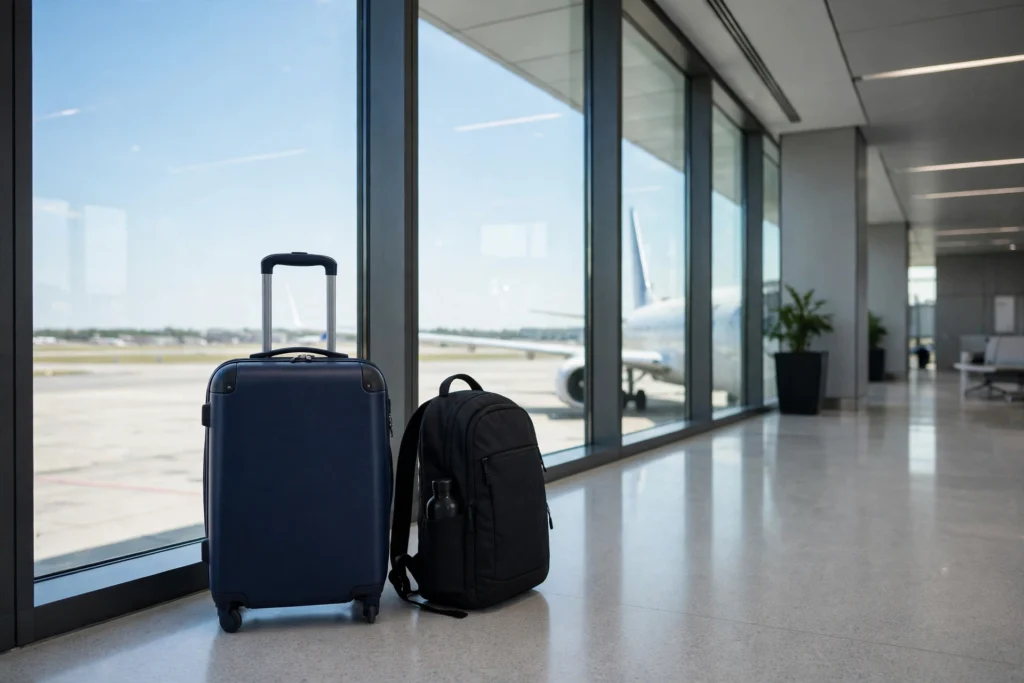
Carry-on only travel is the single biggest upgrade most travellers can make to a trip. No checked bag means no waiting at the carousel, no lost luggage, no baggage fee, and no decision at the airport about which bag to check. It also means your bag is always with you, which is the safest place for it to be. The trade-off is real: you pack less, and you have to pack more carefully. But for trips up to a week, carry-on only is not a sacrifice — it is a method, and the method is simple.
What counts as carry-on
Most airlines allow one carry-on bag plus one personal item, such as a small backpack or handbag. The exact size and weight limits vary by airline, and budget airlines are stricter than full-service ones — some charge for a carry-on that others include, and some weigh the bag at the gate. Check your airline’s published limits before you pack, and measure your bag rather than guessing. A bag that is one centimetre over the limit at home is one centimetre over at the gate, and the gate is the expensive place to find out.
The personal item is the secret weapon of carry-on only packing. It holds the things you need during the flight and the things you cannot afford to lose: documents, money, medicine, phone, charger, headphones, a change of clothes, and the liquids bag. The carry-on holds the rest. If you are ever forced to gate-check the carry-on — which happens on full flights — the personal item stays with you, and it should be packed as though the carry-on might not arrive until tomorrow.
| Carry-on bag | Checked bag | |
|---|---|---|
| Typical size | Cabin-sized, fits in the overhead bin | Larger, goes in the hold |
| Waiting time | None — walk off the plane with it | 20–45 minutes at the carousel, typically |
| Lost luggage risk | Almost none — it stays with you | Real, though uncommon |
| Cost | Often included; budget airlines may charge | Usually an extra fee |
| Liquids limit | 3-1-1 rule applies (100 ml containers, one quart bag) | No liquid size limit |
| Power banks | Allowed — in fact, required to be here | Spare batteries forbidden |
| Weight limit | Varies by airline, often 7–10 kg | Varies by airline, often 23 kg |
| Best for | Trips up to 7 days, city breaks, business trips | Long trips, winter trips, family trips, sports gear |
How to fit a week into one bag
The method has four steps, and skipping any one of them is how a carry-on ends up overflowing.
Step one: lay out outfits, not items. Choose one bottom for every two or three days, and tops that match every bottom. Three bottoms and six tops, all in the same two or three colours, make eighteen possible outfits — far more than a week needs. Pick a colour palette and stick to it. Navy, white and grey work almost everywhere; black, white and one accent colour work just as well. The palette is the packing trick that experienced travellers use and rarely explain: when everything matches everything, you need fewer items.
Step two: roll, do not fold, and use packing cubes. Rolling clothes saves space and reduces creases compared with flat folding, and it makes it easy to see what is in the bag without unpacking it. Packing cubes — simple fabric boxes with zips, no brand required — keep rolled clothes compressed and organised, so the bag stays tidy for the whole trip instead of exploding on day two. Use one cube for tops, one for bottoms and underwear, and one for the things that come out first at the hotel.
Step three: wear the heavy things. Your heaviest shoes, your jacket, your bulkiest sweater — wear them on the plane. They take up the most space in a bag and cost nothing to wear. This is also the practical answer to the winter problem: a coat worn on the plane is a coat that does not need to fit in the bag. Layers are your friend here; a jacket over a sweater over a shirt is three items of clothing that take up no bag space at all.
Step four: pack the bag in layers of access. The things you need on the plane go on top: headphones, book, snacks, the liquids bag for security. The things you need first at the hotel go next: sleepwear, toiletries, tomorrow’s outfit. Everything else goes at the bottom. This sounds obvious, and it is the step most people skip — then they unpack the whole bag on the first night looking for a toothbrush.
When carry-on only does not work
Carry-on only is not right for every trip, and pretending otherwise is bad advice. Winter trips with heavy coats and boots, family trips with children’s gear, trips with sports equipment, and trips longer than ten days without laundry access are all cases where a checked bag is the sensible choice. The point of this guide is not to make you feel guilty for checking a bag; it is to show you that a checked bag should be a decision, not a habit. If you need it, check it — but pack the carry-on as though the checked bag might arrive a day late, because sometimes it does. That means one full change of clothes, toiletries, medicine and chargers in the bag that stays with you, whatever else you check.
Toiletries and the TSA Liquids Rule: The 3-1-1 Rule, Explained Plainly
The liquids rule is the rule that causes the most confusion at airport security, and the most confiscated shampoo. It is also simple once you know it. The rule was verified live against the TSA’s own page for this guide in November 2026, and it has not changed: the 3-1-1 rule still applies at every US checkpoint, and the CT scanners now rolling out at many airports change how you are screened, not what you are allowed to carry.
The 3-1-1 rule, in one paragraph
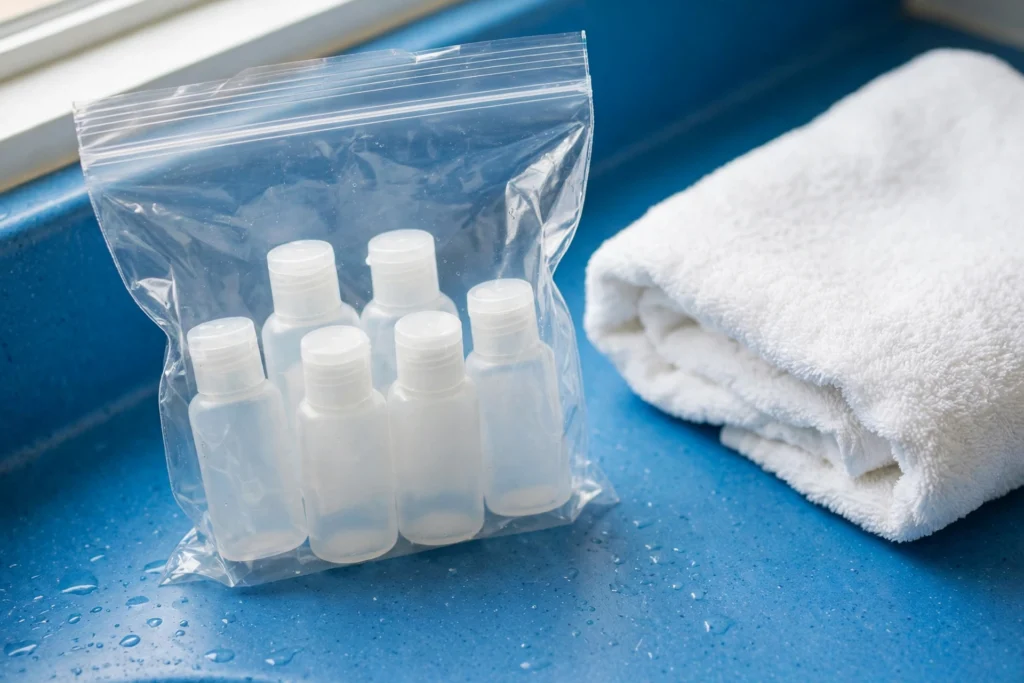
Each passenger may carry liquids, gels and aerosols in travel-size containers of 3.4 ounces (100 ml) or less. All of those containers must fit inside one quart-size, clear, plastic, zip-top bag. Each passenger is limited to one such bag. That is the whole rule: 3.4 ounces, one quart-size bag, one bag per passenger. Anything larger goes in your checked bag, or it will be surrendered at the checkpoint. The TSA’s own page states it plainly, and the common travel items it names as covered by the rule are toothpaste, shampoo, conditioner, mouthwash and lotion. You can read the rule yourself on the TSA’s liquids, aerosols and gels page, and the TSA’s What Can I Bring? tool lets you search for any specific item by name before you pack it.
The three mistakes everyone makes
Mistake one: the container size is what counts, not how much is left in it. A large bottle of shampoo that is half empty is still a large container, and it will still be taken away. The limit is written on the container. If you want to bring your own products, decant them into travel-size bottles of 100 ml or less before you leave home, and label the bottles so you know what is in them.
Mistake two: more things count as liquids than you think. The rule covers liquids, gels, aerosols, creams and pastes. That means toothpaste, gel deodorant, hair gel, liquid foundation, and aerosol deodorant all count. It also means some things you would not expect — peanut butter, jam, and yoghurt, for example — are treated as liquids or gels at the checkpoint. When in doubt, assume it counts, and either put it in the quart bag or leave it at home.
Mistake three: the bag must actually close. All of your containers must fit inside the single quart-size bag, and the bag must close. Stuffing nine bottles into a bag that zips only halfway is not a pass. Pack the bag at home, zip it, and if it does not close comfortably, take something out. A good test: if you have to sit on the bag to close it, you have too much.
What is exempt from the rule
Medications, baby formula and breast milk are exempt from the 3.4-ounce limit. Liquid medications are allowed in reasonable quantities for your trip, but you must tell the officer at the start of screening and take them out for separate screening. Formula, breast milk and toddler drinks are allowed in larger quantities and do not need to fit in the quart bag. Duty-free liquids bought after security, in a sealed bag, are also allowed on connecting flights. Hand sanitiser has its own allowance, and contact lens solution is treated as a medical item. The key point is to declare exempt items at the start of screening — do not wait to be asked.
The toiletries list, with the liquids rule applied
| Item | Carry-on rule | Notes |
|---|---|---|
| Shampoo, conditioner | 100 ml containers, in the quart bag | Decant or buy travel sizes; buy full-size at the destination |
| Toothpaste | 100 ml or less, in the quart bag | A small tube lasts a week easily |
| Mouthwash | 100 ml or less, in the quart bag | Or use mouthwash tablets, which are solid |
| Deodorant (aerosol or gel) | 100 ml or less, in the quart bag | Solid stick deodorant is not a liquid — a useful swap |
| Sunscreen | 100 ml or less, in the quart bag | Buy a full-size bottle at the destination instead |
| Moisturiser / face cream | 100 ml or less, in the quart bag | Creams and pastes count as liquids |
| Liquid foundation / makeup | 100 ml or less, in the quart bag | Powders and solid makeup do not count |
| Hair gel / styling products | 100 ml or less, in the quart bag | Or switch to a solid styling product for the trip |
| Contact lens solution | Exempt as a medical item | Declare it at screening |
| Prescription liquid medicine | Exempt in reasonable quantities | Declare it; carry the prescription |
| Solid shampoo / soap bars | Not liquids — no limit | The simplest way to beat the rule entirely |
| Razor (disposable / cartridge) | Allowed in carry-on | Safety razors with loose blades are not |
| Nail clippers, tweezers | Allowed in carry-on | Small scissors under the blade limit are usually allowed — check the TSA tool first |
The solid swap: the easiest way to beat the liquids rule
The most effective trick in this whole section is also the simplest: replace liquids with solids. A shampoo bar, a solid deodorant stick, a soap bar, a solid moisturiser and toothpaste tablets are all solids, and solids are not covered by the liquids rule at all. They take up less space, they cannot leak, and they never get confiscated. You do not have to replace everything — but every liquid you swap for a solid is one less bottle fighting for space in the quart bag. For a carry-on only trip, the solid swap is often the difference between the bag closing and the bag not closing.
If you check a bag, the rule relaxes
None of this applies to a checked bag. There is no liquid size limit in checked luggage, so full-size shampoo, full-size sunscreen and full-size anything can go in the checked bag. The rule is a carry-on rule only. But the habit is worth keeping even when you check a bag: put your liquids in a zip-lock bag inside the checked bag too, because a bottle that leaks at altitude will ruin everything in the bag with it, and a zip-lock bag is the cheapest insurance in travel.
Clothing: How Many Clothes to Pack for 3, 7 and 14 Days

“How many clothes to pack” is the question this whole guide is built around, and the answer is more precise than most packing lists admit. The numbers below are planning figures for a typical adult on a typical trip — city walking, restaurant dinners, normal weather. The trip-type sections adjust them for beach, winter, family and business trips. The principle behind the numbers matters more than the numbers themselves: clothes scale slowly with trip length, because laundry exists.
The clothing table
| Item | 3-day trip | 7-day trip | 14-day trip (with one laundry stop) |
|---|---|---|---|
| Tops / T-shirts | 3 | 6 | 7 |
| Bottoms (trousers / skirts) | 2 | 3 | 4 |
| Underwear | 3 | 7 | 7, then laundry |
| Socks | 3 pairs | 7 pairs | 7 pairs, then laundry |
| Sleepwear | 1 | 1 | 2 |
| Light layer (sweater / fleece) | 1 | 1 | 1 |
| Rain jacket / waterproof layer | 1 | 1 | 1 |
| Walking shoes | 1 pair (worn) | 1 pair (worn) | 1 pair (worn) |
| Second pair of shoes | 0 | 1 | 1 |
| Dressier top (for one nice dinner) | 1 | 1 | 1 |
| Swimwear | 1 (if relevant) | 2 (if relevant) | 2 (if relevant) |
| Hat / cap | 0–1 | 1 | 1 |
| Scarf / shawl | 0–1 | 1 | 1 |
Notice the pattern. Tops roughly follow the days, up to a ceiling of about seven. Bottoms grow much more slowly, because a pair of trousers can be worn two or three times before washing. Underwear and socks are the only items that scale one-to-one with the days, and even they stop at seven, because that is where laundry takes over. Shoes barely scale at all: one pair worn, one pair packed, and that is the whole list for almost every trip.
The laundry plan for trips over a week
For any trip longer than seven days, plan one laundry stop in the middle. It can be a hotel laundry service, a laundromat near your accommodation, or a sink wash in the room — a small bottle of travel laundry detergent and a portable washing line cost little and turn a 14-day packing problem into a 7-day one. The laundry stop is the single most effective packing technique for long trips, and it is the reason experienced travellers can go away for three weeks with a carry-on. Check before you travel whether your accommodation has laundry facilities or whether there is a laundromat nearby; knowing this before you pack changes what you pack.
Sink washing works for underwear, socks and light tops, and it is worth learning. Wash in the evening, roll the item in a towel to press the water out, and hang it to dry overnight. In a warm climate it will be dry by morning. In a cold climate, hang it near — not on — a heater. This is not a glamorous technique, and it is the technique that makes long trips with a small bag possible.
The outfit method, step by step
The outfit method is how you turn the numbers above into a bag that actually closes. It takes about twenty minutes, and it saves you from the two classic packing failures: bringing clothes that match nothing, and bringing clothes you never wear.
- Check the weather for the whole trip, not just the first day. Look at the forecast for every day you will be away, including the day you return. Pack for the coldest day and the wettest day, not the average day.
- Lay out one complete outfit per day on the bed. Top, bottom, underwear, socks, shoes, and the layer that goes over it. Look at the outfits as a set. If two outfits use the same top, you have found a duplicate. If one outfit needs shoes you have not packed, you have found a gap.
- Remove one outfit. You will not wear it. Everyone packs one outfit too many, and removing one at home is painless. Removing it at the airport is not.
- Check every outfit against every other outfit. Can the top from day two go with the bottom from day four? If the answer is mostly yes, your colour palette is working. If the answer is mostly no, swap one item for something in a colour that matches the rest.
- Put the outfits in the bag in reverse order. The last day’s outfit goes in first, at the bottom. The first day’s outfit goes in last, on top. When you open the bag at the hotel, the outfit you need is the one you can reach.
Shoes: the hardest packing decision
Shoes are the heaviest, bulkiest and most awkward items in any bag, and the rule for shoes is the strictest rule in this guide: two pairs, maximum, and one of them on your feet. The pair you wear on the plane should be the pair you will walk in most — comfortable walking shoes with good support, already broken in. The second pair is the pair that covers what the first pair cannot: sandals for a beach trip, smarter shoes for a business trip, or a second pair of walking shoes so the first pair can dry out.
Never pack a brand-new pair of shoes for a trip. New shoes cause blisters, and blisters on day one ruin a trip built around walking. Whatever shoes you pack, you should have walked in them for at least a week at home. And pack shoes at the bottom of the bag, soles facing the sides of the bag, with socks and small items stuffed inside them — the empty space inside a shoe is storage space you are already carrying.
Fabrics that travel well
Some fabrics pack better than others, and the difference shows up on day three. Merino wool and synthetic blends resist odour and dry quickly, which means a top can be worn twice and washed in a sink overnight. Linen looks wonderful and creases the moment you look at it; if you pack linen, accept the creases or leave it at home. Cotton is comfortable and heavy and slow to dry. The practical advice is to favour quick-drying, odour-resistant fabrics for the items you will wear most, and to save the delicate fabrics for the one dressier outfit that spends most of the trip in the bag.
Electronics, Chargers and Power: What to Pack and Where It Goes
Electronics are the category that has changed most in the last few years, and the rules around them are the ones most travellers get wrong. The devices themselves are simple — phone, charger, headphones, maybe a laptop. The rules are about batteries, and the batteries have their own section below because getting them wrong is the one electronics mistake that can actually stop you boarding.
The electronics list
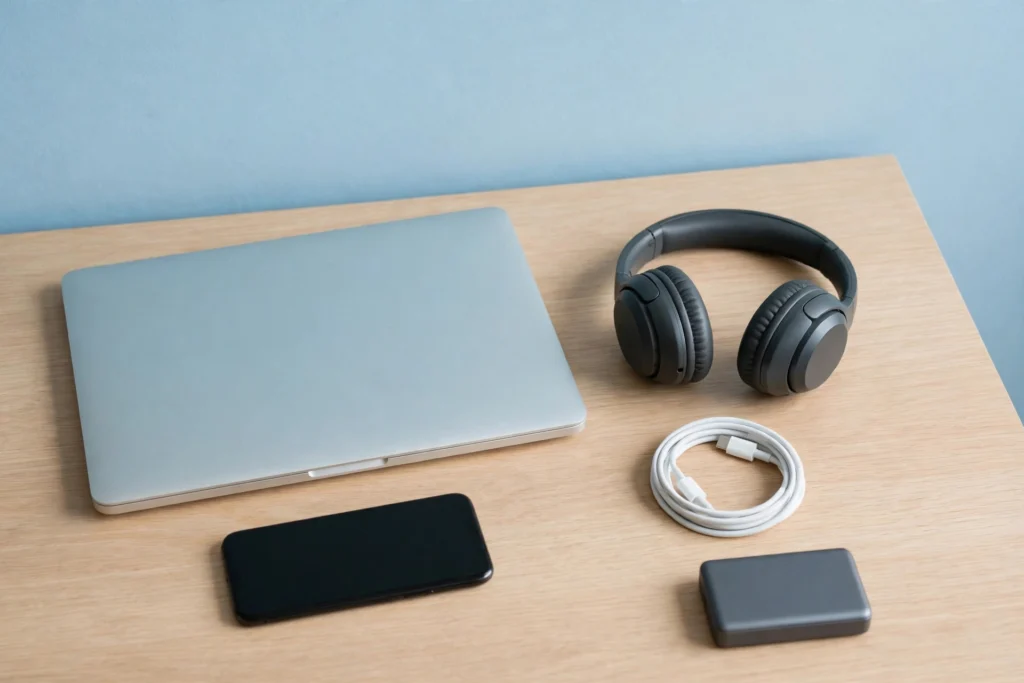
Pack one charger per device, and no more. A phone charger, a laptop charger if you are bringing a laptop, and a charging cable for each. A multi-port wall charger that charges two devices at once is worth its weight, because hotel rooms rarely have enough outlets where you need them. A short cable is better than a long one for travel: it tangles less, weighs less, and a long cable is rarely needed when the outlet is beside the bed.
Headphones are worth packing on every trip, even a short one. On a plane they block engine noise and let you sleep. In a hotel they let you watch something without waking anyone. In a city they let you take a call without shouting. Noise-cancelling headphones are heavier and more expensive; ordinary earbuds are lighter and good enough for most trips. Either way, pack them in the personal item, not the checked bag, because you will want them before the bag comes back.
A laptop is a decision, not a default. If your trip is a holiday, leave it at home and let the phone do the work — email, maps, bookings and photos all run on a phone now, and a laptop is a kilogram of worry about theft, damage and charging. If your trip is a working trip, the laptop comes, and it goes in the personal item, in a padded sleeve, where it is always within reach and never in the hold. A tablet is the middle ground: lighter than a laptop, better than a phone for reading and films, and a good choice for a long flight.
The power bank rule — read this before you pack one
A power bank is a spare lithium battery, and spare lithium batteries have a hard rule: they travel in the cabin, in your carry-on, never in checked luggage. This is a Federal Aviation Administration rule, published on the FAA’s Airline Passengers and Batteries page, and it is enforced. The size limits are straightforward. A rechargeable lithium-ion battery of 100 watt-hours or less can fly with you without special permission. Batteries between 101 and 160 watt-hours need airline approval before you board, and you are limited to two spares in that range. Anything above 160 watt-hours is forbidden on a passenger aircraft. Most ordinary power banks are well under 100 watt-hours — a typical 10,000 mAh power bank is roughly 37 watt-hours — so a normal power bank is fine, but check the watt-hour rating printed on the device rather than guessing from the milliamp-hour number.
Two practical consequences follow from this rule. First, never put a power bank in a checked bag. If it is found there, it will be removed, and you will not get it back. Second, if your carry-on is gate-checked at the last minute, take the power bank out before you hand the bag over. It has to stay with you in the cabin. The same applies to spare camera batteries and any other loose lithium battery: carry-on only, terminals protected, and never in the hold. Devices with batteries installed inside them — a phone, a laptop, a camera — may go in a checked bag only if the device is completely powered off and protected from accidental activation, and sleep mode does not count as off.
The universal adapter
If you are travelling internationally, pack a universal adapter — one adapter that covers the plug shapes of your destination. Plug shapes differ by country, and the adapter is the small, cheap item that decides whether your phone charges on the first night. Check the plug type for your destination before you travel; most travel guides list it, and the adapter packaging usually shows which countries each setting covers. One adapter is enough for most trips, but if you travel with two or three devices, a small power strip or a multi-port charger means you only need one wall socket. Do not pack an adapter for a domestic trip — it is dead weight at home.
Keeping electronics safe and charged
Back up your phone before you travel. Photos, contacts, bookings and documents should exist in two places, not one — on the phone and in a cloud backup — so a lost phone is an inconvenience rather than a disaster. Set a lock screen passcode, and turn on your phone’s find-my-device feature. Download offline maps for your destination before you leave, because maps that need a connection are useless in a dead zone, and offline maps work on a plane, in a tunnel and in a rural area with no signal. The best travel apps for maps, translation, bookings and transport are worth installing and testing before departure, not after arrival, and our travel apps guide lists the categories that actually earn their space on a phone.
Charge everything the night before you travel, and carry the charger in the personal item, not the suitcase. A phone at 100 percent and a power bank at 100 percent will get you through a delayed flight, a long layover and a taxi ride to the hotel. A phone at 20 percent and a charger in a checked bag will not.
City Trip Packing List: What Changes When You Walk Everywhere

A city trip is a walking trip, and the packing list changes around that one fact. You will walk further in a day in a new city than you walk in a week at home. You will climb stairs, stand in queues, walk uphill to a viewpoint, and walk back again when you take the wrong turning. Everything you pack for a city trip should be judged against the same question: can I carry this comfortably for eight hours?
Start with the master checklist, then make these changes. The shoes are the decision that matters most. Wear the most comfortable walking shoes you own, already broken in, with good support. Pack a second pair so the first pair can air out overnight, and make the second pair comfortable too — a city trip is not the trip for the shoes that look good and hurt after an hour. If you are visiting a city with cobblestones, such as many older European centres, leave the high heels at home entirely; cobblestones and heels are a bad combination, and the city will not forgive it.
The day bag is the second decision. A small backpack or cross-body bag that holds water, a phone charger, a light layer, sunscreen and a snack is the difference between a comfortable day and a day spent going back to the hotel. It should be light, it should close securely, and it should sit comfortably for hours. A bag that is carried in the hand is a bag that gets put down and forgotten, so choose a bag that stays on your body.
City trips reward a light layer and a rain jacket, even when the forecast is good. Cities create their own weather: a shaded street is cooler than a sunny square, a river breeze is colder than the temperature suggests, and a shower can arrive with no warning. A thin, packable rain jacket weighs almost nothing and saves the day it rains. An umbrella is optional — it is useful in a city, useless in wind, and easy to buy at the destination if the forecast changes.
Pack one dressier outfit for a city trip, even a casual one. Cities have good restaurants, and a good restaurant with a dress code is a bad place to arrive in walking clothes. One smart top and a pair of dark trousers or a simple dress cover almost every dinner, and they weigh very little. The rest of the clothes should be comfortable, dark-coloured and quick-drying, because city grime shows on light colours and a dark top looks clean for a second day.
Practical extras for a city trip: a reusable water bottle, because city walking is thirsty work and buying water all day is expensive; a portable charger, because maps and photos drain a phone by mid-afternoon; a small first-aid kit with plasters, because a blister on day one needs treating on day one; and a pen, because arrival forms and luggage tags still exist. If you are planning a specific itinerary, build it before you pack — our travel itinerary template helps you plan each day’s walking, which tells you exactly what each day’s outfit needs to do, and that planning is what turns a generic packing list into a list made for your trip.
Beach Trip Packing List: Sun, Sand and Salt Water
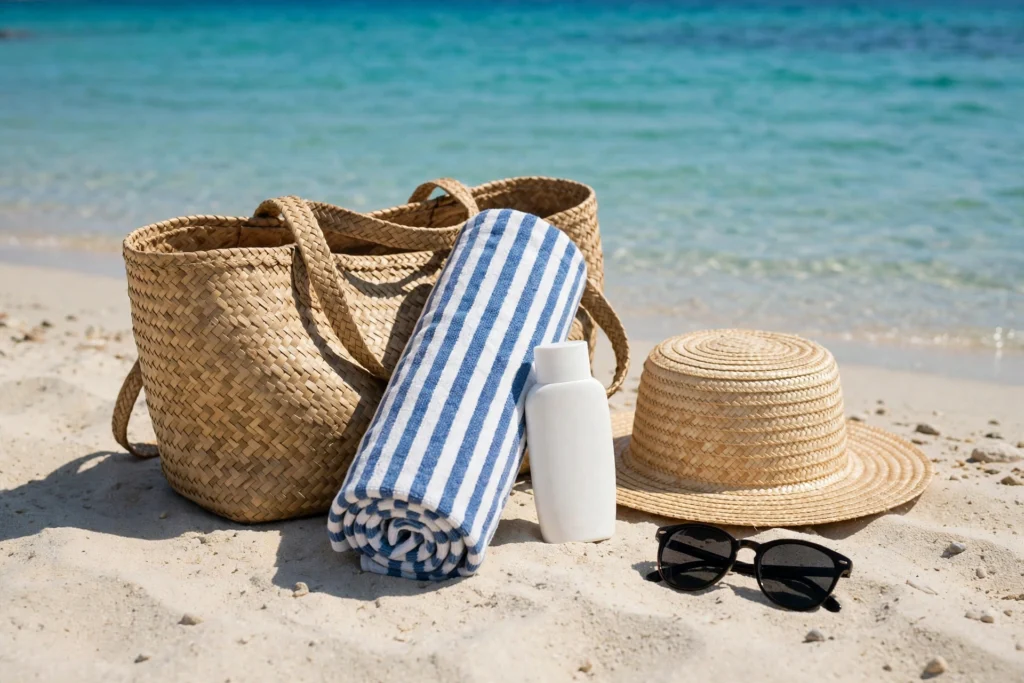
A beach trip is the easiest trip to pack for and the easiest to overpack for, because the clothes are light and the list feels endless. The truth is that a beach trip needs fewer clothes than any other kind of trip and more sun protection than any other kind of trip. Start with the master checklist, then make these changes.
Pack two swimsuits, not one. A swimsuit that is still damp from the morning is unpleasant to put on in the afternoon, and a second swimsuit means you always have a dry one. Add a cover-up or light shirt that goes over a swimsuit for walking to lunch, because many beach restaurants and towns expect more than swimwear. Pack light, loose clothes for the evenings — linen shirts, cotton dresses, shorts — and leave the heavy fabrics at home. A beach trip in July does not need a sweater, but it does need a light layer for air-conditioned restaurants and evening breezes, so pack one thin layer and no more.
Sun protection is the category to take seriously. Sunscreen is the most important item on a beach packing list, and it is also the item most people under-pack. A standard bottle of sunscreen lasts a single person about two or three days of proper use if applied as directed, which means a week at the beach needs two bottles, not one. The 100 ml carry-on limit means you cannot fly with a full-size bottle in your hand luggage — buy sunscreen at the destination, or pack it in a checked bag. A hat with a brim, sunglasses with proper UV protection, and a light long-sleeved shirt for the middle of the day are all worth more than a higher SPF number, because shade and clothing do not wash off in the sea.
Sand is the enemy of everything in your bag. Pack a zip-lock bag for your phone, a separate bag for wet swimwear, and a small dry bag for anything that must stay dry. A beach bag that shakes clean is worth more than a pretty one. Leave the expensive watch, the good jewellery and the laptop at home or in the hotel safe — the beach is not the place for valuables, and sand and salt water are not kind to electronics. A waterproof phone pouch costs little and is worth buying before the trip, not after the phone has been in the water.
Footwear for a beach trip is sandals plus one pair of walking shoes. The sandals are for the beach and the pool. The walking shoes are for the town, the restaurant and the day trip that is not on the beach. Flip-flops are fine for the sand and a poor choice for a day of walking, so do not make them your only shoes. And pack a small first-aid kit with plasters, antiseptic and pain relief, because coral, shells and hot sand cause small injuries that are easy to treat and miserable to ignore.
Winter Trip Packing List: Cold Weather Without the Overweight Bag

Winter trips are the hardest trips to pack for, because the clothes are bulky, the weather is unforgiving, and the margin for error is small. A forgotten layer in summer is an inconvenience. A forgotten layer in winter is a day spent cold indoors. Start with the master checklist, then make these changes, and accept that a winter trip is the one trip where a checked bag is usually the right call.
The principle of winter packing is layers, not bulk. Three thin layers keep you warmer than one thick coat, and layers can be added or removed as the day changes. The base layer should be a thermal top and thermal leggings or long underwear — merino wool or synthetic, never cotton, because cotton holds moisture and makes you colder. The middle layer is a sweater or fleece. The outer layer is a waterproof, windproof coat. This system works from a cold city to a snowy mountain, and the layers can be mixed across the trip so you need fewer items overall.
The coat is the single most important item, and it is the item to wear on the plane rather than pack. A good winter coat is bulky and heavy, and wearing it saves a large part of your bag. The same applies to your boots: wear the heavy winter boots on the plane, and pack lighter shoes for indoors. If your boots are waterproof and have good grip, they will handle snow, ice and slush; if they are not, no amount of extra socks will save you.
Accessories are not optional in winter. A warm hat, gloves, a scarf and thick socks are the items that decide whether you enjoy a winter day or endure it, and they are small enough to pack easily. Pack two pairs of gloves if you can — one pair gets wet in the snow, and a dry pair the next day is a small luxury that matters. Hand warmers, the small disposable kind, weigh almost nothing and are worth packing for a very cold destination. Lip balm and moisturiser matter more in winter than in summer, because cold air and indoor heating dry skin quickly, and chapped lips on day one are still chapped on day five.
Winter packing mistakes are predictable. The most common is packing for the temperature at home rather than the temperature at the destination — check the actual forecast and the wind chill, not the average for the month. The second is forgetting that indoor spaces are heated: you will spend the day moving between cold streets and warm shops, restaurants and museums, so layers you can remove are essential. The third is underestimating how much space winter clothes take up: pack the bag, then take one item out, because winter bags are always fuller than they look. If you are planning a winter escape and want the full picture of what a cold-weather trip involves, our Christmas travel guide covers winter markets, snow trips and what to pack for December weather in detail.
Family Trip Packing List: Packing With Kids Without Packing the House
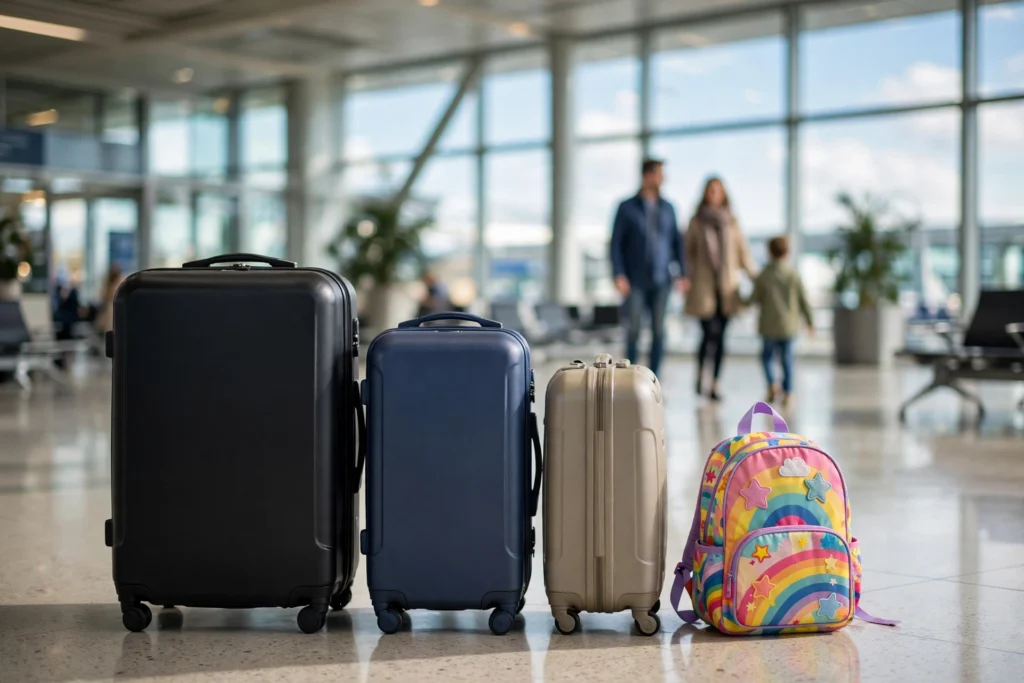
Packing for a family trip is packing for several people who cannot pack for themselves, and the temptation is to pack the house. Resist it. The rules are the same as for any trip — documents, money, medicine, clothes by outfit, one week as the ceiling — but they apply per person, and the logistics are different. The key change is organisation: each person gets their own packing cube or their own bag, so a missing sock is a five-second search, not a full unpacking.
Start with the master checklist for each adult, then add the children’s list. Children need the same categories as adults — clothes by outfit, underwear, socks, sleepwear, shoes, toiletries, sun protection — plus the items that are specific to their age. For babies and toddlers, that means nappies, wipes, formula or baby food, a change of clothes in the carry-on, and the comfort item they sleep with. For older children, it means their own small backpack, which they carry themselves, holding their entertainment, snacks, water and a change of clothes. A child who carries their own bag is a child who is not asking you for things every ten minutes.
The carry-on rule matters more on a family trip than on any other trip, because a delayed checked bag with children’s clothes in it is a crisis in a way that a delayed bag with adult clothes is not. Pack one full change of clothes per child in the carry-on, plus nappies, wipes, snacks, medicine and the comfort item. If the checked bag arrives a day late, the family can still function. The same applies to medicine: every child’s medicine goes in the carry-on, with the prescription, and with enough for the whole trip plus extra days in case of delays.
Entertainment is a packing category on a family trip, not an afterthought. A tablet loaded with films, a few small toys, colouring books, and snacks will get a family through a flight and a long transfer. Pack snacks that do not melt, do not crumble and do not need refrigeration — crackers, dried fruit, cereal bars. Avoid anything that needs a spoon in a moving vehicle. And pack more wipes than you think you need, because wipes clean hands, faces, tray tables, seats and spills, and they are the most versatile item in a family travel bag.
Documents for children deserve a separate check. Many countries require a passport for a child of any age, including a baby, and some require a birth certificate or a letter of consent if a child is travelling with one parent or with someone who is not a parent. Check the entry requirements for your destination on travel.state.gov before you travel, and carry the documents in the carry-on with the rest of the family’s papers. For destination ideas that work by age, our guide to the best places to travel with a baby matches trips to a child’s age and season, which is the planning step that decides what actually needs to go in the bag.
The final family rule is about weight. A family of four with four full suitcases cannot move through an airport quickly, and nobody enjoys carrying a child’s bag as well as their own. Pack one shared bag for the bulky shared items — toiletries, first-aid kit, snacks — and keep each person’s bag as light as possible. If a bag is too heavy for the person it belongs to, it is too heavy, full stop. Children can pull a small rolling suitcase from a young age, and a child pulling their own bag is a child who is part of the trip rather than cargo on it.
Business Trip Packing List: One Bag, Wrinkle-Free, Meeting-Ready
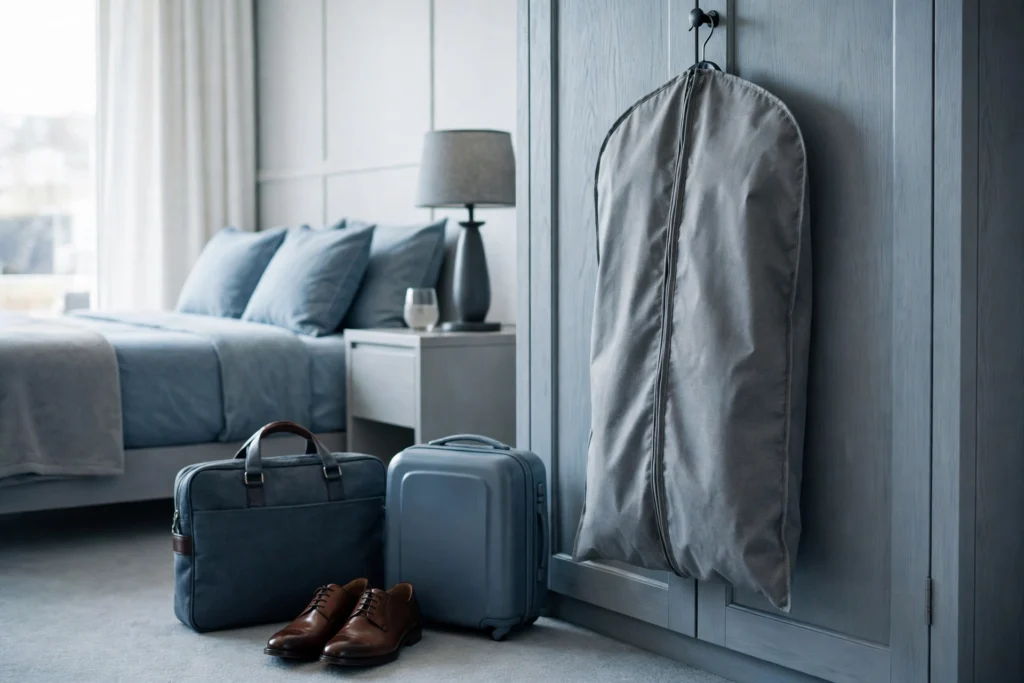
A business trip is a short trip with a high standard. You need to arrive looking sharp, work from the hotel room, and get through the airport fast. The packing list for a business trip is therefore the most disciplined list in this guide: one bag, carry-on only where possible, and everything chosen to survive a flight without ironing.
Start with the master checklist, then make these changes. The clothes are the core of the list. Pack one suit or one smart outfit per two days, not one per day, and choose fabrics that resist creases — wool blends and synthetic blends travel far better than linen or pure cotton. A garment bag or a careful fold keeps a suit presentable; rolling a suit is a mistake. Pack shirts in a packing cube, folded flat, and hang them the moment you reach the hotel room. A small travel steamer or the hotel bathroom’s steam — hang the shirt in the bathroom while you take a hot shower — will fix most creases without an iron.
Shoes for a business trip are two pairs: the smart shoes you wear to meetings, and the comfortable shoes you wear to the airport and around the city. Wear the comfortable pair on the plane and change at the hotel, or wear the smart pair and carry the comfortable pair — either way, do not walk a city in meeting shoes, and do not attend a meeting in walking shoes. Polish the smart shoes before you travel, because scuffed shoes are the detail people notice.
Electronics are a working category on a business trip, not a comfort category. Laptop, charger, phone, charger, headphones for calls, and a power bank, all in the personal item. Pack the laptop charger in the personal item, not the suitcase, because a laptop with a dead battery in a meeting is a laptop that is not working. Carry a pen and a small notebook, because not every meeting room has them, and a paper backup of your presentation or documents is worth more than a cloud copy when the wifi fails. If the trip involves international travel, the universal adapter and a check of the plug type at your destination belong on the list before you leave, not after you arrive.
The business trip extras are small and specific: a tie or accessory for the one formal occasion, a spare shirt in the carry-on in case of a spill, stain remover wipes, and a small bag for laundry so worn shirts do not mix with clean ones. Keep the bag light enough to carry up a flight of stairs, because business trips involve tight schedules, and a heavy bag is a slow bag. And pack for the return journey too — a business trip that ends with a red-eye flight home needs a comfortable change of clothes for the plane, packed at the top of the bag, not buried at the bottom.
The Pre-Departure Checklist: Documents, Home, Money and Health
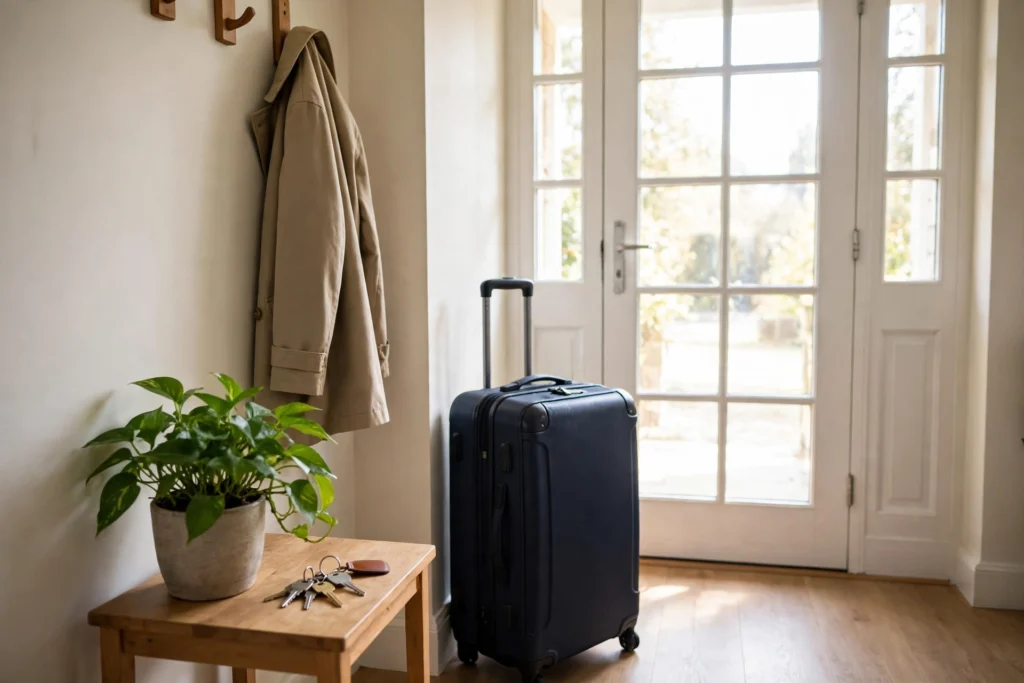
Packing the bag is only half the job. The other half is everything that happens before the bag is packed, and most of it cannot be done the night before departure. This pre-departure checklist is the part of the page to start two weeks before you travel, because some of these tasks take time, and time is the one thing you cannot buy at the airport.
| When | Task | Why it matters |
|---|---|---|
| 2 weeks before | Check passport expiry and visa requirements | Renewals and visas take weeks, not days |
| 2 weeks before | Check entry requirements for your destination on travel.state.gov | Rules change; the official page is the source |
| 2 weeks before | Book travel insurance and read what it covers | Insurance bought after a problem is not insurance |
| 2 weeks before | Check your health: vaccinations, prescriptions, dental check | Some vaccinations need weeks to take effect |
| 1 week before | Tell your bank you are travelling; check card fees | A blocked card abroad is a problem with no quick fix |
| 1 week before | Arrange airport transport and check-in online when it opens | Online check-in saves time and secures a better seat |
| 1 week before | Buy what you are missing from the master checklist | Shops at home are cheaper than shops at the airport |
| 1 week before | Download offline maps, translation and booking apps | They work without a connection when you need them most |
| 1 week before | Arrange home cover: plants, pets, mail, a trusted neighbour | A house left unprepared is a worry for the whole trip |
| 3 days before | Refill prescriptions; pack medicine in the carry-on | Medicine is the one item that cannot be bought easily abroad |
| 3 days before | Confirm accommodation, transport and any bookings | A booking error found at home is fixable; at midnight abroad it is not |
| 1 day before | Charge every device and the power bank | A dead phone at the airport is a phone that cannot show a boarding pass |
| 1 day before | Pack the bag using the master checklist; weigh it | A bag packed in a hurry is a bag with something forgotten |
| 1 day before | Lay out tomorrow’s travel outfit, including shoes | Mornings are for leaving, not for deciding what to wear |
| Day of travel | Check documents, money, medicine, phone, charger, keys | The five-minute check that ends trips well |
| Day of travel | Lock up, set lights on a timer, take out the rubbish | A house that looks lived-in is a safer house |
| Day of travel | Arrive at the airport with time to spare | Rushing is how documents get left behind |
Documents, two weeks out
The document tasks come first because they take the longest to fix. Check your passport’s validity against your destination’s requirement, check whether you need a visa and how long it takes to get one, and check whether your destination requires anything else — a vaccination certificate, an entry form, a return ticket. The US State Department’s country information pages at travel.state.gov list entry requirements, local laws and current travel advisories for every destination, and they are the pages to check, not a travel forum. If you need a visa, apply early; if you need a vaccination, get it early, because some vaccinations need weeks before they are effective, and some need more than one dose.
Home: the checklist people forget
A trip is also a period when your home is empty, and a few small tasks make it safer and cheaper. Ask a neighbour or a friend to collect the mail, or pause deliveries, because a pile of mail is a sign that nobody is home. Put lights on a timer so the house looks lived in during the evenings. Unplug anything that does not need to run, turn down the heating, and take out the rubbish, because a bin left for two weeks is unpleasant to come home to. Water the plants or arrange for someone to, and arrange care for pets well in advance, because good pet care books up. These tasks take an hour in total, and they remove a whole category of worry from the trip.
Money: the week-before tasks
Money tasks belong a week before departure, not the day before. Tell your bank you are travelling, or confirm that your bank does not need to be told. Check the fees your bank charges for foreign cash withdrawals and card payments, and consider whether a second card from a different network is worth carrying. Get some local currency before you travel if you can, or know where you will get it on arrival — an airport cash machine is fine, but a cash machine in a quiet street at midnight is not the place to work out a new currency. And set a rough daily budget before you go, so you know what the trip costs while you are still able to change it. Our guide on how to prepare a travel budget breaks a trip into categories and shows how to set a daily figure that actually holds up.
Health: the part that protects the trip
Health tasks are the least glamorous and the most important. Refill any prescription with enough to cover the trip plus extra days, in case of delays, and carry the prescription with the medicine. If you take controlled medicine, carry a doctor’s note explaining it, because some countries restrict what you can bring in. Check whether your destination requires or recommends any vaccinations, and check whether your travel insurance covers your health needs abroad — the time to discover that it does not is not in a foreign hospital. Pack a small first-aid kit with plasters, pain relief, antiseptic, any personal medication, and rehydration sachets, because a small problem treated early is a small problem, and a small problem ignored on a trip becomes a large one. This guide is general travel information, not medical advice; for health questions specific to your trip, ask your doctor or a travel health clinic.
What NOT to Pack — and What to Do When You Forget Something
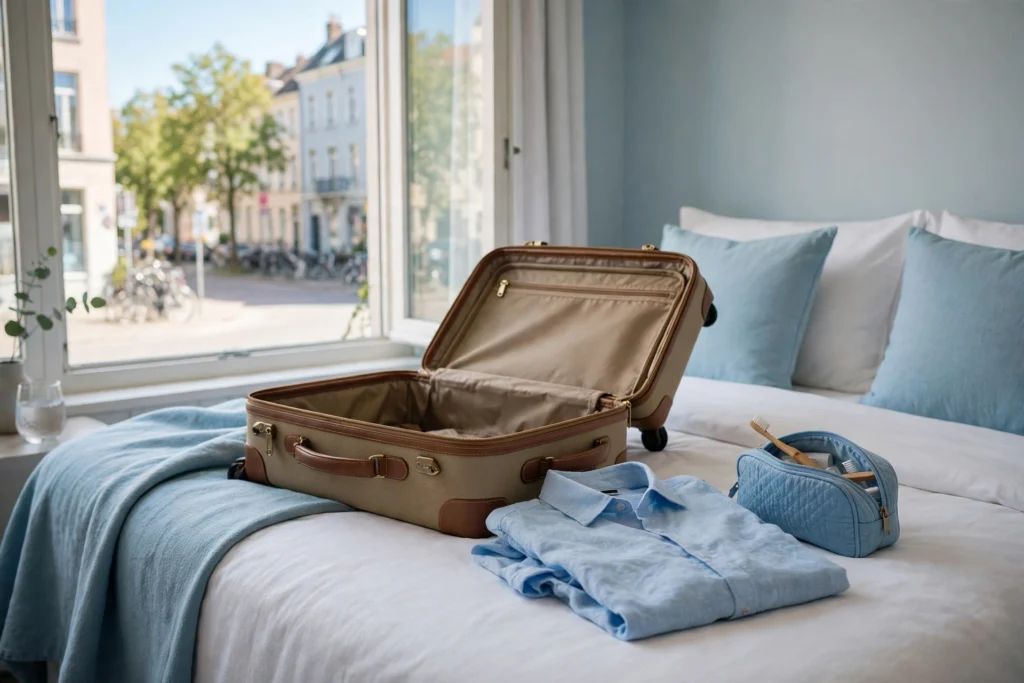
A packing list that only tells you what to bring is half a list. The other half is what to leave behind, because every item you do not pack is space and weight you do not carry. This section is the cut list — the items that look useful at home and are dead weight on a trip.
The cut list
Full-size toiletries. They are heavy, they break the liquids rule in a carry-on, and they are sold at every destination. Travel sizes or solid alternatives cover a week easily, and a full-size bottle bought at the destination costs little.
Too many shoes. Two pairs is the limit, one worn and one packed. A third pair is almost never worn, and it is the heaviest item in the bag. If you are tempted by a third pair, ask whether it does something neither of the other two does. If it does not, leave it.
“Just in case” clothes. The formal outfit for an event that is not on the itinerary, the extra jumper for weather that is not forecast, the fifth T-shirt for a three-day trip. “Just in case” is the phrase that fills a bag with clothes that come home unworn. Pack for the trip you have planned, not the trip you imagine.
Books, unless you will read them. A paperback is heavy, and a phone or e-reader holds a library. One book for a long flight is reasonable. Three books for a week is a library you are carrying for no reason.
A hairdryer, an iron, a travel kettle. Hotels and rentals provide these, and the versions you own are heavy and shaped awkwardly. If your accommodation genuinely does not provide them, buy a cheap one at the destination rather than carrying yours across the world.
Valuables you do not need. Expensive jewellery, a second watch, a laptop on a holiday, a camera with three lenses for a city break. Every valuable you pack is a valuable you must watch, insure and worry about. Leave what the trip does not need.
Food for the whole trip. Snacks for the journey are sensible. A week’s worth of food is not, because food is sold everywhere, and a bag full of snacks is a bag with no room for the things you buy on the trip.
A different outfit for every day of a long trip. Fourteen outfits for fourteen days is a bag that cannot close. Seven outfits and one laundry stop is the same trip with half the weight.
What to do when you forget something
Forgetting something is normal, and it is almost never a disaster. The question is which category the forgotten item falls into, because the answer decides whether you buy it, borrow it, or simply do without it.
| Forgotten item | Buy it at the destination? | Does it ruin the trip? |
|---|---|---|
| Toothbrush, toothpaste | Yes — sold everywhere, cheap | No |
| Shampoo, sunscreen, deodorant | Yes — sold everywhere, cheap | No |
| Phone charger | Yes — sold at airports and shops, more expensive | No, but buy it immediately |
| Underwear, socks, a T-shirt | Yes — sold everywhere, cheap | No |
| Swimsuit | Yes — sold at beach destinations | No |
| Umbrella, rain jacket | Yes — sold everywhere when it rains | No |
| Sunglasses | Yes — sold everywhere | No |
| Pain relief, plasters | Yes — pharmacies everywhere | No |
| Book, entertainment | Yes — or use the phone | No |
| Adapter | Yes — sold at airports, more expensive | No, but buy it on arrival |
| Hat, scarf, gloves | Yes — sold at the destination | No, unless the weather is extreme |
| Prescription medicine | Very difficult — needs a local doctor and a prescription | Yes — this is the one that matters |
| Passport, ID | Cannot buy — contact your consulate immediately | Yes — this ends the trip |
| Glasses / contact lenses | Difficult — needs an optician and your prescription | Yes, for most people |
| House keys | Cannot buy — arrange with someone at home | No, unless nobody can help |
The pattern is clear. Almost everything can be bought, and almost nothing that can be bought matters. The items that ruin a trip are the ones that cannot be bought: a passport, prescription medicine, glasses, and your travel documents. That is why those items are packed first, in the bag that stays with you, and checked three times. Everything else is replaceable, and a trip that starts with a forgotten toothbrush is a trip that starts with a five-minute stop at a shop, not a disaster.
The lost-luggage plan
If your checked bag does not arrive, the plan is simple, and it is worth knowing before it happens. Report it at the airline’s desk in the airport before you leave — do not go to the hotel and report it later, because the report must be filed at the airport. Keep the reference number the airline gives you, and keep receipts for anything you have to buy because of the delay, because the airline may reimburse essential purchases. Then use the carry-on you packed properly: the change of clothes, the toiletries, the medicine and the charger are already with you, and the trip continues while the bag catches up. Most delayed bags arrive within a day or two. The travellers who suffer are the ones who packed everything in the checked bag and nothing in the carry-on. Pack as though the checked bag might be late, and a late bag becomes an anecdote instead of a crisis.
Frequently Asked Questions About Travel Packing Checklists
Is there really a free travel packing checklist PDF on this page?
Yes, in the way that matters. The complete checklist is printed on this page, free, with no download, no email address and no sign-up. There is no file to download because a page stays current and a downloaded file does not. If you want a printed copy, use your browser’s print function on this page. The master checklist table, the trip-type lists and the pre-departure checklist are all here, and they are all free to use.
How many clothes should I pack for a 7-day trip?
For a typical 7-day trip, pack about 6 tops, 3 bottoms, 7 sets of underwear, 7 pairs of socks, 1 or 2 sleepwear items, 1 light layer, 1 rain jacket, and 2 pairs of shoes in total, with one pair worn on the plane. These are planning figures for a typical adult in a temperate climate; a beach trip needs more swimwear and fewer layers, a winter trip needs more layers and heavier fabrics, and a business trip needs smarter clothes. The full quantities for 3, 7 and 14 days are in the master checklist table.
What is the TSA 3-1-1 liquids rule in 2026?
The rule is unchanged. In your carry-on, every liquid, gel, aerosol, cream or paste must be in a container of 3.4 ounces (100 ml) or less, all containers must fit in one clear quart-size zip-top bag, and each passenger gets one bag. The limit is on the container size, not how much is left inside it. Medications, baby formula and breast milk are exempt. The rule was verified against the TSA’s own liquids page for this guide in November 2026, and the CT scanners now used at many airports change how you are screened, not what you may carry.
Can I pack a power bank in checked luggage?
No. Spare lithium batteries, including power banks and portable chargers, must travel in your carry-on and are forbidden in checked luggage. This is a Federal Aviation Administration rule. Batteries of 100 watt-hours or less need no special permission; batteries between 101 and 160 watt-hours need airline approval and are limited to two spares per person; anything above 160 watt-hours is forbidden on a passenger aircraft. If your carry-on is gate-checked, take the power bank out first and keep it with you in the cabin.
How do I pack carry-on only for a week?
Choose a colour palette of two or three colours so everything matches, lay out one complete outfit per day, and remove one outfit before you pack. Roll your clothes and use packing cubes. Wear your heaviest shoes and jacket on the plane. Put the things you need on the flight on top, and the things you need first at the hotel next. For a week-long trip, pack about six tops and three bottoms, seven sets of underwear and socks, and plan on the personal item holding your documents, medicine, phone, charger and liquids bag.
What travel documents do I need for an international trip?
A passport valid for your destination’s requirement — many countries require six months of validity beyond your travel dates, so check your destination’s page on travel.state.gov before you book. A visa or entry permit if your destination requires one. Your boarding pass or booking confirmations. Travel insurance details, including the emergency number. Two payment cards from different networks, and some local currency. Keep all of it in your carry-on, and keep a copy of your passport separate from the original.
How far ahead should my passport be valid?
It depends on your destination, and that is the point. Many countries require six months of validity beyond your travel dates. The Schengen Area in Europe requires three months beyond your planned departure. Some countries, such as Mexico and Canada, require only that your passport be valid for your stay. Check the exact requirement for your destination on travel.state.gov, and as a practical rule, renew your passport if it has less than a year of validity left and an international trip is coming up.
What should I pack in my personal item vs my carry-on?
The personal item holds what you need on the flight and what you cannot afford to lose: passport, ID, money, cards, phone, charger, power bank, headphones, medicine, glasses, the liquids bag, a change of clothes, and anything you would need if the carry-on were delayed. The carry-on holds the rest of your clothes, toiletries and gear. If the carry-on is gate-checked, the personal item stays with you, so pack it as though the carry-on might not arrive until tomorrow.
What do most people forget to pack?
The most commonly forgotten items are also the least important: a phone charger, a toothbrush, sunscreen, a pen for arrival forms, and a spare pair of socks. The items people forget that actually matter are prescription medicine, the correct travel documents, and a check of the passport’s expiry date. The pre-departure checklist in this guide exists for exactly this reason — it catches the important things a week before departure, when there is still time to fix them.
Should I use packing cubes?
Packing cubes help most travellers, and they are worth trying. They keep rolled clothes compressed and organised, so the bag stays tidy and you can find things without unpacking everything. They are a category, not a brand — any set that fits your bag will do the job. If you do not want to buy them, large zip-lock bags do much the same thing for less money, and a laundry bag for worn clothes serves the same purpose of keeping clean and dirty clothes apart.
What should I pack for a beach trip vs a city trip?
A beach trip needs fewer clothes and more sun protection: two swimsuits, light loose clothes, a hat, sunglasses, sunscreen bought at the destination, and bags that keep sand away from your phone. A city trip needs comfortable walking shoes, a day bag, a light layer and a rain jacket, and one dressier outfit for a good dinner. The clothes overlap, but the priorities are opposite: on a beach trip the sun is the problem, on a city trip the walking is the problem, and the packing list should reflect whichever problem your trip has.
What do I do if my luggage is lost?
Report it at the airline’s desk in the airport before you leave, and keep the reference number. Keep receipts for anything essential you have to buy, because the airline may reimburse those purchases. Then rely on your carry-on: the change of clothes, toiletries, medicine and charger you packed there are what get you through the first day. Most delayed bags arrive within a day or two. The best protection against lost luggage is not a better suitcase — it is a carry-on packed as though the checked bag might be late.
Conclusion: Pack Once, Properly, and Stop Thinking About It
A packing list is not a test. There is no prize for the lightest bag or the most complete list, and the perfect packing list is the one you actually use. This guide gives you that list: a master checklist with quantities for 3, 7 and 14 days, the current liquids and battery rules as published by the TSA and the FAA, the clothing numbers that stop you overpacking, separate lists for city, beach, winter, family and business trips, a pre-departure checklist that starts two weeks before you travel, and a plain list of what not to pack.
The whole thing comes down to five habits. Put the irreplaceable in the bag that stays with you. Pack by outfit, not by item. Treat one week of clothes as the ceiling and let laundry do the rest. Leave behind anything you can buy cheaply at the destination. And check your documents a week before you travel, not the night before. Do those five things and the rest of the list takes care of itself.
The checklist on this page is free, it is complete, and it is here whenever you need it. Print it, keep it on your phone, or come back to it before your next trip. Pack once, properly, and then stop thinking about packing — the trip is the point, and the bag is only how you get there.
People also read:
- Travel Itinerary Template: Plan Any Trip Without the Stress
- Travel Apps
- How to Prepare a Travel Budget
- What Is a Travel Document Number?
- Best Places to Travel With a Baby
- Places to Travel in Texas
- Iceland Travel Itinerary
- How Much to Travel to Japan
- Best Time to Travel to Chile
- Christmas Travel: The Complete 2026 Guide to Markets, Snow and Warm Escapes

M. Adil is the founder and editor of SoloTravelPro. He writes practical, research-based travel guides that help travellers plan with confidence — from first-time city breaks to national parks and island escapes. Every guide is built on official sources, current prices and honest, usable advice, so readers can plan smarter and travel better.

Other Articles

Luxury Travel Destinations: The Best Places to Go in 2026 and 2027