Japan has a reputation for being expensive, and that reputation is about twenty years out of date. The weak yen has quietly turned one of the world’s most polished travel destinations into one of its best-value ones: a bowl of ramen still costs less than a sandwich in most American cities, a capsule hotel bed costs less than a hostel dorm in London, and a week on the ground can cost less than a long weekend in New York. What has not changed is that Japan rewards planning. The difference between a $1,500 trip and a $4,000 trip is rarely the country — it is the season you pick, the hotels you book, and whether you buy a rail pass you never use.
This guide answers how much to travel to Japan with real 2026 numbers, not guesses. Every figure below separates the international flight from the money you spend once you land, because mixing the two is the single biggest reason Japan cost guides disagree with each other. You will find daily averages by travel style, full totals for 7, 10 and 14 days, a city-by-city comparison of Tokyo, Kyoto and Osaka, the honest maths on the JR Pass, and the mistakes that quietly double a Japan budget. All prices use a working rate of ¥160 to $1 — the yen was trading at about ¥159.7 to the dollar on 14 November 2026 — and yen figures are given first throughout, so you can re-check them at whatever rate applies when you travel. Prices are planning ranges for one adult; confirm the current figure before you book, because fares and hotel rates move with the season.
Quick Answer: How Much Does a Trip to Japan Cost?
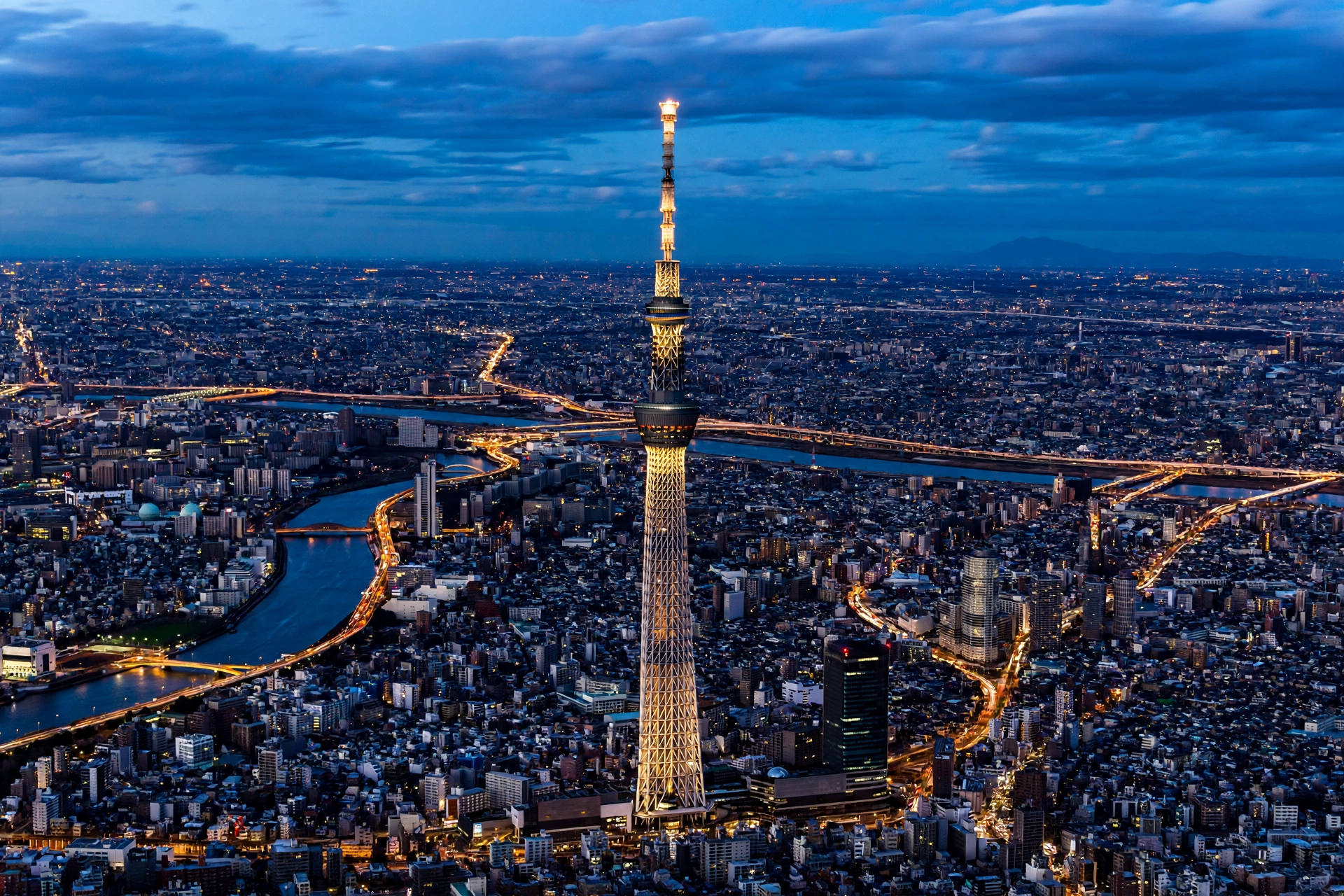
A 10-day trip to Japan costs roughly $1,000 to $2,250 per person on a tight budget, $1,450 to $3,050 mid-range, and $2,400 and up for a comfortable luxury-style trip — all including a round-trip flight from the United States. The on-the-ground cost, before flights, is about $50 to $75 a day for a budget traveller, $95 to $155 a day mid-range, and $190 and up a day for luxury. A round-trip flight from the US usually adds $500 to $1,500 depending on where you fly from and when you book.
For a first trip, the sweet spot is 10 days at mid-range: about $1,900 to $2,600 all in, flying from the US West Coast in a shoulder month. That buys a private room in a business hotel, a mix of ramen shops and sit-down dinners, unlimited city transport, and two or three Shinkansen rides between cities. Go for 7 days and you can do Tokyo plus Kyoto properly; go for 14 days and you can add Osaka, Nara and a slower pace without the daily cost rising much, because the expensive part of a Japan trip is getting there, not being there. The rest of this guide breaks every one of those numbers down so you can build a Japan travel budget that matches your trip, not somebody else’s.
Japan Trip Cost at a Glance: Daily Averages by Travel Style
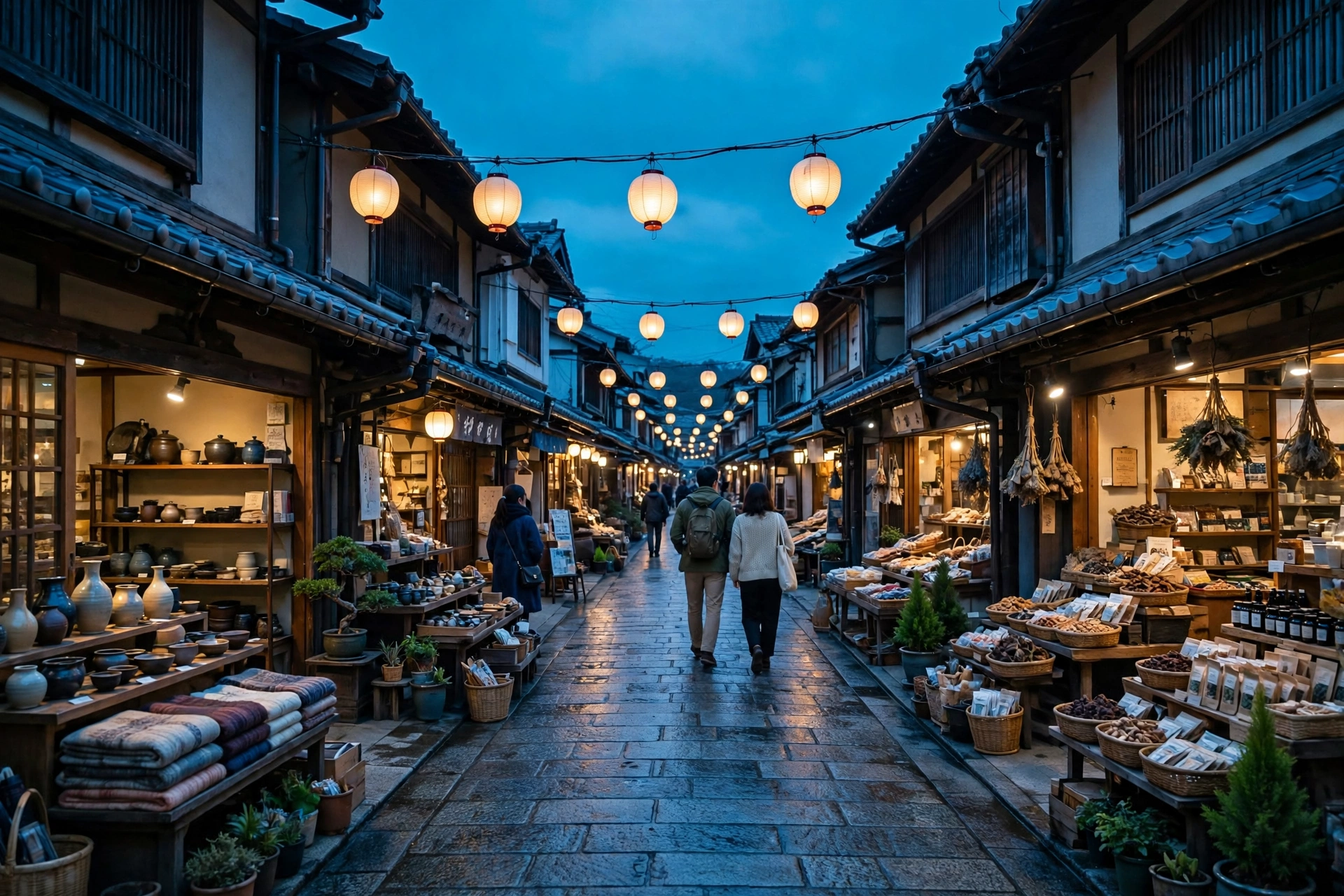
The fastest way to answer “how much to travel to Japan” is to start with a daily number, because every trip length is just that number multiplied by the days you stay. Japan’s costs split neatly into three styles, and the gap between them is mostly accommodation: a bed is the single biggest cost in Japan, taking roughly a third of a typical visitor’s spending, ahead of shopping and food. The Japan Tourism Agency’s own figures show the average visitor spent about ¥229,000 per trip in 2025 — roughly $1,430 at today’s rate — before international flights, which sits squarely in mid-range territory for a trip of around ten days.
| Cost per person, per day | Budget | Mid-range | Luxury |
|---|---|---|---|
| Accommodation | ¥3,000–5,000 ($19–31) | ¥8,000–15,000 ($50–94) | ¥25,000+ ($156+) |
| Food and drink | ¥2,500–4,000 ($16–25) | ¥5,000–8,000 ($31–50) | ¥12,000+ ($75+) |
| Local transport | ¥800–1,500 ($5–9) | ¥1,500–3,000 ($9–19) | ¥3,000–5,000 ($19–31) |
| Attractions and activities | ¥0–1,000 ($0–6) | ¥1,000–3,000 ($6–19) | ¥3,000–8,000 ($19–50) |
| Shopping and extras | ¥500–1,000 ($3–6) | ¥1,000–3,000 ($6–19) | ¥3,000+ ($19+) |
| Total per day (on the ground) | ¥8,000–12,000 ($50–75) | ¥15,000–25,000 ($94–156) | ¥30,000+ ($188+) |
A budget day in Japan is genuinely comfortable, not a hardship exercise: a capsule hotel or hostel dorm, breakfast and lunch from a konbini (convenience store), a ramen dinner, city trains on an IC card, and a temple or a park that costs nothing to enter. The mid-range day is what most first-time visitors actually live: a private business hotel room, one sit-down meal, a Shinkansen leg every few days, and a paid attraction or two. Luxury in Japan is less about the daily rate than the ceiling — a ryokan with a kaiseki dinner can cost ¥30,000 or more per person for a single night, and a high-end Tokyo hotel can swallow a mid-range daily budget before breakfast.
Two things make these daily numbers work in your favour. First, the weak yen: at roughly ¥160 to the dollar, Japan is about 25 to 30 percent cheaper for American visitors than it was a few years ago, and the effect is biggest on the things you buy every day — food, trains and tickets. Second, Japan’s free and cheap layer is unusually deep. Temples, shrines, parks, markets, viewpoints and whole neighbourhoods cost nothing, so the difference between a $75 day and a $150 day is usually the hotel and one dinner, not the sightseeing. If you are still deciding how the pieces of a trip budget fit together, our guide on how to prepare a travel budget walks through the same daily-cost method for any destination.
How Much to Travel to Japan for 7 Days
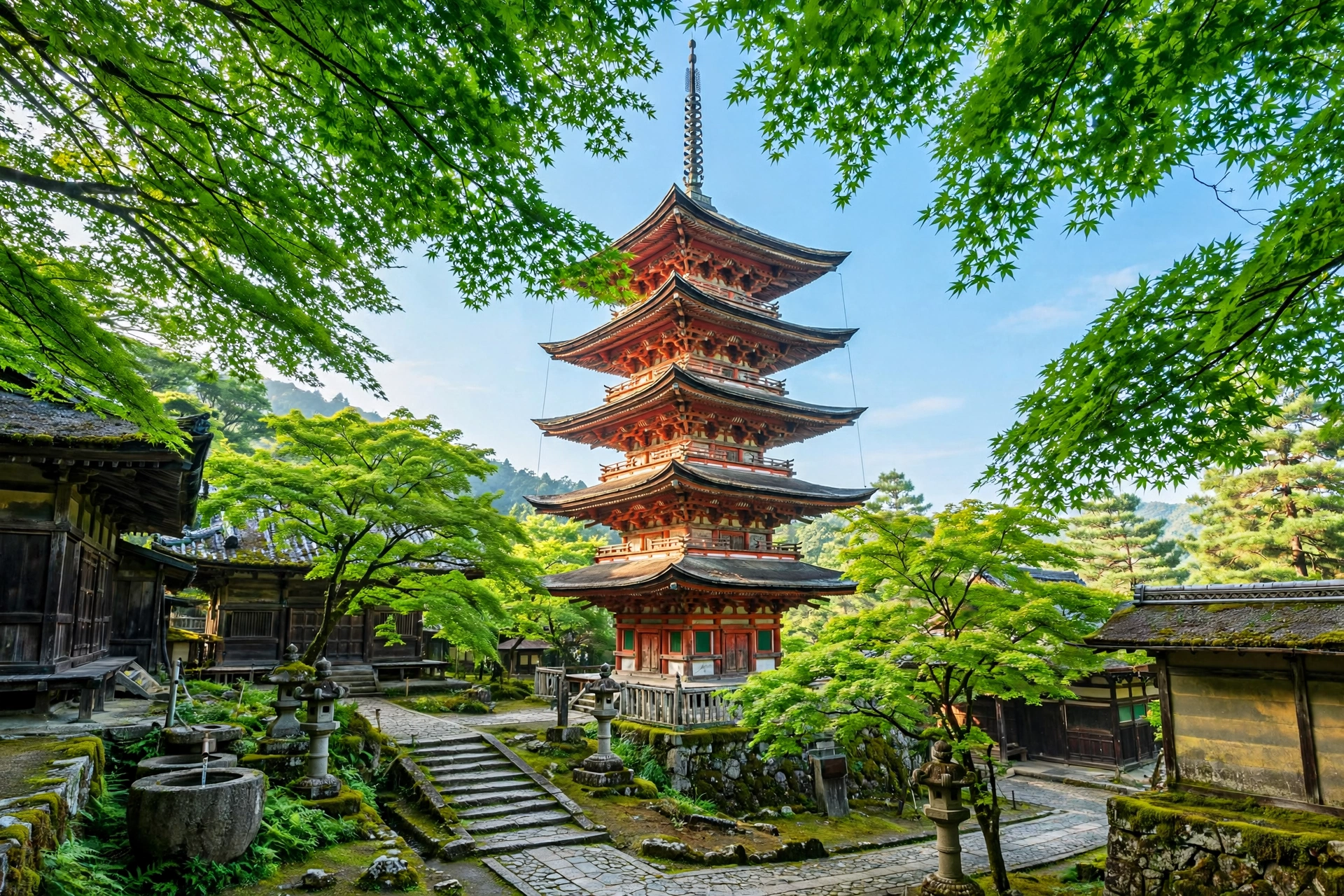
Seven days is the classic first trip to Japan: three or four days in Tokyo, three in Kyoto, and a Shinkansen ride between them. It is also the length where the flight matters most, because one round-trip fare is spread over the fewest days. The table below keeps the flight separate on purpose — a $600 flight from Los Angeles and a $1,400 flight from New York are the same trip with a very different total.
| 7 days, per person | On the ground | + Round-trip flight ($500–$1,500) | All-in total |
|---|---|---|---|
| Budget | ¥56,000–84,000 ($350–525) | $500–$1,500 | $850–$2,025 |
| Mid-range | ¥105,000–175,000 ($656–$1,094) | $500–$1,500 | $1,156–$2,594 |
| Luxury | ¥210,000+ ($1,313+) | $500–$1,500 | $1,813+ |
A realistic 7-day mid-range trip lands near the middle of that range: about $1,800 to $2,100 all in from the West Coast, or $2,200 to $2,600 from the East Coast. The on-the-ground spending breaks down roughly as ¥56,000 to ¥105,000 for six nights in a business hotel, ¥35,000 to ¥56,000 for food, about ¥15,000 for city transport and airport transfers, and ¥13,000 to ¥15,000 for one Shinkansen leg and a few paid attractions.
Seven days is short enough that two decisions dominate the cost. The first is the hotel: six nights at ¥8,000 a night instead of ¥15,000 saves about $260, which is more than the entire food budget for the week. The second is the rail pass — on a 7-day trip with only one long Shinkansen ride, the 7-day JR Pass at ¥50,000 usually costs more than the individual tickets, so read the break-even section below before buying one. A week is also the trip where a capsule hotel makes the most sense for a budget traveller: two or three capsule nights in Tokyo, where hotels are priciest, can cut the whole week’s accommodation bill by a third, and the capsules in Japan are clean, quiet and purpose-built rather than the backpacker dorms the name suggests.
How Much to Travel to Japan for 10 Days
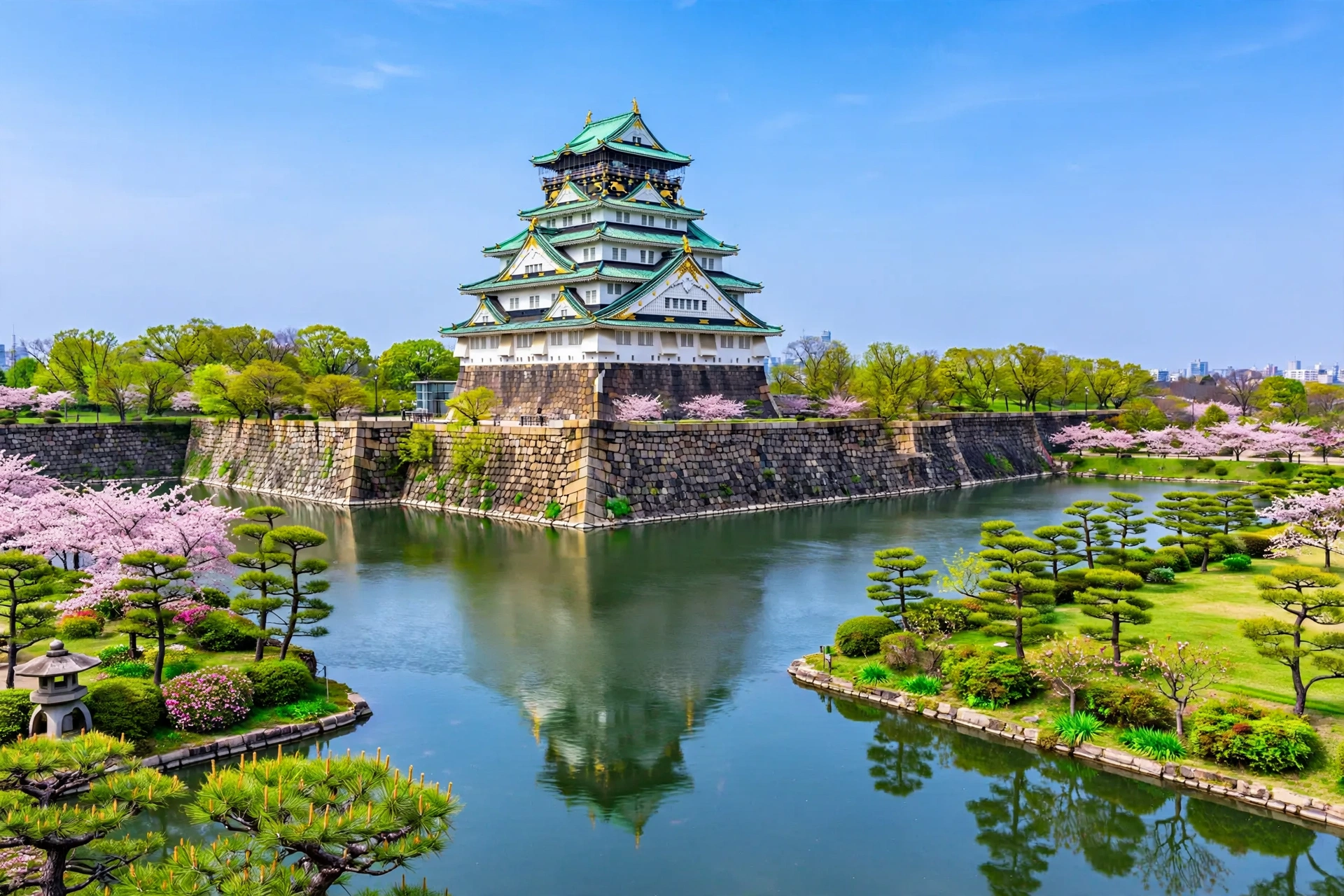
Ten days is the best value length for a first Japan trip, and it is the length most cost guides use as their benchmark. You get Tokyo, Kyoto and Osaka, a day trip to Nara, and a day or two of slack for weather or jet lag — without the trip feeling rushed. The daily cost barely changes from a 7-day trip, but the flight is spread over three more days, so the cost per day of the whole trip falls.
| 10 days, per person | On the ground | + Round-trip flight ($500–$1,500) | All-in total |
|---|---|---|---|
| Budget | ¥80,000–120,000 ($500–750) | $500–$1,500 | $1,000–$2,250 |
| Mid-range | ¥150,000–250,000 ($938–$1,563) | $500–$1,500 | $1,438–$3,063 |
| Luxury | ¥300,000+ ($1,875+) | $500–$1,500 | $2,375+ |
A typical 10-day mid-range trip costs about $1,900 to $2,600 all in from the West Coast. The on-the-ground side is roughly ¥72,000 to ¥135,000 for nine nights of hotels, ¥50,000 to ¥80,000 for food, ¥20,000 to ¥25,000 for city transport plus the Narita Express, and ¥30,000 to ¥40,000 for two or three Shinkansen legs and paid attractions. The upper end of the mid-range column — approaching $3,000 — is where most travellers actually land once they add a ryokan night, a day trip to Nikko or Hiroshima, and a few souvenirs; that is still below the $3,800 to $5,200 that some guides quote for two weeks mid-range, because those figures assume pricier hotels and more paid experiences throughout.
Ten days is also the length where the JR Pass question gets interesting. With Tokyo to Kyoto, Kyoto to Hiroshima or Osaka, and a return to Tokyo inside a seven-day window, the pass can break even — but only if the long legs are packed into those seven consecutive days. If your Shinkansen rides are spread across the full ten days, individual tickets are usually cheaper. The maths is worked out in full in the JR Pass section below.
How Much to Travel to Japan for 14 Days
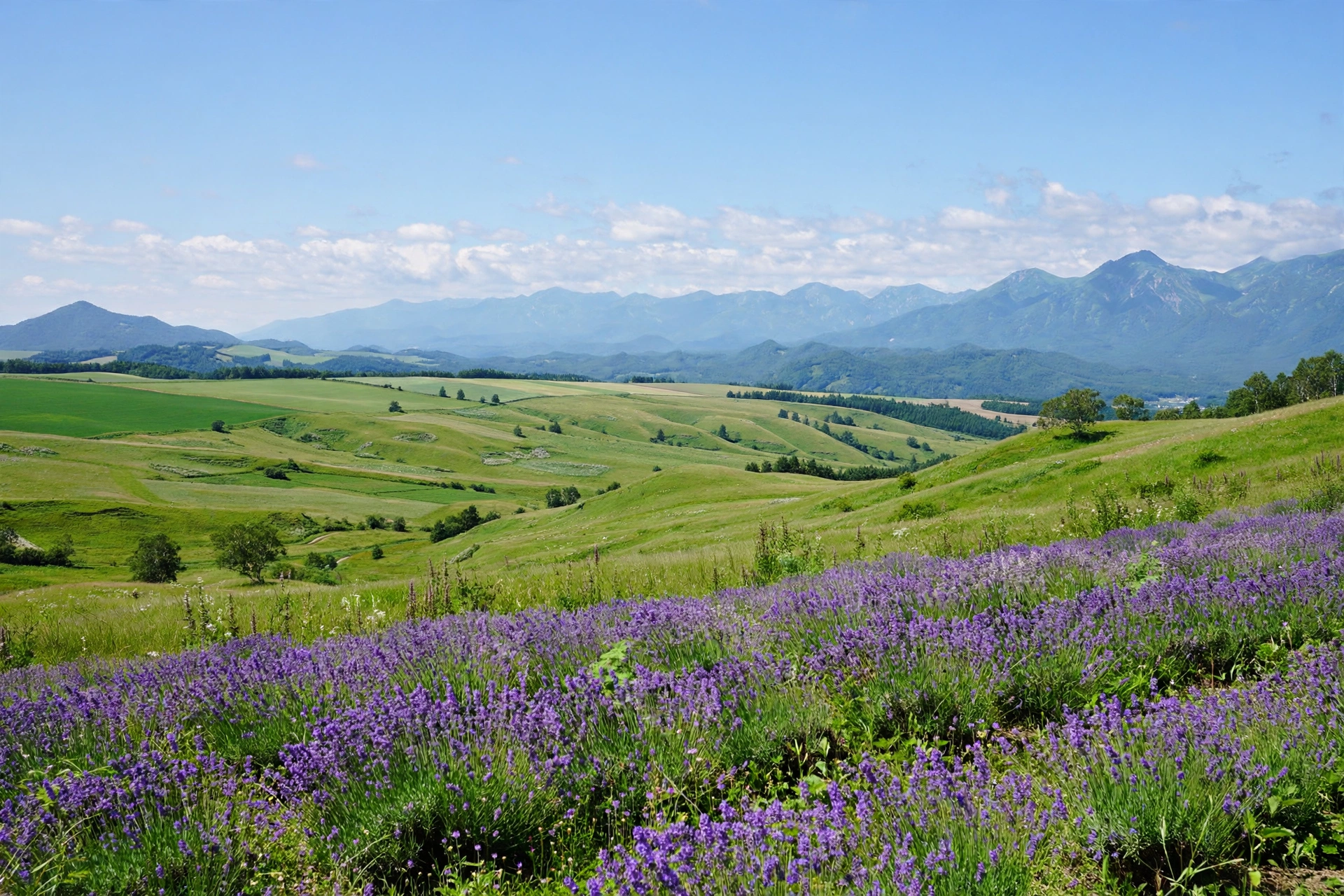
Fourteen days is the slow-travel version of Japan: Tokyo, Kyoto and Osaka at a walking pace, plus Hiroshima, Nara, a mountain day or a night in a ryokan town, and time to get out of the big cities altogether. Per day it is the cheapest way to see Japan, because the flight — the single biggest fixed cost — is spread over two full weeks, and a longer stay lets you use weekly hotel discounts, slower travel and cheaper neighbourhoods.
| 14 days, per person | On the ground | + Round-trip flight ($500–$1,500) | All-in total |
|---|---|---|---|
| Budget | ¥112,000–168,000 ($700–$1,050) | $500–$1,500 | $1,200–$2,550 |
| Mid-range | ¥210,000–350,000 ($1,313–$2,188) | $500–$1,500 | $1,813–$3,688 |
| Luxury | ¥420,000+ ($2,625+) | $500–$1,500 | $3,125+ |
A realistic 14-day mid-range trip costs about $2,600 to $3,400 all in. The on-the-ground side is roughly ¥104,000 to ¥195,000 for thirteen nights of hotels, ¥70,000 to ¥112,000 for food, ¥30,000 to ¥40,000 for transport including three or four Shinkansen legs, and ¥20,000 to ¥35,000 for attractions. Two travellers sharing a room do noticeably better: a double room in a business hotel costs little more than a single, so a couple sharing can cut the per-person accommodation cost by a third or more. Some guides put a two-week mid-range trip for a couple at $6,500 to $8,700 all in, which works out to $3,250 to $4,350 per person — the top of our range, and the figure you should plan around if you want central hotels, a ryokan night and a full day-trip programme.
Fourteen days is also the length where the 14-day JR Pass at ¥80,000 (about $500) becomes worth pricing seriously, because the pass window finally matches the trip. The same rule applies, though: the pass only pays for itself if the long-distance train travel inside those fourteen days adds up to more than ¥80,000 in individual tickets. A slow trip that stays in one region — Kansai only, or Tokyo with day trips — will not get there, and the money is better spent on individual tickets and regional passes.
Flights to Japan from the USA: What a Round Trip Really Costs
The flight is the one cost in this guide that has nothing to do with Japan and everything to do with where you live. A round-trip ticket from the United States to Tokyo usually costs $500 to $1,500 in economy, and the spread is almost entirely about departure city and season. West Coast fares are the cheapest — Los Angeles, San Francisco and Seattle regularly see $500 to $900 round trips in the shoulder seasons — while East Coast departures from New York, Boston or Washington typically run $800 to $1,500. Flights from the Midwest and the South fall in between, and adding a connection usually saves $100 to $300 over a nonstop.
| Round-trip flight to Tokyo (economy) | Typical price |
|---|---|
| West Coast (Los Angeles, San Francisco, Seattle) | $500–$900 |
| Midwest and South (Chicago, Dallas, Atlanta) | $700–$1,200 |
| East Coast (New York, Boston, Washington) | $800–$1,500 |
| Cherry blossom season (late March–early April) | Add $200–$500 |
| Golden Week (late April–early May) | Add $200–$400 |
| New Year (late December–early January) | Add $200–$400 |
Three things move the fare more than anything else. The first is booking window: for Japan, the best fares usually appear two to four months before departure, and fares booked less than a month out are reliably the most expensive. The second is the day of the week — midweek departures are typically $50 to $150 cheaper than Friday and Sunday. The third is the airport: flying into Tokyo’s Haneda airport (HND) is usually worth a small premium over Narita (NRT) because Haneda is thirty minutes from central Tokyo while Narita is an hour or more away, and the Narita Express alone costs about ¥6,000 (around $38) return. Osaka’s Kansai airport (KIX) is the better choice if your trip starts in Kyoto or Osaka, and an open-jaw ticket — into Tokyo, out of Osaka — can save a Shinkansen fare and a day of backtracking.
Budget airlines and stopovers are the cheapest way to cut the fare further. A one-stop routing through Seoul, Taipei or Honolulu can save $150 to $300, and a long layover can double as a bonus stop. What does not work is waiting for a last-minute deal: Japan is not a destination where fares collapse at the last minute, because demand from both tourists and business travellers keeps the planes full. If you want a full method for planning the flight and the rest of the trip around one number, the travel itinerary template on this site turns a budget into a day-by-day plan.
Where to Stay in Japan: Hotels, Ryokan and Capsule Hotels
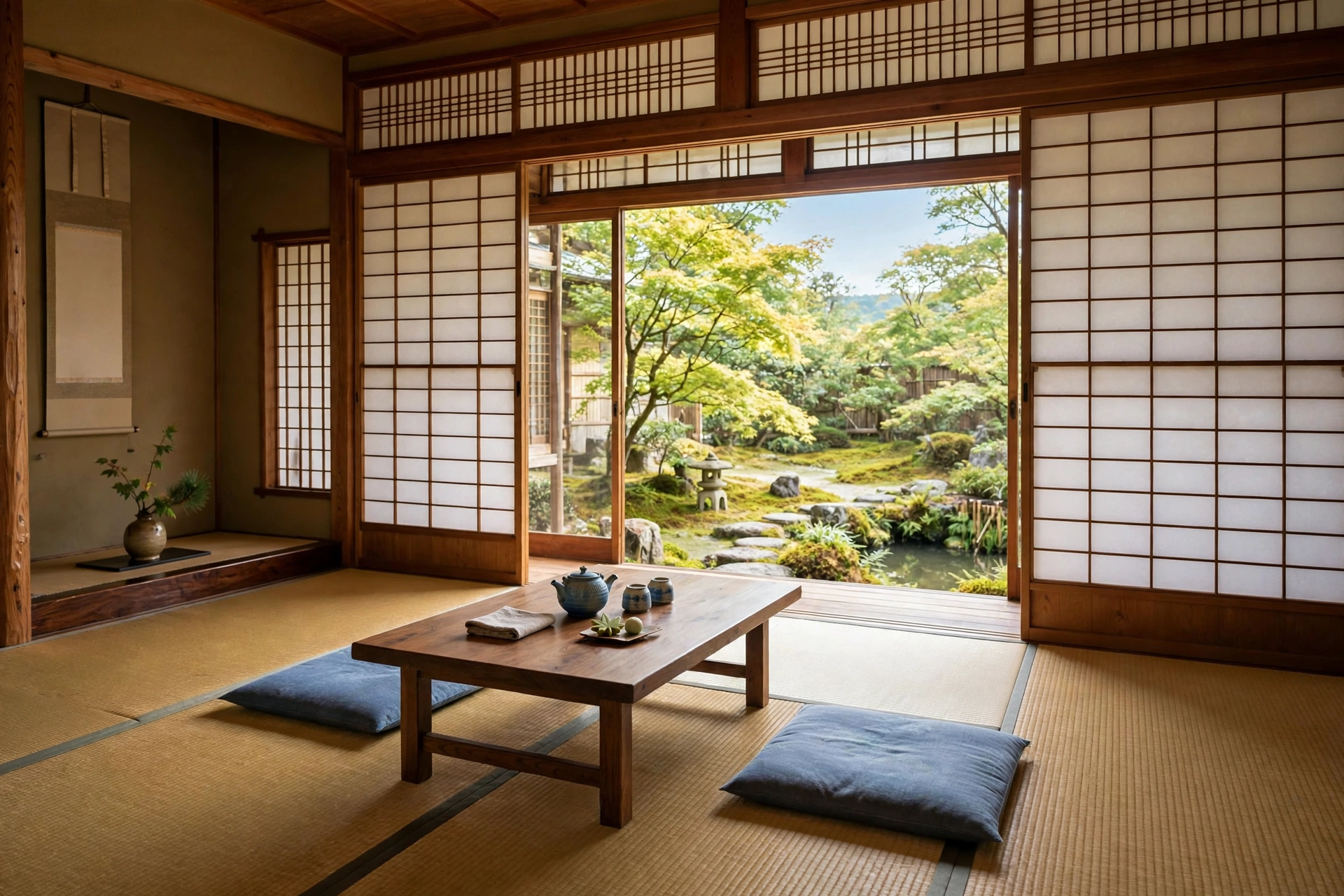
Accommodation is the single biggest cost in a Japan trip, and it is also the cost with the widest range — from a ¥3,000 capsule to a ¥40,000 luxury room, sometimes on the same street. The good news is that Japan’s mid-range hotels are small, clean and well located, and the country’s famous hospitality means even a cheap room is usually spotless and quiet.
| Accommodation, per person per night | Price | What you get |
|---|---|---|
| Hostel dorm | ¥3,000–5,000 ($19–31) | Bunk bed, shared bathroom, common room, often a kitchen |
| Capsule hotel | ¥3,000–5,000 ($19–31) | Private sleeping pod, shared baths, lockers; singles only, usually men-only or women-only floors |
| Business hotel (single) | ¥8,000–15,000 ($50–94) | Small private room, own bathroom, near a station |
| Mid-range hotel (double, shared) | ¥7,000–12,000 ($44–75) | Larger room, two beds, breakfast often extra |
| Ryokan (per person, with dinner) | ¥15,000–30,000 ($94–188) | Tatami room, futon, onsen bath, multi-course kaiseki dinner |
| Luxury hotel or high-end ryokan | ¥25,000–40,000+ ($156–250+) | Large room, service, views, fine dining |
The business hotel is Japan’s great budget secret and the default choice for most mid-range trips. Chains like APA, Toyoko Inn, Dormy Inn and Richmond cluster around major stations, and a single room with a small bed, a spotless bathroom and free Wi-Fi typically costs ¥8,000 to ¥12,000 a night in Tokyo and ¥7,000 to ¥10,000 in Kyoto or Osaka. Rooms are small by American standards — often barely enough space to open a suitcase — but they are quiet, the beds are comfortable, and the location saves you more in train fares and walking time than a bigger room elsewhere would.
A ryokan is the one accommodation splurge that is worth budgeting for, and one night is enough. A traditional inn with tatami floors, a futon, an onsen hot-spring bath and a kaiseki dinner is the most Japanese night you can spend, and the per-person price of ¥15,000 to ¥30,000 usually includes both dinner and breakfast, so the real premium over a hotel plus two restaurant meals is smaller than it looks. Book the ryokan in a smaller town — Hakone, Kinosaki or the Kiso Valley — rather than in Tokyo, where the same money buys less atmosphere. Capsule hotels deserve a fair hearing too: a ¥3,000 to ¥5,000 pod is a private, lockable sleeping space with shared baths, and the best ones are closer to a boutique hotel than a dormitory. They are singles-only, so couples should book a business hotel instead, and note that many capsule hotels have separate men-only and women-only floors.
Three booking rules keep accommodation costs down. Book the Tokyo nights first, because Tokyo is where prices spike hardest in peak season. Stay near a JR Yamanote Line or metro station rather than in the cheapest suburb, because a 45-minute commute each way costs you the best hours of the day. And check the cancellation policy before you book: most Japanese hotels allow free cancellation up to a few days before check-in, so you can rebook if a better rate appears. For more on choosing where to stay as part of a whole trip budget, see our guide on how to prepare a travel budget.
Food in Japan: What It Costs Per Day
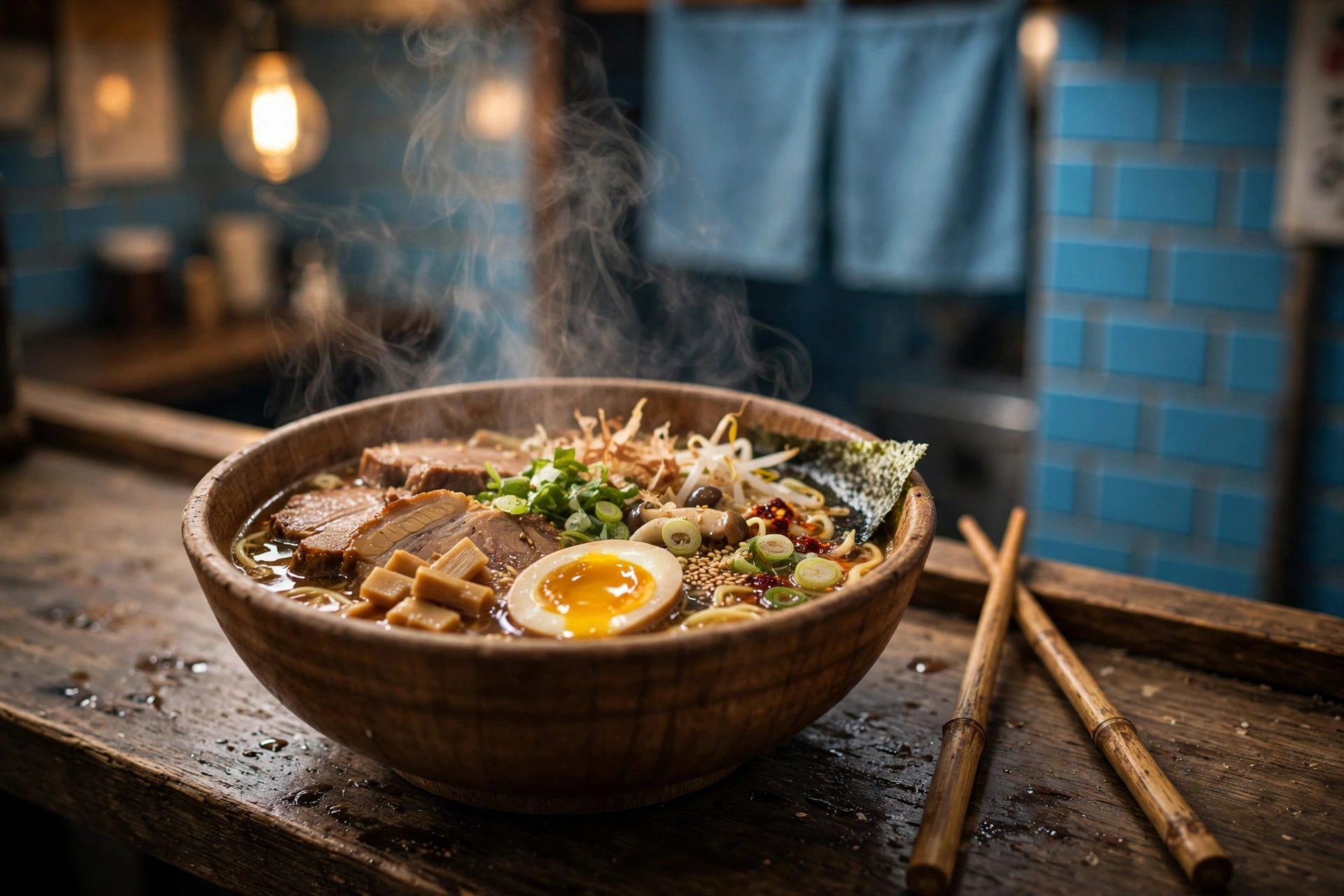
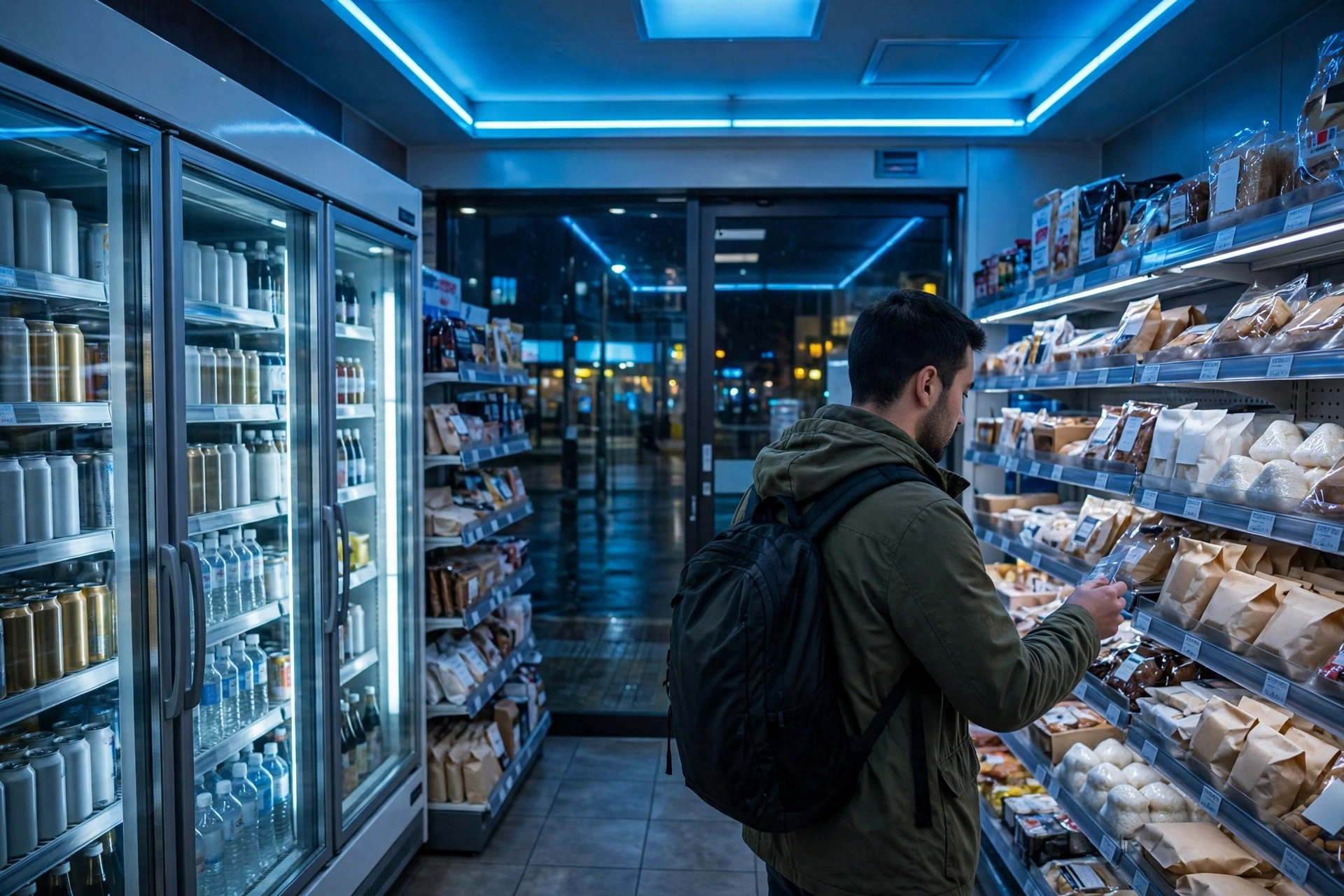
Food is the happiest surprise in a Japan travel budget. Japan is one of the few countries where the cheapest food is also some of the best, and a traveller who eats like a local can eat extremely well for ¥2,500 to ¥4,000 a day. The reason is the konbini — the convenience store — which in Japan is a genuine food institution rather than a snack stop: onigiri rice balls, bento boxes, sandwiches, salads and hot food, all fresh, all for ¥150 to ¥600 an item.
| Meal | Typical price | Examples |
|---|---|---|
| Konbini breakfast or snack | ¥300–600 ($2–4) | Onigiri, bread, coffee, yoghurt |
| Konbini lunch (bento) | ¥500–800 ($3–5) | Bento box, sandwich, salad, drink |
| Ramen or udon | ¥800–1,200 ($5–8) | Tonkotsu ramen, kitsune udon, gyoza on the side |
| Casual lunch set (teishoku) | ¥1,000–1,500 ($6–9) | Rice, miso soup, fish or chicken, pickles |
| Izakaya dinner (with a drink) | ¥3,000–5,000 ($19–31) | Skewers, small plates, sashimi, beer or sake |
| Sushi (conveyor belt) | ¥2,000–3,000 ($13–19) | Ten to fifteen plates at ¥100–200 a plate |
| Sushi (counter omakase) | ¥10,000–20,000+ ($63–125+) | Chef’s choice, booked in advance |
| Kaiseki dinner (ryokan) | ¥10,000–20,000+ ($63–125+) | Multi-course seasonal dinner, usually in the room price |
A realistic daily food budget looks like this: ¥2,500 to ¥4,000 ($16–25) on a budget day — konbini breakfast, ramen lunch, konbini or standing-noodle dinner; ¥5,000 to ¥8,000 ($31–50) mid-range — a café breakfast, a teishoku lunch and an izakaya dinner; ¥12,000 and up ($75+) for a food-focused day with a counter lunch or a kaiseki dinner. Eating at the counter is the key insight: the best ramen, sushi and tempura in Japan is often served at counters with eight to twelve seats, where a meal costs a third of what the same food costs at a table-service restaurant. Department-store basement food halls (depachika) are the other secret — spectacular prepared food sold by weight, discounted by 20 to 30 percent in the last hour before closing.
Two costs catch people out. The first is drinks: a beer in an izakaya is ¥500 to ¥800, a highball ¥400 to ¥600, and a bottle of water from a vending machine ¥130 to ¥160 — none of it ruinous, but three drinks a day adds ¥1,500 to the daily total. The second is the assumption that Japan has no tipping: it does not, and that saves you 15 to 20 percent on every meal compared with the US, because the menu price is the price you pay, tax included at the till. A food-focused traveller who wants to go deeper should plan one splurge meal — a conveyor-belt sushi lunch is the best value, and a kaiseki dinner inside a ryokan stay is the most memorable — and keep the other meals simple. The konbini is not a compromise; it is how Japanese office workers eat lunch, and it is one of the best budget tools in the country.
Getting Around Japan: Trains, IC Cards and the Shinkansen
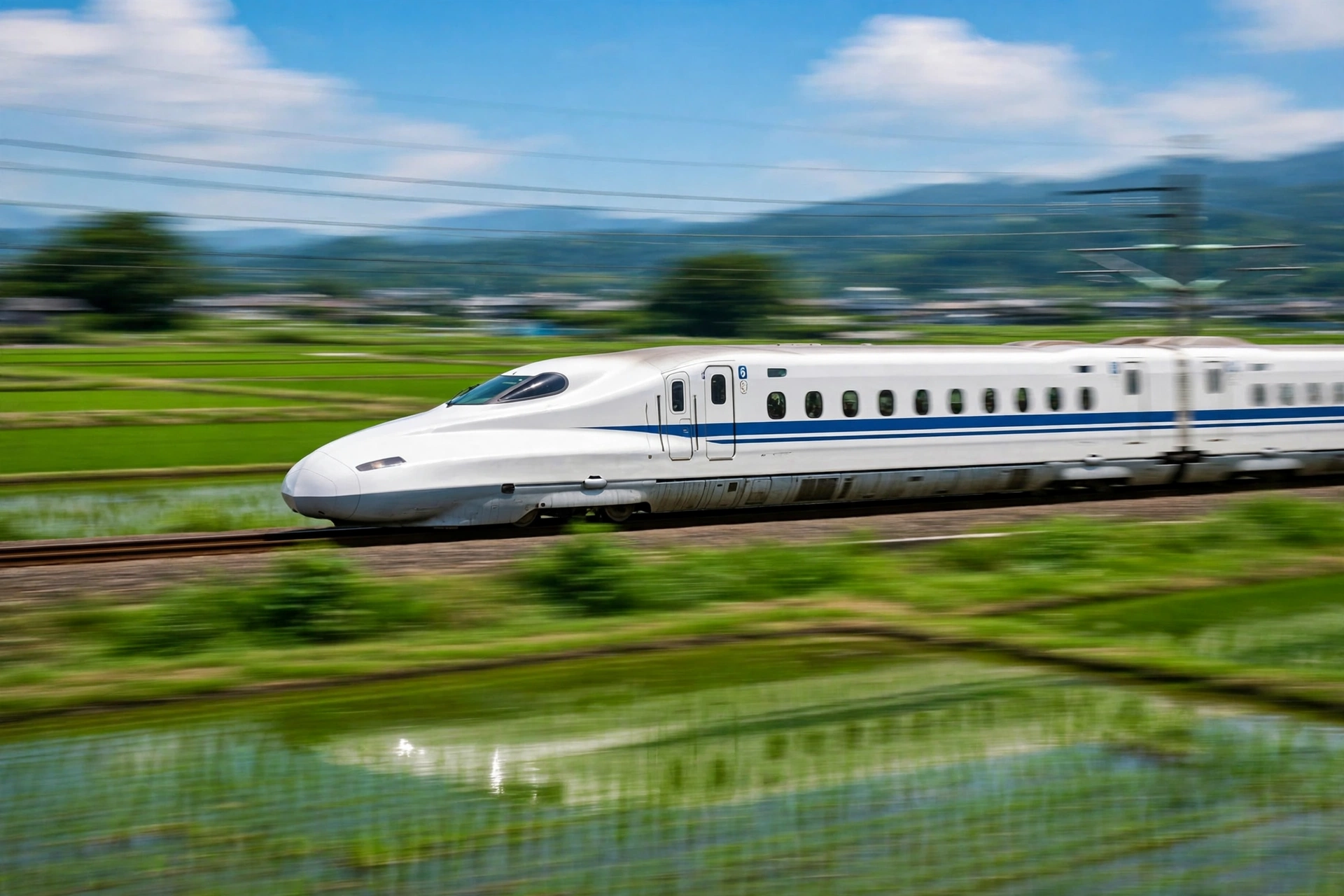
Japan’s transport is the most expensive part of the trip after hotels, and also the part where a little knowledge saves the most money. The system is built on three layers: city metros and buses for getting around town, the Shinkansen bullet train for travelling between cities, and the IC card that ties them together. Get the IC card right on day one and everything else becomes simple.
An IC card — Suica in Tokyo, Pasmo in Tokyo, Icoca in Osaka and Kyoto — is a rechargeable smart card you tap at the gate. It works on almost every train, metro and bus in the country, and you can also use it to pay at konbini and vending machines. Since 2023, visitors can buy the Welcome Suica or load a digital Suica onto a phone, which avoids the old problem of the regular Suica card being out of stock for tourists. Load ¥2,000 to ¥3,000 at the start and top up at any station machine. A typical day of city travel costs ¥800 to ¥1,500 ($5–9) in Tokyo and slightly less in Kyoto and Osaka, where the cities are smaller and more walkable.
| Transport | Price | Notes |
|---|---|---|
| Tokyo metro or bus ride | ¥180–300 ($1–2) | IC card fare; a day pass is rarely worth it |
| Tokyo day of city travel | ¥800–1,500 ($5–9) | Three to five rides on an IC card |
| Narita Express, one way | ¥3,070 ($19) | Narita to central Tokyo, about 60 minutes |
| Narita Express, return | ~¥6,000 ($38) | Round-trip fare, cheaper than two singles |
| Haneda to central Tokyo | ¥500–800 ($3–5) | Monorail or Keikyu line, 20–30 minutes |
| Tokyo–Kyoto, Shinkansen (Hikari) | ~¥13,000–14,500 ($81–91) | Reserved seat, about 2 hours 40 minutes |
| Kyoto–Osaka, local train | ¥560–600 ($4) | 30 minutes, no reservation needed |
| Kyoto–Hiroshima, Shinkansen | ~¥10,000–11,000 ($63–69) | About 1 hour 40 minutes |
| eSIM, 10 GB data | ~¥3,500 ($22) | Buy before you fly; airport pickup also available |
| Luggage forwarding (one bag) | ¥2,000–2,500 ($13–16) | Hotel to hotel, next-day delivery |
Two services are worth knowing about before you land. The first is luggage forwarding (takkyubin): for about ¥2,000 to ¥2,500 a bag, your suitcase is collected from your hotel and delivered to your next hotel the following day, so you travel between cities with a day pack on the Shinkansen. It removes the single most annoying part of a multi-city Japan trip, and the cost is less than a taxi to the station. The second is the eSIM: about ¥3,500 for 10 GB is enough for maps, translation and messaging for a week, and buying it before you fly means you have data the moment you land. For the apps that make all of this easier — translation, maps, train times and IC card top-ups — our travel apps guide covers the ones that actually work in Japan.
Is the JR Pass Worth It? The Break-Even Math
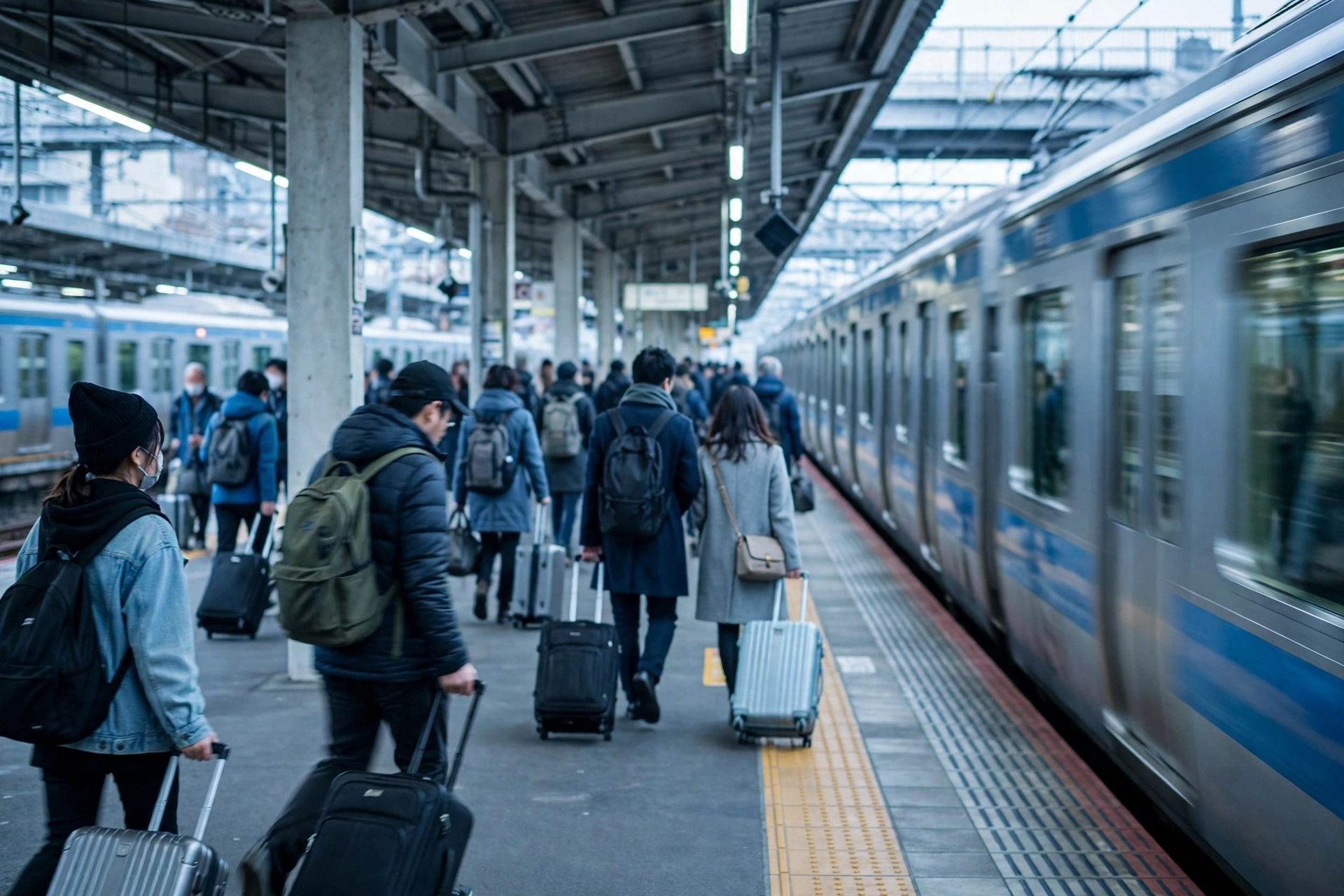
The Japan Rail Pass is the most argued-about purchase in Japan travel, and the argument exists because the answer changed. Before the October 2023 price rise, the pass was a bargain for almost any itinerary. Today it is a maths problem, and on many first trips the answer is no. The nationwide pass costs ¥50,000 for 7 days (about $313), ¥80,000 for 14 days (about $500) and ¥100,000 for 21 days (about $625) when bought on the official site, japanrailpass.net — the same pass costs ¥53,000, ¥84,000 and ¥105,000 through overseas agents since 1 October 2026, so buy it on the official site. Children aged 6 to 11 pay half. The pass covers almost all JR trains, including the Hikari, Sakura and Kodama Shinkansen, but not the fastest Nozomi and Mizuho services unless you pay a supplement.
The break-even rule is simple: add up the individual tickets for the long-distance trains you will take inside the pass’s consecutive-day window. If the total is more than the pass price, buy the pass. If it is less, buy individual tickets. As a rule of thumb, the 7-day pass needs roughly three long Shinkansen legs inside seven days to pay for itself. The most useful single fare to know is the Tokyo to Shin-Osaka return on the Nozomi: ¥29,440 (about $184) for a reserved seat. That one return journey is more than half the price of the 7-day pass — but the pass does not cover the Nozomi, so the equivalent Hikari return is the fair comparison, and it comes to a similar figure.
| 7-day itinerary | Individual Shinkansen tickets (approx.) | 7-day pass ¥50,000? |
|---|---|---|
| Tokyo–Kyoto return only | ~¥27,000–29,000 | No — buy tickets |
| Tokyo–Kyoto–Osaka–Tokyo loop | ~¥40,000–45,000 | No — buy tickets |
| Tokyo–Kyoto–Hiroshima–Osaka–Tokyo | ~¥52,000–58,000 | Yes, just barely |
| Tokyo–Kyoto–Hiroshima + day trip to Himeji | ~¥58,000–65,000 | Yes |
| Tokyo only, with day trips to Nikko and Kamakura | ~¥8,000–12,000 | No — far from it |
| Kyoto and Osaka only, no long legs | ~¥2,000–5,000 | No — far from it |
The pattern is clear. A first trip that stays in Tokyo and Kyoto, or Tokyo and Osaka, does not need the pass: two cities and one return journey cost less than ¥50,000 in tickets. A trip that adds Hiroshima, or that packs three cities and a day trip into one week, tips over the line and the pass starts saving money — plus the convenience of free seat reservations and unlimited local JR trains. Two mistakes make the pass look worse than it is: buying it for a trip where the long journeys fall outside the seven consecutive days (rest days count), and forgetting that city metros, subways and private railways are not covered, so you still need an IC card. Two mistakes make it look better than it is: counting the Nozomi fares you cannot use, and assuming the pass is a discount rather than a fixed-price ticket. Check the current prices on the official Japan Rail Pass site before you buy, and if your trip is regional — Kansai only, or Hokuriku, or Kyushu — look at the regional JR passes instead, which are cheaper and often a better fit. The Japan National Tourism Organization’s official site, japan.travel, lists the regional passes and what each one covers.
Tokyo vs Kyoto vs Osaka: City-by-City Costs
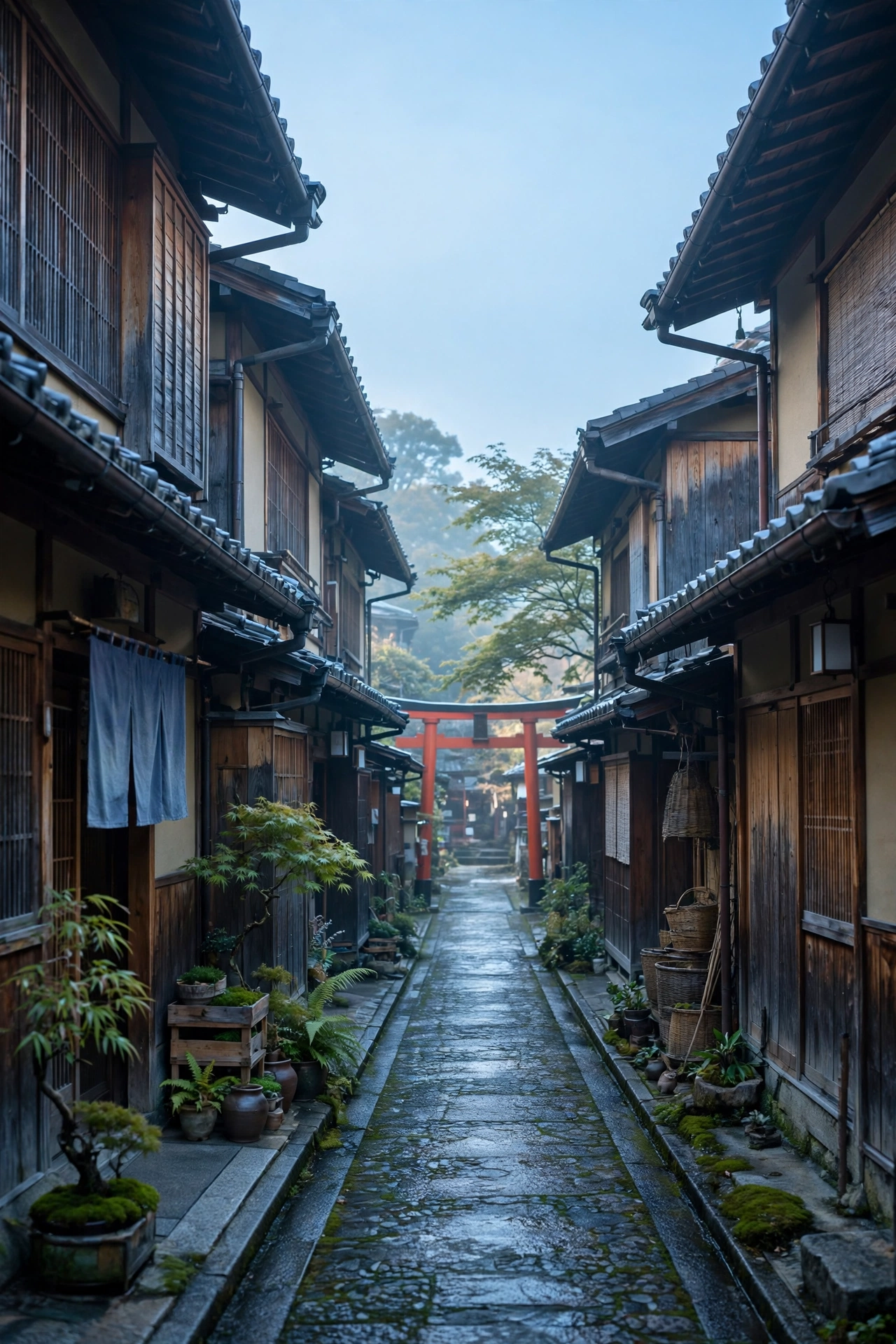
Not all Japanese cities cost the same, and the order in which you visit them changes the total. Tokyo is the most expensive, Kyoto sits in the middle, and Osaka is the cheapest of the three — and the difference is almost entirely hotels and transport, because food costs about the same everywhere. A traveller who spends three nights in each city will spend roughly ¥10,000 to ¥15,000 more in Tokyo than in Osaka for the same standard of trip.
| Daily cost per person, mid-range | Tokyo | Kyoto | Osaka |
|---|---|---|---|
| Accommodation (business hotel) | ¥10,000–15,000 ($63–94) | ¥8,000–12,000 ($50–75) | ¥7,000–11,000 ($44–69) |
| Food and drink | ¥5,000–8,000 ($31–50) | ¥5,000–7,000 ($31–44) | ¥4,000–7,000 ($25–44) |
| Local transport | ¥1,000–1,500 ($6–9) | ¥800–1,200 ($5–8) | ¥800–1,200 ($5–8) |
| Attractions | ¥1,500–3,000 ($9–19) | ¥1,000–2,500 ($6–16) | ¥1,000–2,500 ($6–16) |
| Total per day (mid-range) | ¥18,000–27,000 ($113–169) | ¥15,000–22,000 ($94–138) | ¥13,000–21,000 ($81–131) |
| Total per day (budget) | ¥10,000–13,000 ($63–81) | ¥8,000–11,000 ($50–69) | ¥8,000–10,000 ($50–63) |
Tokyo costs more for three reasons: hotels are pricier and smaller, the city is so large that you take the train everywhere, and the paid attractions — teamLab, the Skytree, museums, a sumo morning practice — add up fast. The free layer is strong, though: the parks, the shrines, the neighbourhoods of Yanaka and Shimokitazawa, and the view from the Tokyo Metropolitan Government Building cost nothing. Kyoto’s costs are driven by accommodation in the historic centre and by temple admission fees — ¥500 to ¥600 per temple does not sound like much until you have visited four in a day — but the city is compact enough to cover on foot or by bus, and the bus day pass keeps transport cheap. Osaka is the value city of the three: business hotels are cheaper, the food is famously cheap and good — takoyaki, okonomiyaki and kushikatsu for a few hundred yen — and the city rewards wandering rather than ticketed attractions. Nara, a forty-minute train ride from both Kyoto and Osaka, is the cheapest day trip in Japan: the deer park is free, the temples are a few hundred yen, and lunch is a bowl of noodles.
The practical takeaway is to put your expensive nights where they earn it. Spend your Tokyo nights in a business hotel near a Yamanote Line station rather than in a luxury hotel in Ginza, save the ryokan splurge for Kyoto or a smaller town, and let Osaka be the city where you eat out every night, because that is where the food is cheapest and best. If you are choosing between cities for a short trip, our best places to travel in January guide covers the destinations where the same money stretches furthest in winter.
When to Go to Japan: Seasonal Prices and the Best Value Months
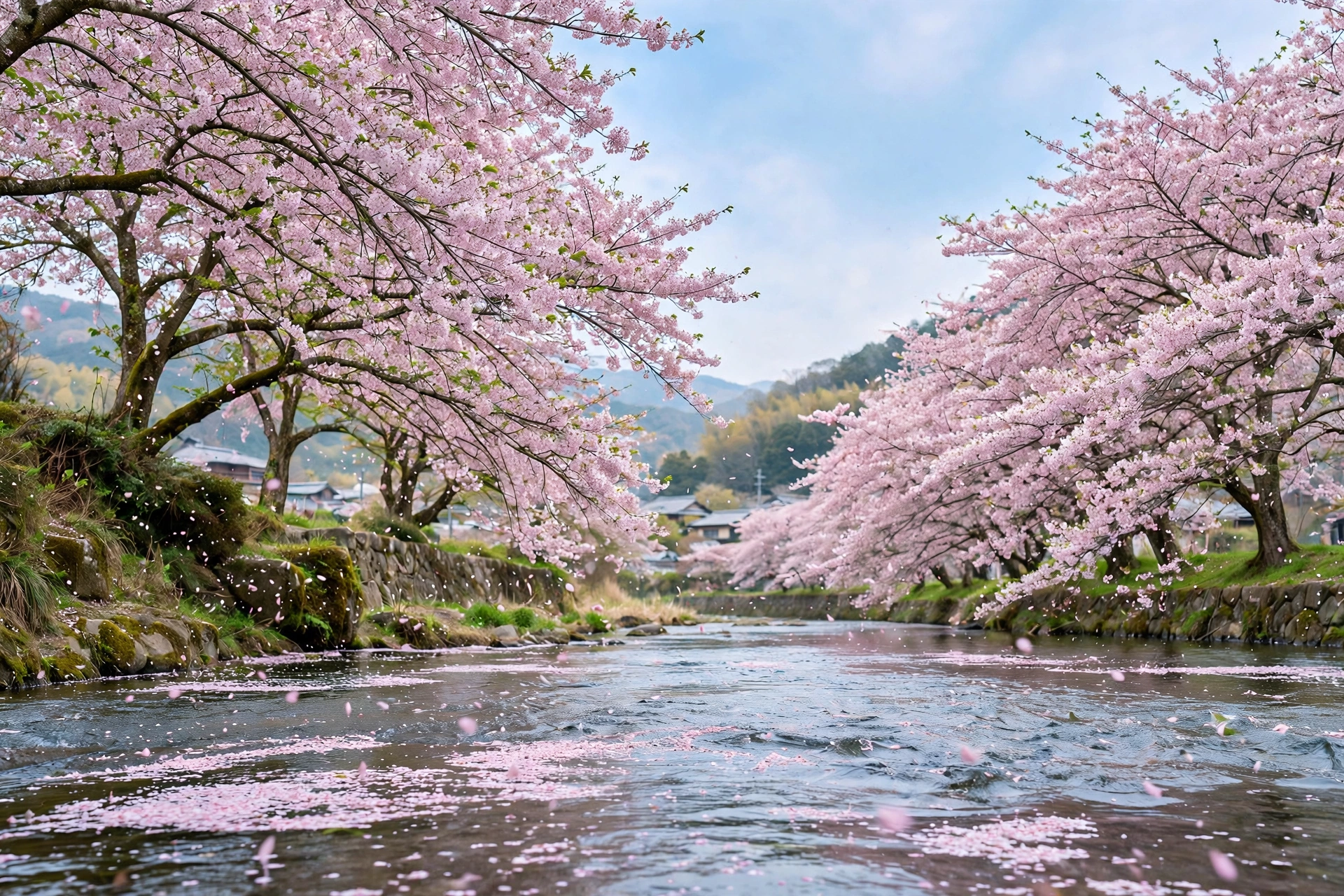
Japan’s prices move with the calendar more than almost any other destination, and the season you choose can change the cost of the same trip by 30 to 50 percent. The pattern is driven by two things: the cherry blossom and autumn foliage seasons, when the whole country seems to travel at once, and the Japanese holiday calendar, when domestic demand pushes hotel prices up and sells out the best rooms.
| Season | When | Price effect | What to know |
|---|---|---|---|
| Cherry blossom | Late March–early April | Hotels +30–50%, flights +$200–500 | The most beautiful and most expensive weeks; book 4–6 months ahead |
| Golden Week | Late April–early May | Hotels +20–40%, trains full | Japan’s biggest holiday; Shinkansen sells out, book seats early |
| Summer | June–August | Mid-range prices | June is rainy season (cheaper); July–August is hot, humid and festival season |
| Autumn foliage | November | Hotels +20–30% | Kyoto is spectacular and crowded; book early |
| New Year | 29 Dec–3 Jan | Hotels +20–30%, many closures | Shrines are magical on 1 January, but shops and restaurants close |
| Winter low season | Mid-January–February | Cheapest hotels, lowest fares | Cold but clear; best value, and the snow country in Hokkaido and Tohoku is at its best |
| Shoulder months | May (after Golden Week), September–October | Best balance | Mild weather, normal prices, thinner crowds |
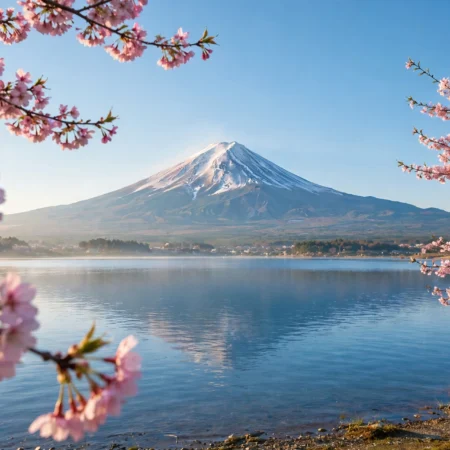
The cheapest time to travel to Japan is mid-January to February, outside the New Year week, when hotels are at their lowest and flights are cheapest — and the clear winter light makes Tokyo and Kyoto look their best. June is the other value window: the rainy season keeps crowds away and prices down, the rain is usually light and warm, and the hydrangeas are in bloom. September and October are the best all-round compromise: the summer heat has broken, the typhoon season is mostly over, prices are normal, and the autumn colour starts in the north.
Two dates deserve a specific warning. During Golden Week, which falls across late April and early May, the Shinkansen can sell out days in advance and hotel prices in Kyoto and Tokyo spike — if your trip touches those dates, book your train seats the moment reservations open. And over the New Year period, many restaurants, shops and smaller attractions close from 29 December to 3 January, so a trip that arrives on 30 December can feel half-closed. One practical safety note, kept to a single line: the US State Department rates Japan Level 1, Exercise Normal Precautions, in its advisory issued 28 September 2026 — the lowest level, and the same as most of Western Europe — and you can read the current advisory on travel.state.gov.
Money-Saving Mistakes That Blow a Japan Budget
Most Japan budgets do not fail on the big costs. They fail on a handful of small decisions that each cost ¥2,000 to ¥10,000 and compound across two weeks. These are the ones to watch.
Buying the JR Pass without doing the maths. The 7-day pass costs ¥50,000, and on a Tokyo-plus-Kyoto trip the individual tickets cost less. That is ¥20,000 or more spent on nothing — enough for two nights in a business hotel. Add up your long-distance trains first, and only buy the pass if the total clears the price.
Paying for the Narita Express twice. The return fare is about ¥6,000, but two singles cost more, and the cheapest option is often the Keisei Skyliner or a bus, not the express. Check the return and the alternatives before you tap your card at the airport.
Staying in the wrong part of Tokyo. A cheap hotel forty minutes from the centre costs you two hours a day and ¥1,000 in fares, and the saving rarely survives the maths. A business hotel near a Yamanote Line station is almost always the better deal, even at a higher nightly rate.
Eating every meal at a restaurant. A konbini breakfast and a ramen lunch cost about ¥1,500 a day combined. Three restaurant meals a day costs ¥6,000 to ¥8,000. Over ten days, that is a difference of roughly $300 — and the konbini food is genuinely good.
Ignoring the luggage forwarding service. Carrying a suitcase through a Shinkansen station at rush hour is miserable, and the alternative — a taxi to the station and a reserved oversized-luggage seat — costs more than the ¥2,000 to ¥2,500 forwarding fee. Send the bag ahead and travel light.
Booking hotels without checking the cancellation policy. Most Japanese hotels allow free cancellation until a few days before check-in, so there is no reason to lock in a non-refundable rate months ahead. Book the refundable room, then rebook if the price falls.
Exchanging money at the airport. Airport exchange counters and hotel desks give the worst rates in Japan. Use a 7-Eleven ATM with a no-fee debit card instead — 7-Eleven ATMs accept foreign cards, charge no local fee, and give a rate close to the mid-market one. Japan is still a cash-heavy country in smaller shops and rural areas, so carry ¥10,000 to ¥20,000 in cash at all times.
Tipping and over-ordering at izakaya. There is no tipping in Japan, and an izakaya bill is built from small plates you order as you go. Ordering everything at once is how a ¥3,000 dinner becomes a ¥6,000 one, with half of it uneaten.
Travelling during cherry blossom season without booking months ahead. The blossom is worth seeing, but a hotel booked a month before the season costs 30 to 50 percent more than the same room booked four months ahead — and the best rooms sell out entirely. If the dates are fixed, book early; if the budget is fixed, go in May or October instead.
Forgetting the tax-free shopping rule. Visitors can buy most goods tax-free at 10 percent off when spending over ¥5,000 at a participating shop, with a passport. It is free money on souvenirs, electronics and cosmetics — just keep the receipts and the sealed bags until you leave.
How to Build Your Japan Travel Budget Step by Step
A Japan travel budget is five lines, and building it takes about twenty minutes once you know the numbers. Work through them in order, and keep the flight separate until the end — that separation is what makes the budget honest.
Step 1: Fix the trip length and the style. Seven days for two cities, ten for three, fourteen for the full loop. Pick one style — budget, mid-range or luxury — and use its daily rate from the table above as your anchor. Do not mix styles: a mid-range hotel with a luxury food budget is how trips quietly run over.
Step 2: Multiply the daily rate by the days. Ten days at mid-range is ¥150,000 to ¥250,000 on the ground. That single multiplication gives you the core of the trip, and it is the number to compare against your savings before you book anything else.
Step 3: Price the flight separately. Search fares for your dates and your departure city, and write the fare down as its own line. A $700 fare and a $1,400 fare are both normal for Japan — the difference is where you fly from, not how good a deal you found.
Step 4: Add the fixed extras. Airport transfers (about ¥6,000 return from Narita), a Shinkansen leg or a JR Pass if the maths supports it, an eSIM (about ¥3,500), travel insurance, and one splurge — a ryokan night or a kaiseki dinner — if you want one. Add 10 percent for the things you forgot, because there are always things you forgot.
Step 5: Set a daily cash limit and track it. Withdraw ¥20,000 at a 7-Eleven ATM when you land, and use your IC card for transport and your card for hotels and larger purchases. Check the balance each evening: if you are under the daily rate, the surplus rolls forward; if you are over for two days running, the next day is a konbini day. The budget works because you check it, not because you wrote it down once. If you want a fuller method for tracking a trip budget day by day, our guide on how to prepare a travel budget covers the tracking habit in detail, and the travel apps guide lists the budgeting and translation apps that work best in Japan.
A worked example ties it together. Ten days, mid-range, from Los Angeles in October: flights $750, nine hotel nights at ¥11,000 a night ($620), food at ¥6,000 a day ($375), transport including the Narita Express and two Shinkansen legs ($300), attractions and day trips ($150), eSIM and extras ($60), and a 10 percent buffer ($225). Total: about $2,480 — right in the middle of the mid-range range, and a trip that includes Tokyo, Kyoto, Osaka, Nara and a ryokan night. Change the departure city to New York, and the same trip costs about $2,900. Change the season to cherry blossom, and it costs about $3,100. The country does not change price; the choices around it do.
Frequently Asked Questions
Is Japan expensive to travel to?
Japan is mid-priced for American travellers in 2026, and cheaper than its reputation. A budget traveller spends about $50 to $75 a day on the ground, a mid-range traveller $95 to $155, and the weak yen — about ¥160 to the dollar in November 2026 — has made Japan roughly 25 to 30 percent cheaper than it was a few years ago. The flight is usually the most expensive single item, at $500 to $1,500 round trip from the US.
How much does a 10-day trip to Japan cost?
About $1,000 to $2,250 per person on a tight budget, $1,450 to $3,050 mid-range, and $2,400 and up for a luxury-style trip, all including a round-trip flight from the United States. A typical mid-range 10-day trip from the West Coast costs about $1,900 to $2,600 all in. The on-the-ground cost before flights is ¥150,000 to ¥250,000 (about $940 to $1,560) for ten days at mid-range.
Is the JR Pass worth it in 2026?
Sometimes, but not automatically. The 7-day pass costs ¥50,000 (about $313) on the official site, and it only pays for itself if your long-distance train tickets inside seven consecutive days add up to more than that — roughly three long Shinkansen legs. A Tokyo-plus-Kyoto trip does not need it; a Tokyo–Kyoto–Hiroshima–Osaka loop usually does. Add up your individual tickets first, and buy the pass on the official site rather than through an agent, where it costs ¥53,000.
How much is food per day in Japan?
About ¥2,500 to ¥4,000 ($16–25) a day on a budget — konbini meals and ramen — and ¥5,000 to ¥8,000 ($31–50) a day mid-range, with a sit-down dinner at an izakaya. A bowl of ramen costs ¥800 to ¥1,200, a konbini bento ¥500 to ¥800, and a multi-course kaiseki dinner ¥10,000 to ¥20,000 or more. There is no tipping in Japan, so the menu price is the price you pay.
How much does a week in Japan cost?
Seven days costs about $850 to $2,025 per person on a budget, $1,156 to $2,594 mid-range, and $1,813 and up for luxury, all including a round-trip flight from the US. The on-the-ground cost for a week is ¥56,000 to ¥84,000 on a budget, ¥105,000 to ¥175,000 mid-range, and ¥210,000 or more for luxury.
Is $3,000 enough for two weeks in Japan?
Yes, for a mid-range trip if the flight is reasonable. Fourteen days mid-range costs $1,813 to $3,688 all in, so $3,000 covers a comfortable two-week trip from the West Coast with a mid-range hotel, good food and several Shinkansen rides. From the East Coast, or in cherry blossom season, plan on $3,300 to $3,800 instead. A budget two-week trip can be done for $1,200 to $2,550.
Do I need cash in Japan?
Yes, carry some. Cards work in hotels, department stores and most restaurants in big cities, but smaller shops, rural restaurants, temples and some train ticket machines are cash-only. Withdraw yen from a 7-Eleven ATM with a no-fee debit card, and keep ¥10,000 to ¥20,000 in cash on you at all times.
What is the cheapest month to visit Japan?
Mid-January to February, outside the New Year week, when hotels are at their lowest and flights are cheapest. June — the rainy season — is the other value window, with lower prices and fewer crowds. The most expensive times are cherry blossom season in late March and early April, Golden Week in late April and early May, and the New Year period.
Conclusion: Japan Costs Less Than Its Reputation
Japan is not a cheap destination and it is not an expensive one. It is a destination where the price is almost entirely a function of your choices: the season you pick, the hotel you book, the pass you do or do not buy, and whether you eat at a counter or at a table. A budget traveller can see Tokyo and Kyoto properly for about $1,000 in ten days, a mid-range traveller can do it in real comfort for about $2,000, and the difference between those two trips is mostly the hotel and one dinner a day — not the country itself. The weak yen has done the rest, quietly cutting a quarter off the price of everything you buy once you land.
The practical answer to how much to travel to Japan is therefore a range, not a number: $1,000 to $2,250 for ten days on a budget, $1,450 to $3,050 mid-range, and $2,400 and up if you want the ryokan nights and the kaiseki dinners. Pick your length, pick your style, price the flight separately, and do the JR Pass maths before you buy anything. Then book the hotels early, travel light, eat at the counter, and let the konbini feed you at least once a day. Japan rewards the traveller who plans — and at today’s exchange rate, it rewards them more than it has in years. If you are still turning the trip into a plan, our travel itinerary template will turn these numbers into a day-by-day schedule, and our travel bucket list guide will help you decide where Japan sits among the trips you want to take next.
People also read:
- How to Prepare a Travel Budget — the daily-cost method behind the numbers in this guide.
- Travel Apps — translation, maps and train apps that work in Japan.
- Best Places to Travel in January — where to go when Japan is at its cheapest.
- Travel Itinerary Template — turn this budget into a day-by-day Japan plan.
- Travel Bucket List — where a Japan trip sits among the great journeys.
- Best Solo Travel Destinations — Japan is one of the easiest countries in the world to travel in alone.

M. Adil is the founder and editor of SoloTravelPro. He writes practical, research-based travel guides that help travellers plan with confidence — from first-time city breaks to national parks and island escapes. Every guide is built on official sources, current prices and honest, usable advice, so readers can plan smarter and travel better.

Other Articles