Travelling alone as a woman in the United States is not a niche hobby any more. It is one of the fastest-growing ways Americans travel. Fernweh Travel, citing Grand View Research, notes that women make up more than three-quarters of solo travellers, and US searches for “solo female travel” rose by around 44% in 2025. The women doing it are not all twenty-something backpackers. They are first-timers in their forties taking a long weekend in Savannah, retirees walking the national parks, and experienced travellers who simply prefer setting their own pace.
The good news is that the United States is one of the easiest countries in the world for a first solo trip. You speak the language, the emergency number is 911 everywhere, card payments work almost everywhere, and most of the places in this guide are built for walking, with buses, trams and rideshare filling the gaps. The honest news is that no city is risk-free. Crime exists in every large city, and a good solo trip is less about finding a magically “safe” place and more about choosing somewhere walkable, well-lit, well-connected and full of other people doing exactly what you are doing.
This guide covers the best places to travel solo female in US right now: fifteen cities and national parks that work particularly well for women travelling alone, chosen from the top-ranking US guides and improved on them. You will find a safety-by-city comparison, separate advice for first-timers and experienced solo travellers, a daily-budget table by city tier, a full chapter on eating alone, a chapter on getting around without a car, and a national-parks section built around shuttle systems, ranger programs and marked trails. Everything here is written for real planning, not for inspiration alone.
Quick Answer: The Best Places to Travel Solo Female in US at a Glance
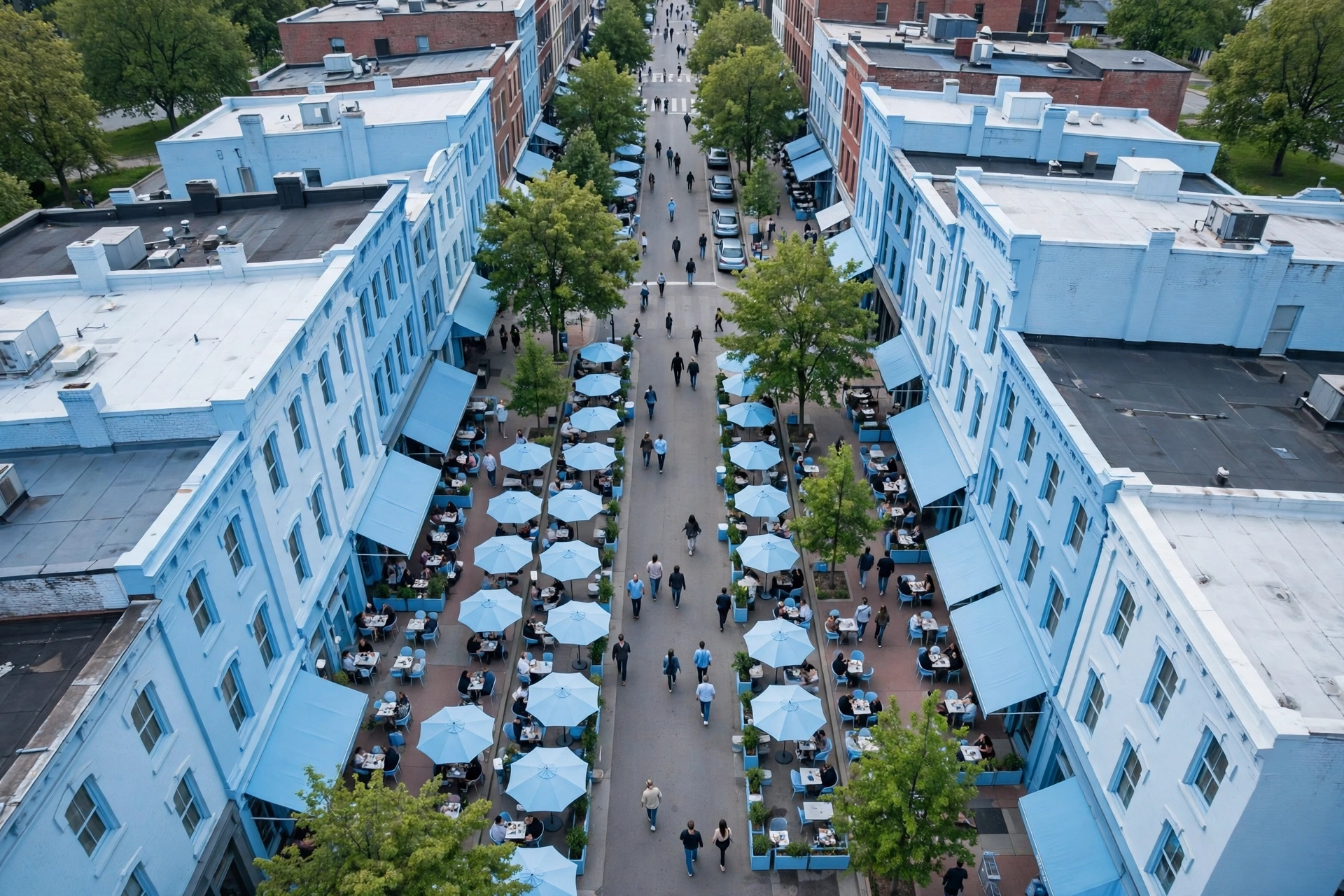
If you only have a minute, here is the short list. The best places to travel solo female in US for a first trip are San Diego, Savannah and New York City: all three are walkable, easy to reach, full of solo-friendly dining and well served by public transit. Portland and Burlington are the quietest, most relaxed picks on this list, and several of the guides we reviewed single them out for their low-key, easy-going feel. Austin and Asheville are best for a sociable trip where meeting people happens naturally. Sedona and Santa Fe are the reset trips — slow, scenic and restorative. And the national parks — Zion, Yosemite, the Grand Canyon, Acadia and Great Smoky Mountains — are the best places for women who want nature, marked trails and ranger-led programs without needing a travel companion.
A realistic mid-range solo trip in the US runs about $150–300 per day, according to Fernweh Travel’s 2026 guide, with cheaper days in small cities and national parks and more expensive days in New York. A four-day trip therefore lands somewhere between $700 and $1,500 including a mid-range hotel, food, local transport and activities, before flights. The budget table later in this guide breaks that down by city tier so you can plan honestly.
One more thing before the details: the single best safety habit for solo female travel is not a gadget or an app. It is staying in busy, well-lit areas, telling someone your plans each day, and keeping your phone charged. Everything else in this guide — the walkable neighbourhoods, the transit tips, the dining advice — is built around that simple idea.
How We Chose These Places: What Makes a Destination Work Solo
A place does not earn a spot on a solo female travel list because it is pretty. It earns it because a woman travelling alone can actually enjoy it without friction. We judged every destination on this list against the same five tests, the same tests the top US guides use, and kept only the places that pass all five.
First, walkability. Can you get from your hotel to dinner, to the main sights and back again on foot, on streets that are lit and busy in the evening? Savannah, New York and Burlington score highest here. Second, public transit. Is there a real bus, tram or metro system, or a free shuttle, so you are never stranded? New York, San Diego, Portland and the national parks with shuttle systems do this best. Third, solo-friendly dining. Are there counter seats, food halls, cafes and casual restaurants where a table for one is normal? Austin, Portland and New York are full of them. Fourth, daytime structure. Are there walking tours, ranger programs, museums and classes that give your day a shape and put you around other people? And fifth, the evening test: does the city still feel alive and comfortable after dark in the areas where visitors stay?
The table below compares the destinations on this list on exactly those points. It is not a safety ranking — no honest guide can rank whole cities “safest” without a cited source, and crime exists in every large city — it is a practical comparison of what makes each place work for a woman travelling alone.
| Destination | Walkability | Public transit | Evenings | Best for |
|---|---|---|---|---|
| San Diego | Good, best in Gaslamp, La Jolla, Old Town | Trolley and buses, easy airport link | Lively waterfront and Gaslamp | First solo trip, beach days |
| Savannah | Excellent, compact historic district | Free downtown DOT shuttles and buses | Busy squares and River Street | First solo trip, slow walking |
| New York City | Excellent, the most walkable big city in the US | Subway and buses, 24 hours | Always busy, well-lit streets | First solo trip, endless choice |
| Portland | Very good downtown and inner neighbourhoods | MAX light rail, streetcar and buses | Relaxed, cafe and food-cart scene | Relaxed city break, food |
| Austin | Good downtown and South Congress | Buses, limited rail, easy rideshare | Live music every night | Sociable trip, music and food |
| Sedona | Fair, you need a shuttle or car for trailheads | Verde Valley shuttles, limited | Quiet, early evenings | Reset trip, hiking, spas |
| Santa Fe | Very good in the Plaza area | Buses, Rail Runner to Albuquerque | Quiet, gallery and plaza evenings | Reset trip, art and culture |
| Asheville | Good downtown, hilly streets | Buses, walkable centre | Breweries and live music | Mountains, food, craft beer |
| Burlington | Excellent, compact and flat downtown | Buses, walkable waterfront | Calm, early evenings | Quiet escape, lake views |
| Zion National Park | Excellent inside the canyon | Free park shuttle, Springdale shuttle | Quiet, stargazing | Solo hiking, first park trip |
| Yosemite National Park | Good in the Valley | Free Valley shuttle buses | Quiet, lodge evenings | Iconic scenery, waterfalls |
| Grand Canyon | Good on the South Rim | Free South Rim shuttle buses | Quiet, ranger programs | Classic first park, viewpoints |
If you are choosing between two places on this list, use the table backwards: start with the kind of trip you want — beach, city, mountains, desert — then check the walkability and transit columns. A destination that is easy on foot and easy to reach by bus or shuttle is a destination where you will feel free, not dependent. That feeling is the whole point of travelling solo.
For the bigger picture of travelling alone, our guide to the best solo travel destinations covers how to pick a first trip anywhere in the world, and the same logic applies here: choose the easy win first, and save the ambitious trip for the second one.
The Safety Question, Answered Honestly
Is solo female travel safe in the US? It is the first question almost every woman asks before a first solo trip, and it deserves an honest answer rather than a reassuring slogan. Yes, millions of women travel alone across the United States every year without incident, and the destinations in this guide are among the most visited and best set up for it. At the same time, around one in five solo female travellers feared for their safety in the past year, according to a survey cited by Condor Ferries and quoted in Fernweh Travel’s 2026 guide. That fear is real, and it is usually about the same handful of situations: walking alone at night, getting lost, unwanted attention, and not knowing who to call if something goes wrong. This section deals with each of those directly.
Start with the basics that cost nothing. The emergency number everywhere in the US is 911, and it works from any phone, even without a SIM card. Share your live location with a friend or family member for the trip, and send a short message each evening saying where you are staying and what you plan tomorrow. Keep your phone charged and carry a small power bank — a dead phone is the most common way a small problem becomes a stressful one. Book accommodation in central, well-reviewed neighbourhoods rather than the cheapest room on the edge of town; the money you save is rarely worth the long walk back at night.
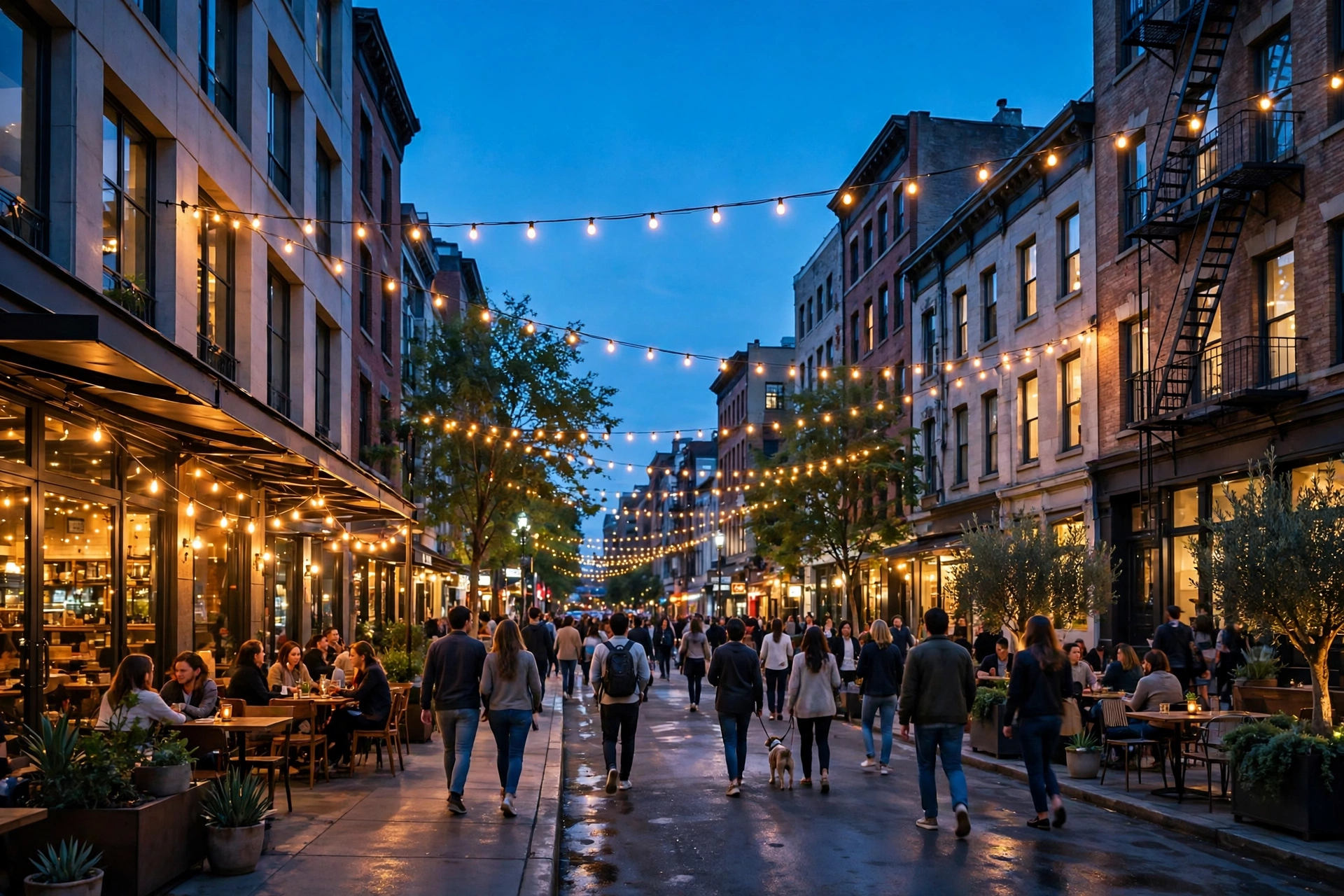
Walking at night is the situation most women worry about, and the practical rule is simple: stay where other people are. In the cities on this list, that is easy — the Gaslamp in San Diego, the historic district in Savannah, Manhattan below 96th Street, downtown Portland, South Congress in Austin — because those areas stay busy and lit well into the evening. If a street goes quiet and dark, turn back or take a rideshare for the last few blocks. There is no prize for walking the long way. Use rideshare apps rather than hailing cars, check the licence plate and the driver’s name before you get in, and sit in the back seat. In a rideshare, as in a taxi, you do not owe anyone conversation.
Unwanted attention is a fact of travelling alone as a woman, and it is worth having a plan for it rather than hoping it will not happen. Headphones, a book, a confident stride and a firm “no thanks” end most encounters. If someone will not take no for an answer, walk into the nearest open shop, cafe or hotel lobby and tell the staff. You do not need a reason, and you do not need to be polite about it. In bars, watch your drink being made, never leave it unattended, and if you feel unwell, tell the bartender immediately. None of this is about blaming women for other people’s behaviour. It is about keeping your trip in your own hands.
Finally, trust the feeling that something is off. Solo travellers who have done this for years say the same thing: the one time they ignored a bad feeling is the one time they regretted it. A street that feels wrong, a trailhead that is empty when it should not be, a person who is too insistent — you can always leave, change plans, take the bus instead, or spend the afternoon in a museum. Your itinerary is a suggestion, not a contract. The best solo trips are the ones where you stayed flexible enough to choose comfort over the plan.
First Solo Trip or Experienced Traveller? Pick Your Starting Point
Not every destination on this list suits every traveller, and the most useful split is not budget or season. It is experience. A first solo trip should feel easy, forgiving and full of small wins. A fifth solo trip can be harder, quieter and more ambitious, because you already know how to handle the logistics and your own company. Picking the right starting point is the difference between a trip that makes you want to do it again and one that puts you off for a year.
If this is your first solo trip
Choose a city, not a wilderness, and choose one where the logistics are almost invisible. San Diego is the classic first solo trip in the US: sunshine, beaches, a compact downtown, an easy airport, and a trolley that does most of the work. Savannah is the other great first choice: small, flat, beautiful, and so walkable that you can spend three days without ever needing a car. New York City sounds intimidating, but it is actually one of the easiest first solo trips in the country — the subway runs all day and night, nobody notices or cares that you are eating alone, and there is always another person on the street.
For a first trip, keep it short — three or four days — and book one central base rather than moving hotels. Arrive in daylight if you can, and give yourself one planned activity on the first day, like a walking tour or a museum visit, so you are not standing in your hotel room wondering what to do. Walking tours are the first-timer’s secret weapon: they fill the morning, they put you in a small group, and the guide answers the questions you were too shy to ask. Eat your first solo dinner somewhere casual — a food hall, a counter seat, a cafe — and save the nice restaurant for the second night, once the novelty has worn off. And remember that feeling nervous on day one is normal. Almost every experienced solo traveller says the same thing: the nerves last about four hours, and then they are gone.
If you have travelled solo before
You can trade convenience for character. This is the moment for Sedona’s trails, Santa Fe’s galleries, Asheville’s mountain roads, and a national park where you plan your own days around shuttle times and ranger programs. Experienced solo travellers get more from the quieter destinations on this list because they already have the habits: checking the shuttle timetable the night before, carrying water and a charged phone on a hike, booking the restaurant that needs a reservation, and being comfortable with a whole evening alone.
If you have done cities and want something different, the national parks chapter later in this guide is written for you — Zion, Yosemite, the Grand Canyon, Acadia and Great Smoky Mountains, with the shuttle systems, ranger-led walks and marked trails that make them work without a companion. If you have done parks and want a city with more edge, try Austin’s music scene or Portland’s food carts, where the trip is sociable by default and you will talk to strangers without trying. And if you want to go further afield after the US, our guide to places to travel without a passport covers the US territories and close destinations that need no passport at all — a good next step once domestic solo travel feels easy.
San Diego, California: Sunshine, Beaches and an Easy First Solo Trip
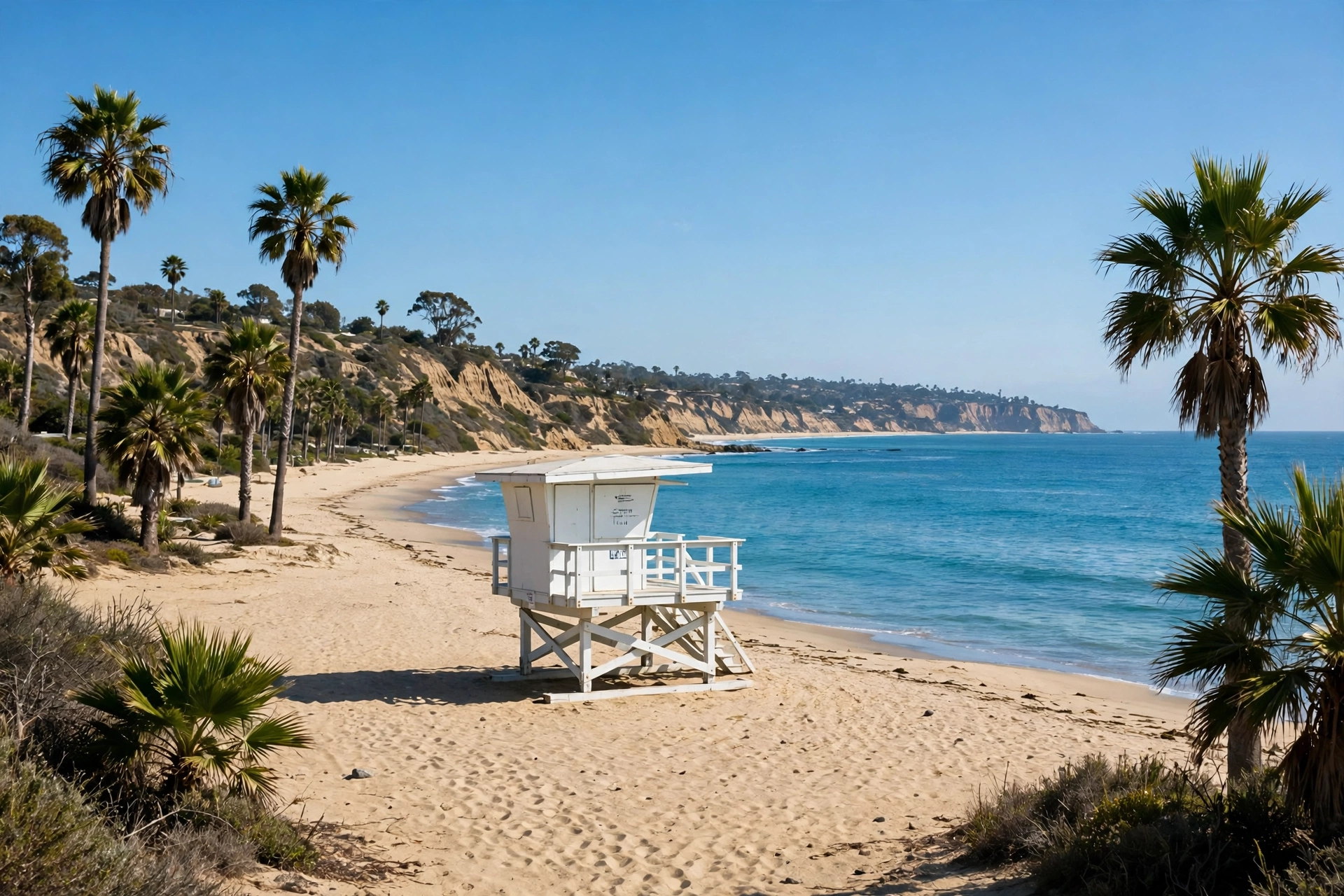
San Diego appears on every serious list of safe solo travel destinations for women in the US, and for good reason. It is sunny almost all year, the pace is slow, the neighbourhoods visitors use are compact and well-kept, and the city is built around the water, which means your days have a natural shape: beach in the morning, a neighbourhood in the afternoon, dinner near the water. It is also one of the easiest American cities to reach, with an airport ten minutes from downtown and a trolley system that connects the Gaslamp Quarter, Old Town, the waterfront and the border crossings.
Base yourself in the Gaslamp Quarter or Little Italy if you want to walk to dinner, or in La Jolla if you want a quieter, village feel with a beautiful cove and sea lions on the rocks. The Gaslamp is the liveliest solo base: historic streets, rooftop bars, restaurants with counter seating, and plenty of people around in the evening. Little Italy is smaller and calmer, with a famous Saturday farmers’ market and some of the best casual eating in the city. La Jolla is the place to slow down — a morning kayak, a walk along the coast, coffee on a terrace — and it suits a second or third solo trip as much as a first.
A good three-day solo plan looks like this. Day one: Balboa Park, which is really a day in itself — museums, gardens, the zoo if that is your thing, and long paths that are busy with walkers and families. Day two: the coast. Start at La Jolla Cove, walk the coastal path, then take the trolley or a rideshare to Coronado for the wide beach and the famous hotel, and finish with sunset at Sunset Cliffs. Day three: Old Town for history and Mexican food, then the Gaslamp for an evening you plan in advance — a restaurant with a bar counter, a comedy club, or a sunset harbour cruise, which is one of the most solo-friendly activities in the city because everyone is looking at the view, not at each other.
Solo dining in San Diego is easy. The city runs on tacos, and a taco stand is the least awkward solo meal in America: order at the counter, eat at a communal table or on a bench, and nobody notices. For something more formal, book a bar counter seat — most of the best restaurants in the Gaslamp and Little Italy have them, and a solo diner at the bar is treated like a regular. The San Diego tourism board’s official site is the best place to check what is on during your dates, from festivals to farmers’ markets.
Practical notes: San Diego is a city where a rideshare is worth it after dark if your hotel is not in the neighbourhood you are dining in. The trolley stops running relatively early in the evening on some lines, so check the last departure before you head out. Sun protection matters even on cloudy days — the marine layer burns off by midday — and the water is cooler than it looks, so bring a layer for the beach even in summer. Budget-wise, San Diego sits in the middle of this list: expect $150–250 a day mid-range, with hostels and budget hotels pulling that down and the Gaslamp’s nicer hotels pushing it up.
Savannah, Georgia: America’s Most Walkable Small City
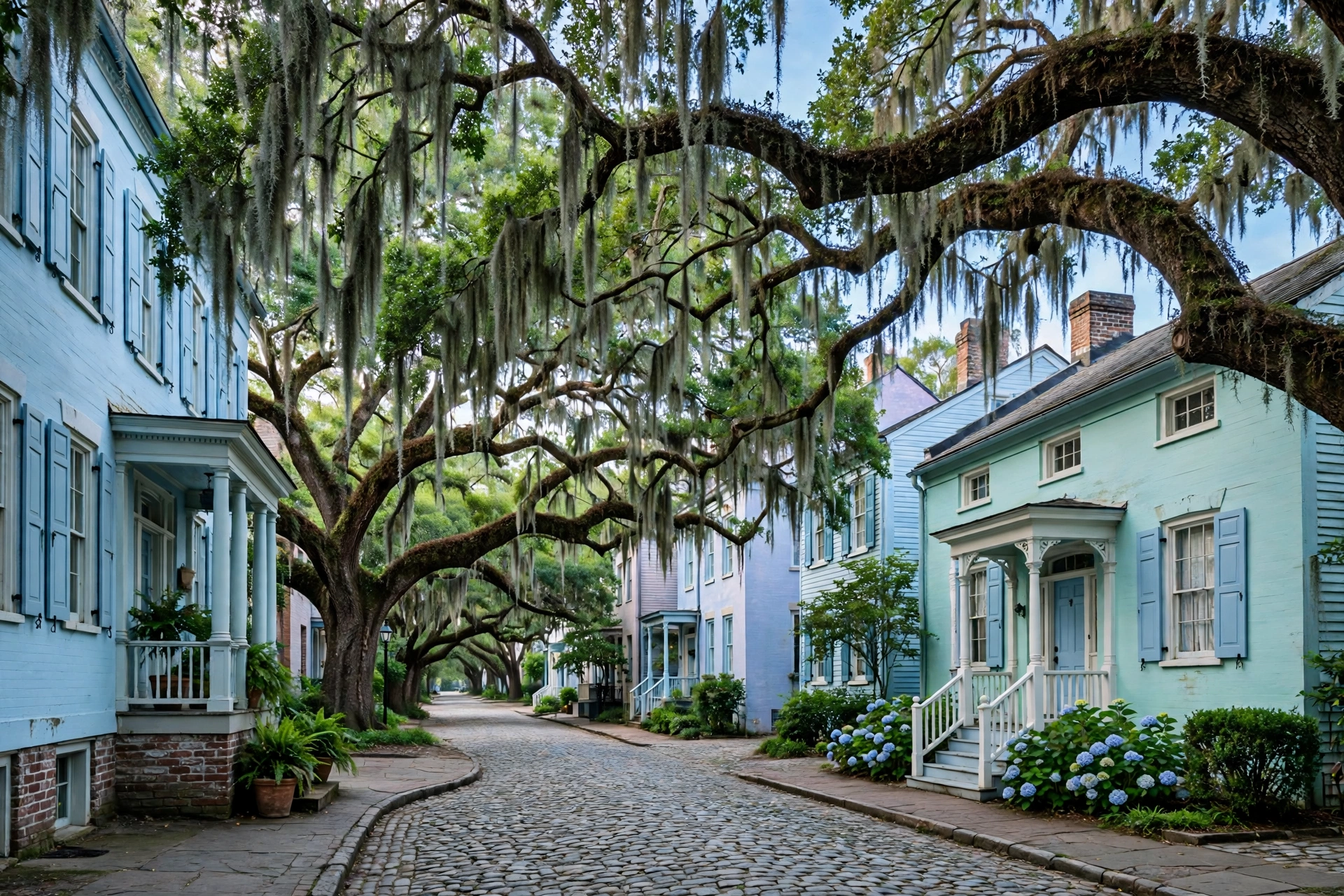
Savannah is the smallest city on this list, and that is exactly why it works so well for women travelling alone. The historic district is a grid of twenty-two leafy squares, each one a small park with benches, fountains and live oaks draped in Spanish moss. You can walk the whole of it in a day, and you will spend most of that day on streets where the only traffic is other walkers, horse-drawn carriages and the free downtown shuttle. It is the most walkable place in this guide, and the one where a solo traveller feels least like a visitor and most like a local out for a stroll.
Start in the historic district and let the squares set your pace. Forsyth Park, with its famous fountain, is the best morning walk in the city; the riverfront on River Street is the best evening one, with restaurants, live music and crowds that stay late. Between the two, the city gives you house museums, a beautiful cathedral, the SCAD art school’s shops and galleries, and the Bonaventure Cemetery, which sounds sombre and is genuinely one of the most peaceful and beautiful places in the American South. The free DOT shuttle loops around the historic district, and the city’s buses cover the rest, so a car is not just unnecessary — it is a nuisance, because parking is the hardest part of driving in Savannah.
Food is a large part of a Savannah trip, and it is very solo-friendly. The city has a famous food scene built on low-country cooking — shrimp and grits, fried chicken, pralines — and much of it is served in casual, counter-style places where eating alone is completely normal. The City Market and the riverfront are full of places to sit with a plate and watch the street, and the coffee shops on Bull Street are made for a slow morning with a book. For the official view of what is on, Visit Savannah is the city’s official tourism site, and it is worth checking before you go for seasonal events and walking-tour times.
Savannah suits a slower trip than San Diego or New York. Three days is right: one for the squares and the riverfront, one for the museums and the cemetery, and one for a day trip to Tybee Island, twenty minutes away, where the beach is wide, the lighthouse is climbable, and the pace drops even further. The city is also one of the cheapest on this list — $110–180 a day mid-range is realistic — which makes it a good first solo trip if you are watching the budget. Evenings are gentle here rather than loud: a ghost tour is the classic solo evening activity, and it is genuinely sociable, since the group does the talking and the guide does the entertaining.
New York City: The Easiest Big City to Travel Alone
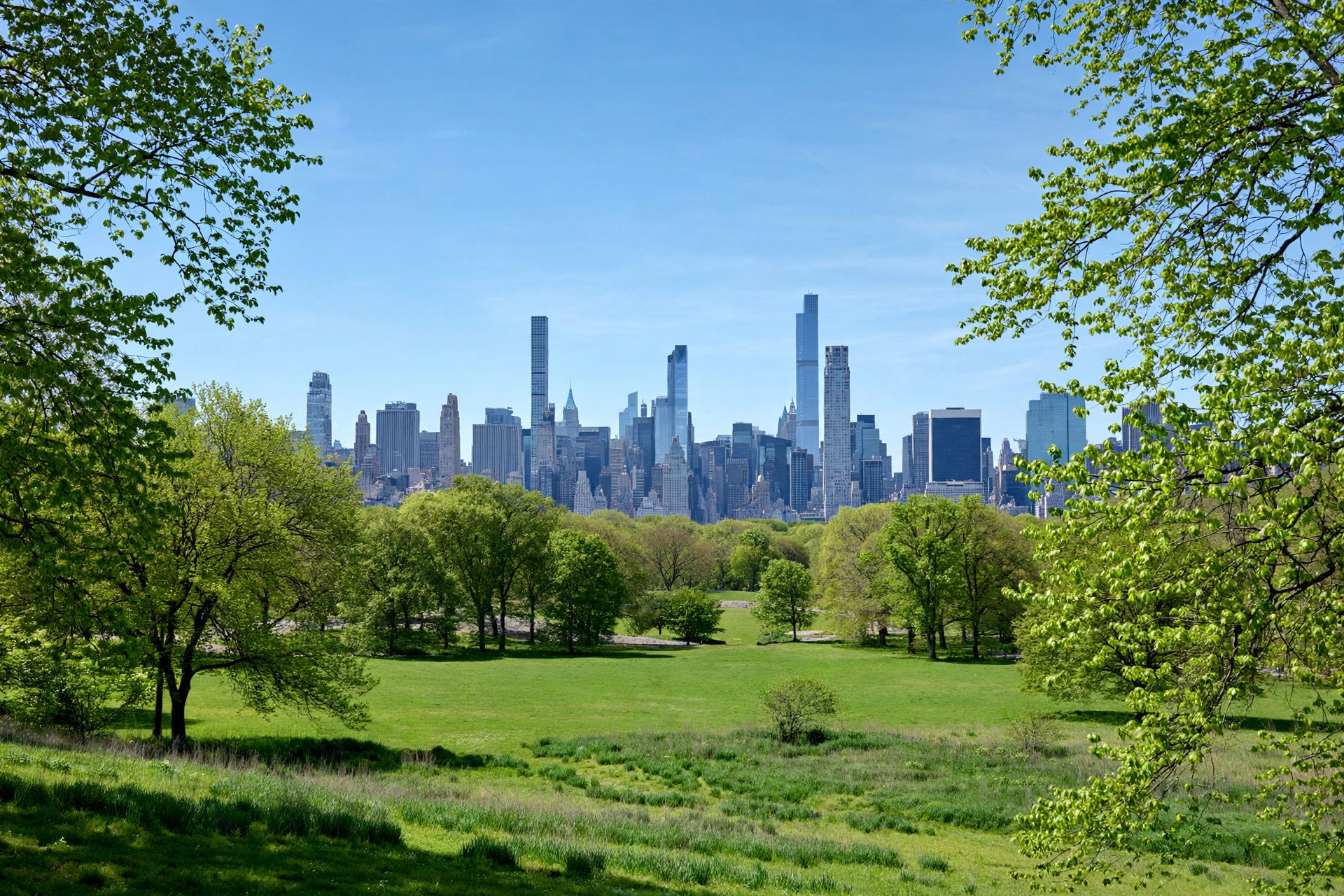
New York is the most counterintuitive entry on this list and the most important one. A city of eight million people sounds like the worst place to travel alone, and in practice it is the best. Nobody in New York notices that you are alone, because almost everyone is alone: eating alone, walking alone, sitting alone in the park. It is the one city in America where a solo woman is not an exception but the default, and that anonymity is a kind of freedom no small town can offer.
The practical case is just as strong. The subway runs twenty-four hours, buses cover everywhere the subway does not, and walking is the real way to see the city — Manhattan’s grid is easy to learn, the streets are numbered, and you are rarely more than a few minutes from a cafe, a shop or another person. The city is expensive, but it is also the place where the free and cheap things are the best things: Central Park, the High Line, the Staten Island Ferry past the Statue of Liberty, the Brooklyn Bridge at sunset, the public spaces of the New York Public Library. A solo traveller with a transit card and a pair of comfortable shoes can have a better day in New York for very little money than in almost any other city on this list.
Plan your days by neighbourhood, not by checklist. One day for lower Manhattan — the ferry, the 9/11 Memorial, the streets of the Financial District, and Chinatown for dinner. One day for midtown and Central Park — a museum in the morning, the park in the afternoon, a Broadway show or a rooftop in the evening. One day for Brooklyn — the bridge on foot, DUMBO for the view, Williamsburg for food and vintage shops. If you want structure, the city’s walking tours are excellent, and the museums run free or pay-what-you-wish hours that are worth planning around.
Eating alone in New York is not just accepted; it is the norm. Counter seats exist in almost every good restaurant, food halls like Chelsea Market and the Time Out Market are built for solo diners, and a slice of pizza eaten standing up is a New York institution. If you want one proper solo dinner, book a bar counter at a restaurant you have been wanting to try — the bartender will look after you, and the food will be the same as at the tables.
The honest caveats: New York is the most expensive destination in this guide, at $200–320 a day mid-range, and the subway can feel overwhelming on a first visit, especially late at night. Two rules fix most of it. Stay in Manhattan below 96th Street or in central Brooklyn, where the streets stay busy, and take a rideshare rather than the subway after midnight if you are going far. Keep your bag in front of you on crowded trains, and do not stand near the platform edge while looking at your phone. Do those two things, and the city is yours.
Portland, Oregon: Coffee, Food Carts and a City That Moves Slowly
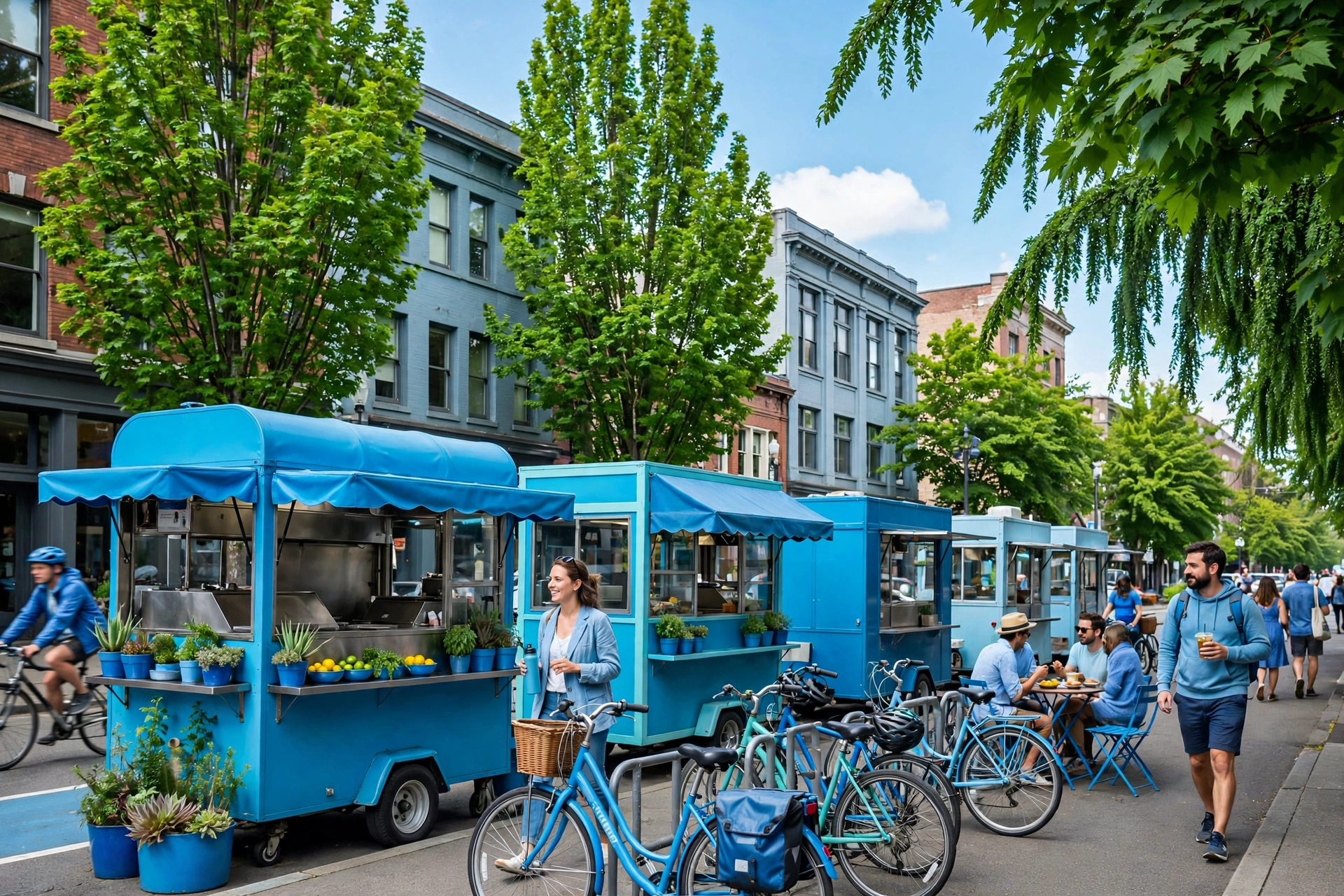
Portland is the quiet achiever of this list. It does not shout, and that is the point. The city is compact, flat in the centre, full of parks and bridges, and built around habits that suit a solo traveller perfectly: good coffee, food carts, bookshops, farmers’ markets and a light-rail system that makes a car unnecessary. Trail Me Away, one of the guides we reviewed, names Portland among its safest picks, pointing to its low-key streets, good transit and walkable neighbourhoods, and the city has a reputation for friendliness that is not marketing — strangers here do actually talk to you.
The MAX light rail and the streetcar cover the centre and the inner neighbourhoods, and the bus network fills the gaps. Base yourself downtown or in the Pearl District if you want to walk everywhere, or in Hawthorne or Alberta if you want a neighbourhood feel with cafes and vintage shops on your doorstep. A solo day here has a natural rhythm: coffee and a pastry in the morning, Powell’s City of Books — one of the largest bookshops in the world, and a place where you can happily lose three hours alone — then the food carts for lunch, a walk along the Willamette riverfront, and an evening in a brewery or a food hall.
Portland’s food carts deserve a special mention for solo travellers. They are the most solo-friendly dining in America: order at the window, eat at a shared table or a bench, and nobody thinks twice. The city also has one of the best farmers’ markets in the country, on Saturdays in the South Park Blocks, which is a perfect solo morning — tasting, browsing, and buying lunch piece by piece. Rain is the honest caveat: Portland is wet from October to May, so pack a proper waterproof jacket and plan indoor mornings. The best months are June to September, when the city is at its brightest and the outdoor eating is at its best.
Budget-wise, Portland sits in the middle of the list at $150–230 a day mid-range, with good budget hotels and hostels keeping it lower. The city is also a good base for a day trip without a car: the Columbia River Gorge is reachable by bus in summer, and the coast is a straightforward day tour. If you want a city break that feels like a deep breath rather than a performance, Portland is the one.
Austin, Texas: Live Music, Food Trucks and Friendly Strangers
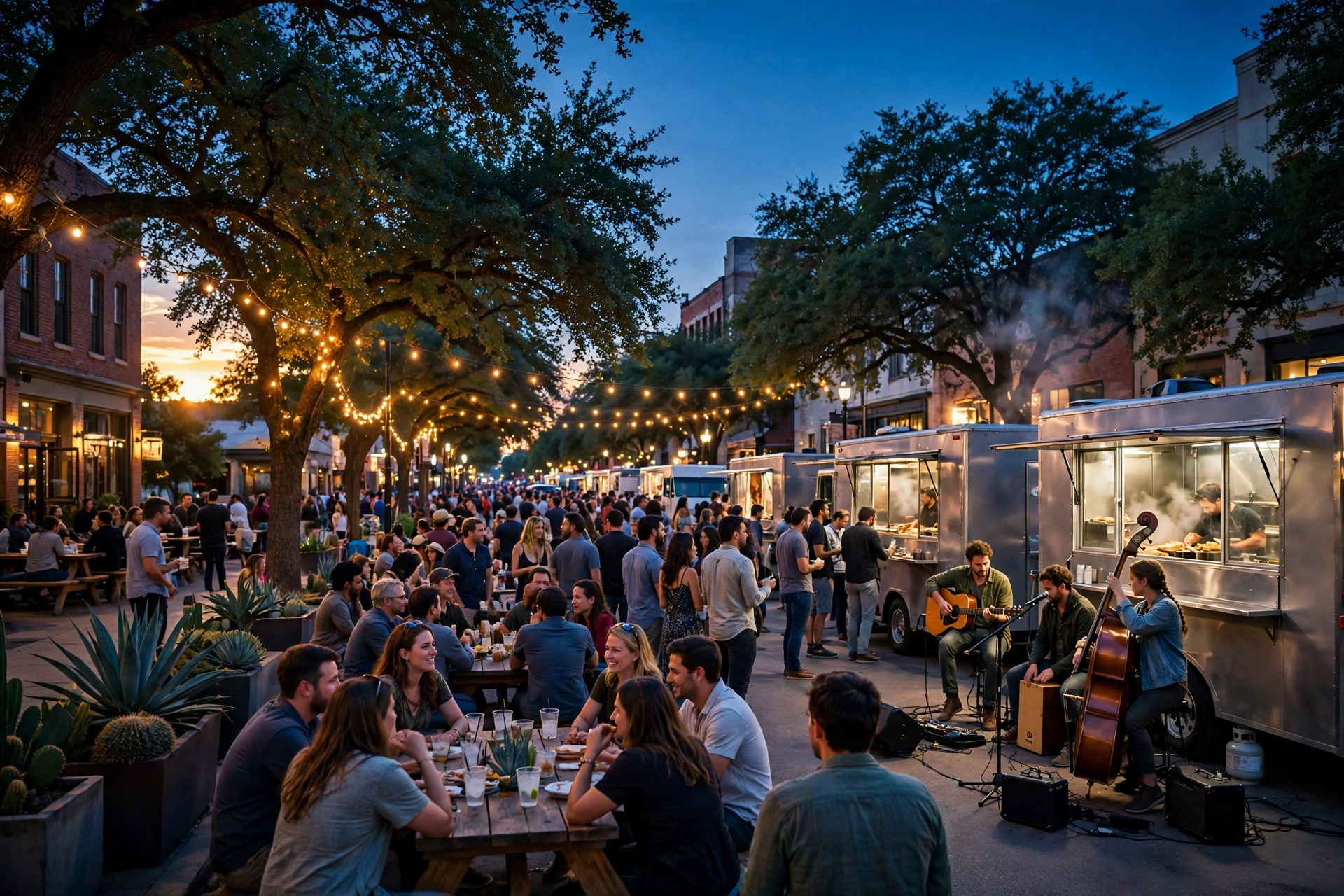
Austin is the most sociable city on this list, and that matters for a solo trip. Some cities are best enjoyed quietly; Austin is best enjoyed by talking to people, and the city makes that easy. Live music plays somewhere every night, food trucks gather in lots where strangers share picnic tables, and the whole city runs on a casual, outdoor, first-name basis that means a woman eating alone is not an oddity but a regular. AXA Travel Insurance’s guide to solo female travel in the US includes Austin for exactly this reason, and it earns its place.
South Congress Avenue is the best solo base: walkable, full of shops, food trucks and cafes, and an easy walk or short rideshare from downtown. Downtown itself is livelier and louder, with Sixth Street’s bars and the warehouse district, and it suits a traveller who wants the night to be the main event. For a quieter stay, the neighbourhoods around Lady Bird Lake — Zilker, Barton Hills — give you the lake, the hike-and-bike trail and some of the best swimming in the city at Barton Springs Pool, a spring-fed pool that stays at 68°F (20°C) all year.
A solo day in Austin writes itself. Morning coffee and breakfast tacos — the city’s signature food, and the most solo-friendly breakfast in America. A walk or a rented bike around Lady Bird Lake. Lunch from a food truck, eaten at a shared table. An afternoon at the Blanton Museum of Art or the Bullock Texas State History Museum, or a swim at Barton Springs. And then the evening, which is the reason to come: live music. Austin has more live music venues per person than anywhere else in the US, and many of the best shows are free or cheap, in small rooms where standing alone near the stage is completely normal.
Two practical notes. First, Austin is hot — genuinely hot — from May to September, with temperatures that make midday walking unpleasant. Plan outdoor time for the morning and the evening, and use the middle of the day for museums, cafes and shade. Second, Austin’s public transit is the weakest of the big cities on this list: buses exist, the rail line is limited, and you will use rideshare more than in New York or Portland. Budget for that, and budget $150–250 a day mid-range overall. The city rewards the traveller who plans evenings in advance — check who is playing where before you go, and book the shows that matter, because the good small rooms do sell out.
Sedona and Santa Fe: Desert Calm for a Reset Trip
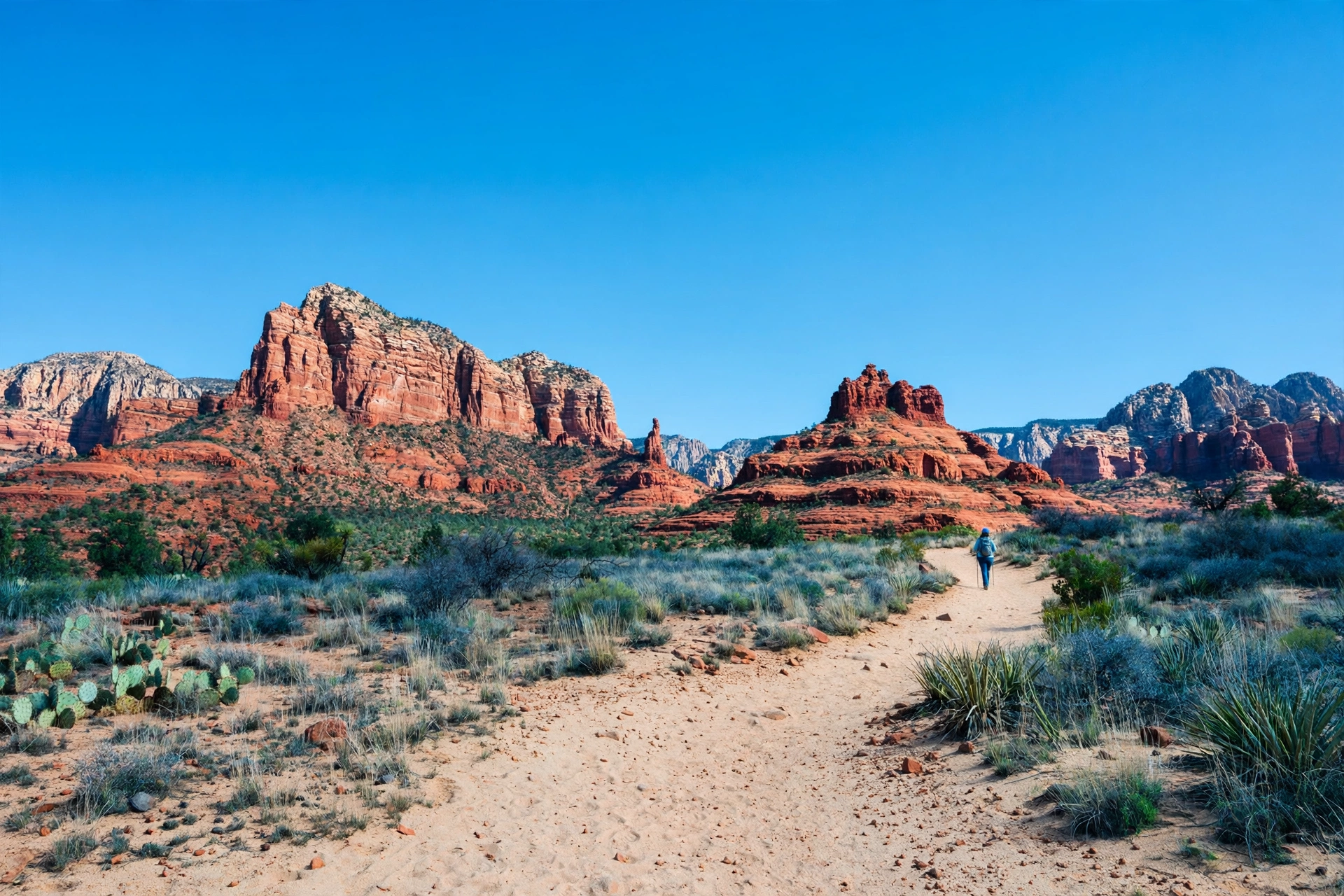
Not every solo trip needs to be busy. Some women travel alone precisely to be quiet, and for that kind of trip the desert Southwest is the best destination in the country. Sedona and Santa Fe are different places — Sedona is red rock, hiking and spas; Santa Fe is adobe, art and history — but they share the quality that makes them work solo: slow days, beautiful light, small walkable centres, and an atmosphere where being alone feels intentional rather than lonely.
Sedona is built around its landscape. The red rock formations are visible from almost everywhere in town, and the hiking trails start close to the road, which matters for a solo hiker: you are rarely far from other walkers, and the popular trails — Cathedral Rock, Bell Rock, Devil’s Bridge — are busy enough that you will pass people every few minutes. Start early, carry more water than you think you need, and tell your hotel which trail you are doing and when you expect to be back. That is not overcaution; it is the standard advice for desert hiking, and the rangers will tell you the same thing. Sedona’s evenings are quiet — dinner, a spa treatment, an early night — and that is the point. The town’s shuttle system, the Verde Valley shuttles, covers the main trailheads and the town centre, but Sedona is the one destination on this list where a car makes the trip noticeably easier, so factor a rental or a tour into your plans if you can.
Santa Fe is the more urban of the two, and the easier one without a car. The Plaza area is compact and walkable, with galleries, museums, the cathedral and the Palace of the Governors within a few blocks, and the Rail Runner train connects the city to Albuquerque and its airport. The food is a reason to come on its own: New Mexican cuisine — green chile, blue corn, sopapillas — is distinct from anything else in the US, and the city’s restaurants are used to solo diners, especially at lunch. Santa Fe suits a longer, slower stay than Sedona: four or five days, with a day for the galleries and museums, a day for a hike in the Sangre de Cristo foothills, and a day for the spa or the hot springs at Ojo Caliente, about an hour away.
Both towns are more expensive than they look — Sedona especially, where the resort hotels push a mid-range day to $200–300 — so book early and consider a weekday stay. Both are also at altitude or in the desert, which means the same practical rules: water, sun protection, and a slower first day while you adjust. What they give back is the thing the busy cities cannot: silence, space, and the particular pleasure of a trip where the plan is to have no plan at all.
Asheville and Burlington: Small Cities With Big Solo Appeal
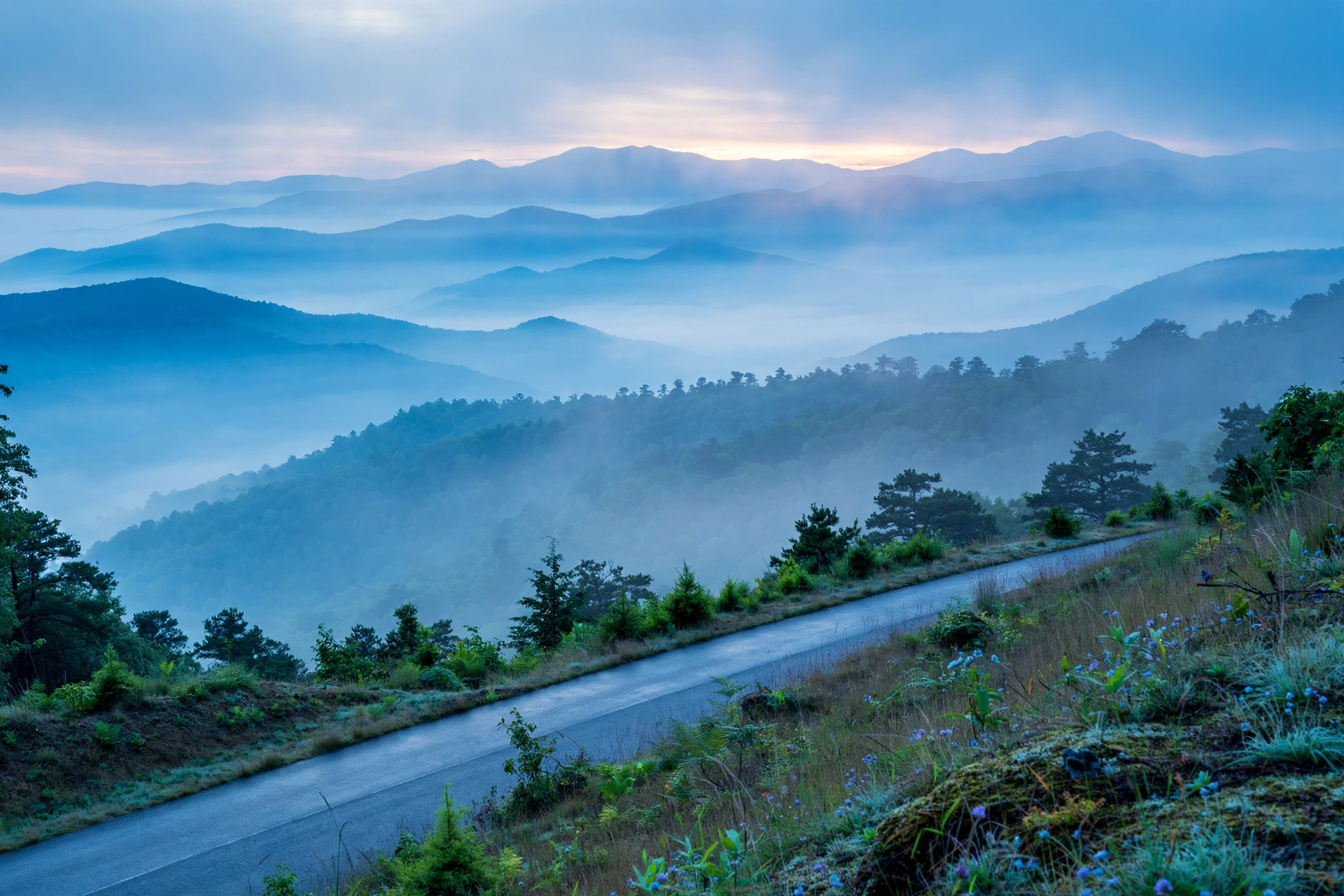
Asheville, North Carolina, and Burlington, Vermont, are the two smallest cities on this list, and they belong together because they solve the same problem: what do you do when you want a city break that is not a big city? Both are compact, walkable, friendly, and surrounded by beautiful country, and both are places where a solo traveller can settle in quickly and feel at home within a day.
Asheville sits in the Blue Ridge Mountains, and the mountains are the trip. Downtown is a walkable grid of independent shops, breweries, bookshops and restaurants, with live music most nights and a food scene that punches far above the city’s size. The Biltmore Estate, America’s largest home, is the headline attraction, and it is a genuinely good solo visit — the house tour is self-guided, the gardens are made for slow walking, and the winery on the estate is a pleasant place to sit alone with a glass. Beyond the city, the Blue Ridge Parkway is one of the most beautiful drives in America, and the hiking around Asheville — Craggy Gardens, Linville Falls, the trails near the parkway — is accessible and well-marked. Trail Me Away includes Asheville on its list of the best solo female travel destinations in the US, and the city’s combination of a walkable centre and easy mountain access is why.
Burlington is the quieter of the two, and the more unusual. It is a small city on Lake Champlain, with a car-free Church Street Marketplace at its centre, a waterfront bike path, and a pace that feels a world away from the cities on this list. Trail Me Away names Burlington among its safest picks, alongside Portland, pointing to its walkable streets and low-key feel. A solo day here is simple: coffee on Church Street, a walk or a bike ride along the lake, a ferry or a kayak in summer, and dinner at one of the farm-to-table restaurants that Vermont is known for. Burlington is also the cheapest city on this list in practical terms — $110–170 a day mid-range is realistic — and it is one of the best places to simply stop and breathe.
Both cities have the same honest caveat: they are small, and a long stay can run out of things to do. Three days is right for each, four at most, and both work best as part of a slightly longer trip — Asheville with the Blue Ridge Parkway and the Great Smoky Mountains, Burlington with the Green Mountains and a drive through Vermont’s small towns. Both are also seasonal: Asheville is at its best in spring and autumn, when the mountains are green or the leaves are turning, and Burlington is at its best from June to September, when the lake is warm enough to enjoy and the days are long.
National Parks for Solo Women: Zion, Yosemite, Grand Canyon and More
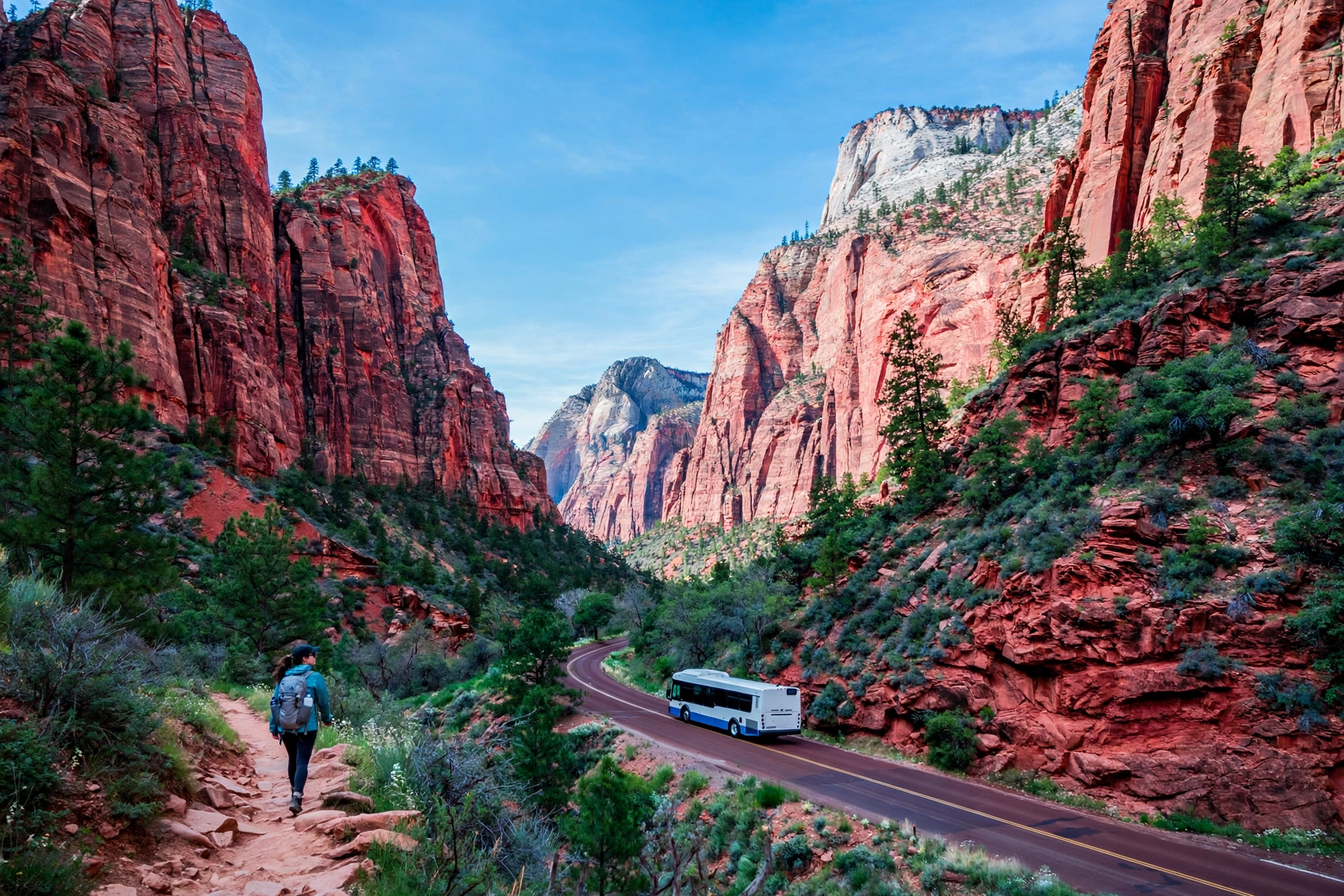
The national parks are the most rewarding solo trips in this guide and the ones that need the most planning. They are also, for many women, the most intimidating: a park is big, wild and unfamiliar, and the idea of hiking alone in it can feel like a step too far. The truth is that the popular parks are designed for exactly this. They have free shuttle systems, ranger-led programs, marked trails with other walkers on them, and visitor centres where you can ask a ranger — a real person, whose job is to help you — what is safe to do alone today. The parks in this chapter are the ones where that system works best.
Zion is the best first national park for a solo woman, and the reason is the shuttle. The Zion National Park free shuttle runs through Zion Canyon and the neighbouring town of Springdale, so you do not need a car at all — you park in Springdale, take the town shuttle to the park entrance, and the canyon shuttle drops you at every trailhead. The popular trails are the right ones for a solo hiker: the Riverside Walk, which is flat and paved; the Emerald Pools, which are short and busy; and the Narrows, which is a walk up a river between canyon walls and is best done with a ranger’s advice on water levels. Angels Landing, the park’s famous chain-assisted climb, needs a permit, and it is worth applying — but it is also the one trail where you should be honest about heights, because there is no shame in skipping it and taking the viewpoints instead.
Yosemite works the same way, on a bigger scale. The Yosemite National Park free Valley shuttle connects the campgrounds, lodges, trailheads and viewpoints in Yosemite Valley, and the valley floor is flat, walkable and full of other visitors. The waterfalls are best in spring, when the snowmelt is at its peak, and the valley’s famous viewpoints — Tunnel View, Glacier Point, the meadows below El Capitan — are all reachable without a long hike. The permits system matters here: wilderness permits are needed for overnight hikes, and a permit by lottery is needed to climb Half Dome when the cables are up, so check the park’s site before you plan around either. Our own Yellowstone travel guide covers another park that works the same way, with a loop road, geyser basins and wildlife valleys that are easy to enjoy from marked paths and viewpoints.
The Grand Canyon’s South Rim is the classic first park visit, and it is open all year. The Grand Canyon National Park free shuttle buses run from the visitor centre to the viewpoints, trailheads and village services along the South Rim, so you can park once and let the buses do the work. The Rim Trail is flat, paved and spectacular, and it is the right solo walk: you are never alone on it, the views change every few minutes, and you can walk as far as you like and take the shuttle back. Going below the rim is a different matter — the trails are steep, the heat is serious, and the park’s own advice is to carry far more water than you expect and to turn around well before you feel tired. As a solo hiker, that advice is not optional.
Beyond the big three, two parks deserve a mention for solo women. Acadia, in Maine, is the most walkable national park in the country: carriage roads, a free Island Explorer bus, and the small town of Bar Harbor on its doorstep, where you can sleep, eat and plan each day. Great Smoky Mountains, on the Tennessee–North Carolina border, is the most visited national park in America, and its popularity is a solo advantage — the trails are busy, the visitor centres are excellent, and the gateway towns of Gatlinburg and Cherokee give you a base with restaurants and lodging. In both parks, the rule is the same as everywhere else in this chapter: stay on marked trails, check conditions at the visitor centre, and tell someone your plan for the day.
Three habits make solo hiking in any park safe and enjoyable. First, hike the popular trails, not the empty ones, especially on a first visit — other walkers are your safety net. Second, carry water, a charged phone, a paper map and a layer for weather changes, even on a short walk; the parks are bigger and hotter or colder than they look from the car park. Third, join a ranger program. Ranger-led walks and evening talks are free, they are genuinely interesting, and they are the easiest way to meet other solo travellers in a park — you will find yourself swapping trail notes with people you met an hour earlier.
Eating Alone, Happily: A Solo Dining Guide

If there is one thing that stops women from travelling solo, it is not safety. It is dinner. The idea of sitting alone in a restaurant while couples and groups talk around you feels, to a first-timer, like the hardest part of the whole trip. It is also the part that gets easiest fastest. By the third night, most solo travellers say eating alone is one of the things they enjoy most about travelling alone — no negotiating, no compromise, exactly what you want, exactly when you want it. This chapter is about getting to that third night.
Start with the easy wins. Food halls, food trucks, farmers’ markets and counter-service restaurants are the solo diner’s best friends, and every city on this list has them: Chelsea Market in New York, the food carts in Portland, the taco stands in San Diego, the food trucks in Austin, the City Market in Savannah. In these places, eating alone is not just normal — it is the design. Order at the counter, sit where you like, and nobody gives it a second thought. Coffee shops are the same: a solo woman with a coffee and a book is the most common sight in any American cafe, and nobody is watching you.
For a proper restaurant dinner, the bar counter is your answer. Almost every good restaurant in the US has one, and the unwritten rule is that solo diners sit there. The bartender looks after you, the menu is the same as at the tables, and you can watch the room without feeling watched. Book ahead where you can, and say “one person, bar counter please” when you do — restaurants are used to it, and they will often give you the best seat in the house. If you want a table, ask for one anyway; a table for one is completely normal, and any restaurant that makes you feel otherwise does not deserve your money.
A few practical habits make solo dining better. Bring a book, a journal or a podcast, not as a shield but as a pleasure — dinner alone is one of the few times in adult life when nobody expects you to talk. Order what you actually want, including dessert, including a glass of wine; the bill is yours and so is the choice. Keep your phone in your bag for at least the first half of the meal; the meal is better, and you will notice the room. And if a restaurant feels wrong — too dark, too empty, too much attention — leave. There are a hundred other places to eat, and your comfort is the only review that matters.
One last thing about eating alone: it is the fastest way to meet people. The woman at the next bar stool, the couple who ask what you ordered, the bartender who tells you where the locals eat — solo dining creates conversations that a table for two never would. Some of the best travel tips in this guide came from exactly those conversations. You do not have to talk to anyone. But if you want to, dinner is where it happens.
Getting Around Without a Car and What a Solo Trip Costs

You do not need a car to travel solo in the US — but you do need a plan. Every destination in this guide was chosen partly because it works without one, and the table below shows the daily budget you can expect in each tier. The two things belong together: how you move decides how much you spend, and how much you spend decides where you can afford to stay.
Getting around without a car
The pattern is the same in every city on this list: walk for the centre, use transit for the rest, and use rideshare for the gaps. New York’s subway and buses run around the clock, and a week-long transit pass is the best value in the city. San Diego’s trolley covers the Gaslamp, Old Town and the waterfront, and the bus network reaches the beaches. Portland’s MAX light rail and streetcar cover the centre, and the city is small enough that a bike is a realistic option. Savannah’s free downtown shuttle loops the historic district, and the city is so compact that walking does most of the work. Austin is the exception: the buses exist, but the rail is limited, so budget more for rideshare there than anywhere else on this list.
Between cities, the options are better than most visitors expect. Amtrak connects New York, Portland and many other cities on this list, and it is a genuinely pleasant way to travel solo — a window seat, a book, and no driving. Budget airlines connect the rest, and the airports in San Diego, Savannah and Austin are all close to the centre. If you are planning the trip and want the practical side covered, our guide to the best travel apps covers the navigation, offline maps, rideshare and safety apps that solo travellers actually use, and it is worth installing them before you leave rather than at the airport.
A note on TSA PreCheck: if you fly often, it is worth considering. The TSA says PreCheck gives trusted travellers a faster security experience in dedicated lanes, with about 99% of passengers waiting less than ten minutes, and five years of benefits for $85 or less. For a solo traveller, the real benefit is not the speed — it is the calm. You keep your shoes and light jacket on, your electronics and liquids stay in your bag, and the whole airport experience becomes one less thing to manage alone. Apply well before your trip, since enrolment needs an in-person appointment.
How much does a solo female trip in the US cost?
The table below gives realistic daily planning ranges for one person, mid-range style, including a mid-range hotel or good guesthouse, food, local transport and activities, but not flights. Use it to set a budget, not to predict a bill to the dollar — prices move with the season, and a weekday in February is a different trip from a Saturday in June.
| City tier | Destinations | Daily budget (mid-range) | 4-day trip, no flights |
|---|---|---|---|
| Budget tier | Savannah, Asheville, Burlington | $110–180 | $450–750 |
| Mid tier | San Diego, Portland, Austin, Santa Fe | $150–250 | $600–1,000 |
| Higher tier | New York City, Sedona | $200–320 | $800–1,300 |
| National parks | Zion, Yosemite, Grand Canyon, Acadia | $120–200 | $500–850 |
Three things move the number more than anything else. The first is where you sleep: a central hotel is the biggest single cost, and a well-reviewed guesthouse or a good hostel private room can cut $40–80 a day without changing the trip. The second is when you go: shoulder season — April to May and September to October in most of these places — is cheaper, quieter and often better weather than the peak. The third is how you eat: one cooked breakfast, one casual lunch and one proper dinner is the pattern that keeps a food budget honest, and the food halls and counters in this guide are how you do it without feeling deprived.
For a proper budgeting method, our guide on how to prepare a travel budget walks through the daily-budget method step by step, with a worked example you can copy. The short version is this: decide your daily number before you book anything, track spending for the first two days, and adjust once. A solo trip is the easiest trip in the world to budget for, because there is only one person to please.
Frequently Asked Questions
Is solo female travel safe in the US?
Yes, for the most part, and millions of women do it every year. The destinations in this guide are among the most visited and best set up for solo travellers in the country. That said, crime exists in every large city, and no place is risk-free. The practical answer is to choose walkable, well-lit, busy areas, stay in central neighbourhoods, share your plans with someone at home, keep your phone charged, and trust your instincts — the same habits that keep any traveller safe, applied with a little more care. The emergency number everywhere in the US is 911.
Which city is best for a first solo trip?
San Diego and Savannah are the two best first solo trips in the US: both are walkable, relaxed, easy to reach and full of solo-friendly dining. New York City is the best first trip if you want energy and choice, because the subway runs all day and night and nobody notices that you are alone. Keep the first trip short — three or four days — stay central, and give yourself one planned activity on the first day, like a walking tour, so the trip has a shape from the start.
How much does a solo female trip in the US cost?
A mid-range solo trip runs about $150–300 per day, according to Fernweh Travel’s 2026 guide. In practice, budget $110–180 a day in Savannah, Asheville or Burlington, $150–250 a day in San Diego, Portland, Austin or Santa Fe, $200–320 a day in New York City or Sedona, and $120–200 a day in the national parks. A four-day trip therefore costs roughly $450–1,300 on the ground, before flights. Shoulder season and a central guesthouse rather than a hotel are the two biggest ways to bring the number down.
Is it safe to hike alone in national parks?
Yes, on the popular, marked trails, with the right habits. Hike the busy trails rather than the empty ones, check conditions at the visitor centre before you set out, carry water, a charged phone and a paper map, and tell someone which trail you are doing and when you expect to be back. Zion, Yosemite and the Grand Canyon all have free shuttle systems that drop you at trailheads, and ranger-led walks are free and are the easiest way to meet other solo walkers. Do not hike alone on remote backcountry trails, and never go below the rim of the Grand Canyon without far more water than you think you need.
Do I need a car to travel solo in the US?
Not for the destinations in this guide. New York, San Diego, Portland, Savannah, Santa Fe and Burlington are all walkable with real public transit, and Zion, Yosemite and the Grand Canyon have free park shuttles. Austin is the one city where you will use rideshare more, and Sedona is the one place where a car makes the trip noticeably easier. Between cities, Amtrak and budget flights cover the gaps. If you do rent a car, book it in advance and check the parking situation at your hotel first — parking is often the most expensive and most annoying part of driving in these cities.
Is eating alone awkward when travelling solo?
It feels awkward exactly once — the first time. After that, most solo travellers say it is one of the best parts of travelling alone. Start with food halls, food trucks, counters and cafes, where eating alone is the norm, and graduate to a bar counter at a proper restaurant, where the bartender looks after you and the menu is the same as at the tables. Bring a book if you like, order what you actually want, and remember that nobody in the room is watching you — they are busy with their own dinner.
Conclusion: The Best Places to Travel Solo Female in US Are the Ones That Let You Be Yourself
The best places to travel solo female in US are not the places with the most sights or the best photos. They are the places that let a woman travelling alone be herself: walk where she wants, eat where she wants, change the plan at noon, and sit quietly with a coffee without anyone wondering why she is alone. San Diego gives you sunshine and an easy first trip. Savannah gives you the prettiest walk in America. New York gives you anonymity and endless choice. Portland and Burlington give you calm. Austin gives you people. Sedona and Santa Fe give you quiet. And the national parks give you the feeling that the country is bigger and more beautiful than you remembered — and that you can meet it on your own terms.
Start with the easy win. Pick one place from this guide, book three or four days, stay central, and give yourself one planned activity on the first day. The nerves last about four hours. The confidence lasts a lot longer. And when you come back, the second trip will already be planning itself — maybe a national park, maybe a longer stay, maybe one of the places on our best solo travel destinations list that takes you further afield. The first solo trip is the hardest one to book and the easiest one to love.
If this guide helped you choose, start with San Diego or Savannah, check the official visitor sites for what is on during your dates, and set your budget with the table above. Then go. The trip you take alone is the one you will remember most clearly, because every decision in it was yours.
People also read:
- Best Solo Travel Destinations — how to pick a first solo trip anywhere in the world
- Places to Travel Without a Passport — US territories and close destinations that need no passport
- Seattle Travel Guide — a walkable Pacific Northwest city that works well solo
- Yellowstone Travel Guide — geysers, wildlife valleys and the Grand Loop, planned for independent travellers
- Best Places to Travel in January — warm and snowy escapes for the cheapest month to fly
- How to Prepare a Travel Budget — the daily-budget method, with a worked example

M. Adil is the founder and editor of SoloTravelPro. He writes practical, research-based travel guides that help travellers plan with confidence — from first-time city breaks to national parks and island escapes. Every guide is built on official sources, current prices and honest, usable advice, so readers can plan smarter and travel better.

Other Articles

How Much to Travel to Japan? Real 2026 Trip Costs for 7, 10 and 14 Days
25 Dream Travel Destinations for Your Bucket List (2026 Guide)