
Quick Answer
A travel hobby is an activity you enjoy at home that you also carry with you on a trip — photography, sketching, running, journaling, cooking, language learning, stargazing, or collecting small things that remind you of a place. The best one for you is not the most impressive hobby, and it is not the one that looks best in someone else’s photos. It is the one that fits your budget, fits in your bag, suits the way you like to spend a day, and matches the skill you actually have right now, not the skill you wish you had.
If you only have time for one decision, pick a hobby you already enjoy at home and that needs little or no extra gear. A hobby that is already part of your week will survive a long travel day, a delayed flight, and a change of plan. A hobby you have to learn from scratch, buy a bag of equipment for, and practise under pressure will probably be abandoned by day three, and that is not a failure of willpower. It is a sign the hobby was a poor fit for travel, not for you.
The rest of this guide gives you a way to choose: a decision table comparing hobbies by cost, packability, company, and skill; the difference between a hobby you start at home and one you only do on the road; hobbies that open doors to local people; and a simple plan for building a whole trip around one hobby without turning it into a timetable.
Why a Hobby Changes a Trip
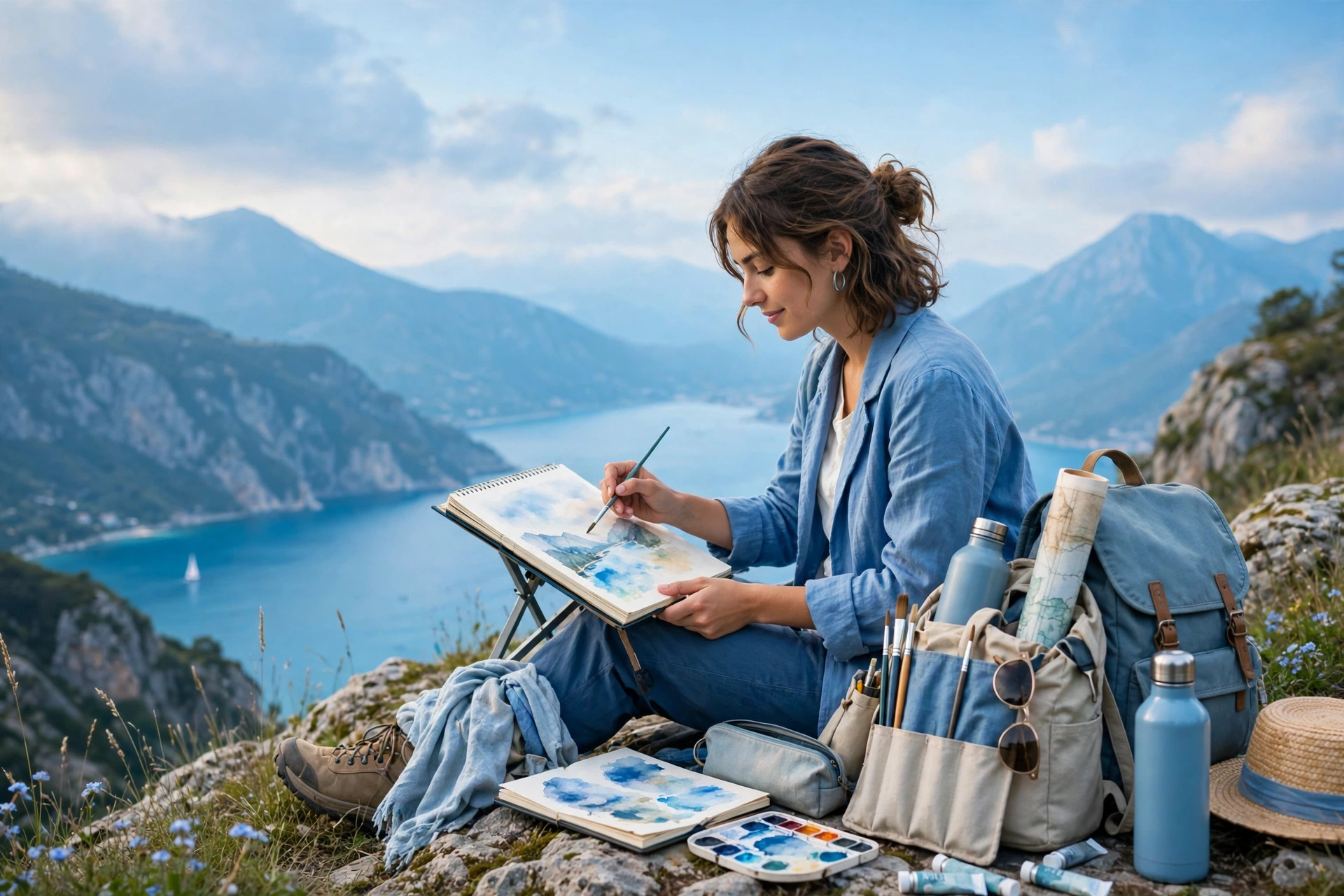
Most trips, left to themselves, follow the same shape: arrive, see the famous sights, eat, take photos, sleep, repeat. That shape can feel oddly thin afterwards — you remember the queue, the heat, and the view, but not what the day actually felt like. A hobby changes that, because it gives you a reason to slow down and pay attention to something specific.
A photographer in a market is not just passing through: she watches light, waits for a gap in the crowd, and notices the fruit, the stalls, and how a vendor arranges a display. A language learner ordering food listens to how a greeting sounds, tries a new word, and notices when someone smiles because he tried. The hobby turns a place from something you consume into something you take part in, and that participation is what stays in memory.
A hobby also solves a quiet problem that many travellers feel but rarely name: the empty hours. Not every hour of a trip is full of sights. There are train journeys, rainy afternoons, early mornings before anything opens, and evenings when you are too tired for another attraction but not ready for bed. A hobby fills those hours with something you chose, rather than with scrolling, waiting, or spending money to pass the time. A sketchbook on a train, a run along a river at dawn, or a few pages of a journal in a cafe can turn dead time into the part of the day you remember best.
Finally, a hobby gives a trip a shape after you come home: a journal to reread, sketches, a recipe you now cook, a few words of a language you keep using, or a collection that grows with each trip. The trip keeps paying back in small ways, because the hobby continues at home and gives you a reason to plan the next one.
Pick by Cost, Packability, Company, and Skill
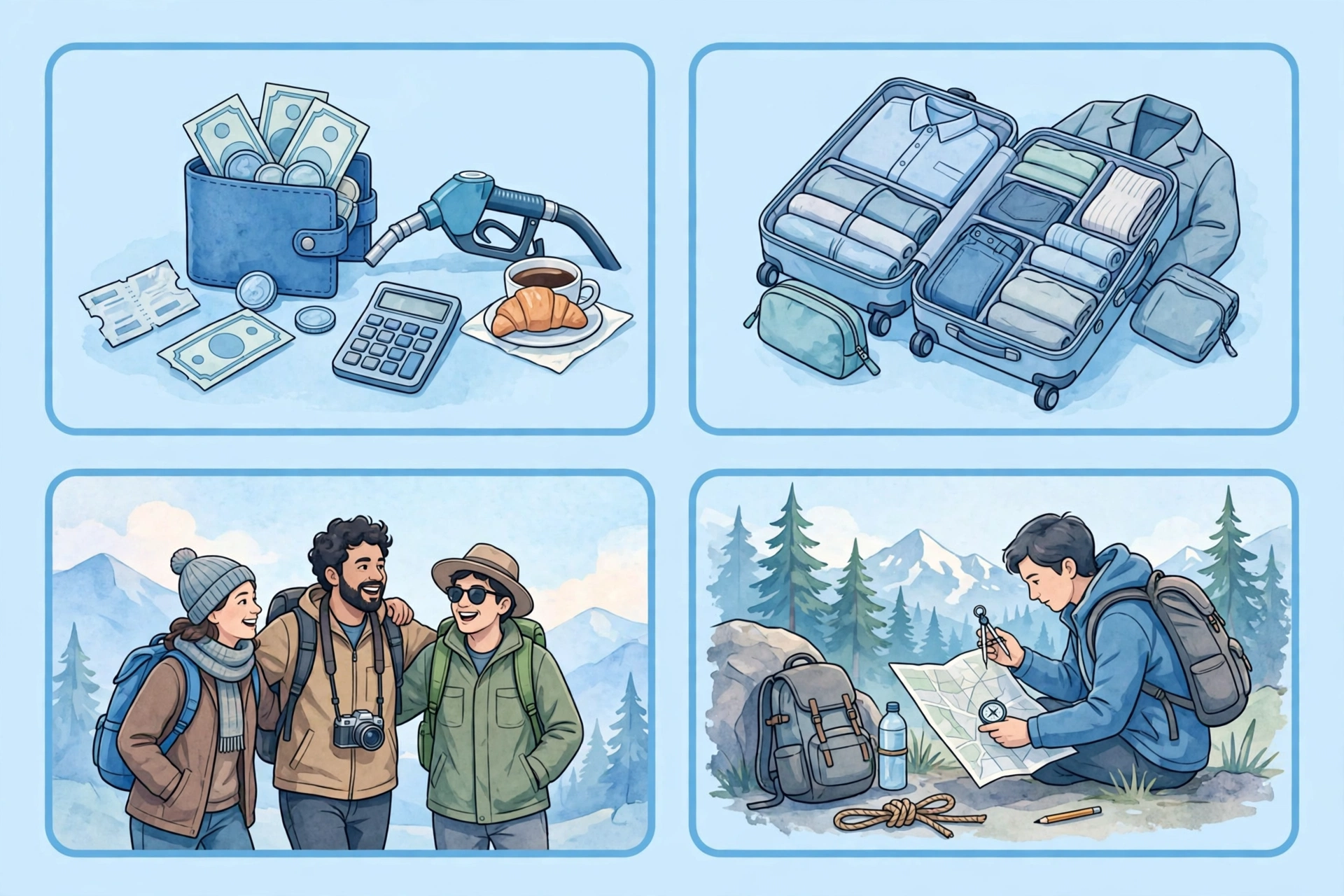
Lists of travel hobbies are everywhere, and they are usually unhelpful in the same way: they tell you what other people enjoy, but not whether a hobby fits your life. A better way to choose is to score a hobby against four simple questions. How much does it cost to start and keep doing? How much space does it take in your bag? Do you want to do it mostly alone or mostly with other people? And how much skill does it need before it becomes enjoyable rather than frustrating?
The table below compares common travel hobbies on those four points. Cost means the typical cost to start, not the cost of a trip itself. Packability means how easily the hobby travels. Company means whether it is usually done alone, with others, or either. Skill means how much practice you need before it feels rewarding.
| Hobby | Cost to start | Packability | Alone or social | Skill needed |
| Photography | Medium to high | A phone travels easily; a full camera kit does not | Either | Low to start, deep to master |
| Journaling | Low | Excellent — a notebook and a pen | Mostly alone | Low |
| Sketching | Low to medium | Excellent — a small sketchbook and pencils | Mostly alone | Low to start |
| Running | Low | Excellent — running shoes only | Alone or in a group | Low if you already run |
| Language learning | Low | Excellent — a phone and a phrasebook | Social when you practise | Low to start, steady progress |
| Cooking classes | Medium (per class) | No gear to carry | Social | Low |
| Stargazing | Low to medium | Good — a small telescope is optional | Either | Low to start |
| Collecting (postcards, stamps, small crafts) | Low | Good, if you keep it small | Mostly alone | Low |
| Geocaching | Low | Excellent — a phone | Either | Low |
| Birdwatching | Low to medium | Good — binoculars are the main item | Either | Low to start |
Use the table as a filter, not a verdict. If you travel with only a small bag, cross out anything that needs a large kit, no matter how appealing it looks. If money is tight, start with journaling, sketching, running, or language learning, all of which cost little and need almost no equipment. If you travel to meet people, lean towards classes, workshops, and walking tours. If you recharge alone, protect that: choose a hobby that gives you a reason to be alone without making you feel isolated.
Skill deserves a special note, because it is where most hobby choices go wrong. A hobby does not need to be easy to be good, but it does need to be enjoyable at your current level. Photography is enjoyable from the first photo, even if your photos are not gallery-worthy. Sketching is enjoyable from the first rough drawing, even if it looks nothing like the scene. A hobby that only becomes enjoyable after months of practice — a difficult instrument, for example — is a poor travel hobby unless you already play it at home. The test is simple: have you enjoyed doing this at home in the last month? If yes, it will probably travel well. If no, the trip is unlikely to fix that.
Hobbies You Can Do Anywhere
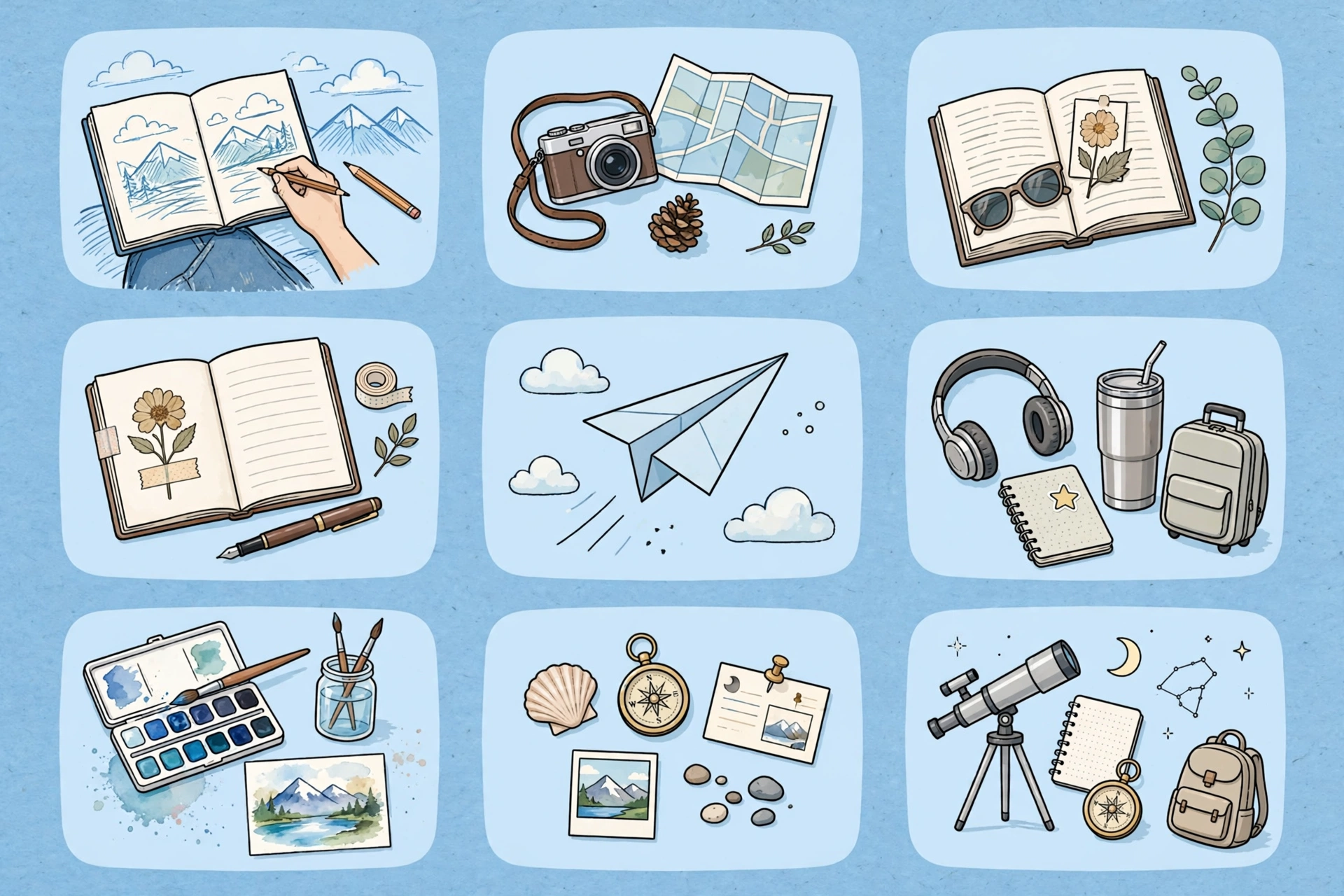
Some hobbies travel well because they need almost nothing and work in almost any place. These are the safest first choices, especially if you are trying a travel hobby for the first time. They also share an important quality: you can start them at home, so the trip is a continuation of something familiar, not a brand-new project under unfamiliar conditions.
Photography is the most common travel hobby for a reason: a phone camera is enough to start. Give yourself a small brief each day rather than photographing everything — one day only doors, another day only markets or shadows. If you move beyond a phone, a single lens you actually carry beats a bag of lenses left in the hotel.
Journaling is the quietest travel hobby and often the most rewarding to revisit. It does not need to be literary. A few lines each evening — where you went, what surprised you, what you ate, one conversation — are enough. Years later, those lines will bring back far more than a photo alone. Journaling also pairs well with other hobbies: a photographer can note where a photo was taken, and a language learner can write down new words as they hear them.
Running is a hobby that doubles as a way of learning a place. A morning run shows you a city before it wakes up: the river path, the park, the bakery opening, the streets without traffic. It costs nothing beyond shoes you would pack anyway, and it needs no booking, no ticket, and no guide. If you run at home, you can run on a trip with no new skill at all. If you do not run at home, a trip is not the best time to start, but walking the same routes gives you most of the same benefit. For walkers and runners heading into parks and trails, the National Park Service publishes hiking information that helps you find suitable routes before you set out.
Sketching works in the same way as journaling, with one difference: it forces you to look longer. You cannot sketch a building without noticing its windows, its roofline, and its proportions. You do not need to be good at drawing. A rough sketch that captures the shape of a street is more useful, and more personal, than a perfect copy. A small sketchbook, a pencil, and a pen fit in a jacket pocket, and sketching gives you a natural reason to sit in a square for an hour and simply watch.
The at-home versus on-the-road distinction matters for all of these. A hobby you do at home — running three times a week, sketching on weekends, keeping a journal — arrives on the trip already formed. You know what you need, how long it takes, and when you enjoy it. A hobby you only do on trips has to be relearned each time, and it competes with everything else that is new. That is why the best advice for a first travel hobby is boring but true: pick something you already do, and let the trip change where you do it, not what you do.
Hobbies That Open Doors to Locals
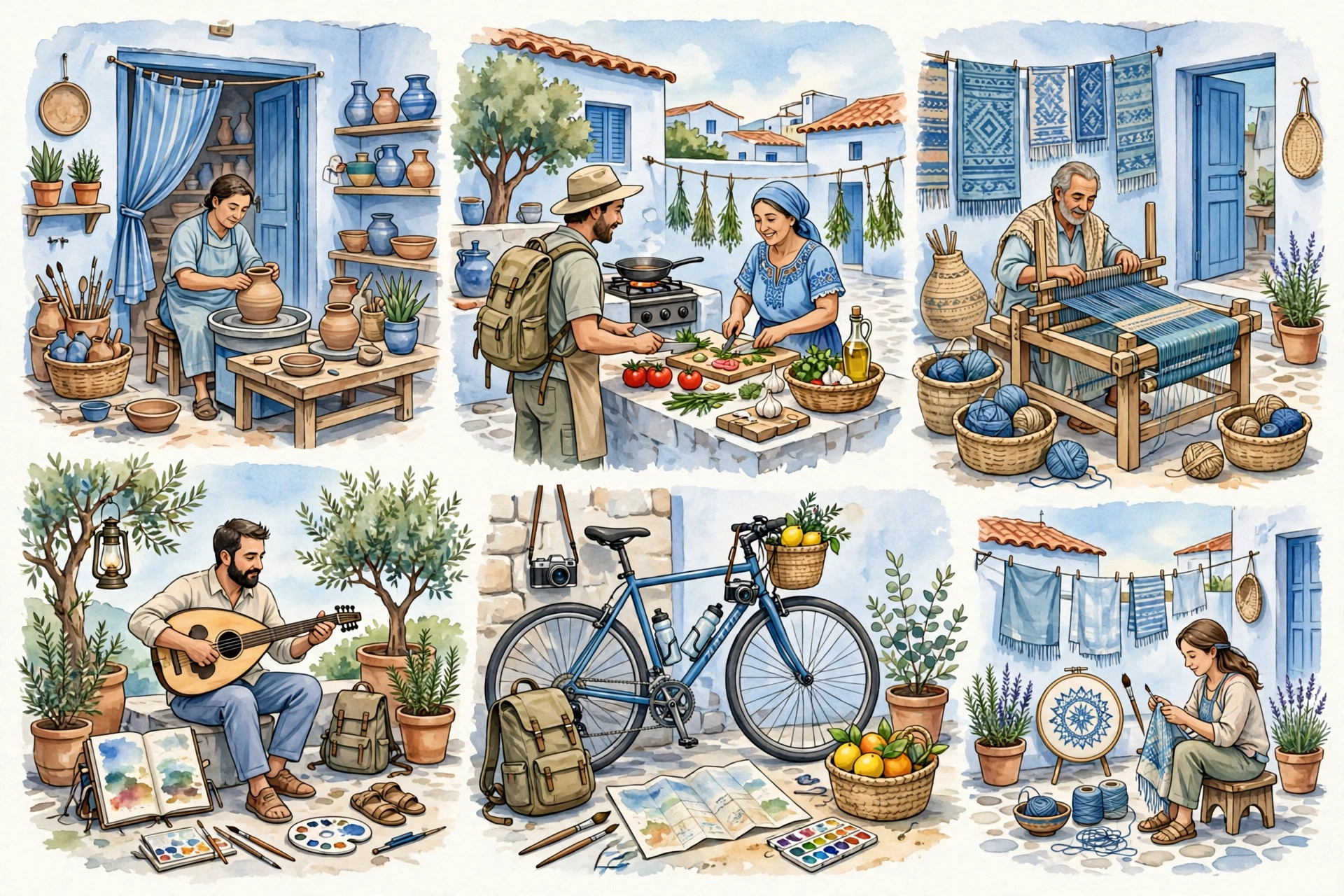
A second group of hobbies works differently. Instead of travelling well because they are portable, they travel well because they connect you with local people, local knowledge, and local daily life. These hobbies are often less portable and more social, and they are worth choosing when meeting people is part of why you travel.
Cooking classes are the clearest example. A class teaches you a dish, but it also teaches you how a market works, which ingredients matter, and how a family meal is put together in that place. You leave with a recipe you can cook at home, which means the hobby continues after the trip, and you leave with a story that is not about a sight but about people you cooked beside. Look for small classes taught by local cooks rather than large, generic demonstrations, and be honest about your level: a beginner class that moves slowly is better than an advanced class you cannot follow.
Language learning is slower, but it opens more doors over time. Even a small amount of a language changes how people respond to you. A greeting, a thank you, and a simple question, spoken with effort rather than perfection, often lead to longer conversations, better directions, and invitations you would not otherwise receive. Language apps are useful for building vocabulary before a trip, and the Travel Apps guide covers which kinds of apps are worth the space on your phone and which are not. On the trip itself, the hobby is practise: ordering food, asking for directions, and reading signs, with mistakes expected and welcomed.
Workshops and walking tours sit between classes and sightseeing. A pottery workshop, a weaving demonstration, a photography walk led by a local photographer, or a food walk through a neighbourhood all share the same structure: a local person shows you how something is done, and you try it yourself. These are not the same as watching a performance. The value is in doing, asking questions, and getting things slightly wrong in a friendly setting. They also tend to be small, which makes conversation easier than in a large tour group.
How to Plan a Whole Trip Around One Hobby
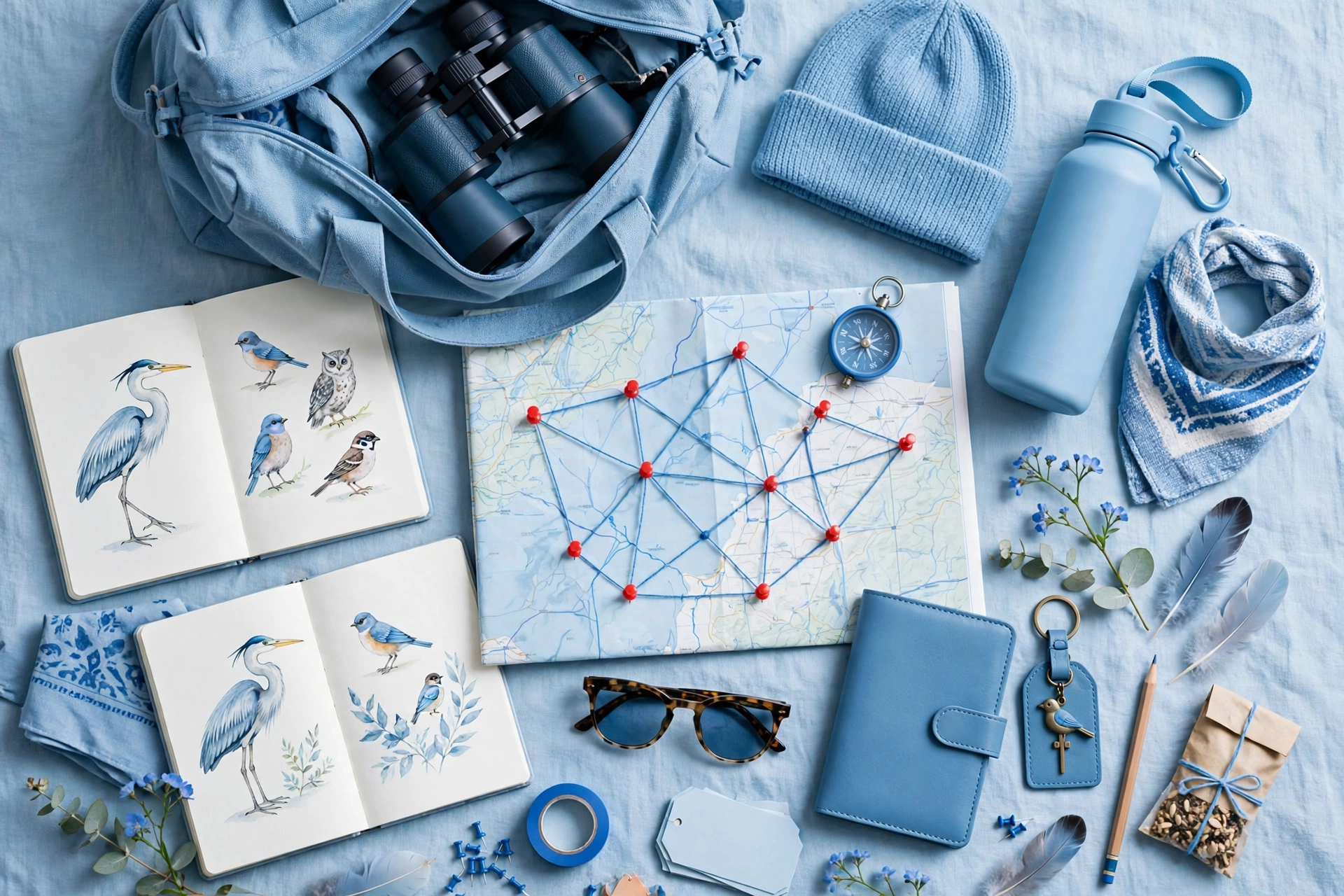
Planning a whole trip around one hobby sounds ambitious, but it is simpler than it sounds, and it is where a travel hobby pays off most. The idea is not to fill every hour with the hobby. It is to let the hobby choose the destination, the season, and one or two anchor experiences, and then let the rest of the trip arrange itself around them.
Start with the hobby, not the destination. Ask: where is this hobby best done, and when? A stargazing trip wants dark skies and a new moon, which points to deserts, mountains, and remote islands, and away from bright cities. A cooking trip wants a place with a strong food culture and good markets, and a season when key ingredients are fresh. A photography trip wants interesting light and varied streets, which many cities offer year-round. A running trip wants safe, scenic routes and a pleasant climate for the distance you run. Letting the hobby answer first often suggests destinations you would not have chosen from a generic list, and that is part of the appeal.
Next, choose one or two anchor experiences and book those first. An anchor is the thing the trip is built around: a workshop with a particular teacher, a festival, a guided walk, a market day, or a route you want to complete. One anchor is enough for a short trip; two is plenty for a longer one. Booking anchors first protects the hobby from being squeezed out by everything else, which is what happens when a hobby is only a vague intention rather than a plan. Everything else — accommodation, transport, and other sights — can then be arranged to support the anchors, rather than competing with them.
Then build in the at-home rhythm. If you sketch at home for an hour on weekend mornings, keep a similar hour on the trip, rather than trying to sketch all day. If you run three times a week at home, run three times on the trip, not every morning. A hobby trip works best when it feels like your normal hobby in a new place, not like a boot camp. Leave at least one full day with no hobby plan at all, so you can rest, wander, or follow something unexpected. The best hobby-trip stories often come from that unplanned day, not from the schedule.
A day-by-day structure helps here, and it does not need to be complicated. Put the anchor experience on one day, a lighter hobby activity on the next, and a free day after that, and repeat the pattern. If you want a ready-made structure for that kind of plan, the Travel Itinerary Template shows how to lay out a trip day by day with space for activities, transport, and rest, so the hobby fits into the plan instead of taking it over.
Season matters more on a hobby trip than on a general sightseeing trip, because the hobby itself depends on conditions: light for photography, darkness for stargazing, fresh produce for cooking, and open trails for hiking. Check the season for your hobby specifically, not just for the destination — a city can be pleasant in a month when your hobby is impossible, and a place can be in its best hobby season when general advice says to stay away.
Trend reports looking ahead to 2027 describe hobby-led trips as a rising pattern, with interests such as photography, crafting, puzzles and board games, and stargazing mentioned among the activities travellers are building trips around. Treat that as a trend, not as a rule about what you should do: a rising trend does not make a hobby right for you, and a hobby that is not trending can still be the best choice for your trip. The trend is useful only as a reminder that you are not unusual for wanting a trip with a purpose beyond sightseeing. Plenty of other travellers are doing the same, which means more workshops, classes, and guided experiences are available than there were a few years ago.
What to Pack for It
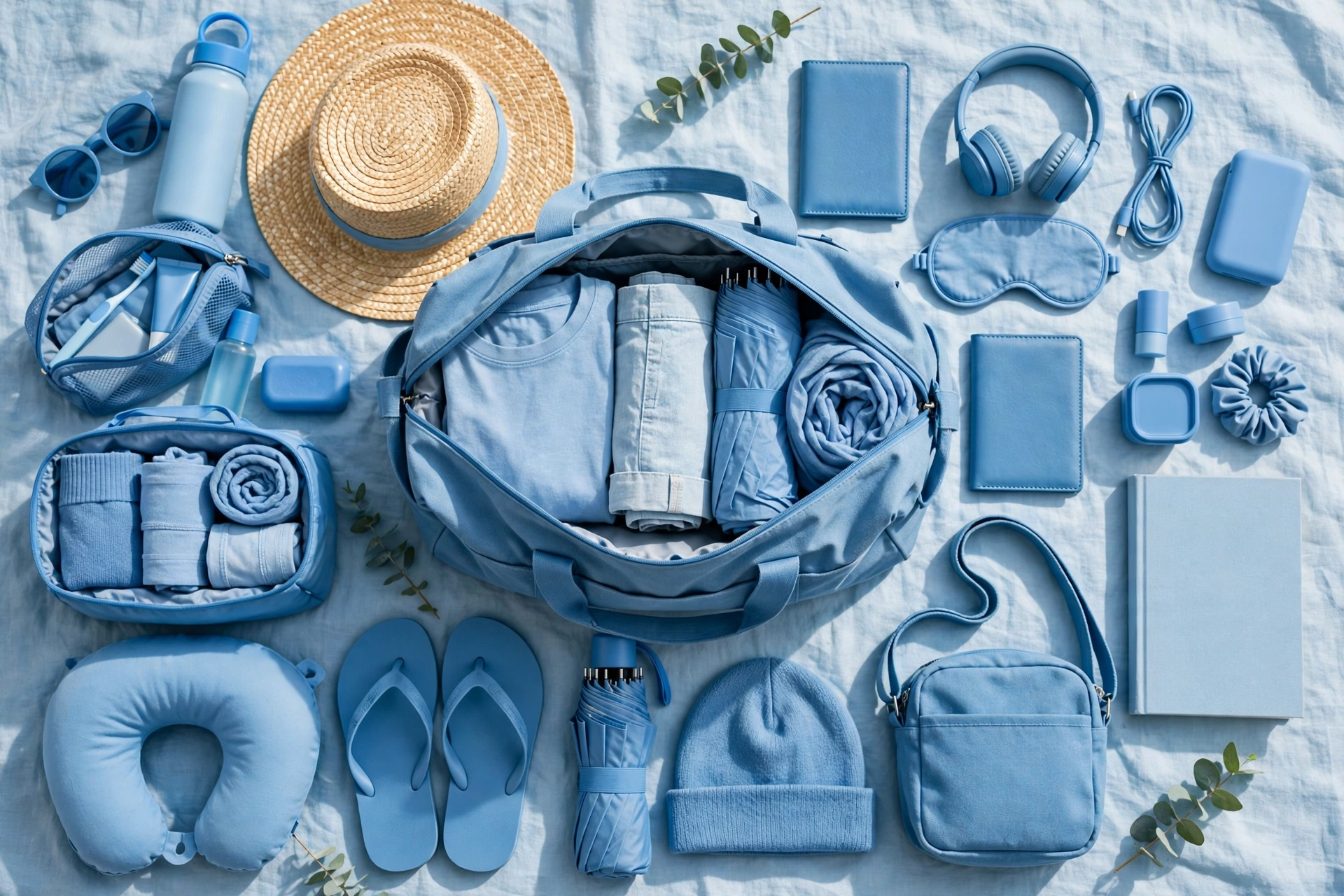
Packing for a hobby is where good intentions most often go wrong, because it is tempting to pack for every version of the hobby instead of the version you will actually do. The rule is simple: pack what you use at home, in the smallest form that still works, and leave the rest behind.
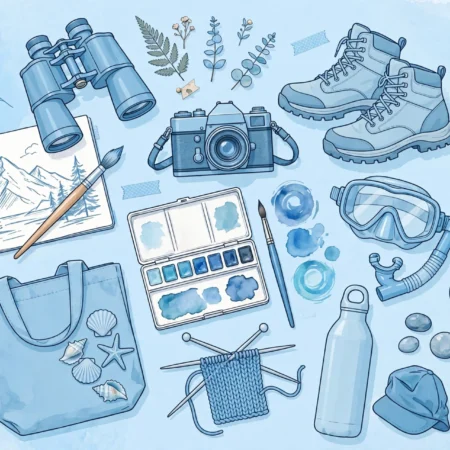
For photography, that usually means a phone and, if you use one, one camera and one lens, plus a charger and a spare memory card. For journaling and sketching, it means one notebook, not three, and a small set of pens or pencils you already like. For running, it means shoes and clothes you already run in, not new gear bought for the trip. For language learning, it means a phone and a small phrasebook, not a stack of textbooks. For collecting, it means a small pouch or envelope for what you find, and a firm limit on size: if it does not fit in the pouch, it does not come home.
There are two mistakes to avoid. The first is packing duplicate tools: two notebooks, three pens, two cameras, a backup for the backup. Duplicates add weight and decision fatigue, and you will use one of each anyway. The second is packing aspirational gear: equipment for a version of the hobby you hope to become, rather than the hobby you have. A trip is a poor place to learn a new tool under time pressure. Pack the tool you already know, and let the new place be the new part, not the equipment.
A small packing checklist, done the night before you leave, prevents most of these mistakes. Lay out everything for the hobby, pick it up piece by piece, and ask of each item: did I use this at home in the last month? If the answer is no, leave it out. Then pack the hobby kit in one place — one pouch, one pocket, one corner of the bag — so you can find it without unpacking everything. A hobby that is hard to reach is a hobby you will skip, especially on a tired day.
Mistakes to Avoid
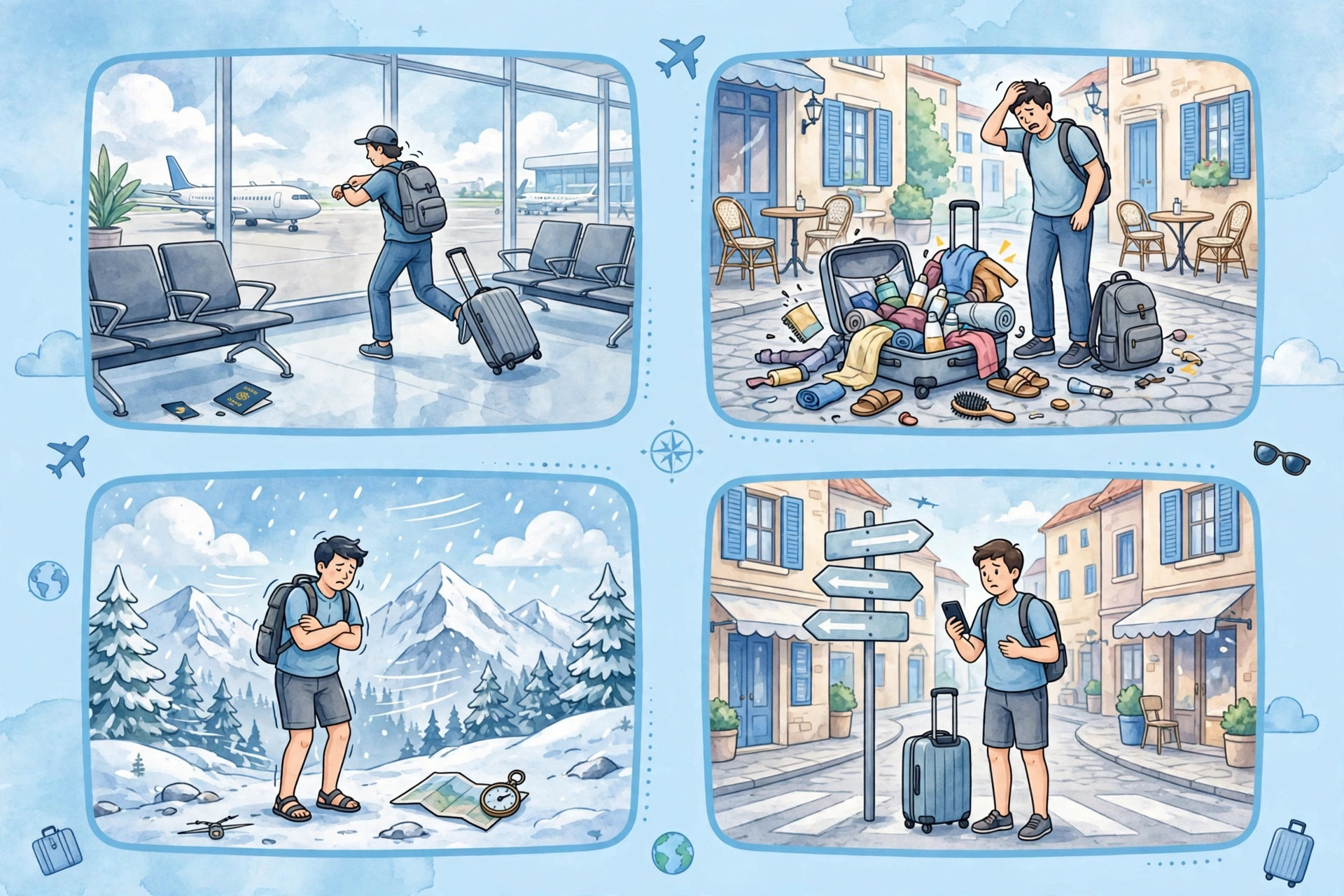
The most common mistake is overpacking gear, which this guide has already covered, but it is worth repeating because it ruins more hobby trips than any other error. Heavy gear makes you reluctant to go out, slows you down, and turns a pleasant activity into a chore. If your hobby kit weighs more than you would happily carry for an hour, it is too heavy. Cut it in half and see whether you miss anything. You almost certainly will not.
The second mistake is over-scheduling. A hobby trip with an activity in every time slot leaves no room for rest, weather, or discovery, and turns a hobby you enjoy into appointments. Keep to one hobby activity per day at most, and add a full rest day each week on a longer trip — rest is when you process what you have seen and recover enough to enjoy the next day.
The third mistake is choosing a hobby to impress other people. A hobby that looks good in photos but bores you in practice will not survive a trip, and it will make the trip feel like a performance. Choose the hobby you actually enjoy when nobody is watching. If that hobby is birdwatching, journaling, or collecting postcards, it is a good travel hobby, even if it is not fashionable. The only audience that matters is you, a year later, looking back at what you made or learned.
The fourth mistake is trying to do too many hobbies at once. Two or three hobbies that each get a little attention usually produce less satisfaction than one hobby that gets real time. If you love photography, sketching, and language learning, pick one as the trip’s main hobby and let the others happen casually, without a plan or a kit. A trip with one clear hobby has a shape you can remember. A trip with five half-started hobbies has a bag full of unused equipment and a feeling of having done nothing properly.
FAQ
Do I need to be good at a hobby for it to work as a travel hobby?
No. You need to enjoy it at your current level. Photography, journaling, sketching, running, and language learning are all enjoyable from the start, even if you are a beginner. A hobby that only becomes enjoyable after months of practice is a poor travel choice unless you already practise it at home.
What is the best travel hobby for a first trip?
The one you already do at home and that needs little gear — journaling, sketching, phone photography, or running or walking all travel easily and cost little.
Can a travel hobby help me meet local people?
Yes, if you choose a social hobby. Cooking classes, workshops, walking tours, and language practise all create natural conversations with local people. Portable hobbies like sketching and photography can also lead to conversations, but they are mainly solitary, so choose the balance that suits you.
How do I plan a trip around a hobby without over-scheduling it?
Choose one or two anchor experiences, book those first, and leave the rest of the trip open. Aim for one hobby activity per day at most, keep your at-home rhythm, and leave at least one full day with no hobby plan. A day-by-day template helps keep the plan realistic.
Is a hobby-led trip a new trend?
Trend reports looking ahead to 2027 describe hobby-led trips as rising, with photography, crafting, puzzles, board games, and stargazing among the interests mentioned. That is a trend description, not a guarantee about any particular trip, and it should not decide your hobby for you.
What should I pack for a travel hobby?
Pack what you already use at home, in the smallest form that works, and nothing else. If you have not used an item at home in the last month, leave it behind.
Conclusion
A good travel hobby does not need to be exotic, expensive, or impressive. It needs to fit your budget, your bag, your pace, and your real life at home, and to give you a reason to slow down in a new place. Start with what you already enjoy, check it against cost, packability, company, and skill, and build a trip around one or two anchor experiences rather than a packed schedule. Leave room for rest and the unexpected. The best souvenir is not something you buy — it is a skill, a journal, a recipe, or a set of images that keeps the trip alive and gives you a reason to plan the next one.
People also read: Travel Itinerary Template: Plan Any Trip Without the Stress, Travel Apps: The Only Apps You Actually Need for a Trip