Quick Answer: Mauritius travel is at its best from May to October, when the dry season brings clear skies, temperatures of 22–26°C and the calmest seas for snorkelling and diving. US citizens enter visa-free for up to 90 days per visit, and a 7-day trip works well on a planning budget of roughly $150–$300 per person per day, including a mid-range place to stay, food, transport and activities. Base yourself in Grand Baie in the north for buzz and boat trips, on the west coast around Flic en Flac for calm family beaches and sunsets, or in the south west near Le Morne for kitesurfing and wild scenery. This guide covers the best months to visit Mauritius, what a trip really costs, where to stay in each region, the best beaches, the green interior, safety and health, and a full 7-day Mauritius travel itinerary — everything you need to plan the trip in one place.
Why Mauritius Belongs on Your 2026–27 Travel List
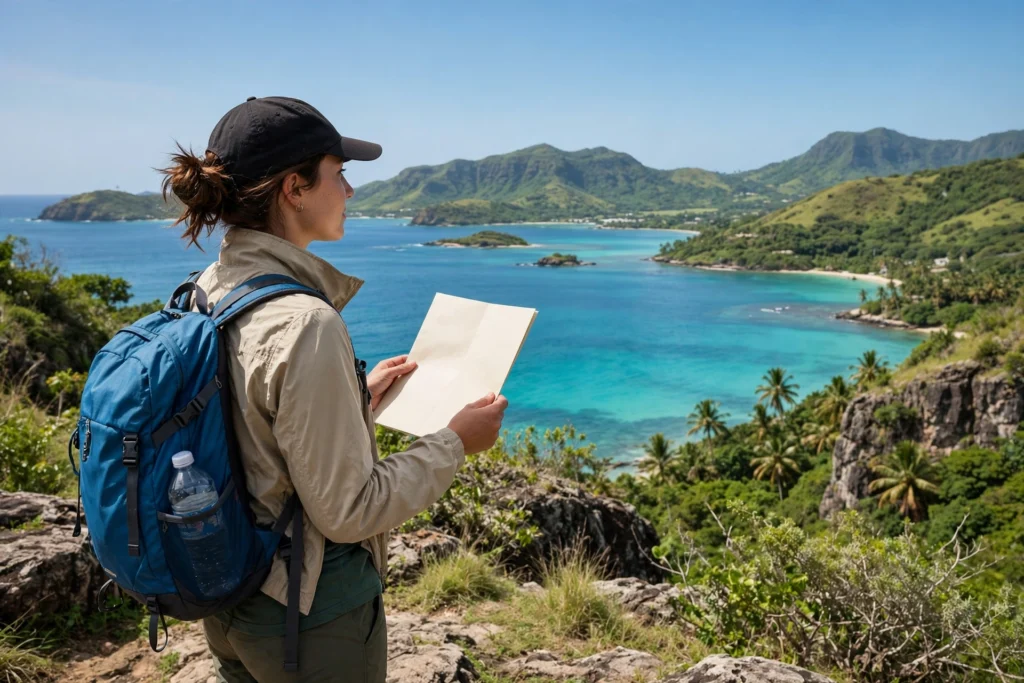
Mauritius earns its place on a travel list for a simple reason: very few destinations combine a tropical beach holiday, a wildlife and hiking trip, and a genuinely interesting cultural journey in a space small enough to cross in about ninety minutes. You can snorkel over coral in the morning, hike a forested gorge in the afternoon, and eat dholl puri from a street vendor in Port Louis the same evening. That density is the island’s real advantage, and it is also why a little planning pays off. Pick the wrong coast for your month and you get wind instead of calm water; pick the wrong base and you spend your days in the car instead of on the beach.
The island’s appeal starts with the lagoon. A coral reef rings almost the whole island, and inside it the water is shallow, warm and startlingly clear. The reef breaks the ocean swell, so most beaches have gentle water that suits swimmers, children and first-time snorkellers. Outside the reef the Indian Ocean is deep blue and rough, which is why the surf, kitesurfing and deep-sea fishing happen on the exposed coasts and the swimming happens inside. The colour of the water is not a filter trick: on a calm morning the lagoon runs from pale jade over the sand flats to deep turquoise over the coral, and the famous “underwater waterfall” off Le Morne is a sand-and-silt pattern on the ocean floor that looks, from above, like a waterfall pouring off the edge of the reef.
Beyond the beach, Mauritius is one of the world’s great stories of survival and recovery. The dodo is the famous extinct bird, but the living story is better: the Mauritius kestrel, the pink pigeon and the echo parakeet were all brought back from the edge of extinction by decades of conservation work in the forests of the south west. The island is a biodiversity hotspot, and its endemic plants and birds survive in the national park and on offshore islets like Île aux Aigrettes, where giant Aldabra tortoises roam. For a traveller, that means the interior is not filler between beaches — it is one of the main reasons to come.
Then there is the culture. Roughly two-thirds of the population is of Indian descent, about a quarter Creole, with Chinese and Franco-Mauritian communities alongside, and the mix is visible in daily life rather than staged for visitors. Hindu temples stand near Catholic churches and mosques. The year’s festivals include Maha Shivaratri at the sacred lake of Grand Bassin, the Tamil festival of Cavadee, Chinese New Year in Port Louis, Eid, Diwali and Christmas — and visitors are generally welcome to watch respectfully. The food follows the same pattern: Indian curries and flatbreads, Creole rougaille and seafood, Chinese noodles and dumplings, and French patisserie, often on the same street. English and French are both official languages, and Mauritian Creole is the everyday language you will hear most.
What makes Mauritius different from other Indian Ocean islands
Mauritius is often grouped with the Maldives and the Seychelles, but the three are very different trips. The Maldives is almost entirely about the resort and the reef, with little to do on land. The Seychelles is wilder and more expensive, with granite islands and a slower pace. Mauritius is the most complete of the three: it has the beaches and the reef, but it also has a real capital city, a national park, mountains, waterfalls, botanical gardens, rum distilleries, tea estates and a food scene that costs very little. It is also the easiest of the three to travel independently. Public buses cover the island, car hire is affordable, and you are never far from a town, a market or a beach. Our best travel destinations guide ranks Mauritius-style island trips alongside city, nature and food trips around the world, and the island scores well precisely because it does several kinds of trip at once.
The trade-off is that Mauritius is not a deserted-island fantasy. It is a densely populated country of about 1.3 million people, and the popular beaches in December and January are busy. The resorts along the north and east coasts are large, and some stretches of coast are lined with hotels rather than open beach. If you want empty sand, you need to know which beaches stay quiet and which days to go — and this guide names them. The other trade-off is the weather: the island is tropical, the wet season is real, and cyclones are a genuine seasonal risk from November to April. The month-by-month section below is honest about that, because a trip planned around the wrong month is the most common Mauritius mistake.
Who Mauritius suits best
Mauritius suits beach lovers who also want things to do, families who want calm water and short drives, couples looking for a honeymoon with variety, divers and snorkellers, hikers, food lovers and anyone who likes a trip with culture attached. It suits first-time Indian Ocean travellers because the infrastructure is good, English is widely spoken and the island is compact. It suits returning visitors too, because the interior and the south coast reward a second trip. It suits less well anyone who wants a single-resort holiday with nothing outside the gates — you can have that here, but you would be paying for an island you never see — and anyone who wants nightlife on the scale of a big city. Grand Baie has the liveliest evenings on the island, but Mauritius goes to bed earlier than a Mediterranean resort town, and that is part of its charm.
A realistic trip length is seven to ten days. Seven days covers the highlights at a comfortable pace with two beach days built in. Ten days lets you add Rodrigues, the island’s smaller sister island, or slow down and spend a full day in the interior. Less than five days works only if you stay in one region and accept that you will see a fraction of the island. The 7-day itinerary in this guide is built for a first visit and balances beach time, the south west, the interior and the capital, so you leave feeling you have actually seen Mauritius rather than just one resort.
Where Is Mauritius and How to Get There
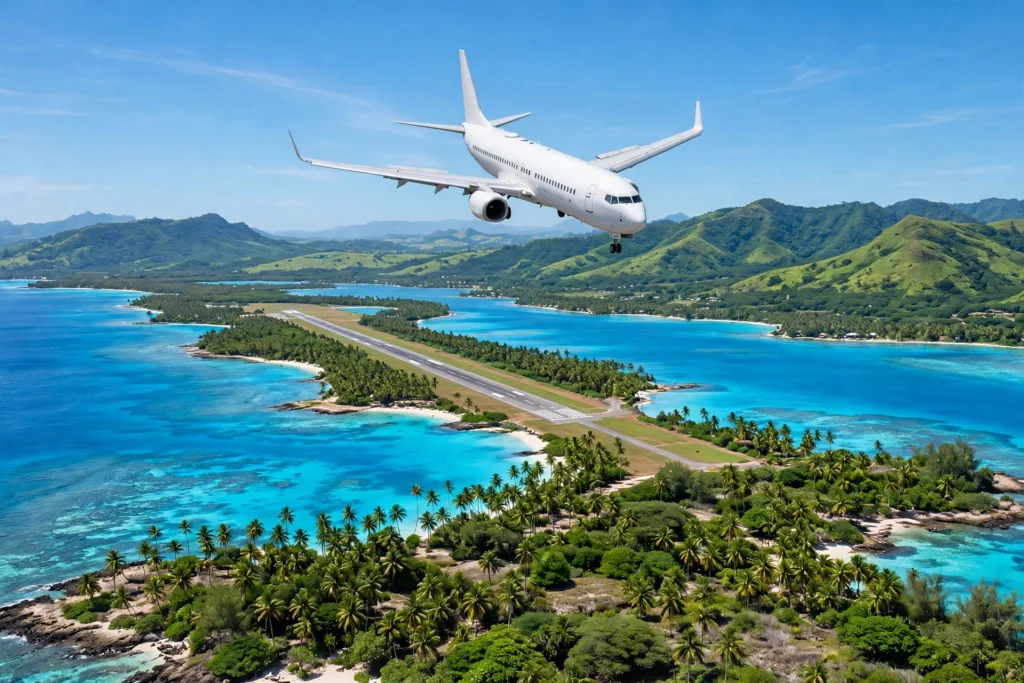
Mauritius is a volcanic island in the south-west Indian Ocean, about 800 kilometres east of Madagascar and roughly 2,000 kilometres off the south-east coast of Africa. It is part of the Mascarene Islands, a volcanic chain that also includes Réunion and Rodrigues. The island is pear-shaped, about 45 kilometres wide and 65 kilometres long, with a central plateau rising to around 600 metres and three mountain ranges around it. The capital, Port Louis, sits on the north-west coast. The only international airport is Sir Seewoosagur Ramgoolam International Airport (MRU), in the south east near Mahébourg, about a 45 to 90 minute drive from most beach areas depending on traffic and your destination.
Flying to Mauritius from the USA
There are no nonstop flights from the United States to Mauritius, so every trip from the USA involves at least one connection. The most common routings go through Europe — London, Paris, Amsterdam or Frankfurt — or through the Middle East, usually Dubai or Doha, or through Johannesburg. Total travel time from the US East Coast is typically 18 to 24 hours including the connection; from the West Coast it is longer, usually 24 hours or more. Paris is often the smoothest European connection because of the historic French link with the island, and several airlines fly the Paris to Mauritius route daily. When you compare flights, look at the total journey time and the connection length, not just the headline price: a cheap fare with an eight-hour layover and an overnight connection can cost you a full day of your holiday.
Book flights as early as you can for the dry season, especially July and August, when European school holidays push prices up. The cheapest fares are usually in the wet season months of February and March, outside the Christmas and New Year peak, but weigh the saving against the weather risk and the cyclone season discussed below. If you are combining Mauritius with another destination, the classic pairing is a safari in South Africa or a few days in Dubai on the way home, since both sit on the same flight paths. Our Tanzania travel guide covers the safari side of that kind of combined trip if you are thinking about pairing an island week with wildlife.
Entry requirements for US citizens
US citizens do not need a visa to visit Mauritius for tourism. The standard grant is visa-free entry for up to 90 days per visit, with an overall ceiling of 180 days in a calendar year for tourism, and the exact stay is stamped in your passport on arrival at the discretion of the immigration officer. Your passport should be valid for at least six months beyond your intended stay, and you should be able to show a return or onward ticket, proof of accommodation and evidence of sufficient funds if asked. Entry rules change, so confirm the current requirements for your nationality on the official Passport and Immigration Office portal at passport.govmu.org before you book, and check the US State Department’s Mauritius page before you travel.
All arriving travellers must also complete the Mauritius All-in-One Travel Digital Form before arrival. The form is free, it replaces the old paper immigration and customs cards, and you complete it on the official portal at safemauritius.govmu.org — check that you are on the .govmu.org domain before entering personal details. Submit it a few days before you fly and save the QR code you receive, because you will be asked to show it at border control. Keep a paper or offline copy as well as the one on your phone, in case your battery dies or the airport Wi-Fi is slow.
Getting from the airport to your hotel
The airport is in the south east, and most beach areas are 45 to 90 minutes away by road. A taxi from the airport to the popular beach areas costs roughly MUR 1,500–2,500 (about $35–$60) as a planning figure, and the fare is usually agreed before you leave rather than metered. Pre-booking a transfer through your accommodation often secures a better rate and means someone is waiting for you with a name board, which matters if you land late at night. If you have hired a car, most rental companies deliver it to the airport. Public buses run from the airport, but they are slow and involve changes, so they are a poor choice with luggage after a long flight. Arrive with some Mauritian rupees in cash for the first taxi, snack or SIM card, or use an ATM at the airport. For more on what to pack for a trip like this, our travel packing checklist covers the documents and essentials worth having in your carry-on.
Getting around the island
Mauritius is small, but it takes longer to cross than the map suggests, because the roads wind through towns and sugar cane fields and the interior roads are slow. Plan on an hour to cross the island and up to ninety minutes from the airport to the north coast. There are four practical ways to get around, and most visitors use a mix.
Public buses are the cheapest option and they cover most of the island, including the main towns and many beaches. Fares are low and paid on board in cash. The trade-off is speed and frequency: buses are slow, they can be crowded, and services thin out in the evenings and on Sundays, especially outside Port Louis and the main tourist areas. They are a good choice for a day trip to the capital or the market, and a poor choice if you want to reach trailheads, remote beaches or the south coast on a schedule.
Taxis are widely available but unmetered, so agree the fare before you set off or arrange the car through your hotel. For a full day of sightseeing, hiring a taxi with a driver for the day is a common and sensible option: the driver knows the roads, waits while you visit each stop, and the total often works out cheaper than three or four separate fares. Rideshare-style apps operate in the main tourist areas and give more predictable pricing. Agreeing the price in advance is the single rule that prevents almost every taxi dispute on the island.
Hiring a car gives you the most freedom and is the best way to see the interior, the south coast and the quieter beaches. Rental starts at roughly MUR 1,200 (about $30) per day as a planning figure for a small car, before insurance. Driving is on the left, the same as in the UK, and an international driving permit is recommended alongside your US licence. Roads are generally good on the motorway between the airport, Port Louis and Grand Baie, and narrower and slower elsewhere, with sugar cane trucks, scooters and pedestrians to watch for. Drive defensively, allow more time than the map suggests, and avoid driving at night on unfamiliar rural roads. If you are not comfortable driving on the left, use taxis and a hired driver instead — Mauritius is not the place to learn.
Walking works well inside compact towns like Grand Baie, Mahébourg and parts of Port Louis, but it is not practical for travelling between regions. There is no metro or tram system and no island-wide transit pass. The practical approach for most visitors is to hire a car for three or four days in the middle of the trip for the interior and the south, and use taxis or buses on the beach days at either end. That gives you freedom where it matters and rest where it does not.
The Best Time to Visit Mauritius: Month by Month
Mauritius is a year-round destination, but the month you choose changes the trip more than in most beach destinations. The island has two seasons: a warm, dry winter from May to September and a hot, wet, humid summer from October to April. Average coastal temperatures run around 20°C in winter and 25°C in summer, but those averages hide the real differences — humidity, rainfall, wind, sea conditions and cyclone risk all move with the season, and the best month depends on what you want to do. The short answer is that May to October is the most reliable window, with May and October often the best overall months, and September to November the best for diving visibility. December to March is the warmest and the wettest, with the highest cyclone risk, and it is also when the island is greenest and the waterfalls are at their fullest.
The dry season: May to October
The dry season is the cool season, and it is when Mauritius is at its most comfortable. Daytime coastal temperatures sit around 22–26°C, humidity is low, rain is infrequent and the skies are clear. The south-east trade winds blow steadily, which keeps the air fresh but makes the exposed east and south coasts breezy and the sea choppy. The west and north coasts are sheltered from the trades, so they stay calm and warm, which is why the west coast is the best base in the dry season. Hiking is at its best in these months: the trails in Black River Gorges are dry underfoot, the air is clear, and the cooler temperatures make a full day on foot enjoyable rather than exhausting. Surfing and windsurfing are also at their best from June to August, when the trades are strongest.
July and August are the peak of the dry season and the busiest months, because they coincide with European school holidays. Expect the lowest rainfall of the year, the clearest skies and the highest prices, and book accommodation early. August is often cited as the driest single month, with very little humidity and pleasant temperatures, though the sea is at its coolest and the evenings can call for a light layer. September is a favourite among returning visitors: the weather is still dry, the crowds thin out, the sea begins to warm again, and the light is excellent for photography. Whale watching runs in the dry season too, with the best chances in the winter months when humpback whales pass the south west coast.
The wet season: November to April
The wet season is the hot season. Temperatures rise to 28–33°C, humidity climbs, and afternoon showers become common. The sea is at its warmest, the lagoons are calmest on the sheltered coasts, and the diving and snorkelling visibility is excellent from September through November before the rains wash sediment into the water. December to February is the peak of the beach summer, with the warmest water of the year and the busiest festive season, but it is also the heart of the cyclone season. The official South-West Indian Ocean cyclone season runs from 15 November to 15 April, with the peak risk in January through March. Direct hits on Mauritius are rare, but cyclones nearby bring heavy rain, strong winds and rough seas, and flights and boat trips can be cancelled at short notice. Do not promise yourself dry weather in these months, and do not book a trip in January to March without travel insurance that covers weather disruption and a flexible attitude to your plans.
That said, the wet season has real advantages. The island is lush and green, the waterfalls are full, the crowds are thinner outside the Christmas and New Year peak, and accommodation rates are at their lowest from January to March. Kitesurfing is good on the east coast in the summer months, deep-sea fishing is best from October to April, and the Hindu festivals of the season — Maha Shivaratri in February or March, and Cavadee in January or February — are among the most spectacular on the island. If you travel in the wet season, build a spare day into your itinerary for weather-dependent plans, keep your first and last days flexible, and check the forecast every morning rather than trusting a monthly average.
The shoulder months: April, May, October and November
The shoulder months are where the best value usually sits. April and May combine the tail of the summer warmth with the start of the dry season: the sea is still warm from summer, the rain eases, and prices drop. October and November are the mirror image: temperatures rise again, the sea warms up, and the rain has not yet arrived in force. October is often named the single best month to visit Mauritius for balanced weather, with warm days, little rain and low cyclone risk. November brings warmer water and the start of the festive season, but it also brings the start of the cyclone season and higher hotel occupancy, so book early and keep an eye on the forecast. If you are choosing one month and want the best combination of weather, price and calm seas, pick May or October.
Mauritius by month at a glance
| Month | Season | Avg. coastal temp | Rainfall | Crowds | Best for |
|---|---|---|---|---|---|
| January | Wet, cyclone risk | 28–30°C | High | Moderate | Budget rates, lush landscapes, festivals |
| February | Wet, cyclone risk | 28–30°C | Highest | Low | Budget rates, Maha Shivaratri, Cavadee |
| March | Wet, cyclone risk | 27–29°C | High | Low | Budget rates, waterfalls, kitesurfing east |
| April | Transitional | 25–28°C | Moderate | Low–moderate | Hiking, waterfalls, value rates |
| May | Dry season begins | 23–26°C | Low | Moderate | Snorkelling, beaches, whale watching |
| June | Dry | 22–25°C | Low | Moderate | Hiking, surfing, windsurfing |
| July | Peak dry | 20–23°C | Very low | High | All-round best weather |
| August | Peak dry | 20–23°C | Very low | High | Driest month, clear skies, surfing |
| September | Dry, warming | 21–25°C | Low | Moderate | Diving visibility, fewer crowds |
| October | Dry, warm | 23–27°C | Low | Moderate | Best overall balance, diving, beaches |
| November | Warming, cyclone season starts | 25–28°C | Moderate | Moderate–high | Warm seas, diving, early festive season |
| December | Wet, festive peak | 27–30°C | High | High | Warmest water, Christmas, Diwali season |
Temperatures are planning figures for the coast; the central plateau is several degrees cooler and wetter than the coast in every month. The west and north coasts are warmer and drier than the east and south coasts, which catch the trade winds and more rain. Always check the forecast for your dates rather than relying on a monthly average, and remember that a single month can contain both perfect beach days and a tropical downpour.
Festivals and the best months for culture
Mauritius has festivals all year, and timing a visit to coincide with one is worth doing. Maha Shivaratri, usually in February or March, is the biggest Hindu festival outside India: hundreds of thousands of devotees walk in pilgrimage to the sacred lake at Grand Bassin, and the island’s roads fill with processions. Thaipoosam Cavadee, in January or February, is a Tamil festival in which devotees carry decorated wooden frames to temple, and it is one of the most visually striking events on the island. Chinese New Year, or the Spring Festival, falls in late January or February — in 2027 it is on 6 February — and Port Louis Chinatown fills with dragon and lion dances, firecrackers and red decorations. Independence Day on 12 March is a public holiday with official ceremonies. Diwali, the festival of lights, falls in October or November — on 8 November in 2026 — and the island glows with lamps and fireworks. Holi, in March, is celebrated at Grand Bassin and across the island. Visitors are welcome at the public festivals, but dress modestly, ask before photographing people at prayer, and follow local guidance at religious sites. Festival dates follow religious calendars and move each year, so confirm the exact dates for your trip before you book around one.
Mauritius Travel Costs: What a Trip Really Costs
Mauritius can be a budget trip or a luxury trip, and the gap between the two is wide. The island has everything from guesthouses and self-catering apartments to some of the most expensive resorts in the Indian Ocean, and your daily cost depends far more on where you stay than on anything else. Food is cheap if you eat where locals eat, transport is cheap if you use buses, and the best things on the island — the beaches, the national park, the markets, the viewpoints — cost little or nothing. The figures below are planning figures in US dollars per person per day, excluding international flights, and they assume a week-long trip. Treat them as a way to compare options, not as a quote: prices rise sharply in July, August and over Christmas and New Year, and fall in February and March.
Daily budgets by travel style
| Travel style | Lodging | Food | Transport | Activities | Total per day* |
|---|---|---|---|---|---|
| Budget | $30–$60 | $15–$25 | $5–$15 | $10–$20 | $60–$120 |
| Mid-range | $80–$150 | $30–$50 | $20–$40 | $25–$50 | $150–$300 |
| Comfortable | $150–$300 | $50–$80 | $40–$60 | $50–$100 | $300–$550 |
| Luxury | $400+ | $100+ | $60+ | $100+ | $650+ |
*Per person per day, excluding international flights, based on two people sharing a room. Budget travellers staying in a guesthouse, eating street food and local restaurants, and using buses can manage on roughly $60–$120 a day. Mid-range travellers in a comfortable hotel or apartment, eating a mix of local and restaurant meals, hiring a car for part of the trip and doing a boat trip or two, should plan on roughly $150–$300 a day. A comfortable trip with a good beach hotel, restaurant dinners and regular activities runs roughly $300–$550 a day. Luxury resort stays start well above that and can reach several times the mid-range figure in peak season.
What things cost on the ground
The currency is the Mauritian rupee (MUR), and a useful planning rate is roughly 45 rupees to one US dollar, though the rate moves and you should check the live rate before you travel. Cards are accepted at hotels, larger restaurants and supermarkets, but cash is essential at markets, street food stalls, small restaurants and for buses and taxis. ATMs are widely available in towns and tourist areas. A dholl puri or a bowl of noodles from a street vendor costs a few dollars. A meal at a local restaurant is typically a modest sum, while dinner at a resort restaurant can cost several times as much for the same fish. A bus fare is a small amount, a taxi across town is a moderate fare, and a full-day taxi with a driver is a planning figure you should agree before you set off.
Entry fees are modest. The Seven Coloured Earths at Chamarel costs roughly 300 rupees (about $7) as a planning figure, the botanical garden at Pamplemousses roughly 200 rupees, and Black River Gorges National Park is free. Boat trips to Île aux Cerfs cost roughly MUR 1,500–2,500 (about $35–$60) as a planning figure, and a full-day catamaran cruise with snorkelling stops and lunch is one of the best-value activities on the island. Car hire starts at roughly MUR 1,200 (about $30) a day for a small car before insurance. None of these are prices you should rely on to the rupee: confirm the current figure when you book, and treat every number in this guide as a planning figure that helps you compare choices.
How to keep the cost down
The single biggest saving is the season. Travelling in May, June, September or October instead of July, August or the Christmas peak can cut accommodation costs by a noticeable amount while delivering equally good weather. The second saving is where you stay: a guesthouse or self-catering apartment in Grand Baie, Flic en Flac or Mahébourg costs a fraction of a beachfront resort and puts you closer to local restaurants and markets. The third is food: eat breakfast from a bakery, lunch from a street vendor or market stall, and save restaurant dinners for two or three nights rather than every night. The fourth is transport: use buses for the trips they serve well, hire a car for only the days you need it, and share a full-day taxi with a driver rather than paying for separate fares. Finally, do the free things first. The beaches, the national park, the viewpoints at Macondé and the Gris Gris cliffs, the markets and the temple at Grand Bassin cost little or nothing, and they are the experiences you will remember longest. If you want a structured way to plan the money side of any trip, our how to prepare a travel budget guide walks through the same method for any destination.
Money mistakes to avoid
Do not change money at the airport if you can avoid it: the rate is usually worse than in town or at an ATM. Do not assume every place takes cards; carry small notes for buses, markets and beach vendors. Do not pay a taxi fare you have not agreed in advance. Do not book the cheapest accommodation you can find in the wet season without checking recent reviews, because a bargain room with no air conditioning and a leaking roof is a miserable base in February humidity. And do not forget travel insurance: medical care on the island is good but a hospital stay or a medical evacuation is expensive, and insurance that covers weather disruption matters in cyclone season. Tipping is not obligatory in Mauritius, but a tip of around 10 percent at restaurants is appreciated, and small tips for drivers and guides are normal.
Where to Stay in Mauritius: North, East, West, South and the Interior
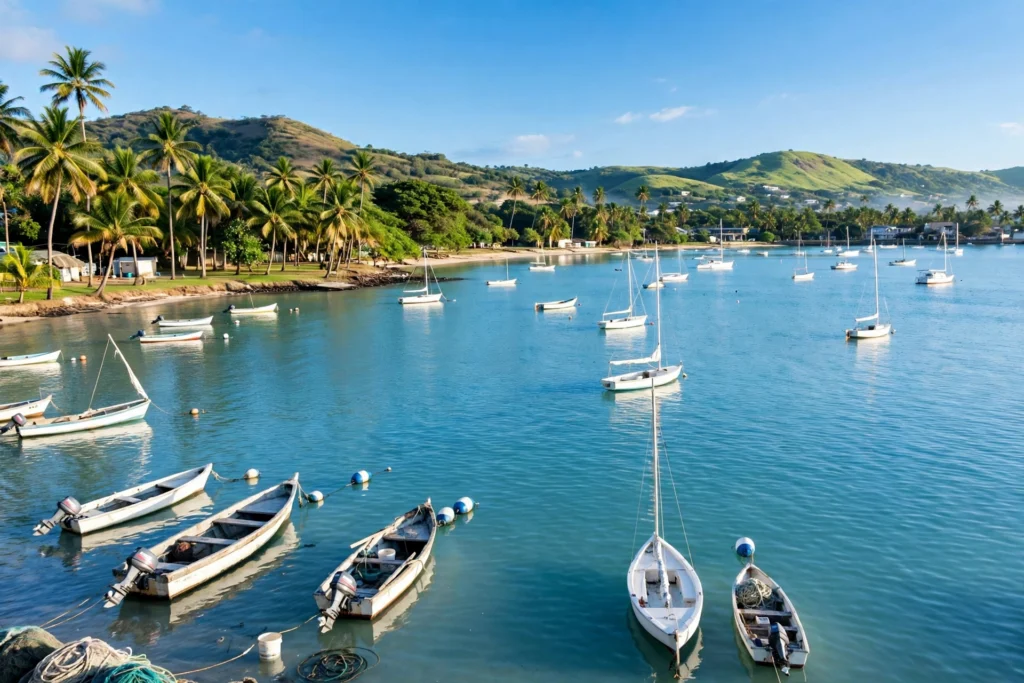
Where you stay in Mauritius matters more than in most destinations, because the island’s regions feel like different places. The north is lively and built up, the east is glamorous and windswept, the west is calm and family-friendly, the south is wild and quiet, and the interior is cool, green and rarely visited. There is no single best region — there is a best region for your month, your budget and your plans. The most common mistake is to book the prettiest resort photo without checking which coast it is on, and then discover that the beach you imagined is windy, or that the calm lagoon you wanted is a forty-minute drive away. The table below gives the honest trade-off for each region, and the sections after it fill in the detail.
Where to stay by region
| Region | Best for | Beaches | Vibe | Budget* | Watch out for |
|---|---|---|---|---|---|
| North — Grand Baie | Nightlife, boat trips, restaurants | Busy, good swimming | Lively, built up | $80–$300 | Crowds in peak season |
| East — Belle Mare | Long white beaches, resorts | Wide, beautiful, windy | Glamorous, quiet | $120–$400 | Trade winds, rough sea |
| West — Flic en Flac | Families, sunsets, calm water | Calm, shallow, sandy | Relaxed, local | $60–$250 | Fewer luxury resorts |
| South west — Le Morne | Kitesurfing, scenery, hiking | Wild, dramatic, windy | Remote, natural | $100–$350 | Wind, distance from towns |
| South — Mahébourg | Culture, budget, authenticity | Rocky, few swim beaches | Local, historic | $40–$150 | Not a beach base |
| Interior — central plateau | Hiking, cool air, tea country | None | Quiet, green | $50–$120 | Rain, distance from sea |
*Planning figure per person per day including a mid-range stay, food and local transport. This guide names no specific hotel or resort as a buying pick: the regions and the trade-offs are what matter, and you should compare current rates and recent reviews for your dates.
The north: Grand Baie and the lively coast
Grand Baie is the tourism hub of the island, and it is the best base if you want things to do in the evening. The town has the greatest concentration of hotels, guesthouses, restaurants, bars, shops and boat operators on the island, and the bay is the departure point for trips to the northern islands. The beaches around Grand Baie — La Cuvette, Mont Choisy and Trou aux Biches — are good swimming beaches with calm water, and the long curve of Mont Choisy is one of the best public beaches on the island. Nearby Cap Malheureux, with its red-roofed church looking out to the northern islands, is one of the most photographed spots in Mauritius and a quiet contrast to the buzz of the town.
Stay in the north if you want nightlife, a choice of restaurants, easy boat trips and the shortest transfer from the airport side of the island. Stay elsewhere if you want quiet: Grand Baie in December and January is busy, the traffic is the worst on the island, and the town feels built up rather than tropical. Families do well here because everything is close, and first-time visitors do well here because the infrastructure is the most forgiving. From Grand Baie, Pamplemousses Botanical Garden is a short drive, Port Louis is about thirty minutes, and the northern islands are a boat ride away.
The east: Belle Mare and the glamorous coast
The east coast is traditionally the island’s most glamorous, with long white-sand beaches near Belle Mare and Trou d’Eau Douce, and some of the largest resorts on the island. The beaches here are arguably the most beautiful in Mauritius: wide, pale and backed by casuarina trees, with the lagoon stretching out to the reef. The trade-off is the wind. The east coast faces the south-east trade winds, so from May to September the sea is choppy, the sand blows, and swimming is rougher than on the west coast. In the summer months the winds ease and the east coast is at its best, with warm water and calmer seas.
Stay on the east coast if you want a resort holiday on a beautiful beach and you are travelling in the summer, or if you are a kitesurfer or windsurfer who wants the wind. Stay elsewhere if you are travelling in the dry season and want calm swimming water every day, or if you want to walk to restaurants and shops — the east coast resorts are spread out and self-contained, and you will need a car or taxis to get anywhere. The departure point for Île aux Cerfs is on this coast, at Trou d’Eau Douce, and the fishing village of Mahébourg and the Blue Bay Marine Park are a short drive south.
The west: Flic en Flac and the calm coast
The west coast is the best all-round base for most visitors, and the best base in the dry season. It is sheltered from the trade winds, so the sea is calm, the beaches are sandy and shallow, and the sunsets over the Indian Ocean are the best on the island. Flic en Flac has the longest beach on the west coast and a relaxed, local feel, with guesthouses and apartments alongside hotels, and a string of beach restaurants and food stalls. Nearby Wolmar and Tamarin are quieter, and Tamarin Bay is known for surfing and for the dolphins that visit the bay in the mornings. The Black River Gorges are a short drive inland, Le Morne is an hour south, and Port Louis is about forty minutes north.
Stay on the west coast if you are travelling with children, if you want calm swimming water, if you like sunsets, or if you want a base that keeps the whole island within reach. The west coast is also the best value coast: guesthouses and apartments are plentiful, local restaurants are close, and you are not locked into resort prices. The trade-off is that the west coast has fewer grand resorts than the north or east, and the nightlife is quieter. For most travellers, that is a fair exchange.
The south west and south: Le Morne, Mahébourg and the wild coast
The south west is the wildest and most dramatic part of Mauritius. Le Morne Brabant rises 556 metres above a turquoise lagoon, the beaches are long and windswept, and the kitesurfing is world-class. The village of Le Morne has a strong Creole community and a slower pace than the north, and the peninsula feels remote even though it is only an hour from the west coast towns. Stay here if you kitesurf, if you hike, or if you want scenery and quiet. Do not stay here if you want to walk to shops and restaurants, or if you want calm swimming water every day — the lagoon at Le Morne is shallow and the wind is constant.
The south coast from Mahébourg to Baie du Cap is the least developed stretch of the island, and the most rewarding for travellers who like places that feel real. Mahébourg is the old Dutch capital, a working fishing town with a market, a waterfront and a naval museum, and it is one of the cheapest bases on the island. The coast here is rocky rather than sandy, with dramatic cliffs at Gris Gris and the Rochester Falls inland, and the best snorkelling on the island at Blue Bay Marine Park. Stay in the south if you want authenticity, low prices and day trips into the interior. Do not stay here as a beach base: the swimming beaches are few and the distances to the north and west are long.
The interior: the central plateau
Almost nobody stays in the interior, and that is a missed opportunity for a night or two. The central plateau, around the towns of Curepipe and Vacoas, is cooler and greener than the coast, with tea fields, forested hills and the sacred lake at Grand Bassin. A night in the interior breaks up a beach trip, puts you close to the Black River Gorges trailheads and the tea route, and shows you the Mauritius that most visitors never see. Accommodation here is mostly small guesthouses and is inexpensive. Stay a night in the interior if you are hiking, if you want cooler air, or if you have more than a week. Do not base a whole beach holiday here: the rain is heavier, the sea is a drive away, and the towns themselves are ordinary rather than scenic. A good compromise is to stay on the coast and drive into the interior for the day, which is what the itinerary in this guide does.
The Best Beaches in Mauritius
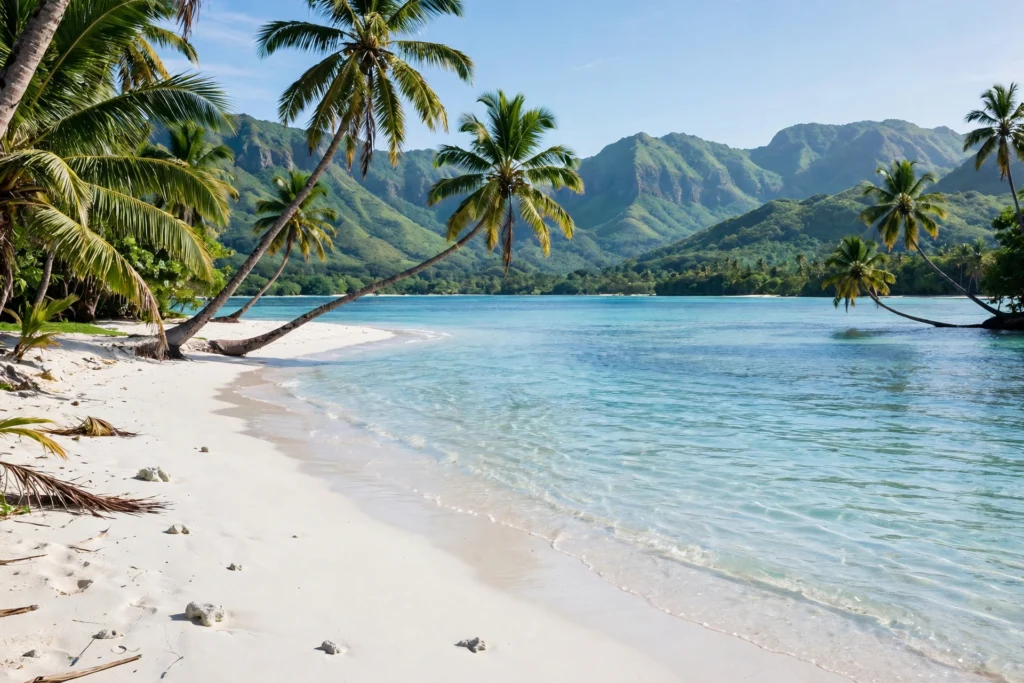
Mauritius has about 160 kilometres of beaches, and they are not all the same. The best beach for you depends on the month, the wind, who you are travelling with and whether you want to swim, snorkel, surf or simply sit in the shade. The reef matters more than the sand: inside the lagoon the water is calm and shallow, outside it the ocean is rough. The west coast beaches are calmest in the dry season, the east coast beaches are best in the summer, and the south coast has the drama but the least swimming. The table below compares the main beaches honestly, and the sections after it give you the detail that a table cannot.
The best beaches at a glance
| Beach | Coast | Swimming | Best months | Good for | Crowds |
|---|---|---|---|---|---|
| Trou aux Biches | North | Excellent, calm | Year-round | Families, snorkelling | Moderate |
| Mont Choisy | North | Excellent, calm | Year-round | Long walks, picnics | Moderate–busy |
| Belle Mare | East | Good, can be rough | Nov–Apr | Long beach, resorts | Moderate |
| Île aux Cerfs | East, offshore | Excellent, shallow | Year-round | Day trip, water sports | Busy |
| Flic en Flac | West | Excellent, calm | May–Oct | Families, sunsets | Moderate |
| Tamarin Bay | West | Fair, surf | May–Sep | Surfing, dolphins | Low |
| Le Morne | South west | Fair, windy | Nov–Apr | Kitesurfing, scenery | Low |
| Blue Bay | South east | Excellent, calm | Year-round | Snorkelling, marine park | Moderate |
| La Cuvette | North | Excellent, calm | Year-round | Quiet swim, locals | Low |
| Gris Gris | South | No swimming | Year-round | Cliffs, views | Low |
Trou aux Biches and Mont Choisy: the north’s best swimming
Trou aux Biches is the best all-round swimming beach in the north. The water is calm and shallow, the sand is white, and the snorkelling off the beach is good, with coral and reef fish close to shore. It is a public beach with shade from casuarina trees, food stalls and a relaxed atmosphere, and it is popular with both visitors and Mauritian families at weekends. Go early in the morning for the calmest water and the fewest people. Mont Choisy is the longest beach in the north, a broad curve of sand that is excellent for long walks and picnics. It is busier at weekends and quieter on weekday mornings, and the shade from the trees makes it one of the most comfortable beaches on a hot day. Both beaches are at their best year-round, because the north coast is sheltered from the worst of the trade winds.
Belle Mare and Île aux Cerfs: the east’s postcard beaches
Belle Mare is the classic east coast beach: kilometres of white sand, a wide lagoon and a line of resorts behind the trees. It is beautiful, and it is best in the summer months when the winds ease and the sea calms. In the dry season the wind can be strong enough to blow sand and make swimming choppy, so check the conditions before you settle in for the day. Île aux Cerfs is the island’s most famous day trip: a small island off the east coast with powdery sand, turquoise shallows and water sports, reached by a ten-minute speedboat from Trou d’Eau Douce. It is lovely, and it is busy. Go early, before the day-trip boats arrive in force, and walk away from the landing area to find quieter sand. The boat trip costs roughly MUR 1,500–2,500 as a planning figure, and the island has restaurants and loungers for hire.
Flic en Flac and Tamarin: the west’s calm and the surf
Flic en Flac is the west coast’s main beach and one of the best family beaches on the island. The water is calm and shallow, the sand is clean, and the beach is long enough to find space even on a busy day. The sunsets here are the best on the island, and the beachfront restaurants and food stalls make it easy to spend a whole day without going anywhere. It is at its best from May to October, when the west coast is calm and the east coast is windy. Tamarin Bay, just south, is a different beach entirely: a surf beach with waves, black sand in places, and a reputation for the dolphins that visit the bay in the early morning. Swim with care here, respect the surf, and do not chase the dolphins — choose an operator that keeps its distance and follows the local guidance. Our Curaçao travel guide covers another island where the calm-water and surf beaches sit side by side, and the same rule applies: pick the beach for the conditions, not the photo.
Blue Bay and the south: snorkelling and drama
Blue Bay, on the south east coast near Mahébourg, is the best snorkelling beach on the island and the centre of the Blue Bay Marine Park. The water is clear and calm, the coral is close to shore, and the marine life is the most varied you will find without a boat. It is a protected area, so follow the rules, do not stand on the coral, and use reef-safe sunscreen. The south coast’s other beaches are for looking rather than swimming. Gris Gris, near Souillac, has dramatic cliffs and crashing waves and is explicitly not a swimming beach — the currents are dangerous and there is no reef to break the swell. It is worth visiting for the views and the wildness, and it is a reminder that the south coast is the island’s untamed side. La Cuvette, a small cove near Grand Baie, is the quiet alternative in the north: a sheltered swimming beach that locals favour and visitors often miss.
Beach safety and etiquette
Swim inside the lagoon, where the reef breaks the swell, and be cautious outside it. Never swim at a beach with warning signs, strong currents or no other swimmers. Stonefish stings are rare but painful, so shuffle your feet on sandy bottoms and wear reef shoes on rocky entries. The tropical sun is strong even on cloudy days: use reef-safe sunscreen, reapply after swimming, and wear a hat and a rash guard if you are in the water for hours. Public beaches in Mauritius are open to everyone, including the stretches in front of resorts, so you can walk the coast freely. Respect that: keep noise down near homes, take your rubbish with you, and do not take coral or shells. If you want more beach inspiration for future trips, our Kauai travel and Cabo travel guides cover two very different kinds of beach holiday, and both are useful comparisons when you are deciding what you want from a beach.
Le Morne, Chamarel and the Wild South West
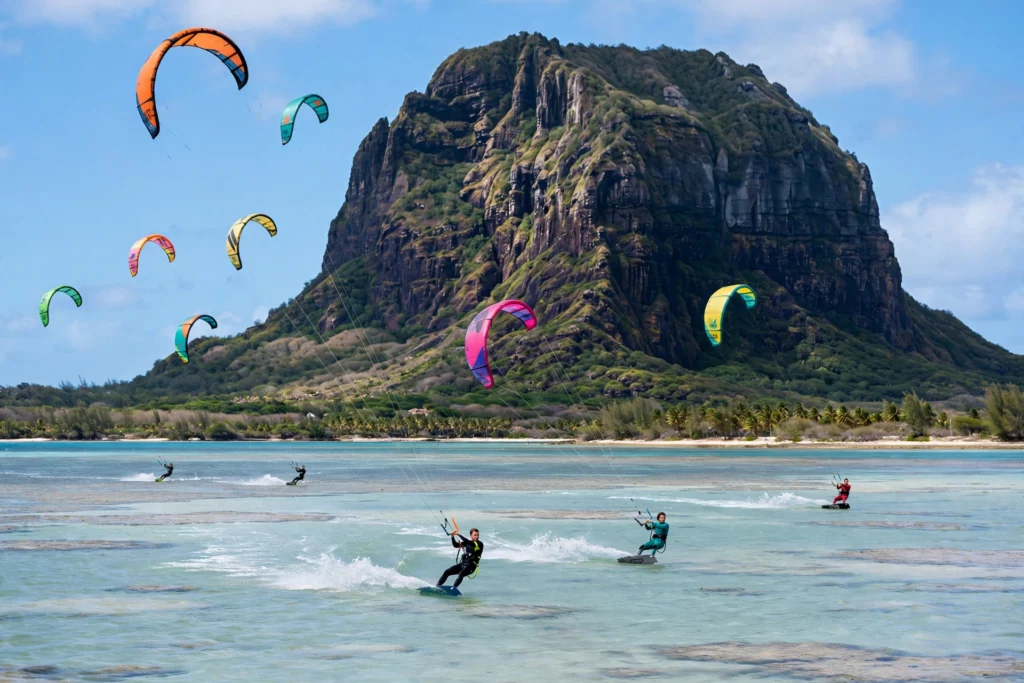
The south west is the part of Mauritius that stays with you. It is where the island is at its most dramatic: a 556-metre basalt mountain rising out of a turquoise lagoon, a waterfall you can see from the road, sand in seven colours, and a coastline that feels like the edge of the world. It is also where the island’s history is heaviest. Le Morne is one of only two UNESCO World Heritage Sites in Mauritius, and it is inscribed not for its beauty but for its human story: in the eighteenth and early nineteenth centuries, enslaved people who escaped from the plantations — known as maroons — sheltered in its caves and on its summit, and the mountain became a symbol of the fight for freedom. Visit it with that story in mind, and the place means more than a photograph.
Le Morne Brabant: the mountain and the lagoon
Le Morne Brabant is a basalt monolith on a peninsula in the far south west, rising 556 metres above a lagoon so shallow and clear that it changes colour with the sun. The summit hike takes three to four hours and is a proper climb, steep and exposed in places, and it should be done with a guide: the upper sections are technical, the rock is loose, and the heat is serious. The reward is a 360-degree view over the lagoon, the reef and the south coast that is the best viewpoint on the island. If you do not want the full climb, the walk to the lower slopes and the beach below still gives you the scale of the place, and the lagoon beach is one of the most beautiful on the island. The peninsula is also one of the best kitesurfing spots in the world: the lagoon is shallow and flat, the trade winds are reliable, and the backdrop is the mountain itself. The famous underwater waterfall illusion — a pattern of sand and silt on the ocean floor that looks like a waterfall pouring off the reef — is visible from the air, and helicopter and seaplane flights over it are the way to see it properly.
Allow a full day for Le Morne. Start early, before the heat, and combine the hike or the beach with the viewpoints along the coast road. The village of Le Morne has a strong Creole community, and the International Slave Route Monument at the foot of the mountain is a quiet, powerful place to visit. Dress modestly here and at the monument: this is a place of memory, not just a viewpoint. For the official record of the site, UNESCO lists Le Morne Cultural Landscape, inscribed in 2008, alongside Aapravasi Ghat, inscribed in 2006, as the island’s two World Heritage Sites — see the UNESCO page for Mauritius for the full listing.
Chamarel: the seven coloured earths and the waterfall
Chamarel is a village in the hills above Le Morne, and it holds two of the island’s most visited natural sights. The Seven Coloured Earths are sand dunes in seven distinct colours — red, brown, violet, green, blue, purple and yellow — that sit side by side without blending, a geological curiosity caused by the different minerals in the volcanic soil. The colours are most vivid under an overcast sky, when direct sun does not wash them out, so a cloudy morning is actually the best time to visit. Entry costs roughly 300 rupees (about $7) as a planning figure. Next to it, the Chamarel Waterfall drops about 100 metres into a forested gorge, and it is at its fullest in the wet season. The village also has a rum distillery where you can taste the island’s sugarcane rum and learn how it is made, and the drive up through the hills is one of the prettiest on the island.
Chamarel is often done as a rushed stop on a tour, and that is a waste. Give it a morning: the coloured earths, the waterfall viewpoint, the distillery and a slow drive back through the hills. The area is also a good place to see the island’s endemic birds, and the forest around the village is worth a short walk. If you are staying on the west coast, Chamarel and Le Morne make a natural pair for a single full day, and that is how the itinerary in this guide uses them.
The coast road: Macondé, Baie du Cap and the wild south
The coast road from Le Morne east to Baie du Cap and Souillac is the most scenic drive on the island, and it is the best way to see the south coast’s wild side. Stop at the Macondé viewpoint, a curve in the road with a view over the bay that is one of the most photographed spots in Mauritius. Continue to Baie du Cap, a sleepy fishing village where the road runs between the mountains and the sea, and on to Gris Gris, where the waves crash against the cliffs and there is no reef to calm them. The Rochester Falls, a short drive inland, are a wide basalt waterfall that is at its best after rain. This is the Mauritius that most resort visitors never see: fishing boats, roadside fruit stalls, Creole villages and a coastline that feels untamed. Drive it slowly, stop often, and allow a full day if you want to do it properly. The road is narrow in places and the viewpoints have limited parking, so go early and be patient.
Black River Gorges and the Green Interior
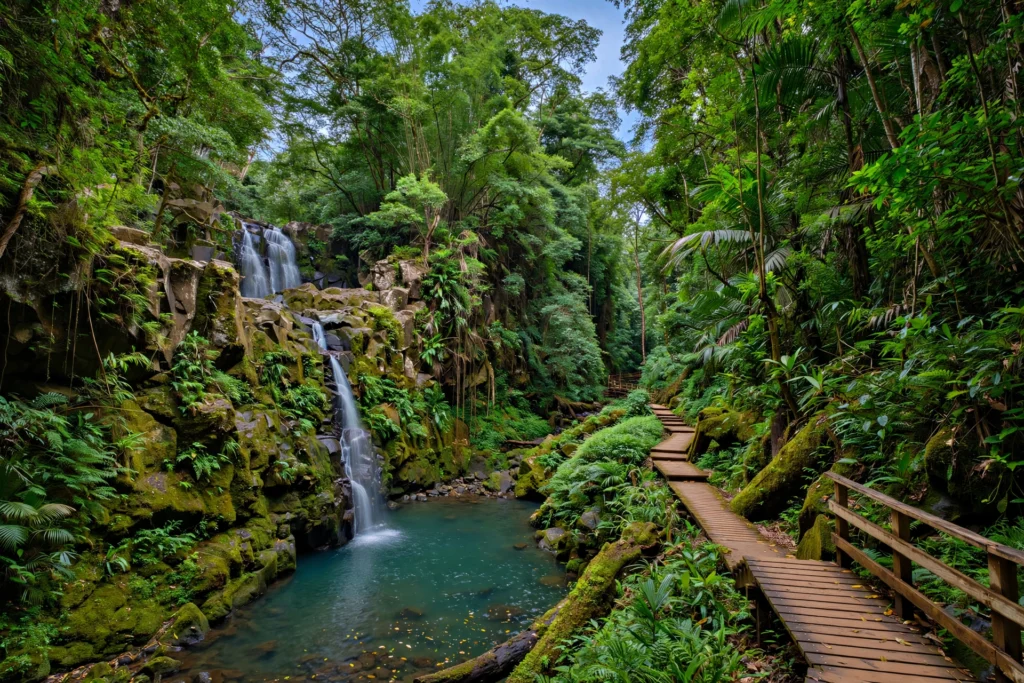
If the beaches are the reason most people come to Mauritius, the interior is the reason many of them come back. The island’s green heart is Black River Gorges National Park, the largest protected forest in Mauritius at 6,574 hectares, and the centre of one of the world’s great conservation success stories. The park protects the last substantial area of native forest on the island, and it is home to birds that exist nowhere else on earth. It is also free to enter, has more than 60 kilometres of hiking trails, and is within an hour’s drive of the west coast beaches — which makes it the easiest piece of wild nature to reach on any Indian Ocean island.
Hiking in Black River Gorges National Park
The park’s trails range from short viewpoints to full-day hikes, and the best way to use them is to pick one or two and do them properly rather than trying to see everything. The Black River Peak trail climbs to the highest point in Mauritius at 828 metres, and on a clear day the view runs from the forested gorge to the lagoon. The Alexandra Falls viewpoint is a short walk from the road and gives you the park’s scale in a few minutes: a waterfall dropping into a deep, forested valley. The trails around the Pétrin information centre are the gentlest, with boardwalks and signposted loops through the forest, and they are the best choice if you are hiking with children or want a short walk. The park’s birdlife is the real draw: the Mauritius kestrel, once the rarest bird in the world, now hunts over the gorge; the pink pigeon and the echo parakeet, both brought back from the edge of extinction, can be seen in the forest; and the dawn chorus is worth an early start.
Go early in the morning, when the birds are active and the heat is manageable, and take water, sun protection and proper shoes. The trails are not paved, they are slippery after rain, and the weather in the interior changes fast — a clear morning can turn into a downpour by midday, especially in the wet season. A guide is worth hiring for the longer trails: the forest is dense, the signposting is limited, and a good guide will find you birds you would walk straight past. The park is free, but the knowledge is not, and the money is well spent. If you like hiking on holiday, our travel to Sedona guide covers a very different kind of desert hiking, and the same rules apply: start early, carry water, and respect the heat.
Grand Bassin, the tea route and the central plateau
The interior is not just the national park. Grand Bassin, a crater lake in the hills, is the most sacred Hindu site in Mauritius and the focus of the Maha Shivaratri pilgrimage. The lake is ringed by temples and a towering statue of Shiva, and it is a peaceful, beautiful place to visit outside festival time. Dress modestly, remove your shoes where required, and do not photograph people at prayer without asking. The tea route runs through the central plateau, where tea has been grown since the nineteenth century: the plantations around Bois Chéri are the best known, and a visit combines a factory tour, a tasting and a walk through the fields. The route also passes the island’s rum distilleries and the colonial-era houses that tell the story of the sugar economy.
The central plateau towns — Curepipe, Vacoas and Quatre Bornes — are ordinary Mauritian towns rather than tourist sights, but they are worth a stop for the market at Quatre Bornes and the cooler air. The plateau sits several degrees cooler than the coast and catches more rain, so take a layer if you are heading up for the day. The drive from the coast to the plateau is one of the best on the island: the road climbs through sugar cane and forest, and the view back to the lagoon opens up behind you. A day in the interior, combining the national park, Grand Bassin and the tea route, is the best single day you can spend away from the beach in Mauritius, and it is the day in the itinerary below that most first-time visitors say they would not have planned on their own.
Tamarin Falls and the island’s waterfalls
Mauritius has more waterfalls than most visitors expect, and the best of them are in the interior. Tamarin Falls, also known as the Seven Cascades, is a series of waterfalls and pools in a forested valley near the village of Tamarin, and it is one of the best canyoning and hiking spots on the island. The full descent involves abseiling and swimming and needs a guide, but the viewpoints from above are accessible on foot and give you the scale of the place. The Chamarel Waterfall, the Alexandra Falls in the national park, and the Rochester Falls in the south are all worth a stop, and they are at their fullest in the wet season from December to April. Visit waterfalls after rain for the best flow, but take care on the paths, which are slippery when wet, and never swim in a pool below a waterfall unless local guidance says it is safe.
Port Louis and the Culture of Mauritius
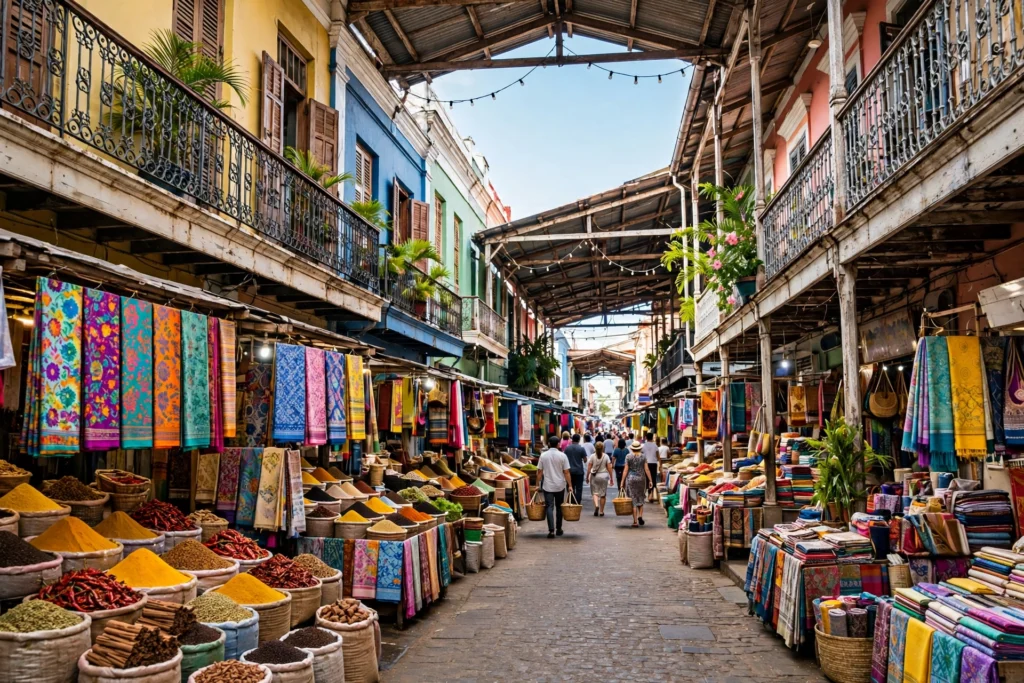
Port Louis is the capital of Mauritius, and it is the one place on the island that feels like a real city rather than a resort. It is busy, noisy, hot and fascinating, and it is the best place to understand what Mauritius actually is. The city sits in a natural harbour ringed by mountains, and its centre is a mix of colonial buildings, modern towers, mosques, temples and churches, all within a few streets of each other. Most visitors see it as a day trip, and a day is about right: a morning in the market and the old town, lunch from a street vendor, and an afternoon at the waterfront and Aapravasi Ghat.
The Central Market and the old town
The Port Louis Central Market is the heart of the city and the best place to start. The market has been trading since the nineteenth century, and it is a maze of fruit and vegetable stalls, spice merchants, textile sellers and food vendors. Go in the morning, when the produce is freshest and the market is at its busiest, and eat as you go: dholl puri, samoussas, fresh fruit and sugar cane juice are all sold by vendors inside and around the market. Bargain politely for textiles and souvenirs, but do not haggle over food. The market is crowded and the lanes are narrow, so keep your bag in front of you, watch for pickpockets, and carry small notes. The streets around the market hold the city’s history: the Jummah Mosque, one of the oldest mosques in the region; the St Louis Cathedral; the Chinese pagodas of Chinatown; and the colonial-era buildings of the old town. Chinatown is at its liveliest around Chinese New Year, when the streets fill with dragon dances and firecrackers.
Aapravasi Ghat and the waterfront
Aapravasi Ghat, on the waterfront near the Caudan complex, is one of the most important historic sites in Mauritius and one of its two UNESCO World Heritage Sites. It was the immigration depot where almost half a million indentured labourers from India arrived between 1834 and 1920, the first site of what the British called the “great experiment” in free labour after the abolition of slavery. The surviving buildings and the fourteen symbolic steps that every arrival had to climb are a quiet, powerful place, and the small museum explains the system that moved more than two million people around the world. Visit it before you go to the market or the waterfront shops, because it changes how you see the rest of the city. The Caudan Waterfront, next door, is the modern side of Port Louis: shops, restaurants and the Blue Penny Museum, which holds the famous early Mauritian postage stamps. It is a pleasant place to walk in the late afternoon, when the heat eases and the harbour lights come on.
Food, music and festivals
Mauritian culture is best understood through its food and its music. The food is a blend of Indian, Creole, Chinese and French cooking, and the best of it is cheap: dholl puri from a street vendor, a Creole fish curry in a beach restaurant, noodles in Chinatown, and a French pastry from a bakery in Curepipe. The music is séga, the rhythmic dance music of the Creole community, traditionally danced around a beach bonfire to the beat of the ravanne drum. Séga was inscribed by UNESCO as intangible cultural heritage, and you will hear it at beach restaurants and hotels across the island, especially at weekends. The festivals run all year — Maha Shivaratri, Cavadee, Chinese New Year, Eid, Diwali, Christmas and Independence Day — and they are the best windows into the island’s communities. If you are in Mauritius during a festival, go and watch, dress modestly, ask before photographing people, and accept an invitation if one is offered: Mauritian hospitality is genuine, and a festival is the easiest way to experience it. For a sense of how food and culture shape other island trips, our Morocco travel guide covers a destination where the markets and the food are just as central to the trip.
The Best Things to Do in Mauritius Beyond the Beach
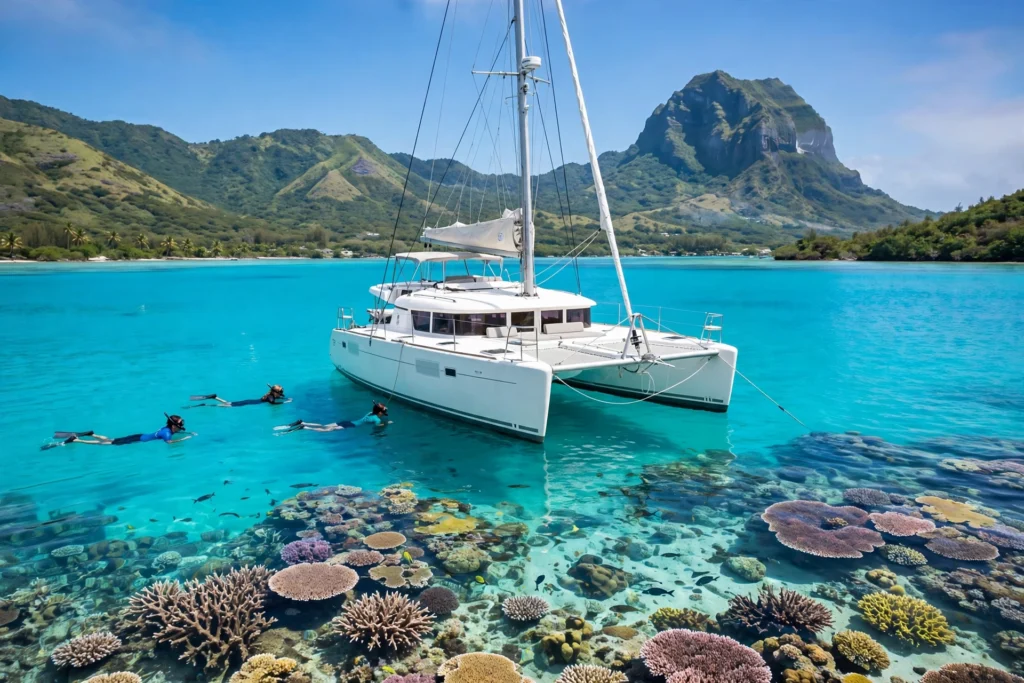
The beach is the start of a Mauritius trip, not the whole of it. The island’s best experiences are the ones that get you off the sand: into the water, into the forest, into the markets and onto the road. The list below is organised by the kind of day you want, and every item on it is something you can actually do on a normal holiday without specialist skills or a large budget. Pick three or four for a week-long trip and leave the rest for a second visit.
On the water: diving, snorkelling, sailing and dolphins
Mauritius is surrounded by the third largest coral reef in the world, and the diving and snorkelling are the best reason to get in the water. The visibility is best from September to November, when the seas are calm and the rain has not washed sediment into the lagoon, but the diving is good year-round. The west coast has the calmest conditions in the dry season, and the dive sites around Flic en Flac and Trou aux Biches suit beginners and experienced divers alike. Blue Bay Marine Park is the best snorkelling from shore, with coral and reef fish a short swim from the beach. A full-day catamaran cruise along the west or north coast, with snorkelling stops, a barbecue lunch and a swim at a quiet beach, is one of the best-value days on the island and suits people who do not dive.
Dolphin watching in Tamarin Bay is popular, and it needs care. The dolphins visit the bay most mornings, and many boats go out to see them. Choose an operator that keeps its distance, limits the number of swimmers in the water, and does not chase the animals, and skip any trip that promises you will touch or ride with them. The same rule applies to whale watching in the dry season, when humpback whales pass the south west coast: pick an operator that follows the guidelines and keeps the boats back. Deep-sea fishing is best from October to April, and the boats leave from the north and west coasts. If you have never dived, a resort introductory dive in the lagoon is a gentle way to start, and the warm water makes it comfortable.
On land: hiking, cycling, horse riding and golf
The hiking is covered in the national park section, but the island offers more. The trails around Le Morne and the Moka Mountains give you mountain views without a full day in the forest, and the coastal walks around the south coast are the best way to see the wild side of the island. Cycling is growing in popularity, with road cycling on the quieter south coast roads and mountain biking in the forests of the interior. Horse riding on the beach at sunrise is offered in several places, and it is a memorable way to start a day. Golf is a serious draw: Mauritius has several championship courses, including some of the oldest in the southern hemisphere, and the combination of a morning round and an afternoon on the beach is one of the island’s classic days. None of these needs specialist fitness: the hiking trails have options for every level, the cycling is flat on the coast, and the golf courses welcome visitors.
Culture and craft: rum, tea, gardens and villages
The rum distilleries are one of the island’s best cultural experiences. Mauritius has made sugarcane rum for centuries, and the distilleries at Chamarel and elsewhere offer tastings and tours that explain the process from cane field to bottle. The tea estates of the central plateau offer a similar experience: a factory tour, a tasting and a walk through the fields, with the colonial-era houses as a backdrop. The botanical garden at Pamplemousses, founded in 1770, is one of the oldest in the southern hemisphere, with giant water lilies, a spice garden and towering royal palms — allow a couple of hours and go in the morning before the heat. The fishing villages of the south and west coasts — Mahébourg, Baie du Cap, Tamarin — are worth a slow drive and a stop for lunch: they are where Mauritius feels most like itself. And the offshore islands are worth a day: Île aux Aigrettes for the tortoises and the pink pigeons, the northern islands for snorkelling and empty beaches, and Rodrigues, the smaller sister island, for a completely different pace. Rodrigues is under 20 kilometres long, with one real town and a laid-back Creole atmosphere, and it is the best escape in Mauritius if you have an extra few days and want to get away from it all.
For families: what works with children
Mauritius is one of the easiest tropical islands to visit with children, because the water is calm, the drives are short and the food is familiar. The west coast beaches around Flic en Flac and Wolmar are the best for young children: shallow, calm and sandy, with shade and food nearby. The botanical garden, the tortoises at La Vanille and on Île aux Aigrettes, the catamaran cruises and the glass-bottom boats all work well with children. The national park has short, gentle trails that suit older children, and the markets are an adventure in themselves. Plan around the heat: do the active things in the morning, rest in the middle of the day, and swim in the late afternoon. Take reef shoes for rocky entries, sun protection for the whole family, and insect repellent for the evenings. Our best places to travel with a baby guide covers the practical side of travelling with very young children, and the same packing and pacing advice applies here.
A 7-Day Mauritius Travel Itinerary
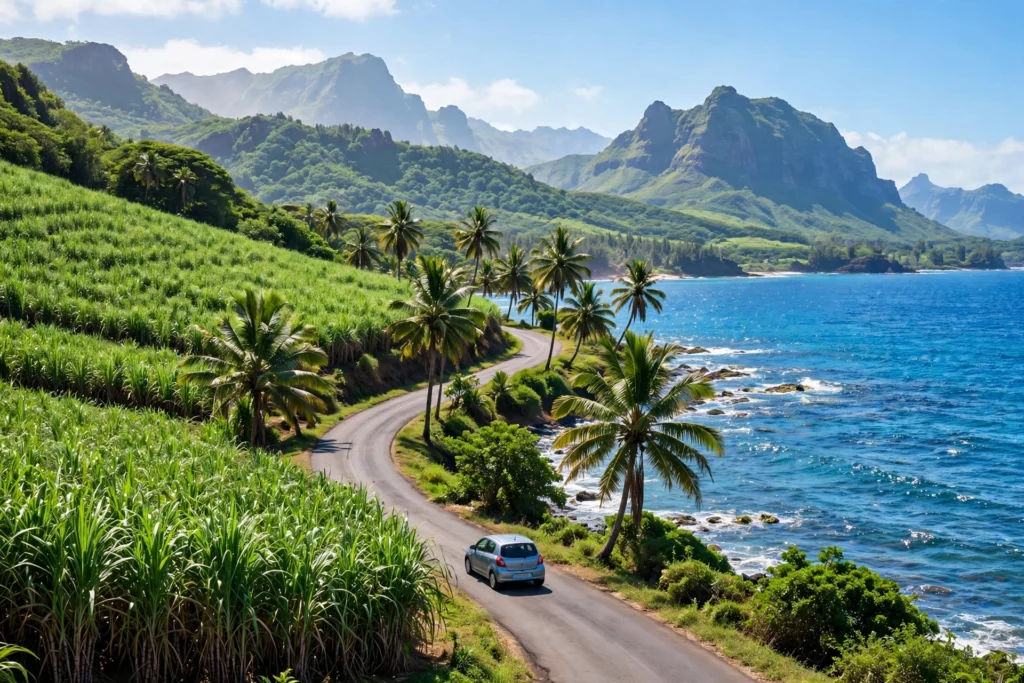
Seven days is the sweet spot for a first trip to Mauritius: long enough to see the island properly, short enough to keep the pace relaxed. This itinerary is built around two bases — four nights on the west coast and three nights in the north — so you see both sides of the island without packing and unpacking every day. It balances beach time, the south west, the interior and the capital, and it leaves the middle of each day free for swimming or resting. If you have ten days, add two nights in the south or a trip to Rodrigues. If you have five days, cut the north coast section and stay on the west coast for the whole trip. The daily budgets are planning figures per person, excluding international flights, and they assume mid-range choices.
The 7-day plan at a glance
| Day | Plan | Base | Budget per person* |
|---|---|---|---|
| Day 1 | Arrive at MRU, transfer to Flic en Flac, sunset swim | West coast | $150–$250 |
| Day 2 | Flic en Flac beach, snorkelling, Tamarin Bay | West coast | $120–$200 |
| Day 3 | Le Morne and Chamarel: hike or beach, coloured earths, waterfall | West coast | $150–$250 |
| Day 4 | Black River Gorges, Grand Bassin, tea route | West coast | $120–$200 |
| Day 5 | Drive north via Port Louis market and Aapravasi Ghat, Grand Baie | North coast | $150–$250 |
| Day 6 | Île aux Cerfs day trip, Pamplemousses Gardens | North coast | $180–$280 |
| Day 7 | Trou aux Biches beach morning, transfer to MRU, fly home | North coast | $120–$200 |
| Total | 7 days, two bases | Roughly $1,000–$1,600 |
*Planning figures per person for a mid-range trip, excluding international flights. The total assumes two people sharing a room and a mix of local and restaurant meals.
Day 1: arrive and settle on the west coast
Land at Sir Seewoosagur Ramgoolam International Airport, clear immigration with your passport and your travel form QR code, and take a pre-booked transfer to Flic en Flac on the west coast. The drive takes about an hour. Settle in, walk to the beach for a first swim, and watch the sunset — the west coast sunsets are the best on the island, and the first one sets the tone for the trip. Eat at a beach restaurant or a food stall, get an early night, and let the jet lag wear off. Do not plan anything ambitious on arrival day: you have flown a long way, and the island will still be there tomorrow.
Day 2: the west coast beaches and Tamarin Bay
Spend the morning at Flic en Flac beach: swim, snorkel off the beach, and walk the length of the sand. In the afternoon, drive south to Tamarin Bay for the surf and the fishing village atmosphere, and stop at the viewpoints along the coast road. If you want to see the dolphins, book a morning boat trip for the following day rather than today — you will be fresher and the light is better. Eat dinner at a local restaurant in Flic en Flac or Wolmar, and try the Creole fish dishes.
Day 3: Le Morne and Chamarel
Drive south early to Le Morne. If you are hiking, start the climb with a guide before the heat builds; if you are not, walk the beach, visit the International Slave Route Monument, and watch the kitesurfers on the lagoon. In the afternoon, drive up to Chamarel for the Seven Coloured Earths and the waterfall, and stop at the rum distillery for a tasting. Drive back along the coast road via Macondé viewpoint and Baie du Cap. This is the longest day of the trip, so take water, sun protection and snacks, and allow the full day.
Day 4: the interior — gorges, Grand Bassin and tea
Drive inland to Black River Gorges National Park. Walk one of the trails from the Pétrin centre in the morning, when the birds are active, and stop at the Alexandra Falls viewpoint. In the afternoon, visit Grand Bassin, the sacred crater lake, and then the tea route around Bois Chéri for a factory tour and a tasting. Drive back to the coast for a swim and dinner. This is the day that surprises most first-time visitors, because it shows a Mauritius that has nothing to do with the beach.
Day 5: Port Louis and the move north
Check out and drive north to Port Louis, stopping at the Central Market for the morning’s trading and a street food lunch. Visit Aapravasi Ghat on the waterfront and walk the Caudan complex in the afternoon. Then drive on to Grand Baie in the north, check in, and spend the evening in the town: the restaurants, the bars and the bay. If you want a structured way to plan the move between bases, our travel itinerary template gives you a simple format for laying out days, bases and transfers.
Day 6: Île aux Cerfs and Pamplemousses
Take an early boat from Trou d’Eau Douce to Île aux Cerfs for the morning, before the day-trip crowds arrive. Swim, snorkel and walk to the quieter end of the island, then return for lunch. In the afternoon, visit the Pamplemousses Botanical Garden, founded in 1770, and allow a couple of hours for the giant water lilies, the spice garden and the royal palms. Spend the evening in Grand Baie, and try a different restaurant from the night before.
Day 7: a last swim and the flight home
Spend the morning at Trou aux Biches, the best swimming beach in the north, and have a slow lunch in Grand Baie. Leave for the airport with plenty of time: the drive from the north coast to MRU takes about ninety minutes in normal traffic, and longer at peak times. Return the hire car, check in, and fly home. If your flight is in the evening, you have time for a last visit to the market at Mahébourg on the way to the airport, which is a fitting end to the trip.
Mauritius Travel Safety, Health and Practical Tips
Mauritius is a safe and welcoming destination for most travellers, and the risks are the ordinary ones of any tropical island: petty theft in crowded places, strong sun, rough seas outside the reef, mosquitoes at dusk and the seasonal cyclone risk. None of these should stop you travelling, and all of them are manageable with a little care. This section gives you the facts you need, including the official advice you should check before you travel.
Is Mauritius safe?
The US State Department rates Mauritius Level 2: Exercise Increased Caution, because of crime. The advisory, issued on 8 December 2025, says to exercise increased caution in Mauritius due to crime, and notes that most crimes against foreigners are crimes of opportunity, including pickpocketing, purse snatchings and petty thefts. Petty crime happens in crowded outdoor shopping areas, on beaches and near ATMs, and it is most common in tourist areas such as Grand Baie, Port Louis and Flic en Flac. The practical advice is simple: keep valuables in your hotel safe, carry only what you need, keep your bag in front of you in markets, do not leave belongings unattended on the beach, and avoid walking alone on empty beaches after dark. Violent crime against visitors is rare, but it happens, and the advisory also notes break-ins and serious crimes. Read the full advisory on the US State Department’s Mauritius page before you travel, and check it again close to your departure date, because advisory levels and dates change. The UK and Canada currently rate Mauritius lower than the US does, at their normal-precautions level, which is a useful reminder that Level 2 is a caution, not a warning against travel.
The sea is the other safety issue. Swim inside the lagoon, where the reef breaks the swell, and never swim where there are warning signs, strong currents or no other swimmers. The south coast beaches, especially Gris Gris, are dangerous for swimming and should be visited for the views only. Stonefish stings are rare but painful, so shuffle your feet on sandy bottoms and wear reef shoes on rocky entries. If you are caught in a current, do not fight it: float, signal for help and swim parallel to the shore. The emergency numbers are 112 and 999. Drug offences carry severe penalties in Mauritius, and the law is enforced strictly.
Health: vaccinations, mosquitoes and the sun
Check with your doctor or a travel clinic well before you travel about routine vaccinations and any destination-specific advice for Mauritius. There are no compulsory vaccinations for most visitors arriving from the USA, but routine immunisations should be up to date, and your doctor can advise on anything else for your health and your itinerary. Dengue fever is present in Mauritius and is spread by mosquitoes, so use insect repellent, especially at dawn and dusk, wear long sleeves in the evening, and sleep under a net or in an air-conditioned room if mosquitoes are a problem. The tropical sun is strong even on cloudy days: use reef-safe sunscreen, reapply after swimming, wear a hat, and drink more water than you think you need. Tap water is generally treated, but many visitors prefer bottled water, and it is cheap and widely available. Food from street vendors is generally safe if it is cooked fresh and served hot; eat where the locals eat and the turnover is high. Take a basic first-aid kit, any prescription medication in its original packaging with a copy of the prescription, and travel insurance that covers medical care and evacuation.
Cyclones and weather disruption
The cyclone season runs from November to April, with the official South-West Indian Ocean season from 15 November to 15 April and the peak risk in January through March. Direct hits on Mauritius are rare, but nearby cyclones bring heavy rain, strong winds, rough seas and cancelled flights and boat trips. If you travel in these months, buy travel insurance that covers weather disruption, keep your plans flexible, build a spare day into your itinerary, and check the forecast every morning. If a cyclone warning is issued while you are on the island, follow the instructions of the local authorities and your hotel: stay indoors during the warning, do not go to the beach, and do not try to travel. The Mauritius Meteorological Services issues the official warnings, and your hotel will have the latest information. Do not plan a trip in January to March and expect dry weather: the island is at its wettest then, and the rain is part of the season.
Practical tips: money, language, SIM cards and packing
English and French are both official languages, and Mauritian Creole is the everyday language. You will get by easily in English in hotels, restaurants and tourist areas, and a few words of French are appreciated and often useful in shops and markets. The currency is the Mauritian rupee, cards are accepted in most hotels and larger restaurants, and cash is essential for markets, buses, taxis and street food. ATMs are widely available. A local SIM card or an eSIM is cheap and useful for maps, taxis and checking the weather, and you can buy one at the airport or in town. Wi-Fi is available in most hotels and cafés, but it is slower than you may be used to, so download offline maps before you travel.
Pack light layers for the interior and the evenings, a rain jacket if you are travelling in the wet season, reef shoes for rocky beaches, a rash guard for long swims, and a dry bag for boat trips. For a full packing list, our travel packing checklist covers the documents and essentials. Keep your passport, your travel form QR code, your insurance details and a copy of your accommodation bookings in your carry-on and on your phone. And carry a photocopy of your passport separately from the original, in case the original is lost or stolen. The Tourism Authority of Mauritius, which licenses hotels, guest houses and tourist enterprises on the island, publishes guidance on the types of licensed accommodation — see the Tourism Authority overview if you want to check what a licensed property means before you book.
What to Eat in Mauritius
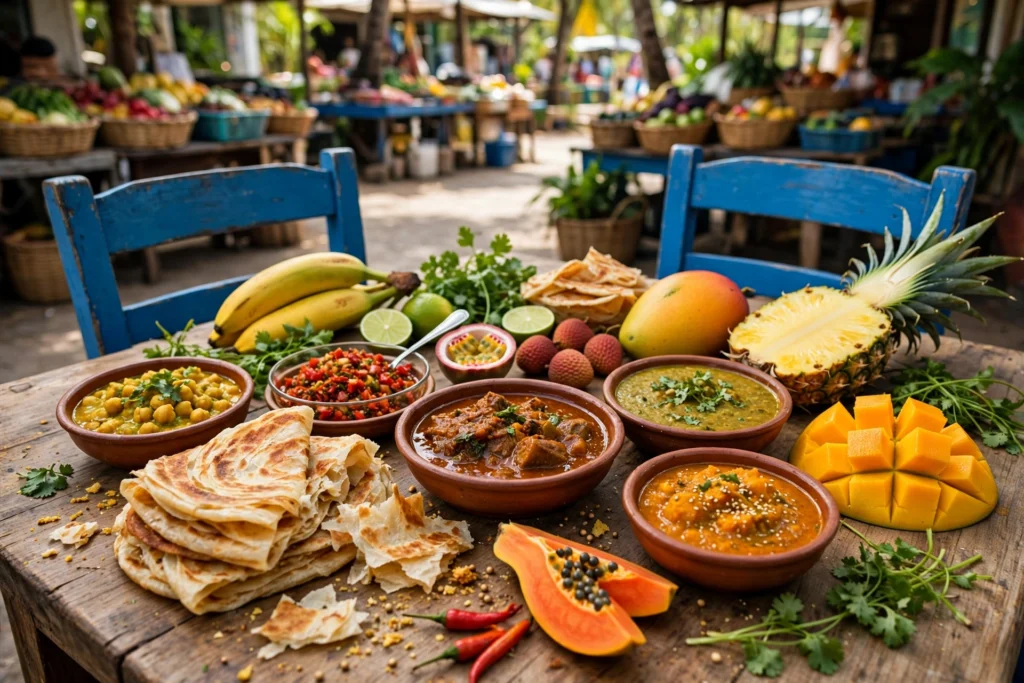
Mauritian food is one of the best reasons to visit the island, and it is also one of the cheapest pleasures on the trip. The cuisine is a blend of Indian, Creole, Chinese and French cooking, and it is served everywhere from street stalls to resort restaurants. The rule is simple: eat where the locals eat, eat what is cooked fresh in front of you, and do not judge a place by its appearance. Some of the best food on the island is sold from a van, a market stall or a tiny shop with plastic chairs.
The dishes to try first
Dholl puri is the island’s signature street food: a soft flatbread filled with ground yellow split peas, served with bean curry, chutney and chilli. It is sold everywhere, it costs very little, and it is the first thing to eat in Mauritius. Farata, a flaky flatbread related to the Indian paratha, is served with curries and is a breakfast staple. Rougaille is a Creole tomato-based stew, usually made with fish, chicken or sausage, and served with rice. Vindaye is a mustard and turmeric pickle, often made with fish, and it is the sharp, sour counterpoint to the island’s rich curries. Mine frite, fried noodles with vegetables, egg and meat or seafood, is the Chinese-Mauritian classic, and boulettes, steamed dumplings, are sold from street stalls and in Chinatown. Gateaux piments, chilli cakes made from split peas, are the island’s favourite snack, sold hot from vendors on the street. For dessert, try the tropical fruit: mangoes, lychees, pineapples and papaya are all grown on the island, and the fruit stalls in the markets sell them at prices that make you wonder why you ever bought fruit at home.
Seafood is the island’s other strength. The catch of the day — often red snapper, tuna or dorado — is grilled simply and served with rice and salad, and it is the best value meal in any beach restaurant. Octopus curry and fish vindaye are Creole classics. Rum is the island’s drink: sugarcane rum, often flavoured with vanilla, coffee or local fruit, is made at distilleries across the island, and a tasting at Chamarel or another distillery is worth an afternoon. Phoenix, the local beer, is the standard accompaniment to a beach lunch, and the island’s tea, grown on the central plateau, is worth trying in the morning. Alouda, a sweet milk drink with basil seeds and ice cream, is sold by street vendors and is the island’s most refreshing drink on a hot day.
Where to eat
The best food in Mauritius is rarely in the most expensive restaurants. Street vendors and market stalls give you the island’s cooking at its freshest and cheapest, and the turnover is so high that the food is always fresh. Local restaurants, often called “snacks” or “tabagies”, serve Creole and Indian dishes at low prices, and they are where Mauritians eat lunch. Beach restaurants serve grilled fish and seafood with a view, and they are the best choice for a long, slow lunch. Resort restaurants are the most expensive and the most predictable, and they are worth it for a special dinner but not for every meal. If you are staying in a self-catering apartment, the markets and supermarkets make it easy to cook: buy fish from the market in the morning, fruit from a stall, and bread from a bakery, and you will eat well for very little. For more on how food shapes a trip, our Rio de Janeiro travel guide covers another destination where the street food is the best food, and the same rule applies: follow the locals.
Eating well on a budget
Eat breakfast from a bakery, lunch from a street vendor or a market stall, and save restaurant dinners for two or three nights. A dholl puri lunch costs a few dollars, a market lunch costs little more, and a beach restaurant lunch is a moderate spend. Drink the local beer and rum rather than imported drinks, eat the catch of the day rather than imported meat, and buy fruit from the market rather than the hotel shop. If you are travelling with children, the flatbreads, noodles and grilled fish are all easy wins, and most restaurants will make a plain version of any dish on request. Tell your server if you cannot eat spicy food: Mauritian cooking can be hot, and the chilli is served on the side, so you can control it yourself.
Mistakes to Avoid on a Mauritius Trip
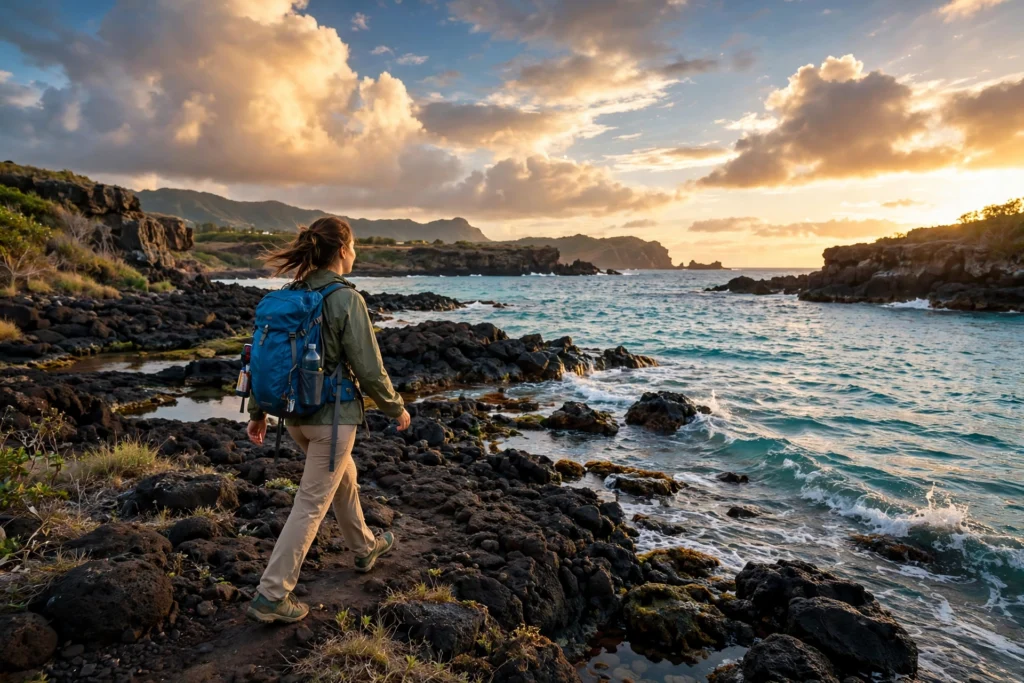
Most Mauritius trips go well, and the mistakes that spoil them are the same ones every time. They are all avoidable, and they all come down to planning: the wrong month, the wrong coast, the wrong base, or the wrong expectations. This section names them plainly so you can skip them.
The ten mistakes that spoil a Mauritius trip
The first mistake is booking the wet season and expecting dry weather. November to April is hot, humid and wet, with a real cyclone risk, and no amount of hoping changes that. If you travel then, go for the festivals, the green island and the low prices, and accept the rain as part of the trip. The second is staying on the wrong coast for your month: the east coast in the dry season is windy, and the west coast in the summer is hot and still. Match the coast to the season using the tables in this guide. The third is staying in one resort for the whole trip and never leaving it. Mauritius is small and the island is the point: hire a car for a few days, visit the interior, and go to Port Louis.
The fourth is underestimating the driving. The island is small but the roads are slow, the driving is on the left, and a journey that looks like thirty minutes on the map can take an hour. Allow more time than you think you need, and do not plan three distant stops in one day. The fifth is skipping travel insurance, especially in cyclone season. A cancelled flight, a hospital visit or a medical evacuation is expensive, and insurance is cheap by comparison. The sixth is eating only at the resort. The best food on the island is at the markets, the street vendors and the local restaurants, and it costs a fraction of resort prices.
The seventh is swimming outside the reef or at a beach with warning signs. The lagoon is safe, the open ocean is not, and the south coast beaches are for looking, not swimming. The eighth is leaving your belongings unattended on the beach. Petty theft is the most common crime against visitors, and a bag left on the sand is an invitation. The ninth is trying to do everything in five days. Mauritius rewards a slow pace: seven days is the minimum for a first visit that feels complete, and ten days is better. The tenth is forgetting the interior. The beaches are the reason you come, but the national park, Grand Bassin, the tea route and Port Louis are the reasons you remember the trip. Build them into your plan from the start, and do not leave them to a spare afternoon that never happens.
Frequently Asked Questions About Mauritius Travel
Is Mauritius worth visiting?
Yes. Mauritius combines a tropical beach holiday, a wildlife and hiking trip, and a cultural journey in an island small enough to cross in about ninety minutes. The lagoon and the reef are world-class, the interior has a national park with endemic birds, the food is excellent and cheap, and the culture is one of the most interesting in the Indian Ocean. It is worth visiting for seven to ten days, and it rewards travellers who leave the resort and see the island.
What is the best time to visit Mauritius?
May to October is the most reliable window, with dry weather, temperatures of 22–26°C and calm seas on the west coast. May and October are often the best overall months, balancing warmth, dryness and price. September to November has the best diving visibility. November to April is warmer and wetter, with a cyclone risk, and December to February is the warmest and the wettest. If you want the best combination of weather and value, pick May or October.
How many days do I need in Mauritius?
Seven days is the sweet spot for a first visit: enough for the beaches, the south west, the interior and the capital at a relaxed pace. Five days works if you stay in one region and accept that you will see less. Ten days lets you add Rodrigues or slow down and spend more time in the south. Less than five days is too short for an island with this much to see, especially after a long flight.
Do US citizens need a visa for Mauritius?
No. US citizens enter visa-free for tourism, with the standard grant being up to 90 days per visit, subject to an overall ceiling of 180 days in a calendar year for tourism, and the exact stay is stamped in your passport on arrival. Your passport should be valid for at least six months beyond your stay, and you should be able to show a return ticket and proof of accommodation. All arriving travellers must also complete the free All-in-One Travel Digital Form before arrival. Confirm the current requirements on the official Passport and Immigration Office portal before you book.
Is Mauritius safe for tourists?
Mauritius is generally safe, and most visits are trouble-free. The US State Department rates the island Level 2: Exercise Increased Caution, issued on 8 December 2025, because of crime — mainly pickpocketing, purse snatching and petty theft in crowded places, on beaches and near ATMs. Keep valuables in your hotel safe, keep your bag in front of you in markets, do not leave belongings unattended on the beach, and avoid walking alone on empty beaches after dark. Swim inside the lagoon and never at a beach with warning signs. Read the full advisory before you travel.
What is the currency in Mauritius and can I use cards?
The currency is the Mauritian rupee (MUR), and a useful planning rate is roughly 45 rupees to one US dollar, though the rate moves. Cards are accepted at hotels, larger restaurants and supermarkets, but cash is essential at markets, street food stalls, small restaurants, buses and taxis. ATMs are widely available in towns and tourist areas. Carry small notes for the first day, and do not change money at the airport if you can avoid it, because the rate is usually worse.
Is Mauritius expensive?
It can be either. A budget traveller in a guesthouse, eating street food and using buses, can manage on roughly $60–$120 per person per day. A mid-range trip with a comfortable hotel, a mix of local and restaurant meals, a hire car for part of the trip and a boat trip or two runs roughly $150–$300 per person per day. A luxury resort stay costs several times that, especially in peak season. The biggest savings come from travelling in the shoulder months and eating where locals eat.
Which coast is best to stay on in Mauritius?
It depends on your month. In the dry season from May to October, the west coast is best: it is sheltered from the trade winds, the sea is calm, and the sunsets are the best on the island. In the summer from November to April, the east coast is at its best, with warm water and calmer seas. The north, around Grand Baie, is the liveliest base year-round, with the most restaurants, shops and boat trips. The south is the wildest and quietest, and it is better as a day trip than as a beach base.
Can you swim in the sea in Mauritius?
Yes, and the swimming is excellent — inside the lagoon. The coral reef rings the island and breaks the ocean swell, so the water inside is shallow, warm and calm. The best swimming beaches are Trou aux Biches, Mont Choisy, Flic en Flac and Blue Bay. Do not swim outside the reef, at beaches with warning signs, or on the south coast, where the currents are dangerous and there is no reef to protect you. Always check the conditions before you swim, and supervise children closely.
Do I need a car in Mauritius?
You do not need one for the whole trip, but hiring a car for three or four days is the best way to see the island. Public buses are cheap and cover the main towns and beaches, and taxis are available everywhere, but a car gives you the freedom to reach the interior, the south coast and the quieter beaches on your own schedule. Driving is on the left, an international driving permit is recommended, and rental starts at roughly MUR 1,200 (about $30) a day for a small car. If you are not comfortable driving on the left, use a taxi with a driver for the day instead.
What is the food like in Mauritius?
Mauritian food is a blend of Indian, Creole, Chinese and French cooking, and it is one of the highlights of the trip. Try dholl puri from a street vendor, a Creole fish curry, fried noodles, steamed dumplings and chilli cakes, and finish with the island’s tropical fruit. Seafood is excellent and good value. The best food is at the markets, the street vendors and the local restaurants, and it costs very little. Tell your server if you cannot eat spicy food: the chilli is served on the side, so you can control it yourself.
Is Mauritius a good honeymoon destination?
Yes, and it is one of the most popular honeymoon destinations in the Indian Ocean, because it offers more than a beach: the lagoon and the reef, the mountains and the forest, the food and the culture, and the chance to do something different every day. The best honeymoon bases are the west coast for calm water and sunsets, the east coast for long beaches and resorts, and Le Morne for scenery and privacy. Travel in May, June, September or October for the best weather, and build in at least one day in the interior so the trip is more than a resort stay.
Conclusion: Plan the Season, Pick the Coast, Then Slow Down
Mauritius rewards travellers who plan the season first and the hotel second. Pick May to October for the most reliable weather, or May and October for the best balance of warmth, dryness and price. Pick the west coast for calm water and sunsets in the dry season, the north for buzz and boat trips, and the east for long beaches in the summer. Then slow down: give the island seven days, spend a day in the interior, a day in Port Louis, and a day on the wild south coast, and let the beach days be beach days. The lagoon will still be turquoise, the food will still be cheap and the island will still be there — but you will have seen the Mauritius that most visitors miss, and that is the trip worth taking.
People also read:
- Best Travel Destinations
- Dream Travel Destinations
- Luxury Travel Destinations
- Kauai Travel
- Cabo Travel
- Curaçao Travel
- Malta Travel Guide
- Tanzania Travel Guide
- Rio de Janeiro Travel
- Morocco Travel
- Best Places to Travel in January
- Christmas Travel

M. Adil is the founder and editor of SoloTravelPro. He writes practical, research-based travel guides that help travellers plan with confidence — from first-time city breaks to national parks and island escapes. Every guide is built on official sources, current prices and honest, usable advice, so readers can plan smarter and travel better.

Other Articles

Gap Year Travel: The Complete Guide for Americans in 2026