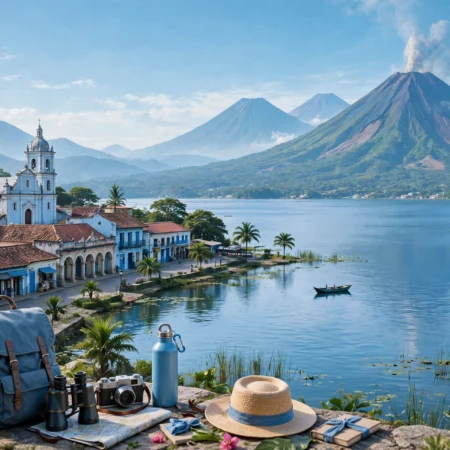

Nicaragua is Central America’s largest country and one of its least crowded. It packs two huge freshwater lakes, a chain of active volcanoes, pastel colonial cities, a Pacific surf coast and a Caribbean island escape into a space smaller than the state of New York — and it does all of it at prices well below neighbouring Costa Rica. This Nicaragua travel guide covers everything a first-time visitor needs: the best time to go, how much it costs, how to get around, where to stay, what to eat, and the safety picture as it stands in 2026, so you can plan a trip that is realistic rather than romanticised.
Quick answer: the best time for Nicaragua travel is the dry season, December to April, when roads are dry, volcano hikes are clear and the beaches are at their best. Allow at least 7 days for the classic loop of Granada, León, Ometepe and San Juan del Sur, and 10 to 14 days if you want to add the Corn Islands or the coffee highlands. Budget travellers can manage on roughly $30–50 a day, while a comfortable mid-range trip runs about $80–130 a day. Prices below are planning ranges only — confirm figures before you book, as fares and entry rules can change at short notice.
Is Nicaragua Safe to Visit in 2026?
This is the first question most travellers ask about Nicaragua, and it deserves a straight answer. The United States Department of State currently rates Nicaragua at Level 3: Reconsider Travel, because of crime, health risks, wrongful detention and the arbitrary enforcement of local laws. The advisory was reissued in May 2026 with no change to the level. That is the official position, and it should be the starting point for any decision — not travel blogs, and not this article.
The picture is more layered than a single level suggests. Violent crime against tourists is uncommon, and most crimes against foreigners are crimes of opportunity such as pickpocketing and purse snatching, especially in busy tourist areas. The advisory’s main concern is not street crime but the political environment: the State Department has determined that US nationals face a serious risk of wrongful detention, and foreign travellers have been denied entry, expelled or detained without explanation. Authorities have targeted journalists, NGO workers, teachers, researchers, religious workers and civil society leaders, and officials may search phones and social media for anti-government content. Public photography is restricted in places, particularly around government buildings and police activity, and drones are illegal. It is also illegal for foreigners to take part in any political activity, including protests.
That sounds alarming, and it is meant to be taken seriously. At the same time, many thousands of travellers visit Nicaragua every year and have straightforward, enjoyable trips, sticking to the well-travelled loop of Granada, León, Ometepe and San Juan del Sur. The practical approach is to read the official advice in full before booking, enrol in the US Smart Traveler Enrollment Program (STEP) if you are an American citizen, and make a decision based on your own comfort level rather than on anyone else’s. If you do go, keep a low profile: avoid protests and political discussion, do not photograph police or government buildings, keep copies of your passport separate from the original, and use registered taxis and reputable tour operators. Medical care is another real consideration — comprehensive quality healthcare is available only in Managua, clinics outside the capital lack basic resources, and medical evacuation can be expensive and is often not covered by standard insurance, so a policy that includes evacuation cover is worth the money. Tap water is generally not safe to drink, so stick to bottled water. There is also a current health notice worth knowing about: an outbreak of chikungunya has been reported in Nicaragua, so mosquito repellent, long sleeves at dusk and accommodation with screens or air conditioning are sensible precautions. Before you travel, read the full US State Department travel advisory for Nicaragua and check it again close to departure, because advisory levels can change.
Entry requirements for US travellers
US citizens can visit Nicaragua for tourism without a visa for up to 90 days under the CA-4 agreement, which Nicaragua shares with Guatemala, El Salvador and Honduras. You will normally need to buy a tourist card on arrival, which costs around $10 in US dollars, and your passport should be valid for at least six months beyond your entry date. You may also be asked to show an onward ticket and proof of funds. Entry rules can be applied strictly and at short notice, and travellers have been turned away without a reason being given, so carry printed copies of your return ticket, hotel bookings and travel insurance. E-cigarettes and vapes are banned, and the departure tax of around $35 is usually included in your air ticket — check yours rather than assuming. Entry rules for other nationalities differ, and since February 2026 Nicaragua has required visas from a long list of nationalities, so check the rules for your passport specifically. The official Visit Nicaragua tourism site is a useful starting point for planning, and the Nicaraguan tourism institute INTUR publishes updates on its own site.
Best Time to Visit Nicaragua
Nicaragua has two seasons rather than four, and the difference matters more than the month you pick.
| Season | Months | What to expect |
|---|---|---|
| Dry season | December – April | Sunny, hot, dry roads; best for beaches, volcano hikes and driving; busiest around Christmas and Easter (Semana Santa) |
| Green season | May – November | Lush landscapes, afternoon downpours, fewer tourists, lower prices; heaviest rain June – September |
| Shoulder months | November and May | A good compromise: greenery from the rains with improving or still-decent weather, and smaller crowds |
The dry season, December to April, is the best time for most first trips. Roads to volcanoes and rural areas are passable, the Pacific surf is consistent, and the Corn Islands are at their clearest for diving and snorkelling. March and April are the hottest months — expect temperatures of 30–35°C (86–95°F) in the lowlands — and Semana Santa (Holy Week, before Easter) is the busiest week of the year, when Nicaraguans travel in large numbers and prices spike, so book ahead if you travel then.
The green season has its own appeal. From May to November the countryside turns vivid green, waterfalls run full, and you will share viewpoints with far fewer people. The trade-off is real: afternoon downpours are common, some rural roads become muddy or impassable, and volcano hikes can be cancelled for safety. If you travel in the green season, plan activities for the morning, keep your itinerary flexible, and remember that Nicaragua sits in the hurricane belt — the country regularly experiences hurricanes and tropical storms, so check the weather forecast and any storm warnings before and during your trip. November is often the sweet spot: the rains are easing, the landscape is still green, and the Christmas crowds have not yet arrived.
For surfing, the Pacific swell is most consistent from April to October, which overlaps with the rainy season — surfers accept the rain for the waves. For the Corn Islands, the driest and clearest months are roughly February to May. For volcano boarding on Cerro Negro and hiking on Ometepe, the dry months give you the best odds of a clear, safe climb.
Granada: Colonial Streets on Lake Nicaragua
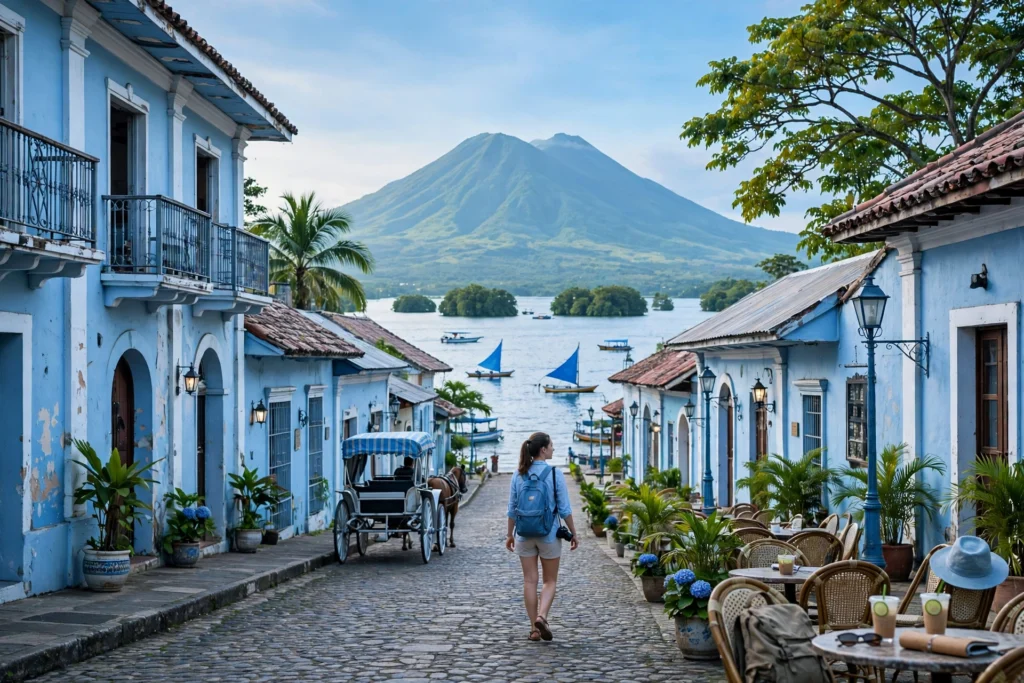
Granada is where most first trips begin, and for good reason. Founded in 1524, it is one of the oldest colonial cities in the Americas, and its centre is a wash of pastel-painted houses, horse-drawn carriages, and a cathedral that anchors the main square, Parque Central. It sits on the shore of Lake Nicaragua, Central America’s largest lake, and it is only about 45 minutes from Managua airport, which makes it a gentle first stop after a long flight.
Start in Parque Central and the cathedral, then walk Calle La Calzada, the pedestrian street lined with restaurants and bars that comes alive in the evening. From there, the lake is a short walk away: boat tours leave from the waterfront to Las Isletas, a scatter of more than 300 small islands formed by an ancient eruption of Mombacho volcano, where you can kayak between the islets, spot birds and visit a small island fort. Mombacho itself is a half-day trip from the city — a cloud-forest reserve with hiking trails, a crater viewpoint and canopy tours, reached by a steep 4×4 track from the reserve entrance.
Granada also works as a base for day trips. Masaya Volcano National Park is about 30 minutes away, the artisan towns of the Pueblos Blancos — Masaya, Catarina and San Juan de Oriente — are an easy drive, and Laguna de Apoyo, a warm crater lake ringed by forest, is 20 minutes from the city and ideal for a swim. Give Granada two to three days: one for the city itself, one for the lake and islets, and one for Mombacho or the surrounding towns. Stay near the centre if you want to walk everywhere, or near the lakefront if you prefer quieter mornings. If you are comparing colonial cities, Granada is the polished, photogenic one — León, covered below, is its rougher, more lived-in rival, and most travellers end up loving both for different reasons. For a sense of how another colonial city trip can be structured, the London travel guide shows a similar walkable-city approach, even though the destination could hardly be more different.
León: Cathedrals, Ruins and Volcano Boarding
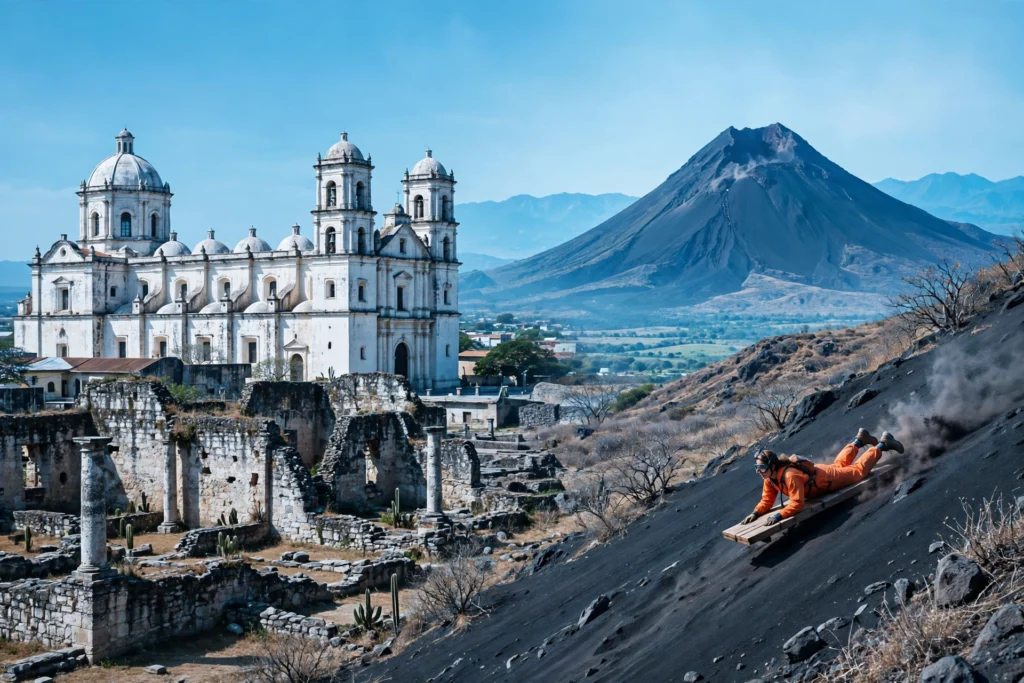
León is Nicaragua’s second city and its intellectual heart — home to the country’s oldest university, a revolutionary history, and a cathedral so large it is said to be the biggest in Central America. It feels grittier and more authentic than Granada, with murals, markets and a student energy that gives the city its edge. It is also the base for one of Nicaragua’s signature adventures: volcano boarding down the black ash slopes of Cerro Negro.
The centrepiece is León Cathedral, the Cathedral of the Assumption of Mary, built between 1747 and the early 19th century and inscribed on UNESCO’s World Heritage List in 2011. Climb to the white rooftop for one of the best views in Nicaragua: a sweep of domes and bell towers with a chain of volcanoes on the horizon. The cathedral is one of only two UNESCO World Heritage sites in Nicaragua — the other is the Ruins of León Viejo, the abandoned original city about 30 minutes away, founded in 1524 and buried by an earthquake and volcanic eruption in 1610. Both are listed on the official UNESCO page for Nicaragua, which is worth a look before you visit.
Beyond the cathedral, León’s highlights include the Museo de Arte Fundación Ortiz-Gurdián, one of Central America’s best art museums, the lively Mercado Central, and the Basilica of El Calvario. But the activity most travellers remember is Cerro Negro, a young, bare black volcano about 25 minutes from the city. The standard trip is a hike of around an hour to the rim, then a slide back down on a wooden board, wearing a protective suit, gloves and goggles, at speeds that can reach 50 km/h or more. It is the only place in the world where you can do this, and it is genuinely thrilling — go with a reputable operator, follow the guide’s instructions, and wear the protective gear even if it feels like overkill. León also makes a good base for the beaches of Las Peñitas and Poneloya, about 20 minutes away, where the sunsets are spectacular and the surf is gentler than in the south. Allow two to three days for León: one for the city and cathedral, one for Cerro Negro, and one for León Viejo or the beach.
Ometepe Island: Two Volcanoes in One Lake
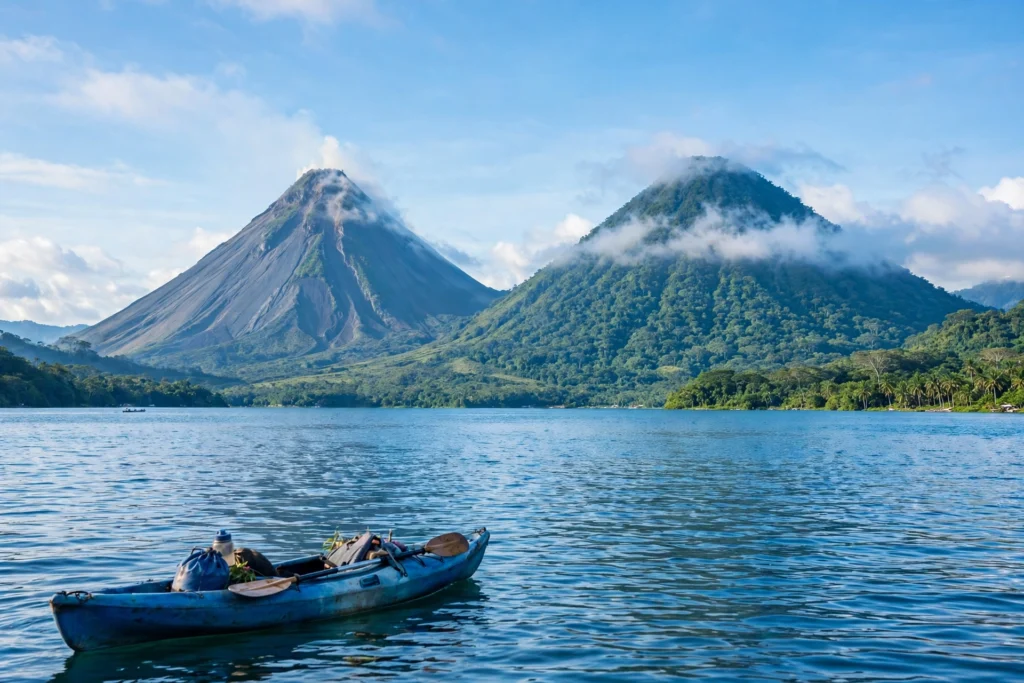
Ometepe is the place that makes first-time visitors fall for Nicaragua. It is an island in Lake Nicaragua formed by two volcanoes — Concepción, a near-perfect cone that rises 1,610 metres, and Maderas, a greener, cloud-topped peak at 1,394 metres — joined by a narrow strip of land. The island feels like a world apart: quiet roads, small farming villages, wild horses, howler monkeys, and views of the volcanoes from almost everywhere.
Getting there is part of the adventure. Ferries run from San Jorge, near Rivas on the mainland, to Moyogalpa on the island, taking about an hour; there are also smaller boats to San José del Sur. Book the ferry in advance in the dry season, and arrive early — the crossing can be rough when the wind picks up, and services are sometimes cancelled in bad weather. Once on the island, the best way to get around is by scooter, bicycle or a local taxi; distances look short on a map but the roads are slow.
The island’s headline activity is hiking one of the volcanoes. Concepción is the harder climb — a steep, exposed ascent of six to eight hours that demands good fitness, an early start and a guide, and it is sometimes closed for safety. Maderas is a longer, muddier, jungle hike through cloud forest to a crater lake at the top, usually eight to nine hours round trip, also with a guide. If you are not a hiker, there is still plenty to do: swim at Ojo de Agua, a natural spring-fed pool surrounded by jungle; kayak on the lake at sunset; visit the petroglyphs at Finca El Porvenir; cycle the Istián isthmus between the two volcanoes; or watch the sunset from Punta Jesús María, a sandy spit that stretches into the lake. Give Ometepe at least two full days — three if you plan to hike a volcano — because the island rewards slow travel and punishes rushed schedules. If you are building a longer Central America trip, Ometepe pairs naturally with the kind of slow, nature-first travel covered in the Ecuador travel guide, which also mixes volcanoes, lakes and wildlife.
San Juan del Sur and the Pacific Surf Coast
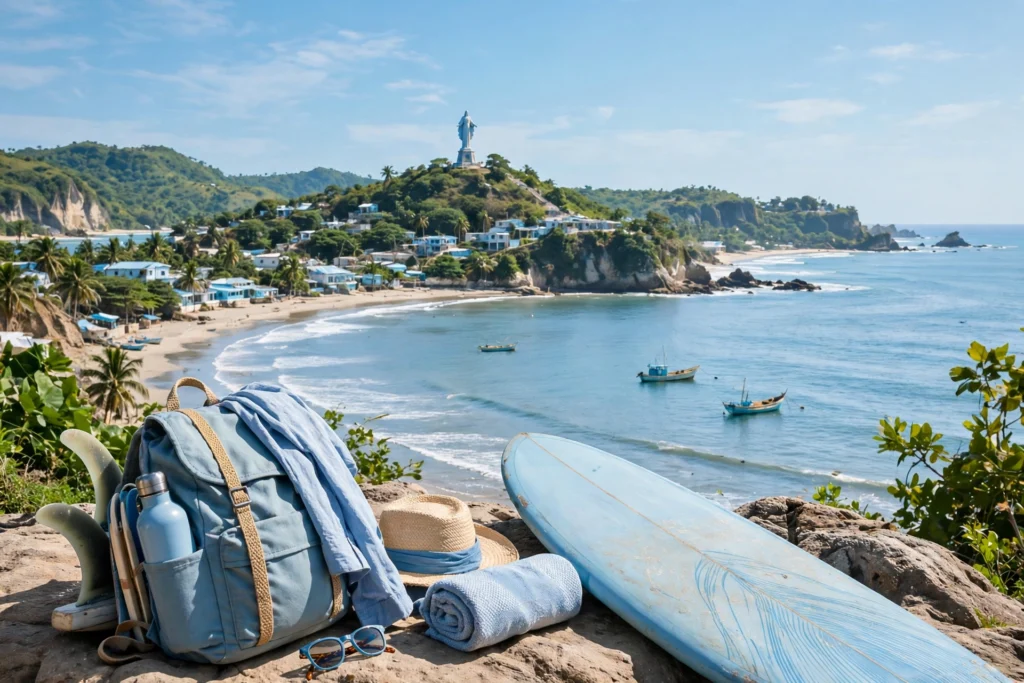
San Juan del Sur is Nicaragua’s best-known beach town, a small fishing port turned surf and backpacker hub on the Pacific coast, about two and a half hours south of Managua. It is a town of two moods: by day it is a laid-back surf town with a crescent bay, fishing boats and a long strip of restaurants and hostels; by night it is the liveliest party spot on the Nicaraguan coast. Both moods have their fans, and the town works well as either a two-night stop or a week-long surf base.
The town beach itself is fine for swimming and sunset walks, but the better surf is at the beaches around it. Playa Maderas, about 20 minutes north, is the most popular surf beach, with consistent waves and beach bars. Playa Hermosa, to the south, is a long, wild stretch of sand with strong currents and fewer people. Playa El Remanso and Playa El Coco are quieter options for swimming and relaxing. Surf lessons and board rentals are available in town, and most schools offer lessons for complete beginners as well as board hire for experienced surfers.
Beyond the beach, the town’s landmark is the Christ of Mercy statue, a large hilltop figure reached by a short hike or a taxi, with panoramic views over the bay — it is best at sunset. Sunday is famous for the “Sunday Funday” pool crawl, a day-long party that moves between hostels; it is fun for some and an easy skip for others, and the town is noticeably quieter on other days of the week. From San Juan del Sur you can also cross the border to Costa Rica in about an hour, which makes it a natural end point for a Nicaragua trip or a start point for a longer Central America journey. If beach towns are your thing, the coastal planning in the best places to travel in Mexico guide follows a similar rhythm of surf, food and slow days.
The Corn Islands: Nicaragua’s Caribbean Side
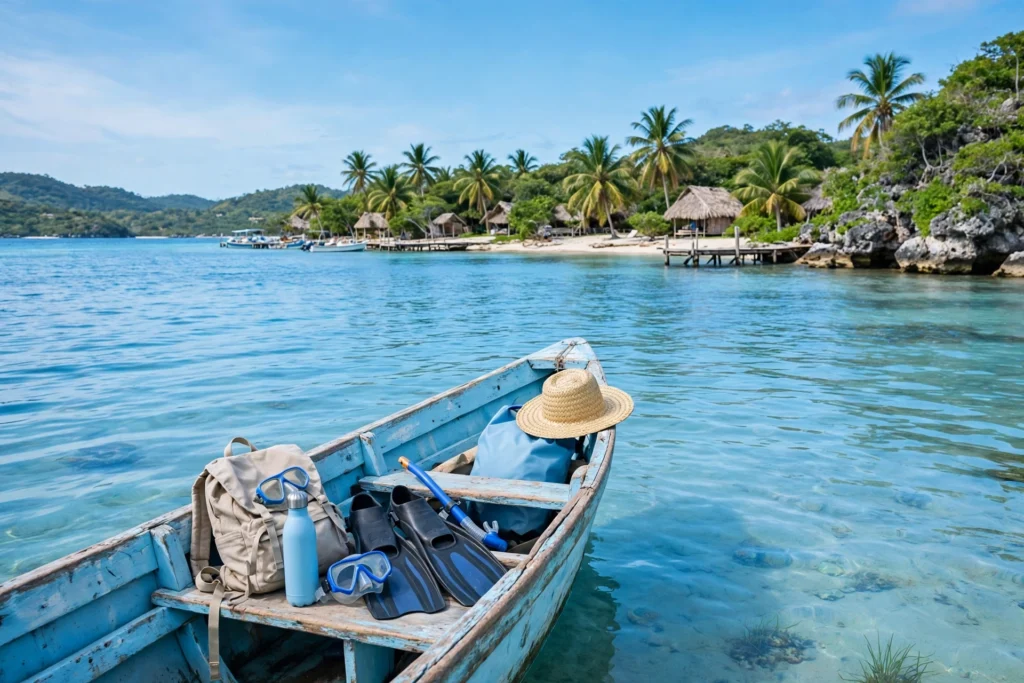
The Corn Islands are the Nicaragua most travellers never see — two small islands, Big Corn and Little Corn, sitting about 70 km off the Caribbean coast, with turquoise water, coral reefs, Creole culture and a pace of life that feels a world away from the Pacific side. They are the country’s best diving and snorkelling destination, and one of the cheapest places in the Caribbean to learn to dive.
Big Corn Island is the larger and more developed of the two, with the airport, most of the hotels and the main town. Little Corn is a short boat ride away and has no cars at all — just sandy paths, dive shops, small guesthouses and restaurants where the catch of the day is usually lobster. The diving is the main draw: warm, clear water, coral gardens, reef sharks, rays and turtles, with visibility often best from February to May. Snorkelling from the shore is good too, and many visitors come simply to do very little — read, swim, eat well and watch the sun set over the Caribbean.
Getting there takes planning, which is why many travellers skip the islands. The usual route is a flight from Managua to Big Corn Island, about an hour, followed by a 30-minute boat to Little Corn. Flights are limited and can be expensive, and they are sometimes cancelled in bad weather, so build in a buffer day. There is also a much slower option by bus and cargo boat from the mainland port of Bluefields, which takes the best part of a day or more. Allow at least three to four days for the Corn Islands, including travel, and book accommodation and diving ahead in the dry season. It is the one part of Nicaragua that feels genuinely remote, and that is exactly the point.
Nicaragua’s Volcanoes: Masaya, Cerro Negro and More
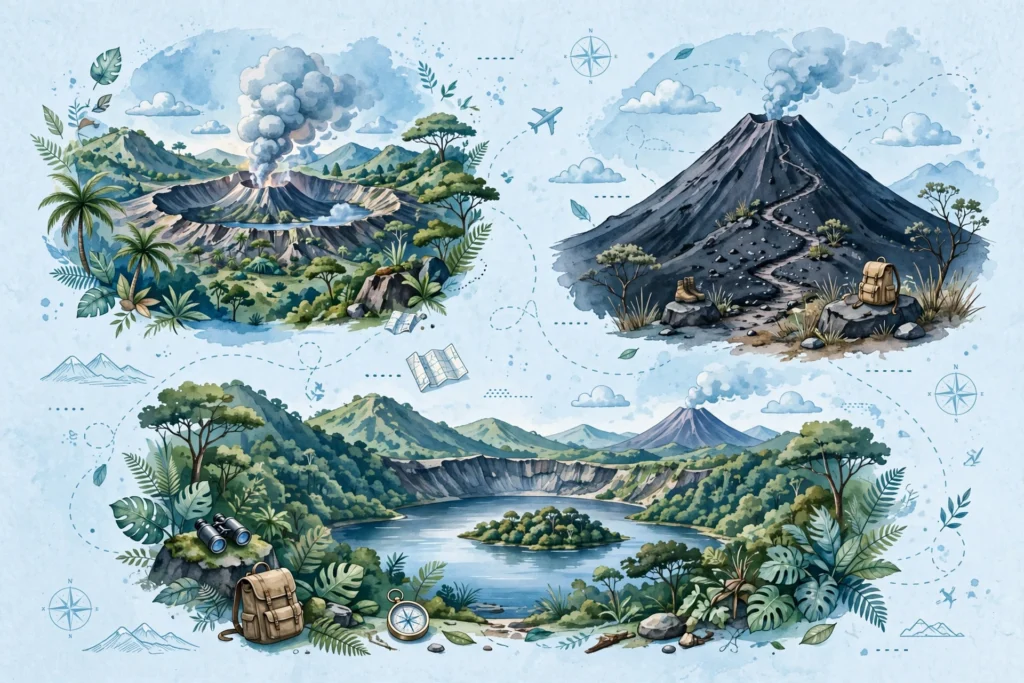
Nicaragua is often called the land of lakes and volcanoes, and the nickname is earned: the country has more than 20 volcanoes, and several of them are accessible to visitors. They are the thread that ties the whole trip together, from the lava lake at Masaya to the ash slopes of Cerro Negro and the twin peaks of Ometepe.
Masaya Volcano National Park is the easiest volcano experience in the country. It sits about 30 minutes from Granada and Managua, and you can drive almost to the rim of the Santiago crater and look down into a glowing lava lake — one of the few places in the world where you can do this without a long hike. Night tours are the highlight, when the glow is most visible. Note that Masaya is an active volcano: it has produced ash plumes in 2026, and the park can close or restrict access when activity increases, so check conditions on the day and follow the rangers’ instructions. The park is also on UNESCO’s tentative list, along with the city of Granada itself.
Cerro Negro, near León, is the volcano-boarding volcano — covered in the León section above — and a reminder that Nicaragua’s volcanoes are young and raw. It first erupted in 1850 and has erupted more than 20 times since.
Concepción and Maderas on Ometepe are the island volcanoes, and their hikes are among the best in Central America, as described above. Mombacho, near Granada, offers a gentler cloud-forest experience with crater trails and a butterfly garden. Telica, also near León, is a more challenging hike with a crater you can peer into, best done as a sunset or overnight trip with a guide.
A few practical rules apply to all of them. Always hike with a licensed guide, especially on the active volcanoes — conditions change, and local knowledge matters. Start early to beat the heat and the afternoon cloud. Carry more water than you think you need, wear sun protection, and check whether the volcano you want to climb is open before you travel to it, because closures happen at short notice. If volcanoes are your main reason to travel, the Iceland travel itinerary is another volcanic destination worth comparing when you plan your next trip.
Beyond the Classic Loop: Coffee Highlands, Canyons and Crater Lakes
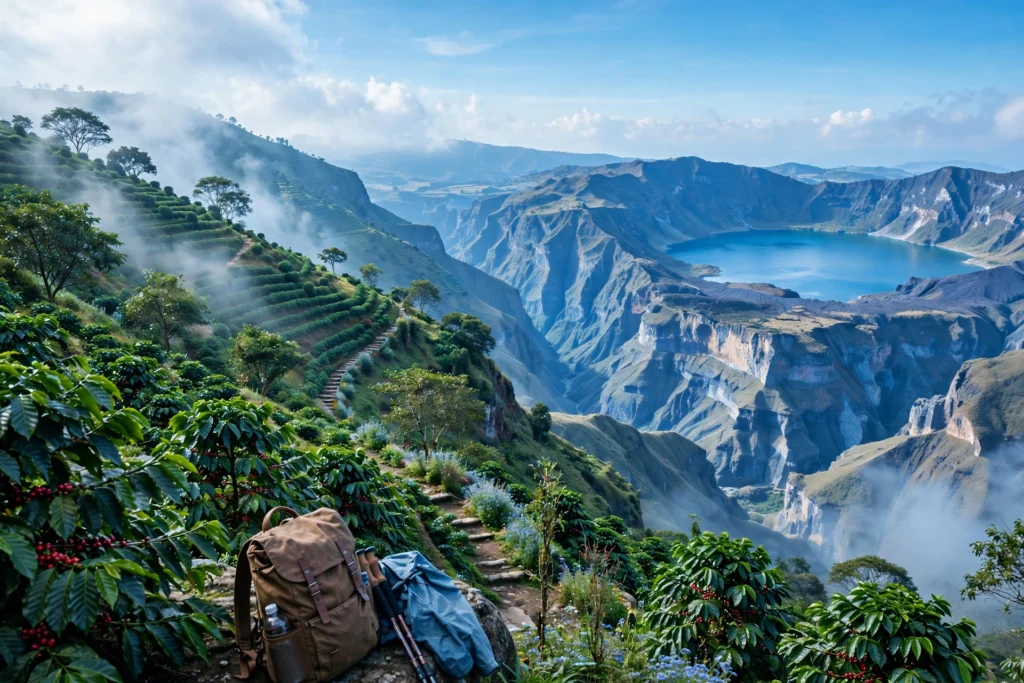
Most first trips stick to the Granada–León–Ometepe–San Juan del Sur loop, and that loop is excellent. But if you have extra days, Nicaragua has a second layer that most visitors miss — and it is where the country feels most itself.
The coffee highlands of Matagalpa and Jinotega, in the mountainous north, are cooler, greener and quieter than the lowlands. Coffee farm tours are the main draw: you can walk the plantations, see the harvest and processing, and taste coffee at source. The area is also good for hiking, birdwatching and waterfalls, and the town of Matagalpa makes a comfortable base. It is a full day’s travel from Managua, so it suits trips of two weeks or more.
Somoto Canyon, near the Honduran border, is one of Nicaragua’s best-kept secrets. A narrow river canyon with rock walls up to 150 metres high, it is explored by a mix of hiking, swimming and floating downstream on an inner tube — a half-day adventure that feels a world away from the colonial cities. It is best reached as an overnight trip from León or Estelí.
Laguna de Apoyo, the warm crater lake near Granada, is the easiest add-on of all: a 20-minute drive from the city, with lakeside restaurants and kayak rentals, and water warm enough to swim in year-round. The Pueblos Blancos, the whitewashed artisan towns around Masaya, are worth a half day for pottery, hammocks and the viewpoint at Catarina, which looks out over the Apoyo lagoon.
Further afield, the Río San Juan in the south-east is a slow river journey through jungle to the Caribbean, and the Bosawás Biosphere Reserve in the north-east is one of the largest rainforests in the Americas — both are for experienced, well-prepared travellers rather than first-timers, and both need a guide and solid logistics. If you like the idea of adding nature reserves and coffee country to a trip, the Tanzania travel guide shows how a nature-first itinerary can be put together, even though the wildlife is very different.
Getting to Nicaragua and Getting Around
Getting there
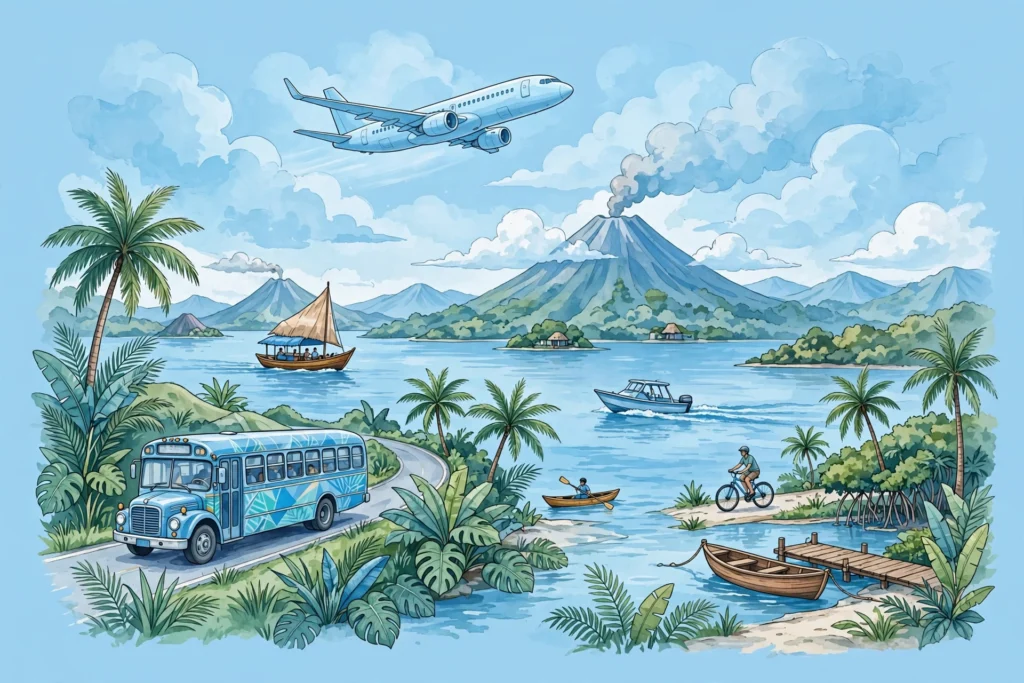
Most international visitors fly into Managua’s Augusto C. Sandino International Airport (MGA). From the United States there are no direct flights to every city, but connections through Miami, Houston, Atlanta, Panama City or San Salvador are straightforward, with total journey times of around five to eight hours from the US East Coast and longer from the West Coast. From Europe there are no direct flights; most travellers connect in the US or Panama City. There are also land borders with Honduras and Costa Rica, which is how many overland travellers arrive — the Peñas Blancas crossing to Costa Rica is the busiest, and border formalities can be slow, so allow extra time and carry small US dollar bills for any fees.
Getting around
Nicaragua is a small country, and distances are short — but travel times are longer than the map suggests, because roads are slow and public transport is basic.
- Chicken buses (converted US school buses) are the cheapest way to travel between towns, costing a few dollars per ride. They are frequent on main routes such as Managua–Granada and Managua–León, but they are crowded, hot and slow, and they stop everywhere.
- Shuttles run by hostels and tour companies are the comfortable middle ground: air-conditioned minibuses between the main tourist towns, bookable a day ahead, usually $10–25 per person depending on the route.
- Taxis are cheap within towns, but agree the price before you get in, and use radio-dispatched or hotel-called taxis at night rather than hailing one on the street.
- Rental cars give you the most freedom, especially for the coffee highlands and rural areas, but driving in Nicaragua is not for everyone: roads outside the main routes can be rough, signage is poor, and driving after dark is not recommended — US government employees are generally not allowed to drive after dark outside Managua and the Managua–Granada road, which tells you something about the conditions.
- Ferries connect the mainland to Ometepe and the Corn Islands, as described above, and are weather-dependent.
For most first-time visitors, a mix of shuttles and taxis is the sweet spot: cheap enough, comfortable enough, and no driving stress. If you are planning the logistics in detail, a written plan helps — the travel itinerary template is a useful way to lay out routes, transport and timings before you go.
Where to Stay in Nicaragua
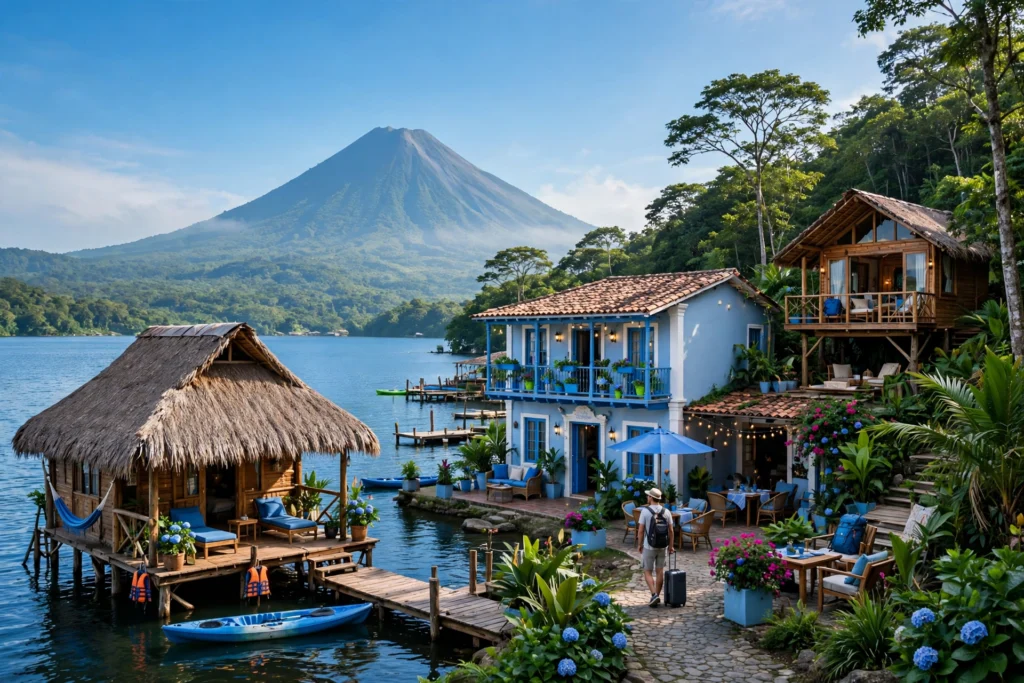
Nicaragua has good accommodation for every budget, and it is one of the reasons the country is such good value. In the main tourist towns you will find everything from $10 dorm beds to boutique colonial hotels, and the standard is generally high for the price.
| Town | Best for | What to expect |
|---|---|---|
| Granada | First stop, colonial charm | Boutique hotels in restored colonial houses, hostels around Parque Central, lakefront guesthouses |
| León | Culture and volcano trips | Hostels and small hotels in the centre, rooftop terraces, good value guesthouses |
| Ometepe | Slow island days | Eco-lodges, family-run guesthouses, lakeside cabins; book ahead in dry season |
| San Juan del Sur | Surf and beach life | Hostels and surf lodges in town, quieter boutique stays on the surrounding beaches |
| Corn Islands | Diving and doing nothing | Small guesthouses and dive lodges on both islands; Little Corn has no cars |
| Managua | Arrival and departure nights | Business hotels near the airport, practical rather than charming — most travellers pass through |
Book ahead in the dry season, especially around Christmas, Easter and Semana Santa, when the best places fill up. In the green season you can often walk in and find a room. Staying in the centre of Granada and León means you can walk to restaurants and sights; in Ometepe and the Corn Islands, the location matters more, because transport is limited — a lakeside or beachfront stay saves you daily taxi rides. If you are comparing city stays more generally, the Singapore travel guide and the Budapest travel guide both cover how to choose a base in a new city, which applies just as well here.
How Much Does Nicaragua Travel Cost?
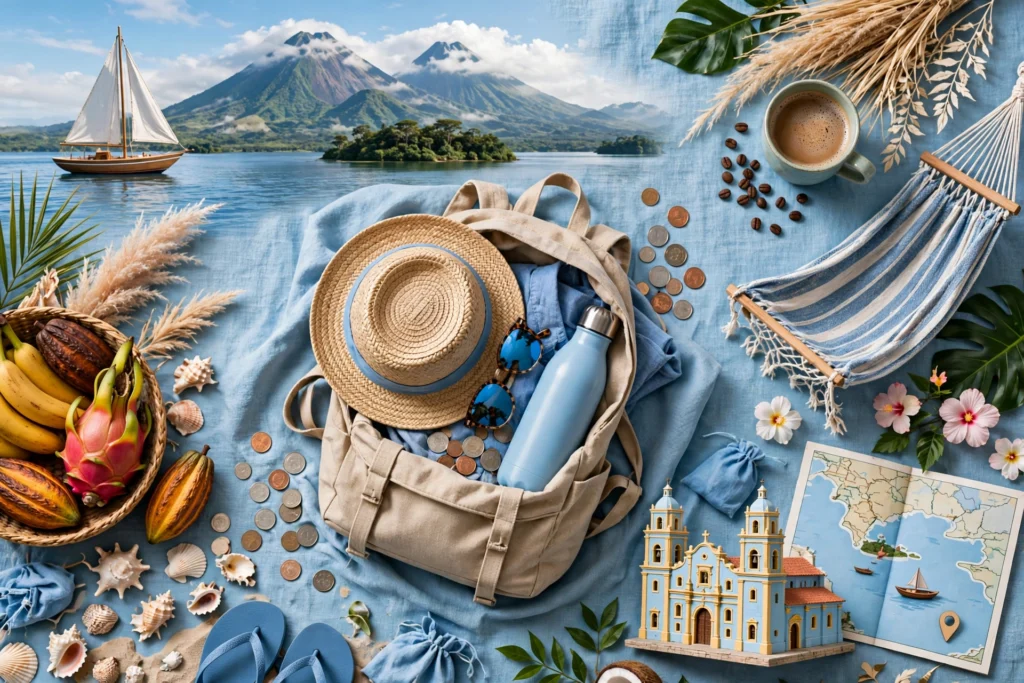
Nicaragua is one of the cheapest countries in Central America, and it is noticeably cheaper than Costa Rica for the same standard of travel. The local currency is the Nicaraguan córdoba (NIO), and US dollars are widely accepted in hotels, tours and restaurants, so many travellers never need to exchange much cash. ATMs dispense both córdobas and dollars — use them in daylight, inside banks or malls, and avoid changing money on the street. The exchange rate is roughly 36–37 córdobas to the dollar, but treat that as a planning range and check the current rate before you travel.
| Daily budget (per person) | Hostel / guesthouse | Mid-range hotel | Food | Transport & activities | Total per day |
|---|---|---|---|---|---|
| Budget | $8–15 | — | $8–15 | $5–15 | $30–50 |
| Mid-range | — | $40–70 | $20–35 | $15–30 | $80–130 |
| Comfortable | — | $80–150+ | $35–60 | $30–60 | $150–250+ |
These are planning ranges only — confirm figures before you travel, as prices rise in the dry season and around holidays. A few typical costs: a local meal at a market or comedor runs $3–6, a restaurant meal $8–15, a chicken bus $1–5, a shuttle between towns $10–25, a volcano boarding trip $30–40, a Masaya night tour $25–40, a day of diving on the Corn Islands $40–60, and a ferry to Ometepe $2–5. A two-week mid-range trip, excluding international flights, can be done for roughly $1,200–1,800 per person, and a budget trip for considerably less. If you want to plan your spending in more detail, the how to prepare a travel budget guide walks through the same kind of daily-budget method for any destination.
What to Eat, Drink and Pack in Nicaragua
Food and drink
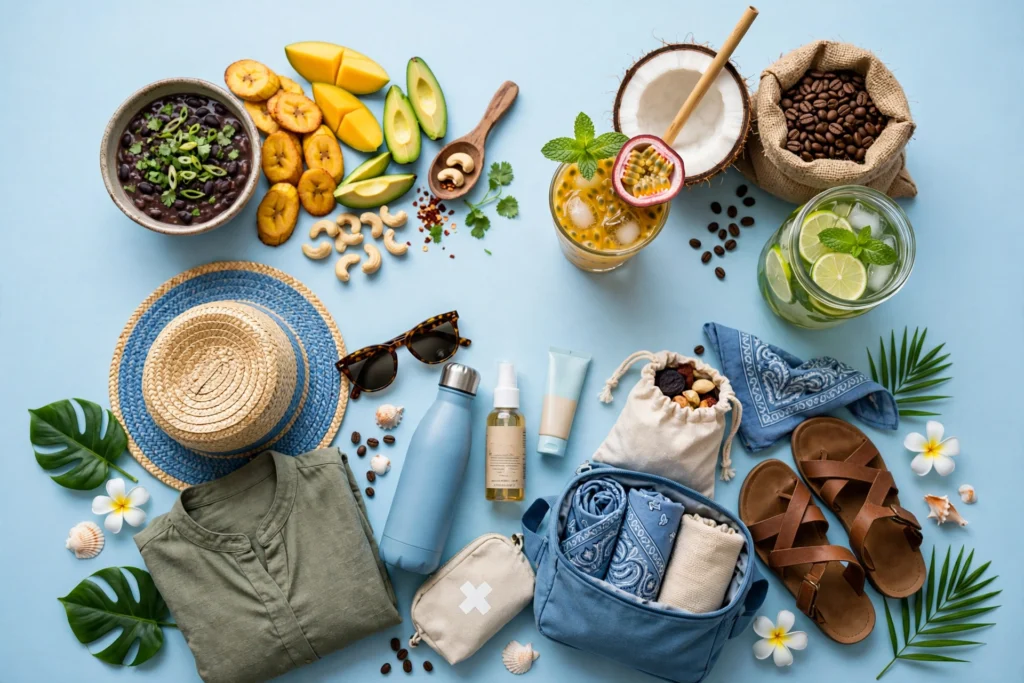
Nicaraguan food is simple, hearty and cheap, built around rice, beans, corn, plantains and fresh tropical fruit. The national dish is gallopinto, rice and beans fried together, served at almost every meal and usually with eggs, cheese and plantains for breakfast. Vigorón — boiled yuca, pork crackling and a cabbage salad — is the classic street food of Granada, best eaten at the market. Nacatamales, large tamales stuffed with pork, rice and vegetables and steamed in banana leaves, are a weekend speciality. On the Caribbean coast the food changes completely: coconut rice, rundown (a coconut-milk seafood stew) and lobster are the local staples, and the Corn Islands are one of the best places in the Caribbean to eat lobster cheaply.
For drinks, try fresco de cacao, a chocolate and corn drink sold by street vendors, and the local coffee, which is excellent — the highlands produce some of the best coffee in Central America. Local beer (Toña and Victoria) is cheap and widely available, and the national rum, Flor de Caña, is genuinely good and very affordable. Drink bottled water, and be cautious with ice and raw salads outside reputable restaurants.
Packing list
Nicaragua is hot and casual, and you do not need much — but you do need the right things.
- Light, breathable clothing and a light rain jacket, even in the dry season
- Sturdy walking shoes or hiking boots for volcano hikes, plus sandals for the beach
- High-SPF sunscreen, a hat and sunglasses — the sun is strong year-round
- Insect repellent and long sleeves for the evenings, especially given the current chikungunya notice
- A reusable water bottle and water purification tablets as a backup
- A dry bag for boat trips to Ometepe and the Corn Islands
- A small first-aid kit, any prescription medicine, and copies of your travel insurance
- A power bank — and remember Nicaragua uses US-style two-pin plugs at 120 volts, so travellers from Europe and the UK will need an adapter
- Cash in small US dollar bills for tourist cards, border fees and small vendors
Pack light. You can buy almost everything you forget in Granada, León or Managua, and a small bag makes chicken buses, ferries and shuttles much easier. If you are building a packing list for a longer trip, the practical approach in the travel bucket list guide — planning around experiences rather than things — is a good way to think about what actually earns space in your bag.
Sample Nicaragua Travel Itineraries: 7, 10 and 14 Days
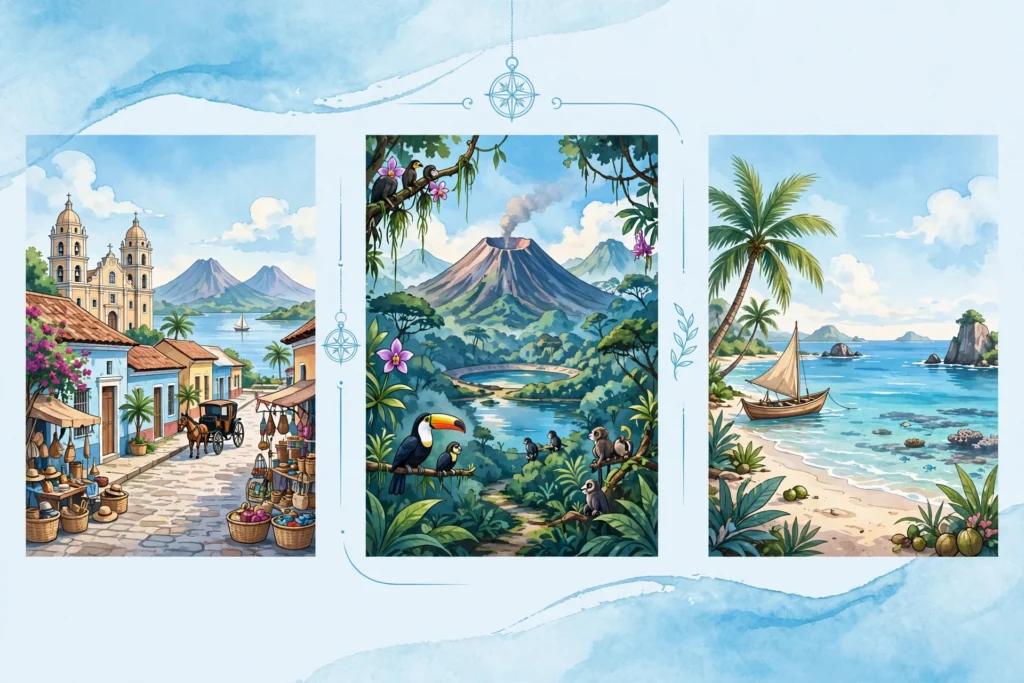
7 days: the classic loop
- Days 1–2: Granada. Colonial centre, Calle La Calzada, Las Isletas boat trip, Mombacho or Laguna de Apoyo.
- Day 3: Masaya and the Pueblos Blancos. Masaya Volcano night tour, Catarina viewpoint, artisan towns.
- Days 4–5: Ometepe. Ferry from San Jorge, Ojo de Agua, a volcano hike or a kayaking and cycling day.
- Days 6–7: San Juan del Sur. Surf at Playa Maderas, sunset at the Christ of Mercy statue, and a slow beach morning before heading back to Managua.
10 days: the classic loop, slowed down
Add a day in Granada, a day in León (cathedral rooftop, Cerro Negro volcano boarding, León Viejo) and an extra day on Ometepe. The difference is real: with ten days you can hike a volcano without rushing, spend an unhurried afternoon in a café in León, and still have a beach day that does not feel squeezed.
14 days: the full picture
Add three to four days on the Corn Islands for diving and doing very little, or add the coffee highlands around Matagalpa and a trip to Somoto Canyon. Fourteen days is also the point at which the trip stops feeling like a highlights tour and starts feeling like a proper journey — you get the colonial cities, the volcanoes, the island, the surf coast and the Caribbean, with rest days built in. If you are planning a longer trip and want to keep it organised, the Colombia travel guide and the Croatia travel guide both show how a two-week itinerary can be structured around a mix of cities, nature and coast.
Frequently Asked Questions About Nicaragua Travel
Is Nicaragua safe for tourists?
The US State Department rates Nicaragua at Level 3: Reconsider Travel, because of crime, health risks, wrongful detention and arbitrary enforcement of laws. Violent crime against tourists is uncommon and most crime is opportunistic theft, but the political risks are real and should be weighed seriously. Read the full official advisory before booking and check it again before you travel.
Do US citizens need a visa for Nicaragua?
No, for tourism stays of up to 90 days under the CA-4 agreement. You will normally buy a tourist card on arrival for around $10, and your passport should be valid for at least six months. You may be asked for an onward ticket and proof of funds. Entry rules can change at short notice, so confirm them before you travel.
What is the best time to visit Nicaragua?
December to April, the dry season, is best for most travellers: sunny days, dry roads and the clearest conditions for volcano hikes and the Corn Islands. November and May are good shoulder months, and the green season (May to November) is lusher, cheaper and quieter but wetter.
How many days do you need in Nicaragua?
Seven days covers the classic loop of Granada, Ometepe and San Juan del Sur, with a volcano trip included. Ten days lets you add León properly, and fourteen days lets you add the Corn Islands or the coffee highlands. Less than a week is possible but rushed, because travel between towns is slow.
How much does a trip to Nicaragua cost?
Budget travellers can manage on roughly $30–50 a day, a comfortable mid-range trip runs about $80–130 a day, and a more comfortable trip $150–250 a day. A two-week mid-range trip, excluding international flights, is roughly $1,200–1,800 per person. These are planning ranges — confirm figures before you book.
What is the currency in Nicaragua?
The Nicaraguan córdoba (NIO). US dollars are widely accepted in hotels, tours and restaurants. ATMs dispense both currencies, and the exchange rate is roughly 36–37 córdobas to the dollar, though you should check the current rate before travelling.
Conclusion
Nicaragua is not an easy destination, and that is part of its appeal. It rewards travellers who plan carefully, read the official advice, travel slowly and keep their expectations realistic — and it gives back colonial cities with real character, volcanoes you can stand on the edge of, an island of two peaks in the middle of a lake, and some of the best-value travel in the Americas. The safety picture is serious and should be the first thing you weigh, not the last. But if you decide to go, go in the dry season, give yourself at least a week, and leave room in the plan for the unplanned afternoon — the swim in a crater lake, the extra hour on a rooftop in León, the sunset that runs long in San Juan del Sur. Those are the moments that make Nicaragua travel memorable, and they are the ones no itinerary can schedule for you.
People also read: London Travel Guide · Morocco Travel Guide · Colombia Travel Guide · Best Places to Travel in January · Places to Travel Without a Passport · How to Prepare a Travel Budget