Quick Answer: Which Sweden Trip Should You Take?
Sweden is two trips wearing one name, and the single biggest mistake first-time visitors make is trying to take both of them in one week. This Sweden travel guide is built around one decision you should make before you book anything else: the south cities or the Arctic north. Pick one, and the rest of the planning falls into place. Try to do both in seven days and you will spend the trip on trains and in airports instead of in Sweden.
Route A — the south cities (best for a first trip, May to September): four nights in Stockholm, then three nights in Gothenburg or Malmö. You get the old town, the museums, the archipelagos, the food and the design, all on comfortable daytime trains, with long summer evenings and no night train required. Seven nights, two bases, zero wasted days.
Route B — the Arctic north (best for winter, December to March): two or three nights in Stockholm, then the overnight sleeper train to Kiruna and Abisko for three or four nights. You get the northern lights, the ICEHOTEL, dog sleds and snow forests — and you accept short days, cold weather and advance booking as the price. Seven days, two bases, one long night on the rails.
Everything in this guide is organised around that choice. The Stockholm sections work for both routes. The Gothenburg and Malmö sections belong to Route A. The Kiruna, Abisko and ICEHOTEL sections belong to Route B. The night-train section tells you exactly how Route B works in practice, including the booking windows that catch people out. And the itineraries at the end of this introduction give you ready-made versions for 3, 7, 10 and 14 days, so you can stop deciding and start booking.
Sweden rewards travellers who slow down. It is the largest country in the Nordic region, running roughly 1,600 kilometres from the beech woods of Skåne in the south to the reindeer country above the Arctic Circle, and nine in ten Swedes live in the southern third of it. The south is a settled, well-connected corner of Europe where cities sit an hour or three apart by train. The north is something else entirely: vast forests, frozen lakes, mountain valleys and a sky that, in winter, can fill with green light. Both are worth a trip. Neither is worth rushing.
Sweden at a glance
| Fact | Detail |
|---|---|
| Capital | Stockholm, built across 14 islands where Lake Mälaren meets the Baltic Sea |
| Language | Swedish; English is spoken fluently almost everywhere |
| Currency | Swedish krona (SEK, written kr) — not the euro; cards dominate, cash is rarely needed |
| Entry (US citizens) | Visa-free for up to 90 days in any 180-day period in the Schengen Area |
| Best time, south cities | May to September; June and August are the sweet spots |
| Best time, northern lights | Late September to late March, with the darkest skies from December to February |
| Best time, midnight sun | June and early July in the far north |
| Getting around | Excellent trains (SJ), city transit, archipelago boats; a car is unnecessary in the cities |
| Safety | US State Department Level 2: Exercise Increased Caution due to terrorism (reissued 18 May 2026) |
| Budget, mid-range | Roughly SEK 1,500–2,500 (about $140–235) per person per day, all in |
| Budget, careful | Roughly SEK 900–1,400 per person per day with hostels, groceries and lunch specials |
The budget figures above are planning ranges, not promises. Stockholm is one of Europe’s more expensive capitals for hotels and restaurants, and the Arctic north is more expensive still, because everything there is a guided activity or a long journey. But Sweden also gives a lot away for free: the waterfronts, the parks, the viewpoints, the forests and the right of public access — allemansrätten — which lets you walk, forage and camp for a night on almost any uncultivated land, as long as you keep your distance from homes and leave no trace. A traveller who uses the free things well can have a better trip than one who pays for everything.
The two routes, side by side
| Route A: South Cities | Route B: Arctic North | |
|---|---|---|
| Best season | May–September | December–March |
| Bases | Stockholm (4 nights) + Gothenburg or Malmö (3 nights) | Stockholm (2–3 nights) + Kiruna/Abisko (3–4 nights) |
| Main transport | Daytime trains, city transit, archipelago boats | Overnight sleeper train, then local trains and shuttles |
| Headline sights | Gamla Stan, Vasa Museum, Skansen, archipelagos, canals | Northern lights, ICEHOTEL, Abisko, snow forests |
| Daylight | 17–19 hours in June | 0–6 hours in December and January |
| Book ahead | Hotels and popular restaurants in July | Sleeper cabins, ICEHOTEL, Aurora Sky Station |
| Biggest risk | Overpacking the days; the light makes everything feel possible | Weather; the lights are never guaranteed |
| Who it suits | First-timers, families, food and design lovers | Winter travellers, photographers, aurora hunters |
If you have ten days or more, you can combine the routes properly: seven nights in the south, then the night train north for three or four nights, or the reverse. If you have fourteen days, you can do it without hurrying at all, and add a rural region in between — the west coast, the High Coast, or the lakes of Dalarna. The rule is simple: never put both ends of Sweden into a single seven-day trip. The country is too long, the journeys are too slow, and the thing you came for — the light, the water, the snow — needs unhurried time.
The 3, 7, 10 and 14-day versions
Three days — Stockholm only. Day 1: Gamla Stan, the Royal Palace and the waterfront. Day 2: Djurgården, the Vasa Museum and Skansen. Day 3: the archipelago by boat to Vaxholm, or Drottningholm Palace if the weather turns. This is the trip for a long weekend or a stopover, and it is genuinely satisfying: three days in one city, planned by neighbourhood, beats five days spent changing hotels.
Seven days — pick your route. Route A: four nights in Stockholm, then the train to Gothenburg for three nights, with a day in the southern archipelago. Route B: two nights in Stockholm, the night train north, three nights in Abisko or Kiruna, and a flight back to Stockholm for the last night. Both versions are covered in full below, day by day.
Ten days — the south, done properly. Seven nights on Route A, plus three more: a night in Malmö and a day in Lund, or two nights on the Bohuslän coast, or a slow day in Uppsala and the Mälaren valley. Ten days is also the minimum for Route B done well — three nights in Stockholm, four nights in the north, and a buffer night at each end so a delayed train never costs you a flight.
Fourteen days — both routes, no rushing. A week in the south, the night train north, four nights in Lapland, and a final night in Stockholm before flying home. This is the trip for a traveller who wants the whole country and has the time to let it unfold. It is also the only version of the combined trip this guide recommends without a warning attached.
Before you go: entry rules, ETIAS and safety
Sweden is in the Schengen Area, so the 90-days-in-any-180 rule applies, and days spent elsewhere in Schengen count toward the same limit. US citizens do not need a visa for a short tourist stay. Your passport should be less than ten years old and generally valid for at least three months beyond your planned departure.
Two systems cause confusion, so here is the position as checked on 28 November 2026. The EU’s Entry/Exit System (EES), which records fingerprints and a photo for non-EU visitors on first arrival, has been fully operational since 10 April 2026 — expect a few extra minutes at the border the first time you enter. ETIAS, the online travel authorisation for visa-exempt visitors, is not yet in operation: no applications are being collected, no start date has been announced, and the EU says it will announce the date several months before launch. Any website offering to sell you an ETIAS authorisation today is not official. Check the official EU ETIAS page before you travel, and do not pay anyone for an authorisation that does not yet exist.
On safety, the US State Department rates Sweden at Level 2: Exercise Increased Caution, due to terrorism, reissued on 18 May 2026. That is the same level as much of Western Europe. In practice, Sweden is a very safe country for visitors: violent crime against tourists is rare, the cities are walkable late into the evening, and the practical risks are the ordinary ones — pickpockets in crowded tourist areas, icy pavements in winter, and cold water in the archipelago. Our full travel safety tips cover the habits that matter most, and the State Department’s Sweden travel advisory is the page to check before you fly.
How to use this guide
Each section below is written to stand on its own, so you can read the parts that match your route and skip the rest. Prices are given in Swedish kronor with the season they apply to, because Sweden prices by season and a single figure would mislead you. Train times are the ones that matter for planning — the exact departure is always the one on sj.se on the day you travel, and on the Stockholm–Gothenburg line that matters more than usual right now, for reasons explained in the Gothenburg section. Where a fact was verified against an official source, the source is named; where a price or a date is seasonal, the guide says so rather than pretending it is fixed.
Now, to the trip itself. Start in Stockholm, give it four nights, and let the rest of the country arrange itself around that decision.
Stockholm in Four Nights: Gamla Stan, the Royal Palace and Fourteen Islands
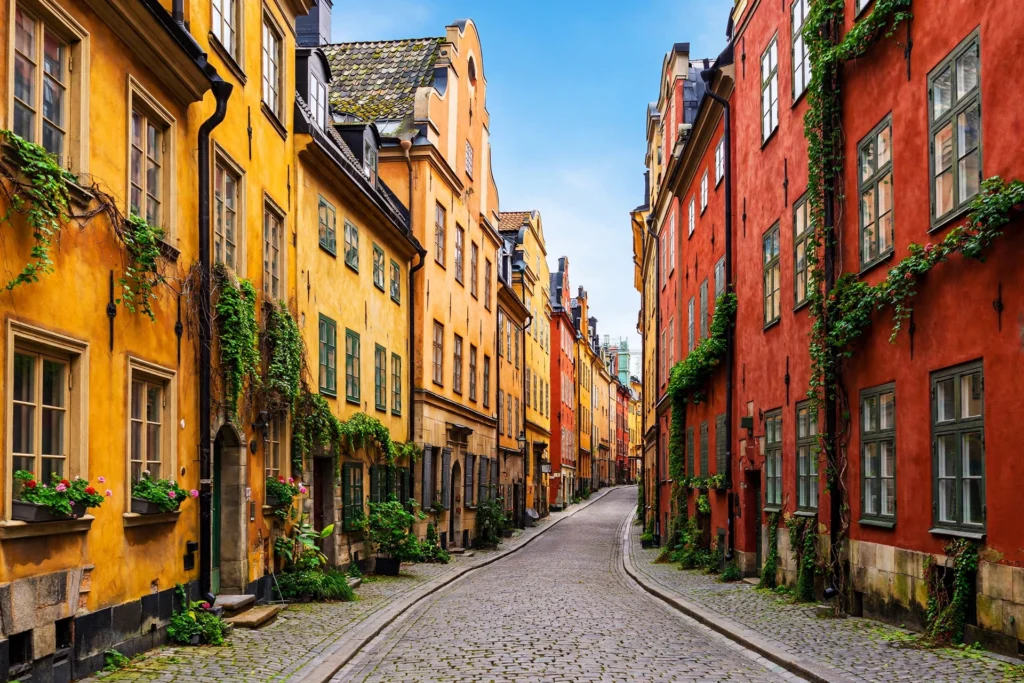
Stockholm is the reason most people come to Sweden, and it is also the city most people under-plan. It is built across fourteen islands where Lake Mälaren meets the Baltic, which means the water is never a backdrop — it is the shape of the city. Ferries cross between districts, the swimming spots sit in the middle of town, and the archipelago of some 30,000 islands begins at the edge of the centre. Four nights is the right amount of time. Three nights leaves you choosing between the museums and the archipelago, and you should not have to choose. Five nights is lovely but unnecessary on a first trip unless you are using the city as a base for day trips.
Plan Stockholm by neighbourhood, not by a list of sights. Each island and district has its own character, and crossing the city to tick off a scattered list wastes the thing Stockholm gives you most generously: the pleasure of walking beside water. The walkable core is Gamla Stan, Norrmalm, Djurgården and northern Södermalm, linked by bridges, and the water between them is scenery rather than an obstacle.
Day one: Gamla Stan and the Royal Palace
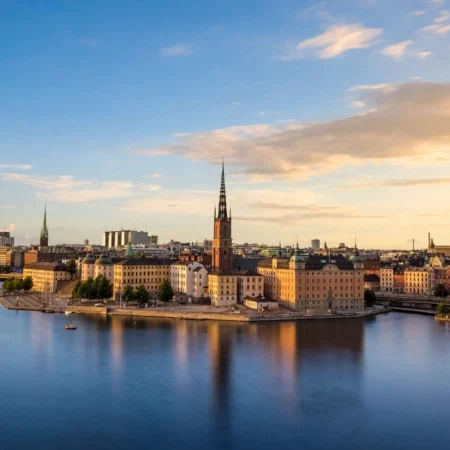
Start in Gamla Stan, the medieval old town, and start early, before the day groups arrive. The lanes are narrow, the paving is uneven, and the light in the morning is the best you will get for photographs. Stortorget, the oldest square in the city, is ringed by gabled merchant houses in red, ochre and mustard, and the former stock exchange building on the square houses the Nobel Prize Museum — a good first interior, because it explains the prize, its laureates and the December ceremony that still fills the city each year, in about an hour.
From the square, climb to Storkyrkan, Stockholm Cathedral, and then to the Royal Palace, one of Europe’s largest palaces still in official use. The state apartments, the treasury and the Royal Armoury sit inside it, and the changing of the guard draws a crowd at midday in summer. The palace is open daily; adult tickets are SEK 220 from October to April and SEK 240 from May to September, as checked in October 2026, and the royal apartments can close for official receptions, so check the day’s schedule before you walk over. Cross to Riddarholmen for the panoramic views back across the water, then pause for a fika — a coffee and a cinnamon bun — before the afternoon.
The afternoon belongs to the waterfront. Walk the quays, take the Djurgården ferry if the light is good, and end the day in Södermalm, the island of viewpoints and neighbourhood restaurants, for dinner. Monteliusvägen, the cliff-top walk on Södermalm, gives you the classic Stockholm view across the water to Gamla Stan and the City Hall, and it costs nothing. If you are staying near Stockholm Central, in Norrmalm, you have the simplest airport and onward-rail logistics; Södermalm suits a traveller who wants a local, lived-in stay; Gamla Stan itself suits atmosphere over quiet, because the lanes stay busy late.
Day two and three: museums, design and neighbourhoods
Give Djurgården a full day — it is covered in the next section — and use the other full day for the city beyond the old town. Stockholm City Hall, on Kungsholmen, is where the Nobel Prize banquet is held, and the guided tour is worth booking ahead. The Nationalmuseum and Moderna Museet sit on the island of Skeppsholmen, a short walk from the centre, and the Fotografiska photography museum stays open late, which makes it a good evening option. The Stockholm metro is itself an attraction: the art in the stations is famous, and a 72-hour SL travelcard at SEK 360 covers the metro, buses, trams and the Djurgården ferry, which makes a self-guided metro-art walk effectively free once you have the card. A single ticket costs SEK 43 and lasts 75 minutes, and a 24-hour card is SEK 180.
Where to stay in Stockholm
Stay central and walk. Norrmalm, around the central station, is the practical choice for anyone arriving by train or heading onward by rail. Gamla Stan is the atmospheric choice and the noisiest. Södermalm is the local choice, with the best neighbourhood restaurants and the viewpoints, and it is a short metro ride or a long walk from the centre. Östermalm is the quiet, expensive choice, good for food halls and calm streets. Book early for June, July and August, and expect to pay more for a room with a water view than the view is worth — Stockholm’s best views are free, from the quays and the cliffs.
Stockholm costs: what a day actually costs
| Item | Typical cost |
|---|---|
| Hotel, mid-range double | SEK 1,400–2,400 per night |
| Hostel dorm bed | SEK 350–600 per night |
| SL 72-hour travelcard | SEK 360 |
| Vasa Museum (adult) | SEK 195 (Oct–Apr) / SEK 240 (May–Sep) |
| Skansen (adult, online) | SEK 240 (seasonal; more on event days) |
| Royal Palace (adult) | SEK 220 (Oct–Apr) / SEK 240 (May–Sep) |
| Lunch special (dagens rätt) | SEK 120–180 |
| Restaurant dinner, mid-range | SEK 350–550 per person |
| Coffee and cinnamon bun (fika) | SEK 60–90 |
| Archipelago day boat | SEK 200–450 return |
The single best money trick in Stockholm is the same as in the rest of Sweden: dagens rätt, the lunch of the day. On weekdays between about eleven and two, restaurants serve a hot main with salad, bread and coffee for roughly SEK 120–180 — often half the price of the same dish at dinner. Build your days around it. Eat a grocery breakfast, take the lunch special, and spend the dinner money on one good restaurant rather than three mediocre ones. Tap water is excellent everywhere, so carry a bottle and refill it. And remember that Sweden is nearly cashless: cards work everywhere, including on buses and at market stalls, and some places take no cash at all.
When to visit Stockholm
May and June bring long days, green parks and a city-and-archipelago balance that is hard to beat; the water is still cold and midsummer holidays can close businesses or reshape schedules, so check the calendar around the midsummer weekend in late June. July and August offer the broadest opening hours and the most outdoor life, but also the highest hotel prices and the most visitors. September and early October suit city breaks, design and food, with golden light and thinning crowds, while the archipelago boats run less often. November through April is museum season: Christmas markets, short days and a city that varies enormously with the weather — Stockholm can be cold without delivering a snowy postcard, so come in winter for the museums and the food, not for a guaranteed winter scene. The northern lights are not a Stockholm sight; if they are the reason for your trip, you need the north, and this guide’s Lapland sections explain how.
Stockholm with children and teenagers
Stockholm is one of Europe’s easiest capitals with children, and the reason is that the best things are outdoors and free. The Vasa Museum works for every age — the ship is so large and so strange that even a bored teenager looks up — and Skansen’s zoo, the children’s area Lill-Skansen and the farm animals absorb a whole afternoon. The Djurgården ferry is a boat ride that counts as transport, the metro art is a treasure hunt that costs nothing beyond the travelcard, and the archipelago beaches are the summer playground. Teenagers get the design shops in Södermalm, the Fotografiska museum and the ABBA museum. Practical points: children aged 18 and under enter the Vasa Museum free, children aged 0–15 enter Skansen free with a complimentary ticket added to the booking, and the SL travelcard covers the whole family for one price per person. Bring a carrier rather than a pushchair for Gamla Stan, where the paving and the steps make wheels a burden, and plan one museum a day rather than two — the city is the attraction, and the children will tell you so.
Djurgården: the Vasa Museum and a Day Among the Museums
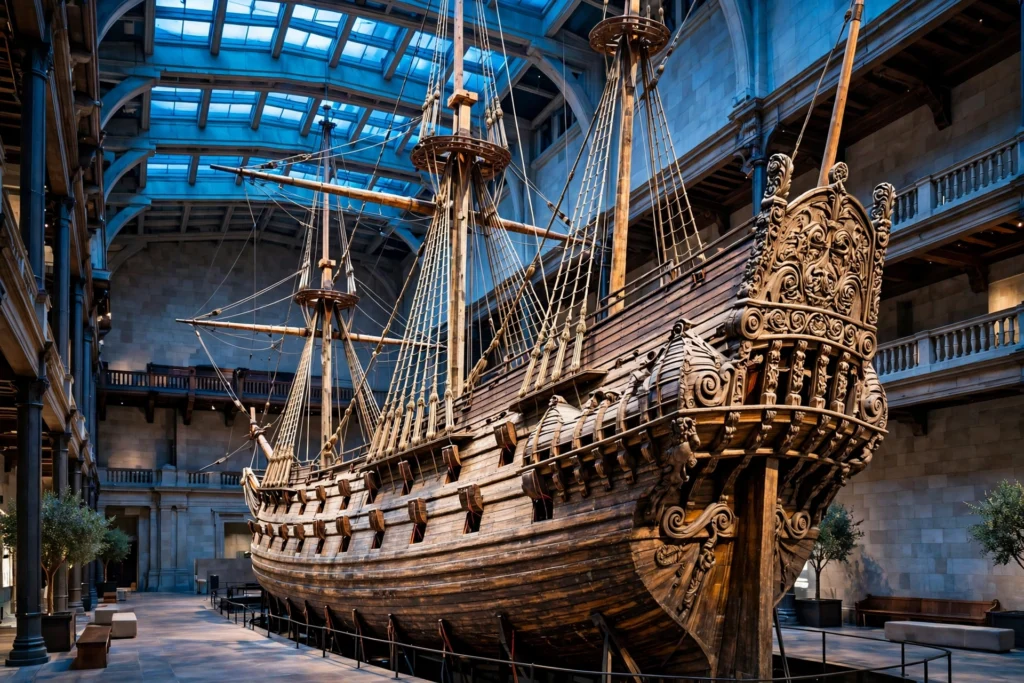
Djurgården is the green island east of the centre, and it holds the densest cluster of attractions in Stockholm: several major museums within a few minutes’ walk of each other, an amusement park, and jetties for boat trips. It deserves a whole day, and the mistake is trying to do four museums in one afternoon. Choose two major attractions, give each of them the hours it deserves, and let the parkland and the waterfront do the rest.
The Vasa Museum: the ship that sank and came back
The Vasa Museum holds the warship Vasa, which sank about 1,300 metres into her maiden voyage in Stockholm harbour in 1628 and was raised, almost entirely intact, in 1961. She is the only preserved seventeenth-century warship in the world, and the museum is built around her: you walk up through the galleries and see her from the keel to the top of the masts, with the carved stern, the gun decks and the exhibitions about the people who sailed — and died — on her. It is the single most impressive museum in Sweden, and it is worth going at opening time. The museum opens at 10:00 daily from September to May, and at 08:30 in June, July and August; on Wednesdays it stays open until 20:00 from September to May.
Adult admission is SEK 195 from January to April and from October to December, and SEK 240 from May to September. Visitors aged 18 and under enter free. A combination ticket with the nearby Vrak — Museum of Wrecks costs SEK 315 in the cheaper months and SEK 359 from May to September, and lasts 72 hours. The museum takes cards only, and it warns that pre-purchased tickets give no priority in the queue — buy at the door or online and go at opening, which is the advice that actually works. No large or wheeled bags, and there is no luggage storage, so leave the big bag at the hotel. Check current prices and hours on the museum’s official opening hours and admission page before you go.
The rest of Djurgården: what to pair with the Vasa
Skansen, covered in the next section, is the natural second stop. After that, choose by interest rather than by obligation. ABBA The Museum sells timed 30-minute slots and is a joyful, well-made pop museum. The Viking Museum is a compact, story-led museum that works well for families. The Nordic Museum (Nordiska museet) covers Swedish life, craft and design in a grand hall that is worth seeing for the building alone. Gröna Lund, the amusement park on the waterfront, is a summer-evening option rather than a daytime one. And the island itself — the oak woods, the waterfront paths, the Rosendal garden café — is a destination in its own right on a fine day.
Getting there is part of the pleasure. Tram 7 runs from T-Centralen to the Nordiska museet/Vasamuseet stop. The Djurgården ferry from Slussen or Nybroplan is a short, scenic crossing and is included in the SL travelcard. Walking from the centre takes about 25 minutes along the water. Do not drive: from late April to late September, Djurgårdsvägen is closed to cars on weekends and holidays, and parking on the island is scarce at the best of times.
A practical Djurgården plan
Go to the Vasa Museum first, at opening, and give it two hours. Walk to Skansen next and give it three to four hours, including lunch. If you still have energy, add one more museum — ABBA or the Nordic Museum — in the late afternoon, or take the ferry back and spend the evening in Södermalm. If the weather turns, reverse the order: do the indoor museums first and save Skansen’s open-air grounds for the brighter part of the day. And if you are travelling with children, Skansen’s zoo and the children’s area Lill-Skansen will happily absorb an entire afternoon on their own.
Skansen and the Open-Air Museum: Sweden’s Traditions in One Hillside
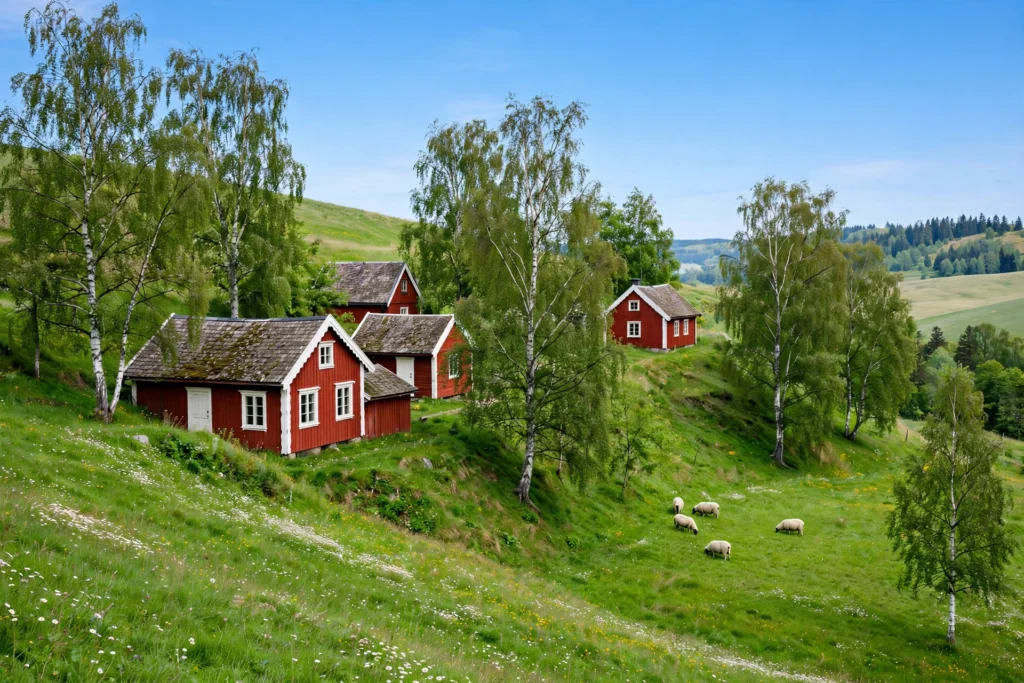
Skansen is the world’s oldest open-air museum, founded in 1891 on a wooded hill in the middle of Djurgården, and it is the place where Sweden explains itself. Around 150 historic buildings — farmhouses, cottages, workshops, a church, a manor house — were moved here from all over the country and rebuilt on the hillside, staffed in season by people in period dress demonstrating crafts, cooking and farm work. It is also a zoo of Nordic animals: brown bears, wolves, lynx, wolverines, moose and reindeer, plus the children’s zoo Lill-Skansen and the Baltic Sea Science Center, which are included in the ticket. The aquarium costs extra.
What to see and how long it takes
Three to four hours is the right amount of time. Start at the main entrance and work uphill through the town quarter — the glassworks, the bakery, the printing shop — then into the farmsteads, where the red cottages, birch trees and grazing meadows look like the Sweden of a storybook. The animals sit at the top of the hill and at the far end, so save them for the middle of the visit rather than the start. The funicular railway from the Hazelius Gate carries visitors up the steepest climb, and it runs in high season and on some weekends. In summer, the singing evenings — Allsång på Skansen — are a Swedish institution, and the midsummer celebrations in late June are the most traditional in the country.
Skansen is open every day of the year, but the hours change with the season. From 28 September 2026 to 10 January 2027 it opens 10:00–15:00 on weekdays and 10:00–16:00 at weekends, with longer days during the Christmas market, which runs Friday to Sunday from 27 November to 20 December 2026. In summer it stays open until 18:00. The Christmas market weekends are the busiest days of the winter, and the ticket price rises on event days.
Tickets, prices and the booking rule
Skansen’s prices vary by season and by date, and the online price is always the lowest — tickets bought at the entrances cost slightly more, and the park is cashless. As checked in October and November 2026, an adult one-day ticket online costs SEK 240 on ordinary autumn days, SEK 200 for students and pensioners, and children aged 0–15 enter free — but children still need a complimentary ticket added to the booking, so add one for each child when you buy. On event days such as the Christmas market weekends, the adult price rises to SEK 325. In peak summer the adult price has been as high as SEK 305. The annual pass costs SEK 445 for an adult and pays for itself on the second visit. The aquarium is a separate ticket, about SEK 175 for adults, bought at the aquarium itself. Check the price for your exact date on Skansen’s official tickets page before you go, because the seasonal pricing means a figure quoted for October is wrong for July.
Why Skansen matters to a first trip
Most visitors come to Skansen for the animals or the views, and both are good. But the reason it belongs in this guide — and the reason it earns a full section rather than a paragraph inside the Djurgården one — is that it is the fastest way to understand the Sweden outside Stockholm. The red cottages, the birch woods, the farm animals, the crafts and the seasonal festivals are the texture of the country, and seeing them here makes the rest of the trip legible: the cottages you will see from the train window, the fika culture, the midsummer poles, the Christmas markets. Come in the morning, walk slowly, eat lunch at one of the cafés on the hill, and treat it as a day in the Swedish countryside rather than a museum to be finished.
The Stockholm Archipelago: the Day Trip That Changes the Whole Trip
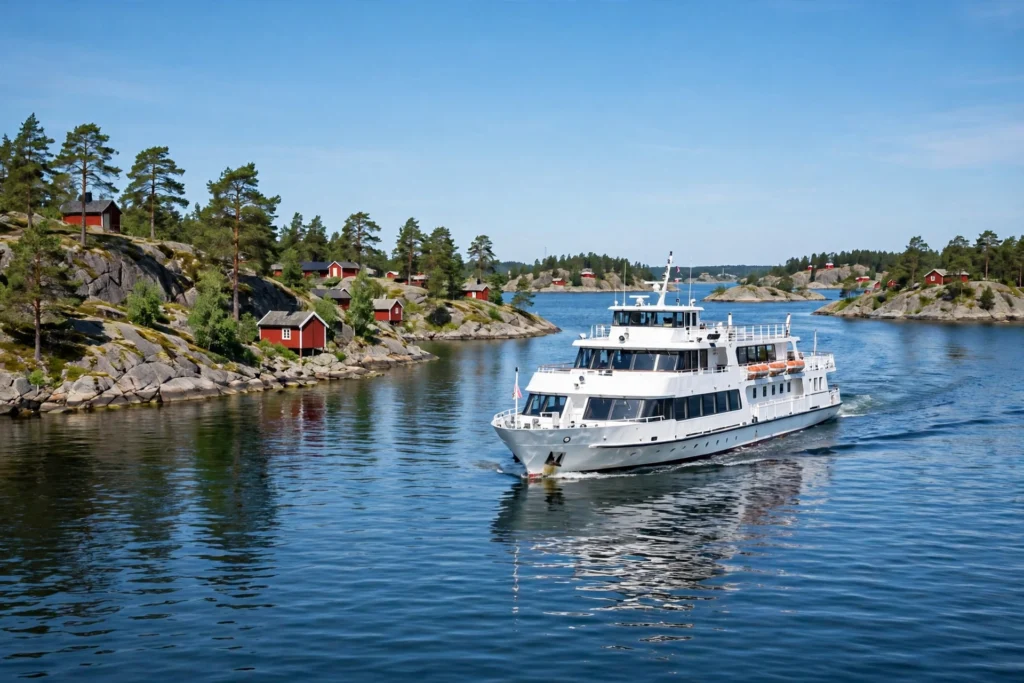
Ask travellers what they remember most about Stockholm and a surprising number will say the archipelago, not the old town. The archipelago is some 30,000 islands stretching east from the city into the Baltic, from the near islands you can reach in 25 minutes to the outer skerries where the sea is open and the houses are few. A day out there is the differentiator between a good Stockholm trip and a memorable one, and it is the day most first-time visitors skip because it feels complicated. It is not complicated. It needs one decision — which island — and one habit — checking the return boat before you leave.
Which island to choose
For a first archipelago day, choose Vaxholm. It is the gateway town of the archipelago, about an hour by boat from the centre, with a fortress, a harbour full of wooden boats, cafés and swimming spots, and enough to do for a half day without any planning beyond the timetable. Fjäderholmarna is closer — about 25 minutes by boat — and works for a short taster, a lunch and a swim, but it is small. Sandhamn, the sailing island at the outer edge, is a full day and worth it if the boat journey is the main event rather than the destination. Grinda is a good middle choice: an island with a manor house, a restaurant, swimming rocks and walking paths, about an hour and a half out.
The rule is to pick one island and stay there. The archipelago tempts you to collect ferry stops, and the ferries will punish you for it: the boats are infrequent, the connections are not always obvious, and the last boat is no place for an optimistic guess. Give one island two to three hours ashore, have lunch there, swim if the weather allows, and keep two return sailings in mind before you leave the mainland, aiming for the earlier one.
Boats, tickets and the last-boat rule
The archipelago boats are run by Waxholmsbolaget, and the timetables are seasonal: summer has the most sailings, winter the fewest, and weekends differ from weekdays. Buy tickets on the boat or in the app, and check the outbound and return timetables together, plus the pier name and the payment rules, before you leave. Not every boat accepts the same ticket as the city transit system, and the SL travelcard does not cover all archipelago services — a common and expensive misunderstanding. A return to Vaxholm costs roughly SEK 200–300; a longer day out to Sandhamn or Grinda runs higher, and the sightseeing boats that loop the inner archipelago in two or three hours are a good option if you want the scenery without the logistics.
Wind, season and weekends can change the practical choices. Bring a windproof layer even on a bright morning, because the open water is colder than the city, and pack food when seasonal cafés may be closed. Swimming conditions, docks, rocks and water temperature require judgement rather than confidence borrowed from locals: the water is cold even in July, and the smooth rocks are slippery when wet.
If the weather turns
If the weather is poor, stay in Stockholm for Södermalm, Fotografiska, the food halls, the design shops, or another museum. A flexible fourth day is not wasted just because it never leaves the city. The archipelago will still be there on your next trip, and a grey, windy boat ride is a worse memory than a warm afternoon in a food hall. But if the morning is bright, go: the light on the water, the red cottages on the rocks, the pine trees and the slow pace of the boat are the Sweden that the city only hints at.
Gothenburg: Canals, Seafood and Sweden’s Friendliest City
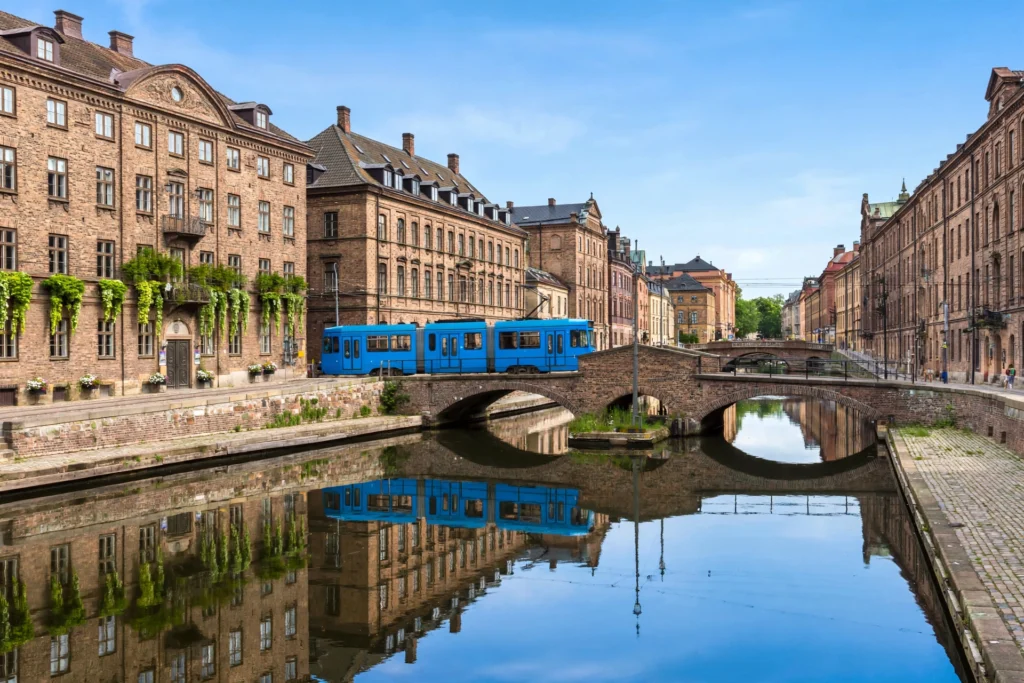
Gothenburg is Sweden’s second city, and it is the best second city for a first trip. It is smaller than Stockholm, friendlier, cheaper, and built around canals, a working harbour and a seafood tradition that the capital cannot match. It also has its own archipelago, its own food scene and a pace that feels like a holiday after Stockholm’s museums. Three nights is the right amount of time: one day in the centre, one day in the archipelago, and one day for the things you discover along the way.
Getting there: the train, and the works on the line
The train from Stockholm to Gothenburg is the journey that most first-time visitors take, and right now it needs a warning. Work continues on the Western Main Line — the railway between the two cities — through August 2027. The section between Gothenburg and Alingsås is the problem: the traction power system is being renovated, trains run on a single track there until 18 July 2027, and there are complete closures on some weekends, with long-distance trains diverted via Borås or Vänersborg and local trains replaced by buses. The fastest journeys currently take around three and a half hours instead of three, and SJ has said direct trains with no intermediate stops will return from 19 July 2027, with a journey time of two hours and 58 minutes.
What that means for you is simple: check the exact departure on sj.se before you travel, and check it again on the morning of the journey. Do not assume the timetable you saw when you booked is the timetable on the day. Book a departure that protects your important plans, leave a buffer before any onward connection, and never attach a same-day cross-country train to a separate international flight ticket — a delay on the railway then becomes your problem, not the airline’s. SJ’s official project notice for the Western Main Line works is the page to check. The works are the reason this guide keeps saying “check the exact departure” rather than giving you a timetable: on this line, in 2027, the timetable is a moving target.
Central Gothenburg: canals, Haga and the food
Build the first day around the canals, the Haga district, a food market and one museum or garden. The city centre is compact, but the trams save energy when the weather turns or your interests sit on opposite sides of town. Haga is the old working-class quarter of wooden houses, cafés and small shops — go for the cinnamon buns, which are famously oversized here, and stay for the streets. The fish market, Feskekôrka, is the city’s seafood landmark, and the market halls are the best place to eat well without paying restaurant prices. The Universeum science centre and the Museum of World Culture sit near the amusement park Liseberg, and the botanical garden is one of the finest in Europe, free to enter, and worth a slow afternoon.
Seafood is the highlight, and Gothenburg does it better than anywhere else in Sweden: shrimp sandwiches on the west coast, oysters, mussels, and the fish soup that appears on menus all over the city. But the best meal is not automatically the largest platter near a tourist corridor. Check current menus, look for the lunch special, and remember that the harbour restaurants a short tram ride from the centre are often better value than the ones on the main square.
The southern archipelago: Gothenburg’s island day
Gothenburg’s southern archipelago is car-free, which makes it a different experience from Stockholm’s: you take a tram to Saltholmen, then a passenger ferry out to the islands, and you walk. Donsö is the best first choice: a fishing harbour, village lanes, a meal, and a day you can actually follow. Take tram 11 from central Gothenburg toward Saltholmen, allow roughly ten minutes to walk to the ferry and find the right berth, then take the Västtrafik boat 281 on a departure calling at Donsö. Budget about 45 minutes for the central-city tram and walking portion and roughly 25 to 45 minutes for the ferry, depending on its stops, plus waiting time; reserve six to seven hours for the whole outing.
Give Donsö two to three hours for the harbour, the lanes and a meal, checking the chosen restaurant’s opening day before departure. Bring a picnic backup and a windproof layer, because seasonal dining and exposed ferry decks can surprise you even when downtown feels warm. Save two return sailings before leaving the mainland and aim for the earlier one. For a shorter day, stay around the harbour and return after lunch. Styrsö and Vrångö are good alternatives if you want a longer walk or a swim, and the same rules apply: one island, two return options, no heroics with the last boat.
Where to stay and what it costs
Stay in the centre, near the canals or the main boulevard, Avenyn, and you can walk to almost everything. Gothenburg is cheaper than Stockholm across the board: mid-range hotels run roughly SEK 1,100–1,900 a night, dorm beds SEK 300–500, and the lunch specials are a little cheaper too. A day in Gothenburg, all in, typically costs SEK 1,200–2,000 per person, against SEK 1,500–2,500 in Stockholm. The city transit runs on the Västtrafik app, with its own zones and tickets — a Stockholm ticket does not work here, and neither does a Gothenburg ticket in Stockholm, so buy the local product in each city.
Malmö and the South: Skåne, Lund and the Bridge to Copenhagen
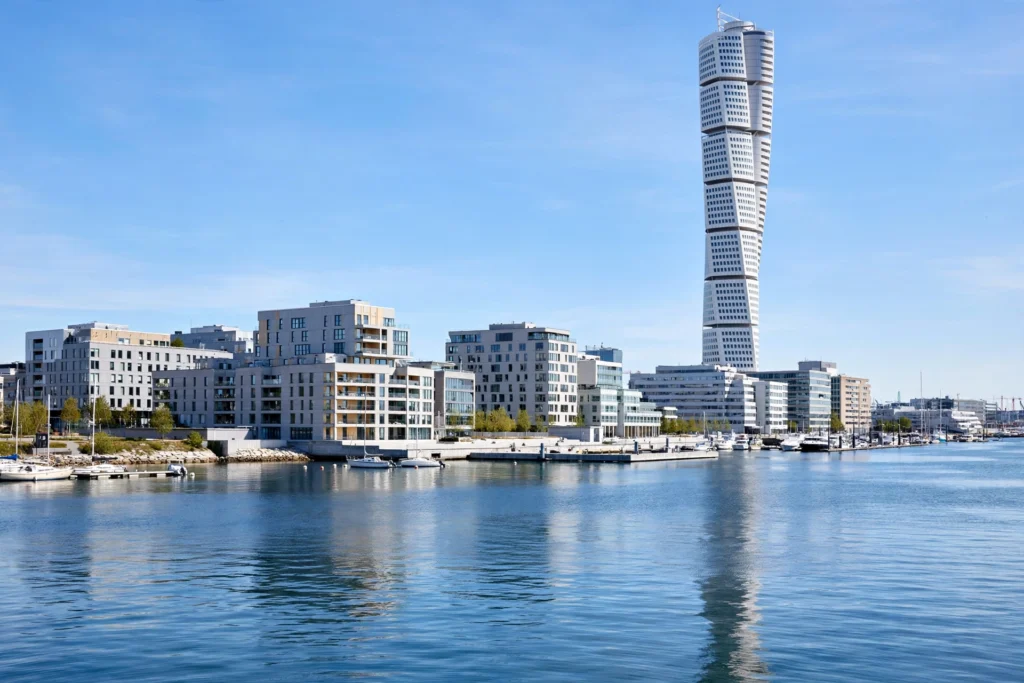
Choose Malmö when contemporary food, parks, architecture and an easy connection with Copenhagen appeal more than Gothenburg’s western islands. It is the most affordable of Sweden’s three big cities, the most multicultural, and the most southern in feeling — the beech woods, the farm country and the light of Skåne are a different Sweden from the forests of the north, and the city sits 35 minutes by train from Copenhagen across the Öresund Bridge. Base in Malmö for at least two nights so the city is not reduced to a side trip from Denmark, and give it a full day of its own.
A day in Malmö
Start in the old town, Gamla Staden, with its squares — Stortorget, Lilla Torg and Gustav Adolfs torg — and the half-timbered houses that survived from the city’s trading past. Walk to the Turning Torso, the twisting residential tower by the harbour that has become the symbol of the modern city, and the Western Harbour district around it, where the old shipyards became a neighbourhood of parks, promenades and sustainable housing. The Ribersborg beach, a short walk from the centre, is where the city swims in summer and walks in winter. Malmö’s food scene punches above its size: the city has a large Middle Eastern and international community, and the falafel, the bakeries and the market food are among the best value meals in Sweden. The parks — Pildammsparken and Slottsparken — are the city’s lungs, and the castle, Malmöhus, holds the city museum.
Lund, Skåne and the countryside
Lund, twenty minutes by train, adds a compact university-town day: a twelfth-century cathedral, a medieval old town, a botanical garden and a student city that feels like a smaller, older Oxford. It is an easy half day and a good complement to Malmö’s modernity. Southern Skåne works better with additional time or a car: the rolling farmland, the manor houses, the beaches of the south coast and the artist villages of the Österlen region are a slow-travel destination, not a day trip from a train station. If you have a car for two days, drive the coast from Malmö to Ystad and Simrishamn, stopping for the standing stones at Ale’s Stones and a farm café lunch.
Copenhagen: the day trip that is also a decision
The train to Copenhagen takes 35 minutes and crosses the Öresund Bridge, and it is tempting to treat Malmö as a cheap bed for a Copenhagen holiday. That is a legitimate way to travel — Copenhagen is one of Europe’s great cities, and Malmö’s hotel prices are lower — but it is not a Sweden trip. If Copenhagen is the priority, base there and visit Malmö for a day. If Sweden is the priority, keep the Copenhagen day to one day: an early train over, the old town and the harbour, and an evening train back. Carry your passport on the cross-border journey, because the absence of routine checks does not remove the travel-document requirement, and check the complete international ticket conditions before you buy — the Malmö–Copenhagen ticket is an international fare with its own rules.
Malmö costs and the southern advantage
Malmö is the cheapest of the three cities in this guide. Mid-range hotels run roughly SEK 1,000–1,700 a night, dorm beds SEK 280–450, and the food — especially the international food — is noticeably cheaper than Stockholm. A day in Malmö, all in, typically costs SEK 1,000–1,800 per person. The savings are real, but they are not the reason to choose Malmö: choose it because the south of Sweden is a different country from the north, and this is the easiest way to see it.
Kiruna and Abisko: the Northern Lights in Swedish Lapland
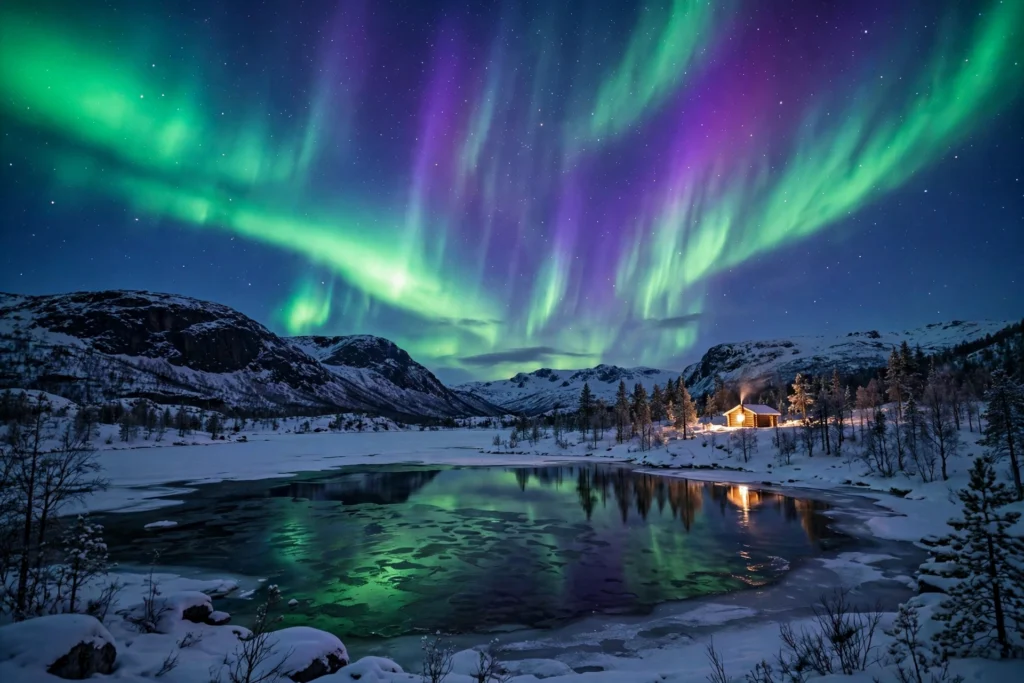
This is the other Sweden, and it is the reason Route B exists. Kiruna and Abisko sit above the Arctic Circle in Swedish Sápmi, the Sámi homeland, and they offer what the south cannot: the northern lights on a dark winter sky, the midnight sun in summer, and a landscape of mountains, frozen lakes and snow forest that feels like another continent. Lapland deserves four or more nights after travel time, and it deserves to be a trip in its own right rather than an add-on to a southern city break. If you have less than that, save it for next time — a rushed Arctic trip is the most expensive way to see nothing.
Abisko: why the lights are better here
Abisko National Park is one of the best places in the world to see the northern lights, and the reason is a local dry microclimate that locals call the blue hole: a gap in the cloud cover over Lake Torneträsk that gives Abisko clearer skies than the surrounding mountains. The Aurora Sky Station sits on top of Mount Njulla, reached by chairlift, and the station says the lights are visible on roughly 70 percent of clear nights during the season, which runs from September to late March. That figure is for clear nights — the lights are never guaranteed, and anyone who promises them is selling something. What Abisko gives you is the best odds in Sweden, and three nights there gives you three chances.
The practical shape of a stay is simple: base in Abisko for three nights, use the days for the national park, the canyon and the Kungsleden trail, and use the evenings for the lights. The Sky Station chairlift slots fill first on clear-forecast nights, so book them as soon as the forecast firms up, and dress for standing still in the cold for an hour or more — the wind on the mountain is the thing that ends aurora nights early, not the temperature. If the Sky Station is booked out, the lakeside at Abisko Turiststation is itself a good viewing spot, and an evening aurora walk or a guided photography tour is a fine alternative.
Kiruna: the mining town that moved
Kiruna is the gateway town, 93 kilometres — about an hour by local train — from Abisko, and it is a place worth understanding before you judge it. It is a mining town, home to the world’s largest underground iron ore mine, and the mine is undermining the town: Kiruna is being moved three kilometres east, building by building, in one of the strangest urban projects in Europe. The great wooden church was rolled to its new site in August 2025 and is due to reopen during 2027. The new town centre, with its round town hall, is worth a walk, and the town’s Sámi culture — the reindeer herding, the handicrafts, the food — is the living culture of the region, not a tourist display.
Kiruna is also the transport hub: the airport with flights to Stockholm, the railway station for the night train, and the base for the ICEHOTEL shuttle. If you are flying in, you will land here. If you are taking the night train, you will wake here. Either way, give Kiruna a day: the mine tour, the church, the town, and an evening of Sámi food.
When to go north, and what it costs
The aurora season runs from late September to late March, with the darkest skies — and the coldest weather — from December to February. February and March are often the best balance: dark enough for the lights, with more daylight than December and milder temperatures. The midnight sun season runs from late May to mid-July, when the sun does not set and the hiking is at its best. Avoid May and November, when the snow is melting or not yet arrived and the light is neither one thing nor the other.
The north is expensive, and the costs are mostly activities, not hotels. As a planning guide: the night train sleeper from Stockholm to Kiruna runs roughly SEK 1,200–2,100 per person depending on class and how early you book; a night at the ICEHOTEL starts from around SEK 3,500 per person in an ice room; an Aurora Sky Station evening runs from about SEK 1,295; a guided dog sled or snowmobile day runs SEK 1,500–3,000; and a night in a mountain station or a Kiruna hotel runs SEK 1,200–2,500. A four-night northern leg, all in, typically costs SEK 12,000–20,000 per person on top of the Stockholm leg — which is why this guide insists on four nights rather than two. Two nights in the north is the price of a week in the south, with half the chance of seeing the lights.
A note on Sápmi and respect
The north of Sweden is Sápmi, the homeland of the Sámi people, and the reindeer herding, the languages and the handicrafts you will see are a living indigenous culture, not a theme. Treat it that way. Book Sámi-run experiences where you can — the reindeer visits, the food, the storytelling — and ask before photographing people or private land. The word “Lapland” is still used for the region, including in tourism, but the people of the region are Sámi, and the respectful term for the place is Sápmi or Swedish Lapland used carefully. Small courtesies cost nothing and matter here more than in most places.
The ICEHOTEL and Jukkasjärvi: Sleeping in a Palace of Ice
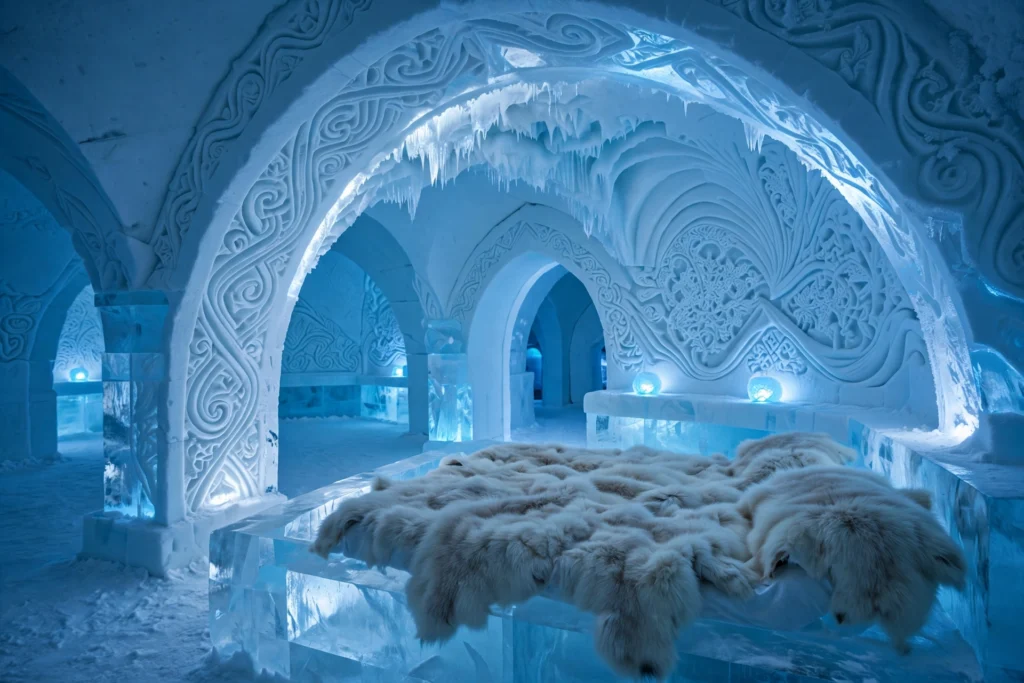
The ICEHOTEL, in the village of Jukkasjärvi 17 kilometres east of Kiruna, is the world’s first ice hotel, built anew every winter since 1989 from blocks of ice cut from the Torne River. Each year a new group of artists designs the ice rooms, the ice bar and the ice church, and each spring the whole building melts back into the river. It is the single most famous thing in Swedish Lapland, and it is worth understanding before you book — because the ICEHOTEL is two different experiences, and they cost very different amounts.
Staying overnight versus visiting for the day
Sleeping in an ice room means sleeping in a sleeping bag rated to around minus 30 degrees on a bed made of compressed snow and ice, in a room that is kept at about minus 5 degrees all night. It is comfortable — the sleeping bags are serious equipment, and the hotel provides them — but it is still a night at minus 5, and it is not for everyone. The overnight ice rooms start from around SEK 3,500 per person, and they sell out for peak dates — Christmas, New Year and the February school-holiday week — months ahead. Book the day your dates open, and book the ICEHOTEL before you book anything else in the north.
The day visit is the better choice for most travellers. You walk through the ice rooms and galleries, see the art, have a drink in the ice bar, and sleep in a warm room in the hotel’s permanent buildings. The day visit costs around SEK 195–295 depending on the season, the hotel runs a shuttle from Kiruna station, and taxis run for around SEK 300 one way. The 37th ICEHOTEL opened on 11 December 2026, with day visits running from 12 December 2026 to 10 April 2027, 10:00 to 18:00 — but the exact dates change every year, so check the current season on the hotel’s own site before you plan around it.
Jukkasjärvi and the Sámi village
The village around the hotel is worth a day of its own. Nutti Sámi Siida, next door to the hotel, is a Sámi-run cultural centre with reindeer, exhibitions, storytelling and food — the reindeer visit there is one of the most respectful and rewarding Sámi experiences in Sweden. The Torne River itself, frozen solid in winter and wide and bright in summer, is the centre of the village’s life, and the ice is cut from it each year for the hotel. In summer, Jukkasjärvi is a quiet riverside village with fishing, hiking and midnight sun, and the ICEHOTEL’s permanent buildings stay open year-round.
How to fit the ICEHOTEL into a northern trip
On a four-night northern leg, the shape that works is: night train to Kiruna, transfer to Abisko for three nights, then back to Kiruna for the ICEHOTEL day and a final night before flying or training south. Or the reverse: ICEHOTEL first, then Abisko. Either way, do not try to do the ICEHOTEL as a day trip from Abisko and back in one day — the transfers eat the day, and the ice deserves a slow morning. And if you are staying overnight in an ice room, remember the practical details: the hotel stores your luggage in a warm room, you change into thermal layers in the warm building before going to your ice room, and the morning sauna is not optional — it is the best part.
Lapland in Winter: Snow Forests, Dog Sleds and the Polar Night
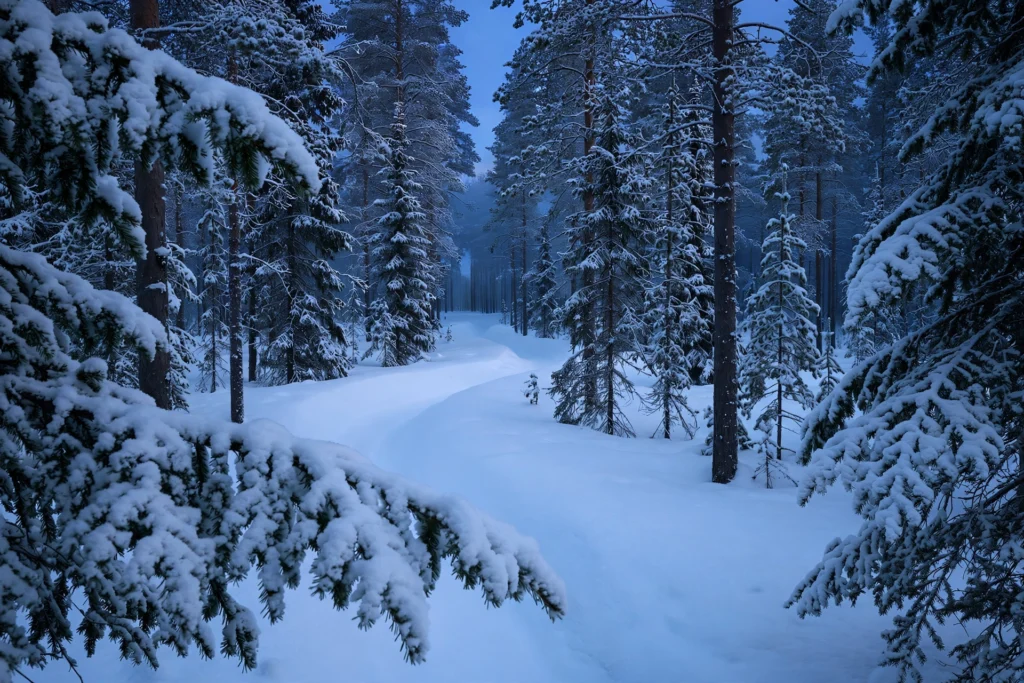
Winter in Swedish Lapland is not a season, it is a different world. From December to January the sun barely rises — in Abisko, the polar night means weeks of twilight rather than full darkness, with a blue hour that stretches across the middle of the day — and the landscape is snow forest, frozen lakes and mountains under a sky that can turn green at night. It is beautiful, and it is demanding, and the travellers who enjoy it most are the ones who arrive prepared for both.
Dog sleds, snowmobiles and skiing
The activities are the point of a winter trip, and they are best booked as guided experiences rather than improvised. Dog sledding is the classic: a team of huskies, a sled, a guide, and a day out in the snow forest, with lunch cooked over a fire. Snowmobile tours cover more ground and reach the frozen lakes and the mountain valleys. Cross-country skiing is the Swedish way of moving through the winter landscape, and the trails around Abisko and Kiruna are well marked. Downhill skiing belongs to Åre, Sweden’s biggest ski resort, which sits on the railway line south of the Arctic and works well as a stop on the way back to Stockholm.
Book the activities before you travel, especially in December, January and February, when the guides’ calendars fill weeks ahead. Dress for standing still, not for moving: thermal layers, a windproof outer shell, insulated boots, and — the thing people forget — a warm hat that covers your ears and gloves that let you hold a camera. The cold is manageable when you are moving and brutal when you are standing still watching the sky, which is exactly what an aurora night requires.
The polar night and the light
The polar night is the most misunderstood part of a Lapland winter. It is not 24 hours of darkness: in Abisko, the sun stays below the horizon for several weeks, but the sky lightens to a deep blue twilight around midday, and the snow reflects what light there is, so the world is never black. The light is extraordinary — pink and blue and gold across the snow, for hours at a time — and photographers travel here for it. But the days are short, and you must plan around them: do your outdoor things first, in the light, and save the museums, the cafés and the rest for the dark hours. In February and March, the light returns quickly, and the balance of daylight and darkness is the best of the winter.
What to pack for the north
The packing list for Lapland is a different list from the one for Stockholm, and it is worth getting right. Thermal base layers (merino wool is best), a mid-layer of fleece or wool, a windproof and waterproof outer shell, insulated winter boots with good grip, warm socks, glove liners plus outer mittens, a balaclava or a neck gaiter, and a headlamp — the headlamp is the item people forget and miss most, because the dark comes early and the paths are not lit. Hand warmers are cheap and worth carrying. A power bank is essential, because cold drains phone batteries fast, and your phone is your camera, your map and your aurora forecast. Our full travel packing checklist covers the general list; for the north, add the cold-weather items above and leave the summer clothes at home.
Winter costs and the booking order
Book in this order: Aurora Sky Station, then the ICEHOTEL if you are staying overnight, then the night train, then the accommodation, then everything else. The reason is scarcity: the Sky Station’s chairlift slots and the ICEHOTEL’s ice rooms are the things that sell out first, and a trip built around them needs them confirmed before the rest is worth booking. A winter day in Lapland, all in, typically costs SEK 2,000–3,500 per person, and a four-night northern leg runs SEK 12,000–20,000 — which is why this guide keeps saying four nights rather than two. The north is not a budget destination, and pretending otherwise helps nobody.
The northern lights forecast: how to read it
The aurora forecast is the most checked page of any winter trip, and the most misunderstood. The forecast has two parts, and both have to be right. The first is solar activity, measured on the Kp index from 0 to 9: a Kp of 2 or 3 is enough in Abisko, because the town sits under the auroral oval, and a Kp of 5 or more means a strong display. The second is the cloud forecast, and it matters more than the first — the lights can be dancing at Kp 6 and you will see nothing under a solid cloud deck. Abisko’s advantage is the blue hole, the gap in the clouds over the lake, which is why the town’s odds are better than the surrounding mountains. Check both forecasts on the afternoon of your viewing night, not a week ahead: the solar forecast changes by the hour, and the cloud forecast is only reliable for a day or two. The Norwegian Meteorological Institute’s Yr app and the Swedish Meteorological and Hydrological Institute’s SMHI app both give honest cloud forecasts for Abisko, and the Aurora Sky Station posts its own conditions. One more rule: get away from the lights of the town, give your eyes twenty minutes to adapt to the dark, and do not stare at your phone — the camera will see more than your eyes at first, and the display often starts faint and builds.
Drottningholm Palace and the Royal Day Trips from Stockholm
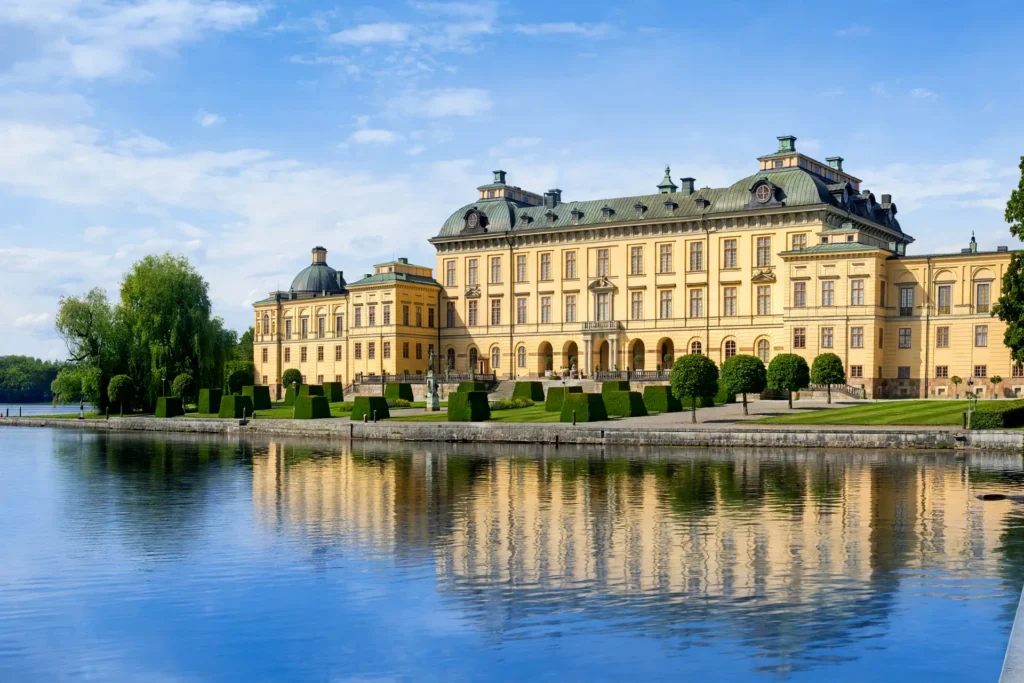
Drottningholm Palace, on the island of Lovön west of Stockholm, is a UNESCO World Heritage Site and the royal family’s permanent residence, and it is the best day trip from the capital. The palace itself is a baroque palace with state rooms, a theatre — the Drottningholm Palace Theatre, one of the best-preserved eighteenth-century theatres in the world — and the Chinese Pavilion, Kina slott, in the gardens. The gardens are the point on a fine day: the baroque garden, the English park, and the water of Lake Mälaren all around.
Getting there by boat
The best way to reach Drottningholm is by boat. The steamship from central Stockholm takes about an hour and is itself a sightseeing trip, out through the Mälaren waterways past villas and islands. In summer the boats run several times a day; in winter the service is reduced and the palace’s opening days are fewer — from November to April the palace is generally open at weekends only, so check the day before you go. The alternative is the metro and bus, which takes about 40 minutes and is the practical choice in bad weather. Adult tickets to the palace are around SEK 170 in 2026, with lower prices for students; check the current price on the day, because the palace’s prices change by season like the rest of Sweden’s museums.
The other day trips: Uppsala, Sigtuna and the Mälaren valley
If Drottningholm is the royal day trip, Uppsala is the university one. An hour north by train, it has a thirteenth-century cathedral — the largest in Scandinavia — a university that dates to 1477, a botanical garden and a compact old town that rewards a slow afternoon. It is a half day, and it pairs well with a morning in Stockholm. Sigtuna, Sweden’s oldest town, sits on the shore of Lake Mälaren about an hour north by bus and train, with Viking history, a main street of wooden houses and a lakeside that is quiet even in summer. The Mälaren valley behind Stockholm — the old church towns, the manor houses, the lake itself — is the countryside that most visitors never see, and a day there is the closest thing to the Sweden of the travel posters without leaving the Stockholm region.
When to choose a day trip over another city day
The rule is simple: if you have four nights in Stockholm, spend three in the city and one on a day trip. The day trip is the thing that turns a city break into a Sweden trip, and Drottningholm is the best version of it — the boat, the palace, the gardens, and the water. If you have only three nights, stay in the city and save Drottningholm for next time; the archipelago day matters more. And if the weather is bad, choose Uppsala over Drottningholm, because Uppsala is an indoor city and Drottningholm is a garden.
Fika, Food and Swedish Design: Eating Well Without Overspending
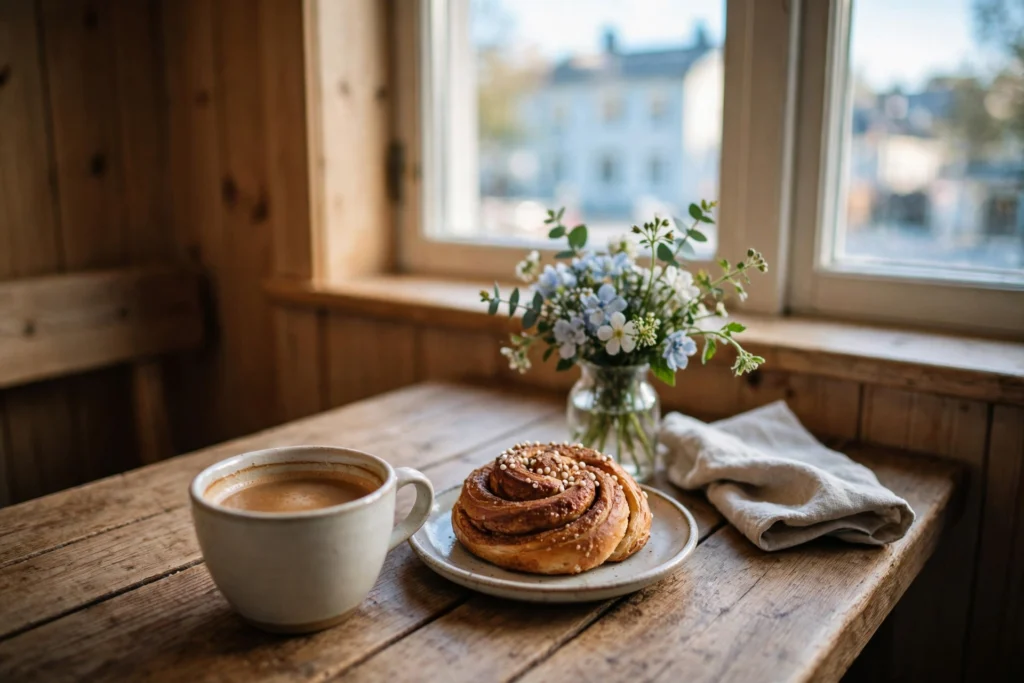
Sweden is expensive to eat in, and it is also one of the most rewarding countries in Europe to eat in — if you know where the value is. The trick is not to eat less, but to eat at the right times and in the right places. The lunch special, the food halls, the bakeries and the grocery stores are the Swedish food system, and the restaurants are the exception rather than the rule.
Fika: the coffee break that is a way of life
Fika is a social coffee break, not a requirement to buy the biggest cinnamon bun every afternoon — although the cinnamon buns are worth the trip on their own. The ritual is simple: coffee, something sweet, and time to sit. The best fika is in the neighbourhood cafés rather than the chains: a wooden interior, a window seat, a cinnamon bun — kanelbulle — or a cardamom bun, and a coffee that is refilled without ceremony. A fika costs SEK 60–90, and it is the cheapest pleasure in Sweden. Thread a fika through every day of the trip: it is a rest, a warm-up in winter, a viewpoint in summer, and a way of understanding a country that takes its coffee breaks seriously. In Gothenburg, the buns are famously oversized; in Stockholm, the cafés are the most beautiful; in the north, the fika is the warm room at the end of a cold day.
What to eat: the Swedish table
Swedish food is fish, potatoes and dairy, with meatballs doing the marketing. Herring in a dozen preparations, gravlax, and shrimp sandwiches on the west coast. Meatballs with lingonberries and cream sauce, served everywhere and done well almost everywhere. Open sandwiches — smörgås — with cheese, salmon or shrimp. Crispbread, cheeses, berries in summer, and mushrooms in autumn. The food halls — Östermalms Saluhall in Stockholm is the grandest — are the best introduction: walk, taste, and eat standing up. And the grocery stores are genuinely good: the picnic supplies — bread, cheese, salmon, fruit — are the best value meal in Sweden, and a grocery picnic on the waterfront is a better lunch than most restaurants.
The money system: lunch specials, food halls and groceries
Use the lunch special — dagens rätt — every weekday. A hot main, salad, bread and coffee for SEK 120–180, served between about eleven and two, is the single best value in Swedish food. Use grocery breakfasts: the hotels charge SEK 150–250 for a breakfast that costs SEK 50 from a supermarket, and the Swedish breakfast — bread, cheese, ham, yoghurt, fruit — is easy to assemble. Use the food halls for one meal a day, and save the restaurant money for one good dinner rather than three mediocre ones. And if you are self-catering, the systembolaget — the state alcohol monopoly — is the only place to buy wine and spirits, and it closes early on Saturdays and is closed on Sundays, so plan ahead if that matters to you.
Swedish design: the other thing to bring home
Sweden’s design is not a souvenir, it is a way of life, and it is everywhere: the furniture, the glassware, the textiles, the light. The design shops in Stockholm — in Södermalm and around the city centre — are worth a slow afternoon even if you buy nothing, and the museums of design and craft are the best introduction. If you buy one thing, make it something small and useful: a glass, a textile, a piece of wooden craft. The big furniture is for the shipping company, not the suitcase.
The Bohuslän Coast: Granite Islands, Fishing Villages and Wild Swimming
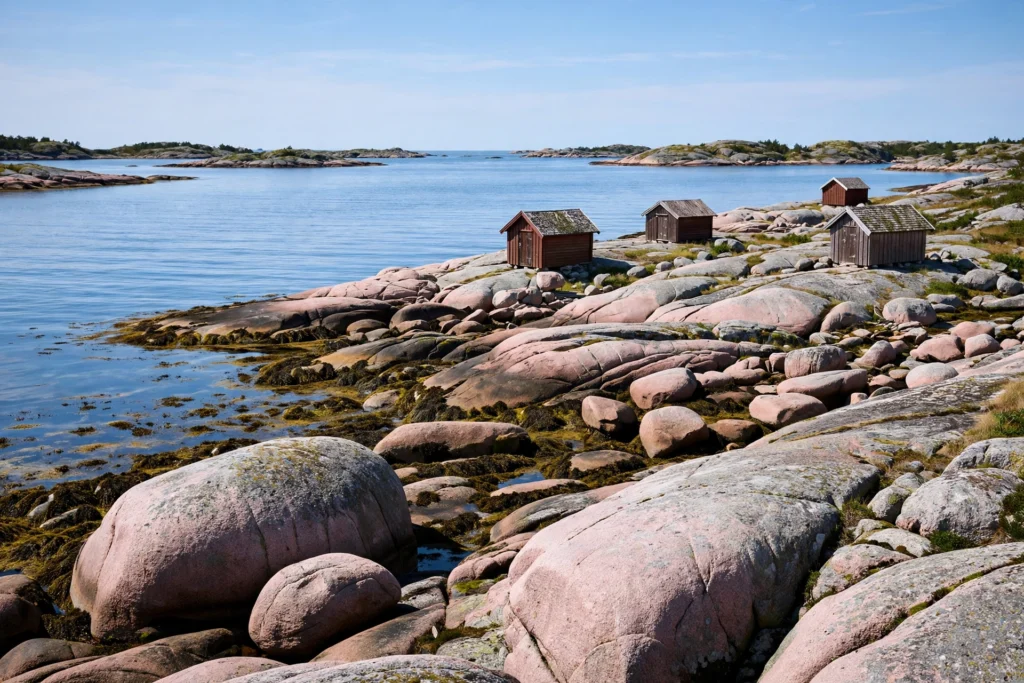
The Bohuslän coast, north of Gothenburg along the west coast, is the Sweden that the guidebooks mention and the itineraries skip — and that is exactly why it is worth two days. Granite islands, fishing villages, wooden boats, lighthouses and the best seafood in the country, all within a couple of hours of Gothenburg by bus or car. It is the west coast at its most beautiful, and it is the closest thing Sweden has to a coastal road trip.
The islands and villages
Start at Marstrand, the island town with the fortress of Carlsten, the wooden houses and the harbour full of sailing boats — an hour by bus and ferry from Gothenburg. Then work north: the fishing village of Smögen, with its boardwalk of fish shops and cafés; Fjällbacka, the village of the crime novels, with its granite cliffs and its harbour; and the weather island of Väderöarna, at the outer edge, where the sea is open and the light is extraordinary. The Koster Islands, near the Norwegian border, are Sweden’s first marine national park, with seals, kayaking and a car-free island life that feels like a different century.
Seafood, kayaking and the water
The Bohuslän coast is where Sweden’s seafood comes from, and the food here is the point: the shrimp, the oysters, the mussels, the lobster in season, and the fish soup that every village does differently. Eat at the harbour restaurants and the fish shops, not in the hotels. Kayaking is the best way to see the coast — the granite islands, the narrow channels, the seals — and the kayak rentals and guided tours run from May to September. Wild swimming is a Swedish tradition, and the smooth granite rocks, warmed by the sun, are the natural swimming platforms: pick a rock, check the depth, and go in. The water is cold even in July, and that is part of it.
How to do it: car, bus or boat
A car is the best way to do the Bohuslän coast, and this is one of the few places in Sweden where this guide recommends one: the villages are spread out, the buses are infrequent, and the coast road is the experience. Rent in Gothenburg, drive north for two days, and return the car there. Without a car, the buses from Gothenburg reach Marstrand, Smögen and Fjällbacka, and the island ferries do the rest — it is slower, but it works, and the bus-and-ferry version is the cheaper one. Two nights on the coast, one in Marstrand and one further north, is the right amount of time. A day trip from Gothenburg gives you one village and a lot of bus; two days gives you the coast.
The Night Train North: How the Arctic Sleeper Actually Works
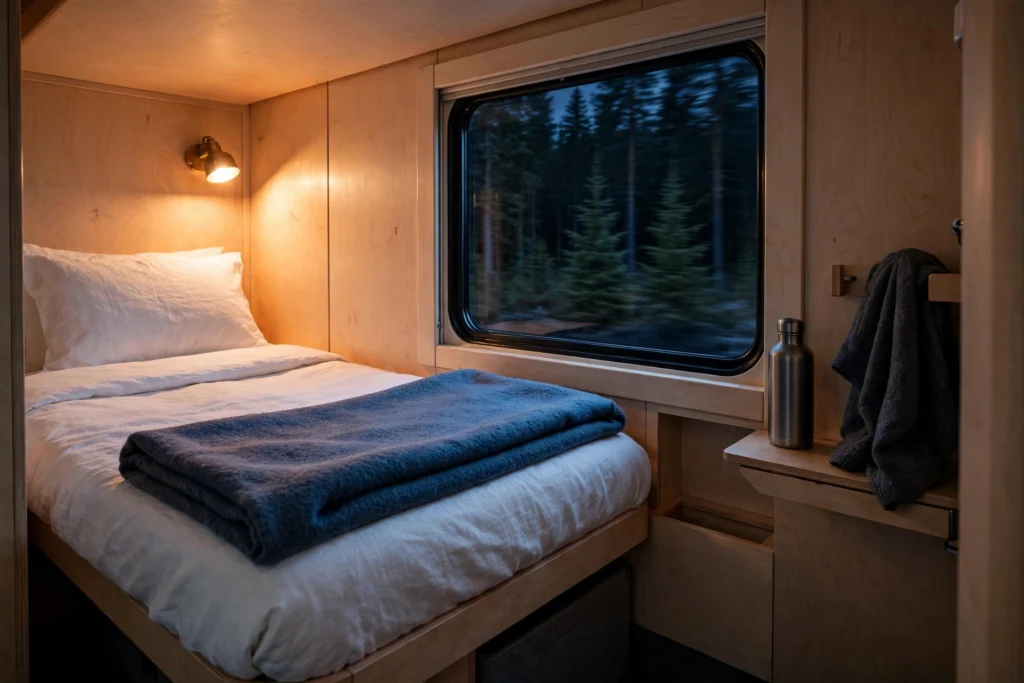
The night train from Stockholm to Kiruna and Abisko is one of the great rail journeys in Europe, and it is also the part of a Sweden trip that most often goes wrong — not because the train is bad, but because the booking works differently from a normal train ticket. This section is the practical manual. Read it before you book, not after.
The journey: what it is and how long it takes
The direct SJ night train — the Nattåg — leaves Stockholm Central in the early evening, around 18:10, and arrives in Kiruna about 14 to 17 hours later, continuing to Abisko and on to Narvik in Norway. Stockholm to Kiruna is nearly 1,000 kilometres by air and considerably more by rail, and the train covers it overnight, through forests and past frozen lakes, while you sleep. It departs daily, and it is the best way to reach the north if you have the time: it saves a hotel night, it saves an airport transfer, and the experience of waking up above the Arctic Circle is worth the journey on its own. Flying is faster — about 90 minutes from Stockholm to Kiruna — but the flight is a transfer, and the train is a memory.
Seat, couchette or sleeper: the classes that matter
SJ sells three levels for the overnight journey, and the difference matters on a 16-hour trip. A seat is the cheapest option, from around SEK 495 if booked far ahead, but spending 17 hours upright in a standard carriage through sub-Arctic terrain destroys your first day. A couchette — liggvagn — is a six-berth compartment with a fold-down bunk, sheets, a pillow and a blanket, from roughly SEK 750–950. A second-class sleeper — sovvagn — is a proper bed in a one-to-three-person compartment with a washbasin and power sockets, from roughly SEK 1,200–1,800. A first-class sleeper is a one-or-two-person compartment with its own shower and toilet and breakfast included, from roughly SEK 1,600–2,400. The advice is simple: book a sleeper if you can afford it, a couchette if you cannot, and never a seat for this journey. The price is dynamic, so the earlier you book, the less you pay, and the sleeper cabins are the first thing to sell out.
Booking windows: the rule that catches people out
SJ releases night-train tickets in seasonal batches, roughly 90 days before departure, and the sleeper cabins for winter departures sell out two to three months ahead. The practical rule is: book the day your dates open. For winter 2025–26, bookings opened in June 2025, and the February and aurora-season berths went first. Book on sj.se or in the SJ app, and check whether your booking shows a change of train — because since 13 April 2026, travellers bound for Kiruna, Abisko and Narvik have had to change trains at Boden at around 6 a.m., under the interim arrangements. Under the new contract, which runs from December 2026 to December 2028, the couchette and sleeper cars are due to run through to Narvik without a change from 13 December 2026 — but check your booking on sj.se to confirm it shows no change, because the transition is exactly the kind of thing that produces a surprise at 6 a.m. in Boden.
The station names that matter
Abisko has two railway stops, two kilometres apart, and the wrong one costs you a walk in the dark. For the STF mountain station at Abisko and the national park, the stop is Abisko Turiststation. For the village, with its shop and cheaper rooms, the stop is Abisko Östra. Check the stop name before you pay. And if you are booking a day-train connection to Stockholm separately, leave at least an hour between the trains — SJ gives the same advice, and the night train is not famous for arriving on the minute.
What to bring on the night train
Buy supper and breakfast before you board, because the onboard food is limited and the dining car — where it exists — is not a restaurant. Bring a bottle of water, earplugs, an eye mask, and a power bank. Pack a small overnight bag with what you need for the night and the morning, and leave the big bag in the luggage area. The sleeper compartments are small and warm, the couchettes are social, and the corridor is where the journey happens: standing at the window at midnight, watching the forest go past, is the part you will remember.
Flying north instead: when the plane wins
The train is the experience, but the plane is sometimes the right answer, and this guide would rather say so than pretend otherwise. Fly when your northern stay is short — two nights rather than four — because the train eats a day at each end and a short trip cannot afford it. Fly when you are travelling with small children, for whom a 16-hour overnight journey is a gamble rather than an adventure. Fly when the train is sold out, which happens in February, and fly when your dates are fixed and the flight is cheaper than the sleeper — it sometimes is, especially booked early. The flight from Stockholm Arlanda to Kiruna takes about 90 minutes, and the airport bus or taxi into Kiruna is short. What you lose is the journey itself and a hotel night; what you gain is a day. Most travellers who take the train north fly back south, or the reverse, and that combination — one way by rail, one way by air — is the best of both: the experience on the way up, the time saved on the way home.
Abisko National Park and the Kungsleden: Hiking Under the Midnight Sun
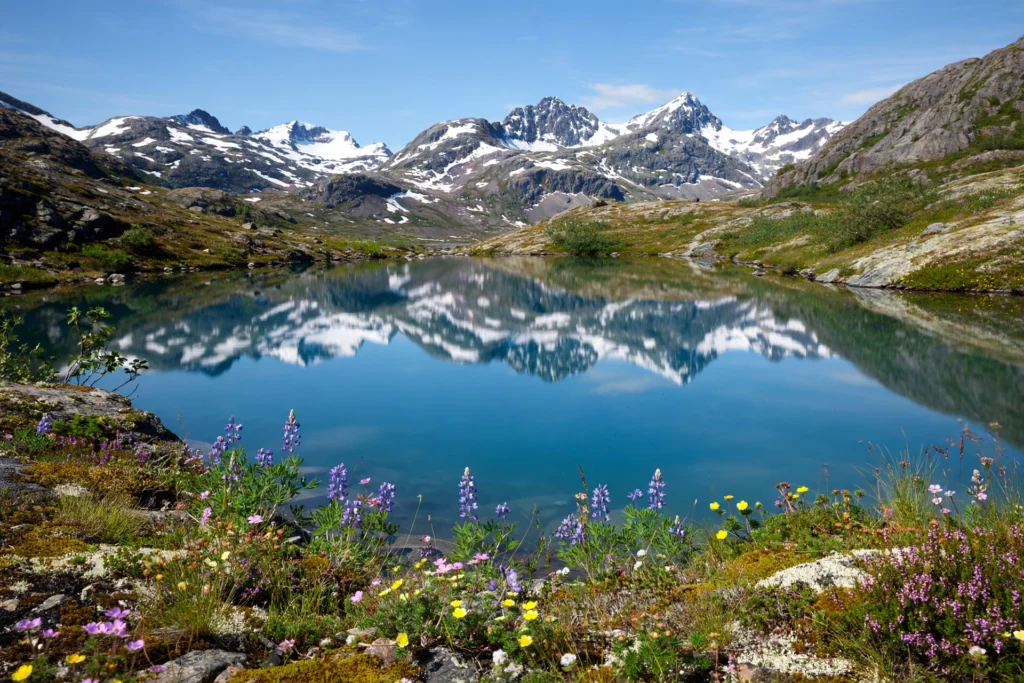
Abisko National Park is the crown of the Swedish mountains, and it is the reason the north is worth visiting in summer as well as in winter. The park sits at the western end of Lake Torneträsk, under the mountain Njulla, and it is the starting point of the Kungsleden — the King’s Trail — the 440-kilometre hiking trail that runs south through the mountains to Hemavan. In summer, the sun does not set, the wildflowers cover the valley floor, and the hiking is among the best in Europe. In winter, the same landscape is a snow forest under the aurora. Both seasons are covered in this guide, but this section is about the summer: the midnight sun, the trails, and the walking.
The midnight sun and the summer season
From late May to mid-July, the sun does not set in Abisko, and the light at midnight is a low, golden light across the lake that photographers travel thousands of kilometres for. The hiking season runs from mid-June to mid-September, with the best conditions in July and August. The mountain station — STF Abisko Turiststation — is the base: a lodge with rooms, a restaurant, a shop, and the trailheads outside the door. Book it early for July, because the summer rooms sell out like the winter ones do.
The trails: a day walk and the Kungsleden
The first stage of the Kungsleden, from Abisko to the hut at Abiskojaure, is 15 kilometres and makes a good day walk — out and back, or overnight at the hut. The hut is open from 19 February to 18 April and from 18 June to 19 September 2027. The Abiskojåkka canyon, a short walk from the station, is the easiest reward in the park: a deep canyon with a river running through it, and a trail that follows the edge. The chairlift up Mount Njulla runs in summer for the midnight sun and in winter for the aurora, and the view from the top — across Lake Torneträsk to the mountains — is the best in the park. For a longer trip, the Kungsleden continues south through the mountains, hut to hut, for as many days as you have: a week gets you to Kebnekaise, Sweden’s highest mountain, and the full trail is a month. A backpacker with a week to spare goes on past Kebnekaise; a first-time visitor does the first stage and comes back.
Practicalities: the summer north
The summer north is easier than the winter north, but it still needs planning. The mosquitoes are real in July — bring repellent and a head net. The weather changes fast in the mountains — bring a waterproof shell and warm layers even in July. The trains run, the flights run, and the night train is the same train, but the booking windows are the same too: book the sleeper and the mountain station early. And if you are combining the north with the south in summer, remember that the south is warm and the north is not: pack for both, and check the forecast for Abisko, not for Stockholm, before you leave.
Frequently Asked Questions About Travelling in Sweden
Is Sweden expensive for US travellers?
Yes, by US standards — but less than the reputation suggests. A mid-range day in Stockholm costs roughly SEK 1,500–2,500 (about $140–235) per person, and a careful day with hostels, groceries and lunch specials costs roughly SEK 900–1,400. The north is more expensive, because the activities are the cost. The lunch special, the grocery breakfast and the free waterfronts are the three things that keep a Sweden trip affordable.
How many days do I need for Sweden?
Three days for Stockholm alone. Seven days for one route — the south cities or the Arctic north. Ten days to do one route properly, with a rural region added. Fourteen days to do both routes without rushing. Never try to do both ends of the country in seven days.
When is the best time to visit Sweden?
May to September for the south cities, with June and August as the sweet spots. Late September to late March for the northern lights, with February and March offering the best balance of darkness and daylight. June and early July for the midnight sun in the far north. Avoid May and November in Lapland, when the snow is melting or not yet arrived.
Do US citizens need a visa for Sweden?
No, for a short tourist stay. Sweden is in the Schengen Area, and US citizens can stay visa-free for up to 90 days in any 180-day period. Your passport should be less than ten years old and generally valid for at least three months beyond your planned departure.
Do I need ETIAS to visit Sweden?
Not yet. As checked on 28 November 2026, ETIAS is not in operation, no applications are being collected, and no start date has been announced. The EU will announce the date several months before launch. Do not pay any website for an ETIAS authorisation today — only the official EU site will take applications when the system opens, and the fee will be €20.
Is Sweden safe for tourists?
Sweden is very safe by global standards. The US State Department rates it Level 2 — Exercise Increased Caution — due to terrorism, reissued 18 May 2026, which is the same level as much of Western Europe. The practical risks are pickpockets in crowded tourist areas, icy pavements in winter, and cold water in the archipelago. Use the ordinary precautions you would use in any European city.
Can I see the northern lights in Stockholm?
No, not reliably. Stockholm is too far south and too brightly lit. The northern lights are a northern Sweden experience, and Abisko — with its clear-sky microclimate — gives the best odds in the country. Go north, stay three nights, and accept that the lights are never guaranteed.
How do I get from Stockholm to Gothenburg?
By train, on SJ, in about three to three and a half hours — but check the exact departure on sj.se before you travel, because engineering works on the Western Main Line continue through August 2027, with single-track running between Gothenburg and Alingsås until 18 July 2027 and some weekend closures with diversions. Direct trains are due to return from 19 July 2027.
How far in advance should I book the night train to Kiruna?
Book the day your dates open, roughly 90 days before departure. The sleeper cabins sell out two to three months ahead in winter, and the private compartments go first. Book on sj.se or in the SJ app, and check that your booking shows no change of train at Boden.
What is the Vasa Museum ticket price?
Adult admission is SEK 195 from January to April and from October to December, and SEK 240 from May to September. Visitors aged 18 and under enter free. A 72-hour combination ticket with the Vrak Museum costs SEK 315 in the cheaper months and SEK 359 in summer. The museum takes cards only, and pre-purchased tickets give no priority in the queue — go at opening.
What is fika, and do I need to do it?
Fika is the Swedish coffee break — coffee, something sweet, and time to sit — and it is a social institution rather than a tourist activity. You do not need to do it, but you should: it is the cheapest pleasure in Sweden, it is a rest in the middle of a long day, and it is the fastest way to understand how Swedes live.
Can I combine Sweden with Norway or Denmark?
Yes, and both combinations work — but only if the route respects the scale. Malmö to Copenhagen is 35 minutes by train and makes a natural pair. Sweden and Norway combine naturally when you travel by the night train from Abisko to Narvik, or when you have two weeks and treat them as two trips in one. Our Norway travel guide covers the Norwegian side in the same detail, and our Denmark travel guide covers Copenhagen and the Danish islands. Do not try to add Norway to a seven-day Sweden trip — the distances will eat the holiday.
Conclusion: Let the Route Choose You
Sweden does not reward the traveller who tries to see everything. It rewards the traveller who picks a route, gives it the time it deserves, and lets the light, the water and the snow set the pace. Four nights in Stockholm and three in Gothenburg will give you a better trip than seven nights spent changing hotels every day. Three nights in Abisko will give you a better chance of the northern lights than a week spent rushing between the Arctic and the south.
The decision is the trip. Pick the south cities if this is your first visit, if you travel in summer, if you love food and design and water. Pick the Arctic north if you travel in winter, if the lights are the reason, if you are ready for the cold and the dark and the booking windows. Pick both only if you have ten days or more, and the night train to carry you between them.
Book the things that sell out first — the sleeper cabins, the ICEHOTEL, the Aurora Sky Station — and let the rest of the trip arrange itself around them. Eat the lunch special, take the fika, check the return boat before you leave the mainland, and check the exact train departure on the morning you travel. Sweden is a generous country to a traveller who slows down, and this guide is built to help you do exactly that.
People also read: Norway Travel Guide • Denmark Travel Guide • Germany Travel Guide • Travel Safety Tips • Travel Packing Checklist PDF Free • France Travel Guide • Italy Travel Guide • Japan Travel Guide

M. Adil is the founder and editor of SoloTravelPro. He writes practical, research-based travel guides that help travellers plan with confidence — from first-time city breaks to national parks and island escapes. Every guide is built on official sources, current prices and honest, usable advice, so readers can plan smarter and travel better.

Other Articles

Ireland Travel Guide: The 3-Base Loop in 5, 7, 10 or 14 Days (2026–27)