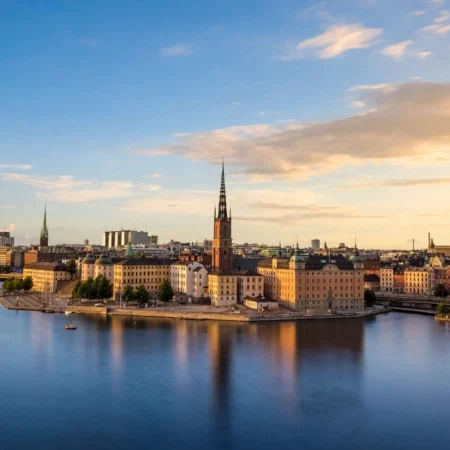
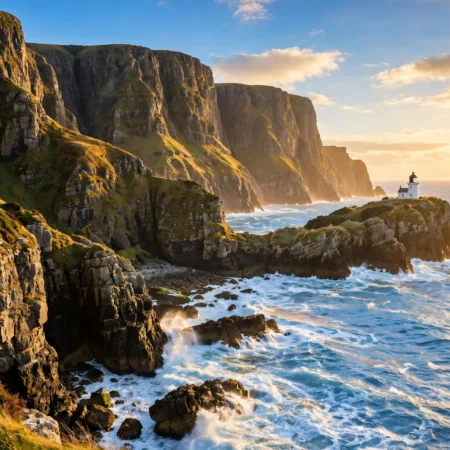
Ireland Travel Guide: The 3-Base Loop in 5, 7, 10 or 14 Days (2026–27)
Quick Answer
This Ireland travel guide is built around one simple idea: stay in three places, not seven. Galway, Killarney and Dublin are the three bases of the loop, and almost everything first-time visitors want from Ireland sits within a day trip of one of them. From Galway you reach Connemara, the Aran Islands and the Cliffs of Moher. From Killarney you reach the Ring of Kerry, the Dingle Peninsula and Killarney National Park. From Dublin you reach the Boyne Valley, Wicklow and the city itself. Sleep in the same bed for two or three nights at a time, unpack properly, and let the driving days be driving days instead of pretending they are sightseeing days.
Seven days is the classic length for this Ireland travel guide, and it works well: two nights in Galway, two nights in Killarney, and two nights in Dublin, with the seventh day as the travel day home or a final Dublin morning. Five days still works if you cut Dublin to one night and skip the north entirely. Ten days lets you add Belfast and the Giant’s Causeway, or slow the whole loop down so no day has more than two hours of driving. Fourteen days is the full island: the southeast, the north coast, Donegal’s edges and a second, slower pass through the west.
The honest truth about Ireland is that the map lies. The island is about the size of West Virginia, and on paper nothing looks more than three hours from anything else. In practice, the roads are narrow, the speed limits on local roads are low, the weather changes the day, and a route that looks like two hours on a map takes three once you add a photo stop, a tractor, a herd of sheep and a one-lane bridge. Every itinerary in this guide is built on real driving times, not map times, and every version of the loop keeps the same rule: never sleep somewhere new every night.
Money is straightforward. Ireland uses the euro. In the Republic, a mid-range trip runs roughly €150 to €220 per person per day once rooms, food, fuel and tickets are counted, and a careful budget trip can run closer to €100 a day. Dublin is the most expensive part of the country by a clear margin, and the west and southwest are noticeably cheaper for the same standard of room. The big-ticket items are the Cliffs of Moher, where an adult pays €15 at the gate in 2026 and from €8 online in an off-peak slot, and the Giant’s Causeway in Northern Ireland, where the National Trust Visitor Experience starts at around £15 for an adult while the stones themselves sit on a public right of way and are free to walk to. Most of the best things in Ireland, including Killarney National Park, Connemara National Park and the Burren, cost nothing at all.
Safety is the least of your worries. The US State Department rates Ireland at Level 1, “Exercise normal precautions,” the lowest of its four levels, in an advisory dated 30 September 2026, and the main risks it names are petty crime in busy tourist areas and the usual care around demonstrations. The real risks on an Ireland trip are practical ones: a cliff edge in high wind, a narrow road after dark, and a hire car picked up at Dublin Airport by a driver who has never driven on the left. This guide deals with all three in plain language.
Driving is the question that decides the shape of your trip. Ireland drives on the left, speed limits in the Republic are in kilometres per hour, and a valid US licence is accepted for visits of up to 12 months. The Irish Road Safety Authority says visitors from countries Ireland does not recognise for licence exchange, which includes the United States, should also carry an International Driving Permit issued at home, and some hire companies ask for one even when the law is argued about. The low-risk move is to get the permit before you fly; it costs little and ends the argument at the hire desk. Hire cars are usually collected at Dublin Airport, and the minimum age is typically 21 to 25 depending on the company, with a young-driver surcharge under 25. Expect a collision damage waiver excess of roughly €1,500 to €2,500 unless you buy it down, and remember the M50 ring road around Dublin has no toll booths: the €3.80 charge must be paid online or at a Payzone outlet by 8pm the day after you travel.
You do not have to drive at all. Trains link Dublin with Galway and Killarney, buses reach the Cliffs of Moher from Galway, and day tours from Galway, Killarney and Dublin cover Connemara, the Ring of Kerry and the cliffs. A car simply makes the west much easier, because the best parts of the west are between the towns rather than in them. If you do hire a car, pick it up in Galway rather than driving out of Dublin on your first morning, and give yourself a quiet first day on the road.
This guide gives you four versions of the same loop so you can pick the length that fits your holiday and stop second-guessing the route. It covers Dublin properly, including Trinity College and the Book of Kells, Temple Bar without the tourist traps, and the Leap Visitor Card that makes Dublin’s buses, trams and trains simple. It covers Galway and Connemara, the Cliffs of Moher with the closures that have changed the visit completely, the Burren, the Ring of Kerry and the Dingle Peninsula, Cork and Blarney, and the Northern Ireland add-on of Belfast and the Giant’s Causeway, with the currency, entry and driving differences that come with crossing into the United Kingdom clearly marked. It tells you what to leave out and why, because a good Ireland trip is defined as much by what you skip as by what you see.
The 3-Base Loop: Galway, Killarney and Dublin
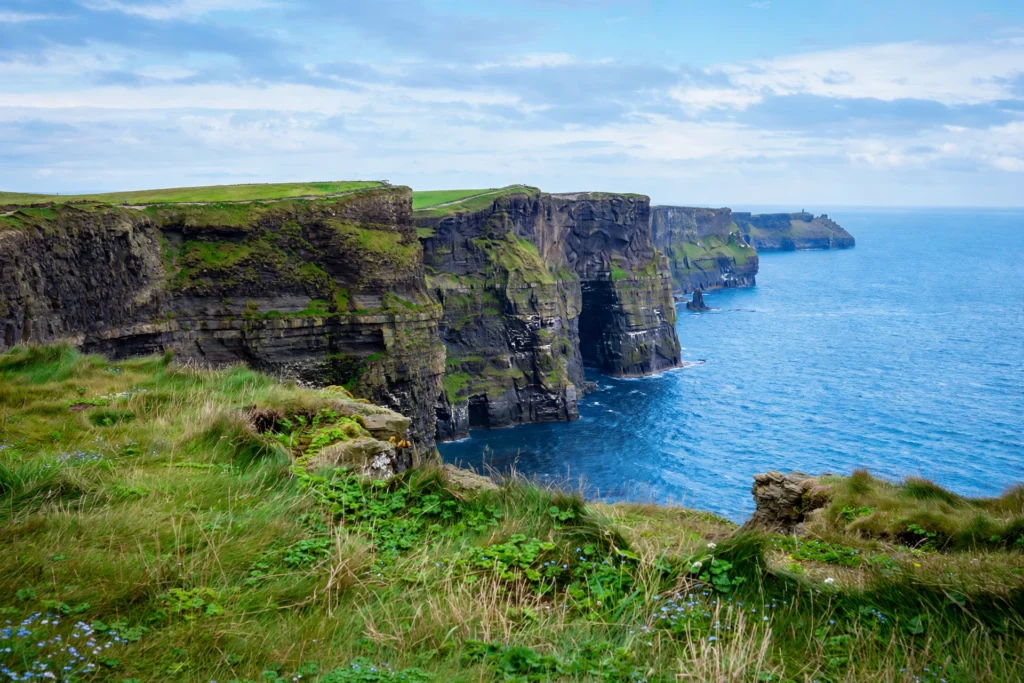
Ireland looks easy on a map, and that is the first trap. The island is compact, the language is familiar, and the distances look short. What the map does not show is that Irish roads are slower than they look, that weather can close a coastal walk or turn a mountain pass into a slow crawl, and that a “quick detour” can quietly eat the best part of a day. The 3-base loop is the answer to all of that. Instead of moving every night, you stay in three towns and radiate out from them. Galway covers the west. Killarney covers the southwest. Dublin covers the east and the capital. Everything else is a day trip or a deliberate add-on, not a forced march.
Why three bases work
The arithmetic is simple. A week in Ireland gives you six nights. Spend them as two plus two plus two and you unpack three times. Spend them as one night in six different towns and you unpack six times, lose an hour every morning to packing and checking out, and arrive at every new place too tired to enjoy it. The writers who have walked this ground for years keep landing on the same conclusion: five bases in seven days, which one respected first-timer’s guide calls “about the most anybody enjoys,” is the upper limit, and three bases is the comfortable number. The travel writers at Travel Lemming built their well-known seven-day plan on exactly this idea, three strategically placed bases in Galway, Killarney and Dublin, and the route has held up because the geography supports it.
Galway is the best first base for most travellers, and the reasons are practical rather than romantic. It is a small, walkable city with a strong food and music scene, and it sits within easy reach of Connemara National Park, the Aran Islands, the Burren and the Cliffs of Moher. You can spend two full days there without repeating yourself and without a single long drive. The Latin Quarter, the stretch of pedestrian streets around Quay Street and Shop Street, is where the city happens: buskers, bookshops, cafes and pubs with music that starts early and runs late. The Spanish Arch, where the River Corrib meets Galway Bay, is a ten-minute walk away and is the place to watch the evening light. Salthill, the seaside promenade to the west of the city, is where locals walk at sunset. None of this needs a car, which is exactly the point: your first base should be a place where you can arrive jet-lagged and still have a good day on foot.
Killarney is the second base, and it is the one that makes the southwest work. The town sits on the edge of Killarney National Park, which is free to enter and walkable from the town centre, and it is the starting point for the Ring of Kerry and the Dingle Peninsula. Killarney town itself is lively without being overwhelming: a main street lined with pubs, restaurants and shops, a railway station with trains to Dublin, and a range of places to stay from hostels to country houses. From Killarney you can do the Ring of Kerry as a full-day loop, the Dingle Peninsula as a shorter and arguably prettier drive, and the national park itself as a slow morning of lakes, waterfalls and old oak woods. Two nights here is the minimum; three is better, and the ten-day version of the loop gives it three.
Dublin is the third base, and it earns its place even for travellers who think of themselves as countryside people. The capital is compact and walkable, the museums are world class, and two of the most rewarding visits in the country, Trinity College with the Book of Kells and Kilmainham Gaol, are here. Dublin is also where most flights land and depart, which makes it the natural start or finish. The catch is that Dublin is the most expensive city in Ireland by a wide margin and the traffic is the worst in the country. The loop handles that by keeping Dublin to the beginning or the end, when you do not need a car, and by putting the driving days in the west, where the roads are the point of the trip rather than the obstacle.
The three bases at a glance
| Base | Nights (7-day loop) | Day trips from here | Best for |
|---|---|---|---|
| Galway | 2 | Connemara, Aran Islands, Cliffs of Moher, the Burren | First base, music, food, coast |
| Killarney | 2 | Ring of Kerry, Dingle Peninsula, Killarney National Park | Scenic drives, lakes, mountains |
| Dublin | 2 | Boyne Valley, Wicklow, the city itself | History, museums, food, departure |
Clockwise or Galway-First? Choosing Your Direction
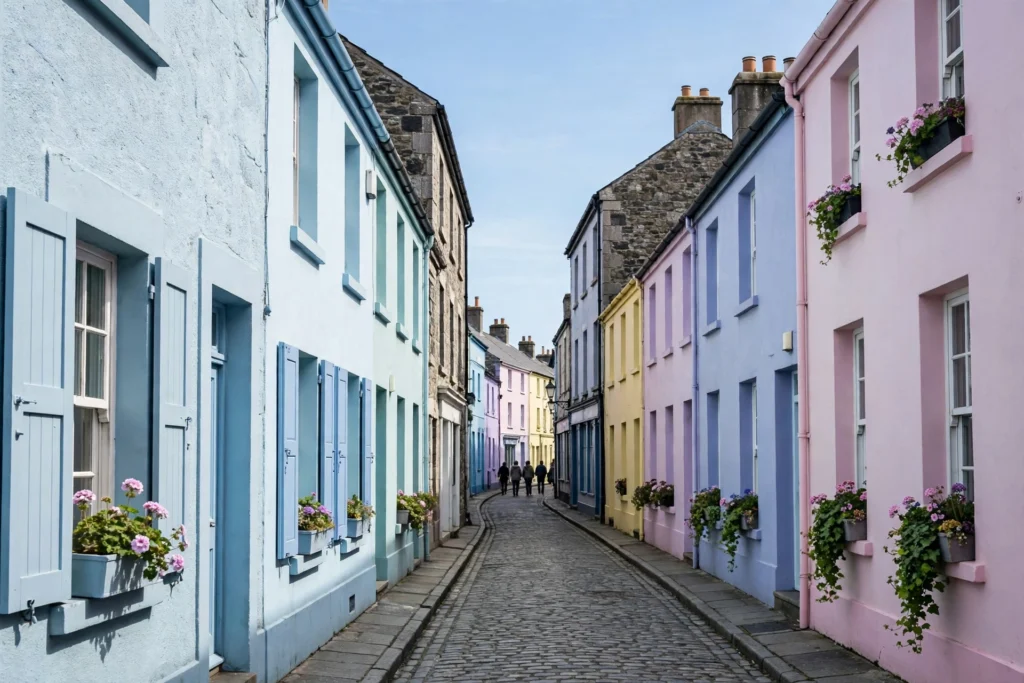
The 3-base loop can be driven in two directions, and the choice matters more than most guides admit. The two options are clockwise, starting in Dublin and ending in Galway, and Galway-first, which starts in the west and ends in Dublin. Both cover the same ground. They feel very different, and the right one depends on your flight times, your confidence on Irish roads, and whether you would rather finish in a city or on the coast.
The clockwise route: Dublin first
Clockwise means Dublin first, then west to Galway, then south to Killarney, then back east to Dublin for the flight home. This is the direction favoured by the most careful planners, and the reasoning is sound. Dublin first gives you two easy days on foot while you shake off jet lag, with no car to worry about. The Boyne Valley, if you include it, comes on the way west rather than as a rushed final day. The two big set pieces of the trip, the Ring of Kerry and the Cliffs of Moher, land at the end of the week, when you have found your feet on Irish roads and know how long things really take. And the loop finishes in Galway, from where the run back to Dublin Airport is a straightforward motorway drive of about two and a half hours.
Clockwise has one real cost: the final travel day. You leave Galway in the morning, drive east, and either fly that evening or spend a last night near the airport. If your flight is early, that last night near the airport is not optional, and it is a dull end to a good trip. The other cost is psychological. Dublin is the most expensive and busiest place on the loop, and starting there can make the first day feel more like a city break than the Ireland you came for. Travellers who start in Dublin and love it tend to wish they had given it a third night. Travellers who start in Dublin and do not love it tend to be glad they got it out of the way early.
The Galway-first route: west first
Galway-first means landing in Dublin and heading straight west, usually by bus or train, or by hire car picked up at the airport. The argument for it is that Galway is a gentler introduction to Ireland than Dublin: smaller, friendlier, cheaper, and with the countryside on its doorstep. It also saves time, because you avoid driving in and out of Dublin traffic twice, and it puts the two best days of scenery at the start of the trip, when your energy is highest. Travel Lemming’s well-known seven-day plan is built this way, starting in Galway and ending with two days in Dublin, and the author calls Galway the better introduction precisely because its position makes it a base for two national parks and a day trip to the cliffs.
Galway-first has its own costs. The first day is a travel day, three hours by bus from Dublin Airport to Galway, and if your flight lands in the afternoon you arrive in Galway in the evening with little of the day left. If you pick up a hire car at the airport and drive west on day one, you are doing your first left-hand driving while jet-lagged, on a motorway, in a car you have never driven. That is manageable, and thousands of visitors do it every week, but it is the hardest version of the first day. The other cost is the ending. Galway-first ends in Dublin, which is convenient for the flight home but means the trip’s last impression is a city rather than a coastline. Some travellers prefer that; the city has the best restaurants and the best farewell dinner. Others would rather end on the west coast and carry the cliffs home in their memory.
Which direction should you choose?
| Factor | Clockwise (Dublin first) | Galway-first |
|---|---|---|
| First day | Easy, on foot in Dublin | Travel day west, or first drive jet-lagged |
| Last day | Drive back east from Galway | Already in Dublin for the flight |
| Best scenery | At the end of the trip | At the start of the trip |
| Driving confidence | Builds up before the west | Hardest driving on day one |
| Best for | Nervous drivers, late arrivals | Early arrivals, confident drivers |
The practical answer is this. If your flight lands after midday, or you have never driven on the left, go clockwise and take Dublin first. If your flight lands in the morning, you are comfortable driving on the left, and you want the scenery while your energy is fresh, go Galway-first. Either way, do not try to do both directions in one trip by zig-zagging; the loop works because it moves in one direction, and doubling back is how good itineraries quietly fall apart.
The 5-Day Ireland Itinerary: The Short Loop
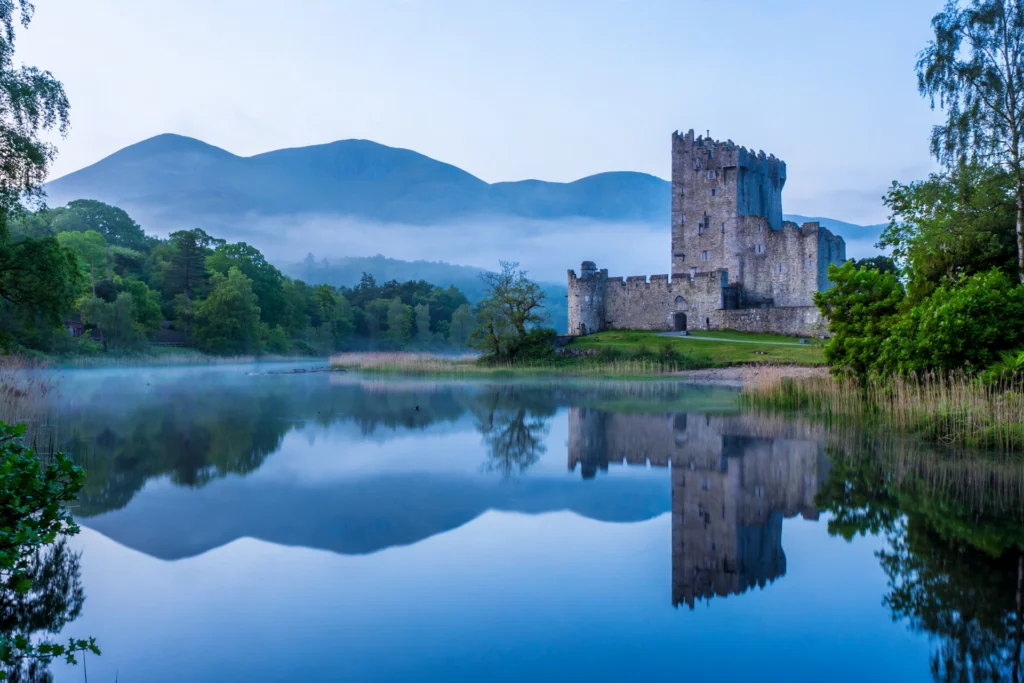
Five days in Ireland is short, and this guide will not pretend otherwise. What five days can do, done well, is give you the west and the southwest with one night in Dublin at the end, and that is a genuine Ireland trip rather than a highlights reel. The rule for five days is simple: one base in Galway, one base in Killarney, and one night in Dublin. Anything more than that, and you will spend the trip packing. Anything less, and you will miss one of the two coasts that make Ireland worth the flight.
The 5-day loop at a glance
| Day | Base | What happens |
|---|---|---|
| 1 | Galway | Arrive, Latin Quarter, Spanish Arch, Salthill sunset |
| 2 | Galway | Cliffs of Moher and the Burren, evening in Doolin or Galway |
| 3 | Killarney | Travel south, Killarney National Park in the afternoon |
| 4 | Killarney | Ring of Kerry or Dingle Peninsula, last night in Killarney |
| 5 | Dublin | Travel east, Trinity College and the Book of Kells, fly home or stay over |
Day 1: Arrive and settle in Galway
Land in Dublin in the morning if you can. From Dublin Airport, the direct bus to Galway takes about three hours and drops you in the city centre, and the train from Heuston station takes a similar time with a change in the city. If you are hiring a car, this is the day to decide whether to collect it at the airport or in Galway. Collecting in Galway costs you the flexibility of the first two days but saves you the hardest first drive, and Galway’s day tours cover the cliffs and Connemara well enough that many five-day travellers never miss the car until Killarney.
Galway rewards a slow first day. Walk the Latin Quarter without a plan, follow the sound of music into a pub, and eat properly. The city is famous for its seafood, and the restaurants around Quay Street and the Spanish Arch serve oysters, crab and fish landed that morning. In the evening, walk out to Salthill and watch the sun go down over Galway Bay. If the weather is doing its usual Irish thing and the rain is coming sideways, do the same walk anyway with a waterproof jacket; the bay in bad weather is more memorable than the bay in sunshine, and you will be dry again in ten minutes inside a pub.
Day 2: The Cliffs of Moher and the Burren
This is the big day of the short loop, and it needs an early start. The Cliffs of Moher sit about an hour and a half south of Galway by road, and the visit has changed completely in the last two years, so read this section carefully. The famous coastal walk that older guides describe, the cliff-top path from Doolin to Liscannor, is no longer open end to end. As of 1 August 2026, the southern section between Liscannor and the visitor centre is fully closed for safety reasons, and the northern section from Doolin is open only as far as Surfers Path, where walkers must turn back. There is no walking route between the two villages and the visitor centre, and the road between them is hazardous on foot. The safe visit is the visitor centre site itself, which offers about 3.5 kilometres of paved paths and protected viewpoints, including the stretch north past O’Brien’s Tower. Plan on two hours there, and go early or late: the site is at its busiest between 11am and 4pm, and the online ticket is cheaper outside those hours.
Tickets are priced by arrival time. In 2026, an adult pays from €8 online for an off-peak slot before 11am or after 4pm, €12 online for a peak slot between 11am and 4pm, and €15 at the gate. Children under 12 go free, up to four per accompanying adult, and senior and student tickets run from €6 online. The ticket includes parking, the visitor centre and exhibition, the paved cliff paths and O’Brien’s Tower. Book online before you go; the gate price is the most expensive way to visit, and the timed ticket also guarantees your entry on a busy day. The cliffs are 214 metres at their highest point and run for about 14 kilometres along the Atlantic coast, and the honest advice is to give them the morning and the Burren the afternoon rather than the other way around.
Day 3: South to Killarney
The travel day south runs from Galway to Killarney in about three hours by car, passing Limerick and crossing into County Kerry. By public transport it takes longer and usually involves a change, so this is the day when having a car starts to pay. If you do not have a car, the bus south through Limerick is workable, and Killarney’s station connects to Dublin by train. Either way, treat this as a travel day with a stop, not a sightseeing day: the mistake is to try to fit a full attraction into the middle of it and arrive in Killarney too tired to enjoy the evening.
Killarney National Park is the reward for arriving in good time. The park is free to enter, and its lakes, oak woods and mountains begin at the edge of the town. Ross Castle, a fifteenth-century tower house on the shore of Lough Leane, is the natural first stop, and the lakeside paths from the town to the castle are flat and easy. Torc Waterfall is a ten-minute walk from the road and is at its best after rain, which in Ireland means it is at its best most of the time. Muckross House, a nineteenth-century mansion between the lakes, charges for house admission, €9 for an adult in 2026, while the gardens are free. Give the park the afternoon, eat in Killarney town in the evening, and sleep early: tomorrow is the longest driving day of the trip.
Day 4: Ring of Kerry or Dingle, not both
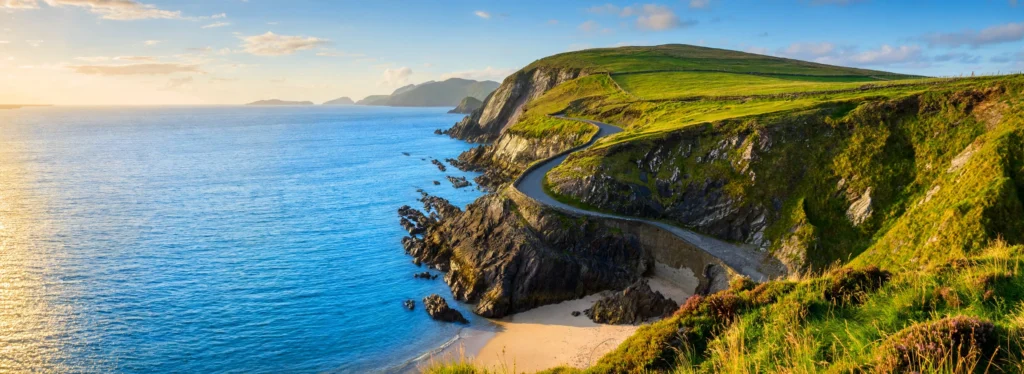
Five days forces a choice that the seven-day loop avoids, and it is the most important choice in this itinerary. The Ring of Kerry and the Dingle Peninsula are both superb coastal drives, and you have time for one of them properly. The Ring of Kerry is the famous one: a 179-kilometre loop around the Iveragh Peninsula, with mountain passes, beaches, villages and views across the Atlantic. It takes a full day, it is busy with coach tours in summer, and it is best driven anti-clockwise so you are not fighting the coaches. The Dingle Peninsula is the shorter, quieter alternative: the Slea Head Drive is about 47 kilometres against the Ring’s 180, the coast is wilder, the villages are smaller, and the same afternoon can include Inch Beach and the Gallarus Oratory, a stone church that has kept the rain out for centuries. One careful first-timer’s guide puts it plainly: the Dingle Peninsula gives you the same coast in half the time, and the Ring of Kerry as a full loop is a hundred and eighty kilometres of coach traffic in summer.
Choose the Ring of Kerry if this is your first and possibly only trip to Ireland and you want the famous drive. Choose Dingle if you prefer a quieter road, a shorter day, and time to stop properly. Either way, start before 9am, carry food and water, and do not plan anything for the evening beyond dinner in Killarney. The drive will take longer than you expect, and that is the point of it.
Day 5: Dublin in a day
The last day is a travel day with a city attached. Killarney to Dublin is about four hours by car or three and a half by train, and the train is the better choice if your flight is the same evening, because it drops you in the city centre without the stress of returning a hire car. If you drive, stop at the Rock of Cashel on the way: it stands on a limestone outcrop over the Tipperary plain, it is twenty minutes off the motorway, and it is the single most dramatic ruin in the country. Give it an hour, no more, and keep moving.
In Dublin, go straight to Trinity College and the Book of Kells. Book a timed ticket in advance, because slots sell out, and give it ninety minutes. The Long Room of the Old Library is the room everyone photographs, and the Book of Kells itself is a ninth-century illuminated manuscript that repays a slow look rather than a quick one. After that, walk: Grafton Street, St Stephen’s Green, and the lanes of Temple Bar. If your flight is in the evening, you have time for a proper lunch and a last pub before the airport bus. If it is the next morning, stay the night in the city and give Dublin its evening, which is when it is at its best. Five days is short, but done this way it is a real trip: two coasts, one great park, one great city, and no day spent entirely in a car.
The 7-Day Ireland Itinerary: The Classic Loop
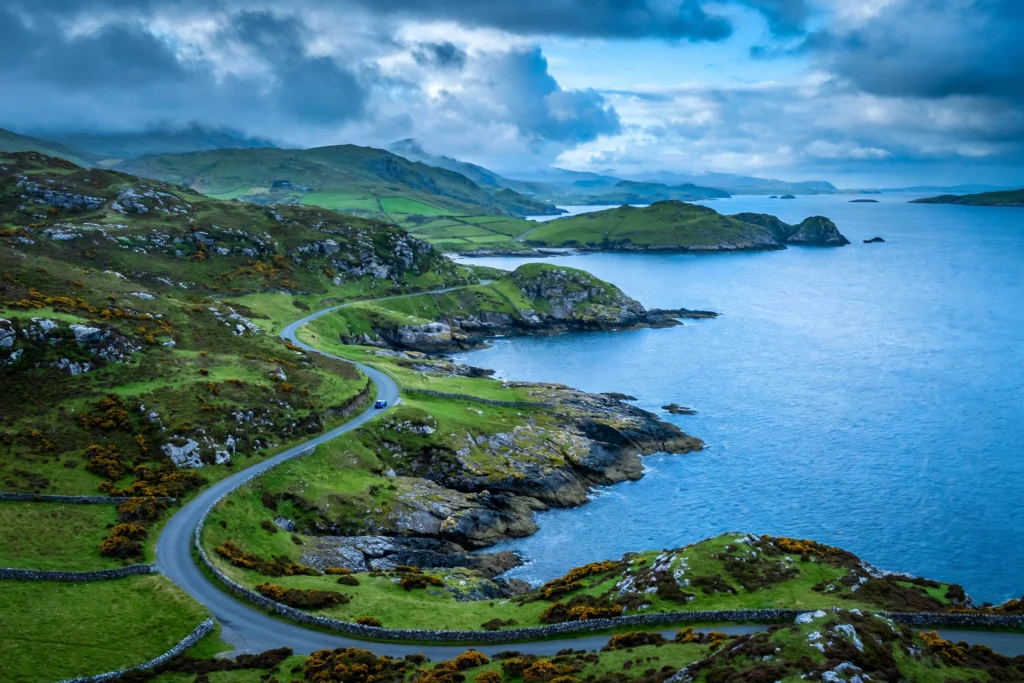
Seven days is the length this Ireland travel guide is built around, and it is the length most first-time visitors should choose. It is long enough for the three bases to breathe, short enough to fit a normal holiday, and it is the version of the loop that the best guides agree on. The seven-day loop adds a full day in Connemara, a full day in Killarney National Park, and a second day in Dublin to the five-day version, and those three additions change the trip from a highlights tour into a proper holiday.
The 7-day loop at a glance
| Day | Base | What happens |
|---|---|---|
| 1 | Galway | Arrive, Latin Quarter, Spanish Arch, Salthill |
| 2 | Galway | Connemara and Kylemore Abbey |
| 3 | Galway | Cliffs of Moher and the Burren, evening in Doolin |
| 4 | Killarney | Travel south, Killarney National Park |
| 5 | Killarney | Ring of Kerry |
| 6 | Killarney | Dingle Peninsula, travel to Dublin in the evening |
| 7 | Dublin | Trinity College, Kilmainham Gaol, Temple Bar |
This is the Galway-first version, which starts in the west and ends in Dublin. The clockwise version runs the same days in reverse: two days in Dublin, two in Galway, two in Killarney, and the travel day home. The content of each day is the same either way; only the order changes. Pick the direction from the section above and follow the days in that order.
Day 1: Galway, the gentle start
Galway is the best place in Ireland to arrive jet-lagged. The city is small enough to walk everywhere, the food is good, the music starts early, and nothing on the first day requires a car, a booking or a timetable. Spend the morning wandering the Latin Quarter, the pedestrian streets around Quay Street and Shop Street, and follow the River Corrib down to the Spanish Arch. The Galway City Museum, beside the Arch, is free and gives the city’s history in an hour. In the afternoon, walk the Salthill promenade and watch the bay. In the evening, eat seafood and find a pub with a traditional session. The sessions in Galway are not performances for tourists; they are musicians playing for each other in the corner of a pub, and the right behaviour is to listen, order quietly, and not talk over the music.
Day 2: Connemara and Kylemore Abbey
Connemara is the wild west of Ireland, a sweep of lakes, bogland and mountains west of Galway that feels a world away from the city. With a car, the drive west through Oughterard and into the hills is the trip itself: narrow roads, stone walls, lakes that appear around every bend, and villages that consist of a pub, a church and a view. Without a car, a day tour from Galway is the easy option, and it covers the same ground without the driving.
The postcard stop is Kylemore Abbey, a castle-like house on the edge of a lake with a walled Victorian garden. The abbey’s story is a sad one, a house built for love and twice bereaved, and the building is at its best in the late afternoon when the light comes across the lake. Hours change by season and ticket prices are not published far in advance, so check the official site before you go and book ahead. Pair it with a walk in Connemara National Park or a stop in Clifden, the small town that serves as the capital of the region. Clifden is worth an hour on its own: a market town with good cafes, a harbour, and the Sky Road, a short loop drive with views over the Atlantic that justifies its name on a clear day.
Driving in Connemara demands respect. The roads are narrow and winding, sheep have right of way in practice if not in law, and it gets dark early in winter. Allow more time than the map suggests, fill the tank before you leave Galway, and do not plan a long drive after dark. The region is also a Gaeltacht area, where Irish is the first language, and the road signs are in Irish first. The place names on the signs will not always match the names on your map, so navigate by the road numbers rather than the names, and download the map offline before you leave the city.
Day 4: South to Killarney
The travel day south is the same as on the five-day loop: three hours by car from Galway to Killarney, passing Limerick, with the afternoon in Killarney National Park. The extra day in the seven-day version means you do not have to rush the park. Ross Castle in the morning light, the lakeside paths in the afternoon, and Torc Waterfall after a shower of rain are all worth their own hour, and the park’s oak woods, among the last fragments of the woodland that once covered Ireland, are worth a slow walk rather than a drive-by.
Killarney town deserves its evening. The main street is lined with pubs and restaurants, and the food is better than the town’s tourist reputation suggests. The traditional music here is strong, and the pubs are less crowded than Galway’s, which makes it easier to find a seat near the musicians. Book dinner if you want a specific restaurant; the popular ones fill up in summer, and a walk-in on a Saturday night in July can mean a long wait.
Day 5: The Ring of Kerry
The Ring of Kerry is the most famous drive in Ireland, and it earns the fame. The 179-kilometre loop around the Iveragh Peninsula runs through Kenmare, Sneem, Waterville and Cahersiveen, with mountain passes, beaches, and views across the Atlantic to the Skellig Islands. The loop takes a full day with stops, and the honest advice is to start before 9am, drive it anti-clockwise, and accept that you will not see everything. The stops that repay the time are the Gap of Dunloe, a narrow mountain pass carved by glaciers that you can walk into as far as you like and turn back; Torc Waterfall, which you will have seen already from the park but which looks different from the road; the village of Sneem, which is the prettiest on the loop; and the viewpoints at Ladies View and Moll’s Gap, where the lakes of Killarney spread out below the road.
Day 6: The Dingle Peninsula
The seven-day loop gives Dingle its own day, and this is the day that most travellers remember best. The Dingle Peninsula is the westernmost part of Ireland, and the Slea Head Drive, at about 47 kilometres, is the most beautiful short drive in the country. The road runs along the coast past Inch Beach, a long stretch of golden sand, and on to Slea Head itself, where the Atlantic meets the land in a way that makes the Cliffs of Moher feel almost tame. The Gallarus Oratory, a small stone church on the peninsula that has kept the rain out for centuries, is a ten-minute stop that stays in the memory longer than most castles.
Day 7: Dublin, the capital
The last day is Dublin, and the seven-day version gives it a full day rather than a few hours. Trinity College and the Book of Kells in the morning, Kilmainham Gaol in the afternoon, and Temple Bar in the evening is the classic Dublin day, and it works because the three places are close together and each one does something different. Trinity is the scholarly Dublin. Kilmainham is the political Dublin: a former prison that explains more of modern Irish history in ninety minutes than anything else in the country, and a visit that must be booked in advance because it sells out. Temple Bar is the social Dublin, and the evening is when it earns its reputation.
The 10-Day Ireland Itinerary: Adding the North and the Southeast
Ten days is where the loop stops being a first trip and starts being a proper tour of the island. The extra three days buy you two things: the north coast, with Belfast and the Giant’s Causeway, and the southeast, with Kilkenny, the Rock of Cashel and the Boyne Valley done properly rather than as drive-by stops. They also buy you slack, which is the most valuable thing on any Ireland trip: a day with no long drive, a morning that can be spent in a cafe while the rain passes, and the freedom to stay an extra night somewhere you love without breaking the plan.
The 10-day loop at a glance
| Day | Base | What happens |
|---|---|---|
| 1 | Galway | Arrive, Latin Quarter, Spanish Arch |
| 2 | Galway | Connemara and Kylemore Abbey |
| 3 | Galway | Cliffs of Moher, Burren, evening in Doolin |
| 4 | Killarney | Travel south, Killarney National Park |
| 5 | Killarney | Ring of Kerry |
| 6 | Killarney | Dingle Peninsula |
| 7 | Kilkenny | Rock of Cashel, Kilkenny Castle, medieval streets |
| 8 | Dublin | Boyne Valley: Newgrange, Knowth, Hill of Tara |
| 9 | Dublin | Trinity College, Kilmainham Gaol, museums |
| 10 | Belfast | Giant’s Causeway and the north coast, or a slow Dublin day |
There are two ways to spend the tenth day, and the choice is yours. The first is the north coast: an early train or drive from Dublin to Belfast, the Giant’s Causeway, and back, or an overnight in Belfast with the Causeway Coast as a full day. The second is a slow day in Dublin, which is what most travellers actually need by day ten: a lie-in, a long lunch, the National Museum, and a last evening in Temple Bar. This guide recommends the north coast if you are unlikely to return to Ireland soon, and the slow Dublin day if you are likely to come back. Both are defensible, and neither is a waste.
Days 1 to 6: the classic loop, slowed down
The first six days of the ten-day loop are the seven-day loop with the pressure removed. The same Galway and Killarney bases, the same day trips, but with the driving days treated as driving days and the sightseeing days given a full day each. The practical difference is small and the effect is large: you can do the Aran Islands as a day trip from Galway, which the seven-day loop does not have room for, and you can give Killarney National Park a whole morning instead of an afternoon.
Day 7: The Rock of Cashel and Kilkenny
The drive east from Killarney to Kilkenny takes about three hours, and the stop that makes it is the Rock of Cashel. The Rock stands on a limestone outcrop over the Tipperary plain, a cluster of medieval buildings that looks like a castle from the road and turns out to be a cathedral, a chapel, a round tower and a hall. It is twenty minutes off the motorway and worth an hour, and the view from the top, over the plain to the mountains, is one of the best in the southeast.
Kilkenny is the reward at the end of the day. It is a small medieval city with a castle, a cathedral and streets that are made for walking. Kilkenny Castle, which dominates the city, is the first stop, and St Canice’s Cathedral and its round tower are five minutes away on foot. The round tower is one of only two in the country that visitors can climb, and the view from the top is worth the narrow stairs. The medieval streets between the castle and the cathedral take an afternoon, and the city’s pubs and restaurants are among the best in Ireland outside Dublin. Stay the night in Kilkenny; the city is at its best in the evening, when the day-trippers have gone and the streets belong to the locals.
Day 8: The Boyne Valley
The Boyne Valley, an hour north of Dublin, holds the oldest things you will see all week. Newgrange is a passage tomb older than the pyramids, and it is entered on a timed tour from the visitor centre, not driven to, which catches people out. The tomb is aligned so that the rising sun at the winter solstice shines down its passage and into its chamber, and the tour is one of the most rewarding visits in Ireland. Knowth, beside it, has more carved stone than anywhere else in western Europe, and the Hill of Tara, fifteen minutes away, is a set of low earthworks in a field that reads as nothing much until somebody explains that this was the seat of the high kings, at which point the view does the rest.
Trim Castle, the biggest Norman castle in Ireland, is the natural finish to the Boyne Valley day, but check before you go: the castle is closed for works from 1 November 2026 to 1 April 2027, according to Heritage Ireland, the official heritage body, and the closure is for essential electrical works including re-wiring. If you are travelling in that window, the castle is still worth seeing from the outside, and the town of Trim and the River Boyne walk are a pleasant consolation, but do not plan a tour inside. The Boyne Valley day ends in Dublin, where you check into your base for the last two nights.
Days 9 and 10: Dublin, then the north
Day nine is the Dublin day from the seven-day loop: Trinity College and the Book of Kells in the morning, Kilmainham Gaol in the afternoon, and the museums and cathedrals fitted around them. The extra night means you can book the Gaol at a civilised hour and give the National Museum the time it deserves.
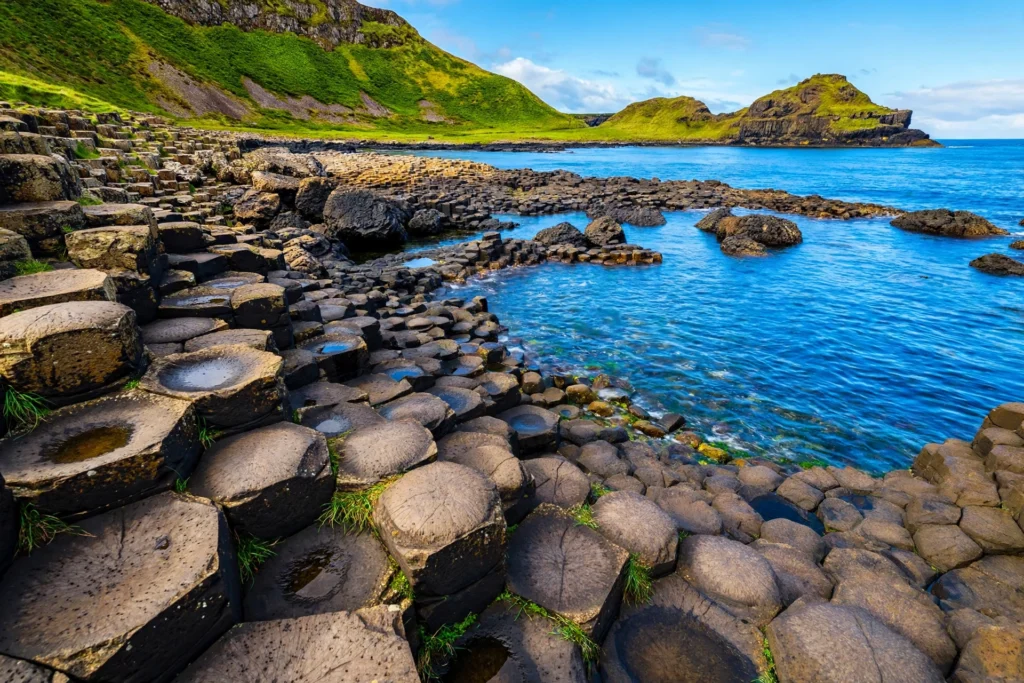
Day ten is the north. The Giant’s Causeway sits on the north coast of Northern Ireland, about three hours from Dublin by road, and the day is a long one. The Causeway itself is a pavement of around 40,000 basalt columns, cracked into hexagons when volcanic lava cooled some 60 million years ago, and it has been a UNESCO World Heritage Site since 1986. The stones sit on a public right of way and are free to walk to. What the National Trust sells is the Visitor Experience, which includes the car park, the visitor centre exhibition, an audio guide and guided tours, and which costs from £15 for an adult online, with prices varying by time slot and higher prices in peak summer hours. National Trust members go free. If you are driving, the Visitor Experience is worth it for the parking alone. If you arrive by bus, you can walk to the stones without it, using the public coastal path.
The north coast is more than the Causeway. The drive along the coast from Belfast takes in the Carrick-a-Rede rope bridge, the harbour town of Ballycastle, the ruins of Dunluce Castle on its cliff, and the beaches of the north coast are all within a short drive. The coast road from Belfast to Derry, the Causeway Coastal Route, is one of the great drives in the British Isles, and it deserves a full day rather than a rushed afternoon. If you have the time, drive it slowly, stop at the viewpoints, and let the coast set the pace.
The 14-Day Ireland Itinerary: The Full Island
Fourteen days is the full island, and it is the only version of the loop that does not ask you to leave a whole region out. It takes the ten-day loop and adds Donegal and the northwest, a second pass through the west at a slower pace, and the time to do the things the shorter loops rush: the Aran Islands, the Beara Peninsula, the Skelligs if the weather allows, and the long coastal drives that are the best part of Ireland. Fourteen days is also the length where the loop changes character. It stops being an itinerary and becomes a holiday, with days off built in, and that is exactly what it should be.
The 14-day loop at a glance
| Days | Base | What happens |
|---|---|---|
| 1–2 | Dublin | Arrival, city, Boyne Valley |
| 3–5 | Galway | City, Connemara, Aran Islands, Cliffs of Moher |
| 6–8 | Killarney | National park, Ring of Kerry, Dingle, Beara |
| 9–10 | Cork/Kilkenny | Southeast: Cork, Blarney, Kinsale, Waterford |
| 11–12 | Belfast | City, Giant’s Causeway, Causeway Coast |
| 13 | Donegal or Sligo | Northwest coast, Slieve League, Yeats country |
| 14 | Dublin | Return, last evening, fly home |
The shape of a two-week trip
The fourteen-day loop uses four bases rather than three, and the fourth is the north. Dublin opens the trip, Galway and Killarney carry the middle, and Belfast carries the north, with a night in the northwest on the way back south. The driving days are longer than on the shorter loops, but there are fewer of them relative to the total days, and the trip includes two deliberately empty days: one in Galway and one in Killarney, where nothing is planned and the day is decided by the weather and the mood. Those empty days are not wasted. They are the days when you find the pub with the best session, the beach nobody told you about, and the walk that becomes the story you tell when you get home.
The Beara Peninsula and the Skelligs
The Beara Peninsula, between the Ring of Kerry and the Dingle Peninsula, is the quiet third peninsula of the southwest, and it is the one the fourteen-day loop can finally include. It is wilder than either of its neighbours, with a mountain road, the Healy Pass, that crosses the peninsula and offers views that rival anything on the Ring. The peninsula’s villages are small, the food is good, and the pace is slow. Give it a day, drive it slowly, and stop whenever the view demands it, which will be often.
The Skelligs, the two rocky islands off the southwest coast, are the other addition that only a fourteen-day trip can handle. Skellig Michael, the larger island, holds a monastery founded in the sixth century, and landings are limited and weather dependent. The only sensible way to visit is to book a landing well in advance, build a flexible day around it, and accept that the boat may not sail. If it does sail, the climb to the monastery and the puffins that nest on the island in summer are among the great experiences in Irish travel. If it does not, the boat trip around the islands is still worth it, and the day can be spent on the Ring of Kerry instead. Never build a fixed day around a Skellig landing. The sea decides, not the itinerary.
Dublin: Two Days Done Properly
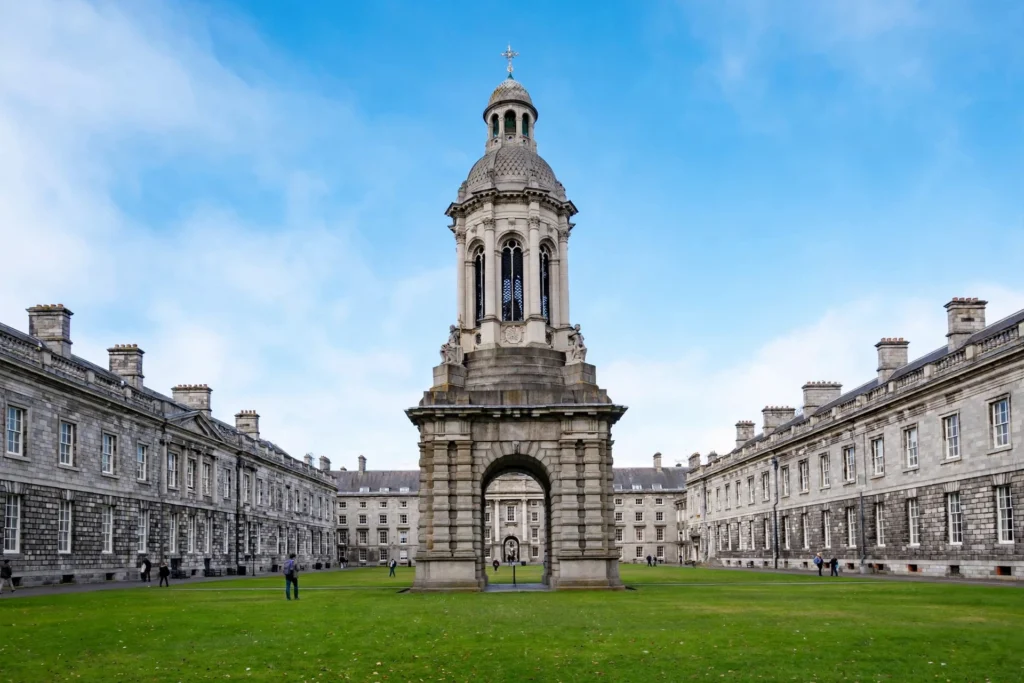
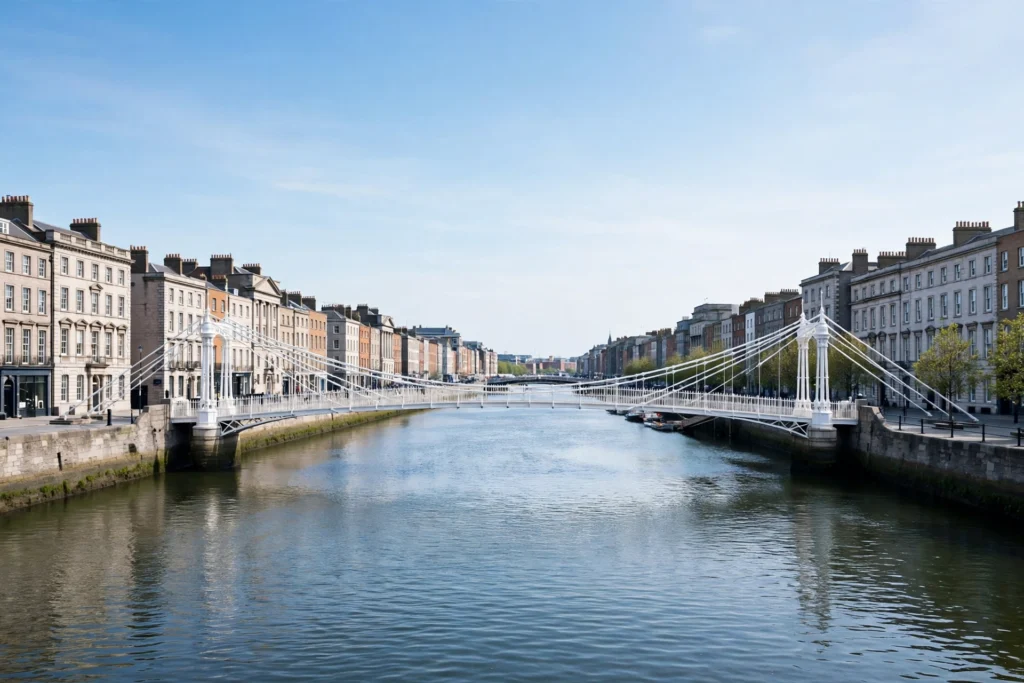
Dublin is easy to get wrong. The city is small, the centre is walkable, and the temptation is to treat it as a day of ticking boxes: Trinity College, a pub, the river, done. The city repays a slower approach. Two days in Dublin, done properly, means one day for the historic city and one day for the museums, the parks and the neighbourhoods, with the evenings given to food and music. This section is the two-day Dublin plan that sits inside every version of the loop, whether Dublin comes first or last.
Day one in Dublin: the historic city
Start at Trinity College. The college was founded in 1592, and its Front Square, with the Campanile bell tower at its centre, is the calmest place in the city. The Book of Kells, a ninth-century illuminated manuscript of the four Gospels, is the reason most visitors come, and the exhibition is worth the ticket. The Long Room of the Old Library, a long hall lined with books and busts, is the room everyone photographs, and it is more impressive in person than in any photograph. Book a timed ticket in advance through the official Trinity site; slots sell out, especially in summer, and the queue for walk-up tickets can eat an hour of your morning. Give the visit ninety minutes and do not rush the manuscript itself, which repays a slow look at the detail.
From Trinity, walk south to Grafton Street, Dublin’s main shopping street, and on to St Stephen’s Green, the park at the top of it. The Green is the place to sit for half an hour with a coffee and watch the city go by. From there, the National Museum of Ireland on Kildare Street is a five-minute walk, and it is free. The museum’s archaeology collection holds the bog bodies, the gold, and the objects that tell the story of Ireland from the Stone Age to the Vikings, and it is the best museum in the country. Give it two hours, and do not try to see everything; the bog bodies and the Treasury are the two rooms to prioritise.
In the afternoon, walk west to Dublin Castle and Christ Church Cathedral. The castle, which was the seat of British rule in Ireland until 1922, is a complex of buildings and exhibitions rather than a single castle, and the guided tour is the way to see it. Christ Church Cathedral, a few minutes away, is the older of Dublin’s two great cathedrals, and its crypt is the largest in Ireland. St Patrick’s Cathedral, ten minutes further on, is the larger and more famous of the two, and its connection to Jonathan Swift, who was Dean here and is buried here, is the story that makes the visit. The two cathedrals are close enough to see both in an afternoon, and different enough to justify it.
Day two in Dublin: Kilmainham and the neighbourhoods
Kilmainham Gaol is the single most important visit in Dublin, and it must be booked in advance. The Gaol is a former prison that held the leaders of Irish rebellions and the rising of 1916, and the guided tour explains more of modern Irish history in ninety minutes than anything else in the country. The tour is popular and the tickets sell out days ahead in summer, so book it as soon as your dates are fixed, and build the day around the tour time rather than the other way around. The Gaol sits west of the city centre, and the Luas tram from the centre takes about twenty minutes.
After Kilmainham, the afternoon is for the neighbourhoods. The Phoenix Park, one of the largest enclosed parks in Europe, is a short walk from the Gaol, and it is big enough to walk in for an hour and meet nobody. The park holds the President’s residence, the zoo, and a herd of wild fallow deer, and it is the place Dubliners go when they want to escape the city without leaving it. Alternatively, cross back into the city and walk the north side: O’Connell Street, the city’s main thoroughfare, the General Post Office, which was the headquarters of the 1916 rising and still bears the bullet marks, and the streets around it, which are livelier and less polished than the south side and all the better for it.
The Guinness Storehouse, at St James’s Gate, is the most visited attraction in Ireland, and it divides opinion. The building is a former fermentation plant turned into a seven-storey exhibition about stout, and the tour ends in the Gravity Bar, a glass-walled bar on the top floor with a panoramic view over the city. The ticket includes a pint, and the view alone is worth the price on a clear day. Go early, book in advance, and treat it as a morning rather than a whole day. If beer is not your thing, the Irish Museum of Modern Art, in the old Royal Hospital at Kilmainham, is the quieter alternative, and its gardens are a good place to sit after the Gaol.
Getting around Dublin: the Leap Visitor Card
Dublin’s public transport is simple once you have the right ticket, and the right ticket for most visitors is the Leap Visitor Card. The card gives unlimited travel on Dublin Bus, Go-Ahead Ireland city services, the Luas trams, the DART trains and commuter rail within the city zone, and it costs €8 for 24 hours, €18 for 72 hours and €24 for 7 days, with the validity starting from first use. That pricing comes from the official Leap Card site, checked on 28 November 2026. Some older pages and event sites still show different prices, including €16 for three days and €32 for seven, but those are out of date; the official card site is the one to trust. Buy the card at Dublin Airport, from the shops in Terminal 1 and Terminal 2 arrivals, or at outlets in the city. It is not valid on Bus Eireann services outside Dublin or on hop-on hop-off tour buses, and it does not cover the train to Galway or Killarney, which needs its own ticket.
The practical alternative is a standard Leap Card, which caps daily spending at €6 and weekly spending at €24, so over a full week it costs the same as the Visitor Card. The Visitor Card wins on simplicity: buy it, tap it, and stop thinking about fares. For a two-day stay, the 72-hour card at €18 is the sensible choice, and it covers the airport bus routes as well as the city services. Taxis in Dublin are metered and widely available, and the short hop from the airport to the city centre by bus takes as little as fifteen minutes on the express services and longer at peak times.
Dublin After Dark: Temple Bar, Trad Sessions and Pub Etiquette
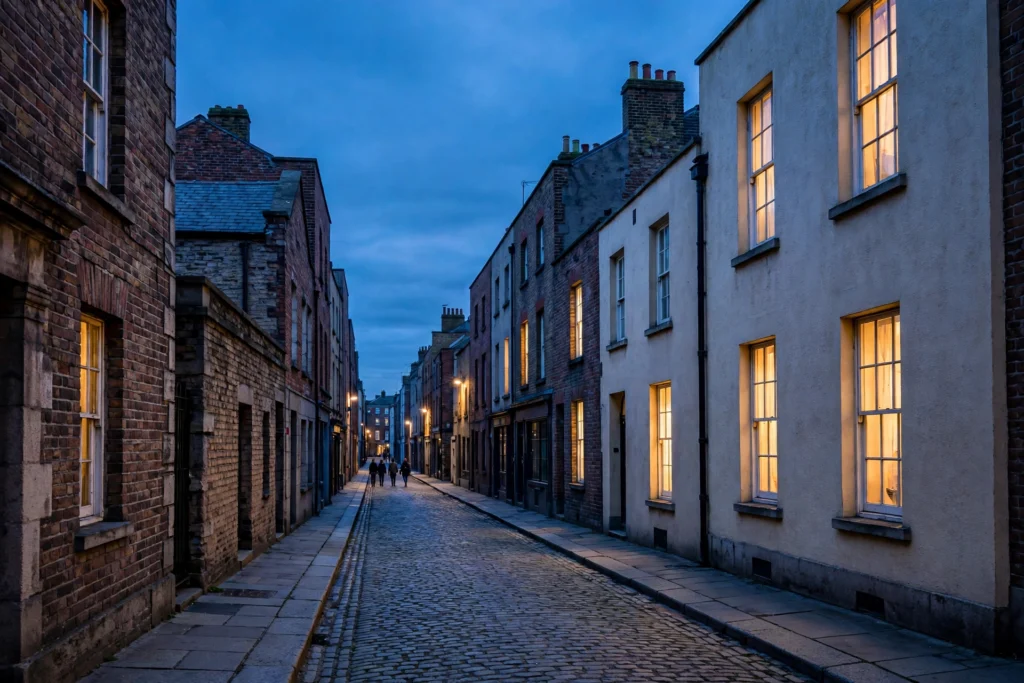
Temple Bar is the most misunderstood place in Dublin. It is both a pub and a district, both a tourist trap and a genuine part of the city, and the trick is to know which is which. The pub called The Temple Bar, with its red frontage and its crowds, is the most photographed pub in Ireland, and the district around it is a warren of cobbled lanes, live music venues, galleries and restaurants. The district is worth an evening. The pub itself is worth a quick look and a single drink, not a whole night.
How to do Temple Bar properly
Go to Temple Bar in the early evening, when the lanes are filling up and the music is starting, not at midnight, when the district is at its loudest and least interesting. Walk the lanes first: Temple Bar Square, Crown Alley, and the streets around the river. Eat before you drink, and eat outside the district if you can; the restaurants on the lanes charge visitor prices for food that is better and cheaper a few streets away. Then pick a pub for the music, not for the name. The pubs with the best traditional sessions are often the ones without a queue outside, and the session is the point: a group of musicians playing together in the corner, without amplification and without a stage, for the pleasure of playing.
The pubs to look for are the ones where the musicians are sitting in a circle, where the bar staff know the regulars, and where the crowd is listening rather than shouting. The pubs to be careful of are the ones with a cover charge, a bouncer, and a band playing amplified covers for a crowd that is there to be loud. Both exist in Temple Bar, sometimes on the same street, and the difference is obvious within thirty seconds of walking in. If the music is a session, stay. If it is a show, finish your drink and move on.
Trad sessions: the unwritten rules
A traditional music session is not a concert, and the rules are unwritten but real. The musicians are playing for each other, and you are a guest. Do not talk loudly over the music, do not clap between tunes, and do not ask the musicians to play a request unless they invite it. Do not take photographs with a flash, and do not stand in the circle. If you play an instrument yourself, do not join in uninvited; sit, listen, and if the musicians make room for you, that is the invitation. The session will usually run in sets of tunes, with a pause between sets when the musicians talk and drink. That pause is the time to order, to talk, and to thank them. A round of drinks for the musicians is the traditional thanks, and it is remembered.
Sessions happen all over Ireland, not just in Dublin, and the best ones are often outside the cities: in Doolin, in Dingle, in Galway, in Killarney, in the small towns of the west. The rule is the same everywhere. Listen first, talk later, and let the music set the pace of the evening. A good session is the closest thing Ireland has to a religious experience, and it costs the price of a pint.
Northern Ireland: Belfast and the Giant’s Causeway
Northern Ireland is a different country from the Republic, and this section says so plainly, because the differences matter for your trip. Northern Ireland is part of the United Kingdom. It uses pounds sterling, not the euro. Its speed limits are in miles per hour, not kilometres. Its entry rules are the UK’s rules, not Ireland’s. And its history, which is recent and raw in a way the Republic’s is not, deserves to be approached with respect rather than curiosity. All of that said, the north coast of Northern Ireland is one of the great coastal drives in Europe, and the Giant’s Causeway is a place that justifies the journey on its own.
Belfast: half a day well spent
Belfast is the capital of Northern Ireland and the second city on the island, and it has changed more in the last twenty years than almost any city in Europe. The Titanic Quarter, on the site of the shipyard where the Titanic was built, is the main attraction. The Titanic Belfast museum, a six-storey building shaped like the prow of a ship, tells the story of the ship, the city and the industry that built it, and it is worth two hours. The SS Nomadic, the tender that carried passengers to the Titanic, is moored nearby and is included in the visit. The city’s other draws are the murals of the Falls and Shankill Roads, which tell the story of the conflict in paint, and the markets, including St George’s Market, which is the best place in the city for breakfast on a Saturday morning.
The Giant’s Causeway and the Causeway Coast
The Giant’s Causeway sits on the north coast of County Antrim, about an hour and a half from Belfast by road. The Causeway is a pavement of around 40,000 basalt columns, formed when volcanic lava cooled some 60 million years ago and cracked into hexagonal shapes. It has been a UNESCO World Heritage Site since 1986, and it is the most visited attraction in Northern Ireland. The legend is that the giant Finn McCool built the causeway as a path to Scotland, and the science is that the columns are the remains of a lava flow. Both stories are worth hearing, and the audio guide tells both.
The practical facts are these. The stones themselves sit on a public right of way and are free to walk to, from dawn to dusk. What the National Trust sells is the Visitor Experience, which includes reserved parking at the site, the visitor centre exhibition, a hand-held audio guide, and guided tours that leave every hour. Prices vary by time slot and season, and the best rates are online: as checked in November 2026, the adult price runs from £15, the child price from £7.50, and the family ticket from £37.50, with higher prices at peak times and in peak months. National Trust members go free, as do under-5s and essential companions, but everyone is asked to book. If you are driving, the Visitor Experience is worth it for the parking alone, because the on-site car park is reserved for ticket holders and members. If you arrive on foot or by bus, you can walk to the stones without it, using the public coastal path. Check the National Trust’s own page before you go, because prices and hours change, and the visitor centre has been undergoing improvement works in November 2026, with part of the exhibition closed at times.
The Causeway Coast around the stones is as good as the stones themselves. The Carrick-a-Rede rope bridge, a short drive east, is a rope bridge across a chasm to a small island, and it is not for anyone who dislikes heights. The harbour town of Ballycastle, the ruins of Dunluce Castle on its cliff, and the beaches of the north coast are all within a short drive. The coast road from Belfast to Derry, the Causeway Coastal Route, is one of the great drives in the British Isles, and it deserves a full day rather than a rushed afternoon. If you have the time, drive it slowly, stop at the viewpoints, and let the coast set the pace.
Crossing the border: the practical differences
| Topic | Republic of Ireland | Northern Ireland |
|---|---|---|
| Currency | Euro (€) | Pound sterling (£) |
| Speed limits | Kilometres per hour | Miles per hour |
| Driving side | Left | Left |
| Entry rules | Irish rules, 90 days visa-free for US citizens | UK rules, ETA may be required |
| Emergency number | 112 or 999 | 112 or 999 |
| US State Dept advisory | Level 1 (30 Sep 2026) | UK Level 2, terrorism (9 Sep 2026) |
The border itself is invisible. There is no checkpoint, no barrier, and no sign beyond a change in the road markings and the speed limit signs. That is the point of the peace settlement, and it is why the crossing feels so ordinary. The practical differences are the ones in the table: change money before you cross or use a card, remember that your speedometer reading changes meaning, and check the UK’s entry rules for your nationality. US citizens travelling to Northern Ireland should check whether the UK’s Electronic Travel Authorisation applies to them; it is applied for online before travel, and it costs £20 as of November 2026. Your hire car agreement also matters: most hire companies in the Republic allow travel into Northern Ireland, but check before you cross, and tell the company if you plan to. The US State Department rates the United Kingdom, which includes Northern Ireland, at Level 2, “Exercise increased caution,” for terrorism, in an advisory dated 9 September 2026, which is a higher level than the Republic’s Level 1. Read both advisories before you go, and take the same care you would in any British city.
Connemara and Kylemore Abbey: The Wild West
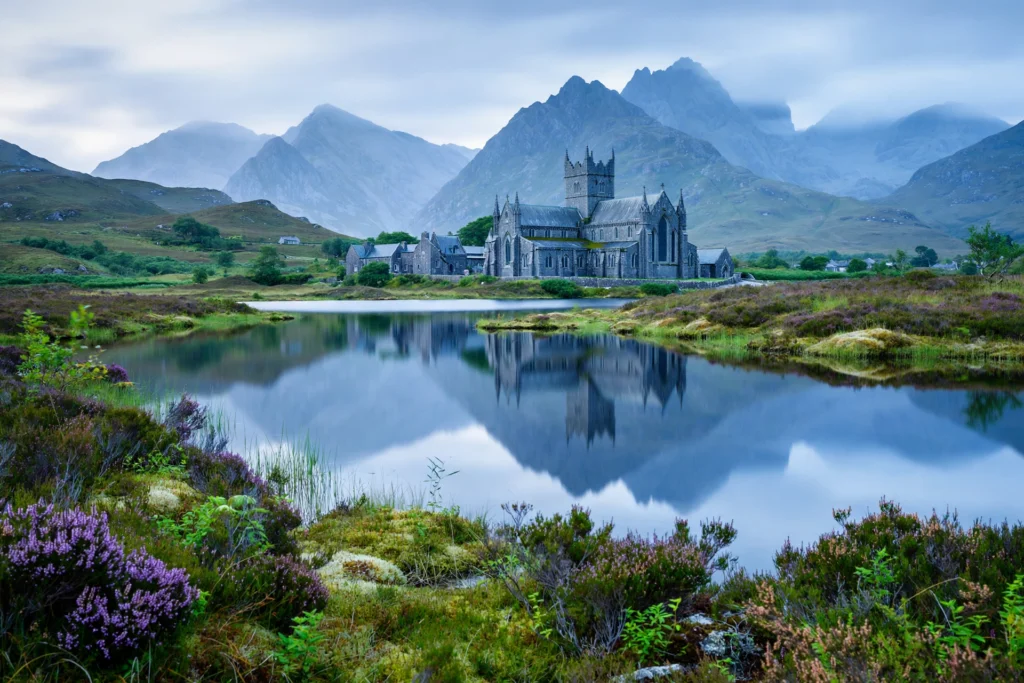
Connemara is the part of Ireland that makes people understand why the country has the reputation it does. It is a region of lakes, bogland and mountains west of Galway, where the roads are narrow, the stone walls are old, the weather is dramatic, and the villages are small enough that the pub is also the post office and the meeting place. Connemara is not a place to rush. It is a place to drive slowly, stop often, and let the landscape do the work.
What Connemara is
Connemara is the western part of County Galway, bounded by the Atlantic on the west and south, and by the mountains of the Twelve Bens and the Maumturks on the north and east. The region is a Gaeltacht area, where Irish is the first language of many communities, and the road signs are in Irish first. The landscape is a mix of blanket bog, lakes, mountains and coastline, and it changes with every mile. The light in Connemara is famous among photographers, and the reason is simple: the Atlantic weather brings cloud and sun in the same hour, and the landscape is never the same colour twice in a day.
Kylemore Abbey in detail
Kylemore Abbey was built in the nineteenth century as a home, became a Benedictine abbey in the twentieth, and is now both a working monastery and a visitor attraction. The house sits on the edge of Pollacappall Lough, a lake that reflects the building and the mountains behind it, and the walled garden, a short walk from the house, is one of the finest Victorian gardens in Ireland. The abbey’s story is a sad one, and the exhibition tells it well. Hours change by season, and ticket prices are not published far in advance, so check the official site before you go and book ahead to get in faster. Give the visit two to three hours, including the garden, and go in the late afternoon if you can, when the light comes across the lake and the crowds thin.
The Cliffs of Moher and the Burren: What Has Changed
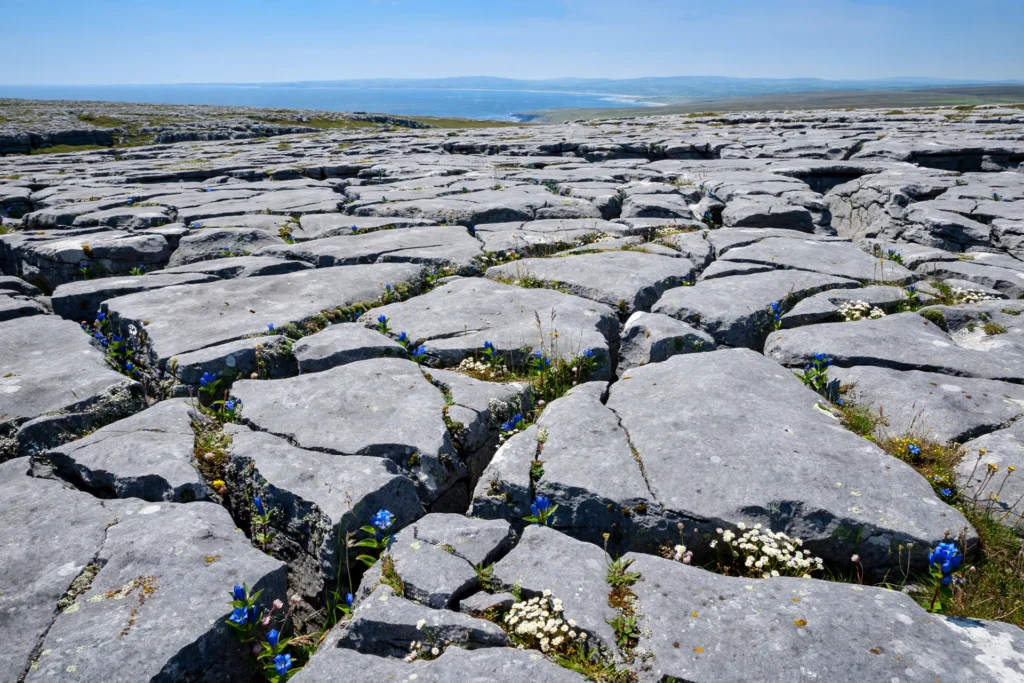
The Cliffs of Moher are the most famous sight in Ireland, and they are also the sight that has changed the most in recent years. Older guidebooks, older blog posts, and older memories all describe a cliff-top walk from Doolin to Liscannor that no longer exists in the form they describe. This section gives you the current position, checked against the official sources in November 2026, so you can plan the visit as it is now, not as it was five years ago.
The cliffs themselves
The Cliffs of Moher, Aillte an Mhothair in Irish, run for about 14 kilometres along the Atlantic coast of County Clare and reach 214 metres at their highest point. The visitor centre, known as the Cliffs of Moher Experience, sits on the R478 between the villages of Liscannor and Doolin, on the Wild Atlantic Way. The site is open all year round except for 24, 25 and 26 December, and the hours change by season: 9am to 5pm from November to February, 8am to 7pm in March, April, September and October, and 8am to 9pm from May to August. The site is at its busiest around midday, and the weather is changeable, so the best times to visit are early in the morning or late in the afternoon, when the light is better and the crowds are thinner.
Tickets and prices in 2026
| Ticket | Online, from | At the gate |
|---|---|---|
| Adult | €8 off-peak, €12 peak | €15 |
| Senior (65 and over) | €6 off-peak, €10 peak | €12 |
| Student (13 and over) | €6 off-peak, €10 peak | €12 |
| Family (2 adults, 2 children under 12) | €16 off-peak, €24 peak | €30 |
| Child (12 and under) | Free, up to 4 per adult | Free |
The official site prices admission by arrival time. Off-peak slots, before 11am and after 4pm, are the cheapest, and peak slots, between 11am and 4pm, cost more. The online price is always cheaper than the gate price, and the ticket allows a two-hour visit from your entry time. A combined ticket for the Cliffs and the Vandeleur Walled Garden is also available from €15 online. Book through the official site, and check the price for your slot at booking, because the prices change by date and the figures above are the from-prices for 2026. Prices for 2027 visits are already published and are slightly higher. Parking is included in the ticket, and the site is also served by Bus Eireann route 350 from Galway, with up to ten services a day each way in summer, and by the free Burren and Cliffs Explorer shuttle in summer, which ran from 21 May to 20 September in 2026.
The coastal walk: what is open and what is not
This is the part that matters most, because it is the part that older guides get wrong. The Cliffs of Moher Coastal Walk, the cliff-top path across farmland from Doolin to Liscannor via the visitor centre and Hag’s Head, is not open end to end. The official coastal walk page, with a status dated 1 August 2026, says the following. The southern section between Liscannor, Hag’s Head and the visitor centre, about six kilometres long, is fully closed due to severe safety concerns, with no access from Liscannor or from the visitor centre for this walk. The northern section from Doolin is open only as far as Surfers Path, where walkers must turn back, with no access to the visitor centre this way. The road at Surfers Path is hazardous, so do not walk along it. Inside the visitor centre site, about 3.5 kilometres of safe walking is available, including a stretch of about one kilometre north past O’Brien’s Tower and back on a path resurfaced in 2025, and a 1.5-kilometre round trip to the southern viewing points.
The reasons for the closures are serious. The trail was closed in August 2024 after a safety audit found 39 significant problems, and the trail crosses land owned by some 36 farmers, who in April 2026 agreed in principle to let Clare County Council manage it. The trail is graded as a grade 5 route, on a par with Carrauntoohil, Ireland’s highest mountain. The closures are not a bureaucratic inconvenience; they are a response to deaths and to a path that was never built for the number of people walking it. Respect them. Do not climb over barriers, do not follow unofficial paths, and do not trust a guidebook or a blog post that describes the full walk as if it were still open. The safe visit is the visitor centre and its paths, and it is a good visit. Two hours there, in good light, is enough, and the cliffs will stay with you longer than any walk would.
Cork, Blarney and the Southeast
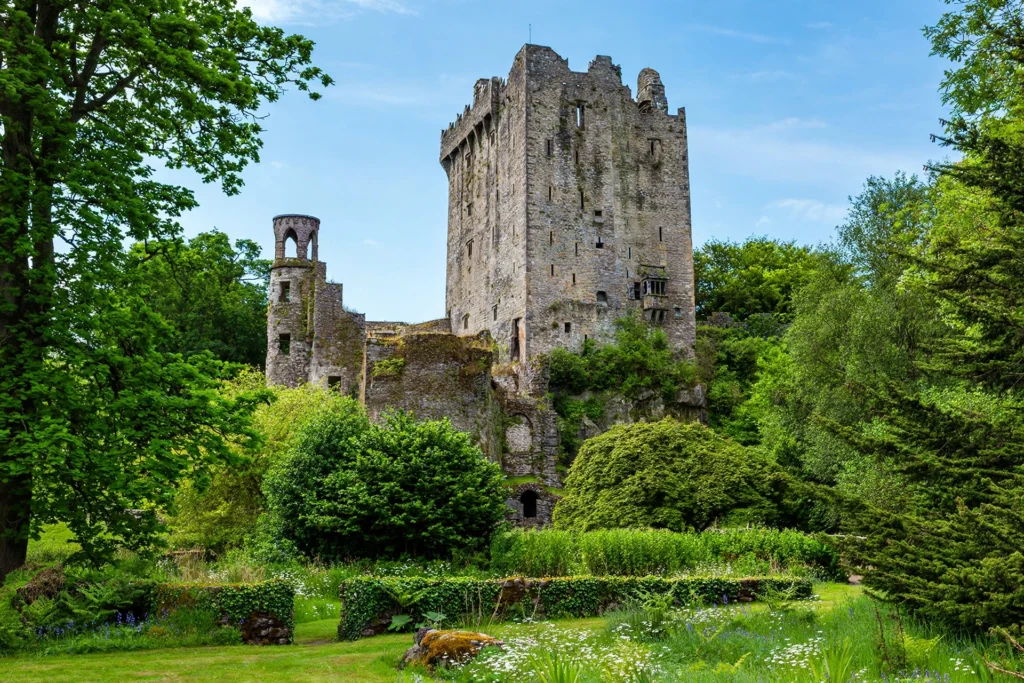
The southeast is the part of Ireland that most first-time visitors miss, and it is the part they most regret missing. It is Ireland’s sunniest corner, its food capital, and the home of its oldest city. The ten-day and fourteen-day loops give it the time it deserves. The seven-day loop can only touch it, and this section tells you what to prioritise if that is all you have.
Cork city
Cork is Ireland’s second city, and it feels like it: bigger than Galway, smaller than Dublin, and with a character all its own. The city sits on the River Lee, and its centre is an island between two channels of the river, which gives it a layout that confuses visitors for about an hour and then makes perfect sense. The English Market, which has been trading since 1788, is the heart of the city and the place to eat. The market’s stalls sell seafood, cheese, bread and produce from the region, and the cafes inside it serve the best lunch in the city. Go hungry, walk the whole market before you buy anything, and eat what looks best rather than what you planned.
Blarney Castle and the gardens
Blarney Castle, a short drive from Cork city, is the busiest attraction in the county, and the gardens are the reason to go rather than the stone. The castle is a medieval tower house, and the Blarney Stone, set in the wall near the top, is the stone that visitors queue to kiss, hanging upside down over a drop, for the gift of eloquence. The queue is long in summer, the climb is steep, and the stone is the least interesting part of the visit. The gardens, which cover sixty acres and include a fern garden, a poison garden, and a lake, are the real attraction, and they deserve a morning on their own. Go early, before the tour buses arrive, and give the castle an hour and the gardens two.
Driving in Ireland: Left-Hand Roads, Narrow Lanes and the M50 Toll
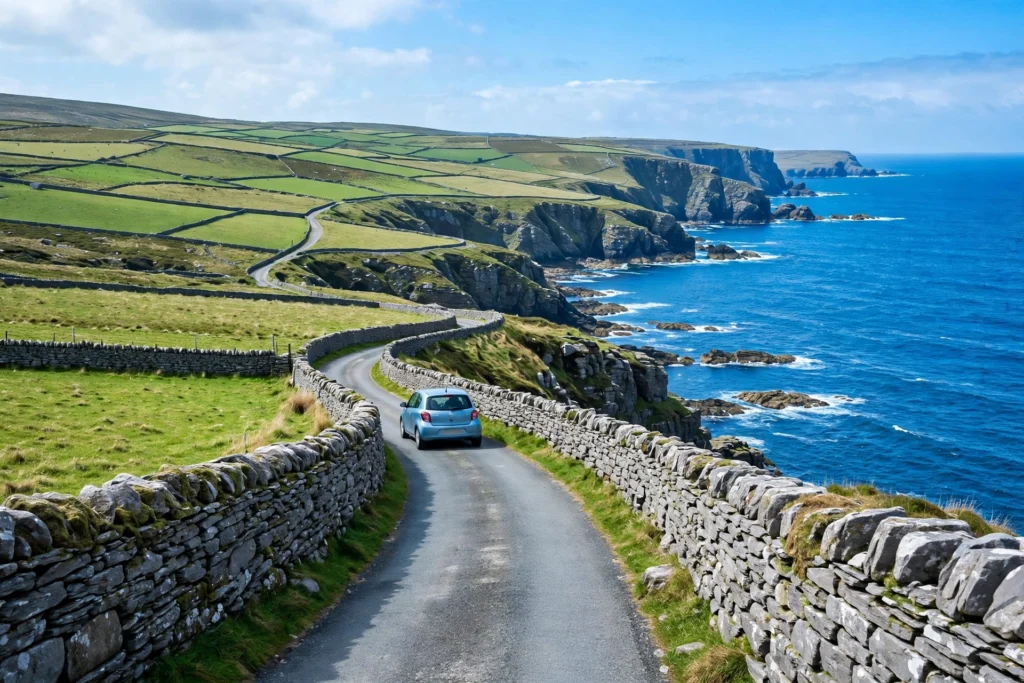
Driving in Ireland is the part of the trip that worries visitors most before they arrive and bothers them least once they are doing it. The adjustment is real, and the first thirty minutes are the hardest, but most drivers adapt within a day. The bigger challenge is not the side of the road; it is the narrowness of the rural roads, which never stops demanding attention no matter how many days you have been driving. This section is the honest version of what driving in Ireland involves, written for a visitor from the United States.
The basics: side, licence and the permit question
Ireland drives on the left. You overtake on the right. Roundabouts flow anti-clockwise, and you yield to any vehicle already on the roundabout, which in practice means you look right as you approach, not left. That single habit reversal is where most first-day mistakes happen. Hire cars have the steering wheel on the right, the gear stick is on your left, and the indicators and wipers are often reversed from what you expect. Spend five minutes in the car park before you leave, finding the lights, the wipers, the handbrake and the mirrors, and do not be embarrassed to do it slowly.
A valid US driving licence is accepted for visits of up to 12 months, according to the US Department of State and the Irish Road Safety Authority. The question of the International Driving Permit is genuinely disputed. The Road Safety Authority says visitors with a licence from a country Ireland does not recognise for exchange, which includes the United States, must also hold an IDP issued in their home country. Some hire companies and some guides say an IDP is not required for Americans. Because the official wording is not fully aligned, the practical low-risk approach is to get an IDP before you leave the United States and carry it with your licence. An IDP is a supporting document, not a replacement for your licence, and it costs little. Bring your physical licence, your passport, and the payment card the hire company requires, and check the company’s document, minimum-age and driving-history rules before you pay.
Hiring a car
The usual minimum age for car hire in Ireland is 21, though some firms require 25, and drivers under 25 pay a young-driver surcharge with most providers. You will need a full, valid licence, held for at least one to two years depending on the company, a valid passport, and a credit card for the deposit; most agencies do not accept debit cards for the deposit. A collision damage waiver is included in the rental price by law, but with a high excess, typically between €1,500 and €2,500, with economy and compact cars at the lower end and larger cars at the higher end. You can buy the excess down at the desk or through a third-party policy, and the decision is worth making before you arrive rather than under pressure at the counter.
Speed limits and road rules
Speed limits in the Republic of Ireland are in kilometres per hour. The limits, as of 2026, are 120 km/h on motorways, 100 km/h on national roads, 80 km/h on regional roads, 60 km/h on local roads, and 50 km/h in built-up areas, with 30 km/h on some residential streets and near schools. The local-road limit was lowered from 80 km/h to 60 km/h in February 2025, and a reduction on national secondary roads from 100 km/h to 80 km/h has been planned, so the sign on the road is the definitive reference, not this guide. In Northern Ireland, the limits are in miles per hour. The drink-driving limit in the Republic is 0.05% blood alcohol for most drivers, and 0.02% for learner, novice and professional drivers. Seatbelts are mandatory for everyone in the car, and using a phone while driving is illegal. You cannot turn left on a red light; only a green filter arrow lets you go while the main light is red.
| Road type | Speed limit (Republic) | Notes |
|---|---|---|
| Motorway | 120 km/h | About 75 mph |
| National road | 100 km/h | About 62 mph |
| Regional road | 80 km/h | About 50 mph |
| Local road | 60 km/h | Lowered from 80 in Feb 2025 |
| Built-up area | 50 km/h | 30 km/h near schools and some residential streets |
The M50 toll and the roads themselves
The toll that matters most to visitors is the M50, the motorway ring around Dublin. Between Junction 6 and Junction 7, the toll is collected barrier-free through the eFlow system: there is no toll booth and no cash payment, and cameras read the number plate automatically. The toll is compulsory and must be settled by 8pm the day after you travel, whether online at eflow.ie, by phone, or at a Payzone outlet. A car without an account pays €3.80. Many hire companies include the toll in their billing, so check with yours before you pay separately, and do not assume that a toll you did not see does not exist. The M50 is the easiest fine in Ireland to get, and it arrives by post weeks after you are home.
The no-car option
You do not need a car for this Ireland travel guide. Trains link Dublin with Galway and Killarney, and the trains are comfortable and scenic. Buses reach the Cliffs of Moher from Galway, and day tours from Galway, Killarney and Dublin cover Connemara, the Ring of Kerry, the Dingle Peninsula and the cliffs. A car makes the west much easier, because the best parts of the west are between the towns rather than in them, but a no-car trip is entirely possible and, for some travellers, more relaxing. If you go without a car, base yourself in Galway and Killarney, book day tours in advance, and use the train for the long moves. If you are comparing European trips that work well without a car, the Netherlands is the classic example, and our Netherlands travel guide covers a country where the train and the bicycle do the work that a hire car does in Ireland. The comparison is useful: Ireland rewards the driver, the Netherlands rewards the cyclist, and the right choice depends on the trip you want.
Safety on the road
The road safety advice in this guide is simple. Do not drive jet-lagged. Do not drive after drinking. Do not drive after dark on country lanes. Wear a seatbelt. Slow down in rain, which in Ireland means slow down often. Keep your phone in the glovebox. And if you feel tired, stop. The lay-bys, the farm cafes, and the viewpoints are there for a reason, and a twenty-minute break with a cup of tea is the best safety device in the car. For a wider look at staying safe on the road and in the cities, our travel safety tips guide covers the general principles that apply in Ireland as they do anywhere: keep valuables out of sight, lock the car, and stay aware of your surroundings in busy places.
Where to Stay, What to Eat and What to Pack
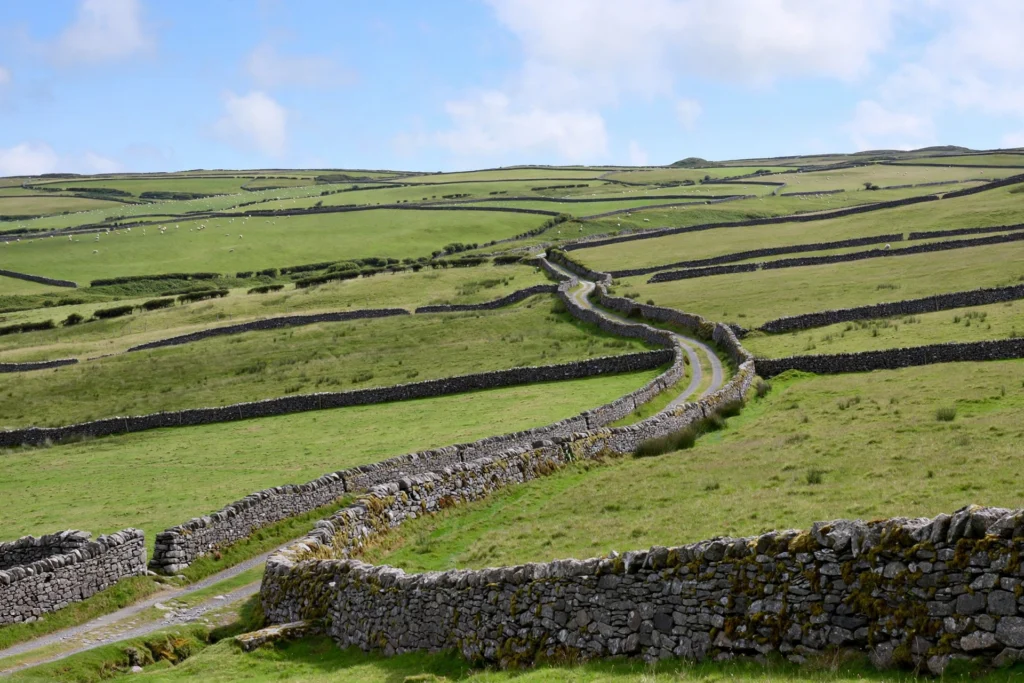
The practical chapters of an Ireland trip are the ones that decide whether the trip feels comfortable or not. Where you sleep, what you eat, and what you pack are not afterthoughts; they are the difference between a holiday and an endurance test. Ireland is a country where the weather changes the day, the rooms are smaller than American visitors expect, and the food is better than its reputation. This section covers all three, in the order you will need them.
What to eat
Irish food is better than its reputation, and the reputation is out of date. The country’s restaurants, from the seafood places of the west coast to the fine dining rooms of Dublin, serve food that is local, seasonal and well cooked. The seafood is the star: oysters from Galway Bay, crab and fish from the Atlantic, and smoked salmon from the west coast. The beef and lamb are excellent, the dairy is superb, and the bread, especially soda bread, is a thing in itself. The full Irish breakfast is the institution: eggs, grilled tomato, mushrooms, soda bread and tea, served in B&Bs and cafes across the country. The pub dinner, a stew or a fish dish with a pint, is the cheapest good meal in Ireland, and the pub lunch, a soup and a sandwich, is the best value of all.
What to pack
Packing for Ireland is an exercise in layers and waterproofs. The weather changes several times a day, and the right clothing is a waterproof jacket, a warm layer, and shoes you can walk in on wet ground. The packing list below is the one to use, and for a printable version with checkboxes, our travel packing checklist guide gives you a list you can print and tick off before you fly.
| Item | Why it matters |
|---|---|
| Waterproof jacket with a hood | Rain is possible every day of the year |
| Warm layer, fleece or wool | Evenings are cool, even in summer |
| Waterproof walking shoes | Wet grass, muddy paths, cobbled streets |
| Layers, not one heavy coat | The weather changes hourly |
| Day pack | Water, snacks, map, extra layer |
| Power adapter, Type G | Ireland uses the UK three-pin plug |
| Sunscreen | The sun is strong when it appears, and the wind hides the burn |
| Reusable water bottle | Tap water is safe to drink |
| Cash in euros | Cards are widely accepted, but rural ATMs can be unreliable |
The Type G plug is the detail that catches visitors out. Ireland uses the same three-pin plug as the United Kingdom, not the European two-pin plug, so a European adapter will not work. Buy a UK adapter before you fly, or buy one at Dublin Airport. The voltage is 230 volts, so most modern chargers work, but check the label on anything older. The other detail is the rain: pack the waterproof jacket in your hand luggage, not in the checked bag, because the walk from the plane to the terminal can be wet, and the first hour in Ireland sets the tone for the trip.
How Much Does Ireland Cost? Budgets, Tickets and Money
Ireland is not the cheapest country in Europe, and it is not the most expensive. It sits in the middle, with Dublin pulling the average up and the west pulling it down. The numbers below are per person per day, for a mid-range trip, and they are based on 2026 prices. The single biggest variable is the room: a Dublin hotel room can cost twice what the same standard costs in Killarney, and the difference is the difference between a budget trip and a comfortable one.
Daily budgets by style
| Style | Per person, per day | What it covers |
|---|---|---|
| Budget | €90–€130 | Hostel or budget B&B, groceries and cafe lunches, one pub dinner, buses and trains |
| Mid-range | €150–€220 | Mid-range hotel or B&B, two restaurant meals, hire car share and fuel, paid attractions |
| Comfortable | €250–€350 | Better hotel, three good meals, hire car, all tickets and tours |
| Luxury | €400 and up | Country house or five-star hotel, fine dining, private tours |
The budget figures assume two people sharing a room and a car. A single traveller pays more per person, because the room and the car are not shared, and the difference can be a third or more. The figures also assume you are not eating every meal in Temple Bar, where a dinner for two can cost what a day’s food costs elsewhere. Cook a breakfast, eat your main meal at lunch, and save the evening for a pub dinner, and the mid-range budget will stretch further than the table suggests.
What the tickets and transport cost
| Item | Typical cost (2026) |
|---|---|
| Cliffs of Moher, adult | €8–€12 online, €15 at the gate |
| Giant’s Causeway Visitor Experience, adult | From £15 online |
| Muckross House, adult | €9 |
| Book of Kells, Trinity College | Book online, timed ticket |
| Kilmainham Gaol | Book online, sells out |
| Leap Visitor Card, Dublin | €8 for 24 hours, €18 for 72 hours, €24 for 7 days |
| Train, Dublin to Galway | Up to €30.45 single, lower web fares booked ahead |
| Dublin Express airport bus | From €9 one way online |
| Hire car, compact, per day | Varies widely by season; book early |
| M50 toll | €3.80 if not included by the hire company |
Money, cards and tipping
Ireland uses the euro, and US dollars are not accepted. Payment by card and tap-to-pay is widely accepted, including in pubs and taxis, but some US credit cards are not accepted, so carry a second card and some cash. ATMs are widely available, though some in rural areas may not accept debit cards from US banks, and many Irish banks will not accept $100 bills or cash traveller’s cheques. Tell your bank you are travelling before you fly, so a transaction in County Kerry does not trigger a fraud block. Tipping is modest: ten percent in restaurants for good service, rounding up in pubs, and nothing expected for a taxi unless the driver helps with bags.
For a sense of how Ireland compares with other trips, the numbers put it below the most expensive countries in Europe and above the cheapest. A comparable week in Switzerland costs substantially more for the same standard of room and meal, as our Switzerland travel guide shows in its own budget tables, and a week in France runs close to Ireland’s, with Paris pulling the average up in the same way Dublin does, as our France travel guide explains. The comparison that matters most for an American traveller is the long-haul one: a week in Ireland, with a short flight from the east coast, costs far less in flights and time than a comparable week in Asia, and for the numbers on that side, our guide to how much a trip to Japan costs gives the full breakdown. Ireland is the trip you take when you want Europe without the long flight, and the budget reflects that.
Frequently Asked Questions About Visiting Ireland
Is seven days enough for Ireland?
Seven days is enough for a satisfying first loop of Galway, Killarney and Dublin, with Connemara, the Cliffs of Moher, the Ring of Kerry and the Dingle Peninsula included. It is not enough for the whole island: the north, the northwest and the southeast need more time, and trying to add them to the same week means two long driving days and less seen, not more. If seven days is all you have, take the classic loop and save the rest for a second trip.
Do I need a car in Ireland?
Not strictly. Trains link Dublin with Galway and Killarney, buses reach the Cliffs of Moher, and day tours from Galway, Killarney and Dublin cover Connemara, the Ring of Kerry and the cliffs. A car makes the west much easier, because the best parts of the west are between the towns rather than in them, and a car is close to essential for the Dingle Peninsula, the Beara Peninsula and Donegal. If you hire a car, pick it up in Galway rather than driving out of Dublin on your first morning.
How much does a week in Ireland cost?
A mid-range week costs roughly €150 to €220 per person per day, or about €1,050 to €1,540 for the week, excluding flights. A careful budget trip can run closer to €100 a day, and a comfortable trip closer to €300 a day. Dublin is the most expensive part of the trip, and the west and southwest are noticeably cheaper for the same standard of room. The biggest single costs are the room, the hire car, and the flight.
What is the best time to visit Ireland?
May through September is the best time, with May and June offering long days and fewer crowds, and September offering golden light and thinner crowds. July and August are the warmest and the busiest, and the most expensive for rooms. Winter brings short days, roughly eight hours of daylight in December, and shorter opening hours, but also empty roads and cheaper rooms. Rain is possible in every month, so the season matters less than the packing.
Do I need a visa to visit Ireland?
US citizens can enter Ireland visa-free for tourism or business stays of up to 90 days, with a passport valid for the duration of the stay. Ireland is not a full member of the Schengen Area, so you must show your passport if you arrive from a Schengen country, and your passport must be valid for at least three months beyond your stay if you pass through a Schengen country. Check the current rules on the official Irish immigration site before you book, and remember that Northern Ireland follows UK entry rules, which are different.
Is Ireland safe for visitors?
Yes. The US State Department rates Ireland at Level 1, “Exercise normal precautions,” the lowest of its four levels, in an advisory dated 30 September 2026. The main risks it names are petty crime in busy tourist areas, including pickpocketing and bag snatching, and the possibility of demonstrations disrupting transport. The practical risks on a trip are a cliff edge in high wind, a narrow road after dark, and a hire car driven by someone new to the left. Take the same care you would in any European city, and the country will look after you.
Can I walk the Cliffs of Moher coastal walk?
Not end to end. As of 1 August 2026, the southern section of the coastal walk from Liscannor is fully closed for safety reasons, and the northern section from Doolin is open only as far as Surfers Path, where walkers must turn back. There is no walking route between the villages and the visitor centre. The safe visit is the visitor centre site itself, which offers about 3.5 kilometres of paved paths and protected viewpoints. Stay on the designated paths and respect the closures.
Is the Giant’s Causeway free?
The stones themselves sit on a public right of way and are free to walk to, from dawn to dusk. What the National Trust sells is the Visitor Experience, which includes the car park, the visitor centre exhibition, an audio guide and guided tours, and which costs from £15 for an adult online. If you are driving, the Visitor Experience is worth it for the parking. If you arrive on foot or by bus, you can walk to the stones without it.
Do I need an International Driving Permit?
The honest answer is that the official guidance is not fully aligned, and the safe answer is yes. The Irish Road Safety Authority says visitors from countries Ireland does not recognise for licence exchange, including the United States, should also hold an IDP issued at home. Some hire companies and guides say an IDP is not required. Get the permit before you fly; it costs little, it ends the argument at the hire desk, and it is the only version of this question that has no downside.
Which direction should I drive the loop?
Clockwise, Dublin first, is the best choice if your flight lands after midday or you have never driven on the left, because it gives you two easy days on foot before the driving starts and puts the big scenery at the end of the trip, when you have found your feet on the roads. Galway-first is the best choice if your flight lands in the morning and you are comfortable driving on the left, because it puts the scenery at the start and saves the Dublin traffic. Either way, drive the loop in one direction and do not double back.
What should I leave out of a first trip?
Donegal and the far northwest, Belfast and the north coast on a seven-day trip, and the southeast beyond Kilkenny and Cashel. Each of those is worth a trip of its own, and adding any of them to a seven-day loop means two of your seven days are spent mostly in the car. Skellig Michael is also worth leaving out deliberately on a first trip, because landings are weather dependent and limited, and building a day around one is how a week gets ruined.
Is it better to stay in Galway, Killarney or Dublin?
All three, for two nights each. Galway is the best first base, Killarney is the best base for the southwest, and Dublin is the best base for the east and the capital. If you have to choose one, choose Galway, because it puts Connemara, the Aran Islands and the Cliffs of Moher within a day trip and because the city itself is the most enjoyable place to spend an evening in Ireland. But the loop works because it uses all three, and no single base can do the job of the other two.
Conclusion: The Loop That Leaves You Wanting More
Ireland is a country that is easy to underestimate and hard to forget. The island is small, the distances look short, and the guidebooks make it sound simple. The reality is a country of narrow roads and changeable weather, of cliffs and bogs and mountains, of music in the corner of a pub and history in the stones of a field. The 3-base loop in this Ireland travel guide is the way to meet that reality on its own terms: three bases, one direction, and enough time in each place to let the country show you what it is.
Pick your length and commit to it. Five days gives you the west, the southwest and a day in Dublin, and it is a real trip. Seven days gives you the classic loop, and it is the length most first-time visitors should choose. Ten days adds the north and the southeast, and it is the length for travellers who want the island rather than the highlights. Fourteen days gives you the whole island, and it is the length for travellers who have the time and want to use it. Whichever length you choose, book the three bases first, book the timed tickets second, and leave room in the plan for the weather, the music and the road that turns out to be better than the one you planned.
The last piece of advice is the simplest. Slow down. Give Galway a second morning. Give Killarney a second day. Give Dublin a second evening. The travellers who love Ireland most are not the ones who saw the most. They are the ones who stayed for a second pint while the session found its feet, who took the long way back along the coast because the light changed, and who gave a place a full morning instead of a photo stop. The loop in this guide is designed to give you those mornings. Pick your length, book your three bases, and let Ireland do the rest.
People also read: Switzerland Travel Guide: Two Bases, Three Scenic Trains and the Alps Done Right in 2026–27 • Netherlands Travel Guide: Beyond Amsterdam — The 7-Day Country Route for 2026–27 • France Travel Guide: Paris, the Loire and the Riviera in 2026–27 • Travel Safety Tips: 60+ Ways to Stay Safe While Traveling in 2026–27 • Travel Packing Checklist PDF Free: The Complete Checklist for Any Trip in 2026 • How Much to Travel to Japan? Real 2026 Trip Costs for 7, 10 and 14 Days

M. Adil is the founder and editor of SoloTravelPro. He writes practical, research-based travel guides that help travellers plan with confidence — from first-time city breaks to national parks and island escapes. Every guide is built on official sources, current prices and honest, usable advice, so readers can plan smarter and travel better.

Other Articles

Holafly vs Airalo vs Roamzo: Travel eSIM Prices Compared