A first trip to Italy works best as a route, not a list: 7 days covers Rome, Florence and Venice by high-speed train, 10 days adds the Amalfi Coast or a slow week in Tuscany, and 14 days opens up Sicily or the deep south. This Italy travel guide builds that route step by step — how many days you need, which regions suit your style, what each city actually takes, how the trains work, the best months with their crowd and price trade-offs, and a realistic budget in euros — with the booking rules and ticket prices for the Colosseum, the Vatican Museums and Venice’s entry fee checked on the official sites in November 2026, so you can plan a first trip that is ambitious without being exhausting.
How Many Days Do You Need in Italy?
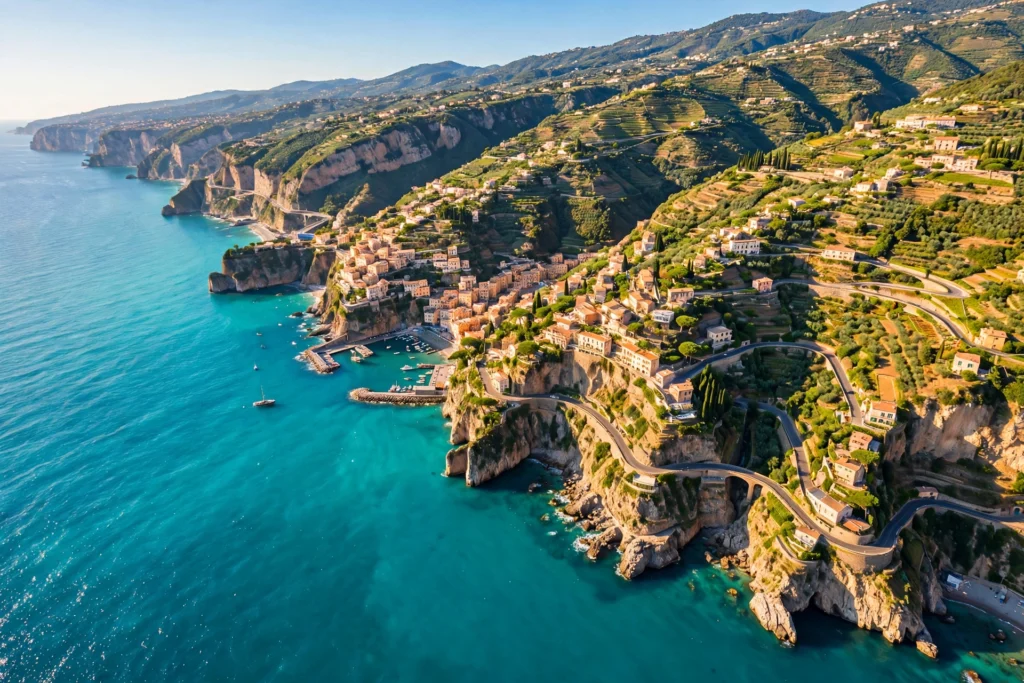
Italy is the country that most often breaks first-time itineraries, and the reason is simple: it is much bigger and much denser than it looks on a map. From the Alps to the toe of Calabria is roughly 1,200 kilometres, and the country holds 62 UNESCO World Heritage Sites — more than any other country in the world, one ahead of China — which means that almost every region you pass through has something worth stopping for. The temptation is to see all of it in one trip. The mistake is trying. A first trip to Italy should be built around a single, honest question: how many days do you actually have? The answer decides everything else, from which cities you sleep in to whether you need a car at all, and getting it right is the difference between a trip you remember fondly and a trip you remember as a series of train stations.
For most first-time visitors from the United States, seven days is the minimum that works. Seven days gives you three days in Rome, two in Florence and two in Venice, with the travel between them done by high-speed train in under two hours a leg. It is a full week, not a relaxed one, but it covers the three cities that define Italy for most people, and it does so without a single domestic flight or a rental car. Ten days is the sweet spot. Ten days lets you keep the classic three cities and add a fourth act — three days on the Amalfi Coast, or three slow days in the Tuscan countryside, or a day in Bologna and a day in the Cinque Terre — and the extra days are what turn the trip from a checklist into a holiday, because they are the days when you stop rushing and start eating long lunches. Fourteen days is the full first trip. With two weeks you can do the classic route plus the Amalfi Coast and still have days left over, or you can add Sicily as a second, self-contained week. Anything longer than that is a different kind of trip altogether, and it deserves its own plan.
The table below is the honest version of the trade-off. It is not a promise that seven days will feel unhurried — it will not — but it is the minimum at which the classic route works without cutting a city down to a single night, which is the point at which a city stops being a place you visit and becomes a place you pass through. One night in a city means arriving in the afternoon, sleeping, and leaving after breakfast. You see a square and a restaurant. Two nights means a full day on the ground, which is the smallest unit of travel that actually lets you understand a place. That is the rule this whole guide is built on: never spend one night anywhere unless the place is a deliberate overnight stop on the way to somewhere else.
| Trip length | What it covers | Who it suits |
|---|---|---|
| 5 days | Rome (3) + Florence (2), or Rome (3) + Venice (2) | A long weekend plus a day or two; pick two cities, not three |
| 7 days | Rome (3) + Florence (2) + Venice (2) | The classic first trip; the minimum for the big three |
| 10 days | Classic three + Amalfi Coast (3) or Tuscany (3) | The sweet spot; one proper extension, at a human pace |
| 14 days | Classic three + Amalfi (3) + Naples/Pompeii (1) + a spare day, or classic three + Sicily (5) | The full first trip; two regions done properly |
| 21 days | The classic route + Tuscany + Amalfi + Sicily, or a slow north-to-south crossing | A once-in-a-lifetime trip; needs its own plan |
The two rules that save every Italy itinerary
The first rule is to move less than you think you should. Every time you change base, you lose half a day: checking out, getting to the station, the train, getting to the next hotel, checking in, and finding your bearings again. Three bases in seven days is the maximum that still feels like a holiday. Four bases in seven days is a tour, and you will spend the week watching Italy through a train window. The second rule is to book the timed things before you fly. The Colosseum, the Vatican Museums, the Uffizi and the Accademia all sell timed entry, and in peak season the good slots go weeks ahead. The rest of Italy — the meals, the walks, the viewpoints, the neighbourhoods — can stay loose. But the four big tickets are the skeleton of the trip, and if they are not booked, the trip bends around whatever is left.
It is also worth deciding early what kind of trip this is. Italy rewards different things for different people, and the country is big enough to give each of them a different answer. If you love art and history, the classic route is perfect and you will want more time in Florence and Rome than in Venice. If you love food, Bologna and Emilia-Romagna deserve a place in the plan, and the Amalfi Coast can wait for a second trip. If you love the outdoors, the Dolomites and the lakes will pull you north and the classic route will feel too urban. And if you are travelling with children, the pace matters more than the places: fewer bases, longer stays, and one big sight a day instead of three. The region picker later in this guide works through each of these in turn, but the principle is the same throughout — pick the Italy that matches your trip, not the Italy that matches someone else’s photograph.
What this guide does differently
Most Italy travel guides are either a list of cities or a single itinerary. This one is built the other way round: it starts with the route, then fills in the cities, the trains, the months, the money and the bookings, so that by the end you have a plan you could actually book, not just a list of places you would like to see. Every practical claim that can change — the advisory level, the Venice entry fee, the Colosseum and Vatican Museums ticket prices, the ETIAS status — was checked on the official site in November 2026, and the sources are linked where they matter. Prices are given in euros and framed as the range you should expect, because Italian prices move with the season and the day of the week, and a guide that pretends a hotel room costs the same in February and in June is lying to you. Where a competitor guide is thin — on train booking, on the real cost of a day, on what to do when a ticket is sold out — this guide goes deeper, because those are the gaps that actually ruin trips.
The 7-Day Classic Route: Rome, Florence, Venice
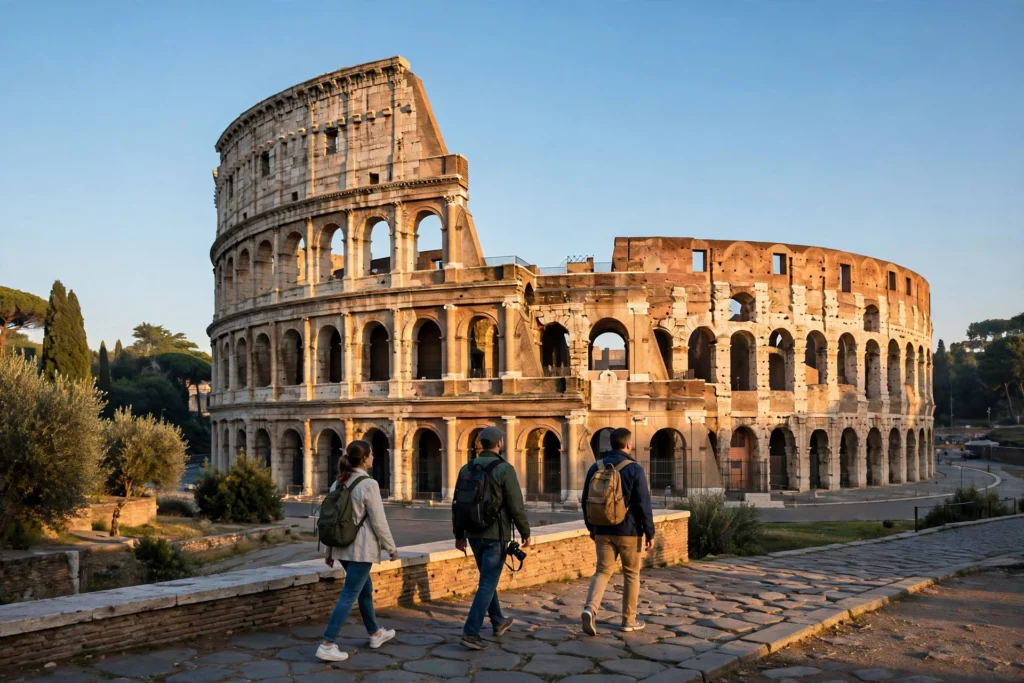
The seven-day classic is the most-travelled first route in Italy for a reason: it strings together the three cities that most people picture when they picture Italy, it does it entirely by high-speed train, and it needs no car, no domestic flight and no complicated logistics. Rome to Florence is about an hour and a half by Frecciarossa, Florence to Venice a little over two hours, and the trains run so often that you can treat them almost like a metro. Fly into Rome and out of Venice — an open-jaw ticket — and you never backtrack. Fly into Rome and out of Rome and you lose a day retracing your steps, which on a seven-day trip is a day you cannot afford.
The shape of the week matters as much as the cities. Start in Rome, because Rome is the hardest city to enjoy when you are jet-lagged and it is the easiest city to enjoy when you have your energy back, so give it your first three days while the excitement is fresh and your legs are still willing. Florence comes second, smaller and calmer, a place to slow down after Rome’s scale. Venice comes last, because Venice is the city that rewards an unhurried ending — an evening on the canals after the day-trippers have left is the best farewell Italy offers, and it is worth saving for the end of the trip rather than spending it on an arrival day when you are tired and disoriented.
Day by day: the 7-day classic
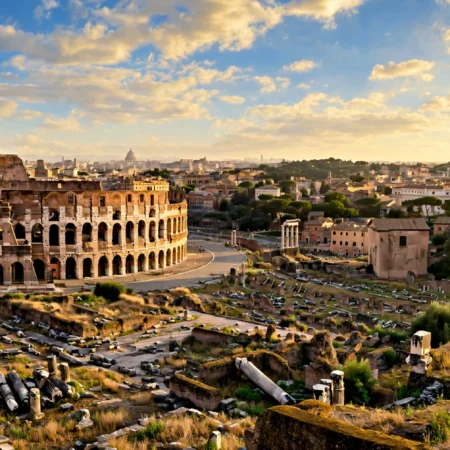
Day one is Rome, and it should be an easy day on purpose. Land at Fiumicino, take the Leonardo Express to Roma Termini or a taxi to your hotel, and spend the afternoon walking rather than sightseeing: the Pantheon from the outside, Piazza Navona, the Trevi Fountain in the early evening when the light is best and the crowds are thinning. Eat near your hotel, sleep early, and let the jet lag do its worst on a day when nothing is booked. Day two is ancient Rome, and it is the day to book ahead: the Colosseum and the Roman Forum in the morning, with a timed ticket bought on the official site, then the Palatine Hill and a slow afternoon in Trastevere, the neighbourhood across the river where Romans actually eat. Day three is the Vatican in the morning — the Vatican Museums and the Sistine Chapel on a timed ticket, then St Peter’s Basilica, which is free to enter — and the rest of Rome in the afternoon: the Spanish Steps, the Borghese Gardens, and whatever you missed on day one.
Day four is the move to Florence. Take a morning high-speed train, arrive before lunch, and spend the afternoon on foot: the Duomo from the outside, the Ponte Vecchio, the Oltrarno neighbourhood across the river, where the artisan workshops are and the tourists thin out. Day five is Florence’s art day, and it needs booking too: the Uffizi in the morning and the Accademia, home of Michelangelo’s David, in the afternoon, with the climb up Brunelleschi’s dome fitted in between if your legs are willing — it is 463 steps and the view is the best in the city. Day six is the move to Venice, again by morning train, and the afternoon is for getting lost on purpose: Venice is the one Italian city where getting lost is the activity, and the back streets of Cannaregio and Castello are where the city is still a place people live rather than a place people visit. Day seven is San Marco in the morning — the basilica and the Doge’s Palace, both booked ahead — and then a slow afternoon: a vaporetto ride the length of the Grand Canal, a cicchetti crawl through the bacari wine bars, and a last dinner as the light goes down over the water.
| Day | Base | What you do | Book ahead |
|---|---|---|---|
| 1 | Rome | Arrive, Pantheon, Piazza Navona, Trevi Fountain at dusk | Nothing |
| 2 | Rome | Colosseum + Roman Forum + Palatine, Trastevere in the evening | Colosseum timed ticket |
| 3 | Rome | Vatican Museums + Sistine Chapel, St Peter’s Basilica, Borghese Gardens | Vatican Museums timed ticket |
| 4 | Florence | Morning train, Duomo, Ponte Vecchio, Oltrarno | Train ticket |
| 5 | Florence | Uffizi, Accademia and David, dome climb | Uffizi + Accademia timed tickets |
| 6 | Venice | Morning train, get lost in Cannaregio and Castello | Train ticket |
| 7 | Venice | St Mark’s Basilica, Doge’s Palace, Grand Canal by vaporetto | Basilica + Doge’s Palace |
What the 7-day route leaves out, honestly
Seven days does not include the Amalfi Coast, the Cinque Terre, Tuscany’s countryside, Naples, Pompeii, Sicily or the lakes. That is not a flaw in the route; it is the price of doing three great cities properly in a week. The mistake is to try to squeeze a fourth destination into the same seven days, because the fourth destination always costs a day of travel and a night of packing, and what it gives back is a rushed half-day somewhere you would have enjoyed properly with three. If seven days is all you have, take the classic route as it is, enjoy it at a human pace, and let the rest of Italy be the reason you come back. Italy has a way of ensuring that you always will.
A note on where to stay on this route, because it matters more than most guides admit. In Rome, stay near the historic centre — around Piazza Navona, the Pantheon or Trastevere — so that you can walk to the sights and walk home for a rest in the afternoon, which is when Rome’s heat and crowds are at their worst. In Florence, stay inside the historic centre, which is small enough to cross on foot in twenty minutes, and avoid the area right around the station. In Venice, stay in Cannaregio or Dorsoduro rather than right on San Marco, where the rooms are smaller, the prices are higher and the streets are the most crowded; a ten-minute walk saves you money and gives you a neighbourhood. In all three cities, book early: the good rooms in the good locations go first, and the difference between booking three months ahead and three weeks ahead is often the difference between a quiet street and a noisy one.
The 10-Day Route: Add the Amalfi Coast or Tuscany
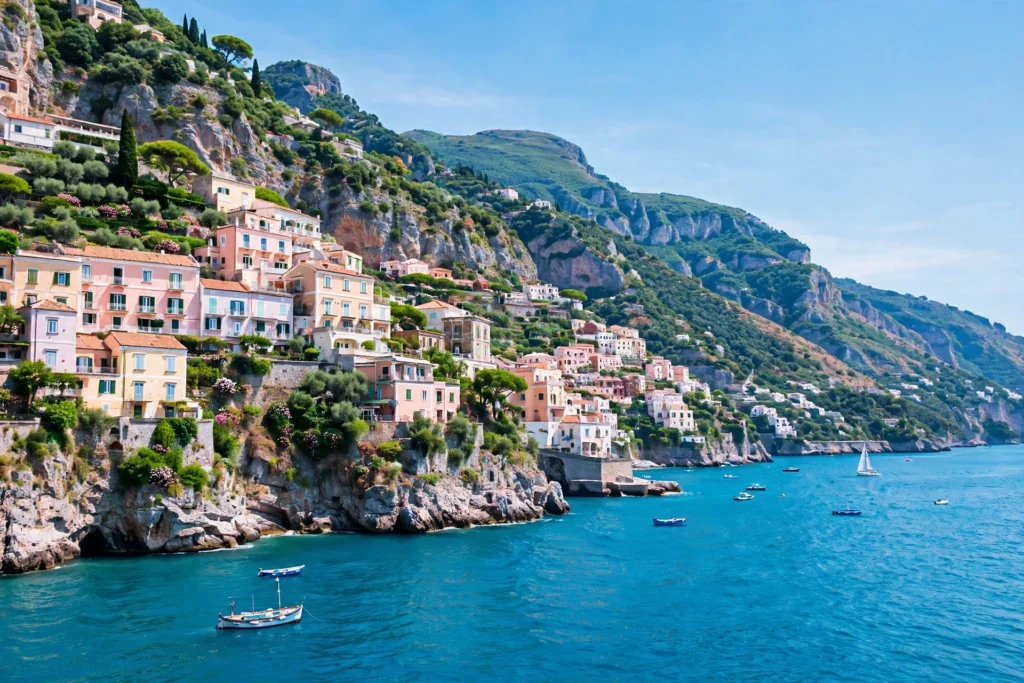
Ten days is where a first trip to Italy stops being a sprint and starts being a holiday, because the three extra days buy you a fourth act and, just as importantly, they buy you slack. Slack is the unplanned afternoon, the long lunch, the morning you sleep in because you stayed out late the night before. On a seven-day trip there is no slack. On a ten-day trip there is, and it is the slack that people remember. The choice is which fourth act to add, and there are two that work best: the Amalfi Coast, or slow Tuscany. They are opposite kinds of trips — one is coast and cliffs and sea, the other is hills and wine and small towns — and the right one depends on what the first seven days did not give you.
The Amalfi version runs like this. Keep the classic seven days exactly as above, then take the train from Venice back south — or, more elegantly, reorder the trip so that the coast comes after Rome and before Florence, because Naples is an hour from Rome by high-speed train and the coast is a short hop from Naples. The practical version most people actually book is: Rome (3), Naples and Pompeii (1), Amalfi Coast (3), Florence (2), Venice (2) is eleven days, so for ten you trim a day somewhere — usually by cutting Florence to a day and a half and using the saved day on the coast. On the coast itself, base yourself in one place and do not try to sleep in three towns in three nights. Sorrento is the best base for a first visit: it has the train connection, the ferry port, the restaurants and the range of hotels, and from it you can reach Positano, Amalfi and Ravello by ferry in summer or by bus year-round, and Capri by ferry in under half an hour. Positano is the prettiest town on the coast and the worst base, because it is expensive, steep and hard to get in and out of; visit it for a day, sleep in Sorrento.
The Tuscany version is slower and, for many people, better. Keep the classic route, but after Florence, instead of going straight to Venice, spend three days in the countryside: two nights in Siena and one in the Val d’Orcia, or three nights in a single agriturismo farm stay with a car, using it to visit San Gimignano, Montepulciano and Pienza at the pace of a person who lives there rather than a person passing through. Tuscany by car is the one part of a first Italy trip where a rental car genuinely earns its keep, because the hill towns are not on the train lines and the buses are slow. Pick the car up in Florence and drop it off in Florence, never drive into a historic centre, and remember that almost every Tuscan town is a ZTL — a limited-traffic zone watched by cameras that photograph your number plate and post a fine to your home months later. Park outside the walls and walk in. That is the rule for every hill town in Italy, and it is the single most common expensive mistake first-time drivers make.
Amalfi or Tuscany: how to choose
| Amalfi Coast | Slow Tuscany | |
|---|---|---|
| Best months | May–June, September | April–June, September–October |
| Transport | Train to Naples, then ferry or bus; no car needed | Rental car essential; pick up and drop off in Florence |
| Best base | Sorrento (ferries, trains, hotels) | Siena, or one agriturismo in the Val d’Orcia |
| Daily cost | Higher — hotels and restaurants cost more on the coast | Lower — farm stays and small-town trattorias |
| Who it suits | Sea, cliffs, boat days, glamour | Wine, hills, small towns, slow mornings |
| Watch out for | Summer crowds, expensive hotels, the coast road by car | ZTL fines, driving into historic centres |
If you are travelling in July or August, choose Tuscany, because the Amalfi Coast in high summer is the most crowded place in Italy and the coast road is a slow queue of buses and cars. If you are travelling in May or September, choose the Amalfi Coast, because the sea is warm, the ferries are running, and the light on the cliffs is the best in the country. If you cannot decide, choose Tuscany: it is cheaper, quieter, and it leaves the coast for a second trip, when you will enjoy it more because you already know how Italy works. And if the choice is between the Amalfi Coast and the Cinque Terre, the Amalfi Coast wins for a first trip — the Cinque Terre is smaller, more crowded per square metre, and better as a two-day add-on to a trip that already includes Florence, which is only a couple of hours away by train.
The 10-day shape that works
Whichever extension you choose, the shape is the same: three bases, not four, with the extension as a single three-night stay. Rome (3), Florence (2), then the extension (3), then Venice (2) is the cleanest shape for Tuscany, because you pick the car up in Florence and drop it off there. Rome (3), Amalfi (3), Florence (2), Venice (2) is the cleanest shape for the coast, because Naples sits between Rome and Florence on the train line and the coast is a detour south rather than a detour back. Either way, the trains do the heavy lifting and the only driving is inside the extension itself. That is the whole secret of a good ten-day Italy trip: the trains move you between the cities, and the car, if you need one at all, only ever covers the countryside.
The 14-Day Route: Add Sicily or the Deep South
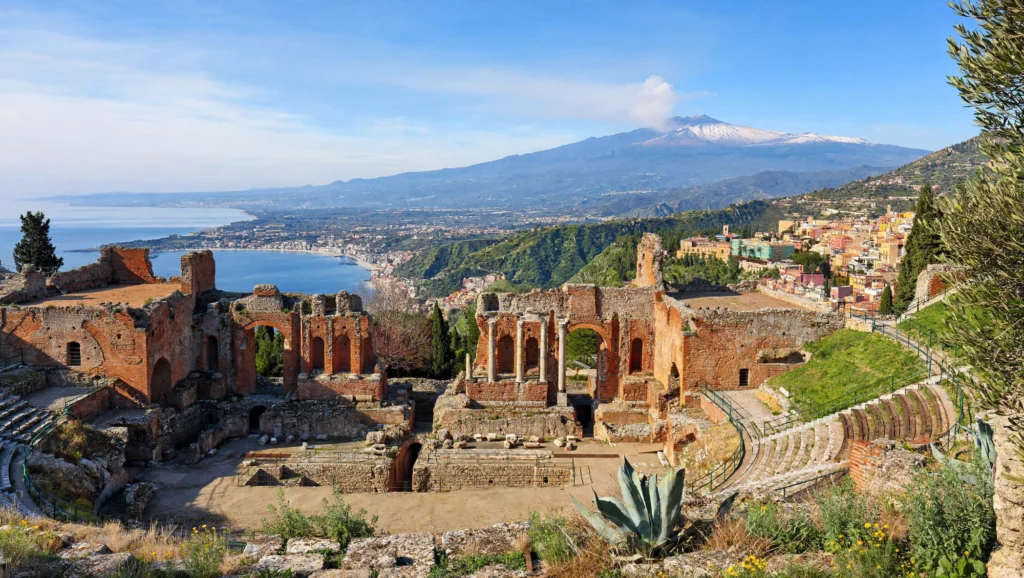
Fourteen days is the first trip length at which Italy stops being a route and starts being a country. With two weeks you can do the classic three cities, the Amalfi Coast, and still have four or five days left — and the best use of those days is Sicily, because Sicily is not an extension of the mainland trip. It is a different place, with its own history, its own food, its own Greek temples and its own volcano, and it needs to be treated as a second trip inside the first one rather than as a day trip bolted onto the end. The practical way to do it is to fly: from Naples or Rome to Palermo or Catania takes about an hour in the air, and trying to reach Sicily by train and ferry eats a whole day each way. Fly in, hire a car at the airport, and give Sicily five days of its own.
The five-day Sicily shape that works is a loop, not a line. Land in Palermo and give it two days: the markets, the Norman cathedral, the Palatine Chapel with its Byzantine mosaics, and the street food that is the best in Italy. Then drive east along the north coast to Cefalù for a night, or cut straight across the island to Agrigento for the Valley of the Temples, one of the finest Greek sites anywhere in the Mediterranean, standing on a ridge above the sea. From Agrigento, head to the south-east — Ragusa and Modica, the baroque towns rebuilt after the 1693 earthquake, and the beaches around them — and then finish in the east: Syracuse, with its Greek theatre and its island old town of Ortigia, and Taormina, the cliff town with the ancient theatre and Mount Etna smoking on the horizon. Fly home from Catania. Five days, four bases at most, and a car the whole way, because Sicily’s trains are slow and the island’s best places are not on them.
The alternative fourteen-day shape stays on the mainland and goes deep instead of wide: the classic route, the Amalfi Coast, and then the deep south — Matera, the ancient cave city in Basilicata, and Puglia, the heel of the boot, with its white towns of Ostuni and Locorotondo, the trulli cone houses of Alberobello, and the baroque city of Lecce. This version needs a car from Naples onwards and it suits travellers who have already seen the big three and want the Italy that most tourists never reach. Matera alone is worth the detour: a city of cave dwellings inhabited for thousands of years, now a UNESCO site, where you can sleep in a cave hotel and walk streets that feel older than Rome. Puglia is the surprise of this route — cheaper than Tuscany, less crowded than the Amalfi Coast, and with food that is simpler and better than almost anywhere else in the country.
Two weeks, two trips in one
| 14-day with Sicily | 14-day deep south | |
|---|---|---|
| Shape | Classic 7 + Amalfi 3 + Sicily 5 (fly) | Classic 7 + Amalfi 3 + Matera/Puglia 4 (drive) |
| Transport | Train, then a domestic flight to Palermo or Catania | Train, then a rental car from Naples |
| Highlight | Greek temples, Etna, Palermo street food | Matera’s cave city, Puglia’s white towns, Lecce |
| Cost | Higher — a flight and a hire car | Lower — no flight, cheaper hotels |
| Who it suits | First-timers who want the full sweep | Return visitors and slow travellers |
Whichever fourteen-day shape you choose, the same rule applies as on the shorter trips: the extension is a single block, not a series of one-night stops. Sicily in five days with four bases is already at the limit; Sicily in five days with five bases is a driving holiday, not a sightseeing trip. And the same warning applies to the deep south: Puglia is a big region, and trying to see all of it in four days means seeing none of it properly. Pick a corner — the Valle d’Itria around Alberobello and Locorotondo, or the Salento peninsula around Lecce — and do that corner well. Italy rewards depth over breadth at every trip length, and at fourteen days that is more true, not less, because the temptation to keep adding places grows with the number of days you have.
A practical note on flights inside Italy, because it comes up on every fourteen-day plan. Domestic flights look cheap and fast, but they rarely save time on the mainland: by the time you have reached the airport, waited, flown, and reached the next city centre, the high-speed train has usually got there first, and for less money and less stress. The exception is Sicily and Sardinia, where the sea makes the train impractical, and the far south, where the train network thins out. Fly to the islands. Take the train everywhere else. That is the rule, and it holds for almost every route in this guide.
Which Part of Italy Suits Your Trip Style?
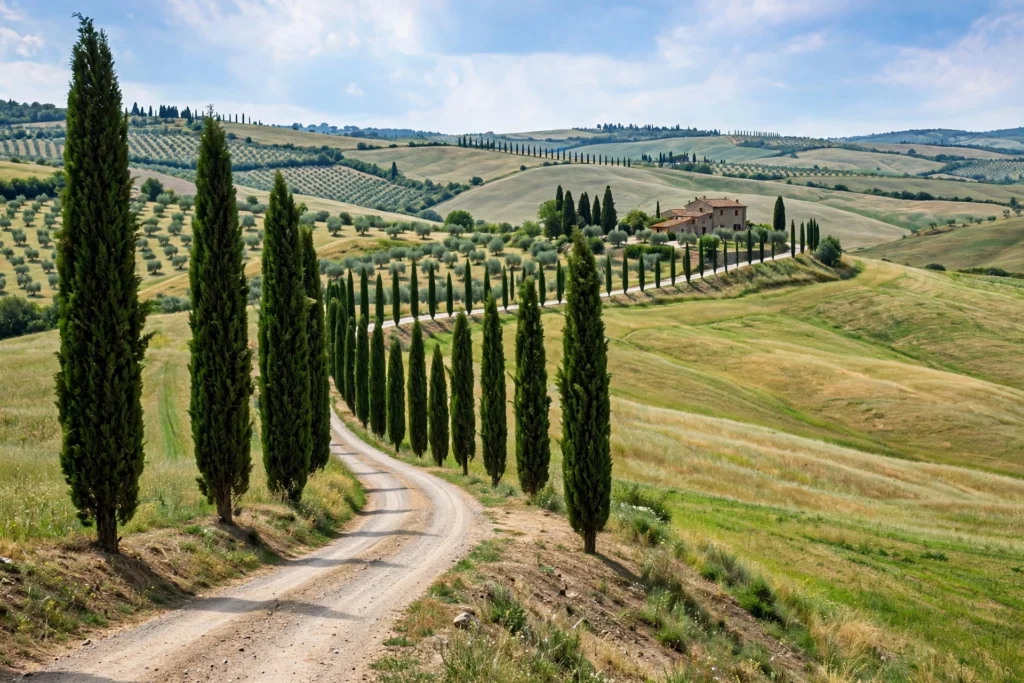
Italy is twenty regions, and they are not interchangeable. The Italy of the Dolomites has almost nothing in common with the Italy of Sicily except the language and the currency, and a trip built for one will disappoint someone who wanted the other. The guides that rank the top three all make the same mistake here: they list the famous places and assume you want them. This section does the opposite. It starts with what you actually like doing on holiday and matches it to the part of Italy that does it best, because the best Italy trip is the one built around your trip style, not around a list of famous sights.
If art and history are the reason you travel, the classic route is the right answer and you should give it more time, not less. Rome holds the Colosseum, the Forum, the Pantheon and the Vatican; Florence holds the Uffizi, the Accademia and the Duomo; and between them, with a car, you can add Siena, San Gimignano, Assisi and Ravenna, the town with eight UNESCO-listed early Christian mosaic sites in a single small centre. Art travellers should book the timed tickets first, because the Uffizi and the Accademia sell out, and should plan their days around the museums’ opening hours rather than around the trains. The Borghese Gallery in Rome is the single best example: it is small, it is limited to two-hour slots, and it has to be booked days ahead, and it is also one of the finest small museums in Europe. Miss the booking and you miss the gallery.
If food is the reason you travel, go to Emilia-Romagna, and specifically to Bologna. Bologna is Italy’s food capital, home to tortellini, tagliatelle al ragù, mortadella and Parmigiano Reggiano, and it is cheaper, livelier and less crowded than Florence, an hour and a half away by train. From Bologna you can day-trip to Modena for balsamic vinegar, to Parma for Parmesan and prosciutto, and to Ravenna for the mosaics, and you can eat better in a week in Emilia-Romagna than in a month on the tourist trail. The Amalfi Coast has the views but Bologna has the food, and a food-first trip should know which one it is choosing. Naples, too, is a food city — it invented pizza, and the pizza there is not a tourist dish but a daily one, eaten standing up for a few euros — and a food trip that pairs Naples with Bologna covers both ends of Italian cooking.
The region picker
| Your trip style | Go here | Skip or save for later |
|---|---|---|
| Art and history | Rome, Florence, Ravenna, Siena | The lakes, the beaches |
| Food | Bologna and Emilia-Romagna, Naples | The Amalfi Coast’s expensive restaurants |
| Coast and sea | Amalfi Coast, Cinque Terre, Sardinia | The inland cities in high summer |
| Mountains and hiking | The Dolomites, the Italian Lakes, the Apennines | The big cities in August |
| Small towns and slow travel | Tuscany, Umbria, Puglia | Rome in a rush |
| Nightlife and glamour | Milan, the Amalfi Coast, Sardinia’s Costa Smeralda | Small hill towns after dark |
| Family with children | Tuscany farm stay, the lakes, the Amalfi Coast by ferry | Packed museum days, one-night stops |
| Budget travel | Bologna, Naples, Puglia, Abruzzo | Venice and the Amalfi Coast in peak season |
If the outdoors is the reason you travel, go north. The Dolomites are the most dramatic mountains in Italy, a UNESCO site of pale limestone peaks with via ferrata climbing routes in summer and skiing in winter, and the lakes — Como, Garda and Maggiore — are the gentler version of the same landscape, with villas, ferries and lakeside walks. Both are at their best from May to October, and both are places where a car helps, because the mountain roads and the lake shores are not well served by trains. The Dolomites in particular reward a slower trip: three or four days based in one valley town, hiking in the day and eating in the rifugio mountain huts, is a better trip than a rushed drive through the passes.
If you are travelling with children, the rules change. Children do not care about the Uffizi, and they care a great deal about gelato, boats, beaches and places to run. A family trip should have fewer bases, longer stays and one big sight a day rather than three, and it should build in the things children actually enjoy: a ferry on the Amalfi Coast, a boat on Lake Como, a pizza-making class in Naples, a day on a Tuscan farm. Venice is a gift for children, because it is a city with no cars where every journey is a boat, and the Dolomites are a gift too, because a cable car and a mountain lake beat a museum every time. The mistake is to plan a family trip like an adult trip with children attached. Plan it like a children’s trip with the art fitted in around the edges, and everyone enjoys it more.
Rome: Three Days in the Eternal City
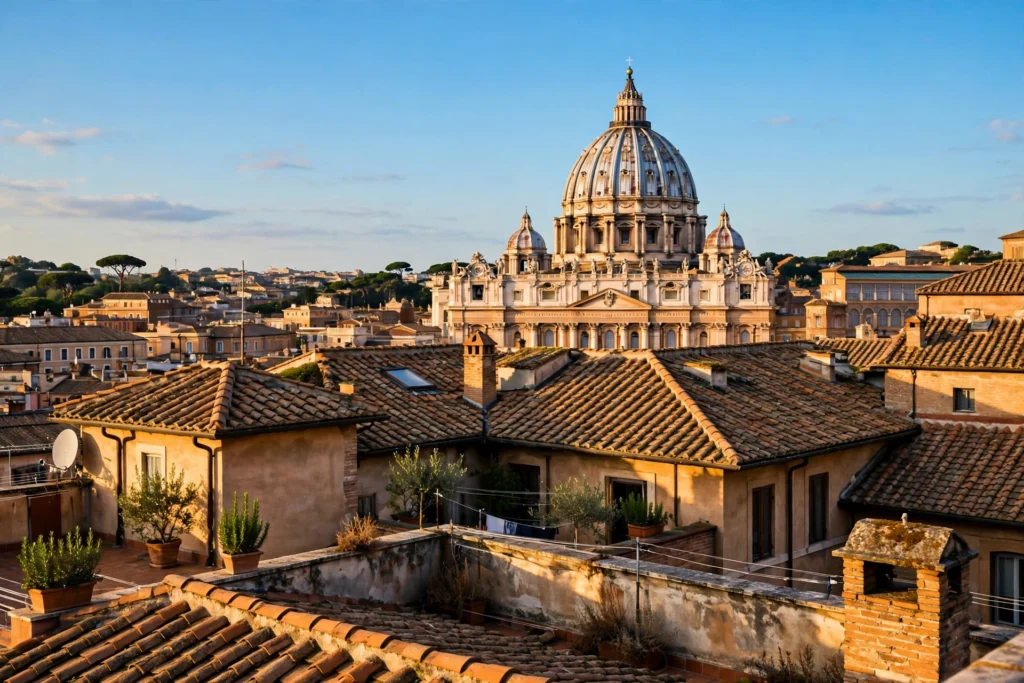
Rome is the only city in this guide that needs three days rather than two, and it still will not be enough. It is the largest historic centre in Europe, it holds more ancient monuments than any other city on earth, and it is also a living city of three million people with traffic, neighbourhoods and a daily life that has nothing to do with tourism. The way to enjoy it is to accept that you will not see all of it, and to see the part you do see properly. Rome rewards the traveller who picks a few things and does them well, and it punishes the traveller who tries to see everything, because the everything is too much and the trying leaves you exhausted and irritable by the second afternoon.
The practical shape of three days in Rome is fixed by the tickets. The Colosseum and the Vatican Museums are the two timed bookings, and they should be on different days, because each one takes half a day and each one deserves a fresh morning. Book the Colosseum for the first morning slot on your second day, and the Vatican Museums for the first slot on your third, and build the rest of the days around those two anchors. The first day, the arrival day, is for walking: the Pantheon, Piazza Navona, the Trevi Fountain, and the long, slow business of learning how Rome works — where to eat, how the buses run, which streets are quiet. The second day, after the Colosseum and the Forum, is for the Palatine Hill and for Trastevere in the evening, when the neighbourhood fills with Romans and the restaurants are at their best. The third day, after the Vatican, is for the rest: the Spanish Steps, the Borghese Gardens, the view from the Janiculum Hill, and the things you noticed on the first day and wanted to come back to.
The Colosseum and the Vatican Museums: what to book and what it costs
These are the two bookings that matter most, and they are also the two where the most money is wasted on resellers. Buy both from the official sites only. For the Colosseum, the official seller is ticketing.colosseo.it, linked from the Colosseum Archaeological Park’s own site. The standard 24-hour ticket costs €18 and gives you one timed entry to the Colosseum’s first and second levels plus one entry to the Roman Forum and the Palatine Hill within 24 hours. The Full Experience ticket costs €24 and adds the arena floor, the underground or the upper levels, and is valid for two days. Citizens of the EU aged 18 to 24 pay €2, and under-18s enter free but still need a booked ticket. Tickets go on sale 30 days ahead, they carry your name, and they are checked against your passport at the gate, so buy them under the name on your passport and bring the passport with you. The Colosseum opens at 8:30 every morning except 25 December and 1 January; in the winter season from 25 October 2026 to 28 February 2027 it closes at 16:30 with last entry at 15:30.
For the Vatican Museums, the only official online seller is tickets.museivaticani.va, and the museums warn explicitly about lookalike sites charging far more. The full ticket costs €20 at the ticket office or €25 booked online, which is the €20 ticket plus a €5 booking fee that buys you a timed slot and the reserved entry line. The reduced ticket — children aged 7 to 18, students up to 25 with proof of enrolment — is €10 at the office or €15 online. Children under 7 enter free, and entry is free for everyone on the last Sunday of the month, from 09:00 to 14:00 with last entry at 12:30. The museums are open Monday to Saturday from 08:00 to 20:00 with last entry at 18:00, and tickets are valid only on the day they are issued for and cannot be refunded, so do not book a slot you cannot keep. St Peter’s Basilica itself is free to enter, though the security queue can be long, and the dome costs €17 by the stairs or €22 with the lift. Book the 08:00 slot for the museums if you can: the first hour is the quietest, and by the time the crowds arrive you are already deep inside, walking towards the Sistine Chapel.
| Ticket | Price | Where to buy | Book ahead |
|---|---|---|---|
| Colosseum standard 24h (levels 1–2 + Forum + Palatine) | €18 | ticketing.colosseo.it | 30 days ahead |
| Colosseum Full Experience (arena / underground / attic) | €24 | ticketing.colosseo.it | 30 days ahead |
| Vatican Museums full (at the office / online) | €20 / €25 | tickets.museivaticani.va | Weeks ahead in peak season |
| Vatican Museums reduced (7–18, students to 25) | €10 / €15 | tickets.museivaticani.va | Weeks ahead in peak season |
| St Peter’s Basilica | Free | At the door | No — allow time for the queue |
| St Peter’s dome (stairs / lift) | €17 / €22 | At the basilica | No |
Rome beyond the icons
The Rome that most visitors miss is the Rome of the neighbourhoods, and it is the part that makes the city worth three days rather than two. Trastevere, across the river from the historic centre, is the evening neighbourhood: narrow streets, small piazzas, restaurants that Romans actually eat in, and a feeling that is older and more local than the centre. Testaccio is the food neighbourhood, home to the market and to the trattorias that serve the Roman classics — carbonara, amatriciana, cacio e pepe — without a tourist menu in sight. The Jewish Ghetto, near the river, is the oldest Jewish community in Europe and home to the fried artichokes that are one of Rome’s great dishes. And the Aventine Hill, quiet and green, holds the keyhole view through the Knights of Malta door, a small, free, perfect moment that costs nothing and that most visitors never hear about. These are the places to go when the big sights are done, and they are the reason to stay three days: the first day for the icons, the second for the ancient city, and the third for the Rome that people live in.
A note on eating in Rome, because it is the part of the trip that is easiest to get wrong. The rule is the same as in every Italian city: eat two streets away from the monument. Any restaurant with a photograph menu, a tout outside, or a view of a famous square is charging you for the view and not for the food. Walk two streets back, look for the place with no English menu and a queue of Italians, and eat there. Order the house wine, which is usually good and usually cheap. Drink your coffee standing at the bar, where an espresso costs around €1.10 to €1.50, rather than sitting at a table, where the same coffee can cost three times as much. And learn the Roman food rules: cappuccino is a breakfast drink, never ordered after 11 in the morning; carbonara has no cream in it, and asking for it marks you out immediately; and the best pizza in Rome is the thin, crisp Roman style, eaten by the slice from a forno, not the Neapolitan style, which belongs to Naples.
Florence and Tuscany: Art, Hills and Wine
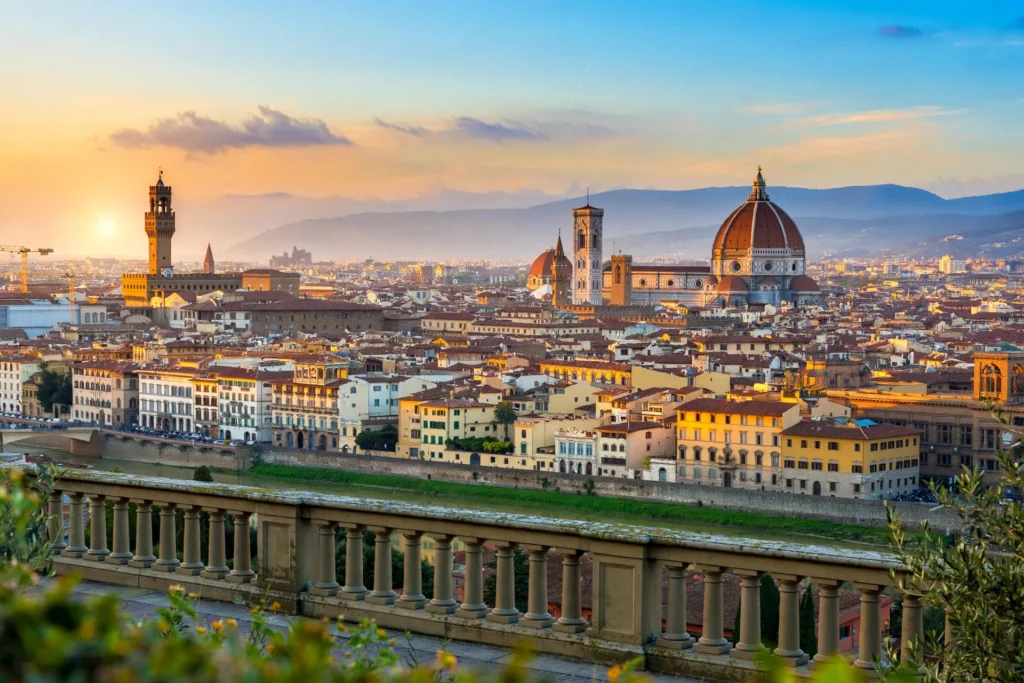
Florence is the smallest of the big three, and that is its gift. The historic centre is compact enough to cross on foot in twenty minutes, and it holds more Renaissance art per square metre than anywhere else on earth: the Uffizi, the Accademia, the Duomo, the Bargello, the Pitti Palace, and the churches that are museums in their own right. Two days in Florence is the right amount for a first visit, and it is worth spending them properly rather than rushing through the museums to tick them off. The Uffizi alone deserves three or four hours, and the Accademia, small as it is, deserves an unhurried hour in front of David, which is genuinely as impressive in person as its reputation suggests.
The booking rules for Florence are the same as for Rome, and they matter just as much. The Uffizi and the Accademia both sell timed tickets, and both sell out in peak season, so book them before you fly and book them for the morning, when you are fresh and the galleries are at their quietest. The climb up Brunelleschi’s dome is a separate timed ticket, 463 steps up a narrow stairway, and it is worth it for the view across the city, which is the best in Florence — but book it for a different time from the Uffizi, because doing both in one morning is a test of endurance rather than a pleasure. The Duomo itself is free to enter, though the queue can be long, and the best time to go is early, before the tour groups arrive. And the Oltrarno, the neighbourhood across the river, is where Florence is still a working city: artisan workshops, the Boboli Gardens, the Pitti Palace, and the restaurants where the prices drop by a third the moment you cross the bridge.
Tuscany beyond Florence
Florence is the gateway to Tuscany, and Tuscany is the reason to have a car. With a car and a day, you can reach Siena, the medieval city with its shell-shaped Piazza del Campo and its twice-yearly Palio horse race, and San Gimignano, the town of towers that looks like a medieval Manhattan. With two days, you can add the Val d’Orcia, the valley of rolling hills and cypress trees that is the Tuscany of the postcards, with the towns of Pienza and Montepulciano and the wine of Montalcino. With three days, you can slow down properly: a night in a farm stay, a wine tasting in Chianti, a morning in a hill town with no plan at all. The rule for driving in Tuscany is the same as everywhere in Italy: never drive into a historic centre. Park outside the walls and walk in. Every hill town is a ZTL, the fines arrive by post months later, and a satnav will happily lead you straight into one.
The food of Tuscany is the other reason to go, and it is simpler than the food of Emilia-Romagna and better for it. The classics are few and they are perfect: ribollita, the bread and bean soup; pappa al pomodoro, the tomato and bread soup; bistecca alla fiorentina, the thick T-bone steak cooked rare and shared between two; and the wines, Chianti Classico from the hills between Florence and Siena, Brunello from Montalcino, Vino Nobile from Montepulciano. Eat in the small towns rather than in Florence’s centre, where the prices are higher and the quality is lower, and look for the agriturismo farm restaurants, which serve what they grow and cook what they have. A meal in a Tuscan farmhouse, with the hills outside the window and a bottle of the farm’s own wine on the table, is one of the best meals Italy offers, and it costs less than a mediocre dinner in central Florence.
| Florence day | Morning | Afternoon | Evening |
|---|---|---|---|
| Day 1 | Arrive by train, Duomo and Baptistery from outside | Ponte Vecchio, Oltrarno, artisan workshops | Dinner in Oltrarno, sunset from Piazzale Michelangelo |
| Day 2 | Uffizi (timed ticket, 3–4 hours) | Accademia and David, dome climb | Aperitivo, then dinner in Santa Croce |
| Day 3 (if you have it) | Day trip to Siena by bus or train | San Gimignano by car, or Chianti wine tasting | Back in Florence, a last walk along the Arno |
The Florence that most visitors miss
The Florence that most visitors miss is the Florence of the early morning and the late evening, when the day-trippers have gone and the city belongs to the people who live there. Go to the Duomo square at seven in the morning, before the crowds arrive, and you will have the cathedral almost to yourself. Walk along the Arno at dusk, when the light turns the river gold and the bridges fill with people doing nothing in particular, and you will understand why Florence has been loved for so long. And climb to Piazzale Michelangelo at sunset, with a bottle of wine and a view of the whole city laid out below you, and you will understand why so many people who come to Florence for two days end up coming back for two weeks. Florence is a small city, and it is a city that rewards the traveller who slows down rather than the one who hurries. Give it the time it deserves.
Venice: The Floating City, Done Right
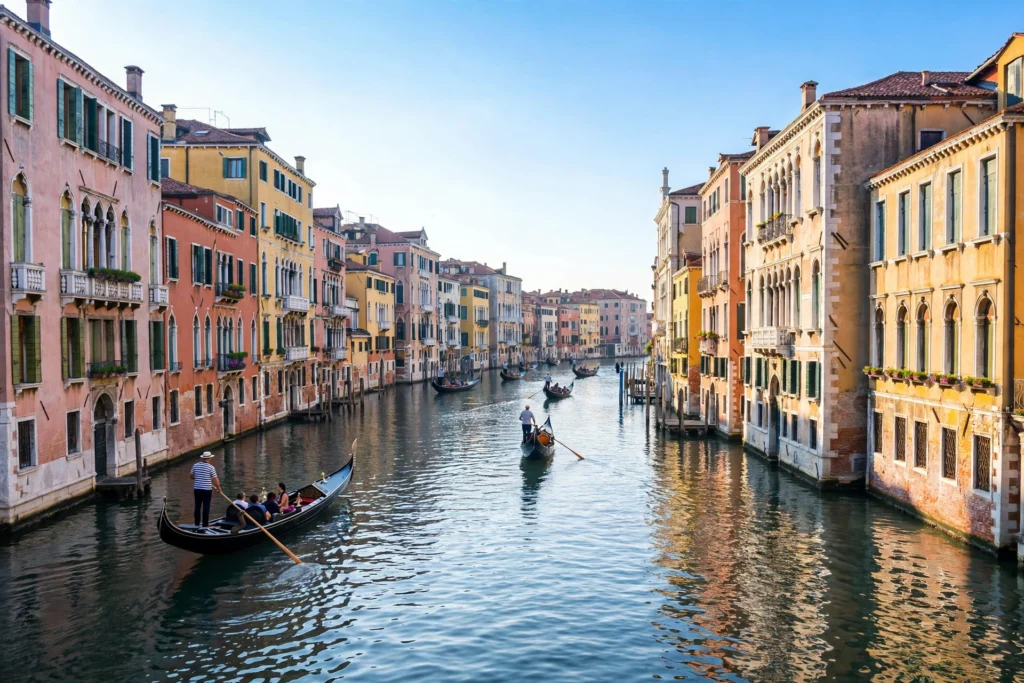
Venice is the most misunderstood city in Italy, and the misunderstanding is the reason so many people leave it disappointed. They arrive at midday with the cruise ships, fight through the crowds around San Marco, eat a bad meal at an overpriced restaurant, and leave thinking Venice is a theme park. Venice is not a theme park. It is a real city of 50,000 residents, built on 118 islands, with neighbourhoods, markets, schools and a daily life that has nothing to do with the crowds — but you have to know when and where to find it. The secret is timing. Venice at eight in the morning, before the day-trippers arrive, is a different city from Venice at eleven, and Venice at eight in the evening, after they have left, is different again. Stay overnight, get up early, stay out late, and you will see the city that the day-trippers never see.
The practical shape of two days in Venice is simple. Day one is for getting lost: arrive by train at Santa Lucia station, walk out onto the Grand Canal, and then ignore the signs to San Marco and walk in the opposite direction, into Cannaregio, the largest and most lived-in neighbourhood, with its Jewish Ghetto, its quiet canals and its bacari wine bars. In the afternoon, cross to Dorsoduro for the Peggy Guggenheim Collection and the quiet squares around it, and in the evening, take a vaporetto — the water bus — the length of the Grand Canal at dusk, which costs the price of a transit ticket and delivers one of the great views in Europe. Day two is for the icons, and it needs booking: St Mark’s Basilica and the Doge’s Palace in the morning, both on timed tickets, and then the islands in the afternoon — Murano for the glass, Burano for the lace and the coloured houses, and Torcello for the quiet, which is the oldest of the lagoon settlements and the emptiest. Finish with a cicchetti crawl, the Venetian version of tapas, moving from bacaro to bacaro with a small glass of wine and a small plate of food at each one, which is the cheapest and most enjoyable way to eat in Venice.
The Venice entry fee: what actually applies now
Venice’s day-tripper entry fee — the contributo di accesso — is the most asked-about rule in Italian travel, and it is also the most misreported, because the rules change from year to year. Here is the position as it stands in November 2026, checked on the city’s official portal, cda.ve.it. The 2026 trial has ended. It ran on 60 days between 3 April and 26 July 2026, from 08:30 to 16:00, charging €5 per person if you booked at least four days ahead and €10 if you booked later, and it applied only to day visitors to the historic centre — overnight guests were exempt but still had to register, and children under 14 were exempt. As of 27 July 2026, the fee does not apply, and it is possible to visit Venice without making any payment or requesting any exemption. The fee will be payable again from 2027, with the arrangements to be announced by 31 December 2026, and the hours for 2027 will be 08:30 to 16:30. The city executive has approved a calendar of 72 charged days for 2027, running from 26 March to 15 August, but the final details — including whether the €5 early-booking rate returns — are still to be confirmed on the official portal. If you are travelling to Venice in 2027, check cda.ve.it before you go and do not rely on a guide written in 2026, including this one, for the final dates. If you are travelling in the rest of 2026, there is nothing to pay and nothing to register.
That matters for planning, because the fee shapes the smartest way to visit Venice. Staying overnight has always been the best way to see the city — it is when Venice is at its best, and it is when the fee does not apply — and the fee gives that choice a financial reason as well as a practical one. A day trip to Venice from Florence or Milan is possible by train, but it is the worst way to see the city: you arrive with the crowds, you leave with the crowds, and you see the version of Venice that everyone complains about. Stay two nights, and you see the version that everyone falls in love with. For a full Venice plan, including where to stay and how the vaporetto works, read our Venice travel guide, which covers the city in detail.
| Venice question | Answer (checked November 2026) |
|---|---|
| Is there a fee right now? | No — the 2026 trial ended 26 July 2026; no payment or registration needed |
| When does it return? | In 2027; arrangements announced by 31 December 2026 on cda.ve.it |
| What did it cost in 2026? | €5 if booked 4+ days ahead, €10 if booked within 3 days; 08:30–16:00 |
| Who was exempt in 2026? | Overnight guests (must register), under-14s, residents of the Veneto, and other categories |
| Where does it apply? | The historic centre only — not Murano, Burano, Torcello or the Lido |
| Where to check for 2027 | The official portal, cda.ve.it |
Venice practicalities that save the trip
Venice has no cars, and that changes everything about how you move. The vaporetto is the bus: buy a day pass or a multi-day pass rather than single tickets, which are expensive, and validate it before you board. A gondola ride is a fixed-price experience, not transport: the official rate is set by the city and it is expensive, so treat it as a one-off splurge rather than a way of getting around, and agree the price and the duration before you step in. Eat away from San Marco, where the restaurants are the most expensive and the least good in the city, and eat in Cannaregio, Castello and Dorsoduro, where the bacari serve cicchetti for a euro or two a piece and a glass of wine for about the same. Carry cash, because some of the smallest bacari are cash-only. Wear flat shoes, because Venice is a city of bridges and steps and wet stone. And if it rains, do not despair: Venice in the rain, with the canals shining and the crowds gone, is one of the most beautiful versions of the city there is.
Beyond the Big Three: Naples, the Amalfi Coast and Cinque Terre
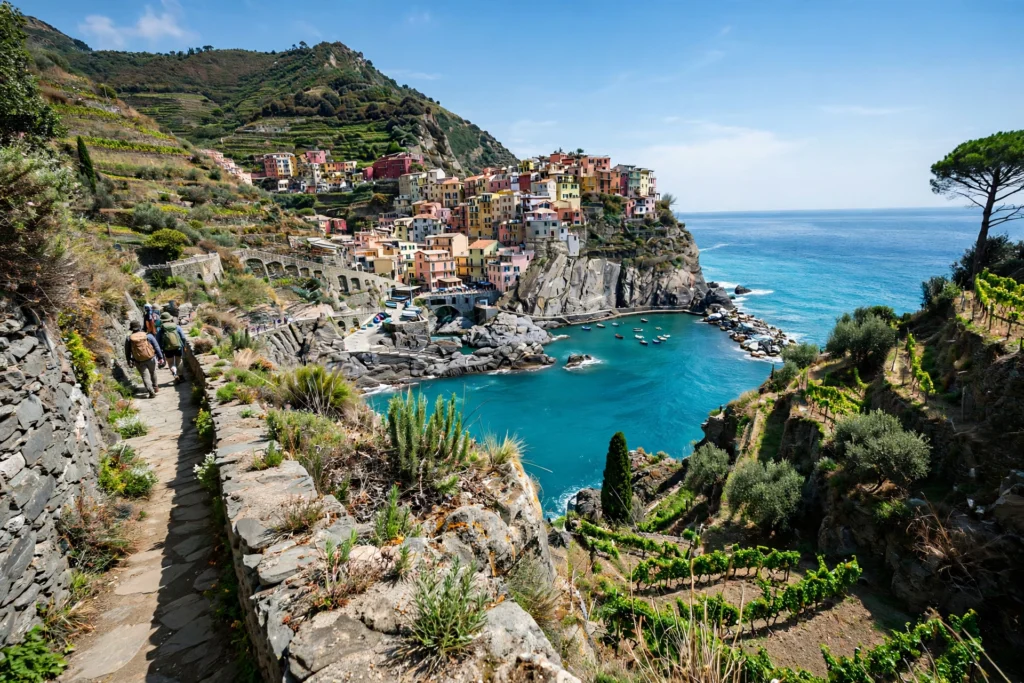
The big three are the beginning of Italy, not the end of it, and the places beyond them are where a first trip becomes a great trip — if you choose the right ones. Naples, the Amalfi Coast and the Cinque Terre are the three that most first-timers ask about, and they are three very different propositions. Naples is a city: loud, chaotic, thrilling, and the gateway to Pompeii. The Amalfi Coast is a landscape: cliffs, sea, lemons and villages that look like they were built for a photograph. The Cinque Terre is a walk: five villages linked by a coastal path and a train, small enough to do in two days and crowded enough that the two days need planning. Each one deserves its own section, because each one is done badly more often than it is done well.
Naples is the city that divides travellers more than any other in Italy. It is sprawling, noisy, sometimes edgy and often magnificent, and it is the only Italian city where the guidebooks still use the word Dickensian. It is also the city with the best pizza in the world, the best street food in Italy, and the best base for Pompeii, Herculaneum and the Amalfi Coast. Give Naples a day, or two if you love cities that are alive rather than polished. Spend the morning in the historic centre — a UNESCO site — and the afternoon at the Archaeological Museum, which holds the finest collection of Greco-Roman antiquities in the world, much of it from Pompeii. Eat pizza at a historic pizzeria, eat a sfogliatella pastry for breakfast, and do not be put off by the noise and the chaos: Naples is not dangerous, it is intense, and the intensity is the point. The US State Department rates Italy as a whole at Level 2, “Exercise Increased Caution”, because of terrorism — a rating shared by most of Western Europe — and its advice for Italy is the standard advice for a European city: stay aware in crowded places, watch your bag on public transport, and keep your wits about you. Naples itself needs the same common sense as any big city, not more.
Pompeii is the day trip from Naples that justifies the city on its own. The buried Roman town is one of the most extraordinary archaeological sites in the world, and it needs a full morning, not a rushed hour: arrive early, before the tour groups, and give it three hours. Herculaneum, smaller and better preserved, is the alternative for travellers who prefer a quieter site, and it is twenty minutes from Naples by train rather than forty. Both are reached by the Circumvesuviana train from Napoli Centrale, and both are best visited with a timed ticket bought ahead. From Naples, the Amalfi Coast is a ferry or a bus away, and Sorrento is the base that makes it work, as described in the ten-day route above.
The Amalfi Coast and the Cinque Terre, compared honestly
| Amalfi Coast | Cinque Terre | |
|---|---|---|
| What it is | Cliffs, sea, glamour, lemons | Five villages, a coastal path, a train |
| Best base | Sorrento | La Spezia, or one village (Monterosso) |
| How to move | Ferry in summer, bus year-round; car is a liability | Train between villages; walk the coastal path |
| Best months | May–June, September | May–June, September |
| Time needed | 3 days minimum | 2 days |
| Watch out for | Summer crowds, high prices, the coast road | Path closures, day-tripper crowds, ticketed trails |
The Cinque Terre needs a warning that the Amalfi Coast does not. The five villages — Monterosso, Vernazza, Corniglia, Manarola and Riomaggiore — are small, and in high season they are overwhelmed by day-trippers. The coastal path between them is ticketed in high season to hold the numbers down, and parts of it close after landslides, so check the path status before you go and do not plan your day around a section that is shut. The train is the way to move between the villages, not the path alone, and the best time to be in the villages is the early morning and the late evening, when the day-trippers have gone. Stay overnight in one of the villages, or in La Spezia just outside the park, and you will see the Cinque Terre that the day-trippers miss. Two days is enough: one day for the villages by train, one day for the coastal walk, and an evening in Vernazza, which is the prettiest of the five and the best place to eat.
Sicily and the South: A Trip of Their Own
Sicily is the part of Italy that most first-timers leave out, and it is the part that most of them wish they had not. It is the largest island in the Mediterranean, it has its own history — Greek, Roman, Arab, Norman, Spanish — layered on top of each other in a way that nowhere on the mainland can match, and it has food that is different from the mainland’s in almost every respect: arancini rice balls, pasta alla Norma, cannoli, granita for breakfast. It is also the part of Italy where the distances are longest and the trains are slowest, which is why it needs to be treated as a trip of its own, with a flight in, a car for the week, and five days at minimum. Trying to do Sicily as a two-day add-on to a mainland trip is the single most common planning mistake in Italian travel, and it is the one that produces the most disappointed travellers.
The five-day loop described in the fourteen-day route is the shape that works: Palermo for two days, Agrigento for the Valley of the Temples, the baroque south-east around Ragusa and Modica, and the east coast — Syracuse and Taormina — to finish, flying home from Catania. Each stop earns its place. Palermo is the most Arab and Norman city in Italy, with markets that feel like North Africa and a cathedral that is a lesson in layered history. Agrigento’s Valley of the Temples is one of the finest Greek sites in the Mediterranean, standing on a ridge above the sea in the evening light. Ragusa and Modica are the baroque towns rebuilt after the 1693 earthquake, and they are quieter and cheaper than the towns of the north. Syracuse’s Ortigia is one of the most beautiful old towns in Italy, a small island of baroque palaces and sea views, and Taormina, for all its fame, earns it: the ancient theatre with Etna on the horizon is one of the great views in Europe. Mount Etna itself, Europe’s most active volcano, can be visited with a guide, and it is worth a half-day if the weather is clear.
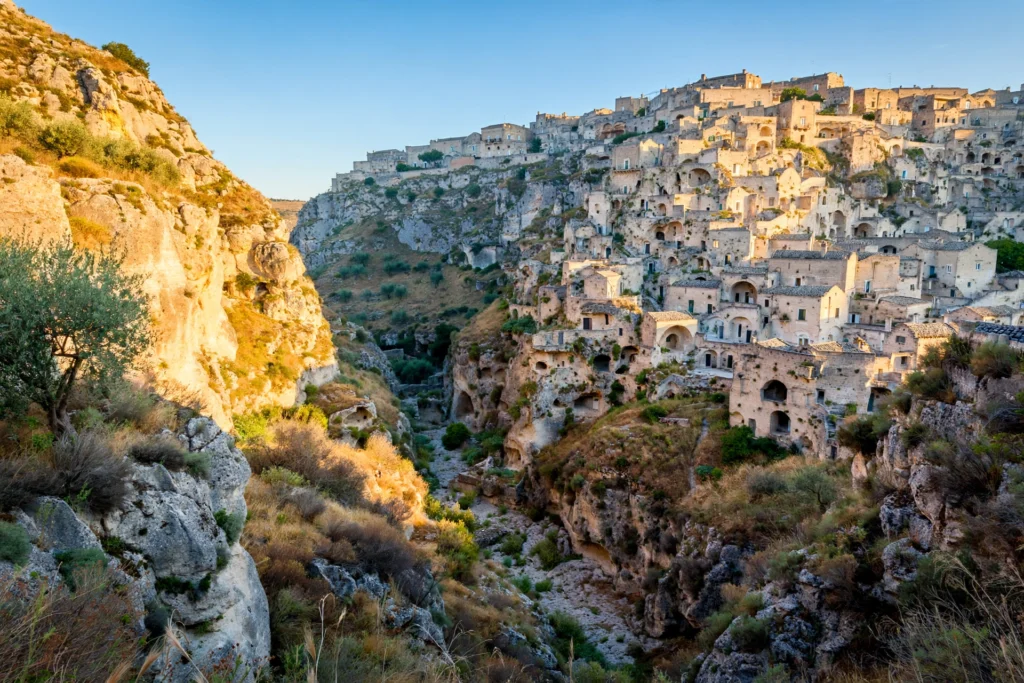
The deep south — Matera and Puglia — is the mainland alternative to Sicily, and it suits a different kind of traveller. Matera, in Basilicata, is a city of cave dwellings carved into a ravine, inhabited for thousands of years, abandoned in the 1950s as a national shame, and reborn as a UNESCO site and a European Capital of Culture. You can sleep in a cave hotel, walk streets that feel older than Rome, and eat in restaurants carved into the rock. It is one of the most extraordinary places in Italy, and it is still quiet, because most tourists never get there. Puglia, the heel of the boot, is the region around it: the white town of Ostuni, the cone-roofed trulli houses of Alberobello, the baroque city of Lecce, and the beaches of the Salento peninsula. Puglia is cheaper than Tuscany, less crowded than the Amalfi Coast, and its food — orecchiette pasta, burrata cheese, olive oil from trees a thousand years old — is among the best in the country. A four-day loop from Naples, with a car, covers Matera and the Valle d’Itria properly, and it leaves the Salento for a second trip.
The south, honestly
| Place | What it is | Time needed | Best for |
|---|---|---|---|
| Palermo | Markets, Norman mosaics, street food | 2 days | Food, history, atmosphere |
| Agrigento | Valley of the Temples | Half a day | Greek ruins |
| Ragusa and Modica | Baroque towns, chocolate, quiet streets | 1 day | Slow travel, food |
| Syracuse and Ortigia | Greek theatre, island old town | 1–2 days | History, sea views |
| Taormina | Ancient theatre, Etna on the horizon | 1 day | The classic Sicily view |
| Matera | Cave city, UNESCO site | 1–2 days | The most extraordinary place in the south |
| Puglia (Valle d’Itria) | White towns, trulli, Lecce | 3–4 days | Slow travel, food, value |
The south is also the part of Italy where the practicalities matter most. The trains are slower, the buses are less frequent, and a car is not a luxury but a necessity. Book your hotels ahead, because the good ones are few and they fill up. Eat where the locals eat, which in the south means the small trattoria with no menu in English and a handwritten list of the day’s dishes. And do not rush: the south runs on a slower clock than the north, lunch is long, the afternoon is quiet, and the evening starts late. That is not inefficiency. It is the reason to go.
Getting Around Italy by Train (and When to Drive)
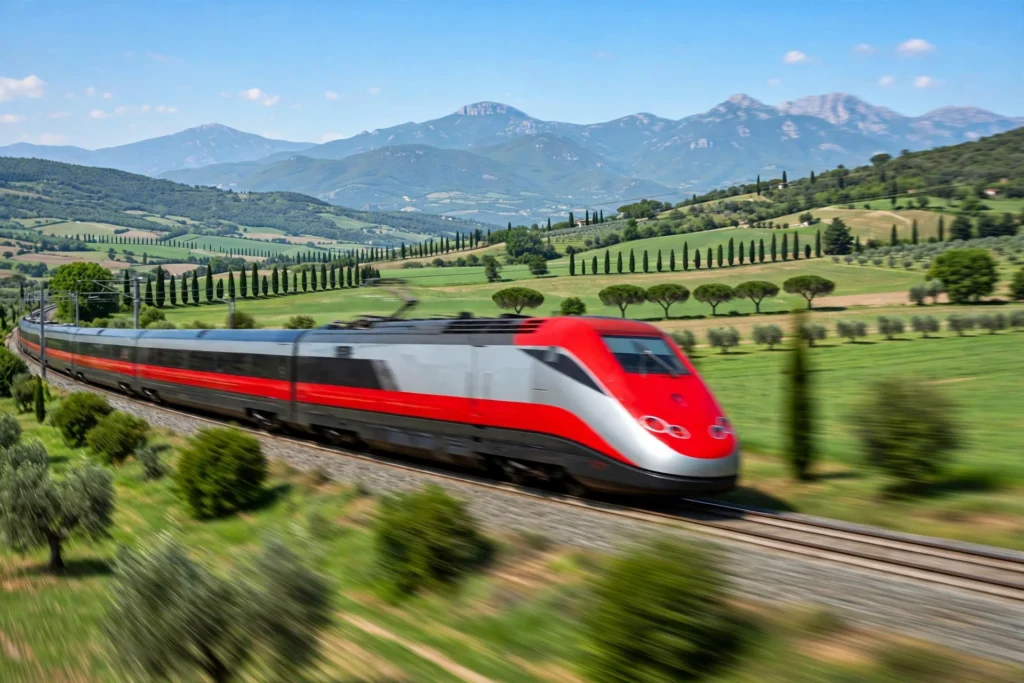
The train is the secret weapon of a first Italy trip, and it is the thing that most of the top-ranking guides describe in a paragraph when it deserves a whole section. Italy’s high-speed network is one of the best in Europe: Frecciarossa trains run by Trenitalia and the private operator Italo compete on the main spine from Turin through Milan, Bologna, Florence, Rome and Naples, and the competition keeps the advance fares low. Rome to Florence takes about an hour and a half. Florence to Venice takes a little over two hours. Rome to Milan takes about three hours. Rome to Naples takes just over an hour. The trains are frequent, comfortable, and they arrive in the centre of the city, which a flight never does. For the classic route, the train is not just the best option. It is the only option that makes sense.
There are two kinds of train in Italy, and confusing them is the most common transport mistake first-timers make. High-speed trains — Frecciarossa, Frecciargento and Italo — run between the big cities, they have reserved seats, and their prices rise as the departure approaches, so book them early. A Rome to Florence ticket bought weeks ahead can cost €20 to €30; the same ticket bought on the day can cost €50 or more. Regional trains — the Regionale — are slower, cheaper, and they run everywhere the high-speed trains do not: to the Cinque Terre, to the small Tuscan towns, along the coasts. Regional tickets have a fixed price, they do not need to be booked ahead, but they must be validated before you board. If you buy a paper regional ticket, stamp it in the small yellow or green machine on the platform before you get on, because an unvalidated ticket carries a fine even if you have paid for it. If you buy the ticket on the Trenitalia app, it validates itself, which is the easier option and the one most travellers should use.
Booking the trains: the rules that matter
Book high-speed trains on the official sites — Trenitalia or Italo — and check both, because the two operators run different trains on the same routes and their prices differ by the hour. Book as soon as your dates are fixed, because the cheapest fares sell first. Choose the station carefully: Rome has two main stations, Termini and Tiburtina, and your train may leave from either; Florence’s high-speed trains use Santa Maria Novella; Venice’s use Santa Lucia, which is on the Grand Canal and is the most beautiful arrival in Italy, not Mestre, which is on the mainland and is a bus ride away. Arrive at the station twenty minutes before departure, not an hour: Italian stations are small, the platforms are announced ten minutes before the train leaves, and an hour in a station is an hour wasted. Keep your ticket on your phone, keep your luggage where you can see it, and sit on the side of the train that faces the countryside, because the view from a high-speed train crossing Tuscany is one of the underrated pleasures of the trip.
| Route | Time | Advance fare | Walk-up fare |
|---|---|---|---|
| Rome – Florence | ~1h 35m | €20–30 | €45–55 |
| Florence – Venice | ~2h 05m | €20–35 | €45–60 |
| Rome – Venice | ~3h 45m | €35–55 | €80–100 |
| Rome – Naples | ~1h 10m | €15–25 | €40–50 |
| Rome – Milan | ~3h 00m | €30–50 | €80–100 |
| Florence – Bologna | ~35m | €10–15 | €25–30 |
| Milan – Venice | ~2h 30m | €20–35 | €45–60 |
When to drive, and when not to
A car in Italy is a tool for the countryside, not for the cities, and the distinction is absolute. In Rome, Florence, Venice, Naples and Milan, a car is a liability: the traffic is heavy, the parking is expensive, the historic centres are ZTL limited-traffic zones watched by cameras, and a single wrong turn can produce a fine that arrives by post months after you are home. Never drive into a historic centre unless your hotel has registered your number plate with the authorities. Park outside the walls and walk in. In the countryside — Tuscany, Umbria, Puglia, Sicily, the Dolomites — a car is the opposite: it is freedom, because the hill towns and the mountain valleys are not on the train lines and the buses are slow. Hire the car for the countryside days only, pick it up in the city where the countryside starts and drop it off where it ends, and never keep it for the city days in between. Drivers from outside the EU should carry an International Driving Permit alongside their own licence, and everyone should know that Italian motorways are tolled, that the speed limits are enforced by cameras, and that the petrol stations on the motorways are more expensive than the ones in the towns.
Getting into Italy is the other half of the transport question. The main intercontinental gateways are Rome Fiumicino and Milan Malpensa, and for a classic-route trip the right choice is to fly into Rome and out of Venice, or into Milan and out of Rome, so that you never backtrack. The regional airports matter more than most people realise: Pisa is the airport for Florence and Tuscany, Naples is the airport for the Amalfi Coast, Bologna is the airport for Emilia-Romagna, and Catania and Palermo are the airports for Sicily. Price the regional airport against the big two before you book, because a flight into Pisa can save you a three-hour train ride from Rome, and a flight out of Venice can save you a day. From Fiumicino to central Rome, the Leonardo Express takes about half an hour to Termini; from Malpensa to central Milan, the Malpensa Express takes about fifty minutes. Both are cheaper and more reliable than a taxi, and both are worth knowing about before you land.
When to Go to Italy: Best Months, Crowds and Prices
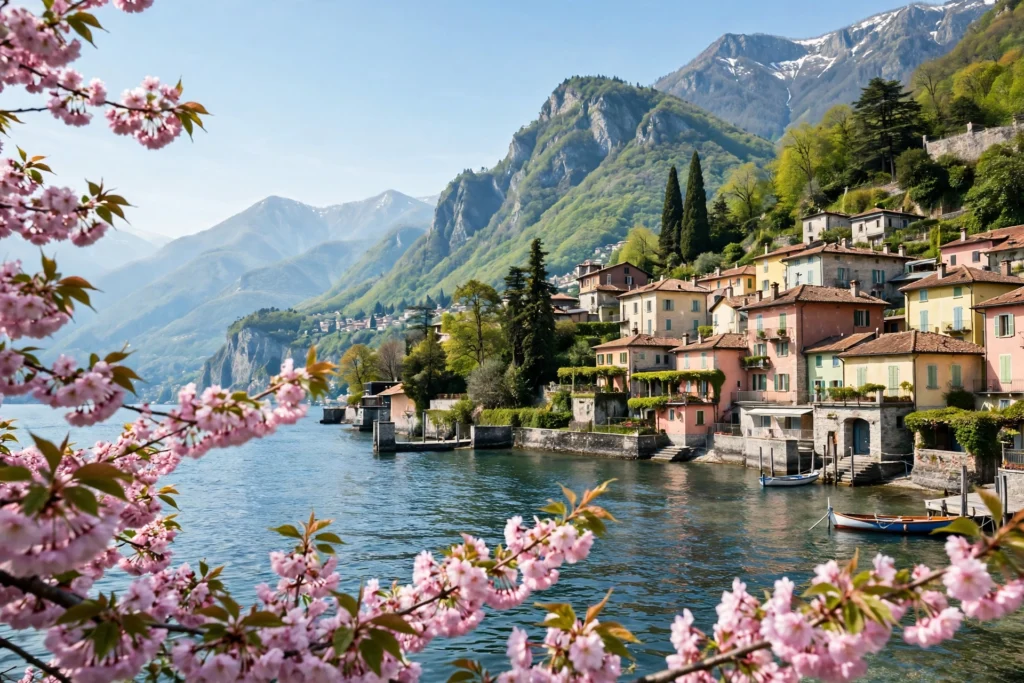
There is no single best month to visit Italy, because the country is long and the answer changes with latitude, and the guides that name one month are simplifying a question that deserves a proper answer. The honest answer is that there are four Italys, one for each season, and the right one depends on what you want the trip to feel like. April, May, September and October are the months that suit most first-timers, because the weather is warm without being stifling, the sights are walkable, and the prices sit between the peaks. July and August are the months to avoid for the cities, because the heat is intense, the crowds are at their thickest, and the prices are at their highest. Winter is the quiet secret, with empty museums and the lowest prices of the year, at the cost of short days and rain. And the shoulder seasons are not one thing but two: spring and autumn are different from each other in ways that matter for planning.
Spring — April, May and early June — is the best all-round season for a first trip. The days sit around 18 to 25 degrees Celsius, the countryside is green, the light is soft, and the cities are busy rather than overwhelmed. Easter week fills Rome and Florence and pushes prices up for a fortnight, so avoid it if you can, and May is the single best month for the classic route: warm enough for dinner outside, cool enough for walking all day, and early enough that the summer crowds have not yet arrived. Autumn — September and October — is the equal of spring and in some ways its superior. The summer heat has eased, the tourist numbers drop noticeably after the school holidays end, the grape harvest is happening in the wine regions, truffle season starts in Piedmont and Umbria, and the sea stays warm into early October. September is the best month for the Amalfi Coast and the Cinque Terre, because the sea is at its warmest and the crowds have thinned, and October is the best month for Tuscany, because the harvest is in and the hills turn gold.
The seasons, honestly
| Season | Weather | Crowds | Prices | Best for |
|---|---|---|---|---|
| Spring (Apr–Jun) | 18–25°C, some rain | Busy, not overwhelming | Mid-range | First trips, cities, Tuscany |
| Summer (Jul–Aug) | 30–35°C+, humid in the south | At their worst | Highest | The coast, the lakes, the mountains |
| Autumn (Sep–Oct) | 18–25°C, warm sea | Easing after mid-September | Mid-range, falling | Amalfi Coast, wine regions, cities |
| Winter (Nov–Feb) | 5–12°C, rain, cold in the north | At their lowest | Lowest | Cities, museums, Christmas markets |
Summer deserves a longer warning than the other seasons, because it is the season in which the most trips go wrong. July and August in Rome and Florence regularly reach 35 degrees Celsius and above, and the heat is not a dry heat but a humid, urban heat that makes walking all day a test of endurance. The crowds are at their thickest, the queues at the big sights are at their longest, and the prices — for hotels above all — are at their highest, peaking in mid-August around Ferragosto on 15 August, when many family-run restaurants and small shops close for the holiday, especially in smaller towns. If you must travel in summer, go to the coast or the mountains, where the heat is bearable and the sea is the point, and avoid the cities in the middle of the day: sightsee early, rest in the afternoon, and come out again in the evening, when the cities are at their best and the temperature has dropped. Winter, by contrast, is the season that most guides undersell. Venice and Florence are at their emptiest in January and February, the museums are quiet, the restaurants are local, and the hotel prices are the lowest of the year. It is cold and it can be wet, and the coastal resorts largely shut between November and Easter, but for a city trip — Rome, Florence, Venice, Bologna — winter is a genuinely good choice, and it is the cheapest way to see the Italy that the summer crowds never see.
Month by month for the classic route
If you are booking the classic seven-day route, the choice is between May and September, and the difference between them is small. May has the green countryside, the spring light and the flowers; September has the warm sea, the harvest and the thinning crowds. Both are excellent. April is nearly as good but cooler and wetter, and it carries the Easter crowds. June is warm and busy and the start of the high season, and it is the last month in which the cities are comfortable. October is the last good month for the classic route before the winter sets in, and it is the best month for a food trip, because the truffle season and the harvest are both happening. November is the month to avoid for a first trip: the days are short, the rain is frequent, and the coast is shut, even though the cities are quiet and cheap. And December is the exception to that rule, because Rome and Florence at Christmas — the markets, the lights, the nativity scenes — are worth a trip of their own, and the crowds are nothing like the summer’s.
What Italy Costs: A Realistic Budget in Euros
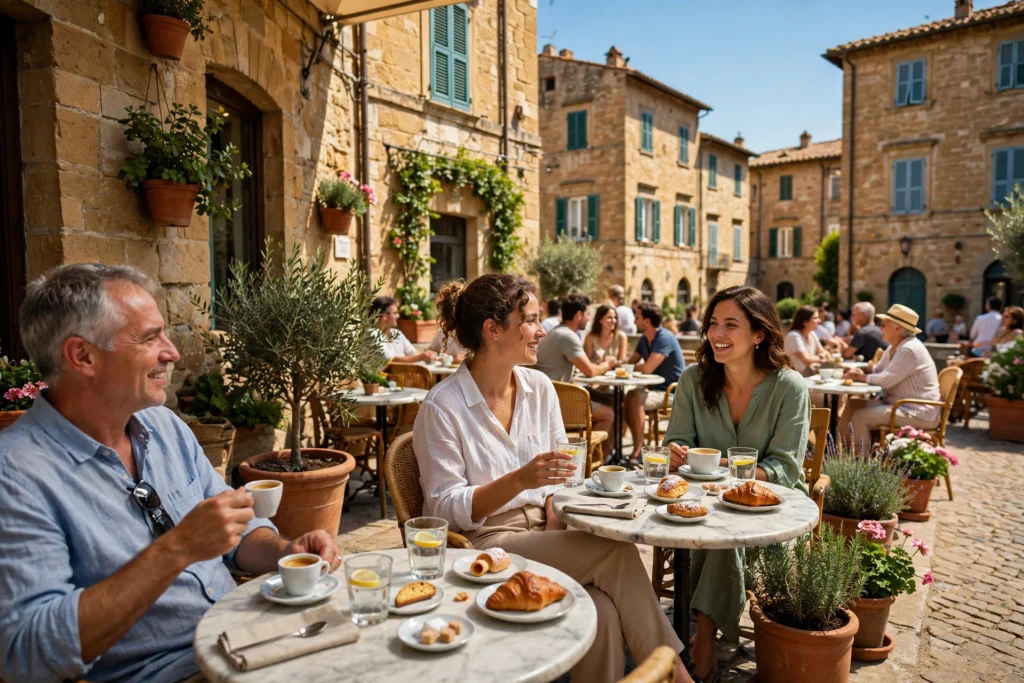
Italy is not a cheap destination, but it is not an expensive one either, and the guides that call it one or the other are both wrong. It sits in the middle of the European range: more expensive than Spain or Portugal, cheaper than France or Switzerland, and very different in price from one city to another and from one month to another. A hotel room in Venice in June costs twice what the same room costs in February. A dinner in a restaurant two streets from the Trevi Fountain costs half what the same dinner costs on the square. The budget below is for a mid-range trip in the shoulder season — May or September — for one person, excluding international flights, and it is framed as a range because the range is the honest answer. Treat any guide that gives you a single number as a guess, and treat this table as the planning tool it is: use it to set your budget, then check the actual prices for your dates before you book.
The biggest single cost is accommodation, and it is also the cost that varies most. A dorm bed in a hostel costs €30 to €50 a night. A budget hotel or a good bed and breakfast costs €80 to €130. A mid-range hotel in a good location costs €150 to €250, and in Venice and Florence in peak season it can cost more. An apartment for a family, or a farm stay in Tuscany, can be better value than a hotel, because it includes a kitchen and because the per-person cost falls with the number of people. The second-biggest cost is food, and it is the cost that is easiest to control. An espresso standing at the bar costs €1.10 to €1.50. A pizza costs €8 to €14. A mid-range dinner in a trattoria costs €25 to €40 per person including a glass of wine. A fixed-price lunch menu — the menu del giorno — costs €12 to €18 and is often the best value meal in Italy. The third cost is sightseeing: the big museums cost €15 to €25 each, and a week of sightseeing can easily add up to €100 or more per person, which is why the timed tickets matter — a ticket you have already paid for is a ticket you will use, and a day without a plan is a day of paying at the door.
Daily budgets
| Style | Hotel | Food | Transport + sights | Total per day |
|---|---|---|---|---|
| Budget | Hostel dorm €30–50 | €25–40 (markets, pizza, trattoria lunch) | €10–20 | €80–120 |
| Mid-range | Hotel €120–200 | €45–70 (trattoria dinners, aperitivo) | €25–40 | €150–220 |
| Comfortable | Hotel €200–300 | €70–120 (better restaurants, wine) | €40–60 | €250–350 |
The transport costs are smaller than most people expect, because the trains are cheap if you book early and the cities are walkable. A high-speed train between the big cities costs €20 to €35 bought in advance. A vaporetto day pass in Venice costs around €25. A metro ticket in Rome costs €1.50. A taxi from the airport to the centre costs €50 or more, which is why the airport train is worth knowing about. The costs that catch people out are the small ones that add up: the tourist tax, charged per person per night by the city and payable at the hotel, which runs from €2 to €7 a night depending on the city and the hotel class; the cover charge, the coperto, of €1 to €3 per person that appears on restaurant bills; and the bottled water, because the tap water is safe in Rome — you can drink from the street fountains — but in restaurants you will be offered bottled water and charged for it. None of these is large. Together they add ten or fifteen euros a day, which is worth knowing about before the trip rather than discovering on the first bill.
How to spend less without enjoying it less
The cheapest way to enjoy Italy is also the best way, and that is not a coincidence. Eat lunch as your main meal, because the fixed-price lunch menus are the best value in the country and the trattorias are quieter at lunch than at dinner. Eat standing up for breakfast, because a coffee and a pastry at the bar costs a third of what it costs at a table. Buy food from the markets — the Mercato Centrale in Florence, the Campo de’ Fiori in Rome, the Rialto Market in Venice — and eat it as a picnic, which is a better lunch than a restaurant and costs a fraction of one. Stay in Bologna or Naples rather than Venice or Florence, because the hotels are cheaper and the food is better. Travel in the shoulder season, because the hotels are cheaper and the cities are quieter. And take the free things seriously: many state museums offer free entry on the first Sunday of the month, the churches are free, the viewpoints are free, and the best thing in most Italian cities — walking through them in the early evening, when the light is gold and the streets are full — costs nothing at all. For more on timing a trip to save money, our guide to the cheapest time to travel works through the same logic for destinations beyond Italy.
Before You Go: Entry Rules, Safety and Booking Checklist
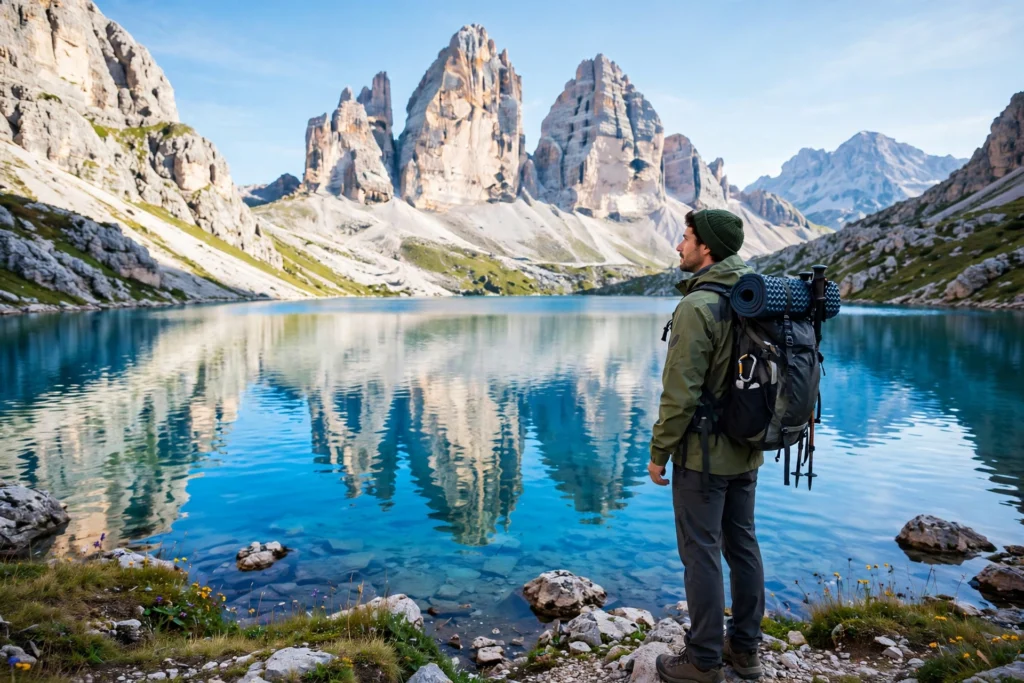
The last section of this guide is the one to read twice: once when you start planning, and once in the week before you fly. It covers the entry rules, the safety picture, and the booking checklist, and it is the section that turns a good plan into a trip that actually happens without a problem at the airport or at the door of a museum. The rules change, and the only defence against that is to check the official source close to your departure rather than relying on a guide — including this one — for the final word.
Entry rules for US citizens are straightforward. Italy is in the Schengen Area, and US passport holders enter visa-free for up to 90 days in any rolling 180-day period, counted across the whole Schengen Area rather than Italy alone, with a passport valid for at least three months after the day you leave. Two systems matter for the border. The first is the Entry/Exit System, the EES, which is the biometric border register for non-EU visitors, and which has been fully operational since 10 April 2026: expect fingerprints and a facial scan instead of a passport stamp on your first crossing, and allow extra time at the airport. The second is ETIAS, the online travel authorisation for visa-exempt visitors, which is not in operation and has no confirmed start date. The EU dropped its late-2026 target in July 2026, and the official position is that the system is not running and no applications are being collected. You do not need ETIAS for a trip to Italy today, and you cannot apply for it — so any website offering to sell you an ETIAS authorisation is a scam, and the only official source for its status is the EU’s own ETIAS page. The authorisation, when it eventually launches, is expected to cost €20, free for travellers under 18 and over 70, and to be valid for three years. Check the official page before you travel, because the launch date will be announced several months ahead.
Safety: the honest picture
The US State Department rates Italy at Level 2, “Exercise Increased Caution”, because of terrorism, and the advisory was reissued on 10 September 2026 with updated language on terrorism and petty crime. Level 2 is the rating most of Western Europe carries, and it is not a reason to stay home: it means stay aware in crowded places, follow the instructions of the local authorities, and take the normal precautions you would take in any big city. The risk that actually affects tourists in Italy is not terrorism but petty theft — pickpockets and bag-snatching in crowded tourist areas, on public transport and at stations — and the defence is the same as everywhere: a cross-body bag worn in front of you, a phone in a front pocket, a bag on your lap in a restaurant rather than on the back of your chair, and extra attention in a crowd. Rome’s metro, the area around Termini station, and the crowded streets around San Marco are where the pickpockets work, and they work in teams, with one person distracting you while another takes your wallet. The emergency number throughout Italy is 112. For the full checklist — insurance, documents, money, scams and what to do if something goes wrong — read our travel safety tips guide, which works through it step by step.
The booking checklist
| When | What to do |
|---|---|
| As soon as dates are fixed | Book flights (open-jaw: into Rome, out of Venice); book hotels in the historic centres |
| 30 days before the Colosseum date | Book the Colosseum timed ticket on ticketing.colosseo.it (€18 standard, €24 Full Experience) |
| 3–4 weeks before | Book Vatican Museums (€25 online), Uffizi and Accademia timed tickets |
| 2–3 weeks before | Book high-speed trains on Trenitalia or Italo (cheapest fares sell first) |
| 1 week before | Check the State Department advisory again; check the Venice fee on cda.ve.it if travelling in 2027; check the ETIAS page |
| Before you fly | Enrol in STEP, buy travel insurance that covers medical care and evacuation, copy your passport and keep the copies separate from the originals, save the emergency number 112 and your insurer’s number in your phone |
A few practical details to finish with. Italy uses the euro, and cards are accepted almost everywhere, though small bars and market stalls may be cash-only, so carry some euros. The plugs are types F and L on 230 volts, so US travellers need an adapter. The tap water is safe to drink in Rome and in most of the country, including from Rome’s street fountains, so carry a reusable bottle. The language is Italian, and English is widely spoken in hotels, restaurants and tourist areas in the big cities, much less so in small towns and in the south — and a few words of Italian go a long way, because they are warmly appreciated even when they are imperfect. Our guide to Italian phrases for travel covers the ones you will actually use, from ordering coffee to asking for the bill. Dress for the churches: shoulders and knees must be covered to enter most Italian churches, including St Peter’s Basilica and the Sistine Chapel, so carry a scarf or a light layer. And if you are pairing Italy with its neighbours, our Greece travel guide and Croatia travel guide cover the two countries most often combined with Italy, and our Spain travel guide and Turkey travel guide cover the other two Mediterranean classics.
Frequently Asked Questions About an Italy Travel Guide
How many days do you need in Italy for a first trip?
Seven days is the minimum for the classic route — three days in Rome, two in Florence and two in Venice, all by high-speed train. Ten days is the sweet spot, because it adds the Amalfi Coast or slow Tuscany, and fourteen days opens up Sicily or the deep south. Five days works if you pick two cities instead of three.
What is the best route for a first trip to Italy?
Rome, Florence and Venice, in that order, by high-speed train, flying into Rome and out of Venice so you never backtrack. Rome to Florence takes about an hour and a half, Florence to Venice a little over two hours, and the trains run so often that you can treat them almost like a metro.
When is the best time to visit Italy?
April, May, September and October suit most first-timers: warm days around 18 to 25 degrees, walkable cities and mid-range prices. May is the best month for the classic route and September is the best month for the Amalfi Coast. July and August bring 35-degree heat, the thickest crowds and the highest prices in the cities.
How much does a trip to Italy cost?
For a mid-range trip in the shoulder season, budget €150 to €220 per person per day excluding international flights — €120 to €200 for a hotel, €45 to €70 for food, and €25 to €40 for transport and sightseeing. A budget trip runs €80 to €120 a day and a comfortable trip €250 to €350.
Do I need a visa to visit Italy from the US?
No. US passport holders enter Italy visa-free for up to 90 days in any rolling 180-day period across the Schengen Area, with a passport valid for at least three months after you leave. ETIAS, the online authorisation for visa-exempt visitors, is not in operation and has no confirmed start date, so you do not need it and cannot apply for it.
Do I need to pay the Venice entry fee?
Not right now. The 2026 trial ended on 26 July 2026, and as of 27 July 2026 no fee applies and no registration is needed. The fee returns in 2027, with arrangements to be announced by 31 December 2026 on the official portal cda.ve.it. In 2026 it cost €5 if booked four or more days ahead and €10 if booked later, on 60 days between 3 April and 26 July.
How much do Colosseum tickets cost?
The standard 24-hour ticket costs €18 and covers the Colosseum’s first and second levels plus the Roman Forum and the Palatine Hill. The Full Experience ticket costs €24 and adds the arena floor, the underground or the upper levels. Buy them only on the official seller, ticketing.colosseo.it, up to 30 days ahead.
How much do Vatican Museums tickets cost?
A full ticket costs €20 at the ticket office or €25 booked online on the only official seller, tickets.museivaticani.va — the €20 ticket plus a €5 booking fee. Reduced tickets are €10 or €15, children under 7 enter free, and entry is free for everyone on the last Sunday of the month. St Peter’s Basilica is free.
Is Italy safe for tourists?
Italy is a safe destination for tourists. The US State Department rates it Level 2, “Exercise Increased Caution”, because of terrorism — the same rating most of Western Europe carries — and the practical risk for visitors is petty theft in crowded tourist areas and on public transport. Keep your bag in front of you, your phone in a front pocket, and stay aware in crowds. The emergency number is 112.
Do I need a car in Italy?
Not for the classic route — the trains are faster, cheaper and easier between Rome, Florence and Venice. You need a car for the Tuscan countryside, the Dolomites, Puglia and Sicily, where the hill towns and the mountains are not on the train lines. Never drive into a historic centre: almost every one is a ZTL limited-traffic zone, and the fines arrive by post months later.
What should I book before I go to Italy?
The Colosseum, the Vatican Museums, the Uffizi and the Accademia all sell timed tickets and sell out in peak season, so book them before you fly. Book high-speed trains early, because the cheapest fares sell first. Book hotels early too, especially in Venice and Florence, where the good rooms in the good locations go first.
Can I do the Amalfi Coast and the Cinque Terre in one trip?
You can, but you should not on a first trip. Each one deserves two or three days of its own, and doing both in one trip means rushing both. Pick the Amalfi Coast for a first trip — it is bigger, easier to reach from Naples, and better as a base — and save the Cinque Terre for a trip that already includes Florence, which is only a couple of hours away by train.
Conclusion: Italy Rewards the Traveller Who Plans the Route and Leaves the Days Loose
An Italy travel guide can give you the route, the trains, the months, the money and the bookings, and this one has. What it cannot give you is the trip itself, because the trip is the part that happens between the bookings: the long lunch in Trastevere, the wrong turn in Venice that leads to the best bacaro in the city, the morning in a Tuscan hill town when you have nowhere to be and nothing to do. Plan the skeleton — the seven days, the three cities, the four timed tickets, the trains — and leave the rest loose. Book the Colosseum and the Vatican Museums before you fly, book the trains early, stay overnight in Venice, eat two streets away from the monument, and give yourself three days in Rome, two in Florence, two in Venice, and a fourth act if you have the days. Do that, and Italy will do the rest. It has been doing it for a thousand years, for travellers far less prepared than you, and it has not disappointed any of them yet.
People also read:
- Venice Travel Guide
- Italian Phrases for Travel
- Greece Travel Guide
- Croatia Travel Guide
- Spain Travel Guide
- Turkey Travel Guide
- Travel Safety Tips
- What Does Travel Insurance Cover?
- Cheapest Time to Travel
- Travel Packing Checklist (Free PDF)

M. Adil is the founder and editor of SoloTravelPro. He writes practical, research-based travel guides that help travellers plan with confidence — from first-time city breaks to national parks and island escapes. Every guide is built on official sources, current prices and honest, usable advice, so readers can plan smarter and travel better.

Other Articles

Spain Travel Guide: The Complete First-Timer’s Guide to Spain in 2026–27