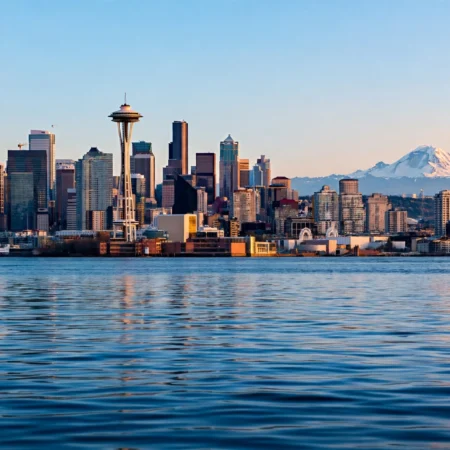

Seattle sits between saltwater and mountains, and on a clear day Mount Rainier hangs over the city like a painted backdrop. It is a city of fish markets and ferries, coffee taken very seriously, glass art, grunge music and some of the wildest national parks in the country within a few hours’ drive. This Seattle travel guide is written for a first-time visitor who wants the famous sights — Pike Place Market, the Space Needle, the waterfront — plus the neighbourhoods, parks and day trips that turn a good trip into a great one, with real prices and honest advice about the rain.
Quick Answer
Plan two to three full days in Seattle for the city itself, and add a day for Mount Rainier or a ferry trip if you can. Fly into Seattle-Tacoma International Airport (SEA) and take the Link light rail 1 Line downtown for a flat $3 — about 38 minutes to Westlake station, with no premium airport fare. Stay downtown, in Belltown or on Lower Queen Anne so you can walk to the market, the waterfront and Seattle Center. Go to Pike Place Market before 10 am, book the Space Needle in advance for a timed slot, and ride the Bainbridge Island ferry at least once — it costs $11.35 for an adult walk-on and the return is free. The best months are July and August for dry weather, June and September for the same sunshine with fewer crowds. All prices in this guide are planning ranges in US dollars; confirm the current figure on the official site or at the ticket office before you travel, because fares and prices change.
Best Time to Visit Seattle
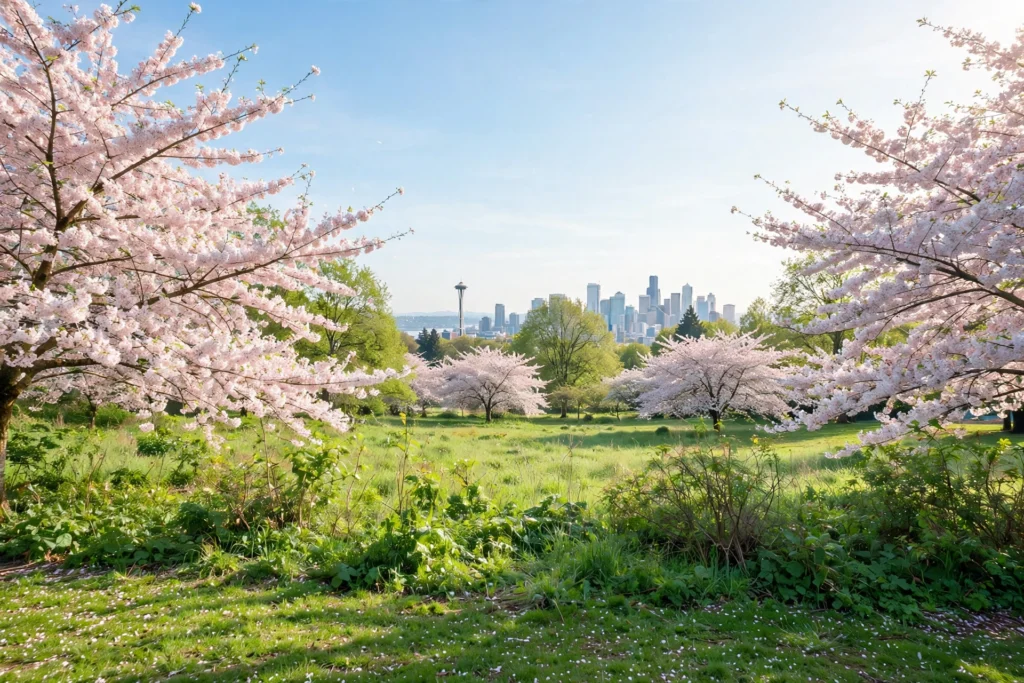
There is no single best month for Seattle, only trade-offs between weather, crowds and prices — and the first thing to know is that the city’s rain reputation is only half true. Seattle drizzles often from October to May, under grey skies, but its total yearly rainfall is actually lower than New York’s or Miami’s. What Seattle has is a lot of grey, drizzly days rather than dramatic downpours, and locals deal with it by wearing a waterproof jacket and getting on with the day. Umbrellas are rare here, and you will spot the visitors immediately by the umbrella in their hand.
July and August are the driest, sunniest months in the country, with highs around 77–78°F (25°C) and long, golden evenings on the waterfront. This is the best time for the mountain day trips too: the wildflower meadows at Paradise in Mount Rainier are at their peak in July and August, the ferry crossings are calm, and the salmon are running at the Ballard Locks. The trade-off is crowds and prices — hotels are at their highest, the market is packed by mid-morning, and the Paradise parking lot fills by mid-morning on summer weekends.
June and September are nearly as good and noticeably calmer, and for many travellers they are the sweet spot. June brings long days and mild weather with thinner crowds, while September keeps the warmth and adds the first autumn colour, with the peak season over and hotel rates easing. Late September into October is a beautiful time for walking the neighbourhoods, with crisp air and softer light, though the rain starts to return and the mountain roads begin their seasonal closures.
November through March is the quiet season, and it has a real following among travellers who prefer the city to the crowds. Hotel prices fall, the market feels local again, and the museums, the glass garden and the covered market halls earn their place. The trade-offs are real: days are short and damp, the mountain day trips are limited by snow and road closures, and the grey can wear on you after several days. February brings the occasional snow flurry, though snow rarely settles in the city itself — it sits up at Snoqualmie Pass and Mount Baker instead. If you visit in winter, plan your sightseeing around the indoor stops and save the long walks for the dry hours. Before you lock in dates, Visit Seattle — the city’s official tourism site — is the best place to check what festivals and events are on during your trip.
Seattle by month at a glance
| Month | Average high / low | Rain | What to know |
|---|---|---|---|
| January–February | 47°F / 37°F (8°C / 3°C) | High, about 5–6 inches | Quietest and cheapest; museums and market halls; short grey days |
| March–April | 54–59°F (12–15°C) | Moderate, about 3–4 inches | Spring light arrives; cherry blossom at the University of Washington |
| May–June | 66–71°F (19–22°C) | Low to moderate | Long days; best balance before the summer crowds |
| July–August | 77–78°F (25°C) | Very low, under 1 inch | Driest and sunniest; peak crowds and hotel prices; mountain season |
| September | 72°F (22°C) | Low, about 1.6 inches | Warm, calmer, golden light; arguably the best month |
| October | 61°F (16°C) | Rising, about 3.9 inches | Autumn colour; rain returns; good walking weather |
| November–December | 47–52°F (8–11°C) | High, about 6 inches | Cheapest hotels; holiday lights; the wettest months |
The rain, honestly, is a packing problem rather than a trip problem. Bring a waterproof jacket with a hood in any month except July and August, wear shoes that can handle wet pavement, and keep a dry layer in your day bag. A waterproof jacket does more for you than an umbrella, and a dry afternoon counts as a bonus rather than a plan. If you are building a wider trip, the same logic that shapes a good travel itinerary template applies here: leave room for the weather to change your plans, and keep one indoor backup for every outdoor morning.
How Many Days Do You Need in Seattle
Two full days is the minimum for a first visit, three days is the comfortable answer, and four or five days is what turns Seattle from a checklist into a place you actually remember. The city itself is compact and walkable, but the mountains, islands and rain forests around it are the other half of the trip, and they need their own days. Travellers who have spent time in other great walking cities will recognise the pattern from our London travel guide: the famous centre is only part of the city, and the best hours are the ones most visitors miss.
With two days, you can see Pike Place Market, the Space Needle and Chihuly Garden and Glass, the waterfront and the Great Wheel, and spend an evening in Capitol Hill or Ballard. With three days, add a ferry to Bainbridge Island, a slow morning in Fremont and the Ballard Locks, and a proper look at the museums. With four or five days, add Mount Rainier or Olympic National Park, the San Juan Islands, or a day in the wine country at Woodinville. A week lets you do all of it without rushing, and that is the trip the city rewards most.
The strongest argument for staying longer is not the sights. It is the rhythm. Seattle before nine in the morning belongs to the market vendors setting up their stalls and the fishermen unloading the catch. Seattle after seven in the evening belongs to the neighbourhoods — the bars of Capitol Hill, the breweries of Ballard, the sunset watchers at Kerry Park. If you can only manage one extra night, take it — it is worth more than an extra half-day of sightseeing. And if you are still deciding where this trip fits in your year, our travel bucket list is a good place to see how a Pacific Northwest trip stacks up against the other big American journeys.
A sample 2-day and 3-day Seattle itinerary
Day 1 — Downtown and the market. Start at Pike Place Market before 10 am, when the stalls are open and the crowds are thin. Walk down to the waterfront, ride the Great Wheel, and visit the Seattle Aquarium. In the afternoon, take the Monorail to Seattle Center for the Space Needle and Chihuly Garden and Glass, then finish at Kerry Park on Queen Anne for the sunset view of the skyline with Mount Rainier behind it.
Day 2 — Neighbourhoods and the water. Morning in Fremont — the Troll under the bridge, the Sunday market if your dates line up — then Ballard for the Locks, the salmon ladder in season, and lunch at an oyster bar. Afternoon in Capitol Hill for coffee, bookshops and the Volunteer Park conservatory, and dinner in the International District.
Day 3 — Ferry or mountains. Take the Bainbridge Island ferry from Colman Dock for a half-day island escape, or drive to Mount Rainier for the Skyline Trail at Paradise. If the weather turns, swap the mountain for the Museum of Flight and the Seattle Art Museum instead.
Getting to Seattle: Sea-Tac Airport and the Link Light Rail
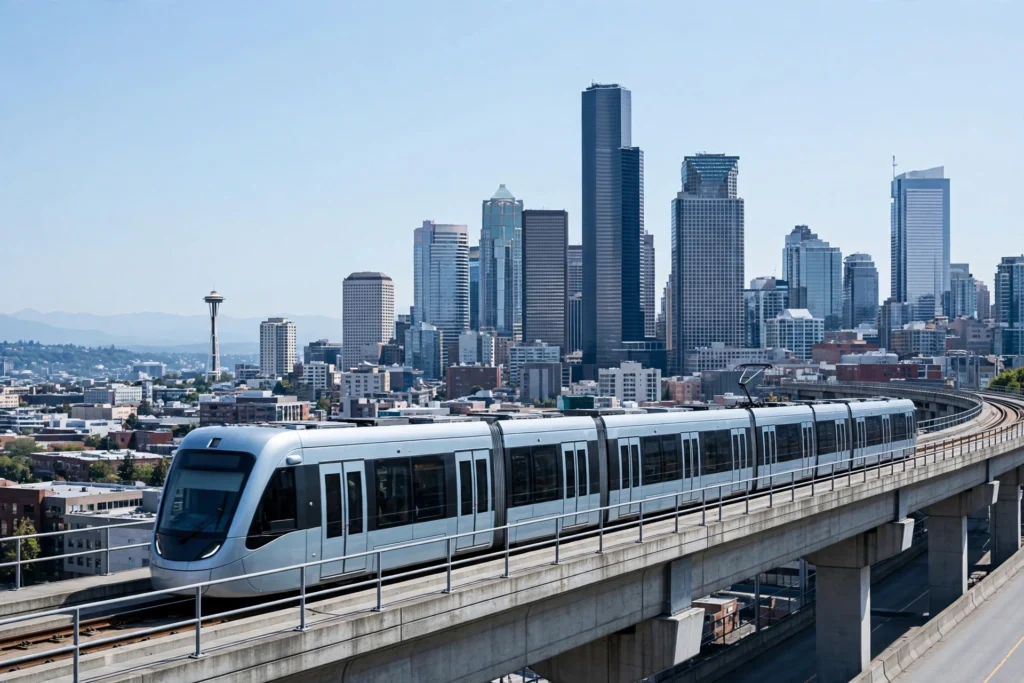
Most visitors from the United States fly into Seattle-Tacoma International Airport (SEA), known as Sea-Tac, about 14 miles south of downtown in the city of SeaTac. Direct flights run from most major US cities, and the airport is also a major hub for flights to Alaska and Asia. The good news is that getting from the airport into the city is one of the cheapest and easiest airport transfers in America — the Link light rail costs a flat $3 and drops you in the heart of downtown in about 38 minutes, with no premium airport fare and no ticket queue.
From Sea-Tac Airport into the city
| Option | Time | Cost (2026, planning range) | Best for |
|---|---|---|---|
| Link light rail 1 Line to Westlake | About 38 minutes | $3 flat per adult; free for 18 and under | Cheapest and most predictable; runs every 8–10 minutes |
| Rideshare (Uber / Lyft) | 25–50 minutes depending on traffic | Roughly $50–$70 | Late arrivals, heavy luggage, groups of three or four |
| Taxi | 25–50 minutes depending on traffic | Roughly $50–$70 | Same as rideshare; flat-rate zone pricing to downtown |
| Airport shuttle / hotel shuttle | 40–60 minutes | About $20–$30 per person | Travellers whose hotel offers a shuttle |
| Rental car | 25–50 minutes to downtown | From about $60–$90 per day plus parking | Only if you are heading straight to the mountains |
The light rail is the sensible default. SeaTac/Airport station sits on the fourth floor of the airport parking garage, reached by a covered walkway from the terminal — allow ten minutes for the walk from baggage claim, and free electric carts run on the skybridge from 5 am to midnight. Board a 1 Line train towards Lynnwood and ride to Westlake, Pioneer Square or the International District, depending on your hotel. Trains run from about 5 am until about 1 am on most days, every 8 to 10 minutes for most of the day, and a Sound Transit Night Bus covers the same corridor in the small hours. If you are arriving after midnight, check the Night Bus timetable before you land.
Paying is simple. The adult fare is a flat $3.00 for any distance on the 1 Line or the 2 Line, and one tap buys your ride plus two hours of transfer credit across the regional network — hop from the train to a bus and the transfer is free. Riders aged 18 and under travel free anywhere in Washington, and ORCA LIFT, senior and disabled fares are $1.00. You can pay by tapping an ORCA card, a contactless bank card, or your phone wallet on the yellow reader — bank-card tap-to-pay launched in February 2026 and charges the $3.00 adult fare with the same two-hour transfer window, as long as you keep tapping the same card. There are no turnstiles at most stations; the system runs on proof of payment, so keep your fare ready in case an inspector asks.
If you drive, be aware that downtown Seattle is not a friendly place for a rental car. Parking in the centre runs roughly $30–$50 a day at hotel garages, the streets are steep, and traffic on I-5 can turn a twenty-minute drive into an hour at rush hour. Rent the car only for the days you leave the city — for Mount Rainier, Olympic National Park or the San Juan Islands — and pick it up from a downtown location on the morning you need it rather than at the airport. Before you book anything, check current schedules and fares on Sound Transit, the regional transit authority, since times and fares change.
Getting Around Seattle: Link, Buses, Monorail and Ferries
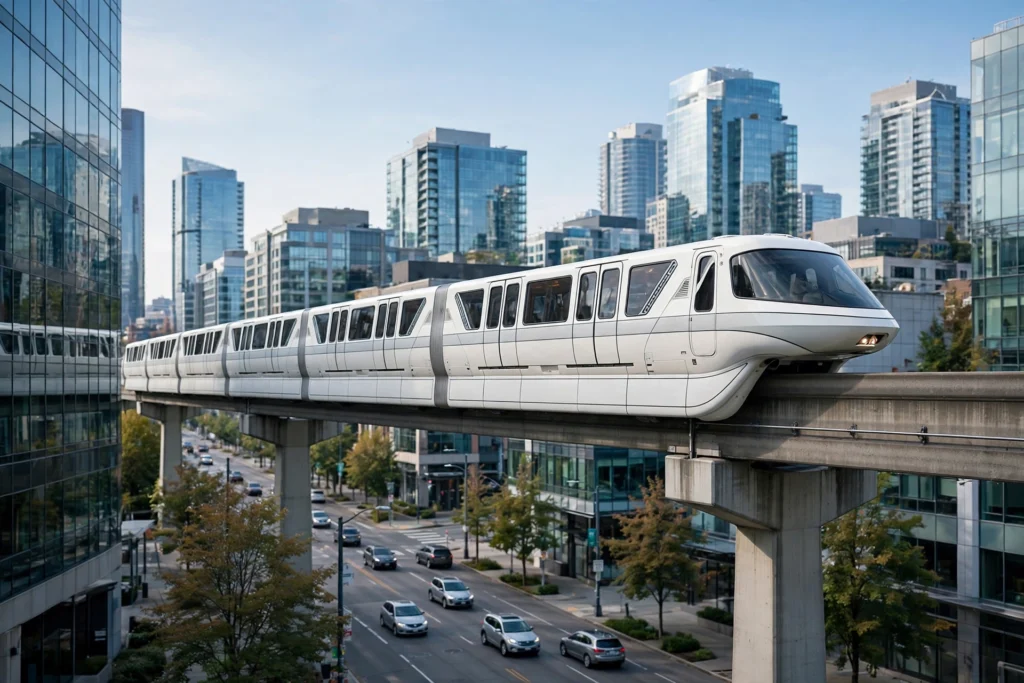
You do not need a car in Seattle. The city is best navigated with a mix of Link light rail, King County Metro buses, the Monorail and the ferries — and the centre is compact enough that walking covers most of what a first-time visitor wants to see. The one thing to respect is the hills: downtown Seattle is short on blocks and long on inclines, and the walk from the waterfront up to Pike Place Market is a proper climb. Comfortable shoes are essential, and the same steep streets that tire your legs are what give the city its famous views.
The Link light rail is the backbone. The 1 Line runs north to south from Lynnwood through Northgate, the University of Washington and Capitol Hill, into the downtown transit tunnel at Westlake, then south past the stadiums and on to Sea-Tac Airport and Federal Way. The 2 Line, which opened across Lake Washington in March 2026, runs east to Bellevue and Redmond. For a visitor, the useful stops are Westlake (downtown shopping and the Monorail), Pioneer Square (the oldest part of the city), the International District (Chinatown and the stadiums), Capitol Hill (nightlife and cafés) and the University of Washington (cherry blossom in spring, the campus and the Husky Stadium views). A single ride is $3 flat, and a day pass is $6.
King County Metro buses fill in everything the light rail misses. The buses are frequent downtown and in the inner neighbourhoods, and the same $3 fare and two-hour transfer window apply — one tap on your ORCA card or contactless card covers the train and the bus. The RapidRide lines are the most useful for visitors: the C Line to West Seattle and Alki Beach, the D Line to Ballard, the E Line up Aurora Avenue, and the H Line to the Junction. Bus stops are clearly signed, and real-time arrivals are shown on the transit app and on the reader boards at major stops.
The Seattle Center Monorail is the city’s most charming piece of transport. It links Westlake Center downtown with Seattle Center in about three minutes, gliding above the streets on a track built for the 1962 World’s Fair, and it costs about $4 for an adult. It is not the cheapest way to get to the Space Needle — the walk takes about fifteen minutes and is mostly flat — but it is a small piece of Seattle history and a fun ride in itself, especially with children.
The ferries are transport and sightseeing in one. Washington State Ferries runs the largest ferry system in the United States from Colman Dock (Pier 52) on the downtown waterfront, and the crossings to Bainbridge Island and Bremerton are covered in detail later in this guide. The King County Water Taxi crosses Elliott Bay to West Seattle in about ten minutes and is a fast, cheap way to reach Alki Beach. Note that the Monorail and the state ferries are not covered by the ORCA transfer window in the same way as buses and light rail, so budget for them separately. For the full picture of routes, fares and first-time rider advice, the Washington State Ferries rider guide is the official place to start.
A few practical notes. Seattle’s downtown core is walkable end to end in about thirty minutes, and most of the famous sights are within a fifteen-minute walk of each other — the market, the waterfront, Pioneer Square and the stadiums. Ride-hailing works well and is the easiest option late at night, when the buses thin out. Cycling is popular but the hills and the rain make it a choice for confident riders; the city has a bike-share system and protected lanes on the waterfront. And if you are planning a trip that mixes city days with mountain days, the travel apps we recommend include the transit and offline-map apps that make a car-free Seattle trip easy.
Pike Place Market: Seattle’s Beating Heart
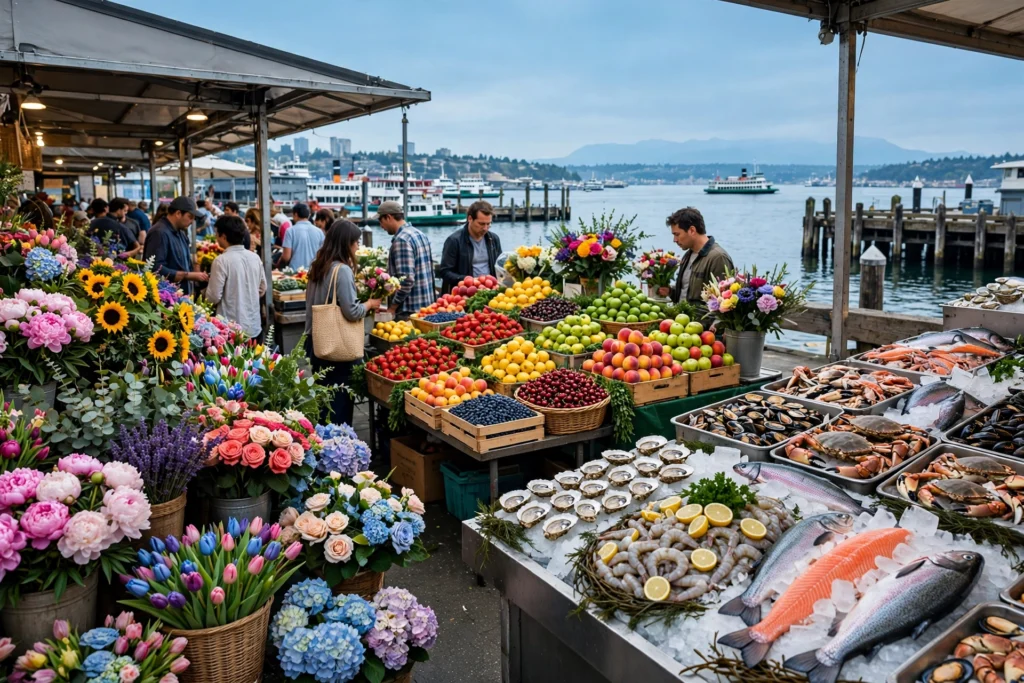
If you only have one day in Seattle, spend part of it at Pike Place Market. Founded in 1907, it is the oldest continuously operated farmers market in the United States, a nine-acre historic district of around two dozen buildings above the waterfront, and it is still a working market — not a museum set. Farmers sell produce from their stalls, fishermen toss salmon for the crowds, florists wrap enormous bouquets in butcher paper, and craftspeople sell jewellery, prints and pottery from the lower levels. Entry is free, and the market is at its best before 10 am, when the stalls are fully set up and the crowds have not yet arrived.
Start at the main entrance on Pike Street, under the neon “Public Market” sign, and work your way down through the levels. The fishmongers at Pike Place Fish Market are the famous salmon-throwers — they toss whole fish across the counter with a shout, and it is as entertaining the tenth time as the first. The flower stalls are the market’s secret bargain: huge, fresh bouquets for a fraction of what a florist charges, and they are the reason so many Seattle homes have fresh flowers on the table. Downstairs, in the lower levels, the craft stalls and the small shops are quieter and often more interesting than the main arcade, with vintage posters, handmade jewellery and the market’s famous tiny shops.
Then go to Post Alley, the narrow lane behind the market, for the Gum Wall — a brick wall covered in pieces of chewed gum, a tradition that started in the 1990s when theatre-goers stuck their gum to the bricks while waiting in line. It is exactly what it sounds like, it is regularly cleaned to protect the brickwork, and the gum always comes back. Post Alley is also where you find some of the market’s best small restaurants and the original Starbucks storefront at 1912 Pike Place — expect a queue, and know that the coffee inside is the same as any other Starbucks. The queue is for the photograph and the story, not the coffee.
What to eat at the market
Come hungry. The market is one of the best places to eat in the city, and grazing your way through it is a legitimate lunch plan. Pike Place Chowder serves award-winning clam and seafood chowders — the queue moves fast and the New England clam chowder is the one to order. Piroshky Piroshky, the small Eastern European bakery near the main entrance, sells hand-held pastries filled with salmon, beef and cheese, or cinnamon and cardamom; the line is part of the experience. Lowell’s, upstairs with a view over Elliott Bay, is the place for a proper sit-down seafood lunch. And the Daily Dozen Doughnut Company, down in the lower levels, sells tiny fresh doughnuts by the half-dozen that are still warm when you get them. If you want to go deeper, the market’s own website has themed itineraries and a free digital book about the market’s history — start at Pike Place Market before you go, and download the market map so you do not miss the lower levels.
A few market tips from experience. Go early or go late — the market opens at 9 am and the sweet spot is 9 to 10:30 am, or after 4 pm when the day-trippers thin out. Bring cash for the smallest stalls, though most take cards. The market is busiest on Saturdays and on cruise-ship days, when thousands of passengers walk up from the piers. And the market is not just a tourist stop: it contains a senior centre, a food bank, a daycare and a health clinic, and affordable housing for more than 450 residents — it is a real neighbourhood, and it is worth treating it like one.
The Space Needle, Seattle Center and the Museums
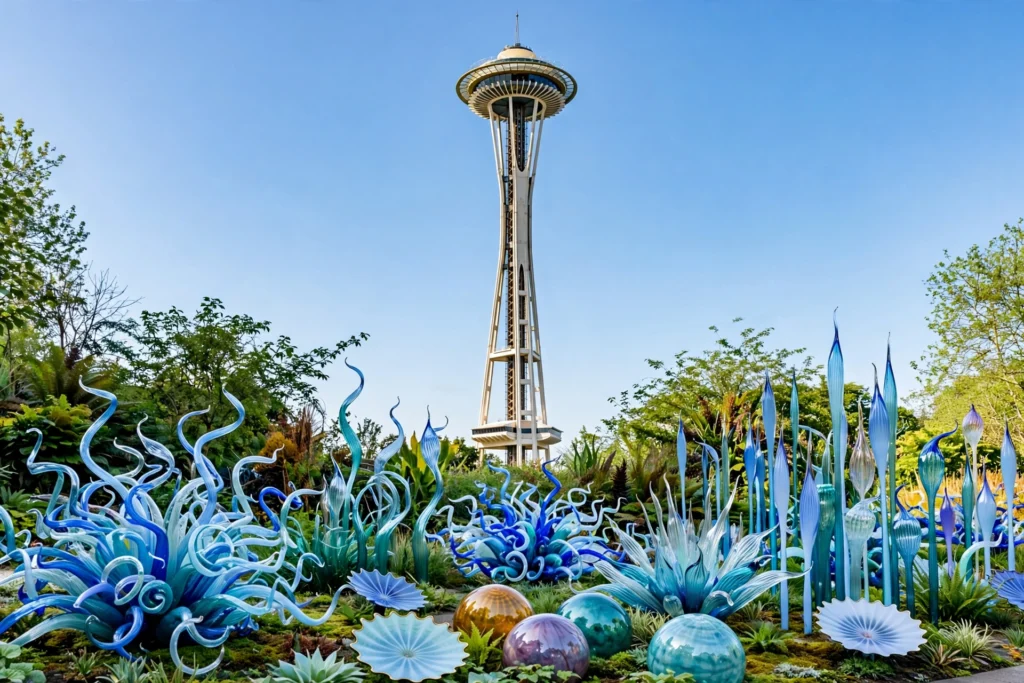
The Space Needle has been the signature of the Seattle skyline since the 1962 World’s Fair, and it is still the first stop for most first-time visitors. The tower rises 605 feet, with the observation deck at 520 feet, and the view from the top takes in the skyline, Mount Rainier, Elliott Bay and the Olympic Mountains in one sweep. Go up early in the day, when the light is clearest and the queues are shortest, and allow about an hour for the visit. The deck now has the Loupe, a revolving glass floor that turns slowly beneath your feet, and the Skyriser glass benches that lean you out over the city — both are included in the ticket, and both are better than they sound.
Book in advance. Entry is timed in fifteen-minute windows and is valid only for the slot you booked, and the popular sunset slots sell out days ahead in summer. General admission is priced by date and time, and the official range is roughly $35–$55 for an adult, with youth and senior discounts — check the current figure for your date before you go, because the exact price depends on the day and the time slot. Children aged four and under enter free, but strollers must be parked before entry. A combination ticket with Chihuly Garden and Glass, next door, is the best value if you plan to do both, and a combination that adds an IMAX film is also available.
Chihuly Garden and Glass
Next door to the Needle, Dale Chihuly’s glass sculptures fill a garden and a glasshouse, and it is the single most beautiful indoor space in the city. The centrepiece is a 100-foot-long sculpture suspended in the Glasshouse, and the garden outside sets the glass among trees and plants that change with the seasons. Allow an hour to ninety minutes, and go in the late afternoon if you can, when the light through the glass is at its best. Adult admission is roughly $40–$45, priced by date like the Needle, and the combined ticket with the Space Needle saves money over buying the two separately.
Museum of Pop Culture and the Seattle Art Museum
Across the plaza, the Museum of Pop Culture (MoPOP) sits in Frank Gehry’s crumpled metal building, with exhibitions on Jimi Hendrix, Nirvana and the Seattle sound, science fiction and video games. It is the city’s most fun museum and the one children ask to revisit — allow two hours, more if you play the instruments in the Sound Lab. Downtown, the Seattle Art Museum (SAM) holds around 25,000 works from antiquity to the present, and its sister spaces — the Seattle Asian Art Museum in Volunteer Park and the Olympic Sculpture Park on the waterfront — are free to visit and worth the trip on their own. The Sculpture Park, an outdoor park of monumental sculptures above Elliott Bay, is open year-round and costs nothing, which makes it one of the best free things to do in Seattle.
The rest of Seattle Center
Seattle Center is more than the Needle. The campus also holds the Pacific Science Center, the Seattle Children’s Museum, the KCTS public television studios and the Climate Pledge Arena, and in summer the lawns fill with festivals — Bumbershoot, the city’s big arts and music festival, takes place here, and the Seattle Center grounds host free concerts and food festivals all summer. If you are visiting with children, the Science Center’s butterfly house and the Children’s Museum are the two best indoor stops in the city on a rainy day. And if the weather is clear, walk the short distance from Seattle Center up to Kerry Park on Queen Anne for the classic postcard view — the Space Needle, downtown and, on a clear day, Mount Rainier in a single frame. It is the best sunset spot in the city, and it costs nothing.
The Waterfront: Great Wheel, Aquarium and the New Waterfront Park
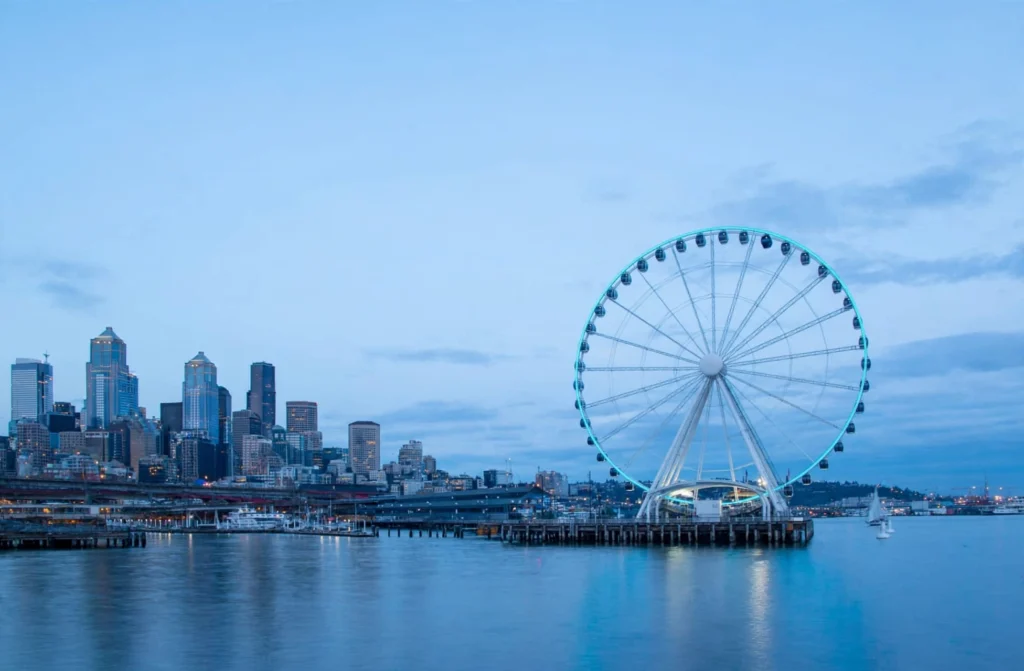
Seattle’s waterfront has been transformed in the last few years. The elevated Alaskan Way Viaduct, which stood as a concrete barrier between downtown and the water for decades, was razed in 2019, and the city has spent the years since rebuilding seventeen blocks along Alaskan Way into a landscaped waterfront park with gathering spaces, art installations, new pathways and dramatic viewpoints over Elliott Bay. The result is a waterfront that finally feels like the front of the city rather than its back door, and it is one of the best places in Seattle for a slow evening walk.
Start at Pier 57, where the Seattle Great Wheel has been turning since June 2012. The wheel is 175 feet tall, with enclosed gondolas that give you a slow, fifteen-minute loop over the water — go at dusk, when the city lights come on and the water turns gold, and the ride is worth every cent of the roughly $15–$20 adult ticket. Next door, the Seattle Aquarium is a compact, family-friendly set of exhibits focused on Puget Sound wildlife: giant Pacific octopus, sea otters, harbour seals and the touch pools where children can feel a sea star. It takes about ninety minutes to two hours, and it is the best rainy-day stop on the waterfront.
From the piers, walk south along the new Waterfront Park towards Pioneer Square, or north towards the Olympic Sculpture Park and Myrtle Edwards Park. The walk itself is the attraction: wide paths, public art, benches facing the water, and views across Elliott Bay to the Olympic Mountains. The historic fireboat Leschi and the old waterfront piers are still there, and the new park keeps the working harbour feel — ferries, fishing boats and the occasional cruise ship — rather than turning the waterfront into a theme park. If you are hungry, the waterfront restaurants serve the city’s best clam chowder and fish and chips, and Ivar’s, the white-clapboard institution at Pier 54, has been serving chowder on the waterfront since 1938.
A note for cruise passengers: Seattle is one of the main departure ports for Alaska cruises, and the cruise terminals at Pier 66 and Pier 91 bring thousands of passengers through the city from May to September. If you are arriving by cruise, the waterfront and Pike Place Market are an easy walk from Pier 66. If you are visiting in summer and not cruising, be aware that cruise days make the market and the waterfront noticeably busier — go early, and save the waterfront walk for the evening when the ships have sailed.
Seattle’s Neighbourhoods: Capitol Hill, Fremont, Ballard and Pioneer Square
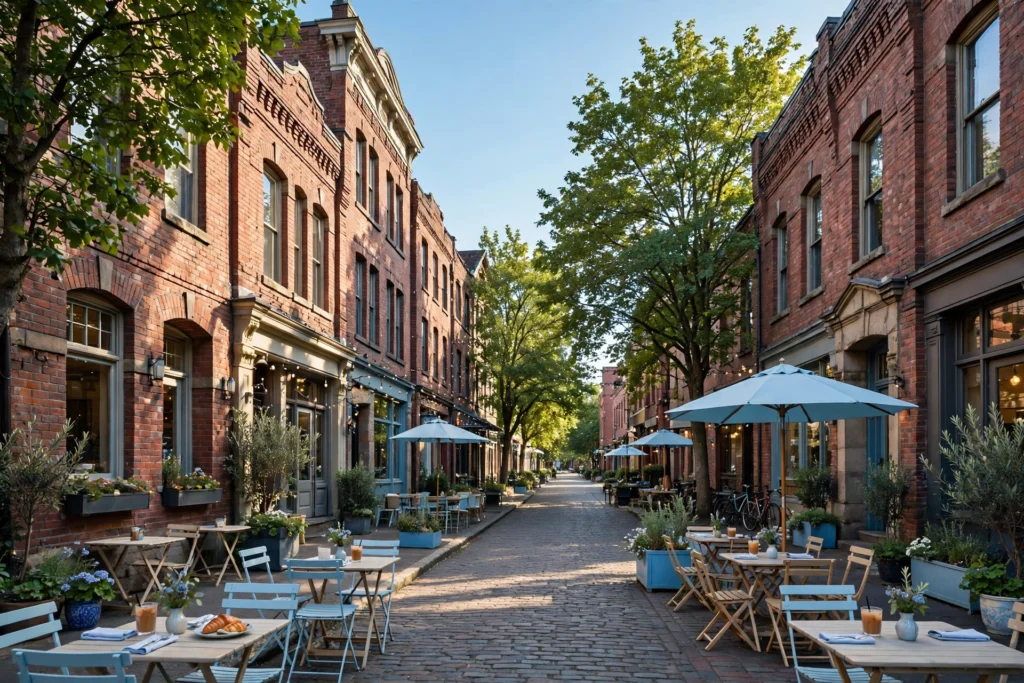
Downtown Seattle is where the famous sights are, but the neighbourhoods are where the city lives, and a Seattle travel guide that stays downtown misses half the trip. Each neighbourhood has its own character, and they are all reachable by bus or light rail in fifteen to thirty minutes. Pick two or three and give them a proper half-day each rather than trying to tick them all off.
Capitol Hill is the city’s nightlife heart and its most walkable neighbourhood. The Pike-Pine corridor is lined with bars, cafés, bookshops and indie music venues, and the streets around Volunteer Park hold the conservatory, the Seattle Asian Art Museum and some of the city’s prettiest residential streets. Come for coffee in the morning, browse the record shops and vintage stores in the afternoon, and stay for dinner and a show. Capitol Hill is also the centre of the city’s LGBTQ+ community, and the rainbow crosswalks on Capitol Hill’s main streets are a permanent part of the neighbourhood’s identity.
Fremont is the city’s self-declared “Center of the Universe”, and it earns the nickname. The Fremont Troll, an 18-foot concrete troll clutching a real Volkswagen Beetle under the Aurora Bridge, has been a photo stop since 1991. The Sunday market fills the streets with local crafts, food stalls and vintage finds, and the neighbourhood’s breweries and cafés are among the best in the city. Fremont pairs naturally with the Ballard Locks and Gas Works Park, which sit on the same side of the Ship Canal.
Ballard is the old Scandinavian fishing district, and it still smells faintly of salt and diesel in the best way. The main street, Ballard Avenue, is lined with brick buildings, breweries, oyster bars and independent shops, and the Sunday farmers market is one of the best in the city. The real draw is the Hiram M. Chittenden Locks — the Ballard Locks — where boats are raised and lowered between Puget Sound and the Ship Canal, and the salmon ladder lets you watch salmon migrate upstream in late summer and early autumn. It is free, it is fascinating, and it is the most Seattle thing you can do without spending a dollar.
Pioneer Square is Seattle’s oldest core, defined by late nineteenth-century brick buildings, small art galleries and cafés on historic streets. This is where the city began, and the underground tour of the old street level — buried after the Great Fire of 1889 — is one of the most unusual tours in America. The First Thursday Art Walk in Pioneer Square is the longest-running art walk in the United States, a free, self-guided evening of open galleries that has been running for decades. Pioneer Square is also where you find the Klondike Gold Rush National Historical Park, a small, free museum about the 1897 gold rush that made Seattle rich, and Smith Tower, the city’s original skyscraper from 1914, with an observatory and a speakeasy-style bar on the 35th floor.
Two more neighbourhoods deserve a mention. The Chinatown-International District is a compact, food-focused neighbourhood of bakeries, noodle houses, dim sum restaurants and busy groceries like Uwajimaya, the large Japanese supermarket that is worth a visit on its own. Queen Anne, the hill above Seattle Center, holds Kerry Park and some of the city’s best residential streets, with views that make the climb worthwhile. And West Seattle, across the water, holds Alki Beach — the city’s best beach, with a long waterfront path, views back to the downtown skyline, and the spot where the first settlers landed in 1851.
Parks, Views and the Outdoors Inside the City
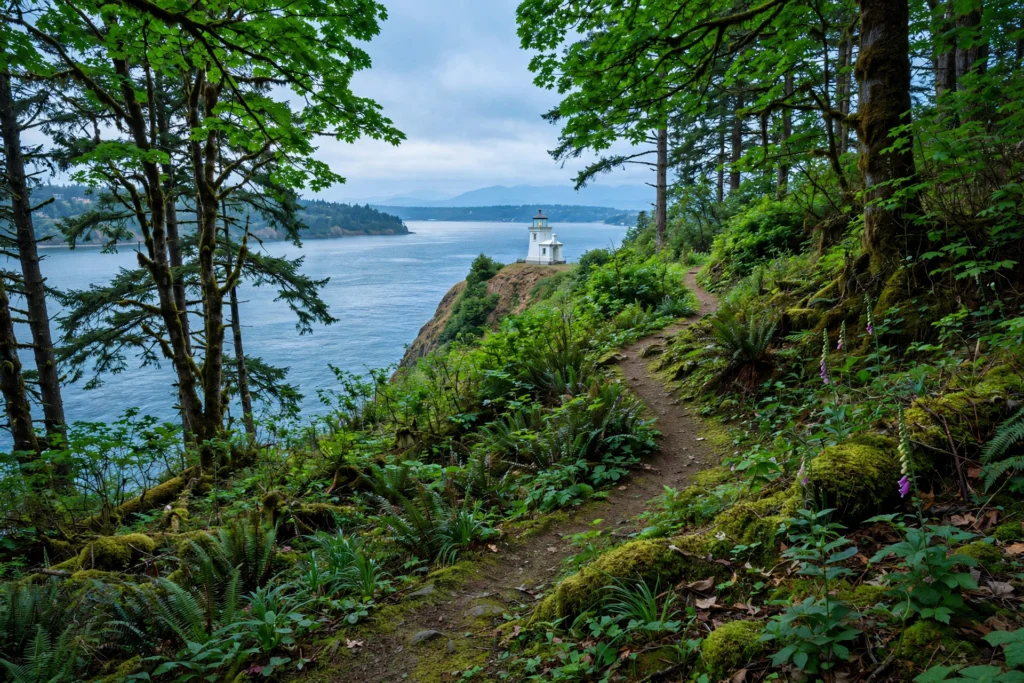
Seattle is nicknamed the Emerald City for its densely forested areas and sprawling green space, and the nickname is earned. You do not need to leave the city to hike through old-growth forest, walk a lighthouse trail or watch salmon swim upstream — the parks inside the city limits are some of the best urban green space in America, and they are the reason Seattle feels so different from other big cities.
Discovery Park is the city’s largest park, at 534 acres on the Magnolia bluff, and it is the best place in Seattle to feel like you have left the city entirely. The 2.8-mile Loop Trail winds through forest and open meadow with views over Puget Sound and the Olympic Mountains, and a detour on the Lighthouse Loop takes you down to West Point Lighthouse at the water’s edge. Allow two to three hours, wear proper shoes, and bring water — the climb back up from the beach is a real one.
Gas Works Park is the opposite: a small, strange, wonderful park on the north shore of Lake Union, built on the site of an old gasification plant. The rusted industrial structures were left standing as sculpture, the grassy hill looks straight across the water at the downtown skyline, and on a sunny afternoon the park fills with picnics, kites and people watching the seaplanes land on the lake. It costs nothing, there is no queue, and it is the best free viewpoint in the city after Kerry Park.
Kerry Park itself is tiny — a pocket park on Queen Anne Hill — but the view from it is the one on every postcard: the Space Needle, downtown, Elliott Bay and, on a clear day, Mount Rainier behind it all. Go at sunset, when the light turns the whole scene gold, and arrive early for a spot at the railing. The other great viewpoint is the Sky View Observatory on the 73rd floor of the Columbia Center, the tallest building in the Pacific Northwest, which gives you a higher, wider view than the Space Needle for a lower ticket price — roughly $28 for an adult, with children’s tickets cheaper.
For a quieter green escape, the Washington Park Arboretum sits on the shores of Lake Washington, 230 acres of plants maintained jointly by the University of Washington and the City of Seattle, with some species found nowhere else in the Pacific Northwest. Inside the arboretum, the 3.5-acre Seattle Japanese Garden is one of the most peaceful places in the city, with a traditional formal garden, a pond and a tea house. The Arboretum is free; the Japanese Garden charges a small admission. And if you are visiting in March or April, do not miss the cherry blossom at the University of Washington’s Quad — the rows of Yoshino cherry trees in full bloom are one of the great spring sights in America, and they draw crowds for good reason.
Ferries and Island Escapes: Bainbridge, Bremerton and the San Juans
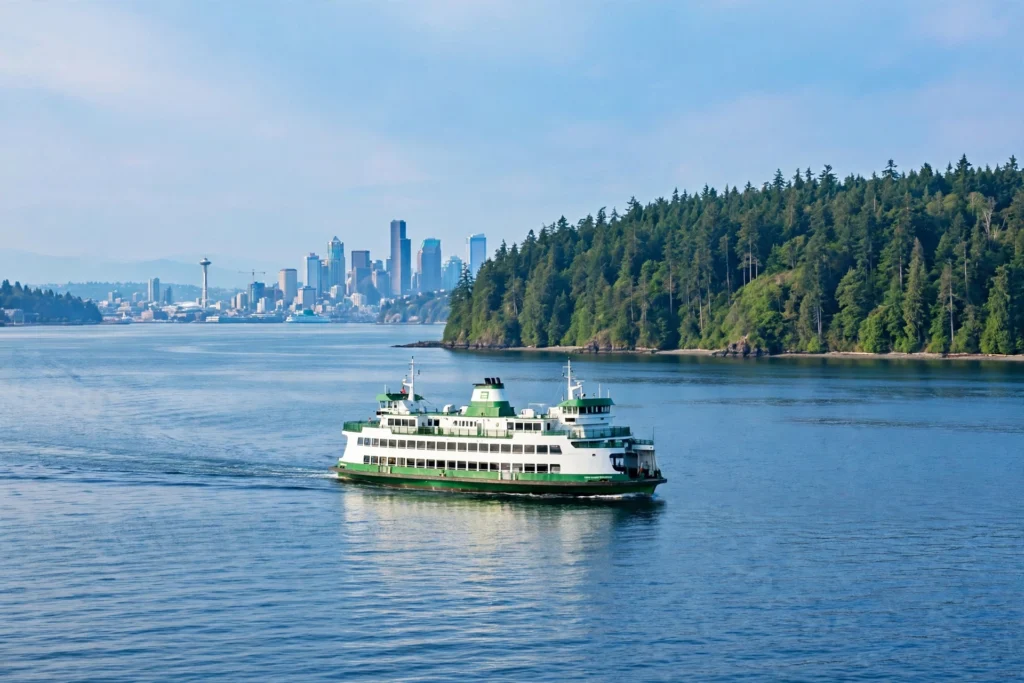
The ferry is Seattle’s signature experience, and it is also the cheapest sightseeing cruise in the city. Washington State Ferries operates the largest ferry system in the United States from Colman Dock (Pier 52) on the downtown waterfront, and the crossing to Bainbridge Island is the one every visitor should take at least once. The boat leaves downtown, the skyline falls away behind you, the Olympic Mountains rise ahead, and thirty-five minutes later you are on an island that feels a world away. Walk-on passengers pay only westbound — the adult fare is $11.35, collected when you board in Seattle, and the return from Bainbridge is free. Seniors and passengers with disabilities pay $5.65, riders aged 18 and under travel free, and no reservation is needed for walk-ons.
Bainbridge Island itself is a perfect half-day. The ferry terminal sits in downtown Winslow, with cafés, bookshops and a waterfront path a short walk from the boat. The island’s best attractions — the Bloedel Reserve gardens, the Japanese American Exclusion Memorial and Fay Bainbridge Park — are three to six miles from the terminal and need a bus, a bike or a ride to reach, but Winslow alone is worth the crossing for a slow lunch and a walk along the water. Ferries run roughly every fifty to seventy minutes depending on the time of day, and the last boat back is late enough for dinner on the island.
Bremerton, the other crossing from Colman Dock, is a longer ride — about an hour — and a different experience: a working naval town with the Puget Sound Navy Museum, the USS Turner Joy museum ship and a waterfront that feels far less polished than Bainbridge. It is the better choice if you want to see the working side of Puget Sound. The fast ferry to Bremerton cuts the crossing to about thirty minutes and costs more, while the car ferry is slower and cheaper.
For a full day, the San Juan Islands are the prize. The islands sit about ninety minutes north of Seattle by car plus a ferry, and they are one of the best places in the world to see orcas in the wild — the whale-watching season runs from May to September, when the resident orca pods are in the area. Friday Harbor, on San Juan Island, is the main town, with whale-watching boats, kayaks and lavender farms, and the islands are the kind of place that makes people start planning a return trip before they have left. Book the ferry in advance if you are taking a car — vehicle space on the San Juan routes is reserved and sells out in summer — and give the islands at least a full day, ideally an overnight.
Ferry and island trips at a glance
| Trip | Time from Seattle | Cost (planning range) | Best for |
|---|---|---|---|
| Bainbridge Island ferry (walk-on) | 35 minutes each way | $11.35 adult, return free | Half-day island escape; best value in the city |
| Bremerton ferry (walk-on) | About 60 minutes | Similar walk-on fare | Naval history; working waterfront |
| King County Water Taxi to West Seattle | About 10 minutes | A few dollars | Quick hop to Alki Beach |
| San Juan Islands (car + ferry) | 1.5 hours’ drive + ferry | Ferry from about $20–$40 per vehicle | Orca watching May–September; full day or overnight |
| Victoria, Canada (Clipper ferry) | About 3 hours | From about $100+ return | A second country in a day; passport required |
Day Trips: Mount Rainier, Olympic National Park and Beyond
Seattle’s greatest advantage as a base is what sits within a few hours’ drive: three national parks, a waterfall, a Bavarian village and a wine valley. The city takes a day and a half; the mountains take whatever you have left, and every trip below is worth a full day of your trip. If you are planning a trip that mixes city days with mountain days, the travel goal guide on setting realistic trip goals is worth a read before you over-schedule yourself — the mountains punish a rushed timetable.
Mount Rainier National Park
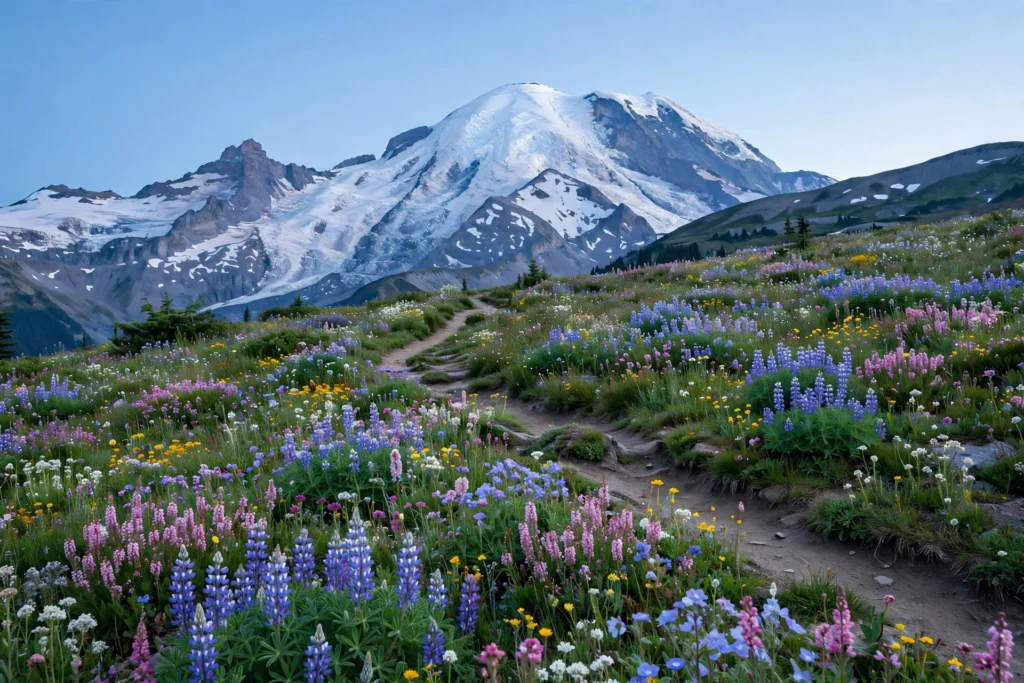
Mount Rainier is the mountain on Seattle’s skyline, a 14,411-foot volcano that dominates the horizon on clear days, and it is about two hours south-east of the city by car. Paradise, at 5,400 feet on the mountain’s south face, is the classic first visit: wildflower meadows in July and August, the Skyline Trail, the Paradise Inn and the in-your-face view of the summit glaciers. The Skyline Trail is the walk to do — a loop of about five and a half miles through meadows and past waterfalls, with the mountain filling the sky the whole way.
Here is the fact most guides get wrong: there is no timed-entry reservation at Mount Rainier in 2026. The reservation system that ran as a pilot in 2024 and 2025 was cancelled by the National Park Service in February 2026, and entry to Paradise, Sunrise and the rest of the park is first come, first served. The standard entrance fee still applies — $30 per private vehicle for seven days, $25 for a motorcycle, $15 per person on foot or by bicycle — and the park is cashless at the entrance booths. What replaced the reservation is parking management: the Paradise and Sunrise lots fill by mid-morning on summer weekends, so leave Seattle by 7 am and you skip all of it. Sunrise, on the mountain’s east side, is the highest point you can drive to in the park, but note that Sunrise Road is closed for the winter season, so check the road status before a late-season trip. For current conditions, fees and alerts, the Mount Rainier National Park page is the official source, and the policy has changed every year recently, so check it again before a 2027 trip.
Olympic National Park
Olympic National Park is two and a half hours west of Seattle plus a ferry, and it is three parks in one: the alpine meadows of Hurricane Ridge, the moss-draped Hoh Rain Forest, and the wild Pacific beaches of the west coast. It is too big for a single day trip — give it two nights if you can — but a long day can cover Hurricane Ridge and Lake Crescent if you start early and take the Bainbridge ferry to cut the drive. There is no timed-entry system at Olympic in 2026, and the entrance fee is $30 per vehicle for seven days, the same as Rainier. The Hoh Rain Forest is the park’s most magical corner, a temperate rainforest of dripping moss and thousand-year-old trees, and it is at its best in the quiet, wet months when the crowds are gone. The park’s official page is Olympic National Park, and the road to Hurricane Ridge can close in rough weather, so check conditions on the morning you go.
Snoqualmie Falls, Leavenworth and Woodinville
Closer to the city, Snoqualmie Falls is a 268-foot waterfall about thirty minutes east of Seattle, and it is the easiest mountain scenery in the region — a short walk from the car park to a viewpoint that has appeared in more films and television shows than almost any waterfall in America. Pair it with the Bavarian village of Leavenworth, about two hours east over the mountains, for a full day that gives you a waterfall and a town that looks nothing like the coast. Leavenworth’s alpine architecture, bratwurst stands and mountain setting make it feel like a different country, and the drive over Stevens Pass is beautiful in its own right.
Woodinville Wine Country, about thirty minutes north-east of Seattle, holds more than a hundred wineries and tasting rooms in a compact valley, and it is the easiest wine day in the Pacific Northwest — no long drive, no mountain pass, just tasting rooms, restaurants and gardens. It is the best choice for a half-day trip when the weather turns, and the wineries welcome walk-ins for most of the year.
Day trips compared
| Day trip | Drive from Seattle | Time needed | Best season |
|---|---|---|---|
| Mount Rainier (Paradise) | About 2 hours | Full day; leave by 7 am | July–September |
| Olympic National Park | 2.5 hours + ferry | 2 days ideally; 1 long day minimum | May–October |
| Snoqualmie Falls + Leavenworth | 30 min + 2 hours | Full day | Year-round; best in summer and autumn |
| Woodinville Wine Country | About 30 minutes | Half day | Year-round |
| San Juan Islands | 1.5 hours + ferry | Full day or overnight | May–September |
| Vancouver, Canada | About 3 hours | Full day or overnight | Year-round; passport required |
Where to Stay in Seattle by Neighbourhood
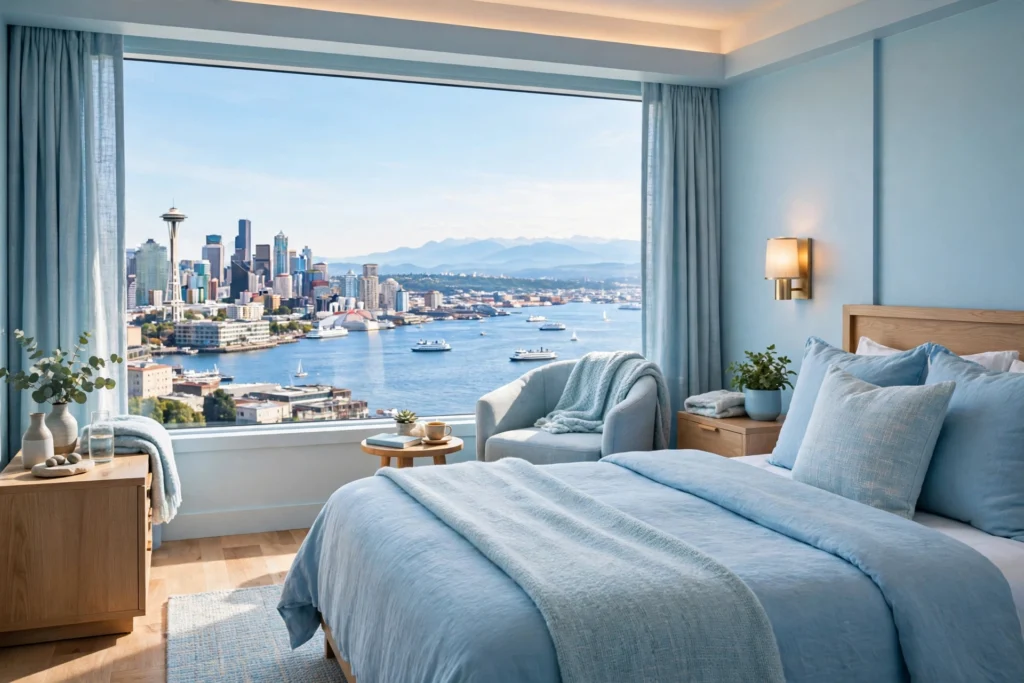
Where you stay in Seattle shapes your trip more than in most American cities, because the neighbourhoods are so different and the hills are so real. Downtown puts the market, the waterfront and the Link light rail to the airport on your doorstep, and it is the best choice for a first visit of two or three days. Belltown, just north of downtown, mixes high-rises with lively nightlife and a strong dining scene, and it is a short walk to the market and the Sculpture Park. Lower Queen Anne puts you closer to Seattle Center and the Space Needle, with quieter streets and a village feel, and it is the best choice for families.
Capitol Hill is the choice if you want nightlife, coffee culture and the city’s best restaurants within walking distance, and it is the most fun place to stay for a longer trip. Pioneer Square is the most atmospheric — historic brick buildings, art galleries and the city’s oldest streets — and it is a good value choice, though the streets around the stadiums can be noisy on game days. The University District is the budget choice, with cheaper hotels and hostels, student cafés and the light rail to downtown in about fifteen minutes, and it is the best base if you are visiting in spring for the cherry blossom.
Hotel prices in Seattle are high by American standards. Expect roughly $170–$380 a night for a mid-range downtown hotel in summer, with the top end of that range on weekends and during festival season. Prices fall sharply in winter, when the same rooms can cost half as much, and they fall further if you stay outside the centre — in the University District, in Tukwila near the airport, or across the water in West Seattle. Whatever you choose, check the transit access before you book: a hotel near a Link station or a frequent bus line is worth more than a slightly cheaper room that needs a car. And if you are comparing Seattle with other American city breaks, our best places to travel in Mexico guide shows how far the same budget stretches further south — useful context when you are deciding where your next trip goes.
What to Eat and Drink in Seattle

Seattle’s food scene is built on the water. Pacific salmon, Dungeness crab and oysters from Puget Sound are the city’s signature foods, and the best place to eat them is at the market or at an oyster bar in Ballard or Capitol Hill. The Walrus and the Carpenter in Ballard serves a constantly changing list of oysters from Western Washington in a small, bright room, and it is the oyster bar other oyster bars are measured against. Pike Place Chowder’s clam chowder has won national awards, and the queue at the market moves fast. For a proper sit-down seafood dinner, the waterfront restaurants at the piers serve the city’s best fish and chips and clam chowder with a view of the bay, and Ivar’s has been doing it since 1938.
Beyond seafood, Seattle has two dishes that are entirely its own. The first is Seattle-style teriyaki — grilled chicken over rice with a sweet-savoury glaze, served at small neighbourhood shops across the city, and a working lunch for generations of Seattleites. The second is the Seattle-style hot dog, topped with cream cheese and grilled onions, sold from carts late at night in Capitol Hill and outside the stadiums. Both are cheap, both are delicious, and both tell you more about the city than any fine-dining menu.
The Chinatown-International District is the city’s other great food neighbourhood: noodle houses, dim sum restaurants, Vietnamese bakeries and the Uwajimaya supermarket, where you can buy everything from fresh sashimi to Japanese snacks. Fremont and Ballard hold the city’s best breweries — Seattle has more breweries per person than almost any American city — and the taprooms are the best place to spend a rainy afternoon. And then there is coffee. Seattle is the birthplace of Starbucks, and the original storefront at Pike Place Market draws a queue every day, but the city’s coffee culture is much bigger than one company. Independent roasters like Espresso Vivace, founded in 1988, and the cafés of Capitol Hill take coffee as seriously as anywhere in the world, and a slow morning in a Capitol Hill café, watching the rain on the window, is one of the great Seattle experiences.
A practical note on tipping and service charges: many Seattle restaurants add a service charge to the bill, often around 20%, and when one is included, any extra tip is optional. Read the bill before you add a tip on top of a service charge, and know that the menu prices you see do not include sales tax, which is added at the till. For a longer look at how to plan food spending into a trip budget, our how to prepare a travel budget guide breaks down daily food costs by trip style.
How Much Does Seattle Cost: Budget and Planning Ranges
Seattle is one of the more expensive cities in the United States, and the honest answer is that a first trip will cost more than the same trip to most other American cities. The good news is that the city’s best experiences — the market, the parks, the ferries, the viewpoints — are free or cheap, and the expensive parts are the ones you can control: the hotel, the restaurant meals and the paid attractions. The table below gives planning ranges for a typical day, and the figures are deliberately given as ranges because prices change by season, by day of the week and by how far ahead you book.
Daily budget planning ranges
| Category | Budget traveller | Mid-range traveller | Comfortable traveller |
|---|---|---|---|
| Hotel / night | $90–$150 (hostel, U-District) | $170–$380 (downtown hotel) | $380+ (waterfront, boutique) |
| Food / day | $30–$50 (market, cafés, teriyaki) | $60–$100 (one sit-down meal) | $120+ (oyster bars, fine dining) |
| Transport / day | $6 (Link day pass) | $10–$20 (transit + ferry) | $40–$70 (rideshare, taxi) |
| Attractions / day | $0–$20 (parks, market, Locks) | $35–$60 (Needle or Chihuly) | $80+ (Needle + Chihuly + museums) |
| Total / day | $130–$230 | $280–$560 | $620+ |
A few ways to keep the cost down. Visit in the shoulder season — June or September — when hotel prices fall and the weather is still good. Stay near a Link station and use the $6 day pass instead of rideshares. Eat at the market: a chowder, a piroshky and a doughnut is a full lunch for under $20, and it is better than most restaurant meals. Do the free things properly — the market, the Locks, the Sculpture Park, Kerry Park at sunset, Gas Works Park, the ferry to Bainbridge — and save the paid attractions for the ones you really want. And if you are travelling with children, remember that riders aged 18 and under travel free on Link and the buses, and under-19s ride the ferries free as passengers, which takes a real bite out of a family transport budget.
The attraction prices that matter most, as planning ranges: the Space Needle is roughly $35–$55 for an adult by date and time, Chihuly Garden and Glass roughly $40–$45, the Museum of Flight roughly $29, the Sky View Observatory roughly $28, and the Great Wheel roughly $15–$20. Confirm each one for your date before you go, because the exact figure depends on the day and the time slot. For more on keeping a trip on budget without missing the good parts, see our guide on how to prepare a travel budget, and if you are still deciding where this trip sits in your year, our best places to travel in January guide covers the destinations where the same money goes furthest in winter.
Frequently Asked Questions
What is the best month to visit Seattle?
July and August are the driest and sunniest, with highs around 77–78°F and the mountain day trips at their most reliable. June and September are nearly as good and calmer, with fewer crowds and lower hotel prices. The rainy season runs from October to May, and the wettest months are November and December.
How many days do you need in Seattle?
Two days for the city itself, three or four with a ferry trip or a day at Mount Rainier, and a week to add Olympic National Park and the San Juan Islands. Three days is the comfortable answer for a first trip.
Do you need a car in Seattle?
Not in the city. The Link light rail runs from the airport to downtown and Capitol Hill, the buses cover the neighbourhoods, and the ferries reach the islands. Rent a car only for the national parks and the day trips outside the city.
How much does the Space Needle cost?
General admission is priced by date and time, roughly $35–$55 for an adult, with youth and senior discounts. Entry is timed, so book in advance, especially for sunset slots in summer. A combination ticket with Chihuly Garden and Glass saves money over buying the two separately.
Is the Bainbridge ferry really free on the way back?
Yes, for walk-on passengers. You pay the $11.35 adult fare when you board westbound at Colman Dock in Seattle, and the eastbound return from Bainbridge to Seattle is free. Riders aged 18 and under travel free, and seniors and passengers with disabilities pay $5.65. Vehicles pay in both directions.
Do I need a reservation for Mount Rainier in 2026?
No. The timed-entry programme was cancelled in February 2026, and entry is first come, first served. You still pay the $30 per vehicle entrance fee, and the Paradise parking lot fills by mid-morning on summer weekends, so leave Seattle by 7 am. Check the official NPS page before a 2027 trip, because the policy has changed every year recently.
Conclusion: Seattle Is a City You Visit Twice in One Trip
Seattle rewards the traveller who gives it time. The first visit is the market and the Needle and the waterfront, done properly and without rushing. The second visit — which for most people is the third and fourth day of the same trip — is the neighbourhoods, the parks, the ferry to Bainbridge and the mountain that hangs over the skyline on a clear morning. The city is expensive, the rain is real, and the hills will tire your legs, but the combination of saltwater, mountains, glass, coffee and salmon is unlike anywhere else in America. Go in June or September if you can, go early to the market, ride the ferry at least once, and leave Seattle by 7 am on the morning you drive to Mount Rainier. The city will still be there when you get back — and on a clear evening, from Kerry Park, with the Needle lit up and the mountain out, you will understand why people who visit once start planning the next trip before they have left. If this guide has helped you plan, our how to find travel inspiration guide has more ideas for turning a good trip into the next one, and the travel goal guide will help you set the next destination.
People also read:
- London Travel Guide — the same walkable-city approach, applied to the other great walking capital.
- Best Places to Travel in January — where to go when Seattle is at its wettest.
- Travel Itinerary Template — build your Seattle days into a plan that leaves room for the weather.
- How to Prepare a Travel Budget — keep a Seattle trip on budget without missing the good parts.
- Travel Bucket List — where a Pacific Northwest trip sits among the great American journeys.
- Venice Travel Guide — another waterfront city, built on water in a very different way.