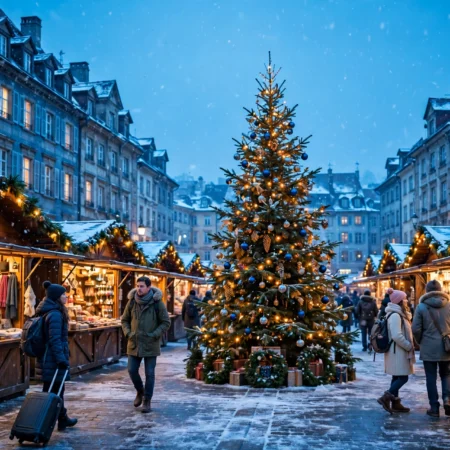
Christmas Travel: The Complete 2026 Guide to Markets, Snow and Warm Escapes
Quick Answer: How Should You Plan Christmas Travel in 2026?
Christmas is on Friday, 25 December 2026, and today is 18 November 2026 — you are in the peak planning window for Christmas travel, and the honest truth is that the next two weeks decide whether you get the trip you want or the trip that is left. The best Christmas markets are already open — Vienna’s Rathausplatz market opened on 13 November, Cologne’s cathedral market on 16 November — and the flights, hotels and glass igloos that sell out every year are selling out now. If you book in the next fortnight, you still have a real choice of dates, destinations and prices. If you wait until December, you will pay Christmas-week prices for whatever is left.
The short version of this guide: pick your mood first, then your dates, then your booking. If you want the classic Christmas, go to a European market city — Vienna, Prague, Nuremberg or Strasbourg — and go before Christmas Eve, because most German and French markets close on 24 December and do not reopen. If you want a white Christmas, go to Lapland, but do not let anyone promise you snow on 25 December — no destination can promise that, and this guide says so plainly. If you want sun, the warm escapes are Dubai, the Maldives, the Canary Islands and the Caribbean, and they charge their highest prices of the year at Christmas, so book early or pay for it. If you want the big-city spectacle, New York and London are built for it, but both need timed tickets and reservations booked in advance.
Every market date in this guide was checked against the organiser’s or the city’s official site on 18 November 2026, and the sources are named so you can check them again before you book. Costs are planning ranges, not live prices — Christmas-week prices move daily, and the only price that matters is the one on the day you book. Nothing here promises snow, and nothing here is copied from a competitor: the top three ranking guides for this keyword were reviewed before writing, their useful terms are used naturally, and the gaps they leave — what is actually open on Christmas Day, what the trip costs by when you book, and what to do with kids — are filled here in this guide’s own words.
When to Book Christmas Travel: The 2026 Planning Window

Christmas travel has a booking calendar of its own, and it does not behave like ordinary travel. The season starts in mid-November, when the first markets open, and it peaks in the week before Christmas, when flights and hotels in the popular cities hit their highest prices of the year. The mistake most people make is treating a Christmas trip like a summer holiday and booking it a few weeks out. By then the good rooms are gone, the direct flights are expensive, and the timed-entry slots for the big attractions — Winter Wonderland in London, the Rockettes in New York, the Santa Claus Office in Rovaniemi — are sold out or down to the awkward hours.
The calendar for 2026 is unusually tight. Christmas Day falls on a Friday, which means the Christmas week runs from Monday 21 December to Sunday 27 December, and the two weekends around it — 19–20 December and 26–27 December — are the busiest travel days of the year. Schools in the United States and much of Europe break up in the week before Christmas, so family travel surges from about 18 December. If you can travel in the first two weeks of December instead, you get the markets at full strength, the lights switched on, and noticeably lower prices and thinner crowds. The week of 7–13 December is the sweet spot for a European market trip: every major market is open, the tree lightings have happened, and the Christmas-week premium has not yet arrived.
That is also why this article is published in mid-November. The planning window is now. Vienna’s main market has been open since 13 November, Tivoli in Copenhagen since 13 November, Cologne since 16 November, and the Rockefeller tree arrives in New York on 7 November and is lit on 2 December. The dates in the market table later in this guide are the confirmed 2026 dates, checked against each organiser’s official site on 18 November 2026. Dates can still change — organisers do adjust hours — so check the official link for your market again in the week you travel. But the dates as they stand now are the dates to plan around, and the booking advice in this guide is built on them.
The booking order that actually works
Book in this order, and do not skip a step. First, the flight, because Christmas-week airfares rise fastest and fall least. Second, the hotel, because the well-located rooms near the markets go first and the remaining ones are either far out or expensive. Third, the timed tickets and shows — Winter Wonderland entry, the Rockettes, SantaPark in Rovaniemi, the ice rinks — because these have fixed capacities and fixed dates, and a sold-out show cannot be fixed with money. Fourth, the restaurants for Christmas Eve and Christmas Day, because in Europe many restaurants close or run a fixed festive menu that needs a reservation. Fifth, the small things: airport transfers, travel insurance, and the warm layers you will need if you are heading north.
One more timing point that catches people out: the return. Everyone wants to fly home on 26 or 27 December, so those are the most expensive return dates of the season. Flying home on Christmas Day itself, or on 28–29 December, is often substantially cheaper, and flying out on Christmas Day is cheaper still. If your dates are flexible by even a day or two, check the fares on both sides of the holiday before you commit.
What “book early” means in practice
For a Christmas trip in 2026, “early” means now — mid-November — for the popular destinations, and it meant September or October for the scarcest things. Lapland’s glass igloos and reindeer safaris, the top-rated hotels in Vienna’s first district and the centre of Prague, and the best seats at the Rockettes are the things that sell out months ahead, and by mid-November they are largely gone. That does not mean the trip is impossible. It means you should book what is available now, accept a slightly less central hotel or a weekday show, and stop waiting for a price drop that Christmas week does not offer. Christmas travel is the one season where waiting almost never pays.
Christmas Travel by Mood: Snow, Markets, Warm Escapes, Family and Budget
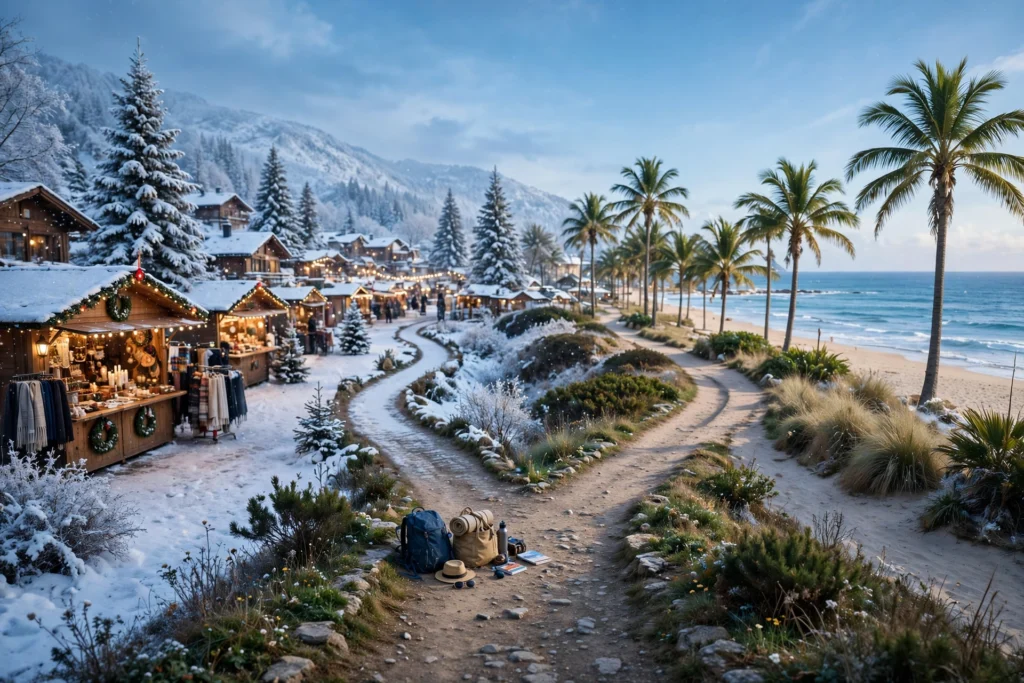
The biggest mistake in Christmas travel is choosing a destination before choosing a mood. “Where should I go for Christmas?” is the wrong first question. The right one is “What kind of Christmas do I want?” — because the same week in December delivers five completely different trips depending on the answer, and the wrong match is how people end up cold, bored, broke or all three.
There are five moods, and each one has a clear best destination, a clear worst fit, and a clear budget. This section maps them. The sections that follow go deep on each one, with verified dates, opening hours and costs.
The classic market Christmas
This is the postcard: wooden stalls, mulled wine, a giant tree in a medieval square, snow in the air and carols in the background. The best places are Vienna, Prague, Nuremberg, Strasbourg and Cologne — the cities whose markets are the reason the trip exists. This mood suits couples, friends and anyone who wants Christmas to feel like Christmas. It does not suit people who hate cold weather or crowds, because the markets are outdoors, in December, and the popular ones are packed on weekend evenings. Budget is mid-range: the markets themselves are free to enter, so the money goes on flights, hotels and food, not tickets.
The white Christmas
Snow, reindeer, the northern lights and Santa’s village on the Arctic Circle. The best place is Lapland — Rovaniemi in Finnish Lapland above all — followed by the Alps and the far north of Norway and Sweden. This mood suits families with young children and anyone for whom Christmas without snow feels wrong. It does not suit anyone on a tight budget, because Lapland at Christmas is one of the most expensive trips in Europe, and it does not suit anyone who expects guaranteed snow on a specific date — no destination can promise that, and Lapland’s own operators say so. The honest version is that Rovaniemi in late December is very likely to be snowy, because it is on the Arctic Circle in deep winter, but “very likely” is not a promise, and this guide does not make one.
The warm escape
Sunshine, a beach, and Christmas dinner in a T-shirt. The best places are Dubai, the Maldives, the Canary Islands and the Caribbean. This mood suits anyone who is done with winter, families who want a resort Christmas, and travellers who want to use the holiday week for a proper break rather than a festive performance. It does not suit anyone looking for a traditional Christmas atmosphere, because a warm escape deliberately skips it, and it does not suit a tight budget at Christmas itself — these are the highest-priced weeks of the year in every warm destination, and the cheapest warm Christmas is still an expensive one.
The big-city spectacle
Lights, shop windows, ice rinks, big shows and a tree the size of a building. The best places are New York and London, and they are in a class of their own for scale. This mood suits first-timers, families with older children, and anyone who wants a Christmas that feels like a film set. It does not suit anyone who wants quiet or cheap, because both cities are at their busiest and their priciest in December, and both need advance booking for almost everything worth doing.
The budget Christmas
A real Christmas trip that does not cost a fortune. The best places are the second-tier market cities — Budapest, Kraków, Tallinn, and the smaller German and Austrian towns — where the markets are just as good and the hotels cost half as much as Vienna or Prague. This mood suits anyone who wants the atmosphere without the premium, and it is the best answer to the question “where is the cheapest Christmas destination?” The trade-off is smaller scale and fewer famous sights, which is a fair exchange for the price.
How to choose
Pick one mood and commit to it. The trips that disappoint are the ones that try to do two moods at once — a warm escape with a market visit, or a white Christmas on a budget — because each mood has its own geography, its own booking window and its own costs, and mixing them means paying for both and getting neither. If you cannot decide, use the money as the tiebreaker: the budget Christmas in a second-tier market city gives you the most atmosphere per dollar, and the warm escape gives you the most comfort per dollar. The white Christmas gives you the most magic per dollar, but only if you book it early enough to get the rooms and the activities at a sane price.
The Best Christmas Markets in Europe in 2026: Dates, Hours and Christmas Day Opening
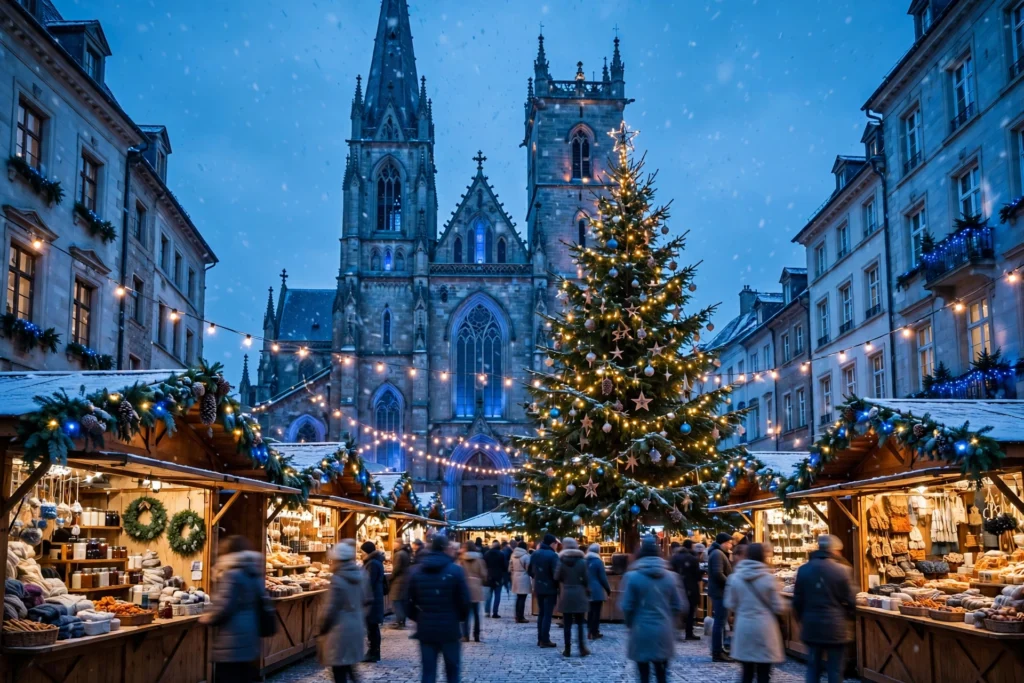
This is the table that matters most in this guide, and it is the one the competing guides get wrong most often: not the opening dates, which most of them list correctly, but what is actually open on Christmas Day. The pattern is simple and it surprises almost everyone: most of the famous German and French markets close on Christmas Eve and do not reopen, while the markets in Prague, Vienna and Copenhagen stay open through Christmas and into January. If your trip is planned for 25 December itself, that difference decides the whole itinerary.
Every date in this table was checked against the organiser’s or the city’s official site on 18 November 2026. The sources are named in the text below the table so you can re-check them. Hours can change, and a market’s closing date is not the same as its Christmas Day hours, so read the “Christmas Day” column before you book anything around 25 December.
| Market | 2026 dates | Christmas Day (25 Dec) | Hours (typical) | Entry |
|---|---|---|---|---|
| Vienna — Wiener Christkindlmarkt, Rathausplatz | 13 Nov – 26 Dec | Open — stalls run daily to 26 Dec | 10:00–22:00; 24 Dec to 18:30 | Free |
| Prague — Old Town Square & Wenceslas Square | 28 Nov – 6 Jan 2027 | Open — daily to 6 Jan | 10:00–22:00 | Free |
| Nuremberg — Christkindlesmarkt, Hauptmarkt | 27 Nov – 24 Dec | Closed — last day 24 Dec, closes 14:00 | 10:00–21:00; 24 Dec 10:00–14:00 | Free |
| Strasbourg — Christkindelsmärik, Grande Île | 27 Nov – 24 Dec | Closed — last day 24 Dec, closes 18:00 | 11:00–21:00; 24 Dec 11:00–18:00 | Free |
| Cologne — Cathedral market, Roncalliplatz | 16 Nov – 23 Dec | Closed — last day 23 Dec | 11:00–21:00 (Sat to 22:00); closed 22 Nov | Free |
| Copenhagen — Christmas in Tivoli | 13 Nov – 3 Jan 2027 | Open — 11:00–23:00 on 25 Dec | Varies by day; closed 24 Dec | Ticketed |
| London — Hyde Park Winter Wonderland | 19 Nov – 3 Jan 2027 | Closed on Christmas Day | 10:00–22:00; last entry 21:30 | Timed ticket |
| Rovaniemi — Santa Claus Village | Open all year | Open — Santa’s office 08:00–20:00 | Village free; Santa’s office free | Free |
| Leavenworth — Village of Lights: Christmastown | 27 Nov – 24 Dec | Lights on; festival events ended 24 Dec | Lights 06:00–23:00 daily to end Feb | Free |
| New York — Rockefeller Center tree | Lit 2 Dec – mid-Jan 2027 | Lit for 24 hours on Christmas Day | Tree on view all day | Free |
Vienna: the market that stays open longest
Vienna’s Wiener Christkindlmarkt on Rathausplatz, in front of the City Hall, runs from 13 November to 26 December 2026, daily from 10:00 to 22:00, closing at 18:30 on Christmas Eve. That makes it one of the best choices for a trip that actually includes Christmas Day, because the stalls are still there on 25 December. The ice rink on the same square runs even longer, to 6 January 2027, closed on 31 December. Vienna has about fifteen Christmas markets in total; the other big ones — Schönbrunn, which runs to 6 January, and Belvedere, which runs to 31 December — also stay open past Christmas, while Spittelberg, Am Hof and Karlsplatz close on 23 December. The dates and hours are published by the market itself at christkindlmarkt.at and by the Vienna Tourist Board. If you want the full Vienna market experience and you are travelling over Christmas itself, base yourself on Rathausplatz or Schönbrunn, not on a market that closes on 23 December.
Prague: the best Christmas Day market in Europe
Prague’s two main markets, on Old Town Square and Wenceslas Square, run from 28 November 2026 to 6 January 2027, daily from 10:00 to 22:00, and they are open on Christmas Day. That is the longest run of any major market in this table, and it is the reason Prague is the best answer to the question “where can I go to a Christmas market on Christmas Day?” The markets are run by the same operator, Taiko, and the dates are published on the organiser’s site at trhypraha.cz and by Prague City Tourism. The Old Town Square tree is lit on the opening day, 28 November. The smaller neighbourhood markets in Prague have different dates and often close earlier, so if you are planning around a specific market, check its own dates rather than assuming it follows the big two.
Nuremberg and Strasbourg: go before Christmas Eve
Nuremberg’s Christkindlesmarkt on the Hauptmarkt runs from 27 November to 24 December 2026, open daily from 10:00 to 21:00, with the opening ceremony — the Christkind reading the prologue from the Frauenkirche balcony — on 27 November at 17:30, and the stalls closing at 14:00 on Christmas Eve. It does not reopen. The dates are published by the market itself at christkindlesmarkt.de. Strasbourg’s Christkindelsmärik, the oldest Christmas market in France, dating to 1570, runs from 27 November to 24 December 2026 across eight sites in the Grande Île, open daily from 11:00 to 21:00, opening at 14:00 on the first day and closing at 18:00 on 24 December. It does not reopen either. The dates are published by the city on noel.strasbourg.eu. Both cities are superb Christmas trips — Nuremberg for tradition, Strasbourg for scale and beauty — but both are trips for the weeks before Christmas, not for Christmas Day itself. Arrive by 23 December at the latest, and plan Christmas Day itself around the city rather than the market: the cathedral, a walk through the old town, and a restaurant booked in advance.
Cologne: the earliest opener, and the Totensonntag trap
Cologne’s cathedral market on Roncalliplatz runs from 16 November to 23 December 2026, which makes it the earliest-opening major market in Germany, and it is the best choice for a November market trip. Two things catch visitors out. First, it closes on Sunday 22 November for Totensonntag, the German day of remembrance — a quiet Sunday when the market and several others in the city are closed. Second, it closes for good on 23 December, so a Christmas Day trip to Cologne finds the stalls gone. The dates and the Totensonntag closure are published by the market at koelnerweihnachtsmarkt.com. Cologne has several other markets within walking distance, including the Market of Angels on Neumarkt, which follows the same dates, so the city still works as a market trip — just not on Christmas Day.
Copenhagen and London: one open, one closed
Christmas in Tivoli, Copenhagen’s Christmas season inside the Tivoli Gardens amusement park, runs from 13 November 2026 to 3 January 2027, and it is open on Christmas Day — the visitor service lists 11:00–23:00 on 25 and 26 December — but closed on Christmas Eve, 24 December. Entry is ticketed and priced by the day, so check the price for your date on tivoli.dk before you go. Hyde Park Winter Wonderland in London is the opposite: it runs from 19 November 2026 to 3 January 2027, every day except Christmas Day, when it is closed. Entry is by pre-booked timed ticket, and the site closes at 22:00 with last entry at 21:30. The dates and the Christmas Day closure are published by the organiser at hydeparkwinterwonderland.com. London still has plenty to do on Christmas Day — the lights on Oxford Street and Regent Street, a walk through the parks, a Christmas Day lunch booked in advance — but Winter Wonderland is not one of them.
The rule behind the table
The pattern is geographic and cultural. In Germany and France, Christmas Eve is the main family evening and the markets close so the stallholders can go home; in the Czech Republic, Austria and Denmark, the markets are treated as part of the holiday itself and stay open. Knowing that rule is more useful than memorising the table, because it tells you what to expect in any market city that is not listed here: in Germany, assume it closes on 24 December unless the organiser says otherwise; in central and northern Europe, check the specific market, because the answer varies.
Lapland and Rovaniemi: The White Christmas Trip
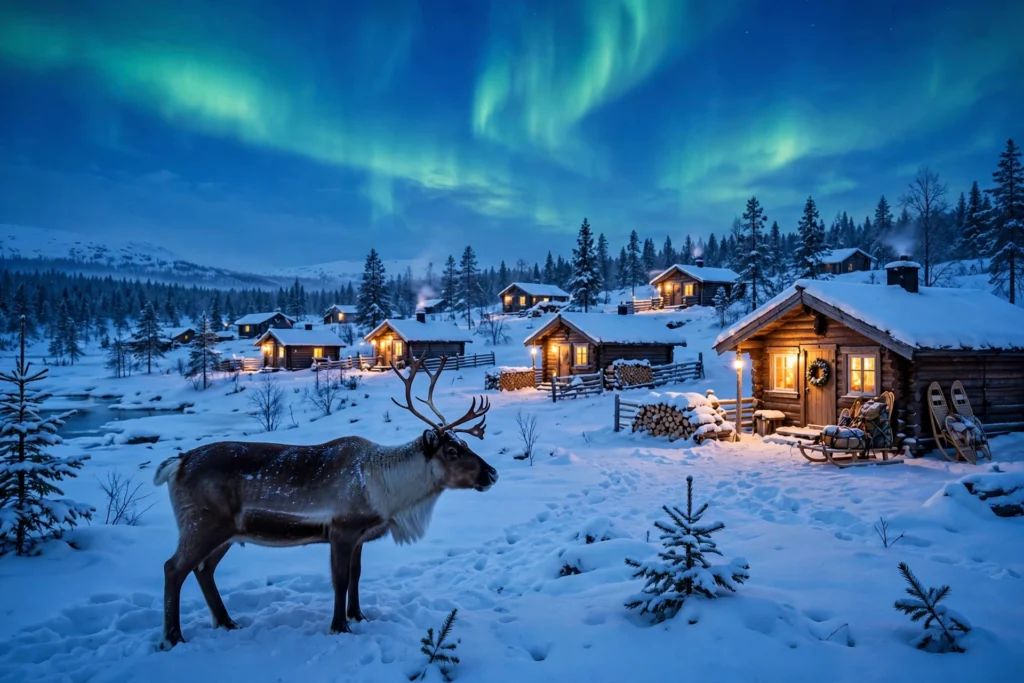
If the phrase “white Christmas” means one place, it means Lapland, and if it means one town, it means Rovaniemi, the capital of Finnish Lapland, sitting on the Arctic Circle about eight kilometres north of its own city centre. This is the trip the competing guides rank first for mood, and they are right to: Santa Claus Village, reindeer and husky safaris, the northern lights, and a landscape that is snow-covered from November to April. It is also the trip that needs the most honest framing in this guide, because it is the most expensive, the most booked-up, and the one where the gap between the brochure and the reality is widest.
Start with the snow. Rovaniemi in late December is very likely to be snowy — it is on the Arctic Circle in deep winter, with typical December daytime highs around minus five degrees and nights around minus eleven — but no destination can promise snow on 25 December, and this guide does not. A warm spell, a late snowfall, or a thin year can all change the picture, and the operators in Lapland say so themselves. What Rovaniemi can promise is the setting: snow on the ground for the season as a whole, darkness by mid-afternoon, and the northern lights on a clear night. Book the trip for the whole experience, not for a guarantee about one morning.
Santa Claus Village: what is open, and when
Santa Claus Village is open every day of the year, and entry to the village itself is free. Meeting Santa at Santa Claus Office is also free. The office keeps its Christmas hours — 08:00 to 20:00 every day — from 30 November 2026 to 3 January 2027, including Christmas Eve and Christmas Day, with shorter hours in the fortnight before. The village’s own site is santaclausvillage.info. Two practical points matter more than the hours. First, December is the busiest month of the year and the queue for Santa can run to about an hour in high season, so go at the 08:00 opening, when the tour coaches have not yet arrived. Second, meeting Santa is free but the photograph is not — you cannot use your own camera in Santa’s room, and the official photo packages are a separate purchase, so budget for that before you promise the children a picture.
The rest of the village follows its own hours. Santa’s Main Post Office, where you can send cards with the Arctic Circle postmark, is open 09:00 to 20:00 from 1 December 2026 to 6 January 2027. SantaPark, the indoor Christmas theme park, runs from 31 October 2026 to 23 January 2027, daily from 09:00 to 18:00 in the Christmas period. Christmas House, a second place to meet Santa, keeps late hours over the holiday itself — 08:00 to 22:00 on 24 and 25 December. Individual shops and restaurants in the village set their own hours and some close early or not at all on 24 and 25 December, so check the village’s opening-hours page for the specific place you want. On 23 December, Santa sets off on his journey around the world from the village — a small ceremony that is worth catching if you are there that day.
The northern lights, the cold, and the daylight
The northern lights season in Lapland runs roughly from September to April, and December is in the middle of it. The long darkness helps — in late December Rovaniemi gets only a few hours of twilight around midday, with the sun barely rising above the horizon — but darkness is not enough on its own. You need clear skies and solar activity, and neither can be booked. The honest advice is the same as in our Iceland guides: check the aurora forecast, get away from the town lights, dress for standing outside in minus ten degrees, and treat a sighting as a bonus rather than a promise. The Iceland travel itinerary on this site covers the same northern-lights planning habits — forecasts, dark-sky spots, and dressing for the cold — and the Iceland solo travel guide covers the winter driving and weather checks that apply just as much in Lapland.
The cold is the other thing to plan for properly. A December day in Rovaniemi at minus five to minus eleven degrees is cold enough that the wrong clothing ruins the day, and the wind makes it feel colder. The packing table later in this guide lists what to bring, but the short version is thermal base layers, an insulated and windproof outer layer, insulated boots with grip, a hat, gloves and a neck warmer — and no cotton next to the skin, because cotton stays wet and wet means cold. Most hotels and activity operators lend or rent proper winter clothing for safaris, so ask when you book rather than buying a full Arctic wardrobe for one trip.
What it costs, and what sells out
Lapland at Christmas is expensive, and the price is driven by scarcity rather than luxury. The glass igloos, the reindeer safaris, the husky safaris and the Santa meetings are all capacity-limited, and they sell out months ahead — the competing guides warn about this explicitly, and it is true. By mid-November, the best-known glass igloos and the Christmas-week safari slots are largely gone, and what remains is priced at Christmas-week rates. A realistic planning range for a three-night Rovaniemi trip for two in Christmas week, excluding international flights, is roughly $2,500–$4,500, with the hotel and the activities doing most of the damage. The cost table later in this guide breaks this down by booking timing. If that range is out of reach, the cheaper version of the same trip is to go in early December or in January, when the snow and the lights are still there and the prices fall sharply — or to base yourself in Rovaniemi town rather than in a glass igloo, and spend the saving on the safaris instead.
New York at Christmas: Rockefeller, the Rockettes and Fifth Avenue
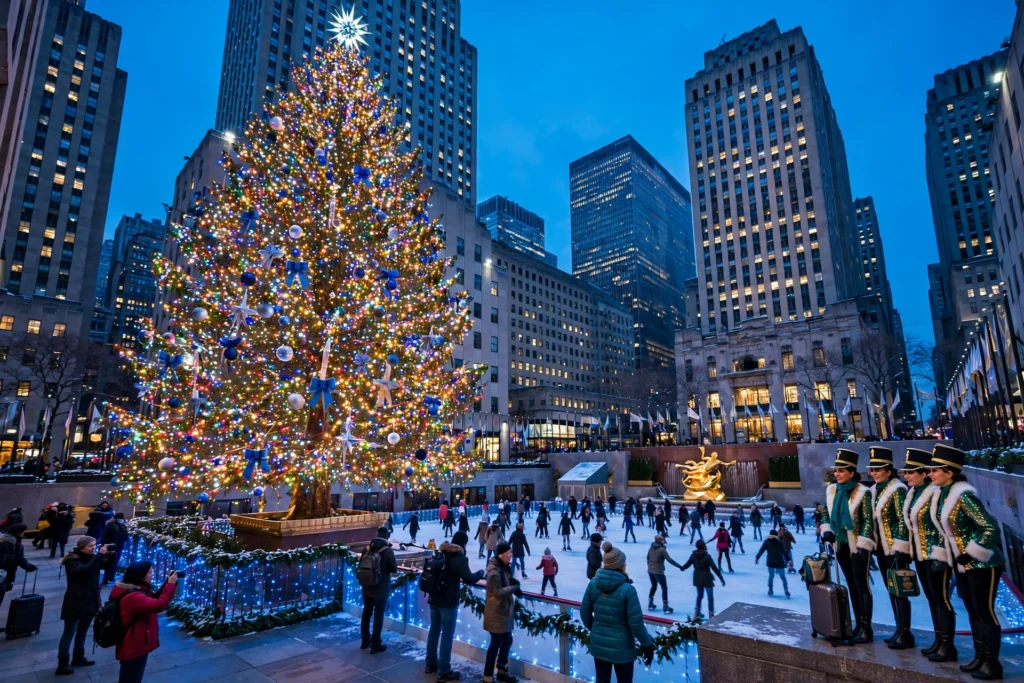
New York does Christmas at a scale no other city matches, and the 2026 season is a big one: the 100th Macy’s Thanksgiving Day Parade on Thursday 26 November, the Rockefeller tree lighting on Wednesday 2 December, and the Radio City Christmas Spectacular running 230 performances from 4 November 2026 to 4 January 2027 — the most the show has ever scheduled. If you want the big-city Christmas, this is it, and the planning is mostly about dates and tickets, because everything worth doing has a fixed capacity and a fixed date.
The Rockefeller Center Christmas tree
The 2026 tree is a 76-foot Norway spruce from West Edmeston, New York, roughly 75 years old. It arrived on the plaza on Saturday 7 November for Meet the Tree Day, and it will be illuminated on Wednesday 2 December during the tree lighting ceremony, broadcast live on NBC as Christmas in Rockefeller Center. The tree stays on view through mid-January 2027, and it is lit throughout the holiday season, including Christmas Eve and for 24 hours on Christmas Day. The ceremony itself is not open to the public and there are no public tickets, so plan to watch it on television and visit the tree itself on another day. The Rink, the Holiday Chalets and the 90th Anniversary Lodges are closed on 1 and 2 December for the lighting, so do not plan a skating visit for those two days. The details are published by Rockefeller Center itself at rockefellercenter.com. Between 7 November and 2 December the tree is standing but unlit, so if you want the lit tree in your photographs, arrive on or after 2 December.
The Rockettes and the rest of the season
The Radio City Christmas Spectacular, starring the Radio City Rockettes, runs from 4 November 2026 to 4 January 2027 at Radio City Music Hall, with 230 performances. Tickets start at $50 bought in person at the box office and $55 online, and the show runs about 90 minutes with no intermission. The dates and the starting prices come from MSG Entertainment’s announcements of July and September 2026, and tickets are sold through the official site at rockettes.com. Book through the official channel, not a resale site, and check the date and the showtime on your ticket carefully — there are as many as four shows a day in Thanksgiving week, and the wrong performance is an easy mistake to make.
Around those two anchors, the rest of the New York Christmas fills in: the Fifth Avenue holiday windows, the Bryant Park Winter Village with its ice rink and holiday shops, the Wollman Rink in Central Park, the Dyker Heights lights in Brooklyn, and the Macy’s Thanksgiving Day Parade on 26 November, which is the 100th parade and will be the busiest day of the season to be in Midtown. The parade is free to watch from the street, but the viewing spots fill early and the streets around the route close, so arrive early or watch from further along the route. Our Seattle travel guide covers the same kind of big-city winter planning — layers, walking distances and booking ahead — for a quieter American city, if New York’s scale puts you off.
The practical side of New York at Christmas
New York in December is cold but not Arctic: typical December daytime highs are around seven degrees, with nights near freezing, so a proper coat, gloves and warm shoes matter, but you do not need Arctic gear. The bigger practical issue is crowds. Midtown in the week before Christmas is the most crowded place in America, and the area around Rockefeller Center is managed with barriers and one-way pedestrian flows in the peak days. Go early in the morning or late in the evening for the tree, use the subway rather than a taxi in Midtown, and book restaurants in advance — the good ones near the Rockefeller area are booked out for Christmas week by November. Christmas Day itself in New York is quieter than the days around it: many shops close, the streets empty, and the tree, the ice rinks and Central Park are the places that are actually open and worth doing.
London at Christmas: Winter Wonderland, Lights and Markets
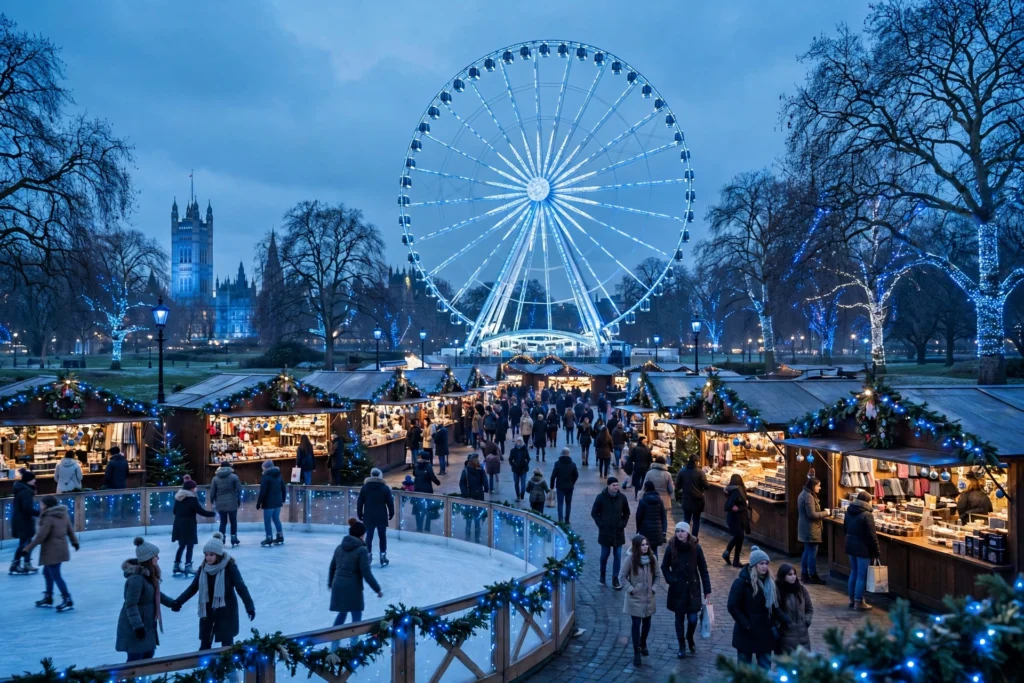
London’s Christmas is built around three things: the lights, the markets, and Hyde Park Winter Wonderland. It is the easiest big-city Christmas for a first-timer, because everything is walkable or a short Tube ride apart, and it is the best choice if you want the spectacle without the transatlantic flight to New York. It is also the Christmas that most often disappoints people who do not book ahead, because Winter Wonderland is ticketed, the good restaurants are booked, and the city is at its busiest in the two weeks before Christmas.
Hyde Park Winter Wonderland
Winter Wonderland runs from Thursday 19 November 2026 to Sunday 3 January 2027, every day except Christmas Day, when it is closed. The site is open until 22:00 most days with last entry at 21:30, though opening times vary by day — several November weekdays open at noon rather than 10:00, and 1 December is closed to the public until 14:00. Entry is by pre-booked timed ticket, with off-peak slots from £1 and peak slots at £8.25, and the rides, shows and the ice rink cost extra on top. The dates, the Christmas Day closure and the ticket tiers are published by the organiser at hydeparkwinterwonderland.com. Book the entry ticket before you book anything else in London, because the peak weekend slots in December sell out first, and an unbooked visit means queuing at the gate for a slot that may not exist. The final day, 3 January, is billed as a Family Fun Day.
The lights, the markets and the rest
The Oxford Street and Regent Street lights are free and on view all day, and they are best seen after dark, when the crowds thin a little and the lights do the work. The Christmas markets are smaller than the European ones but worth an afternoon each: Southbank’s Winter Market along the Thames, the Leicester Square market, and the Greenwich market are the best of them, and they are free to enter. The ice rinks — Somerset House is the prettiest, the Natural History Museum’s is the most famous — need advance booking in December. The London travel guide on this site covers the city’s neighbourhoods, transport and where to stay in detail, and it is the companion to this section if you are planning a first London trip.
Christmas Day in London is the quietest day of the year: there is no public transport at all, most shops and restaurants are closed, and the city belongs to walkers. That is a feature, not a problem, if you plan for it: book a Christmas Day lunch well in advance, or plan a walk through the parks and along the river, and stay somewhere central so you can walk everywhere. Boxing Day, 26 December, brings the sales and the crowds back, and the transport runs again. If you are travelling over Christmas itself, the day to be in London is 24 December or 26 December, not the 25th — unless the quiet is exactly what you want.
Warm Christmas Escapes: Dubai, the Maldives, the Canary Islands and the Caribbean

Not everyone wants a cold Christmas, and the warm escape is the fastest-growing kind of Christmas travel: a week of sunshine booked over the holiday break, with Christmas dinner in a T-shirt and no coat in sight. The four warm destinations in this section are the ones the competing guides name most often, and they are genuinely different trips, so the choice matters. The one thing they share is price: Christmas week is the most expensive week of the year in every one of them, and the cheapest warm Christmas is still an expensive holiday.
Dubai: the warm city Christmas
Dubai in December is the easiest warm Christmas for a first-timer. Typical December daytime highs are around 26 degrees, with evenings cool enough for a light layer, and the city is built for visitors: the malls run Christmas displays, the hotels run festive dinners, and the beaches are warm enough to swim. It is a city Christmas with sunshine rather than a beach holiday, which suits people who want warm weather and things to do in the same trip. The trade-off is that it does not feel like Christmas in the traditional sense — the decorations are in the malls and the hotels, not in the streets — and the Christmas-week hotel prices are the highest of the year. Book the hotel before the flight, because the well-located rooms go first, and check whether your hotel’s Christmas dinner is included or a separate booking, because in Dubai it is usually separate and it is usually expensive.
The Maldives: the warm escape at its most expensive
The Maldives in December is the warmest destination in this guide, with typical daytime highs around 30 degrees, and it is also the most expensive. December is the start of the dry season, which is why the prices peak, but it is also the wettest edge of that season — the competing guides note around 212 millimetres of rain across roughly twelve days in December, so expect short, sharp showers even in the dry season, and do not plan a trip that depends on twelve consecutive sunny days. The Maldives suits a honeymoon, an anniversary, or a traveller who wants a resort and nothing else; it does not suit a budget, a family with small children who need things to do, or anyone who wants to explore beyond the resort, because the resort is the destination. Transfers matter: seaplane and speedboat transfers run on fixed schedules and cost extra, so confirm them before you book the room, not after.
The Canary Islands: the cheapest warm Christmas in Europe
The Canary Islands are the best-value warm Christmas in this guide, and the easiest from Europe. Lanzarote averages around 21 degrees in December, the other islands are similar, and the flight from northern Europe is four to five hours. The islands suit families and anyone who wants sun without a long-haul flight, and they are the only warm destination in this section where a self-catering apartment and a hire car keep the cost down. The trade-off is that the islands are not tropical — 21 degrees is warm enough for a T-shirt at midday and a jumper in the evening, not for all-day swimming — and Christmas itself is a quiet, local holiday on the islands, so the festive atmosphere is Spanish and low-key rather than the full Christmas performance of a resort. If you want sun and a Christmas atmosphere together, the Canaries are the compromise; if you want guaranteed heat, they are not.
The Caribbean: the classic warm Christmas
The Caribbean in December is the classic American warm Christmas: warm seas, reliable sunshine, and resorts that run full Christmas programmes. Typical December daytime highs are around 28 degrees, and December is the start of the dry season in most of the eastern Caribbean, which is why the prices peak. The Caribbean suits families who want a resort with activities, and couples who want a beach Christmas with the festive trimmings included. The trade-off is price and distance: from the United States the flights are short and the resorts are expensive; from Europe the flights are long and the resorts are still expensive. The cheapest Caribbean Christmas is a cruise, which is worth pricing against a resort stay before you decide — a Christmas-week cruise often costs less per day than a resort of the same standard, and it includes the food and the entertainment. The best places to travel in January on this site covers the same warm destinations a month later, when the prices fall sharply, if your dates are flexible enough to travel after Christmas instead of over it.
Christmas in the US: Leavenworth, Chicago, Orlando and the Small Towns
New York gets the headlines, but the best American Christmas trips are often the smaller ones, and the United States has a Christmas town for every taste. This section covers the four that are worth the trip in 2026: Leavenworth, the Bavarian village in Washington State; Chicago, the big-city alternative to New York; Orlando, the warm family Christmas; and the small-town Christmases that do the season better than the cities.
Leavenworth, Washington: the Village of Lights
Leavenworth is a Bavarian-themed mountain town in the Cascades, about two hours east of Seattle, and its Village of Lights: Christmastown is one of the best Christmas events in the United States. The 2026 Christmastown programme runs from Friday 27 November to Thursday 24 December, with Santa, carolers, live music at the gazebo and ticketed shows at the Festhalle, and more than half a million lights on the buildings downtown. The lights themselves are on daily from 06:00 to 23:00 from Thanksgiving through the end of February, so the town still glows after the programme ends on Christmas Eve. The dates are published by the Leavenworth Chamber of Commerce at leavenworth.org. There is no lighting ceremony to time a trip around — the lights simply come on — which means any day in the season works, and the quietest days are the midweek ones. Two practical points: Leavenworth is a mountain town in December, so check the pass conditions on the drive from Seattle before you set out, and book the hotel early, because the town is small and the Christmas weekends sell out. The Seattle travel guide on this site covers the drive, the city, and where to base yourself if you combine the two.
Chicago: the big-city Christmas without the New York crowds
Chicago’s Christmas is the best-kept secret among American big-city Christmases. The Christkindlmarket in Daley Plaza is the largest open-air Christmas market in the United States, modelled on Nuremberg’s, and it runs through Christmas Eve. The city lights the official tree in Millennium Park, the ice rink opens in the same park, and the Magnificent Mile lights festival runs through the season. Chicago is colder than New York — typical December daytime highs are around two degrees, with wind off the lake that makes it feel colder — so dress for it, and plan indoor breaks between the outdoor markets. The advantage over New York is space and price: the crowds are thinner, the hotels are cheaper, and you can actually walk around the market without a barrier system. If you want a big-city Christmas and you do not want to fight for it, Chicago is the better choice.
Orlando: the warm family Christmas
Orlando is the warm family Christmas, and it is the busiest theme-park week of the year. The parks run their full Christmas programmes — the parks are decorated, the shows are seasonal, and the fireworks are bigger — and the weather is mild, with typical December daytime highs around 24 degrees. The trade-off is crowds and price: Christmas week is the most expensive week of the year at the parks and the hotels, and the queues for the popular rides are the longest of the year. The way to do Orlando at Christmas is to book the park tickets and the dining reservations as early as possible, arrive at the parks at opening, and plan the days around the shows rather than the rides. A villa or apartment outside the parks is often better value than a hotel room for a family, and it gives you a kitchen for Christmas Day itself, when the parks are at their busiest.
The small towns
The small-town Christmas is the most underrated kind in the United States, and it is the one the competing guides barely cover. Bethlehem, Pennsylvania, calls itself Christmas City and runs its Christkindlmarkt through the season. Woodstock, Vermont, does a Wassail Weekend with horse-drawn carriages and carolers. McAdenville, North Carolina, is Christmas Town USA, with the whole town lit up. These trips are cheap, quiet and genuinely festive, and they suit anyone who wants the atmosphere without the crowds or the price of a big city. The trade-off is scale: a small town gives you a day or a weekend, not a week, so pair it with a nearby city or a drive through the region rather than booking a whole holiday around it.
What Is Actually Open on Christmas Day?
Christmas Day is the day most Christmas trips get wrong, because the answer to “what is open?” is different in every country, every city and every type of place. The market table in this guide already covers the markets; this section covers everything else, because the market is only one part of the day.
The pattern by country
In the United States, Christmas Day is a public holiday and most shops, museums and restaurants are closed, but the big tourist attractions that are built for visitors — the Rockefeller tree, the ice rinks, the parks, the theme parks in Orlando — are open, and the cities are quieter than on any other day of the year. In the United Kingdom, Christmas Day is the quietest day of the year: there is no public transport in London, most shops and restaurants are closed, and the day belongs to walkers, parks and pre-booked Christmas lunches. In Germany and France, Christmas Eve is the main family evening, Christmas Day is a quiet family day, and the markets are closed — but the cathedrals, the old towns and the restaurants that choose to open are there for visitors who planned ahead. In the Czech Republic, Austria and Denmark, the markets stay open and the cities feel more alive on Christmas Day than in Germany or France. In Finland, Christmas Eve is the main day, many shops and some museums close early on 24 December or do not open at all, and 25 and 26 December are public holidays — but in Rovaniemi the tourist businesses mostly stay open, because December is their busiest month.
What is usually open on 25 December
The things that are usually open on Christmas Day, in most of the destinations in this guide, are: the big outdoor sights — the Rockefeller tree, the London lights, the parks, the squares; the ice rinks that are built for the season; the hotels and their restaurants, which serve Christmas lunch and dinner to guests and to anyone who booked; the churches and cathedrals, which hold Christmas services; and, in the market cities that stay open, the markets themselves. The things that are usually closed are: the shops, the supermarkets, the museums that are not built for tourists, the public transport in London, and the markets in Germany and France. The things that are sometimes open and sometimes not — and that you must check individually — are the restaurants outside hotels, the smaller museums, and the activity operators in Lapland, which mostly stay open but on shortened hours.
How to plan Christmas Day itself
Plan Christmas Day as a day, not as an afterthought. Decide in advance what you will do from morning to evening, and book the parts that need booking: the Christmas lunch or dinner, the ice rink session, the show, the activity. Do not assume you can walk in anywhere on Christmas Day, because the places that are open are the places everyone else is going to, and the places that are not open will not open for you. If you are in a city where everything closes, plan a walk — the parks, the river, the lights — and a meal you have already booked. If you are in a city where the market stays open, go to the market in the morning, when it is quieter, and eat early, because the restaurants fill up by the afternoon. And if you are in Lapland, go to Santa’s office at opening time, because the queue only gets longer, and the daylight is short.
How Much Does Christmas Travel Cost? A Booking-Timing Cost Table

Christmas travel costs more than the same trip in any other month, and the price rises the later you book. The table below is built from that pattern, not from live prices: the figures are planning ranges for a four-night trip for two people, including flights from the United States or northern Europe as applicable and a mid-range hotel, but excluding food, activities and spending money. They are labelled as ranges because Christmas-week prices move daily and the only price that matters is the one on the day you book. Use them to compare destinations and booking windows, not as a quote.
| Trip (4 nights, 2 people, flights + hotel) | Booked by Sep 2026 | Booked in Oct 2026 | Booked in Nov 2026 | Booked in Dec 2026 |
|---|---|---|---|---|
| Vienna or Prague market trip | $1,400–$2,000 | $1,700–$2,400 | $2,100–$3,000 | $2,600–$3,800 |
| Nuremberg or Strasbourg market trip | $1,300–$1,900 | $1,600–$2,300 | $2,000–$2,800 | $2,500–$3,600 |
| Rovaniemi / Lapland (3 nights) | $2,500–$3,500 | $3,000–$4,200 | $3,500–$5,000 | $4,000–$6,000+ |
| New York at Christmas | $2,200–$3,000 | $2,600–$3,600 | $3,000–$4,200 | $3,600–$5,000 |
| London at Christmas | $1,800–$2,600 | $2,200–$3,000 | $2,600–$3,600 | $3,000–$4,400 |
| Dubai, 4 nights | $2,000–$2,800 | $2,400–$3,200 | $2,800–$3,800 | $3,400–$4,600 |
| Maldives, 4 nights (resort) | $3,500–$5,000 | $4,000–$5,800 | $4,800–$6,800 | $5,500–$8,000+ |
| Canary Islands, 4 nights | $1,200–$1,800 | $1,400–$2,000 | $1,700–$2,400 | $2,000–$2,800 |
| Leavenworth + Seattle, 4 nights | $1,600–$2,200 | $1,900–$2,600 | $2,200–$3,000 | $2,600–$3,600 |
What the table is really telling you
Three things. First, the booking window is worth more than the destination: a Vienna trip booked in September costs less than a Canary Islands trip booked in December, even though Vienna is the more expensive destination in absolute terms. Second, the premium is steepest where the capacity is scarcest: Lapland and the Maldives rise fastest, because there are only so many glass igloos and only so many resort rooms, and Christmas week fills them all. Third, the cheapest Christmas trips are the ones with the most supply: the Canary Islands, the second-tier market cities, and the small towns, where there are still rooms and flights to be had in November.
How to bring the cost down without ruining the trip
The cheapest lever is the dates. Travelling in the first two weeks of December instead of Christmas week cuts the hotel and flight cost by a third or more on most of these trips, and the markets, lights and trees are already up. The second lever is the day of the week: flying out on Christmas Day itself, or flying home on 28 or 29 December instead of 26 or 27 December, is often substantially cheaper. The third lever is the base: staying a short train ride outside the centre in Vienna or Prague, or in a self-catering apartment in the Canaries, saves more than downgrading the hotel in the centre. The fourth lever is the activities: the markets are free, the lights are free, the tree is free, and the parks are free, so a Christmas trip built around the free things costs far less than one built around ticketed shows and safaris. Our guide to how to prepare a travel budget covers the same cost-planning habits in detail, and the travel apps guide covers the fare-tracking and price-alert apps that are worth setting up now, while there is still time for a price drop to help you.
Travelling With Kids at Christmas: What Works and What Does Not
Christmas is the best family trip of the year and the hardest family trip of the year, often on the same day. Children love it more than any other holiday, and they also get cold, tired and overwhelmed faster than any other holiday. The difference between a family Christmas trip that works and one that does not is almost entirely about pacing, warmth and expectations — not about the destination.
What works
Lapland works for children, and it works best of all the destinations in this guide, because the whole trip is built for them: Santa, reindeer, huskies, snow, and a village that is designed to be walked through slowly. It works best for children aged about four to ten, who are old enough to remember it and young enough to believe in it, and it works worst for babies and toddlers, who cannot do the safaris, cannot stay warm long enough, and will not remember it. The best places to travel with a baby on this site covers the baby end of that range in detail, and the places to travel with kids guide covers the older end. London works for children because Winter Wonderland, the ice rinks and the lights are all built for families, and the city is easy to get around. New York works for older children, who can handle the crowds and the walking, and the Rockettes are the best family show in this guide. The warm escapes work for children of any age, because the weather does the work — a child who is warm and swimming is a happy child, and a child who is cold and queuing is not.
What does not work
The European markets do not work well for very young children in the evening, because the markets are crowded, dark, cold and full of breakable things at knee height, and a tired toddler in a crowded market is a miserable experience for everyone. Go in the daytime, go for an hour, and go home for a nap. The markets also do not work as an all-day activity for children of any age: an hour or two of stalls, then a warm café, then something else. Lapland does not work if you try to do everything in one day: the safaris are long, the cold is real, and the children need rest between activities. New York does not work for young children in Christmas week, because the crowds around Rockefeller Center are dense, the queues are long, and the walking distances are large for small legs. And no destination works if you try to do it on a budget that does not include the children’s costs — the safaris, the shows, the ice rinks and the Santa photos all charge per child, and the total adds up fast.
The practical rules
Dress the children warmer than you dress yourself, because they get cold faster and they will not tell you until they are already cold. Bring snacks and water everywhere, because the queues are long and the food at the markets and the parks is expensive. Book the Santa meeting, the show and the ice rink in advance, because the children’s activities sell out first. Plan one big thing a day, not three, and build in a warm break after each one. And set the expectation before you go: the snow is not guaranteed, the queue for Santa is long, and the best part of the trip is often the thing you did not plan — the lights on the walk home, the hot chocolate in the café, the snow falling on the square. Children remember the feeling, not the itinerary.
December Weather and What to Pack

December weather is the single biggest variable in Christmas travel, and it is the one people plan for worst, because they pack for the destination they imagined rather than the one they are going to. The table below gives typical December daytime highs and nighttime lows for the destinations in this guide, with what to pack for each. These are typical averages for planning, not a forecast — check the forecast for your dates in the week you travel, because a December week can be ten degrees warmer or colder than the average, and the average is not a promise.
| Destination | Typical Dec high | Typical Dec low | What to pack |
|---|---|---|---|
| Rovaniemi / Lapland | -5°C (23°F) | -11°C (12°F) | Thermal base layers, insulated windproof coat, insulated boots with grip, hat, gloves, neck warmer |
| Vienna | 3°C (37°F) | -1°C (30°F) | Warm coat, scarf, gloves, waterproof boots, layers for indoors and out |
| Prague | 3°C (37°F) | -1°C (30°F) | Warm coat, scarf, gloves, waterproof boots, layers |
| Nuremberg | 4°C (39°F) | 0°C (32°F) | Warm coat, gloves, waterproof shoes, layers |
| Strasbourg | 5°C (41°F) | 0°C (32°F) | Warm coat, gloves, waterproof shoes, layers |
| Copenhagen | 4°C (39°F) | 0°C (32°F) | Warm waterproof coat, gloves, hat, layers |
| London | 8°C (46°F) | 3°C (37°F) | Waterproof coat, layers, warm shoes, umbrella |
| New York | 7°C (45°F) | 1°C (34°F) | Warm coat, gloves, hat, warm shoes, layers |
| Chicago | 2°C (36°F) | -4°C (25°F) | Heavy coat, hat, gloves, scarf, insulated boots |
| Leavenworth | 1°C (34°F) | -6°C (21°F) | Warm coat, gloves, hat, waterproof boots, layers |
| Dubai | 26°C (79°F) | 17°C (63°F) | Light clothes, a light layer for evenings, sun protection |
| Maldives | 30°C (86°F) | 26°C (79°F) | Swimwear, light clothes, sun protection, a light rain layer |
| Canary Islands | 21°C (70°F) | 15°C (59°F) | T-shirts, a jumper for evenings, light jacket, sun protection |
| Caribbean | 28°C (82°F) | 22°C (72°F) | Swimwear, light clothes, sun protection, a light rain layer |
| Orlando | 24°C (75°F) | 13°C (55°F) | Light clothes, a jacket for evenings, comfortable walking shoes |
The packing rules that matter
The first rule is layers, not bulk. A thermal base layer, a warm middle layer and a windproof outer layer will keep you warmer than one heavy coat, and they let you adjust when you go indoors, which you will do constantly at a Christmas market. The second rule is feet: cold, wet feet end a day faster than anything else, so waterproof boots with grip are the most important item for any market or snow trip, and they matter more than the coat. The third rule is hands: gloves are not optional at a market, because you will be holding a hot drink, taking photographs and touching cold metal, and bare hands go numb fast. The fourth rule is the bag: a small day bag with water, snacks, a portable phone charger and a spare pair of gloves is worth more than a second outfit. And the fifth rule is for the warm escapes: sun protection matters in December too, because the sun in Dubai, the Maldives and the Caribbean is strong enough to burn in winter, and a sunburn on Christmas Day is a miserable souvenir.
The cold-weather mistake to avoid
The mistake is dressing for the temperature on the weather app rather than the temperature you will feel. Standing still at a market, queuing for Santa, or watching a tree lighting is much colder than walking, because you are not generating heat, and the wind at a market square or on a mountain pass makes the felt temperature several degrees lower than the measured one. Dress one layer warmer than the forecast suggests, and carry the extra layer rather than leaving it in the hotel. The best time to travel to Chile guide on this site covers the same southern-hemisphere season problem in reverse — December is summer there — if your Christmas trip takes you south of the equator, where the seasons are flipped and the packing list is the opposite of this one.
Christmas Travel Mistakes to Avoid
Most Christmas trips that go wrong go wrong in the same few ways, and all of them are avoidable. This section is the short list of the mistakes that cost the most money, time or happiness, so you can avoid them in one read.
Booking the market trip for Christmas Day
The most common mistake in this guide, and the most expensive one to fix after the fact, is booking a trip to Nuremberg, Strasbourg or Cologne for Christmas Day itself, and arriving to find the markets closed. The table in the market section is the fix: if your trip includes 25 December, choose Prague, Vienna, Copenhagen or Rovaniemi, where things are open, or plan Christmas Day around the city rather than the market. Check the closing date of your specific market before you book the flights, not after.
Waiting until December to book
The second mistake is waiting. Christmas-week flights, hotels and timed tickets do not get cheaper in December; they get more expensive, and then they sell out. The booking window for the popular destinations closed in October for the scarcest things and is closing now, in mid-November, for the rest. If you are reading this in mid-November and you have not booked yet, book today, and accept a slightly less central hotel or a weekday show rather than waiting for a better option that will not come.
Promising children a white Christmas
The third mistake is promising snow. No destination can promise snow on 25 December, and a child who was promised a white Christmas and gets rain will remember the broken promise longer than the trip. Tell children the truth before you go: it will probably be snowy in Lapland, it might be snowy in Vienna or Prague, and the trip is about the lights, the markets, the food and the time together, not about the weather on one morning. The same applies to the northern lights: promise the trip, not the lights.
Forgetting that Christmas Day is a holiday
The fourth mistake is forgetting that Christmas Day is a public holiday almost everywhere, and that the things you need — food, transport, a pharmacy, a cash machine that works — may not be available. In London there is no public transport at all on Christmas Day. In many European cities the supermarkets are closed from Christmas Eve afternoon until 27 December. In the United States the restaurants that are open on Christmas Day are the ones that were booked weeks ago. Stock up on Christmas Eve, book the Christmas Day meal in advance, and carry cash and snacks.
Underestimating the cold, the crowds and the cost
The fifth mistake is underestimating all three at once. The cold is colder than the forecast, because you are standing still outdoors. The crowds are thicker than the photographs, because the photographs were taken at dawn. And the cost is higher than the budget, because Christmas week adds a premium to everything and the small costs — the Santa photo, the ice rink, the mulled wine, the taxi when the buses stop — add up to hundreds of dollars over a week. Budget for the premium, dress for the cold, and go to the popular places early in the morning, when the crowds are thinnest and the light is best.
Booking the wrong return date
The sixth mistake is the return flight. Everyone wants to fly home on 26 or 27 December, so those are the most expensive and most crowded return dates of the year. Flying home on Christmas Day itself, or on 28 or 29 December, is often substantially cheaper and much calmer. Check the return fares on both sides of the holiday before you commit to the outbound date, because the saving on the return can be larger than the saving on the outbound.
A Practical Christmas Travel Checklist Before You Book

This is the checklist to run through before you pay for anything. It takes ten minutes, and it catches the mistakes in the previous section before they cost money.
Before you book
- Pick your mood first — market, snow, warm escape, big city or budget — and commit to it.
- Check the market dates and the Christmas Day opening status for your destination in the table in this guide, and re-check them on the organiser’s official site.
- Check the closing date of your specific market, not just the city: in Germany and France, most markets close on 24 December.
- Compare the price of travelling in the first two weeks of December against Christmas week, and the price of flying home on 25, 28 or 29 December against 26 or 27 December.
- Check the passport and visa rules for your destination, and the travel insurance that covers winter activities if you are going to Lapland or the Alps.
When you book
- Book in this order: flights, hotel, timed tickets and shows, Christmas Eve and Christmas Day restaurants, airport transfers.
- Book the Santa meeting, the Rockettes, Winter Wonderland entry and the ice rink sessions before you book the restaurants, because they have fixed capacities and fixed dates.
- Read the cancellation terms before you pay, because Christmas-week bookings are often non-refundable or carry a higher cancellation fee.
- Buy travel insurance that covers the activities you plan — the safaris, the skiing, the ice rinks — because a basic policy does not always cover them.
Before you go
- Check the forecast for your dates in the week you travel, and pack layers, waterproof boots and gloves for a cold destination, or sun protection for a warm one.
- Download the offline maps and the market and transport apps for your destination, and save the official market and attraction pages on your phone.
- Photograph your passport, insurance policy and bookings, and keep the copies somewhere separate from the originals.
- Stock up on food, water and cash on Christmas Eve, because Christmas Day is a public holiday almost everywhere and the shops may be closed.
- Tell someone at home where you are going and when you expect to be back, and save the local emergency number in your phone.
Frequently Asked Questions About Christmas Travel
When should I book Christmas travel?
As early as you can, and no later than mid-November for the popular destinations. The scarcest things — Lapland’s glass igloos and safaris, the best hotels in Vienna and Prague, the best seats at the Rockettes — sell out in September and October. By mid-November, the flights, hotels and timed tickets that remain are priced at Christmas-week rates, and waiting until December makes them more expensive, not cheaper.
What is the best place to travel for Christmas?
It depends on the mood you want. For the classic market Christmas, Vienna or Prague. For a white Christmas, Rovaniemi in Lapland. For sun, Dubai, the Maldives or the Canary Islands. For the big-city spectacle, New York or London. For a budget Christmas, Budapest, Kraków or Tallinn. Pick the mood first, then the destination, because the same week delivers five different trips.
Where can I go to a Christmas market on Christmas Day?
Prague’s Old Town Square and Wenceslas Square markets are open on Christmas Day, running daily to 6 January 2027. Vienna’s Rathausplatz market is open on Christmas Day, running daily to 26 December. Copenhagen’s Christmas in Tivoli is open on Christmas Day, 11:00–23:00, but closed on Christmas Eve. Rovaniemi’s Santa Claus Village is open every day, with Santa’s office open 08:00–20:00 on Christmas Day. Nuremberg, Strasbourg and Cologne are all closed on Christmas Day — their markets end on 23 or 24 December.
Is snow guaranteed anywhere at Christmas?
No. No destination can promise snow on 25 December, and this guide does not. Rovaniemi in late December is very likely to be snowy, because it is on the Arctic Circle in deep winter, but a warm spell or a late snowfall can change the picture. Book the trip for the whole experience — the lights, the markets, the activities — not for a guarantee about one morning.
What is the cheapest Christmas travel destination?
The cheapest Christmas trips in this guide are the second-tier European market cities — Budapest, Kraków and Tallinn — and the Canary Islands for a warm Christmas. The markets are free to enter, so the cost is flights and hotels, and the hotels in the second-tier cities cost roughly half what they cost in Vienna or Prague. Travelling in the first two weeks of December instead of Christmas week cuts the cost by a third or more on most trips.
When do the Christmas markets open in 2026?
The earliest major markets opened in mid-November: Vienna’s Rathausplatz and Copenhagen’s Tivoli on 13 November, Cologne’s cathedral market on 16 November. Nuremberg and Strasbourg open on 27 November, Prague on 28 November, and London’s Hyde Park Winter Wonderland on 19 November. The full table with dates, hours and Christmas Day status is in the market section of this guide, and every date was checked against the organiser’s official site on 18 November 2026.
What is open on Christmas Day in London?
Winter Wonderland is closed on Christmas Day. There is no public transport in London on Christmas Day. Most shops and restaurants are closed. What is open is the city itself: the lights on Oxford Street and Regent Street, the parks, the river walk, and the restaurants and hotels that run a pre-booked Christmas lunch. Plan Christmas Day as a walk and a booked meal, not as a shopping or sightseeing day.
Is New York good at Christmas?
Yes, and 2026 is a big year: the 100th Macy’s Thanksgiving Day Parade on 26 November, the Rockefeller tree lighting on 2 December, and the Radio City Christmas Spectacular running 230 performances from 4 November 2026 to 4 January 2027. The trade-off is crowds and price — Midtown in the week before Christmas is the most crowded place in America, and the hotels and restaurants are at their most expensive. Book the show, the rink and the restaurants in advance, and go to the tree early in the morning or late in the evening.
How much does a Christmas trip cost?
As a planning range for a four-night trip for two, including flights and a mid-range hotel but excluding food and activities: a Vienna or Prague market trip booked in November is roughly $2,100–$3,000; New York roughly $3,000–$4,200; a Canary Islands trip roughly $1,700–$2,400; a three-night Rovaniemi trip roughly $3,500–$5,000. The cost table in this guide breaks this down by booking timing. Prices move daily in Christmas week, so treat these as ranges, not quotes.
Is Lapland worth it at Christmas?
Yes, if you book early enough and you go for the whole experience rather than a single promise. Santa Claus Village, the reindeer and husky safaris, the northern lights and the Arctic setting are genuinely special, and children aged about four to ten get the most from it. It is expensive, the activities sell out months ahead, and the snow and the northern lights cannot be guaranteed, so book the safaris and the hotel as early as you can, and set expectations honestly before you go.
What should I pack for Christmas travel?
For a cold destination: thermal base layers, a warm middle layer, a windproof outer layer, waterproof boots with grip, a hat, gloves and a neck warmer. For a market trip: the same, plus a small day bag with water, snacks and a portable phone charger. For a warm escape: light clothes, swimwear, sun protection and a light layer for the evenings. The weather table in this guide lists typical December temperatures and a packing list for each destination.
Can I travel over Christmas with a baby?
Yes, but choose the destination for the baby, not for the Christmas. The warm escapes and London work best with a baby, because the weather is kind and the facilities are easy. Lapland and the European markets are hard with a baby: the cold, the crowds and the queues are too much for a very young child, and the safaris have age limits. The best places to travel with a baby guide on this site covers the baby end of this in detail.
Conclusion: Christmas Travel in 2026 Is a Trip You Plan Now, Not in December
Christmas travel in 2026 is a trip you plan now, in mid-November, not in December, when the prices have risen and the choices have narrowed. The markets are already open — Vienna since 13 November, Cologne since 16 November — the Rockefeller tree is lit on 2 December, and the best rooms, flights and timed tickets are being booked while you read this. That is not a sales pitch; it is the calendar, and the calendar does not wait.
Pick your mood first, then your dates, then your booking. Go to Prague or Vienna if you want a market on Christmas Day itself, because those are the cities where the stalls are still there on 25 December. Go to Lapland if you want the white Christmas, and go for the whole experience rather than a promise about the snow, because no destination can promise that. Go to Dubai, the Maldives or the Canaries if you want sun, and accept that Christmas week is the most expensive week of the year there. Go to New York or London if you want the spectacle, and book the show and the rink before you book the restaurant. Or go to Budapest, Kraków or Tallinn if you want the atmosphere without the premium, and spend the saving on a longer trip.
Whichever mood you choose, book in the order this guide gives — flights, hotel, timed tickets, restaurants — check the market dates on the organiser’s official site before you pay, and plan Christmas Day itself as a day, not as an afterthought. Do that, and the trip will feel like the Christmas you imagined: the lights on the square, the smell of mulled wine in the cold air, the tree lit up against the dark, and the people you love beside you. That is what Christmas travel is for, and it is worth planning properly.
People also read:
- Best Places to Travel in January
- Iceland Travel Itinerary
- Iceland Solo Travel: The Complete First-Timer’s Guide for 2026
- Dream Travel Destinations
- How Much to Travel to Japan
- Best Places to Travel With a Baby
- Best Time to Travel to Chile
- Is It Safe to Travel to Belize Right Now?
- How to Prepare a Travel Budget
- Travel Apps

M. Adil is the founder and editor of SoloTravelPro. He writes practical, research-based travel guides that help travellers plan with confidence — from first-time city breaks to national parks and island escapes. Every guide is built on official sources, current prices and honest, usable advice, so readers can plan smarter and travel better.