Amsterdam is two or three days of a Netherlands trip, not the trip. This netherlands travel guide is built for the traveller who wants the whole country: the canals and museums of Amsterdam, the real Dutch town of Haarlem a quarter of an hour away, the bold modern architecture of Rotterdam, the pottery and quiet canals of Delft and Leiden, the eight-week tulip season at Keukenhof, the windmills of Kinderdijk and the North Sea beach at Scheveningen — all of it by train, with every hop under about an hour. Inside you will find the two-base structure that makes the country easy, the visa and entry rules for US citizens as they stand in late 2026, what the US travel advisory really means, the ticket prices and booking windows for the Rijksmuseum, the Van Gogh Museum and the Anne Frank House, the tulip-season decision, 3-day, 5-day, 7-day and 10-day itineraries built from the same route, food by city, and a fully costed trip budget in euros and dollars, so you can plan a first trip to the Netherlands without the mistakes most first-timers make.
Netherlands Travel Guide: The Beyond-Amsterdam Reality Check — Two Bases, One Country
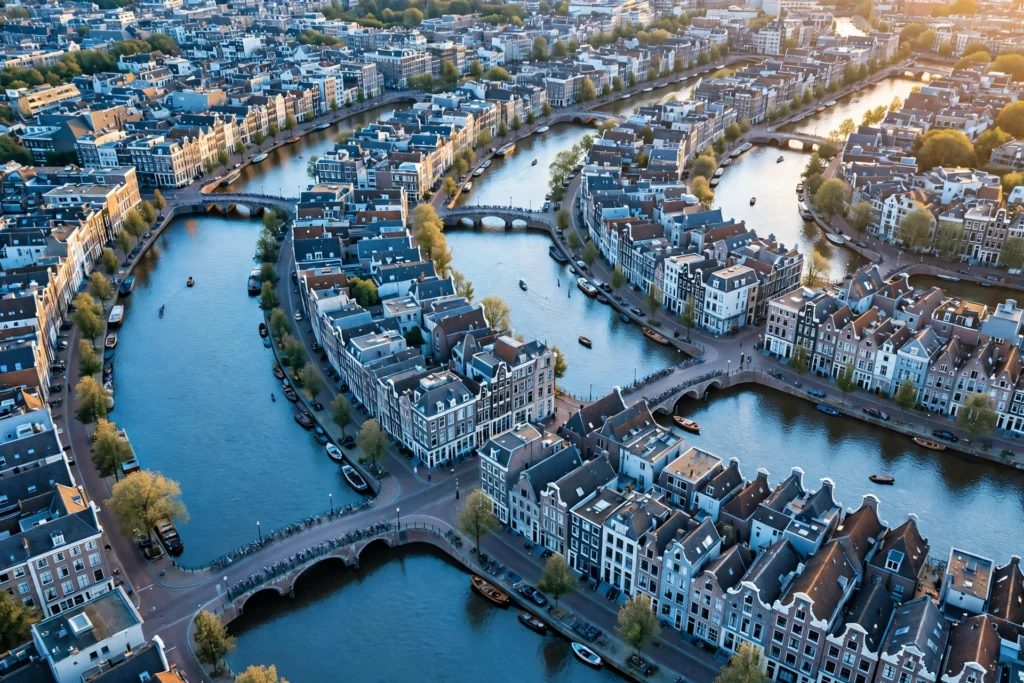
The single most important fact in this whole Netherlands travel guide is the size of the country. The Netherlands is smaller than West Virginia — about 41,500 square kilometres — and it is almost entirely flat, which means the train network is fast, frequent and cheap by European standards. Amsterdam to Rotterdam takes about 40 minutes by Intercity train. Amsterdam to Utrecht takes about half an hour. Amsterdam to Haarlem takes about 15 to 20 minutes. You are never more than about three hours by train from anywhere in the country, and most of the places a first-timer wants to see are within an hour of each other. The country is, in practical terms, one big city region with farmland, dunes and bulb fields in between — and that changes everything about how to plan it.
The second reality check is about what Amsterdam actually is. Amsterdam is a wonderful city and it deserves two or three full days: the canal ring, the Rijksmuseum, the Van Gogh Museum, the Anne Frank House, the Jordaan, a canal cruise and a long evening in a brown café. But Amsterdam is also the most crowded, most expensive and most tourist-saturated place in the country, and a traveller who spends a whole week there has seen the smallest, busiest slice of the Netherlands and missed the rest. The Dutch themselves will tell you this, politely and repeatedly: the country is the canals of Utrecht, the market squares of Haarlem, the working port of Rotterdam, the pottery town of Delft, the university city of Leiden, the beach at Scheveningen, the windmills at Kinderdijk and the dunes of the Wadden Islands. Amsterdam is the front door. The house is much bigger.
The third reality check is about bases, and it is the organising idea of this guide. Do not sleep in a different town every night. The Netherlands is too small and too well connected for base-hopping, and every move costs you half a day of packing, checking out, travelling and checking in. Two bases cover the whole first trip. Base one is Haarlem — or Amsterdam itself if you prefer to be in the middle of it — for the first three or four nights, covering Amsterdam, Haarlem, the bulb fields and Zaanse Schans. Base two is Rotterdam for the last three or four nights, covering Rotterdam, Delft, The Hague, Leiden, Kinderdijk and Utrecht. Every day trip from either base is under an hour by train, most are under half an hour, and you come home to the same bed every night. That is the structure every itinerary in this guide uses, and it is the single decision that makes a Netherlands trip feel relaxed instead of rushed.
The fourth reality check is about the calendar. The Netherlands has one season that changes everything: tulip season. Keukenhof, the great spring garden near Lisse, is open for only about eight weeks a year — in 2027, from Thursday 18 March to Sunday 9 May — and the bulb fields around it bloom for roughly the same window, peaking in mid to late April. If your trip falls inside that window, the tulips are the centrepiece and you should book Keukenhof tickets and your hotel early, because the whole country fills up. If your trip falls outside it, do not mourn the tulips: Delft and Leiden are beautiful in every month of the year, the museums are quieter, the hotels are cheaper, and the country is yours. This guide gives you both versions of the trip — the tulip-season decision and the year-round alternative — so whichever month you travel in, the plan works.
The two-base route at a glance
| Base | Nights | Day trips from this base | Why it earns its place |
|---|---|---|---|
| Haarlem (or Amsterdam) | 3–4 | Amsterdam, Zaanse Schans, Keukenhof and the bulb fields, Zandvoort beach | Canals, museums, the Anne Frank House, tulips in spring, a real Dutch town to sleep in |
| Rotterdam | 3–4 | Delft, The Hague and Scheveningen, Leiden, Kinderdijk, Utrecht | Modern architecture, the port, Delft Blue, the Mauritshuis, windmills, the best canal city after Amsterdam |
| Optional third stop | 1–2 | Maastricht, Texel, Hoge Veluwe National Park | Only on a 10-day trip — the south, the islands or the forests |
The mistakes first-timers make
The first mistake is the Amsterdam-only mistake: seven nights in Amsterdam and a day trip to Keukenhof, if that. The second is the opposite — trying to sleep in five towns in seven nights, which turns a small country into a packing exercise. The third is the ticket mistake: turning up at the Anne Frank House, the Van Gogh Museum or Keukenhof without a timed ticket and discovering that the door is closed to walk-ups, or that the day you wanted sold out weeks ago. The fourth is the bike mistake: walking in the bike lanes, or renting a bike on the first morning without learning the rules, and discovering that Dutch cyclists do not slow down for tourists. And the fifth is the weather mistake: packing for “Europe in spring” and discovering that a Dutch April can be 8 degrees, windy and raining sideways, or 20 degrees and sunny, sometimes on the same day. The sections below fix each of these in turn, with the prices, the booking windows and the train times checked against live sources in November 2026.
How to use this guide
Read the sections in order if this is your first trip: the best time to go, the visa and entry rules, the safety picture, then Amsterdam, Haarlem and Rotterdam, then Delft, Leiden and Keukenhof, then the day trips, then the itineraries, food, costs and transport. If you already know when you are going, skip straight to the itinerary that matches your trip length — the 3-day, 5-day, 7-day and 10-day plans are built from the same two bases, so you can see exactly what each extra day buys you. Every price in this guide is given in euros, with a dollar figure where it helps, because the euro is the currency and a figure quoted as exact would be out of date within weeks; the prices are checked against live official and operator pages in November 2026, and the guide tells you where to check the current figure before you pay.
Best Time to Visit the Netherlands: Tulips, King’s Day and the Honest Calendar
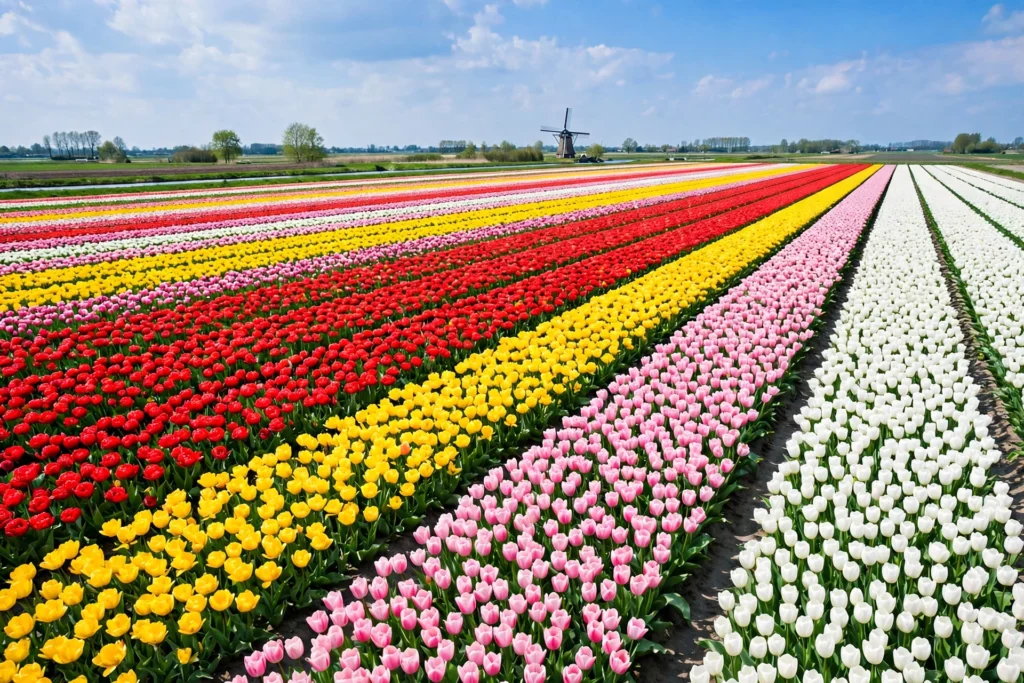
There is no single best month for the Netherlands, because the answer depends on what you want the trip to be. But for a first trip, the sweet spot is clear: mid-April to mid-May, or September. Mid-April to mid-May is tulip season, when Keukenhof is open, the bulb fields are striped with colour, King’s Day turns the whole country orange on 27 April, and the days are long and mild. September is the other great month: the summer crowds have gone, the sea is at its warmest, the light turns golden across the polders, and the museums are breathable again. Between those two windows, the country is either busy and expensive or quiet and grey — and both of those have their place, as long as you choose them deliberately.
Spring is the classic season, and it earns the reputation. March is the shoulder: Keukenhof opens in the third week of March, the first crocuses and daffodils appear, and the cities are still quiet, but the weather is changeable and the tulips are not yet at their peak. April is the month the country is famous for: the tulips peak from mid-April, Keukenhof is at its best, the bulb fields around Lisse and Noordwijkerhout are in full striped colour, and King’s Day on 27 April is the biggest street party in Europe, with orange crowds, flea markets and live music in every town. May keeps the flowers going into the first week — Keukenhof closes on 9 May in 2027 — and the weather warms up, the terraces fill, and the crowds thin a little after the tulip peak. If tulips are the reason you are going, come in the last two weeks of April. If you want spring without the peak crowds, come in the first week of May.
Summer — June to August — is mild rather than hot, which is exactly why it suits the Netherlands so well. Daytime temperatures run about 20 to 23 degrees Celsius, the days are very long, with sunset near 10 p.m. in June, and the country is built for being outside: cycling, canal cruises, beaches at Zandvoort and Scheveningen, and terrace dinners that stretch into the evening. The trade-off is the crowds and the prices. Amsterdam hotels run at their highest from June to August, the museums are at their busiest, and the Anne Frank House and Van Gogh Museum sell out furthest ahead. A Dutch summer can also surprise you with a heatwave in an un-air-conditioned canal house, or a week of wind and rain — pack a waterproof layer even in July, because the weather turns fast off the North Sea.
Autumn is the season the guidebooks underrate. September is genuinely excellent: warm enough for cycling and the beach, quiet enough for the museums, and cheap enough that hotels drop from their summer peak. October brings golden light to the Veluwe forests, fewer tourists everywhere, and the Amsterdam Dance Event in late October, which fills the city with music for five days. November turns cold, damp and grey, with short days and frequent rain — but it is also the cheapest month to visit, the museums are empty, and the brown cafés are at their cosiest. If your trip is about art, food and cities rather than flowers and beaches, November is a bargain.
Winter — December to February — is the quietest season and the one that divides travellers most. The days are short, dark by about 4:30 p.m. in December, and often grey and drizzly, with temperatures around 0 to 9 degrees. But the cities compensate: Christmas markets, the Amsterdam Light Festival, ice rinks, Sinterklaas on 5 December, and museums with no queues at all. Hotel rates drop by 30 to 40 percent outside the Christmas week, and the country belongs to locals again. If you are coming for the museums and the food, winter is a fine choice. If you are coming for the tulips, the beaches or the cycling, it is the wrong season — and the guide says so plainly, because a winter trip planned as a spring trip is the most common disappointment in the Netherlands.
Month-by-month at a glance
| Month | Weather | Crowds and prices | Verdict |
|---|---|---|---|
| January | Cold, grey, 0–5°C, short days | Cheapest, museums empty | Good for museums and cities only |
| February | Cold, damp, 0–7°C; carnival in the south | Cheap, quiet, weekend breaks | Good for cities; Maastricht carnival |
| March | Changeable, 5–12°C; Keukenhof opens late in the month | Rising prices, still quiet | Good shoulder month; early flowers |
| April | Mild, 8–16°C, wind and rain possible; tulips peak mid-month | Busiest month, book everything early | Best month for tulips and King’s Day |
| May | Warm, 12–20°C; Keukenhof closes 9 May | Busy early, easing later | Excellent — spring without the peak |
| June | Long days, 15–22°C, sunset near 10 p.m. | High season, hotels expensive | Very good for cycling and the coast |
| July–August | Mild to warm, 18–23°C, occasional heatwave | Peak crowds, peak prices | Good for beaches and festivals |
| September | Warm, golden light, 15–20°C | Crowds gone, prices easing | Excellent — the underrated month |
| October | Cool, 10–15°C, autumn colour | Quiet, good hotel rates | Very good for cities and forests |
| November | Cold, damp, 5–10°C, short days | Cheapest, museums empty | Good for museums; pack a waterproof |
| December | Cold, grey, 0–7°C; Christmas markets | Cheap except Christmas week | Good for festive cities and lights |
How the seasons affect prices
Prices follow the seasons more sharply in Amsterdam than anywhere else in the country. A hotel room in the canal ring can cost roughly twice as much in late April or July as in January, and the difference between Amsterdam and the rest of the country is just as sharp: Amsterdam runs 25 to 40 percent pricier than Groningen, Maastricht or Leeuwarden, and a night in Haarlem or Rotterdam is usually cheaper than the same standard of room in Amsterdam. Museum prices do not change with the season, but availability does — the Anne Frank House and the Van Gogh Museum sell out weeks ahead in spring and summer and days ahead in winter. Train fares do not change with the season either, which is one of the great advantages of the Netherlands: the train from Amsterdam to Rotterdam costs the same in April as in November. If your dates are flexible, the cheapest good-weather window is usually late September or early May. For more on picking cheap months in general, our guide to the cheapest time to travel explains how shoulder seasons work across destinations.
Festivals and events worth planning around
King’s Day on 27 April is the one date that changes the whole country: the King’s birthday is a national holiday, every city turns into an orange street party with flea markets, live music and canal boats, and Amsterdam in particular becomes so crowded that some travellers love it and some avoid it entirely. If you want the party, book your hotel months ahead and arrive the day before. If you want a quiet Netherlands, go the week after. The Flower Parade, the great procession of flower-covered floats from Noordwijk to Haarlem, is scheduled for 17–18 April 2027, and it draws large crowds along the route — worth seeing if you are in Haarlem that weekend, worth avoiding if you are driving. In the south, carnival in February turns Maastricht and the Brabant towns into three days of parades and costumes, and it is a completely different Netherlands from the one most visitors see. In summer, the North Sea Jazz Festival in Rotterdam in July, Pride in Amsterdam in early August, and the Amsterdam Dance Event in late October each fill their city for a few days — check the dates before you book, because hotel prices spike around all of them.
Do US Citizens Need a Visa for the Netherlands? Schengen, EES and ETIAS in 2026–27

The short answer, for most American travellers, is no visa is needed. Ordinary US passport holders do not need a visa to visit the Netherlands for tourism or short business trips. You can stay visa-free for up to 90 days in any 180-day period, and there is no visa fee to pay. That rule is confirmed on the US State Department’s Netherlands page, checked live in November 2026, which states plainly: “No visa is required for 90 days or less.” It is the same 90/180 rule that applies across the whole Schengen area, so days spent in the Netherlands, France, Germany, Italy or any other Schengen country all count toward the same 90 days. Keep a count, because the 90 days are counted over a rolling 180-day window, not per trip — a long stay followed by a quick return can catch you out.
Your passport itself has rules too. It must be valid for at least three months beyond your planned departure from the Schengen area, and the State Department advises carrying more than that as a buffer — six months of validity remaining is the safe rule, and it is what this guide recommends. Your passport must also have at least two blank pages for stamps, and the Netherlands does not accept the 12-page US emergency passport for visa-free entry, so do not travel on an emergency passport unless you have checked with the Dutch authorities first. You also need proof of sufficient funds and a return ticket, and you must declare cash, gold or high-value securities of 10,000 euros or more when entering from outside the EU or leaving.
EES: the system that is already running
The change that actually affects US travellers in 2026 is the Entry/Exit System, known as EES. This is the European Union’s digital border register, and it has been fully operational since 10 April 2026, after a phased rollout that began on 12 October 2025. On your first entry into the Schengen area, a border officer records your fingerprints and takes a facial image, and the system creates a digital record of your entry and exit instead of stamping your passport. On later trips, the system checks your face against that record. In practice, this means two things for you: allow extra time at passport control on your first trip since the system started, because the first registration takes a few minutes, and do not expect a passport stamp as proof of your entry date — the EES record is the proof, and the system counts your days against the 90/180 rule itself.
ETIAS: the system that is not running yet
ETIAS — the European Travel Information and Authorisation System — is the one that causes the confusion, because it has been announced, delayed and announced again for years. Here is the position as it stands in late November 2026: ETIAS is not in operation, no applications are being collected, and the European Union has not published a start date. The EU dropped its target of a launch in the last quarter of 2026 in July 2026, and the working expectation in the travel industry is now a start in 2027 — but that is an expectation, not an official date, and the EU has promised to announce the start date several months before launch. The fee, when it does start, will be 20 euros, charged only to applicants aged 18 to 70. Two things follow from this. First, there is nothing to apply for right now, and any website offering to sell you an ETIAS authorisation today is a scam — the official EU portal says so itself. Second, when ETIAS does launch there will be a transitional period of at least 12 months, so it will not become mandatory without warning. Check the official EU ETIAS portal before you travel, and do not pay anyone for an authorisation that does not exist yet.
Entry checklist for US citizens
| Requirement | The rule for US citizens (checked November 2026) |
|---|---|
| Visa for tourism | Not required — visa-free up to 90 days in any 180-day period |
| Passport validity | At least 3 months beyond departure; 6 months recommended as the safe rule |
| Blank pages | At least 2 blank pages |
| Emergency passport | The 12-page US emergency passport is not accepted for visa-free entry |
| EES | Fingerprints and facial image recorded on first entry since April 2026 |
| ETIAS | Not in operation; no start date published; fee will be €20 when it launches |
| Proof of funds and return ticket | Required; carry both |
| Cash declaration | €10,000 or more in cash, gold or securities must be declared on entry and exit |
If someone in your party holds a different passport
The rule is decided passport by passport, not by the group. A spouse or travelling companion with a different nationality may need a Schengen visa even though you do not, and the EES registration applies to every non-EU traveller, whatever their passport. Check every passport in your party separately against the official Schengen rules before you book, and allow extra time at the border for the first entry of anyone who has not been registered under EES yet.
Is the Netherlands Safe for US Travellers? The Advisory, Honestly Explained
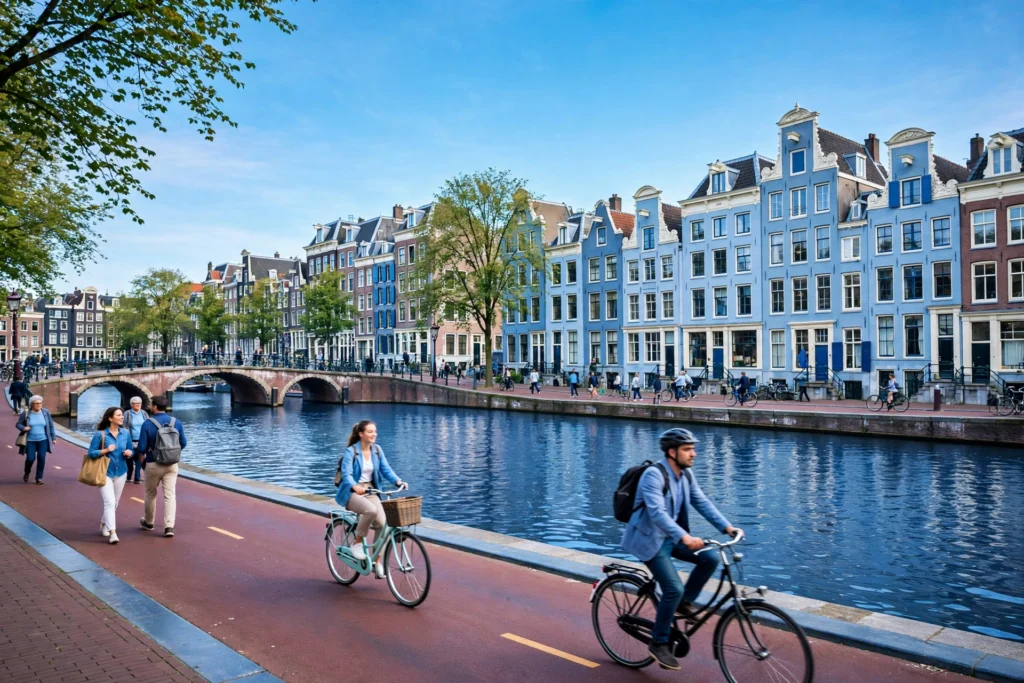
The US State Department rates the Netherlands at Level 2: Exercise Increased Caution. That is the fact that matters most, and it needs a plain reading, because Level 2 is the tier the State Department gives to most of Western Europe — France, Germany, Italy, Spain and the United Kingdom sit at the same level — and it is not a travel ban, a warning against visiting, or a reason to cancel a trip. The advisory was issued on 13 August 2026 and, checked live in November 2026, it reads: “Exercise increased caution in the Netherlands due to terrorism. Terrorist groups continue plotting possible attacks in the Netherlands.” You can read the full text on the State Department’s Netherlands travel advisory page, and you should read it twice — once when you book, and again the week before you fly, because advisories change.
The detail underneath the headline is where the real information lives. The advisory’s terrorism warning is a general one about Europe: terrorists may attack with little or no warning, and possible targets include tourist locations, transportation hubs and airports, markets and shopping malls, hotels, clubs and restaurants, places of worship, parks, and major sporting and cultural events. There is no specific threat named against the Netherlands, no area rated at a higher level, and no part of the country the United States advises against visiting. The practical advice is the same as for any big European city: stay alert in tourist spots and at transport hubs, avoid demonstrations and crowds, keep a low profile, do not display signs of wealth, and have a plan to leave an area quickly if something feels wrong.
The risk that actually affects tourists most often is far more ordinary: petty crime. The advisory says so directly — petty crime, including pickpocketing, purse snatching and passport theft, is common in tourist areas, and criminals target tourists in popular locations. Amsterdam Centraal station, the Damrak, crowded trams, and the streets around the Red Light District are the places where it happens most. Stay aware of your surroundings, keep your bag in front of you in crowded places, do not hang a phone from an open bag, and split your money and cards so one theft cannot strand you. Bicycle theft is the other everyday crime: thousands of bikes are stolen in Amsterdam every year, which is why the city has a whole culture of two locks and battered old bikes. If you rent a bike, lock the frame to something fixed with both locks the rental shop gives you, and never leave a bike unlocked, even for a minute.
The second everyday risk is the traffic — specifically, the bikes. The State Department’s own tips from the US mission in the Netherlands warn about it directly: pay attention to traffic, especially bikes on the red-paved bike paths. Dutch cyclists ride fast, they have priority in many situations, and they do not slow down for pedestrians standing in the bike lane. The rules are simple and they matter: never walk in a bike lane, look both ways before stepping off a pavement, never stop suddenly in a bike lane, and if you rent a bike yourself, stay right, signal turns with your arm, and do not ride on tram tracks. The bike section later in this guide covers the full code.
There are two other warnings worth taking seriously. The first is about drugs. Drug possession — including cannabis — is illegal in the Netherlands. The Dutch tolerance policy does allow personal possession of small amounts of cannabis and purchase at licensed coffee shops, but cannabis remains illegal in the United States, and bringing any amount of any illegal substance back to the United States is a crime. Street dealers in the Red Light District sell fake or dangerous drugs, and the State Department’s guidance is blunt: do not buy from them. The second is about scams: the most common ones are overcharging in tourist areas, unlicensed taxis at Schiphol, and the “your hotel is closed” trick. The answer in every case is the same — go to the hotel yourself or call it on the number you already have, use official taxis or the train, and never follow a stranger to a shop or a restaurant.
What to do before you go
Enrol in the Smart Traveler Enrollment Program, known as STEP, on the State Department’s STEP enrolment page. It is free, it takes about ten minutes, and it lets the nearest US embassy or consulate contact you in an emergency and help your family reach you. Save the emergency numbers — 112 for police, ambulance and fire, and 0900-8844 for non-emergency police. The US Consulate General in Amsterdam handles all consular services in the Netherlands, at Museumplein 19, and the US Embassy is in Wassenaar, near The Hague. Buy travel insurance that covers emergency medical care and evacuation, and read what it excludes before you need it — our guide to what travel insurance covers explains the exclusions that catch people out. For the same preparation in depth for any destination, our full travel safety tips guide covers it step by step.
Staying safe day to day
The day-to-day rules are simple and they work. Keep your passport in the hotel safe and carry a photocopy or a photo of it on your phone. Use the hotel safe for the cards you are not using that day. On the train, keep your bag where you can see it and do not leave luggage unattended at the station. In Amsterdam at night, stick to well-lit streets, avoid the quieter edges of the Red Light District after midnight, and do not accept drinks from strangers. If you are cycling, wear something visible at dusk, use lights after dark — it is a legal requirement and the police do fine cyclists without lights — and never cycle after drinking, because the same drink-driving rules apply to bikes. And keep the State Department’s advice in mind on the rare occasions it matters: if there is a demonstration, walk the other way; if there is a security incident, follow the instructions of the Dutch police, who are approachable, professional and widely English-speaking.
Amsterdam in 2–3 Days: Canals, Museums and the Booking Order That Matters
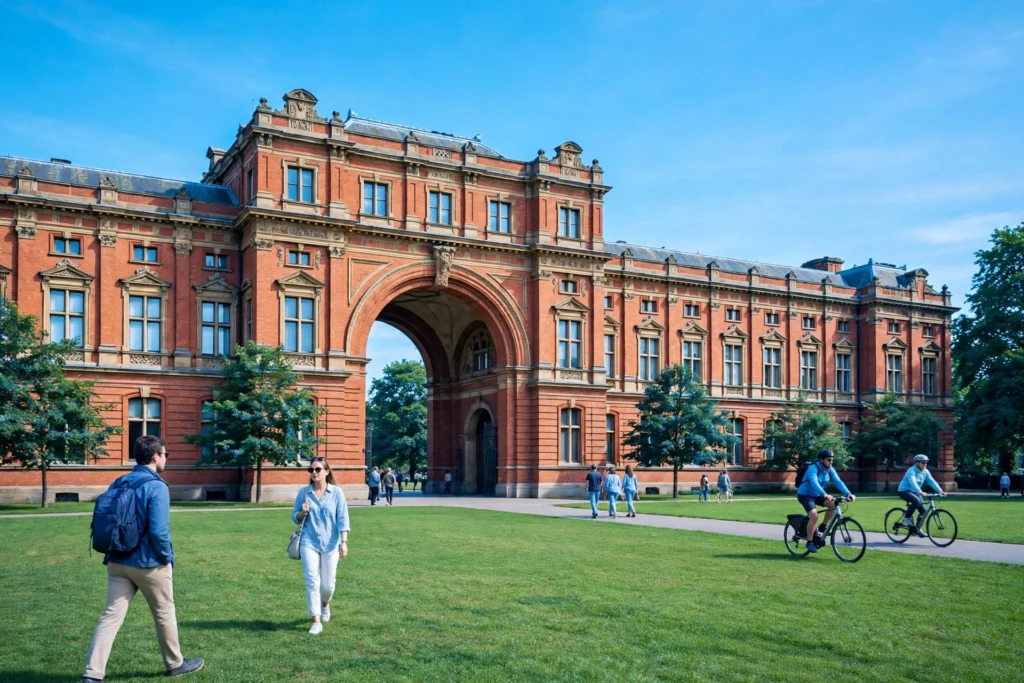
Amsterdam is the front door of the Netherlands, and it deserves two or three full days — no more and no less. Two days covers the canal ring, the Rijksmuseum, the Van Gogh Museum and the Jordaan at a comfortable pace. Three days adds the Anne Frank House, a canal cruise, the markets and an evening in a brown café, and gives you the breathing room that makes Amsterdam enjoyable instead of exhausting. Four days in Amsterdam is where the trip starts to go wrong, because by then you have seen the best of the city and you are paying Amsterdam prices to repeat it, while Haarlem, Utrecht and Rotterdam sit half an hour away unseen. The rule is simple: give Amsterdam its two or three days, then leave.
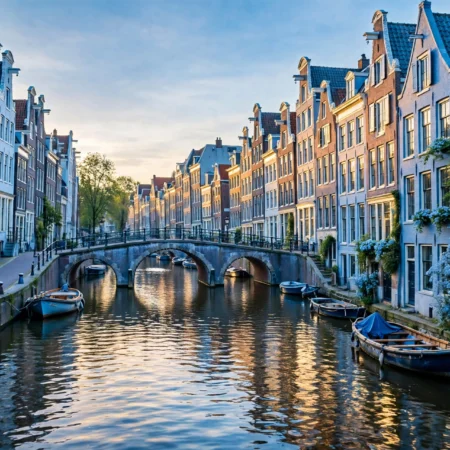
The city itself is smaller than most visitors expect. The canal ring — the Grachtengordel, a UNESCO World Heritage site — is a set of concentric 17th-century canals lined with narrow gabled houses, and you can walk across the whole historic centre in about half an hour. The three main canals, the Herengracht, the Keizersgracht and the Prinsengracht, run in a horseshoe around the old city, and the Jordaan, the old working-class quarter west of the Prinsengracht, is now the prettiest neighbourhood in the city, full of small streets, courtyards and cafés. The Museumplein, south of the centre, holds the Rijksmuseum, the Van Gogh Museum and the Stedelijk Museum within a few hundred metres of each other. The centre is walkable, the trams are frequent, and the best way to see the city is a mix of both: walk the canals, take the tram when your feet give out, and take a canal cruise once, early in the trip, because it gives you the shape of the city in an hour.
The booking order: what to book first
Amsterdam punishes the traveller who books in the wrong order. Book in this sequence, and the trip works. First, the hotel — Amsterdam accommodation sells out furthest ahead in April, May and the summer weekends, and the price difference between booking three months ahead and three weeks ahead can be a hundred euros a night. Second, the Anne Frank House, because its tickets are released only six weeks ahead, on Tuesdays at 10:00 Amsterdam time, and the popular slots go in minutes. Third, the Van Gogh Museum, because it sells timed tickets online only and weekend mornings sell out one to two weeks ahead in high season. Fourth, the Rijksmuseum, which also needs a timed start but absorbs crowds better and rarely sells out completely. Fifth, the canal cruise, which can usually be booked a day or two ahead — and sixth, everything else, which mostly does not need booking at all.
The three big museums: prices and booking windows
| Museum | Adult ticket (2026) | Under-18s | Booking rule | Time needed |
|---|---|---|---|---|
| Rijksmuseum | €25 (rises to €26.50 in 2027) | Free | Timed start required, book on rijksmuseum.nl | 2.5–3 hours |
| Van Gogh Museum | €25 (rises to €26 in 2027) | Free | Timed ticket, online only | 1.5–2 hours |
| Anne Frank House | €16.50, incl. €1 booking fee | €7 ages 10–17, €1 under 10 | Online only at annefrank.org, released Tuesdays 10:00, six weeks ahead | About 1 hour |
The Rijksmuseum is the national museum and the single best museum in the country: more than 8,000 works covering 800 years of Dutch art and history, with the Gallery of Honour holding Rembrandt’s Night Watch, Vermeer’s Milkmaid and the portraits of Frans Hals. Go at 09:00 when it opens and go straight to the Gallery of Honour, then choose one wing — the museum is too big to see in one visit, and trying to see it all is the mistake. The Van Gogh Museum holds the world’s largest collection of Van Gogh’s work, hung in the order of his life, from the dark peasant scenes of Nuenen through Paris and Arles to his last weeks at Auvers, and the ticket covers the temporary exhibitions too. The Anne Frank House is the most affecting hour you can spend in Amsterdam and the hardest ticket to get: the museum sells tickets only on its own website, annefrank.org, in timed slots released every Tuesday at 10:00 for visits six weeks later, with no door sales, no resellers and no city pass that includes it. Tickets are non-refundable and non-transferable, so the name on the booking has to belong to the person who walks in. A rise in the adult price to €17 has been reported for 2027 — check the official site before you pay. The Stedelijk Museum, next door to the Van Gogh, is the city’s museum of modern and contemporary art, with Mondrian, Malevich and Dutch design; adult tickets are about €22.50, free for under-19s, and it is the museum to add if you have a third museum day.
Day by day in Amsterdam
Day one is the canal ring. Start at Amsterdam Centraal and walk south along the Damrak to Dam Square, then west into the canal ring. Spend the morning walking the Herengracht and the Keizersgracht, stopping at the houseboats and the flower market on the Singel, then cross into the Jordaan for lunch — the Nine Streets, between the canals, have the best small shops and cafés in the city. In the afternoon, take a canal cruise from the Prinsengracht or the Damrak: an hour on the water gives you the city in a way walking never does, and the open boats are better than the closed ones in good weather. In the evening, eat in a brown café in the Jordaan — the old wood-panelled pubs that are the Dutch equivalent of the English local — and walk the canals after dark, when the bridges are lit and the city is at its prettiest.
Day two is Museumplein. Book the Rijksmuseum for 09:00 and give it the whole morning, with the Gallery of Honour first and one wing after. Have lunch on the Museumplein or in De Pijp, the neighbourhood south of the square, where the Albert Cuyp Market runs six days a week and the food stalls are the best cheap lunch in the city. In the afternoon, take your timed slot at the Van Gogh Museum, then walk through the Vondelpark, the city’s great park, and end the day with dinner in De Pijp. If you have the Anne Frank House booked, it fits best as an evening slot, when the museum is quieter and the queues are gone.
Day three, if you have it, is the city beyond the centre. Start at the Anne Frank House if you have not been yet, then walk north to the Jordaan’s quieter streets and the Noordermarkt, where the Saturday market sells everything from cheese to second-hand clothes. Cross the IJ by the free ferry from behind Centraal to Amsterdam-Noord, where the old shipyards have become studios, restaurants and the A’DAM Tower, and the view back across the water is the best in the city. In the afternoon, visit the neighbourhood you have not seen yet — the Plantage, with the zoo and the botanical garden, or the Eastern Docklands, with its modern architecture — and finish with a last canal walk and a last brown café. Three days, done properly, is enough. On day four, you should be in Haarlem.
Where to stay and how to get around
Stay in the Jordaan or De Pijp if you want the Amsterdam that locals live in, near the Museumplein if you want the museums on your doorstep, and near Centraal only if you are catching an early train — the streets around the station are the noisiest and least attractive in the city. Amsterdam hotels are the most expensive in the country, and the price difference between Amsterdam and Haarlem is real: a night in Haarlem often costs a third less than the same standard of room in the canal ring, which is one of the reasons this guide uses Haarlem as the first base. Getting around is easy: the trams run until about 12:30 a.m., the metro and the free ferries across the IJ run all day, and the city centre is walkable. Tap in and out with your contactless card or phone on every tram and metro — the OVpay system is covered in full in the transport section below — and never walk in the bike lanes.
Eating in Amsterdam
Amsterdam eats well if you know where to look and badly if you do not. The Albert Cuyp Market in De Pijp is the best cheap lunch in the city: raw herring with onions from a street stall, stroopwafels made fresh on the iron, and poffertjes, the mini pancakes, dusted with icing sugar. The Jordaan has the best brown cafés, where bitterballen with mustard and a local beer are the correct evening order. The Indonesian rijsttafel — a colonial legacy of many small dishes served at once — is the meal Amsterdam does better than anywhere else in Europe, and the restaurants in the centre that serve it have been doing so for decades. Avoid the restaurants with picture menus and touts on the Damrak and around Leidseplein; they are the worst food at the highest prices in the city. And remember that tap water is excellent everywhere in the Netherlands — ask for kraanwater in a restaurant instead of paying for a bottle.
Haarlem: The First Base — A Real Dutch Town 15 Minutes from Amsterdam
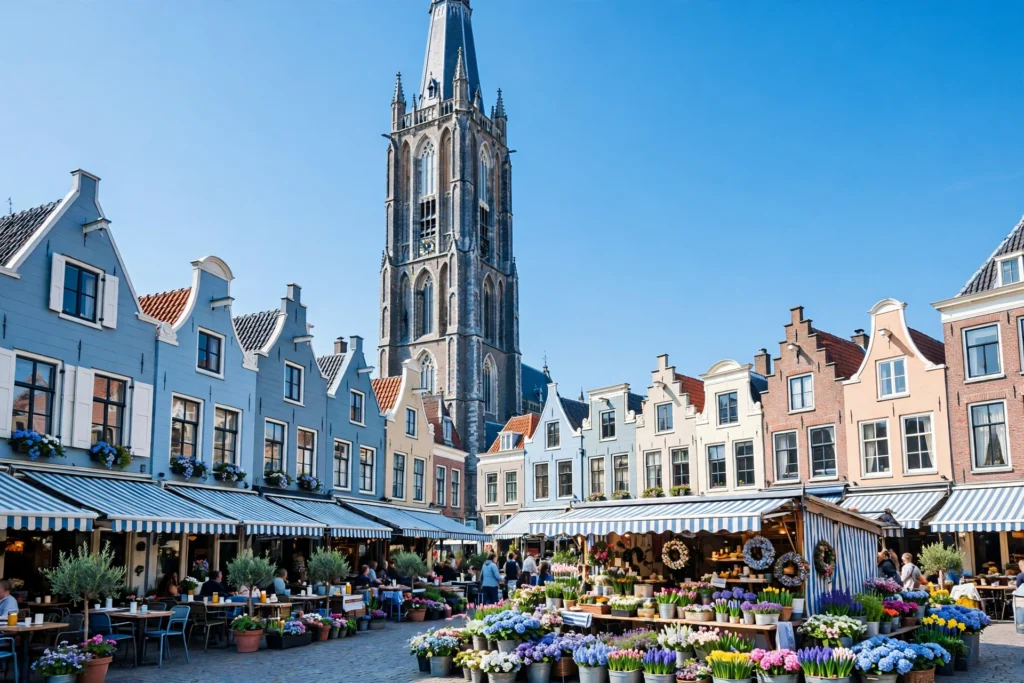
Haarlem is the best decision in this whole guide, and it is the one most first-timers never make. It is a real Dutch town of about 160,000 people, fifteen minutes by train from Amsterdam Centraal, with a great market square, a Gothic church, canals, courtyards and cafés — and almost none of Amsterdam’s crowds, prices or stag parties. It is also the perfect first base: you sleep in a quiet town with a real centre, you take the train into Amsterdam for your two or three city days, and you come home in the evening to a place where you can get a table without booking. In spring, Haarlem is also the gateway to the bulb fields — Keukenhof is half an hour away by bus, and the flower parade ends here.
The case for Haarlem as a base is practical, not sentimental. A hotel room in Haarlem typically costs a third less than the same standard in Amsterdam, and the difference pays for the train many times over. The trains run every few minutes in both directions, from early morning until late at night, and the ride is so short that you can be in Amsterdam for a 09:00 museum slot without an early start. Haarlem station itself is one of the most beautiful in the country, an Art Nouveau building from 1908, and the walk from the station to the Grote Markt takes about ten minutes through streets that look like a film set and are, in fact, just an ordinary Dutch town. If you are arriving jet-lagged from the United States, Haarlem is the gentler landing: quieter streets, an earlier night, and a morning that starts with a market square instead of a crowd.
A day in Haarlem
Start at the Grote Markt, the great market square, where the St Bavo Church — the Grote Kerk — dominates the skyline with its wooden tower. The church holds the Müller organ that Handel and Mozart both played, and the interior is worth half an hour. On Saturdays the square fills with the general market, and on Mondays with the fabric market; on other days it is simply a beautiful square with café terraces and the town hall, one of the oldest in the country. From the square, walk south to the Hofjes — the hidden almshouse courtyards that are Haarlem’s secret. There are more than twenty of them, built from the 14th century onwards as housing for elderly women, and they are entered through small gates in ordinary streets. They are quiet, green, and free to visit, and they are the most Dutch thing in the Netherlands.
In the afternoon, visit the Frans Hals Museum, in the old men’s almshouse on the Groot Heiligland, which holds the greatest collection of Frans Hals anywhere — the laughing cavaliers, the civic guard portraits, the regentesses — and gives you the Golden Age without the crowds of the Rijksmuseum. Then walk to the Teylers Museum, the oldest museum in the Netherlands, founded in 1784, with its oval room of fossils, scientific instruments and drawings — it is a cabinet of curiosities that has barely changed in two centuries, and it is wonderful. Finish the day with a walk along the Spaarne river, where the old warehouses and the windmill De Adriaan stand on the water, and dinner in one of the restaurants on the Grote Markt or in the streets behind it.
Haarlem as a base: the practical details
Haarlem’s station is on the main line between Amsterdam and the coast, so the trains to Amsterdam run about four times an hour and take 15 to 20 minutes. The bus to Keukenhof, in spring, leaves from the station area, and the bus to Zandvoort beach takes about half an hour. The town has a full range of hotels, from the boutique hotels on the Grote Markt to the business hotels near the station, and the restaurants are better value than Amsterdam’s — the same meal, in a restaurant full of Dutch people instead of tourists, at a lower price. If you are travelling with children, Haarlem is also the easier base: quieter streets, a beach fifteen minutes away, and the Linnaeushof, Europe’s largest playground, a short bus ride out of town. And if you are arriving late at Schiphol, Haarlem is twenty minutes by train from the airport, with a change at Amsterdam Sloterdijk — or a direct bus in spring — so you can be in bed in a quiet town an hour after landing.
Rotterdam: The Second Base — Modern Architecture and the Working Port
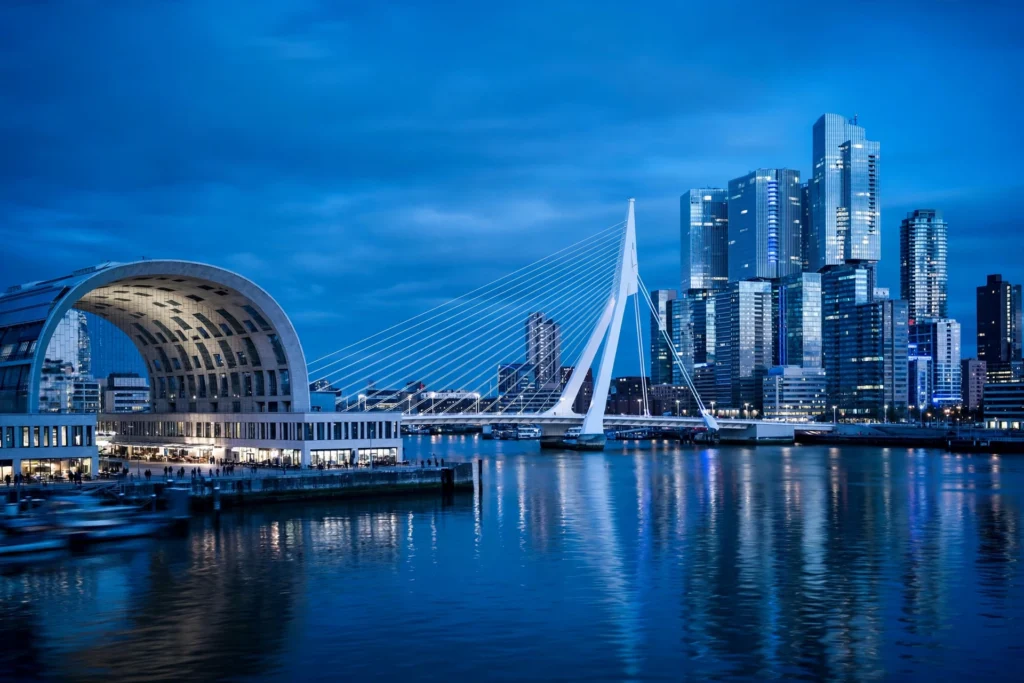
Rotterdam is the second base, and it is the city that makes the second half of the trip different from the first. Where Amsterdam is 17th-century canals and gabled houses, Rotterdam is the 21st century: a working port, the largest in Europe, rebuilt after the bombing of May 1940 in concrete, glass and steel, with the most adventurous architecture in the Netherlands. The Erasmus Bridge, the white cable-stayed span locals call the Swan, the cube houses tilted at 45 degrees, the Markthal with its vast arched ceiling covered in a mural of fruit and vegetables, the depot of the Boijmans Van Beuningen museum — a mirrored bowl that reflects the whole city — and the Euromast, the tower that gives you the port spread out below you. Rotterdam is not pretty in the way Amsterdam is pretty. It is exciting in a way Amsterdam is not.
The case for Rotterdam as the second base is the same as the case for Haarlem as the first: position and price. Rotterdam Centraal is one of the great stations of Europe, and from it you can reach Delft in about 12 minutes, The Hague in about 25 minutes, Leiden in about 35 minutes, Utrecht in about 40 minutes, and Amsterdam in about 40 minutes. Kinderdijk, the windmill village, is half an hour away by waterbus and bus. The hotels are cheaper than Amsterdam’s and often newer, the restaurants are better value, and the city has a food scene — the Markthal, the Fenix Food Factory in the old warehouse district of Katendrecht, the restaurants along the Witte de Withstraat — that is the best in the country outside Amsterdam. Move here on day four or five, and the second half of the trip opens up.
A day in Rotterdam
Start at Rotterdam Centraal and walk south through the city centre to the Markthal, the great food hall with its arched roof, where you can eat breakfast under a ceiling covered in a mural of fruit, vegetables and fish. From the Markthal, cross to the cube houses — the yellow tilted cubes that are the city’s most photographed buildings — and climb into the show cube to see what it is like to live at 45 degrees. Then walk south across the Erasmus Bridge to Katendrecht, the old sailors’ quarter, now full of restaurants and the Fenix Food Factory, and take the water taxi back across the river, because the view of the skyline from the water is the one to remember.
In the afternoon, choose between the museums and the port. The Boijmans Van Beuningen Depot, the mirrored bowl next to the Museumpark, is the world’s first publicly accessible art storage facility — you can see the collection being conserved and stored, and the rooftop forest and restaurant give you the best view in the city. The Kunsthal, in the same park, has no permanent collection and a constant programme of exhibitions, from photography to design. Or take the Spido harbour tour, the 75-minute boat trip that goes out past the container terminals and the great ships, and shows you the scale of the port that built this city. Finish the day in the Witte de Withstraat, the street of galleries, bars and restaurants that is Rotterdam’s evening centre, and eat somewhere with a terrace and a view of people who live here rather than people who are passing through.
Rotterdam as a base: the practical details
Rotterdam’s hotels cluster around the centre, near Centraal and the Markthal, and around the river at Katendrecht and the Kop van Zuid, where the old harbour buildings have become hotels and apartments. The metro runs until about midnight, the trams run through the centre, and the water taxi — a fast yellow boat that runs on demand — is the most fun way to cross the river, at about the price of a taxi. The city is flat and the cycling is excellent, with dedicated lanes everywhere, and a bike is the best way to see the districts that are too far apart to walk. If you are arriving from Haarlem, the Intercity train takes about 40 minutes and runs several times an hour; if you are leaving for the airport, Schiphol is about 25 minutes by Intercity direct. And if you are travelling on to Belgium or France, Rotterdam is the right place to leave from: the Eurostar and the Intercity to Brussels and Paris both stop here, which is one more reason this guide puts the Rotterdam base last.
Delft and Leiden: The Year-Round Alternative to Tulip Season
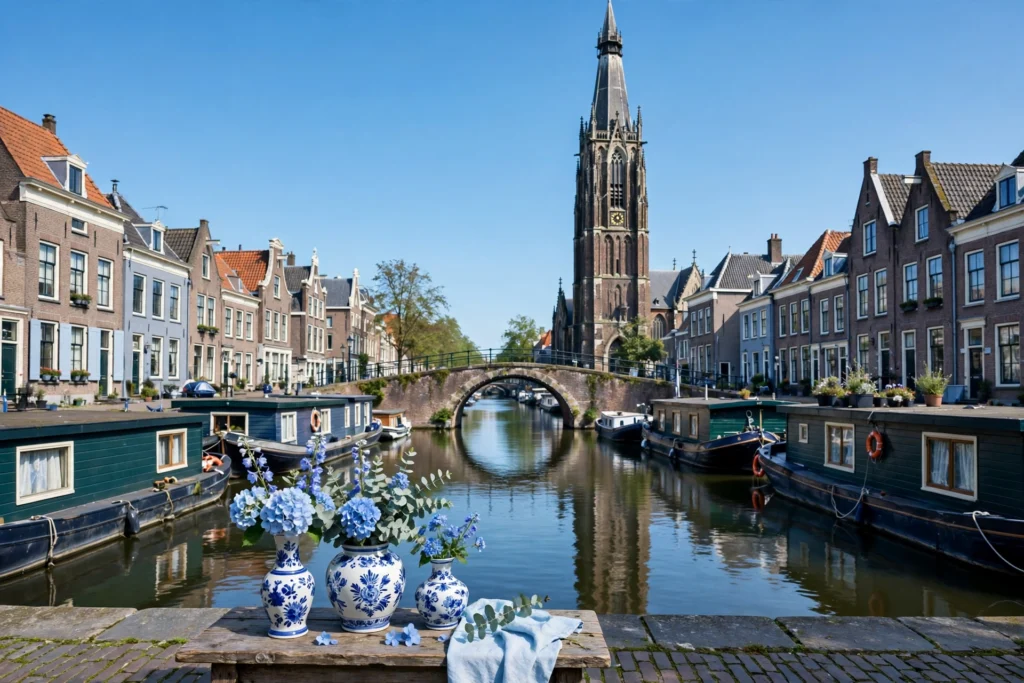
Delft and Leiden are the two towns that make the Netherlands work in every month of the year, and they are the answer to the tulip-season question. If your trip falls outside the eight weeks of Keukenhof, do not try to force the tulips: come here instead. Delft is the pottery town, the home of Delft Blue, with canals, a great market square, and the church where William of Orange is buried. Leiden is the university city, the oldest in the Netherlands, with canals, courtyards, a castle mound in the middle of town, and the museums that the great collections were built from. Both are half an hour from Rotterdam, both are beautiful in any weather, and both are quieter than Amsterdam in every season.
Delft is the smaller and prettier of the two, and it is the one to visit first. The Markt, the great square, holds the town hall and the Nieuwe Kerk, the new church, whose tower you can climb for the view over the town and, on a clear day, all the way to Rotterdam and The Hague. The Oude Kerk, the old church, leans two metres out of true and holds the tomb of Vermeer, who was born in Delft and painted it more lovingly than any other town on earth. The Royal Delft factory, on the edge of town, still makes Delft Blue pottery by hand, and the tour shows you the painting, the firing and the shop — it is the one factory tour in the Netherlands that is worth the time. The canals of Delft are quieter than Amsterdam’s and prettier for it: low bridges, houseboats, and the Prinsenhof, the old convent where William of Orange was assassinated in 1584, now a museum of Dutch history. Give Delft half a day at least, and a full day if you love pottery, churches or quiet canals.
Leiden is the bigger and livelier of the two, and it rewards a full day. The university, founded in 1575, is the oldest in the country, and the town is full of students, bookshops and cafés. The canals of Leiden are the prettiest in the Netherlands after Amsterdam’s — the Rapenburg, the grand canal lined with university buildings, is the one to walk — and the Burcht, the old castle mound in the centre of town, gives you a view over the rooftops for the price of a short climb. The museums are the reason to come: the Rijksmuseum van Oudheden, the national museum of antiquities, with its Egyptian temple; the Naturalis Biodiversity Center, with its dinosaurs and its vast collection; and the Hortus Botanicus, the oldest botanical garden in the country, where the first tulips in the Netherlands were grown in the 1590s — which makes Leiden, fittingly, the place where the whole Dutch tulip story began. The market on Wednesdays and Saturdays, along the canals in the centre, is one of the best in the country.
Delft vs Leiden: the picker
| Town | Best for | Time needed | From Rotterdam | From Amsterdam |
|---|---|---|---|---|
| Delft | Delft Blue pottery, quiet canals, Vermeer, the Nieuwe Kerk tower | Half a day to a full day | ~12 minutes by train | ~1 hour by train |
| Leiden | University city, canals, museums, markets, the tulip origin story | A full day | ~35 minutes by train | ~35 minutes by train |
If you have one day, choose by what you want: Delft for beauty and pottery, Leiden for energy and museums. If you have two days, do both — they are fifteen minutes apart by train, and the combination is the best two days in the Netherlands outside Amsterdam. And if you are travelling in tulip season, do not choose at all: the bulb fields lie between Leiden and Haarlem, and the train from Leiden to Haarlem runs straight through them.
Keukenhof and the Bulb Fields: The Eight-Week Tulip Decision
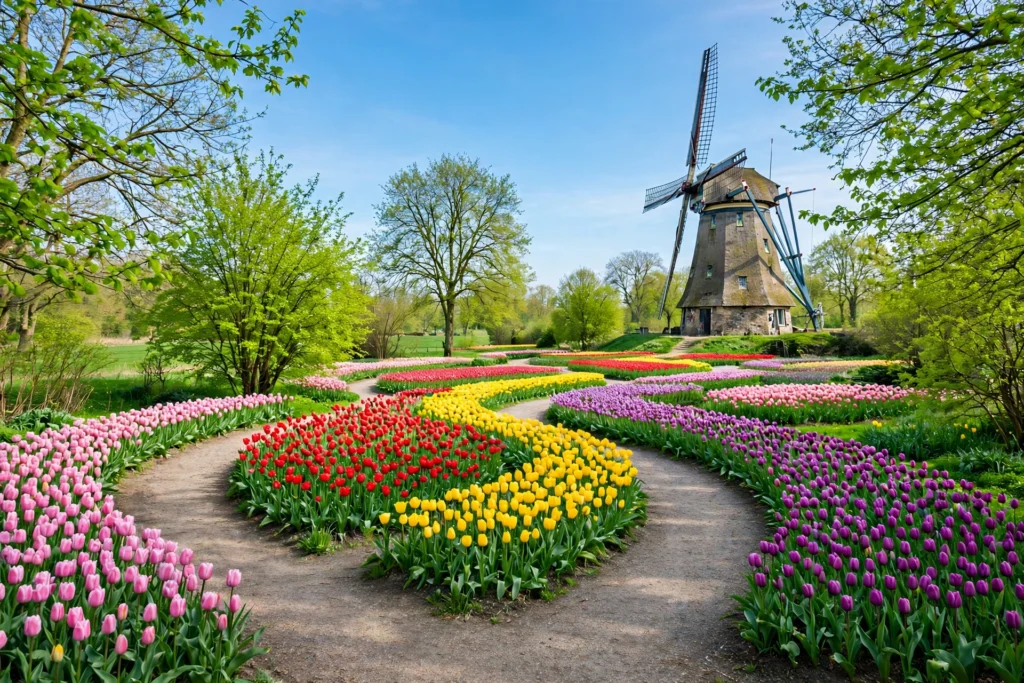
Keukenhof is the most famous garden in the Netherlands and the most misunderstood. It is not a field of tulips. It is a 32-hectare spring garden in Lisse, planted with more than 7 million bulbs — tulips, daffodils and hyacinths — in themed beds, pavilions and flower shows, with a historic windmill and a view over the fields. It is open for only about eight weeks a year, and in 2027 those weeks are Thursday 18 March to Sunday 9 May, every day from 08:00 to 19:00. Every ticket is for a fixed date and arrival time, the price changes by day, and the busy days sell out. The decision is not whether Keukenhof is worth it — it is — but whether your trip falls inside the eight weeks, and if it does, whether you have booked early enough.
The practical details, checked against the official Keukenhof site in November 2026, are these. Adult tickets cost €21 to €25 online, depending on the day — cheapest at the start and end of the season, most expensive at the tulip peak in mid to late April, over Easter and in Flower Parade week — and €27 at the gate. Children aged 4 to 18 pay €11 online and €15 at the gate, and children under 4 go free. Parking costs €10 online and €15 at the gate. The combi-tickets, which add a bus or shuttle from Amsterdam, Schiphol, Rotterdam or The Hague, go on sale from mid-January, and the shuttle-plus-entry tickets from Amsterdam run about €39.50 to €52.50 depending on the option. Book online, book early, and book the earliest time slot you can stand: the garden is quietest in the first hour, the light is best, and the crowds build steadily through the morning.
The tulips themselves peak in mid to late April, and that is the window to aim for if you can choose your dates. The first weeks of the season are crocuses, daffodils and hyacinths, and the tulips come later; the last week of April and the first week of May are when the outdoor fields are at their best, though the exact dates depend on the weather. The flower shows in the pavilions run all season, changing every week — hyacinths and tulips in late March, freesias and chrysanthemums after that, roses in early April, and carnations and summer flowers at the end. If you go in the last week of the season, the garden is still beautiful, but the fields outside are being cut — the farmers cut the flower heads off to strengthen the bulbs, and a field of headless stems is a strange sight if you were expecting colour.
Keukenhof vs the free bulb fields
| Option | What you get | Cost | Best for |
|---|---|---|---|
| Keukenhof garden | 7 million bulbs, themed beds, pavilions, flower shows, windmill | €21–25 online, €27 at the gate | The full spring garden experience; families; first-timers |
| Free bulb fields around Lisse and Noordwijkerhout | Striped commercial fields, open roads, no crowds | Free to look from the road; do not enter the fields | Photographers; cyclists; travellers who want the fields without the garden |
| Bollenstreek by bike from Haarlem or Leiden | A day cycling through the fields, villages and dunes | Bike rental about €12–18 a day | Active travellers in late April |
The free fields deserve a paragraph of their own, because they are the secret most visitors miss. The bulb fields around Lisse, Noordwijkerhout and the Bollenstreek — the bulb region between Leiden and Haarlem — are commercial fields, and in mid to late April they turn into stripes of red, yellow, pink and white that stretch to the horizon. They are free to look at from the public roads, and the best way to see them is by bike, rented in Haarlem or Leiden, riding the signposted routes through the fields. Two rules: do not walk into the fields, because you will damage the bulbs and the farmers will — rightly — chase you out, and do not fly a drone over them without permission. The fields are a working crop, not a park, and the farmers’ livelihood depends on the bulbs you are photographing. The same rule applies at Keukenhof itself: stay on the paths, and do not pick the flowers.
If your trip is outside tulip season
If your trip falls outside the eight weeks, do not try to force the tulips and do not mourn them. The Netherlands in June, September or November has plenty to offer, and the two towns in the previous section — Delft and Leiden — are the year-round alternative that actually works. Leiden, where the first tulips in the Netherlands were grown in the 1590s, has the Hortus Botanicus and the museums in every season. Delft has the pottery, the canals and the churches in every season. The bulb fields are a crop, and a crop has a season; the towns are permanent, and they are the better reason to come in the other forty-four weeks of the year.
The Hague, Utrecht and Kinderdijk: Three Day Trips That Earn Their Day
Every country guide has day trips that sound good on paper and disappoint on the ground. These three do not. The Hague, Utrecht and Kinderdijk each earn a full day, each is a different Netherlands from the others, and each is under an hour from the Rotterdam base. If you have a 7-day trip, do all three. If you have a 5-day trip, do two. If you have a 3-day trip, do one — and make it the one that matches what you love most.
The Hague is the city most visitors skip, and it is the one they regret skipping. It is the seat of the Dutch government and the home of the royal family, and it feels like a capital that never bothered to advertise itself. The Mauritshuis, the small jewel-box museum on the Hofvijver lake, holds Vermeer’s Girl with a Pearl Earring and The View of Delft, Rembrandt’s Anatomy Lesson of Dr Nicolaes Tulp, and a collection of Golden Age painting that is, room for room, the finest in the country — and you can see it properly in two hours, which is something you cannot say about the Rijksmuseum. The Binnenhof, the medieval parliament complex on the same lake, is the oldest parliament building in the world still in use. The Peace Palace, home of the International Court of Justice, is a short tram ride away. And Scheveningen, the beach at the end of the tram line, is where the city goes in summer: a long sandy beach, a pier, beach clubs, and the Kurhaus, the grand old hotel on the boulevard. The Hague is a half day of art and history and a half day at the beach, and it is the easiest day trip in the country.
Utrecht is the canal city that Amsterdam used to be. It is the fourth city of the Netherlands and the most likeable: a compact centre, canals with wharf cellars at water level — the only city in the country where the canal banks have two levels, with cafés and restaurants built into the old wharves — and the Dom Tower, the tallest church tower in the Netherlands at 112 metres, which you can climb on a guided tour for the view over the whole Randstad. The university, founded in 1636, makes the city young and lively, and the streets are full of bookshops, markets and cafés that are full of Dutch people rather than tourists. Utrecht is also the transport hub of the country: every train in the Netherlands seems to pass through it, which is why it works so well as a day trip from either base. Give it a full day, and spend the morning on the canals, the afternoon in the museums — the Centraal Museum, with its Rietveld and Dick Bruna collections, and the Museum Speelklok, the museum of self-playing musical instruments, which is far more fun than it sounds — and the evening in the wharf cafés at water level.
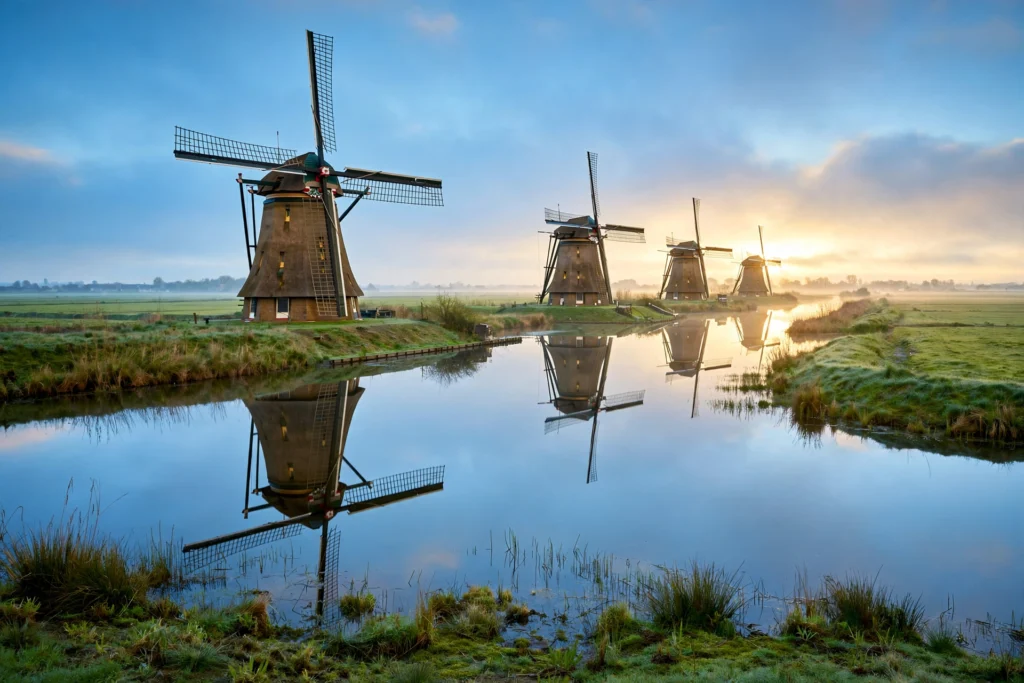
Kinderdijk is the windmill village, and it is the one that photographs best. Nineteen windmills from the 18th century stand in a line along the water near Rotterdam, built to pump water out of the polder and into the river, and the whole complex is a UNESCO World Heritage site. It is not a theme park: the windmills are still working, people still live in some of them, and the best way to see them is on foot or by bike along the paths between the canals, or from the water on the tour boat. Two windmills are open as museums, and the visitor centre explains the water management that built the country. Kinderdijk is half a day, not a full day — combine it with an afternoon in Rotterdam or a morning in Delft, and take the waterbus from Rotterdam’s Erasmus Bridge, which is itself one of the best rides in the country.
The day-trip picker
| Day trip | Best for | Time needed | From Rotterdam | From Amsterdam |
|---|---|---|---|---|
| The Hague and Scheveningen | The Mauritshuis, government, the beach | A full day | ~25 minutes by train | ~30–50 minutes by train |
| Utrecht | Canals, the Dom Tower, wharf cafés, student energy | A full day | ~40 minutes by train | ~25–30 minutes by train |
| Kinderdijk | Windmills, UNESCO site, polder landscape | Half a day | ~30 minutes by waterbus and bus | ~1 hour via Rotterdam |
| Zaanse Schans | Working windmills, cheese, clog-making | Half a day | ~1 hour via Amsterdam | ~20 minutes by train or bus |
Zaanse Schans, the open-air museum of windmills and wooden houses just north of Amsterdam, is the fourth day trip, and it divides opinion. It is beautiful, it is easy to reach, and the windmills are working. It is also crowded, and the cheese shops and clog demonstrations are aimed squarely at tour groups. Go early in the morning, before the coaches arrive, and it is lovely. Go at midday in July, and it is a queue. If you have to choose between Zaanse Schans and Kinderdijk, choose Kinderdijk — it is the real thing, and the waterbus ride is part of the experience.
The 3-Day, 5-Day, 7-Day and 10-Day Netherlands Itineraries
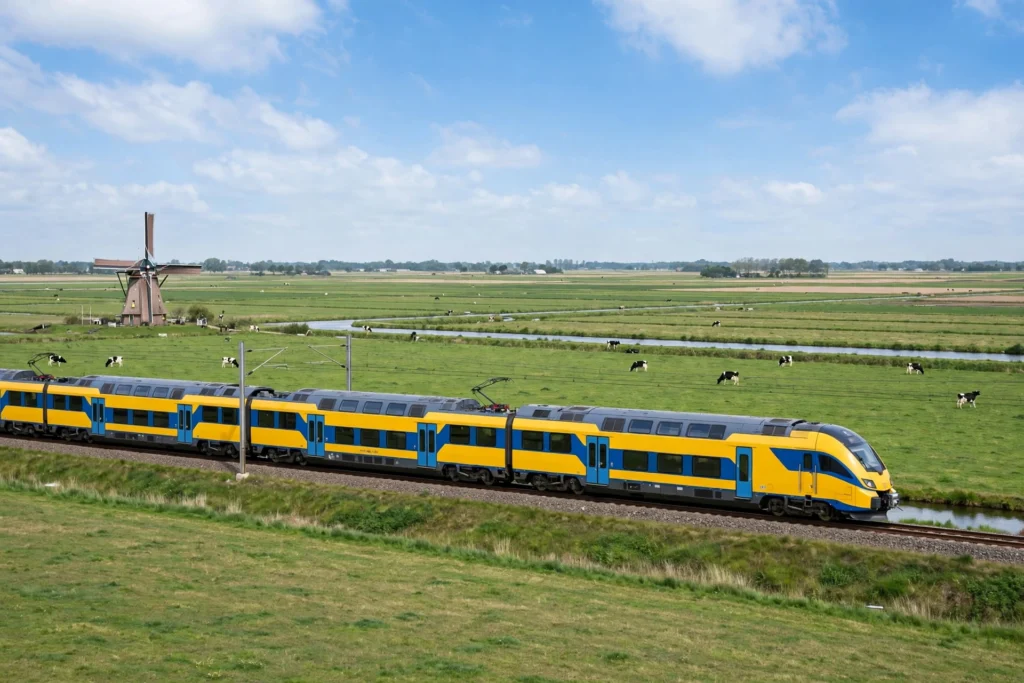
Every itinerary in this guide is built from the same two bases — Haarlem or Amsterdam first, Rotterdam second — so you can see exactly what each extra day buys you. The 3-day trip is Amsterdam only, done properly. The 5-day trip adds Haarlem and one day trip. The 7-day trip is the classic first trip to the Netherlands, and it is the one this guide recommends. The 10-day trip adds the south, the islands or the forests. None of them base-hop nightly, none of them zigzag, and all of them leave the country in the order you arrived: fly into Schiphol, out of Schiphol, and let the trains do the rest.
The 3-day Netherlands itinerary: Amsterdam, done properly
| Day | Where | What you do |
|---|---|---|
| 1 | Amsterdam | Canal ring walk, the Jordaan, Nine Streets, canal cruise, brown café evening |
| 2 | Amsterdam | Rijksmuseum at 09:00, Albert Cuyp Market and De Pijp, Van Gogh Museum, Vondelpark |
| 3 | Amsterdam | Anne Frank House, Noordermarkt, ferry to Amsterdam-Noord, Plantage or Eastern Docklands |
Base in Amsterdam itself for three days, or in Haarlem if you prefer a quieter bed — the train is fifteen minutes, and the saving on the hotel is real. Three days is enough for Amsterdam and nothing else, and that is the honest truth: do not try to add Keukenhof or Rotterdam to a three-day trip, because you will spend the third day on a train instead of in the city you came to see.
The 5-day Netherlands itinerary: Amsterdam plus Haarlem and one day trip
| Day | Where | What you do |
|---|---|---|
| 1–2 | Amsterdam (base Haarlem) | As the 3-day plan, days one and two |
| 3 | Haarlem | Grote Markt, St Bavo Church, the Hofjes, Frans Hals Museum, Teylers Museum, the Spaarne |
| 4 | Keukenhof and the bulb fields (spring) or Delft (year-round) | Keukenhof garden and the free fields by bike, or Delft: the Markt, the Nieuwe Kerk tower, Royal Delft |
| 5 | Amsterdam | Anne Frank House, Noordermarkt, Amsterdam-Noord, last canal walk |
Five days is the shortest trip that feels like the Netherlands rather than Amsterdam. The third day in Haarlem is the one that changes the trip: it is the day you stop being a tourist in a crowd and start being a traveller in a town. The fourth day is the seasonal choice — Keukenhof in spring, Delft in every other month — and the fifth day finishes Amsterdam properly.
The 7-day Netherlands itinerary: the classic first trip
| Day | Where | What you do |
|---|---|---|
| 1–2 | Amsterdam (base Haarlem) | Canal ring, the Jordaan, canal cruise, Rijksmuseum, Van Gogh Museum, De Pijp |
| 3 | Haarlem | Grote Markt, the Hofjes, Frans Hals Museum, Teylers Museum, the Spaarne |
| 4 | Keukenhof and the bulb fields (spring) or Delft and Leiden (year-round) | Keukenhof and the fields, or Delft in the morning and Leiden in the afternoon |
| 5 | Move to Rotterdam; Rotterdam | Markthal, cube houses, Erasmus Bridge, Katendrecht, Witte de Withstraat |
| 6 | The Hague and Scheveningen | Mauritshuis, Binnenhof, Peace Palace, the beach at Scheveningen |
| 7 | Utrecht or Kinderdijk | Utrecht: canals, Dom Tower, wharf cafés; or Kinderdijk windmills in the morning and Rotterdam in the afternoon |
Seven days is the trip this guide is built for, and it is the one to take if you can. Two bases, three cities, two great towns, the tulips or their year-round alternative, the windmills, the beach and the best museums in the country — and not a single night spent packing and unpacking. The move from Haarlem to Rotterdam on day five takes about an hour by train, including the walk between the stations, and it is the only move in the whole trip.
The 10-day Netherlands itinerary: the classic route, with the country beyond the Randstad
| Day | Where | What you do |
|---|---|---|
| 1–7 | As the 7-day plan | The full classic route, at the same pace |
| 8 | Hoge Veluwe National Park | Kröller-Müller Museum, the sculpture garden, free white bicycles, heath and forest |
| 9 | Texel or the Wadden Islands | Ferry from Den Helder, dunes, beaches, seal-watching, cycling |
| 10 | Maastricht | The old city, the basilicas, the terraces, the hills of South Limburg |
Ten days is the trip for the traveller who has been to the Netherlands before, or who simply wants more of it. The three extra days go beyond the Randstad, to the parts of the country the first trip never reaches: the Hoge Veluwe, the great national park in Gelderland, where the Kröller-Müller Museum holds the second-largest Van Gogh collection in the world and the free white bicycles at the entrance let you cycle through heath and forest; Texel, the largest of the Wadden Islands, with dunes, beaches, seal colonies and dark skies; and Maastricht, the lively old city in the hilly south, near the Belgian border, with basilicas, terraces and a Burgundian feel that is unlike anywhere else in the country. If ten days is too many, take the 7-day plan and add just one of these three — the Hoge Veluwe is the easiest, Texel is the most different, and Maastricht is the most charming.
Extending the trip: Belgium, Germany and France
The Netherlands sits between Belgium, Germany and France, and the trains run straight through. From Rotterdam, Brussels is about an hour and a quarter by Intercity, and Paris is about two and a half hours by high-speed train. If you have two weeks, the natural extension is south: Rotterdam to Antwerp and Bruges, or Rotterdam to Paris by way of Brussels. Our France travel guide covers the Paris-plus-one-region plan that pairs naturally with a Netherlands trip, and the same two-base thinking applies there: pick Paris plus one region, and give it the days it deserves. For the German side of the border, our Germany travel guide covers the north-to-south route from Hamburg to Munich. And if you are combining countries, remember the 90/180 rule: days in the Netherlands, Belgium, Germany and France all count toward the same 90 days, so keep a count.
What to Eat in the Netherlands: Food by City and Season

Dutch food has a reputation problem, and it is mostly unfair. The Netherlands does not have a grand cuisine in the French or Italian sense, but it has a food culture that is simple, honest and very good at what it does: the best cheese in northern Europe, the best Indonesian food outside Indonesia, superb seafood from the North Sea, and a café culture that turns a plate of fried snacks and a beer into an evening. The trick is to eat what the Dutch eat, where the Dutch eat it, and to avoid the restaurants that exist only for tourists.
The first rule is to eat from the market and the street. Raw herring with onions — haring — from a street stall is the most Dutch food there is, and it is eaten the Dutch way: held by the tail, lowered into the mouth, with chopped onion and pickles. It is available all year, but the new season’s herring, the Hollandse Nieuwe, arrives in June and is an event. Kibbeling, battered and fried white fish with garlic sauce, is the other street fish, and it is sold from the same stalls. Stroopwafels, the thin waffles filled with caramel syrup, are best made fresh on the iron at a market stall — the packaged ones in the supermarket are a different and lesser thing. Poffertjes, the mini pancakes dusted with icing sugar and butter, are a winter market food. Bitterballen, the deep-fried meatballs served with mustard in every brown café, are not a meal — they are a drink’s companion, and ordering them without a beer is missing the point.
The second rule is to eat the cheese properly. Gouda is not a single cheese but a town, a market and a whole family of cheeses, and the best place to buy it is a market stall or a cheese shop, not a tourist shop in the centre of Amsterdam. The cheese markets at Gouda and Alkmaar run in spring and summer and are worth a morning if you are nearby — the traditional weighing and trading in the square is a show, and the cheese is the real thing. Edam, Leiden and the other Dutch cheeses are all worth trying, and a cheese shop will let you taste before you buy. Buy a piece for a picnic, with bread from a bakery and fruit from the market, and you have the best cheap lunch in the country.
The third rule is to eat Indonesian food. The rijsttafel — the rice table — is the Netherlands’ great contribution to world cuisine, a legacy of the colonial period in Indonesia: a table full of small dishes, from mild to fiery, served with rice, and eaten slowly over an evening. The best rijsttafel restaurants are in Amsterdam, The Hague and Rotterdam, and they have been doing it for decades. It is not cheap — expect €30 to €45 per person — but it is the meal to have once on the trip, and it is the one Dutch food experience that visitors remember for years. The Indonesian restaurants in the smaller towns are often just as good and cheaper, because they cook for the local Indonesian community rather than for tourists.
Food by city
| City | What to eat there | Where to eat it |
|---|---|---|
| Amsterdam | Herring, stroopwafels, rijsttafel, brown-café bitterballen | Albert Cuyp Market, the Jordaan, De Pijp |
| Haarlem | Market cheese, bakery bread, café lunches on the Grote Markt | Saturday market, the streets behind the Grote Markt |
| Rotterdam | Markthal food, Fenix Food Factory, harbour fish | Markthal, Katendrecht, Witte de Withstraat |
| Delft | Bakery lunch, café terraces on the Markt | The Markt and the streets behind it |
| Leiden | Market food, student cafés, Indonesian restaurants | Wednesday and Saturday markets, the Rapenburg |
| The Hague and Scheveningen | Fresh fish on the beach, Indonesian food | Scheveningen boulevard, the city centre |
| Utrecht | Wharf-café dinners, market food | The canal wharves, the markets |
| Zeeland | Mussels, oysters, seafood | Middelburg, Veere, the coast restaurants |
Eating well without overpaying
The Netherlands is not a cheap country to eat in, but it is a country where the cheapest food is often the best. A market lunch — herring, a stroopwafel, bread and cheese — costs a few euros and is better than a €25 tourist-menu lunch. A brown café dinner of bitterballen, bread and a beer costs about €15. The supermarkets, Albert Heijn above all, are excellent: good bread, good cheese, good ready meals, and picnic supplies for a few euros. The expensive mistake is the tourist restaurant on the Damrak or around Leidseplein, with a picture menu and a tout outside — the worst food at the highest prices in the city. The other expensive mistake is drinking bottled water in restaurants when the tap water is excellent: ask for kraanwater. Tipping is modest, because service is included: rounding up to the nearest euro, or 5 to 10 percent for good service, is standard, and 20 percent is not expected and reads as odd.
How Much Does a Netherlands Trip Cost? Budgets in Euros and Dollars

The Netherlands is pricier than Portugal or Spain and cheaper than Switzerland or Norway. It is a country where the big costs are the hotel and the museums, the trains are reasonable, the food is fair value if you eat from markets and cafés, and the difference between a budget trip and a comfortable one is mostly the hotel. The figures below are per person, in euros, for a 7-day trip in 2026–27, and they are planning ranges, not quotes — the euro moves against the dollar, and a figure quoted as exact would be out of date within weeks.
Daily budgets
| Style | Per day (excluding international flights) | What it covers |
|---|---|---|
| Budget | €80–120 (about $90–135) | Hostel bunk or budget hotel outside the centre, supermarket and market food, OVpay trains and trams, one paid museum a day |
| Mid-range | €180–280 (about $200–320) | Three-star hotel in Haarlem or Rotterdam, café lunches, sit-down dinners with a drink, museums, trains |
| Comfort | €320–500 (about $360–560) | Four-star canal-side hotel, restaurant dinners with wine, private canal cruise, all museums |
The budget traveller’s arithmetic is this: a hostel bunk in Amsterdam runs about €40 to €60 a night, a budget hotel room outside the centre about €90 to €130, and a mid-range hotel in Haarlem or Rotterdam about €130 to €200. Amsterdam hotels are the main pain point — expect €220 or more for anything decent in the canal ring in high season, and book early, because the price rises as the rooms sell out. The museums are the second cost: the Rijksmuseum and the Van Gogh Museum at €25 each, the Anne Frank House at €16.50, the Mauritshuis at about €19.50, and Keukenhof at €21 to €25 — the three big Amsterdam museums alone come to about €66.50 per adult. The trains are the good news: the whole 7-day itinerary’s train travel, tap in and out with OVpay, comes to roughly €60 to €90, because the distances are short and the fares are distance-based.
A 7-day trip, costed
| Item | Mid-range, per person | Notes |
|---|---|---|
| Hotels, 7 nights | €980–1,400 | Mid-range hotel, Haarlem 4 nights and Rotterdam 3 nights; Amsterdam nights cost more |
| Food and drink | €420–560 | Café lunches, market food, sit-down dinners with a drink |
| Museums and attractions | €120–160 | Rijksmuseum, Van Gogh Museum, Anne Frank House, Mauritshuis, Keukenhof, Kinderdijk |
| Trains, trams and bikes | €90–130 | OVpay trains and city trams, one bike rental day |
| Canal cruise | €15–25 | One hour on the water in Amsterdam |
| Total, excluding international flights | €1,625–2,275 (about $1,850–2,600) | Two sharing a room pay less per person on the hotel |
The single biggest saving is the base choice: sleeping in Haarlem instead of Amsterdam saves roughly €50 to €80 a night, and sleeping in Rotterdam instead of Amsterdam saves a similar amount, which is €350 to €550 over a week — more than the entire museum budget. The second saving is food: a week of market lunches and supermarket picnics instead of restaurant lunches saves €150 or more, and the food is better. The third saving is timing: a week in January costs roughly 30 to 40 percent less on hotels than a week in late April, and the museums are the same price and much quieter.
Money tips that save real money
Pay by card everywhere: the Netherlands is one of the most card-friendly countries in Europe, many places are card-only, and trams and buses do not take cash at all. Carry a contactless debit or credit card and a phone wallet, and use the same card for OVpay all trip — the system charges the same fare as the old OV-chipkaart, and the total for the day shows on your bank statement the next day. Do not buy an anonymous OV-chipkaart: it stopped being sold on 1 July 2026, it costs €7.50 for the card, and the whole system retires at the end of 2027. Do not change money at the airport or in a tourist exchange shop: use an ATM with a card that does not charge foreign transaction fees, and decline the ATM’s offer to convert the amount into dollars, because the rate is always worse. And keep the receipts for the big museum tickets: if a museum closes unexpectedly or a train is cancelled, the refund process is straightforward, but only if you can show what you paid.
Getting Around the Netherlands: Trains, OVpay, Bikes and the Rules That Catch Visitors
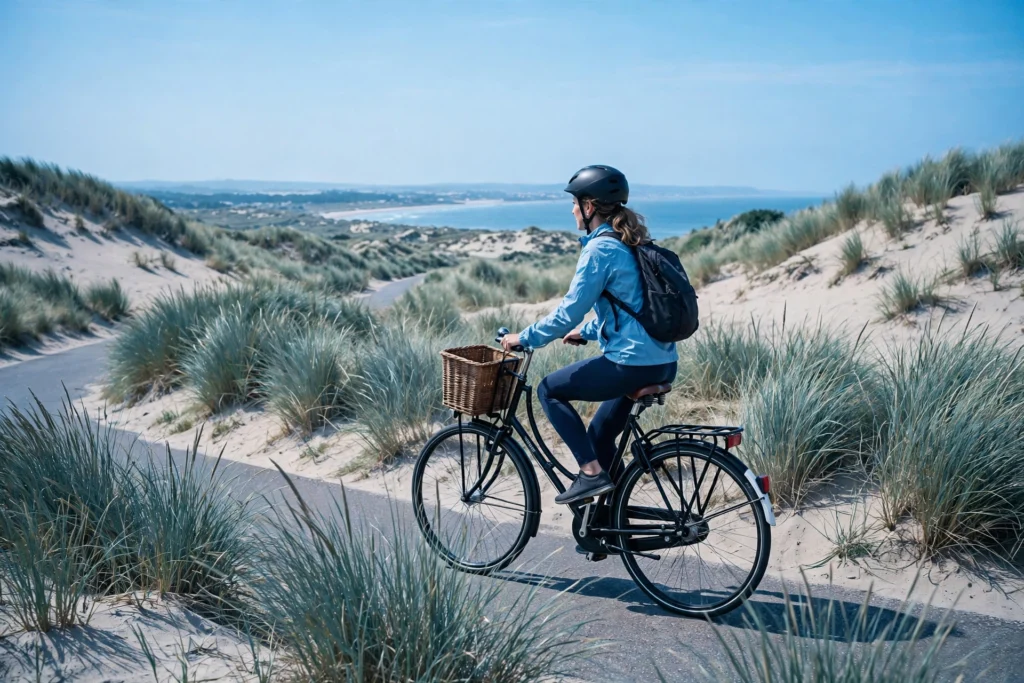
The Netherlands is the easiest country in Europe to get around without a car, and the train is the reason. NS, the Dutch railway, runs the country on rail: Intercity trains between the big cities, Sprinters that stop everywhere, and a network so dense that the wait is rarely more than fifteen minutes. The trains are punctual, clean, and frequent, and the whole country is covered. Skip domestic flights entirely — the country is about 200 miles end to end, and the train from Amsterdam to Maastricht takes two and a half hours. A rental car helps only for the Wadden coast, the Hoge Veluwe and rural Zeeland, where the trains thin out; in the cities, a car is a liability, because parking is expensive, the centres are closed to through traffic, and the speed cameras are everywhere.
The train-times table: every hop under about an hour
| Route | Train | Typical time |
|---|---|---|
| Schiphol Airport – Amsterdam Centraal | Intercity direct | 15–20 minutes |
| Amsterdam Centraal – Haarlem | Intercity / Sprinter | 15–20 minutes |
| Amsterdam Centraal – Utrecht Centraal | Intercity | 25–30 minutes |
| Amsterdam Centraal – Rotterdam Centraal | Intercity direct | ~40 minutes |
| Amsterdam Centraal – The Hague Centraal | Intercity | 30–50 minutes |
| Amsterdam Centraal – Leiden Centraal | Intercity | ~35 minutes |
| Rotterdam Centraal – Delft | Intercity / Sprinter | ~12 minutes |
| Rotterdam Centraal – The Hague Centraal | Intercity | ~25 minutes |
| Rotterdam Centraal – Utrecht Centraal | Intercity | ~40 minutes |
| Rotterdam Centraal – Kinderdijk | Waterbus and bus | ~30 minutes |
| Haarlem – Leiden Centraal | Intercity | ~20 minutes |
| Haarlem – Zandvoort aan Zee | Sprinter | ~15 minutes |
The times above are typical Intercity times, checked against the top guides and the NS planners in November 2026; the exact time depends on the departure, and the NS app or the 9292 planner shows the price and the platform for your exact train. Buy your ticket on ns.nl or in the NS app, where an e-ticket is €1 cheaper than a ticket from the machine, or simply tap in and out with your contactless card — the OVpay system below. A paper ticket from the machine costs €1 more than the standard fare, and a disposable single-use ticket costs €1 for the ticket itself, so the machine is the most expensive way to travel.
OVpay: the system that replaced the OV-chipkaart
OVpay is the Dutch contactless payment system, and it is the one thing every visitor needs to understand before they arrive. It works like this: on every NS train and on the trams, buses and metros of GVB in Amsterdam, RET in Rotterdam, HTM in The Hague and U-OV in Utrecht, you hold your own contactless debit or credit card, phone or smartwatch against the card reader when you get on, and again when you get off. Nothing to register, nothing to activate, nothing to load in advance. The fare is the same as with the old OV-chipkaart, and it is taken from your account the next day. The charge on your bank statement carries a reference starting with NLOV, and with that reference you can see your trips on ovpay.nl or in the OVpay app.
There are five rules, and they catch visitors every day. First, use the same card or phone to check out as you used to check in — tap in with your phone and out with the physical card, and the system cannot match the journey. Second, one card per person — you cannot check in two people with one card, so every traveller needs their own card or phone. Third, do not skip the check-out: on an NS train, a missed check-out with a bank card costs €33.30, and on a tram, metro or bus it costs €4. Fourth, take the card out of your wallet before you tap, or another card may be charged. And fifth, you have to check out of one operator and check into the next: the train into Amsterdam is NS, the tram you take afterwards is GVB, and there is no automatic transfer between them. If you do forget to check out, you can correct it yourself: from six hours after the journey and up to sixty days later, go to ovpay.nl, enter the NLOV reference and the amount taken, and fill in where you got off — NS refunds the difference within about five days.
The old OV-chipkaart is going away. The anonymous OV-chipkaart stopped being sold on 1 July 2026, and the whole system will be fully retired by the end of 2027, replaced by OVpay for anyone with a contactless card and by the new OV-pas, a physical card for Dutch residents who do not want to use a bank card. For a 2026–27 visit, none of this matters in practice: the chipkaart still works, OVpay works, and you simply do not need to buy a separate card. Skip the queue at the Schiphol service desk and walk straight to the OVpay gates. The Schiphol to Amsterdam Centraal train takes 15 to 20 minutes and costs €5.50 with OVpay in 2026, rising to €5.80 from 1 January 2027. OVpay accepts Visa and Mastercard, debit and credit, plus Apple Pay, Google Pay and smartwatches; it does not accept American Express, Diners Club or older Maestro cards, so carry a Visa or Mastercard as a backup.
Transport at a glance
| Mode | Best for | Cost | Notes |
|---|---|---|---|
| NS Intercity train | City to city | Distance-based; Schiphol–Centraal €5.50 | Fastest; book on ns.nl or tap in with OVpay |
| NS Sprinter train | Short hops, small towns | Distance-based | Stops everywhere; same OVpay system |
| Tram and metro | Inside Amsterdam, Rotterdam, The Hague, Utrecht | GVB day ticket €10 for 24 hours | Tap in and out with the same card |
| Bus | Keukenhof, villages, the coast | Included in OVpay | No cash on board |
| Ferry | Amsterdam-Noord, the Wadden Islands | Free across the IJ; island ferries from about €15 return | Book island ferries ahead in summer |
| Bike rental | City exploring, the bulb fields, the dunes | About €12–18 a day | Two locks; never leave unlocked |
Cycling: how to ride like a local without getting hurt
The Netherlands has about 35,000 kilometres of dedicated cycle paths, more bikes than people, and a cycling culture that is the envy of the world — and it is also the thing that injures more tourists than anything else in the country. The rules are simple and they are enforced by the other cyclists, loudly and immediately. Stay right, and ride in single file. Signal turns with your arm. Never stop in a bike lane — pull off to the side. Never ride on tram tracks, because your wheel will catch and you will fall. Look behind you before you turn. Use lights after dark, because it is a legal requirement and the police do fine cyclists without lights. Lock the bike with two locks, one of them through the frame to something fixed, because bike theft is the most common crime in the country. And do not cycle after drinking: the same drink-driving rules apply to bikes, and the fine is real.
Rent a bike in every city you visit — the rental shops are everywhere, the bikes are sturdy and upright, and a day costs about €12 to €18. The best cycling in the country is not in the cities, though: it is the bulb fields in April, the dunes at Zandvoort and Scheveningen, the Hoge Veluwe on the free white bicycles, and the Wadden Islands, where the whole island is built for bikes. If you have never cycled in traffic before, take the first ride in a quiet place — the Vondelpark in Amsterdam, or the dunes at Zandvoort — and learn the rhythm before you ride in the city centre at rush hour. And remember the golden rule, the one every Dutch child learns: the bike lane is a road, not a pavement, and the cyclist coming towards you at speed is not going to slow down.
Arriving and leaving: Schiphol
Most visitors arrive at Amsterdam Schiphol, one of the best-connected airports in Europe, and the arrival is the easiest part of the trip. The train station is underneath the airport, in Schiphol Plaza, and the Intercity to Amsterdam Centraal takes 15 to 20 minutes and costs €5.50 with OVpay. Tap in at the pink and blue OVpay gates before boarding, and tap out at the gates at Centraal on arrival — both taps, or it becomes €33.30. If you are going straight to Haarlem, take the train to Amsterdam Sloterdijk and change, or the direct bus in spring; the journey takes about half an hour. If you are going straight to Rotterdam, the Intercity direct takes about 25 minutes. Do not take a taxi from Schiphol unless you have to: the train is faster, cheaper and more reliable, and the unlicensed taxis at the airport are the one scam the State Department’s guidance warns about. On departure, allow extra time at the airport for the EES registration if it is your first trip since the system started, and for the queues at passport control, which are longest on Sunday afternoons and Monday mornings.
Frequently Asked Questions About Netherlands Travel
How many days do I need for a first trip to the Netherlands?
Seven days is the right answer for a first trip. Three days covers Amsterdam only, five days adds Haarlem and one day trip, and seven days gives you Amsterdam, Haarlem, Rotterdam, Delft, Leiden, The Hague, Utrecht and Kinderdijk, with the tulips in spring — the whole country, from two bases, without rushing. Ten days adds the Hoge Veluwe, Texel or Maastricht. Less than three days is not enough for Amsterdam alone.
Is Amsterdam the whole trip, or should I go beyond it?
Go beyond it. Amsterdam is two or three days of a seven-day country trip, not the trip. Haarlem, Rotterdam, Delft, Leiden, The Hague, Utrecht and Kinderdijk are each a different Netherlands, and every one of them is under an hour by train from your base. A week spent only in Amsterdam is the most common mistake first-timers make.
When is tulip season, and when is Keukenhof open?
Keukenhof is open for about eight weeks a year. In 2027 it runs from Thursday 18 March to Sunday 9 May, every day from 08:00 to 19:00. The tulips peak in mid to late April, and that is the window to aim for. Adult tickets cost €21 to €25 online depending on the day, and €27 at the gate; children aged 4 to 18 pay €11 online. Book online and book early, because the busy days sell out.
Do US citizens need a visa for the Netherlands?
No. US passport holders can visit visa-free for up to 90 days in any 180-day period. Your passport must be valid for at least three months beyond your planned departure, with at least two blank pages, and the 12-page US emergency passport is not accepted for visa-free entry. The EU’s Entry/Exit System, EES, records your fingerprints and a facial image on your first entry since April 2026.
What is ETIAS, and do I need it?
Not yet. ETIAS, the EU’s pre-travel authorisation, is not in operation as of late November 2026, no applications are being collected, and no start date has been published. The fee, when it launches, will be €20. Any website offering to sell you an ETIAS authorisation today is a scam. Check the official EU portal before you travel.
Is the Netherlands safe for US travellers?
Yes. The US State Department rates the Netherlands at Level 2 — Exercise Increased Caution — because of a general terrorism risk shared across Western Europe. It is not a travel ban and does not call the country unsafe. The risks that actually affect tourists are petty crime in busy areas and the bikes. Stay alert in tourist spots, keep your bag in front of you, and never walk in a bike lane.
How far ahead do I need to book the Anne Frank House?
Six weeks, to the day. Tickets are released every Tuesday at 10:00 Amsterdam time for visits six weeks later, online only at annefrank.org, and the popular slots go in minutes. An adult ticket costs €16.50, ages 10 to 17 pay €7, and under-10s pay €1. There are no door sales, no resellers and no city pass that includes it.
How much does a Netherlands trip cost?
For a 7-day trip, budget travellers spend about €80 to €120 a day, mid-range travellers about €180 to €280 a day, and comfort travellers about €320 to €500 a day, excluding international flights. A mid-range 7-day trip costs roughly €1,625 to €2,275 per person. The biggest saving is the base: sleeping in Haarlem or Rotterdam instead of Amsterdam saves roughly €50 to €80 a night.
Do I need an OV-chipkaart?
Almost certainly not. The anonymous OV-chipkaart stopped being sold on 1 July 2026, and the whole system retires at the end of 2027. Use OVpay instead: tap in and out with your own contactless bank card, phone or smartwatch on every train, tram, bus and metro. The fare is the same, nothing needs to be bought or loaded, and you must use the same card to check out — a missed check-out on an NS train costs €33.30.
How do I get from Schiphol Airport to Amsterdam?
Take the train. The station is underneath the airport, the Intercity to Amsterdam Centraal takes 15 to 20 minutes and costs €5.50 with OVpay in 2026. Tap in at the pink and blue OVpay gates before boarding and tap out at Centraal on arrival. Do not take an unlicensed taxi from the airport.
What is the best base for a Netherlands trip?
Two bases, not one. Haarlem — or Amsterdam itself — for the first three or four nights, covering Amsterdam, Haarlem, the bulb fields and Zaanse Schans. Rotterdam for the last three or four nights, covering Rotterdam, Delft, The Hague, Leiden, Kinderdijk and Utrecht. Every day trip from either base is under an hour by train, and you come home to the same bed every night.
Is the Netherlands good in winter?
Yes, for the right trip. Winter is the cheapest season, the museums are empty, and the cities are festive, with Christmas markets and the Amsterdam Light Festival. But the days are short and often grey, the tulips are gone, and the beaches and cycling are not at their best. If your trip is about art, food and cities, winter is a fine choice. If it is about tulips, come in April.
Conclusion: The Netherlands Rewards the Traveller Who Leaves Amsterdam
The Netherlands is a small country that rewards the traveller who treats it as a country and not as a city. Amsterdam is the front door, and it is a beautiful one — the canals, the museums, the Jordaan, the brown cafés — but the house behind it is much bigger, and it is the house that makes the trip. Haarlem, with its market square and its hidden courtyards. Rotterdam, with its port and its architecture. Delft and Leiden, with their canals and their pottery and their universities. The Hague, with its Vermeer and its beach. Utrecht, with its wharf cafés and its tower. Kinderdijk, with its windmills standing in the water. And the bulb fields in April, striped with colour to the horizon.
The trip works because the country is small and the trains are fast. Two bases, every hop under an hour, no car, no packing and unpacking every night, no zigzag. Book the Anne Frank House on its Tuesday, six weeks out. Book the Van Gogh Museum and the Rijksmuseum before you fly. Book Keukenhof early if your trip falls in the eight weeks, and go to Delft and Leiden if it does not. Tap in and out with the same card, stay out of the bike lanes, and eat from the markets. Do that, and the Netherlands gives you the trip the guidebooks promise and the one most visitors miss — not a long weekend in one crowded city, but a week in a whole country.
People also read:
- France Travel Guide: Paris, the Loire and the Riviera in 2026–27
- Germany Travel Guide: North to South in 7, 10 or 14 Days (2026–27)
- Travel Packing Checklist PDF Free: The Complete Checklist for Any Trip in 2026

M. Adil is the founder and editor of SoloTravelPro. He writes practical, research-based travel guides that help travellers plan with confidence — from first-time city breaks to national parks and island escapes. Every guide is built on official sources, current prices and honest, usable advice, so readers can plan smarter and travel better.

Other Articles

Best eSIM for Japan: Roamzo Prices, 5G and Easy Setup
Austria Travel Guide: Vienna and Salzburg the Slow Way in 2026–27