
Quick Answer

The best first-timer iceland travel itinerary is 7 days driving the Ring Road, Iceland’s Route 1 highway that loops the whole island. In a week you can see Reykjavík, the Golden Circle, the South Coast waterfalls and black sand beaches, the glacier lagoons of the southeast, the Eastfjords, Lake Mývatn and the waterfalls of the north, then return to the capital through West Iceland. You will drive roughly 1,330 kilometres (about 830 miles) in total, which works out to two to three hours of driving on most days, leaving plenty of time for stops.
If you only have 5 days, stay in the south and west: Reykjavík, the Golden Circle and the South Coast as far as Höfn, then back. If you have 10 to 14 days, add the Snæfellsnes Peninsula and the Westfjords, where the roads are quieter and the scenery is wilder. Three days is enough for a first taste — the Golden Circle plus a slice of the South Coast — but it is not enough for the Ring Road, and trying to squeeze the full loop into three days means spending your trip in the car instead of at the sights.
This guide gives you all three options, then walks through the 7-day route day by day, with overnight bases, driving distances and times, the driving rules that actually matter, a realistic cost table, and the safety advice that keeps a great trip from turning into a bad story. Before you lock in dates, sketch your days the way you would for any big trip: a simple travel itinerary template helps you keep driving times, bookings and backup plans in one place.
How Long Do You Need in Iceland?
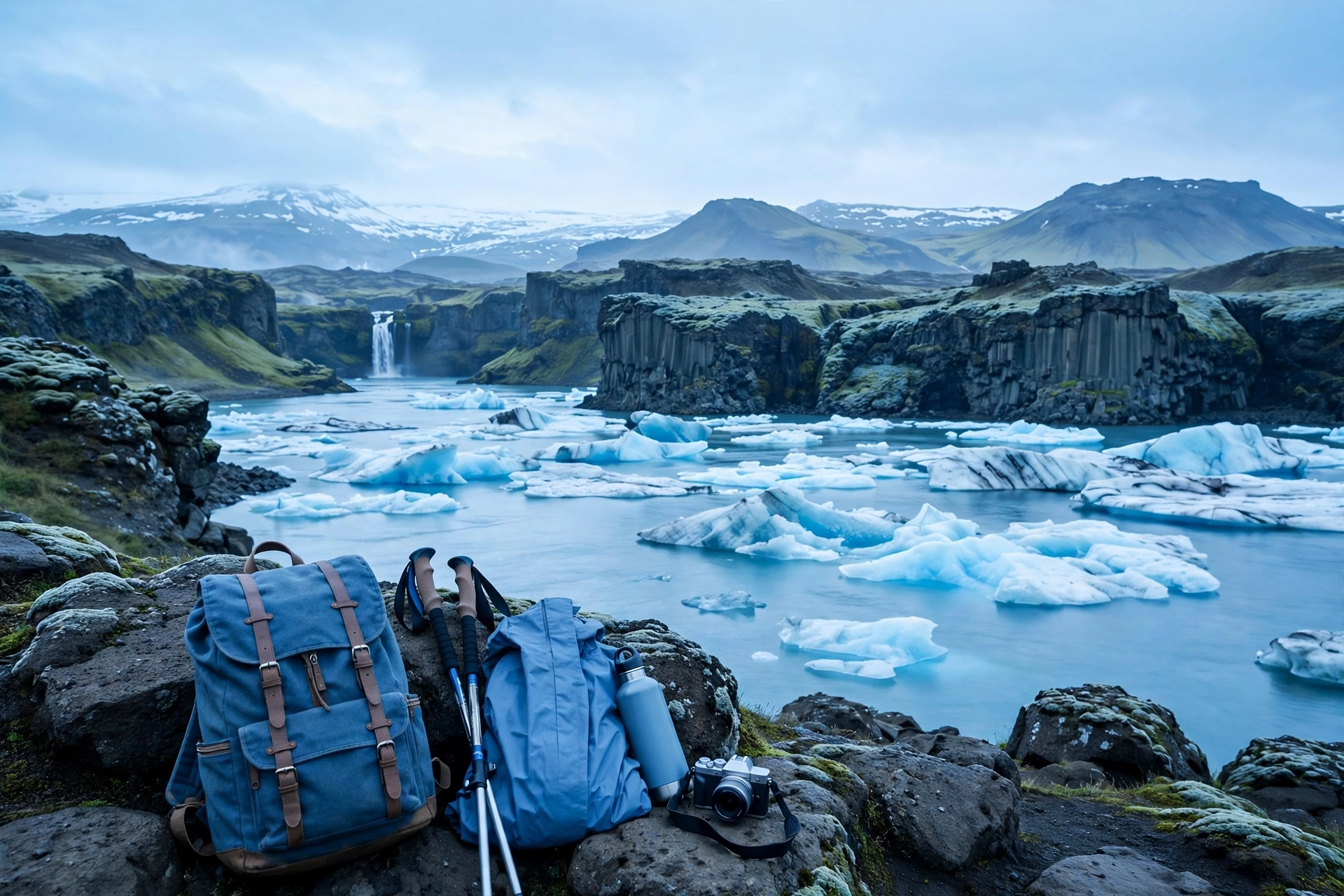
There is no single right answer, because Iceland rewards you differently at different speeds. A short trip gives you the greatest hits. A week gives you the full loop at a human pace. Two weeks gives you the quiet corners that most visitors never reach. Here is how to choose.
3 Days: Golden Circle and South Coast Highlights
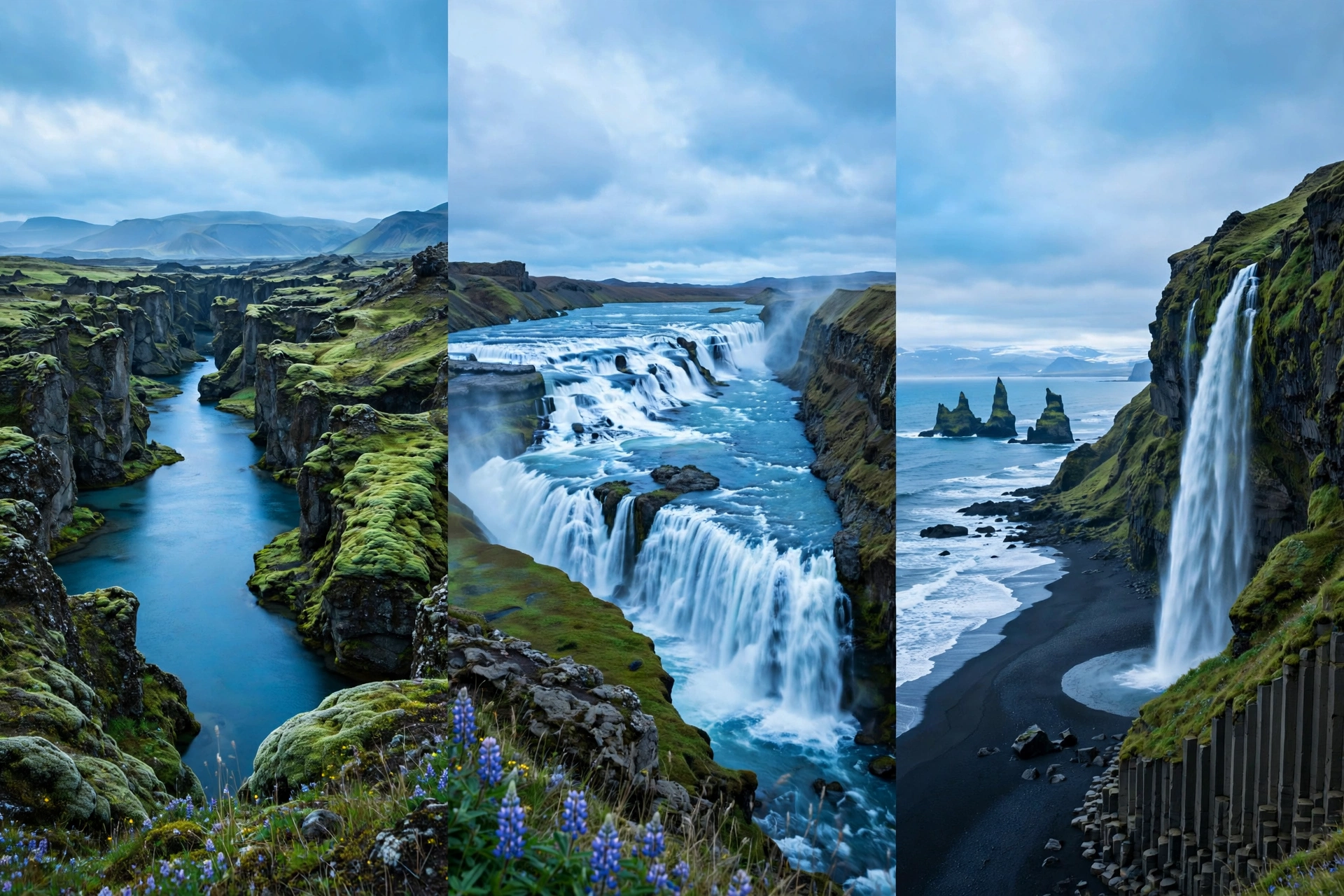
Three days suits a long weekend, a stopover, or a first trip when you are testing whether Iceland is for you. Base yourself in Reykjavík for the first night, then spend one day on the Golden Circle (Þingvellir National Park, the Geysir geothermal area and Gullfoss waterfall) and one day on the South Coast as far as Vík, taking in Seljalandsfoss, Skógafoss and Reynisfjara beach. Drive back to Reykjavík on day three, or fly home from Keflavík in the evening.
The trade-off is real: you will see Iceland’s most famous sights, but also its busiest ones, and you will miss the glaciers of the southeast, the Eastfjords and the north entirely. If you can stretch to five days, do it.
5 Days: The South Coast, Extended
Five days is the sweet spot for a first trip if a full week is out of reach. Spend day one in Reykjavík, day two on the Golden Circle, days three and four driving the South Coast to Vík and on to Höfn, and day five returning along the same coast at a slower pace, stopping at the places you rushed past on the way out — the glacier lagoon at Jökulsárlón deserves a full morning, not a photo stop. You will not complete the Ring Road, but you will see the landscapes most people picture when they think of Iceland: waterfalls, black sand, icebergs and moss-covered lava fields.
A five-day trip also keeps driving manageable in winter, when daylight is short and weather can close a road for hours. If your five days fall between November and February, this southern route is the sensible choice, because the north and the Eastfjords are much harder to reach in winter conditions.
7 Days: The Full Ring Road
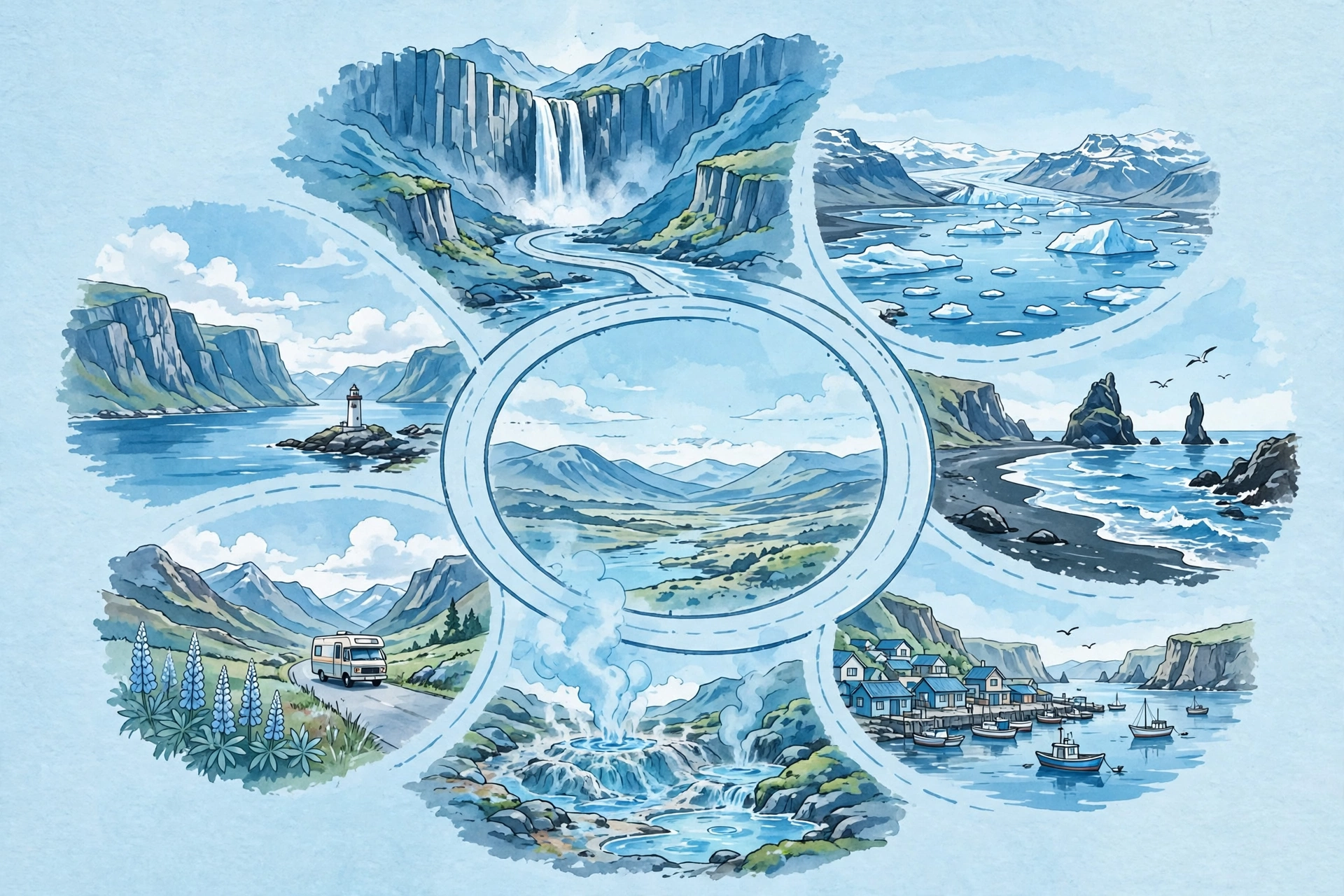
Seven days is the classic first-timer route, and it is the backbone of this guide. You drive the entire Ring Road in a clockwise direction from Reykjavík, sleeping in a different town almost every night. The clockwise direction matters: it puts the South Coast’s big sights early in the trip, when your energy is highest, and it means you reach the quieter north and west in the second half, when you have found your rhythm.
Daily driving averages 200 to 300 kilometres (125 to 185 miles), or roughly two and a half to four hours, with stops stretching the day to a comfortable eight or nine hours out. No single day is a marathon, which is exactly the point. Iceland is a place where the drive itself is part of the trip, and a route that leaves you exhausted behind the wheel is a route that has failed.
10–14 Days: The Full Loop Plus Westfjords and Snæfellsnes
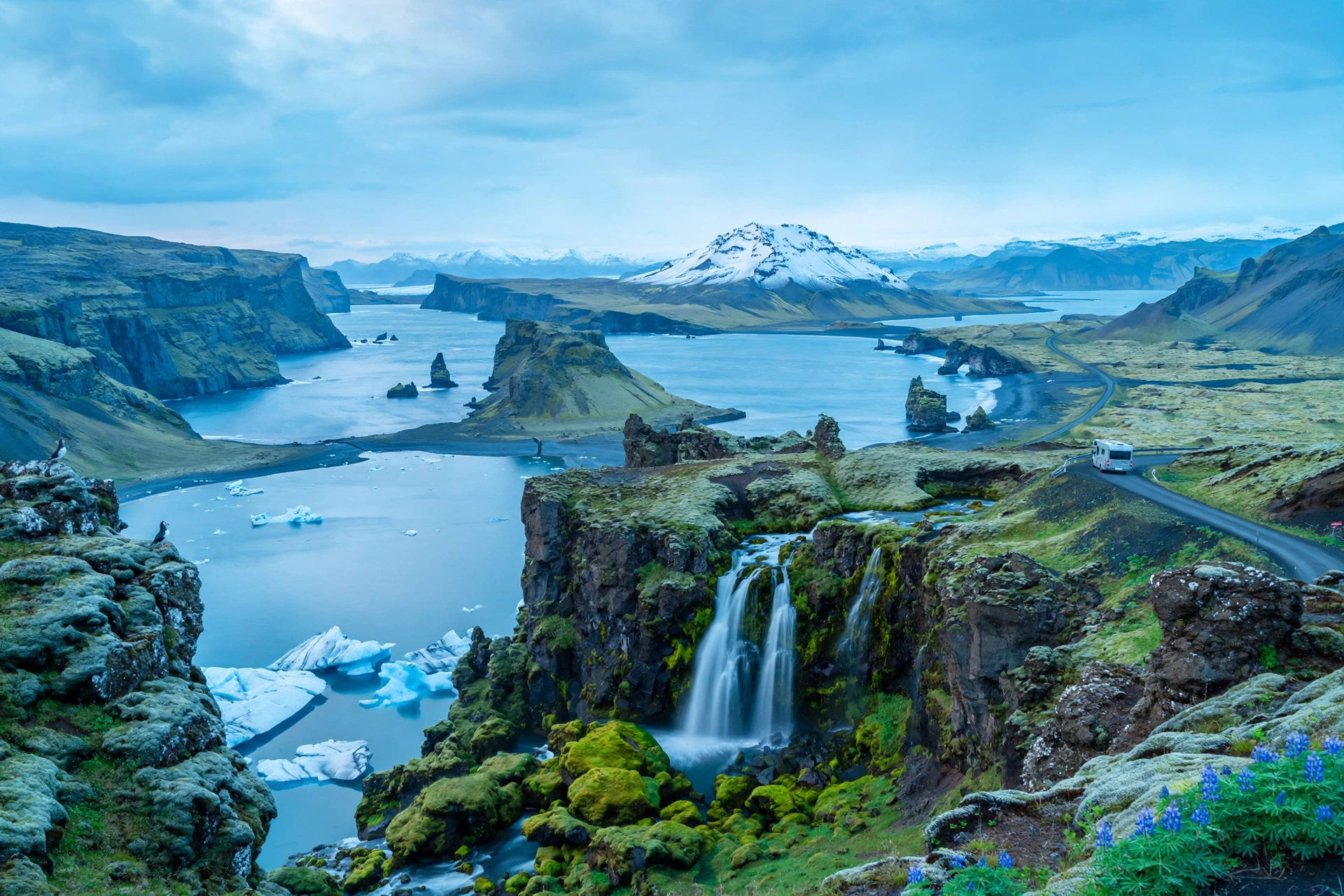
With ten days, add the Snæfellsnes Peninsula — a miniature Iceland of lava fields, a glacier-capped volcano and fishing villages — either at the start or the end of the loop. With fourteen days, add the Westfjords as well: the remote northwestern corner of the country, reached by gravel roads and one-lane stretches, home to the Dynjandi waterfall, the bird cliffs of Látrabjarg and hot pools you may have entirely to yourself.
Two weeks also buys you slack. You can wait out a storm day without losing a whole region, revisit a waterfall in better light, and take the detours — a farm stay, a horse ride, a second glacier hike — that a seven-day schedule forces you to skip. If Iceland is a once-in-a-lifetime trip for you, this is the version worth saving for.
The 7-Day Iceland Ring Road Itinerary, Day by Day
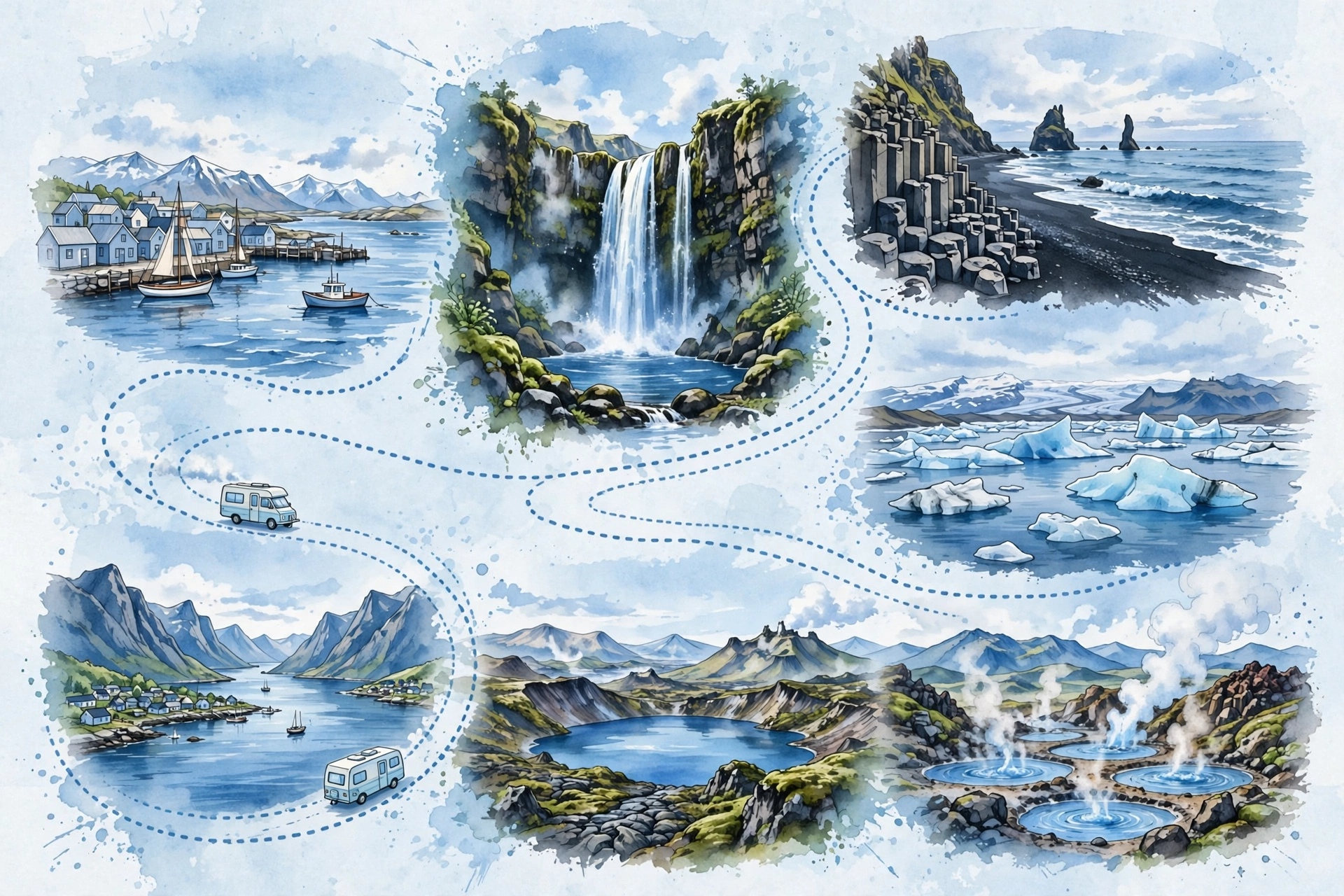
What follows is the full day-by-day plan. Distances and times are for the main route in normal conditions; add at least a third for photo stops, food and fuel, and more in winter.
Day 1: Arrive in Reykjavík and the Reykjanes Peninsula
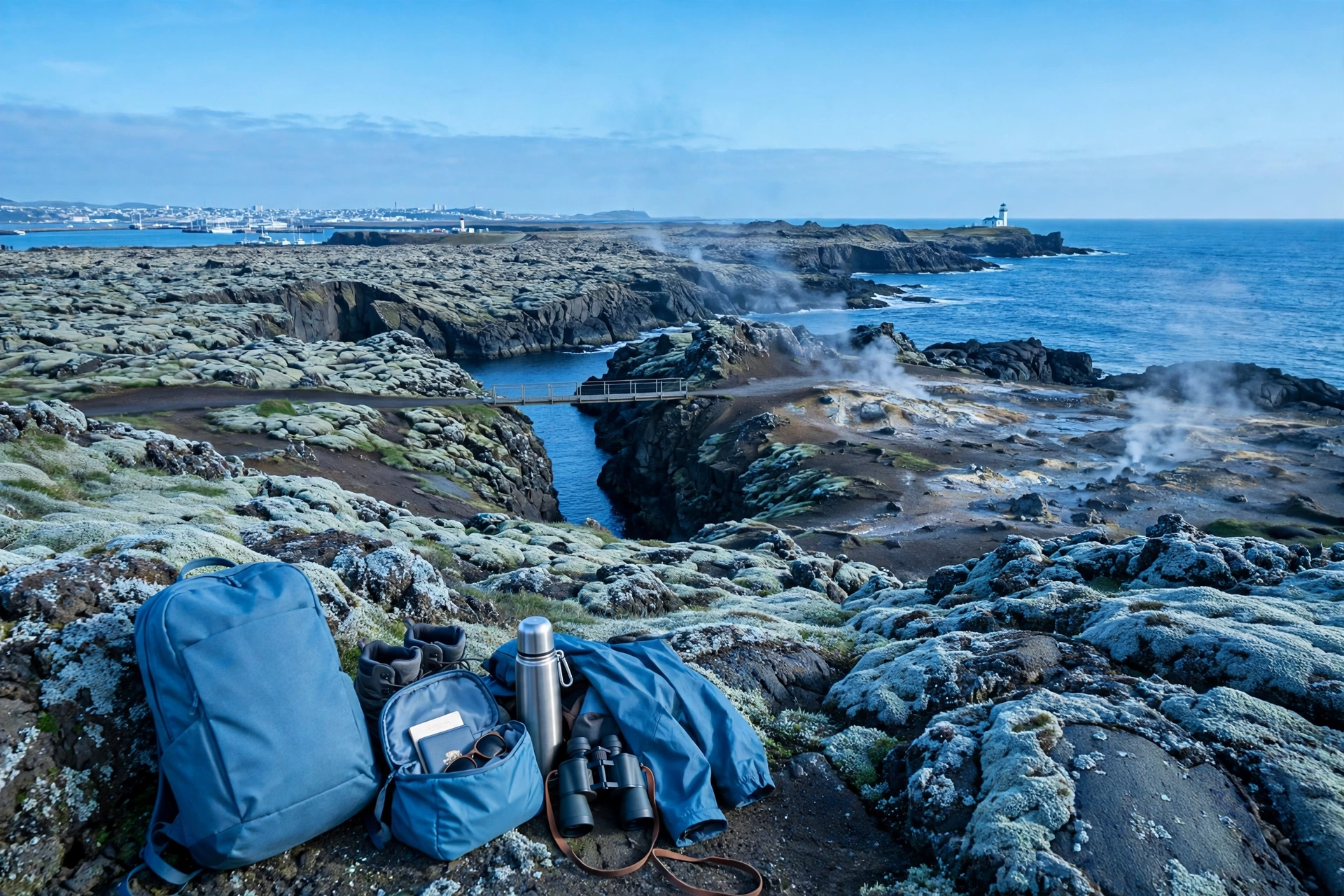
Drive: Keflavík Airport to Reykjavík, about 50 km (31 miles), 45 minutes. Overnight: Reykjavík.
Most international flights land at Keflavík, on the Reykjanes Peninsula southwest of the capital. Pick up your rental car at the airport if you are driving the whole trip, and take the direct road to Reykjavík. If you arrive early, detour to the Bridge Between Continents, where a footbridge spans the gap between the North American and Eurasian tectonic plates, or to the geothermal area at Krýsuvík with its steaming mud pots and colourful hills.
Spend the afternoon in Reykjavík itself. Walk the waterfront from the Sun Voyager sculpture to Harpa concert hall, climb the tower of Hallgrímskirkja church for the best view over the city’s colourful roofs, and wander Laugavegur, the main shopping street, for wool sweaters, bookshops and coffee. Eat dinner in the city — Reykjavík has the widest choice of restaurants in the country, and prices only go up from here. Sleep in Reykjavík; you will thank yourself for one easy day before the driving starts.
Day 2: The Golden Circle
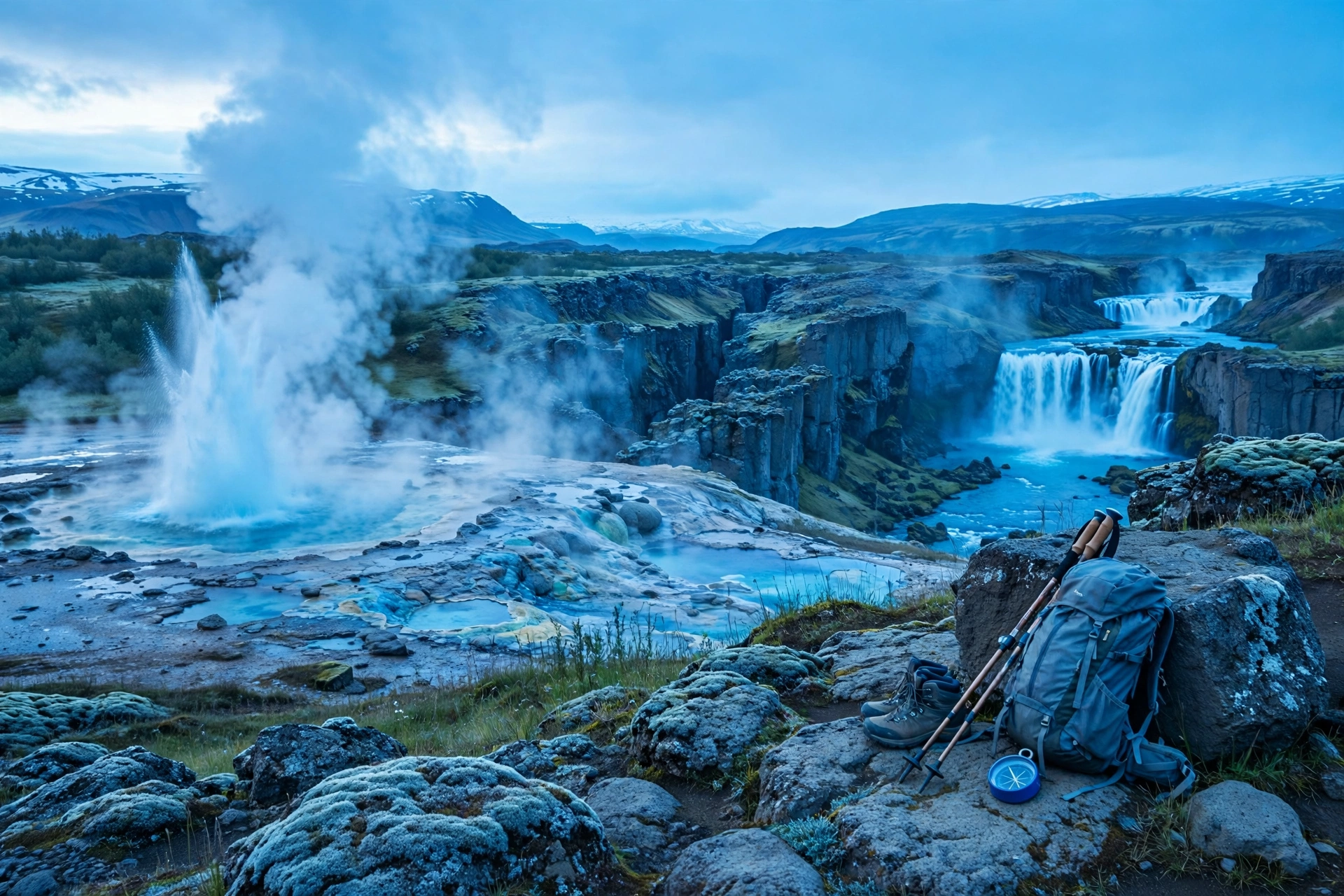
Drive: Reykjavík loop, about 230 km (143 miles), 3 hours driving plus stops. Overnight: Reykjavík or Selfoss.
The Golden Circle is Iceland’s most popular day trip for good reason: three very different sights within easy reach of each other. Start at Þingvellir National Park, where the world’s oldest parliament met in a rift valley between two tectonic plates. Walk between the cliffs of Almannagjá gorge, and if you have time, the short trail to Öxarárfoss waterfall.
Next, the Geysir geothermal area, where Strokkur erupts every few minutes, throwing boiling water 15 to 20 metres into the air. The original Great Geysir next to it is mostly quiet these days, but the whole field steams, bubbles and smells of sulphur, and the walking paths are easy. Finish at Gullfoss, a two-tiered waterfall that drops 32 metres into a rugged canyon. In sunshine, rainbows hang in the spray; in winter, ice frames the falls.
If you have energy left, add the Secret Lagoon at Flúðir or the Kerið volcanic crater on the way back. Stay a second night in Reykjavík, or push on to Selfoss to get a head start on the South Coast tomorrow.
Day 3: South Coast Waterfalls and Black Sand Beaches
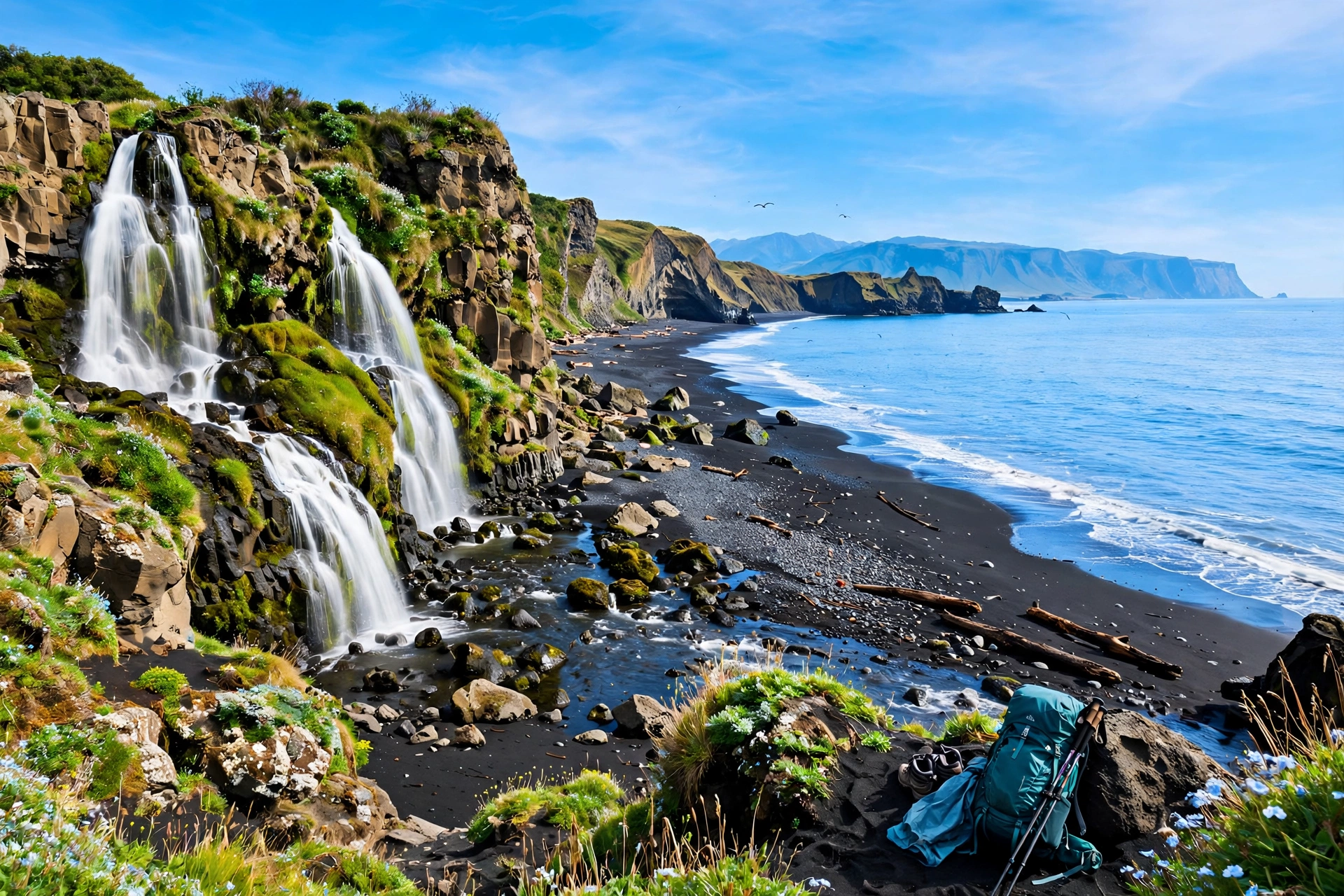
Drive: Selfoss to Vík, about 150 km (93 miles), 2 hours driving plus many stops. Overnight: Vík.
This is the day most first-timers remember best. Seljalandsfoss is first: a waterfall you can walk behind, so bring a waterproof jacket and protect your camera. Twenty minutes further east, Skógafoss thunders down 60 metres in a single curtain; climb the steps beside it for the view from the top, and keep walking along the river if you want the crowds to thin out.
Between the two waterfalls, stop at the Sólheimajökull glacier viewpoint, and at Dyrhólaey promontory for views over the black sand coast — check whether the road to the lighthouse is open, as it closes during puffin nesting season. End the day at Reynisfjara, the black sand beach near Vík, with its basalt sea stacks rising from the surf. Stay well back from the water here; the waves are famously dangerous, and the safety section below explains why. Sleep in Vík, a small village with guesthouses, a hostel and a couple of restaurants — book ahead in summer.
Day 4: Glacier Country: Vík to Höfn
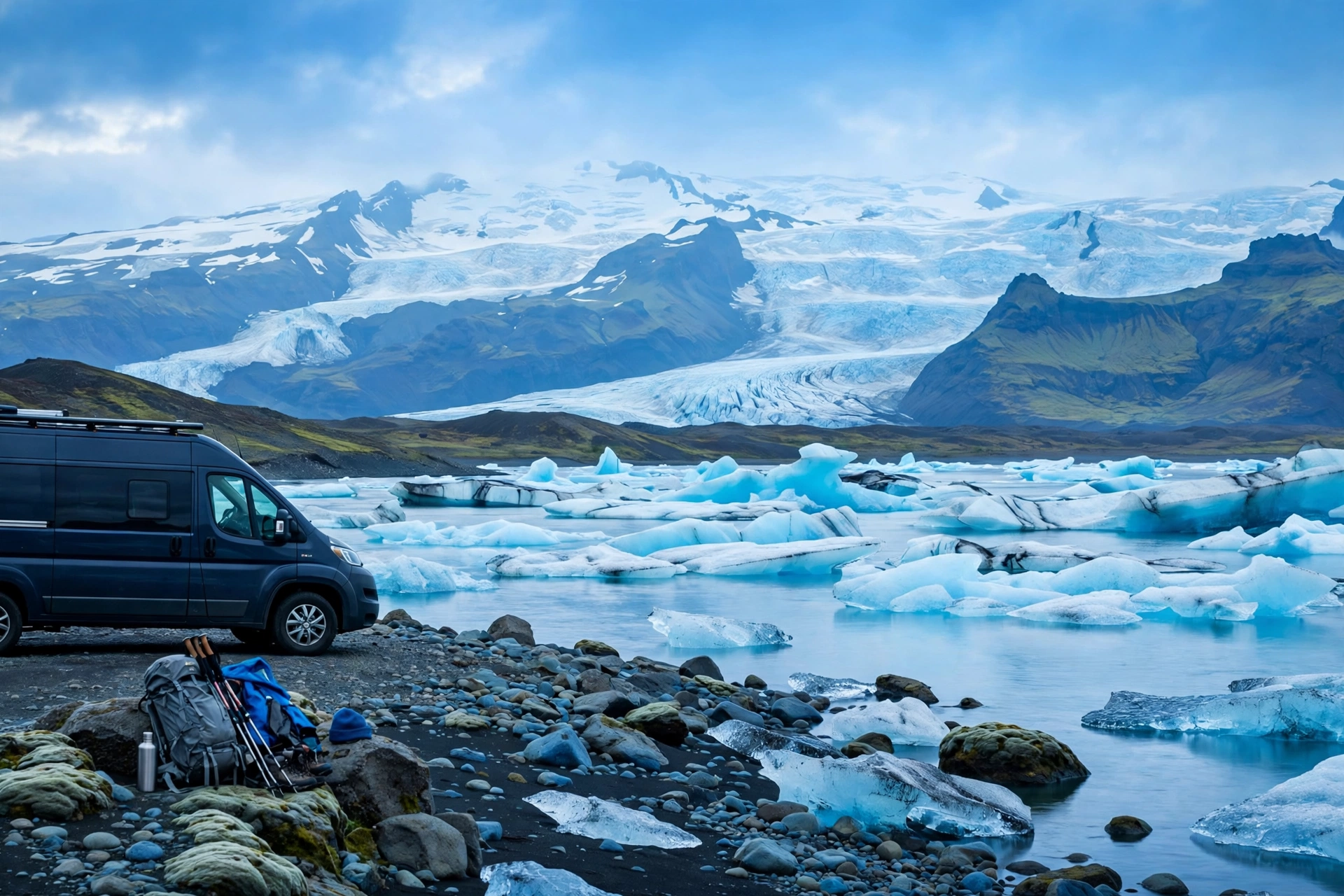
Drive: Vík to Höfn, about 270 km (168 miles), 3.5 hours driving plus stops. Overnight: Höfn.
Today the landscape changes scale. The road crosses the vast black sands of Mýrdalssandur and Skeiðarársandur, where glacial rivers braid across the plain, then enters Vatnajökull National Park country. Stop at Fjaðrárgljúfur canyon if the access road is open — a winding, moss-green gorge that is one of the most photographed places in Iceland — and at the Eldhraun lava field, a soft green carpet of moss over old lava that stretches as far as you can see.
The highlight of the day, and for many people of the whole trip, is Jökulsárlón glacier lagoon. Icebergs calve from Breiðamerkurjökull glacier and drift across the lagoon toward the sea, and across the road, Diamond Beach scatters smaller ice fragments across black sand. Give this at least two hours: walk both sides of the lagoon, watch the seals, and take the short boat tour in summer if you want to get close to the ice. Continue to Höfn, a fishing town famous for langoustine, for the night.
Day 5: Eastfjords to Lake Mývatn
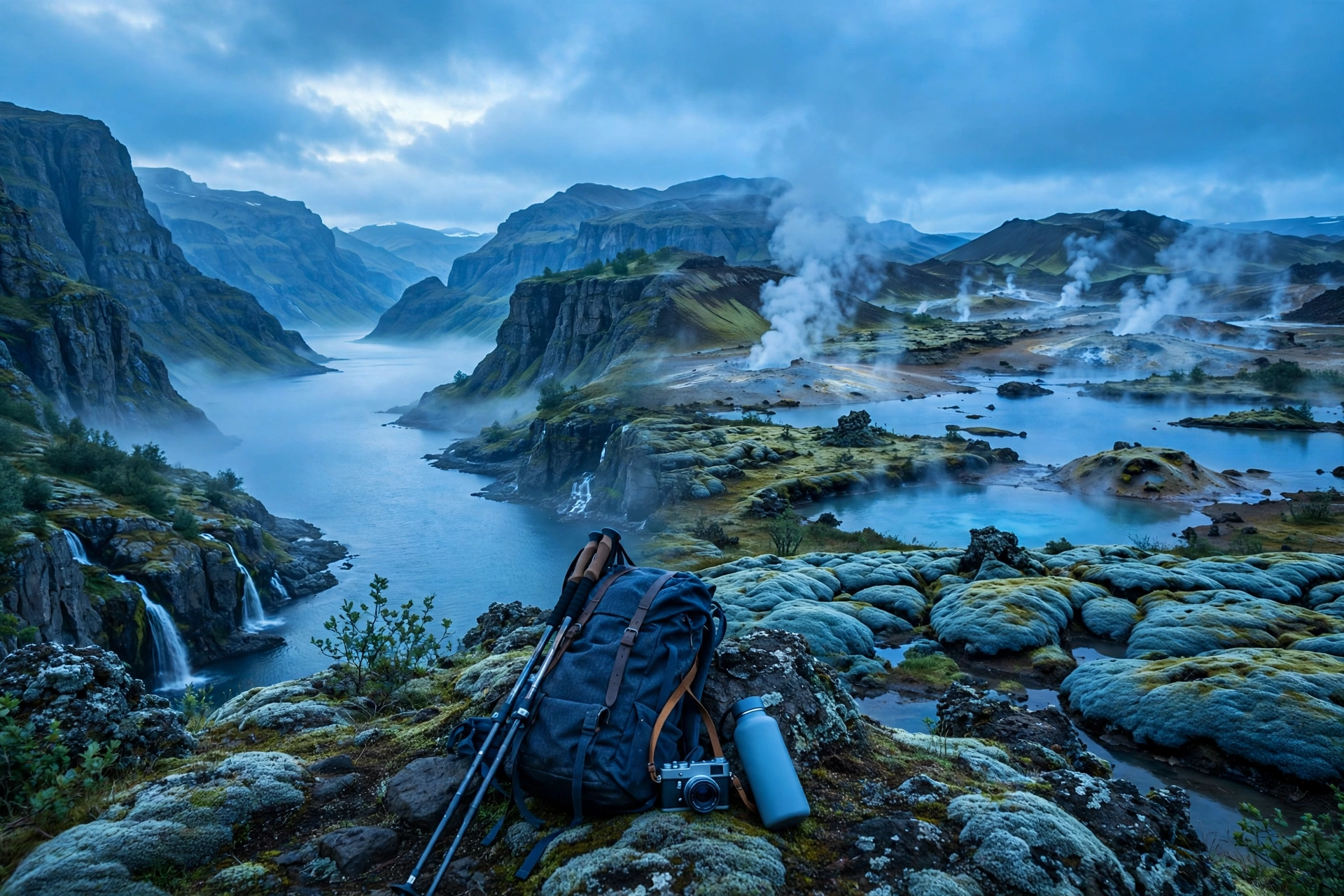
Drive: Höfn to Mývatn, about 360 km (224 miles), 4.5 hours driving plus stops. Overnight: Mývatn area.
This is the longest driving day, and the most remote. The Eastfjords are a sequence of deep fjords, tiny fishing villages and long tunnels, with the road hugging the coastline and climbing over mountain passes. Stop at Djúpivogur for coffee and a harbour walk, and at Seyðisfjörður if you have time for the detour — a pastel-coloured town at the end of a fjord, reached by a winding mountain road.
From Egilsstaðir, the route turns inland across the highland edge toward Mývatn, a volcanic lake region unlike anywhere else on the trip. The landscape here is strange and wonderful: pseudo-craters at Skútustaðagígar, the bubbling mud pots and fumaroles of Hverir, and the lava formations of Dimmuborgir, which look like a ruined castle. If you arrive with daylight to spare, walk the Dimmuborgir trails; save the Mývatn Nature Baths for the evening, when the geothermal water feels best after a long drive.
Day 6: North Iceland: Mývatn to Akureyri
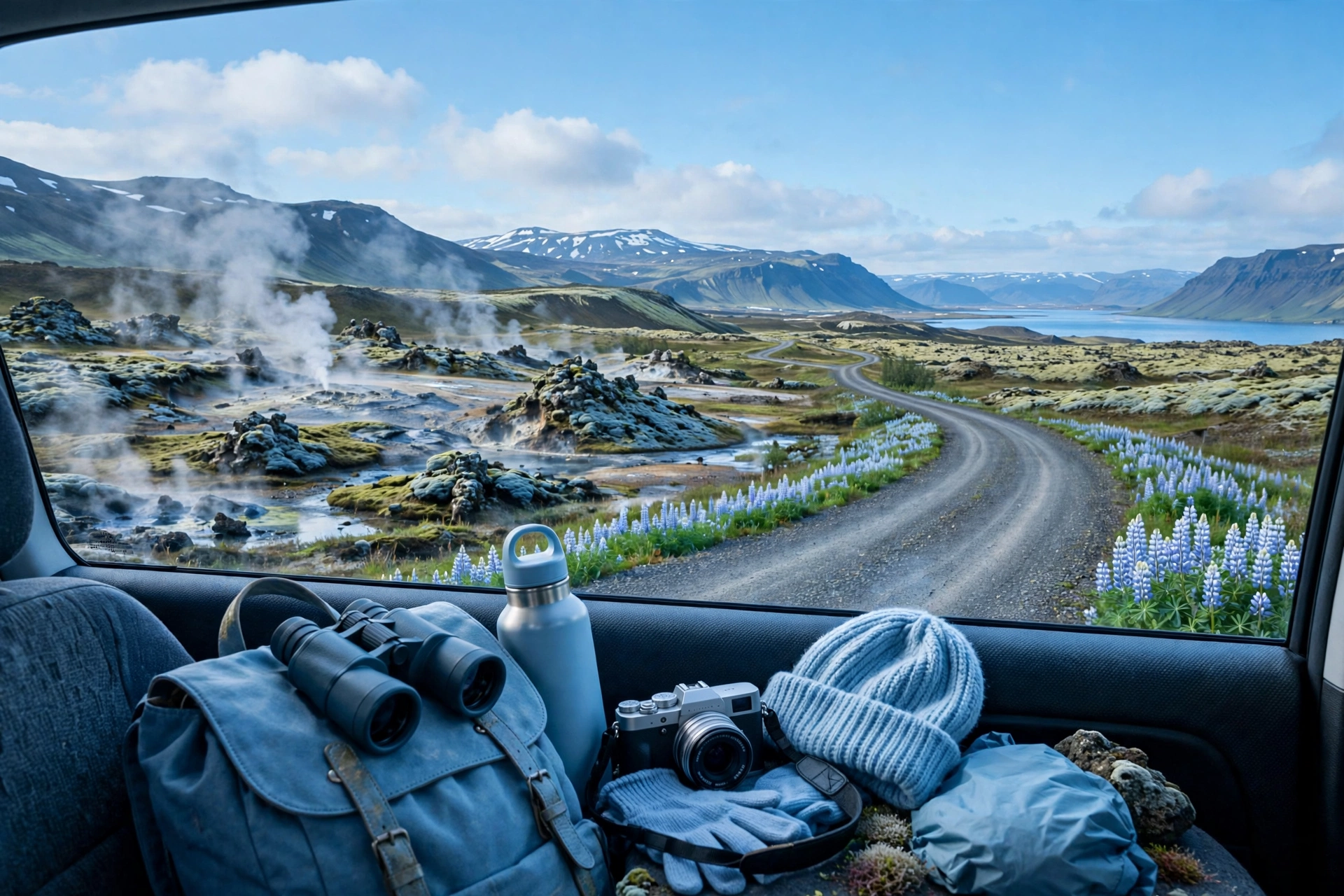
Drive: Mývatn to Akureyri, about 170 km (106 miles) via Goðafoss, 2.5 hours driving plus stops. Overnight: Akureyri.
Start the day at Hverir if you missed it yesterday, then drive west to Goðafoss, the Waterfall of the Gods, where the river drops in a wide, curved cascade that is easy to photograph from both banks. Continue to Akureyri, Iceland’s second city, set at the head of a long fjord and ringed by mountains. It feels like a real town after days of villages: a botanical garden, a small art museum, swimming pools, and the best choice of restaurants outside Reykjavík.
If you have a full afternoon, add a whale-watching trip from Húsavík — about an hour’s detour each way — or a visit to the Ásbyrgi canyon, a horseshoe-shaped gorge in the north. Otherwise, enjoy Akureyri at walking pace, and stock up on supplies: the next stretch has fewer services than the south.
Day 7: West Iceland and Back to Reykjavík
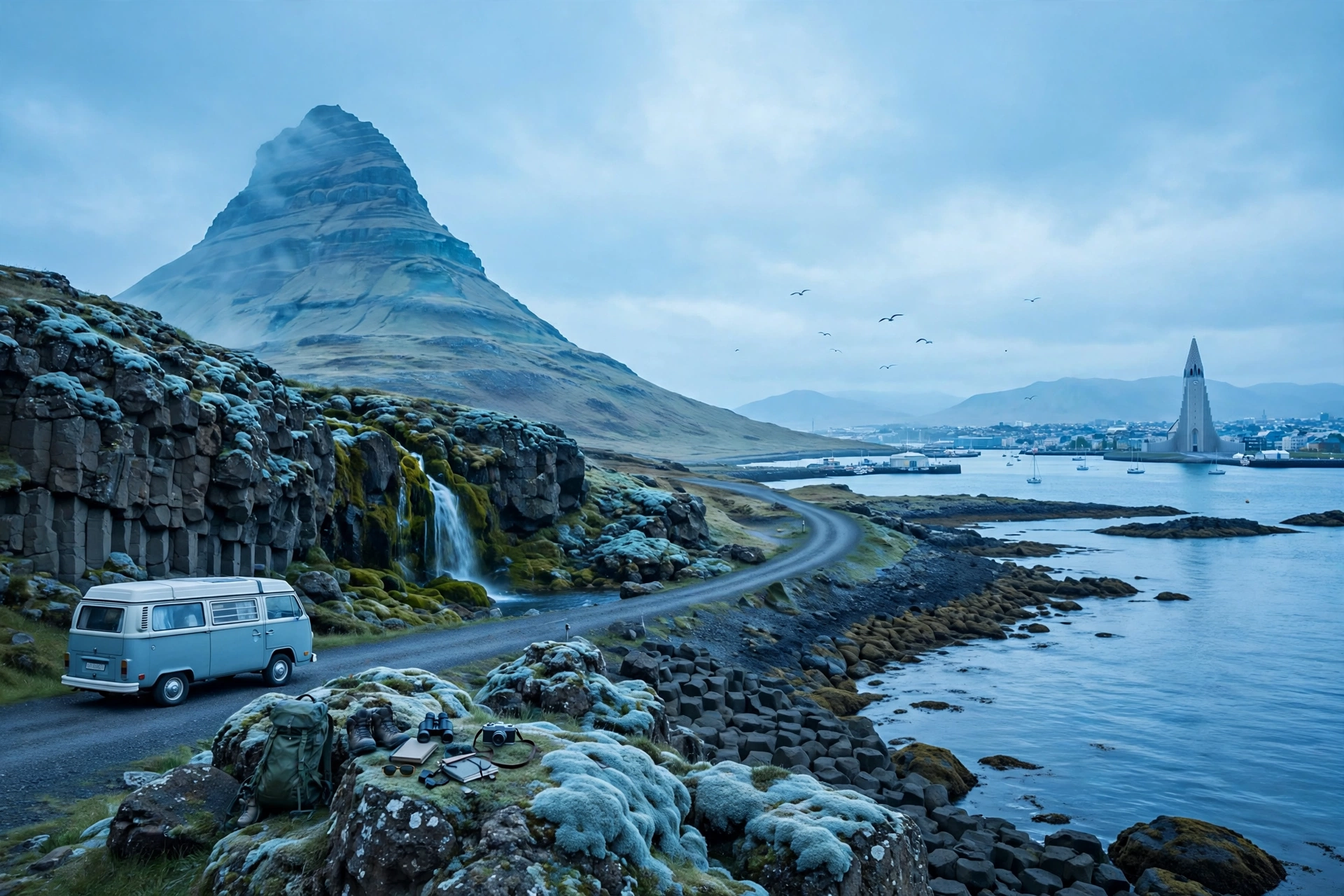
Drive: Akureyri to Reykjavík, about 390 km (242 miles), 5 hours driving plus stops. Overnight: Reykjavík.
The final day is the longest single drive, so start early. The road crosses the highland edge and the farmlands of the north, with a worthwhile stop at Hraunfossar and Barnafoss waterfalls near Borgarnes, where clear blue water pours out of a lava field into a turquoise river. If time allows, detour to the Snæfellsnes Peninsula’s eastern edge, or save the peninsula for your next trip — it deserves more than a drive-by.
Arrive in Reykjavík by late afternoon, return the car if your flight is the next morning, and finish with a farewell dinner in the city. If you have an extra day, spend it in Reykjavík itself: the museums, the swimming pools, and a slow morning are a good antidote to a week of early starts.
Driving in Iceland: Rules, Rental Cars and Costs
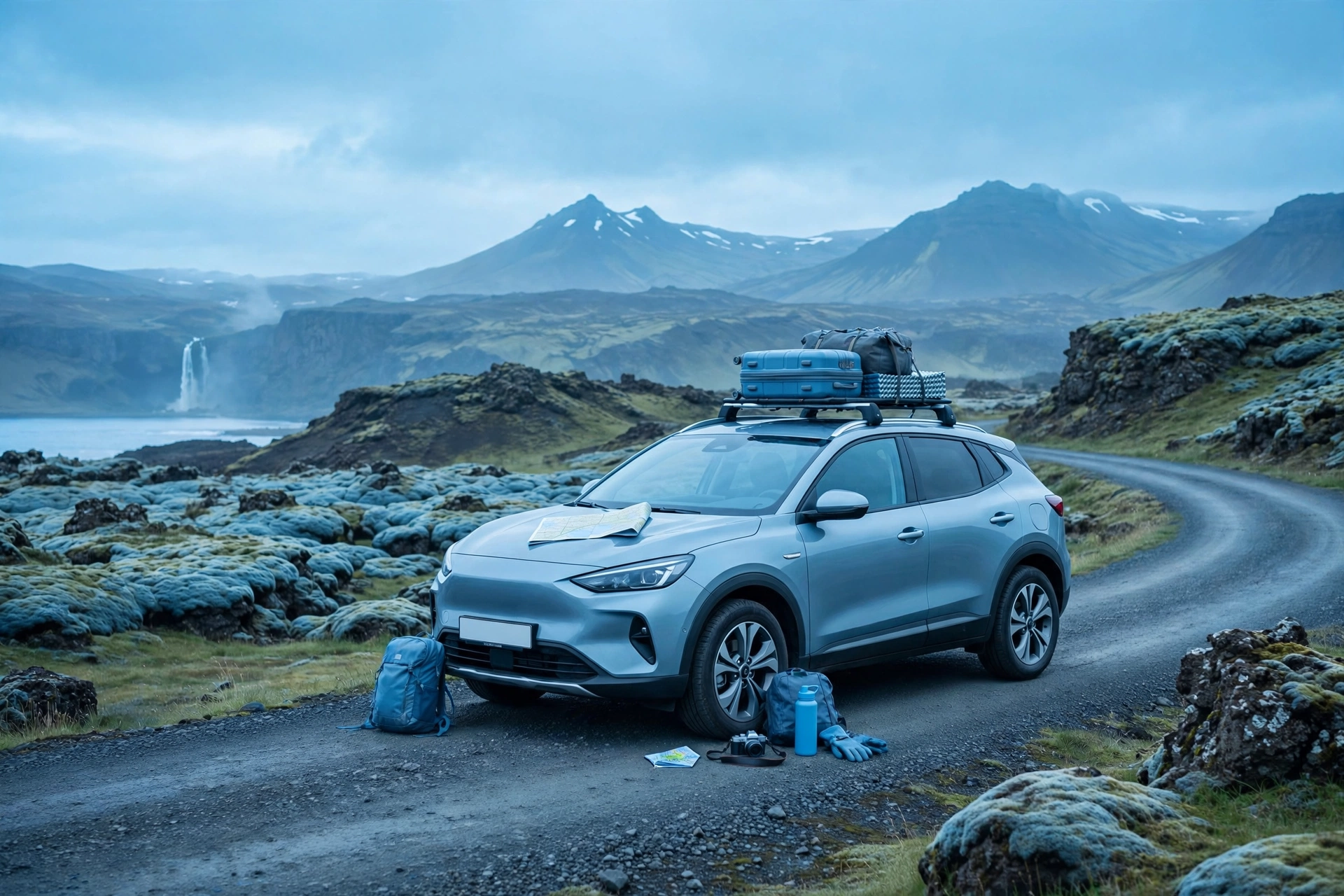
Driving is the best way to see Iceland, and also the part of the trip where first-timers make the most mistakes. The rules are simple, but the conditions are not like home.
Choosing a Car: 2WD or 4×4?
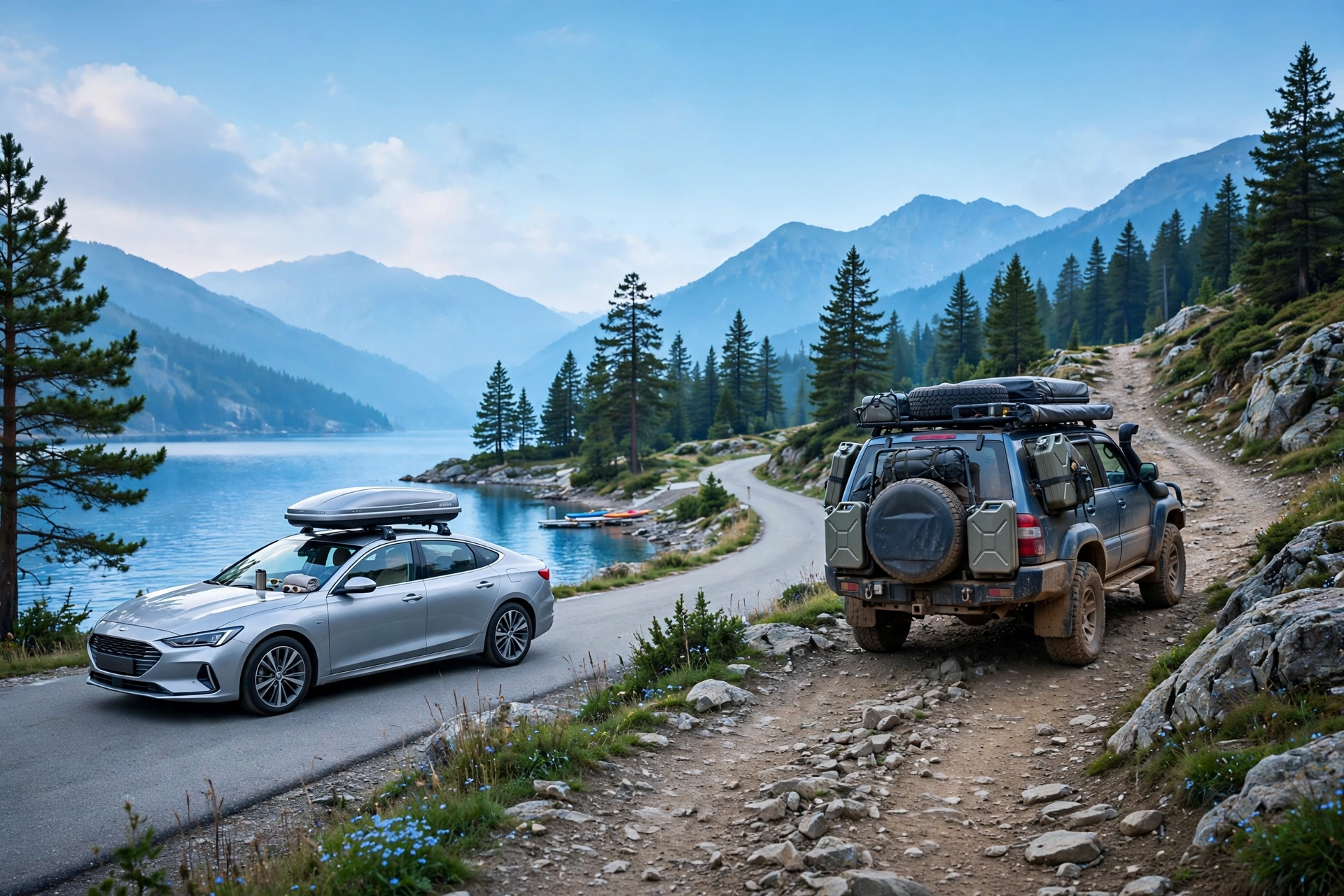
For the Ring Road in summer, a small two-wheel-drive car is perfectly fine. The entire Ring Road is paved, and so are the Golden Circle and the main South Coast roads. A 4×4 only becomes necessary if you plan to drive F-roads — the mountain tracks of the interior — or if you are travelling in winter, when extra ground clearance and four-wheel drive help on snow and ice.
Do not pay for a 4×4 you will not use, but do not under-spec the car either. In winter, choose a 4×4 with studded tyres. In summer, a comfortable car with good fuel economy matters more than size: fuel is expensive, and you will cover over 1,300 kilometres. Book an automatic if you are not confident with a manual on steep, winding roads — automatics cost more but are widely available if you reserve early.
Check the insurance carefully. Icelandic rental insurance often excludes gravel damage, wind damage to doors, and river crossings, and those are exactly the claims visitors make. Wind can rip a car door off its hinges on a gusty day, so always hold the door and park facing into the wind where you can. Photograph the car at pickup, and ask what is and is not covered before you sign.
F-Roads, Gravel and Single-Lane Bridges
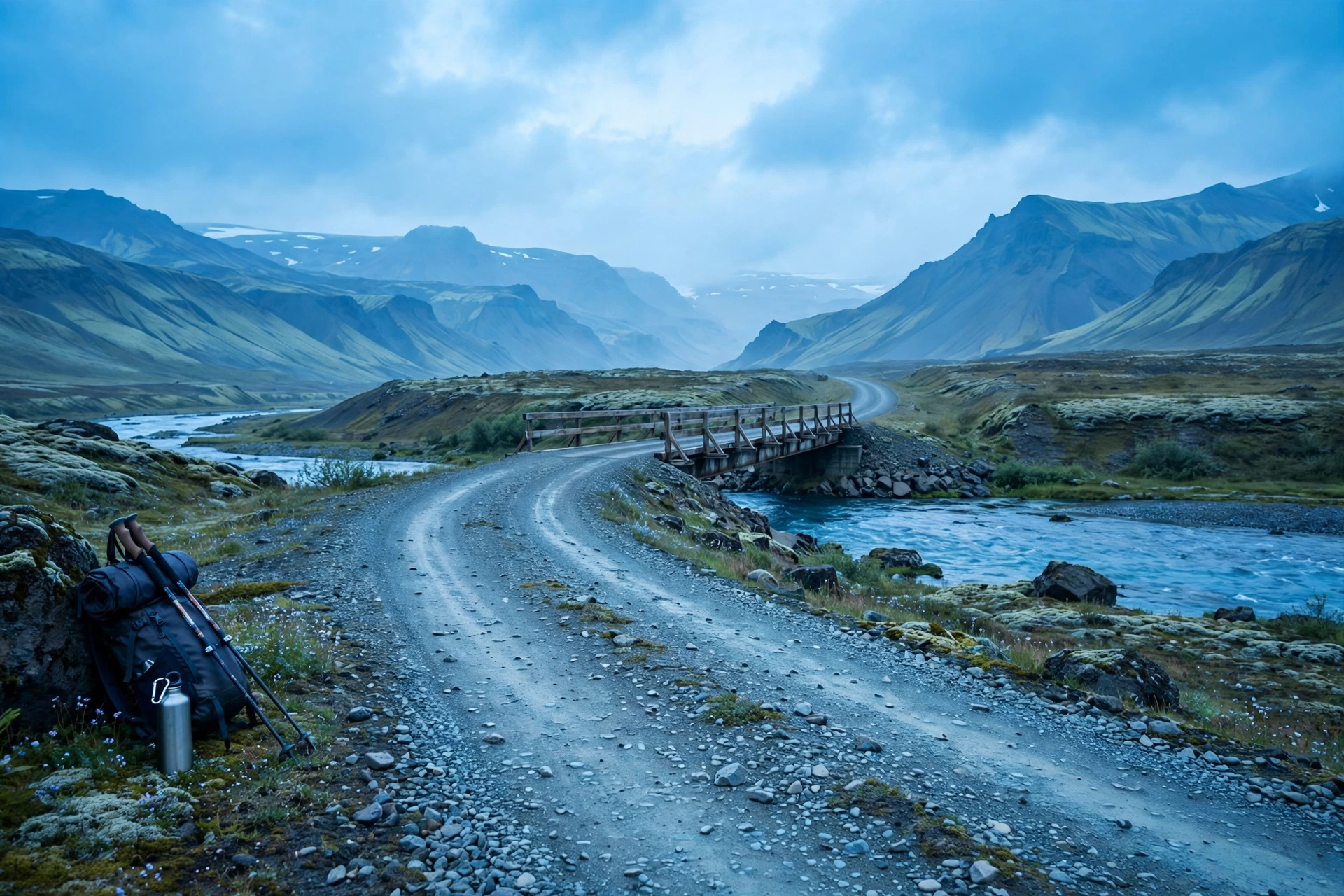
F-roads are mountain roads in the Icelandic highlands, marked with an F before the number, for example F26 or F35. They are unpaved, often rough, sometimes involve unbridged river crossings, and they are open only in summer — typically from late June or July until September, depending on snowmelt. By law, only 4×4 vehicles may drive them, and rental companies will void your insurance if you take a 2WD car onto one. If your itinerary sticks to the Ring Road, you will not meet an F-road at all.
Gravel roads are a different matter. Many side roads to waterfalls, farms and viewpoints are gravel, and they are open to all cars, but they need slower speeds and longer stopping distances. Loose stones chip paint and windscreens, so keep your distance from the car ahead and slow down when another car passes.
Single-lane bridges are common, especially in the Eastfjords and the north. The rule is simple: the car closest to the bridge goes first, and if you are unsure, slow down and wait. Signs mark who has priority. Never stop on a bridge, and never stop in the middle of a narrow road for a photo — pull fully off the road into a marked parking area first.
Fuel Prices and Fuel Strategy
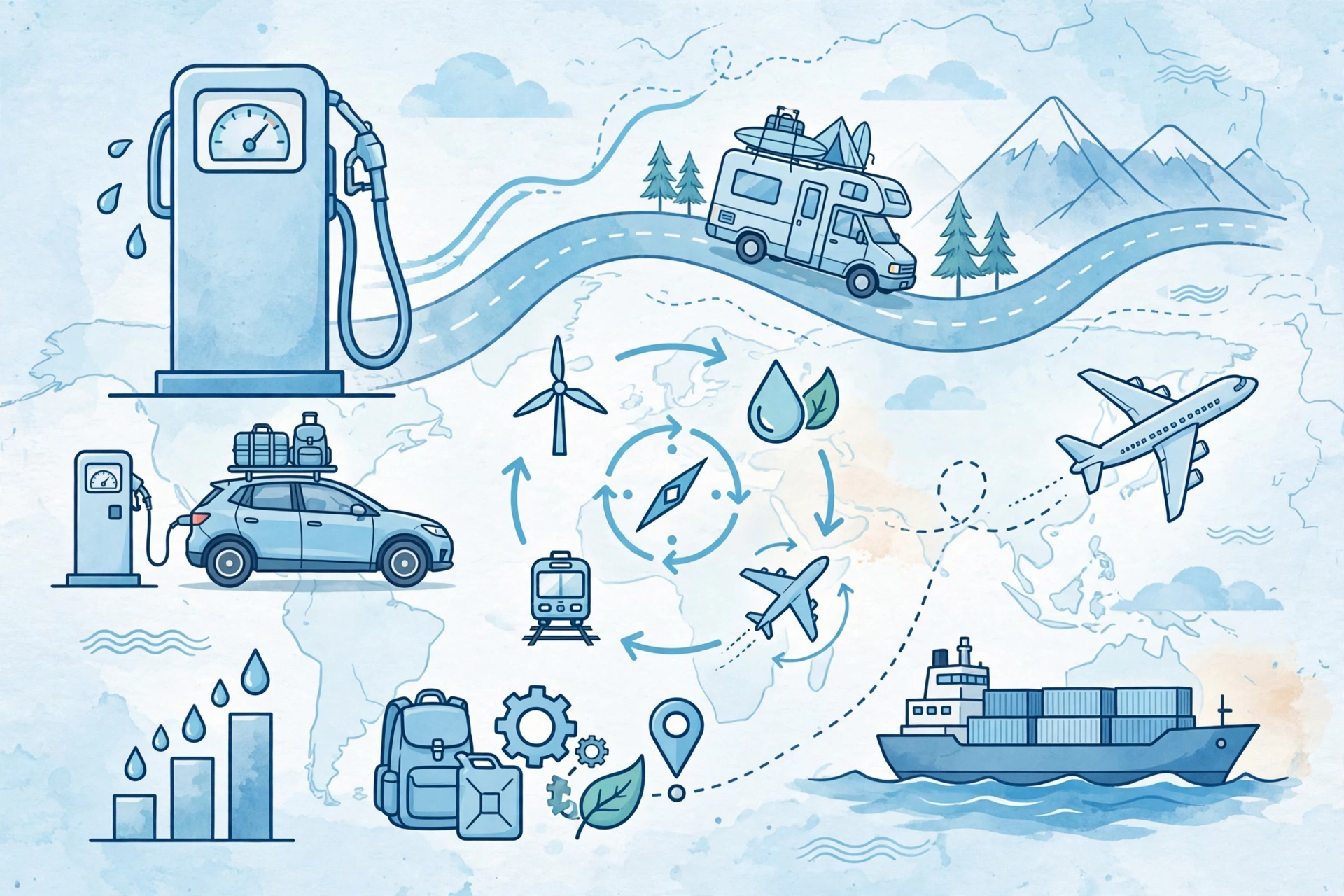
Fuel is one of the biggest variable costs in Iceland. As a rough guide, petrol and diesel cost around 300 to 330 Icelandic krónur per litre, roughly $2.10 to $2.30 per litre, though prices move with the exchange rate and the station. The full Ring Road is about 1,330 kilometres, and with detours you should budget around 80 litres for the loop in an economical car — roughly $170 to $185 in fuel alone. A larger 4×4 will use more.
The strategy is simple: never let the tank drop below half, especially in the Eastfjords and the north, where stations can be 100 kilometres apart and some are unstaffed card-only pumps. Fill up whenever you pass a town with a station, and carry a card that works at unmanned pumps — some foreign cards need a PIN. Self-service stations in rural areas may place a large hold on your card, often around 30,000 krónur, which is released a few days later; this is normal, not a charge.
Wind, Weather and the Morning Check

Icelandic weather changes fast, and it changes the driving. Strong wind is the main hazard: gusts can exceed 30 metres per second, and rental companies warn about doors being torn off and cars being blown off the road. If the forecast warns of severe wind, do not drive — wait it out. No itinerary is worth a wrecked car or worse.
Make the morning check a habit before you set off each day. Check SafeTravel Iceland for road conditions and warnings, and the Icelandic Met Office for wind and weather. Check road.is for closures, especially in winter and in the highlands. If a road is marked impassable, it is impassable — do not try it, and do not rely on a sat nav that does not know about the closure.
When to Go: Summer Midnight Sun or Winter Aurora?
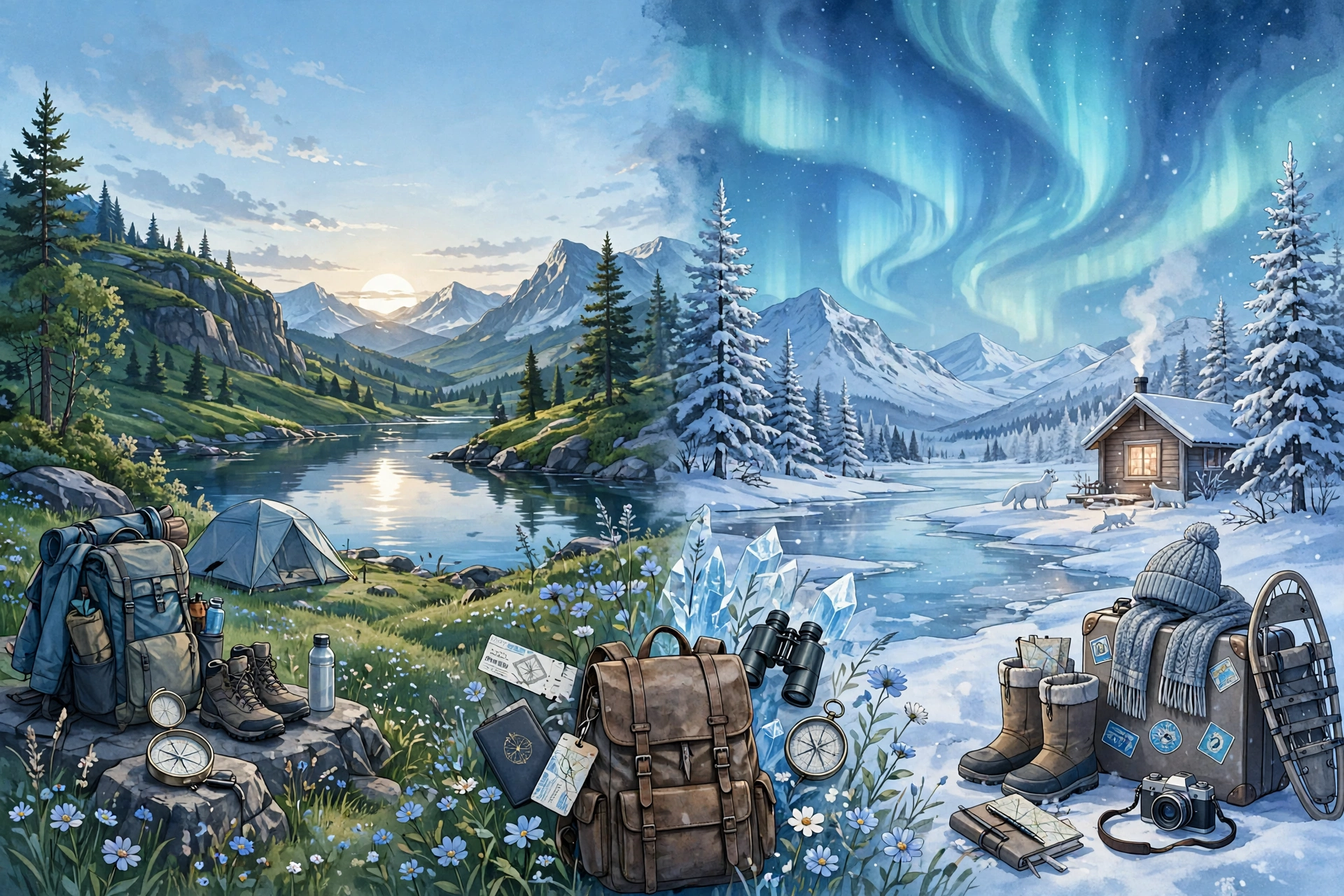
There is no bad season for Iceland, only different trade-offs. Your choice shapes daylight, driving conditions, prices and what you will actually see.
Summer (June to August)
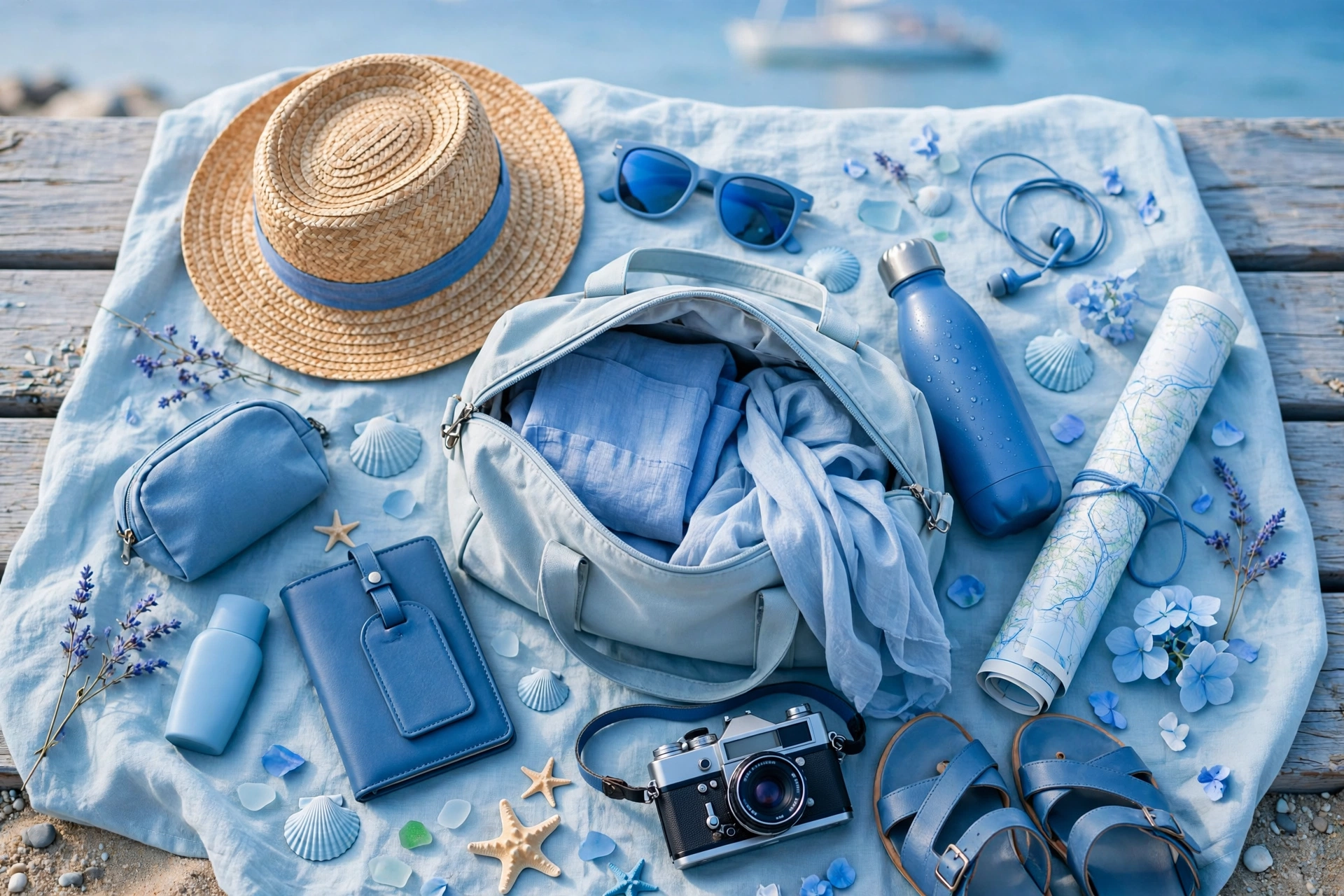
Summer is the easiest season for a first Ring Road trip. Days are long — near 24 hours of daylight around the solstice — so you can drive, hike and sightsee late into the evening without rushing. All roads, including the highland F-roads, are open, and the weather, while still changeable, is at its mildest, with average highs around 11 to 14°C.
The downsides are crowds and prices. July and August are the busiest months, accommodation books out months ahead, and rental car and hotel prices peak. Book everything early, start sights early in the morning, and use the midnight sun to visit popular places in the evening when tour buses have left.
Winter (November to February)

Winter trades long days for the northern lights. From late September to early April, dark skies give you a chance of seeing the aurora, and the snow-covered landscape is spectacular. Ice caves at Vatnajökull are accessible only in winter, and the Blue Lagoon and other hot pools feel best in cold air. Prices drop, crowds thin, and Iceland feels wilder and quieter.
The price is short daylight — as little as four to five hours in December — and driving that demands respect. Snow, ice, wind and sudden storms can close roads, and the full Ring Road in deep winter is only for confident winter drivers with a 4×4. If you are new to winter driving, base yourself in Reykjavík and the south, take guided tours for the glacier and ice cave days, and keep plans flexible. For more cold-season ideas, see our guide to the best places to travel in January.
Shoulder Seasons (April–May and September–October)
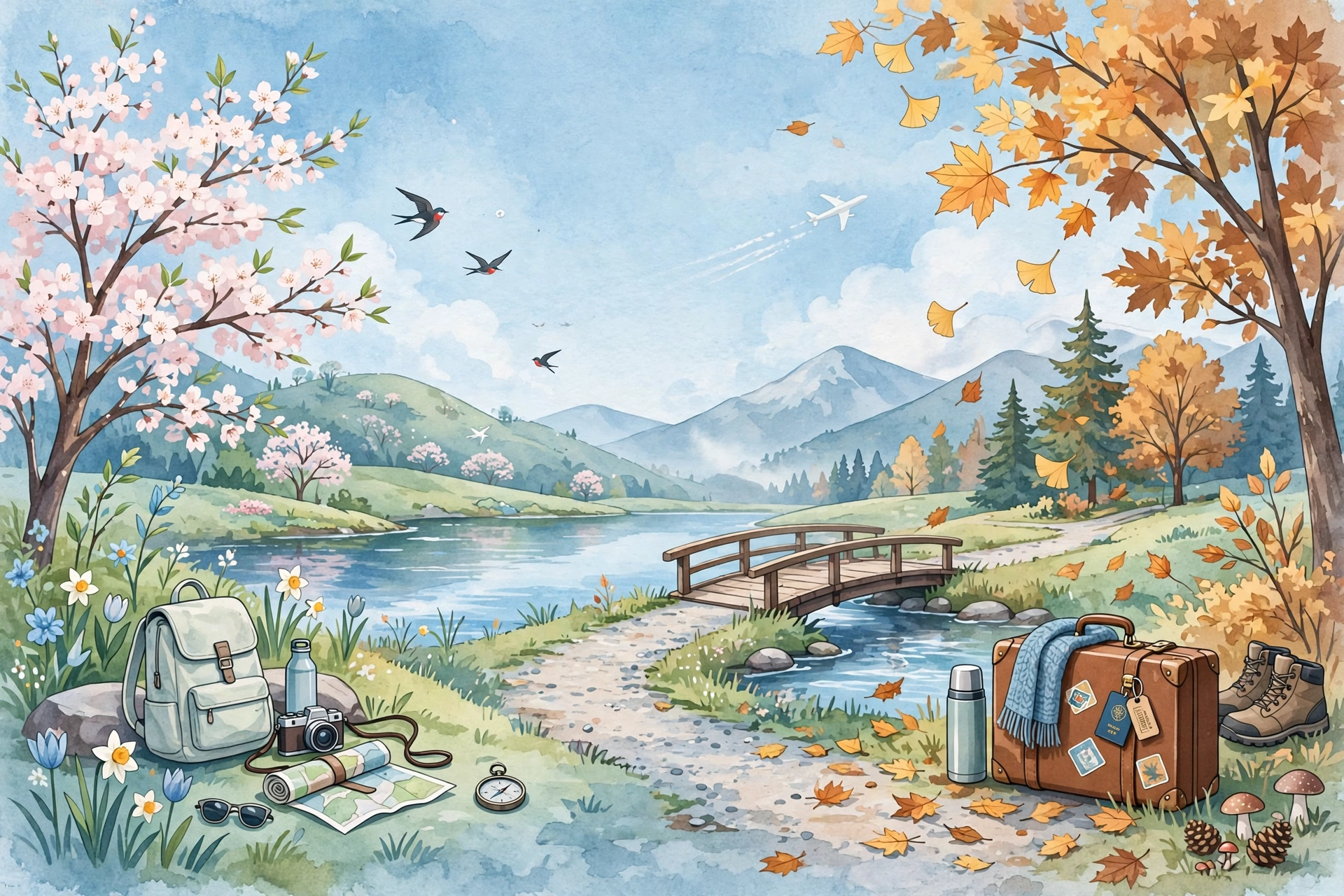
For many experienced Iceland travellers, the shoulder seasons are the sweet spot. In May, days are long, lambs are in the fields, and summer crowds have not arrived yet; in September, the autumn colours arrive, the northern lights return, and prices soften. Roads are generally open, though highland F-roads may still be closed in early May and can close again in October.
Weather is the wildcard in both shoulder windows. Pack for all four seasons in one day, check forecasts every morning, and keep one flexible day in the plan for a storm. If you want a balance of daylight, price and quiet, aim for late May or early September.
How Much Does a 7-Day Iceland Trip Cost?
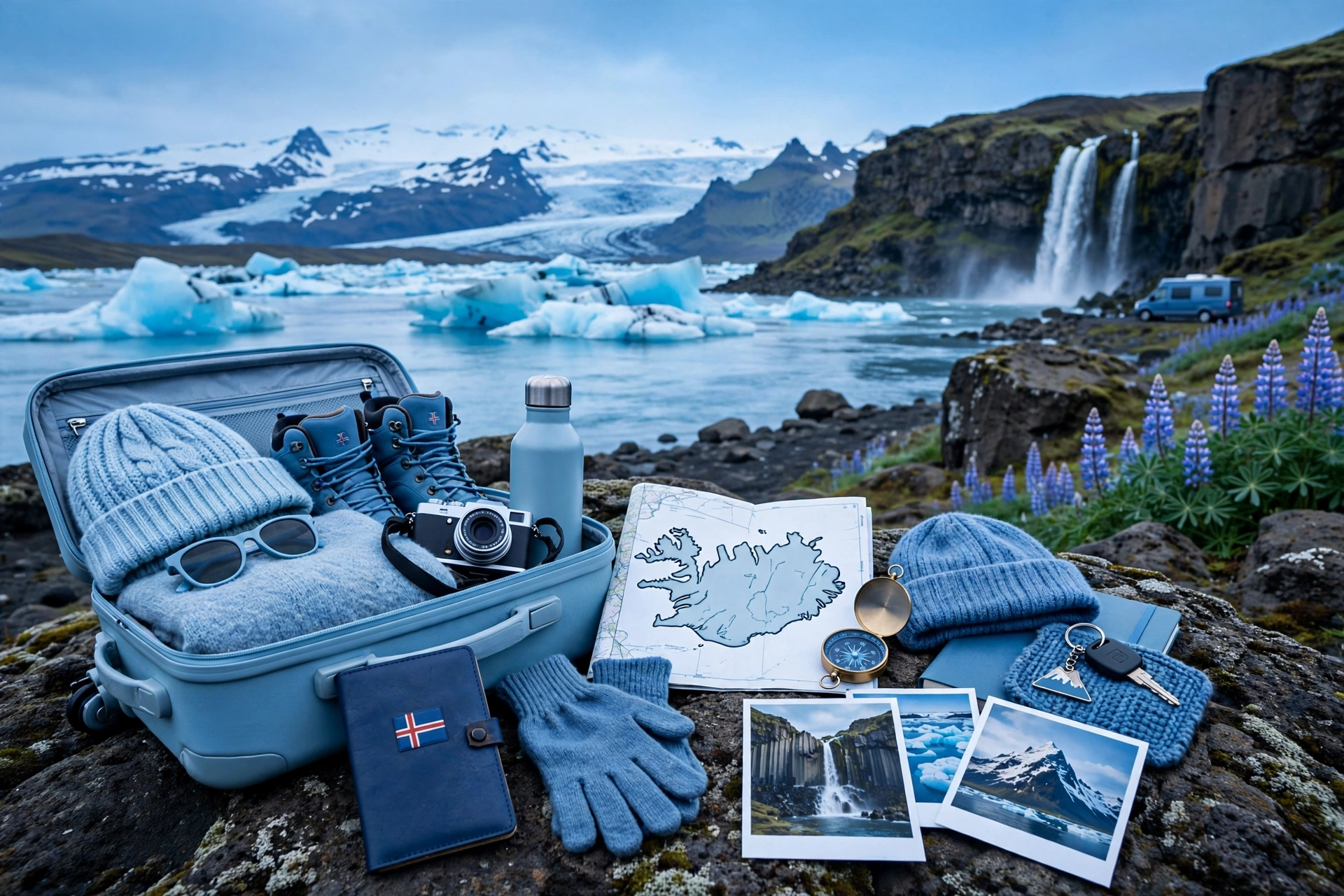
Iceland has a reputation for being expensive, and it is not entirely undeserved — but the numbers are manageable once you see them broken down. The table below is a realistic summer estimate for two people sharing a car and a room on the 7-day Ring Road route, excluding personal shopping and optional extras.
| Expense | Estimated cost (2 people, 7 days) | Notes |
|---|---|---|
| Flights from the US East Coast | $800–$1,400 total | Return, per two people; cheaper with a stopover or off-peak dates |
| Rental car (small SUV or 4×4) | $900–$1,500 | Includes basic insurance; gravel and wind cover extra |
| Fuel | $170–$250 | About 1,330 km plus detours |
| Accommodation (mid-range guesthouses and hotels) | $1,400–$2,100 | Roughly $200–$300 per night for a double room |
| Food (mix of groceries and restaurants) | $700–$1,100 | Groceries keep costs down; one restaurant meal a day adds up fast |
| Activities (glacier hike, lagoon boat tour, hot pools) | $300–$600 | Many sights are free; paid tours are the big variable |
| Total | $4,270–$6,950 | Roughly $2,135–$3,475 per person |
The biggest levers are accommodation and food. Cooking some meals, staying in guesthouses with shared kitchens, and travelling in the shoulder season can cut the total by a third. Conversely, a larger car, a glacier hike every day, and eating out for every meal will push you well above the top of the range.
Budget before you go, not during the trip. Set a daily food and activities allowance, track spending in the first two days, and adjust while you still can. Our guide on how to prepare a travel budget walks through the same method step by step, and it works just as well for Iceland as for anywhere else.
Where to Stay Each Night: Base Strategy and Booking Tips
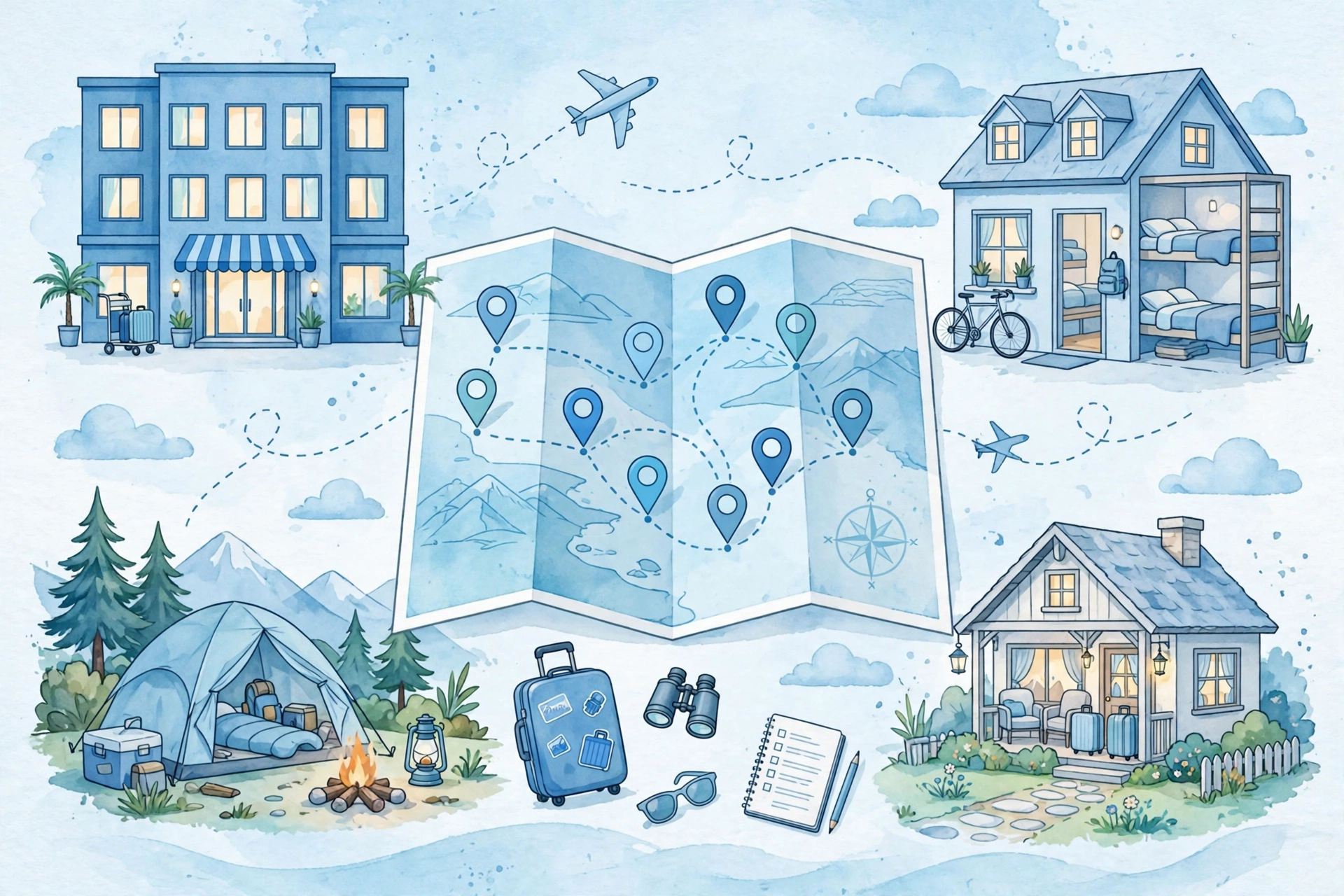
The 7-day route above works because the overnight stops are spaced for driving, not just sightseeing. The pattern is: Reykjavík for nights one and two, Vík for night three, Höfn for night four, Mývatn for night five, Akureyri for night six, and back to Reykjavík for night seven. That keeps every driving day under five hours and puts you close to the next morning’s sights.
Book accommodation as early as you can, especially in summer. Iceland has a small number of rooms relative to visitor numbers, and the villages on the Ring Road — Vík, Höfn, the Mývatn area — fill up first. Guesthouses and farm stays are often better value and more personal than hotels, and many include breakfast, which saves a restaurant meal each morning.
Outside Reykjavík and Akureyri, do not assume you can find dinner late. Small-town restaurants may close by 9 p.m. or earlier in winter, and some are only open in summer. Check opening times when you arrive, and keep snacks and water in the car. In the same way, fuel and groceries follow town hours — another reason to fill up and shop while you can.
If you are travelling solo, look for single rooms in guesthouses rather than paying for a double everywhere; some places offer smaller single rooms at a lower rate. Hostels in Reykjavík, Akureyri and Vík are good budget options, and many guesthouses have shared kitchens that make self-catering easy and sociable.
Staying Safe in Iceland
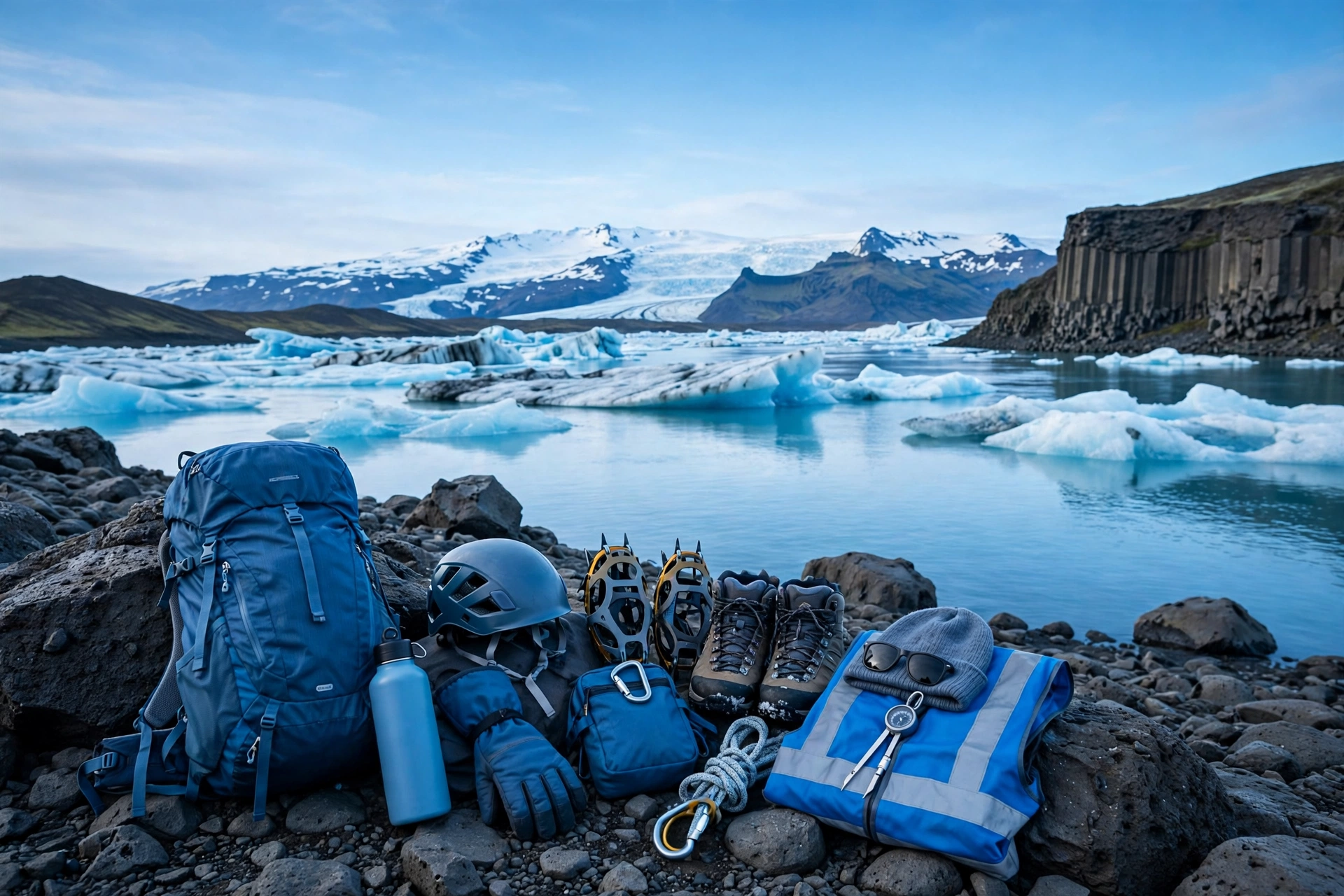
Iceland is one of the safest countries in the world for travellers, but its nature is not tame. Most accidents happen to visitors who underestimate the ocean, the weather or the terrain. A few rules, followed every day, keep the trip safe. Before you travel, check the official Iceland travel advisory for the latest guidance.
Reynisfjara and the Ocean
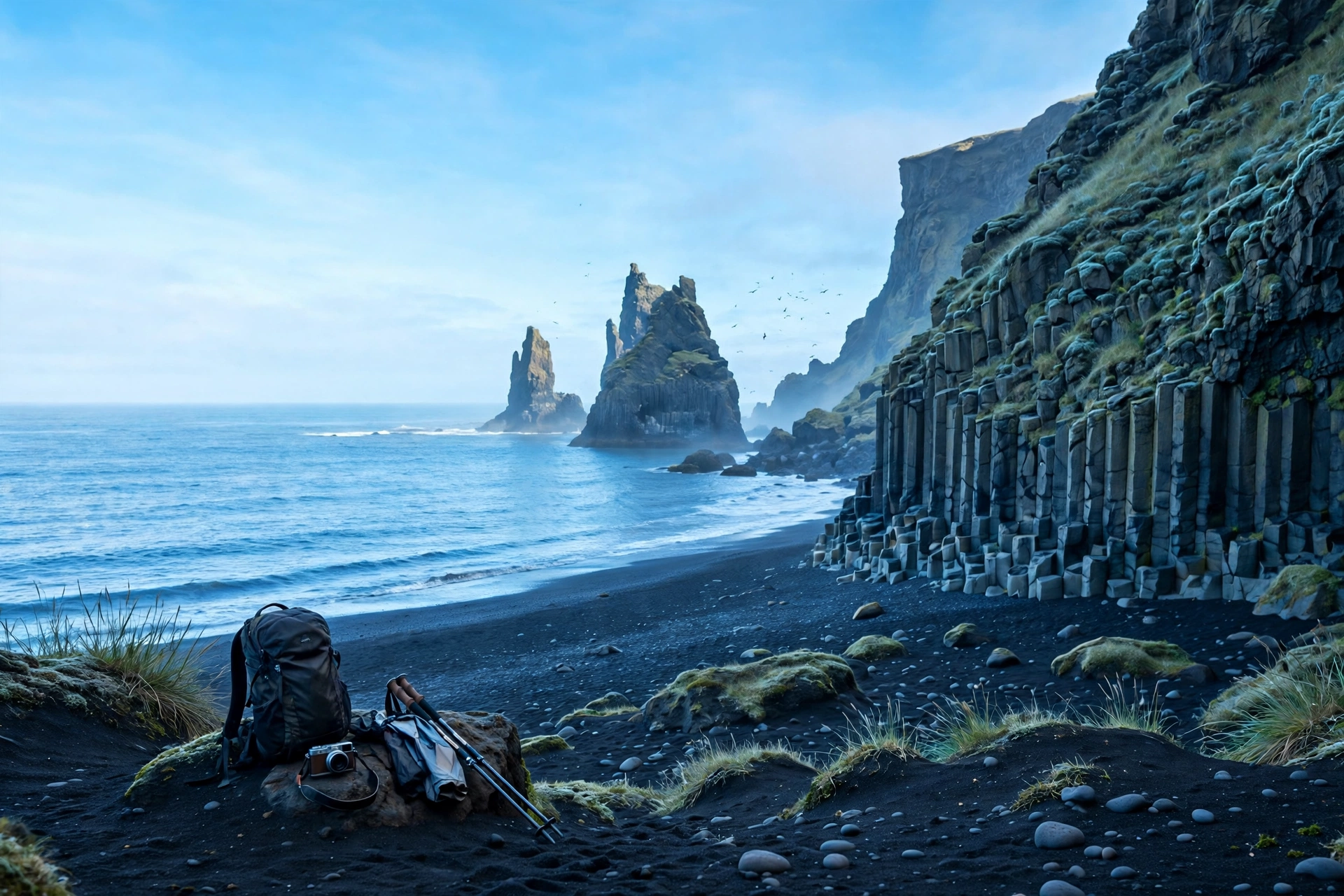
Reynisfjara, the black sand beach near Vík, is beautiful and genuinely dangerous. Sneaker waves — sudden, much larger waves that run far up the beach — have swept visitors off their feet and into the sea, and several people have died there. Never turn your back on the ocean, never stand close to the waterline for a photo, and stay behind the warning signs and the marked safety line. The same caution applies at other exposed beaches and cliff edges: keep a safe distance, watch children closely, and do not climb on wet rocks near the surf.
Glaciers, Lagoons and Geothermal Areas
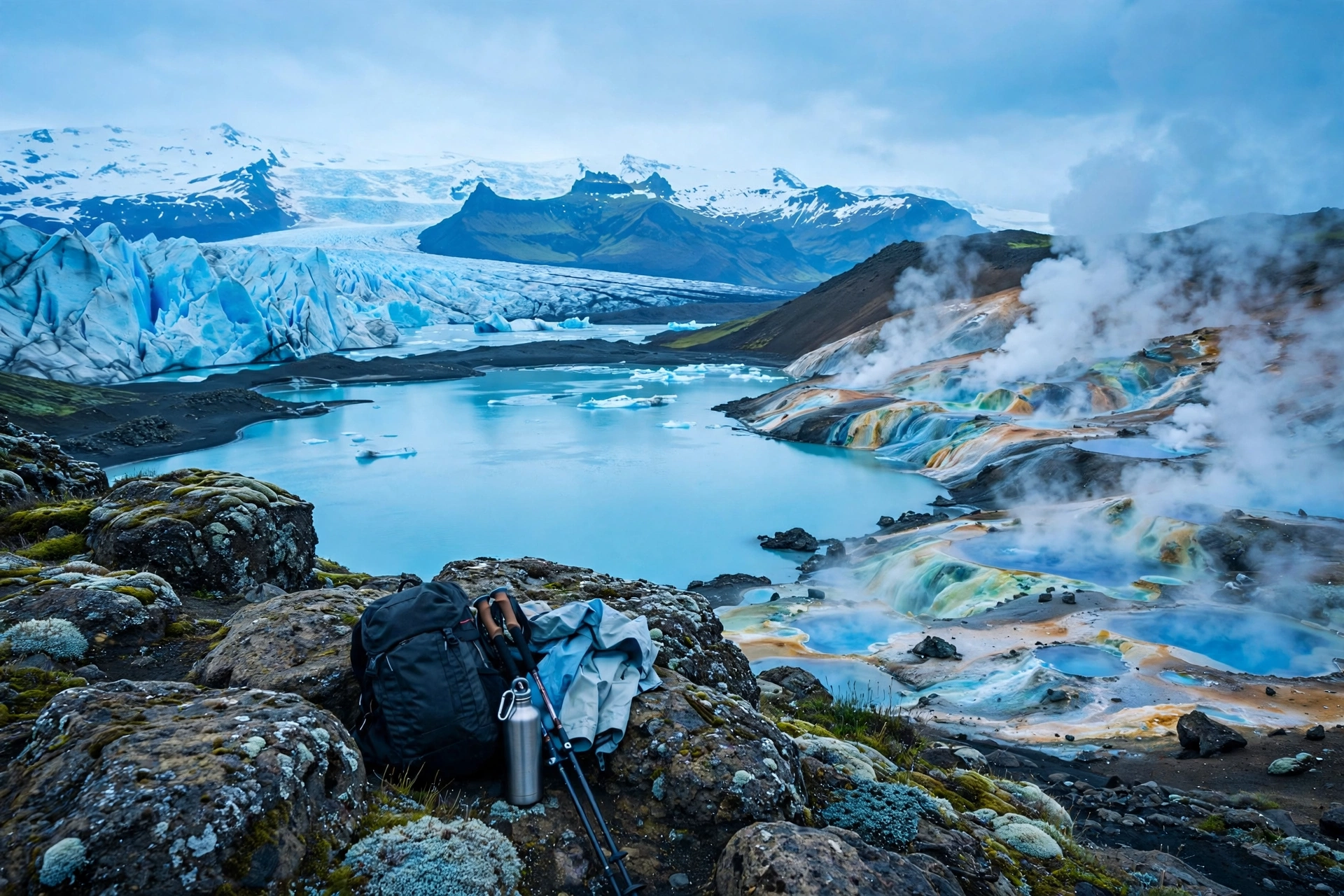
Never walk onto a glacier without a guide and proper equipment. Crevasses are hidden by snow bridges that can collapse, and glacier lagoons have strong currents and unstable ice. Likewise, stay on marked paths in geothermal areas: the ground can be thin over boiling water, and the water itself can scald. The boardwalks and ropes are there for a reason. For official visitor information, see Visit Iceland.
Roads, Parking and the 112 Rule
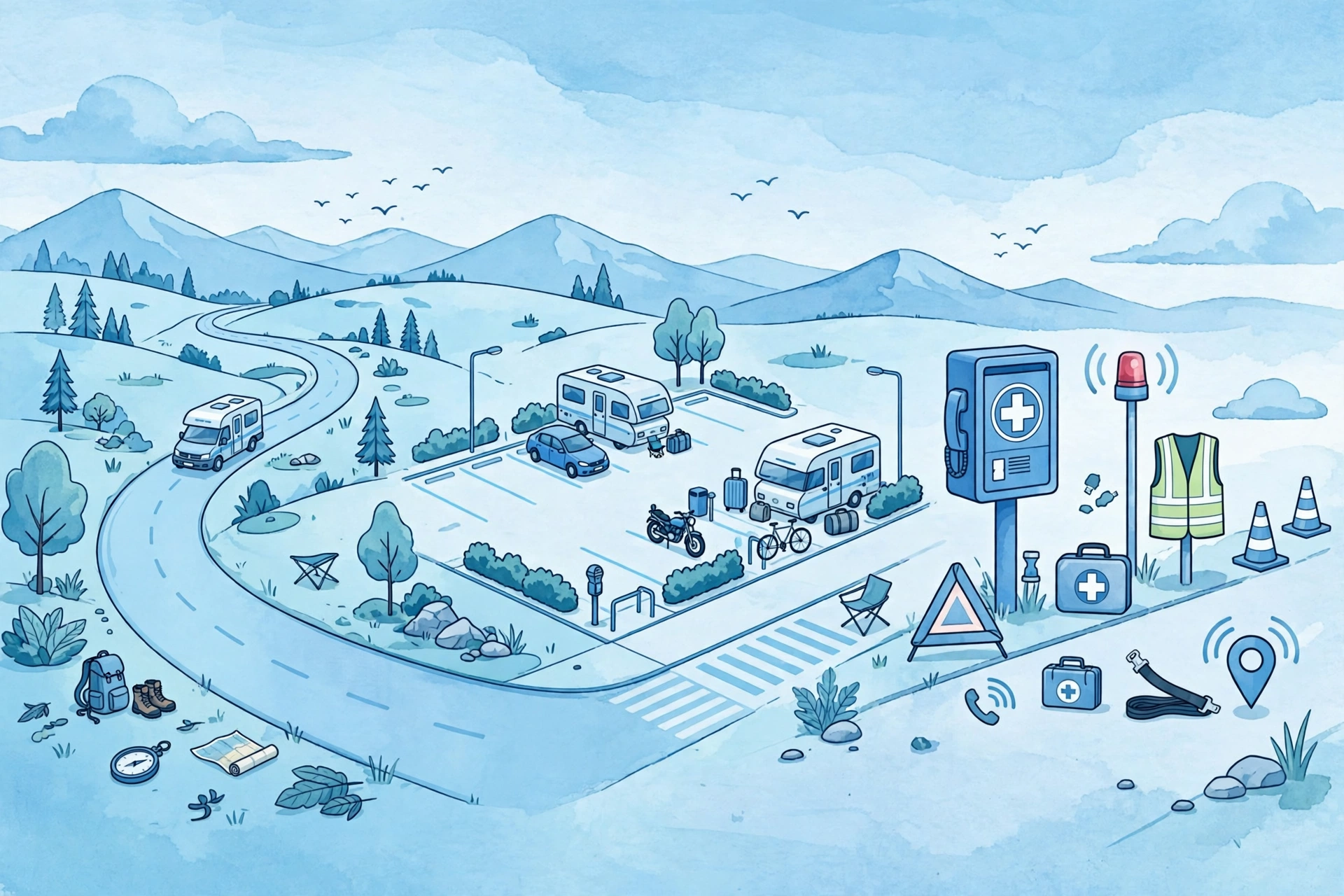
Off-road driving is illegal in Iceland and damages fragile moss and lava that take decades to recover. Always park in marked parking areas, never on grass, moss or soft ground beside the road, and never block a road or a farm track. Parking fines are common at popular sights, and some car parks now charge a fee — pay it, as fines are much higher.
Finally, know the number 112. It is Iceland’s emergency number for police, fire and rescue, and it works from any phone, even without a SIM card. Register your travel plan on SafeTravel if you are heading into remote areas, tell someone where you are going each day, and keep your phone charged. If you get into trouble, call 112 early rather than late.
How to Beat the Crowds in Iceland
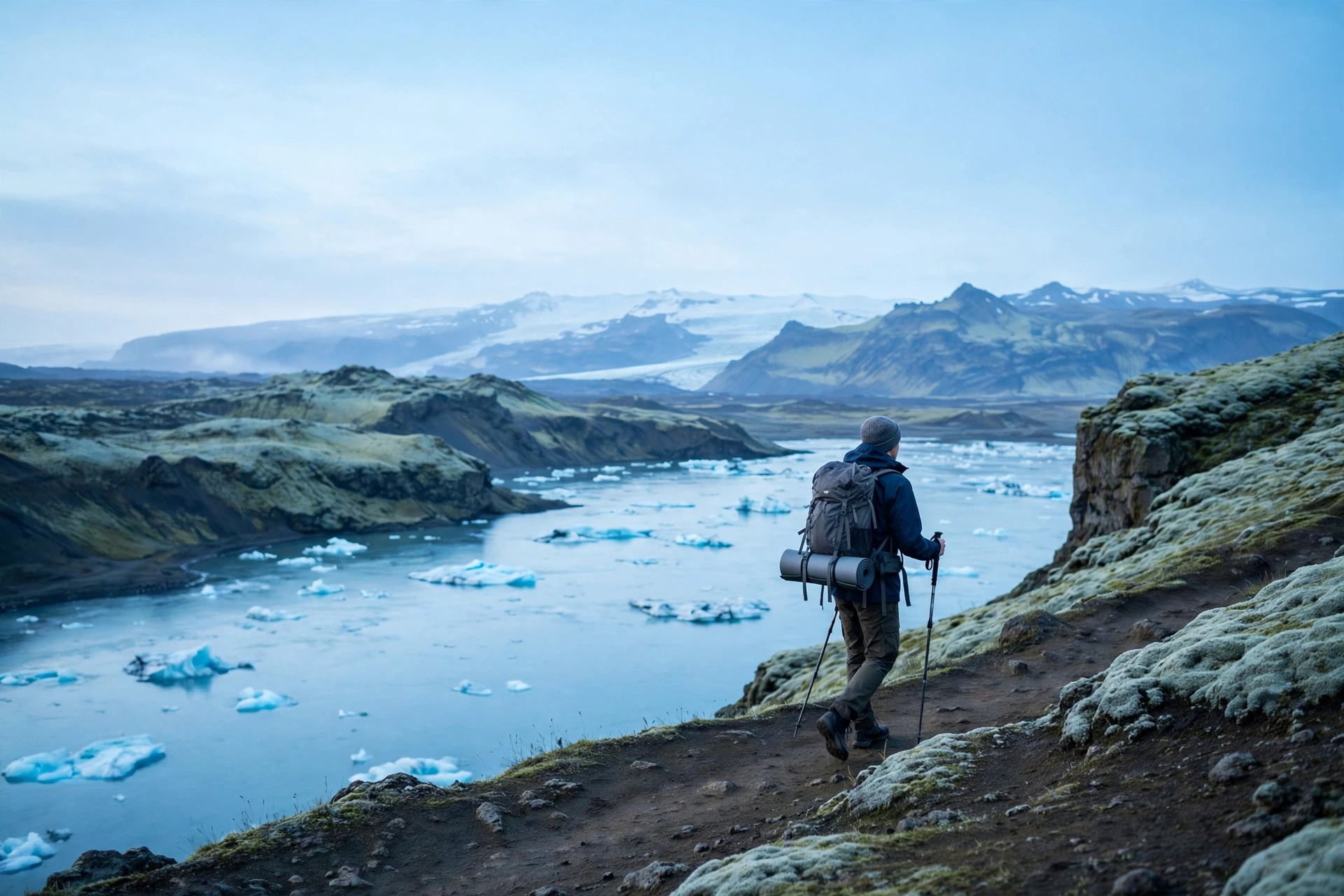
Iceland’s most famous sights are busy in summer, but the crowds are predictable — and avoidable. The simplest trick is timing. Tour buses typically arrive at the Golden Circle and the South Coast waterfalls between 10 a.m. and 3 p.m. Visit before 9 a.m. or after 5 p.m. and you will often have the same place almost to yourself, especially in the long summer evenings.
The second trick is to go one step further. At Seljalandsfoss, walk the path beyond the main fall to Gljúfrabúi, a hidden waterfall inside a canyon. At Skógafoss, climb the steps and keep walking along the river trail. At Jökulsárlón, walk away from the car park along the lagoon shore. Most visitors stay within a few hundred metres of the car park; walking ten minutes further changes the experience completely.
Finally, balance the famous with the quiet. For every Golden Circle or South Coast highlight, add a lesser-known stop: a small fjord village in the east, a quiet hot pool in the north, a farm café on a back road. The Ring Road rewards curiosity, and the quiet places are often the ones you remember most.
Packing and Practical Tips for First-Timers
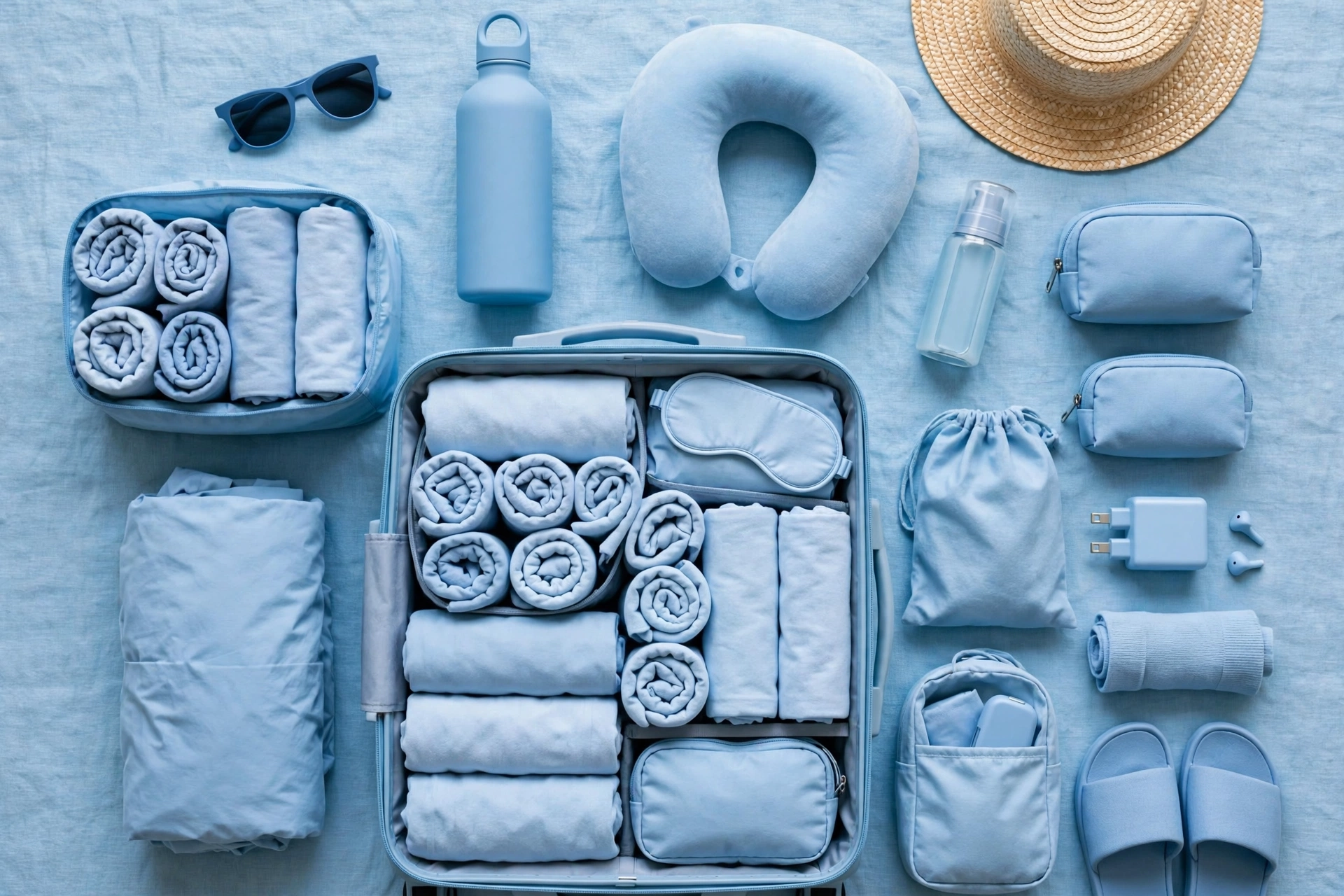
Pack for layers, not for a season. Even in summer, bring a waterproof and windproof outer layer, a warm mid-layer, and sturdy waterproof walking shoes — trails to waterfalls and viewpoints are often wet and uneven. In winter, add thermal base layers, a proper winter coat, gloves, a hat, and crampons or ice grips for icy paths. A swimsuit is essential all year: Iceland’s pools and hot pots are part of the culture, and most towns have a public swimming pool.
A few practical points make the trip smoother. Tap water in Iceland is among the cleanest in the world, so bring a reusable bottle and skip buying bottled water. Cards are accepted almost everywhere, even for small amounts, so you may not need cash at all. Mobile coverage is good along the Ring Road, though it drops in remote fjords and the highlands — download offline maps before you leave Reykjavík.
Finally, respect the land. Stay on marked paths, do not disturb moss or nesting birds, take all litter with you, and never drive off-road. Iceland’s landscape looks rugged, but it is fragile, and the rules that protect it are there because visitors before us did not follow them. Travel lightly, and the next visitors will find it just as you did.
FAQ
How many days do you need for Iceland?
Seven days is the ideal first trip, because it covers the full Ring Road at a comfortable pace. Five days works well for the south and west, and three days is enough for Reykjavík, the Golden Circle and a slice of the South Coast. Ten to fourteen days lets you add the Snæfellsnes Peninsula and the Westfjords.
Is driving the Ring Road hard for first-timers?
No, in summer, the Ring Road is a paved highway with clear signs, and a careful driver will find it straightforward. The challenges are wind, weather, gravel side roads and single-lane bridges, all covered in the driving section above. Winter driving is a different matter and suits confident drivers with a 4×4 and flexible plans.
Do you need a 4×4 in Iceland?
Only if you plan to drive F-roads in the highlands or travel in winter conditions. For the Ring Road and the main sights in summer, a two-wheel-drive car is fine. If you are unsure, a small SUV gives extra clearance and comfort without the full cost of a large 4×4.
What is the best month to visit Iceland?
It depends on what you want. June to August gives midnight sun, open roads and the easiest travel. September brings autumn colour and the return of the northern lights with fewer crowds. December to February is best for aurora hunting and ice caves, but daylight is short and weather delays are likely.
Is Iceland expensive?
Yes, by most standards. A mid-range 7-day Ring Road trip for two people costs roughly $4,270 to $6,950 including flights, car, accommodation, food and activities. Cooking some meals, choosing guesthouses and travelling in the shoulder season are the most effective ways to bring the total down.
Can you see the northern lights on a Ring Road trip?
Yes, between September and April, on clear, dark nights away from town lights. The Ring Road takes you far from light pollution, which helps, but the aurora is never guaranteed — it depends on solar activity and cloud cover. Check the aurora forecast each evening, be patient, and treat a sighting as a bonus rather than a promise.
Conclusion
A good iceland travel itinerary is not about ticking off the most sights in the fewest days. It is about choosing a length that fits your time, driving at a pace that lets you actually enjoy the places you stop, and building in enough slack for weather, wonder and the unplanned detour. Seven days on the Ring Road does that for most first-timers: Reykjavík and the Golden Circle, the waterfalls and black beaches of the south, the icebergs of the southeast, the quiet fjords of the east, the volcanic strangeness of Mývatn, and the northern city of Akureyri, all in one loop.
Book your car and your beds early, check the weather and the roads every morning, respect the ocean and the ice, and leave room in the plan for the morning when the light is perfect and you decide to stay an hour longer. Iceland rewards the traveller who slows down. This route gives you the chance to do exactly that.
People also read: London Travel Guide, Morocco Travel Guide, Travel Bucket List


Other Articles