


Quick Answer
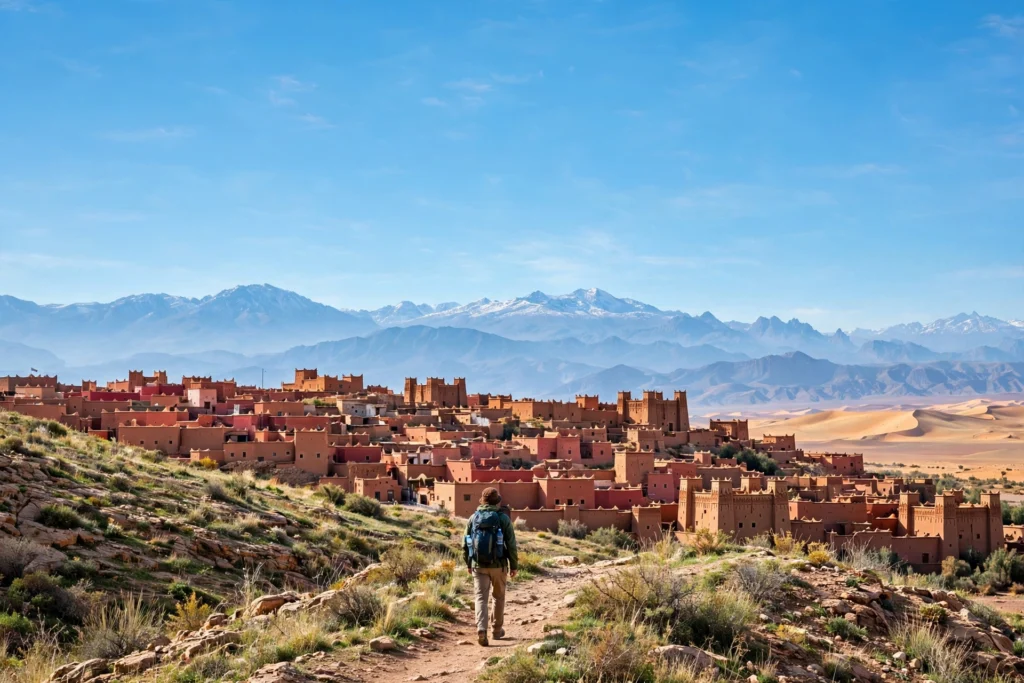
Morocco travel works best as a 10-day trip for a first visit: fly into Marrakech or Casablanca, spend two or three nights in Marrakech, cross the Atlas Mountains to the Sahara Desert, and finish in Fes, with Chefchaouen or the Atlantic coast added if you have more time. The best months are March to May and September to November, when city walking is comfortable and desert nights are cool rather than freezing or scorching. US citizens do not need a visa for stays of up to 90 days, the currency is the Moroccan dirham (MAD), and trains, buses and private drivers make it easy to move between cities without renting a car. Budget around $70 to $150 a day for a comfortable mid-range trip, including a riad stay, meals, transport and one or two guided days.
Morocco rewards travelers who slow down. The country packs imperial cities, mountain passes, Atlantic beaches and the edge of the Sahara into a space smaller than many US states, but the distances between its highlights are long. Marrakech to Fes is roughly a full day on the road, and the Sahara is a two-day journey from Marrakech, not a day trip. The trips that go wrong are almost always the ones that try to fit everything into five rushed days. Give yourself room, pick one route, and let the medinas, the mountains and the desert each have their own day.
When Is the Best Time to Visit Morocco?
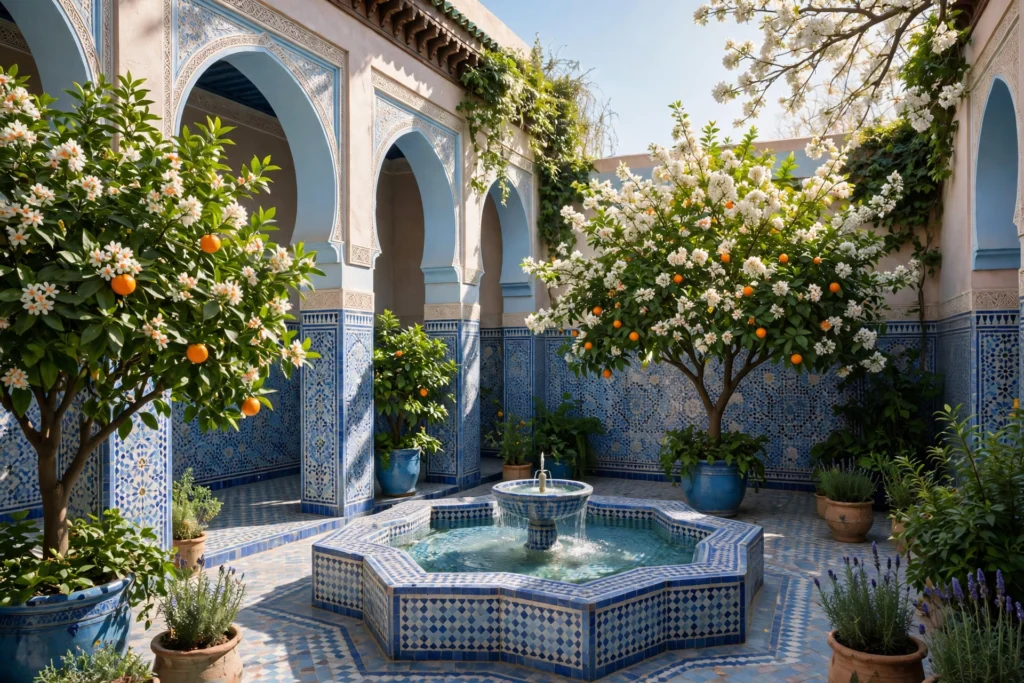
Spring (March to May) and autumn (September to November) are the best times for most first-time trips. Days are warm enough for walking the medinas without the punishing inland heat of summer, and nights in the desert are cool but not bitterly cold. These are also the seasons when gardens are green, mountain valleys are at their best, and the Atlantic coast is pleasant without the summer crowds.
Summer, from June to August, is a different trip. Marrakech and Fes regularly climb above 40°C (104°F), and the Sahara becomes genuinely extreme. If you can only travel in summer, build your trip around the coast — Essaouira, Rabat and Tangier stay breezy — and plan city sightseeing for early morning and late afternoon, with a shaded riad courtyard or a pool in the middle of the day.
Winter, from December to February, is underrated. Marrakech is sunny and mild, prices drop, and the crowds thin out. The trade-offs are real, though: nights in the Sahara and the Atlas Mountains are cold, sometimes below freezing, and snow can close high mountain passes. If you travel in winter, pack layers, confirm desert camp heating, and keep your mountain driving flexible.
The best time also depends on where you are going. The Atlantic coast is pleasant almost all year. The mountains are best from April to October for hiking, and snow-covered from December to February. The Sahara is most comfortable from October to April, when daytime temperatures are warm rather than brutal. Ramadan, whose dates shift each year, changes the rhythm of the country: many restaurants close during the day, but evenings come alive with communal meals, and traveling during Ramadan can be a warm, memorable experience if you plan around shorter opening hours.
How Many Days Do You Need in Morocco?
Seven days is the minimum for a satisfying first trip, ten days is the sweet spot, and fourteen days lets you travel at a relaxed pace with the coast and the north included. Anything shorter than a week forces hard choices: you can do Marrakech plus a Sahara trip, or Marrakech plus Fes, but not both comfortably.
Here is how the three classic lengths compare:
| Trip length | Route | Best for |
|---|---|---|
| 7 days | Marrakech, Atlas Mountains, Sahara, back to Marrakech | Travelers short on time who want the desert |
| 10 days | Marrakech, Sahara, Fes, Chefchaouen or Essaouira | First-time visitors who want the highlights |
| 14 days | Casablanca, Rabat, Chefchaouen, Fes, Sahara, Marrakech, Essaouira | A complete trip at an easy pace |
A 7-day trip usually looks like this: two nights in Marrakech, one night on the road through the Dades Valley, one night in a Sahara camp near Merzouga, one night in the Todra Gorge area or Ouarzazate, and two nights back in Marrakech. It is a lot of driving, so a private driver or a small-group tour is worth it on this length.
A 10-day trip adds Fes and the north. Start in Casablanca or Marrakech, cross to Fes, spend two nights there, then drive south through the Middle Atlas to the Sahara, and finish in Marrakech. If you prefer the coast, swap Chefchaouen for Essaouira at the end.
A 14-day trip is the full loop: Casablanca and Rabat, the blue streets of Chefchaouen, Fes and the Roman ruins of Volubilis, the Sahara, the Atlas passes, Marrakech, and a slow finish in Essaouira. Two-week trips are also the ones where you can afford a rest day — a hammam afternoon in Marrakech, a beach day in Essaouira, or an extra night in a mountain village — and those rest days are often what travelers remember most.
If you are building your own day-by-day plan, a good travel itinerary template helps you lay out the route, the driving times and the must-see stops before you start booking anything.
Marrakech: The Red City in Two or Three Days
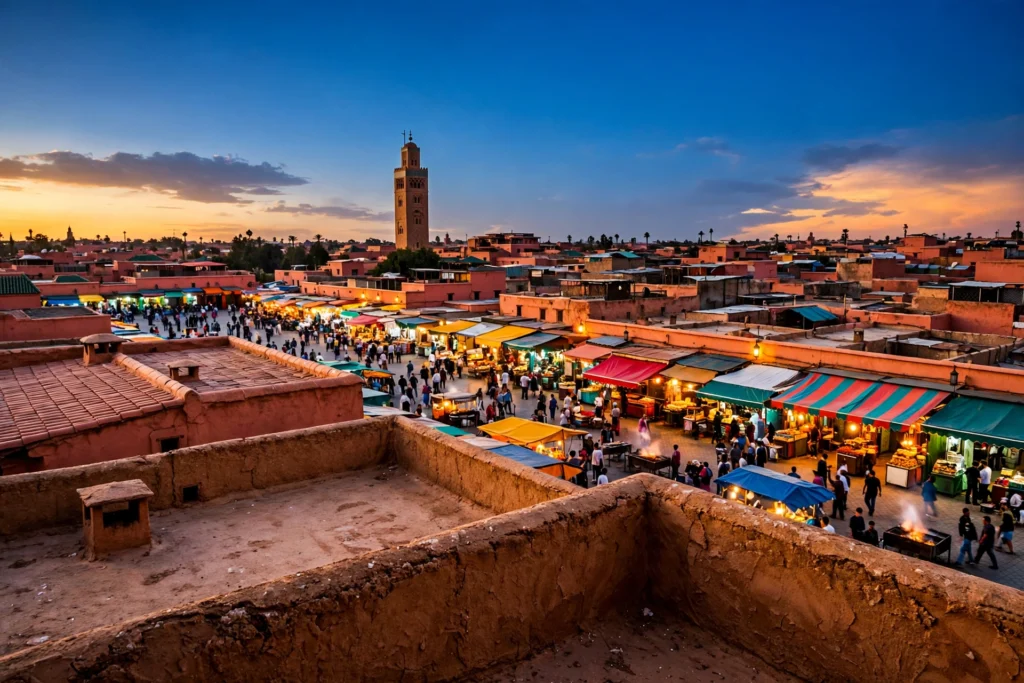
Marrakech is the most common first stop in Morocco, and it earns its reputation. The old city, the medina, is a dense maze of souks, workshops, mosques and riads, anchored by the great open square of Jemaa el-Fnaa. By day the square is full of juice stalls and snake charmers; by night it fills with food stalls, musicians and storytellers, and watching it from a rooftop cafe at sunset is one of the great travel experiences anywhere.
Give Marrakech at least two full days. On the first, walk the medina with a licensed local guide — the alleys are genuinely confusing, and a good guide turns a stressful wander into a story. Visit the Bahia Palace, with its painted ceilings and courtyards, the Ben Youssef Madrasa, a 16th-century Koranic school covered in carved cedar and tilework, and the Saadian Tombs. On the second day, visit the Jardin Majorelle, the cobalt-blue garden once owned by Yves Saint Laurent, and the souks at a slower pace: the dyers’ quarter, the metalworkers, the carpet shops. Book Majorelle tickets online in advance, as they are sold online only and queues can be long.
A few practical notes make Marrakech much easier. Stay inside or near the medina if you want the atmosphere, or in the newer Gueliz district if you want quieter streets and easier taxi access. Agree on taxi fares before you get in, or use a ride-hailing app where available. Keep small notes of dirhams for tips, water and snacks. And when a shopkeeper invites you in for mint tea, it is hospitality — and also the start of a negotiation. Enjoy the tea, take your time, and never feel obliged to buy.
Day trips from Marrakech are excellent if you have a spare day: the Atlas village of Imlil, the Ouzoud waterfalls, or the Agafay desert, a rocky desert landscape about an hour away that works well for travelers who cannot fit the full Sahara journey into their trip.
Fes, Chefchaouen and the Imperial Cities
Fes is Morocco’s cultural and spiritual heart, and for many travelers it becomes the favorite stop of the trip. Fes el-Bali, the old medina, is one of the largest car-free urban areas in the world — a maze of around 9,000 alleys that has changed little in a thousand years. A licensed guide here is not a luxury; it is the difference between seeing a wall of closed doors and understanding tanneries, madrasas, mosques, fountains and craft workshops that have operated the same way for centuries.
Spend two nights in Fes. On the first day, walk the medina: the Chouara Tanneries (mornings are most active), the Bou Inania Madrasa, the University of al-Qarawiyyin, founded in 859 and recognized as the oldest existing university in the world, and the blue gate, Bab Bou Jeloud. On the second day, consider a half-day trip to Volubilis, Morocco’s best-preserved Roman ruins, with mosaic floors still in place, and Meknes, with its monumental Bab Mansour gate and vast granaries.
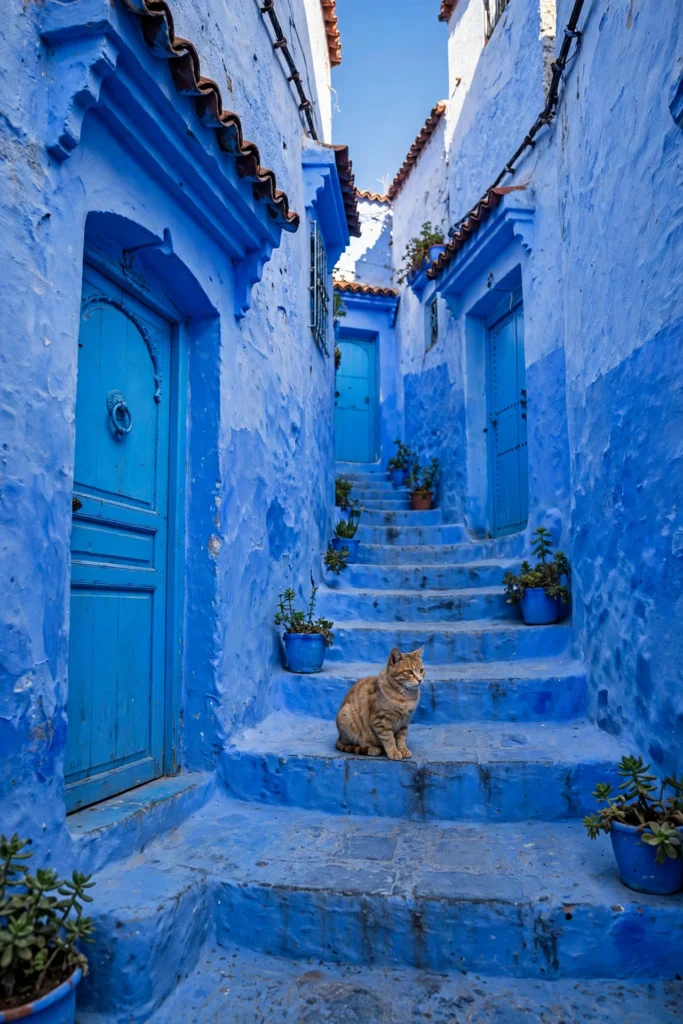
Chefchaouen, the blue city in the Rif Mountains, is about four hours from Fes and worth a night or two. Its blue-washed alleys are beautiful at any hour, but the town is at its best early in the morning before the day-trippers arrive, and in the evening when the light softens. Hike to the Spanish Mosque at sunset for a view over the whole blue town, and walk up to the Akchour waterfalls if you want a half-day escape.
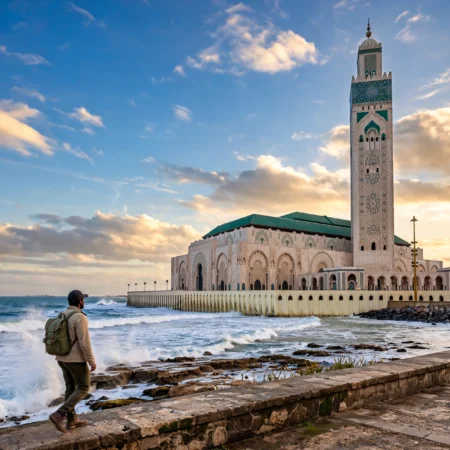
Casablanca and Rabat round out the imperial cities. Casablanca is worth a day mainly for the Hassan II Mosque, one of the few mosques in Morocco open to non-Muslim visitors on guided tours, standing dramatically on the Atlantic shore. Rabat, the capital, is calmer and greener, with the Hassan Tower, the Kasbah of the Udayas and a pleasant seafront — a good first or last stop if you fly in or out of the capital region.
The Sahara Desert: Merzouga and the Camel Trek
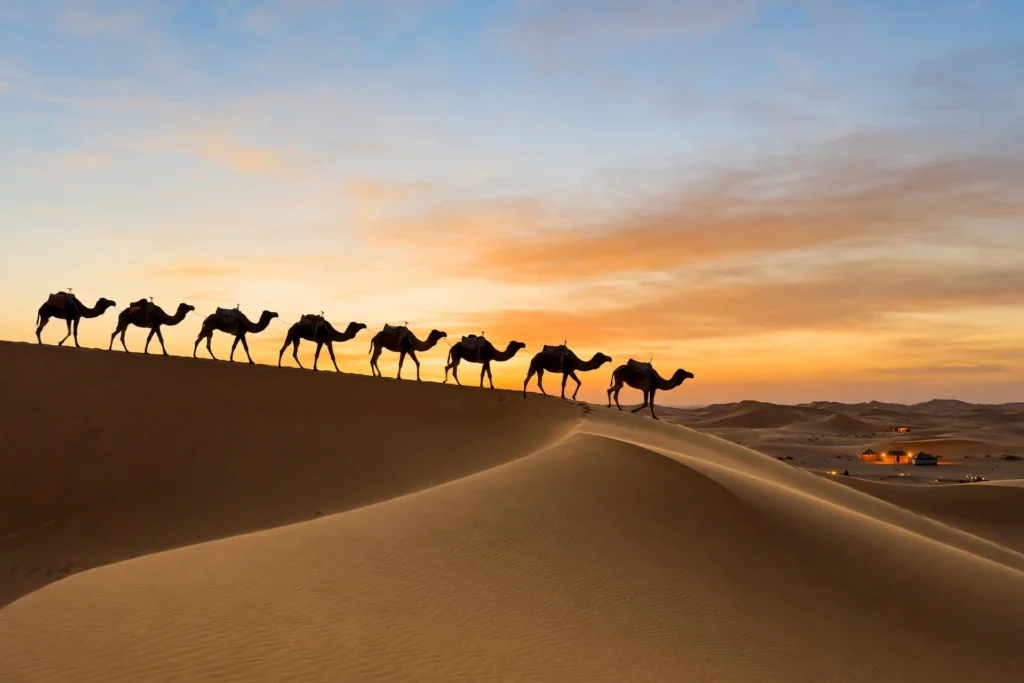
The Sahara is the part of Morocco that most first-time visitors dream about, and it delivers — but it needs honest planning. The great dunes near Merzouga, called Erg Chebbi, are the classic Sahara experience: tall orange dunes, camel treks at sunset, and a night in a desert camp under a sky full of stars. Zagora, closer to Marrakech, has smaller dunes and works for shorter trips, but Merzouga is the real desert, and it is worth the longer drive.
Getting there takes time. From Marrakech it is a two-day drive via the Tizi n’Tichka pass, Ait Ben Haddou and the Dades Valley, with a night on the road in each direction. Most travelers do this as a three-day, two-night desert tour from Marrakech, or as part of a longer loop that continues to Fes. From Fes, Merzouga is a long day’s drive through the Middle Atlas, the cedar forests of Azrou and the Ziz Valley.
At Merzouga, you typically leave your luggage at a hotel on the edge of the dunes, ride a camel for an hour or so into the dunes at sunset, and sleep in a camp. Camps range from basic Berber-style tents with shared facilities to luxury camps with proper beds, en-suite bathrooms and hot showers. Choose based on your comfort level, not the photos alone, and confirm what is included: dinner, breakfast, the camel trek and the return transfer are usually part of the package, but check before you book.
A few desert tips matter. Bring a warm layer even in spring and autumn — desert nights are cold. Wear closed shoes for walking on sand, and bring sunscreen, a hat and a headscarf or buff for windblown sand. Drink plenty of water, and carry cash, as there are no ATMs in the dunes. If you have back problems or mobility concerns, ask about a 4×4 transfer into the camp instead of a camel — most camps offer it, and it is a perfectly good way to arrive.
The Atlas Mountains and the Road South
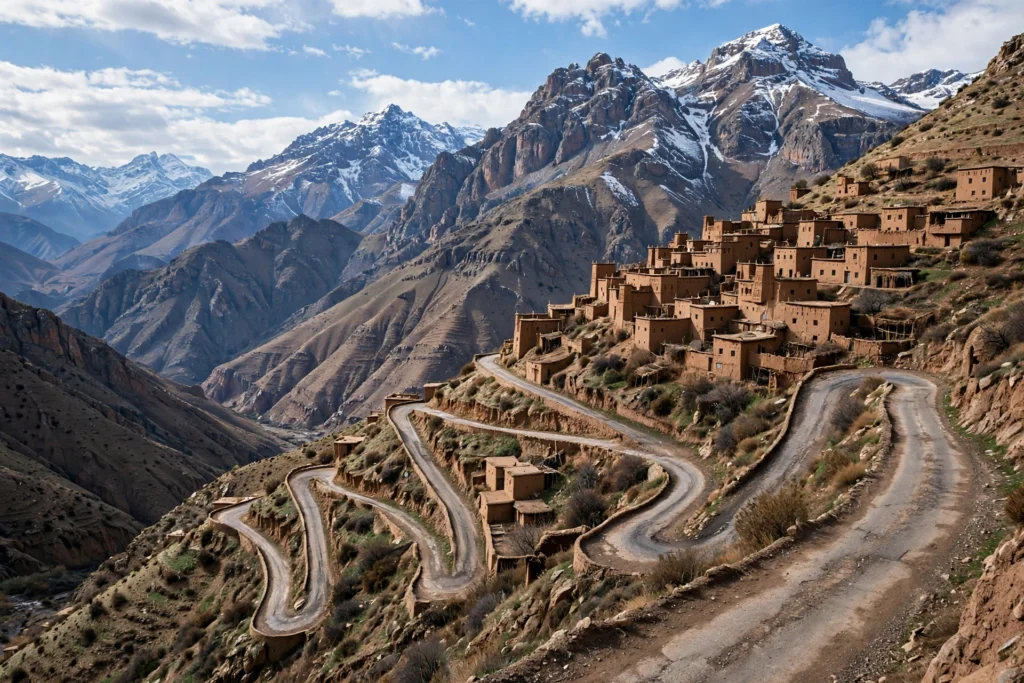
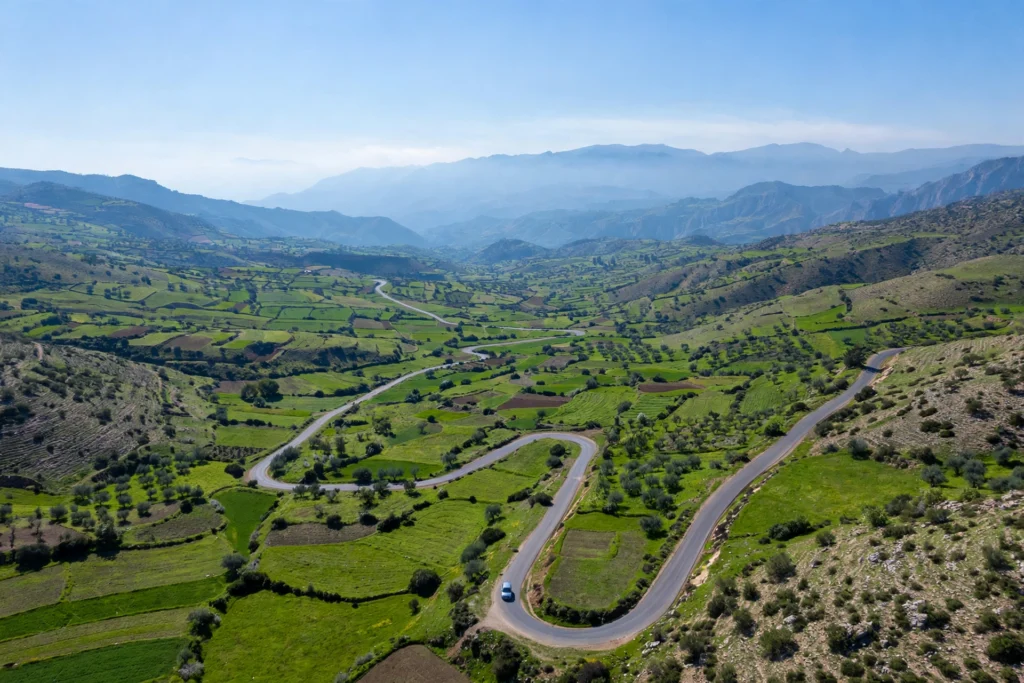
The road from Marrakech to the Sahara crosses the High Atlas Mountains, and the journey itself is one of the highlights of Morocco travel. The Tizi n’Tichka pass climbs to 2,260 meters, with hairpin bends, Berber villages clinging to hillsides, and views that change every few minutes. Stop at Ait Ben Haddou, a fortified mud-brick village and UNESCO World Heritage site that has appeared in countless films, and walk up to its hilltop granary for the classic view over the valley.
Beyond the pass, the landscape turns to the Dades Valley and the Todra Gorge, where a river has cut a narrow canyon between cliffs hundreds of meters high. The Todra Gorge is an easy, beautiful walk, and the Dades Valley, with its rose-growing villages around Kelaat M’Gouna, is a lovely place to spend a night on the way to or from the desert.
If you love mountains, add a day or two in the Atlas itself. Imlil, about an hour and a half from Marrakech, is the base for treks into Toubkal National Park, including the climb to Mount Toubkal, North Africa’s highest peak at 4,167 meters. You do not need to climb Toubkal to enjoy the Atlas: a day walk from Imlil to a Berber village, with lunch in a family home, is one of the most rewarding days you can spend in Morocco, and a local mountain guide makes it easy and safe.
Driving in the mountains deserves respect. Roads are generally good on the main routes, but they are narrow and winding, and night driving is best avoided. If you are not confident on mountain roads, hire a driver for this section — it is one of the best uses of money on a Morocco trip, and your driver doubles as a local guide.
Getting Around Morocco: Trains, Buses and Drivers
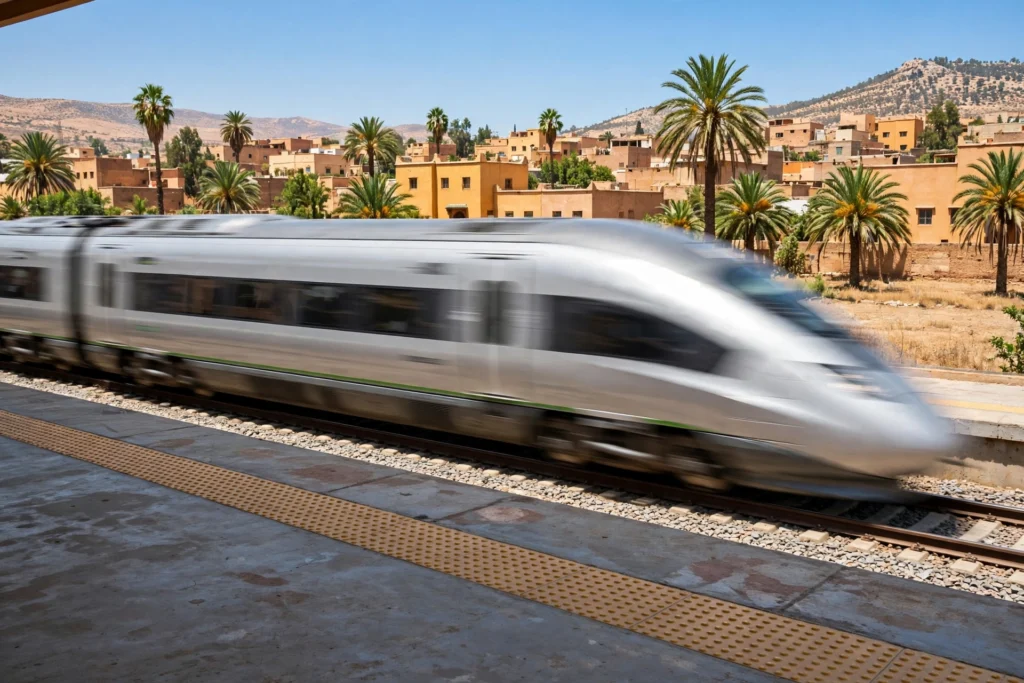
Morocco has one of the best transport networks in Africa, and first-time visitors can get around comfortably without renting a car. The train network is the backbone for city-to-city travel in the north and west. The Al Boraq high-speed train links Tangier, Rabat and Casablanca in a couple of hours, and regular trains connect Casablanca, Rabat, Meknes, Fes and Marrakech. Trains are clean, punctual and cheap by US standards, and first class is a small upgrade that buys wider seats and quieter carriages. Book through the official ONCF train booking site or buy at the station.
Buses fill the gaps trains do not reach. CTM and Supratours are the main companies, with comfortable coaches, fixed timetables and online booking. They are the practical choice for routes like Marrakech to Essaouira or Fes to Chefchaouen, where there is no train. Shared grand taxis — old Mercedes sedans that leave when full — cover shorter hops between towns and are a fun, cheap local experience, though you should agree on the price before getting in.
For the south — the Atlas passes, the Dades Valley and the Sahara — a private driver or a tour is the sensible choice. The roads are long, the signage is limited in rural areas, and a driver who knows the route, the fuel stops and the guesthouses removes a lot of stress. A private driver for a three-day Marrakech-to-Merzouga loop typically costs a few hundred dollars for the car, split between passengers, and is worth every dirham.
Inside cities, petit taxis are metered in theory but often negotiated in practice; agree on a fare first or ask your riad to call a trusted driver. In Marrakech and Casablanca, ride-hailing apps work in some areas. Walking is the main way to explore every medina — they are largely car-free — so pack comfortable shoes and expect to walk a lot.
For the practical side of moving between cities, a few travel apps for maps, translation and offline navigation are worth downloading before you leave home, since mobile data can be patchy in the mountains and the desert.
How Much Does Morocco Travel Cost?
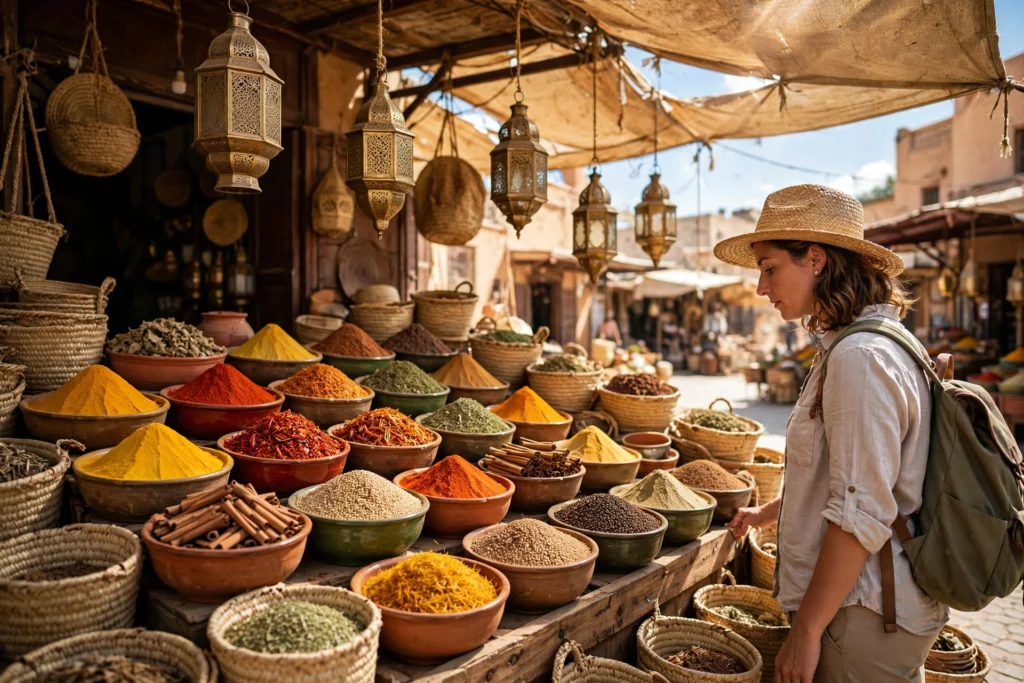
Morocco is one of the best-value destinations in the world for US travelers. A mid-range trip, with riad stays, restaurant meals, trains and a desert tour, typically runs $80 to $150 per person per day, excluding international flights. Budget travelers can manage on $40 to $60 a day using hostels, local restaurants and buses, while luxury travelers can spend $200 or more a day on high-end riads, private drivers and fine dining.
Here is a realistic sense of daily costs:
- Accommodation: $15 to $30 a night for a hostel or simple hotel, $50 to $100 for a good riad, $150 or more for a luxury riad or desert camp.
- Food: $3 to $10 for a local meal, $10 to $25 in a mid-range restaurant, $25 or more for fine dining. A tagine in a local restaurant is often 50 to 80 dirhams.
- Transport: Trains between major cities run roughly $10 to $30 in second class, buses are cheaper, and a grand taxi hop between towns is a few dollars per person.
- Activities: Most medina sights cost a few dollars each. The Majorelle Garden is about $17, the Hassan II Mosque tour around $14, and a three-day desert tour from Marrakech typically runs $150 to $300 per person depending on the camp level.
- Guides: A licensed medina guide in Fes or Marrakech is usually $30 to $50 for a half day, and a private driver for a multi-day loop is a few hundred dollars for the car.
Cash matters in Morocco. Cards work in hotels, larger restaurants and stations, but souks, taxis, small cafes, tips and rural areas run on cash. ATMs are widely available in towns, and the dirham is a closed currency, so you cannot buy it abroad — withdraw on arrival. Keep small notes handy: 10 and 20 dirham notes cover tips, water, snacks and short taxi rides.
If you are working out a trip budget from scratch, a structured approach to how to prepare a travel budget — with a daily spending target and a contingency cushion — works just as well for Morocco as for any other destination.
Where to Stay: Riads, Hotels and Desert Camps
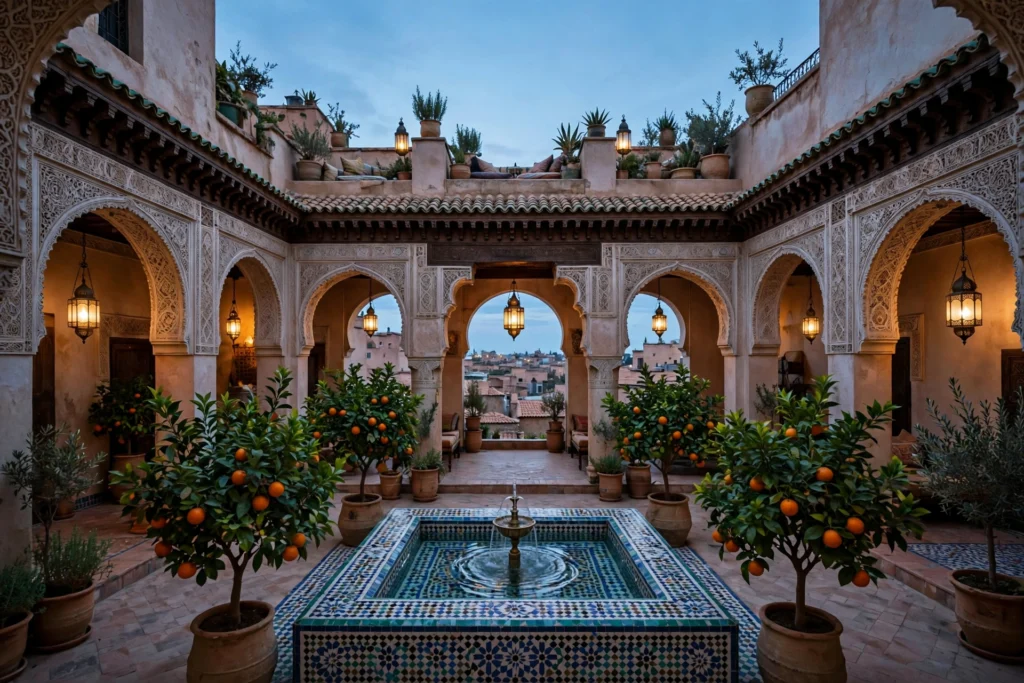
Where you stay shapes your Morocco trip more than in most countries, because the riad is an experience in itself. A riad is a traditional Moroccan house built around an interior courtyard, often with a fountain, orange trees, a rooftop terrace and rooms opening onto the courtyard. Staying in one puts you inside the medina, steps from the souks, and gives you a calm, beautiful base to return to after a busy day.
Choose a riad inside or near the medina in Marrakech and Fes if you want atmosphere, and check the location carefully: some medina riads are a ten-minute walk down narrow alleys from the nearest road, which is charming by day and less fun with luggage at night. Ask the riad about airport transfers and whether someone meets you at a nearby landmark — most good riads offer this, and it removes the hardest part of arriving.
Hotels make sense in Casablanca, Rabat and the coastal cities, where modern hotels with pools and sea views are often better value than medina stays. In Essaouira, look for a small hotel or riad inside the medina walls, close to the fishing port and the beach. In Chefchaouen, small guesthouses in the blue medina are the best choice, and many have terraces with mountain views.
Desert camps deserve a separate decision. A standard camp has comfortable beds, shared or private bathrooms, a communal dinner and Berber music around the fire. A luxury camp adds en-suite bathrooms, hot showers, proper mattresses and sometimes a pool back at the base hotel. If you are traveling in winter, confirm heating — desert nights are cold, and a good blanket is not always enough.
Book early for spring and autumn, especially in Marrakech and Fes, where the best riads sell out weeks ahead. Read recent reviews rather than overall ratings, and pay attention to comments about location, noise and breakfast — the three things that most affect a riad stay.
Food, Bargaining, Culture and Safety Tips
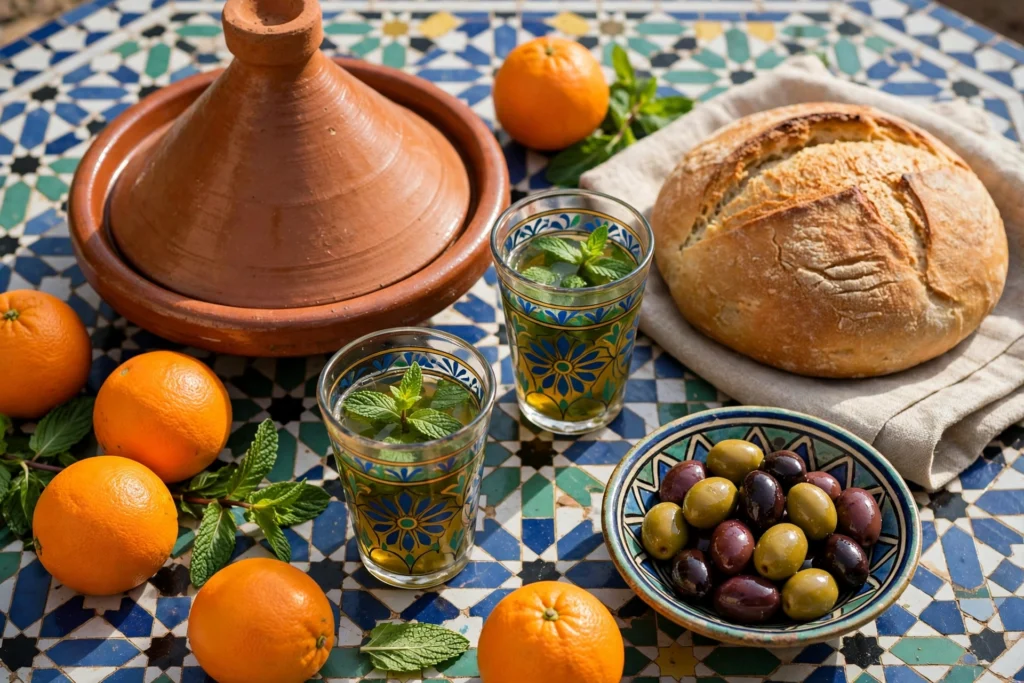
Moroccan food is one of the great pleasures of the trip, and it is best approached with an open mind and a healthy appetite. Start with the classics: tagine, slow-cooked meat or vegetables in a conical clay pot, in flavors like lamb with prunes, chicken with preserved lemon and olives, or vegetable tagine; couscous, traditionally served on Fridays; harira, a tomato and lentil soup that is a staple at breakfast and during Ramadan; and pastilla, a sweet-savory pie of chicken or pigeon with almonds and cinnamon. Bread is served with almost every meal, mint tea is offered everywhere, and fresh orange juice in Jemaa el-Fnaa costs almost nothing and tastes wonderful.
Eat where locals eat: busy small restaurants, food stalls in the squares, and bakeries for morning bread. Street food in Morocco is generally safe if you choose stalls with high turnover and freshly cooked food. Drink bottled water, skip ice in rural areas, and be careful with salads washed in tap water outside established restaurants.
Bargaining is part of shopping in the souks, not a confrontation. Prices are rarely fixed for crafts, carpets, leather and jewelry. A common approach is to offer around a third to half of the opening price, negotiate with good humor, and settle somewhere in the middle. Walking away politely is a normal part of the dance, and you will often be called back with a better price. For food, taxis and fixed-price shops, bargaining is not expected — pay the stated price or the agreed fare.
Culture and etiquette matter, and a little respect goes a long way. Morocco is a Muslim-majority country, and modest dress is appreciated, especially in rural areas and religious sites: cover shoulders and knees, and carry a scarf for mosque visits and conservative areas. Most mosques are closed to non-Muslim visitors, with the Hassan II Mosque in Casablanca the famous exception. Ask before photographing people, especially in rural areas. During Ramadan, avoid eating, drinking or smoking in public during daylight hours out of respect, even though restaurants for travelers remain open.
On safety, Morocco is generally a safe destination for visitors, and most trips are trouble-free. The realistic risks are petty: pickpocketing in crowded medinas and stations, overcharging by unofficial guides and taxi drivers, and the occasional tout who insists on “helping” you. Use licensed guides, agree on prices in advance, keep valuables out of sight, and stay aware in busy areas. Before you travel, read the official US State Department Morocco travel advisory for the current guidance, and consider enrolling in the Smart Traveler Enrollment Program (STEP) so the US embassy can reach you in an emergency. Police can be reached at 19 and medical services at 15.
Frequently Asked Questions About Morocco Travel
Do US citizens need a visa for Morocco?
No, for tourist stays of up to 90 days. You need a passport valid for at least six months beyond your entry date and at least one blank page. Overstaying beyond 90 days without an extension can lead to fines and a court appearance before departure, so keep track of your dates.
Is Morocco safe for first-time visitors?
Yes, with normal precautions. Most visits are trouble-free, and violent crime against tourists is rare. The main issues are pickpocketing, touts and small scams in the busiest medinas. Use licensed guides, agree on taxi fares in advance, and check the current official travel advisory before you go.
How many days are enough for Morocco?
Seven days covers Marrakech and the Sahara, ten days adds Fes and the north or the coast, and fourteen days gives you the full loop at a relaxed pace. For a first trip, ten days is the best balance of coverage and comfort.
What is the best month to visit Morocco?
April, May, September and October offer the best all-round weather. March and November are also excellent, with fewer crowds. Summer suits the coast but is very hot inland, and winter is sunny in Marrakech with cold nights in the mountains and desert.
Can I drink alcohol in Morocco?
Yes, alcohol is legally available to travelers in licensed restaurants, bars, hotels and some shops, even though Morocco is a predominantly Muslim country. Public drinking is best avoided, especially in conservative areas and during Ramadan.
Do I need cash, or can I use cards?
Both. Cards work in hotels, larger restaurants and stations, but you need cash in dirhams for souks, taxis, small cafes, tips and rural areas. ATMs are widely available in towns, and the dirham cannot be bought outside Morocco, so withdraw on arrival.
Is the Sahara desert trip worth it?
Yes, for most first-time visitors it is the highlight of the trip. Merzouga offers the tallest dunes and the classic camel-trek-and-camp experience, but it takes two days of driving from Marrakech. If you are short on time, the Agafay desert near Marrakech gives a taste of desert scenery without the long journey.
What should I pack for Morocco?
Lightweight layers, comfortable walking shoes, sun protection, a hat, a scarf or shawl for religious sites and desert wind, a warm layer for desert and mountain nights, and a daypack for medina walks. A power adapter for European-style two-pin plugs (Type C/E) is essential.
Conclusion
Morocco travel rewards the traveler who plans a route, not a checklist. Pick ten days if you can, start in Marrakech or Casablanca, give the Sahara its proper two days on the road, spend real time in Fes, and leave room for the unplanned moments — mint tea with a shopkeeper, a wrong turn that leads to a beautiful courtyard, a sunset over the dunes. The country is affordable, the transport is good, the food is wonderful, and the distances are the only real challenge. Plan around them, travel in spring or autumn if you can, and Morocco will give you one of the richest trips you can take without leaving the same time zone as Europe.
For more trip-planning help, start with Morocco’s official tourism site, Visit Morocco, for destination ideas and practical information, and check the official travel advisory before departure. Then build your route, book your riads early, and go.
People also read:
- Travel Itinerary Template: Plan Any Trip Without the Stress
- How to Prepare a Travel Budget That Actually Works
- Best Places to Travel in January
- Best Travel Apps for a Smooth Trip


Other Articles

3 Comments
Comments are closed.
[…] Morocco Travel Guide: The First-Timer’s Complete Plan for 7, 10 or 14 Days […]
[…] Morocco is a confident solo trip because its greatest pleasures sit just past the point where a first-timer gets overwhelmed. The medinas of Marrakech and Fes are mazes of lanes, workshops, and markets where getting lost is part of the experience — and where a confident traveler with a map app, a riad booked in advance, and a willingness to say no firmly will have a wonderful time. A mid-range daily budget of about $70 to $110 covers a riad room, market and restaurant meals, taxis and day trips, and a guide for the first morning in each medina, which is money well spent. A licensed guide for your first hours in Fes is how you learn the layout before exploring alone. […]
[…] plus one excursion often makes a better trip than a city alone, and if Morocco appeals to you, our Morocco travel guide covers routes, seasons, and practical details for building that kind of […]