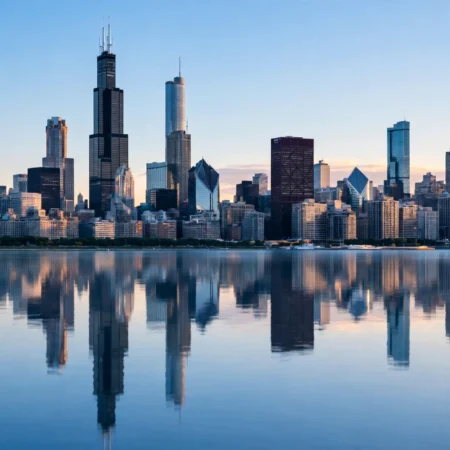
Quick Answer: Is It Safe to Travel to Chicago Right Now?
Yes — for most visitors, on a normal tourist itinerary, in November 2026. Is it safe to travel to Chicago right now is a question with a clear, qualified yes, and the qualification matters as much as the yes. The downtown visitor corridor — the Loop, River North, the Magnificent Mile, Streeterville, the West Loop, Museum Campus and the lakefront — is a busy, well-patrolled, well-lit part of a major American city where millions of people visit, work and eat out every year. If your trip is Millennium Park and the Bean, the Art Institute, a river architecture cruise, Navy Pier, the museums on Museum Campus, dinner in the West Loop and a show in the Theatre District, you are visiting the part of Chicago that is built for visitors, and it is safe to enjoy it with normal big-city awareness.
But this is not a “nothing to worry about” answer, and any guide that gives you one is not being honest with you. Chicago is a big city with a real and serious violent-crime problem, and the problem is not evenly spread. It is concentrated in a small number of residential community areas on the South Side and West Side, far from the places tourists go, and it is overwhelmingly connected to gang and neighbourhood disputes rather than to visitors. The crimes a tourist is actually likely to meet are different and smaller: a phone snatched on a crowded train platform, a bag taken from a chair in a busy restaurant, a smashed car window, a scam on the street near a famous attraction. And in winter, the biggest risk to a visitor is not crime at all — it is the cold. January in Chicago averages a high of 31.6°F and a low of 18.8°F at O’Hare, and the wind off Lake Michigan can make a 20-degree day feel like single digits.
So the honest short answer is this: go, stay in the visitor corridor, use the CTA like a local, keep your phone out of your hand on the train, do not walk alone late at night in quiet streets, and dress for the weather like it is a serious matter — because in a Chicago winter, it is. Do those things, and the Chicago most travellers experience — the skyline over the lake, the river through the towers, deep-dish pizza in a warm restaurant on a cold night — is there waiting for you.
This guide gives you the full picture in plain language: why there is no official travel advisory for Chicago and what to check instead, safety neighbourhood by neighbourhood, safety by time of day, the CTA at night, scams and what they cost, where to stay, winter safety, summer crowds, the laws visitors most often break by accident, and the emergency numbers to save before you go. Everything about crime data, transit, curfews and weather was checked against the official sources on 17 November 2026, and the dates and links are given so you can check them again yourself.
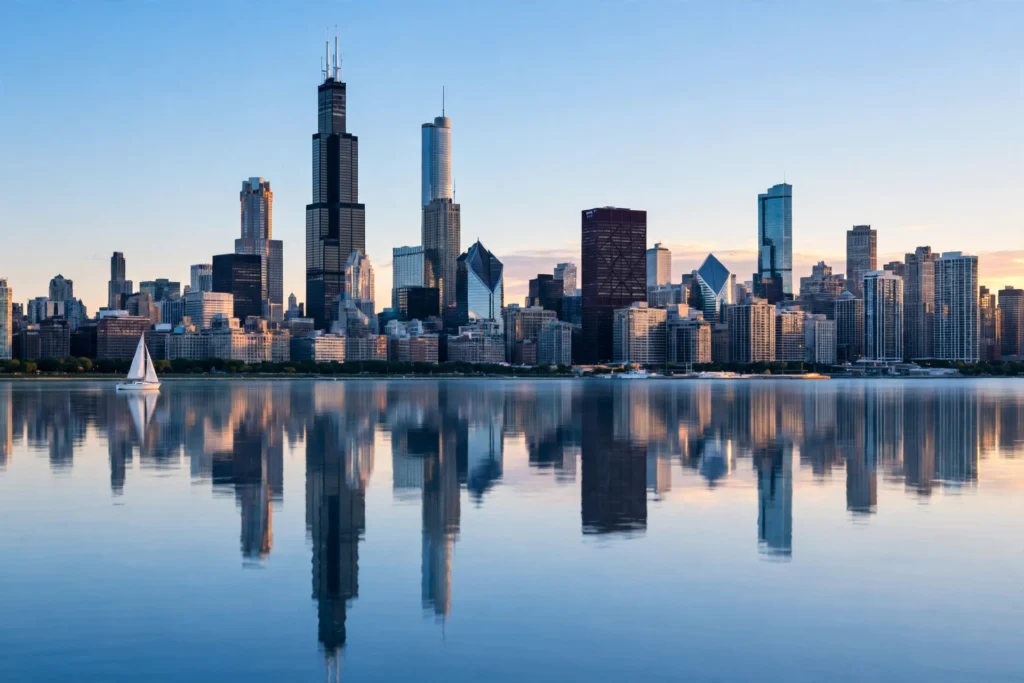
Is Chicago Safe to Travel to in 2026? The Short Answer
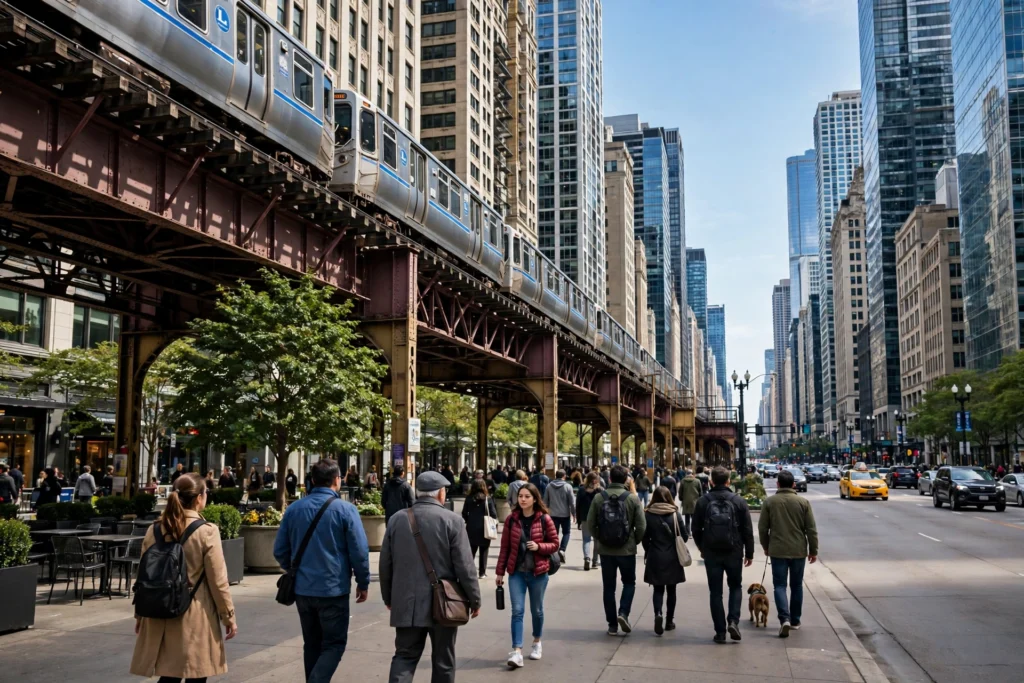
For most travellers, on a normal tourist itinerary, yes. Chicago is safe to visit in the sense that matters most: the places tourists go are not the places where the violence happens, and the violence that does happen is overwhelmingly aimed at people involved in it, not at visitors. The Loop, River North, the Magnificent Mile, Streeterville, the Gold Coast, Lincoln Park, Lakeview, Wicker Park and the West Loop are neighbourhoods full of hotels, restaurants, offices, theatres and parks, and they are busy from early morning until late at night. Our Seattle travel guide covers a similar kind of American city trip — a downtown core, a waterfront, neighbourhoods to explore on foot — and the Chicago version of the same logic is simpler: pick the visitor corridor, stay on lit streets, use the train, and keep your valuables out of sight.
The honest version of the short answer has three parts, and you need all three before you decide.
First, the crime picture is genuinely serious — but it is also genuinely localised. Chicago publishes its crime data openly, and the open data tells a clear story. The city is divided into 77 community areas, and violent crime is heavily concentrated in a small number of them on the South Side and West Side. The visitor corridor — the downtown and North Side lakefront neighbourhoods where the hotels and attractions are — sits at the other end of that distribution. That does not mean the visitor corridor is crime-free. It means the risk there is the risk of a big-city downtown: theft, robbery and street crime, not the gang violence that drives the city’s homicide numbers. A tourist who stays in the corridor, stays aware and stays out of quiet streets late at night is dealing with a different, much smaller risk profile than the one you read about in the headlines.
Second, the risks that actually catch visitors are small, everyday ones. The most common crime against a visitor in downtown Chicago is not a shooting. It is a phone snatched from a hand on a crowded train platform or a busy sidewalk — locals call it “apple picking” — a bag lifted from a chair in a restaurant, a car window smashed for something visible on the seat, or a wallet taken in a crowd at a festival. These are opportunistic crimes, and they are preventable in the specific ways this guide describes: keep your phone in your pocket on the train, keep your bag on your lap or between your feet, leave nothing visible in a parked car, and stay alert in crowds.
Third, winter is a genuine safety factor, and it is the one visitors most often underestimate. Chicago in November, December, January and February is cold in a way that is dangerous if you are not dressed for it. The National Weather Service’s 1991–2020 normals for O’Hare give January an average high of 31.6°F and an average low of 18.8°F, with about 11.3 inches of snow in the month, and the city’s record low is −27°F, set on 20 January 1985. Wind chill off the lake can push the feels-like temperature far below the air temperature, and January 2026 itself ran colder than normal at O’Hare, with an average maximum of 28.9°F and an average minimum of 14.9°F. Frostbite can set in quickly on exposed skin in those conditions. The winter section of this guide tells you exactly what to pack and how to plan a cold-weather day, because in Chicago the weather is a safety issue, not just a comfort issue.
So who should go, and who should wait? If your trip is the classic Chicago itinerary — fly into O’Hare, take the Blue Line to the Loop, stay in River North or the West Loop, spend your days at Millennium Park, the Riverwalk, the museums and the lakefront, and fly home — go, with the precautions in this guide. If your trip depends on exploring residential neighbourhoods far from downtown late at night, or on driving and parking a car full of luggage in quiet areas, rethink it: use the train, take a rideshare at night, and keep your plans inside the corridor. And if you are visiting between December and March, pack like the cold is real — because it is. Check the National Weather Service Chicago forecast in the week before you fly, and check the Chicago open crime data portal if you want to see the numbers for the exact neighbourhood you are staying in. This article was checked against those sources on 17 November 2026.
Why There Is No Travel Advisory for Chicago — and What to Use Instead

If you have read our guide on is it safe to travel to Vietnam, you will have seen it open with a US State Department advisory level. Chicago has no such level, and that is not an oversight. The US State Department issues travel advisories for foreign countries only. It does not rate American cities, and no Level 1, 2, 3 or 4 exists for Chicago, New York, Los Angeles or any other US destination. Any website that gives Chicago a “Level” or a safety score out of 100 is inventing its own scale, and you should treat its numbers as marketing, not as official advice.
That leaves a gap, and this section is about how to fill it honestly. There are three sources worth using, and all three are official or built directly on official data.
The City of Chicago open crime data portal
Chicago publishes its crime data openly, and it is unusually complete. The City of Chicago Data Portal carries a dataset called “Crimes — 2001 to Present”, which records reported incidents of crime from 2001 to the present, minus the most recent seven days, drawn from the Chicago Police Department’s CLEAR system. It is updated daily, and you can filter it by community area, by type of crime and by date, so you can look at the exact neighbourhood where your hotel is, rather than relying on a citywide average that tells you nothing. The dataset is at data.cityofchicago.org/d/ijzp-q8t2. The Chicago Police Department also publishes CLEARmap, an online tool that shows up to fourteen days of preliminary crime-incident data over the most recently available 90-day period, so you can see what has happened recently near an address you are considering.
Two cautions about the data. First, the portal’s own disclaimer says the crimes may be based on preliminary information that has not been verified, and classifications can change after further investigation — so treat a single incident as a data point, not a verdict, and look at patterns over weeks and months. Second, addresses are shown at block level only, to protect victims’ privacy, so you will see the block, not the exact address. Both of those limits are reasonable, and neither stops the data from being the best available picture of where crime happens in Chicago.
The Chicago Public Safety DataHub community-area maps
Raw incident data is hard to read, and citywide totals are misleading — a city of 77 community areas cannot be summed up in one number. The Chicago Public Safety DataHub, which is built from the Chicago Police Department’s data through the city’s own data portal, ranks all 77 of Chicago’s community areas by violent crime rate, adjusted for population, so you can compare areas of very different sizes fairly. Its violent-crime map is at chipublicsafety.org/crime/map/violent-crime.html. The pattern it shows is the one this guide is built on: the highest violent-crime rates sit in a small number of community areas on the South Side and West Side, while the downtown and North Side lakefront areas where visitors stay sit much lower. Use it before you book a hotel outside the visitor corridor, and use it again if you are considering a neighbourhood you do not know.
Choose Chicago and the CTA
For the visitor-facing side — what is open, where to go, how to get around — the official visitor bureau is Choose Chicago, and the transit authority is the CTA. Neither of them publishes crime advice, and neither should be quoted as a safety authority. What they are good for is the practical information that keeps you safe: which neighbourhoods have hotels and restaurants, which train lines run at night, what the fare is, and whether a station is closed for construction. This guide links to both where their information is the authoritative source, and to the crime data where the question is about crime.
What not to use
Three kinds of source should not decide your trip. The first is the advisory aggregator — sites that assign Chicago a score out of 100, or claim a precise percentage drop in crime in a single neighbourhood, or describe themselves as a “travel warning” service. Their numbers are not official, their dates are often inconsistent, and their scores cannot be checked against any primary source. This guide does not cite any of them. The second is the social-media anecdote — a single viral video of a single incident, presented as if it describes the whole city. Chicago is a city of 77 community areas; one incident in one of them describes that block on that day, nothing more. The third is the opposite error: a guide that says “Chicago is perfectly safe, don’t worry”, with no data behind it. The data exists, it is public, and this guide uses it. When you see a claim in this article about where crime concentrates, it comes from the open data and the community-area maps, not from an aggregator or a feeling.
Chicago Safety by Neighbourhood: The Visitor Corridor and the Areas to Avoid
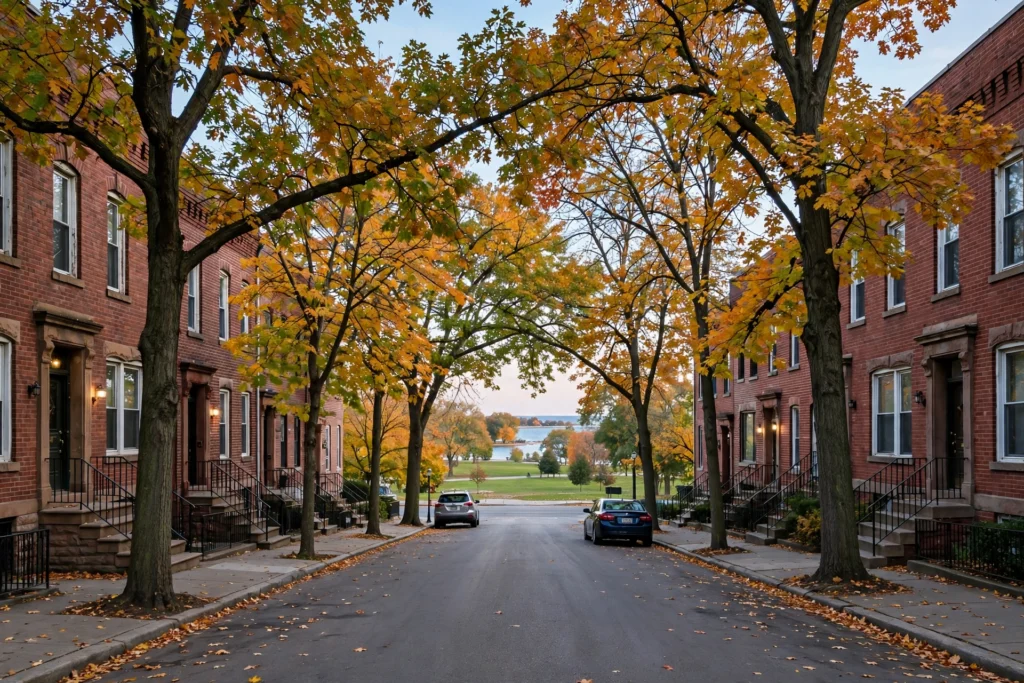
Chicago is not one city for safety purposes. It is 77 community areas, and the difference between the safest and the least safe of them is enormous. Local guides sometimes describe this as “two Chicagos”: a lakefront slice of downtown and North Side neighbourhoods where the attractions, hotels and restaurants are, and residential areas on the South Side and West Side where violent crime concentrates. The phrase is a simplification, and it is unfair as a description of whole sides of the city — the South Side includes Hyde Park, home of the University of Chicago, and the Museum of Science and Industry, and the West Side includes lively, welcoming neighbourhoods too. But as a guide to where a visitor should base themselves, the underlying geography is real, and the open crime data confirms it.
The table below is the summary. Use it to choose where to stay, and to decide what “be careful” means in each place. The verdicts describe the general picture for a visitor, not a guarantee for any single street: conditions vary block by block, and a quiet street at 2am is a different place from the same street at 2pm.
| Area | Overall verdict | Main risks for visitors | At night |
|---|---|---|---|
| The Loop | Busiest visitor area; exercise normal big-city caution | Phone theft, pickpocketing, bag theft in crowds | Busy and lit on main streets; avoid empty side streets and underpasses late |
| River North and Streeterville | Very safe-feeling; normal big-city caution | Phone theft, bag theft, car break-ins | Well lit and busy; use a rideshare for late returns |
| Magnificent Mile and Gold Coast | Safe, busy shopping streets; normal big-city caution | Phone theft, pickpocketing, scams near attractions | Busy until late; stick to Michigan Avenue itself |
| West Loop | Safe, restaurant-heavy; normal big-city caution | Car break-ins, phone theft | Busy restaurant streets; quiet side streets need care |
| Museum Campus and Navy Pier | Safe, patrolled, family-friendly; normal caution | Pickpocketing in crowds, bag theft | Quiet after attractions close; leave by train or rideshare |
| Lincoln Park and Lakeview | Safe residential lakefront; normal big-city caution | Phone theft, car break-ins, bike theft | Lively main streets; quiet residential streets need care |
| Wicker Park and Logan Square | Safe, lively; normal big-city caution | Phone theft, car break-ins | Busy on Milwaukee Avenue; quiet side streets need care |
| Pilsen and Little Village | Welcoming, cultural; exercise increased caution | Phone theft, car break-ins; gang presence in parts | Go in the daytime or early evening; use a rideshare at night |
| Hyde Park | University area; exercise increased caution | Robbery and car break-ins in parts; varies block by block | Stay near the university and main streets; use a rideshare at night |
| South Side and West Side residential areas (Englewood, West Garfield Park, East Garfield Park, North Lawndale, Greater Grand Crossing, Riverdale, Austin) | Avoid as a visitor — highest violent-crime rates in the open data | Gang-related violent crime, shootings, robbery | Do not go, day or night, unless you have a specific local reason and a local host |
The visitor corridor, street by street
The Loop is the downtown core, bounded roughly by the Chicago River, and it is where most visitors spend most of their time. Millennium Park and the Bean, the Art Institute of Chicago, the Theatre District, the Riverwalk and the Willis Tower are all here, and the streets are full of office workers by day and theatre-goers and diners by night. The risks here are the risks of any busy downtown: phone theft, pickpocketing and bag theft in crowds, and car break-ins if you leave something visible in a parked car. The Loop is also where the “L” lines converge, which makes it the easiest place in the city to get to and from — and the easiest place to be caught in a crowd, which is when pickpockets work.
River North and Streeterville, just north of the river, are where most of the big hotels are, along with the Magnificent Mile shopping street and Navy Pier. These are the most visitor-dense streets in the city, and they feel it: well lit, busy, full of doormen, valets and other visitors. The same phone and bag rules apply, and the scams in the scams section of this guide cluster here, around the famous attractions — but the streets themselves are among the safest in the city for a visitor to walk at night, as long as you stay on the main streets.
The West Loop, west of the Loop across the river, is the restaurant neighbourhood: Randolph Street and Fulton Market, full of busy dining rooms and bars. It is safe and lively in the evening, and the main streets are full of people until late. The side streets are quieter and darker, so walk the main streets and take a rideshare back to your hotel if you are out late.
Museum Campus, on the lakefront south-east of the Loop, holds the Field Museum, the Shedd Aquarium and the Adler Planetarium, and Navy Pier stretches into the lake from Streeterville. Both are patrolled, family-friendly and busy during the day. After the attractions close they go quiet quickly, so plan to leave by train or rideshare rather than walking back through quiet streets.
Lincoln Park, Lakeview, Wicker Park and Logan Square are the North Side neighbourhoods where visitors go for a more local feel: the zoo in Lincoln Park, the bars and restaurants of Wrigleyville in Lakeview, the shops and cafes of Milwaukee Avenue in Wicker Park. They are residential, safe-feeling and walkable, and they are good choices for an Airbnb or a boutique hotel. The risks are the same as downtown — phone theft, car break-ins, bike theft — and the same rule applies: lively main streets are fine late, quiet residential streets need care.
The areas to avoid, and why
The community areas with the highest violent-crime rates in the open data are on the South Side and West Side: Englewood, West Garfield Park, East Garfield Park, North Lawndale, Greater Grand Crossing, Riverdale and Austin are among those most often named in local safety guides and in the community-area rankings. These are residential neighbourhoods with no tourist attractions, no hotels aimed at visitors, and no reason for a visitor to be there. The violence there is overwhelmingly gang-related and neighbourhood-based: disputes between groups, retaliation, and territory. A visitor has no business in these areas, and no reason to go.
Two things are worth saying plainly here, because careless writing about Chicago does real harm. First, “the South Side” and “the West Side” are not danger zones. They are large parts of a large city, home to hundreds of thousands of people, with universities, museums, parks, restaurants and ordinary residential streets. Hyde Park, on the South Side, is home to the University of Chicago and the Museum of Science and Industry, and visitors go there every day. Pilsen, on the Lower West Side, is one of the city’s most welcoming cultural neighbourhoods, famous for its murals and Mexican restaurants. What the data says is that violent crime concentrates in specific community areas, not that whole sides of the city are unsafe — and this guide names the specific areas rather than condemning a side of town.
Second, conditions vary block by block. A community area is a large unit, and a single community area can contain a busy commercial street that is perfectly safe in the daytime and a residential block a few streets away that is not. That is why this guide keeps telling you to check the open data for the exact neighbourhood and the exact block, rather than relying on a name. If you are considering staying outside the visitor corridor, look at the Chicago Public Safety DataHub violent-crime map and the open crime data portal for that community area before you book, and ask your hotel or host about the specific streets around it.
How to use the 77 community areas as a visitor
You do not need to memorise 77 names. You need one habit: before you book a hotel or an Airbnb, find out which community area it is in, and check the open data for that area. If it is in the Loop, River North, Streeterville, the Gold Coast, Lincoln Park, Lakeview, Wicker Park, the West Loop or the Museum Campus area, you are in the visitor corridor and the normal big-city rules apply. If it is somewhere else, check the map, read recent reviews from other visitors, and ask the host directly about the streets around the property at night. A host who cannot answer that question clearly is a reason to book elsewhere. And if a listing is noticeably cheaper than everything else in the corridor, find out why before you book it — in Chicago, as everywhere, a price that looks too good usually has a reason, and the reason is often the location.
Is Chicago Safe for Tourists? Crime, Theft and What Visitors Actually Face
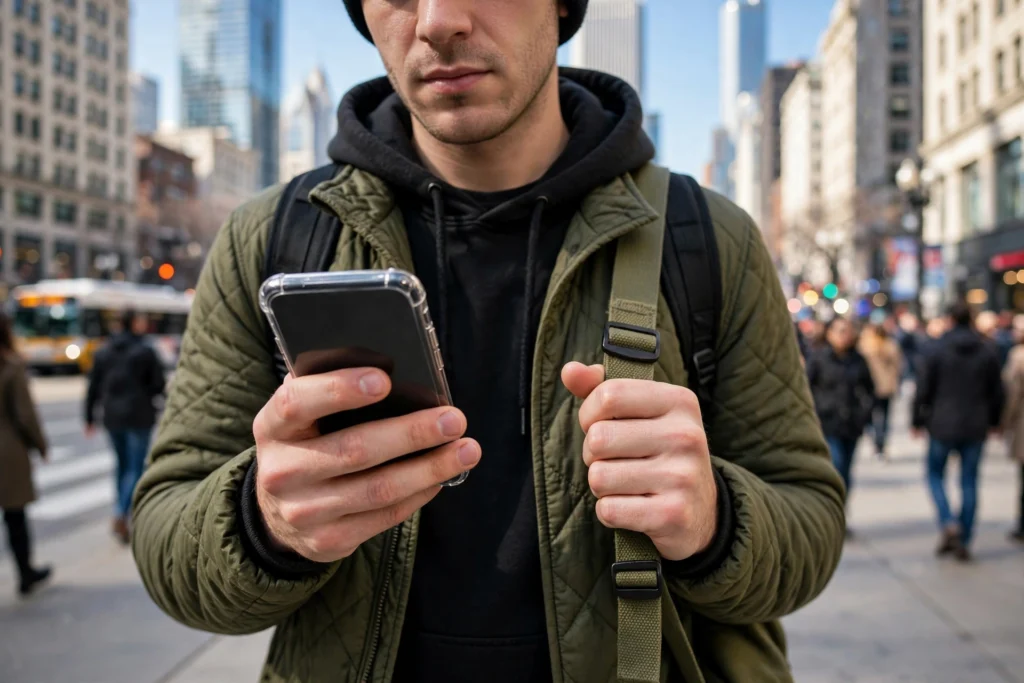
This is the section most guides get wrong, usually by giving you one of two false answers: either “Chicago is perfectly safe, don’t worry” or “Chicago is dangerous, don’t go.” The truth, as the open data describes it, is narrower and more useful than either.
Violent crime: who it happens to, and where
Violent crime in Chicago is real, and the numbers are serious. The city’s homicide and shooting totals are among the highest of any American city in absolute terms, and the open data shows that violent crime is heavily concentrated in a small number of community areas. What the same data shows, and what matters for a visitor, is who the violence is aimed at. The shootings that drive the totals are overwhelmingly connected to gang disputes and neighbourhood conflicts, and the victims are overwhelmingly people involved in those disputes or living in the neighbourhoods where they happen. Tourists are not usually the target of gang violence, and the visitor corridor is not where it happens.
That does not mean a visitor can ignore violent crime. Robbery — a mugging on the street, a carjacking, a robbery at gunpoint — does happen in and around downtown, and it happens to visitors as well as to residents. The pattern is important: robberies against visitors tend to happen late at night, on quiet streets, to people who are alone, distracted or visibly carrying valuables, and often near train stations, parking areas and the edges of busy districts rather than in the middle of them. The precautions in this guide are built for that pattern: stay on lit streets, stay with other people, keep your phone in your pocket, and take a rideshare rather than walking a quiet street late at night.
Phone theft: the crime most visitors actually meet
The single most common crime against a visitor in downtown Chicago is phone theft, and it has a local name: “apple picking”. It works like this. A thief on a crowded train platform, a busy sidewalk or a packed festival crowd watches for a phone in a hand — someone checking directions, taking a photo, reading a message — and snatches it and runs, or lifts it from a pocket or an open bag in a crowd. It takes seconds, and by the time you realise what happened, the thief is gone. The same trick works with a bag left on a chair, a wallet in a back pocket, or a laptop bag left under a table.
The precautions are simple and they work: keep your phone in your pocket or in a zipped inner pocket when you are on the train, on a crowded platform or walking a busy street. If you need directions, step into a shop or against a wall, check them, and put the phone away before you walk on. Do not hold your phone up at arm’s length to take photos on a crowded platform. Keep your bag on your lap or between your feet in a restaurant, not on the chair behind you, and keep it zipped. On the beach or at a festival, take only what you need and keep it where you can see it. And set up your phone’s find-my-device feature and a lock screen before you travel — a stolen phone with a lock and a location is a nuisance; a stolen phone with no lock and your banking apps open is a much bigger problem.
Car break-ins and carjacking
If you drive in Chicago, the car is the weak point. Smash-and-grab break-ins — a window smashed for a bag, a laptop, a phone or a shopping bag visible on a seat — are common in downtown parking areas, on the lakefront and in busy neighbourhoods. The rule is absolute: leave nothing visible in a parked car, not even for a few minutes, not even a charging cable or an empty bag that looks as if it might hold something. Put everything in the boot before you arrive, not after you park — thieves watch car parks and see you moving things into the boot. Park in a staffed garage or a well-lit lot rather than on a quiet street, and choose a garage attached to your hotel where you can.
Carjacking — taking a car by force from its driver — is a rarer and more serious crime, and it happens mostly late at night, at petrol stations, in car parks and on quiet streets, often to drivers who are alone. Reduce the risk by keeping your doors locked and your windows up whenever you are in the car, by not sitting in a parked car with the engine running on a quiet street, by using well-lit petrol stations, and by taking a rideshare at night rather than driving yourself. If someone tries to take your car, hand over the keys and get away safely — do not resist, and do not chase them. Your car is replaceable; you are not.
What to do if you are robbed
The advice is the same from every police department, and it is worth memorising: do not resist. Hand over what is asked for, stay calm, and get away safely. Afterward, call 911, report the incident, and get a report number — you will need it for your insurance and for a replacement passport if one was taken. If your phone was stolen, lock it remotely and change your passwords from another device as soon as you can. If your cards were taken, call your bank immediately. And if you are a visitor from outside the United States, contact your embassy or consulate for help replacing a passport; the emergency-numbers section at the end of this guide tells you what to save before you need it.
One more point, because it surprises people: Chicago is a city where you should not assume that a stranger offering help is a threat, and you should not assume that they are safe either. Most Chicagoans are friendly and helpful, and asking a local for directions is one of the best parts of visiting. But a stranger who approaches you with an urgent story, a deal that is too good to be true, or an offer to take you somewhere is a different thing, and the scams section below covers the versions of that approach that visitors actually meet.
Is Chicago Safe at Night? Safety by Time of Day
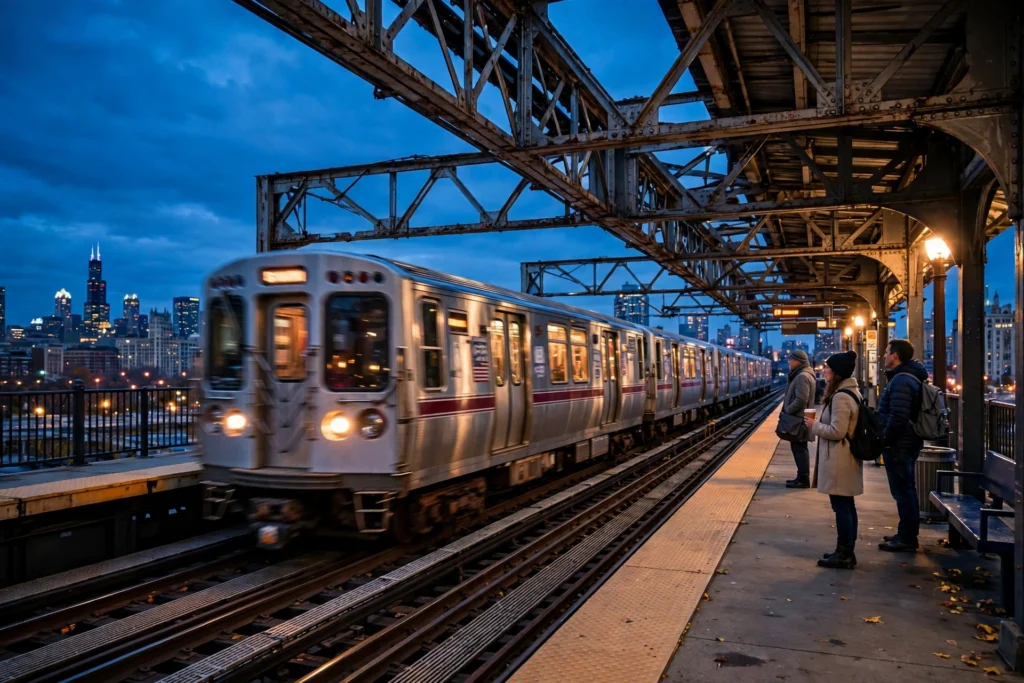
Chicago changes after dark, and the change is the most important thing to understand about safety in the city. During the day, the visitor corridor is busy, social and open. After dark, the streets empty, the risks the data describes — robbery, car break-ins, phone theft — all rise, and the same street can feel like a different place. The table below is the summary; the sections after it give the detail.
| Time of day | Visitor corridor | What changes | What to do |
|---|---|---|---|
| Early morning (6–9am) | Quiet but safe; commuters appear | Few people around; some underpasses and stations empty | Stick to main streets; use the train, not a quiet walk |
| Daytime (9am–5pm) | Safest hours; busy everywhere | Crowds at attractions; pickpockets work the crowds | Keep your phone and bag close in crowds |
| Evening (5–10pm) | Busy and lively; restaurants and theatres full | Streets stay busy on main roads; side streets empty | Stay on lit main streets; take a rideshare after 10pm |
| Late night (10pm–2am) | Quieter; bars and clubs still going | Robbery risk rises on quiet streets; trains run less often | Use a rideshare; do not walk alone on quiet streets |
| Overnight (2–6am) | Very quiet; only Red and Blue lines running | Empty platforms, empty streets, highest risk for a lone pedestrian | Do not walk; take a rideshare or the Red/Blue line |
Daytime: the safest hours
Daytime is when Chicago is at its best and its safest. The Loop, the Magnificent Mile, Millennium Park, the Riverwalk and the lakefront are full of people from mid-morning until late afternoon, and the main risk is the crowd itself: pickpockets and phone snatchers work busy places, because a crowd gives them cover and a victim who is distracted. Keep your phone in your pocket, keep your bag zipped and in front of you, and be extra careful at the Bean, on Navy Pier, at festivals and on crowded train platforms. That is the whole daytime rule, and it is enough.
Evening: the golden hours, with a boundary
The evening, from about 5pm to 10pm, is the best time in Chicago: the restaurants fill up, the theatres open, the river and the skyline light up, and the main streets stay busy. The West Loop, River North, the Theatre District and the Magnificent Mile are all lively until late, and walking between dinner and a show on a lit main street is one of the pleasures of the city. The boundary is 10pm, and it is worth respecting. After 10pm the crowds thin, the side streets empty, and the robbery risk on quiet streets rises. That is also the hour of the citywide curfew for minors — 10pm for those aged 12 and older, under Chicago Municipal Code 8-16-020 — and Millennium Park has its own, stricter rule for under-18s after 6pm from Thursday to Sunday, which the laws section covers in detail. If you are out after 10pm, take a rideshare back to your hotel rather than walking, even if the walk is short.
Late night and overnight: use a car, not your feet
After midnight, the visitor corridor is a different city. The bars and clubs in River North and the West Loop are still going, and the Red and Blue lines still run, but the streets between them are quiet, and a lone pedestrian on a quiet street is the easiest target in the city. The rules for these hours are not complicated, but they are not optional either: do not walk alone late at night, anywhere. Take a rideshare or a taxi from the door of the bar or restaurant to the door of your hotel. If you are taking the train, wait on a busy, well-lit platform, sit in a car with other people, and get off at a busy station. If a train car is empty, move to one with people in it, or wait for the next train. And if you are at O’Hare or Midway late at night, take the Blue Line or the Orange Line if it is running, or a rideshare — do not walk out of the airport area on foot.
A note on the “L” at night
The CTA is the subject of its own section below, but the night point belongs here too. Only two of the eight “L” lines — the Red Line and the Blue Line — run 24 hours a day. The other six stop overnight, broadly between about 1am and 4am, and the last trains leave downtown around 1am. If you are out late and your route needs the Brown, Green, Orange, Pink, Purple or Yellow line, check the time before you leave the restaurant: the train you need may already have stopped, and the walk to the Red or Blue line may be longer than you think. Plan the return journey before you go out, not after the last train has left.
Getting Around Safely: CTA Trains, Buses, Rideshares and Walking

The CTA is the best way to see Chicago, and it is also the safest way to move around the city after dark — if you use it the way locals do. The system is the “L”, the elevated and subway train network, plus the bus network, and it is run by the Chicago Transit Authority. The official source for routes, times and fares is transitchicago.com, and you should check it before you rely on any timetable in this article, because schedules change.
The eight lines, and the two that never stop
The “L” has eight lines, each identified by a colour, running through 146 stations. Only two of them run 24 hours a day, seven days a week: the Red Line, which runs north-south through the Loop from Howard to 95th/Dan Ryan, and the Blue Line, which runs from O’Hare Airport through the Loop to Forest Park. The other six — Brown, Green, Orange, Pink, Purple and Yellow — stop overnight, broadly between about 1am and 4am, and resume in the early morning. That distinction is the single most useful thing to know about Chicago transit, and it is the one visitors most often get wrong.
| Line | Where it goes | Runs 24/7? | Visitor notes |
|---|---|---|---|
| Red Line | North Side to South Side, through the Loop | Yes | The most useful line for visitors; Wrigleyville, the Loop, Chinatown |
| Blue Line | O’Hare Airport to the Loop and the West Side | Yes | The airport line; Wicker Park, the Loop, UIC |
| Brown Line | North Side to the Loop | No — stops overnight | Lincoln Park, the Loop; last trains around 1am |
| Green Line | West Side and South Side to the Loop | No — stops overnight | Oak Park, the Loop; check the time before a late return |
| Orange Line | Midway Airport to the Loop | No — stops overnight | The Midway line; the CTA has said it plans to add 24-hour service |
| Pink Line | West Side to the Loop | No — stops overnight | Pilsen, the Loop |
| Purple Line | North suburbs to the Loop | No — stops overnight | Evanston, the Loop; limited service at some hours |
| Yellow Line | Skokie to Howard | No — stops overnight | A short shuttle line; not a visitor line |
The Blue Line is the airport line, and it is the one you will use most: it runs from a station beneath O’Hare’s terminals directly into the Loop in about 40 minutes, and it runs 24 hours a day, so it works for a late arrival or an early departure. The Orange Line is the Midway line, and it takes about 20–25 minutes to the Loop — but it does not run overnight, so a late flight into Midway needs a rideshare, not a train. Fares are simple: the standard “L” fare is $2.50, and the fare from O’Hare is $5.00, as published on the CTA fares page — check that page before you travel, since fares change, and use a contactless card or a Ventra card rather than cash at the station.
Riding the “L” safely
The “L” is safe during the day and in the evening, and the rules for riding it are the same as for any big-city metro. Sit in a car with other people, especially at night. If a car is empty, move to one that is not, or wait for the next train. Keep your phone in your pocket on the platform and in the car — the platform is where phone snatchers work, because a thief can grab a phone and be out of the station before you have reacted. Keep your bag on your lap or between your feet, zipped, and do not leave it on the seat next to you. At night, wait on a busy, well-lit part of the platform, near other people and near the exit, and avoid empty cars and empty stations. If someone is behaving aggressively, move to another car at the next station, or get off and wait for the next train. And if you are travelling late at night on the Red Line south of the Loop, or on the Blue Line west of the Loop, stay alert: those stretches run through neighbourhoods where the risk is higher, and the cars get emptier as the train leaves downtown.
One specific warning for visitors: the State/Lake station on the elevated Loop has been closed for reconstruction since January 2026, with work expected to continue until around 2029. If your route uses it, check the CTA’s site for the nearest open station before you travel.
Buses, rideshares and walking
CTA buses run across the city and are a good way to reach neighbourhoods the trains do not serve, including the lakefront and the museum campus. The same rules apply as on the train: sit near other people, keep your bag close, and avoid empty buses late at night. Several bus routes, often called Night Owls, run until at least 2am, but check the timetable for your route before you rely on a late bus.
Rideshares and taxis are the safest way to move around late at night, and they are the right choice after 10pm. Use the app, check that the car, the driver and the number plate match what the app shows before you get in, and sit in the back seat. Do not accept a ride from a driver who approaches you on the street and offers a lift — use the app or a taxi rank. At O’Hare and Midway, use the signed rideshare pick-up areas, not a driver who approaches you inside the terminal.
Walking is the best way to see the Loop, the Riverwalk and the lakefront during the day, and the lakefront trail — the 18-mile path along Lake Michigan — is one of the great walks in any American city. Walk it in the daytime, with other people around, and enjoy it. Do not walk it alone after dark, and do not walk the quieter stretches of it late at night. The same rule covers the Riverwalk after the restaurants close, and the streets around the museums after they shut: these are beautiful places in the daytime and empty places at night, and an empty place at night is where a visitor is most at risk.
Is Chicago Safe for Solo Travellers?
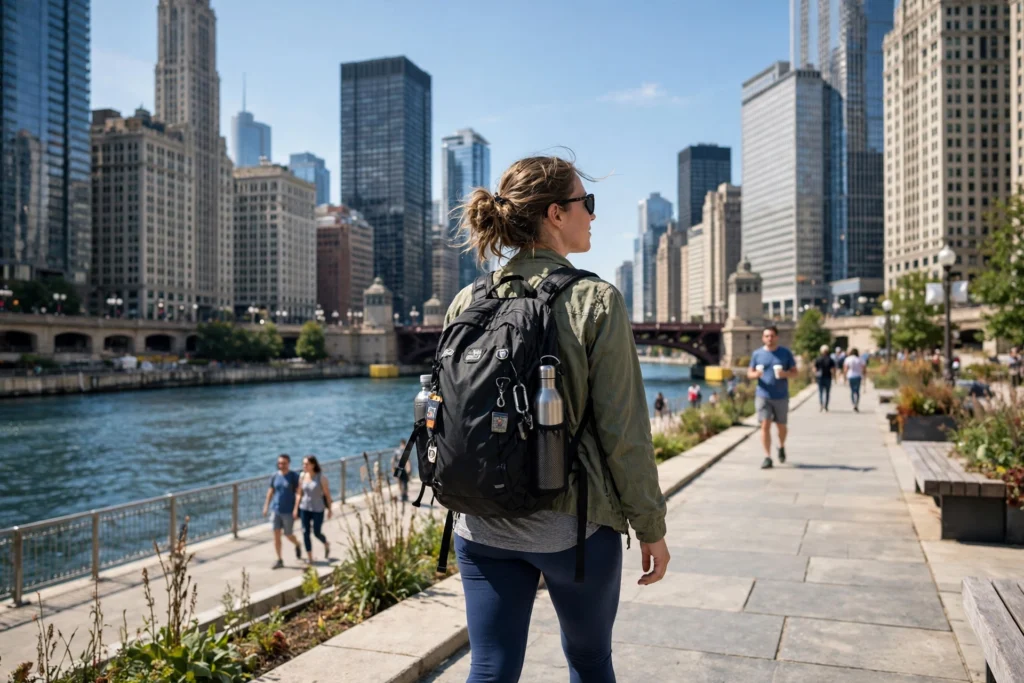
Yes — Chicago is a good city to visit on your own, and plenty of people do. The visitor corridor is built for people travelling alone: the museums, the Riverwalk, the architecture cruises, the restaurants with bar seating and the busy streets are all easy to enjoy solo, and the city is used to visitors who arrive alone and explore alone. The risks for a solo traveller are the same risks everyone faces in Chicago, with one difference: you have no one with you to watch your bag while you take a photo, or to walk with you on a quiet street at night. So the precautions are the same, and they matter more.
If you are travelling alone and want a destination comparison, our guide to the best places to travel solo female in the US covers the same kind of planning — choosing a base, transport at night, and what to do when something feels off — for domestic trips. The Chicago version of the same logic is simpler: pick the corridor, stay in well-reviewed accommodation, do not walk alone at night, and keep your evenings social and lit.
Solo female travellers
Chicago is a popular destination for women travelling on their own, and the day-to-day experience for most is relaxed and friendly. There is no official advice that singles out women travelling alone in Chicago, and the risks are the same ones this guide describes for everyone: phone theft, bag theft and robbery on quiet streets at night. The practical rules are straightforward and they work:
- Choose your base carefully. Stay in the Loop, River North, Streeterville or the West Loop, in accommodation with good security — a lockable room, a safe, a reception that is staffed at night. Read recent reviews from other women travelling alone before you book.
- Do not walk alone after dark. This is the single most important rule in this guide, and it applies doubly to a woman alone. In the Loop and River North, take a rideshare at night rather than walking, even a short distance.
- Use the train like a local, and the rideshare like a local too. Sit in a car with other people on the “L”, keep your phone in your pocket on the platform, and take a rideshare from the door to the door after 10pm.
- Watch your drink, always. Never leave a drink unattended in a bar, and do not accept drinks from strangers. Drink spiking is a risk in any big city, and Chicago is no exception.
- Tell someone your plans. Leave your itinerary with a friend or family member at home, check in regularly, and use a travel app to share your live location with someone you trust. Our travel apps guide covers the safety and offline-map apps that are most useful for a trip like this.
- Trust your instincts and leave. If a situation, a street, a person or a tour feels wrong, leave. You do not owe anyone an explanation, and you do not owe a stranger your continued company.
Solo travellers in general
The same rules apply to everyone travelling alone, with two additions. First, do not advertise that you are alone: keep your phone in your pocket rather than holding it up to navigate on a crowded street, and if you need directions, step into a shop to check them. Second, make your evenings social. Eat at the bar of a busy restaurant, join a walking tour or an architecture cruise, take a food tour in the West Loop — the city is full of ways to be around other people in the evening, and being around other people is the simplest safety measure there is. If something happens, report it: call 911, get a report number, and contact your embassy or consulate if you need a replacement passport. And if you are a man travelling alone, do not assume the rules do not apply to you — the robbery victims in the downtown data are men as often as women, and the phone thieves do not check.
Scams in Chicago: What They Cost and How to Avoid Them
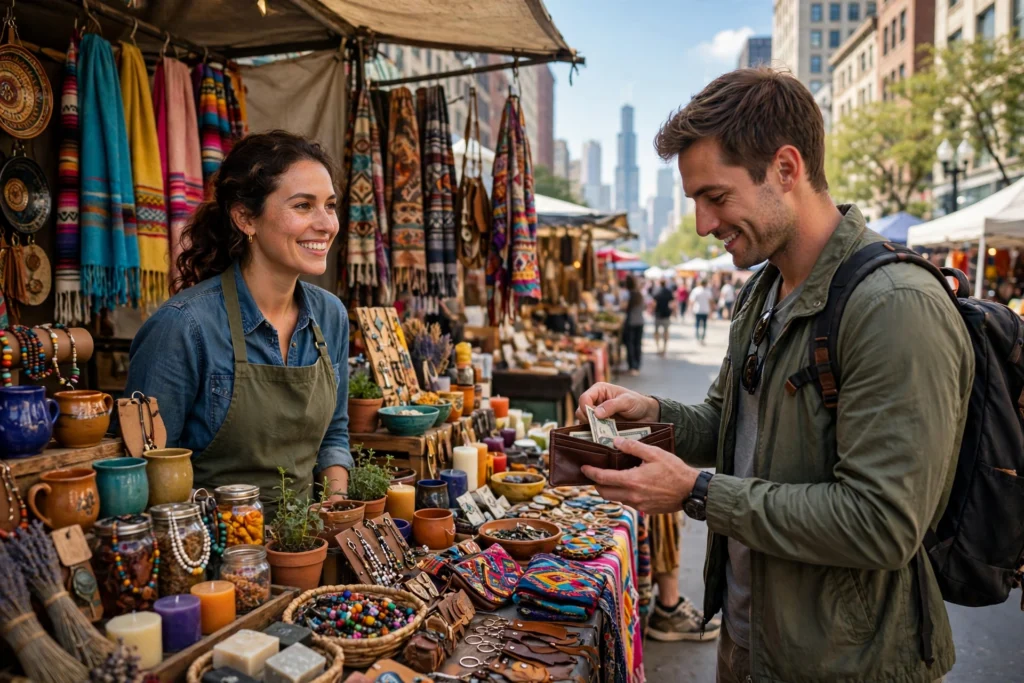
Scams are common in any big tourist city, and Chicago is no exception. Most Chicago scams are not elaborate. They are small, everyday deceptions that rely on a tourist not knowing the local price, the local rule or the local routine, and they cluster around the famous attractions — Millennium Park, Navy Pier, the Magnificent Mile and the train stations. The table below covers the ones visitors actually report, what each one costs you, and how to avoid it.
| Scam | How it works | What it costs you | How to avoid it |
|---|---|---|---|
| Fake rideshare | A driver approaches you at the airport or downtown offering a “cheap” ride, or a car with no app match pulls up | An inflated cash fare, and a ride with no record of who drove you | Use the app only; check the car, driver and plate before you get in |
| “Gold ring” and found-item trick | A stranger “finds” a gold ring or a wallet near you and offers to split it, or asks you to hold it while they fetch help | Cash handed over for a worthless ring, or a wallet emptied while you are distracted | Walk away; do not handle anything a stranger “finds” |
| Ticket scalping and fake tickets | A seller outside a theatre, a sports game or a concert offers tickets below face value | The price of a ticket that does not scan at the door | Buy from the venue, the team’s official site or a licensed reseller only |
| Fake charity and petition | A person with a clipboard asks you to sign a petition or donate, then asks for cash or a card | Whatever you hand over, and your card details if you pay by card | Do not stop for clipboard solicitors; donate to a charity you have chosen yourself |
| ATM skimming and card fraud | A rigged ATM or card reader copies your card; fraudulent withdrawals follow | Whatever is in the account before you notice | Use ATMs inside banks; cover the keypad; check statements daily; keep a second card separate |
| Fake parking attendant | A person in a high-vis vest charges you to park on a street or in a lot that is free or metered | The “fee”, paid in cash, for nothing | Pay at the meter or the machine only; never pay a person on the street |
| Restaurant bill padding | Extra items, a second service charge or an inflated tip line appear on the bill | The extras, which can add a large amount to a meal | Check the bill line by line; ask about any charge you do not recognise |
| “Free” tour or CD trick | A person offers a free CD, a free tour or a free photo, then demands payment | Cash handed over under pressure, or a card charged | Do not accept anything “free” from a stranger on the street |
| Drink spiking | A drink is drugged so the victim can be robbed or assaulted | Your belongings, and far worse | Never leave a drink unattended; do not accept drinks from strangers; seek medical help immediately if you feel ill |
A few general rules cover most of these. Agree every price before the service starts — rideshare fares in the app, tour prices, parking charges — and get it in writing where you can. Pay by card where you can, and keep a second card and some emergency cash separate from your wallet. If a deal feels rushed, secretive or too good to be true, walk away: the Bean, the river and the restaurants will still be there tomorrow, and the person pressuring you will not. And if someone contacts you out of the blue claiming to be a stranded traveller, a local official who wants money, or a new romantic interest who needs help, do not send money and do not share personal details — that approach is a scam in every city, and Chicago is no different.
One scam deserves a special note because it is the one visitors least expect: the fake rideshare. At O’Hare and Midway, and outside busy bars late at night, drivers sometimes approach travellers directly and offer a ride, claiming the app is down or that they can do it cheaper. A real rideshare driver will never do this — the whole point of the app is that the ride is matched, tracked and paid for inside it. A driver who approaches you on the street is unvetted, unrecorded and uninsured for your ride, and the fare they quote is whatever they decide when you arrive. Walk away, open the app, and wait for the car that matches it.
Where to Stay in Chicago: The Safest Neighbourhoods for Visitors
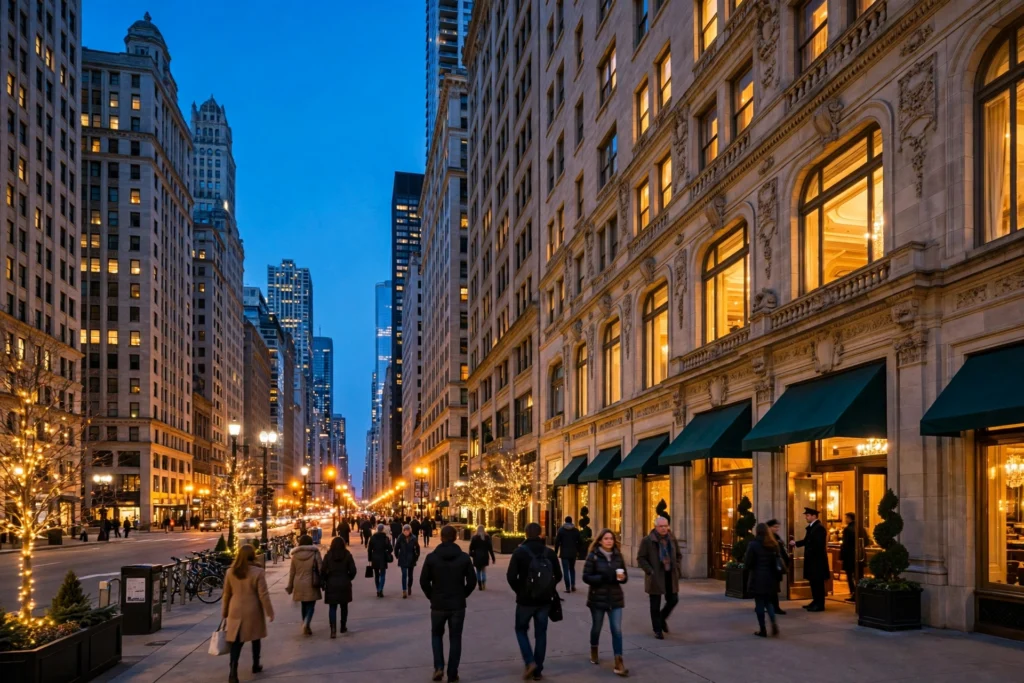
Where you stay decides most of your safety in Chicago, because it decides which streets you walk at night and which train stations you use. The rule is simple: stay in the visitor corridor, near a Red or Blue line station, on a lit main street. The neighbourhoods below are the ones that meet that test, and they are the ones this guide recommends.
The Loop
The Loop is the most convenient base in the city: every “L” line passes through it, Millennium Park and the Riverwalk are on your doorstep, and the Theatre District is a short walk away. The hotels here are large, well-staffed and secure, and the streets are busy until late. The trade-off is that the Loop empties out after the offices close — the main streets stay lively, but the side streets and underpasses go quiet, so choose a hotel on a main street and take a rideshare back after 10pm rather than walking a quiet side street.
River North and Streeterville
River North and Streeterville, just north of the river, are where most visitors stay, and for good reason. The Magnificent Mile, Navy Pier, the shops and restaurants are all here, the hotels are the city’s best-known, and the streets are well lit and busy until late. This is the best choice for a first visit, for families, and for anyone travelling alone. Stay near Michigan Avenue or near a Red Line station — Grand, Chicago or Clark/Division — and you will rarely need to walk a quiet street at all.
The West Loop
The West Loop is the best choice if food is the reason you are in Chicago. Randolph Street and Fulton Market are full of the city’s best restaurants, and the neighbourhood is safe, lively and walkable in the evening. It is a little quieter than River North at night, and the side streets are darker, so walk the main streets and take a rideshare back to your hotel if you are out late. The Green and Pink lines serve the area, and the Blue Line is a short walk away.
Lincoln Park and Lakeview
Lincoln Park and Lakeview are the best choices if you want a neighbourhood feel rather than a downtown hotel. They are residential, leafy, walkable and safe-feeling, with the zoo, the lakefront and Wrigley Field nearby, and they are served by the Red and Brown lines. They are good for longer stays and for families. The trade-off is distance: you will be taking the train into the Loop each day, so check that your hotel or Airbnb is near a station, and take a rideshare back at night rather than walking from a quiet station.
Wicker Park and Logan Square
Wicker Park and Logan Square, on the Blue Line north-west of the Loop, are the best choices if you want the city’s most local-feeling stay: independent shops, cafes, bars and restaurants, and a younger, livelier crowd. They are safe and walkable on Milwaukee Avenue and the main streets, and the Blue Line runs 24 hours, so the journey back is easy at any hour. Stay near the Blue Line — Damen, Division or California — and avoid quiet side streets late at night.
What to check before you book
Wherever you stay, check three things before you book. First, the community area: look it up on the Chicago Public Safety DataHub violent-crime map and the open crime data portal, and make sure you know which area you are in. Second, the station: make sure there is a Red or Blue line station within a short, well-lit walk, so you are never dependent on a line that stops at 1am. Third, the reviews: read recent reviews from other visitors, and look for mentions of the streets around the property at night. A host or a hotel that cannot tell you clearly about the streets around it is a reason to book elsewhere. And if a listing is noticeably cheaper than everything else in the corridor, find out why before you book it — in Chicago, as everywhere, a price that looks too good usually has a reason, and the reason is often the location. If you are planning the trip budget, our guide on how to prepare a travel budget shows how to build the hotel, the transport and the insurance into a trip total, so the safety spending is planned rather than improvised.
Winter in Chicago: Cold, Ice and What to Pack
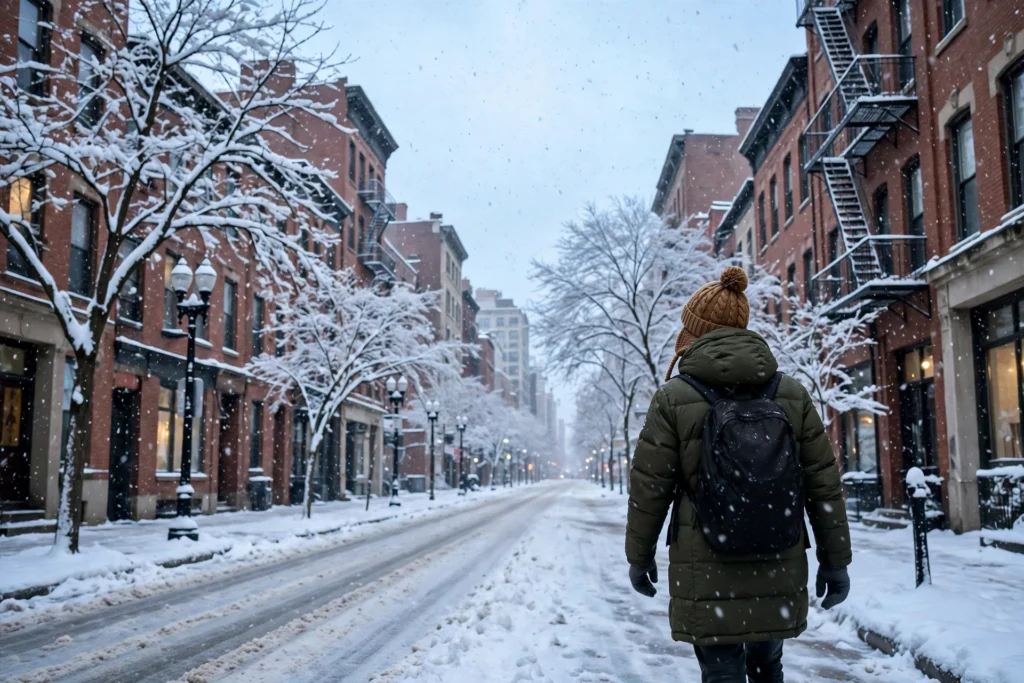
Winter is the biggest real risk to a visitor in Chicago, and it is the one the crime guides never mention. Chicago in December, January and February is cold in a way that is dangerous if you are not dressed for it, and the wind off Lake Michigan — the reason for the city’s “Windy City” nickname in its weather sense — makes it colder than the thermometer says. The National Weather Service’s 1991–2020 normals for O’Hare give January, the coldest month, an average high of 31.6°F and an average low of 18.8°F, with about 11.3 inches of snow in the month. The city’s record low is −27°F, set on 20 January 1985, and January 2026 itself ran colder than normal at O’Hare, with an average maximum of 28.9°F and an average minimum of 14.9°F, and four days when the minimum fell to 0°F or below. Check the National Weather Service Chicago forecast in the week before you fly, and check it again each morning while you are there.
Wind chill: the number that matters
The air temperature is not the number that matters on a Chicago winter day. The wind chill is. When the wind blows across the frozen lake and funnels between the towers on Wacker Drive and across the river bridges, a 20-degree day can feel like single digits, and exposed skin can suffer frostbite in minutes when the wind chill falls far below zero. The National Weather Service issues wind chill warnings when the feels-like temperature falls to dangerously low levels, and when one is in effect, the advice is simple: stay indoors. If you must go out, cover every inch of exposed skin — face, ears, hands — and keep the time outside short. Do not try to “tough out” a wind chill warning for a photo at the Bean. The Bean will still be there tomorrow, and your fingers will thank you.
What to pack
Pack for Chicago winter like you are going to a cold country, because you are. The list is not long, but every item on it matters:
- A proper winter coat. Not a fashionable jacket — a long, insulated, windproof coat that covers you to the knees. If you do not own one, buy one before you fly, or buy one on the Magnificent Mile on arrival. It is the single most important item on this list.
- Layers underneath. A thermal base layer, a warm mid-layer, and a windproof outer layer. Layers trap warm air, and you can add or remove them as you move between the cold street and a heated museum.
- A warm hat that covers your ears, gloves, and a scarf. Your ears, fingers and face are where frostbite starts. Gloves that let you use your phone are useful, but they are no substitute for warm gloves — take the warm ones, and use your phone with your nose if you must.
- Warm, waterproof boots with grip. Chicago sidewalks in winter are a mix of snow, slush, ice and salt, and the freeze-thaw cycle turns them into an ice rink overnight. Boots with a good tread are the difference between walking and falling, and a fall on an icy sidewalk is one of the most common winter injuries in the city.
- Lip balm and moisturiser. The cold, dry air cracks lips and skin quickly, and the wind makes it worse.
- A portable phone charger. Cold drains phone batteries fast, and a dead phone on a freezing day means no maps, no rideshare and no way to call for help. Keep the charger in an inside pocket, where your body heat keeps it warm.
How to plan a winter day
Plan a winter day in Chicago like a local does: in short outdoor bursts, with warm indoor stops between them. Walk from the train to the Art Institute, spend two hours inside, walk to lunch, spend an hour inside, walk to Millennium Park for a photo, and go back inside. Do not plan a four-hour outdoor walk in January. Do not plan to stand still outside for a long time — standing still is when the cold bites, and a photo stop should be minutes, not half an hour. Drink something warm, eat regularly, and go back to the hotel to warm up if you start shivering — shivering is your body telling you it is losing heat, and it is a warning, not a nuisance.
If you drive in winter, the rules are different again. Lake-effect snow can arrive quickly off the lake, black ice forms on bridges and overpasses before it forms anywhere else, and stopping distances on ice are many times longer than on dry roads. If you do not need a car, do not hire one in winter — the CTA is heated, it runs in the snow, and it will get you there. If you do drive, check the forecast, allow double the time, keep your fuel tank at least half full, and carry a blanket, a torch, water and a phone charger in the car. And if the forecast says a blizzard is coming, stay in: Chicago shuts down for blizzards, the trains keep running but the streets do not, and the safest place in a blizzard is indoors.
Ice, falls and the lakefront
The most common winter injury in Chicago is not frostbite. It is a fall on ice. Sidewalks, steps, the Riverwalk and the lakefront trail all ice over, and the salt the city spreads does not always keep up. Walk slowly, take short steps, keep your hands out of your pockets so you can catch yourself, and hold the rail on stairs. If a stretch of pavement looks shiny, assume it is ice and walk around it. The lakefront trail in winter is beautiful and dangerous in equal measure: the wind off the lake is at its strongest there, the path ices over, and the waves can throw spray and ice onto the path. Walk it on a calm winter day, in the daytime, with other people around — and do not walk it alone in a storm.
Summer, Festivals and Crowds: Seasonal Safety
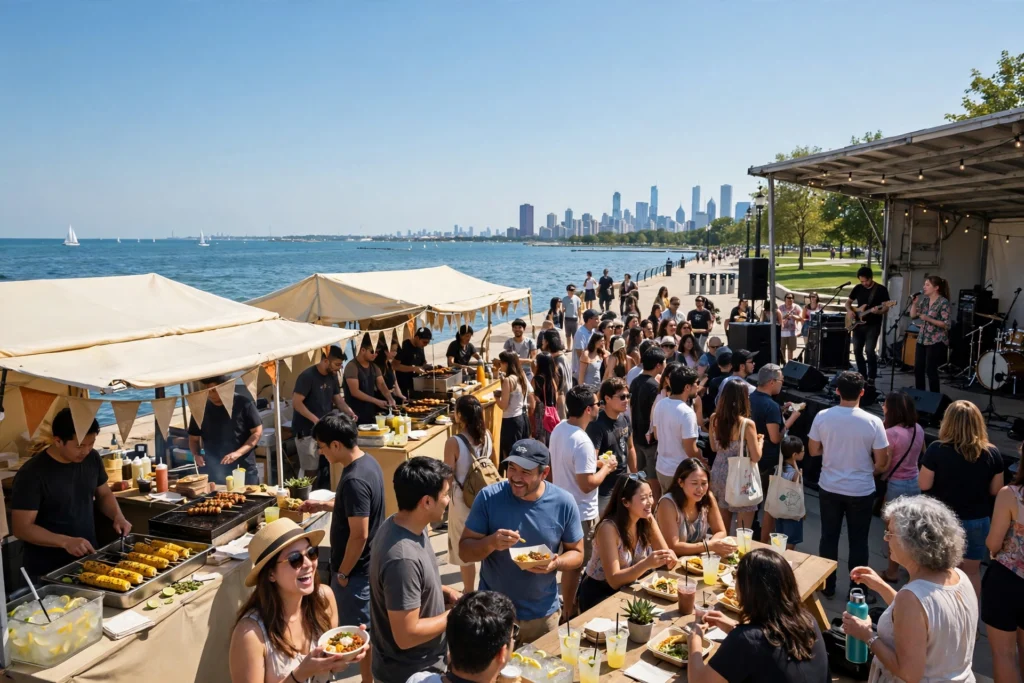
Summer in Chicago is the opposite of winter: warm, humid, crowded and joyful, and the safety picture changes with it. The best months to visit are May to October, when the lakefront is open, the festivals are running and the city is at its liveliest — and the risks are the risks of crowds, heat and water, not of cold.
Heat and thunderstorms
Chicago summers are warm and humid, with July averaging a high in the low 80s, and heatwaves that push it into the 90s. Heat exhaustion creeps up on people who spend a full day walking in the sun without drinking enough, and it is easily prevented: drink more water than you think you need, wear sunscreen and a hat, take breaks in the shade and in air-conditioned buildings, and do not try to walk the whole lakefront trail in the midday sun. Thunderstorms are common in summer, and they arrive fast off the lake: if you hear thunder, go indoors, and stay indoors until 30 minutes after the last thunder. Do not shelter under a tree, and do not stay on the lakefront or on a boat during a storm.
Festivals and crowds
Summer is festival season in Chicago: neighbourhood street festivals, food festivals, music festivals on the lakefront, and the big summer events that fill the parks. Festivals are safe and joyful, and they are also where pickpockets and phone snatchers work hardest, because a crowd gives them cover. The rules are the ones you already know: keep your phone in your pocket, keep your bag zipped and in front of you, take only what you need, and agree a meeting point with your group in case you get separated. If you are going to a festival with children, put your phone number in their pocket, agree a meeting point, and keep them where you can see them — a crowd is the easiest place in the city to lose a child for a frightening few minutes.
The lake and the beaches
Lake Michigan looks like a sea, and it behaves like one. The water is cold even in summer, the waves can be strong, and rip currents form at the beaches — the same currents that kill swimmers in the ocean. Swim only at guarded beaches, only when the lifeguards are on duty, and only inside the marked swimming areas. Do not swim alone, do not swim after drinking, and do not swim when the water is rough or when the beach is closed. The lakefront trail is for walking and cycling, not for swimming, and the rocks and breakwaters along it are slippery and dangerous — stay off them. If you are visiting in winter, the lake is a different danger again: the shore ices over, the waves throw spray that freezes on the path, and the wind is at its worst. Walk the lakefront in winter only on a calm day, in the daytime, with other people around.
The month-by-month picture
The table below combines the weather with the safety notes, so you can pick a month with both in view. Travellers planning a winter escape will find the same seasonal logic in our best places to travel in January, where the cold is also the prize and the problem.
| Month | Weather | Crowds and prices | Safety note |
|---|---|---|---|
| January | Coldest month; avg high 31.6°F, avg low 18.8°F; ~11.3 inches of snow | Quiet, lowest prices | Wind chill and ice are the main risks; dress for the cold |
| February | Cold, with the occasional mild break | Quiet, low prices | Same as January; black ice on bridges and overpasses |
| March | Cold at first, milder by the end; wind and rain | Quiet, then busier | Slush and ice early in the month; St. Patrick’s Day river dyeing draws crowds |
| April | Mild, changeable; rain and wind | Busier; spring prices | Good walking weather; watch for sudden storms |
| May | Warm, pleasant; the city opens up | Busy; festival season begins | Best all-round month; normal precautions |
| June | Warm and humid; thunderstorms | Busy; high season begins | Heat and storms; swim only at guarded beaches |
| July | Warmest month; heatwaves possible | Busiest; highest prices | Heat exhaustion risk; crowds at festivals — watch your phone |
| August | Warm and humid | Busy; high season | Same as July; Lollapalooza crowds need extra care |
| September | Warm at first, cooling by the end | Busy, then quieter | One of the best months; fewer crowds after Labor Day |
| October | Cool, crisp, autumn colour | Quieter; good value | Great walking weather; evenings get cold — bring a jacket |
| November | Cold, windy, grey; first snow possible | Quiet; low prices | Dress warmly; the lakefront wind bites; check the forecast |
| December | Cold, dark early; snow and ice | Busy for the holidays; Christkindlmarket crowds | Short days and icy pavements; plan indoor stops |
Laws Visitors Should Know: Curfews, Smoking, Driving and More
Chicago law is not the law where you live, and the differences are the ones that catch visitors. The rules that matter most are the ones below. They are not legal advice — if you are in doubt, ask a local official or a lawyer — but they are the rules visitors most often break by accident.
Curfews for minors
Chicago enforces a citywide curfew for minors, and it is stricter than the Illinois state curfew. Under Chicago Municipal Code 8-16-020, minors aged 12 and older must be off public streets by 10:00pm every night, and children under 12 must be off the streets by 8:30pm from Sunday to Thursday and by 9:00pm on Friday and Saturday. In all cases the curfew runs until 6:00am the following morning. Millennium Park has its own, stricter rule on top of that: anyone under 18 must be accompanied by an adult aged 21 or older after 6:00pm from Thursday to Sunday, and after 10:00pm from Monday to Wednesday. The accompanying adult needs a valid ID and can escort up to four young people. The park itself is open every day from 6:00am to 11:00pm and is free, and from Friday to Sunday after 4:00pm entry is only at certain gates, with wanding and bag checks. If you are travelling with teenagers, plan your Millennium Park visit for the daytime, and keep the curfew times in mind for the rest of the evening.
Smoking and cannabis
Smoking is banned in indoor public places across Illinois under the Smoke Free Illinois Act, and that includes restaurants, bars, offices, hotel lobbies and public transport. Many Chicago parks and beaches are smoke-free too. Recreational cannabis is legal in Illinois for adults aged 21 and older, but it is illegal to smoke it in public, to drive under its influence, or to take it out of the state — and it remains illegal under federal law. Do not smoke cannabis on the street, in a park or on the beach, and do not carry it across a state line. The practical rule is simple: if you are not sure whether you can smoke something somewhere, you probably cannot.
Driving
Illinois is a hands-free state: it is illegal to hold a phone while driving, and you can be fined for it. Use a hands-free mount or pull over. Chicago enforces red-light cameras and speed cameras, and the fines arrive by post to the car’s registered owner — which, if you hired the car, means the hire company will pass the fine on to you with an admin fee on top. Speed limits are lower than many visitors expect in the city, and they are enforced. The legal drinking age is 21, and it is illegal to drive under the influence of alcohol or drugs, to have open alcohol containers in a vehicle, or to be drunk and disorderly in public. If you are driving, do not drink at all — the limit is low, the enforcement is real, and a taxi or a rideshare is cheaper than a fine.
Alcohol and public behaviour
The legal drinking age in Illinois is 21, and you will be asked for ID in bars and restaurants — carry a photo ID, and note that some places will not accept a foreign driving licence as proof of age, so carry your passport if you plan to drink. It is illegal to drink alcohol in public places such as parks, beaches and the street, and to carry open containers of alcohol in public or in a vehicle. Demonstrations happen in Chicago, sometimes at short notice: do not join a demonstration, avoid areas with protests, and remember that protests can become unpredictable. If you are arrested or detained, you have the right to ask officials to notify your embassy or consulate, and you should use it. Do not sign anything you do not understand.
Emergency Numbers and Help in Chicago

Save these numbers in your phone before you fly. Chicago’s emergency services are good, but they are only useful if you have the numbers when you need them — not if you are searching for them in a crisis.
| Service | Number | Notes |
|---|---|---|
| Emergency (police, fire, ambulance) | 911 | Dial 911 for any emergency; give your location, including the nearest cross street |
| Non-emergency police | 311 | The City of Chicago’s non-emergency line, for reports that are not urgent |
| City services and information | 311 | Also the number for city services, streetlight outages and general information |
| Poison Control | 1-800-222-1222 | For poisoning, overdose or a bad reaction to a drug or a drink |
| CTA customer service | 1-888-968-7282 | For lost property, service information and help on the “L” and buses |
| O’Hare Airport information | 1-800-832-6352 | For flight, terminal and ground-transport information at O’Hare |
| US State Department (for US citizens abroad) | — | Not applicable in Chicago — this is domestic US travel |
| Your embassy or consulate | Save before you fly | For non-US visitors: save your own country’s nearest consulate in Chicago |
A few things to know about getting help in Chicago. First, 911 works from any phone, including a phone with no SIM card, and the operator will ask for your location — in the Loop, give the nearest cross street, because the streets are a grid and a cross street is the fastest way to find you. Second, if you are involved in a traffic accident, call 911, do not leave the scene, and exchange details with the other driver. Third, hospitals in Chicago are among the best in the United States, and the major downtown hospitals have emergency departments that are open 24 hours — but medical care in the United States is expensive, and if you are visiting from outside the country, make sure your travel insurance covers medical expenses, because a hospital bill without insurance can be very large. Fourth, if your passport is lost or stolen, report it to the police and get a report number, then contact your embassy or consulate for a replacement — the emergency passport process is faster with a police report in hand. And if you are a US citizen travelling domestically, remember that you do not need a passport to travel to Chicago, but you do need a valid photo ID to fly, and a REAL ID-compliant licence or a passport is the simplest form of it.
Practical Safety Tips for Chicago: A Checklist Before You Go
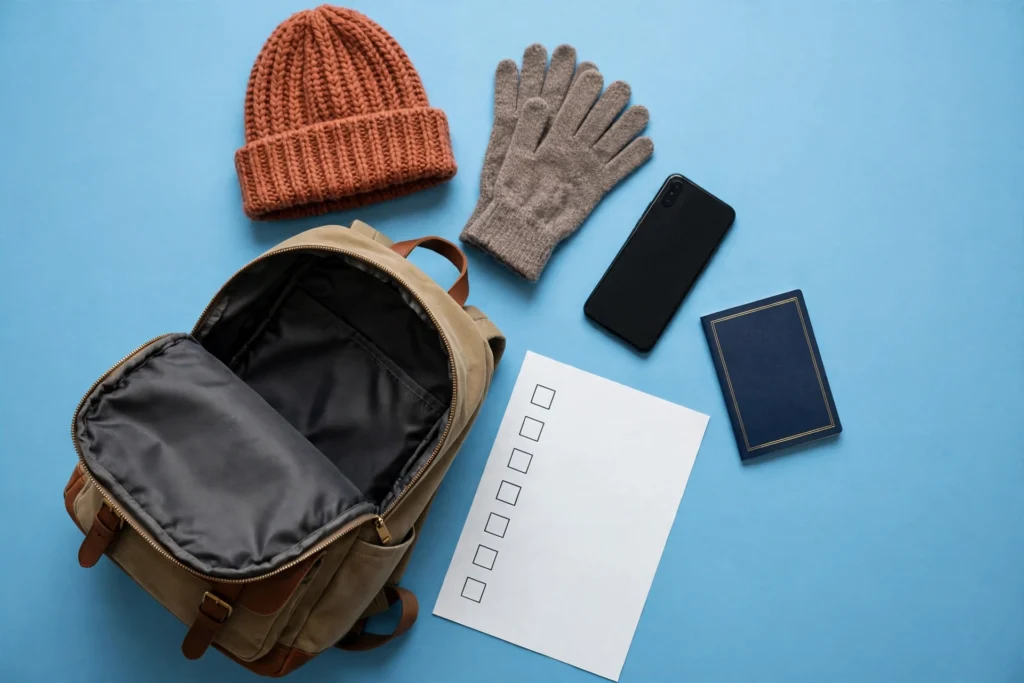
Everything in this guide, boiled down to the list you can actually use. Work through it before you fly, and again on arrival.
Before you fly
- Check the National Weather Service Chicago forecast and the CTA website in the week before departure. If a blizzard or a heatwave is forecast, adjust your plans.
- If you are visiting from outside the United States, buy travel insurance that covers medical expenses, and carry the policy number and the insurer’s emergency number with you. Medical care in the US is expensive, and a hospital bill without insurance can be very large.
- Check the Chicago open crime data portal and the Chicago Public Safety DataHub violent-crime map for the community area where your hotel is, so you know the streets around it before you arrive.
- Set up your phone’s find-my-device feature and a lock screen, and photograph your passport, insurance policy and bookings, keeping the copies somewhere separate from the originals — in your email, or in a travel app on your phone. Our travel apps guide covers the offline maps and document apps that work best when the signal does not.
- Pack for the season: a proper winter coat, hat, gloves and boots with grip if you are visiting between November and March; sunscreen, a hat and water if you are visiting in summer. The winter packing list is in the winter section of this guide.
- Plan your money: Chicago is a card city, and you will rarely need cash. Carry a second card kept separate from your wallet, and plan to use ATMs inside banks rather than on the street.
On arrival
- Take the Blue Line from O’Hare to the Loop, or the Orange Line from Midway, and check the time before you travel — the Orange Line does not run overnight, so a late flight into Midway needs a rideshare.
- Save the emergency numbers in your phone: 911 for emergencies, 311 for non-emergency police and city services, and your embassy or consulate if you are visiting from outside the United States.
- Check into your hotel, find the nearest Red or Blue line station, and walk the route to it in daylight so you know it at night.
- Agree every price before the service starts — rideshare fares in the app, tour prices, parking charges — and check every bill line by line.
Every day you are there
- Do not walk alone late at night. Take a rideshare from the door to the door after 10pm, and stay on lit main streets.
- Keep your phone in your pocket on the train and on crowded streets, keep your bag zipped and in front of you, and do not leave anything visible in a parked car.
- Stay in the visitor corridor — the Loop, River North, the Magnificent Mile, Streeterville, the West Loop, Museum Campus and the lakefront — unless you have a specific reason and a local host to go elsewhere.
- Drink bottled water if you prefer it, but Chicago tap water is safe to drink — the city draws it from Lake Michigan and treats it to federal standards. Eat where food is cooked fresh and served hot, and keep your drink in your hand.
- Wear sunscreen and drink water in summer; dress in layers and cover exposed skin in winter; check the weather each morning.
- If something feels wrong — a street, a person, a tour, a deal — leave. You do not owe anyone an explanation.
What to budget for safety
Safety is not free, and it is worth building it into the trip budget rather than discovering it on arrival. The “L” fare is $2.50, and $5.00 from O’Hare, so a day of train travel is cheap — but budget for rideshares at night rather than walking, because the rideshare is the safety spending, not a luxury. Budget for travel insurance if you are visiting from outside the United States, for a proper winter coat and boots if you do not own them, and for a staffed car park rather than street parking if you drive. Our guide on how to prepare a travel budget shows how to build those lines into a trip total, so the safety spending is planned rather than improvised. If the numbers do not add up, cut a day or a tour — do not cut the insurance, and do not cut the rideshare home at night. If you are visiting without a passport because you are travelling domestically, our guide to places to travel without a passport covers the ID you need for a US trip.
Frequently Asked Questions About Travelling to Chicago Right Now
Is it safe to travel to Chicago right now?
Yes, for most visitors on a normal tourist itinerary, in November 2026. The downtown visitor corridor — the Loop, River North, the Magnificent Mile, Streeterville, the West Loop, Museum Campus and the lakefront — is busy, well-patrolled and well-lit. Violent crime is concentrated in a small number of residential community areas on the South Side and West Side, far from where tourists go. Stay in the corridor, keep your phone in your pocket on the train, do not walk alone late at night, and dress for the weather.
Is Chicago safe for tourists?
Mostly, yes — with the qualifications in this guide. Tourists are not usually the targets of gang violence, which is concentrated in specific community areas. The crimes tourists do face are phone theft, pickpocketing, bag theft, car break-ins and scams, mostly in the Loop, River North and around the famous attractions. Those are preventable with the precautions in this guide: keep your phone in your pocket, keep your bag zipped and in front of you, leave nothing visible in a parked car, and take a rideshare at night.
Which areas of Chicago should I avoid?
As a visitor, avoid the residential community areas with the highest violent-crime rates in the open data — Englewood, West Garfield Park, East Garfield Park, North Lawndale, Greater Grand Crossing, Riverdale and Austin — unless you have a specific local reason and a local host. There are no tourist attractions in these areas, and no reason for a visitor to be there. That is not a judgement on whole sides of the city: Hyde Park and Pilsen are welcoming and worth visiting, and conditions vary block by block, so check the open data for the exact area before you go.
Is there a travel advisory for Chicago?
No. The US State Department issues travel advisories for foreign countries only, and it does not rate American cities — so no Level 1, 2, 3 or 4 exists for Chicago. Any website that gives Chicago a “Level” or a safety score out of 100 is inventing its own scale. Use the City of Chicago open crime data portal and the Chicago Public Safety DataHub community-area maps instead, both linked in this guide.
Is Chicago safe at night?
The visitor corridor is busy and safe-feeling until about 10pm, when the crowds thin and the robbery risk on quiet streets rises. After 10pm, take a rideshare from the door to the door rather than walking, even a short distance. Only the Red and Blue “L” lines run 24 hours a day; the other six stop overnight, broadly between 1am and 4am, so check the time before you rely on a late train.
Is Chicago safe for solo travellers?
Yes. Chicago is a good city to visit on your own — the museums, the Riverwalk, the architecture cruises and the restaurants with bar seating are all easy to enjoy solo. The same precautions apply, and they matter more when you are alone: stay in the corridor, do not walk alone at night, keep your phone in your pocket, and tell someone your plans.
Is Chicago safe for solo female travellers?
Yes, with the precautions in the solo section of this guide. Stay in well-reviewed accommodation in the Loop, River North, Streeterville or the West Loop, do not walk alone after dark, use a rideshare at night, watch your drink, and tell someone your plans. The risks for a woman travelling alone in Chicago are the same risks this guide describes for everyone — phone theft, bag theft and robbery on quiet streets at night.
Is Chicago safe for families with kids?
Yes. Chicago is a popular family destination, and the museums, the zoo, Navy Pier and Millennium Park are excellent for children — but the same precautions apply, and children need more of them, not fewer. Keep children with you at all times, keep their phones in their pockets on the train, and remember the curfews: minors aged 12 and older must be off public streets by 10pm, and under-18s need an adult aged 21 or older with them in Millennium Park after 6pm from Thursday to Sunday.
Is it safe to ride the CTA at night?
Yes, with care. The Red and Blue lines run 24 hours a day, and they are the safest way to move around the city after dark. Sit in a car with other people, keep your phone in your pocket on the platform, and get off at a busy station. If a car is empty, move to one with people in it or wait for the next train. Avoid empty stations and empty cars late at night, and take a rideshare for the last stretch to your hotel if the walk from the station is quiet.
What is the biggest risk in Chicago in winter?
The cold, not crime. January averages a high of 31.6°F and a low of 18.8°F at O’Hare, and the wind off Lake Michigan can make a 20-degree day feel like single digits. Frostbite can set in quickly on exposed skin when the wind chill falls far below zero. Pack a proper winter coat, hat, gloves and boots with grip, plan your day in short outdoor bursts with warm indoor stops between them, and stay indoors when the National Weather Service issues a wind chill warning.
Do I need travel insurance for Chicago?
If you are visiting from outside the United States, yes — medical care in the US is expensive, and a hospital bill without insurance can be very large. If you are travelling domestically, check whether your health plan covers you away from home, and carry your insurance card with you. Either way, save the emergency numbers in your phone before you fly: 911 for emergencies, 311 for non-emergency police and city services.
Is the tap water safe in Chicago?
Yes. Chicago draws its tap water from Lake Michigan and treats it to federal standards, and it is safe to drink. If you prefer bottled water, it is widely available, but you do not need it for safety reasons. Eat where food is cooked fresh and served hot, as you would in any big city.
Conclusion: Should You Travel to Chicago Right Now?
Chicago in November 2026 is a city worth visiting and a city worth taking seriously, and those two things are not in conflict. The skyline over Lake Michigan is still one of the great sights in America. The river through the towers, the Bean in Millennium Park, the museums on Museum Campus, the food in the West Loop and the lakefront trail are all there waiting for you, and the city that built them is open and welcoming. None of that has changed. What has not changed either is the geography of the city’s crime problem, and the open data tells you exactly where it is — in a small number of residential community areas on the South Side and West Side, far from the places tourists go.
So the answer to “is it safe to travel to Chicago right now” is the one this guide has given throughout: yes, on a tourist itinerary, in the visitor corridor, with your phone in your pocket, with a rideshare home after 10pm, and with a proper coat if you are visiting in winter. Go to the Loop. Go to the Riverwalk. Go to the museums. Eat the deep-dish pizza, take the architecture cruise, walk the lakefront in the daytime, and take the Blue Line home. Do it in daylight, do it with other people around, keep your bag zipped, watch your drink, and check the weather and the open crime data before you go.
If that sounds like a lot of rules for a city break, it is — but they are small rules, and they are the difference between a trip you remember for the skyline and a trip you remember for the wrong reasons. Chicago rewards the traveller who plans. Be that traveller, and Chicago will give you one of the best city trips in America.
People also read:
- Is It Safe to Travel to Belize Right Now? An Honest 2026 Guide
- Is It Safe to Travel to Vietnam? An Honest 2026 Guide
- Seattle Travel Guide
- Best Places to Travel Solo Female in the US
- Places to Travel Without a Passport
- Travel Apps
- How to Prepare a Travel Budget
- Best Places to Travel in January

M. Adil is the founder and editor of SoloTravelPro. He writes practical, research-based travel guides that help travellers plan with confidence — from first-time city breaks to national parks and island escapes. Every guide is built on official sources, current prices and honest, usable advice, so readers can plan smarter and travel better.

Other Articles