Best Time to Travel to Chile: A Month-by-Month Guide for Every Region
Quick Answer: What Is the Best Time to Travel to Chile?
The best time to travel to Chile depends on where in Chile you are going, because Chile is one of the longest countries on Earth — more than 4,000 kilometres from the driest desert in the world in the north to the glaciers of Patagonia in the south. There is no single month that is perfect everywhere, but there is a best month for every kind of trip.
Here is the short version. For Patagonia and Torres del Paine, go between December and February, when the days are longest and the trails are fully open; November and March are the quieter shoulder-season alternatives. For the Atacama Desert, almost any month works, but June to August gives the clearest skies for stargazing. For Santiago, Valparaíso and the wine valleys, September to November and March to May are the sweet spots — mild weather, fewer crowds and, in March and April, the grape harvest. For skiing in the Andes, mid-June to late September is the season. And for Easter Island, the weather is kind all year, with the Tapati festival in early February as the cultural high point.
If you can only pick one window for a trip that covers several regions, aim for late November to mid-December, or March. Both windows dodge the worst of the January and February crowds and prices while keeping Patagonia open and central Chile pleasant. That is the best compromise for a first trip to Chile, and it is the window this guide keeps coming back to.
One thing to get straight before you plan anything: Chile is in the southern hemisphere, so its seasons are the opposite of the northern hemisphere’s. Summer runs from December to February, autumn from March to May, winter from June to August and spring from September to November. A “July holiday” in Chile is a winter holiday, and a “January escape” is a summer one. Every date in this guide uses southern-hemisphere seasons, and every month is named so there is no room for confusion.
Best Time to Travel to Chile: The Short Answer
If you want the answer in one paragraph: the best time to travel to Chile for most visitors is November to March. That is the austral summer, when Patagonia is at its best, the Lake District is warm and green, Easter Island is at its warmest, and Santiago and the wine valleys are in full swing. Within that window, late November to mid-December and March are the smartest picks, because you get summer weather without the peak-season prices and crowds of January and February, when Chilean families take their own summer holidays and prices rise sharply.
The exception is the Atacama Desert, which breaks the rules. San Pedro de Atacama is dry and visitable in every month of the year, and many travellers prefer it in the Chilean winter, from June to August, when the air is at its clearest and the night skies are at their sharpest. The other exception is skiing: the Andes ski resorts around Santiago and in the south only run from mid-June to late September, so a ski trip means a winter visit by definition.
The table below is the whole guide in miniature. Pick your region, find its best months, and then read the detailed section for that region before you book anything.
| Region | Best months | Good months | Avoid if you can |
|---|---|---|---|
| Patagonia and Torres del Paine | December–February | November, March | Late May–early September (winter closures) |
| Atacama Desert | June–August (clearest skies) | All year | January–February (altiplanic winter storms at high sites) |
| Santiago and wine valleys | September–November, March–May | December–February | — (year-round destination) |
| Lake District and Chiloé | December–March | November, April | June–August (cold, wet, short days) |
| Easter Island (Rapa Nui) | October–April | Year-round | — (mild all year) |
| Andes ski resorts | Mid-June–late September | — | October–May (no snow) |
| Carretera Austral | December–March | November, April | May–September (road and weather difficulties) |
Two more practical points before the detail. First, Chile is a long way from the United States and Europe, and most visitors combine two or three regions in one trip, so the “best time” is really the best overlap between the regions you want to see — the month-by-month table in the later section of this guide is built for exactly that decision. Second, prices move a lot with the seasons: peak-season hotel and flight prices in Patagonia can run roughly 30–50% above shoulder-season prices, and the cheapest flights to Chile are typically found in May, June and August, the quietest months. If budget matters as much as weather, read the costs section before you choose your dates.
A final note on safety, because timing and safety overlap in one place: the US State Department rates Chile Level 2 — Exercise Increased Caution — because of crime and occasional unrest, with the advisory issued on 2 July 2026. That level applies year-round and does not change with the seasons, so it should not decide your month — but do read the US State Department Chile advisory before you go, whatever month you choose. The rest of this guide is about weather, crowds, prices and festivals — the things that actually change from month to month.
Chile’s Seasons Explained: Why Summer Is December to February
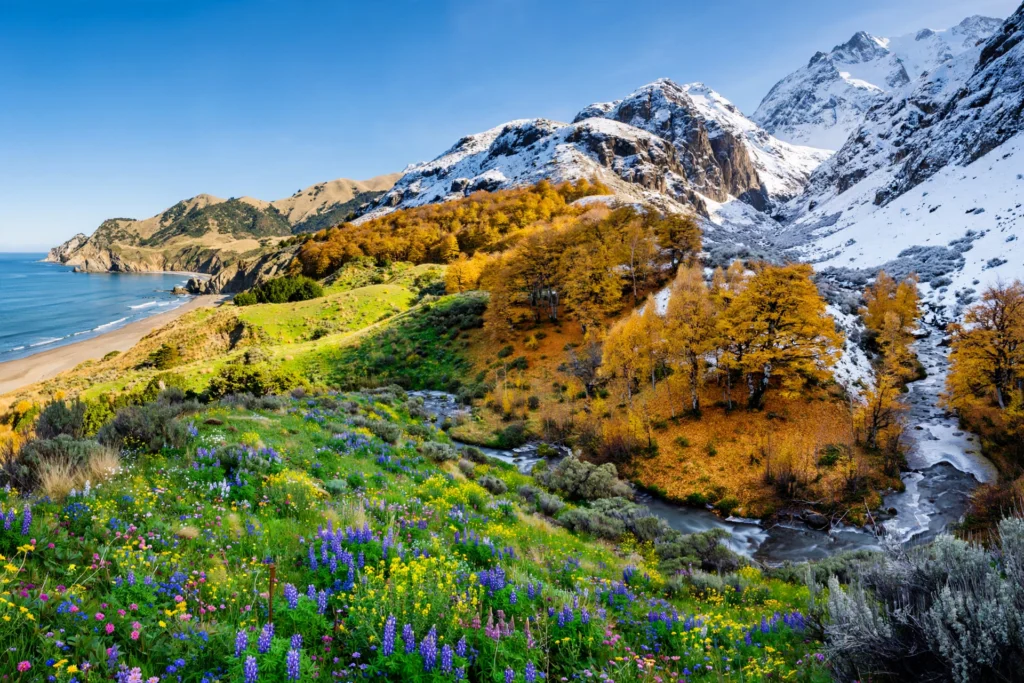
Chile’s seasons catch first-time visitors out more than any other fact in this guide, so it is worth a short section of its own. Chile sits entirely in the southern hemisphere, and its seasons are reversed relative to North America and Europe. When it is winter in New York or London, it is summer in Santiago and Punta Arenas. When it is summer in the northern hemisphere, Chile is in the middle of winter.
The four seasons in Chile run like this:
- Summer (austral summer): December, January, February. The warmest months, the longest days, and the peak travel season. In Patagonia, daylight can stretch past 9 p.m. in December. In Santiago, daytime temperatures are typically warm to hot, often in the high 20s Celsius. This is also when Chilean school holidays fall, so domestic travel peaks and prices rise.
- Autumn (fall): March, April, May. Mild temperatures, harvest season in the wine valleys, autumn colours in the Lake District, and thinning crowds. March is one of the best all-round months in Chile. By May, Patagonia’s hiking season is winding down and some lodges and trails begin to close.
- Winter: June, July, August. The coldest months and the ski season in the Andes. Santiago gets cool, sometimes rainy days. Patagonia is cold, dark and largely closed to hiking. The Atacama, by contrast, is at its clearest and best for stargazing, and it is the cheapest time to fly to Chile.
- Spring: September, October, November. Warming temperatures, wildflowers in central Chile, and the start of the Patagonia season. Late November is one of the best-value windows in the country: spring weather, summer approaching, and peak-season prices not yet in force.
Chile’s geography makes the seasons behave differently from place to place. The country is a narrow ribbon between the Pacific Ocean and the Andes, and it spans roughly 38 degrees of latitude — about the distance from Alaska to Mexico. The Atacama Desert in the north is one of the driest places on Earth and barely notices the seasons at all. Santiago, in the central valley, has a Mediterranean climate with hot, dry summers and cool, wet winters. The Lake District, further south, is green and rainy, with weather that changes fast at any time of year. Patagonia, at the far south, is windy, cold and changeable even in summer, with four seasons in a single day a standing joke among guides there. Easter Island, far out in the Pacific, has a mild subtropical climate with small temperature differences between summer and winter.
That is why “the best time to travel to Chile” is not one answer but several, and why the rest of this guide is organised region by region. The seasons also explain the two national holiday peaks that shape prices and crowds: the Fiestas Patrias (national holidays) in mid-September, when Chileans travel in large numbers, and the long summer break from mid-December to late February. Book early for both.
If you are planning a trip that crosses regions, the practical rule is simple: plan around Patagonia first, because it has the shortest and strictest season, and fit everything else around it. The Atacama and Easter Island will accommodate almost any month; Patagonia will not.
Best Time to Visit Patagonia and Torres del Paine
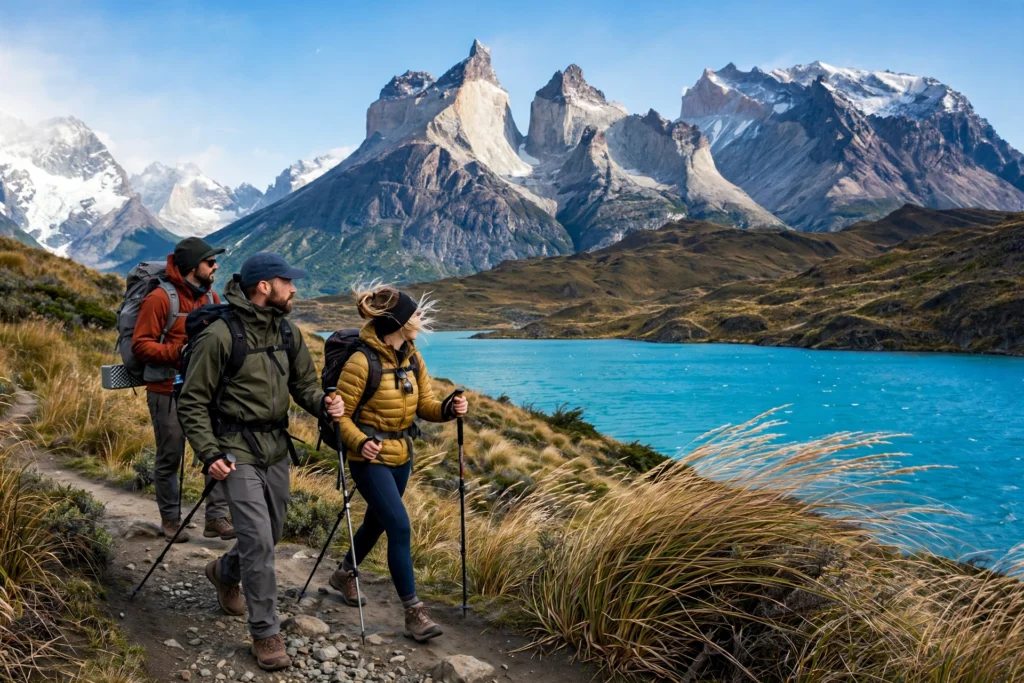
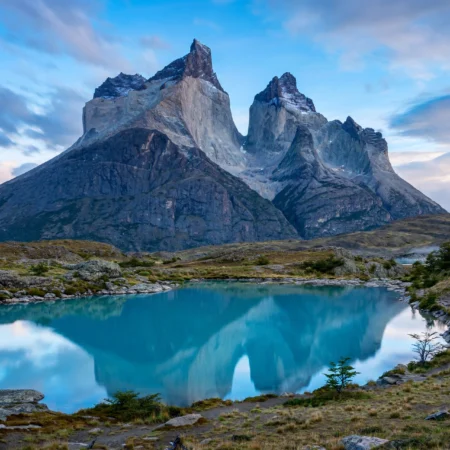
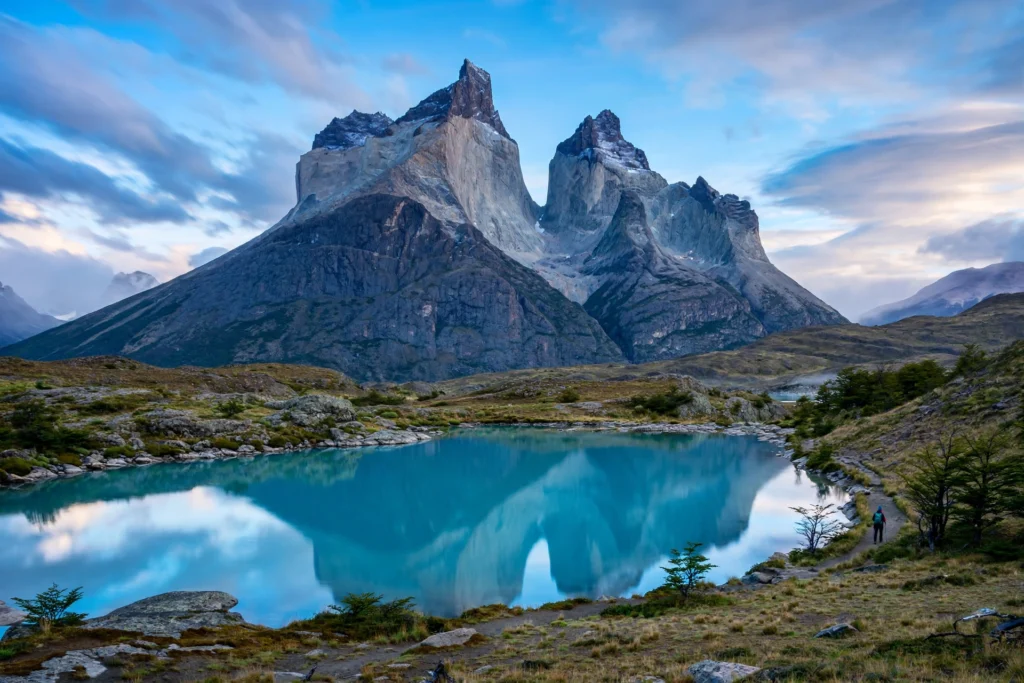
Patagonia is the reason most people time their Chile trip carefully, and it is the region where getting the month wrong costs the most. The hiking season in Torres del Paine National Park runs roughly from October to April, with the full range of trails, refugios (mountain huts), campsites and transport in operation from about November to March. Outside that window, many lodges close, campsites shut, bus services thin out, and some trails are closed or unsafe in snow and ice.
The best months for Patagonia are December, January and February. These are the warmest months, with the longest daylight — up to 17 hours of light around the December solstice — and the most reliable trail conditions. Daytime temperatures in Torres del Paine in summer are typically in the low to mid-teens Celsius, which sounds cool until you are hiking uphill in the wind; the wind, not the cold, is the real Patagonian weather story, and it blows hardest in summer too. Wildlife is at its most active, guanacos and rheas are easy to spot, and all the park’s infrastructure is open.
The price of those perfect months is crowds and cost. January and February are the busiest months in the park, when the famous W Trek and O Circuit fill up, refugio beds sell out months ahead, and hotel prices in Puerto Natales and Punta Arenas reach their peak. If you want December-to-February Patagonia, book refugios and campsites as early as you possibly can — for the W Trek, months ahead is not an exaggeration — and expect to pay peak prices.
November and March are the shoulder-season sweet spots, and for many travellers they are the best months of all. In November, spring is turning to summer: the days are long, the crowds have not yet arrived, the wildflowers are out, and prices are lower than in January. In March, autumn arrives with golden colours, cooler and often calmer weather, and the summer crowds have gone. Both months carry a little more weather risk — November can still bring snow at altitude, and March can bring the first autumn storms — but both are firmly inside the hiking season, with trails and lodges open.
October and April are the edge months. October is early spring: the park is waking up, some services are still limited, and weather is unsettled, but it is quiet and cheap. April is the last month of the season for most hikers; the autumn colours are at their best early in the month, but services begin to close and the weather turns quickly. If you go in April, go early in the month and check which refugios are still open before you commit to a trek.
Late May to early September is the Patagonian winter, and for most visitors it is the time to avoid. Many trails close, refugios and campsites shut, daylight shrinks to around eight hours, and temperatures regularly drop below freezing. A few specialist winter trips run in the park, and the snow-covered landscape is spectacular, but this is not a season for a first visit or for independent trekking. If your heart is set on Patagonia, do not plan a winter trip without a specialist operator and winter-mountaineering experience.
| Patagonia season | Months | Weather | Crowds | Prices | Best for |
|---|---|---|---|---|---|
| Peak summer | December–February | Warmest, longest days, windy | Highest | Highest | W Trek, O Circuit, wildlife |
| Shoulder | November, March | Mild, changeable | Moderate | Moderate | Hiking with fewer people, photography |
| Early/late season | October, April | Cool, unsettled | Low | Lower | Budget trips, autumn colours (April) |
| Winter | Late May–early September | Cold, snow, short days | Very low | Lowest | Specialist winter trips only |
One practical tip that applies to every Patagonian month: book the W Trek’s refugios and campsites before you book your flights. The trek’s beds are the bottleneck, and they sell out for the whole summer season. If the W Trek is full, consider the shorter day hikes from Puerto Natales, the trails around El Chaltén across the border in Argentina, or a November or March trip, when beds are easier to find. If you are still shaping the overall plan, the best places to travel in January guide is a useful cross-check for how Patagonia fits into a January itinerary, and the travel itinerary template will help you lay out a multi-region trip once your dates are set.
Best Time to Visit the Atacama Desert and San Pedro de Atacama
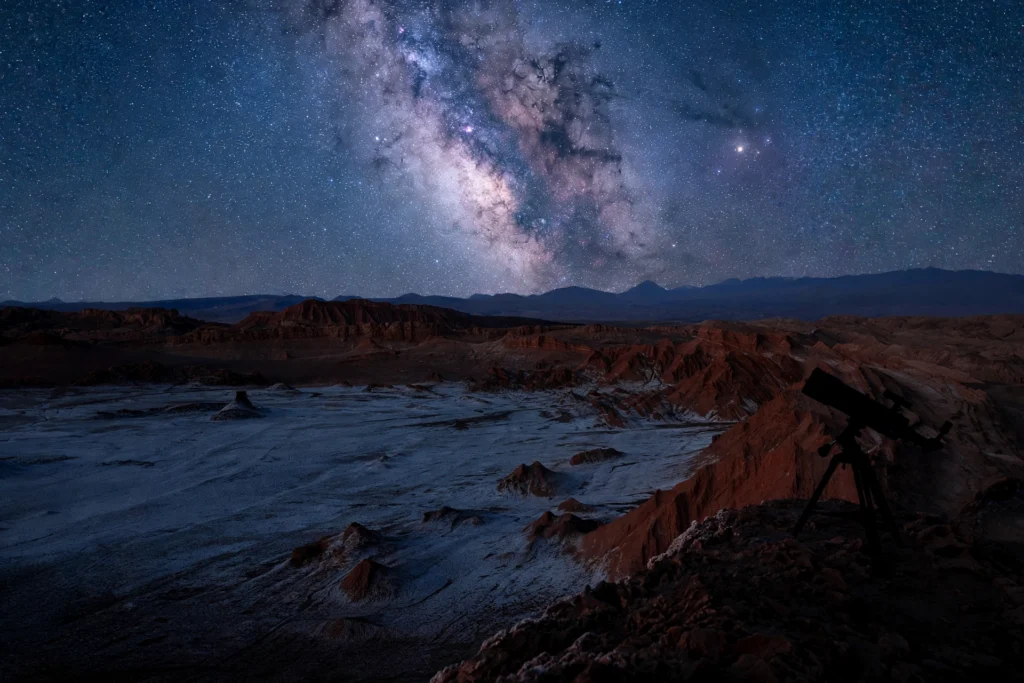
The Atacama Desert is the easiest region in Chile to plan, because it is good almost all year. San Pedro de Atacama sits at about 2,400 metres above sea level in the driest non-polar desert on Earth, and rain is so rare that some weather stations there have never recorded it. Daytime temperatures are warm in every month, nights are cold in every month, and the desert’s famous landscapes — the Valle de la Luna, the salt flats, the geysers of El Tatio, the high-altitude lagoons — are open year-round.
The best months for the Atacama are June, July and August — the Chilean winter. That sounds backwards, and it is the one place in this guide where winter wins. In winter the air is at its driest and clearest, which makes it the best season for stargazing in one of the world’s great dark-sky destinations, and the daytime temperatures are pleasantly mild rather than hot. The cold nights are the trade-off: temperatures at night, and at the high-altitude sites above 4,000 metres, can drop well below freezing, so warm layers are essential. Winter is also the quieter season in San Pedro, with lower hotel prices than in the summer months.
September to November and March to May are also excellent. Spring and autumn in the Atacama bring comfortable daytime temperatures, clear skies and fewer visitors than the December-to-February peak. These are arguably the best all-round months for a first visit: you get the desert’s highlights without the summer crowds or the winter cold at altitude.
December to February is the busiest season in San Pedro, and the one with a caveat. Summer brings the warmest days and the most visitors, and it also brings the altiplanic winter — known locally as the invierno altiplánico — a seasonal pattern of afternoon storms and rain in the high Andes that runs roughly from January to February. The storms rarely touch San Pedro itself, which stays dry, but they can affect the high-altitude excursions: the lagoons of Miscanti and Miñiques, the Salar de Atacama’s far reaches, and the roads over the high passes can be disrupted by rain, snow or flooding. Tour operators cancel or reroute high-altitude trips when the storms hit. If your Atacama plan is built around those high sites, avoid January and February, or at least build in a spare day. If your plan is the classic Valle de la Luna, geysers and stargazing circuit at lower altitude, summer is fine.
A few practical notes apply in every month. The altitude is real: San Pedro is at 2,400 metres and the excursions climb to 4,300 metres and beyond, so give yourself a day to acclimatise before the high-altitude tours, drink far more water than you think you need, and go easy on alcohol on your first day. The desert sun is fierce at altitude in every season — sunscreen, a hat and sunglasses are not optional. And the temperature swing between day and night can be 25 degrees or more, so pack layers whatever the month.
| Atacama season | Months | Conditions | Crowds | Best for |
|---|---|---|---|---|
| Winter (clearest skies) | June–August | Dry, clear, cold nights | Lower | Stargazing, photography |
| Spring / autumn | September–November, March–May | Mild days, clear skies | Moderate | First visits, all-round touring |
| Summer (busiest) | December–February | Warm days, altiplanic winter storms at high sites | Highest | Valle de la Luna, geysers, salt flats |
| Avoid for high sites | January–February | Storms can close high-altitude roads | Highest | — |
If you are combining the Atacama with Patagonia, the overlap months are November, December, March and April — and of those, November and March give you the best balance of weather, crowds and prices in both places. The how to prepare a travel budget guide is worth reading before you price an Atacama trip, because the desert’s tours and high-altitude excursions add up quickly, and the costs section later in this guide breaks down what each season does to the total.
Best Time to Visit Santiago, Valparaíso and the Wine Valleys
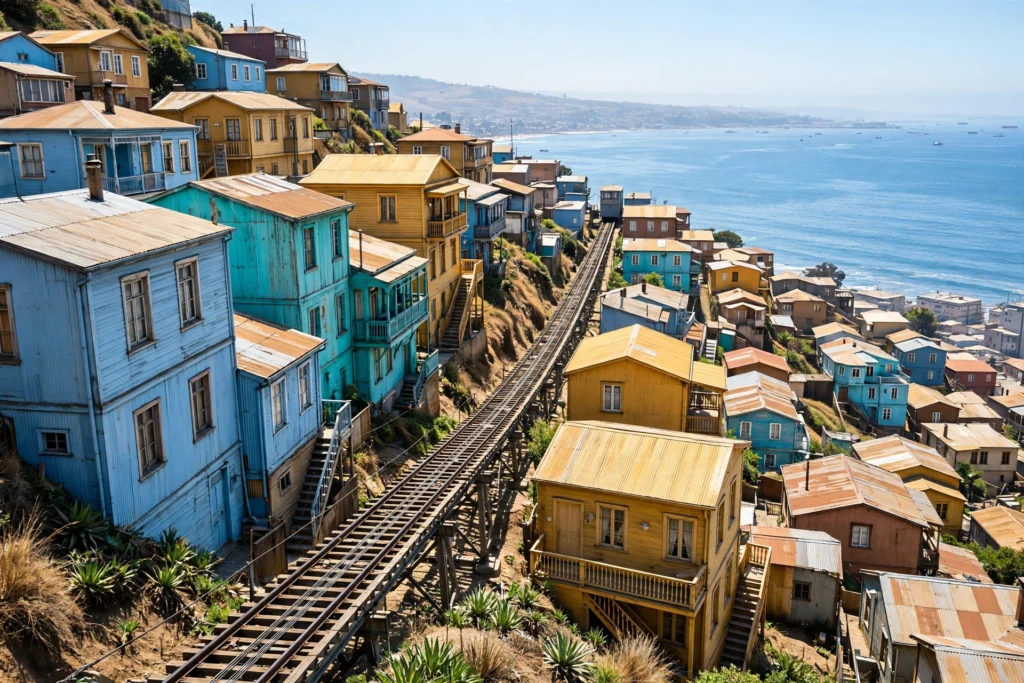
Santiago, Valparaíso and the wine valleys of the central valley are the most forgiving part of Chile to time, because central Chile is a year-round destination. The region has a Mediterranean climate — hot, dry summers and cool, wet winters — and there is no month when you cannot enjoy the cities, the coast and the vineyards. The question is not whether to go, but what you want the trip to feel like.
September to November (spring) and March to May (autumn) are the best months. Spring brings mild temperatures, wildflowers in the hills, and the city shaking off winter; late September to late October is the spring bloom, when the central valley is at its greenest and most photogenic. Autumn brings the grape harvest in March and April, golden vines in the Maipo, Colchagua and Casablanca valleys, and comfortable temperatures for walking the cities. Both seasons have fewer tourists than summer, lower hotel prices, and weather that suits sightseeing all day.
December to February (summer) is hot, dry and lively. Santiago’s daytime temperatures regularly climb into the high 20s and low 30s Celsius, and the city empties somewhat as Chileans head to the coast — which makes Valparaíso and Viña del Mar, an hour and a half away, the place to be. Summer is the best season for the beaches of the central coast and for long evenings in the city’s restaurant districts, but it is also the most expensive season for hotels in Valparaíso, and the heat makes midday sightseeing in Santiago hard work. If you visit in summer, plan your city walking for the morning and evening, and take the coast in the afternoon.
June to August (winter) is the quiet season in central Chile, and it has its own appeal. Santiago’s winter days are cool and often grey, with rain in June and July, but the city is at its cheapest, the museums and restaurants are uncrowded, and the Andes on the city’s eastern edge are snow-covered and spectacular. Winter is also when the ski resorts an hour or two from Santiago are in full operation, so a winter trip can combine the city with the slopes. The downside is the smog: Santiago’s winter air quality is the worst of the year, when temperature inversions trap pollution in the valley, and the short, grey days are not the city’s best face.
The wine valleys deserve a note of their own, because their calendar is the most specific in central Chile. The vendimia, or grape harvest, runs in March and April, and it is the best time to visit the vineyards: the vines are heavy with fruit, many wineries run harvest festivals and special tastings, and the Colchagua Valley’s Vendimia festival in Santa Cruz is one of the country’s great wine events. September to November is the second-best window for wine country, with spring growth, mild weather and quiet tasting rooms. If wine is the main reason for your trip, March and April are the months to choose; if you simply want a vineyard day trip as part of a wider trip, any month from September to May works well.
Valparaíso, the colourful port city, follows the same seasonal pattern as Santiago but with a coastal twist: its summers are cooler and breezier than the capital’s, its winters milder, and its famous New Year’s Eve fireworks — one of the largest displays in South America — make late December a special, if crowded, time to be there. The city’s hills are steep in every season, so comfortable walking shoes matter more than the month you pick.
Best Time to Visit the Lake District, Chiloé and the Carretera Austral
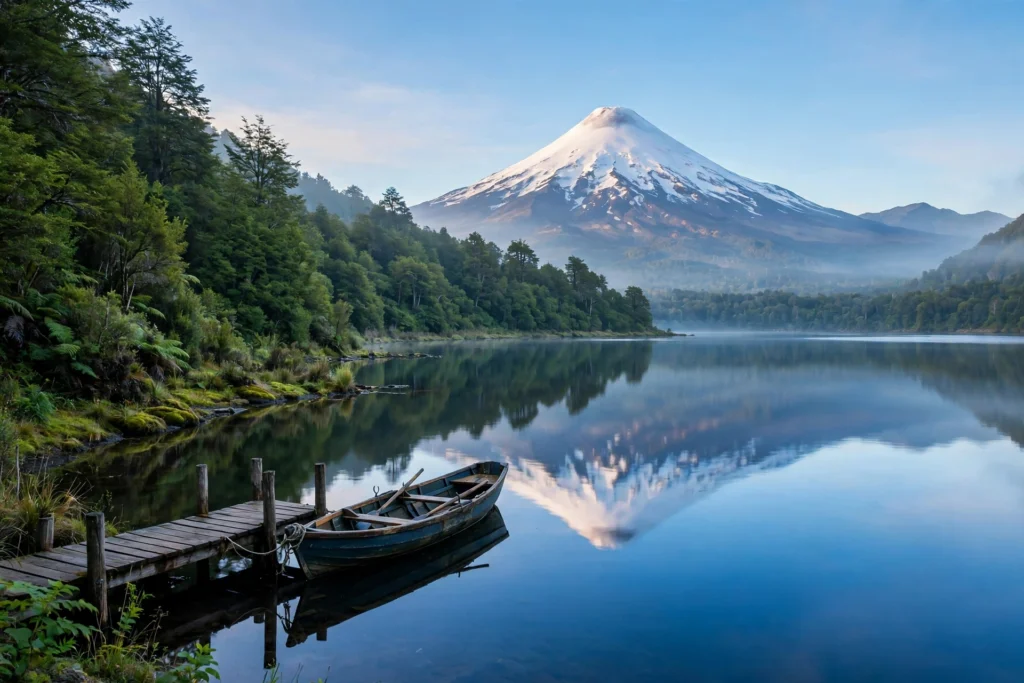
The Lake District — the green, lake-dotted region around Pucón, Puerto Varas and Puerto Montt — is Chile’s summer playground, and its season is almost as strict as Patagonia’s. Chiloé, the misty island of wooden churches and palafito stilt houses, and the Carretera Austral, the wild gravel highway that runs south through fjords and temperate rainforest, follow the same pattern.
December to March is the best time for the Lake District. Summer brings the warmest weather, the longest days and the full range of activities: hiking in Villarrica and Puyehue national parks, kayaking and rafting on the lakes and rivers, climbing Volcán Villarrica, and the hot springs that dot the region. Daytime temperatures are typically mild and pleasant, in the high teens to low 20s Celsius, and the lakes are at their most inviting. January and February are the peak months, when Chilean families holiday here and the towns of Pucón and Puerto Varas are at their busiest; December and March are quieter and often just as good.
November and April are the shoulder months. November brings spring colour and fewer people, with some trails still muddy from winter rain. April brings autumn colours — the southern beech forests turn gold and red — and a real sense of the season ending; by late April, rain increases and some lodges and tour operators close for winter. Both months are good for travellers who prefer quiet towns and lower prices and are willing to accept changeable weather.
June to August is the low season, and for most visitors it is the time to skip. Winter in the Lake District is cold, wet and dark, with frequent rain and short days. Many lodges, restaurants and tour operators close, and the hiking trails turn muddy or snow-covered at altitude. The exception is Pucón, which doubles as a small ski destination — the Villarrica volcano ski area operates in winter — and the hot springs, which are arguably better in the cold. But a general sightseeing trip to the Lake District in winter is hard to recommend.
Chiloé follows the same calendar, with one difference: its weather is wetter and more changeable than the mainland’s in every season, and its charm — the mist, the wooden churches, the fishing villages — does not depend on sunshine. Summer is still the best time, and the island’s penguin colonies at Puñihuil are most active from about October to March, with the peak penguin season in the summer months.
The Carretera Austral is the most season-sensitive road trip in Chile. This is a largely unpaved highway through remote country, and in winter (May to September) rain, snow, landslides and ferry cancellations can close sections of it or make driving slow and difficult. December to March is the window for the Carretera Austral, when the road is at its most passable, the ferries run their full schedules, and the lodges along the route are open. If a Carretera Austral road trip is on your list, plan it for those months and build in spare days — even in summer, weather can close a pass or delay a ferry, and the road rewards travellers who are not in a hurry. A rough plan for the drive belongs in your itinerary early, and the travel itinerary template is a practical way to lay it out with the ferry crossings and spare days built in.
Best Time to Visit Easter Island (Rapa Nui)
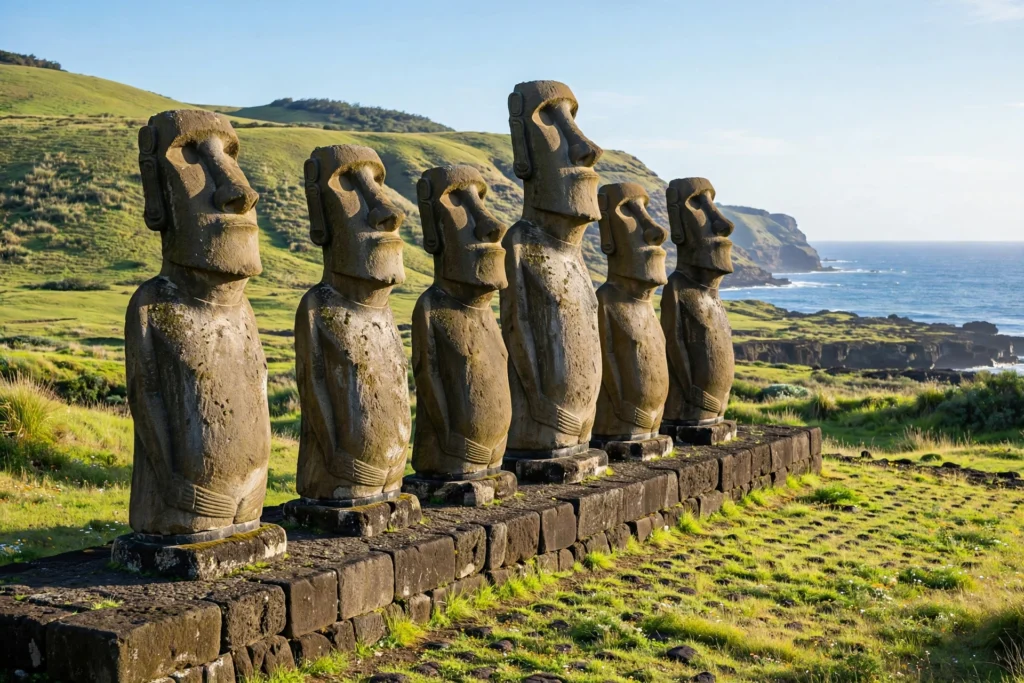
Easter Island — Rapa Nui in the local language — is the most season-proof destination in Chile. It sits more than 3,500 kilometres out in the Pacific, and its subtropical climate keeps temperatures mild all year: daytime highs are typically in the low to mid-20s Celsius in every month, and the difference between the warmest and coolest months is only a few degrees. Rain is possible in any month and rarely lasts long. There is no bad month for Easter Island, only better and busier ones.
October to April is the best window, and the warmest. These are the months when the island is at its greenest and warmest, the sea is at its most inviting for snorkelling and diving, and the moai statues stand against blue skies more often than not. January and February are the warmest months of all, and also the busiest, because they coincide with the Tapati festival and with the Chilean summer holidays.
The Tapati festival, in the first half of February, is the single best reason to choose a specific month for Easter Island. Tapati is a two-week celebration of Rapa Nui culture — traditional sports, body painting, music, dance, food and the crowning of a festival queen — and it transforms the island. It is also the busiest time of the year on the island, and flights and accommodation sell out well ahead, so if Tapati is your reason for going, book months in advance and expect peak prices.
May to September, the island’s cooler season, is the quiet alternative. Temperatures drop only slightly, rain is a little more frequent, and the island empties of visitors. Hotel prices fall, the archaeological sites are quiet, and the moai at sunrise at Ahu Tongariki — the island’s most famous view — is just as spectacular in July as in January. If you want Easter Island without the crowds, these are the months. The trade-off is a slightly higher chance of a rainy day and cooler evenings, and some smaller tour operators run reduced schedules.
Practical notes for any month: flights to Easter Island run from Santiago several times a week, and the island is remote enough that a delayed flight or a missed connection can cost you a day — build a buffer into your itinerary on both ends. The island’s national park requires a park pass, and the moai sites are protected, so book a licensed local guide for the main circuit rather than trying to see everything alone. And remember that Easter Island is small and its infrastructure is limited: book accommodation early in any month, and earlier still for Tapati.
Best Time to Ski in Chile: The Andes Ski Season
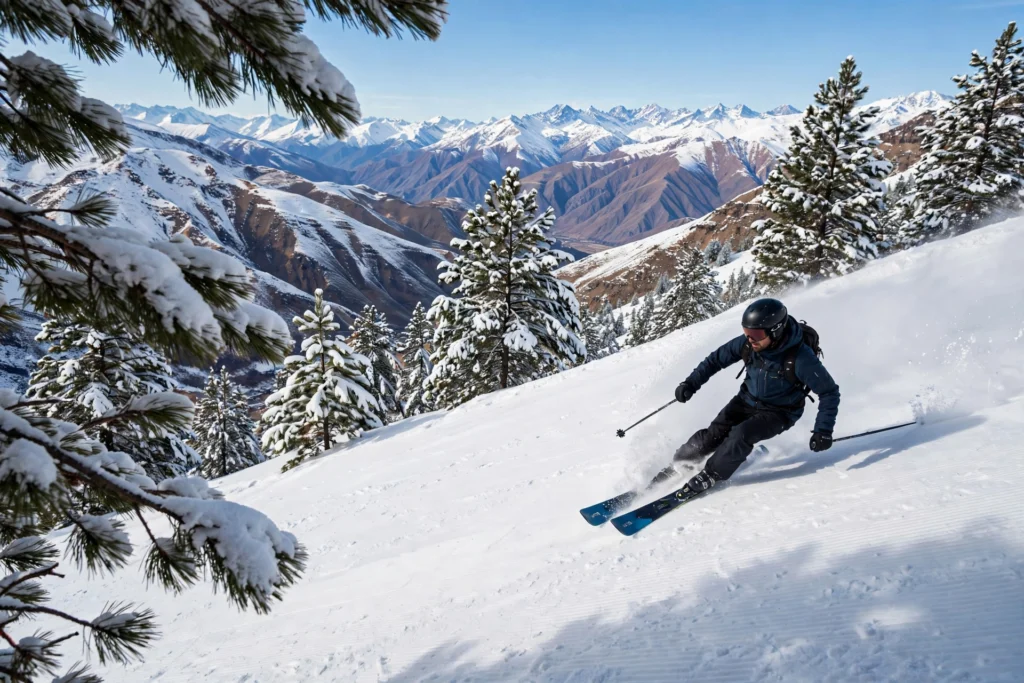
Chile is one of the few places in the world where you can ski in July and August, and its Andes resorts are the best in South America. The ski season runs from mid-June to late September, with the exact opening and closing dates depending on snowfall each year. The resorts closest to Santiago — Valle Nevado, La Parva and El Colorado, about an hour and a half from the city, and Portillo, about two hours north — open first and are the easiest to reach. Further south, Chillán and Corralco offer quieter slopes and hot springs nearby, and Pucón’s Villarrica volcano has a small ski area with one of the most unusual settings in world skiing.
July and August are the best months for skiing in Chile. By July the snow base is established, all the lifts and runs are open, and the days are at their longest within the ski season. August is often the most reliable month of all: deep snow, settled weather, and the resorts in full operation. Late June can be thin on snow in a poor year, and September brings spring conditions — softer snow, warmer days, and shorter lift queues, but also a higher chance of the season ending early if the snow melts fast.
A ski trip to Chile is a winter trip by definition, so plan around it. The resorts are busy in July, when Chilean school holidays fall, and prices peak then; late August and September are quieter and cheaper, and the spring snow can be excellent for intermediate skiers who do not mind softer conditions. If you are combining skiing with the Atacama — a classic Chile combination, desert and snow in the same week — August is the month where both are at their best, and it is also one of the cheapest months to fly to Chile.
Practical notes: rent equipment at the resort or in Santiago rather than flying with your own unless you are staying for a week or more; book accommodation at Portillo and Valle Nevado well ahead, because both have limited beds and fill up in July; and allow a day in Santiago before heading up the mountain, both to acclimatise and to buy anything you forgot. The mountain roads are steep and winding, and winter driving conditions apply — if you are renting a car, ask for chains and check the road status the morning you travel.
Best Time to Travel to Chile Month by Month

This is the table to bookmark. For each month it gives the weather picture, the crowd and price level, the festivals worth knowing about, and the best trip for that month. It is built from the region-by-region detail above, so if a month looks right here, check the relevant region section before you book.
| Month | Weather | Crowds / prices | Festivals and events | Best for |
|---|---|---|---|---|
| January | Summer peak; warm everywhere, Patagonia at its best | Highest crowds and prices | New Year in Valparaíso; summer festivals | Patagonia, Lake District, Easter Island |
| February | Summer; warm, long days; altiplanic winter storms at high Atacama sites | Highest crowds and prices | Tapati festival, Easter Island; Viña del Mar music festival | Patagonia, Easter Island (Tapati) |
| March | Autumn begins; mild, harvest in wine valleys | Moderate, falling | Vendimia (grape harvest) festivals | Wine valleys, Patagonia shoulder, all-round trips |
| April | Autumn; cooler, golden colours in the south | Low–moderate | Vendimia continues early in the month | Wine valleys, Lake District autumn, Patagonia late season |
| May | Late autumn; cool, rain increasing in the south | Low; cheapest flights | — | Budget trips, Santiago city breaks |
| June | Winter begins; cold in the south, ski season opens | Low; cheapest flights | — | Skiing (late June), Atacama stargazing |
| July | Winter; cold, snow in the Andes, clear skies in the Atacama | Low, except ski resorts | Chilean winter school holidays | Skiing, Atacama stargazing |
| August | Winter; best snow, clearest Atacama skies | Low; cheapest flights | — | Skiing, Atacama, budget trips |
| September | Spring begins; warming, wildflowers in central Chile | Moderate; Fiestas Patrias travel peak | Fiestas Patrias (18–19 September) | Santiago, wine valleys, spring bloom |
| October | Spring; mild, Patagonia season opens | Low–moderate | — | Patagonia early season, Lake District spring |
| November | Late spring; long days, summer approaching | Moderate, rising | — | Patagonia shoulder, all-round trips, best value |
| December | Summer begins; warm, longest days in Patagonia | High, rising to peak | Christmas and New Year in Valparaíso | Patagonia, Lake District, multi-region trips |
Three months deserve a second look, because they are the ones this guide recommends most often. November is the best-value month in Chile: spring weather, Patagonia open, the Atacama clear, and peak-season prices not yet in force. March is the best all-round month for a multi-region trip: the harvest in the wine valleys, autumn colours in the south, Patagonia still open, and the summer crowds gone. August is the best budget month: the cheapest flights of the year, the clearest skies in the Atacama, and the most reliable snow in the Andes — as long as Patagonia is not on your list.
If you are planning around a specific event rather than a region, the festival calendar in the next section but one is the place to look. And if budget is the deciding factor, the costs table below shows how much each season actually changes the price of a trip.
Cheapest Time to Travel to Chile: Costs by Season

Chile is not the cheapest country in South America, and the season you choose can change the cost of a trip by a large amount — particularly in Patagonia, where the difference between peak and shoulder season is the difference between a bed in a refugio and no bed at all. The table below gives the shape of the costs by season, using relative levels rather than fixed prices, because hotel and flight prices move constantly and any fixed figure in a guide goes out of date fast. The percentage ranges are the ones the leading Chile guides report: peak-season prices in Patagonia run roughly 30–50% above shoulder-season prices, and the cheapest flights to Chile are typically found in May, June and August.
| Cost | Peak (Dec–Feb) | Shoulder (Nov, Mar–Apr) | Low (May–Aug) |
|---|---|---|---|
| International flights to Santiago | Highest | Moderate | Lowest (cheapest in May, June, August) |
| Domestic flights (e.g. Santiago–Punta Arenas, Santiago–Calama) | Highest; book early | Moderate | Lowest, but fewer frequencies |
| Patagonia hotels and refugios | Highest; sell out months ahead | Moderate | Many closed |
| Santiago and Valparaíso hotels | High | Moderate | Lowest |
| Atacama hotels and tours | High | Moderate | Lower (best value for stargazing) |
| Car rental | High | Moderate | Lower |
| Ski resorts | Closed | Closed (until mid-June) | Highest in July, lower in September |
| Easter Island flights and hotels | Highest (Tapati in February) | Moderate | Lowest |
The cheapest month overall is usually May, followed by June and August — the months when the fewest visitors are in the country and the airlines discount hardest. The catch is that May is also the month when Patagonia’s season is ending and the Lake District is turning wet, so the cheapest month is only a bargain if your trip does not depend on the south. For a Patagonia trip, the cheapest good month is November: the season has opened, the refugios are bookable, and prices are still below the December peak. For a trip that skips Patagonia entirely — Atacama, Santiago, wine valleys, Easter Island — August is the cheapest month that still gives you good weather in every place you are going.
Four money-saving rules apply in every season. First, book Patagonia refugios and campsites before flights, because the beds are the bottleneck and their price is fixed while flight prices rise. Second, book domestic flights early: the Santiago to Punta Arenas and Santiago to Calama routes are the two that rise fastest as the date approaches. Third, travel midweek where you can — Chilean domestic travel peaks on weekends and around the Fiestas Patrias in September. And fourth, remember that Chile’s peak season is the northern hemisphere’s winter, so the “cheap January flight” instinct that works for Europe or Southeast Asia works in reverse here. If you want the numbers behind a trip budget, the how to prepare a travel budget guide walks through building a daily budget, and the how much to travel to Japan guide shows the same cost-table method applied to another long-haul destination.
Chile Festivals and Events Calendar: When to Go for Culture
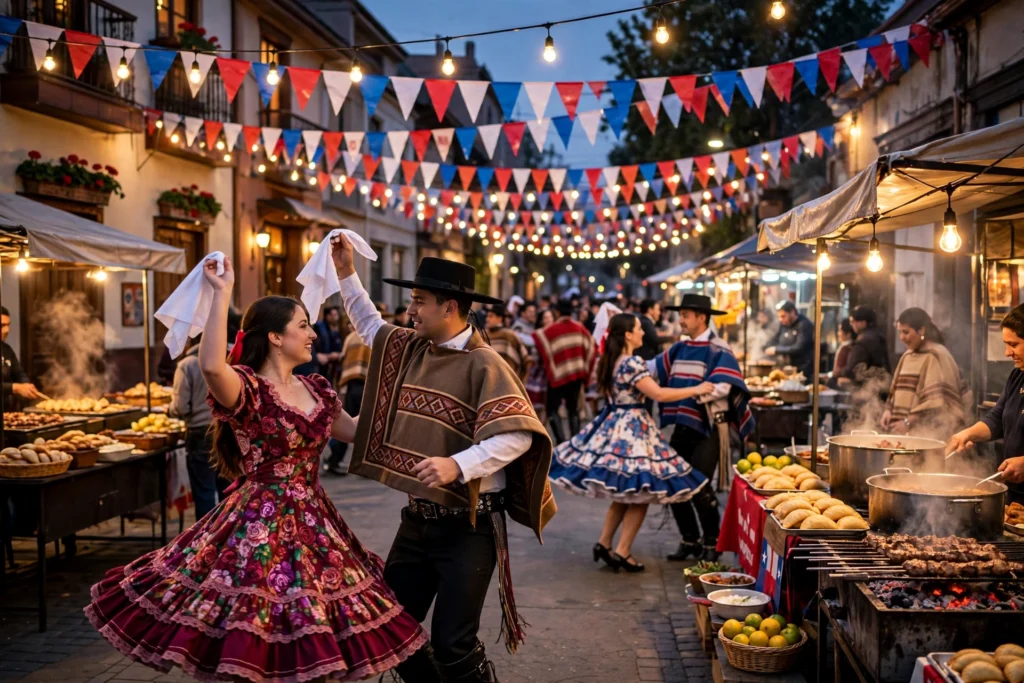
Festivals are one of the best reasons to pick a specific month for Chile, and a few of them are worth planning a whole trip around. They also move prices and crowds, so they belong in a timing guide as warnings as well as recommendations.
| Festival or event | When | Where | What it is |
|---|---|---|---|
| New Year fireworks | 31 December | Valparaíso | One of South America’s largest firework displays, over the bay |
| Tapati festival | Early February (two weeks) | Easter Island (Rapa Nui) | Rapa Nui culture: traditional sports, body painting, music, dance, food |
| Viña del Mar International Song Festival | Late February | Viña del Mar | Latin America’s biggest music festival, five nights |
| Vendimia (grape harvest) | March–April | Wine valleys (Colchagua, Maipo, Casablanca, Curicó) | Harvest festivals, tastings, grape stomping, local food |
| Semana Santa (Holy Week) | March or April | Nationwide, especially La Tirana region | Religious processions and local celebrations |
| Fiestas Patrias | 18–19 September | Nationwide | Chile’s national holidays: fondas (food and drink stalls), cueca dancing, rodeos, barbecues |
| Festival de la Vendimia de Colchagua | March | Santa Cruz, Colchagua Valley | The biggest wine-harvest festival in Chile |
| Fiesta de La Tirana | Mid-July | La Tirana, northern Chile | Religious festival with traditional dancing, one of Chile’s largest |
| Santiago International Film Festival (SANFIC) | August | Santiago | Chile’s main film festival |
| Lollapalooza Chile | March | Santiago | Major international music festival |
Three of these deserve more detail. The Fiestas Patrias on 18 and 19 September are Chile’s biggest national celebration, and they transform the country for a week: fondas (temporary food and drink stalls) spring up everywhere, families barbecue and dance the cueca, and Chileans travel in large numbers. It is a wonderful time to be in Chile and a difficult time to travel within it — book transport and accommodation well ahead, expect higher prices, and do not plan a tight itinerary across those dates. If you want the celebration without the disruption, base yourself in one place — Santiago or Valparaíso — and enjoy it there.
The Vendimia in March and April is the best festival for a wine-focused trip. The Colchagua Valley’s Vendimia festival in Santa Cruz is the flagship event, with tastings from the valley’s wineries, traditional food, music and the election of a harvest queen, and the smaller valleys run their own versions through the same weeks. Book vineyard visits ahead in March and April, because the harvest season is also the busiest season in wine country.
The Tapati festival in early February is the most distinctive event in this table and the hardest to get to: Easter Island is remote, flights are limited, and accommodation sells out months ahead for Tapati. If you go, book flights and a hotel before anything else, and plan to stay for the full two weeks if you can — the festival builds over its run, and the second week is the liveliest. For more on shaping a trip around a single event, the best places to travel in January guide covers how festival timing fits into a wider itinerary, and the official Chile Travel site lists upcoming events and seasonal highlights as the year progresses.
When to Avoid Travelling to Chile
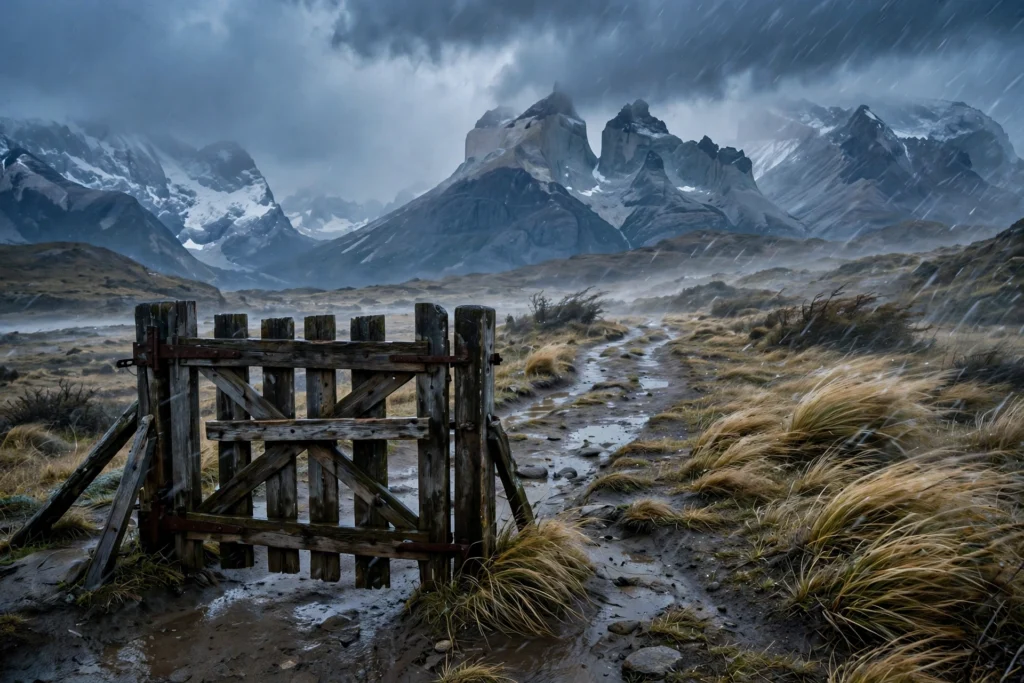
Chile has no month that is bad everywhere, but it has several month-and-region combinations that are genuinely worth avoiding. The table below is the honest version of the question, not a list of minor inconveniences.
| When to avoid | Where | Why |
|---|---|---|
| Late May–early September | Patagonia and Torres del Paine | Winter closures: trails, refugios and campsites shut; snow, short days, freezing temperatures |
| January–February | High-altitude Atacama sites | Altiplanic winter storms can close high roads and cancel lagoon and pass excursions |
| Mid-December–mid-February | Patagonia (if you have not booked) | Peak crowds and prices; refugios and campsites sell out; book months ahead or go in November or March instead |
| May–September | Carretera Austral | Rain, snow, landslides and ferry cancellations can close sections of the road |
| June–August | Lake District (general sightseeing) | Cold, wet, short days; many lodges and operators closed (Pucón skiing excepted) |
| 18–19 September (Fiestas Patrias week) | Travelling between cities | Chileans travel in large numbers; transport and hotels book out, prices rise, itineraries slip |
| March 29, May 1, May 21, September 11, October 18 | Santiago and other cities | Dates when large demonstrations are most likely; avoid demonstration areas and expect transport disruption |
| Any month, without a buffer | Easter Island | Remote flights can be delayed; a tight connection can cost a day — build in spare time on both ends |
A few of these deserve emphasis. The Patagonian winter is the one true “do not go” in this guide for a first-time visitor: it is not just cold, it is closed. The altiplanic winter in January and February is subtler — San Pedro itself stays dry and pleasant, and only the high-altitude excursions are affected — but if those excursions are the reason you are going to the Atacama, the timing matters. And the Fiestas Patrias week is not a reason to avoid Chile, only a reason to avoid moving around Chile in that week; stay put, join the celebration, and travel before or after.
The demonstration dates in the table come from the US State Department’s Chile page, which notes that large-scale demonstrations sometimes occur in Santiago and other cities, often with little notice, and that they occur frequently on those dates in particular. They are not a reason to avoid Chile — the advisory is Level 2, Exercise Increased Caution, not a warning against travel — but they are a reason to check the news before you travel, avoid demonstration areas, and keep your itinerary flexible on those days. Read the US State Department Chile advisory before your trip for the current picture.
One more timing risk that is not in the table: wildfires. Central and southern Chile have suffered serious wildfires in recent summers, particularly in January and February, and smoke and fire can close parks and roads in the Lake District and the central valley. It is not a predictable annual event, but it is worth checking local conditions in the weeks before a summer trip to the south, and worth having travel insurance that covers trip disruption.
How Long to Spend in Chile and the Best Itineraries by Season
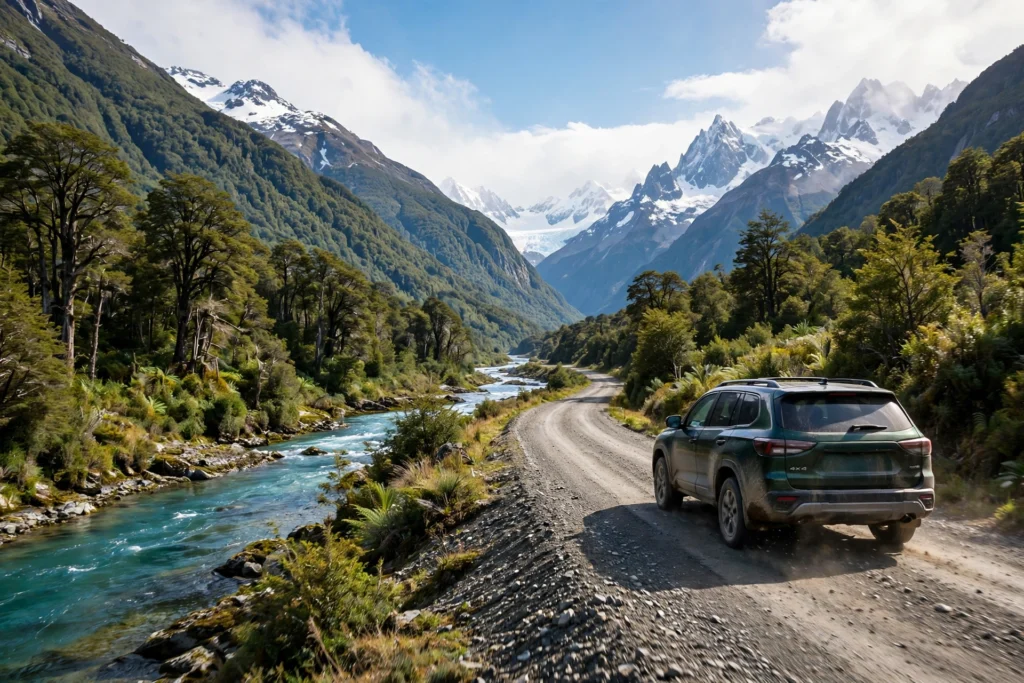
Chile is too long and too spread out for a short trip to do it justice, and the season you choose should shape the itinerary, not the other way around. The distances are the first thing to understand: Santiago to Punta Arenas is a three-and-a-half-hour flight, Santiago to Calama (for the Atacama) is two hours, and Santiago to Easter Island is five and a half hours. Driving between regions is rarely practical — Chile rewards flying between its far-apart regions and exploring each one properly once you land.
Seven days is the minimum for a satisfying first trip, and it works best in November or March. A classic seven-day plan: three days in Santiago and the wine valleys, then four days in either Patagonia (a shorter version of the W Trek or day hikes from Puerto Natales) or the Atacama (San Pedro’s full circuit). Seven days is not enough for both Patagonia and the Atacama, and trying to do both means spending the trip in airports.
Ten to fourteen days is the sweet spot, and it is the length this guide recommends for a first trip. In November to March, a ten-day plan could be: Santiago and Valparaíso (three days), the Atacama (three days), and Patagonia (four days, including the W Trek’s highlights). In March or April, swap Patagonia’s full trek for the wine valleys at harvest and the Lake District in autumn colour. In June to August, a ten-day plan looks different: Santiago and the ski resorts (four days), the Atacama for stargazing (three days), and Easter Island (three days) — a winter itinerary that plays to the season instead of fighting it.
Three weeks or more opens up the trips that need time: the full O Circuit in Torres del Paine, the Carretera Austral by car, or a slow journey from the Atacama in the north to Patagonia in the south. These trips only work in the December-to-March window, and the Carretera Austral in particular needs the spare days built in for weather and ferries.
Season shapes the itinerary in one more way: the order you visit regions. In November and December, start in the Atacama and finish in Patagonia, so that Patagonia is at its warmest when you arrive. In March and April, do the reverse — Patagonia first, while the trails are still fully open, and the wine valleys last, for the harvest. In winter, put the ski resorts in the middle of the trip, with Santiago on either side, so a storm day on the mountain costs you a city day rather than a flight.
Whatever length you choose, build in a buffer day. Chile’s weather, particularly in Patagonia and on the Carretera Austral, and its remote flights, particularly to Easter Island, both reward travellers who are not on a tight schedule. The travel itinerary template will help you lay out the days with buffers included, and the travel apps guide covers the offline maps and transport apps worth installing before you arrive — essential in Patagonia and the Atacama, where signal is patchy.
What to Pack for Chile by Season
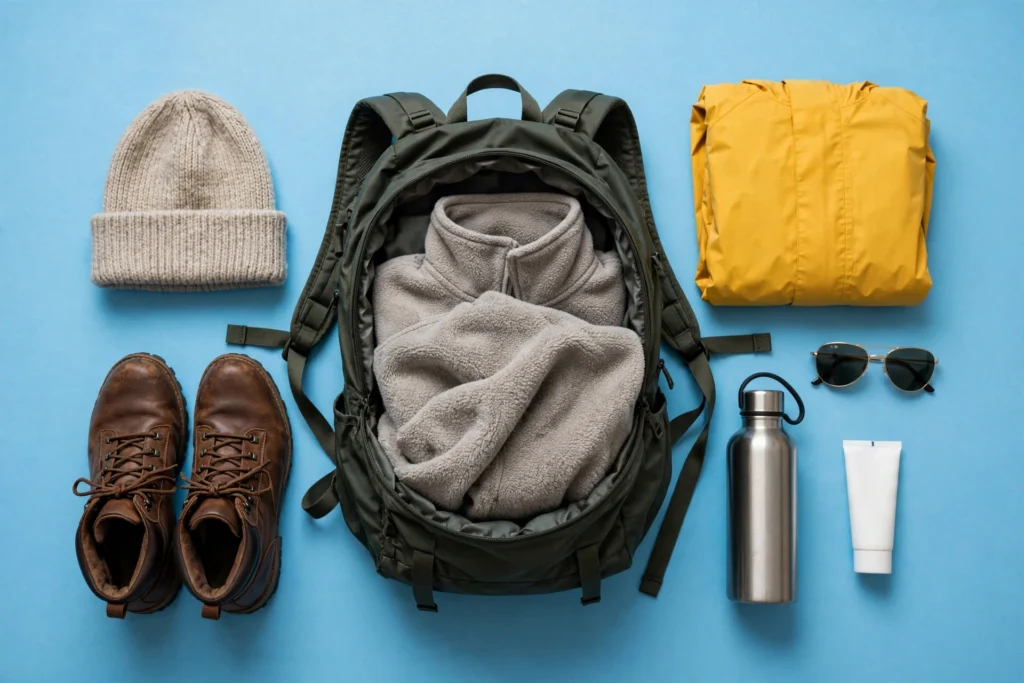
Chile’s packing list changes more with the season than almost any other country’s, because a single trip can cross from desert heat to glacier cold. The rule for every season is layers: the temperature swing between day and night is large in the Atacama in every month, and Patagonia’s wind can make a mild day feel freezing in minutes.
Summer (December–February): light layers for the day, a warm fleece and a windproof waterproof jacket for Patagonia, sun protection (high-factor sunscreen, a hat, sunglasses) for the Atacama and the high altitude, swimwear for the Lake District and the coast, and sturdy walking shoes or hiking boots. Book refugio nights need a sleeping bag liner and a headlamp if you are trekking.
Autumn (March–May): the same layers, plus a warmer jacket and waterproofs, because autumn rain arrives first in the Lake District and Patagonia. The wine valleys are mild, so a light jacket is enough there, but the south needs proper wet-weather gear by April.
Winter (June–August): serious cold-weather clothing for the Andes and Patagonia if you are going south at all, ski clothing if you are skiing, and warm layers for the Atacama’s freezing nights — even though the days are mild. Santiago in winter needs a warm coat and an umbrella. Lip balm and moisturiser matter in the Atacama’s dry air in every season, and most of all in winter.
Spring (September–November): a mix of summer and winter packing, because spring weather is the most changeable. Waterproofs are essential in the Lake District and Patagonia, sun protection is essential in the Atacama, and layers do the rest.
Four items belong in the bag in every season. First, sunscreen and a hat — the UV at altitude in the Atacama and in Patagonia is strong even on cloudy days. Second, a reusable water bottle — the Atacama’s altitude and dry air dehydrate you fast, and Patagonia’s trails have limited water points. Third, cash in Chilean pesos for small towns and rural areas, where cards are not always accepted, even though cards work widely in Santiago and the main tourist towns. And fourth, a copy of your passport and your travel insurance details kept separately from the originals, because the US State Department advises carrying a copy of your passport and keeping the original in a safe place. For a full packing framework, the places to travel without a passport guide is a useful reminder of what your passport does and does not do for you abroad, and if you are still deciding where Chile fits in your travel plans, the dream travel destinations guide is a good place to start.
Frequently Asked Questions About the Best Time to Travel to Chile
What is the best month to travel to Chile?
There is no single best month for the whole country, but November and March are the best all-round months. November gives you spring weather, open Patagonia trails and pre-peak prices; March gives you the wine harvest, autumn colours and the summer crowds gone. If you only want Patagonia, December to February is best; if you only want the Atacama, June to August has the clearest skies.
What is the cheapest month to travel to Chile?
May is usually the cheapest month, followed by June and August, when international flights are at their lowest and hotels discount hardest. The cheapest good month for a Patagonia trip is November, and the cheapest month for a trip that skips Patagonia is August.
When is Patagonia closed?
Patagonia is not closed as such, but the hiking season in Torres del Paine runs roughly October to April, and many trails, refugios and campsites close from late May to early September. Winter visits are for specialist operators only.
Is December a good time to visit Chile?
Yes — December is one of the best months. Patagonia is at its best, the Lake District is warm, the days are longest, and the summer season is just beginning. The trade-off is rising prices and crowds as the month goes on, so book early and go in early December if you can.
When is the best time to visit Torres del Paine?
December to February for the best weather and longest days, and November or March for the same trails with fewer people and lower prices. Book refugio and campsite beds months ahead for any summer month.
What is the best time to visit the Atacama Desert?
The Atacama is good all year, but June to August gives the clearest skies for stargazing, and September to November and March to May are the best all-round months. Avoid January and February for high-altitude excursions, when altiplanic winter storms can disrupt them.
When is the best time to visit Santiago?
September to November and March to May, when the weather is mild and the crowds are thin. Summer (December to February) is hot and lively, and winter (June to August) is cool, cheaper and good for combining the city with skiing.
When is ski season in Chile?
Mid-June to late September, with July and August the most reliable months. The main resorts are Valle Nevado, La Parva and El Colorado near Santiago, Portillo further north, and Chillán and Corralco in the south.
When is the best time to visit Easter Island?
October to April is the warmest window, and early February is the Tapati festival — the island’s biggest cultural event. May to September is quieter and cheaper, with only slightly cooler weather.
What is the best time to visit the wine valleys?
March and April, during the vendimia (grape harvest), when the wineries run harvest festivals and special tastings. September to November is the second-best window, with spring growth and quiet tasting rooms.
Is Chile safe to visit?
The US State Department rates Chile Level 2 — Exercise Increased Caution — because of crime and occasional unrest, with the advisory issued on 2 July 2026. Petty crime is common in Santiago, Valparaíso and other cities. Take normal big-city precautions, avoid demonstrations, and read the US State Department Chile advisory before you go.
Do I need a visa to visit Chile?
US citizens do not need a visa for tourist stays of 90 days or less, and no vaccinations are required. Your passport must be valid for the duration of your stay, and you need at least one blank page. You will receive a Tourist Card on arrival, valid for up to 90 days — keep it, because you must return it when you leave.
Conclusion: When Should You Go to Chile?
The best time to travel to Chile is the month that matches the trip you actually want, and now you know what that month is. For Patagonia and Torres del Paine, go in December to February, or in November or March if you would rather have the trails to yourself. For the Atacama Desert, go in June to August for the clearest skies, or in spring and autumn for the easiest all-round trip. For Santiago, Valparaíso and the wine valleys, go in September to November or March to May — and in March and April if the harvest is the reason you are going. For skiing, go in July or August. For Easter Island, go any time, and in early February if you want Tapati.
If you can only choose one window for a first trip that covers several regions, choose late November to mid-December, or March. Both give you Patagonia open, central Chile at its best, and prices and crowds below the January and February peak. Book Patagonia’s refugios before your flights, build a buffer day into the plan, and pack layers — the desert, the mountains and the glaciers will do the rest.
Chile rewards travellers who time it well, and it punishes travellers who do not, more than most countries. Get the month right, and you get the Torres del Paine trails under blue skies, the Atacama’s stars at their sharpest, and the wine valleys at harvest. Get it wrong, and you get a closed trailhead in the rain. This guide has given you the month for every region — the rest is booking it.
People also read: Best Places to Travel in January · How to Prepare a Travel Budget · Travel Itinerary Template · Travel Apps · How Much to Travel to Japan · Dream Travel Destinations

M. Adil is the founder and editor of SoloTravelPro. He writes practical, research-based travel guides that help travellers plan with confidence — from first-time city breaks to national parks and island escapes. Every guide is built on official sources, current prices and honest, usable advice, so readers can plan smarter and travel better.

Other Articles

Are Travel Agents Free? The Honest 2026 Answer
Best Places to Travel With a Baby: 16 Easy First Trips for 2026