
Quick Answer
The best solo travel destinations are not the same for every solo traveler. If this is your first trip alone, the best places are the ones that remove friction: easy public transportation, clear signage in English, safe streets after dark, and plenty of places where eating alone feels normal. If you have already traveled solo a few times, the best places are the ones that reward confidence: more complex routes, less touristy neighborhoods, and destinations where a little effort buys a much more interesting trip.
For a first solo trip from the United States, start with Lisbon and Porto in Portugal, Tokyo and Kyoto in Japan, Montreal in Canada, or Costa Rica’s Arenal region. For a confident solo trip, look at Vietnam from Hanoi to Ho Chi Minh City, Morocco, New Zealand’s South Island, or Slovenia — the less-obvious pick in this guide. Each place below comes with a realistic daily budget in US dollars, why it works alone, and who should skip it. Budgets are planning ranges for a mid-range solo traveler, not prices anyone can guarantee, because fares, exchange rates, and hotel rates change constantly.
The rest of this guide helps you choose between those two lists: a first-trip vs confident-trip filter, the solo costs nobody warns you about, how to meet people without joining a group tour, and the checks to run before you book.
How to pick (first-trip vs confident-trip filter)
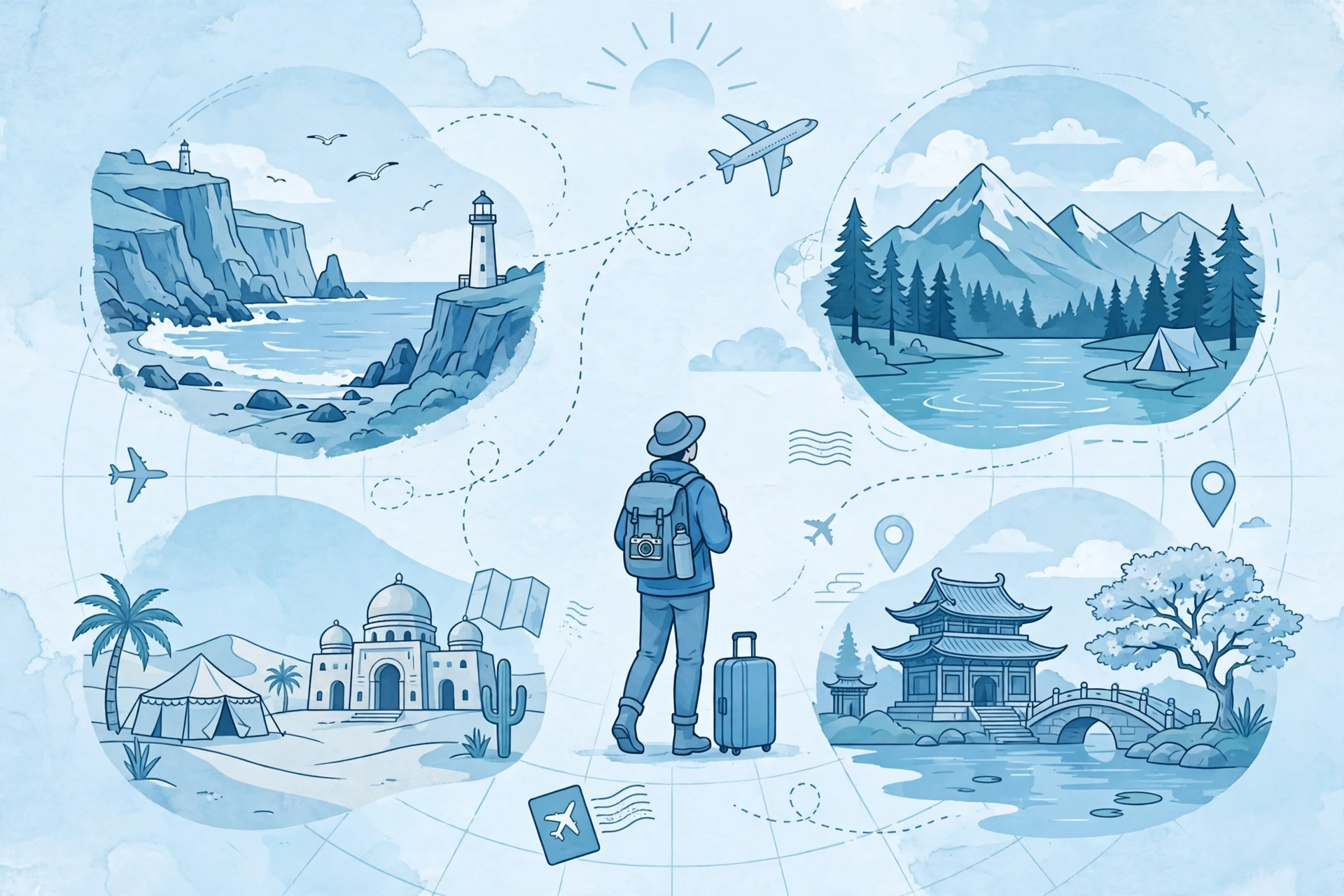
Most solo destination lists fail in the same way: they rank countries and assume every solo traveler wants the same thing. A first-time solo traveler and a traveler on their fifth solo trip do not want the same thing at all. The first-timer needs a place that forgives mistakes. The confident traveler wants a place that rewards skill. Use the filter below before you fall in love with a destination, because a great place at the wrong experience level can still be a bad trip.
A first solo trip should pass four tests. First, can you get around without a car and without speaking the local language fluently? Trains, metros, and buses with clear English signage pass; a destination that requires driving on unfamiliar roads does not. Second, is the place safe for a person walking alone, including in the evening? That question is about neighborhoods, not whole countries, which is why this guide talks about specific cities rather than national averages. Third, can you eat, sightsee, and spend an evening alone without feeling out of place? Counter seating, casual cafes, markets, and walking tours pass this test. Fourth, is help easy to find if something goes wrong — a tourist office, an English-speaking clinic, a hotel desk that answers the phone? First trips should answer yes to all four.
A confident solo trip can fail one or two of those tests and still be worth it, as long as you know which ones and plan around them. Vietnam rewards confidence because the route is long, the cities are intense, and the best experiences take local knowledge — but the payoff is a trip that feels nothing like a package holiday. Morocco rewards confidence because the medinas are mazes and bargaining is part of daily life. New Zealand’s South Island rewards confidence because distances are long and the best scenery needs a car or a well-planned bus route. Slovenia rewards confidence with uncrowded mountains, lakes, and wine country most first-timers never reach.
Be honest about which group you are in, and do not let pride push you into the confident list too early. A short trial run helps: if you have never traveled alone, try a long weekend solo in a US city first — New Orleans, Chicago, or San Diego all work — and notice what bothers you. If eating alone bothered you, pick a first-trip destination with strong cafe and market culture. If getting lost bothered you, pick somewhere with a simple metro and compact center. Your first solo trip abroad should solve the problem your trial run revealed.
First solo trips
Lisbon and Porto, Portugal — about $90 to $130 a day
Lisbon is the classic first solo trip for good reason. The city is compact, walkable, and built around hills, trams, viewpoints, and small restaurants where one person at a table is completely normal. English is widely spoken in tourist areas, the metro and trains are easy to use, and Porto, two and a half hours north by train, makes a natural second stop. A realistic daily budget for a mid-range solo traveler runs about $90 to $130, covering a private room in a guesthouse or small hotel, cafe breakfasts, one sit-down meal, local transportation, and a museum or viewpoint. That range assumes shoulder-season prices.
Why it works alone: Lisbon’s pleasures are solo-friendly by nature. You can ride tram 28, wander Alfama’s lanes, eat grilled fish at a counter, and watch the sunset from a viewpoint without needing a companion. Day trips to Sintra or Cascais are easy by train, and meeting people happens naturally in guesthouses and walking tours. Who should skip it: travelers who struggle with steep hills and uneven cobblestones, because Lisbon is hilly and the stone streets are slippery when wet.
Tokyo and Kyoto, Japan — about $120 to $170 a day
Japan is the safest-feeling first solo trip many travelers ever take, and it solves the eating-alone problem better than almost anywhere on earth. Counter seating is everywhere — ramen shops, sushi counters, and set-lunch restaurants are designed for one person — and the train system runs on time with English signage in major cities. A mid-range daily budget of about $120 to $170 covers a small hotel or private hostel room, train passes and metro fares, convenience-store breakfasts, one good restaurant meal, and entry fees. Japan is not cheap, but it is predictable, and predictable is what a first-time solo traveler needs most.
Why it works alone: the infrastructure does the hard work. You can navigate Tokyo’s metro, ride the bullet train to Kyoto, and spend a day in temples, markets, and gardens without negotiating a fare. Solo dining is so normal that nobody notices you, and an evening walk back to your hotel feels comfortable in most central neighborhoods. Who should skip it: travelers on a tight budget, because Japan’s best solo experiences are daytime ones and costs add up fast in Tokyo. If the budget worries you, shorten the trip rather than cutting corners on safety or sleep.
Montreal, Canada — about $110 to $150 a day
Montreal is the lowest-stress first solo trip a US traveler can take, and that is exactly its virtue. No long-haul flight, no jet lag from the East Coast, no currency shock, and a city where English works everywhere even though French is the official language. The metro is clean and simple, the Old Port and Plateau neighborhoods are made for walking, and the food scene — from bagel shops to market halls — is built for casual solo eating. A mid-range daily budget of about $110 to $150 covers a hotel or private room, metro fares, market and cafe meals, and one good dinner. From the East Coast and Midwest, flights are short, though fares are never guaranteed.
Why it works alone: Montreal gives you the feeling of being abroad without the friction of being far from home. You can practice the whole solo routine — navigating a new city, eating alone, handling a problem in a second language — with a safety net: if anything goes wrong, you are a short flight from home. Who should skip it: travelers who want a dramatic change of scenery or a warm-weather escape in winter, because Montreal in January is cold.
Costa Rica’s Arenal region — about $80 to $120 a day
Costa Rica works for a first solo trip when you pick one base and let day tours do the logistics. The Arenal region, around La Fortuna, is the best version of this: one town, a volcano view, hot springs, hanging bridges, and rafting and wildlife tours that pick you up from your hotel. A mid-range daily budget of about $80 to $120 covers a small hotel, local meals, and one paid activity most days, with shared shuttles between towns. Base yourself in one place rather than crossing the whole country by bus in a week, because Costa Rica’s roads and bus schedules are slower than the map suggests.
Why it works alone: the tour structure removes the hardest solo problem, which is getting to nature without a car. Group day tours from La Fortuna give you company, a guide, and transportation in one booking, and you return to your own room in the evening. Who should skip it: travelers who want city culture, museums, and nightlife, because Costa Rica’s strengths are outdoors and the towns are small.
Confident solo trips
Vietnam, Hanoi to Ho Chi Minh City — about $60 to $100 a day
Vietnam is the confident solo trip that gives the most back for the effort. The classic route runs from Hanoi in the north, through Hue and Hoi An, to Ho Chi Minh City in the south, by train, bus, and short domestic flights. A mid-range daily budget of about $60 to $100 covers a private hotel room, street food and cafe meals, local transportation, and activities — Vietnam is one of the few places where a solo traveler can eat extremely well for very little money. The trade-off is intensity: Hanoi’s traffic is famously chaotic, the cities are loud and crowded, and the best experiences require patience with bargaining, tourist scams, and long travel days.
Why it works alone for a confident traveler: the route is made for independent movement. Sleeper trains between cities are an experience in themselves, the food scene rewards a solo eater who follows a local crowd into a tiny restaurant, and meeting people is easy even outside hostels. Who should skip it: first-time solo travelers, anyone who wants a relaxing trip, and travelers uncomfortable with aggressive street traffic or persistent sellers. Vietnam rewards energy and flexibility; if you want calm, pick Portugal instead.
Morocco, Marrakech and Fes — about $70 to $110 a day
Morocco is a confident solo trip because its greatest pleasures sit just past the point where a first-timer gets overwhelmed. The medinas of Marrakech and Fes are mazes of lanes, workshops, and markets where getting lost is part of the experience — and where a confident traveler with a map app, a riad booked in advance, and a willingness to say no firmly will have a wonderful time. A mid-range daily budget of about $70 to $110 covers a riad room, market and restaurant meals, taxis and day trips, and a guide for the first morning in each medina, which is money well spent. A licensed guide for your first hours in Fes is how you learn the layout before exploring alone.
Why it works alone for a confident traveler: Morocco’s riads are small, personal, and sociable, the food is superb, and the Atlas Mountains, desert edge, and Atlantic coast are all reachable as day trips. Solo women travelers should plan more carefully here than in the first-trip list: dress modestly outside beach resorts, stay in well-reviewed riads in central neighborhoods, and expect more attention in markets than in Lisbon or Tokyo. Who should skip it: travelers who want everything to run on schedule and in English, because Morocco runs on its own rhythm and rewards patience.
New Zealand’s South Island — about $130 to $180 a day
New Zealand’s South Island is the confident solo trip for travelers who want scenery at a scale that dwarfs everything else on this list: fjords, glaciers, alpine lakes, and empty roads. The catch is distance. The island is bigger than it looks, public transportation between small towns is limited, and the best plan usually involves a rental car or a bus-and-tour itinerary around Queenstown, Wanaka, Milford Sound, and the glaciers. A mid-range daily budget of about $130 to $180 covers a hostel private room or small motel, a rental car share or tour costs, groceries and cafe meals, and one big activity such as a fjord cruise.
Why it works alone for a confident traveler: the outdoors culture is welcoming, and a solo traveler can join a guided walk or cruise and have company for the day without committing to a group tour for the whole trip. Who should skip it: travelers without a driving plan, because the South Island without a car requires serious itinerary work; and travelers on a tight budget, because distances and activity prices add up. If driving on the left does not bother you and you plan the route in advance, this is one of the most rewarding solo trips in the world.
Slovenia, the less-obvious pick — about $90 to $130 a day
Slovenia is the destination on this list that most solo travelers have not considered, and that is precisely why it belongs here. Ljubljana, the capital, is small, safe-feeling, and walkable, with a car-free center, riverside cafes, and a castle hill you can climb in an afternoon. From there, Lake Bled, the Julian Alps, and the Vipava Valley wine country are all day trips by bus or train. A mid-range daily budget of about $90 to $130 covers a guesthouse room, cafe and restaurant meals, local transportation, and activities. Slovenia is noticeably cheaper than Italy and Austria, and far less crowded than either.
Why it works alone for a confident traveler: Slovenia rewards the traveler who plans their own route rather than following a crowd. The hiking, cycling, and lake swimming are superb, English is widely spoken in tourist areas, and the country’s small size means you can base yourself in Ljubljana without moving hotels every night. Who should skip it: travelers who want big-city nightlife or famous-name sights, because Slovenia’s pleasures are quiet — a lake at dawn, a mountain hut lunch, a wine village with no tour buses. If quiet is what you want, this is the pick most lists miss.
Solo costs nobody warns you about
Solo travel has a cost structure that couple and group travelers never see, and the biggest surprise is the single supplement. Hotels price rooms for two people, so a solo traveler often pays nearly the same room rate as a couple, effectively doubling the per-person accommodation cost. Some hotels and cruise lines charge an explicit single supplement; others simply do not discount the room. The fix is to book rooms priced for one person where they exist — small guesthouses, hostels with private rooms, and riads often price more fairly — and to compare the total room price, not the "per person" price, when you budget.
The second hidden cost is transportation that does not split. A taxi, a rental car, and a private guide cost the same whether one person or four people use them, so a solo traveler absorbs the whole fare. Shared shuttles, day tours, and public transportation are the counterweights: a day tour from La Fortuna or a fjord cruise from Queenstown spreads the cost across a group while leaving your evenings your own. The third hidden cost is eating alone, which tempts many solo travelers to skip meals or eat badly. Budget for one proper restaurant meal a day, even when you eat alone.
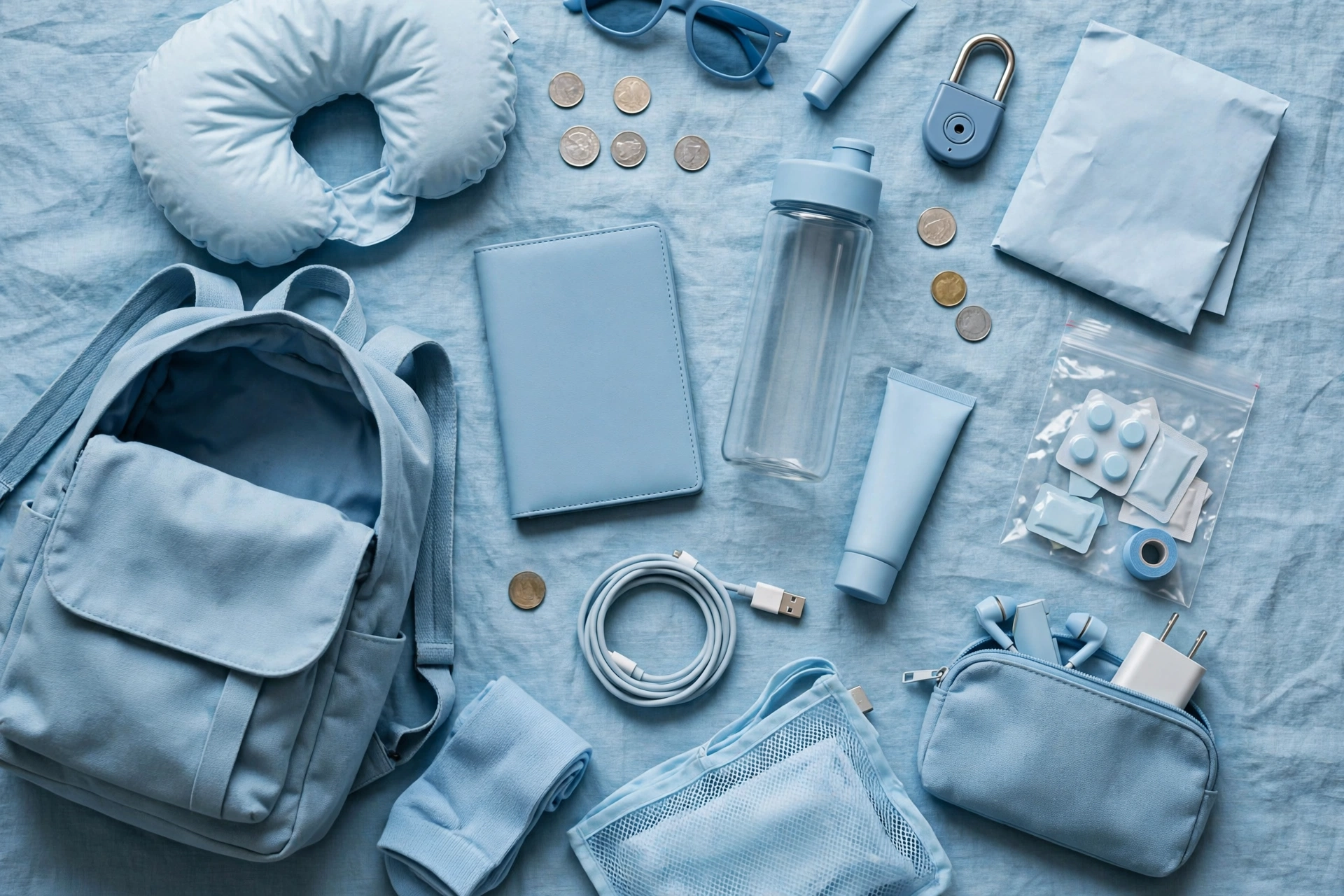
Safety costs money too, and it is worth paying. A central hotel in a well-lit neighborhood costs more than a cheap room on the edge of town, but for a solo traveler the central room is usually the right choice: shorter walks after dark, more people around, and easier access to help. The same logic applies to arriving during daylight and taking a licensed taxi from the airport on your first night rather than figuring out a bus system in the dark. It belongs in the budget alongside food and rooms. The How to Prepare a Travel Budget guide shows how to break a trip into categories and add a contingency, which matters even more when every cost falls on one person.
How to meet people without a group tour
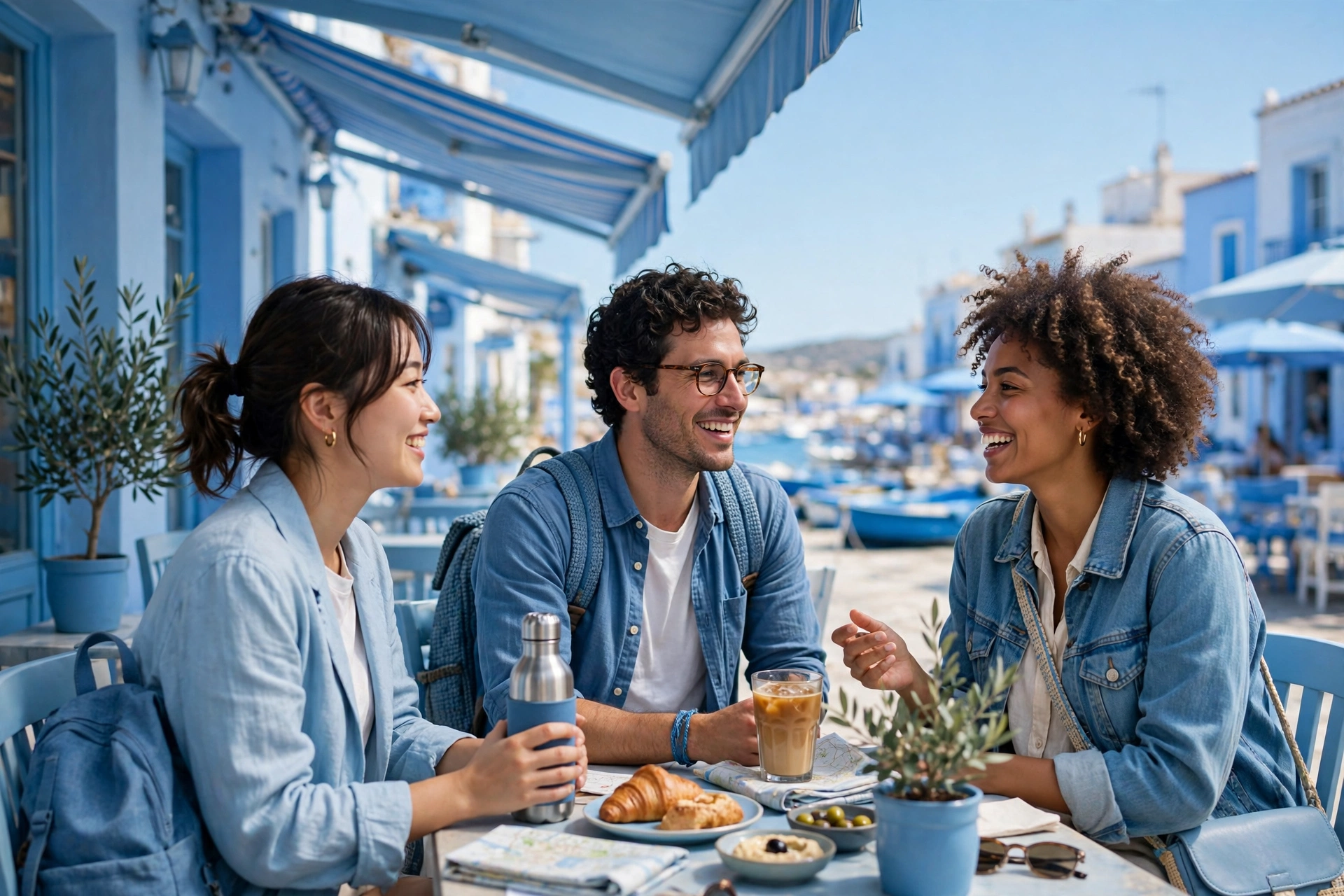
The standard advice for meeting people while traveling solo is "stay in hostels," and it is incomplete. A solo trip should not depend on dorm beds for its social life. The better approach is to build meeting people into activities you already want to do, so company is a bonus rather than the whole plan. A cooking class in Hoi An, a walking tour in Lisbon, a wine tasting in Slovenia, or a guided morning in the Fes medina all put you beside other travelers with a shared interest, and a shared interest is a much better conversation starter than a shared dorm room.
Day tours are the solo traveler’s most underrated social tool. A fjord cruise, a market tour, or a hike with a guide gives you a day of company, a local expert, and transportation, and then returns you to your own room for the evening. That rhythm — social days, private evenings — suits most solo travelers better than total isolation or a full group tour. Classes work the same way: a half-day surf lesson or a pottery workshop puts you in a small group doing something, which is how adults actually make friends. For evening company, look for food markets with shared tables, pubs with quiz nights, and guesthouses with communal breakfasts.
There is also a quieter truth worth naming: not every solo traveler wants to meet people every day, and a good solo trip protects alone time too. The goal is not to fill every hour with company. Book a private room even in a hostel building, choose one or two social activities per destination, and keep some days unscheduled. If you want help turning a destination into a day-by-day plan, the Travel Itinerary Template shows how to lay out days with space for activities, rest, and the people you meet along the way.
What to check before booking
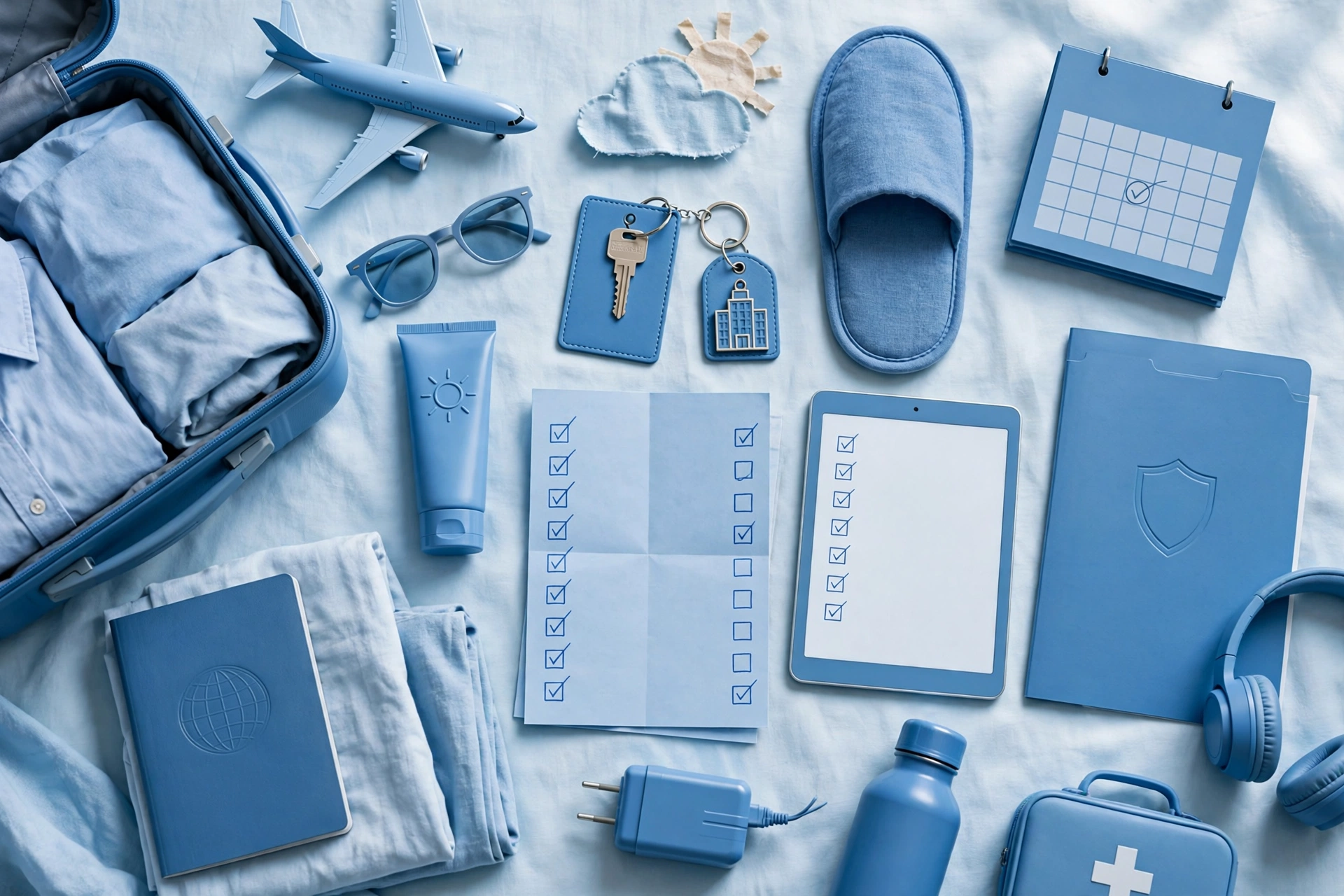
Before you book anything, run three checks that matter more for a solo traveler than for anyone else. The first is the US State Department’s Travel Advisory for your destination: Level 1, exercise normal precautions; Level 2, exercise increased caution; Level 3, reconsider travel; and Level 4, do not travel. The level is a starting point, not a verdict — a country can carry a Level 2 advisory overall while specific neighborhoods are perfectly comfortable, and a Level 1 country still has streets to avoid at night. Read the full advisory, not just the number, and check when it was last updated, because conditions change. The US State Department’s travel advisories page is the official source to check before you book, not a roundup article. Enrolling in the Smart Traveler Enrollment Program, STEP, is also worth doing: it sends you embassy alerts and helps the embassy reach you in an emergency.
The second check is the entry rule for your passport. US passport holders can enter many countries without a visa for short tourist stays, but the rules, permitted lengths of stay, and passport-validity requirements differ by destination and change over time, so never rely on a listicle’s claim about visas. Check the destination’s official entry requirements and the State Department’s country page for your specific trip, and confirm your passport is valid well beyond your return date. If your trip involves a US territory, the rules are different again — the Places to Travel Without a Passport (for US Citizens): The Honest List guide explains which US destinations genuinely need no passport and which ones still do. The third check is practical: confirm your first night’s hotel, arrival transportation, and travel insurance before departure, and share your itinerary with someone at home.
Once those checks are done, turn the destination into a funded plan rather than a wish. Pick a date, price the trip honestly with the solo costs above, and divide the total into a monthly saving amount — the Travel Goal guide walks through exactly that, including what to do when the plan slips. If you are still choosing between places, the How to Find Travel Inspiration guide gives you a system for filtering a long list down to one trip: three words for the trip you want, four honest filters, two places tested properly, and one booking step.
FAQ
What is the best first solo travel destination from the US?
Lisbon and Porto in Portugal, or Montreal in Canada, for most first-time solo travelers. Lisbon offers walkability, English-friendly infrastructure, and solo-friendly eating; Montreal offers the lowest friction of all, with a short flight and no jet lag from the East Coast.
How much should a solo traveler budget per day?
The ranges in this guide are planning figures, not guaranteed prices. Roughly: Vietnam $60 to $100, Morocco $70 to $110, Costa Rica $80 to $120, Portugal and Slovenia $90 to $130, Montreal $110 to $150, Japan $120 to $170, and New Zealand’s South Island $130 to $180 per day at a mid-range level. Solo travelers should also budget for the single supplement effect on rooms and for taxis and tours that do not split.
Is solo travel safe?
It can be, with neighborhood-level planning. Safety depends far more on which neighborhood you stay in, what time you walk around, and how you arrive in a new city than on a country’s overall reputation. Check the State Department’s advisory, stay in central well-lit areas, arrive during daylight when possible, and share your itinerary with someone at home.
Do I need a visa for these destinations?
It depends on the destination, the length of stay, and your passport, and rules change. US passport holders can enter many of these countries for short tourist stays without a visa, but never rely on a general claim — check the destination’s official entry requirements and the State Department’s country page before booking.
How do solo travelers meet people without staying in hostels?
Through activities, not accommodation: cooking classes, walking tours, day tours, guided hikes, and food markets with shared tables all put you beside other travelers with a shared interest.
Conclusion
The best solo travel destination is the one that matches your experience level, not the one at the top of someone else’s ranking. First trips should be easy: Lisbon, Tokyo, Montreal, or Costa Rica, where the infrastructure forgives mistakes and eating alone feels normal. Confident trips can be harder and more rewarding: Vietnam, Morocco, New Zealand’s South Island, or Slovenia, where a little effort buys a trip that feels entirely your own. Budget honestly for the solo costs — the room you pay for alone, the taxi you do not split, the central hotel worth the extra money — and check the advisory level and entry rule before you book. Then pick one place, fund it like a goal, and go. The travelers who love solo travel most are the ones who picked the right destination for the traveler they actually are.
People also read: Travel Goal: How to Set One You Actually Keep (and Fund), How to Prepare a Travel Budget That Actually Works (Without Guessing), Travel Itinerary Template: Plan Any Trip Without the Stress, Places to Travel Without a Passport (for US Citizens): The Honest List, How to Find Travel Inspiration (and Turn It Into a Trip, Not Just a Saved Post)


Other Articles
Travel Goal: How to Set One You Actually Keep (and Fund)