


Quick Answer
Learning how to prepare a travel budget starts with three simple decisions: how much you can spend in total, how many days you will be away, and what kind of trip you want. Once you know those three things, divide your total budget into flights, stays, food, local transport, activities, and a buffer for unexpected costs. Then turn the remaining daily amount into a simple daily budget, track your spending as you go, and leave room for the small surprises that almost every trip brings.
A good travel budget is not about being strict for the sake of it. It is about knowing your numbers before you leave, so you can spend confidently on the things you care about and say no, without guilt, to the things you do not. This guide walks you through the whole process, step by step, with a worked example you can adapt to your own trip.
1. Start With a Total Trip Budget, Not a Daily Guess
Many travellers start by guessing a daily amount — say, $50 or $100 a day — and then wonder why the trip still feels expensive. The problem is that a daily guess usually forgets the biggest costs: flights, accommodation booked in advance, travel insurance, visas, and transport between cities. A total trip budget fixes that, because it forces you to look at the whole trip at once.
Start with what you can honestly afford, not what you wish you could afford. Look at your savings, your income over the next few months, and any bills that will still need paying while you are away. The money left over is your starting point, not your target. From there, subtract anything you must keep in reserve at home, such as rent, loan payments, or an emergency fund you do not want to touch.
Next, decide the length and style of your trip. A seven-day city break, a two-week road trip, and a month of slow travel are very different budgets, even in the same country. Style matters just as much: staying in hostels and cooking some meals costs far less than staying in hotels and eating out for every meal, and neither choice is better — it is simply a different way to travel.
A useful question to ask at this stage is: what would make this trip feel worth it? For some people, it is a great hotel in a central location. For others, it is a once-in-a-lifetime tour, amazing food, or simply having enough free days to wander without rushing. Naming your top two or three priorities early helps you decide where to spend more and where to save, instead of spreading your money thinly across everything.
Finally, build in a buffer from the very beginning. A buffer of 10 to 15 percent of your total budget is a sensible starting point for most trips. It covers things like a missed bus, a more expensive meal than planned, a luggage fee you forgot, or a last-minute change of plan. If you do not use the buffer, it simply becomes money saved — or money for a treat on your last day.
2. Break Your Budget Into the Big Categories
Once you have a total, split it into categories. This is where a vague plan becomes a real budget. The exact split will change by destination and travel style, but most trips fit into the same six categories below.
Flights and Long-Distance Transport
Flights are often the largest single cost, especially for international trips, so price them first. Search flexibly if you can: nearby airports, nearby dates, and different departure times can all change the price. Remember to include baggage fees, seat selection if you want it, and transport to and from the airport at both ends. Those smaller costs add up quickly if they are not in the budget.
For trips with more than one destination, add trains, buses, ferries, or car rental between cities. A cheap flight can look less cheap once you add a long taxi ride, a baggage fee, and an early check-in. Price the whole journey, door to door, not just the headline fare.
Stays
Accommodation is usually the second-largest cost, and it is also one of the easiest to control. The nightly rate matters, but so do taxes, cleaning fees, and cancellation terms. Always check the total price for your stay, not just the nightly rate shown in search results.
Location is part of the cost, too. A cheaper room far from the centre may mean paying more for transport every day, while a slightly more expensive central stay can save time and taxi fares. Think about what you will actually do each day, and choose a base that makes those plans easy.
If you are travelling for a week or more, look at weekly discounts, apartments with a kitchen, or stays that include breakfast. Cooking even a few meals can noticeably lower your food budget, and having laundry facilities can reduce what you need to pack.
Food and Drink
Food budgets vary more than almost any other category, because they depend on habits as much as prices. Some travellers are happy with street food, bakeries, and markets, while others want a sit-down restaurant every evening. Both are fine, but they need different budgets.
A practical approach is to plan for a mix. Budget for one main meal out per day, plus simpler meals for the rest of the day, and then adjust to your own style. Include coffee, water, snacks, and the occasional drink — these small daily purchases are easy to forget and surprisingly easy to underestimate.
Also remember local customs that affect cost. In some countries, for example, there is a cover charge or service charge added to restaurant bills. In others, tipping is expected, while in some places it is not. A quick check before you travel helps you avoid surprises at the table.
Local Transport
Local transport includes buses, metro tickets, trams, taxis, ride-hailing, bike hire, and fuel if you are driving. In many cities, a multi-day travel pass is cheaper than buying single tickets, especially if you plan to use public transport several times a day. Compare the pass price with your likely number of journeys before you buy.
Walking is free, and in compact city centres it is often the best way to explore. Building walking into your plans does not just save money — it usually means you see more of a place, at a slower and more enjoyable pace.
Activities and Sightseeing
Activities are where trips become memorable, and also where budgets often blow out. List the paid activities you really want to do, such as museums, guided tours, day trips, or shows, and price them in advance. Many attractions have online tickets, combination passes, or free entry on certain days, so a little research can save a meaningful amount.
It helps to separate must-do activities from nice-to-have ones. Book or budget firmly for the must-dos, and keep the nice-to-haves as a flexible list. If you are under budget halfway through the trip, you can add one in. If you are over budget, you can skip one without feeling that you missed the heart of the trip.
The Costs People Forget
Almost every budget misses something. Common forgotten costs include travel insurance, visas or entry permits, airport transfers, luggage fees, phone data or a local SIM card, laundry, toiletries, and gifts or souvenirs. None of these is large on its own, but together they can add up to a significant sum.
A simple way to handle this is to create a miscellaneous category worth around 5 to 10 percent of your budget, on top of your main buffer if you can manage it. If your trip is short and simple, one combined buffer may be enough. For longer or more complex trips, keeping miscellaneous costs separate makes tracking easier.
3. Use the Daily Budget Method to Stay in Control

Once your flights, stays, and major activities are priced, you can work out a daily budget for everything else. This is the number that guides your day-to-day spending, and it is much easier to follow than a single large total.
The method is simple. Take your total trip budget, subtract flights, accommodation, pre-booked activities, insurance, and other fixed costs, and divide what is left by the number of days you will be travelling. The result is your daily spending allowance for food, local transport, small activities, and everyday extras.
For example, if you have $900 left after fixed costs for a 10-day trip, your daily budget is $90 per day. That does not mean you must spend exactly $90 every day. Some days will cost more — a day trip, a special dinner, or a busy sightseeing day — and some days will cost less, such as a slow day spent walking and picnicking. The goal is for your average over the whole trip to stay close to that daily figure.
It also helps to think in weekly terms for longer trips. A daily budget can feel restrictive if one expensive day throws it off, but a weekly budget gives you room to balance a big day with a quieter one. Check your spending every few days, not just at the end of the trip, so small overspends do not quietly become large ones.
Another useful habit is to separate your daily money from your fixed money. If your hotel and main transport are already paid, keep your daily budget in a separate account, wallet, or card if possible. When the daily pot is easy to see, it is much easier to know where you stand.
Add a contingency fund, and an exchange-rate buffer. Before you call the budget finished, add a contingency of 10 to 15 percent of the total for surprises — a missed connection, a price rise, a medical cost, or an activity you decide to add on the spot. The less familiar the destination, the more generous this should be. Separately, if you are travelling internationally, allow about 5 percent headroom for exchange-rate movement and card or ATM fees between planning and paying. Planning in the local currency first, then converting with that buffer, stops a small rate shift from quietly breaking the whole budget. Neither fund is “extra spending money” — if you do not use it, it stays saved for the next trip.
Once your daily figure is set, put it into a day-by-day plan with the Travel Itinerary Template.
4. A Worked Example Budget You Can Adapt
The table below shows an example budget for a seven-day city trip. The figures are examples only, to show how the method works — actual costs will vary a great deal by destination, season, and travel style. Use the structure, and replace the numbers with your own research.
| Category | Example cost | Notes |
|---|---|---|
| Flights (return) | $450 | Booked in advance; includes one checked bag |
| Accommodation (7 nights) | $840 | Mid-range stay, $120 per night including taxes |
| Travel insurance | $60 | For the full trip, checked before booking |
| Local transport | $105 | Travel pass plus a few taxi rides, $15 per day |
| Food and drink | $420 | Mix of cafes, markets, and restaurants, $60 per day |
| Activities and sightseeing | $210 | Museums, one guided tour, and one day trip |
| Miscellaneous and buffer | $215 | SIM card, laundry, souvenirs, and surprises |
| Total for 7 days | $2,300 | Daily spending after fixed costs: about $105 per day |
In this example, flights, accommodation, and insurance come to $1,350. That leaves $950 for seven days of daily spending, which works out at roughly $135 per day before the buffer is separated out — or about $105 per day once a $215 miscellaneous and buffer amount is set aside. Seeing the maths written down like this makes trade-offs clear. If you wanted to lower the total, you could choose cheaper accommodation, cook more meals, or pick fewer paid activities. If you wanted to spend more on food or tours, you could see exactly what would need to give.
Try building your own version of this table before you book anything major. Even a rough version, filled in with estimates, is far more useful than no budget at all. As you confirm real prices, replace the estimates one by one, and your budget will become more accurate with every booking.
5. How to Save Money Before the Trip
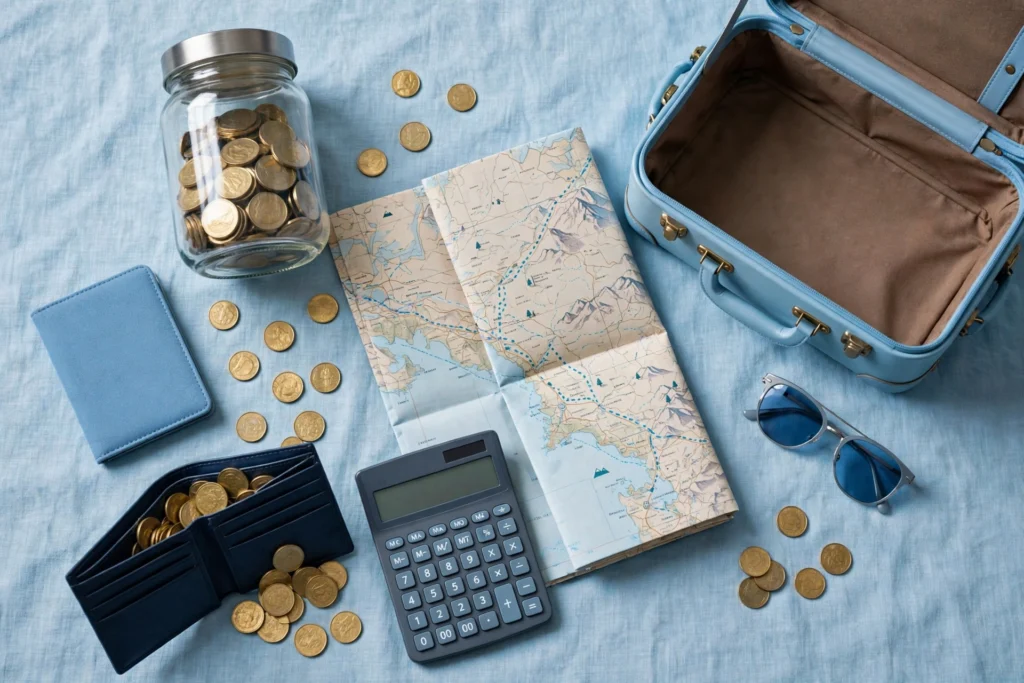
A travel budget does not start at the airport. It starts weeks or months before, when you still have time to make choices that lower the total cost without lowering the quality of the trip.
The biggest savings usually come from flights and accommodation. Booking early often helps, but so does being flexible. Travelling just outside peak season, flying midweek, or staying a little outside the busiest area can all reduce prices. Setting price alerts for flights you are watching means you can book when prices dip, rather than checking every day.
Saving for the trip itself deserves its own plan. Decide how much you need, divide it by the number of weeks or months until departure, and set that amount aside regularly. A separate savings pot, even a simple one, makes progress visible and makes it less tempting to spend the money on something else. If your target feels out of reach, it is better to shorten the trip, choose a cheaper destination, or delay by a month than to start the trip already stressed about money.
Small pre-trip choices also matter. Check whether your bank charges foreign transaction fees, and whether a travel-friendly card would save you money. Check your phone plan and roaming charges before you leave, so you are not surprised by a bill after you return. Buy travel insurance early, when it can cover cancellations as well as emergencies, and read what it actually covers.
Finally, pack well. Forgetting essentials and buying them at airport or tourist prices is a common and avoidable cost. A simple packing checklist, checked the night before you leave, can save both money and frustration.
6. How to Save Money During the Trip — Without Missing Out
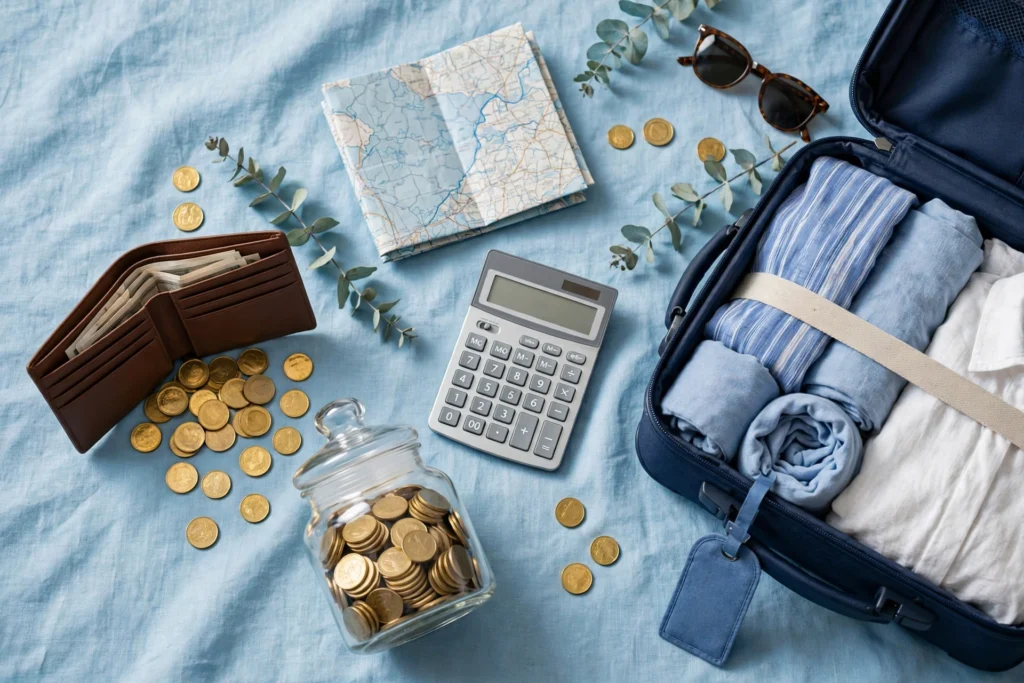
Saving during a trip is not about denying yourself everything enjoyable. It is about choosing where your money makes the biggest difference, and cutting back where it does not.
Food is usually the easiest place to save without feeling deprived. Eating your main meal at lunchtime, when many restaurants offer better value, and having a lighter meal in the evening is a classic strategy in many destinations. Markets, bakeries, and local cafes often offer excellent food at lower prices than restaurants in the most tourist-heavy streets, and they usually give you a better sense of local life as well.
Free and low-cost activities can fill a surprising amount of a trip. Walking tours, parks, viewpoints, markets, historic neighbourhoods, and many churches and public buildings cost little or nothing, and they are often the parts of a trip people remember most. Save your paid activities for the experiences that truly excite you, rather than paying for every attraction simply because it is listed in a guidebook.
Transport savings add up, too. Walking short distances, using public transport instead of taxis for routine journeys, and grouping nearby sights into a single outing all reduce daily costs. If you do need a taxi or ride-hailing service, agreeing the price or checking the estimated fare in advance helps you avoid overpaying.
One more habit helps more than most: pause before impulse purchases. Souvenirs, extra tours, and upgrades are tempting in the moment, especially when you are enjoying yourself. Waiting until the next day, or until the end of the trip, to decide often shows that you did not really want the item after all — and the money stays in your budget for something you will value more.
7. How to Track Spending on the Road

A budget only works if you know how you are doing against it, and tracking does not need to be complicated. The best system is the one you will actually use every day.
A notes app or a simple spreadsheet on your phone is enough for most travellers. Each evening, take two minutes to add up the day’s spending by category: food, transport, activities, and other. Compare the total with your daily budget, and note whether you are ahead or behind for the trip so far. That two-minute habit catches overspending early, when it is still easy to adjust.
Dedicated budgeting apps can do the same job, and some let you set a total trip budget and track it in different currencies. If you use one, choose it before you leave and test it with a few entries, so you are not learning a new tool while travelling. Whatever method you choose, keep receipts for larger purchases until you have recorded them, and check your card statements every few days for unfamiliar charges.
Cash and card spending need different attention. Cards leave a record, which makes tracking easier, but it is easy to lose track of many small card payments. Cash is easy to feel, but hard to remember. If you use both, record cash withdrawals as spending on the day you withdraw them, and then track what you spend from that cash separately if you want a detailed picture.
If you are travelling with others and sharing costs, agree in advance how you will split bills. A shared note, a splitting app, or a simple rule — such as one person paying for meals and settling up at the end of each day — prevents awkwardness and keeps everyone’s budget clear.
8. Common Budget Mistakes to Avoid
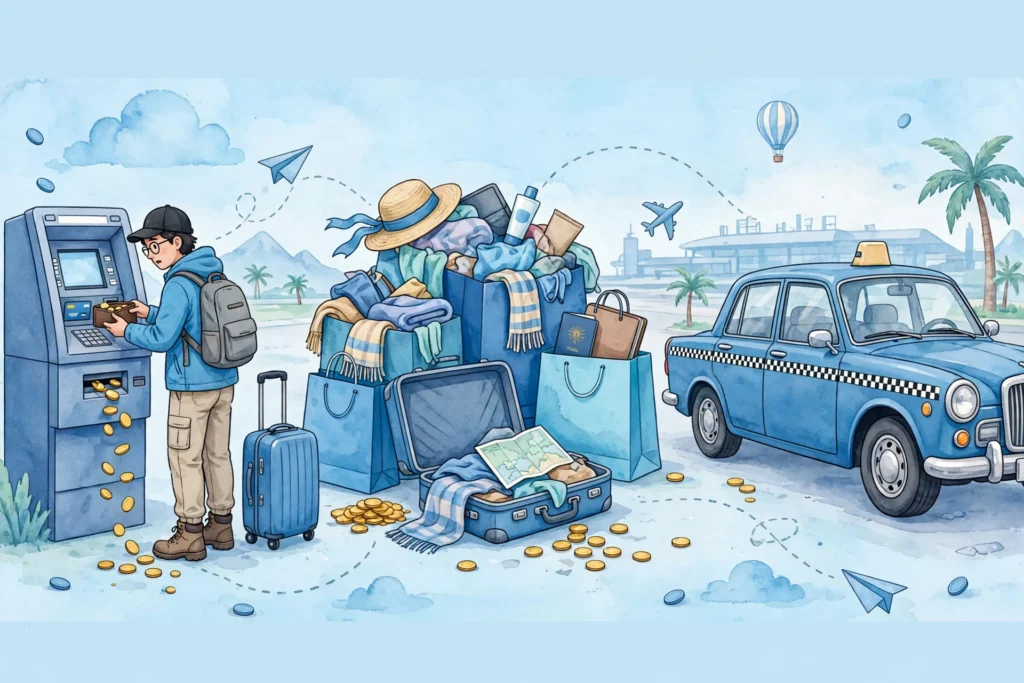
Even careful travellers make the same few mistakes. Knowing them in advance makes them much easier to avoid.
The first is forgetting fixed costs. A daily budget that ignores flights and accommodation is not a budget at all, and it almost always leads to overspending. Always start from the total, then work out the daily figure.
The second is budgeting too tightly. A budget with no room for spontaneity, treats, or surprises feels like a punishment, and most people abandon it halfway through the trip. Leave a buffer, and plan at least one treat — a special meal, a tour, or an experience you have been looking forward to. A budget that includes enjoyment is one you are far more likely to stick to.
The third is comparing your budget with someone else’s. Travel costs vary hugely by destination, season, and personal priorities. A budget that works for a backpacker in one country will not work for a family in another, and that is completely normal. Judge your budget by whether it fits your trip and your finances, not by whether it matches what someone online spent.
The fourth is ignoring exchange rates and fees. If you are travelling internationally, check the exchange rate when you plan, and remember that card fees, ATM fees, and currency conversion can add a small percentage to every purchase. Those percentages matter over a whole trip, so factor them into your miscellaneous budget.
The fifth is leaving everything to the last minute. Last-minute flights, accommodation, and tours are often more expensive, and they leave less time to find better options. Even a few weeks of advance planning usually produces a noticeably better budget.
Frequently Asked Questions
How much money should I budget for a trip?
There is no single answer, because it depends on your destination, trip length, and travel style. Start with your total affordable amount, price your flights and accommodation first, and then work out a realistic daily budget for food, transport, and activities. Researching typical costs for your specific destination will give you a far more accurate figure than any general rule.
How do I prepare a travel budget for the first time?
Begin with three steps: decide your total budget, list your fixed costs such as flights, stays, and insurance, and divide the remaining money by your number of travel days to get a daily budget. Then build a simple table like the example above, fill in your own estimates, and replace them with real prices as you book. Keep a buffer of 10 to 15 percent for surprises.
What should a travel budget include?
A complete travel budget should include flights and long-distance transport, accommodation, food and drink, local transport, activities and sightseeing, travel insurance, visas or permits if needed, phone and data costs, and a miscellaneous buffer for forgotten or unexpected expenses. If any category is left out, your budget will underestimate the true cost of the trip.
How can I stick to my travel budget while travelling?
Track your spending for a few minutes each evening and compare it with your daily budget. Balance expensive days with cheaper ones, rather than trying to hit the exact daily figure every single day. Keep your fixed costs and daily money separate where possible, and decide in advance which experiences are worth spending more on, so impulse spending does not quietly take over.
Is it better to budget daily or for the whole trip?
Both, ideally. A total trip budget keeps your big costs under control, while a daily budget guides your everyday choices. Use the total to plan and book, and use the daily figure — or a weekly figure for longer trips — to stay on track while you travel. Checking in every few days is more useful than waiting until the end of the trip.
How much should I keep as an emergency buffer?
For most trips, a buffer of 10 to 15 percent of your total budget is a sensible starting point. For longer trips, trips to remote areas, or trips where costs are harder to predict, a larger buffer may be wise. If you do not use it, it is simply money saved, which is a good outcome in itself.
Conclusion
Preparing a travel budget is less about complicated maths and more about making clear decisions before you travel. Set a total you can afford, break it into sensible categories, turn the remainder into a daily budget, and track your spending lightly as you go. Leave room for surprises and for enjoyment, because a budget that only restricts will not last.
If you do one thing before your next trip, build your own version of the budget table in this guide and fill it in with real prices as you plan. You will travel with more confidence, spend more on what matters to you, and come home without the unwelcome surprise of a trip that cost far more than you expected. That is what a good travel budget is really for: not spending less, but spending well.
People also read:
Travel Itinerary Template: Plan Any Trip Without the Stress


Other Articles
Travel Itinerary Template: Plan Any Trip Without the Stress
Italian Phrases for Travel: What to Say, and When

2 Comments
Comments are closed.


[…] do not need a full spreadsheet in your itinerary, but a rough daily budget helps. Note the main costs you have already paid, such as flights and hotels, and estimate daily […]
[…] two paid activities together, not by a single cheap meal or hotel night. For a worked method, see How to Prepare a Travel Budget, which breaks a trip into a total budget first and then into daily […]