


Quick Answer
Travel is reliably linked to lower stress, improved mood that can last for weeks after you return, better sleep, and stronger relationships — plus longer-term benefits like reduced heart disease risk and greater resilience. Most of these effects don’t require an expensive or exotic trip; they show up from a genuine break in routine, and research suggests even the anticipation of a trip boosts happiness before you leave. Traveling alone doesn’t cancel these benefits — for many people, it amplifies the personal-growth and confidence effects, though it changes how you need to plan for safety and connection.
Key Takeaways
- Vacations are linked to measurably lower stress and better mood, with effects that can persist for roughly five weeks after you return home.
- Taking a vacation every one to two years (versus letting years pass without one) is associated with lower cardiovascular risk.
- You start benefiting before you even leave: planning and anticipating a trip is its own mood boost.
- Solo travel adds a distinct set of benefits — confidence, decision-making practice, and self-knowledge — that group travel tends to dilute.
- The benefits fade if you spend your trip working, over-scheduling, or stressing about money you don’t have; how you travel matters as much as whether you travel.
- You don’t need a two-week international trip to get most of the benefit — frequency and genuine disconnection matter more than distance or duration.
The Mental Health Benefits of Travel
Lower stress, measurably
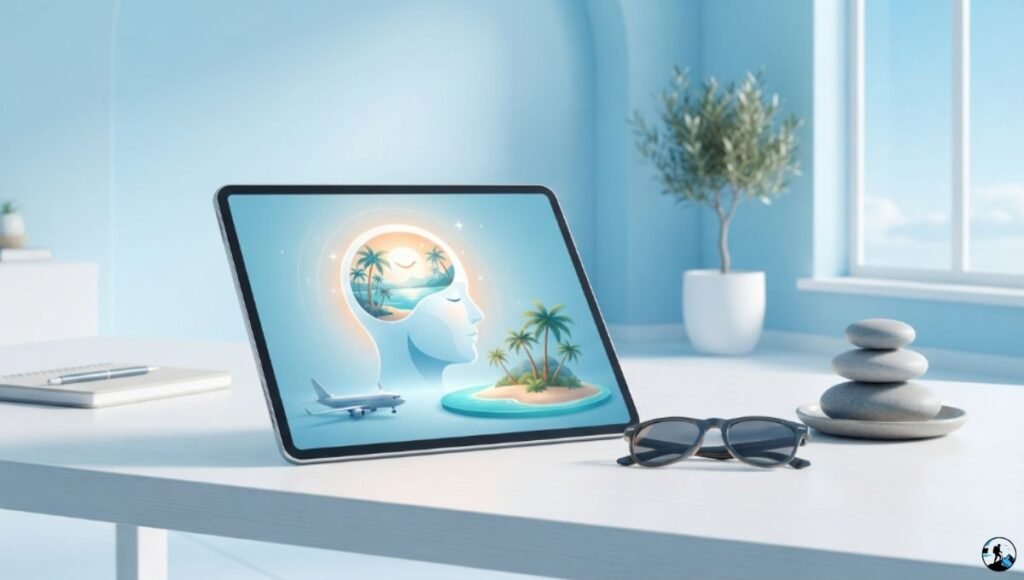
The most consistently documented benefit of travel is a reduction in stress. Research published in the Journal of Travel Research found that people who took a vacation experienced a real drop in stress and reported a better mood — and that improvement was still measurable five weeks after the trip ended, not just in the immediate afterglow. A separate meta-analysis in Environmental Research found that time in nature specifically, such as hiking or camping while traveling, is associated with reduced stress, anxiety, and depression.
This matters because most advice about stress management focuses on daily habits — meditation apps, exercise, sleep hygiene — while treating vacations as a nice-to-have rather than a legitimate intervention. The research treats it more seriously than that.
Better mood that outlasts the trip
The mood benefit isn’t just “you feel good on the beach.” A University of Pittsburgh Mind-Body Center analysis found that vacations increase pleasant emotions and reduce depressive symptoms, and that trips create more opportunities for moments of awe, which independently boost mood. One widely cited study found that three days after returning from vacation, people’s physical complaints, sleep quality, and mood had improved compared to before the trip — and for people who had more personal time and higher satisfaction during the trip, those gains were still present five weeks later.
What this means practically: the “type” of vacation matters. A trip where you had genuine personal time and did things you actually wanted to do outperforms a trip that was technically a vacation but felt like an obligation (family events, packed sightseeing schedules with no slack, working remotely from a hotel room).
A break from rumination and decision fatigue
Chronic stress is linked to memory and cognitive-performance problems, and mental health professionals describe travel as functioning like a reset for that system — not a cure, but a genuine interruption of the loop of rumination and low-grade decision fatigue that daily routines can produce. Even short breaks in environment appear to help here; the effect isn’t exclusive to two-week trips.
The Physical Health Benefits of Travel

Heart health and long-term risk
This is the benefit competitors mention most vaguely, so it’s worth being specific. Multiple studies have found that people who take a vacation roughly every two years, compared to people who go six or more years without one, have a measurably lower risk of coronary heart disease and heart attack. The mechanism isn’t magic — it’s the combination of lower chronic stress, more walking, different (often better) eating patterns while traveling, and increased social interaction, all of which independently support cardiovascular health.
Important nuance: this is an association, not proof that vacations alone prevent heart disease. People who can regularly take vacations also tend to have other advantages (job flexibility, financial stability, healthcare access) that independently support heart health. Treat this as a real and useful signal, not a guarantee.
Movement, sleep, and diet changes while traveling
Travel tends to change behavior in ways that happen to be healthy, even when that’s not the point of the trip. People walk more exploring a new place than they do in a normal commute-to-desk day. Diet often shifts, sometimes toward more fresh, local food; the International Society of Travel Medicine notes that some travelers eat closer to a Mediterranean-style diet while abroad, which is independently linked to lower cardiovascular risk. Activities that show up more often on trips than at home — sauna use, yoga classes, spa treatments — have documented links to lower blood pressure and better sleep quality.
Nature exposure and “forest bathing”
If your trip includes meaningful time outdoors, there’s a specific physiological mechanism behind why it feels good: trees and plants release compounds called phytoncides, and time spent among them — sometimes marketed as “forest bathing” — has been linked to lower blood pressure and a boosted immune response, in addition to the mood and anxiety benefits of simply being in nature. You don’t need a wilderness expedition for this; a few hours in a forest, park, or mountain trail during a trip appears to be enough to register the effect.
The Personal Growth Benefits of Travel

Cognitive flexibility and creativity
Exposure to unfamiliar environments and cultures is associated with increased cognitive flexibility — your ability to consider multiple perspectives and adapt your thinking. Psychiatrists and researchers point to novelty itself as the driver: new environments require you to solve small, unfamiliar problems (navigation, language, local customs), and that kind of active problem-solving is linked to enhanced creativity, particularly for longer or more immersive trips rather than short, highly structured ones.
Resilience — the upside of things going wrong
Delayed flights, wrong turns, and last-minute plan changes are usually framed as travel’s downside. Clinical psychologists point out the opposite: successfully navigating those disruptions in an unfamiliar environment is a genuine confidence- and resilience-building exercise, precisely because it’s outside your normal comfort zone and you have to solve it yourself. This is one reason people often describe a trip with a few hiccups as more memorable and more meaningful than one that went perfectly.
The Relationship and Social Benefits of Travel
Shared travel experiences — especially ones that involve some challenge or novelty rather than pure relaxation — are linked to greater relationship intimacy and satisfaction that persists after the trip ends, not just during it. For families, trips create space for siblings and generations to connect in ways that don’t come up in ordinary routines. Travel also creates opportunities to build new relationships: with fellow travelers, with locals, or with people you meet through shared activities, all of which are linked to stronger feelings of empathy and community belonging.
How Solo Travel Changes (and Often Amplifies) These Benefits

Most of the research above was conducted on “vacations” broadly, without separating solo trips from group ones — which is exactly where competing content stops. Here’s where solo travel changes the picture.
What’s different when no one else is along
- Every decision is yours. Where competing on a group trip can mean compromise (or someone else planning everything), solo travel means constant, low-stakes decision-making — which is where a lot of the confidence and resilience benefit actually comes from.
- More unstructured time. Solo travelers report more of the “personal time and satisfaction” that the five-week mood research identifies as the strongest predictor of a lasting benefit, simply because there’s no group schedule to manage around.
- Social benefits still happen — differently. Solo travelers frequently report meeting more new people, not fewer, because they aren’t self-contained in an existing group. The relationship benefit shifts from deepening existing bonds to building new ones and strengthening independence.
- The resilience effect is stronger. When something goes wrong solo, there’s no one else to defer to — you solve it yourself. That’s a more direct hit on confidence than solving the same problem as part of a group.
Who benefits most from traveling alone
| Traveler type | Likely biggest benefit | Watch out for |
| First-time solo traveler | Confidence, decision-making practice | Overplanning out of anxiety, which can crowd out the unstructured time that drives the mood benefit |
| Burned-out professional | Stress reduction, genuine disconnection | Working remotely “just a little” during the trip, which blunts the recovery effect |
| Recently single / life transition | Self-knowledge, sense of independence | Isolating completely — some social contact is part of the benefit |
| Experienced solo traveler | Novelty, creativity, cognitive flexibility | Repeating the same type of trip, which reduces the novelty effect over time |
Solo travel isn’t required to get most of these benefits — but for readers already considering it, the research on novelty, unstructured time, and self-directed problem-solving suggests it isn’t a lesser version of “real” travel. In several respects, it’s the version that most directly produces the psychological benefits researchers measure.
How Much Travel Do You Actually Need? A Simple Framework

Neither the wellness research nor the competing articles answer the practical question: how much travel actually moves the needle? Here’s a reasonable framework built from the patterns in the research above — treat it as a planning guide, not a clinical prescription.
| Frequency / trip length | Likely benefit level | Best for |
| A long weekend (2–3 nights), several times a year | Moderate — real stress relief, mood boost, but shorter recovery-half-life | Time-constrained schedules, testing solo travel for the first time |
| One 5–7 night trip per year with real disconnection | Strong — enough time to fully unwind and still get the ~5-week mood tail | Most working adults; matches the cadence used in most vacation research |
| Multiple trips per year, mixed lengths | Strongest cumulative benefit | People with flexible schedules or remote work; spreads the anticipation benefit across the year too |
| No vacation for 2+ years | Associated with measurably higher cardiovascular risk versus every-1–2-year vacationers | Avoid if at all possible — even a short trip appears to beat none |
The variable that matters most isn’t distance or price — it’s disconnection. A budget long weekend with your phone genuinely put away outperforms an expensive trip spent half-working from a hotel room. If you can only manage one real trip a year, the research suggests prioritizing protecting your personal time on it over extending its length.
Common Mistakes That Cancel Out the Benefits
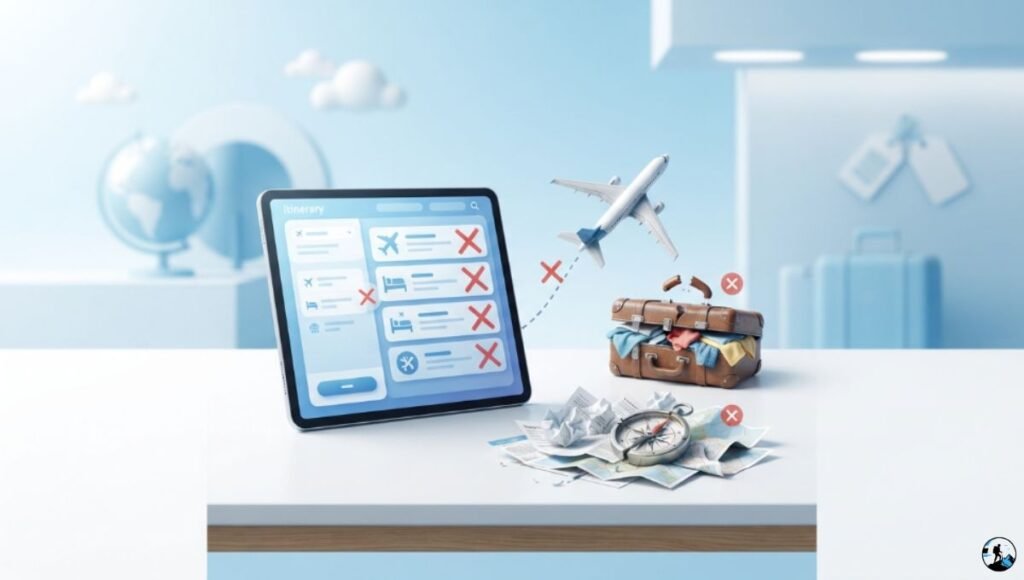
- Working “a little” during the trip. Even light remote work prevents the disconnection that drives the stress and mood benefits — you get the cost of travel without the recovery.
- Overpacking the itinerary. The five-week mood-benefit research specifically ties the lasting effect to personal time and satisfaction, not to how many attractions you checked off.
- Booking a trip you can’t actually afford. Financial stress during a trip appears to counteract the relaxation benefit; a cheaper trip you can enjoy without anxiety beats an expensive one you’re worried about the whole time.
- Skipping the anticipation phase. Planning a trip is its own documented happiness boost — booking last-minute with no lead time forfeits weeks of that benefit.
- Never leaving your usual routine within the trip. If a “vacation” is structurally identical to your normal life (same food, same schedule, same screens), you lose much of the novelty effect tied to creativity and cognitive flexibility.
- Isolating completely on a solo trip. Some social contact — even brief, casual interactions — appears to matter for the relationship and belonging benefits; total isolation removes that piece.
If Time or Money Is the Real Blocker
If a big trip genuinely isn’t realistic right now, the research still points to two things worth doing:
- Plan something, even months out. The anticipation effect doesn’t require the trip to be large — booking even a modest trip and having something specific to look forward to captures part of the mood benefit before you’ve spent anything beyond the deposit.
- Prioritize disconnection over distance. A short, low-cost trip with genuine time away from work and screens is likely to outperform a longer, more expensive trip spent half-distracted. If budget is the constraint, protect the quality of the time off before you try to extend the length of the trip.
A Simple Way to Capture the Benefits Without a Big Trip

Not every benefit requires a flight. A deliberate staycation — with your usual work notifications off, a loose plan for local activities you wouldn’t normally make time for, and at least a few hours outdoors — captures a meaningful slice of the stress-reduction and mood benefits described above, even without new geography. It’s a reasonable option when PTO, budget, or timing genuinely rules out travel, though it doesn’t reproduce the novelty-driven creativity and cognitive-flexibility effects that come specifically from unfamiliar environments.
Safety and Well-Being Considerations
The benefits above assume a trip that’s actually restorative rather than stressful in a different way. A few things protect that:
- Travel insurance for anything beyond a short domestic trip, so an unexpected medical issue or cancellation doesn’t turn into a financial-stress event that cancels out the relaxation benefit.
- A travel medicine consult before international trips, especially to regions with specific health risks — travel medicine providers can flag risks in advance rather than you discovering them mid-trip.
- Sharing your itinerary with someone at home, particularly for solo trips, which most solo travelers already do as a low-effort safety habit.
- A financial buffer, even a small one, since financial anxiety during a trip is one of the more direct ways the intended benefit gets undermined.
None of this should turn travel into another source of stress to manage — it’s closer to a short checklist than a project, and it exists specifically so the trip can do what it’s supposed to do.
Frequently Asked Questions
Does travel actually reduce stress, or is that just a feeling?
It’s backed by measured research, not just anecdote. Studies have found real, measurable drops in stress after a vacation, with effects that can last for weeks — not just a temporary feeling that disappears the day you’re back.
How long does the benefit of a vacation actually last?
Research has found mood, sleep, and physical-complaint improvements still present roughly five weeks after returning, particularly for people who had genuine personal time and higher satisfaction during the trip itself.
Do I need to travel internationally to get these benefits?
No. The research points to disconnection, novelty, and personal time as the drivers — not distance. A domestic trip or even a deliberate staycation can capture a meaningful share of the benefit.
Is solo travel actually good for mental health, or is it isolating?
Both are true, depending on how it’s done. Solo travel tends to amplify confidence, decision-making, and independence benefits, and most solo travelers report meeting new people rather than fewer — but complete isolation on a trip removes the social-connection piece of the benefit, so some interaction still matters.
How often should I take a vacation?
Research linking vacation frequency to lower heart disease risk used roughly every one to two years as the comparison point against going years without a trip. For most working adults, one meaningful trip a year plus a few shorter breaks captures most of the benefit.
Can working remotely during a trip still count as a vacation?
Not for most of the benefits described here. The stress and mood research ties the effect specifically to disconnection and personal time; even light work during a trip appears to blunt that recovery.
What if I can’t afford a big trip right now?
Prioritize a short, low-cost trip you can enjoy without financial anxiety over a longer trip you can’t comfortably afford. Planning ahead — even for something modest — also captures the anticipation benefit before you’ve spent much money.
Is the “5 weeks of improved mood” research based on one study?
It draws on multiple sources, including a 2013 study in the Journal of Travel Research and related wellness research, and it’s echoed by the International Society of Travel Medicine’s own fact sheet. It’s a consistent finding across sources, not a single outlier study, though as with most travel-and-wellness research, more work is still needed on which travelers and trip types benefit most.
Does traveling with family or a partner produce different benefits than solo travel?
Shared trips are linked more strongly to relationship intimacy and satisfaction; solo trips are linked more strongly to confidence, independence, and self-knowledge. Neither is objectively “better” — they produce meaningfully different benefits.
What’s the single biggest mistake people make trying to get these benefits from a trip?
Treating disconnection as optional. Overpacked itineraries, in-trip work, and financial stress during the trip are the three most common ways a vacation fails to deliver the stress and mood benefits the research describes.
Final Takeaway
The research on travel’s benefits is more specific — and more actionable — than “vacations are good for you.” Stress and mood improvements are measurable and can last for weeks; heart-health benefits show up with roughly biennial vacations; and personal growth, resilience, and relationship benefits depend more on how you travel than on how far or how expensively. Solo travel doesn’t dilute these benefits — for many readers, it’s the version most directly tied to the confidence, decision-making, and self-knowledge gains the research keeps turning up. The trip that captures the most benefit isn’t necessarily the biggest one; it’s the one where you actually disconnect.
People also read : How to Start a Travel Business in 2026: Costs, Licensing, and Real Numbers


Other Articles


One Comment
Comments are closed.


[…] People also read : The Real Benefits of Travel — What the Research Actually Shows (and How Much You Need) […]