
Quick Answer
Scotland is easy to reach and easy to fall for, but it’s not England-lite — pack for four seasons in one day, plan on renting a car or booking a guided Highlands tour if you want to see beyond Edinburgh and Glasgow, and budget $150–$250 per person per day for a comfortable mid-range trip. As of February 25, 2026, U.S. citizens need an Electronic Travel Authorisation (ETA) before flying — it’s separate from a visa and not optional. Most first-time visitors are happiest with 7–10 days: enough for Edinburgh, a couple of Highland days, and either Glasgow or the Isle of Skye — without falling into the “tourist triangle” trap of trying to do Edinburgh, Skye, and Inverness all in five rushed days.
Key Takeaways
- U.S. citizens now need a £16 UK ETA before departure — apply as soon as you book flights.
- Shoulder season (April–May, September) offers the best balance of weather, crowds, and price.
- A realistic mid-range daily budget is $150–$250 per person, not counting flights.
- You don’t need a car for Edinburgh or Glasgow, but you do need one (or a tour) for the Highlands and Isle of Skye.
- Seven to ten days lets you cover Edinburgh plus one region well; five days across the “tourist triangle” (Edinburgh–Skye–Inverness) means constant driving and rushed stops.
Do U.S. Citizens Need a Visa for Scotland? (2026 ETA Rules)

You don’t need a traditional visa for a short tourist trip, but as of February 25, 2026, every U.S. citizen traveling to Scotland (or anywhere in the UK) needs an Electronic Travel Authorisation before boarding. This is new enough that a lot of established travel content — including much of what currently ranks for “Scotland travel guide” — doesn’t mention it at all.
The ETA costs £16 (about $20 USD), is applied for directly through the official GOV.UK ETA page or the UK ETA app, and is linked electronically to your passport. It covers stays of up to six months for tourism, business, or short-term study, and is valid for two years or until your passport expires, whichever comes first. Most applications are approved within minutes, but the UK government recommends allowing at least three working days, and applying further ahead removes any risk to your trip. Every traveler needs their own ETA, including infants and children.
This is current as of September 2026 — always confirm entry requirements at gov.uk before booking, since rules can change.
Best Time to Visit Scotland
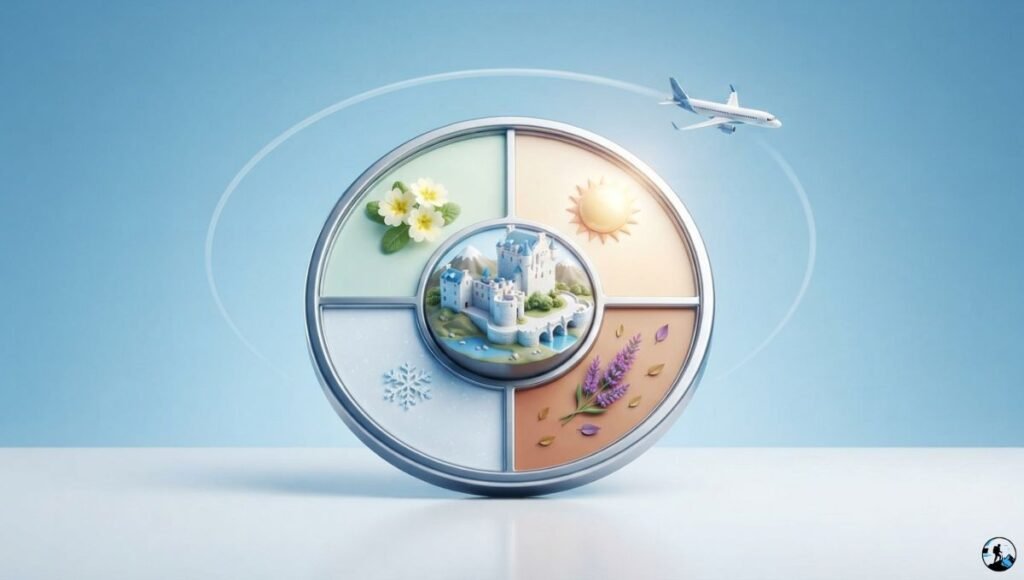
There’s no single “best” month — it depends on what you’re optimizing for.
Peak season (May–August): Longest daylight (up to 18 hours in June), the most reliable weather, and the Edinburgh Festival Fringe in August. Trade-off: highest prices, busiest sites, and the Isle of Skye in particular gets genuinely overcrowded — book accommodation and popular restaurants 8–12 months ahead if traveling in summer.
Shoulder season (April–May, September–October): The sweet spot for most visitors. Noticeably fewer crowds and lower prices than summer, decent daylight, and landscapes arguably at their best. It’s also outside the worst of midge season (see below).
Off-season (November–March): The cheapest time to travel, with prices dropping by close to half and popular sites largely empty. The trade-off is short daylight (as little as 7 hours in December) and weather that can genuinely disrupt Highlands driving and hiking. If you don’t mind that gamble, January and February offer real value.
If your priority is savings → travel November–February and prioritize flexible cancellation policies.
If your priority is comfort and photography → travel April–May or September.
If your priority is avoiding both midges and ticks → travel October through March; midges run roughly late June through September, and ticks are most active March through October in longer grass and woodland.
How Many Days Do You Need in Scotland?

| Trip Length | What’s Realistic |
|---|---|
| 3–4 days | Edinburgh only, done well, or Edinburgh + a single day trip |
| 5–6 days | Edinburgh + a 2–3 day Highlands/Isle of Skye loop |
| 7–10 days | Edinburgh + Highlands/Skye + Glasgow — the sweet spot for first-timers |
| 12–14 days | The above, plus one lesser-visited region (Orkney, the Scottish Borders, Aberdeenshire) at a relaxed pace |
Most Scotland itineraries follow the same “tourist triangle” — Edinburgh, Isle of Skye, Inverness, back to Edinburgh or Glasgow — and there’s nothing wrong with that route. But it’s worth knowing it’s the default everyone takes; if you have more than a week, swapping one leg for a quieter region (the Trossachs, Ayrshire, Dumfries & Galloway) usually produces the more memorable days of the trip.
How Much Does a Scotland Trip Cost?

| Category | Budget | Mid-Range | Premium |
|---|---|---|---|
| Accommodation (per night) | $50–$90 | $130–$220 | $300+ |
| Food (per day) | $30–$40 | $60–$90 | $120+ |
| Local transport (per day) | $10–$15 | $20–$30 | $40+ |
| Attractions/activities (per day) | $10–$20 | $25–$45 | $60+ |
| Estimated daily total | $100–$165 | $235–$385 | $520+ |
Figures exclude international flights and assume double occupancy for accommodation. A typical pub meal runs roughly £10–£12 (about $13–$15); a nicer dinner around £25 (about $32). Most UK supermarkets (Tesco, Sainsbury’s, M&S, Co-op) sell a “meal deal” — sandwich, snack, and drink for about £3 — a solid, cheap option for long driving days. Petrol currently runs roughly £1.55/liter if you’re renting a car, which is noticeably more expensive per gallon than U.S. prices — factor it into your transport budget.
Daily Budget Formula:Daily Budget = Accommodation ÷ Nights + Food + Local Transport + Activities
Total Trip Budget Formula:Total Trip Cost = (Daily Budget × Number of Days) + Round-Trip Flights + Rental Car or Tour Costs + Travel Insurance + ETA Fee + Emergency Buffer (10%)
Worked example: A couple planning 8 days mid-range ($310/day combined) plus a 5-day rental car (~$350), $3,200 combined flights, ~$120 insurance, and ~$40 in ETA fees comes to roughly $6,190 before a contingency buffer. This is an example, not a quote — confirm current flight and rental prices for your dates.
Money and Payments in Scotland

Contactless and Apple Pay are accepted almost everywhere, including on many buses. American Express is often declined due to higher merchant fees — carry a Visa or Mastercard as backup. It’s worth carrying some cash (£100–£200) for small independent shops in rural areas that are cash-only.
One quirk worth knowing before you go: Scottish banks (Bank of Scotland, Royal Bank of Scotland, Clydesdale) print their own banknotes, and while they’re legal tender throughout the UK, some vendors outside Scotland aren’t familiar with them and may hesitate to accept them. English banknotes work everywhere in Scotland without issue. Neither euros nor U.S. dollars are accepted anywhere in the UK — exchange or withdraw GBP before you need it, and use a fee-free ATM rather than an airport currency exchange kiosk, which typically offers a worse rate.
Getting to and Around Scotland

Flying in: If Scotland is your only UK destination, flying directly into Edinburgh (EDI) or Glasgow (GLA) usually saves time even though fares can run higher than flying into London Heathrow (LHR) — once you add the roughly 4.5-hour train journey from London, direct-to-Scotland often wins. If you’re combining Scotland with London, book that London–Edinburgh train (LNER) as early as possible; prices can roughly double the closer you get to departure.
Staying connected: If your phone is unlocked, a UK SIM (Vodafone, Three, or EE) costs around £20 for a month with roughly 4GB of data — available at phone shops, supermarkets, and corner shops on arrival. Use WhatsApp for calls home over Wi-Fi or data to avoid roaming charges.
Self-drive vs. train vs. guided tour:
Self-drive gives full flexibility for the Highlands and Islands. A full U.S. driver’s license is generally valid for short visits without needing an International Driving Permit (confirm current rental-company policy). Realistically, plan on no more than about 3 hours of actual driving per day if you want time to stop and see anything — and when a map or GPS estimates a drive time, double it if you plan to make stops along the way, since Scotland’s roads are slower than they look on paper.
Train (ScotRail) covers Edinburgh, Glasgow, Inverness, and Stirling well, but doesn’t reach the Isle of Skye’s best spots or most rural Highlands sights directly. Book 3 months ahead for the best fares.
Guided minibus tours remove the stress of narrow-road driving and unpredictable winter weather and include a knowledgeable local guide — a smart choice for solo travelers or anyone not confident driving on the left on single-track roads.
On single-track Highland roads: if a passing place is on your left, pull into it; if it’s on your right, stop next to it and let the oncoming car pass around you. A wave of thanks is customary.
If your priority is flexibility → self-drive, but budget real time for slow roads.
If your priority is a stress-free Highlands experience → book a small-group guided tour.
If your priority is city-only travel → skip the car; Edinburgh and Glasgow are both highly walkable.
Where to Go: Edinburgh, Glasgow, and the Highlands
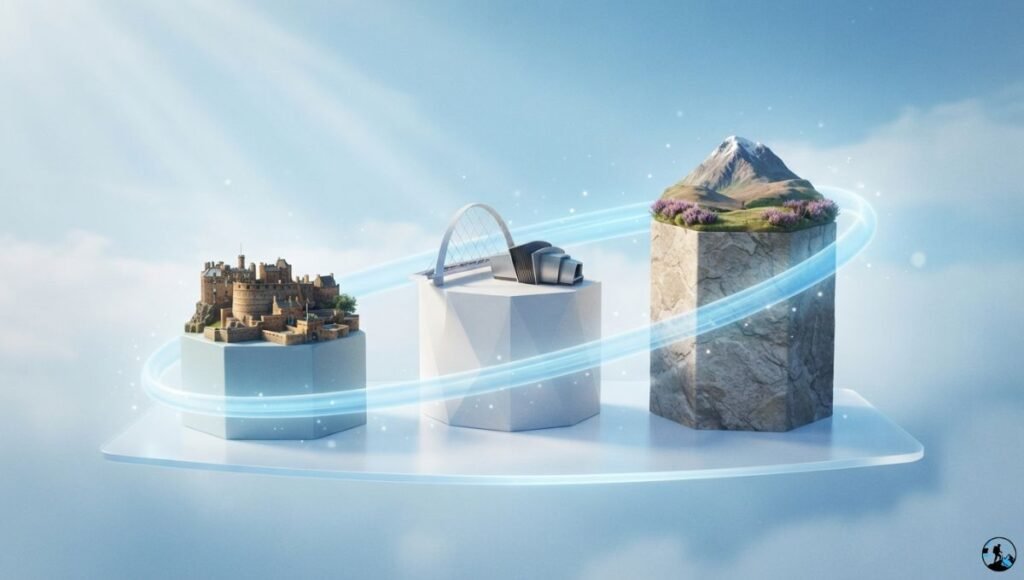
Edinburgh — Edinburgh Castle, the Royal Mile, the National Museum of Scotland (free), Arthur’s Seat, Calton Hill for sunset. Old Town’s steep cobbled streets are hard on wheeled luggage; a backpack travels better.
Glasgow — Grittier, more locally lived-in, less touristed than Edinburgh, with standout Art Nouveau architecture, the Kelvingrove Museum, and a livelier, more affordable food scene.
The Highlands and Isle of Skye — Glencoe’s dramatic valley, Loch Ness near Inverness, and Skye’s Old Man of Storr, Fairy Pools, and Quiraing. Skye in particular suffers from summer overcrowding; if your dates are flexible, April or November give you the scenery with a fraction of the crowds.
Where to Stay
- Budget: Hostels and budget chain hotels in central Edinburgh or Glasgow, $50–$90/night.
- Mid-range: Independent guesthouses and 3-star hotels, $130–$220/night.
- Highlands/Skye: Base in Portree or Inverness for 1–2 nights — book 8–12 months ahead for peak season, since small-town room supply is genuinely limited.
What to Pack
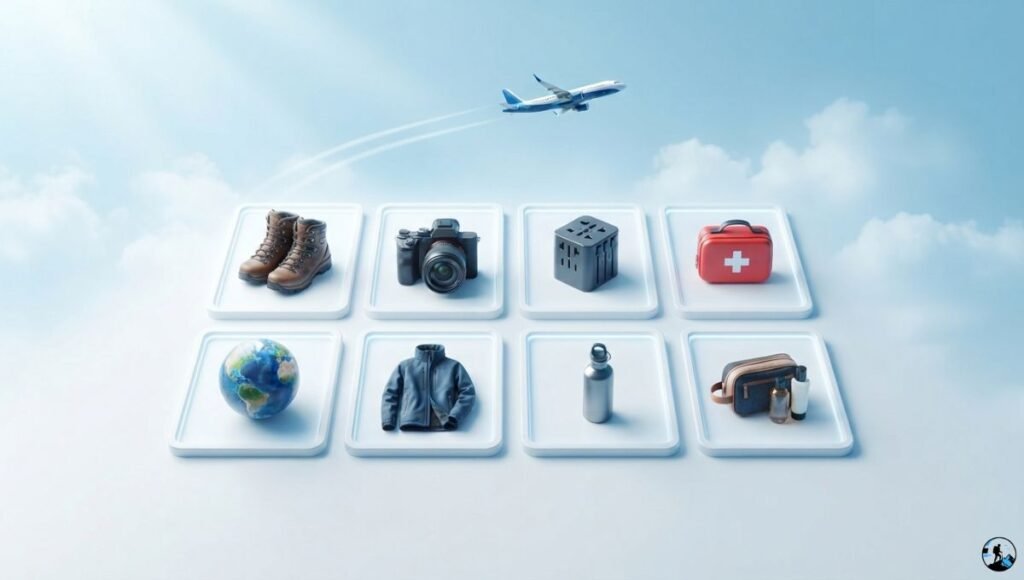
- Waterproof, breathable outer layer (a real rain shell — wind makes umbrellas useless in the Highlands)
- Layers: base layer, mid-layer fleece, insulating jacket
- Comfortable broken-in walking shoes for cobblestones and trails
- A backpack rather than a rolling suitcase for Old Town streets or Highlands trails
- UK Type G power adapter
- Midge repellent (a “Smidge”-type spray works well) if visiting the Highlands late June–September
- Long pants for hiking through grass or woodland March–October, to reduce tick exposure — and check yourself afterward if you’ve been hiking in that window
- Passport, ETA confirmation, driver’s license, travel insurance details
Common Mistakes to Avoid

- Skipping the ETA. Apply before finalizing anything else — it’s required to board.
- Underestimating Highlands drive times. Roads are narrow and winding; double the GPS estimate if you’re stopping along the way.
- Overpacking the itinerary. Two to three main activities per day is realistic; trying to hit every “tourist triangle” stop in one short trip leaves you seeing everything from a car window.
- Booking Highlands accommodation late in peak season. Small towns like Portree sell out months ahead in summer.
- Assuming a car helps inside cities. Parking is expensive and traffic is congested in Edinburgh and Glasgow — walk or use transit instead.
- Not budgeting for paid attraction entry. Edinburgh Castle and similar sites run roughly £18–£20+ per person.
- Ignoring foreign transaction and ATM fees, and relying on Amex as your only card.
Hidden Costs to Budget For
- UK ETA fee: £16 per traveler
- Foreign transaction fees (1–3% per purchase without a no-fee card)
- ATM withdrawal fees from both your bank and the UK machine
- Paid attraction entry (£18–£20+ per major site)
- Rental car excess/damage waiver ($15–$25/day if not included)
- Travel insurance (roughly $50–$100/person for a week, and genuinely worth it given weather-related disruption risk — aim for at least £1 million/~$1.25 million in medical coverage, since visitors pay out of pocket for NHS treatment)
- Tipping — not obligatory, but 10% or rounding up at sit-down meals is standard; £1 for taxi/delivery drivers
Safety and Practical Tips

Scotland is very low-crime by international standards, and tap water is safe throughout. The real risks are weather-related: check Traffic Scotland for road conditions before rural drives in winter, and don’t push through severe weather warnings to keep to a schedule. Midges (late June–September, near water, worse at dawn/dusk, gone with any breeze) are an annoyance, not a hazard; ticks (March–October, in long grass) carry a small Lyme disease risk — repellent and a post-hike check are enough precaution for most travelers. Mobile signal is unreliable in remote glens and islands, so download offline maps before heading into the Highlands.
Frequently Asked Questions
Do U.S. citizens need a visa to visit Scotland?
Not a traditional visa for short tourist trips, but as of February 25, 2026, a UK Electronic Travel Authorisation (ETA), costing £16, applied for online before travel.
How many days should I spend in Scotland?
Most first-timers are happiest with 7–10 days — enough for Edinburgh, the Highlands or Skye, and Glasgow without rushing.
Is Scotland expensive to visit?
Moderately priced for Western Europe — roughly $235–$385 per person per day mid-range, excluding flights.
Do I need to rent a car in Scotland?
Not for Edinburgh or Glasgow. You’ll want a car or a guided tour for the Highlands and Isle of Skye.
What’s the best month to visit Scotland?
April–May and September offer the best balance of weather, daylight, and manageable crowds; July–August is priciest and busiest; November–February is cheapest but coldest.
Is it safe to drive in Scotland as an American?
Yes, with adjustment — driving is on the left, and Highlands roads are often narrow single-track with passing places. Budget more time than GPS suggests.
What currency does Scotland use?
British pound sterling (GBP). Scottish banknotes are legal tender UK-wide, though some vendors outside Scotland are unfamiliar with them.
Are midges and ticks a real concern?
Midges are a genuine nuisance from late June through September, mainly near water at dawn and dusk. Ticks are present March–October in long grass; a small percentage carry Lyme disease. Repellent handles both.
What’s the difference between Edinburgh and Glasgow for visitors?
Edinburgh is compact, historic, and postcard-scenic; Glasgow is bigger, grittier, with a stronger local arts and food scene and fewer tourists.
Should I book restaurants in advance?
For weekend dinners in Edinburgh (May–September) and popular Isle of Skye restaurants in season, yes — 1–2 weeks ahead. Elsewhere, walk-ins are usually fine outside peak dinner hours.
Do I need travel insurance for Scotland?
Not required for entry, but strongly recommended — visitors pay out of pocket for NHS treatment, and weather-related trip disruption is common enough to plan for.
Can I use my U.S. credit card in Scotland?
Visa and Mastercard are widely accepted; American Express less so. Contactless and Apple Pay work almost everywhere.
Final Takeaway
Scotland rewards travelers who plan around two realities: the weather is genuinely unpredictable in every season, and the best scenery is a real driving or touring commitment beyond Edinburgh and Glasgow. Apply for your UK ETA as soon as you book flights, choose your season based on what matters most to you, and give the Highlands more time than a map suggests you’ll need. Do that, and the planning becomes the easy part.
People also read : Business Travel Accident Insurance: Coverage, Real Costs & How to Buy It


Business Travel Accident Insurance: Coverage, Real Costs & How to Buy It